



















![Exploring Enceladus with a Hopping Robot [NIAC 2025]](https://i.ytimg.com/vi_webp/fXQ0tWw0zjE/maxresdefault.webp)

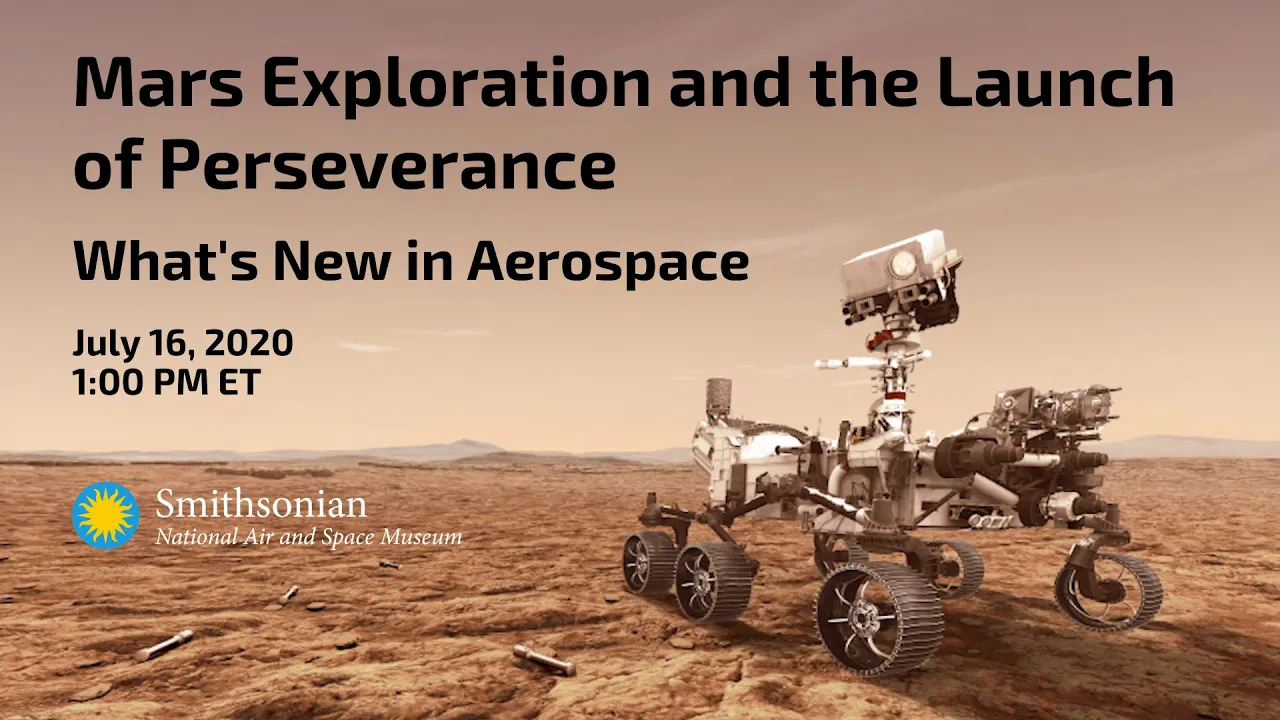
The rocker bogie is a six-wheel articulated suspension system invented by Donald Bickler at NASA's Jet Propulsion Laboratory, which enables planetary rovers to traverse rough terrain by distributing weight evenly across all wheels, maintaining platform stability over obstacles larger than the wheel diameter, and allowing each wheel to maintain independent contact with the ground without scuffing or slipping, making it the preferred mobility solution for all Mars rovers from Sojourner through Perseverance.
How the Mars Rover Suspension Was Invented | Engineering Documentary
Added:Basic principles of classical mechanics, specifically center of gravity, torque, static equilibrium, and multi-body systems.
The fundamental difference between spring-and-damper active suspension systems and passive, linkage-based mechanical designs.
An introductory understanding of kinematic linkages, joint degrees of freedom, and how mechanical linkages distribute forces.
The environmental and operational constraints of Mars exploration, such as low gravity, rocky obstacles, and the risk of high-center tipping.
Advanced Terramechanics: The study of wheel-soil interaction and tractive performance on foreign planetary surfaces, including wheel slip and material wear.
The engineering scaling and design adaptations of the rocker-bogie system from the lightweight Sojourner rover to the heavy, car-sized Curiosity and Perseverance rovers.
Mathematical modeling and kinematic simulation of passive suspension linkages using CAD software and multibody dynamics tools.
Next-generation planetary mobility alternatives, such as legged locomotion, hopping robots, and autonomous aerial exploration platforms.
55.7K views2.8Klikes1:40:24Original Release: 2026-01-19
Something fundamental is missing from the Mars rover stories out there. If you watch a rover video, there are certain things you're pretty much guaranteed to get. There will be bunny suits in the clean room at the Jet Propulsion Laboratory assembling and testing the spacecraft.
There will be a dramatization of the entry, descent, and landing sequence, the famous 6 minutes of terror. And there will be detailed descriptions of the many cameras and scientific instruments on board. What gets mentioned only in passing, however, is the mobility system. This is what I think of as the actual rover. Not the payload, which is all the stuff the rover carries around, but the vehicle itself.
There might be some discussion of the wheels, but it's the arms and linkages that make up the pivotal part of the suspension. These are what's known as the rocker bogey system. You may have heard of it. But what makes the rocker bogey so good that JPL kept it for all three generations of rover? Why six wheels and not four or eight like the Soviet Luna? Why wheels at all and not one of the proposals at the time with legs? And if you are going with six wheels, why arrange them in the particular fashion of the rocker bogey?
This General Motors concept was developed right after the Apollo program specifically to be NASA's next rover.
And decades later, JPL gave it cameras, new batteries, and painted it. So, when the notion of a Martian mission finally arrived, the Blue Rover was considered the air apparent. So, where exactly did the rocker bogey come from? And how did it win the yearslong bidding process to become the Mars rover? These are questions you won't find answers to even from NASA's own documentaries.
Well, the rocker boogie turns out to be just one chapter in the life of Donald Pickler, the JPL engineer who invented it. Here is the US patent dated June 20th, 1989.
But until he convinced the bosses that the blue rover could be improved upon, there was no budget. So Don worked on his own time. He built the earliest rover models with the machine shop in his garage using his nights and weekends from wood mckettes to powered aluminum prototypes.
His inventions include everything from propane carburetors and improved solar cells to plasma deposition chambers and a new method of force analysis that proved the textbooks had been wrong.
NASA would go on to put not one but two metals around his neck. In his personnel evaluation, supervisors would discuss how the breadth of his expertise made him capable of producing the insights that would otherwise require three engineers. And he became known as the section's top troubleshooter. Wherever there was a problem that others barely knew how to start, they called Bickler.
And as he finally neared retirement, they would describe imploring him to collect his insights into a Leonardo da Vinci style engineering notebook that would be a tremendous asset for JPL. But Don never wrote the Bickler Codeex. And I think I know why. They wanted a formula for producing exceptional engineers, but there are no shortcuts to expertise. So, how is a legendary engineer made? Well, I can show you how he did it. This documentary then is the story of Donald Bertram Bickler to the world. He was what I like to call the most famous engineer you've never heard of. But to me, he was my dad.
Don grew up in Chicago. As a teenager, he attended Lane Tech, a technology focused high school. And there, Don was one of the scholastic leaders, and he graduated as a member of the National Honor Society. To save money, he did two years of junior college before transferring to Northwestern University.
Now, young Donald had a passion for cars, specifically those racy models from the 1930s with their prominent grills and grand sweeping fenders. So, one of the first things he did at university was to join the society for automotive engineers. You see, over the course of 4 years, Don had built his own completely custom hot rod. The chassis was from a 31 Dodge. And when he found it rusting in a junkyard, there was a tree growing up through the middle. The grill was from a 34 Ford and the fenders were 37 Buick. The bumpers, which had cost him a whole $15 in 1951 prices, were 49 Pontiac, and the tail lights were 36 Studebaker. That was all just artistic, Don would say. His real interest was in the engine and the drivetrain. He studied all aspects of performance from engine to transmission.
To squeeze out every last bit of performance, he modified the rockers to change the angle of the push rods. That few degrees got the valves open faster so they could stay open longer and let in more fuel.
Finally, he did something rather unique with the transmission. Don built a second transmission and put it behind the first, inserting it backwards in the drivetrain.
This let him use the rear second gear as an overdrive and that first gear as an over overdrive. In an era when even commuter cars were averaging less than 20 m per gallon, his hot rod was getting 30. Dawn wrote it up and submitted the paper for the SAPE student awards banquet. And here he is all dressed up for that speech. He won and they gave him this rather handsome trophy.
And this wasn't some professional who did this. He was 18 years old when he started.
This would not be the last vehicle that he would endeavor to design from the wheels up. Building an entire automobile required Don to teach himself how to weld, grind, sculpt, sew, and paint, among other things. It was just the beginning of a lifelong habit of teaching himself new subjects and acquiring new skills as the project demanded it. And at Northwestern University, Don participated in the cooperative education or co-op program.
And as such, he worked for Stuart Warner, a major manufacturer at the time. In his book, Andrew Michigan relates a story from Don's early time as a co-op. Andrew was the senior systems engineer at Champel who led the operations team and commanded the rover on Mars, being awarded NASA's exceptional achievement award. The paraphrasing from chapter 2, the foreman told Bickler he would have to take his turn on the trash heap, a massive pile of scrap metal left over from the machinists. With just a hacksaw, he would have to cut everything into pieces small enough to be shipped out. And given the size of the pile, that ought to keep the new guy busy for a while.
Well, having recently taken a class on strength and materials, Don knew that machining stock was fairly ductile. So instead of sawing all the way through, he bent the work in a vise and used a hacksaw to just groove the surface. At that point, a simple twist was all that was required to break the metal off at the score point. He began to get into a rhythm. Clamp, bend, score, twist, clamp, bend, score, twist. After a while longer, he had converted most of the pile into shippable links. About this time, he noticed that the shop had gotten quiet. He stopped and turned around. There were 15 machinists standing in a line watching him. One of them shook his head. We've had that trash pile for 20 years. He said, "You just took care of it all at once."
The Bickler was fast realizing how engineering principles could solve practical problems. So during his second co-op period, Don worked in the machine shop, being able to personally operate about 90% of the machines present. He learned lathe and mill operations, welding, how to make threads, coil springs, bend sheet metal and stamping, cleaning and degasing, heat treating, plating, but also assembly, packing, and inspection. In his summary of the experience so far, Bickler wrote, "I can truly say that the combination of my first and second cooperative working periods has exposed me to the workings of the factory in small, medium, and large scales. I'm sure there is a great deal more learned because I was able to operate the machines themselves. A knowledge of manufacturing technique is necessary to incorporate efficiency into design.
Well, during his third and final co-op period, Don moved from the production lines into the skilled shops and laboratories. And there he learned machine repair and worked in the model shop. With the chemists, he learned metallergy and in the inspections lab, mounting and polishing. Lastly, you guys first taste of drafting boards with the tool designers. At the conclusion, Don wrote, "I want to say that I feel this cooperative program is exceptionally valuable in producing a functioning engineer who thoroughly understands a factory and its various facets rather than a bookshelf engineer who's concerned only with his theories." On June 18th, 1956, Northwestern University conferred upon Donald B. Bickler the degree of Bachelor of Science in Mechanical Engineering.
After graduation, no surprise, there was a drafting table waiting for him at Steuart Warner. First job and already his first patent, still in his 20s, and Donald Bickler was the principal inventor of a new kind of carburetor, one that used gaseous fuels like propane instead of liquid gasoline.
from carburetors to solar cells. The first practical photovoltaic cell was made by Bell Laboratories in 1954 while Don was still in college. In 1957, the Soviet Union Sputnik 1 became the first artificial satellite. By 1958, Americans had become the first to incorporate solar power onto a satellite with the Vanguard 1.
The promise of this new field was enough to lure Don all the way to California and the semiconductor division of Hoffman Electronics, an early pioneer in solar cells and their manufacturer. And Hoffman's facilities were state-of-the-art. So into this playground of physics, chemistry, and electricity, drops young Donald Bickler, a mechanical engineer.
Fancy lab equipment might get used by scientists, but it's built by engineers.
What the burgeoning solar industry needed was a way to test cells for efficiency in the lab. So Don and his crew took field trips up Table Mountain to measure the sun's spectrum. I smile.
We take living in a digital world utterly for granted. When you see a graph, you know it came from numbers on a spreadsheet. But that's not how it used to be. Analog instruments produced ink and paper plots. To digitize that information, they had to take measurements off the chart with a brass gauge. And back then, computers weren't mobile. If you needed to make computations with several decimal places while in the field, the set of rackmounted slide rules would come in handy. Spacecraft run on notoriously tight margins of both power and weight.
So, it became very important to know just how many solar cells you would need to keep your satellite on. To that end, Don became the principal inventor of a solar simulator. It's a surprisingly tricky engineering problem. He had to combine xenon and tungsten lamps and use a complicated series of optics and filters to get uniform brightness with just the right spectrum.
The problem was intriguing enough to get him published in the April June 1962 edition of the journal for solar science and engineering.
Well, photo sensors were another aspect of photovoltaic technology being revolutionized in the early 1960s.
Donald Bickler patented another new invention, a compact energy sensitive readout device capable of transmitting light signals that yield a high degree of signal resolution. Still just in his 20s and he was already becoming an inventor to watch.
Something else happened while Don was at Hoffman Electronics. He captured the eye of a new stenographer who was rapidly promoted to secretary due to her initiative and organizational skills.
Before long, there were wedding bells and she would remain his wife and partner for the rest of his life. They had three children, including myself. I am in fact a middle child.
Explains a lot, doesn't it?
Don was at Hoffman for about 15 years and worked on all manner of things.
solar one project whoever planted the seed of an idea that would end up shaping the rest of his career.
For those of you following along at home, get your copy of Missiles and Rockets. It's the July 31st, 1961 ed issue. We're on page 14. Ranger 1 was considered the United States most sophisticated spacecraft to date. Back then, NASA contracted the Rangers solar panels to none other than Hoffman Electronics.
So, it was back up the mountain they went with a Ranger panel packed in a wood crate to put those iconic Huffman blue cells to the test. It was the first time my dad had ever seen his work in the spacecraft assembly building at JPL.
The exposure to the elite team at the Jet Propulsion Laboratory made Donald Bickler want to work there someday.
And over the years, Hoffman Electronics was bought out and became Center Lab.
and it was absorbed again, this time by OLI, whose focus was on optical coatings. The semiconductor division was to be dissolved. So in 1975, Don found himself in need of a job, and he knew right where to look. When JPL took him on, wasn't actually for his mechanical engineering degree. It was for his expertise in solar. Don's first 13 years on lab or with the lowcost solar array project. Photovoltaics were still relatively new and very expensive. So JPL accepted the challenge of lowering the price per watt of solar energy to a level where it might become practical for more widespread even residential use. My dad was made technical group supervisor of the solar energy conversion systems section. You're not old school, by the way, unless your business cards had the original JPL logo before they went red to match NASA. So they built their own vacuum chamber right there in the lab. put in some charged metal plates and started developing processes for the plasma deposition of amorphous silicon solar cells. Here's an actual photograph peeking through the window of the chamber at the procedure in progress.
At the 10-year mark, the program was deemed a success. The module price was down from $75 a watt in 1975 to only $5 a watt in 1985. All while solar efficiency had increased and panel lifetimes went from one year to 10. The Department of Energy presented JPL with an exceptional public service award for their work and a letter personally thanking Donald Bickler for helping them deserve that award. He also got three more patents. Donald B. Bickler was the secondary inventor out of three for an increased voltage photovoltaic cell.
He was the primary inventor out of three of a twocolor band ratioing pyometer.
Basically a more accurate one of these infrared thermometers.
and he was the sole inventor of a new technique for printing the electrodes on solid state devices in metallic paste then those lines into wires.
Apart from patents, NASA grants technical innovation awards for the creative development of new technologies.
Don Solar Work also garnered him several of these awards. He was named one of three in the development of a manufacturing process for the lowcost production of solar cell panels.
Donald B. Bickler was the sole inventor of a new plasma deposition chamber.
His design provided for more uniformity and less contamination while using a significantly more compact chamber.
He also invented a new way to monitor the plasma deposition process using the polarization of reflected light. This could be done in real time and non-destructively.
And lastly, my dad was given his first NASA group achievement award for his outstanding contributions to the photovoltaics project.
Apart from all the solar stuff, Don found other places to contribute. There was a project that had personal implications for me. Don had created an algorithm to tune the smoothing of a data curve with minimal influence on the rest of the graph, but it was a laborintensive task to perform by hand.
I happened to have an Atari 800 in my bedroom that I talked him into getting me because of a computer class I was taking at junior high school. Well, after several mornings in a row of him waking me up early to ask questions about dimensioning arrays and nesting forex loops, I eventually took over at the keyboard. We ended up with a couple of pages of code written in Atari Basic and printed on a dot matrix printer with tractor feed paper. Ah, the good old days. And yes, NASA actually bought an Atari 800 to run this program. Don was granted another award, and so was I.
Unbeknownst to me, he put my name down on the tech brief as programmer. So, at 15 years old, I became the recipient of a NASA certificate of recognition for the creative development of a technological innovation.
I told my computer teacher at school, and he called the local newspaper. And there I am. An RCA TV, a stack of 5 and a/4 in floppies, and the keyboard was my cockpit. So yeah, that certificate looks pretty cool on the wall, but between you and me, my dad got it for me. A few other miscellaneous accomplishments.
Donald Bickler was named three of three on a method for measuring fracture times in micros secondsonds in the research and development of more effective ceramic armors. and he got another NASA group award in recognition of outstanding accomplishments in integrating an RTG into the Galileo spacecraft that was on its way to Jupiter. RTGs are the plutonium radioisotope thermmoelectric generators you need to power a satellite that will be traveling too far from the sun for solar cells to be of much use.
Well, by then it was 1987 and I had bought a Jeep and I loved that thing, but it needed a lot of repairs.
Fortunately, my instruction and vehicle maintenance had started early.
So, I would go off-roading in the mountains or the desert and come home with tales of my adventures. And my dad and I would then have discussions of traction and torque and wheel size and wheelbase.
He was interested in why some classes of vehicles seemed to consistently outperform others at specific types of challenges. And so it happened that I had filled his head with ideas about how to make the ultimate off-road vehicle just when word drops on lab that the Mars Pathfinder lander was adding a rover. Don wanted in. He would make the ultimate off-road vehicle, just not for Earth. In my copy of his book, Mr. Michigan signed it to the kid whose Jeep got it all started. But first, Don had to get himself invited to the party, which is literally what he did. Step one, find out who was coordinating the rover research. It was Brian Wilcox, who had been promoted to supervisor of the robotics group. Michigan notes that at JPL, robotics was a perennial bone of contention between the electronics and control division and the mechanical systems division. The electronics types viewed a robot through the lens of the algorithms required to control it.
The mechanical people saw linkages, joints, and motors.
Bickler didn't care about any of that.
He had found an unresolved engineering research topic to delve into. He just wanted the opportunity to do it. So, he went to go see Wilcox.
The rover researchers could not afford to build a new rover for their experiments. Instead, they had refurbished a rover that was already available, the Surveyor Lunar Roving Vehicle, or SLRV.
For a few thousand, Willox's team took an old SLRV, gave it new batteries, cameras, tires, and a fresh coat of paint. From that point on, the vehicle was known simply as the Blue Rover.
Don watched videos of the thing flopping around wildly, at times appearing even to bang its separate bodies into each other, and he thought, "This is a terrible platform for sensitive scientific instruments." He also noted how the rear wheels got stuck on a boulder that was less than a wheel diameter.
So what Bickler wanted to do was to optimize the mobility performance of a planetary rover. Could he come up with a design that would be better than the blue rover at driving over rocks and crossing creasses? And how could he minimize the chances that a rover will get stuck on a rock or sink into the sand?
So Don asked Willox, "Is there anything I can do without mowing your lawn?"
Wilcox responded that Bickler was welcome to investigate rover mobility characteristics. Willcox had much more important things to worry about. His team had never signed up to improve the blue rover. They were deep into the issue of how to control a rover that was so far away. But my dad would often say those control guys always want to write software to solve a problem that would be trivial if they had just designed the hardware right in the first place. So I gave him a copy of MG Becker's book and off he went to research and think.
And Becker was the inventor of the Blue Rover. He was a leading specialist in the theory and design of off-road locomotion and an originator of terra mechanics. On the Blue Rover, Michigan says it was magnificent. Nothing could touch it. The Blue Rover could drive over rocks one and a half times as high as its wheels. And that would be like being able to drive your car over your dining room table. But Don saw issues which he enumerated in this list. The elastic frame was an undesirable platform for solar panels, aimed antenna, or delicate scientific instruments. The thing bounces around like a child's toy. Unfortunately, that elastic frame is an essential part of the design. Replace those springy connections with a more stable rigid frame and most of that step climbing performance disappears.
Next, the body must be divided into three parts. In addition to platform stability issues, Donna Shirley notes in her book, Managing Martians, Mars is so cold that the inside of the rover would need to be heated. Shirley was the leader of the Sojourer rover team and my dad's boss. She went on to become manager of the entire Mars exploration program, the first woman ever to hold such a position. And she points out that with three separate cabs, each would require its own heater, which would be less efficient and more costly in weight and volume. The links between these cabs were another problem. These links would be hard to heat. Flexing in extremely cold temperatures could crack cable insulation and make the whole system vulnerable. I'd call it the threebody problem, but well, that's already taken.
Third, the center of gravity couldn't go more than a fraction of a wheel diameter above the axle without drastically affecting obstacle climbing ability. In other words, it looks good empty, but there's not much you can put on it before the performance drops off badly.
Fourth, there wasn't much ground clearance. For the wheel size, it wouldn't take much of a rock to potentially get stuck underneath. Fifth, the steering geometry does not track the wheels on corners. In fact, the wheels themselves don't actually steer. The vehicle changes direction by pivoting the body segments, which means scuffing, and this creates wear and tear and wastes energy. And lastly, that wondrous step climbing ability of 1 and 1/2 wheel diameters had to be straight on. The vehicle would overturn if it approached this obstacle at an angle. Don Shirley said, "We need a more stable platform that would still get around in rough terrain." Don Bickler, our MRS mobility guru, came up with the right idea. Well, Don had been studying Becker's book.
Scanning Becker's equations, Don's mind fell back to his youth and the hot rods he'd worked on back in Chicago. He knew that springs might be useful to help absorb movement within a suspension system, but that they also tended to work against an optimal distribution of weight amongst the wheels.
The further you push a spring, the harder it pushes back. This pulls weight off the other vehicles, reducing their traction, and that's not what you want.
One day, while looking through Becker's book, Bickler came across a passage that intrigued him. It said that a sprung suspension like the Blue Rovers could be almost as good as a bogey.
Well, a bogey is basically a wheel set attached to a vehicle with a pivot. You see them on trains and they can pivot vertically as well, like on this John Deere bogey skiitter. The set of four wheels in the back are attached via arms that can rotate, and this improves the vehicle's performance over uneven terrain. There was a formula in Becker's book for a four-wheel drive vehicle with a powered trailer. Well, Don said, "I played with a formula and quickly found that the most sensitive dimension is the length of the rear axle to trailer hitchball. As I reduced it, performance increased. I went to less negative number and the performance continued to increase. But how can you have a negative length for this connecting member? Don realized that a negative connection length just meant moving the pivot beyond the traditional attachment point. Instead of connecting everything to the frame, he made the four-wheel set a bogey in and of itself and attached it to another member with the other set of wheels. Another way to think about it is that the whole thing is a bogey with a rocker at one end, which is how Donna Shirley christened it when she saw the new design. Hence, the rocker bogey was born. And Don Bickler became known as the bogeyman around JPL. But Don knew the rocker bogie wasn't going to Mars unless he could convince the higher-ups that it worked. So, he went home and made a wood model that he built out of pieces from his son's childhood bed that are still lying around the scrap wood pile behind the shelves in his garage.
Not my bed exactly. We called it the platform. This was my moon base. It was the bridge of my starship. Anything that I could imagine. But its most noble purpose was realized in its destruction when it was repurposed into the first moving model of a rocker bogie. The joints were wood screws. and the wheels turned from Masonite and the wire linkages were just bent pieces of coat hanger. The model was simple without motors, just wheels and wooden linkages between them so you could push it around on a tabletop. But even as simple as it was, you could see that it could roll over a block of wood higher than its wheels without tipping over. You could lift any wheel off the ground to the limits of the pivots without any other wheel moving at all. And that meant it would be stable in rough terrain. Unlike the Blue Rover, the model kept equal weight on all six wheels, even when climbing over an obstacle. NASA gave Don another technical innovation award and published the invention in their tech briefs magazine. The little wood rover is actually the model of record in the official NASA technology report.
Donald B. Bigler was also awarded the patent for this articulated suspension system upon which he is listed as the sole inventor. But this was just a concept. The only problem with the design was that you couldn't steer it.
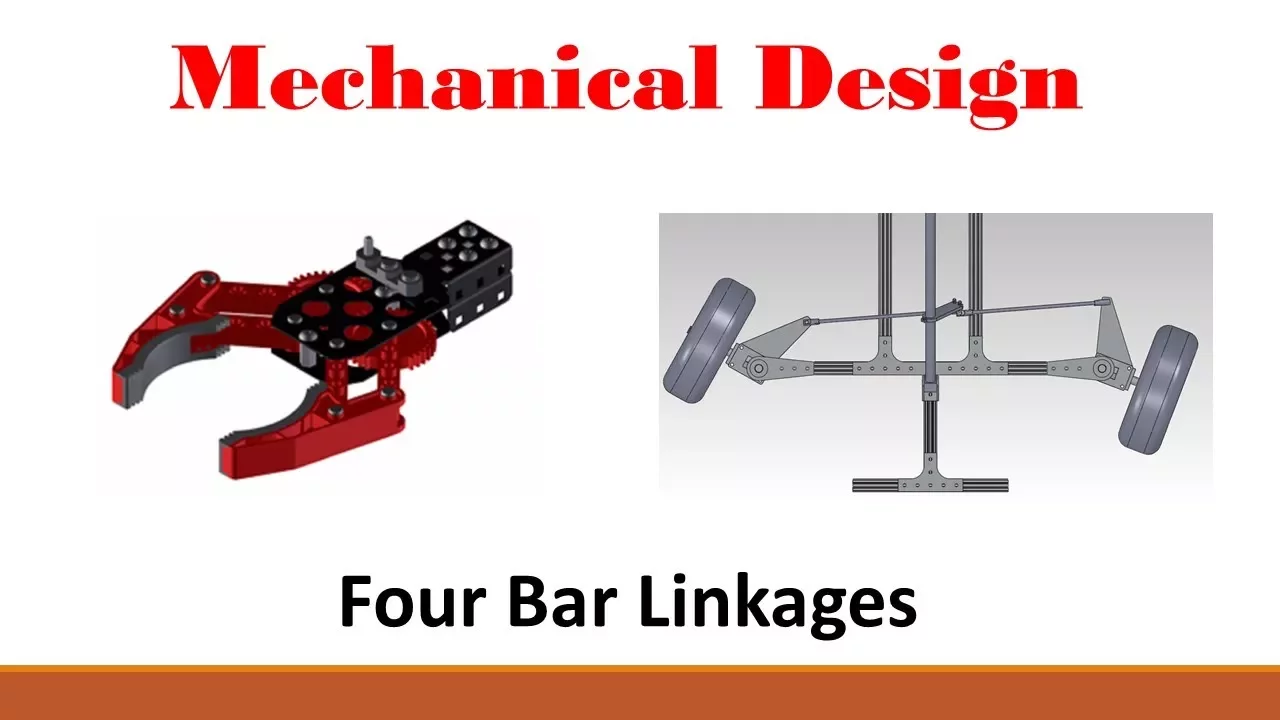
If you tried to install steering pivots to let the wheels turn, the linkages would ruin the ground clearance of a vehicle. So, you really couldn't deal with the rough terrain you originally thought you could. So, Don went back to the drawing board. He came up with a design that used sets of four bar linkages to create virtual pivots above the wheels. Only one thin link went down to the axis of each wheel. To make each wheel steer, you just had to put a rotational joint into each of those thin links. People started calling the new design the Bickler panagramraph.
Donna Shirley, who was leading the MRSR study team, gave Bickler some funding to continue looking at rover mobility concepts, but no money to build anything. Well, Bickler wanted to prove that the panagramraph would move as well as his paper analysis said it would, but surely told him no.
Well, during a review board, there was one member who couldn't understand the point of the design. Pickler was sitting in the back of the room, and he dutifully chimed in with an explanation of the mobility performance of the design, and the reviewer was not convinced. So, my dad suggested building a working model. The review board leapt at the offer, and since they outranked Shirley, Don would get some funding to make his panagramraph, but not very much. Basically, all he got was aluminum stock cut to length. These pieces he would have to turn into a rover at night in his shop at home. As Donna Shirley describes, Don's garage is a museum of aging technology. He machine most of the panagramraph and parts of the rover on a 1910 lathe he bought in 1958 for $15.
As a matter of fact, he bought it from his old employer, Steuart Warner, and still had the receipt.
The machine is so old he can't buy belts for it anymore and fashions his own from a roll of leather belting and an equally antiquated belt stapling device.
On any given day, his workbench looked something like this. To complete the rover, he bought electric motors at the local surplus store. Pickler even managed to construct fiberglass dome wheels in his garage. These pictures show his lathe setup as he shaped the mold from which the six wheels would be cast. Don fashioned the tired for the panagramraph from a roll of fiberglass he had stashed on top of a shelf since he bought it in 1960.
I don't even know what that project was.
He had seen a newspaper article about a swanky new stereo that featured sound globes for projecting a superior acoustic experience. Rather than buy one, of course, Don decided to build his own version completely from scratch.
Electronics, cabinet, speakers, and all.
It was the sound globes he fashioned from that fiberglass, never suspecting one day the scraps would be used to make the wheels of a Mars rover prototype. So there it is on the floor of his garage, the Pickler Pentagramraph, and out on the driveway to show off some of its features like step climbing, the ability to traverse a creasse, and its astonishing ability to resist tipping over. And as it happened, Don was putting the final touches on his panagraph over the holidays. He could not resist this photo.
When he finally brought it in to work, JPL took this picture worthy of a centerfold.
Complete with homey touches like masking tape for a wiring harness. And yes, those are rubber bands on the wheels for traction. As the panagramraph made the rounds on lab, it created converts out of skeptics. Donna Shirley produced a demonstration video.
>> This concept is the Jet Propulsion Laboratory's Bickler Panagramraph. It has six wheels attached to a single body by a system of levers and uses no springs in its suspension.
The system of bogey levers allows the panagramraph to climb over obstacles bigger than its wheels.
Or it can straddle these obstacles. The body remains very stable.
This eight scale model is being tested at JPL.
Because all six wheels are motor-driven, it can climb large steps and cross large creasses.
And it can recover from being tilted more than 60° on a flat surface.
The steering geometry was another point of pride. With other designs, whether it was JPL's Blue Rover or the Russians Titanium Marzacod, turning meant scuffing the wheels since they weren't able to separately track the different radi involved. The panagramraph, however, was capable of allowing every wheel to achieve its own angle. This meant the rover could not only rotate in place, but turn it any radius desired and all without scuffing or skidding, which creates wear and waste energy.
This invention garnered him another NASA technical innovation award and the accompanying article in Tech Briefs magazine.
Well, Donald's garage was becoming famous at this point. His team actually made him this sign, which he hung outside the door to his shop.
Oh, and while all that had been going on, Don also developed a variation of his original articulated suspension for those requesting a four-wheel version.
Things seemed to be going well.
Don had started out by showing up to meetings uninvited. The questions he asked got him invited to more meetings.
In less than a year, he was chairing roundt discussions of planetary mobility with panels of experts from all over the country. But just like it would be on Mars, the rover's path here on Earth was not without obstacles.
During testing, Don began classifying the categories of challenge the rover would face. There might be creasses to cross. The panagramraph was capable of spanning a gap as wide as 40% of its own length. There were inclines to consider, both driving up and down hills as well as resisting tipping over. And of course, there are steps, the metric popularized by Becker back in the 1960s.
But there are also bumps.
The technical distinction being that when a vehicle mounts a step, it finishes at the new height. With a bump, the wheels return back to their original level. After playing with the panagramraph some more, Bickler discovered a drawback in the design. It had a problem with bumps.
As it turns out, bumps are significantly harder to handle than steps.
Becker must have known this, but never mentioned it in his book. And if you knew what to look for, you could see the SLRV getting stuck on rocks in the videotape, then backing off and going another way. Becker had kept a secret.
Despite excelling in many areas, the panagramraph's performance could still be improved upon. The design also needed refining in other ways. Fewer linkages would mean fewer points of potential failure and less weight.
So Don concocted a simpler set of links with a smaller bogey rocking back and forth on the end of a larger master bogey.
In November 1989, Bickler's garage produced another rover model. When Don actually built a little working version of the rocker bogey, Rocky 1 was born.
So these improvements earned Donald Bickler another NASA award for technical innovation and another publication in tech briefs. And this in-house video is a rare chance to hear the engineer himself discussing his own invention.
>> Configuration was developed which has less linkage complexity than the panagramraph.
This new configuration is called the rocker bogey because the front rocker free action here that uh is a part of its major configuration.
It retains the differential action between the left and right sides which keeps the body at an average pitch angle. That features also on the pantagramraph.
That differential action he refers to is another important aspect that never gets mentioned. You see, you need a way to join the two halves of the suspension.
They connect to the body in a single spot. If that joint was a simple pivot, nothing would stop the bogey from spinning freely or hold the body in place. It would just fall over. Enter the differential. What's that? Chances are you own one. It's in your car. And there's a neat vintage video that does a good job explaining the concept. It's worth a watch if you like that kind of stuff. In summary, when a vehicle turns, the inside wheels travel on a different radius than the outside. The drive wheels need a way to account for that difference. The differential is a clever gearbox that accomplishes this automatically. Well, Don realized it could be used to hold the whole thing together while having the desirable effect of averaging out the displacement. Thus, the body would experience only half of the tilt angle between the left and the right sides.
In Rocky 1, Don also made improvements to the wheel drive mechanisms, adding a planetary gear system. High gear ratios are used in the drive wheels for several reasons. The drivers become less back drivable and brakes are not as necessary. Smaller motors can be used and slower speeds are desired from a control standpoint. This also served to multiply the available amount of torque many times over. The geared motors became so strong that they could literally spin the wheels inside the tires. He had to superglue the rubber to the aluminum to prevent this from happening.
The step climbing performance matches that of the panagramraph.
This is the scale equivalent of a 1 and 1/2 m high step.
This is the equivalent of a crevice which is 1.6 6 m wide.
>> You had to hold that piece down. Even though it was a heavy wood box sitting on carpet, the rover would have just pushed it away.
The vehicle can also drive off the 1 and 1/2 m step in a very stable manner.
There is a class of obstacles called bumps.
Bumps protrude above the surface.
After the vehicle has passed it bump, it returns to the same elevation.
This particular bump is so large that the center pivot drags.
Bumps are more difficult to overcome because as a wheel climbs, the other wheels tend to pull it back down again.
>> That's a crucial point about the last wheels going over the bump. During a presentation to management explaining the rocker bogey, a deputy assistant lab director interrupted to exclaim, "It's too complicated. Why not just use four wheels?"
There are some obvious reasons. An extra set of wheels helps push you up onto steps. A six-heel vehicle will cross over a creasse that a four-wheel vehicle would just fall into. And six wheels helps spread out the vehicle's weight over a greater surface area, lowering ground pressure and improving flotation in soft sand. But an overlooked effect might be one of the most important. In one of Don's sketches, we see a simplified six-heel vehicle with a wall in front of its last wheels.
Geometry dictates that as the back goes up, the front must accommodate the angle change. As such, the rear wheels work against the front by pulling them backward. Or another way to state that is the front wheels try to pull the rear ones back down without the extra set of wheels to help. Four-wheel vehicles can't get over a straddled obstacle they drove over to get straddled.
This is nicely demonstrated with a concept rover in JPL's sandbox.
In order to maximize performance, every aspect of the mobility system would need to be optimized, including wheel size.
The formula showed that as wheel radius and obstacle height become zero, the bump penalty vanishes. So there are competing priorities between the front and back wheels, requiring trade-offs.
Evaluating a large number of wheel sizes for the best compromise is an ideal job for a computer. My dad's lovehate relationship with software, however, endured, which is what made Howard's help so instrumental. As Don got promoted to acting group leader of exploration missions and technology, Howard E is started as a co-op student from MIT. He did his master's thesis on whether mobility performance changed with scale using JPL's Robbie Robotics platform as a test model against the junior version of the same. The work proved scale and variance and incidentally showed that Robbie's existing wheel drives were too weak for all but modest traverses in outdoor terrain.
Among his many contributions, Howard would be in charge of flight hardware, overseeing the parts and assembly of the actual rover that went to Mars. When Sojourer arrived in the clean room to be installed in the lander, the box she came in had his name on it. Howard is one of the few people ever to have been to the house and worked with my dad in his legendary garage shop. I had the pleasure of meeting Mr. on the beach in Santa Monica at a Rover Roundup promotional event sponsored by JPL.
So when it came down to squeezing every last bit of performance out of his design, Don and Howard turned to a simulation.
They wrote some computer programs based originally on the equations of MG Becker and one of his compatriots. But Don and Howard's results showed that their model would far outstrip their predecessors.
And their analysis revealed a surprise.
>> Computer analysis showed that there's an optimum wheel size. This wheel size is smaller than we expected.
Larger wheels were fitted to verify the expected loss in bump climbing performance.
The vehicle is climbing the same.7 m bump as computed. The climbing ability over the step at the last wheel is too difficult.
It's interesting to notice how the torque reaction the front bogey raises the front wheels.
As stated, note the torque reaction during failure that causes the front wheels to rise.
This brings up an ideological distinction that was important to my dad. The difference between actual engineering and that of merely design.
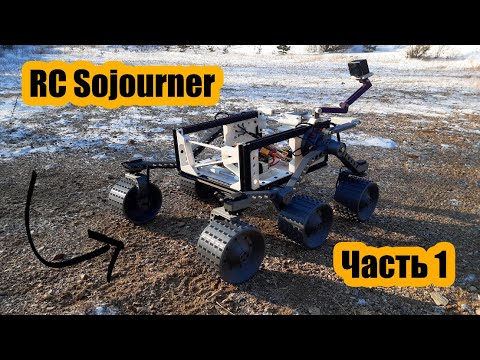
Now, you can 3D print knockoff rocker bogeies from plans available on the internet. So, watch this kit attempt to crest a ridge. See how it pops a wheelie as the rear wheels fail? Cuz they're the wrong size. Chosen more for their appearance than any actual optimization.
And that's the telltale symptom of design versus engineering. But wheel size isn't the most important element.
It really is about them bogeies. In an inner office memorandum, Don explains that in the past, JPL basically considered the problem from just the standpoint of axle weight on the various wheels and the coefficients of friction.
By doing this, we neglected the axle torque reactions. As I probe deeper into vehicle capabilities, I learned that axle torque is a significant influence upon this problem. In this instance, it reduces the coefficient of friction from 707 to.5.
It helps me to think of it this way. A motor creates torque in the wheel. This twisting against the ground propels the vehicle forward. If you hold on to the wheel the way an obstacle can, it's like the motor is now twisting the linkage that it's connected to. Those torque reactions pass through the suspension and they can either help or hinder a wheel that is challenging an obstacle.
That in a nutshell is the genius behind the rocker bogey. Pickler realized that a properly arranged set of linkages could be engineered to exploit those torque effects and make a better rover than anything that had come before.
Well, existing methods of analysis didn't account for these reactions. So, Don created a new formula for computing vehicle performance. By summing forces and moments with what he describes as a good bit of algebra, an equation was derived.
Howard and Don then fed this formula into their modeling software to computer result optimized for all circumstances considered.
Basically, they had the computer try out countless variations of the rocker boogie against all the positions a rover might encounter an obstacle going in either direction to see which proportions produced the best possible combination of results. And what they achieved was remarkable. While the Blue Rover had double the step climbing performance of a conventional 4x4, the optimized rocker bogey had double the blue rover's performance. But Mars does not look like this. Steps are not the primary challenge. This is what the Pathfinder landing site looked like.
It's almost exclusively a game of stones.
for scale. Here is little Sojourer bravely navigating a field so littered that it just isn't possible to simply avoid the obstacles.
Most crucial of all perhaps, while the Blue Rover was actually no better than a Jeep at overcoming bumps, the rocker boogie was twice as good as either of them. And it did this while maintaining three times the ground clearance.
This was a field test of Rocky 1 in the Aoya JPL.
Don got promoted again to full group supervisor of techn Technology and Advanced Systems, also known as the Rover Mobility Team. This is a class picture of sorts from 1991.
Older viewers may recognize the building behind them as Mr. Ror's iconic cottage from Fantasy Island. The computer simulations led to a theoretical Rocky 2, which was never built because they went straight on to Rocky 3, and it was finally evolving into a platform for instruments. They slapped a sticker on a desktop PC, gave it a wireless modem, batteries, a camera, and a robotic arm. Testing had advanced to observing how the suspension performed when weighed down with a substantial amount of payload.
And before they built the Mars yard at JPL, the team took field trips to the Mojave Desert near Death Valley.
>> But you need more.
>> You need more.
>> That's it.
>> Whoa.
Oh yeah.
>> Oh yeah.
>> Oh no. No. Stop.
>> No. Keep going. Keep going. Keep going.
>> No.
>> That's okay, guys.
>> Keep going. Keep going. You better stop it here, though.
>> Why?
>> Yeah, >> this is off-roading, >> man.
Don't do this in your Toyota.
>> Planetary truck repairs.
>> That's amazing. It is amazing.
Note how stable the body remains while the left and right sides of the suspension swallow bumps almost twice the size of the wheels. Things were looking good. Really good. But as Donna Shirley states, a single design does not a study make. And this was taxpayer money. So she couldn't just award the contract to the in-house design. You need to do trade studies looking at a variety of ways to accomplish the mission so you can pick the best approach for the money.
and to revolutionize spacecraft development uh in a way to drastically reduce cost while maintaining the capability.
>> Wes Huntress was a former JPL scientist.
He was now at NASA headquarters in charge of solar system missions and showing no hint of favoritism for the lab where he had worked for two decades.
That's the way an open bid contract should work. But it created years worth of stress for the mobility team as they worried about an inferior design being chosen for reasons other than performance.
Congressional mandate requires that a large fraction of NASA research funds be directed to private industries and universities. And the headquarters manager responsible for Pathfinder had specific ideas about where his money should be spent. The consequence was that much more money was funneled through JPL to other organizations than stayed at the laboratory. While Rocky 3 had finally been able to get $100,000, Carnegie Melon University got a million.
Well, CMU was developing a walking vehicle called the Amler.
And as Andrew Mishkin puts it, mechanical complexity and low power efficiency were the bane of walkers.
While the panagramraph had been streamlined into the simpler, lighter, rocky series of suspensions, the amler was a massive pile of legs and links. It never did carry its own power supply and even so weighed over 6,000 lb. The Amler had several motors per leg. Rocky had only one per wheel. Walking is also computationally expensive, and legs tend to take more energy than wheels. Just think about the difference between running and riding a bike. CMU's Whitaker claimed the Amler would glide over terrain efficiently.
Bickler argued vehemently against this assertion and it was only after months of development that Whitaker finally admitted the reality that each leg was sinking into the ground when Amler shifted its weight to that leg. Amler would indeed always be climbing uphill burning energy.
Here's Howard with some perspective on the rover's energy use.
>> And it's doing this with with really an amazingly small amount of power.
>> That's right. The rover while driving typically consumes on the order of five to six watts of power.
>> This is a seven watt bulb.
The first Mars rover drove with less power than a nightlight.
Sojourer solar array was only a quarter of a square meter in area. On Earth, it would be a 45 W panel. But on Mars, we operate on a peak power of 16 watts at high noon on a summer day. Most of the time, we operate on about 8 watts.
Figure up to six watts for driving, another one and a half for the computer, and you're already at 7.5.
It was so tight the rover would stop just to communicate or send back pictures. There was an 8 amp hour bank of lithiumion chloride batteries, but they were not rechargeable, so their use was only for emergencies. There was just no room in the power budget for an inefficient walking design. But the proposals kept coming in. Martin Marietta had proposed their walking beam. It suffers from some of the same complexity and efficiency issues as the Amler. Little Beamer could climb stairs and move over rough ground as long as it had a well-coordinated operator at the radio controls. But like Scarecrow, it didn't have a brain. And there is an embarrassing film clip of the walker falling on its nose while trying to walk down a slope.
And then there was the Ohio State Walker. It looks awesome. However, it takes 18 actuators just to move the body around and needs a four-cylinder gas engine to make it go. It was very sophisticated for its time and a lot of fun to watch, but hopelessly impractical for Mars. One by one, these competitors arrived and the same arguments had to be made over and over. In some cases, there were politics involved. In November of 1989, the Berlin Wall had fallen. That was right in the middle of all this research. In the spirit of Glasnos, there were some in Congress pushing for a cooperative US-Russian mission, and this had more to do with public relations than science. Still, the Russian Marzacod rover was given serious consideration. They even brought it here for testing. Like the Blue Rover, it's a threebody design, a no-go just from a thermal standpoint. Also, it's straight axle design with essentially no ground clearance. Rocks under the center pivot will result in a pronounced tilt. And the wheels don't steer. It has to turn by scuffing.
From the desert to the mall at JPL, Marzacod meets Rocky. It's quick because they cut the scene for the documentary, but you can hear the titanium rear wheels start to slip on even those shallow steps while progress temporarily stalls.
So while having to fight off all these proposals, Don and T- Mobility were studying any and all ideas that might benefit the mission, including a number of novel approaches. Now we are viewing the walk wheel or the elliptical wheel, which is running on the same test track mounted on the same test apparatus.
or the teeter track which selectively raises certain wheels to assist with steps. The Apollo moon buggy was built to be driven by a human operator and not for rough terrain. While the Soviet Luna was an actual remotec controlled rover that roamed the lunar surface on eight wheels, they looked at an articulated track vehicle shown here being tested in lunar simulant soil and even this Jules Vern looking contraption.
In fact, I personally tested a six-wheel rover concept all the way back in December of 1971.
And after it all, Rocky was the champ.
There was, and I would venture to say still is, nothing that can beat it. No other mobility system can conquer obstacles the way a rocker bogey does without being larger, heavier, or consuming more energy. The way the suspension conforms to obstacles and maintain traction on all wheels, and its ability to maintain platform stability in rough terrain is all accomplished passively, an automatic feature of its ingenious design.
No software to fail, no costly computations to perform, just rocks and roll.
Outside competition was not the only challenge the rocker boogie would face.
However, inside JPL, there was opposition to any rover at all. You see, originally, the mission included only a lander.
Mars Pathfinder, as it came to be called, was to be a technology demonstration. The goal proving that it was possible to land on Mars using airbags.
>> Tony Spear was in charge and Tony did not want a rover taking resources away from his mission.
>> To Shirley's delight and Spear's dismay, >> NASA directed JPL to give the rover a ride to Mars. customer, your customer, you >> if a project manager is trying desperately to do something that nobody's ever done before for an incredibly small amount of money and somebody comes up to him and says, "Gee, I want you to carry along this completely extraneous thing." Well, it looks to him like a parasite.
>> And so it was not popular with with anybody.
>> Say something about it. If you'll shut up for a minute, I'll say something about it.
Um I think that uh actually >> the funding for the rover came from a separate NASA pot. So Donna was appointed to be the project manager of the rover.
>> The effort that these >> that immediately created this slightly two-headed monster where Tony thought he was in charge and Donna had a similar feeling about it and she was not going to let him tell her what to do and he was going to treat her like a a secondass citizen at some level. And that that sort of animosity between the rover team and the the quote lander team, it lasted for quite a while.
>> Stories of their yelling bouts were legendary.
>> My job was to get him to do something he didn't want to do, fly the rover. Our yelling matches occasionally spilled out into the hallways of building 230, making our colleagues exceedingly uncomfortable. Our first intense skirmish came when Tony decided he was going to build a rover of his own to avoid flying ours.
>> Another source of contention early on was whether the rover should operate autonomously as the rover team wanted or should it be tethered to the mother ship for power and communication.
Despite the rover having been given its own budget, Tony believed it would cost him more than $2 million to integrate the free rover into his spacecraft. Tony decided that he wanted to take that 2 million and build a tethered rover. Now, from an engineering standpoint, a tether seems like an objectively bad idea. Don assembled a team to present Tony with a list of the disadvantages. A tether would limit the rover's range. It would get hung up on obstacles. Dragging it around would draw energy and it could get damaged by sharp rocks or the teeth of the rover's wheels and anything that yanked on the tether would risk damage to the lander itself.
Even Lonnie told him frankly he was out of his mind. "Why drive yourself off a cliff?" Lonnie remembers asking Tony.
"You know what the answer is already?
It's going to be an untethered rover."
"I'm not going to take no for an answer," Lonnie remembers Tony saying.
"I want you to do this. I want you to cost it. I want you to figure out what it's going to take to make it happen.
It's an assignment from your boss.
Okay, Lonnie responded, but I do it under duress.
Why this stubbornness over handicapping the rover with a tether? Well, that would make the rover technically a part of the lander and Tony could take it over. As Donna said, if Tony got his way, my project was sunk. And then there were the scientists. Arguably, these types of missions are for the science.
Many scientists sided with Tony. If there was money or mass, they wanted to spend it on instruments, not on the rover that would deliver them.
>> When we say we have 20 >> and the scientists said, "That silly little rover, what on earth can it do?
It can't do anything useful." Because they were used to the idea of a very large rover that would go 100 kilometers around Mars and collect lots of samples.
If the scientists weren't going to go for the tethered rover to deploy the APXS, Tony was angling to install an arm on the lander instead of flying our rover.
Fortunately, we had one very prominent scientist rooting for us. Former Viking scientist Hank Moore had been one of the scientists who achd with frustration when the Viking couldn't get to the rocks just a few meters beyond the lander.
He had a grandfatherly love of the rover, which he referred to as the sweetest thing on six wheels. Having such an eminent planetary geologist in our corner was a huge boost.
Carl Sean, who had been intimately involved with the Viking missions to Mars, put it this way. My most persistent emotion in working with the Viking lander pictures was frustration at our immobility.
If they had only been able to look around and travel, he argued, so much more could have been accomplished. The ideal tool is a roving vehicle carrying on advanced experiments, particularly in imaging, chemistry, and biology.
A Pathfinder project scientist, Matt Golbeck, became an advocate as well. He was in regular contact with my dad and had been watching the progress of the rocker bogey. Rocky had gotten so good, it was capable of handling the mission, even at 1/8 scale. Well, Mor and Golanbeck published a paper about the likelihood that the lander would just happen to land close enough to rocks of geological interest. And they estimated the probability of an arm actually reaching a rock with the APXs to be much less than 100%.
A euphemism if ever there was one. After that paper was published, scientists slowly came to accept that with the rover carrying the APXs, the science of the mission would be better.
To the last, Tony fought against Donna and the rover. He attempted death by a thousand paper cuts. Instead of the normal two or three reviews, Pathfinder had about 25 reviews in a two-year period. As Howard E said, "Never have so few been reviewed by so many." Bill Layman estimates in our first two years, we spent 75% of our time preparing reviews. Tony went so far as to make Donna reapply for her own job, hoping to replace her with someone more compliant.
I cried foul. Why was he advertising my job? I had competed for the job of building a flight rover and won it fair and square. As it happened, nobody else wanted to walk into that fire. He was stuck with the rover and me. So Tony tried to confiscate all the rover's budget. Donna refused.
I'm the project manager. You have to do what I tell you. Congress allocates our money. It would take an act of Congress to change that. This is an order.
You're just trying to get rid of the rover by taking all our money. Your damn rover is going to sink my project. But Donna disagreed. The rover was the project. It had become exceedingly popular with the public. My dad and his team had become a headline attraction at JPL tours. Much like other robotics experiments, a functional Rocky put our scientific and engineering advances into a comprehensible, accessible form. Road and Track did a spoof on the rover.
Magazines ran article after article after article. Rocky was becoming a phenomenon. As Tony realized he was finally beaten, it's fascinating to watch him spin surrender into some kind of management epiphany that made all the difference.
So I was getting nowhere with them. And one night it was 3:00 in the morning where a lot of decisions happened. I realized, man, do you have a good team.
I came in the next morning. I'm thinking, damn, I have the solution.
And I say, I will let you do the rover without the tether. They were stunned.
What I realized at 3:00 in the morning, if I chose their approach, they were going to bust their butt to prove to me that I made the right decision. And it it just happened like a flash. Hey, that's the answer. You know, get over it, Tony. Just do it.
Donna said, I smiled. If he wanted to believe that, it was fine with me. And so the rover was approved at last with the six-wheel rocker boogie minted as the platform to be. For Rocky 4, the budget jumped to 2.5 million. Efforts turned to refining all of the elements, reducing every last gram of unnecessary weight while retaining performance and as much strength as possible.
Something had to be done about those tires, though. On Mars, rubber would freeze solid and shatter like glass. An all metal arrangement would be necessary. So Don working with Lee Sword and Randy Linamman developed a non-elastoric tire. The Apollo lunar buggy had all metal tires but they were made of a flexible mesh and this flexing causes distortion with ground contact an effect known as squirming. Squirming wastes energy and can reduce traction.
The new design had sidewalls that could still provide some radial spreeniness while a central belt resisted squirming in the axial and tangential directions.
Cleat were spot welded on to improve traction over rocks. A slipping wheels cleat will find niches in a rock and take hold, actually improving on initial traction. JPL produced a demonstration video featuring Rocky 4 and the new metal tires. The microwver used in this demonstration is Rocky 4, a vehicle weighing only 15 lbs and yet carrying science instruments similar to those needed for a real Mars mission.
Between waypoints, the vehicle is guided by behavior control. Behavior control uses proximity sensors, pitch, roll, heading, and other information to modify the direction to keep the vehicle safe.
Infrared beacons on the lander guide the rover back to the ramps.
A simple mechanism empties the soil into the collection tray and the test is complete.
This innovation resulted in another NASA award which was published in the September 1994 edition of Tech Briefs magazine. And those are obviously not the wheels that flew to Mars. Because of the rover's lightweight and slow speed, the element of springiness was deemed unnecessary. They went with fully rigid aluminum wheel and spot-welded titanium cleats instead.
They did make an eight-w wheeled prototype, by the way, featuring a rocker bogey at each end. The performance was better, but not enough to justify the increase in size and weight. As it turns out, six wheels is the sweet spot. You can start to see how these NASA projects always leave a lot of ideas in their wake, waiting for someone someday to come along and use them for something else. The Rover's wheel drive mechanism was another subject of innovation. Chosen for its lightweight, high torque and compactness, the design featured an X-type bearing that could withstand both radial and axial loads as well as offset moments, all with a single row of balls.
And since grease would freeze on Mars, plastic balls were used in the bearing without lubrication. To reduce weight, the bearing races were machined directly into the aluminum wheel and then hard anodized and coated in Teflon. And this master bearing was large enough to fit the motor and planetary gear assembly within. Donald B. Bickler was rewarded for this new technology along with Howard E and Angel Olivivera as published in the February 1998 issue of Tech Briefs. While the rocker bogy was essentially a vertical problem, the issue of eccentric wheel loading existed in the horizontal. If a wheel encountered an obstacle on just one side of the rover, the resistance there would create torsional forces that could twist the rover off course. That's an important effect to understand for a vehicle that needed to track its heading while driving autonomously between assigned way points.
As he would, my dad came home from work and talked about rover stuff over dinner. Something prompted me to say, "A vehicle can still climb a hill even though the wheels are slipping. I do it all the time in my Jeep.
Show me, he said. So, I took him to a spot I found on the side of the freeway where there was a challenging hill.
That's me driving. He's taking pictures.
This was a slow speed attack, 2 or 3 mph at best. And you can see the dust stirred up from the tires scrabbling in the loose dirt as the Jeep slipped but climbed up the slope. The tractor force problem could indeed be a dynamic one.
Don researched the field and published a paper with the society for automotive engineering. He had found that conventional analysis computed wheel torsional forces as perpendicular to a centrid that was based on the center of gravity. He realized though that things changed after the elastic limit was exceeded. In other words, when slipping against the ground. At that point, the wheel forces redistribute until each reaches its maximum value. now becoming perpendicular to the strain center instead of the original centrid.
The Bickler method was more accurate than the textbooks. And that got him yet another NASA tech innovation award and a blurb in the August 91 edition of the magazine. Everything Don learned in the machine shop at Steuart Warner all those years ago, as well as decades worth of experience in his own shop, would serve him once again. Faced with a challenge of keeping both weight and cost low, Bickler would end up inventing a new machining technique. Based on Don's concept, the engineers and machinists came up with a way of fitting seamless hollow sections together to form a lightweight bogey without losing any of its strength. But he had trouble making the JPL machinists understand what he wanted. And as usual, his solution was to build it himself in his garage. So, Don ground a custom cutter for them using old number 7298.
The final product of this effort was a beautiful piece of engineering art. The bogey was featherweight and made of luminous brushed aluminum punctuated with a regular series of port holes to lighten the structure and so engineers could get at the wires they subsequently stowed inside.
It wasn't just drilled through, it was milled out from the inside. Rocky 4 weighed less than a third of what Rocky 3 did.
From the looks on their faces, you'd think they were handling a piece of Michelangelo.
By now, Dawn was known as the guy to ask if you were trying to make a robot go.
While working on Sojourer, he was recognized for his assistance to another team that was developing miniature rovers, which could be deployed to perform a few pre-programmed behaviors with minimal computation.
Hallmark of my dad was that anywhere he went, he found ways to improve things.
Due to space limitations in the launch vehicle, Sojourer would have to fly in a crouched position. Once successfully landed on Mars, she would then have to stand up.
>> Pyro firings release the attachment fixtures to the rover, and the rover is then commanded to stand up. In driving the rear wheels while the other wheels are locked, the rover locks its bogeies and establishes its deploy configuration. It's now ready to drive down the ramps and begin its mission.
The pyro firings referred to are the explosive bolts, also known as squibs, that hold the suspension securely in place during flight. And this has been standard operating procedure at JPL for some time, except as they explode, squibs were known to eject unburnt particles and could create unpredictable variations in pressure.
Don didn't like any source of uncertainty, and he did not relish the idea of hot ejector splattering his rower. So he invented a cleanly burning squib by repositioning the ignition wire from the bottom to the top as illustrated in the June 1989 issue of Tech Briefs.
Another area that caught Don's attention was the rover ramps as seen in this bird's eye selfie taken by the lander.
This is how Sojourer would drive down to the actual surface of Mars. And these needed to collapse into the tiniest possible package and yet unfurl to withstand the full weight of the rover.
They work on the same clever principle that a tape measure uses for rigidity, that of a curved surface that can be flattened for storage.
A tape measure is strong in only one direction and notoriously weak in the other.
But put two together and you've got a fairly rigid beam that rolls up tight yet springs into shape upon command.
Such structures are known as lenticular booms. Don liked the idea but realized it could be improved. More curvature would mean greater resistance to buckling. He accomplished this by incorporating multiple smaller lenticules, a second layer of which could be offset inside the other, creating the much improved quasifractal lenticular boom.
One more tech innovation award for his collection.
When it was all said and done, Donald Bickler was the person most responsible for the design of the Mars rover. Such that the US patent reads Bickler at all.
Though he shares the honor with fellow inventors Kenneth Jwitt, Howard E is and Lee Swart. Note this is a design patent, not a technical one. It covers the overall look of the rover and is for the purpose of licensing its image for toys and models. And speaking of toys, Hot Wheels made a rover set. Here's my dad with Mattel engineer Keith Hipley who designed this tiniest version. Don was impressed by Keith's dedication to accuracy as they corresponded back and forth over details.
Mine is signed by three of the four patent holders and the boss herself, Donna Shirley.
Something important to realize is how little was known about the Martian surface at the time. Sure, the Viking orbiters made a global map in the 1970s, but only to a resolution of 150 m. In this photo of Pathfinder landing area, an entire football field will be swallowed up by a single pixel.
Project scientist Matt Golbeck on where Sojourer ended up >> and we wound up landing right in this small uh piece of this uh ellipse shown here. Uh and the next slide shows a high resolution, a detail of that. Um what's shown on this uh is the best prediction from the navigation team as to where we actually wound up on the surface of Mars. Uh and it's somewhere within this ellipse and you can choose your pixel and that's the one we're in.
We do not know which pixel we're in. And it may take us a while to figure it out.
For a rover the size of a microwave oven, that meant they were essentially flying blind. Nobody had any idea what kind of obstacles there would be at that scale. So, the mobility team overengineered everything they could.
While Randy Linan met with geologists and researched Martian surface models, Don refined code for rock abundance, wrote formulas, and made graphs of size distribution and cumulative fraction of slope angles. All in an effort to estimate what wheel size and ground clearance might be necessary.
My dad went home and played in the dirt.
He measured compression and drag forces in sand. He mixed his own simulant and rolled a weighted cylinder around in it because that's how Don Bickler wrapped his head around the physical reality of a textbook theory. He wanted to feel everything there was to know about wheels moving through soil. At work, the mobility crew built a testing apparatus.
They took a baseline with a smooth wooden cylinder and compared that to a rover wheel in everything from loose sand to very fine powder.
They were also concerned about every aspect of thermal management. Heaters were placed in the wheel motors because the commutators had to have grease, but it turned out those were never needed.
Every aspect of the suspension, from joints to connections to fasteners, had to be built to withstand the extreme temperature swings on Mars. The mobility team labored over so many details would be overkill to try and cover them all.
To say that the mission was a success would be an understatement. My dad usually avoided the spotlight, but on landing day extra was able to get this rare interview.
>> It's minus 199°, but that doesn't stop Donald Bller from spending his holiday on the red planet.
Well, at least discovering what's there.
I'm personally interested in is the engineering aspects of the Martian soil so that we can design advanced vehicles in the future.
>> But for the present, Don is a project scientist for NASA's Mars Pathfinder here at the Jet Propulsion Laboratory in Pasadena, California. He's the brains behind the rover that will drive over the rocky surface tomorrow. And you'll never guess where he invented this mini Jeep the size of a microwave oven >> and built one in my garage.
>> What did people say? Uh they uh I I called my garage the uh Martian Vehicle Laboratory.
>> On the second day of operation, Sojourer rolled down the ramp and onto the Martian surface.
Little Sojourer was performing exactly as she was designed to do, including through a few navigational mishaps.
>> A rock, not a Martian. Conan Nolan has more on what was most likely the first traffic accident on Mars. Yes, Conan.
>> That's right, Kelly. The rover overshot its target by a full 4 in and as a result did not end up exactly where it was supposed to. Fortunately, the tiny explorer was not hurt.
>> It was another NASA first. Like a new driver with a learner's permit, the Martian rover Sojourer went over a curb while trying to park.
>> The rover actually drove a little too far forward. Got a little too enthusiastic. The tiny geologist was attempting to lock its X-ray spectrometer onto a rock named Yogi when it made the boo boo.
>> And so in this case, it stopped with the the wheel sitting there sort of uh partially up on the rock.
>> And its probe designed to examine the chemical makeup of the boulder protruding in the air.
>> What we'll do today is essentially just to drive slightly forward, turn a little bit, and back up back the APXs up back into the rock. From an internal memo, items either never discussed or just briefly mentioned, Don wrote, "The most successful mobility demonstrations came as a result of navigation blunders. We don't want to mention this."
There was a movie which appears to no longer be there, showing the rover going over a rock while turning. This is great mobility, but terrible navigating.
I found some still shots on NASA's website that suggest this happened more than once.
There was and still are those who would argue that all you needed was a four-w wheeled rover and a good control system.
But that won't help you when the hazards are too numerous to simply avoid. More importantly, the mobility engineers knew that software fails and people make mistakes. Only mechanical principles are truly reliable. At JPL, they design things to exceed mission expectations.
>> But I I have two takeaways. The first one I kind of mentioned was the fact that the engineers designed it to be as robust as possible. I think you can take that away uh for any mission you're building, but do your best job and and build in the robustness to make to make those rovers last more than 90 days. You last more than two years or whatever mission you're working on.
>> And after all the antipathy, it was the lander that ended the mission.
Pathfinder bounced onto the surface of Mars July 4th and quickly started exploring.
It was supposed to stay alive for 30 days, but showed superior health far longer than that. The little Martian rover, the Sojourer, motortored easily across the planet, but then the lander's battery died and controllers began to lose touch.
uh on or about the 27th of September, the battery uh on the lander failed uh in some way uh and as a result uh the lander essentially forgot what time it was.
Sojourer though was still alive.
The little rover, as she was pre-programmed to do, would have circled the lander, calling out to the mother ship, listening for a reply that would never come.
Eventually, as the Martian winter descended, Sojourer would be stilled, too.
This small robot would capture the hearts and minds of people around the world, and the mission would become a record-breaking phenomenon on the brand new worldwide web.
right there.
>> It was so different. But the impact it had on America.
I mean, it was enormous.
People really were excited about the space program.
So, this was a major event in world history.
>> The little rover that could spent 3 months traveling over Mars, 12 times longer than originally designed.
I am biased. Certainly, but I don't think it's outrageous to suggest that this mission might have ended up stuck on a rock or flipped over like a turtle were it not for a high clearance platform stabilizing rocker boogie suspension system.
And a single engineer started it all.
>> It was dramatically underfunded and it was understaffed and what that created was tremendous opportunity.
So if you got the right kind of person and they saw a job that needed doing and they had the ability to go, they just went and did it.
>> That's exactly what he did. Donald Bickler talked himself into the project.
He spent his own money, worked on his own time, and built three generations of rover prototypes in his garage and beat everything else.
NASA gave him a group achievement award for the design, development, and successful ground demonstration of the rover. And his boss, Donna Shirley, gave him a certificate of appreciation for all his work. But that was just the start of awards season for Donald Vickler. He received additional NASA group awards for his work on the entry descent and landing team, the rover flight experiment team, and the Pathfinder operations team, plus this patch and frame certificate for his outstanding contributions to the success of the first Mars rover. But the best was yet to come. The Space Act of 1958 convened NASA's inventions and contributions board and the ICB's board awards are the most prestigious of the NASA space act awards. This booklet has pages and pages of standard and major honores.
But there was only one exceptional award given to Donald B. Bickler for the rocker boogie suspension system.
Additionally, NASA also produces the honor awards. As Andrew Mishkin writes, among the other recipients, each of the members of the Sojourer Chord team was awarded the NASA exceptional achievement medal. And for his invention of the rocker boy, Donald Peckler was the sole recipient of the rare exceptional engineering achievement medal. That's Dr. Wes Huntress, NASA Associate Administrator for Space Science, hanging the medal around Don's neck. And Dr. Dr. Ed Stone, director of JPL, stands ready to shake his hand for the development of the mobility design of the Mars Pathfinder Sojourer Rover, a pioneering system that enables NASA missions to perform instrument deployments, measurements, and imaging on remote planetary bodies.
This was one of the great honors of my dad's life. I think the smile says it all. He wouldn't rest on those accomplishments, though. Working with the Rover wheel drives gave him ideas, so he invented a planetary speed reducer with balls instead of gears. It was smaller, lighter, didn't need lubrication, and could function even contaminated with dust.
If he needed a tool like these self-locking spreading pliers, and nobody sold one, he invented it. He worked on the Mars climate orbiter and the Mars polar lander project team and he got obelisks for the Mars volatiles and climate surveyor team as well as the deep space 2 packaging and mechanical team. Specifically, Don machined penetrator prototypes in his garage which he took to work so they could then head out to the desert just to drop them out of an airplane. This resulted in another NASA innovation award for the development of a twobody penetrator design that would still function properly even if striking the ground at an angle. The success of Sojourer of course opened the way for a second generation the Mars exploration rovers. From a rover the size of a microwave oven to rovers the size of a golf cart, Spirit and Opportunity were built to go farther and carry more science payload. Now, if you thought the engineering was done at this point and all they had to do was just make a bigger version of the rover that had already worked, you would not be alone.
This assumption was shared by management within JPL.
>> Your design heritage, the blueprint, I use the phrase phrase that I will never use again because no one will believe me, is build to print. I said we will take the Mars Pathfinder lander and build to print. We will take the blueprints and we will send it to the machine shop. Build these same things again and that will be the shell that we landed. Then we just had to design this rover that fits inside.
That build to print concept is the one thing that was completely wrong. I came to the realization that the heritage wasn't in the blueprints. The heritage was in the people and the people who had designed this thing before. They've gone through these this design work. They've experienced all the difficulties. They know how to solve it. At just 10 1/2 kg, Sojourer was so light that her suspension could be effectively rigid.
Spirit and Oppy, however, would tip the scales at 176.5 kg each. This alone meant that the entire mobility system would need to be re-engineered from the wheels up. Don remained group supervisor of technology and advanced systems. The rocker bully suspension had been designed to take advantage of torque reactions. Now it was being given a new responsibility to absorb energy from driving loads.
Once unpacked from their flight configuration, the solar panels, cameras, and science instruments were much more fragile. A key design requirement was to therefore create a soft suspension to limit the accelerations experienced by the payload during all driving conditions. They were given a suspension stiffness target of impact loads no greater than 6Gs. The result was a suspension made from tapered welded titanium box beams that were tuned to meet those requirements.
The wheels were machined out of solid billets of high strength 7075 aluminum.
Their spiral structure adds significant compliance to the wheels, thus aiding the suspension assembly in absorbing energy and reducing impact loads. The engineers, of course, knew that the scientists would eventually want to drive it someplace they were not supposed to go.
>> Opportunity circled around the crater, looking for a good entry point, as getting in wouldn't be a problem, but getting out might. By soul 127, mission planners decided to drive opportunity into the crater even if it couldn't get out, as the value of science that could be garnered was too promising to pass up. Our goal, of course, was to design a system that was robust enough to handle anything that Mars could throw at us.
But of course, the problem there is we don't know what Mars can throw at us.
And uh we need to be knowledgeable enough about the limitations of the system we've created before we land so that we can answer some incredibly hard questions that might come our way about is that safe to do? Is this safe to go to? How far can we push the system? We did um about a week and a half's worth of testing up in the Mars yard on a variable tilt platform that we covered with 6 in of sand. And we had the rover drive on this deep loose sand over obstacles on slopes that varied from 0° to 20°.
By testing these rovers under much more extreme conditions than we tested the flight rovers, we're finding where their performance boundaries lie.
That step at the end would be no problem if it was flat. But dropping off a ledge while going down a steep slope is one of the worst case scenarios that Team Mobility tested. As the Myrr project manager puts it, >> for those of you who haven't been in this process before, Ray knows well, you don't put a system like this on a major spacecraft like this at the last moment.
This is >> there's this tension that exists between the engineering team and the scientists.
>> The engineers want success and in order to assure success, they have to be very conservative people.
>> They also had to design a whole new way for the suspension to compact for launch. On Mars, the rover would then have to elaborately unfold itself and straighten up before driving off into the Martian landscape. Generation 2 was an unqualified success. The rovers were only specified to operate for 90 souls.
Spirit remained mobile for almost 1,900 souls despite being used and abused with a busted front wheel. Because the rocker bogey works well in either direction, they were able to just drive backwards, dragging the dead wheel instead of trying to push it through the dirt.
Opportunity ran for 5,352 souls, or an astonishing 15 years.
Members of the Mars exploration team gathered at NASA's JPL headquarters to say their final goodbye to one of space exploration's greatest pioneers, the Opportunity Rover.
We have been given the opportunity uh by a team of engineers 15 years ago who built just two of the most extraordinary pieces of uh space exploration hardware ever conceived and built. And another group achievement award for the Mars exploration rover mechanical team. Another of Don's innovations was to improve the X-Type ball bearings in the rover wheel drives.
He invented a cross roller bearing that had crowned races, giving it the loadbearing of rollers with the limited scuff of balls.
Generation 3 became the era of the Mars Science Laboratories. Curiosity was now the size of a car and weighed almost a ton. As before, this required an allnew, much larger suspension. Sojourer's entire chassis fits between two of Curiosity's wheels, and those wheels had to be built to new specs as well.
So for this mission, the mobility system not only drives the rover around, it's also the landing gear. The wheels are actually the first thing that make contact with the surface of Mars.
The wheels were again machined from a solid block of aluminum, but this time with bent titanium spokes that act as springs to absorb shock. The wheel surface between the cleats is only about as thick as seven sheets of paper. That was to let the metal act more like a traditional tire, but it also affected durability.
Curiosity encountered a larger number of harder, sharper rocks than previous rovers, and over the years, damage became more and more apparent.
In a video on the subject, Mars Guy notes that JPL estimated the wheels still have about 60% of their service life left. A viewer commented, "60% wheel usage left after 13 years of operation out of an expected 1 to2 is excellent engineering." I'm inclined to agree. But in case you're wondering how JPL came by that estimate, they broke one in the Mars yard to see just how long it would take. For Perseverance, they made the wheels slightly larger and narrower and gave them twice as many treads spaced closer together for better protection. It was in fact my dad who created the scaling rule for wheels to mass and wheels to rover size. Don is clearly one of those one-of-a-kind engineers JPEL has thrived upon for all its history.
By 2004, he was 70 years old. Don chose to step down as group supervisor, but he wasn't ready to retire yet. His command of first principles in physics and materials makes him capable of producing the insights that otherwise would require three engineers.
Don is one of JPL's preeminent experts in mechanical systems. His command of technical subjects from physics to thermodynamics to materials is unmatched in any other individual at the lab.
and his abilities to innovate, model, and analyze make him the section's top troubleshooter of unusual engineering challenges. He's at his best when solving a problem that others barely know how to start. So that's what he did. He roamed the lab solving problems and helping to innovate new solutions wherever he went. From an improvised descent rate limiting mechanism for the heavier new rovers to an ultrasonic version of the rock abrasion tools that Spirit and Opportunity carried to a method for using water under pressure as a solvent for extracting organic compounds from sands and soils to help look for signs of life on Mars.
He even engaged in some of his famous garage experiments to develop an understanding of how different drills performed in different types of material. Don was ultimately awarded for his contributions to the innovation of the rolling tooth core breakoff and retention mechanism which became Perseverance's famous sample collecting drill bit. In addition to all of this, Don had turned his attention to mentoring. and he had benefited greatly from his own time as a co-op student and now he wanted to pay that forward. Don is my mentor and has been so since the day I stepped into JPL. Just being able to have morning tea with him is a learning experience I wish all the young engineers at JPL would be able to take part in. He was mentoring as many as eight people at once and even developed a rover school to get new engineers up to speed. A lot of nice things were said, but this is one of my favorites. I can't help but tell you how much I want to hang out with this guy. He is my hero. Every time we talk, I feel I walk away with some extra piece of knowledge that I didn't have before. Everyone I talk to when I tell them that Don Bickler is helping us tells me the guy is a legend and to soak up everything you can from him. If possible, I'd like to be locked in a room with Don through any type of project. Please let me know when and where. As one of his supervisors put it, Don takes students from theory of college work into the practical applications of spacecraft engineering. His influence can be seen in all current designs.
The co-op office regularly received requests from across the country to be placed in section 352 with Don Bickler.
He was given the award of excellence for his exceptional leadership. And yes, there were memes.
In the midst of all that, Don was also being given awards for his contributions to a number of teams from risk management for Stardust to multiple aspects of Hershel, including development of super sensitive detector arrays for the plank ballometer and critical hardware for the hi-fi and spire instruments.
And for half a century of invention, the American Society for Mechanical Engineers made Donald Bickler a fellow.
By then, the old man was in his 80s and still going. He actually took a class on creativity and innovation.
Imagine being the instructor on the day Don Bickler walks in and sits down in front. In 2014, Don was co-inventor of a pulse plasma lubrication device. A clever way for a spacecraft to renew its own protective coatings in the field as needed. A thruster contains, for example, a solid like teflon between two electrodes. When an arc is applied, the Teflon is vaporized and sprayed onto the surface to be lubricated and actually provides wear resistance equal to or greater than pre-applied films. And in 2017, all the way to the year of his retirement, he and Charles Dandino invented a chain drive dust conveyor for the Mars 2020 cing drill.
NASA sent him on his way with another medal, this time for exceptional public service. for exceptional service to the development and advancement of rover mobility systems which has enabled three generations of landed planetary science missions. After countless contributions to both missions and people, Don's retirement party was a humble affair, just a few good friends. To Don Beckler, father of the rocker boogie, in recognition of 42 years at JPL and monumental contributions that changed the way we explore Mars.
Not everybody gets a Rover Flight Wheel when they go.
Don managed a few good years in retirement, still climbing ladders at 90 years old. But Alzheimer's runs in the family, and before long, he moved into memory care. After I visited him, he would turn to my mom and say, "Who was that?" Systematically, a lifetime of expertise, every grain of knowledge he had accumulated slipped away.
The only thing that was never stolen from him was my mom's face. His wife of 62 years. And she was at his side when he passed. Gone but not forgotten. A part of my dad will always be on Mars.
Up Next

11:18
ToF vs Stereo Depth Cameras: An Academic Comparison
@econsystems
407 views•2025-12-05

30:32
Ultrasonic Transducers: Resonant Frequency Measurement and Horn Design
@imajeenyus42
229.9K views•2017-02-22
54:16
Polymer Environmental Degradation: Mechanisms & Stabilization
@iit
1.8K views•2012-07-10
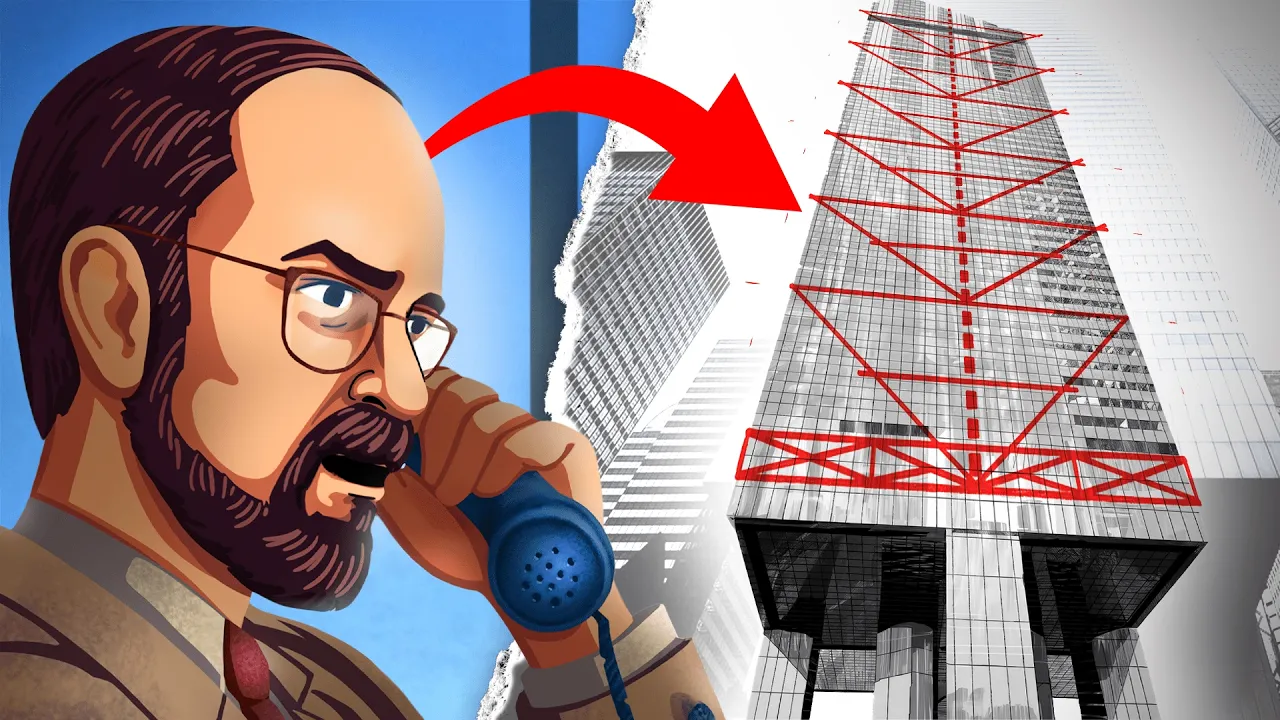
33:39
How a Student's Question Saved a NYC Skyscraper from Collapse
@veritasium
22.8M views•2025-04-26
Related Study Plans & Knowledge Roadmaps
Structured learning paths in Engineering
engineering
Building Acoustic Levitators: Physics & Arduino
01The Physics of Sound and Standing Waves
02Piezoelectric Transducers and H-Bridge Drivers
03Arduino Programming: Generating 40 kHz Signals
+ 2 more learning modules
14h5 modules
Explore Roadmap
engineering
Building Peltier Cloud Chambers: Particle Tracks
01Cosmic Rays & Cloud Chamber Physics
02Thermoelectric Cooling (TEC) Fundamentals
03Custom Liquid-Cooling Loop Design
+ 2 more learning modules
18h5 modules
Explore Roadmap
engineering
Yagi-Uda Antennas: Modeling, Build & VNA Test
01Introduction to RF and Antenna Fundamentals
02Yagi-Uda Antenna Design Principles
03Antenna Modeling and Simulation in 4NEC2
+ 2 more learning modules
18h5 modules
Explore Roadmap
engineering
ECG Monitor Design: Op-Amps, Filters & Noise
01Electronics & Breadboard Basics
02Op-Amps and Instrumentation Amplifiers
03Bioelectricity and ECG Fundamentals
+ 2 more learning modules
18h5 modules
Explore Roadmap