



















![차세대 에너지원, 그린 암모니아. 각광받을 수 있을까? [주말인터뷰 - 엘텍유브이씨 (LTechUVC)]](https://i.ytimg.com/vi/6UPL5ZQ3Yk8/maxresdefault.jpg)

Fritz Haber, who won the 1918 Nobel Prize for Chemistry for developing the Haber-Bosch process that converts atmospheric nitrogen into ammonia for fertilizers, thereby enabling the feeding of billions of people, simultaneously pioneered chemical warfare during World War I, including the first large-scale use of chlorine gas and later contributed to the development of Zyklon B used in the Holocaust, illustrating how scientific discoveries can have both transformative positive and devastating negative applications depending on their application.
The Dual Legacy of Fritz Haber: Feeding Billions | Science History
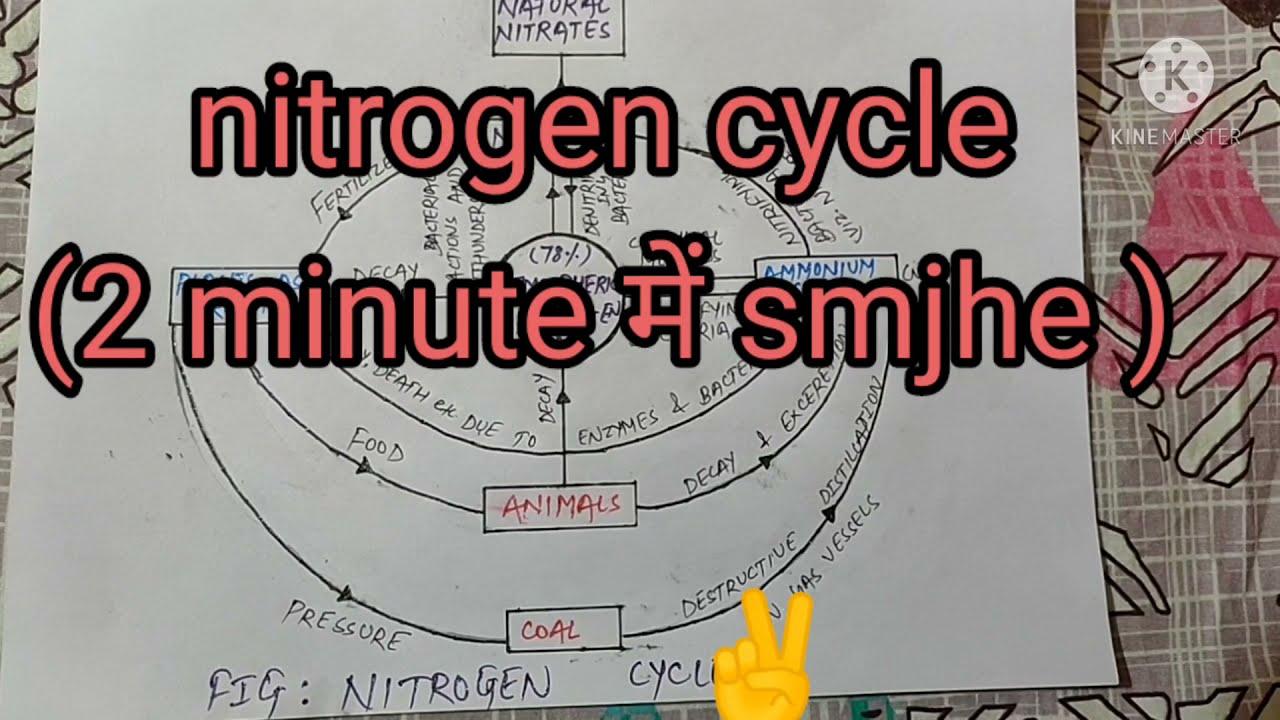
Added:Understanding of the Nitrogen Cycle: How nitrogen is naturally fixed from the atmosphere into the soil by bacteria and lightning to support plant life.
Basic chemical equilibrium and Le Chatelier's Principle: How changes in temperature, pressure, and concentration shift chemical reactions.
The concept of industrial catalysts: How substances speed up chemical reactions without being consumed in the process.
The geopolitical context of World War I: The significance of resource scarcity, specifically Germany's isolation from natural nitrate sources like Chilean saltpeter.
The ethics of dual-use research: Exploring how scientific breakthroughs can be utilized for both humanitarian progress and destructive military applications.
Environmental impacts of synthetic fertilizers: Analyzing eutrophication, dead zones in aquatic ecosystems, and greenhouse gas emissions associated with industrial agriculture.
The history of chemical weapons control: Investigating the Geneva Protocol of 1925 and the modern Chemical Weapons Convention.
Green ammonia and sustainable chemistry: Studying current research aimed at decarbonizing the Haber-Bosch process using renewable energy sources.
10M views180.4Klikes20:44Original Release: 2023-10-07
- The 1918 Nobel Prize for Chemistry is probably the most important Nobel Prize ever awarded.
It was given to German scientist Fritz Haber for solving one of the biggest problems humanity has ever faced.
His invention is directly responsible for the lives of 4 billion people today.
But when he received his prize, many of his peers refused to attend.
Two other Nobel Prize winners rejected their awards in protest and the New York Times wrote a scathing article about him.
He is simultaneously one of the most impactful and tragic scientists of all time.
(dramatic orchestral music) Perhaps more than any other single person, he has shaped the world we live in today.
(dramatic orchestral music) (tense music) If you are an American citizen and you find an island with a lot of bird poop on it, well then you can claim that island for the United States and the US will have your back.
The president is authorized to send in the Navy and the Army to defend your newly discovered poop-covered island.
There are currently 10 American islands that were claimed in this way.
And even though the law that made this possible was passed in 1856, it is still in effect to this day.
So, why did people want poop-covered islands so badly?
(birds chirping) ("The Blue Danube") There are a few dozen islands off the coast of Peru where millions of seabirds gather to mate and the waters near the island are full of fish, and these millions of birds eat the fish, and then they poop, a lot.
("The Blue Danube") Since the region is hot and dry, this poop solidifies and accumulates over millennia.
There are cliffs of bird poop 30 meters or a hundred feet high.
("The Blue Danube") And technically bird poop is called guano and by the mid 1800s, buying and selling bird guano was big business.
The price rose as high as $76 per pound meaning you could trade four pounds of guano for one pound of gold.
So, why was there such a big market for bird poop?
Well, to answer that we have to look inside the human body.
By weight, most of our bodies are made up of oxygen, carbon, and hydrogen.
But the fourth most common element is nitrogen.
Nitrogen is part of the amino acids that form proteins.
It's part of hemoglobin, the compound that carries oxygen in red blood cells and it's a central component of DNA and RNA.
Nitrogen is essential for all life on earth.
We get our nitrogen by eating plants or animals which have eaten plants, and plants get their nitrogen from the soil.
The problem is if you farm the same soil year after year, you harvest the nitrogen out of it and eventually there isn't enough nitrogen for healthy plants to grow.
They can't produce enough chlorophyll to photosynthesize which stunts their growth.
Their leaves turn yellow and they are more susceptible to pests and disease.
Crucially, for farmers, nitrogen deficiency means smaller yields.
The way to fix this is to add nitrogen back into the soil which is where bird guano comes in.
(rhythmic music) Guano is up to 20% nitrogen.
Hundreds of years ago, Incan farmers realized that adding guano to their soil made crops grow taller.
This is what allowed them to grow food in places that were previously unfarmable and expand their empire.
South America's rich deposits of bird poop did not go unnoticed by the rest of the world.
In 1865, Spain went to war against its former colonies of Peru, Chile, Ecuador, and Bolivia for control of their guano-laden islands.
But such was the world's appetite for nitrogen that by 1872 guano was running out and Peru banned further exports.
The world would need another way to get its nitrogen fix.
(tense music) This was a crisis.
William Crooks, a British chemist, made a dire prophecy in 1898.
With the world's growing population and dwindling supplies of nitrogen, he said, "We stand in deadly peril of not having enough to eat."
In less than 30 years time, he argued, people all over the world will be dying of starvation, but he also proposed a solution.
"It is the chemist who must come to the rescue.
It is through the laboratory that starvation may ultimately be turned into plenty."
Because here's the thing, nitrogen isn't rare, it's common.
78% of the air is nitrogen but it's in a form that plants and animals can't use.
Two atoms of nitrogen triple bonded together.
This bond is one of the strongest in nature.
The way to measure the strength of a chemical bond is by the amount of energy that's required to break it.
So, to break apart two chlorine atoms, for example, would take 2 1/2 electron volts.
To break apart two carbons requires 3.8 eV.
Two oxygens, 5.2 eV.
But to break apart two atoms of nitrogen requires 9.8 electron volts, a tremendous amount of energy.
(models clattering) I just want to interject to say that the molecular models in this video were actually invented by me.
These are Snatoms, a product I kickstarted about eight years ago where all the atoms snapped together magnetically.
So, you can feel the attraction between atoms and hear the energy released (atoms clicks) when bonds form.
The resulting molecules look and behave more like real molecules and they are quicker and easier to form and break apart.
Snatoms are for sale on Amazon and snatoms.com.
So, I will put some links down in the description.
Now, this video is a repost.
The original upload got over 14 million views and then suddenly it was age-restricted and demonetized.
But I think it's a really good video, so we're reposting it with the offending section removed.
It's a reminder that you can't always count on YouTube monetization.
So, if you want to support these videos, please consider purchasing Snatoms if you want some or supporting us on Patreon.
And now back to splitting nitrogen molecules.
(models clattering) (thunder claps) There are two processes that do this naturally.
Lightning releases so much energy, it breaks apart in two into individual nitrogen atoms.
They then quickly react to form nitrogen oxides and these molecules stay in the atmosphere until they react with water droplets in clouds and fall to the ground in rain.
There are also a few types of bacteria living in soil that can break the N2 bond using a tremendous amount of energy to do so, and they make nitrogen available for plants.
But bacteria only replenish the nitrogen slowly and there's not enough lightning to produce nitrogen compounds at scale.
So, chemists tried.
In 1811, Georg Hildebrandt mixed nitrogen and hydrogen in a sealed flask trying to make ammonia, one of the nitrogen-containing molecules found in guano.
When that didn't work, he submerged the flask 300 meters underwater to increase the pressure and that didn't work either, but he was on the right track.
Increasingly sophisticated versions of these experiments were carried out over the following hundred years.
All of them failed.
So, when Fritz Haber became interested in this problem in 1904, he was joining a long line of failed chemists.
He was 36 years old, working as a low level academic at the University of Karlsruhe.
He was also a new father with a two-year-old boy named Herman and a wife, Clara, who was one of the first women to get a PhD in chemistry.
Driven by pride and competition with another scientist, Haber spent five years on the problem.
His idea was to combine nitrogen and hydrogen not only at high pressure, but also at high temperature, and in the presence of a catalyst, something that lowers the amount of energy required to split diatomic nitrogen.
To do this, new experimental apparatus had to be invented.
Haber worked tirelessly on this project building equipment that could tolerate ever higher temperatures and pressures.
He also got lucky.
At the time he was moonlighting as a technical consultant for a light bulb manufacturer.
So, there he had access to lots of really hard to find materials.
Like the element osmium.
Osmium is rare.
In his day, there was only about 100 kilograms of the refined metal in existence but the company he worked for was experimenting with using it for filaments in their light bulbs.
So, they had most of the world's supply.
Haber suspected it might make the perfect catalyst so he brought a sample back to his lab.
And there in the third week of March 1909, Haber placed his sheet of osmium in the pressure chamber and then he pressurized and heated the nitrogen and hydrogen to 200 atmospheres and 500 degrees Celsius.
Under these conditions, the triple bonds broke apart and nitrogen reacted with hydrogen.
Of the total gas mixture, 6% turned into ammonia.
When the gas was cooled, one milliliter of ammonia dripped out the end of a narrow tube into a beaker.
An elated Haber rushed from one lab to another, yelling, "Come on down.
There's ammonia."
Germany's biggest chemical company, BASF, commercialized Haber's process.
Within four years, they had opened a factory in Oppau producing five tons of ammonia per day.
("Symphony No. 9 in D Minor") People spoke of making bread from the air.
("Symphony No. 9 in D Minor") With the fertilizer from this industrial process on the same plot of land, farmers were able to grow four times as much food and as a result, the population of the earth quadrupled.
There's a good chance you owe your life to Haber's invention.
The Earth supports 4 billion more people today than it could without nitrogen fertilizer.
In fact, around 50% of the nitrogen atoms in your body came from the Haber process.
(wheat rustling) The invention made Fritz Haber a wealthy man.
He got a promotion becoming the founding director of the Kaiser Wilhelm Institute for Physical Chemistry in Berlin.
He also befriended some of the best scientists of his day including Max Planck, Max Born, and Albert Einstein.
After Einstein separated from his first wife in 1914, he stayed the night at Haber's house.
But if Haber was so well-regarded, why was he shunned by colleagues when he won the Nobel Prize?
Well, it all comes down to what happened in World War I.
When the war broke out, Haber volunteered for military duty.
Unlike pacifist Einstein who denounced the war, Haber was a patriot.
He wanted to use his expertise to help his country.
Only a few months into the war, the German army was already running out of gunpowder and explosives.
Ammonium nitrate, besides being an excellent fertilizer, is also an explosive.
Just look at what happened in Beirut in August of 2020.
(explosion booming) (crowd screaming) A warehouse containing almost 3,000 tons of ammonium nitrate caught fire.
And in the extreme heat, the fertilizer detonated.
The blast which could be heard hundreds of kilometers away killed at least 217 people and injured thousands more.
Seismometers registered an artificial earthquake measuring 3.3 on the Richter scale.
This is just one of many fertilizer-related explosions.
The Oppau plant where Haber's process was first put into practice would also explode in 1921.
And the reason is nitrogen.
We've already seen that it takes a tremendous amount of energy to break apart nitrogen's triple bond.
But the flip side of that coin is that when two nitrogen atoms come together and form that bond, (atoms clicks) a huge amount of energy is released.
The explosions of gunpowder, TNT, nitroglycerin, and ammonium nitrate all form diatomic nitrogen gas as a product.
And the formation of that triple bond is where these chemicals derive much of their explosive energy.
Haber lobbied to convert the factories using his process to make ammonia for fertilizer to create nitrate for explosives instead.
His superiors believed such a conversion to be impossible, but Haber persisted, and soon his chemical process was at the heart of the German war machine.
From bread out of the air to bombs out of the air.
(gun popping) But Haber thought chemistry could make an even bigger contribution to the war.
In December 1914, he witnessed a chemical weapons test.
He was unimpressed.
Haber believed that he could do better.
He set out to make a gas that was deadly at low concentrations and heavier than air so it would sink into enemy trenches.
Projectiles carrying chemical weapons were banned, at least in theory, by the Hague Convention of 1899.
But in practice after the start of the war, Germany, France, and Britain all experimented with chemical weapons.
Haber converted his wing of the institute into a chemical weapons laboratory and after only a few months of work, he zeroed in on chlorine gas.
An employee, Otto Hahn, expressed his discomfort about the new weapon.
Haber told him, "Innumerable human lives would be saved if the war could be ended more quickly in this way."
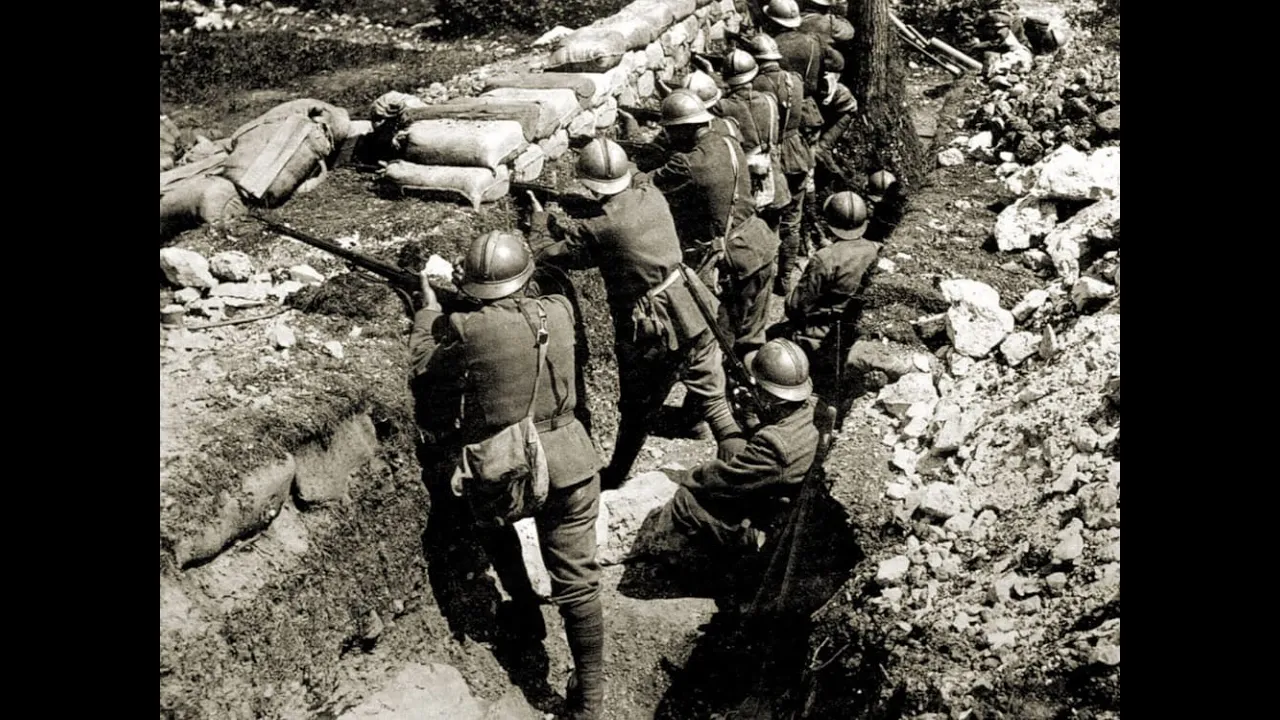
(somber music) At 6:00 p.m. on the 22nd of April, with the wind blowing toward the allied trenches, German troops released 168 tons of chlorine from over 5,000 gas cylinders.
The wall of gas advanced across the battlefield.
Since chlorine gas is 2 1/2 times heavier than air, it sank into the trenches of the Allied soldiers.
Any soldier that inhaled a lung full of the gas suffered a terrible death.
Chlorine irritates the mucus lining of the lungs so violently that they fill with liquid.
The soldiers effectively drowned on dry land.
(somber music) More than 5,000 Allied soldiers died this way in the first attack.
(somber music) Haber was promoted to the rank of captain.
Haber spent the rest of the war running his institute researching chemical weapons, gas masks, and pesticides.
By 1917, the institute employed 1,500 people including 150 scientists.
It was like a mini Manhattan project but for chemical weapons.
In total, 100,000 soldiers were killed by chemical weapons in World War I.
When Germany surrendered, Haber was crushed.
All the money he made from his ammonia patent was lost to hyperinflation.
In an attempt to pay off Germany's crippling war debt, he tried to distill gold from seawater but the project was futile.
In 1933, the Nazis came to power and passed a law that all Jewish civil servants including scientists, were to be fired from their jobs.
Haber was Jewish but he never practiced the religion.
Regardless, his military service exempted him from the law but he resigned from his role as director in solidarity with all the Jewish scientists who worked at the institute.
(pensive music) The next year in a hotel room in Basel, Switzerland, he died of heart failure.
Immediately after World War I, Haber's Institute developed a cyanide-based insecticide.
It had a barely detectable odor so, they mixed in a foul-smelling chemical to alert people to the danger.
The resulting gas was called Zyklon B.
A decade after Haber's death, the Nazis requested chemists remove the foul-smelling component and this form of Zyklon B, the chemical developed at Haber's Institute was then used to perpetrate the Holocaust.
(slow tense music) Thinking about this story, it would be easy to paint Haber as a villain or as a hero for inventing the process used to feed half the world.
But another approach is to regard him as irrelevant to the larger story because someone else would've figured out a way to process nitrogen out of the air and other scientists were developing chemical weapons.
Over the past few centuries, science and technology have improved our lives immeasurably but they have also given us ever increasing ways to destroy ourselves.
I think it'd be great to believe that we could ask scientists to only work on problems that are good for humanity.
But the reality is that every bit of information is a potential double-edged sword.
You don't know the outcome of your research or how it might later be used.
Ammonium nitrate is both a fertilizer and an explosive.
So the real question is how do we keep increasing our knowledge and control of the natural world without destroying ourselves and everything else on this planet in the process?
Up Next

43:40
The Forgotten Women of the Bauhaus: Art, Design, and Legacy
@DWHistoryandCulture
155.7K views•2025-02-02

33:02
The Great Schism of 1054: Causes and Consequences
@SacredCathedrals
113.5K views•2026-02-19

91:57
The Geopolitics of the Ukraine War and the Rise of Global Autocracy
@JordanHarbingerShow
468K views•2025-04-19

17:05
Understanding the Cold War: Superpower Conflicts and the Road to Détente
@OverSimplified
46.1M views•2019-01-24
Related Study Plans & Knowledge Roadmaps
Structured learning paths in History
history
Byzantine Iconoclasm: Theology, Art & Politics
01Foundations of Byzantium and Early Christian Images
02The First Iconoclasm: Leo III and the Crisis of Images
03Empress Irene, Nicaea II, and the Second Iconoclasm
+ 2 more learning modules
9h5 modules
Explore Roadmap
history
Iranian Revolution (Causes, Events & Legacy)
01The Pahlavi Dynasty and the Roots of Discontent
02The Spark of Rebellion and the Rise of Khomeini
031979: The Fall of the Shah and the Climax of the Revolution
+ 2 more learning modules
8h5 modules
Explore Roadmap
history
Mali Empire: Mansa Musa, Trade & Timbuktu
01Foundations of the Mali Empire
02The Trans-Saharan Gold and Salt Trade
03The Reign and Pilgrimage of Mansa Musa
+ 1 more learning modules
6h4 modules
Explore Roadmap
history
1947 Partition: Politics, Borders & Legacies
01Foundations of British India and the Divide
02The Political Negotiations and the Mountbatten Plan
03Drawing the Boundary: The Radcliffe Line
+ 2 more learning modules
8h5 modules
Explore Roadmap