



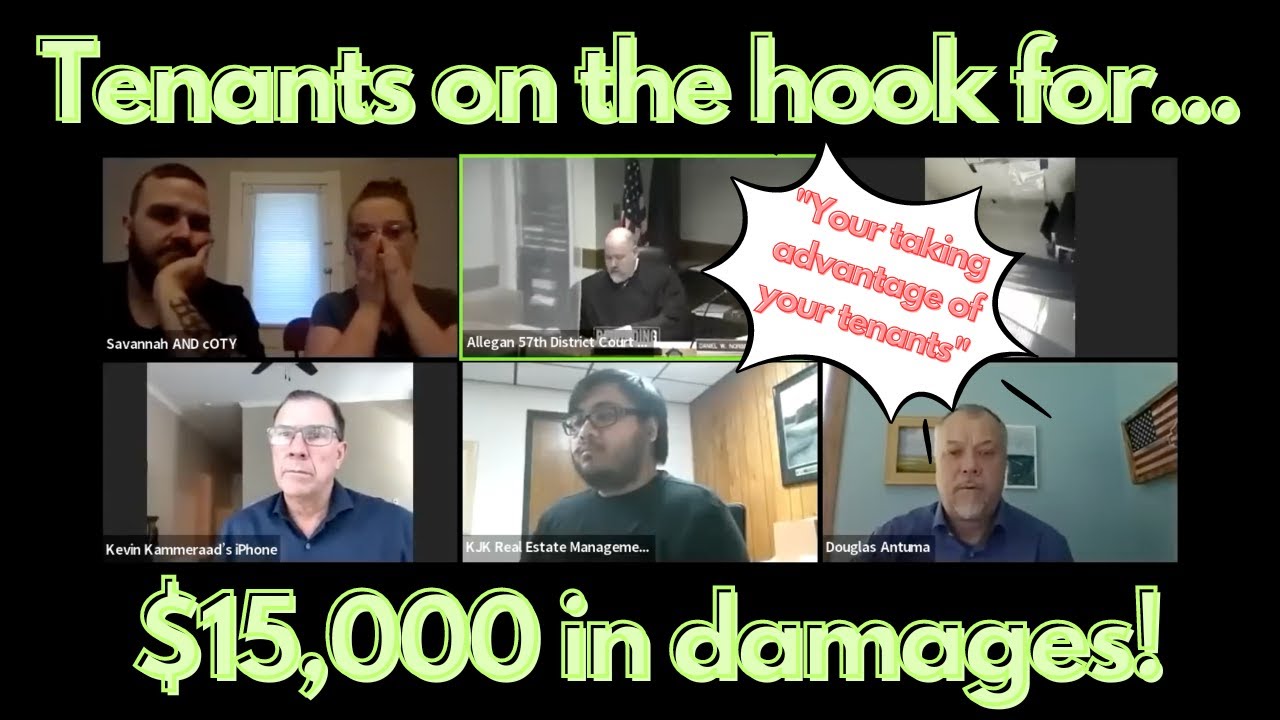

























In landlord-tenant disputes, landlords cannot recover Turnkey costs (the expense of preparing a property for a new tenant) from tenants as damages, as these are considered normal business expenses; courts only award damages for actual tenant-caused damage beyond normal wear and tear, and landlords must follow proper legal procedures including providing proper notice periods, conducting move-out inspections, and sending damage reports to the tenant's last known address.
Tenant Rights: Landlord's $7K Damage Claims Rejected in Court
Added:The legal distinction between 'normal wear and tear' versus actual property damage in residential leases.
Basic principles of landlord-tenant contract law, including the standard purpose of security deposits.
The concept of 'burden of proof' in civil court proceedings, particularly how it applies to a plaintiff claiming financial damages.
The purpose and legal significance of move-in and move-out inspection checklists.
In-depth analysis of Georgia's specific security deposit laws (O.C.G.A. Title 44), including rules on wrongful withholding and treble damages.
Best practices for legal evidentiary documentation, such as photographic timelines and certified mail correspondence for tenants and landlords.
The legal doctrine of depreciation and how courts calculate the actual cash value of damaged rental property assets rather than replacement cost.
Advanced remedies for tenants, including filing counterclaims, contesting retaliatory actions, and navigating small claims (magistrate) court procedures.
345.1K views7.4Klikes41:16Original Release: 2025-01-16
like $7,000 worth of Damages for the house and it wasn't no damages work like that in California no ma'am that's the problem I knew the law I'm not an attorney you did you said I did it by the law and you said that three times to hear me yeah awesome thank you and I can see you all right awesome so um Miss Lee yes ma'am all so this is um the case 2024 CV 02018 um this is an appeal from Magistrate Court um for a dispossessory is that correct yes ma'am all right so um are you still in the property or have you left the property I left the property she had gave me 60 days to leave okay so this is an appeal as to a judgment yes ma'am all right and Miss MO you have um possession of the property is that correct I do all right all right so um go ahead Miss leak and tell me what is going on it is my understanding that there was a uh damages amount of $457 from the um magistri Court yes ma'am so um I was living in the property for six years um the previous owners one of the wife had passed away so the husband sold the property um however Miss Mora allowed me to still stay there um she gave me a leas for six months and the price of 775 and if I needed more time I can stay there so came January I still needed more time she let me stay there for another six months without a lease but she told me that she would charge me $1,100 which was fine um came July of 2023 Miss Moira told me that um she was going to I guess reconstruct the property um and that I had 60 days to move out let me back it up prior to me moving in there in 2017 I moved in the property as is um meaning that the carpet was old I got it clean no new painting the appliances was very outdated um countertop very outdated the owners at the time let me do the countertops over I did carpet cleaning I wiped the walls down you know fit enough for me and my daughter to live in okay so let's go back to July of 2023 when I was told that I had 60 days to move out I went and go seek housing for me and my child and I wanted to hurry up and do it before my child went back to college in August because I knew I was going to need the hug so I se I found something the agency told me that I would have to pay you know the deposit to move in I did that and I went straight ahead and moved out I had a week to move out because my daughter was going back to school and like I said I was going to need the hug Miss MOA still wanted me to pay the rent there so I told her hey I had the money to move out I didn't have the money to pay you another month of rent you already gave me hold on hold on SL down for me because I need to understand so Miss Mora gives you a 60-day notice to leave yes ma'am okay and how long after that did you move out I found something in the beginning of August so it was like maybe 30 days within 30 days I found a place so what was she what was she charging you for she wanted to charge me another $100 for another 30 days but like I said I miss more you asked her to leave you gave her a 60-day notice which is required when the person doesn't have a lease but um working under a previous lease or the previous lease terms um the the the landlord is required to give a 60 day notice and within that 60 days if the person leaves why would you then charge her for an additional month so there's there's gaps in her story so I don't do you want me to say my side of the story do you want to finish until she says it because that's not exactly how it all went down okay let me hear rest of Miss Le's story okay okay Miss Le so August 2023 you find you s find the new place and you said Miss Mo wanted to you to pay another month she wanted me to pay from August to September okay another month around so okay but the money that I had to move was to move because I had to move because I didn't want to be homeless within the next day paying her and then trying to play a security deposit for a new place for me to stay okay so as I was moving you know I'm trying to hurry up and do everything and she had reached out to me like hey you have to pay the rent and I'm like oh hey by the way I found a place because prior to that she had signed let me ask you this had you paid the the rent for July yes ma'am I paid the rent for July had you paid the rent for August I didn't pay no rent for August but you were still in the place in August well I had moved out I had moved out August the 5th August 5th yes okay yes so she had signed as um a reference for me for my new place so she already knew that it was getting close to the works because she had signed it for me um so August the uh August the 5th she reached out to me and she said hey you haven't paid the rent and I was like oh I got the place you know I'm just talking to her because she was so nice to me the whole time was there I'm like I got the place like excited you know because I know I don't have to wait and figure out if I'm going to be homeless or what I got that but did you move on August 5th or you moved after yes I did I moved yes all your stuff was out of the place I got everything out there the same exact day I think it was the sixth I'm sorry the fifth and the sixth yes ma'am so rent is normally due on the fifth of the month okay and I moved everything and I moved and she was saying well if you don't give me the money by this time I'm going to have to take you to court I'm like well I had to move like I didn't want to be homeless I wrote her a letter and everything like hey this is what's happening on this day of August 2023 me I wrote me and my daughter we both signed the paper and said that we was moving out the place I found the place um I knew you knew it was coming because you gave me 60 days and also you found as a reference for me to move into you know so I can go to the next place and it got to approv and then after that I had got papers from the court saying I had to come to court and it wasn't even for $1,100 it's like she wanted me to do reing on the property and I was so confused about that because I didn't do any damages to the property when I moved out I took everything out I cleaned everything anything that was left in there was stuff that was from the prior landlord that he had there when I moved there and I didn't touch it because it wasn't mine but like I said appliances outdated the town house was all dat I just made it fit for me to live in all right so what else happened I can't hear you went out I'm sorry what else happened um I got the um papers for me to come to court okay and what was she claiming were damages that you had to pay for oh she had it on there for like the appliances um I can't recall everything they had the court said they was going everything over but basically it was like up to like $77,000 worth of Damages for the and it wasn't no damages were there holes in the wall no ma'am okay did she allege that you had put holes in the floor it wasn't know who was in the floor I don't know coer missing nothing missing light fixtures nothing everything was still as is I moved in in 2017 all right and how much did you um did the court uh Grant in this case 4,000 what now no the whole the whole thing was like 7,000 and something I don't have the correct the whole dollar amount but I know it was over 7,000 versus me paying $1,100 for a rent for one month all right okay and and then she also had security deposit that the prior landlord gave to her from me and he gave her reference to ask if I can stay into the property let me ask you this so with the security deposit did she give you the opportunity to do a walk through with her so she could do a list of all the things that were damaged did the were you saying a walk through the last day or walk through bought the property when she when she when she told you when you told her I'm moving did she send you notice that you could do a walkthrough of the property with her no she just sent me a m did you ever receive a dam list of damages from her prior to coming to court no ma'am okay so um then she used the security deposit that you had as damages in this case I think when they the court summed it up they had put the security deposit in there and minused it from what she was asking for okay and how much was the security deposit it was 775 all right so let me ask you this so did she did she ever send you a notice to either your address at that place and it got forwarded to you or to the new address that you had the opportunity to walk through the property with her to determine if there was any damages no ma'am okay and um did you receive anything from her after you moved out that said these are the damages I walked through and saw so this is how much of your security deposit I'm going to keep no ma'am okay right all right is there anything else you want me to know um no ma'am got be all right Miss Mor so I just you know I'm kind of flabbergasted by what was stated nonetheless I don't see that a judge um would have granted me be in Magistrate Court a lot of Judges don't know about the security deposit and if they don't look they might not realize it we're not infalible but under Section 44-7 d33 There's an actual procedure by which you have to go through to document damages to keep her security deposit to determine any other damages I did everything as as I as as the Georgia law stated so on July 7 20 23 she was provided a 60-day notice it was emailed to her um on that date it was certified mail to her all these dots are actually in the file that was submitted on the magistr court um and also the hard copy was also put in her mailbox which also I have pictures of okay um so this was all provided to her um and as you can see on the file I have the hard copies here as well so this is a 60 notice that was given this is the courtesy email notice that was given to her and this is the certified uh Priority Mail Express that was delivered to her door and also I went and drove over there and I also placed it in her door okay so she's not arguing that you didn't give her the 60 day notice I think she's um her argument is about the damages right and so furthermore on the email I also stated a move out inspection is optional must be requested in writing and must be completed 7even days prior September 5th of 2023 the $750 security deposit for the rental agreement is to be returned within 30 days rental agreement has terminated less any damages security deposit shall not be credited towards rent unless the landlord gives written consent 60-day notice to vacate is attached I will stop by the property this afternoon before 1:30 and hand deliver you the notice if you are not at the property I will make sure to post it on the door lastly the 60-day notice will also be mailed first class so this was provided to her via email to the the date at which she had to do the move out inspection give me that part again September 5th okay by 2023 I gave her the 60-day notice on 77 right it allowed us ample time to do it September 5th okay so she responded to the move out inspection I then uh get a text message on August 6 stating that she's moving out of the property I told her that I provided her with a 60-day notice and per our agreement it clearly says on here that uh this agreement shall be month-to month beginning on SE July 7 2022 at the end of any time the landlord or tenant providing at least 60 days written notice to other parties so she within the six I gave her the 60a notice not one time did she convey to me that she was going to move out prior to those 60 days how she conveyed that to me in a written notice then I would have been okay with that M I think you're confused in regards to what she's Frozen everybody Frozen or is it just me Frozen judge I think we had a glitch um so at the point that I left Miss MOA was explaining that she gave her a 60-day notice Miss MOA I think you're confused so you're saying I gave her a 60-day notice and in your mind she wasn't supposed to move out until the 60th day but that's not how this works if you give her a 60-day notice she's required to have 60 days before you can take any legal action to remove her such is bringing an eviction but it doesn't mean she's bound to stay in the property and to pay the rent for 60 more days it just means that's the amount of notice that she needs to give that you need to give her prior to taking any action you got me right I understand that so when you say she got 60 days and she never told me she was moving out before the 60th day and I want her to pay this last month of rent it doesn't work that way and you say that y'all had a written agreement for her to stay that sounds like a lease we did have a lease but in that you agreed that each of you would have a instead of 30 days you would each give each other 60 days notice that's the only change to the lease you just said we had in writing that I would give her 60 days notice and she would give me 60 days notice I never said I'm sorry no so the you just said the lease agreement is here this is a month-to-month lease agreement I get a you can't have a month-to-month lease agreement either you have a lease or it's month-to Monon you can't do both month to mon no ma'am you got something in writing month to month means nothing in writing we're traveling under the old lease terms and it's year to year or until I give the 60 days notice or she gives the 30 days notice that's month to month lease means y'all sat down and talked about this came up with some um agreement and wrote it down and you have from January I mean from July of 2022 to July 2023 there's an agreement in W it you just said so so I guess that's that's my error so this is consider a month to month you can't say that if you have a writing if you have a written document it's not month to month you have just in given her more time than you would generally give her to move out you gave her 60 days as see this is what happens when non-b buus people try to do things legalistically and they mess themselves up so I'm listening closer because I did four years in Magistrate Court I have come through every part of the the dispossessory code and I teach it at new judges training so when I tell you you can't say to me it's month to month but we have a lease or a written agreement it's one or the other it can't be both that's fine and and I'm not gonna harp on that that that's fine however because I'm I'm really the court judge granted me the damages so when I took but I get to look at it denovo which is Latin for as if everything is new I get to hear all of it and my decision based on what I'm hearing nothing to do with what the other ma the Magistrate Judge heard don't don't care okay gotta so okay um but I would suggest as a business person that you sit down with a lawyer who is knowledgeable about dispossessory law and clear it up because you're talking about month to month with written delease terms that that's not that's not how this works got it thank you now let's get back to the damages because really um she's out of the property so all of that is under water under the bridge what I need to know is whether you gave her the opportunity for inspection um she moved out earlier than September was there an opportunity for her to inspect when she moved out like did you send her an updated notice no I did not send her an updated notice she text me and the text St that she will go ahead and vacate she's vacating and then she will leave the keys in the mailbox okay so at that point when you knew she was vacating did you say hey I'm going to do a walkth through um because presumably if she's out in August you're gonna try and rent before the September you're gonna try and get somebody in there so she's not going to do an inspection with somebody else in the property at that point did you update your notice to her about the inspection no I did not there was no further communication but through the courts when I went ahead and filed so there was no further communication okay and then when you went in and decided all of these things um that you were going to seek as damages or that she needed to repay you did you give her did you send her a detailed list of all of these things before you went to court there was no forwarding address no ma'am it doesn't matter because the law says you send it to the last known address you let the post office worry about whether it gets forward got it so you're talking about how you did everything by the law the law says you can use the last known address if gets forwarded it gets forwarded if it doesn't it doesn't but did you send any communication no there was no further communication okay now tell me about all of these things that you feel like she should have paid for when you bought the house as is okay so I bought the house as is and I did do a walkthrough with her at that time there was no pets she had a pet in there um there were okay hold on hold on did you document the walkthrough that you did with her when you first came in and she was attorning to the lease did you document it I I did documented copy of it I sure did okay did she get a copy of that she signed it okay but did you give her a copy of it via email yes I did okay so now tell me when she did when you walked through after she left the property what did you what did you determined she should have paid for okay so there's holes in the window screen right they were cut out lines as you can see here in this the BL hold on I'm trying to get it you can see it okay so the blinds were messed up okay next purposely cut they weren't just messed up these were like okay go ahead Miss Mora the blinds were actually cut the window screens were completely off on all of the room you can clearly see that they were holes there were dog bites at the bottom of the uh of the uh of the blind this is the sliding door blinds there were dog bites at the bottom okay did you tell her couldn't have a pet there it was written into the agreement or the month to month that was it's the Le ma'am it's not a month M sorry the least she was not to have a pet she was not to have a pet okay what was the hold on slow slow your roll okay if she had a pet was there a penalty that she had to pay yes there is is right here 350 uh pet fee $350 okay a one time 350 yes okay go ahead thanks so there were hold on I'm looking for the closet doors there were glass both of those were cracked I don't know if you can see that that well but they were both cracked and all of this stuff was submitted as you can see the door knob on the one of the bedroom doors would looked like it was kicked off or kicked out from the thing um hold on just a second um the electrical outlets have been damaged there was paraphernalia found on the apartment what do you mean paria paraphilia there were sster wrappers and marijuana found in one of the kitchen cabinets which I have a picture of this right here is a smoke detect that was how does the marijuana paraphernalia damage you it had to be cleaned out it had to be disinfected all of the H I hate to say this but have you owned rental property before both listen to me have you ever heard of TurnKey cost I have but because of the because of the odor they have to do a special treat for that that's like when what what I'm saying to you is I'm real familiar with rental property don't ask me how I know real familiar but TurnKey costs on average are from3 to $5,000 depending on where how long the person lived there um generally carpets need to repl be replaced floors need to be redone painting needs to be redone um certain things may have to be replaced doors windows window screens so all of this stuff that you're claiming is under the list of things that have to be done to TurnKey a place to put somebody new in there I don't know how you feel like this is not a cost that the landlord should Bear all of these damages that I just pointed out like yes ma'am because when you talk about window screens and blinds and stuff like that that's normal wear and tear for somebody who's lived in a place six years window screen and blinds those little blinds you're buying rental grade blinds you didn't buy them but the previous people did you're not buying high-end stuff you're buying rental grade and when you buy a rental grade for a rental property it needs to be TurnKey so all of this stuff is it seems like you're taxing her for something that first of all it the person the people who did it the first time did not this was not a high-end property some of that stuff she may have purchased out of her own pocket as an agreement between her and the previous owner you don't know because you took over after she took the property how how long was she in the property Miss Mora before you took off that I don't know how long was she in the property Miss MOA before you took over I don't know okay so you don't know if any of that was purchased out of her own pocket it was not because when I did the walkthrough she never spoke upon it she never spoke in regards to any repair that she had done the repair that she did was to change a toilet valve inside which I reimburse her Force thereafter she did not point out anything that need to be repaired you cannot justify having a a hood range to like this after I did the walk through you can justify my smoke detector being uninstalled you can't justify the cabinets you cannot justify the warp cabinets after I did the walk through and that was not on there okay did that damage to the cabinets did she report the reason for the damage to the cabinets she not she did not report absolutely nothing from the time that I did the walk through with this lady up until the time she moved out the only uh report that she made was a toilet bow that she replaced which I still have the text for that and I went ahead and credit her for her purchasing that okay time after I did the walk through was my stuff looking the way it came out to look after she moved out so how much did you spend to turn key the property I have all of my individual receipts how um let's see it could have been I mean I have the I mean the basically I it could it was around more or less whatever I put the amount for when I originally did the court claim which was I think it was close to 7ou right here it goes $7,400 that's what all of my receipts added up and I also asked for the co court cost to be reimbursed okay and you kept the 75 7 thou $775 um security deposit correct okay all right what were the most expensive items that you had to replace the most expensive items uh let's see hold on I have my receipt the uh the bathrooms what did you have to replace in the bathroom the carpet I I understand that's prated because she was in there I also replaced the carpet okay no carpet is TurnKey ma'am I'm not giving you anything for carpet right that's fine uh so basically it was the kitchen area what did you do in the K what did you do in the kitchen do all of the cabinets and I have pictures of all that do all of the cabinets what do you mean do all warped all of the doors and the inside of the cabinets that were warped with the that she left behind there and also the bathrooms the bathro were the same thing the B I had to replace them I have to replace the toilets um I had to replace the kitchen countertops um I had to replace all I don't know if this is included on on the turnkey I had to replace all the appliances I have to replace the refriger everything everything you can think of this is this is the stove top where she left it was literally burning a hole onto the dripping pan and the K on the stove so you can buy dripping pray separately those are about four or five dollars so why did you have to replace the entire stove top because the stove top let me show you what it let me show you what it look like this is why I had to replace the dishwasher because it was not okay ma'am Miss uh leaks how long did you live in this property I lived there since 2017 and Miss Mora how long did you own the property I purchased the property on uh 22 2022 and did you put any new appliances or anything into the um her living unit when you purchased the property I did not because there was nothing no no no listen to me listen to me did you paint when you moved in when you uh purchased the property no because there were did you replace did you replace the flooring when you purchased the proper no did not because there were no visible DS at that time so at this time you've already received the $775 for the security deposit Miss leaks owes you $350 for the um pet damages and the rest of that is TurnKey because you would have had to do all she's been living in that place for six years when you bought it it had all of those old appliances it had the old fixtures it had no Miss Mora I don't care if there was no damage when you bought it it is a place where a renter has lived for six years there's going to be holes in the windows um screens there's GNA ma'am I when I tell you I am experienced in rental property not just from being a magistrate you're trying to put your TurnKey cost on the back of the tenant absolutely not and you probably done that before absolutely not yes ma' absolutely not yes ma'am and she's not required to pay the additional month's rent you gave her 60 days to move out before an action could take place she moved before the 60 days so she's not you don't you're not entitled to the month's rent she moved within the time period you asked her to move I'm not disputing that that's already been established I'm here because at the time of the moving the condition of the unit was not as she left it when she left and regardless of normal wear and teir this was beyond normal wear and te okay um so you said the bathrooms the cabinets you had to replace all of those what else was the most expensive thing you had to do the most expensive things were the bathroom the kitchen um all I mean I I I had to literally do everything so I I don't know where that falls in Tom I'm just not impressed by that because you bought a old property um the person was already living there there was already going to be issues because you had a tenant in the place every time you bring in a new tenant there's going to be some TurnKey especially when they've been living in a house that long um you bought a property and you didn't replace all of that stuff when you bought it so what you're dealing with is a tenant who's already dealing with old appliances old all of that that's all part of being a rent a landlord ma'am just because things are old does not justify her messing them up to where now they're inoperable when we did the walkth through those items were not like that had those items did the walk through in 20122 it's 2025 had you been in the property since then miss Mor you in the property since then say what had you been in the property since 2022 no because she never reported did you do periodic inspections no because she didn't never reported anything it doesn't matter you have the right as the landlord to do periodic inspections and if there's issues then you can address them at that time but if you went from 2022 to 2020 um 3 2024 you never even went back to look to see if there was damages and you're saying that it should have been Pristine from the time she first started Living there or from the time you bought it until the time she moved out that's I'm not saying that it should I just and I'm gonna give you what's fair at what is fair I think is about $1,500 to $2,000 because other than that all of that stuff is stuff you had to do anyway to bring in a new tenant that's the cost of doing business as a landlord and I also know you're gonna take it off on your taxes because that's how you run a business so what you're looking at is a double recovery when I don't these aren't things that you get from a tenant especially when you're not doing periodic inspections and you can't follow the decline of the property now if you told me at some point you were in there looking at it but when we're talking about blinds and and window screens that's that is the cost of doing business as a landlord and if you haven't ever had to replace stuff like that before you're not doing it right you're I'm I'm just I don't understand so it's it's okay for an individual to rent someone's property and purposely cut blinds that's that's normal wear and tear you're telling me that it's okay for an individual to get have your dog bite the bottom of someone's uh blind you're telling me it's okay for someone to remove the smoke detector and and then probably can cause a fire due to you not having the installed smoke detector you're telling me that it's okay for her to have rusted the top of the stove that she supposedly had cooked in you're telling me that it's okay for her to have roast rust uh rusted the refrigerator ma'am those refrigerators were old you don't even know when they were purchased so rust on a refrigerator a rust on a stove you don't even know when they were purchased so you didn't purchase I se I seen it in 2022 when I did walk through it was not like that that's what I'm trying to tell you I don't care that was 2022 this is 2024 you're talking about so your okay for her from 2022 time she left I'm not gonna argue with this tenants do all kinds of crazy stuff I will grant she should have had she should have had a pet you're charging her 350 for the pet um I will grant you've kept her two her 775 even though you didn't send her um you didn't update your inspection requirements um once she moved out of the property you set them thinking that she was required to stay in the which I don't that makes no sense to me you give her a 60-day notice and you think on the 60th day she's GNA move out on that day into a new place instead of you're giving her the notice for her to within the 60 days move then you didn't update your inspection procedures um and inspection notice you didn't send a damages report to the last known address in some cases she might even be entitled to triple um her uh her security deposit because you didn't do it right even if you go through the process of doing a damages walkth through after the person has left if you're going to keep their security deposit according to the law you're supposed to then send the damages report to their last known address you say you didn't send it but you're asking me what's fair about a property where you bought it with old appliances in it you didn't inspect periodically and you want the court to give you the cost of TurnKey not gonna do that at this point I will grant you the 775 um and the 350 for the dog I will grant you the 775 and the 350 for the dog the rest is the cost of doing business so what is the total you said 775 and the 350 and you've already gotten the 775 cuz that was her um her deposit and the 350 she'll pay that okay so can I have that paid can you give her a date to have that money's rendered to me I don't generally do that because that it is your job to collect it I'll barnish a problem once I give a judgment it is upon the person who prevails to collect the Judgment but miss MOA wor sit down with an attorney who's knowledgeable because everybody who think they know the law well I'm doing it by the law and you're telling me it's month to month when you clearly have a lease that you've negotiated so sit down with somebody well this is the lesson learned here in Georgia because it doesn't work like that in California no ma'am that's the problem everybody comes to Georgia thinking it works like it does up north where it's no it does not well noted well noted you you can't just come here thinking you know the law no ma'am it doesn't work the same in any other state every state has nuances absolutely I never said I knew the law I'm not an attorney you did you said I did it by the law and you said that three times to me when I first asked you what was going on you talked about I did it by the law and then you immediately told me you had a month to month and a leas are you gonna be able to set a date where she needs to brender the money or do I need to garnish her no ma'am you need to do whatever you need to do to collect it I don't collect I just give the Judgment so 350 um for the Judgment plan thank you you're welcome take care ma'am all right Miss you'll pay the 350 okay ma'am thank you so much you're welcome all right by bye okay all right so the next case did we ever get Mr um Willie B back online sorry you're onor I he was here and we keep having trouble with zoom I've I've called him a few times during the break I'm still working on him um if I could just get another you know another five minutes or so I'll I'll all right we got a one o so we'll be back at 1 okay thanks
Up Next
9:13
Mastering Tenant Eviction: A 7-Step Legal Guide
@biggerpockets
23.7K views•2021-02-08

4:27
US Secondary Sanctions Impact on EU Businesses and Blocking Legislation
@Bureauvandijk
1.6K views•2019-03-20

5:27
Forensic Phonetics: Speaker Identification in Legal Cases
@nptel-nociitm9240
539 views•2025-03-19

24:42
Police Interrogation Tactics: False Confessions & Legal Reform
@LastWeekTonight
7M views•2022-04-18
Related Study Plans & Knowledge Roadmaps
Structured learning paths in Law
law
Self-Defense Law: Imminence & Castle Doctrine
01Foundations of Self-Defense Law
02Imminent Threat & Reasonable Belief
03The Principle of Proportionality
+ 3 more learning modules
12h6 modules
Explore Roadmap
law
Defamation Law: First Amendment & Actual Malice
01Introduction to civil torts and the First Amendment
02Elements of Defamation: Libel and Slander
03Public Figures vs. Private Individuals
+ 2 more learning modules
8h5 modules
Explore Roadmap
law
Hearsay Rule: Trial Evidence & Exceptions
01Introduction to Trial Evidence & Courtroom Basics
02Demystifying Hearsay: The Core Definition
03Non-Hearsay: Exclusions Under FRE 801(d)
+ 3 more learning modules
14h6 modules
Explore Roadmap
law
Medical Malpractice: Law, Liability & Care
01Foundations of Tort Law and Civil Liability
02The Four Elements of Medical Malpractice
03Defining and Proving the Standard of Care
+ 2 more learning modules
12h5 modules
Explore Roadmap