![Learn 8 Python Important Concepts Simplified [ Intermediate Python ]](https://i.ytimg.com/vi/qeOcZiSp3tE/maxresdefault.jpg)










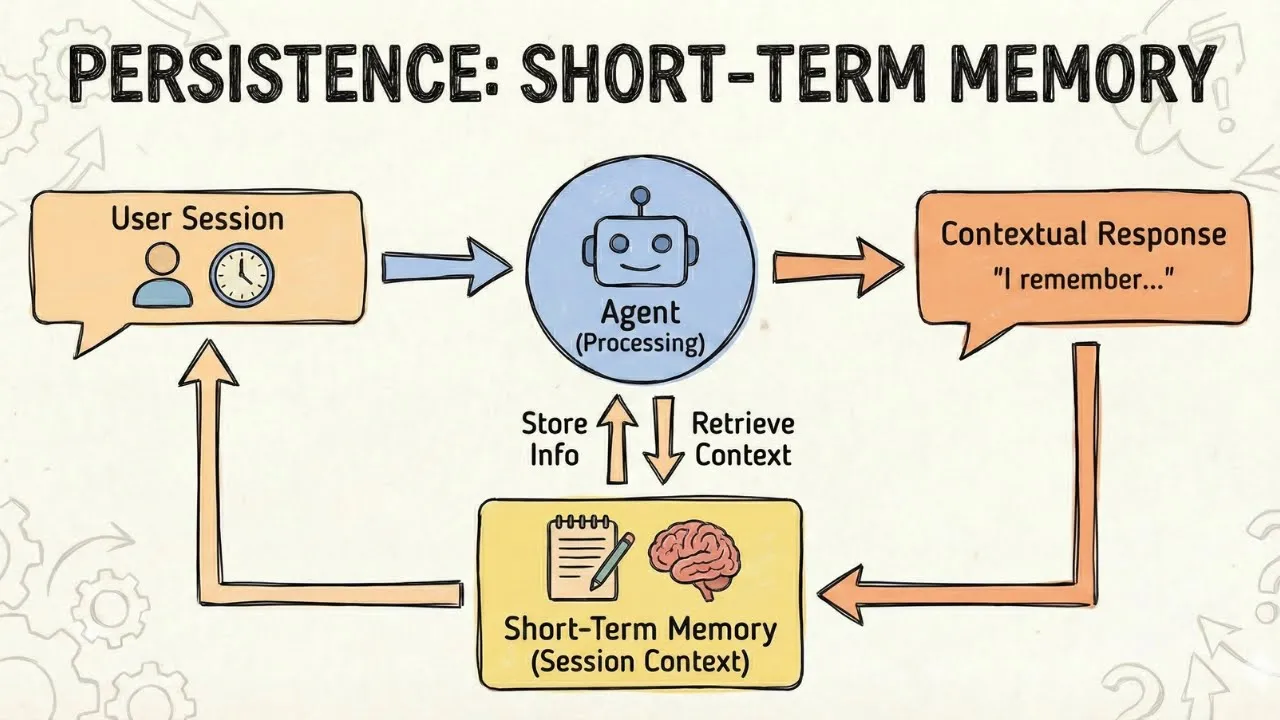

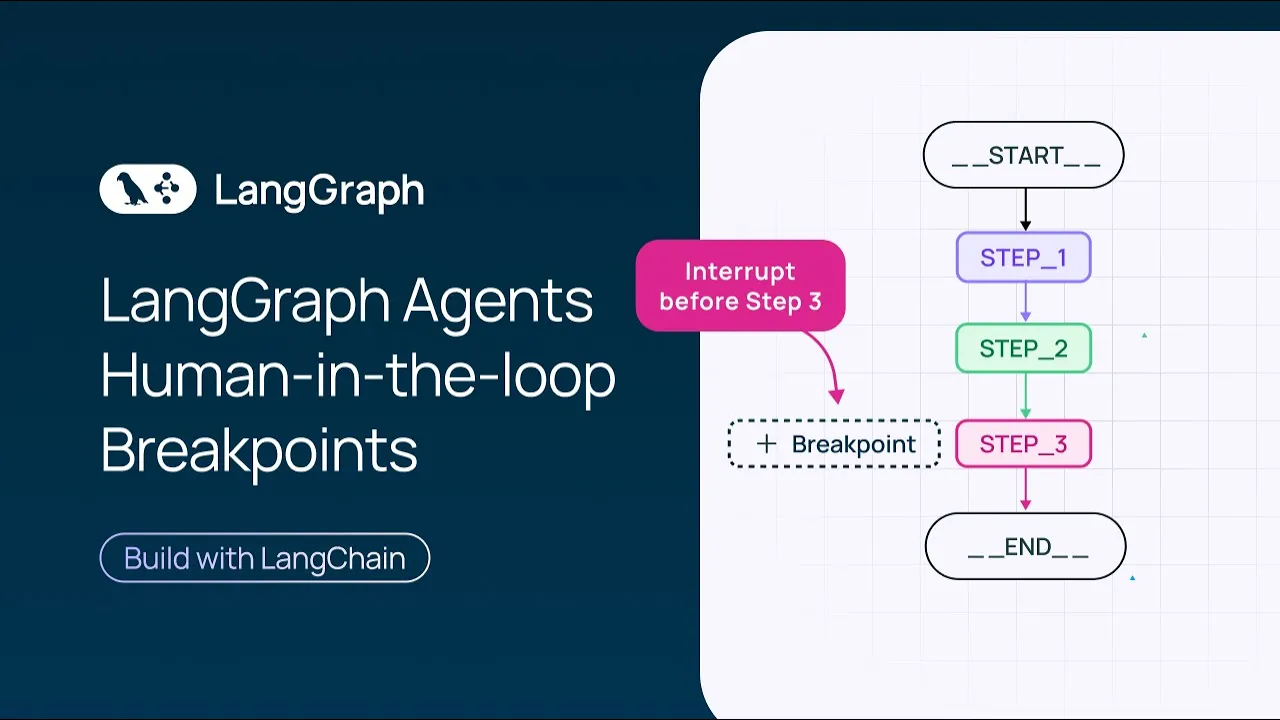





To implement persistent memory in LangGraph, import the memory saver checkpointer from langgraph.checkpoint.memory and configure it during graph compilation by adding a configurable thread ID, which enables the model to retain conversation context across multiple invocations; without this configuration, the model loses context between messages.
LangGraph Memory Agents: Python Code Tutorial
Added:Intermediate Python programming, including familiarity with asynchronous execution (async/await) and data structures like dictionaries and classes.
Fundamental concepts of Large Language Models (LLMs) and how stateless APIs require historical context to simulate conversational memory.
Basic understanding of the LangChain ecosystem, particularly how ChatModels, tools, and schemas are defined.
Core concepts of state machines and graph-based workflows, specifically how state is passed between nodes and modified by edges.
Transitioning from in-memory storage (MemorySaver) to persistent, production-grade databases (such as PostgreSQL, Redis, or MongoDB) for state checkpointers.
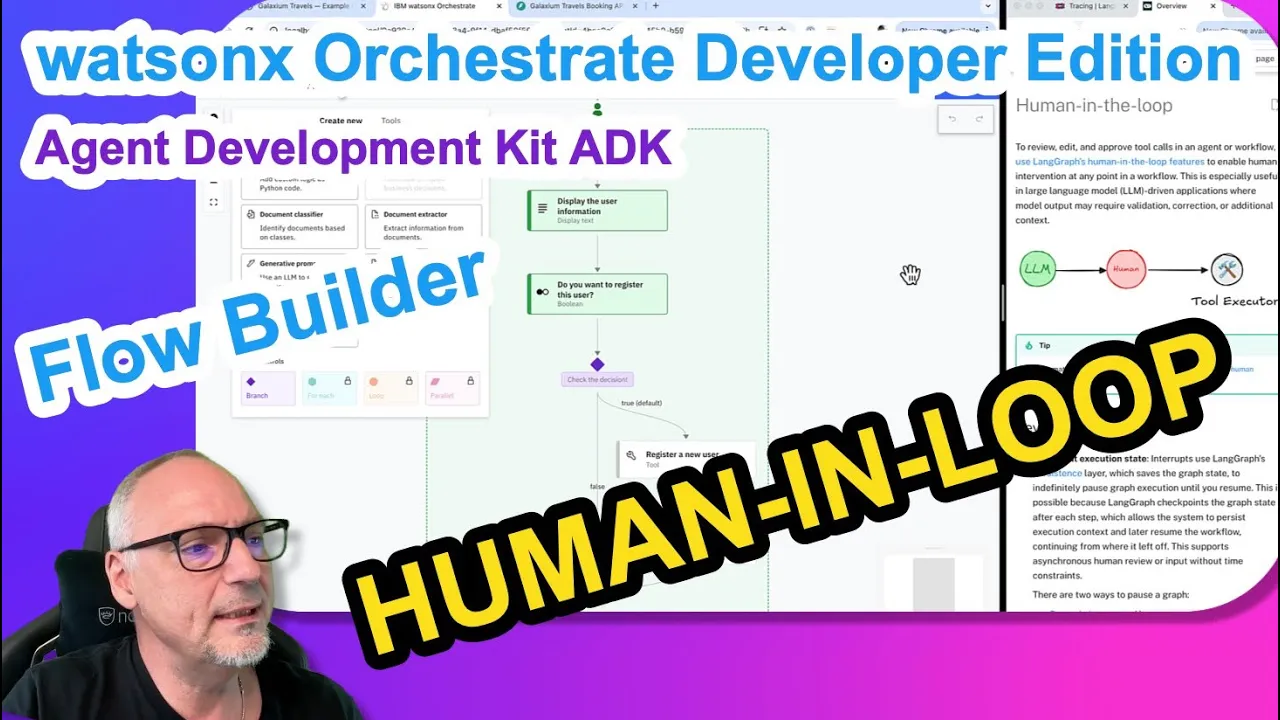
Implementing 'Human-in-the-loop' patterns, leveraging checkpointing to pause agent execution for user feedback or approval before resuming.
Architecting advanced memory systems that separate short-term episodic memory (via checkpointers) from long-term semantic memory (via vector databases).
Designing complex multi-agent systems where state is shared, synchronized, or compartmentalized across multiple specialized agents.
196 views7likes4:54Original Release: 2025-10-20
Till this point we just learned how to make a graph. Now let's learn how to make a persistent memory.
So doing that is actually very easy.
The one way is very easy that I'll teach you. So you just need to import in the same code langraph dot checkpoint dot memory. Let's import memory saver and we are going to use the same state and same builder.
Let's use same model also. Let's use same node. This is also going to be the same. The only thing that is going to change is when you do a compilation.
Then you can define your memory saver checkpointer.
This is what we are saying. We are saying add the persistent sense with the memory. So let's make a thread.
Thread one and it is going to be in this format is going to be you need to define uh the configurable and the thread ID. So it can be a UU ID.
You can provide uh any ID. It should be unique one.
Now the way you are going to invoke your uh mod is going to be different. So let's comment this out and till thread it we just added the thread one and let's bring our first AI message.
So here you can see we are calling just the same thing. Hi, my name is Jack and this is the thread ID. So if you remember, if you invoke again the model will lost the context of previous message.
Let me run it now without this thread. If you if you're going to run it and then if you make an another invocation, let's make it result two.
And we'll ask what was my name?
And we as long as we provide the same config variable then uh we can we can ensure that model will have this memory context with it. So let's run it and see if it works.
Perfect. Hi, my name is Jack. This is the human message. Hi Jack, nice to meet you. I How can I help you? Now, this is the second message. You said your name was Jack.
That's perfect. Now, what happen if I uh do not pass this thread and then run it?
All right, we need to remove this as well. We need to compile it without checkpoint. You'll see um you'll see the difference.
This is the first message. After that, we'll have second message if we are interested. What was my name? I don't know. you haven't told me your name in this conversation and I don't have any X just the difference is we we just passed the configurable memory savers thread point and that is the only difference that it made for the memory management. This is the one of the ways of uh doing the memory management and it's very helpful if you want uh your uh model to retain the context of the conversation like in a chatbot system.
So this is how you are going to do it.
Thank you.
Up Next

17:16
Deploy AI Agents with LangServe: Complete Technical Guide
@ColeMedin
12.7K views•2024-09-02

12:54
Triumph of Orthodoxy Icon: Byzantine Art & History Explained
@BenCallan
2.1K views•2024-08-06

9:49
FastAPI vs Flask vs Django: Choosing the Right Python Web Framework
@TechWithTim
302.5K views•2024-05-26

1:42
Game of Thrones Opening Credits: A Cinematic Analysis
@gameofthrones
46.3M views•2011-04-18
Related Study Plans & Knowledge Roadmaps
Structured learning paths in General & Interdisciplinary Studies
general-studies
Elevator Engineering: History, Physics & Cities
01From Hoists to Safety Brakes: The Dawn of Vertical Lift
02Hydraulic vs. Traction: The Engineering Physics of Elevators
03Modern Speed, Safety, and Algorithms
+ 2 more learning modules
12h5 modules
Explore Roadmap
general-studies
Rubber: Material Science, History & Geopolitics
01Origins of Natural Rubber & Mesoamerican History
02The Chemistry of Natural Rubber & Vulcanization
03The Geopolitics of the Rubber Boom & Colonization
+ 2 more learning modules
12h5 modules
Explore Roadmap
general-studies
Containerization: Evolution, Logistics & Trade
01Ancient Trade & Bulk Cargo: Amphorae to Barrels
02The Industrial Revolution & Cardboard Packaging
03The Containerization Revolution: Malcom McLean
+ 2 more learning modules
12h5 modules
Explore Roadmap
general-studies
Textile Tech: Evolution, Labor & Global Impact
01Pre-Industrial Textiles: Handloom & Cottage Industry
02Mechanization: The Spinning Jenny to the Power Loom
03The Factory System & Global Labor Transformation
+ 2 more learning modules
10h5 modules
Explore Roadmap