Indian Sign Language uses five phonological parameters—handshape, location, orientation, movement, and non-manual expressions—to create meaningful signs; these parameters function similarly to phonemes in spoken languages, where minimal pairs (signs differing by only one parameter) demonstrate how each parameter contributes to meaning, and all parameters must combine together to form complete, meaningful signs.
Features of Sign Language | Indian Sign Language (ISL) | Part 6
Added:Deep Dive
Basic understanding of Indian Sign Language (ISL) history and its status as a distinct, natural language system.
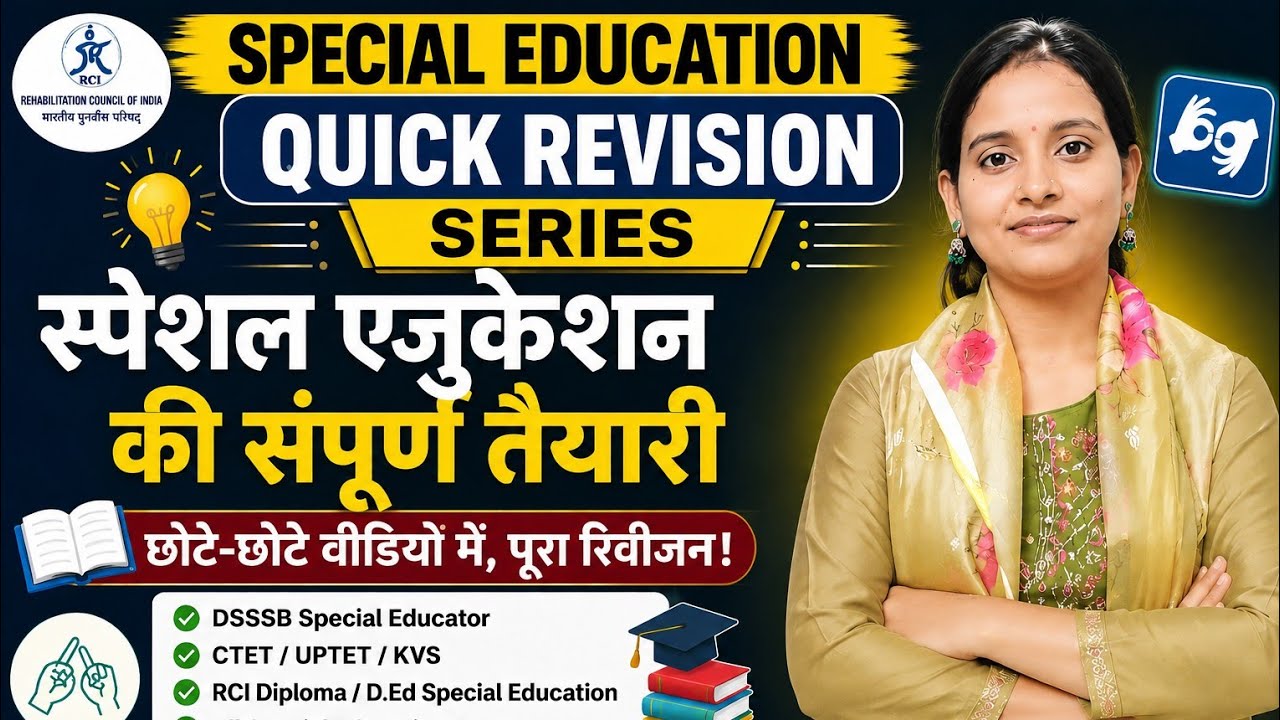
COMPLETE INFORMATION IN( ISL )|| QUICK REVISION FOR COMPTATIVE EXAMINATION || 😊🎉||SPECIAL SERIES||
117
Indian Sign Language (ISL) is a natural sign language used by the deaf community in India, characterized by two-handed signs (unlike American Sign Language's one-handed approach), with its own grammar based on hand shapes, location, orientation, facial expressions, and body language; it is governed by the Indian Sign Language Research and Training Centre (ISLRTC), established in 2015 under the Ministry of Social Justice and Empowerment, which has developed a dictionary containing over 10,000 words covering education, science, medicine, law, and daily life, and is used across education, judiciary, healthcare, media, and public services.
Click to watch →
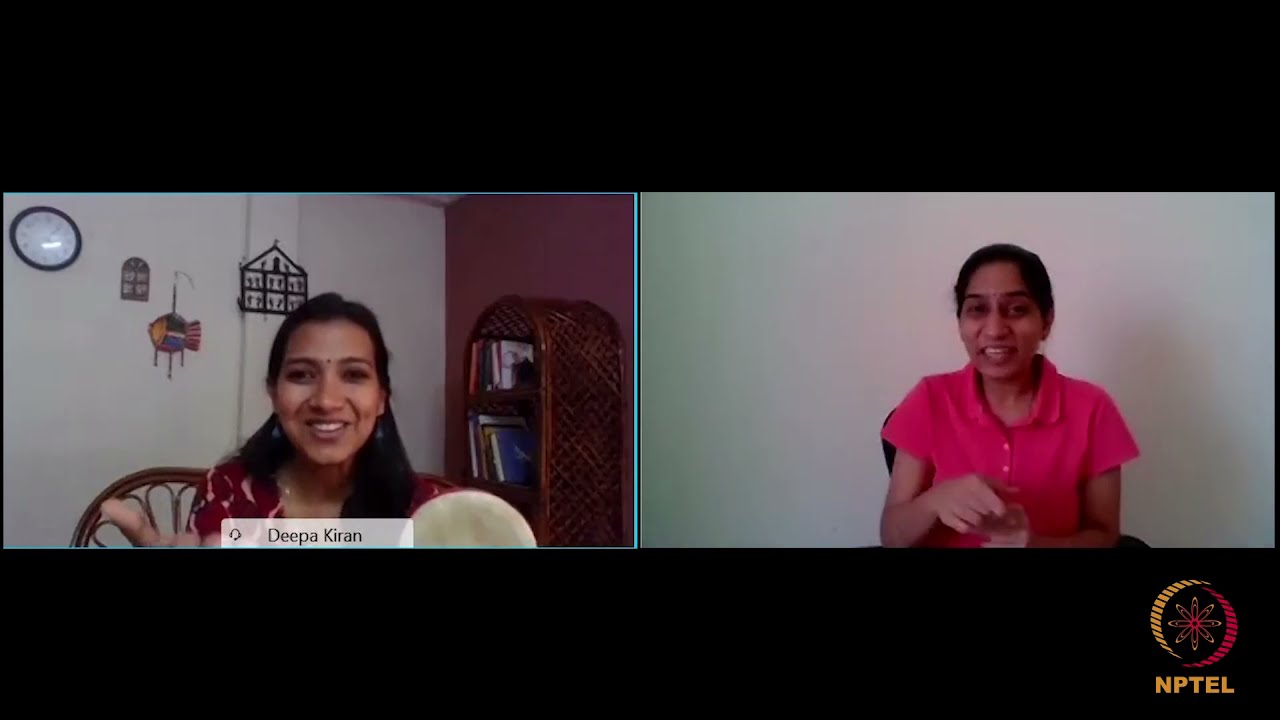
mod06lec29 - Part 01: Demonstration Of The Workings Of ISL; Its Beauty And Diversity
228
Indian Sign Language (ISL) is a visual language that has evolved naturally among deaf communities, requiring facial expressions and body movements for effective communication, and it differs significantly from spoken languages as each country has its own unique sign language; common misconceptions include believing deafness results from past life sins, that sign language is universal, that all deaf people speak fluently, or that sign language hinders speech development, when in reality ISL is a complete, culturally diverse language system that deaf people develop naturally from childhood.
Click to watch →

Understanding Deaf Culture: Why Indian Sign Language Needs Official Status
10.5K
This video explains that deaf individuals possess a distinct culture and language (Indian Sign Language) that deserves official recognition, as denying deaf people access to their natural language leads to identity crises, educational failures, and social exclusion; granting ISL official status would mandate communication accessibility in public services, promote bilingual education, and foster greater societal inclusion and respect for deaf culture.
Click to watch →
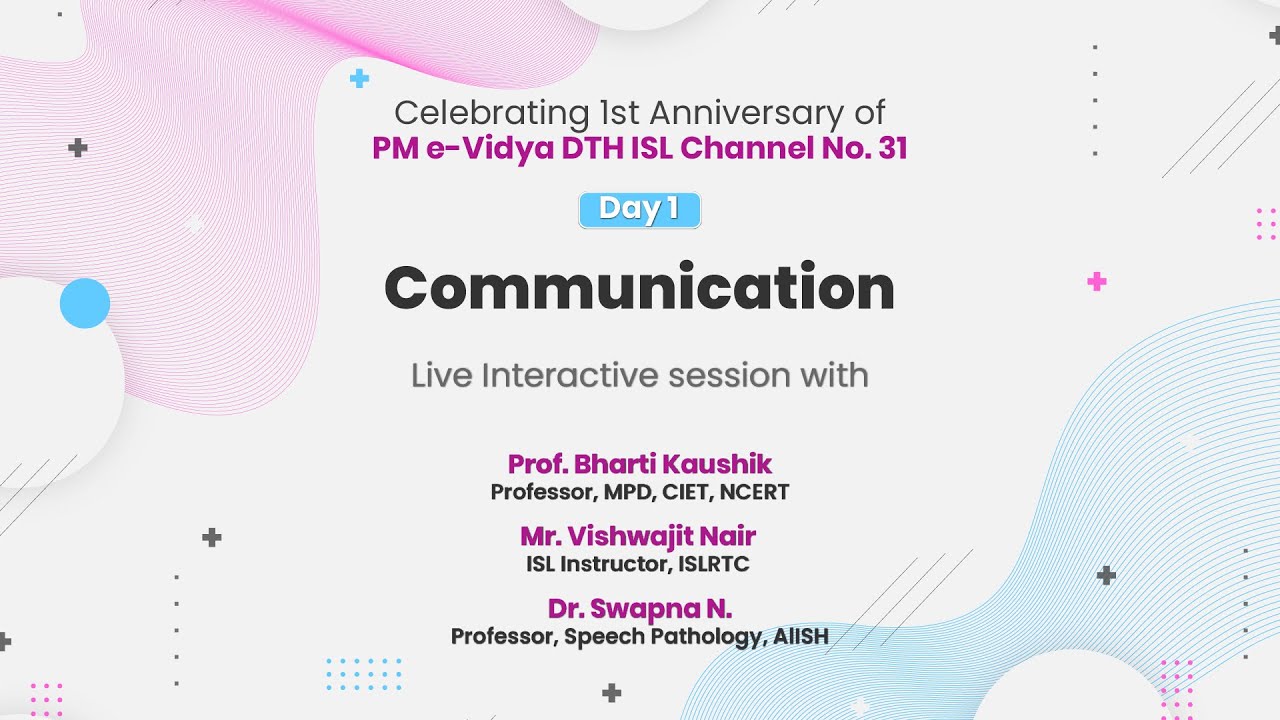
NCERT Celebrating 1st Anniversary of PM e-Vidya DTH ISL Channel No. 31 Class: I-XII Live
562
Indian Sign Language (ISL) is a complete natural language with its own grammar, syntax, and expressions, not merely gestures. ISL has full grammatical structure including different expressions for questions versus statements. Official recognition of ISL is crucial as it validates the language's legitimacy, similar to spoken languages. The National Education Policy 2020 has initiated efforts to develop curriculum materials and standardize ISL use. Communication operates through verbal (words) and non-verbal (gestures, facial expressions) modes, both essential for effective interaction.
Click to watch →

INDIAN SIGN LANGUAGE | Part 1 | Alphabets | Anna Prasad
15.3K
This segment introduces Indian Sign Language (ISL) as a distinct visual-gestural communication system. The instructor explains that ISL differs from American Sign Language (ASL), similar to how spoken languages vary across countries. Key foundational principles include: (1) Proper body positioning—signs should be performed in front of the chest, not above the head or behind the back; (2) Facial expressions are crucial components of ISL and should not be hidden; (3) Lip reading and verbal accompaniment should be avoided as ISL relies solely on hand movements and body language. These principles form the essential framework for effective sign language communication.
Click to watch →
Deep Dive
Familiarity with the ISL manual alphabet (fingerspelling) and introductory vocabulary typically covered in foundational lessons.

Curso de Libras Iniciantes - Alfabeto Manual e Números - Aula 1 - Prof. Luiz Albérico Falcão
1.6M
The manual alphabet (alfabeto manual) is the foundation for spelling words in sign language. When someone wants to spell a word, you use the letters A, B, C, and so on. This system allows deaf individuals to communicate by spelling out names and words letter by letter. The instructor emphasizes that this is the starting point for learning sign language communication.
Click to watch →
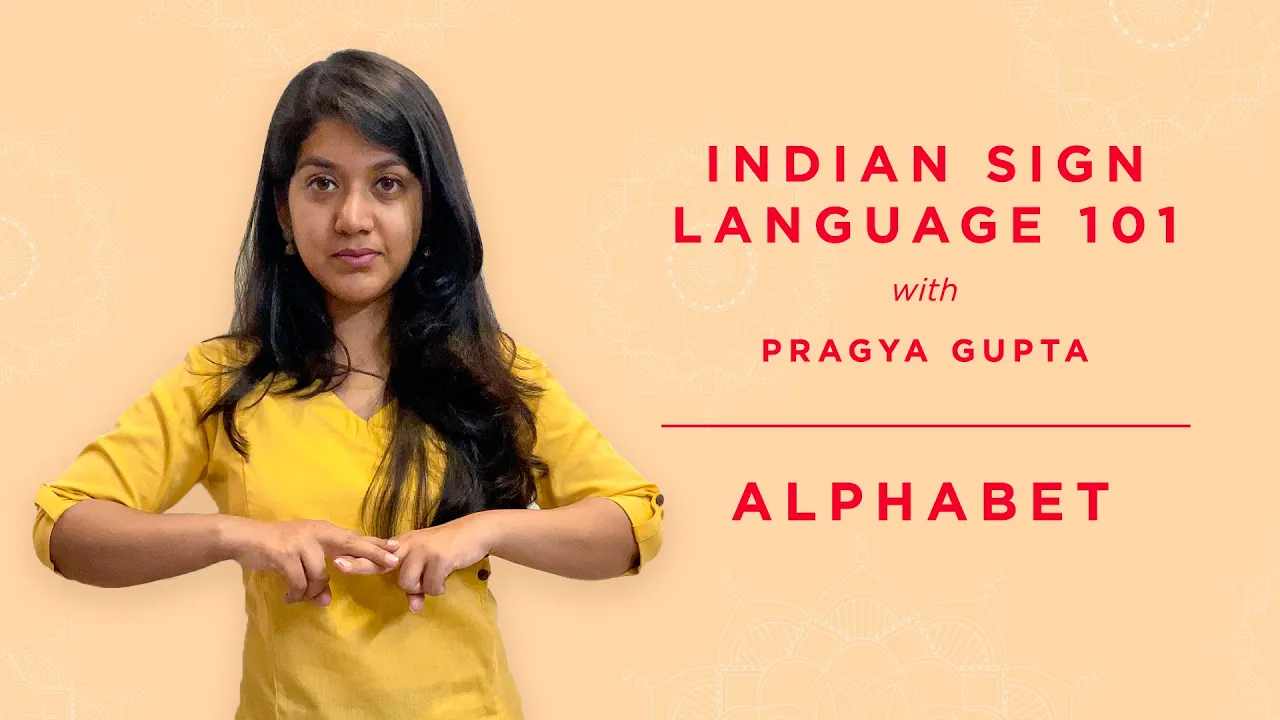
1 - Indian Sign Language 101- Alphabet
836.3K
Indian Sign Language (ISL) uses signs as its fundamental unit, similar to how English uses words and Hindi uses varn; learners must perform all signs within an imaginary box extending from head to chest, keeping signs in front of the chest (except for face-related signs) and avoiding simultaneous speech while signing; the alphabet consists of unique handshapes for each letter, such as E (three fingers left hand, one right), F (two fingers left, one right or two fingers overlapping), I (facing portion toward signer), J (thumb pointing inward with finger stroke), K (index finger loop), M (three fingers palm), N (two fingers palm), O, P, Q (hoop and hook), R (hook on palm), S (interlocked little fingers), T (both index fingers), U, V, W, X, Y (finger stroke), and Z.
Click to watch →

Fingerspelling Practice (beginner level) and vocabulary review (Lesson 01 & lesson 02) Lifeprint.com
14.1K
This video provides beginner-level fingerspelling practice and a review of vocabulary from Lesson 01 and Lesson 02 of ASL University curriculum. It is part of a structured ASL learning series hosted on Lifeprint.com, a widely used online resource for learning American Sign Language and Deaf culture. The content is designed for learners beginning their ASL studies, focusing on foundational skills such as recognizing and producing manual letters of the ASL alphabet. The video is intended to reinforce early vocabulary introduced in the first two lessons of the ASL101 course. Dr. Bill, the instructor, is known for his clear, accessible instructional style and has developed extensive free online materials, including video lessons and reference pages for basic signs and fingerspelling. The video links to additional resources such as a dedicated fingerspelling tutorial (https://youtu.be/va1aAXpVr2w) and the full ASL101 lesson series at lifeprint.com/asl101. The video does not include detailed explanations of signs or grammar beyond what is implied by the lesson titles, nor does it describe specific vocabulary items or fingerspelling techniques beyond the general scope of beginner practice.
Click to watch →
INDIAN SIGN LANGUAGE | Part 1 | Alphabets | Anna Prasad
15.3K
This comprehensive segment teaches the complete Indian Sign Language alphabet from A to Z. The instructor demonstrates each letter's hand configuration systematically: A (two fingers together), B (both hands together), C (three fingers on right chest), D (three fingers on right chest with index up), E (three fingers on right chest with index up), F (two fingers on right chest with index up), G (two fingers on both hands), H (right hand on left palm), I (left index finger pointing at face), J (left index at face, right index draws upward), K (both index fingers in circle), L (left palm forward, right index draws upward), M (left palm flat, three fingers on top), N (two fingers on left palm), O (both hands form cup with right index on top), P (left palm flat, right index forms cup), Q (both hands form cup with right index on top), R (left palm flat, right index forms cup), S (two small fingers together), T (left palm flat, three fingers on top), U (two fingers on left palm), V (both hands form cup), W (four fingers crossed), X (fingers crossed), Y (left hand flat, right hand draws upward like brush), Z (left hand flat, right hand draws upward like brush).
Click to watch →
Learn How to Sign Single Handed Alphabet | 1 Handed Signing of English Alphabet
946
Manual alphabet refers to fingerspelling where letters are signed using hand movements. India uses more than 40 manual alphabets globally, but only two types are common in Indian Sign Language (ISL): double-handed and single-handed alphabets. The double-handed alphabet, borrowed from British Sign Language, is more commonly used in ISL. The single-handed alphabet, derived from American Sign Language, is less frequently used but serves important practical purposes. This lesson teaches the single-handed alphabet from A to Z, providing learners with an alternative signing method that offers flexibility in various communication situations.
Click to watch →
Deep Dive
Fundamental linguistic concepts, particularly the distinction between visual-spatial languages and spoken (auditory-vocal) languages.

Letramento em LIBRAS para professores - Língua oral auditiva X Língua visual-espacial
5.8K
Oral-auditory languages use voice through speech as emission and ears through hearing as reception, with vision supporting comprehension through lip reading. Children learn oral language first through listening, then later learn writing through formal schooling. Visual-spatial languages like Libras use hands through signs as emission and eyes through vision as reception. Libras is an agrapha language without standardized written form, using video for systematization. This fundamental difference in communication modality creates distinct learning processes: deaf children learn sign language first through visual observation, then later learn written language, mirroring the oral-auditory sequence but in reverse order.
Click to watch →
AULA 5 - Gramática da Libras na Prática I Com o Prof. João Moreno - Moreno Libras
305
Modalidade refers to how language is expressed and received. In Libras (sign language), modality is visual and spatial: information is transmitted through hand movements in a neutral space in front of the body and received through vision. In oral languages, modality is oral and auditory: information is transmitted through voice and received through hearing. The key difference lies in the transmission and reception channels, not in the cognitive decoding process, which occurs identically in the brain for both modalities. This concept is fundamental for understanding how sign languages function as complete linguistic systems.
Click to watch →
Multimodality and Visual Language – Prof. Dr. Neil Cohn
1.8K
Visual languages are systems used for drawing, analogous to spoken languages for speaking. They use the same types of linguistic structure: a visual vocabulary built of memorized units stored in memory (both fixed and productive items), ordered by a grammatical system using grammatical roles and hierarchical constituents. There is cross-cultural diversity in visual languages corresponding to different drawing systems. The language faculty is actually a multimodal faculty consisting of three inherent modalities: graphic (visual), vocal (speech), and bodily (gestures). This architecture includes correspondences between modalities—for example, writing creates a correspondence between vocal sounds and graphic representations. Expressions emerge as interactive activation states of the subcomponents within this broader architecture.
Click to watch →

Aula 07 - Curso básico de Libras
224
This segment continues reviewing signs including 'Auxiliar' (to assist), 'Interpretar' (to interpret), 'Pós-graduação' (post-graduation), 'Capaz' (capable), 'Preparar' (to prepare), 'Pronto' (ready), and 'Acabou' (finished). The instructor explains that these signs are used in different contexts and have different meanings depending on the situation. The instructor emphasizes that Libras is a visual-spatial language that 'shows' stories, while Portuguese is an oral-auditory language that 'tells' stories. This fundamental difference means that Libras uses visual and spatial elements including facial expressions and body language. The instructor explains that artificial intelligence cannot effectively translate between Libras and Portuguese because the communication channels are fundamentally different.
Click to watch →

1ª Série - Médio I Português I Aula 1
168
Language encompasses three basic types: visual (images, drawings), written, and spoken. Language is everything that enables production, development, and comprehension of communication. Language (língua) is an organized system of sounds and gestures enabling communication, with each country having its own language (e.g., Libras as Brazil's second official language). Verbal language uses words through writing or speech, while non-verbal language uses symbols, colors, images, gestures, tone, and posture. Mixed language combines verbal and non-verbal elements in the same communication.
Click to watch →
Deep Dive
An introductory awareness of Deaf culture and communication etiquette in India.

Deaf Culture Etiquette
29.1K
Deaf culture has distinct etiquette rules including methods to get attention (looking at face, tapping shoulder, waving, thumping table), turn-taking signals (holding last sign and looking away), and communication norms where getting as much information as possible is normal, unlike hearing culture which is more formal and secretive; key differences include informal initial interactions, lengthy conversations, and openness about personal information.
Click to watch →
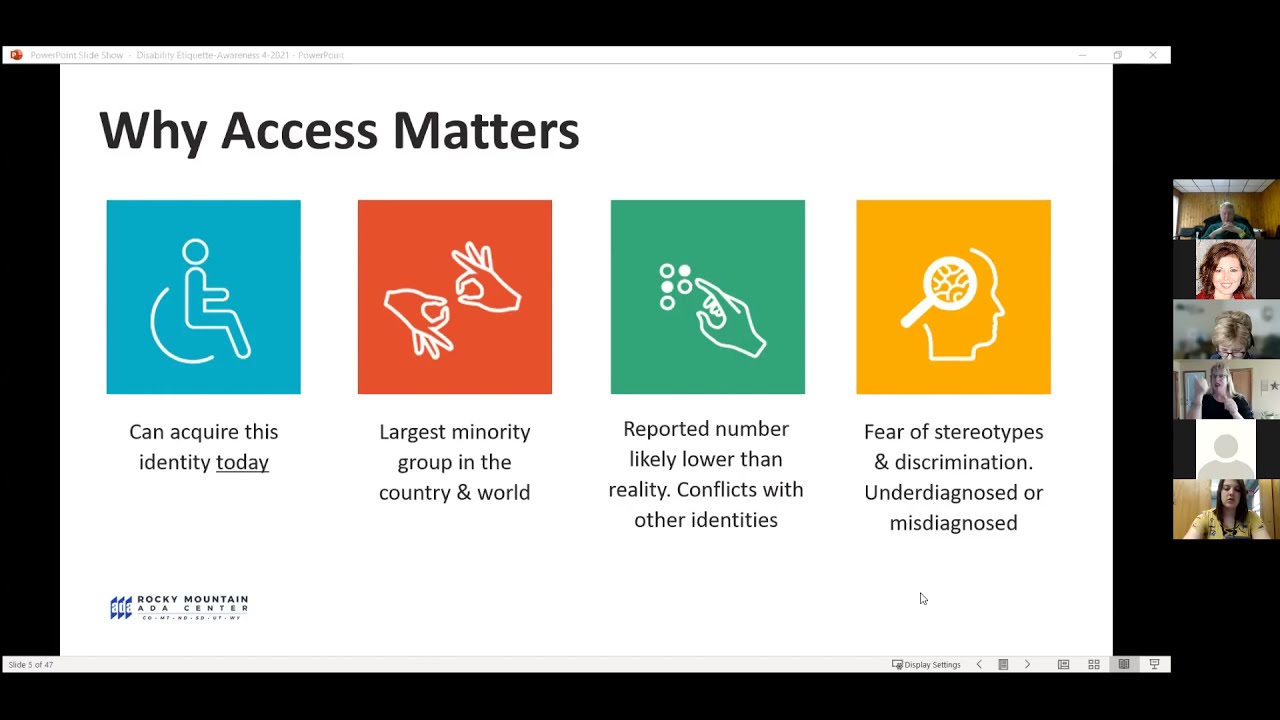
Embracing Disability Awareness & Etiquette into the Workplace
961
Deaf culture is a unique culture with shared values, beliefs, and American Sign Language. Etiquette points: (1) Speak directly to the deaf person, not their interpreter, (2) Ask how they prefer to communicate, (3) Written communication may take longer to decipher because English is not their primary language, (4) Avoid shouting at deaf people, (5) The term 'hearing impaired' is becoming outdated. Effective communication strategies: give full attention, don't interrupt, ask calmly to repeat if needed, repeat what you heard, consider quieter environments, and ask what they might need.
Click to watch →

Did That Really Happen Part 1
784
Deaf culture has specific communication etiquette, including using hand applause instead of verbal applause. Anna Hasland explained that after her story, the audience should show respect by raising their hands for applause, which is customary in deaf culture. This illustrates the importance of understanding and respecting cultural communication differences in social settings.
Click to watch →

Topic- Basic Indian Sign Language Course (Day - 1)
4.4K
When communicating with deaf individuals, gaining their attention is crucial. Simply shouting loudly is ineffective if they cannot see your face. The proper approach is to gently tap their shoulder to get their attention. Maintaining eye contact is essential because deaf individuals rely on visual cues to understand what is being said. Facial expressions and body language are crucial components of sign language communication. When communicating with deaf individuals, the hearing person should use clear facial expressions to convey emotions and meaning. Indian Sign Language includes specific hand gestures for common greetings: 'Hello' (हाय), 'Hi' (ही), 'Namaste' (नमस्ते), 'Good Morning' (गुड मॉर्निंग), 'Good Evening' (गुड इवनिंग), 'Thank You' (थैंक यू), 'Welcome' (वेलकम), 'Good Night' (गुड नाइट), 'Nice to meet you' (नाइस टू मीट यू), 'Sorry' (सॉरी), 'Congratulations' (कांग्रेचुलेशन), 'Please' (प्लीज), 'Take care' (टेक केयर), 'Have a good day' (हैव अ गुड डे), 'Goodbye' (गुड बाय), 'See you again' (सी यू अगेन), 'Happy Birthday' (हैप्पी बर्थडे), 'Well done' (वेल डन), 'Thank you for your help' (थैंक यू फॉर योर हेल्प), 'I am sorry for this mistake' (आई एम सॉरी फॉर दिस मिस्टेक), 'Your signing skill is excellent' (योर साइनिंग स्किल इज एक्सीलेंट), 'Take care of your health' (प्लीज टेक केयर ऑफ योर हेल्थ), 'Go ahead' (प्लीज गो अहेड), 'Congratulations on your success' (कांग्रेचुलेशन ऑन योर सफलता).
Click to watch →
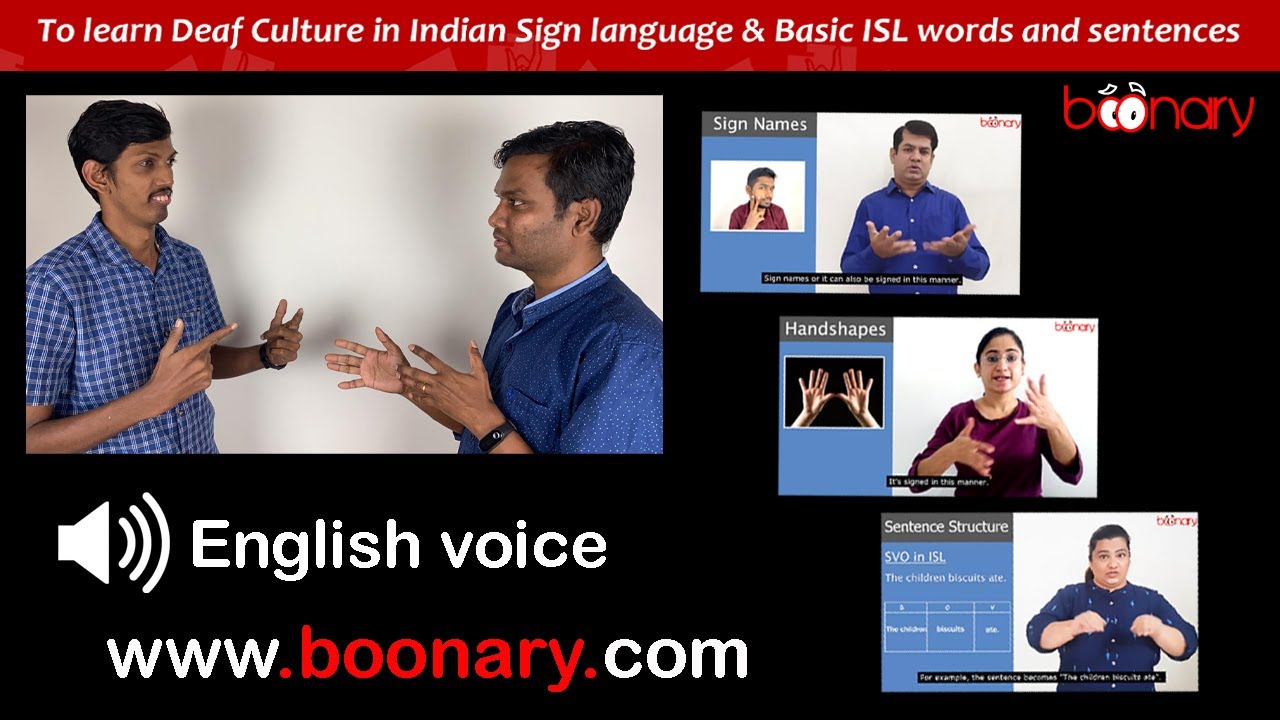
Get to know better about the Deaf Culture & basic ISL words and sentences. Voice-over English.
6K
Deaf culture is a distinct cultural identity with its own traditions and communication methods, and Indian Sign Language (ISL) uses hand movements, facial expressions, and body language to convey meaning, with clear signs being essential for effective communication, especially when spelling words or alphabets.
Click to watch →
Prerequisite Knowledge
- Concept 01Basic understanding of Indian Sign Language (ISL) history and its status as a distinct, natural language system.
- Concept 02Familiarity with the ISL manual alphabet (fingerspelling) and introductory vocabulary typically covered in foundational lessons.
- Concept 03Fundamental linguistic concepts, particularly the distinction between visual-spatial languages and spoken (auditory-vocal) languages.
- Concept 04An introductory awareness of Deaf culture and communication etiquette in India.
Subsequent Learning
- Step 01Advanced study of ISL syntax, grammatical structures, and sentence formation rules (such as Topic-Comment structure).
- Step 02In-depth analysis and practice of Non-Manual Markers (NMMs), including facial expressions, head movements, and body shifts.
- Step 03Exploration of regional dialects, lexical variations, and cultural idioms across different Deaf communities in India.
- Step 04Practical application of ISL features through interactive conversational practice, basic translation tasks, or community engagement.
Five Parameters
Minimal Pairs
Sign Examples
Phoneme Concept
Summary Start
Parameter Detail
Non-Manual Cues
Meaningful Sign
Five Parameters
0:07Playing Section
- 1
Introduces five key sign language parameters.
- 2
Lists handshape, location, orientation, movement, and non-manual expressions.
The Debate over Standardization vs. Regional Dialects in ISL
While learning the standardized features of Indian Sign Language (ISL) is promoted for unified communication, a significant debate exists regarding its standardization. Critics and linguists argue that pushing for a single, academic version of ISL risks erasing the rich regional variations and dialects that have naturally evolved across different states in India. Historically, Deaf communities in different regions developed distinct signs influenced by local cultures and spoken languages. Opponents of strict standardization caution that imposing a uniform system may marginalize localized signers, ignore regional nuances, and overlook the natural diversity that characterizes organic sign languages. Thus, many advocates emphasize the importance of recognizing and preserving regional dialects alongside standardized learning.
Deep Dive
Advanced study of ISL syntax, grammatical structures, and sentence formation rules (such as Topic-Comment structure).

Introduction To Language | Part 3 | ISL
1K
Morphology studies how words are formed from meaningful units called morphemes. Morphemes are either free (can stand alone, like 'happy') or bound (must attach to others, like 'un-'). In spoken languages, morphemes combine to create new words (un- + happy = unhappy). In Indian Sign Language, new words are formed by compounding signs (men + sibling = brother). Syntax studies the proper order of words in sentences. Each language has its own grammatical rules: in English, 'not' comes between subject and verb, but in ISL, 'not' comes at the end of the sentence.
Click to watch →
Colors and Three Types of Adjectives | Japanese From Zero! Video 15
214.4K
Japanese sentences follow a topic-comment structure where everything before 'wa' is the topic and everything after is a statement or question about that topic. The instructor demonstrates this with examples like 'Anata no kuruma wa naniiro desu ka?' (What color is your car?), where 'Anata no kuruma' is the topic and 'naniiro desu ka' is the question. The lesson concludes by showing how to combine all learned grammar: 'Anata no kuruma wa naniiro desu ka?' (What color is your car?), 'Watashi no kuruma wa shiro desu' (My car is white), and 'Murasaki no makarov wa watashi no desu' (The purple pillow is mine).
Click to watch →

Topic- Basic Indian Sign Language Course (Day - 3)
1.3K
Indian Sign Language (ISL) follows specific grammatical rules for constructing sentences. The first rule states that every sentence must have both a subject and an object. The second rule emphasizes that facial expressions and body language are essential components of ISL communication. For example, when signing 'I am going home,' proper facial expressions must accompany the signs. Without appropriate facial expressions, the communication may be considered incorrect or unclear.
Click to watch →
The OTHER HALF of Japanese Structure - non-logical topic/comment structure | Lesson 60
17.9K
Japanese sentences follow a fundamental topic-comment structure where every sentence contains both a logical subject-predicate (A-car-B-engine) marked by -ga and a non-logical topic marked by -wa, with the comment always being a complete logical clause; unlike English which tracks topics through pronouns, Japanese uses invisible zero pronouns as default topics (e.g., 'Amerikajin desu' = 'zero-wa zero-ga Amerikajin desu'), and the choice between -wa and -ga involves making visible one of two always-present elements rather than selecting between similar particles.
Click to watch →

The Basics of ASL Questions and Responses
318.6K
ASL grammar is based on topic-comment structure, meaning when giving a response, you should think about the topic of the sentence first and then comment about it. This structural approach differs from English syntax and is fundamental to forming correct ASL sentences.
Click to watch →
Deep Dive
In-depth analysis and practice of Non-Manual Markers (NMMs), including facial expressions, head movements, and body shifts.

ASL Non-Manual Markers: How to Answer How Are You
530
Non-manual markers (NMs) are grammatical and semantic features in sign language that are not hand movements, including facial expressions, eye gaze, head movements, and body language. The five main types are: confirming (nodding head to indicate agreement), asserting (fact presentation with raised eyebrows and clear facial expression), doubting (furrowed brows and head shaking to express uncertainty), negating (head shaking to indicate 'no'), and surprise (raised eyebrows, widened eyes, and open facial expression). These markers are essential because they can completely change the meaning of the same signs; for example, the same sign for 'happy' can mean 'I am happy' (with confirming nod), 'I am not happy' (with negating head shake), or 'I am very happy' (with exaggerated facial expression). To practice, learners should exaggerate facial expressions in front of a mirror and apply these markers when answering questions like 'How are you?' using vocabulary signs for happy, sad, sick, tired, confused, hungry, grumpy, and excited.
Click to watch →

American Sign Language (ASL) Linguistics (Part 02)
12.7K
American Sign Language (ASL) is analyzed through five key parameters: handshape (the configuration of the hand), movement (how the hand moves), location (where the sign is produced in space), palm orientation (the direction the palm faces), and non-manual markers (NMMs) such as facial expressions, mouth movements, and head movements; these parameters form the analytical framework for understanding and transcribing sign language, with different levels of detail ranging from glossing (basic word-level transcription) to full transcription (detailed structural analysis) to translation (converting between languages).
Click to watch →
疑問文を表す時の"ルール"って? | #083
9.6K
Non-manual markers (NMM) are body movements and facial expressions that accompany hand signs in sign language. There are two types of facial expressions: (1) expressing emotions like happiness or sadness, and (2) following grammatical rules like question markers. Learners often confuse these two types. NMM is naturally acquired through observation of native signers. By repeatedly watching and identifying NMM in conversations, learners can gradually understand their meaning and purpose. Prolonged exposure to native signers helps internalize these markers intuitively.
Click to watch →
Intro to ASL Grammar Rules for Beginners
111.7K
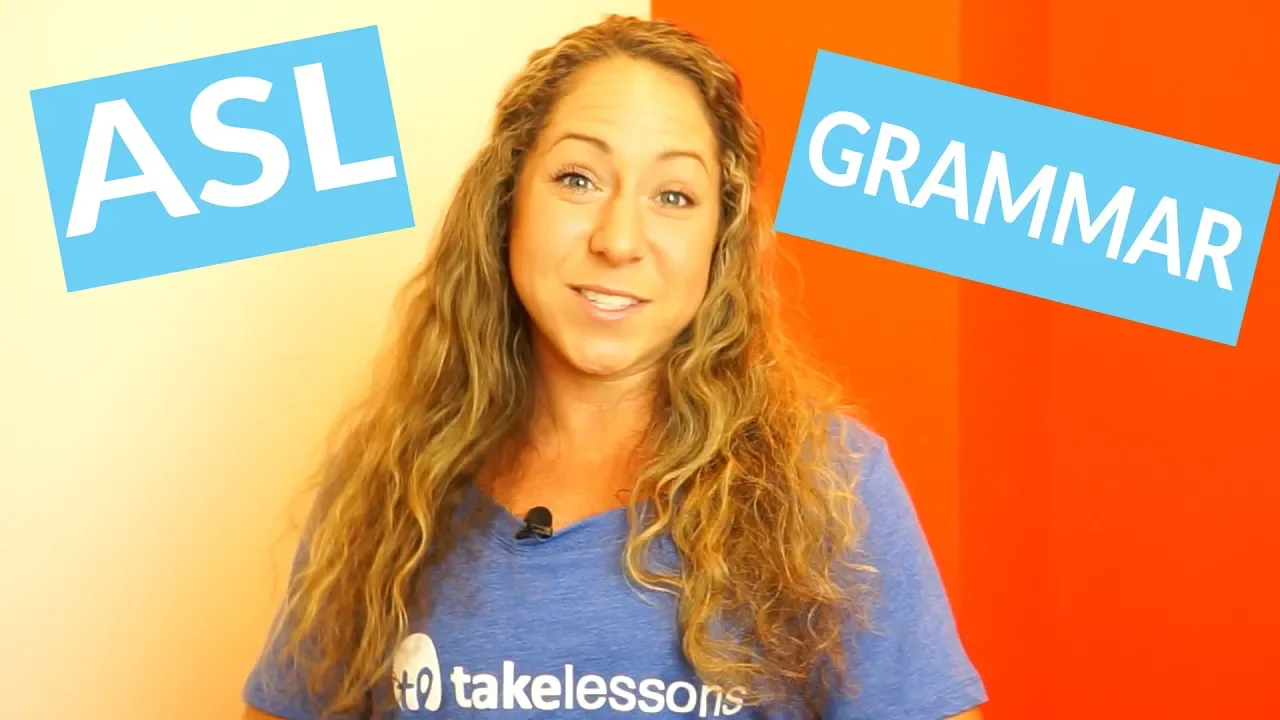
In American Sign Language, facial expressions and body movement serve as the primary mechanisms for conveying tone, inflection, and emphasis—functions that vocal modulation handles in spoken English. Unlike English where emotional nuance emerges naturally from voice, ASL signers must consciously employ facial expressions (smiles for happiness, frowns for sadness) and hand movements to establish meaning. These non-manual markers constitute approximately half of ASL communication, working in tandem with manual signs to create complete linguistic messages. The instructor emphasizes that without proper facial expression, even correctly formed signs fail to convey their intended meaning, making these elements indispensable rather than optional aspects of signing.
Click to watch →

KSL 1 Lesson 3 Lesson video
189
Non-manual markers are body motions and facial expressions used with the other four parts of a sign to create meaning. They are essential for clear communication; without them, sign meaning can be unclear. Body motions include head movements (head nod for 'yes,' head shake for 'no') and mouth movements (like mouthing 'B' for 'not yet'). Facial expressions include: raised eyebrows for yes/no questions, furrowed eyebrows for wh-questions (what, when, where, how, how much, why), and purled lips for 'who' questions. Facial expressions also clarify degree—neutral for 'mad' versus intense for 'very mad'. A deaf and blind individual can understand sign language by following movements and hand shapes with their hands on the interpreter's hands. Every element of sign language is essential for effective communication.
Click to watch →
Deep Dive
Exploration of regional dialects, lexical variations, and cultural idioms across different Deaf communities in India.

ਸੈੱਟ-1: ਪੰਜਾਬੀ ਲਾਜ਼ਮੀ ਪੇਪਰ - PSPCL ਅਤੇ ਹੋਰ ਸਾਰੇ ਸਰਕਾਰੀ ਪੇਪਰਾਂ ਲਈ ਸਪੈਸ਼ਲ ਕਲਾਸ
2.1K
Antonyms have opposite meanings (ਉਰਾਰ → ਪਾਰ). Regional dialects include: ਦੁਬਾਬੀ, ਮਲਵਈ, ਸੰਗਰੂਰੀ. The word 'ਤੀਵੀ' is standard, but 'ਤੀਵੀਂ' is used in Malwai dialect. Idioms like 'ਡੈਸ਼ ਭਾਂਡਿਆਂ ਦੀਆਂ ਘਰੋੜੀਆਂ ਹੀ ਨਿਮਾਨ' (big pots have big scratches) and 'ਗੱਲ ਸਹੇ ਦੀ ਨਹੀਂ ਗੱਲ ਪਹੇ ਦੀ ਹੈ' (it's not the hare's fault, it's the hunter's) are commonly tested.
Click to watch →

Aisa Hyderabadi Vlog Aapne Aaj Tak Nhi Dekha Hoga🫣😜Has Has Kar Rone Lage🥹😂Kya Hogaya Zaiba Ko😵💫❌🙏🤐
189
This segment explores how regional dialects express cultural identity in India. The speaker explains that in their village, bananas are called 'मौजा' (mouja) while in Mumbai they are called 'केले' (kela). Similarly, soft bread is called 'पाव' (paav) in their village but 'नरम पाव' (naram paav - soft bread) in Mumbai. The speaker mentions 'जुड़वा' (juddwa - twins) and how their grandmother wants twin babies - one boy and one girl. The segment also covers 'फोन' (fon - phone) culture, where the grandmother is always on the phone. The speaker mentions 'कुला मार्केट' (Kula Market) and 'डॉक्यूमेंटेशन' (dokumen - documentation) as examples of how English loanwords are commonly used in Indian households for official matters. This demonstrates how regional dialects, traditional terms, and modern loanwords coexist in Indian communication, reflecting the blend of tradition and modernity in Indian society.
Click to watch →

भाषा, लिपि, व्याकरण | Bhasha ,Lipi, Vyakaran | Part 1| CBSE | Hindi Grammar
1.3K
India has many regional dialects. For example, Bihar has three main dialects: Mithila, Magahi, and Bhojpuri. Similarly, other states like Uttar Pradesh have Khari Boli and Awadhi dialects. Each state or region has its own dialect variations of the language spoken there.
Click to watch →
DEFINICIONES LINGÜÍSTICAS 2
510
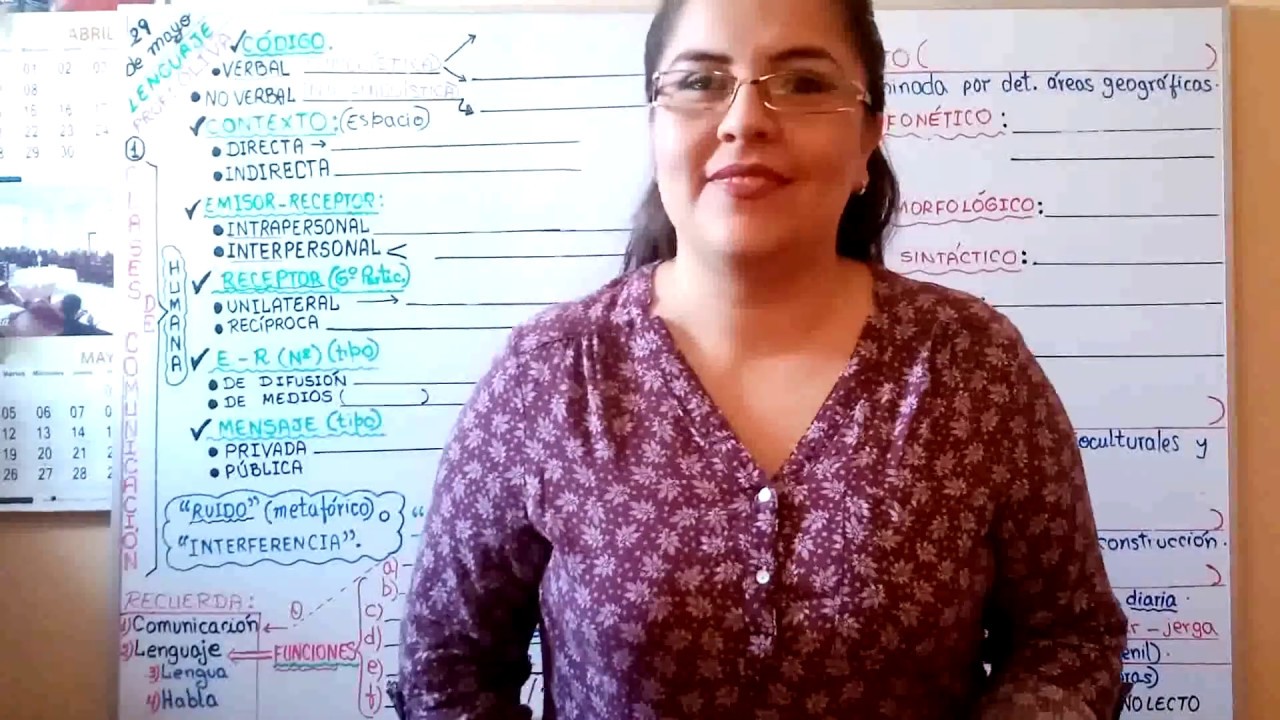
Dialects vary lexically (in vocabulary) across different regions. The same word may have different meanings in different areas. For example, the word 'arrecha' means 'annoyed' in Venezuela but 'angry' in Peru. Similarly, 'cachar' means 'to catch' in Mexico but has a vulgar sexual connotation in Peru. These lexical variations reflect cultural and regional differences in language use.
Click to watch →

Sociolinguistics - Lesson 3 - Language and Dialect
16.4K
Regional dialects also show lexical differences, meaning variations in vocabulary used to refer to the same objects or concepts. For example, different regions may use different words for everyday items: one region might use 'top' while another uses 'lid' for the same object, or one might call a faucet a 'spigot' while another uses a different term. These vocabulary differences are characteristic of regional dialect variation.
Click to watch →
Deep Dive
Practical application of ISL features through interactive conversational practice, basic translation tasks, or community engagement.
1 - Indian Sign Language 101- Alphabet
836.3K
Indian Sign Language (ISL) is a visual language where every gesture is called a 'sign,' similar to how English has words and Hindi has varn. Every sign must be performed within an imaginary box from head to chest between shoulders, in front of the chest (except face signs). Crucially, no speaking occurs while signing—only signs are used. The alphabet begins with A, B, C, D, E (three fingers left, one right), F (two fingers left, one right or two fingers both hands overlapping), G, H (brush one hand over the other), I (portion facing you), J (thumb pointing toward you, brush index to thumb), K (index finger loop), L, M (three fingers palm), N (two fingers palm).
Click to watch →
LECTURA PARA PRACTICAR INGLÉS # 22 (Nivel básico)
172
This segment demonstrates interactive language learning techniques. The instructor provides a complete Spanish translation of the reading, encouraging learners to attempt their own translations first. Two comprehension questions are posed in English to practice grammar and reading comprehension. The segment concludes with community engagement strategies: following Instagram for monthly free English classes, accessing a playlist for singing in English, and leaving comments. The instructor emphasizes that learners should write complete sentences in English for corrections, reinforcing the importance of active participation and community interaction in language acquisition.
Click to watch →

Juvenile Justice case and ISL
169
In a case where the original penalty was reclusion perpetua (indivisible), the Supreme Court applied the ISL by first reducing the penalty to reclusion temporal due to minority (next lower degree). The maximum period was set as reclusion temporal (14 years 8 months 1 day to 17 years 4 months), while the minimum period was determined as prison mayor (10 years 1 day to 12 years), the next lower degree from reclusion temporal. Since no mitigating circumstances were present, the medium period was imposed. This demonstrates the systematic approach of the ISL in proportionally reducing sentences while maintaining legal structure.
Click to watch →

Topic: Initiating conversation in ISL
2K
This video introduces the first session of a 5-day Basic Indian Sign Language course, focusing on initiating conversations in ISL. The session covers essential topics including manners and etiquette, greetings and salutations, and polite useful phrases. Key principles include maintaining clear facial expressions, making eye contact with the deaf person rather than the interpreter, keeping signing speed moderate, and ensuring signs are clear. The course emphasizes that ISL should be accessible to everyone, not just the deaf community, and highlights how learning basic ISL can create inclusive environments in classrooms and society.
Click to watch →
Conversation Practice - बातचीत करना सीखें - प्रैक्टिस लेसन - 10 #बाजार जाते समय अंकल से बातचीत
936
The app features an interactive translation exercise where learners hear a sentence in Hindi and must translate it to English. The instructor demonstrates this by saying 'I am going to the market' in Hindi, and the learner practices translating it. This feature helps learners connect meaning with vocabulary and grammar in a practical, engaging way.
Click to watch →
Five Parameters
Minimal Pairs
Sign Examples
Phoneme Concept
Summary Start
Parameter Detail
Non-Manual Cues
Meaningful Sign
Five Parameters
0:07- 1
Introduces five key sign language parameters.
- 2
Lists handshape, location, orientation, movement, and non-manual expressions.
The Debate over Standardization vs. Regional Dialects in ISL
While learning the standardized features of Indian Sign Language (ISL) is promoted for unified communication, a significant debate exists regarding its standardization. Critics and linguists argue that pushing for a single, academic version of ISL risks erasing the rich regional variations and dialects that have naturally evolved across different states in India. Historically, Deaf communities in different regions developed distinct signs influenced by local cultures and spoken languages. Opponents of strict standardization caution that imposing a uniform system may marginalize localized signers, ignore regional nuances, and overlook the natural diversity that characterizes organic sign languages. Thus, many advocates emphasize the importance of recognizing and preserving regional dialects alongside standardized learning.
Basic understanding of Indian Sign Language (ISL) history and its status as a distinct, natural language system.
Familiarity with the ISL manual alphabet (fingerspelling) and introductory vocabulary typically covered in foundational lessons.
Fundamental linguistic concepts, particularly the distinction between visual-spatial languages and spoken (auditory-vocal) languages.
An introductory awareness of Deaf culture and communication etiquette in India.
Advanced study of ISL syntax, grammatical structures, and sentence formation rules (such as Topic-Comment structure).
In-depth analysis and practice of Non-Manual Markers (NMMs), including facial expressions, head movements, and body shifts.
Exploration of regional dialects, lexical variations, and cultural idioms across different Deaf communities in India.
Practical application of ISL features through interactive conversational practice, basic translation tasks, or community engagement.
1.1K views57likes3:23@signlibrary-dslOriginal Release: 2023-08-14
Topic:- Five Phonological Parameters.
Which are handshape, location, orientation, movement, and non-manual expressions.
How do we know that these five phonological parameters are important?.
Let's focus on minimal pairs. What is the meaning of minimal pair?
In a particular language, such as English, Hindi, or ISL have words, with different meanings, That are articulated exactly the same except for one feature. For example, the English words "Pat" "Bat" and "Mat", started with different letters like p,b,m, and followed by the same letters that are A,T.
These words are called minimal pairs.
Similarly, in sign language, the sign For "tea" and "coffee" in these sign the handshape is different.
These are the rules of minimal pairs.
Next, is phonemes.
Phonemes are groups of sound/parameters that give a difference in meaning, Just like the English words "pat," "mat, and "bat," where the sound "p," "m," and "b" distinguish one word from another.
Similarly, in sign language, the signs for "tea" and "coffee" have different sign because of the difference in handshape.
These words are called phonemes.
Let's summarize the topic.
Each parameter/ sign has its own rules.
Before I explain to you.
5 phonological parameters are important.
Handshape, location, movement, facial expression, orientation, It"s important to all are combined together.
Handshape:- Focuses on the shape of hands.
Location:- Space or place of the signs.
Orientation:- Position of the palm.
Movement:- Direction of the sign.
Non manual features:- Facial expressions must justify the sign.
Individual parameters have no meaning, it is important to combine all the parameters to make a meaningful sign.
All these parameters have separate rules and various examples, but it doesn't mean, that they have Independent meaning so when all five parameters combine then they make a meaningful word.
Up Next
10:07
ASL Non-Manual Markers: How to Answer How Are You
@mrswilliamssigns6306
530 views•2020-08-19
36:52
Constraint Interaction in Optimality Theory: Epenthesis & Deletion
@Vidyamitra
180 views•2018-08-20

8:59
Forensic Linguistics: How Language Solves Crimes | PBS
@pbsstoried
1M views•2024-01-25

21:32
Accent Expert Explains U.S. Regional Dialects | Part 1
@WIRED
9.3M views•2021-01-21
Related Study Plans & Knowledge Roadmaps
Structured learning paths in Linguistics
linguistics
Optimality Theory: Tableaux & Constraints
01Phonological Basics: Sounds, Syllables & Rules
02Foundations of Optimality Theory: GEN, CON, and EVAL
03The Constraint Inventory: Markedness vs. Faithfulness
+ 2 more learning modules
15h5 modules
Explore Roadmap
linguistics
Morphosyntactic Alignment: S, A & P Systems
01Foundations of Syntax: Transitivity and Arguments
02The Linguistic Variables: Mapping S, A, and P
03Nominative-Accusative Alignment
+ 3 more learning modules
12h6 modules
Explore Roadmap
linguistics
Analyzing Sign Language: Phonology & Syntax
01Foundations of Sign Language Linguistics
02Phonology: The Five Parameters of a Sign
03Morphology: Word Formation and Classifiers
+ 2 more learning modules
14h5 modules
Explore Roadmap
linguistics
Pragmatics: Speech Acts, Grice & Politeness
01Introduction to Pragmatics: Meaning in Context
02Grice’s Cooperative Principle & Implicature
03Speech Act Theory
+ 2 more learning modules
14h5 modules
Explore Roadmap