![Music Copyright BASICS [ Protecting Your Compositions ] #lecturevideo](https://i.ytimg.com/vi/9fCWlKiviXI/maxresdefault.jpg)
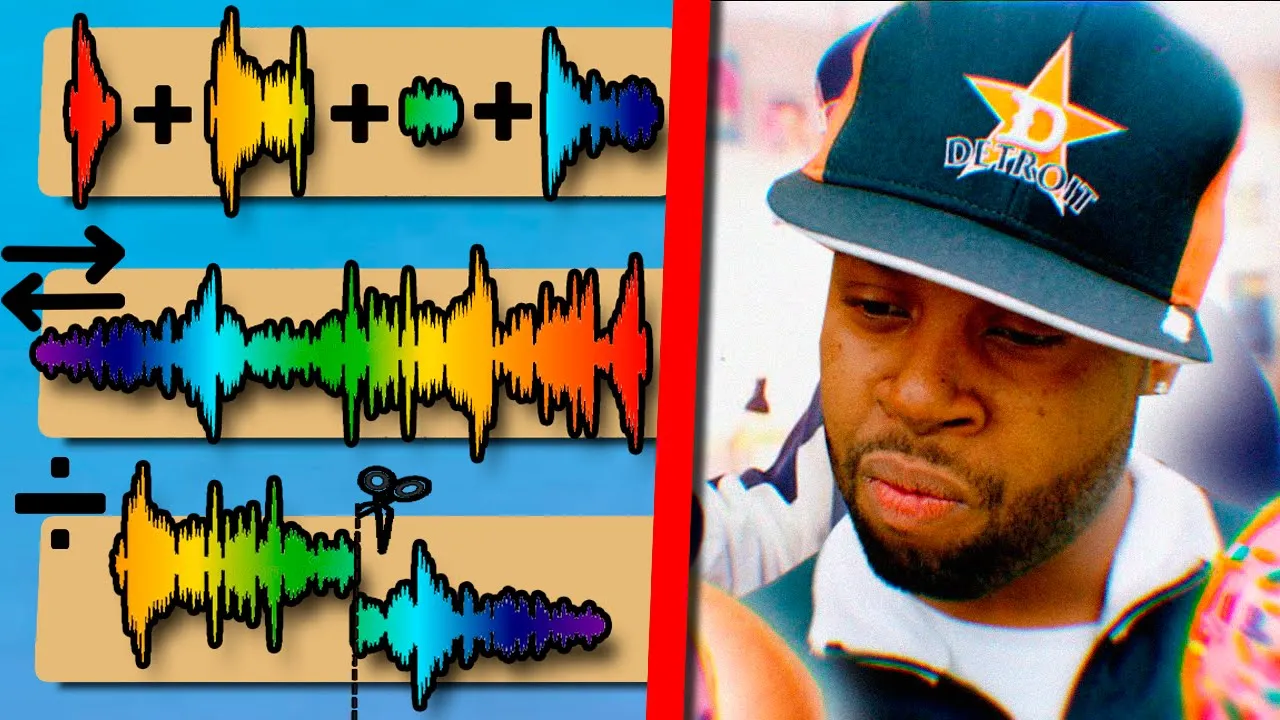














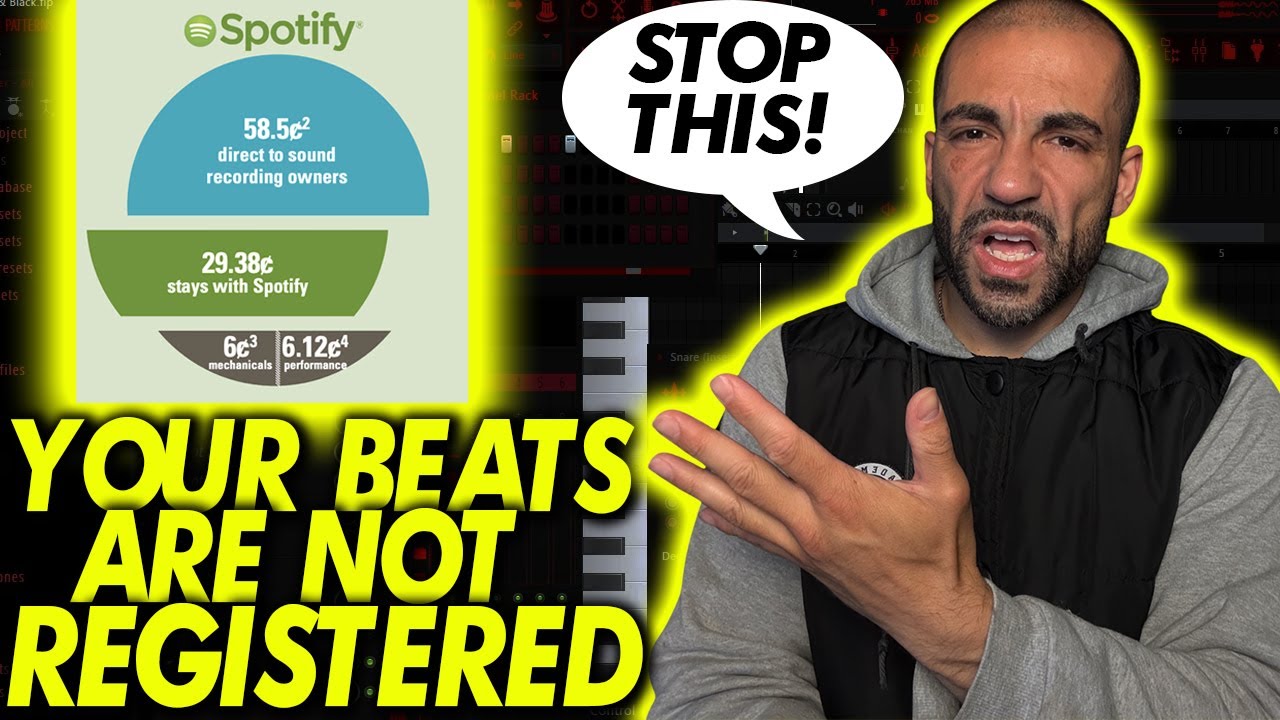


In 2026, sound recordings from 1925 officially entered the public domain in the United States, meaning producers can legally sample, flip, and monetize these vintage recordings without obtaining clearance or paying royalties, as demonstrated by finding and using original 1920s recordings from sources like the Internet Archive.
Sampling Pre-1926 Music: A Producer's Guide to Public Domain
Added:Understanding the distinction between the two core types of music copyright: the musical composition (lyrics and sheet music) and the sound recording (the master).
A fundamental grasp of what 'sampling' entails in digital music production, including basic terminology like loops, chops, and stems.
An introductory awareness of the concept of the 'Public Domain' and how intellectual property rights eventually expire over time.
Basic familiarity with digital audio workstation (DAW) operations, such as importing audio files, slicing, and tempo-matching (warping).
Advanced audio restoration and processing techniques (such as spectral repair, de-noising, and equalization) to clean up low-fidelity historical recordings for modern productions.
Navigating international copyright laws, as the pre-1926 public domain status under the U.S. CLASSICS Act may differ significantly from copyright terms in the EU and other territories.
The legalities of registering, monetizing, and distributing new derivative works (beats containing public domain samples) with Performance Rights Organizations (PROs) and digital aggregators.
Advanced creative manipulation of archival audio, such as granular synthesis and pitch-shifting, to transform antique recordings into modern soundscapes.
13.8K views797likes9:20Original Release: 2026-01-03
or you sample based producers, not everything needs to be cleared. Welcome to 2026. There's something called public domain day. Yes, everybody doesn't know about this. A lot of y'all do. So, let's dig in. So, this is on the website called web.law.duke.
And there's something called public domain day. This happens every year where there are a bunch of works that are open to all as are sound recordings from 1925.
Okay, so let me just read some of this for those that don't understand what's going on. On January 1st, 2026, thousands of copyrighted works from 1930 enter the US public domain along with sound recordings from 1925. They will be free for all to copy, share, and build upon. That means you can flip these samples.
You don't need them to be clear. You don't need permission. You [clears throat] can do what you do. You can release them commercially. Okay, let me repeat. You can release them commercially. You don't need to get permission from record companies or the original writers. It's public domain.
That means it's free to use. Now, when I say free to use, that's only referring to sound recordings from 1925 and before. 1930 refers to the writing, the lyrics, and all that stuff. Okay? So, if you want to use lyrics, you can. You can still do that. As far as the actual recording, it has to be 1925 and before that. So, let me just make sure that's clear. So, yeah, man. This is very cool.
And this happens every single year.
There's more works that enter into the public domain. Some of y'all be like, I don't like none of those sounds. But if you dig, you might find some stuff, man.
Here are some songs, real popular songs from the 1920s, man. And these are considered master level public domain.
That means you can use the actual sound recordings. So, for example, this right here. Yes, sir. That's my baby.
[music] You hear how old that sounds, right?
>> I could use those vocals if I wanted to.
If I want to use stem separation and just use the vocals or if I just want to get the guitar, I can use that. You know what I'm saying? Here's another example.
Very popular song. [music] Nobody knows the trouble.
That's Dusty 2. Dusty. [music] Some of y'all like that dustiness.
[singing] >> [music] >> So that could be flipped, man. You do whatever. Here's another one. St. Louis Blues.
>> That's actually a little cleaner. A lot cleaner.
>> So if you like that little rascal sound, you know, alalfa and them bug, a lot of y'all don't even know about that, but you know, if you like that type of sound, so it sounds like back in those early days, that's the sound, man. You can flip that stuff. All right, let's keep going. There's another song. Here's another one. If I lose, let me lose.
Mama, don't mind. Check this out.
[music] And that's Louis Armstrong on the trumpet.
So, you might just want that trumpet.
[music] You can use it. You can flip it. You know what I'm saying? Use stem separation. You know how we do. Here's another one. Ishim Jones and the Ray Miller Orchestra. [music] So, if you like that old orchestra sound and you want to flip that.
So, part of the fun of this is digging.
You know, some of y'all is too lazy to dig, but I I enjoy it. It's fun to me.
Now, how do you find this stuff? Let me show you that real quick. Go to Google, type in Internet Archive. Click on and you'll see Internet Archive. Pull up.
Click on this. And this is for those that don't know, Internet Archive is a nonprofit library of millions of free text, movies, software, music websites, and more. We're concentrating on music.
So, you going to type on advanced search. So, now you can type in like the year, and since we're talking about 1925, we'll do that 1925 because that's the year that you can actually use these samples. We'll go January 1st and then we'll hit search. And you can narrow this down. We'll go to audio. You know, you go into the media type. We go audio and then maybe we'll do um check on the year obviously 1925. We could even do popular music.
So now this is how you can find everything that fits this criteria. We got 522 results. And you just dig, man.
just go through this stuff.
It's important to note that you have to use the original recording, not a remaster. In other words, if somebody takes one of these recordings and cleans it up in their doll and then post it on YouTube, you can't really use that, okay? Because that's a remaster.
And so now, what you want to do is make sure you have the original recording.
That's why I'm showing you this website cuz some people will try to use a remaster and not care and they might get in trouble. So, I'm just throwing it out there, man.
Okay, so now let's just go back and show you an example of flipping one of these joints, man. You know, a nice tip. I learned this from Large Professor, which I've covered him, one of the legends.
What he would do is just take a pattern and just randomly place samples on top of it. So, I'm going to play this beat.
links down below if you're interested and just play some samples, man. We just play these songs and see [music] what it would sound like. You know what I'm saying?
[music] You just go through the song, you know, [music] found something See that? Then you just go in and narrow it down. This is what I'm talking about.
Let me go here.
[music] Oh, I like that. Do this. [music] take that little piece and then maybe drag that into quick sampler or whatever sampler that you use, [snorts] right? And chop it up. You know how we do?
[music] You see what I'm saying? [music] >> [music] [music] >> You know what I'm saying? Maybe add a baseline to it. [music] [music] So after I sequence, clean it up, mix it, and all that, I could release this if I want to without permission.
I don't even have to give credit. I don't. It's in the public domain. Now, you can if you want to, but you don't have to, which is very dope. So, I just wanted to drop that information, guys.
This happens every single year on January 1st.
So, take that however you want to go dig. I just wanted to show you guys a way to do it legit. If you want to be legit legit, this is how you can do it.
All right? Otherwise, you know, use the AI and you know how that go. Or just do keep doing what you're doing. It's up. Hey, at the end of the day, you do you, man.
I'mma do me. [laughter] Oh, by the way, I'm doing some new things this year. So, join [music] my Patreon. You want to join my Patreon.
I'm doing some new stuff. I'm going to be having a lot more perks and I might even do a YouTube membership. So, if you want to join my YouTube membership as well, do that or just do one or the other or both. It's up to you. I just really appreciate all my supporters and um this helps maintain the channel so I can keep making content for you guys.
So, yeah, man. Let's do this. I'll see you guys on the next one. I'm sending peace and positive energy.
Up Next

10:15
EOQ Formula Explained: How to Calculate Economic Order Quantity
@Edspira
302.3K views•2013-07-11

5:07
Impact of Yuan in Indo-Russian Trade Amid Sanctions
@WION
261.9K views•2022-07-01
10:33
Behavioral Economics Explained: Rationality, Nudges, and Risk
@crashcourse
1.1M views•2016-03-12

113:18
The Age of Easy Money: Fed & Inflation | Full Documentary
@frontline
21.2M views•2023-03-15
Related Study Plans & Knowledge Roadmaps
Structured learning paths in Economics
economics
Sovereign Debt: Defaults, IMF & Restructuring
01Introduction to Sovereign Debt & Government Bonds
02Debt Sustainability & Credit Ratings
03Anatomy and History of Debt Crises
+ 2 more learning modules
12h5 modules
Explore Roadmap
economics
Market Design: Matching Theory & Gale-Shapley
01Introduction to Market Design and Price-Free Markets
02Two-Sided Matching & The Gale-Shapley Algorithm
03School Choice Systems and Mechanism Design
+ 2 more learning modules
10h5 modules
Explore Roadmap
economics
Impossible Trinity: Forex, Capital & Policy
01Introduction to Monetary Policy and Central Banking
02Exchange Rates and International Capital Flows
03The Mundell-Fleming Model
+ 2 more learning modules
8h5 modules
Explore Roadmap
economics
Healthcare Economics: Market Failures & Systems
01Introduction to Healthcare Markets and Market Failure
02Asymmetric Information and Adverse Selection
03Moral Hazard and Insurance Design
+ 2 more learning modules
12h5 modules
Explore Roadmap