

















The Fourth Amendment protects individuals from unreasonable searches and seizures by requiring warrants supported by probable cause and particular descriptions of places to be searched; its interpretation has evolved from colonial-era property-based protections against general warrants to modern recognition that individuals maintain reasonable privacy expectations in their geolocation data, even when stored with third parties, as demonstrated in the 2018 Carpenter v. United States decision which held that accessing cell phone location records without a warrant constitutes an unconstitutional search.
Fourth Amendment Explained: Privacy & Technology | Constitution 101
Added:Understanding of the structure of the U.S. Constitution, specifically the Bill of Rights and its role in protecting individual liberties against government overreach.
Basic knowledge of the role of the Supreme Court of the United States (SCOTUS) in interpreting the Constitution and establishing legal precedents.
Familiarity with fundamental legal concepts such as 'probable cause', 'warrants', and the 'exclusionary rule'.
Historical context of the American Revolution, particularly the colonists' opposition to British 'writs of assistance' and general warrants.
In-depth analysis of landmark Supreme Court cases involving digital privacy, such as Riley v. California (cell phone searches) and Carpenter v. United States (cell-site location records).
Critical examination of the 'Third-Party Doctrine' and how sharing personal data with tech companies and internet service providers impacts constitutional protection.
Exploration of the balance between national security and privacy, including the USA PATRIOT Act, FISA courts, and government surveillance programs.
Investigation of emerging legal challenges related to modern technologies like biometric surveillance, facial recognition, smart home devices, and artificial intelligence.
99.1K views1.5Klikes24:56Original Release: 2022-08-30
[Music] can the government track you 24 hours a day seven days a week for an entire month using your cell phone data and your geolocational information that is a question that the us supreme court took up in a case called carpenter versus united states decided in 2018.
to answer it we need to look at the fourth amendment to the constitution and we're going to begin with the text and then we're going to talk about the history and then we'll talk about what cases the supreme court looked at before they decided carpenter and then we'll be able to answer the question all right let's begin as always with the text here we go the right of the people to be secure in their persons houses papers and effects against unreasonable searches and seizures shall not be violated and no warrant shall issue but upon probable cause supported by oath or affirmation and particularly describing the place to be searched and the person or thing to be seized there are two clauses in that long crucially important sentence the first clause says that you can't have unreasonable searches and seizures of our person's houses papers and effects and the second clause says that no warrant shall issue without probable cause that particularly described the place to be searched and the person of things to be seized where did that language come from well it came from a series of controversies in the 1760s involving the ability of royal officials to search people's houses looking for evidence without particularized suspicion and one of the big cases that inflamed the colonists before the american revolution involved the so-called ritz of assistance this is in 1761 the roots of assistance give royal officials free range to break into the colonists homes to search for evidence anywhere anytime for any reason uh the crown is trying to enforce anti-smuggling laws and it's engaging these incredibly intrusive searches breaking into lots of people's homes and looking for evidence without particularized suspicion there's a famous speech against the writs of assistance given by a patriot called james otis and otis in this speech which mesmerized a young john adams who was in the audience said of the ritz of assistance it is a power that places the liberty of every man in the hands of every petty officer basically suggesting that the arbitrariness of the searches meant that they were unregulated and uh therefore unconstitutional because he said that any uh authority that violated the common law of england as well as natural law um was unconstitutional and adams who was in the courtroom said that otis argument was the first scene of the first act of opposition to the arbitrary claims of great britain then and there john adams said the child independence was born all right two years later in britain there's a case called wilkes versus wood which mesmerizes the colonists and so focuses their energies that defines the text of the fourth amendment it also involves an arbitrary search wilkes is a critic of king george he writes salacious verses and he writes pamphlets including a pamphlet called north britain 45 criticizing the king and the king is so outraged by this anonymous pamphlet that he says find out who wrote it and he tells his henchman led by lord halifax to break into people's houses and find evidence of who wrote north britain 45 and halifax is armed with what's called a general warrant a general warrant is like or it's a writ of assistance in that it doesn't specify the place to be searched or the person who thinks to be seized it just says anyone holding this warrant can search for evidence of the illicit pamphlet and the agents break into wilkes's house they find in his desk drawer evidence that he indeed wrote north britain 45 the printer's proofs are in his destroyer and they arrest him and they charge him with seditious libel what is seditious libel well it means criticizing the king and in britain according to the law of the time truth is no defense in fact the greater the truth of the libel the worse the offense so wilkes can't say what i said um was true what he says is that the general warrant that authorized the search was unconstitutional a violation of the common law wilkes says the most intimate secrets of my heart have been exposed to the world and says that no englishman should have to suffer these arbitrary unregulated searches and a jury agrees and gives him a huge verdict of a thousand pounds a tremendous amount for its day like the mcdonald coffee verdict of years ago and lord camden who is the judge in the case issues a famous opinion saying that these general search is unconstitutional this case is so galvanizing for the colonists that they named towns and children from wilkes-barre pennsylvania john wilkes booth camden new jersey all named for the case and the colonists have parties where they drink 45 steins of beer to celebrate the heroic patriotism of north britain 45 so it's such a big case that when they draft the fourth amendment we suddenly realize that it's wilkes's house and wilkes's papers and wilkes's effects that they have in mind when they say that the right of the people to be secure in our persons houses papers in effect against unreasonable searches and seizures shall not be violent so we now understand very clearly what the paradigmatic example of an unconstitutional search at the time of the founding was it's a search authorized by a general warrant or writ of assistance that searches especially for private papers which might violate our mental privacy without particularly describing the place to be searched to the person i think to be saved and um protection of our privacy is defined by the law of private property james otis has said a man's home is his castle citing the famous axiom of british common law so the idea is you can't trespass on someone's house without a valid warrant if you have an invalid warrant like a general warrant then you're guilty of trespass and the private law of property protects your privacy that worked well enough in an age when people did most of their writing and kept their private papers in their home fast forward though to 1928 it's the age of the radio and of the wiretap and for the first time the supreme court has to confront the question of whether wiretaps without warrants are unconstitutional what makes the case so interesting is that you don't have to trespass on someone's private property to tap their telephone in this case called olmstead versus united states which was decided in 1928 the police suspected this guy called olmsted of being a bootlegger of importing liquor illegally because it was prohibition from british columbia and they tapped his phone in his office by digging up the sidewalk in front of his office and putting the tap on the telephone lines leading up to his office so there's no trespass it's a public sidewalk and the question is whether when you don't have a physical trespass you still can suffer a fourth amendment violation because by tapping his phone they found that he absolutely was engaging in illegal uh bootlegging and they convicted him he objected he said the search is unconstitutional you need a warrant before you can listen to my phone conversations in a divided opinion the supreme court disagreed the majority opinion is written by chief justice william howard taft and he very diligently applied the law as it had been laid down in cases like wilkes v wood in the roots of assistance case taft said no physical trespass no constitutional violation the founding generation linked fourth amendment protections to property rights and taft argued that the court should do the same and therefore he said the evidence didn't have to be excluded justice louis brandeis disagreed and in a visionary dissenting opinion he wrote one of the most important decisions about the need to translate fourth amendment principles in light of new technologies of the 20th century brandeis was a great visionary he had in his desk drawer are clipping about a new technology called television it's 1928 but he misunderstood the technology he thought it was a two-way camera and his law clerk henry friendly said you can't just look into a television camera and see someone on the other side of the screen today of course you can you may be watching me on zoom or skype and we've now experienced what brandeis anticipated but in this amazing language brandeis anticipates not only skype and zoom and webcams but also fmri technology which can read our brain waves and invade our mental privacy these are brandeis's words he says the progress of science and espionage is not likely to stop with wiretapping ways may someday be developed by which the government without physically intruding into the home may enact secret records and introduce them into court he said at the time of the framing a far smaller intrusion the general warrants that sparked the american revolution were unconstitutional can it be brandeis asked that the constitution doesn't afford privacy against similar invasions in light of new technology and brandeis insisted on the importance of constitutional translation he said in the application of a constitution our contemplation cannot be only of what has been but of what may be and then he looks to the future he says the progress of science in furnishing the government with means of espionage is not likely to stop with wiretapping and he actually quotes the roots of assistance case and quotes james otis on how the liberty of every man shouldn't be placed in the hands of a petty officer and then he quotes lord camden in the wilkes case and says to lord camden a far slighter intrusion seemed subversive of all the comforts of society can it be brandeis ask that the constitution affords no protection against such invasions of individual security it's a remarkable insistence that rather than just focusing on the means by which the framers protected our mental privacy namely trespass laws we look at the end itself which is the protection of mental privacy and brandeis says that we have to interpret the constitution so it protects the same amount of privacy in the age of wiretapping as it did in the age of the horse and buggy and the general warrants all right that was 1928 now we're going to fast forward to 1967 and our case here is called cats versus united states and it involved another technology that was cutting edge at the time but is now uh archaic and that was a phone booth i'm sure that you've never seen a phone booth when i was growing up they were in the street everywhere when you wanted to make a phone call you didn't have a cell phone you'd walk into this big old booth and you'd open a glass door and close the glass door behind you and put a i actually remember a dime i think in the phone and you'd make your phone call so once again um there's a guy who's suspected of using the telephone to do something illegal and that is gambling and this uh suspected gambler called cats has his phone conversation on this public phone booth uh intercepted by a wiretap that's placed on the uh phone booth and they find out that he like olmstead is absolutely guilty of violating the law and they indict and uh prosecute him he says this evidence should be excluded you have to get a warrant before you can listen to my phone conversations um the government said no we don't this is uh it wasn't his private property it's just a public phone booth and he has assumed the risk that when he made a phone call in public that we might be wiretapped in the same way that olmstead assumed the risk that someone might be digging up the sidewalk in front of his house and the court disagreed and it seemed in some ways to adopt justice brandeis insights it ruled that katz was entitled to fourth amendment protections for his conversations because a physical intrusion into the area he occupied was unnecessary to trigger the fourth amendment so it overruled the part of olmstead that said you need a physical trespass a public phone booth is a public space rather than private property but individuals have a strong expectation that their conversations won't be overheard because as the court said in its majority opinion the fourth amendment protects people not places so that's a big advance to emphasize the protection of our persons houses papers and effects not just the place the where it takes place like our houses um there's a very influential concurring opinion in the cat's case written by justice john marshall harlan ii you may have heard of his famous grandfather john marshall harlem the first who wrote path-breaking dissenting opinions in plessy versus ferguson um but this is john marshall harlan ii and his test for whether there's an invasion of privacy that doesn't involve a physical trespass has two parts first did the individual have a subjective expectation of privacy and second was the expectation of privacy one that society would recognize as reasonable in this case he said cats did have a subjective expectation of privacy he showed he did by closing the glass phone door behind him and that suggested that he thought his conversation wouldn't be overheard it would be private and that was a reasonable expectation harlan said because in 1967 people expected that their phone conversations and on booths would be private so cats wins but harlan's test for all of its virtues um has a circularity in it which would prove less than effective in protecting privacy as technology became more subversive basically um our subjective expectations of privacy are dependent on the invasions of privacy that we experience and as technology became more intrusive our expectations go down along with the constitutional protections if the government were to go on youtube tomorrow and say citizens expect that we may be tracking you 24 7 on facebook or google all the time our expectations would go down but why should our constitutional protections also go down so there was an instability to the cat's test which made it tested by new technology things got even more tenuous with a doctrine um called the third party doctrine and this is really important in the age of new technology third-party doctrine comes from cases called the united states versus miller decided in 1976 and smith versus maryland in 1979 and the basic idea is that when i turn over information to a third party like my bank records turned over to the bank or my telephone records turned over to the telephone company then i lose all expectation of privacy in it i have to assume the risk that the bank or the telephone company may turn over the records or the phone numbers to the government and therefore the court said in miller and smithy maryland according to the third party doctrine it's not a search for fourth amendment purposes when the government searches third party databases that people have voluntarily given information to and the government doesn't generally need a warrant before getting access to that information well you can see right now how incredibly vulnerable the third party doctrine makes us in the age of the web and the cloud now that we store all of our private data not in locked desk drawers like the age of john wilkes but on the cloud google drive or icloud or whatever you use if we took the third party document literally then anything that i stored on the cloud is information in which i have no expectation of privacy and therefore my private diaries my um letters my intimate uh musings uh would all uh be up for grabs so that made the case that i started off with so incredibly interesting what about geolocational records when we walk around with our cell phones we're emitting geolocational information all the time to cell phone towers and that information is stored on third-party servers that are controlled by my cell phone company whatever it is verizon or comcast or whatever i use so um the question became do we have an expectation of privacy in the records of our movements in public and those that case um was raised squarely in jones versus united states 2012.
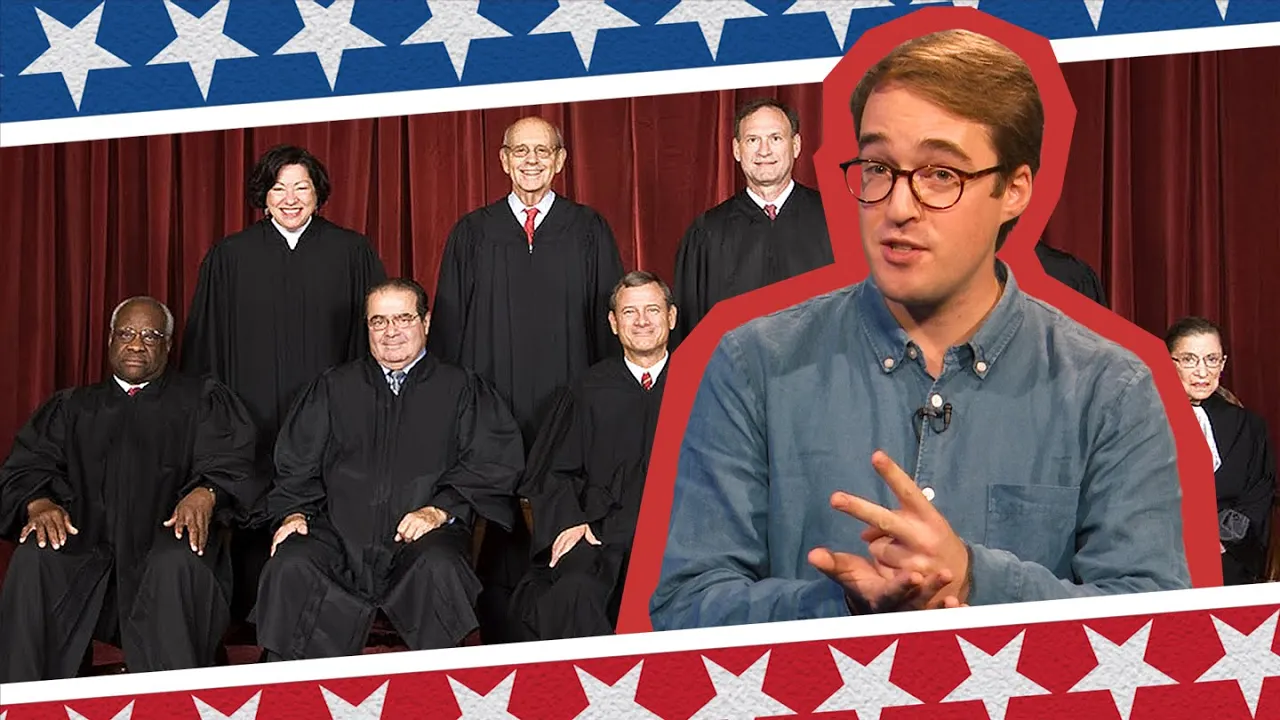
jones involved a suspect whose movements were reconstructed 24 7 for a month and the police did that by attaching a gps device a global positioning system device on the bottom of his car and tracking the movements of his car for a month without a warrant and they suspected him of drug dealing and by following his movements they found he was indeed a drug dealer they convicted him he like olmsted and cats before him said you need a warrant you can't follow me for a month without um getting a warrant and the the court agreed and in a really important opinion in the jones case justice antonin scalia wrote for five justices that there was a physical trespass on jones's property the police had to walk onto his driveway and then physically affix the gps device on the bottom of his car they both trespass on his driveway and seize the car when they put the gps device on it and justice scalia said that any physical trespass or search whose intent is to collect information about us triggers the fourth amendment justice samuel alito offered a different rationale for reaching the same conclusion justice alito thought that it was better to ask whether putting the gps device violated jones's expectations of privacy and alito said that following our movements 24 7 can reveal so much information about us the pl the friends we visit the protest rallies we attend the bars we go to that we do have an expectation of privacy in the whole of our movements there was a third opinion that was very important by justice sonia sotomayor and she said that she agreed that jones had a subjective expectation of privacy and his movements but she said you know at some point we're really going to have to reconsider this whole third party doctrine because if it were possible to seize jones's cell phone records without the physical trespass on his driveway and the seizure of his car then he'd have no expectation of privacy therefore let's rethink this one more case before we get to carpenter a really interesting one it's called riley versus california and the question there is when the police arrest me can they pat me down and take out my cell phone and read my email and search my texts and look at all the data i have on my cell phone ordinarily when the police arrest you they can pat you down to protect the officer's safety and also to make sure you don't have any contraband so they can pat me down if i have a cigarette pack in my pocket that can take out the cigarette pack and then to make sure the cigarette pack doesn't have any contraband or weapons in it they can open the cigarette package um and in this case the government said well a cell phone's just like a cigarette package we should be able to open it and read the email the court unanimously disagrees and chief justice john roberts says a cell phone is nothing like a cigarette packet it contains so much information it has our thoughts our texts our movements you do presumptively need a warrant chief dresses robert says that modern cell phones are not just another technological convenience with all they contain all they may reveal they hold for many americans the privacies of life that wonderful phrase quoting from the old cases chief justice roberts continued our cases have recognized that the fourth amendment was the founding generation's response to the reviled general warrants and risks of assistance of the colonial era which allowed british officers to rummage through homes in an unrestrained search for evidence of criminal activity and then chief justice roberts quoted james otis in the writs of assistance and also quoted john adams wonderful observation about otis speech at that moment the child independence was born it's a marvelous case and the fact that it's unanimous shows how much consensus there is on the supreme court about the importance of translating the fourth amendment in light of new technologies all right that brings us to the case where we began carpenter bus 2018 and you now have the information you need to make an informed judgment about whether you think that seizing someone's geolocational records and reconstructing their movements violates the fourth amendment the court it turns out was divided it was a five to four decision the majority opinion once again is authored by chief justice john roberts who holds for the supreme court that acquiring cell phone location information from wireless service providers does violate the fourth amendment because we have a legitimate expectation of privacy in the records of our physical movements and therefore accessing the records without a warrant violates the fourth amendment and um that's a centrally important case and once again chief justice roberts is emphasizing how much information can be revealed by the search of our geolocational information and says that physical trespass is not necessary and the dissenting justices essentially disagree justice anthony kennedy in his dissenting opinion says he invokes the third party doctrine to say that if you turn over information to a third party you lose all expectation of privacy in it and justices thomas and gorsuch also emphasize the importance of having a physical trespass so that's where the law stands right now the court is has held repeatedly that broad searches that can reveal a great deal about us including the searches of our geolocational records do violate the fourth amendment so the answer to the question that i began with is they can't do that the government cannot reconstruct your movements 24 7 in public without a warrant but the court is divided about the reasoning and they're still debating to what degree physical trespass is necessary to trigger the fourth amendment i want to end with the inspiring words of justice brandeis who emphasized the crucial importance of protecting the values that the framers meant to protect when they passed the fourth amendment and brandeis articulates those values in these inspiring words this is brandeis the makers of our constitution undertook to secure conditions favorable to the pursuit of happiness they recognized the significance of man's spiritual nature of his feelings and of his intellect they knew that only a part of the pain pleasure and satisfactions of life are to be found in material things they sought to protect americans in their beliefs their thoughts their emotions and their sensations they conferred as against the government the right to be let alone the most comprehensive of rights and the right most valued by civilized men and women beautiful encapsulation of the purpose of the fourth amendment to the constitution [Music]
Up Next

17:57
Olmstead v. United States: Fourth Amendment and Wiretapping
@audiopedia5493
2.6K views•2016-01-14

4:27
US Secondary Sanctions Impact on EU Businesses and Blocking Legislation
@Bureauvandijk
1.6K views•2019-03-20

64:32
Free Speech in America 2014: A Panel Debate at NCC
@ConstitutionCtr
5.3K views•2014-03-26

24:42
Police Interrogation Tactics: False Confessions & Legal Reform
@LastWeekTonight
7M views•2022-04-18
Related Study Plans & Knowledge Roadmaps
Structured learning paths in Law
law
Self-Defense Law: Imminence & Castle Doctrine
01Foundations of Self-Defense Law
02Imminent Threat & Reasonable Belief
03The Principle of Proportionality
+ 3 more learning modules
12h6 modules
Explore Roadmap
law
Defamation Law: First Amendment & Actual Malice
01Introduction to civil torts and the First Amendment
02Elements of Defamation: Libel and Slander
03Public Figures vs. Private Individuals
+ 2 more learning modules
8h5 modules
Explore Roadmap
law
Hearsay Rule: Trial Evidence & Exceptions
01Introduction to Trial Evidence & Courtroom Basics
02Demystifying Hearsay: The Core Definition
03Non-Hearsay: Exclusions Under FRE 801(d)
+ 3 more learning modules
14h6 modules
Explore Roadmap
law
Medical Malpractice: Law, Liability & Care
01Foundations of Tort Law and Civil Liability
02The Four Elements of Medical Malpractice
03Defining and Proving the Standard of Care
+ 2 more learning modules
12h5 modules
Explore Roadmap