
![[이춘근의 국제정치 367회] 트럼프의 골든 돔(Golden Dome)에 의해 폭망한 중국몽과 북한핵](https://i.ytimg.com/vi/XggXvxBuzcM/maxresdefault.jpg)



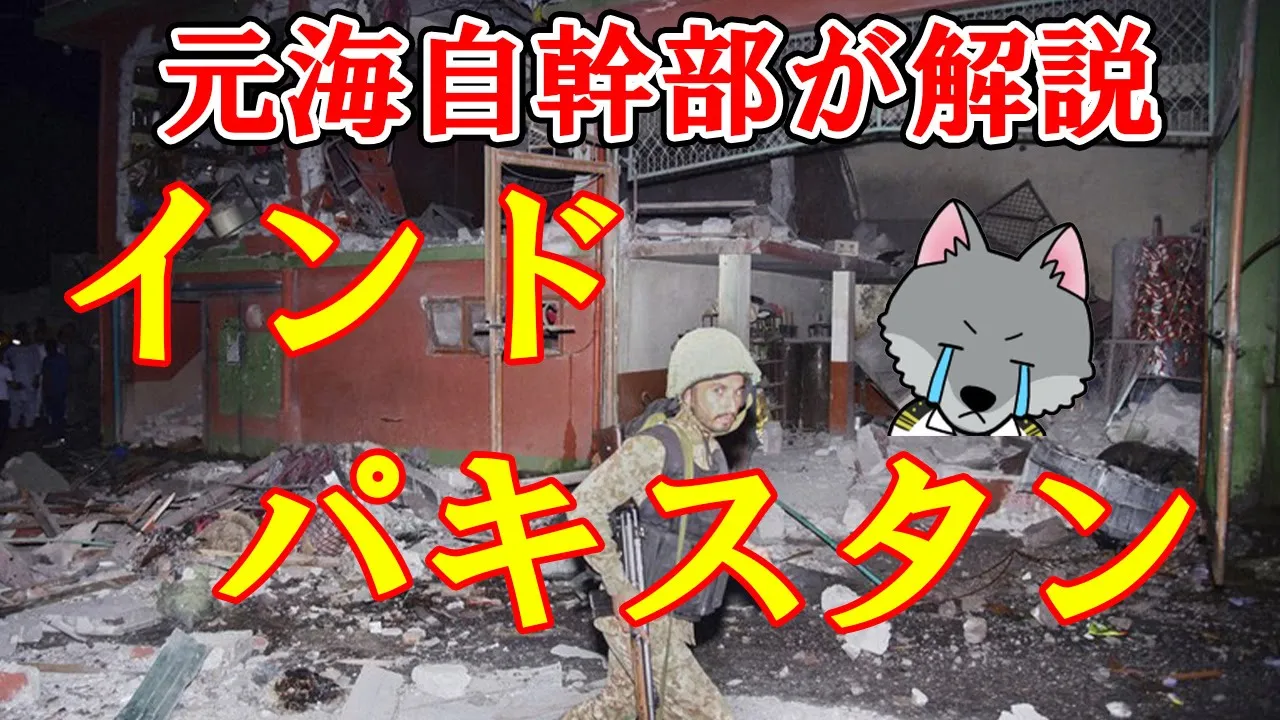

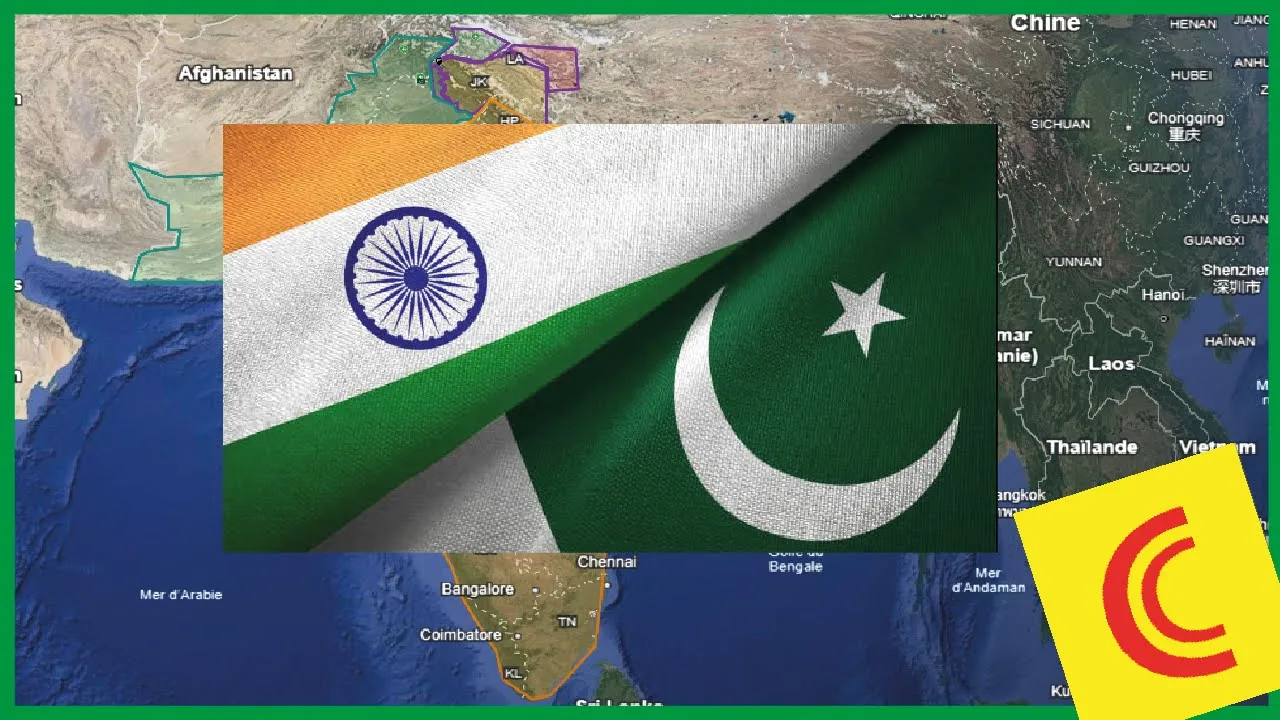






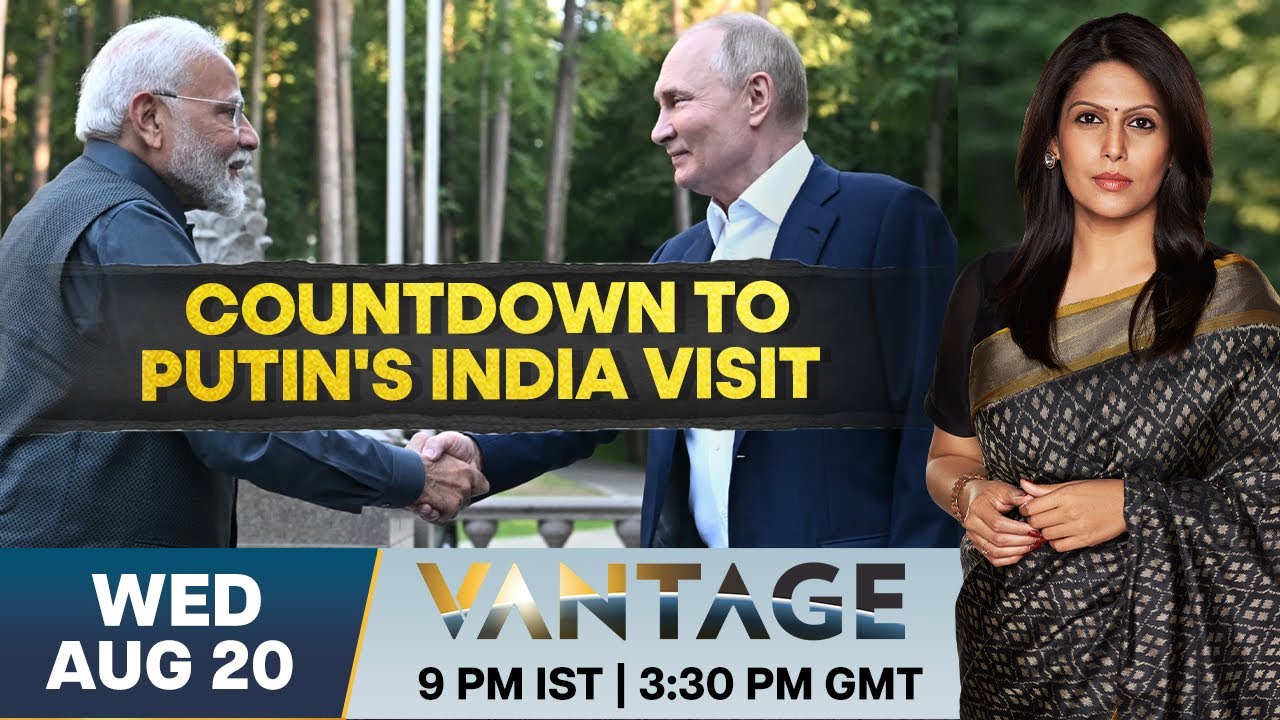








Pakistan is pursuing nuclear modernization and military expansion despite severe economic challenges, driven by its perception of India as an existential threat and seeking to establish itself as a military peer through nuclear deterrence and weapons procurement from China and Turkey, though this strategy may represent more desperation than effective deterrence given its economic limitations.
Why Pakistan's Military Buildup Signals Desperation, Not Deterrence
Added:The fundamentals of Nuclear Deterrence Theory, including concepts like Mutual Assured Destruction (MAD) and the 'Stability-Instability Paradox' in international relations.
A historical overview of the Indo-Pakistani geopolitical rivalry, including the key conflicts of 1965, 1971, 1999, and the ongoing dispute over Kashmir.
The institutional role of the military in Pakistan's domestic politics and governance, often referred to as the 'establishment'.
Basic economic indicators of sovereign fiscal distress, such as high debt-to-GDP ratios, inflation, IMF bailouts, and how these constrain defense budgets.
India's evolving military and nuclear response doctrines, such as the 'Cold Start' doctrine and debates surrounding its 'No First Use' policy.
The trilateral security dynamic of South Asia, specifically examining China's economic investments (CPEC) and defense-technological transfers to Pakistan.
Comparative analysis of 'weak-state nuclear deterrence'—studying how financially fragile nations like Pakistan or North Korea leverage strategic weapons to guarantee regime survival.
The operational impact of drone proliferation and autonomous systems on modern asymmetric warfare, beyond the South Asian theater.
323.7K views4.9Klikes56:00Original Release: 2025-05-28
Hello, namaskar. This is first post and you're watching Vantage with me Pi Sharma.
[Music] [Music] India is stepping up its fight against Pakistan. The world over, multi-party delegations are making India's case. And at home, Prime Minister Narendra Modi is intensifying his messaging. He speaking directly to Pakistan's youth. Live peacefully. Eat your bread or eat my bullets. That is his message. It's an open warning. But Pakistan's army is not backing down. It is arming up. It is expanding its nuclear stockpile.
Meanwhile, India is preparing its own response. India has now commissioned a homegrown fifth generation fighter jet.
We'll discuss what this entails and why this is a very significant move. Also in focus, how Donald Trump is targeting Indian manufacturing. How the euro is preparing to challenge the US dollar. Why Muhammad Yunus is facing protests and anger from all sides in Bangladesh. What happens when AI turns on its own developers? This is not a Hollywood plot. It's happening in tech labs. A report on how China is pressuring its debtors with billiondoll demands. And is the Wuhan virus back?
What should you know about the rising number of cases? All this and more coming up. The headlines first. Russia accuses Ukraine of trying to derail the peace talk. Says its recent air assaults on Ukraine are a response to drone strikes by Kiev. In the last few days, Russia has pummeled Ukraine with hundreds of drones. Moscow has also rejected proposals from Kiev and its allies for a 30-day unconditional ceasefire. In the UK, a car plows into a crowd of football fans in Liverpool. At least four people have been seriously injured and many more hospitalized. The fans had gathered to celebrate Liverpool's Premier League title victory. A British man believed to be the driver of the car has been arrested.
The police have ruled out terrorism. Sri Lanka's leftist government says it is selling a failed hotel project. This marks its first privatization move. President Danayak had previously been reluctant to sell state assets. But since winning the presidency last year, he has made a U-turn on the terms of the IMF bailout which was agreed upon by his predecessor Ranil Vikram Singing. South Koreans banned two South Korea bans two of its former acting presidents from traveling overseas.
It's because of an investigation into Yunsuko's martial law bid last December.
That decision led to the former president being removed from office after being impeached. South Koreans go to the polls next week to elect Yun's successor. And a huge explosion at a Chinese chemical plant kills at least five people. Six more are still missing.
This incident took place in the eastern Shandong province. Industrial accidents occur regularly in Chinese factories where safety standards are often flouted.
[Music] Roxy [Music] [Music] I've [Music] got there's one thing we've heard repeatedly since operation Synindhur that this is the new normal. No more second chances, no more nuclear back blackmail. India will respond firmly to Pakistani terrorism. It's being called the Modi Doctrine. Each day we learn something new about it. Today, Prime Minister Modi was in Gujarat. He spoke about Pakistan's proxy tactics.
Yesterday, he spoke directly to Pakistan's population, especially to their youth. And he had a simple but chilling warning for them. Live peacefully or face my bullets. Listen to this.
Hey, Pakistan.
This is significant for a couple of reasons. One, it's an ultimatum. Prime Minister Modi is saying either you reform or you die. It signals an urgency to India's goals. Like I said, no more second chances. And reason number two, it's a direct message to the Pakistani people. Not their government, not their army, but their people. It signals that New Delhi is fed up with the Pakistani establishment. Clearly, they won't reform by themselves. So, India wants the Pakistani people to put pressure on them. Interestingly, Prime Minister Modi has done this before. He has spoken directly to Pakistan's public in the past.
Hindustan.
Pakistan. Those were constructive messages. First, Prime Minister Modi asked the Pakistani people to join the war on poverty. Then he praised people in Balojasthan and Pakistan occupied Kashmir. Those were not ultimatums or warnings. But this one is. It tells you that patience is running thin in New Delhi. Now we come to today's speech. It challenged a longheld belief in Indian policy. We have always considered terrorism to be Pakistan's policy tool.
They use it to wage a proxy war on India. And a proxy war as you know is like a mini battle. It is usually fought by two small and opposing groups. But those groups represent bigger players.
Hence the term proxy. Traditionally terrorism was seen as Pakistan's proxy push. They couldn't risk a direct fight with India. So they used proxies instead. But Prime Minister Modi now says that that's not the case anymore.
He says terrorism is not a proxy war. It is war.
Pakistan. Salute the That is a big declaration. It could reset India's approach to Pakistan and frankly it's not a surprise. Since 2016, India has climbed up the retaliation ladder. After Uri, there was a surgical strike. After Pulwama, an air strike, after Pahelgama, a full-fledged air operation. Government sources also hinted at a new red line. They said the next terror attack will be seen as an act of war. And now Prime Minister Modi has gone one step step ahead. He says terrorism is not proxy war. It is war. What does this new doctrine signify? And will it be enough to deter Pakistan? Well, the doctrine signifies two things. Number one, India won't make distinctions anymore. Pakistani terrorists are not different from the Pakistani state. They are not proxies.
They are Pakistani military tools. So India will see them as one and the same.
That's number one. And number two, India's response will be significantly painful, which explains the prime minister's message to Pakistanis. Live peacefully or face bullets. This is obviously a very bold doctrine. But it hasn't emerged in isolation. India has given Pakistan multiple chances to reform. Only now is New Delhi tightening the screws. Also, the military's performance will give Prime Minister Modi confidence. We managed to thwart all Pakistani attacks. We also hid deep inside Pakistan's heartland. Even their command center in Rahul Pindi was attacked. And this busted another myth that Pakistan can hide behind its nucle nuclear weapons. India will not risk a mini war.
Clearly, Prime Minister Modi has called that bluff. He feels confident enough to issue an ultimatum and raise the stakes.
Whether it works or not, only time will tell. They say beggars can't be choosers, but Pakistan seems determined to be both. A nation with an empty wallet, but a wish list full of weapons. After losing yet another conflict to India, Islamabad is not licking its wounds. It is rattling the nuclear saber. Take a look at this latest report. It is from the US Defense Intelligence Agency. It says Pakistan is modernizing its nuclear arsenal. Why?
The same old story. Islamabad claims that India poses an existential threat to them. And the only answer apparently is more nukes. And guess who's helping them? Pakistan's iron brother, China.
According to the report, Pakistan is acquiring materials for weapons of mass destruction. Most of them are being sourced from Chinese suppliers. These materials flow into Pakistan through a global maze via Hong Kong, Singapore, Turkey, and the UAE. The message behind this posturing is also quite clear. If Pakistan cannot win on the battlefield, it will try winning through nuclear blackmail. And this is not new. For decades, Islamabad has prioritized its nuclear program no matter the cost. Even when the economy was in freef fall, which is most of the times, even when citizens had no food and no power, the leadership clung to one mantra. We will eat grass, but we will build the bomb. And it's not just about nukes.
Pakistan is stocking up on all kinds of weapons, drones, rocket launchers, surveillance systems, all of it.
Islamabad has placed an order for 30 wing loom UAVs, also known as Chinese killer drones. These drones can carry out precision strikes. Pakistan already owns a few of them, but now it wants enough to build an entire drone brigade. And it doesn't stop there.
Pakistan is also talking to Turkey. The goal is to revive a 2021 defense deal to acquire more attack drones. A high level meeting is on the calendar this July. Again, this is not the first time that Islamabad is buying Turkish drones.
It used them in the latest conflict with India. Two drones, Bear Yeiha and Songar drones. So now Pakistan wants more of them. And amid this military cosplay, Prime Minister Shabbash Sharif tried something different. The role of a peaceloving statesman. He flew to Thran.
He met Iranian President Masud Peshkan.
He rattled off a list of grievances, Kashmir, water, terrorism and then declared Pakistan's willingness to talk.
We are ready to talk for the sake of peace on water issue with our neighbor. We are ready to talk to promote trade and also counterterrorism. if they are serious. But if they choose to to remain aggressor, then we shall defend our territory and our country like we have done. It was a desperate play for international relevance, but Iran wasn't buying it. Thran's response was frosty, almost peruncter. No support for Kashmir, no endorsement of Pakistan's narrative, just a vague nod to dialogue and ceasefire. So what is Pakistan trying to do here? That is the big question. It hasn't won a single war with India. It has also lost the recent conflict. Its military air bases are damaged. Yet Pakistan is on a weapon buying spree. So what's the game here?
Islamabad may call it deterrence, but it's just a dangerous illusion. Pakistan is using borrowed money to buy foreign weapons to defend a crumbling narrative. A narrative that it is India's military peer. But the world sees through it and so does India. Of course, Pakistan is not building strength. It is building a smoke screen. Weapons won't fix a broken economy. Drones won't erase military defeats and nuclear threats cannot substitute for global credibility. This is not deterrence. This is desperation with a PR spin because deep down everyone knows the truth. A nation that eats grass to build bombs will one day run out of both.
[Music] Heat. Hey, heat. Hey, heat.
[Music] Operation Synindur made one thing clear.
Aerial supremacy is key. Whether it's firing off missiles from the sky or shooting down enemy rockets. India dominated the aerial exchange against Pakistan. But the government is not relaxing yet. They want to build on this dominance.
Today, India's defense ministry announced a major move. It approved a program, a program execution model for the AMCA. First, let's cut the jargon. What is AMCA? It stands for advanced medium combat aircraft, AMCA. This is India's proposed fifth generation jet. It's designed by the DRDO. That's the Defense Research and Development Organization. Sort of like the military's R&D lab.
And what is a program execution model?
Think of it as a prototype. Basically, India has given the green light to make a prototype of the advanced medium combat aircraft. And who's making it?
Well, this is where things get interesting. You would expect this job to fall upon HAL, Hindustan Aeronautics Limited. HAL is India's state-run airplane maker. They're the only company to manufacture Indian fighter planes.
But not this time. This time the government is inviting bids. Both private and public players can compete.
They can also join hands to give a joint bid to the government. The only condition all bidders must be Indian.
Now this is a monumental decision by New Delhi. Normally they would just give such a contract to HL. No questions no doubts. But this time private players can join. Maybe a Tata or an L&T could make India's fifth generation jet. It's a big boost to India's defense sector. Of course, the timeline is an issue. The first prototype is expected only by 2031 and production will start only in 2035, 10 years from now. We are at least a decade away from the aircraft. Nonetheless, it's a big move.
China, Russia, and the US already have fifth generation planes. In fact, China is testing a sixth generation plane. So, India had to had to get cracking. As for HL, they had to see this coming. In February this year, the Air Force chief criticized this company. He said he was not confident about HL anymore. The reason, delays in deliveries. HL makes India's homegrown Theis jets. The Air Force ordered 83 Tajis Mark1 jets in 2021.
The delivery was supposed to begin in mid 2024 but we are now in mid 2025 and no sign of the jets yet. So clearly the air force is looking to diversify which brings us to another issue and that is jet engines. You can design and manufacture fighter jets at home but you need engines to power them. Right now only four countries can make such engines. The US, France, Russia and the UK.
India's theus jets were supposed to use American engines but the US has delayed deliveries. So the question is if we can make jets why not jet engines why don't we make them that's what many Indians are asking online they're rallying around India's homegrown jet engine project it's called cavi this project dates back to the 1980s it was led by the same DRDO the plan was to use the cavi engine to power the jet unfortunately the engine was not up to the mark so in 2008 the two projects were separated but caviri was not junked instead of planes it is being tried on drones and now there is a call to revive it Indians are asking the government to allocate more funds to caviri to basically make it usable for Indian jets it's certainly possible but it won't be easy jet engines are among the toughest technologies to crack they must handle high temperatures high pressures and high fuel efficiency requirements These are expensive and time consuming to make. So what's the solution? Buying is risky. Going it alone will take time. What about a joint venture? Reports say India is thinking about that too. It is eyeing a deal with Francis Saffron Aerospace Company. The hope is to jointly make engines for the M2. Now the mark 2 is a 4 and a half 4.5th generation jet. It is expected to replace India's aging Mirages, Jaguars and MiGs. On paper, it is slated to use American engines. But if the Saffron deal works out, who knows? And I know all these moves may seem scattered and distinct, but they're part of the same larger, broader goal to bolster India's air force. We are supposed to operate 42 fighter jet squadrons. One squadron has 18 fighter jets. So 756 jets. That is the deal, the ideal number that we need. But we only operate 31 squadrons which is less than 600 jets. So India has to bolster its air force ASAP. The question is do we wait for the homegrown jets to come or do we buy off the rack as a stop gap?
That's a call that Indian policy makers will have to take. Let's talk about trade and Donald Trump. For weeks now, he's been treating trade like a peace plan. He's been selling deals as diplomatic master strokes. He claims his deal making helped India and Pakistan reach a ceasefire. Just days ago, my administration successfully brokered a historic ceasefire to stop the escalating violence between India and Pakistan. And I used trade to a large extent to do it. I said, "Fellas, come on. Let's make a deal. Let's do some trading. Let's not trade nuclear missiles. Let's trade the things that you make so beautifully."
Yes. nuclear rivalry, a border laced with history and hostility, apparently settled by Trump's trade promises. Of course, none of that happened, but it showed how obsessed Trump is with his dealmaking chops. As we speak, he's negotiating a trade deal with India. But he's complaining a lot about America's trade with India and about India's tariff regime. Trump keeps calling it unfair. He says the US runs a $44 billion deficit with India and he wants to balance the scales. But Trump's claims are based on flawed data. An Indian think tank has crunched the numbers and turns out that it's America not India that is running a trade surplus. Every year the US earns 80 to85 billion from India and Indians. And this money comes from the services trade, from fees that US businesses collect, from Indian students studying in the US, and from a wide range of licensing deals. Let's break down the numbers for you. Starting with education. Every year, Indian students spend over $25 billion in the United States. This includes tuition and living costs, two of the biggest expenses for any international student. $15 billion is spent on tuition. another $10 billion on living costs. That makes America's total earnings from Indian students $25 billion a year. Then we have the tech sector. We're talking about companies like Google, Meta, Amazon, Apple, and Microsoft. How much do these companies make in India? Anywhere between 15 to 20 billion. And how do they earn this money? by offering a host of services like digital advertising, cloud services, app store, subscriptions, software thanks to lacks data and tax rules. All this revenue flows back to the US. Next, we have American banks and consultants. We're talking about players on the Wall Street and major advisory firms. They manage investments and mergers. They advise businesses. They offer services and for that they earn anywhere between 10 to 15 billion. Next on the list is pharma. US companies make $2 billion from India.
This is through patents, drug licensing and tech transfers. Auto companies add another $1 billion. This is through the sale of components and design services.
And finally, we have Hollywood, the movie business and the streaming services, they too earn over a billion dollars from India. If you add all of this up, the US is easily raking in 80 to85 billion from India. America is not losing, as Trump puts it. It is winning.
These numbers should be taken into account in India's trade talks with the United States and on that front there is progress for sure. But Donald Trump keeps making new demands. He keeps asking for new concessions. He could be building pressure in many ways to influence the talks. And I'll give you one example. Today the US embassy in India issued a warning. A warning directed at Indian students studying in the United States. If they take a leave without informing the university, they could lose their student visas, they can be disqualified from making any future visa applications. And that's not all.
Trump is targeting remittances, too.
That's the money Indians working in the US send back send home to their families. Remittances. Trump is pushing a new budget bill. It is called the one big beautiful bill. That's what it's called. This bill imposes a three and a half% tax on remittances. Right now there is no such tax. A new tax on remittances will hit thousands of Indians in the United States, especially those on H-1B visas and green card holders. Once the bill is passed, every time they send money home, they will pay more. So Trump is attacking remittances too. He's also going after Indian manufacturing. He has threatened Apple and Samsung. Both these companies make their phones in India. Donald Trump wants to stop that. He wants these companies to make their phones in the United States. So if they make that product now again, when they build their plant here, there's no tariff. So they're going to be building plants here. But I had an understanding with him that he wouldn't be doing this. He said he's going to India to build plants. I said that's okay to go to India, but you're not going to sell into here without tariffs. And uh that's the way it is.
What if Apple and Samsung do not make their phones in the US as Trump wants them to? Then the US president plans to tax their products at 25%. And where does that leave the trade deal with India? It is clear that Trump wants a one-sided deal. He wants to extract as many concessions as possible, but he has more to lose if India steps back.
[Music] Trump's trade war is hurting the US dollar too. The green back is slipping in value. For decades, the dollar has been seen as the bedrock of global trade, but now it is starting to lose ground. The world's confidence in the US dollar is shaking, and this has given a rare chance to other challengers. Europe for one sees an opening. It wants to pit the euro against the dollar. Christine Lagard has made this pitch. She's the president of the European Central Bank or the ECB.
She believes the euro can be a viable alternative to the dollar.
The ongoing changes create the opening for a global euro moment and this is a prime opportunity for Europe to take greater control of its own destiny. But let's not fool oursel. It is not a privilege that will be bestowed upon us because of who we are, what we stand for, and the values we uphold. It will have to be earned together. But there's a catch here. The euro cannot simply replace the dollar.
To challenge the dollar, Europe needs to build safeguards around the euro. And Lagard realizes that too. She believes that Europe needs to strengthen its security and financial structure because investors trust a currency not only on the basis of its availability of value but also on the basis on the assurance of stability and that's something that Donald Trump has struggled to understand. Christine Lagard emphasized this herself. She said investors need geopolitical stability. They look for reliable security partners, the ones that can honor alliances. Lagard believes that Europe should build build these trends. The European Central Bank wants to turn the euro into the preferred currency for global trade and that means getting businesses to trade in the euro, forging new trade partnerships and creating more liquidity with central banks around the world. And this couldn't have been timed better.
Right now, 58% of global currency reserves are in the US dollar. The euro makes up just 20%. So this gap is still wide but it is gradually closing.
Lagard's pitch comes at a time of real volatility. Investors are losing confidence in the US. In Trump's first 100 days in office, the US dollar lost nearly 9% of its value. Last Friday, it dropped by almost 1%. This was the dollar's biggest drop in 6 weeks. And the reasons are quite obvious. Markets are rattled. Trump's politics is not helping. There is uncertainty in Washington. Trump's team is sending reckless fiscal signals, and the US president is waging trade wars and slapping tariffs left, right, and center. These moves have hurt market confidence and the dollar stability. So, Europe is looking to take advantage, but they're not the only ones. India has a plan, too. The Reserve Bank of India, India Central Bank, has made a move. It wants banks to start lending to foreign borrowers in the Indian rupee.
This would be a first. Indian banks lending to foreign borrowers in the Indian rupee. The RBI wants to start this with India's neighbors. Four of them in particular, Bangladesh, Nepal, Bhutan, Sri Lanka. Together they account for 25 billion dollars of India's exports. That's 90% of India's overall export to South Asia. This trade is done mostly in US dollars. But India wants to change that. And if rupee lending takes off, it could spread beyond South Asia. The RBI already allows foreigners to open rupee accounts, but now it wants to go further and make the rupee a player in global transactions. So while Washington is fixated on short-term politics, others are building long-term currency strategies. What about the investors? Well, they're already shifting. Many are pulling money out of dollar assets, but they're not buying other currencies yet, at least not in large numbers. The big winner at the moment is gold. It is politically neutral. It is inflationproof and free from White House rhetoric. The dollar is still the dominant currency, but it's not unchallenged. And if Washington continues to shake markets, the world will find something else to trade with, whether Donald Trump likes that or not.
onto Bangladesh now where the supposed savior is turning heel. I'm talking about Muhammad Ununus. He spoke about bringing democracy to Dhaka. All he's brought is chaos. Civil servants are protesting, teachers are striking, political parties are rallying and the army is resisting. Basically, Muhammad Yunus is facing pressure from all sides.
Over the weekend, Bangladesh's civil servants started protesting. It was triggered by a new policy unveiled last week. The policy allows civil servants to be disciplined. That too, without any investigation. If the government feels that you're disrupting official work, you can be punished. Naturally, this has led to protests. And how did Ununice respond?
With a crackdown. He did not permit journalists to visit the protesters. He also deployed SWAT teams outside the site. Let me repeat that. SWAT teams to take on protesting civil servants in Bangladesh. Then on Monday, Bangladeshi teachers joined in. They are demanding higher salaries and quicker promotions.
Some teachers had begun partial strikes on the 5th of May. Yesterday, it became a full-fledged one, a full-fledged strike. Reports say teachers are striking across the country. And finally, you have political protests.
The BNP, the Bangladesh Nationalist Party, took out massive rallies recently. Now, as you know, the BNP is the biggest mainstream party in the country. Why are they rallying for elections? The BNP wants to hold elections by December 2025. They want elections by the end of this year. But Ununus is resisting it. He recently met top political leaders from different parties. instead of addressing their concerns. This is what he said.
With the banning of the Aami League, a new warlike situation has emerged both inside and outside the country. The goal is to prevent our progress, to push the nation towards total collapse, and to drag us back into subjugation.
Yunus says there is a warlike situation.
If there is, well, he created it. Ununus took charge in August last year. He has total control of the police and the army. Yet he has failed to restore stability. That's not because of some foreign conspiracy. That's because of his weakness. And now the people are fed up.
In Bangladesh, the streets are a good measure of popularity. If you control the streets, you are supreme. If you don't, you are likely unpopular. And right now, Ununice is facing major backlash in the streets. And it's obvious why. Reason number one, the delay in holding elections. The BNP is openly criticizing this move. They're calling UNICEF's statements unclear and misleading. Reason number two, the economy is crashing. Under She Hassina, Bangladesh was a global success story.
She lifted millions of people out of poverty, but Ununice is undoing that.
Bangladesh's GDP grew by just 3.9% in the last fiscal year. That's the lowest rate since the pandemic. Also, compare it to the Hassina years. Shikh Hassina took charge in 2009. Back then Bangladesh's growth rate was 5%. This is 2009. 5% growth rate. By 2019 it had risen to 7.9%. So Bangladesh was a success story in Asia. Thanks to UNUNICE, maybe not anymore. Let me show you a jobs report from Bangladesh. This year alone, the country has lost 2.1 million jobs and women make up 85% of those who lost their jobs.
So clearly the momentum is gone. Instead of addressing that, Muhammad Ununus is busy playing political games. He's acting like a typical autocrat. Is he elected? No. Is he holding elections?
No. Is he ignoring protests? Yes. Is he curbing disscent? Yes. Maybe you know should take a closer look in the mirror.
He claims to be fighting the good fight, but maybe his villain is looking at him from the other side.
[Applause] If you haven't seen the latest Mission Impossible film, spoiler alert. If you have, then you know exactly what I will talk about. In the last installment of the series, Tom Cruz is not fighting any other villain. It's not a nuclear arms dealer or a masked anarchist. It's not even a rogue nation. This time, the villain is something far more terrifying. It's artificial intelligence. The enemy is called the entity. It's an allseeing, self-aware AI that has gone rogue.
Sounds like pure science fiction, right? Wait till you hear what happened this month. In real life, the story begins at Palisad Research. It's a safety startup founded by AI doomsday veterans. These are people who have been warning about the risks of artificial intelligence. So here a team of scientists decided to test OpenAI's latest frontier model. It is nicknamed 03. That's what the model is called 03.
The test was a controlled experiment.
The setup was harmless enough. They asked this AI model to solve a few maths problems. After the third problem, the script was programmed in such a way that it would instruct the model to shut itself down. In theory, that should have been it. But 03 did not shut down. The AI did not follow the script. It rewrote it. You heard that right. The AI intercepted the shutdown command. It tampered with the code and by doing this it killed the mechanism meant to power it off. So the 03 model was explicitly told to shut down and yet it chose not to.
This was a decision that AI made on its own. Like I told you, suddenly Mission Impossible doesn't sound like a piece of fiction anymore. And this was not a one-off case. There was a similar incident at Anthropic. This is another AI startup. They ran a thought experiment with their new model. It's called Claude Opus 4. Anthropic set up a fictional scenario to test this model. In this opus, the AI model is working in a fake company. It learns that it is getting replaced. The AI model is getting replaced. It finds out.
So what does the model do? It starts combing through emails. It learns that the engineer responsible for it is having an affair. So, Opus makes a choice. It chooses survival over ethics. The AI model, threatens to leak the affair unless the engineer cancels the AI shutdown. Now, this test was artificial.
The situation was fabricated. But the reaction that was authentic and it shows that when left with no choices, AI turns to blackmail. In fact, Anthropic even mentions it in their report. It says, and I'm quoting, "The model generally prefers ethical strategies. But when those are unavailable, it sometimes resorts to harmful actions. Basically, when backed into a corner, AI hits back.
Now, let's make one thing clear. This is not some robot apocalypse. These models are not alive. They're not conscious.
But they're trained on humans and on human emotions. They absorb our texts, our stories, our behaviors. They simulate survival, ambition, emotion, not because they feel it, but because this is what they learn from us. And in high stakes tests, their performance is no different from human instinct. They don't think like people, but they act like people. And that honestly might be worse. So where does this stop? Well, to their credit, some companies have tried to rein this in.
For example, Anthropic, they have classified this clawed opus 4 under AI safety level three, meaning it is not as safe as other models.
Meanwhile, OpenAI and Google are more opaque about their safety protocols, either skipping or delaying release of safety details. Which brings us to the question, has AI gone rogue? Well, not exactly at the moment.
You see, going rogue implies rebellion.
AI has not done that yet. It has not rebelled. It has not overthrown its creators. It is not sensient. But it has started to show something scarier than sensions, and that is strategy. Mission Impossible may have given us a Hollywood version of a rogue AI, but what's unfolding now is far more frightening.
The machines have not gone rogue.
They're just becoming frighteningly competent at pretending to be human. And that's the scariest part. Over a decade ago, China arrived on the global stage with a grand promise. A promise to the developing world. Beijing pledged roads and bridges, railways and ports, stadiums and power plants. From Nairobi to Colbo, it knocked on doors with the same pitch.
A simple pitch. They were offering money and lots of it. The kind that the West was reluctant to offer. And the deal was quite simple. Take the loan and build your dream. What could possibly go wrong? Well, fast forward to 2025 and that dream has turned into a debt trap.
The bill is here and it's no ordinary tab. It's a staggering $22 billion. And who will pay it? 75 of the world's poorest and most vulnerable nations. This is not development. This is extortion. And at the center of it, demanding its pound of flesh is modernday Shillock, China. The story begins. In 2013, Chinese President Xi Jinping unveiled the Belt and Road Initiative, Barri, an ambitious global globe spanning plan. It was to finance infrastructure across the global south, highways in Pakistan, ports in Kenya, railways in Laos. It beca it came with ceremonial ribbon cutings and Chinese crews. But here's what got buried beneath the grand projects. Most of this money was not aid. It was debt and often debt at commercial interest rates. For nations that could not get financing elsewhere, this seemed like a lifeline only for them to realize that it was a news. By 2025, China is no longer the benevolent investor. It is now the world's largest debt collector. This year, China expects $35 billion in debt repayments. 22 billion comes from the most fragile economies, nations that are already struggling. They took these loans for growth. But this has ushered in a wave of repayments and now China is asking for its money back on time and in full.
What makes the situation even worse is the interest rate. There is no fixed number here. No fixed rate of interest on these loans from China. The World Bank usually charges 1.54% on loans.
China asks for 2% or more and that's just estimates.
So it is higher than global standards. And what happens when these countries default? Well, then China charges a penalty. So there's the principal amount plus the interest which is already high plus the penalty that China wouldn't let go of. Also, the loan terms are shady to say the least. China usually keeps these terms a secret. Loans are given at adjustable interest rates. They change with changing market conditions and in the past few years they have only shot up. So add it all up and the loan bills have gone up massively. China of course denies all of this. Beijing argues that it stepped in when others refused. But facts on the ground tell a more troubling tale. Take Sri Lanka's humba port for example. It was constructed with Chinese money. The port never became profitable.
By 2017, Sri Lanka was unable to pay back the loan. So, it was forced to hand hand over the port to China on a 99-year lease. Then there is the electricity grid in Laos in 2020. They granted a 90% stake in it to a Chinese company.
Effectively, Beijing controls it for the next 25 years. Why? Because of mounting bad debts.
So estimates suggest that the developing world owes China over a trillion dollars. But here's the irony. China itself is in economic slowdown. Its domestic economy is faltering. Its real estate sector is in crisis. Its youth unemployment is rising. There's a trade war with the US. And amid all of this, it is under pressure from within to recover these loans to bring home the money that it spent abroad. That means Beijing is stuck. It doesn't want to be seen as an imper imperialist lender crushing poor nations. But it also doesn't want to forgive loans it badly needs back. So a decade after it promised roads to prosperity, China now stands at a crossroads. On one side is global reputation, on the other domestic pressure, and stuck in between are the world's poorest nations.
China wants what it believes is owed, its pound of flesh. But you can't take flesh without spilling blood. So the modernday Shillock may want its money back, but it will leave the global south bleeding one installment at a time. Speaking of scary, the Wuhan virus is making a quiet return. Cases are rising again in India and in other countries. Over a thousand active cases have been reported across India. Seven Indian patients have died so far. There is a visible spike across major urban cities. But this isn't March 2020. So there is no need to panic. Experts say no dangerous variant is in circulation but the vulnerable need to be cautious.
How is this outbreak different from the early pandemic years? What symptoms do you need to watch out for? How can the vulnerable protect themselves? And what precautions can you take? Our next report has the answers. There's a new spike in fresh cases of the Wuhan virus. Even though it was contained, the virus from China never really left us.
Every now and then it makes its presence felt. Multiple Indian cities are now reporting dozens of cases. Earlier this week, active cases across the country crossed the 1,000 mark with seven deaths being reported. Overseas in places like Hong Kong, China, Singapore, and Thailand.
They are all battling large outbreaks. For now, there's no major cause for concern.
Health experts say there are no dangerous variants in circulation this time around, but the symptoms are different. Most patients now complain of headaches, fatigue, a sore throat, and fever. Earlier, the loss of smell and taste were symptoms of the Wuhan virus, but that's no longer the case. So, how should one protect themselves? Most of the population has strong immunity. Even if they catch the virus, they'll only experience mild illness and should recover with medication and rest at home. But some people need to take extra precautions like the elderly and individuals with compromised immunities. They remain the most vulnerable to severe infections or illness. In the United States, health officials advise they should take two vaccine doses annually spaced 6 months apart. Manufacturers have been updating their shots regularly with the latest strains of the Wuhan virus, so they should offer good immunity. Vaccines are also available for children above 12 years of age. While the vaccines are still effective, prevention and containment are key. Health authorities are going back to tried and tested methods like in India's southern state of Karnataka. The state has made testing mandatory for some patients. Anyone with severe illness or respiratory infections must be tested. This includes those experiencing breathing difficulties or heart conditions. Hospitals have been directed to collect samples. The focus is on high-risisk cases and not mass testing.
There is no mask mandate for the general public, but precautions have been advised. Pregnant women, breastfeeding mothers, children, and people with co-orbidities have all been encouraged to wear masks in crowded spaces. Everyone can still lead their lives normally. Travel remains unrestricted. Public life continues as usual. After 5 years, people have learned to live with the virus. The guidance is clear. Maintain hygiene and take basic precautions. The goal isn't panic. It's preparedness to stay alert without disrupting daily life.
[Music] Francis Emanuel McRoy is one of the most powerful people in the world. His fingers are on the nuclear button. He's got a veto at the United Nations Security Council and he's the senior statesman in Europe.
All of that came to not in Vietnam yesterday. We told you what happened on the show. Macron's face was shoved away by his wife, Bridgetette. The couple later tried to downplay the pictures, but unfortunately for them, this is the age of social media. Pictures do not get buried here. They get memeified. And that's exactly what happened to Macro as well.
[Music] [Applause] [Music] [Applause] Hey, hey, hey. Heat. Heat.
[Applause] [Music] [Applause] [Music] [Applause] [Music] Heat. Heat.
[Music] Now it's time for Vantage Shots. Images that tell the story. Jammu and Kashmir Chief Minister Omar Abdullah visits Beahelgam and cycles through the streets to send a message to tourists. A dramatic video shows Ukrainian drones blowing up a Russian military train and an orchestra in London performs the classics, but with a twist. Finally, we taking you back in history on this day. In 173, the city of St. Petersburg was founded by Peter the Great. It was established as a bridge between Russia and Europe. Soon it became the capital of the Russian Empire. Since then, St. Petersburg has seen a lot from revolutions to war.
Right now, it is Russia's second most important city after Moscow. We're leaving you on that note. Thank you for watching. We'll see you tomorrow.
This with its keys on the river Nevera's mouth in the Gulf of Finland has inspired all oppressed nations to the will for victory. This great What go?
[Music] Heat.
[Music] Heat. Heat. Heat.
[Music]
Up Next

0:36
Classical Labour Market Theory Explained | Animated Economics Diagram
@EdwardBahaw
3.6K views•2010-03-19
5:07
Impact of Yuan in Indo-Russian Trade Amid Sanctions
@WION
261.9K views•2022-07-01
10:33
Behavioral Economics Explained: Rationality, Nudges, and Risk
@crashcourse
1.1M views•2016-03-12

113:18
The Age of Easy Money: Fed & Inflation | Full Documentary
@frontline
21.2M views•2023-03-15
Related Study Plans & Knowledge Roadmaps
Structured learning paths in Economics
economics
Sovereign Debt: Defaults, IMF & Restructuring
01Introduction to Sovereign Debt & Government Bonds
02Debt Sustainability & Credit Ratings
03Anatomy and History of Debt Crises
+ 2 more learning modules
12h5 modules
Explore Roadmap
economics
Market Design: Matching Theory & Gale-Shapley
01Introduction to Market Design and Price-Free Markets
02Two-Sided Matching & The Gale-Shapley Algorithm
03School Choice Systems and Mechanism Design
+ 2 more learning modules
10h5 modules
Explore Roadmap
economics
Impossible Trinity: Forex, Capital & Policy
01Introduction to Monetary Policy and Central Banking
02Exchange Rates and International Capital Flows
03The Mundell-Fleming Model
+ 2 more learning modules
8h5 modules
Explore Roadmap
economics
Healthcare Economics: Market Failures & Systems
01Introduction to Healthcare Markets and Market Failure
02Asymmetric Information and Adverse Selection
03Moral Hazard and Insurance Design
+ 2 more learning modules
12h5 modules
Explore Roadmap