![Space Stuff Is HUUUGE [Q&A Livestream]](https://i.ytimg.com/vi/8sRgMLnjMZ8/maxresdefault.jpg)











![Why Don't We Hear About LUVOIR Anymore? [Q&A Livestream]](https://i.ytimg.com/vi/s9XkvvAyx9g/maxresdefault.jpg)
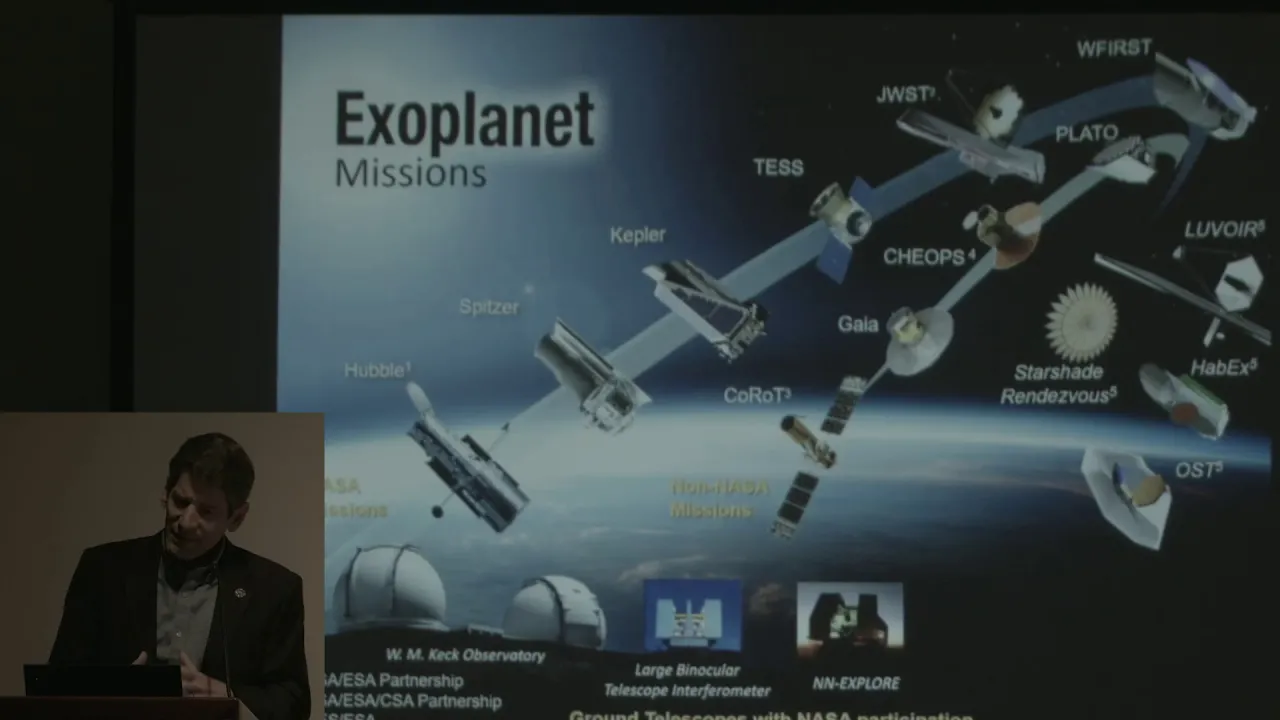




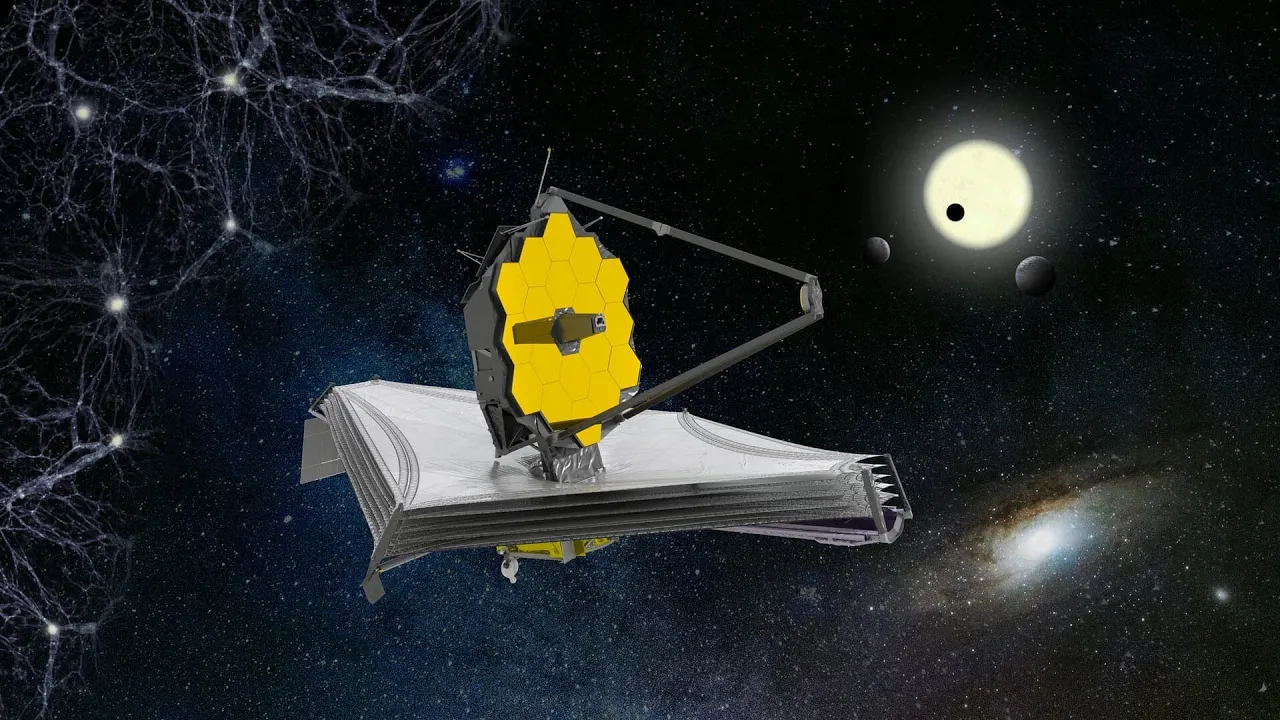
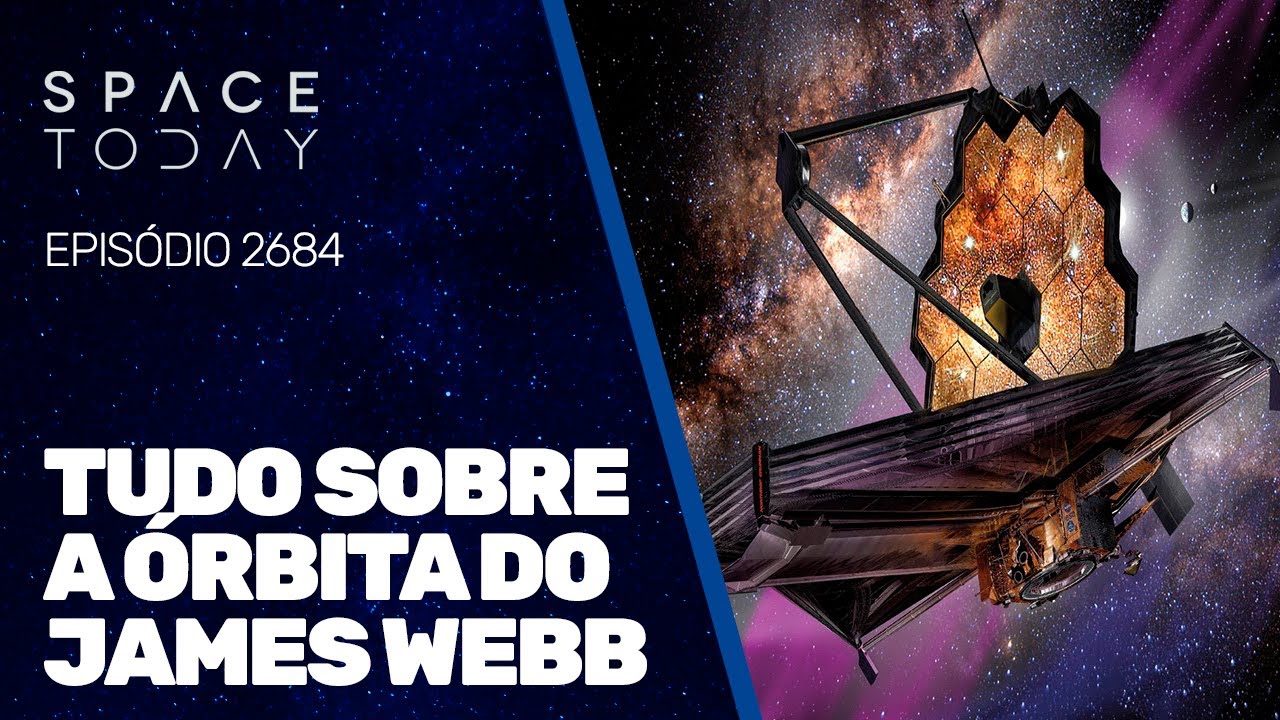
NASA is developing four major space telescopes for the 2030s: HabEx (using a 4m telescope with a 52m starshade to directly image Earth-like exoplanets), Lynx (an X-ray observatory 100x more sensitive than Chandra), Origins (an infrared telescope 1,000x more sensitive than Spitzer), and LUVOIR (a UV-optical-IR telescope up to 15m in diameter). These missions, selected through the National Academy of Sciences' Decadal Survey, will succeed the James Webb and Nancy Grace Roman telescopes, each designed to operate at the Sun-Earth L2 point and address fundamental questions about exoplanets, black holes, galaxy formation, and the origins of life.
4 Future Space Telescopes NASA Proposes for the 2030s
Added:Understanding of the electromagnetic spectrum, specifically how different wavelengths of light (X-ray, ultraviolet, optical, infrared) reveal different physical processes in the universe.
The advantages of space-based observatories over ground-based telescopes, including the mitigation of atmospheric distortion and the absorption of certain light wavelengths by Earth's atmosphere.
Basic concepts of exoplanet science, including how astronomers define a star's 'habitable zone' and the methods used to detect planets orbiting distant stars.
Fundamental optics principles, such as how telescope aperture size impacts light-gathering power and angular resolution.
The outcomes of the Astro2020 Decadal Survey and how it merged concepts from HabEx and LUVOIR into the high-priority 'Habitable Worlds Observatory' (HWO).
Advanced starlight suppression technologies, such as coronagraphs and starshades (external occulters), which are critical for directly imaging Earth-like exoplanets.
The physics of high-energy phenomena and the early universe, specifically how X-ray missions (like Lynx) and far-infrared missions (like Origins) study the birth of the first black holes and stars.
The engineering and orbital mechanics involved in deploying massive, segmented-mirror telescopes at Lagrange points (like L2) and keeping them thermally stable.
476.7K views11.2Klikes25:58Original Release: 2020-06-13
The 2020’s will see the launch of the James Webb and the Nancy Grace Roman Space Telescopes.
These are NASA's next two flagship astronomy missions that are often considered successors to the Hubble Space Telescope. But Hubble is an optical telescope while Webb and Roman will see in the near- and mid-infrared. In that regard, Webb and Roman are more accurately described as successors to the recently retired Spitzer infrared space telescope. Meanwhile, Hubble has been in service for over 30 years and Chandra X-Ray observatory has been up for 21 years. Both are working well but are showing their age.
And while the Webb and Roman space telescopes are certainly the flagship missions of the 2020’s, astronomers are already planning the next four New Great Observatories for the 2030’s and beyond.
Welcome back to Launch Pad, I’m Christian Ready, your friendly neighborhood astronomer.
And today, we’re taking a look at four future space telescope proposals that if selected, will have the same transformative effect on astronomy as the original Great Observatories had in the 1990s and 2000’s.
It might seem a little strange to even be talking about the next generation of space telescopes when the James Webb Space Telescope is a decade behind schedule, has blown way past its original budget, and it hasn’t even launched yet. But large-scale projects take well more than a decade to go from concept to first light even under the best of circumstances.
That’s why the National Academy of Sciences brings together the astronomical community to produce the Decadal Survey on Astronomy and Astrophysics.
The Decadal Survey sets the scientific priorities in astrophysics for, well...the next decade. But it's more than just a glorified wish list. Congress makes budgeting decisions based on them. Missions like Chandra, Spitzer, James Webb, and Roman were all given top priority in previous Decadal Surveys.
Having telescopes in space not only frees us of the distorting effects of Earth’s atmosphere, but it opens up the entire electromagnetic spectrum for astronomical observations. But putting a telescope in space means fitting it into a launch vehicle first, so every design requires tradeoffs between the mission’s science goals, the launch vehicle capabilities, and the technology required to make it happen. And also, oh yeah, costs.
To that end, the four study groups produced final reports on four space-based astrophysics missions for the 2020 Decadal Survey.
All four missions will operate at the Sun-Earth L2 point. This is a like a gravitational balance point between the Sun and Earth. It allows the telescope to block out the Earth, Moon, and Sun with a single sunshade. This keeps the telescope cold and in the dark, yet still still keeps it relatively close to allow it to be serviced robotically.
Together, these four missions could become the New Great Observatories of the 2030’s.
So let’s take a look and see what they came up with.
Number 1 - the Habitable Exoplanet Observatory, or HabEx.
HabEx’s primary mission is to directly image and characterize Earth-like exoplanets for the first time. Thanks to the Kepler mission, we now know that virtually all stars host at least one planet, and as many as 20% of those planets may be Earth-like.
But of the 6,000 exoplanets detected so far, only a handful have been directly imaged.
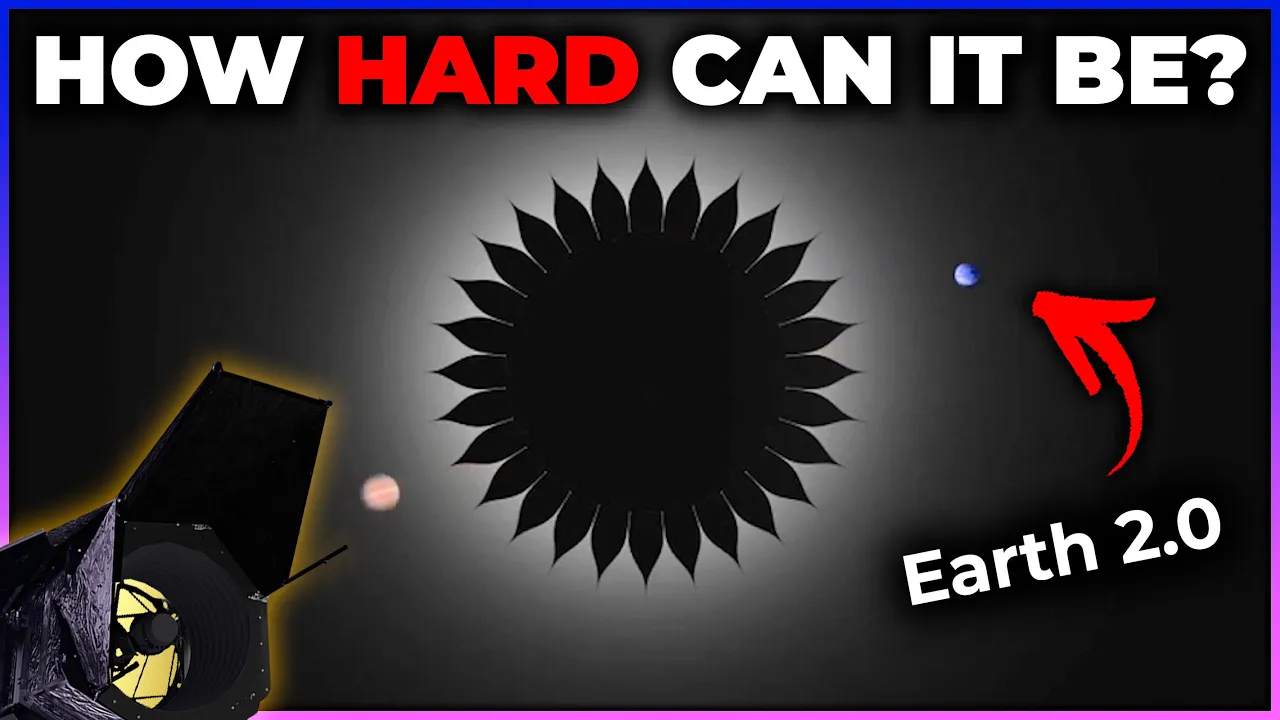
Planets are lost in the glare of the star, so the only way to see them is to block the star's light with a tiny disk called a coronagraph.
The current state of the art looks something like this. Here we see four giant planets making their way around the star HR 8799. All four of these planets are larger than Jupiter, and the one just outside of the coronagraph is farther away from its star than Saturn is from the Sun.
But an Earth-like planet is smaller and orbits much closer to its star than the planets shown here. Such a planet would reflect just one ten-billionth of the light of its parent star.
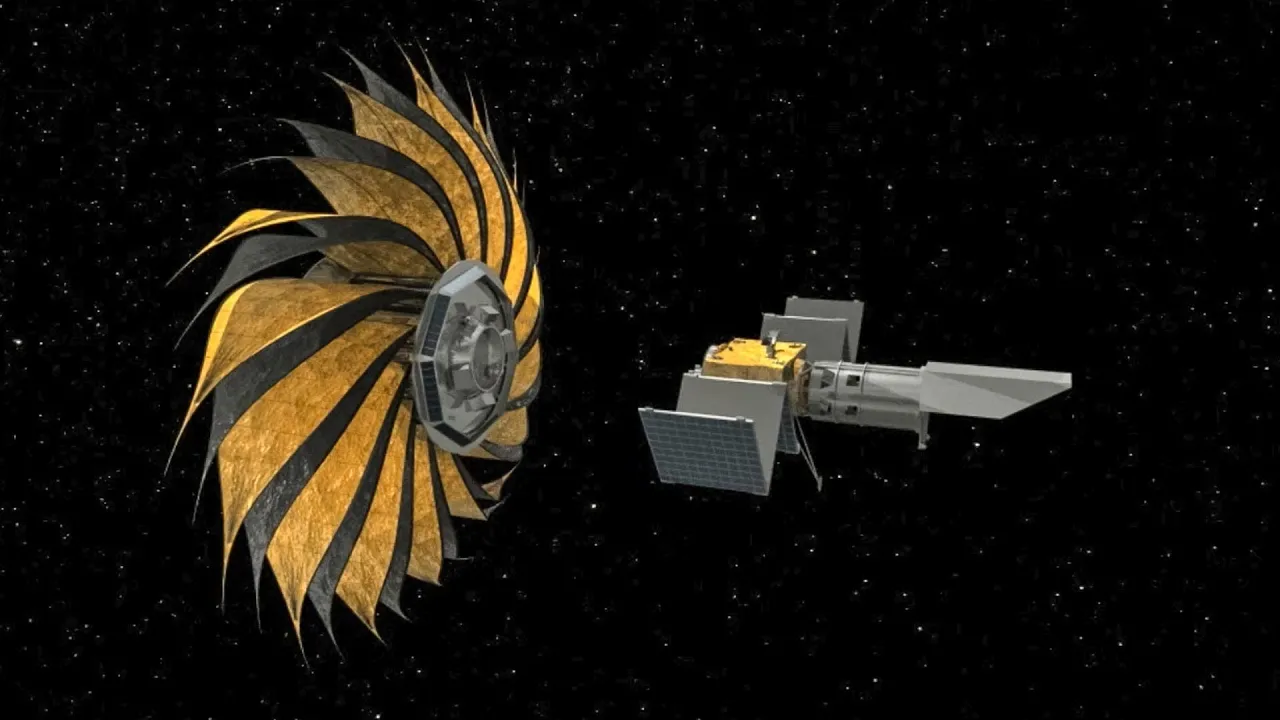
That’s why HabEx will use not one, but two spacecraft to image exoplanets. The first is an optical telescope with a built-in coronagraph. The second is a 52-meter diameter starshade that blocks the star.
The telescope itself has a 4-meter diameter mirror, which collects more than 10 times the amount of light as Hubble. It also employs an internal coronagraph, but one far more sophisticated than anything in use today.
But even in space, there is no such thing as a perfect focus because there’s no such thing as a perfect mirror. Starlight entering the coronagraph gets distorted by the tiniest of imperfections in the telescope’s mirrors. Without the coronagraph activated, these distortions spread the starlight into a series of concentric rings, with most of the light blurred into a tiny disk at the very center. This is an effect called diffraction.
The coronagraph uses a mask that’s specially designed to block most of the starlight and redirect most of the light it doesn’t block off to the edges of the beam.
Next, a washer-shaped disk blocks the light at the edges of the beam. This removes the rings, leaving behind only trace amounts of starlight.
With most of the starlight removed, it’s now possible to image the planet. Since the planet is located next to the star, light from the planet arrives at an angle, misses the mask, and passes through the the washer.
As more light is collected, blobs of leftover starlight obscure the planet. Remember, these blobs are due to light diffracting off the imperfections of the mirror. A deformable mirror cancels out those distortions and allows the faint light from the surrounding planets to come into view.
When the light from these two planets is passed through a spectrometer, it becomes possible to see which gases are present in the planets’ atmospheres.
But the coronagraph is only half of HabEx’s exoplanet superpowers.
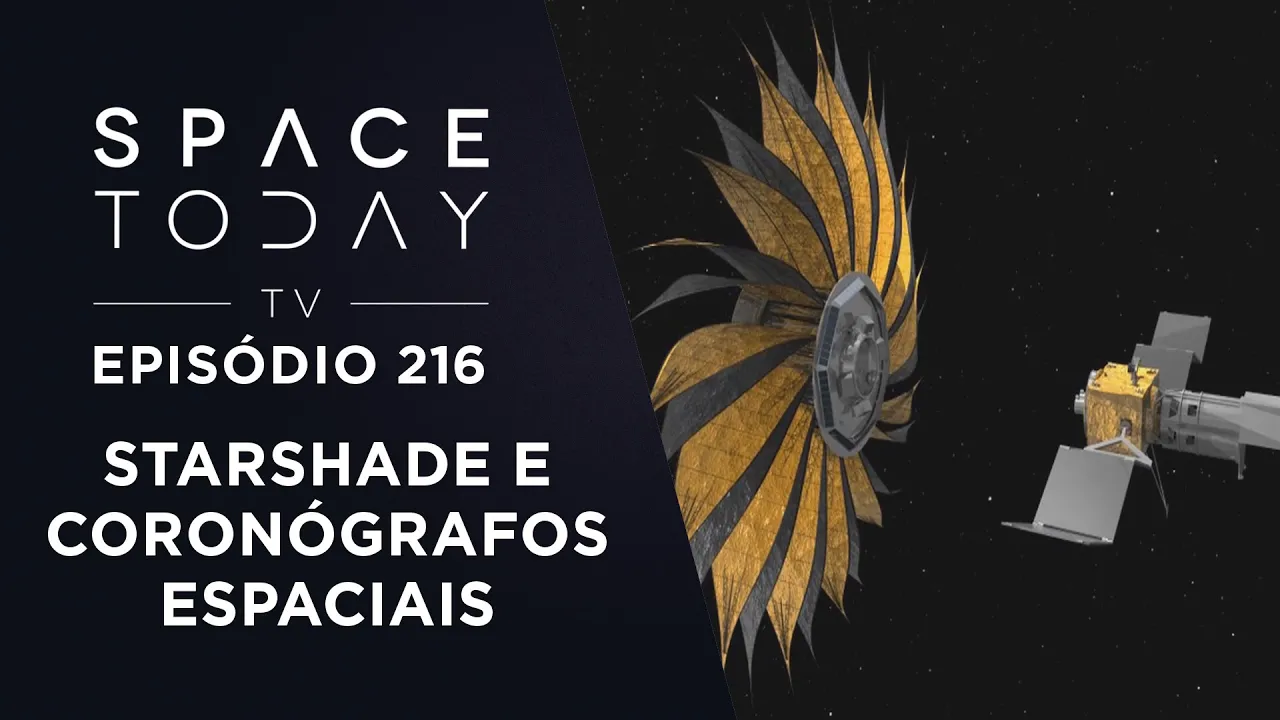
The Starshade blocks starlight by positioning itself between the telescope and the star. If the Starshade were a simple disk, starlight would just diffract around it. Instead, starlight (correction: Starshade) uses specially designed petals to eliminate most of the diffraction and let the planets come into view.
Earlier concepts launched starshade together with the HabEx telescope. But the current proposal calls for each spacecraft to be launched separately. However, getting a 52 meter disk into space means folding the Starshade up origami style and unfolding it once jettisoned from the booster.
Once they arrive at the Sun-Earth L2 point, Starshade and HabEx will maintain a separation of approximately 76,000 km. That’s about 6 Earth diameters apart!
HabEx’s Starshade and its internal coronagraph are designed to compliment each other, each providing capabilities the other cannot. The coronagraph is ideal for detecting exo-Earths and determining exoplanet orbits, while the starshade is optimized for wide-field mapping of planetary systems and optimizing the observations for spectral analysis.
Although a starshade has yet to fly, a lot of work has been done over the last decade to develop and demonstrate the technology. Smaller mockups have shown that the starshade can unfold itself and deploy its petals reliably.
The two spacecraft would have to maintain precise alignment during an observation. This would be accomplished with two-way radio and laser communication to share position data between the spacecraft. Automated systems would make precise micro thruster adjustments to maintain alignment.
Precision formation flying has already been demonstrated on a smaller scale on previous missions, such as NASA’s Gravity Recovery and Climate Experiment Follow-On mission.
GRACE-FO as it’s called uses two spacecraft to measure minute changes in the local gravitational field due to ice loss and sea level rises. The two spacecraft use a laser link to share position data and onboard algorithms make real-time attitude adjustments.
However, changing targets means Starshade would have to move to position itself in front of another star. It could take Starshade approximately two weeks to complete this maneuver. The HabEx telescope would still carry out science observations in the meantime as a general purpose observatory that’s sensitive to ultraviolet, visible, and near-infrared wavelengths. In other words, it would be an advanced Hubble Space Telescope with a state of the art coronagraph at its disposal.
Both HabEx and Starshade rely on thrusters for positioning and station keeping. However, they could both be refueled and serviced robotically. Servicing missions could also include upgrading instruments, replacing micro thrusters, avionics, and power systems.
HabEx is designed to be a Great Observatory, but one that manages risk. That’s why the telescope uses a single 4-meter monolithic mirror as opposed to a segmented design that has to be unfolded like on James Webb. That makes the spacecraft just large enough to fit into the SLS Block 1B’s 8.4 meter fairing. Once launched, the only deployments are the main antenna and opening the aperture door. Starshade can be folded into a standard 5-meter fairing and launched on a fully expendable Falcon Heavy, though SpaceX’s Starship might be a better option for both spacecraft.
Number 2: the Lynx X-ray Observatory Of the four proposed missions, Lynx is the only one designed to probe the Universe at high energies. It’s also the only one who’s name is not an acronym. According to myth, the Lynx was believed to be able to see through objects and reveal their true nature. That’s a perfect name for an X-ray telescope.
Bringing X-rays to a focus requires a very different approach than with other forms of light. X-rays would pass straight through an ordinary mirror. But if X-rays strike a mirror at a shallow angle, it will deflect off the mirror like a stone skipping off water.
X-ray observatories like Chandra and XMM-Newton take advantage of this by arranging mirrors in a series of concentric shells. But Lynx will take this approach to a much higher level.
Whereas Chandra uses four shells of grazing incidence mirrors, Lynx will use 12 metashells of densely packed thin mirrors made of multiple smaller modules. This makes Lynx 100 times more sensitive than Chandra.
That will allow Lynx to image very faint X-ray sources that are below Chandra’s detection limit.
Lynx will detect the high energy radiation coming from protostars deep inside their stellar cocoons. Astronomers will be able to better understand how this high-energy radiation affects the growth and formation of their planetary systems.
Lynx will also be able study the formation of the first Black Holes and Galaxies in the early Universe, and trace their evolution over time.
In fact, understanding how black holes grow and evolve over time is one of the key unanswered questions in astrophysics. But doing so requires surveying the early Universe for the X-ray signatures of intermediate-mass black holes as they feed on their surroundings.
Lynx’s sensitivity will allow it to work much faster while probing far deeper into the X-ray Universe than any previous mission. A single 100,000 second exposure with its High Definition X-Ray Imager will see deeper than the 7 million second Chandra Deep Field.
This detailed image of Kepler’s Supernova required nearly 9 days of Chandra’s observing time. Lynx could create an even more detailed image over a wider field of view in just a few hours.
Lynx is designed to be built and launched sooner rather than later. The spacecraft uses a lot of Chandra’s design heritage and has similar dimensions. That allows it to fit into the standard 5-meter fairing of heavy launch vehicles such as the Delta IV Heavy or Falcon Heavy. By the way, those vehicles aren’t on the drawing board. They’re available today.
Lynx is designed to operate for 20 years, but it’s also designed to be robotically serviceable as well. This could extend Lynx well past its 20 year lifetime.
As proposed, Lynx will have a hundred-fold increase in sensitivity. Sixteen times the field of view. Eight hundred times the survey speed. Ten-to-twenty times the spectral resolution.
Lynx isn't incremental – it's transformational.
Number 3 - the Origins Space Telescope As its name implies, Origins is designed to trace our cosmic history, from the formation of the first galaxies to the creation of habitable worlds. To do that, Origins employs a 5.9 meter infrared telescope. That makes Origins a thousand times more sensitive than NASA's Spitzer and ESA’s Herschel infrared space telescopes.
Origins will be much larger than its predecessors, though not quite as large as the 6.5 meter James Webb Space Telescope. But its design was chosen to be much easier to build and deploy than James Webb which makes it less likely to go over budget.
Infrared telescopes have to be kept extremely cold in order to detect the faint heat signatures coming from the Universe. This is done with a combination of Sun shades and cryocoolers.
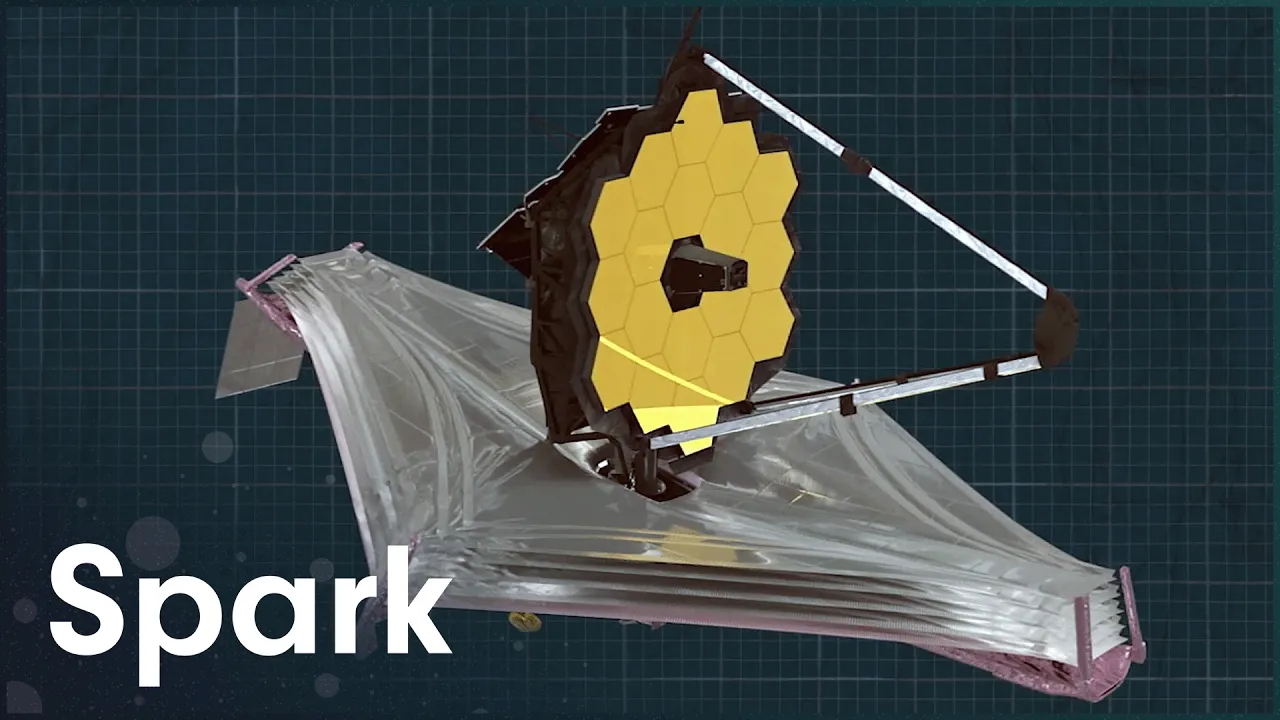
But this can make the overall spacecraft bulky. James Webb will be the largest space observatory ever flown, but was designed to be launched by the Ariane 5 launch vehicle which has a 5.4-meter diameter fairing. That's why James Webb has to be folded up origami style, and then unfold itself once in space.
But that’s also is why James Webb is so far over budget and behind schedule. Ensuring the observatory can withstand the rigors of launch and still deploy itself has blown up James Webb’s budget at the expense of other astrophysics missions.
When James Webb was designed the Ariane 5 was the largest launch fairing available.
But with the Space Launch System, SpaceX Starship, and Blue Origins New Glenn in development, it looking like it will be possible to launch large telescopes that won’t need to be unfolded once in space. To that end, the Origins study team opted to go with a much larger version of the Spitzer telescope which is much easier to build.
It’s 6.3 meters in diameter in the launch configuration, allowing it to fit in the SLS and Starship launch vehicles. Once on orbit, Origins deploys its communication antenna, solar array, telescope cover, and sunshields.
Speaking of which, JWST uses a five-layer sunshield to keep the telescope passively cooled, Origins uses a two-layer sunshield plus a a radiator. Like Spitzer, Origins is surrounded by a barrel that is highly reflective toward the sunshield on one side, and painted flat black on the side facing into deep space. This turns the bottom half of the telescope barrel into a radiator, cooling the barrel to 35 K. Because the sunshield wraps around the telescope barrel, operators will have more pointing options available than JWST will have at any given time.
The sunshield's shape blocks any stray Sunlight, Earth-, and Moon-shine from the telescope aperture. It also maintains as small a cross-section to solar pressure as possible.
Origins also uses an advanced cryocooling system to bring the temperatures down to 4.5 Kelvin. By contrast, Spitzer was cooled to 5 K. Half a kelvin might not seem like much, but it represents a huge leap in sensitivity. Remember, the cooler the telescope, the more sensitive it is to heat, so every fraction of a degree counts.
Origins' cryocoolers are designed to last at least 10 years. But the spacecraft is designed to allow its coolant and propellant to be replenished and its flight hardware, instruments to be replaced with upgraded hardware.
A single monolithic mirror will always collect more light per square meter than one made from hexagons. But building a single 5.9 meter mirror that can withstand the stresses of launch is a risky proposition. So the proposal currently calls for a segmented mirror made from two sets of wedges rather than hexagons. This allows the mirror to maximize the light-collecting area that can be squeezed into the launch fairing. Once on orbit, tip-tilt actuators behind each mirror segment bring light to a focus.
Once settled into its orbit around the Sun-Earth L2 point, Origins will be able to begin tackling the questions it’s designed to address.
With deep spectroscopic surveys, Origins will build up a 3D map of the Universe. This will allow Origins to trace how galaxies and their super-massive black holes evolve and grow over cosmic time.
For example, this is an image of a pair of two colliding spiral galaxies taken with the Hubble Space Telescope in visible light. The collision set off several bursts of star formation, which are still shrouded in their dusty cocoons. These cocoons lie somewhere between the merging nuclei. At mid-infrared wavelengths, Spitzer is able to detect emission from the dust but cannot precisely map its location. But at more than 100 times Spitzer’s sensitivity and 10 times greater resolution, Origins is able to precisely map the location of the dust clouds in a single one-second exposure.
This allows Origins to address questions of include how and when do planetary systems form around their stars? What role does water play in the formation of habitable planets?
How were water and life’s ingredients delivered to Earth and to exoplanets? Can life find a way survive on planets around red dwarf stars?
Origins is set up to be the infrared flagship mission to follow the James Webb and Nancy Roman infrared observatories. But if its design architecture seems a little too conservative for your tastes, take a look at this.
Number 4 - the Large Ultraviolet, Optical, and Infrared Surveyor, or LUVOIR.
If the other designs steer clear of JWST’s origami approach, LUVOIR embraces it to deliver the largest space telescope ever conceived. At up to a whopping 15 meters, such an approach is the only way we know of to deliver such a large telescope to space. But how large the telescope can be ultimately depends on the capacity of future launch vehicles. That’s why the LUVIOR study considers two possible architectures.
Both architectures employ a large sunshade to keep sunlight out of the telescope and help keep the payload from overheating. The sunshade is similar in some ways to the one developed for JWST, but LUVOIR doesn’t have the strict cooling requirements as JWST, so its sunshade is considerably simpler.
JWST is an infrared telescope, so its sunshade has to keep the payload as cold as possible.
This requires five layers that must be precisely aligned and spaced apart from each other with fine positioning mechanisms.
LUVOIR is a UV-optical-and near-IR telescope, so its thermal requirements are much easier to meet. Instead of JWST’s five layers, LUVOIR's sunshade has just three, and these layers don’t have to be as precisely aligned so there’s no need for fine positioning mechanisms. As a result, the sunshade can be stowed and deployed much more simply.
However, LUVOIR may need to occasionally point into the sunward hemisphere from time to time.
That’s why LUVOIR uses a much larger sunshade to keep the telescope in shadow when it needs to point inward.
The LUVOIR Study Team’s mandate was to consider designs for a UV-Optical-Infrared telescope in the 8 to 16-meter range. LUVOIR-A proposes a 15-meter segmented mirror with four instrument bays. This makes it just large enough to fit into the SLS Block 2 launch vehicle. However, SLS Block 2 is the third generation of SLS launch vehicles, and Block 1 has yet to fly.
That’s why the LUVOIR-B design uses an 8-meter mirror with three instrument bays. Ideally, it would be launched on an SLS Block 1B, SpaceX Starship, or Blue Origin’s New Glenn, but it can also fit in an industry-standard 5-meter fairing as well. This makes the LUVOIR-B design more flexible, but with a smaller aperture and one less science instrument.
LUVOIR is designed for coronagraph observations of exo-Earths, much like HabEx. But coronagraphs perform better when the primary mirror is unobscured. That’s why LUVOIR-B uses an off-axis design. But such a design also requires the secondary mirror to be extended further from the primary than in the classic on-axis design. LUVOIR-A’s 15-meter design wouldn’t be able to accommodate an off-axis secondary at a length that could still fit inside the launch fairing. So the traditional on-axis was chosen for LUVOIR-A, but the central obscuration was kept as small as possible.
Both architectures keep the sunshade facing the Sun while the telescope is free to point at any direction on the leeward side. Over the course of a year, LUVOIR would be able to view the entire sky in all directions. However, the entire observatory could be tilted by as much as 45 degrees toward the Sun. That would allow LUVOIR to make observations of Venus, comets, transiting exoplanets, or targets of opportunity while still keeping the observatory payload in shadow.
Now, extending the sunshade, deploying the secondary, and unfolding the mirrors still give me a case of the screaming heebie jeebies. But for better or for worse, those technologies have finally been tested and integrated into JWST. Because LUVOIR doesn’t have the thermal requirements of JWST, it is in some ways a simpler design. JWST is supposed to launch in 2021. If it successfully deploys, it will make LUVOIR much more viable.
But unlike JWST, LUVOIR is serviceable and upgradeable thanks to its modular design.
It will carry 10 years worth of consumables that can be replenished. Non-serviceable components are designed to last 25 years.
Both designs are larger than anything ever flown or proposed, but what is the advantage of the 15-meter A design over the 8-meter B design?
One of the key science goals of LUVOIR is to search for habitable planets and characterize their atmospheres. But an earth like planet is 10 billion times fainter than its host star. That makes exoEarths among the faintest objects we’ve ever detected. Seeing them requires collecting as much light as possible.
A telescope’s ability to collect light goes as the square of its aperture. A 2-meter telescope collects 4 times the light as a 1-meter telescope, a 3-meter telescope collects 9 times the light, and so on. So how do our proposed optical telescopes compare?
The Hubble Space Telescope’s primary mirror is 2.4 meters. HabEx’s 4-meter mirror gathers nearly 3 times more light. At 8 meters, LUVOIR-B gathers 11 times the amount of light, and LUVOIR-A’s 15-meter mirror pulls in 39 times more light than Hubble.
LUVOIR-A’s design is a 14-fold increase over HabEx and a 3.5 fold increase over LUVOIR-B.
Ok, so it collects more light, so what? One of LUVOIR’s science goals is to find out how common Earthlike planets are. That means surveying as many systems as possible to build up reliable statistics. LUVOIR-B’s 8-meter design is expected to yield somewhere around 28 habitable candidate planets. That’s just enough to achieve statistical significance.
However, LUVOIR-A’s design should yield around 54 habitable candidates. That exceeds the minimum requirement and provides a margin against uncertainties. It would effectively answer the question “Are We Alone?"
The larger design means more light can be collected faster, reducing the amount of time needed to observe a planet. Shorter exposures would allow us to get a better idea of the distribution of continents and oceans on these planets.
The exoplanet case is just one of LUVOIR’s science goals. It would be able to investigate the formation of stars, planetary systems, the earliest galaxies, and the acceleration of the Universe’s expansion in unprecedented detail. But you already know that.
LUVOIR would be a true successor to Hubble.
But LUVOIR needs to be big to fulfill its science goals, and that means developing new launch vehicles to accomodate them. The LUVOIR-B design could be launched on the SLS Block 1, Block 1B, SpaceX Starship, and on Blue Origin’s New Glenn. LUVOIR-A could be launched on SLS Block 1B with improved engines and on Starship with a modified fairing.
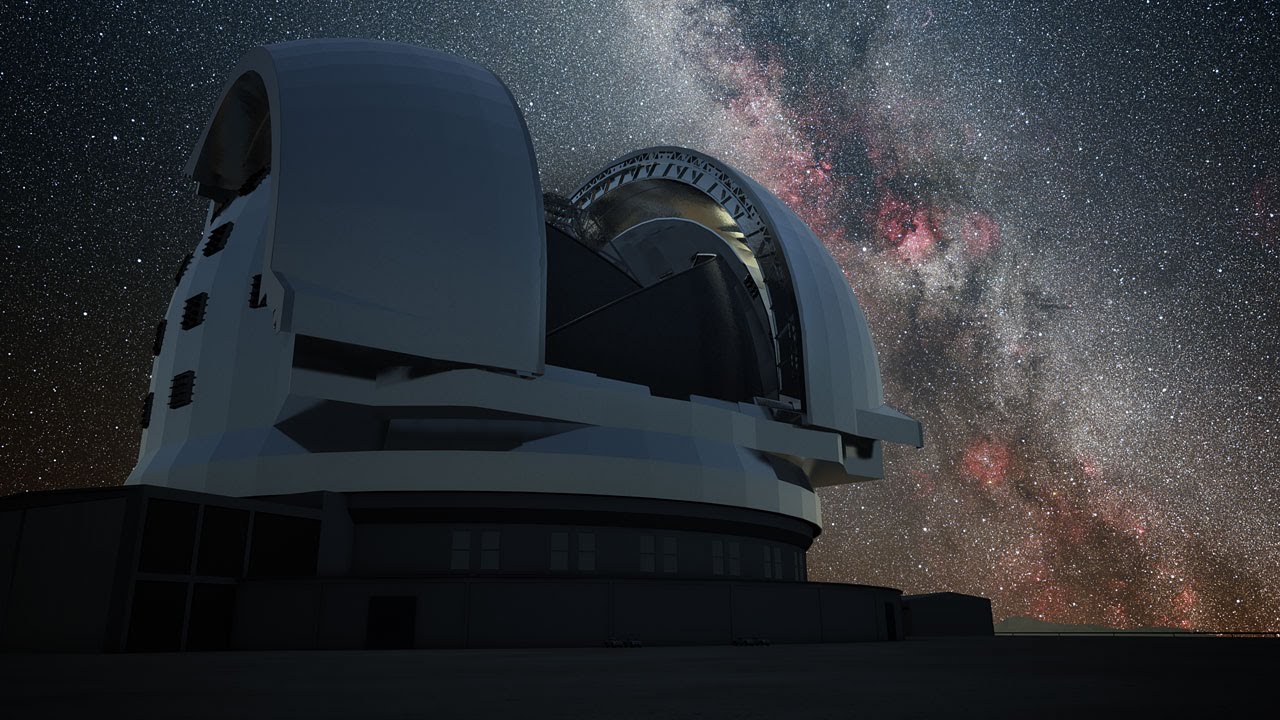
So which of these concepts are you most excited about? I’m personally leaning toward ALL OF THEM. Each of these proposals brings unique capabilities others cannot. And they’ll compliment the next generation of ground-based telescopes like the Vera Rubin Survey Telescope, the Giant Magellan Telescope, the Thirty Meter Telescope, and the Extremely Large Telescope.
These observatories will not only allow us to answer the questions we have today, but they’ll allow us to investigate questions we haven’t yet thought to ask.
By the way, most of these giant ground-based telescopes are under construction right now.
I made some videos about them so make sure to check them out when we’re done here.
Thanks once again to my patrons for supporting this channel, especially to Michael Dowling for his Cosmological level sponsorship. If you’d like to support Launch Pad Astronomy for the price of a cup of coffee every month, please check out my Patreon page.
And if you’d like to join me on this journey through this incredible Universe of ours, please make sure you subscribe and ring that notification bell so that you don’t miss out on any new videos.
Until next time, stay home, stay healthy, and stay curious, my friends.
Up Next
52:50
HWO Target Selection and ExoEarth Science Simulations
@originsseminarsandeostalks4264
471 views•2025-10-15
61:17
First Billion Years of the Universe with the Square Kilometre Array
@iaaudc
121 views•2022-05-26

6:25
Kepler's Laws of Planetary Motion Explained (Educational Astronomy Video)
@Peekaboo_Kidz
404.9K views•2023-02-17
6:10
Gamma-Ray Bursts: Cosmic Snipers Explained | Astronomy
@kurzgesagt
15M views•2016-07-31
Related Study Plans & Knowledge Roadmaps
Structured learning paths in Astronomy
astronomy
Reionization: Pop III Stars, IGM & 21cm Line
01Foundations of Cosmology & the Early Universe
02Population III Stars & Cosmic Dawn
03Physical Mechanisms of Reionization
+ 2 more learning modules
17h5 modules
Explore Roadmap
astronomy
Planetary Rings: Dynamics, Roche & Resonances
01Foundations of Gravity and Orbital Mechanics
02Tidal Forces and the Roche Limit
03Structure, Composition, and Collisions
+ 2 more learning modules
10h5 modules
Explore Roadmap
astronomy
Asteroseismology: Stellar Waves, Ages & Cores
01Foundations of Stellar Astrophysics & Wave Mechanics
02Stellar Oscillation Modes: P-modes and G-modes
03Mathematical Framework of Asteroseismology
+ 2 more learning modules
35h5 modules
Explore Roadmap
astronomy
Adaptive Optics: Physics, Engineering & Control
01Foundations of Wave Optics and Wavefronts
02Atmospheric Turbulence & Optical Distortion
03Wavefront Sensing Technologies
+ 3 more learning modules
35h6 modules
Explore Roadmap