

















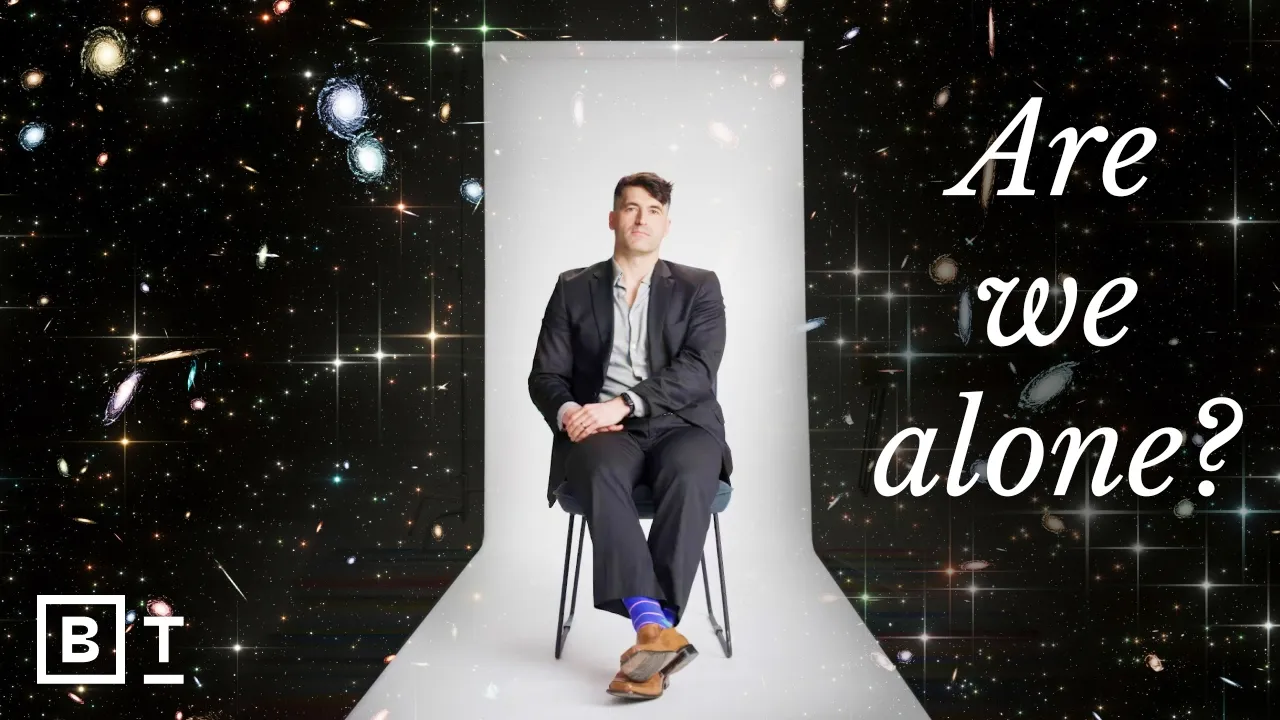

The Habitable Worlds Observatory (HWO) requires careful target selection to detect Earth-sized planets in habitable zones, with ideal targets being bright FGK stars within 50 parsecs that offer optimal angular separation and sufficient planet-star contrast. Researchers developed the HWO Preliminary Input Catalog (HPIC) containing ~13,000 stars, then prioritized targets into three tiers based on yield calculations across different mission designs. For science case simulation, they tested whether HWO could empirically constrain the habitable zone by detecting trends in planetary albedo, finding that detecting such trends is feasible with sample sizes of 20-30 exo-Earths, though weaker trends require proportionally larger samples.
HWO Target Selection and ExoEarth Science Simulations
Added:Concept of the Habitable Zone (HZ) and the physical factors, such as stellar luminosity and orbital distance, that define it.
The primary mission objectives of the Habitable Worlds Observatory (HWO), specifically its focus on direct imaging of exoplanets.
Basics of exoplanet detection methodologies, with an emphasis on the distinction between indirect detection (e.g., transits) and direct imaging.
Stellar astrophysics fundamentals, including stellar classification (F, G, K, M dwarfs) and how a host star's properties dictate planetary habitability.
Advanced high-contrast imaging technologies, including coronagraphy and starshade designs essential for resolving ExoEarths.
Atmospheric characterization of terrestrial exoplanets through transmission and emission spectroscopy to search for biosignatures.
The use of mission yield modeling software (such as EXOSIMS) to statistically predict the scientific output of space telescopes.
Astrobiology frameworks for distinguishing true biosignatures from abiotic planetary processes (false positives).
471 views2likes52:50Original Release: 2025-10-15
Kuiper 309: and our alien Earth's astrobiology team to work on science questions for future exoplot missions. This is basically a direct continuation of NOAA's excellent work at the Rodat Space Flight Center. Noah received his PhD from Penn State University, and then, spent the past, Kuiper 309: 3 years at the Bonache Space Flight Center as a NASA postdoctoral Fellow.
Kuiper 309: Where he worked with Chris Stark and the HWO team on the HWO target catalog that he will be discussing here. It's also part of the larger community effort. And he also worked on science questions for HWO, including albedo patterns in directly detectable planets. So NOAA's work also includes planets that move in and out of the habitable zone.
Kuiper 309: And their, evolution and their contribution in detectable, habitable finance.
Kuiper 309: And a fun thing is that Noah is also learning languages, so he's also almost fluent in Chinese, I understand.
Kuiper 309: We can test that. Please don't. Okay, so I think it's good that you let me hand it over to Noah. We'll talk about target selection and size case generations for the habitat.
Kuiper 309: Thanks for the introduction. As Daniel said, I'm Noah, and I'm going to be talking primarily about precursor science for the Happer Worlds Observatory. So before we get into the actual science which I've been working on, let's do a brief overview of what the Happer Worlds Observatory is. So what's the current status of the… can I move my slides? Okay.
Kuiper 309: Happy World's Observatory query.
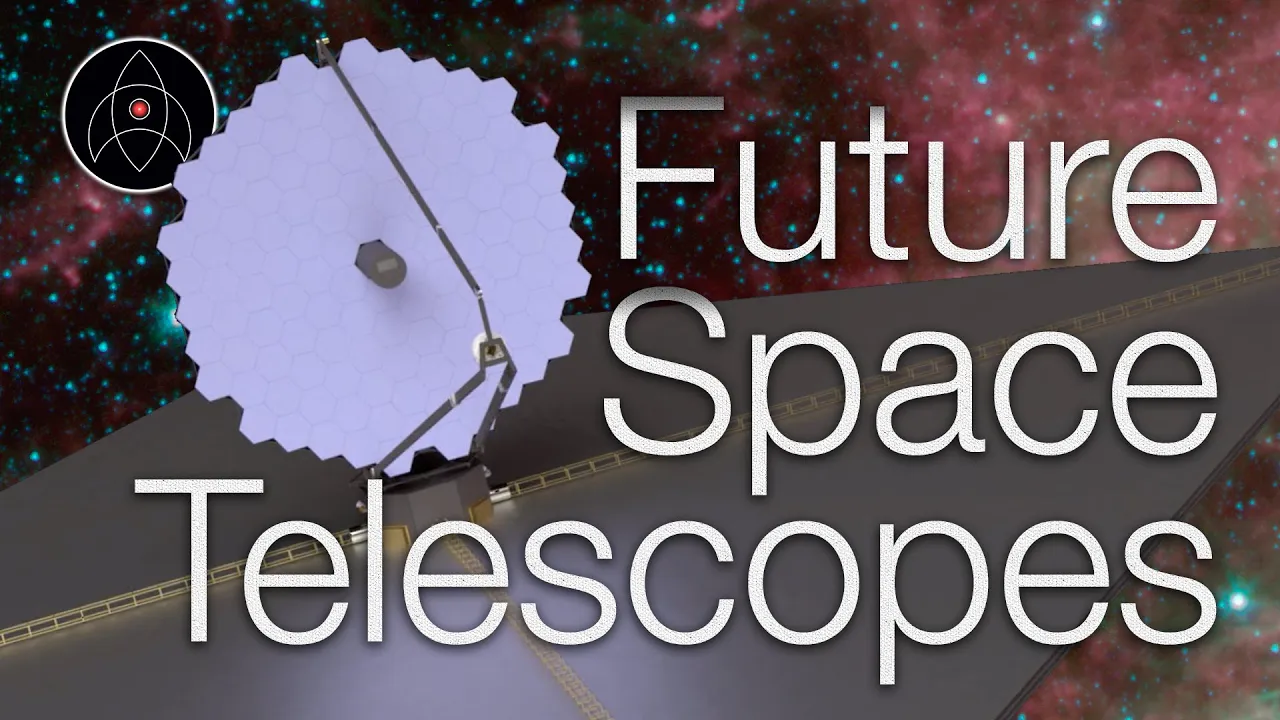
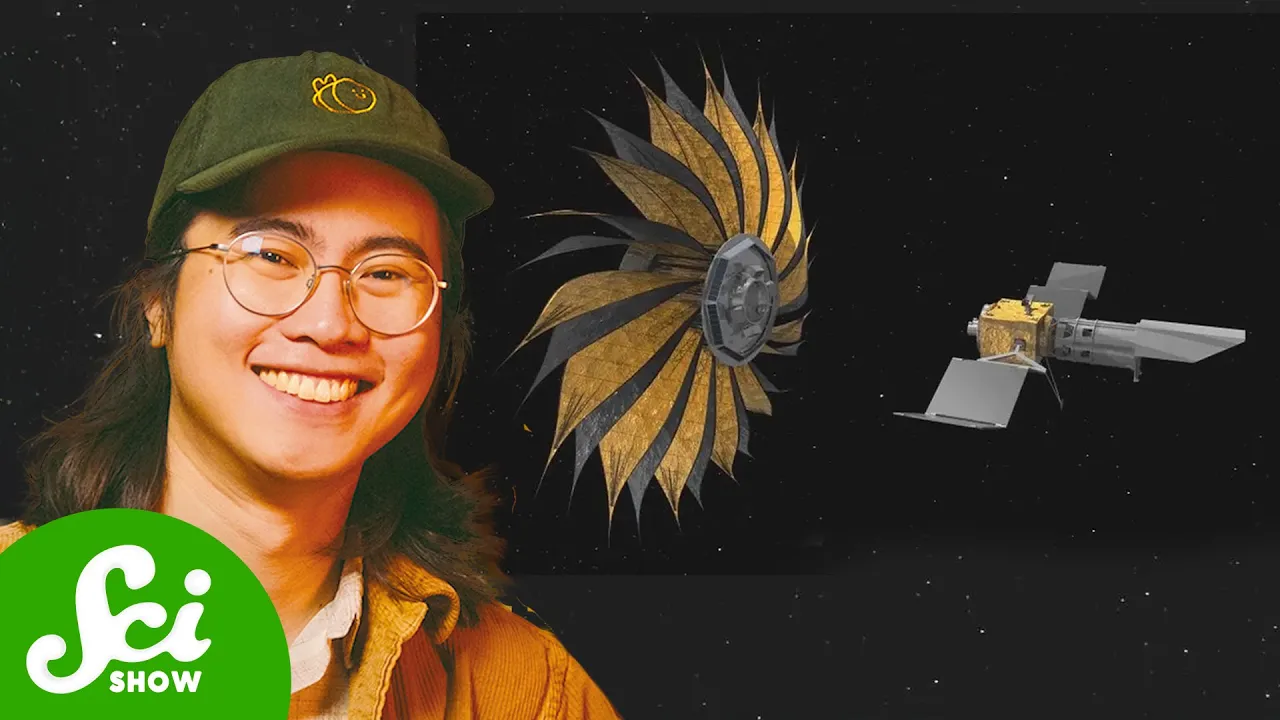
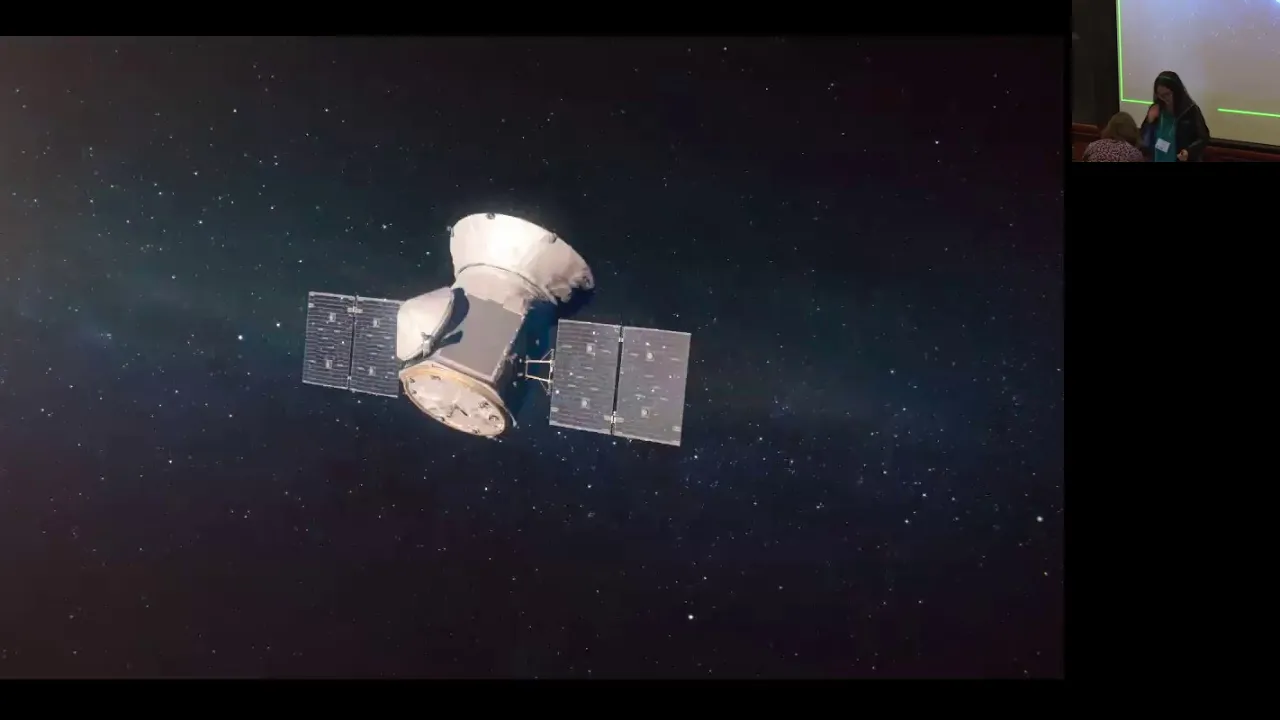
Kuiper 309: So the Hubble Observatory is the next, proposed, large NASA flagship mission after Roman. This, figure on the side is just a notional concept for HWR, it's a little bit out of date, there's actually newer concepts Kuiper 309: Nowadays, but… Kuiper 309: But it's a space-based direct imaging mission that aims to direct… that aims to detect and measure the spectra of Earth-sized planets in the habitable zones of sun-like stars.
Kuiper 309: I'm gonna refer to these in the future as Exo-Earths, but keep in mind that these are Earth-sized planets, and we don't yet know if they are Earth-like, and we wanted to… we want to measure the spectra of these Earth-sized planets and determine whether or not they're Earth-like.
Kuiper 309: And so, the HWO uses a next-generation chronograph instrument to block out a star's light and preserve the light of its planets.
Kuiper 309: And it aims to do this in coverage from the new UV to the new IR.
Kuiper 309: Essentially, we can think of, even though it's called the Habitable Observatory, I'd like to emphasize that it's not only an exoplanet observatory, it can essentially be thought of as a replacement for Hubble, or like a super Hubble, or a Hubble 2.0. That's kind of what we want to portray HWO as.
Kuiper 309: But one of the main science goals of HWO is Happy World, as it's named. So its main goal, at least as far as exoplanet astronomers are interested in, is characterizing the atmospheric compositions of 25 exo-Earths by measuring the spectra.
Kuiper 309: So, HWO is currently in the early stages of formulation, and it's not really expected to launch until the early 2040s. Recent budget things may push that back a little bit further, but that was the original launch date.
Kuiper 309: And mission design are not yet finalized. This means that multiple design concepts are being explored to see whether or not it can actually meet this goal of detecting Kuiper 309: of detecting and characterizing 25 exo-earths. So, HW was nominally a 6-minute diameter mission, but we were actually exploring architectures Kuiper 309: That, that range from, 6 to 8 meters.
Kuiper 309: And we're doing these translation yield calculations, which are required in order to determine whether or not emission architecture can actually achieve its science goals.
Kuiper 309: So let's briefly talk about yield calculations. So yield calculations work to simulate the performance of a closed mission design and determine the number of plans which they will discover.
Kuiper 309: So this requires, detailed mission simulation, and also models with detection completeness and exposure time, as well as a well-defined search strategy.
Kuiper 309: These calculations take an input catalog as essentially their input, and then they output the yield of a survey, and also the schedule of targets which a surveyor can observe.
Kuiper 309: And past results have shown that different telescope and chronograph designs can select very different populations of stars. So this figure on the side over here is showing the targets selected for a survey in terms of distance and luminosity. And this is for the same telescope, but different chronograph designs.
Kuiper 309: And the points here are colored by the priority of the targets, so how good a target they are. So the highest priority targets are in red, and the lowest ones are in purple. And we can see that even though the telescope's the same, because we have different coronagraphs, we have vastly different samples of stars that are actually selected.
Kuiper 309: So, in my talk, I'm going to be talking about, my construction of the HWO Preliminary Input Catalog, then we'll talk briefly about the work of the HWO Pro target Science and Systems Working Group to identify high-priority HWO targets.
Kuiper 309: And finally, we'll go into exoplanet science case simulation with HWO, so an example application of this input catalog that I'm developing.
Kuiper 309: So first, let's talk about the How to Worlds Observatory Preliminary Input Catalog.
Kuiper 309: As we mentioned earlier, yield calculations require a stellar target list, as would you show it.
Kuiper 309: So HWO is being designed to detect and obtain spectra for Earth analogs in the habitable zone, but this is a very challenging science problem. This requires us to get Kuiper 309: Plant star contrasts on the order of 10 to the negative 10, so 1 point in 10 billion, and angular separations on the order of 10 to 100 millio arcseconds. So we're talking about really, really faint objects really, really close to the host stars. So this is a very challenging problem, but it's not impossible.
Kuiper 309: And this means that XO Earth detection is only really possible Kuiper 309: For a relatively small sample of stars.
Kuiper 309: And prior to the survey for exo-Earths, it's likely that most Earth-sized planets in the habitable zone of sun-like stars will not have been… will not have been discovered. So, even if we have, even if our transit spectroscopy methods are able to actually detect exo-Earths.
Kuiper 309: Still, most exo-Earths in the solar neighborhood will not be transiting, so a survey will essentially be a blind survey. So we need to design a survey to discover these planets and characterize them.
Kuiper 309: So, which stars are ideal for detecting Earths around them?
Kuiper 309: So, we'd like to survey bright stars, because we observe these planets in reflected starlight, so if the stars themselves are too faint, the planets will also be too faint.
Kuiper 309: We also want to detect newbound stars, because we're… because I mentioned earlier that we're constrained by the angular separation of the planet and the star, so closer stars will have a haplozone that is a larger angular separation away from its star.
Kuiper 309: And the chronograph is dictated by its inner working angle, so you need to have the hapl zone of the host star be outside the chronograph's inner working angle.
Kuiper 309: We also are biased towards FGK stars.
Kuiper 309: And this is because the haplzone location is dictated by the spectral type of the host star, or equivalently, the luminosity and vector temperature. So smaller stars will have less of a severe contrast between the planet and the host star, but at the same time, their haplzones will be located closer in.
Kuiper 309: Whereas for larger stars, we kind of have the opposite problem, where these stars vastly outrine the planets, but the Hubble zones are farther out and easier to image.
Kuiper 309: So, FGK stars happen to be the sweet spot where the plants are not too close into the star to be detectable, and also not too faint compared to the host stars to be detectable.
Kuiper 309: So, what are the requirements for a new, input catalog? So, if you want an input catalog that's up-to-date, expansive, and complete in stellar properties.
Kuiper 309: And so, I mentioned earlier that different chronograph and telescope designs can significantly affect which stars are the best targets for a given direct imaging mission design.
Kuiper 309: So, we want an input catalog to be agnostic of telescope and chronograph design, and also be agnostic of what type of planets we're searching for. So, we'd want an input catalog that's able to simulate a direct imaging survey for exo-Earths, but we also don't want to have a catalog that's too restricted that it couldn't simulate a search for Jupiters or something.
Kuiper 309: So we'd like to develop a living catalog that's easily updatable and would be regularly expanded. Past efforts were hand-curated and requires a ton of work, so we want to make something that's, to automatically update.
Kuiper 309: So, with that, we've created the HWO Preliminary Input Catalog, which I'm calling HPIC.
Kuiper 309: And this is a new input catalog, which is developed starting from the TAS input catalog, the TIC, and the Gaia target lists.
Kuiper 309: And as an initial starting point for these catalogs, we impose a distance cutoff at 50 parsecs. This is because, realistically, beyond 50 parsecs, we're not going to be able to directly miss these planets, just the angular scale is too small. So, at 50 parsecs, a planet Kuiper 309: 1IU from the star would have an angular separation of just, 20 milli arcseconds, and even for a 1 lambdaD coronagraph, which is kind of idealized, we can never really get… and it would be very difficult to actually get that far.
Kuiper 309: and an 8-meter telescope observing at 1 micron, the minimum achievable angular separation would be around 26 milliseconds. So realistically, 50 postcs is just too small angular scale for us to actually observe the habitable zone.
Kuiper 309: So, we also impose a magnitude cutoff at 12th magnitude in either the Gaia G band or the test T band.
Kuiper 309: And this is largely due to the, volume completeness of the test input catalog.
Kuiper 309: So… so one can see in this plot over here that the number of objects in the test input catalog increases as a function of magnitude Kuiper 309: up until we get to a certain point, in which case it starts going down, and that's because, pass around maybe 13th magnitude or something, we don't have a full complete volume of the starters in the local neighborhood. We're incomplete to a certain extent, so cutting at 12th magnitude, make sure that Kuiper 309: That we actually know the size and the local volume down to that magnitude.
Kuiper 309: And this is actually a very, very conservative cut, so realistically, past results from the old surveys suggest that if you made a cut at, say, 8th magnitude and V-band, we'd still include all the Kuiper 309: still include all the targets that we'd like to survey, but this cut enables us to potentially deal with other science cases, such as Jupiter detections, which we might be able to send down to more distant and fainter stars.
Kuiper 309: So this is a rough flowchart for the catalog construction. I won't go into too much of the detail, but I know that there's certain, quotes of, like, the testing for catalog and guide that we have to take into account when we're querying them. That's why we have to query, tests, three times. We query it for the nearby objects, but also for the bright objects, so… so… Kuiper 309: So, one problem with what we found in the testing catalog is that some bright objects don't have distances left.
Kuiper 309: some bright objects don't have distances listed, and also some objects have incorrectly calculated test magnitudes, so we have a kind of a sanity check, just the very, very brightest objects, we select them in J magnitude also to make sure that they're present in the catalog. And we combine our sample of test new by and bright objects, and guide DO3 objects, and we apply our magnitude cuts.
Kuiper 309: And then we also gather distances for the objects that are missing distances, and apply a distance code. And that's how we form the foundation of our input catalog.
Kuiper 309: So we have additional problems that we need to take into consideration. One of the main things is that many objects in the S input catalog and GIOD DO3 target lists are the same objects, so we did very careful cross-matching of objects based on identifiers, as well as positions, and photometry.
Kuiper 309: And there's also the problem where the test input catalog lists Gaia IDs, but they list the Gaia DOPIDs, because those were the most current Gaia IDs when the test input catalog was instructed. So we had to do cross-matching between Gaia D02 and Gaia D03, which are not the same IDs in those catalogs. We also made sure to remove duplicate objects and artifacts and background galaxies that were tagged by TESS and Gaia.
Kuiper 309: And we also identify binaries using the, Washington Double Star and Guy Catalog nearby stars.
Kuiper 309: And we… and so if we have two separate objects in the binary, we have to make sure to drop the combined source so that we don't double count our binaries.
Kuiper 309: So with that, we've constructed the HWO Preliminary Input Catalog, which includes roughly 13,000 bright, nearby objects. That's kind of a rough plot of them in distance and luminosity space.
Kuiper 309: And our next step was to gather stellar measurements for them and drive acid-physical properties for them using an automated pipeline.
Kuiper 309: So, we've developed an automated pipeline for obtaining stellar properties for these stars, and for each stellar property, we determine which literature source to use, whether we calculate it ourselves, or whether or not we get it from a literature value.
Kuiper 309: And so we aim for the highest, Kuiper 309: Sorry, I… oh, sorry, something popped up on my screen. So, we have the highest completeness and stellar properties, while also ensuring that the values are self-consistent and accurate.
Kuiper 309: So, this plot on the side over here is just showing, example kind of flowchart… well, it's not really a flow chart, we had another figure for a flow chart, but I didn't include that.
Kuiper 309: presentation, but this is showing, for a given property, such as effective temperature, we have a whole list of different forces that you select from, and we prioritize them according to a functionation scheme.
Kuiper 309: So let me see.
Kuiper 309: Yeah, yeah, and we also prioritize the properties that are necessary for yield calculations and photometry across the HW wavelength range.
Kuiper 309: So, this is showing the contents of a catalog, like.
Kuiper 309: like, here we show the astrophysical and psychometry in our catalog, the number of objects that have that measurement, and the completeness, like, what percent of these objects have that measurement. So we focus primarily on, like, the properties for your calculations, such as distance and luminosity, and also the masses.
Kuiper 309: and photometry in the Johnson bands, and the Gaia bands, and the two massage K bands.
Kuiper 309: And we also include, properties such as, positions, proper motion, parallax, binarity, and also whether or not there's nearby bright stars that could potentially contaminate the image.
Kuiper 309: I find that you have pretty high completeness for most of these properties. There's some properties which, I mean, everyone wants ages, but ages are really hard to get, so we have… I mean, I'd say having a third of the stars in a catalog with ages is actually not that bad, but… but whether or not you can trust those ages is another story.
Kuiper 309: So, we'd like to determine whether or not these properties are reliable.
Kuiper 309: Like, whether or not the properties that came from an automated pipeline are actually usable and reliable.
Kuiper 309: So we compare it to another source that was used in… that wasn't used in catalog construction. This is another target list for HWO, which is the NASA Exoplanet Exploration Program HWO Mission Stars List, which Kuiper 309: Which, they worked to gather the 160 or so best direct imaging targets for HWO. This is a hand-curated list of the most accessible stars for direct imaging, based on the contrast and angular separation.
Kuiper 309: So, why didn't we just use this as an input catalog? The reason why we didn't use this as an input catalog is that this is actually much fewer than the number of stars which HWO will actually survey. This is the best stars within the HWO survey that would have potentially at the lowest exposure times.
Kuiper 309: But in order to actually simulate all these HWS surveys, we need to start from a large target list, have the yield calculation, narrow it down to a smaller target list.
Kuiper 309: So the smaller target list that the HWO yield calculations would narrow it down to would be around 200 to 400 stars, so still larger than this list. But this gives a good point of measurement for the precise telecommies for these very, very best HWO targets.
Kuiper 309: So we'll compare other values using an automated pipeline to their values which are curated by hand.
Kuiper 309: And so this is our comparison of O pipeline to O pipeline. We have O values on the x-axis, O values on the y-axis, and we can see that Kuiper 309: it's very, very close to a one-to-one relation. There's some spread on these plots due to Kuiper 309: Due to, like, just the intrinsic uncertainty in these measurements, and also for… and also for the case of log Gs, there's a bit of confusion in there, just because log Gs derived from spectroscopy are different Kuiper 309: tend to be different from log Gs that are derived from, just based off the star's bulk properties. So if you have the mass and the radius of the star and use that to compute the surface gravity, it's going to be different than what you compute just by looking at graph.
Kuiper 309: But overall, we're satisfied with it's very close to a one-tone relation for all these properties.
Kuiper 309: So, as an overview of our input catalog, we've created an input catalog that has around 13,000 direct imaging target studies for HWO trade studies, and we're gathering and computing accurate stellar properties for each one of them.
Kuiper 309: And this catalog gathers the properties of these bright stars, and it'll be useful for many different areas of exoplanetary astrophysics, not only direct imaging. So essentially, if you want to know the properties of nearby bright stars, then this can be used. It's not only for direct imaging.
Kuiper 309: So, HWO is being used for trade studies and yield calculations right now, and it's publicly available on the NASA Exoplanet Archive.
Kuiper 309: And yeah, I mentioned it's being used by mobile teams researchers.
Kuiper 309: And it's a living catalog that's… that'll be regularly updated and expanded, so say GaiaD04 comes out, it's relatively trivial to ingest GuyD04 into this catalog and get updated distances and other properties from GuideDR4.
Kuiper 309: So I'd like to… so in the next part of my talk, I'd like to talk about a work on expanding upon the super catalog, so identifying the targets that are most likely to be observed by HWO. I mentioned the work of the, Kuiper 309: the NASA Exoplanet Exploration Program, and this is kind of… this part of the talk is kind of hybridizing my target list and their target list, and also the results of yield calculations, and trying to identify what targets are most likely to be observed by HWO, and also what stellar property measurements do we need.
Kuiper 309: And so this was actually a larger collaboration working with the HWO Target Solution Systems Working Group.
Kuiper 309: Which, this was a group that was founded, shortly after I developed the first version of this input catalog, and this is a group organized by the HWO Project Office that's focused on identifying and characterizing the targets for HWO's excellent survey.
Kuiper 309: And it focuses on evaluating the state of our knowledge of the stellar properties, and determining what precursor observations are required. So what observations are required before HWO's design is finalized, and also before HWO launches.
Kuiper 309: And this is a large catalog that's divided into several groups, but I'm going to be focusing primarily on the catalogs and databases group, which I led, alongside, co-leads, Eric Mamagek, Angel, and Caleb.
Kuiper 309: And I'm going to be focusing on a… and this group focused on identifying what population of stars are potential targets for HWO, and which stars require precursor applications.
Kuiper 309: So, as a result of this, working group, we constructed a new target list, which is essentially an expansion of the HPIC, which is the HWO targetocin Systems TSS25 target list.
Kuiper 309: And this is a prioritized, list of potential HWO targets that builds off of existing targets and databases. I mentioned, we're kind of hybridizing the HPIC and the accept list, as well as using the result of yield calculators.
Kuiper 309: So… so in this list, we focus on… on developing different tiers of targets. So we're talking with Tier 1, which are the… Kuiper 309: best targets for HWO, best is subjective, but I'll talk about what we determined to be best. And then 22 is the objects that are actually going to be likely to be surveyed by HWO. So objects… HWO doesn't have a finalized design, so it's a little bit, Kuiper 309: we have to be careful with our assumptions about which objects are going to be likely to survey by HBO, but… Kuiper 309: But Tier 2 is trying to identify the likely HWO targets, and Tier 3 is all nearby bright objects that could be potential HWO targets.
Kuiper 309: So let's talk about how we developed Tier 1. So Tier 1 is… stars with the most accessible capital zones for direct imaging of exo-Earths.
Kuiper 309: So these are targets requiring the shortest exposure times to characterize exo-Earth atmospheres. So the exposure time required to actually get a high enough signal noise spectrum of an Earth-like planet's atmosphere in reflected light can vary drastically based on host stars types.
Kuiper 309: So this can be hours for the best targets, to weeks for, for, like, the, for, like, the, the, like, maximum observable targets.
Kuiper 309: And so, these Tier 1 objects are essentially the low-hanging fruit with the shortest exposure time.
Kuiper 309: And these will actually contribute, potentially the largest portion of the mission… of the mission's, yield of exoplanets, and potentially, Kuiper 309: The largest potion of its sign sealed.
Kuiper 309: And so… so yeah, these are the start with the shortest exposure times, the highest probability of hosting technical exo-Earths and reflected light.
Kuiper 309: And so for 2-1, we used the Xap mission stars list, which determined which stars were at the shortest exposure times and were the most accessible. This is a list of around 164 stars.
Kuiper 309: So much of our work in this group was focused on the… was focused on identifying Tier 2, which is the plausible targets for HWO.
Kuiper 309: So, as I mentioned earlier, HW will likely observe more than just the 164 Tier 1 stars, and past field surveys have suggested that it's probably somewhere between 200 and 400 stars surveyed over the course of a two-year mission.
Kuiper 309: And different mission designs will prefer vastly different… vastly different populations of target stars. So there's a large trade space of possible HWO designs. And these vary in diameter between, say, 6 to 8 meters, and they also differ in terms of chronograph design, the detectors they employ, and also just the architecture of the spacecraft.
Kuiper 309: And so, we'd like, so… so we want to identify the population of targets that will be observed by HWO, but we don't want to make too many assumptions about HWO's mission design, since we notice that the population of targets that HWO can observe varies a lot based on the mission architecture.
Kuiper 309: So to do this, we can use the outputs from your calculations spanning the trade space.
Kuiper 309: that's currently under consideration for HWO. So these field calculations input, like… like the HPIC or another input catalog, and output a list of targets that the mission observes, so we can use Kuiper 309: So, so, so we can use these, Kuiper 309: Yield calculations to find an overlapping space of which objects are selected for survey.
Kuiper 309: So our group was provided with results of two sets of yield calculations using different yield codes.
Kuiper 309: So the first set of yield calculations that we use are from Stoke et al. 2024.
Kuiper 309: These are yield calculations that define an edge case for different HWO designs. So one of these yield calculations is focusing on an 8-meter telescope, so an 8-meter telescope along the same design as the earlier Louvre B concept.
Kuiper 309: And then the other one is a 6-meter telescope, but with a large series of design trades to make it, like, the maximum efficiency that you'd possibly get for a 6-meter telescope.
Kuiper 309: And, these are in distance and luminosity space, and they're color-coded because these, simulations were repeated a thousand times, and we color-coded them based on the fraction of simulations in which a given star was selected.
Kuiper 309: So the yellow stars were selected for almost every simulation, and the purple ones might have only been selected for a few simulations out of the, luxury ensemble.
Kuiper 309: And so we were also provided with another set of yield calculations from Morgan et al. 2024, and this is an ensemble of yield calculations that span a range of telescope diameters, chronograph parameters, and detection bandpasses.
Kuiper 309: And it's a grid of a bunch of different design scenarios, and for each design scenario, they run it 100 times. So essentially, we have 35,000 simulations here.
Kuiper 309: And in this plot, we can notice that Kuiper 309: We're also plotting the distance and luminosity, but we're plotting the average fuel per star.
Kuiper 309: I, I, I, like, average over, but, like, averaged over all these simulations.
Kuiper 309: And if you're curious about the 30 magnitude, line over here, that's because this old calculation used in the earlier input catalog, which was cut off at 30, Kuiper 309: what was called about 30 parsecs, but, the HWO Preliminary catalog, which is in grade over there, sends out to 50.
Kuiper 309: So, using these two input catalogs.
Kuiper 309: we'd like to identify the high priority, objects, but just combining all of the stars in these two Kuiper 309: to, calculations of many outliers that are rarely selected for the low-yield post star. So say if a star was selected for one out of a thousand times, it would still be in this catalog, so we want to make sure to get rid of these outliers. And we want a reasonably sized target list that we could potentially go through by hand to make sure that we actually have decent measurements.
Kuiper 309: So, we select the top 90% of objects in the two StarKit-all guilt simulations in terms of, cap rates, and then the top 90% Kuiper 309: objects in the Morgan et al. simulation grid based off of the average yield per star. I mean, they define some property called panchromatic yield metric, which is essentially an average over the different wavelengths that they're affecting, and so average over IR, visible, and UV.
Kuiper 309: And we take the union of these two target lists.
Kuiper 309: And then we define our Tier 2 as all the objects in this combined list of likely HWO targets that aren't already in Tier 1.
Kuiper 309: Finally, we defined Tier 3, which is essentially all other potential HWO targets.
Kuiper 309: So, we selected the stars in the age spec that weren't included at 2, there's 102.
Kuiper 309: And these are nearby bright stars, which are probably unlikely to be selected for exo-Earth direct imaging, but they could be good targets for direct imaging of other plant types, such as Jupiter analogs.
Kuiper 309: And these Tier 3 stars, as I mentioned before, are required as an input for yield calculations, so we need to know their stellar properties, but we don't necessarily need them to as precise as the stellar properties for the stars that HWO is likely to observe.
Kuiper 309: So this is a, overview of the targets in our different tiers. As we can see, as you get down to higher and higher tiers, you get to a narrower and narrower region of parameter space, where we get nearby bright FGK stars in this red over here. And then, the Tier 2 stars stand out to farther distances.
Kuiper 309: And also, potentially, fainter or brighter stars.
Kuiper 309: then essentially, Tier 3 covers the entire parameter space of all stars within 50 bucks.
Kuiper 309: And also, I want to note that in the region where most of the Tier 1 stars are, there are a few Tier 2 stars, and that's largely due to binarity. So if you have a… Kuiper 309: a host star, which has a binary companion nearby, that could potentially lower its quality in terms of being a direct imaging target, because that binary could contaminate the image in terms of direct imaging, making a harder to track down the star's light.
Kuiper 309: And this is also an overview of these objects in terms of their V magnitudes. And we can see that the Tier 1 objects are the brightest objects, Tier 2 objects are still pretty bright, and then Tier 3 objects essentially go all the way down 12 magnitude.
Kuiper 309: So, so our prioritized list of HWO targets was provided to the larger focus and systems working group.
Kuiper 309: And these other task groups identified what stellar measurements were required for objects in each tier, and what position was needed.
Kuiper 309: And a paper on this target list was recently published, and the catalog's on the Z right now.
Kuiper 309: So… so this is the HWO Target Service and Systems, 2025… Kuiper 309: list, and we're hoping that this is going to be a continually updated list, so that there will be a 2026 version, a 2027 version, as our knowledge of these HWO target size evolves, and potentially some studies that are thought to be Tier 1 targets might be moved into Tier 2, some Tier 2 targets might be moved up to Tier 1, depending on our previous observations of that.
Kuiper 309: So, in this last part of the talk, how am I doing for a time? Okay, I'm doing pretty well.
Kuiper 309: Okay, so… so on the last part of this talk, I want to talk about exoplanet science case simulation with HWO. So this is a potential example application of the target list that we developed, and I'd like to focus on specifically comparative exoplanetology. So what can we learn about planets at a population level?
Kuiper 309: And this is a product that's more in line with what I'm currently working on with Daniel's group, and this is actually a collaboration with Daniel's group last year.
Kuiper 309: So… so essentially, for this project, I want to focus on what we can learn about plant populations using HWO. So set some example science cases which we'd like to study with HWO, such as understanding planetary habitability, identifying signs of life on other planets, and identifying statistical biosignatures, and also testing our theories of planetary formation.
Kuiper 309: I'm gonna focus primarily on testing the concept of the Happel Zone with HWO.
Kuiper 309: So, HWO wants to be able to, give empirical constraints in the habitable zone, and I want to determine Kuiper 309: how, like, what the performance of proposed HWBO designs would be with regards to this science case.
Kuiper 309: So, for this specific problem, we'll focus on trends in planetary albedo as a function of installation.
Kuiper 309: So the classical picture of the Happel Zone predicts that plants in the Happel Zone will actually have lower albedos on plants outside of it. That's a little bit counterintuitive, but if you think about the Happel Zone, plants into the Happel Zone are likely to have thick, runaway greenhouse atmospheres that are very reflective.
Kuiper 309: And plants exterior to the hapl zone are likely to be globally glaciated, and also very reflective. So plants in the hapl zone, just by virtue of not being in one of these runaway states, are lower reflectivity and lower albedo than plants outside the hapl zone.
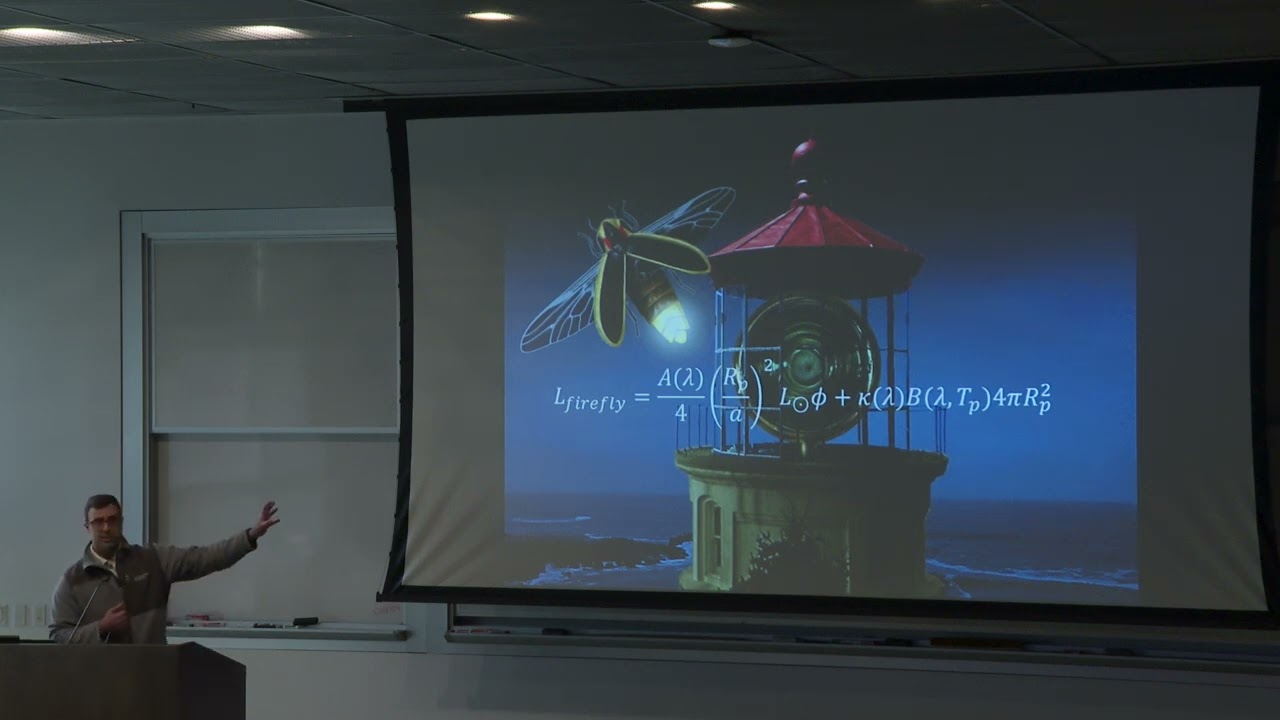
Kuiper 309: So, HWO will directly measure planet-star contrast, and planet-star contrast is directly proportional to albedo, seen as this equation over here. It's also related to the radius of the planet squared, and the illumination phase of the planet.
Kuiper 309: So, this is some math, I don't need to get into too much detail, but if you rearrange the equation in terms of installation, you find the contrast is also directly proportional to installation.
Kuiper 309: And we can't measure albedo by itself, because it's intertwined with these radius and phase function, but we can define this property, which I'm calling beta over here, which essentially enormalized contrast, which is the closest that we can get to directly measuring albedo.
Kuiper 309: So, contrast and angular separation will be directly measurable compliant detections alone, and this doesn't require spectral characterization. So, one could feasibly think that HWO Kuiper 309: requires a certain amount of exposure time to get a detection of a planet, and then much more exposure time to get actual, a high signal noise spectrum of a planet. And these can be done with a detection alone, and not necessarily a high signal noise spectrum.
Kuiper 309: So, it potentially grants us a larger sample size and allows us to make more influences about the population.
Kuiper 309: So let's talk about the trends in an albedo that we're going to be introducing.
Kuiper 309: So, so we want to find these trends in albedo in planet brightnesses and separation.
Kuiper 309: And the albedo distribution of plants in the habitable zone is fundamentally unknown, and it's one of the things that HWO would like to actually determine.
Kuiper 309: But we can, Kuiper 309: inject trends in albedo and determine whether or not HWO would actually be able to recover them. So, we want to know whether or not HWO can physically constrain the hapl zone based on… based on the albedo distribution and what the sample size of plants is needed to actually, is needed to detect a trend, and what the minimum strength of the trend would be needed.
Kuiper 309: So, to do this, we used the Bio Statistical Comparative Plantology Code to simulate a proposed HWO mission design.
Kuiper 309: So we inject a trend in albedo, and we've modified the mission design and survey strategy to be more consistent with current HWO design concepts. So we use the HPIC as an input catalog, and we've, we're using a 8-meter design that's, similar to the proposed LUV OB design.
Kuiper 309: And we determine whether or not these simulated planets are detectable, whether or not the injected trends are recoverable. So essentially, we simulate an entire population of planets with a trend injected, and try to determine whether or not that trend can be Kuiper 309: I'm trying to determine whether or not those planets can be discovered, and whether or not those discovered planets can be found to have strong evidence of actually hosting that trend.
Kuiper 309: And we can freely… and we can freely adjust the strength of trend… trend the telescope and chronograph properties, and also the sample size of planets that we're interested in.
Kuiper 309: So, for infected trends, we'll just use a toy model for trends in albedo. As I mentioned before, the… Kuiper 309: We don't really know what the albedo distribution in the haplozone will be, so… so this is just essentially, if we inject a function in albedo, can we detect it in the output? And we want to know how strong that function will be, and how many plants need to detect it.
Kuiper 309: So we use a step function that's in the capital zone, so… so it's a lower value in the capital zone, and another… another value if it's outside the hapl zone.
Kuiper 309: And we have a null hypothesis where there's no trend in apples out.
Kuiper 309: So this is the results for an example calculation using an 8-meter Louvre redesign, observing at 550 nanometers.
Kuiper 309: And here we have, Kuiper 309: The effective installation, or the amount of flux that a planet receives on the x-axis, and this normalized contrast on the y-axis.
Kuiper 309: And we can see that an injected trend in albedo, where it's lower in the Apple zone, is reflected in this plot.
Kuiper 309: By this dip over here.
Kuiper 309: And this example calculation has a yield of 44 plants in the hapl zone, but also many more plants outside the hapl zone. And actually, detecting this trend depends on detecting plants outside the hapl zone, because you need to be able to see that plants outside the hapl zone are different than plants in the hapl zone. If we only had hapl zone plants, we wouldn't have anything to compare them to.
Kuiper 309: And also on the side here, we just see the different components that go into this calculation, because this property, beta, is the product of these properties, so we can see that an objective trend is an idealistic step function, but the radius and phase angle distributions reflect the biases of the direct imaging technique.
Kuiper 309: So let's talk, briefly. So on the past slide, I gave you the example of one calculation, but this is based off of random number generation. So realistically, the results for individual simulations can vary substantially between runs.
Kuiper 309: So this means that different numbers of paths can be detected, and there could be stronger or weaker evidence for an albedo trend.
Kuiper 309: So we want to be able to control the sample size. So in order to do this, we construct what we call a survey distribution, which essentially combines the results for a thousand different simulated universes. And this gives a distribution of plants that each of you is likely to detect.
Kuiper 309: And we draw a specific number of plants from the distribution.
Kuiper 309: So here's an example of what the survey distribution looks like when we have no trend in albedo versus if we have a very strong trend in albedo.
Kuiper 309: So… Kuiper 309: So, for the very strong fined albedo, we can observe a clear dip in the apple zone, and also we get some Kuiper 309: some features over here that are relevant to the biases of the direct imaging method. So, for instance, beyond this point, so this is Kuiper 309: log… log S, but… Kuiper 309: BGAS perspective, which is the flux that the planet receives. So actually, larger fluxes on this side correspond to closer to the stars, so it's limited by the inner working angle on this side, and it's limited by the maximum contrast, actual achievable contrast, on this side.
Kuiper 309: And one can see that there's a clear difference between these different, simulated distributions of planets.
Kuiper 309: And we'd like to be able to determine… so the problem that we're having is we have a sample of points in installation and contrast, essentially.
Kuiper 309: We want to determine whether or not they're consistent with a population with the underlying trend, or a population with no trend. So if we have, say, this set of points, can we say that this set of points came from this distribution, or this distribution?
Kuiper 309: So to do this, we take a Bayesian approach and compute the marginal likelihoods for both models and calculate the Bayes factor.
Kuiper 309: So this is an analysis of an example scenario. Here we show the base factor calculated for 10,000 different simulations.
Kuiper 309: So some… some simulations give a very, very specifically significant result, while other ones don't, and we want to… Kuiper 309: compute the statistical power. So, in order to do that, we look at a single simulation where we have 25 ex-worth candidates and a strong trend in albedo. So, albedo is 0.4 lower in the Happel zone than it is outside, which is probably too strong, but we'll get into that.
Kuiper 309: And we compute the statistical power using the true positive rate, where the base factor is greater than a certain value. Here, we're using 10… 10 on the Jefferies scale.
Kuiper 309: And we can see in this, part over here that, Kuiper 309: The blue points represent points generated when there is a true trend in albedo, and the points on this side of the threshold curve represent the true positive rate where a trend is injected and a trend is recovered.
Kuiper 309: So… so that gives a true positive rate of 92%, and then over here, these orange points are points where there's no trend injected.
Kuiper 309: And then, this tiny tail over here is the points where there's no trend injected, and a trend is detected, so that's a false positive rate. And a false positive rate in this simulation is, 0.52%.
Kuiper 309: So, we essentially redo this calculation for a grid of trend strengths, and also sample sizes, so over here is the trend strength is on the, Kuiper 309: x-axis, and the number of XOAs we detect is on the y-axis. And we can find the, Kuiper 309: minimum sample size one needs in order to get a high statistical confidence. So… so this confer over here is for 95% statistical confidence, and we can… 95% statistical power, and we can see that we need a sample size of around, 20 to 30x worths.
Kuiper 309: And then also, over here, we characterize the false positive rate, where we notice that in the regions where we get a 95% statistical power, we don't have very high false positive rates at all, so, like, less than 1%.
Kuiper 309: But in certain other regions of primary space, you can get a false positive rate that's up to 15%.
Kuiper 309: So… So, yeah, I think I've mentioned, the findings of this Kuiper 309: This, but the required sample size increases as we decrease the strength of the trend.
Kuiper 309: trend in albedo.
Kuiper 309: And sample sizes of 20 to 30 exit worth candidates are potentially achievable, given currently considered HBO design trades. So that's a feasible yield for an Kuiper 309: for currently considered HBO designs.
Kuiper 309: And detecting trends in albedo to empirically constrain the Apple zone is on the edge of feasibility for HWO. So this sample size is achievable if the trends are really, really strong. If the trends are weaker, then you require much larger sample sizes. So it's a potentially achievable problem, but Kuiper 309: Depending on the underlying distribution of albedos. So we don't necessarily know that yet, and that's one of the things that we hope to measure with HWO.
Kuiper 309: So this could potentially be achievable if trends are strong.
Kuiper 309: So, in summary, this example demonstrates our ability to simulate the science output of HWO-like mission designs.
Kuiper 309: And we can inject population-level trends, such as an albedo trend in the hapl zone.
Kuiper 309: And we can change the strength of the injected trend, the observatory properties, and the amount of noise that we inject in the simulation.
Kuiper 309: And we can measure the sample size required to detect this trend.
Kuiper 309: And now the BioVoice framework can be used to simulate many science questions for HWO beyond this specific example. I gave the example of also biosignature searches, kind of formation examples. So it's a generalized framework that's been applied to this problem, but it's not only for this problem.
Kuiper 309: But it can also be used to, simulate, potentially other… other types of future emissions, like we're looking into future transitros emissions also using the same work.
Kuiper 309: So in conclusion, before we finalize the design for HWO, we need to make sure that HWO's design is actually able to meet its science goals. So I mentioned detecting 25X worth candidates from the main science goals that HWO is being designed for.
Kuiper 309: So, in order to do this, we need to do trade studies, and these trade studies require an input catalog.
Kuiper 309: So we've constructed the HPIC, which contains all new by bright stars that a Principal targets.
Kuiper 309: And this, input catalog is publicly available on the NASA Exoplanet Archive, and also, NASA has a hosting service called EMAC.
Kuiper 309: And we worked alongside the HWO Target Service and Systems Working Group to identify the highest priority targets for HWO, which targets likely to be cited for an HWO survey.
Kuiper 309: And this target list has been recently published and posted on Bazir.
Kuiper 309: And we've adapted… and as an example application of this new target list, we adapted the BioVERS framework to simulate the science output of HWRO.
Kuiper 309: And so, we've shown that HWO may be able to empirically constrain the hapl zone using planetary albedos, provided that the underlying trends in albedo is strong enough.
Kuiper 309: So with that, I'll take any questions.
Kuiper 309: True. Very nice talk, thank you so much. Yeah, this is very, Kuiper 309: cool, promising idea for, testing this hypothesis about albedo. I wonder, Kuiper 309: if you… if we detect this trend, or, like, after observing, HWO targets, can you imagine, like.
Kuiper 309: Using some of the spectral data to go back and, strengthen, maybe, this… Kuiper 309: trend if you detect it or don't detect it? Yes. Yeah, so, there's kind of a trade-off with using spectral… well, spectral information can definitely help us. There's kind of a trade-off versus using detections versus characterizations of exoplanets. Detections, you have much, much larger sample size, but much Kuiper 309: less information protection was spectral information. You could eventually get direct constraints on albedo by, like, from a spectral retrieval. But… but on the other hand, there's probably only as much smaller sample of planets where you can actually get, Kuiper 309: retrieved, precise albedos for them. So… So whether or not that… Kuiper 309: Increased fidelity of albedo measurements versus the smallest sample size gives you an advantage is an open question that we hope to study in the future.
Kuiper 309: I'm curious on the different catalog you mentioned. So, are you going to just automatically updating them using any pipeline on the website? I like the Exoplanets website, NASA in front of me, or it's actually need somebody to look at, again, the Gaia, for example, the DR4, DR5 in the future, and the update.
Kuiper 309: I think it needs someone to do it, but we have the pipeline so that someone can do it more easily than just remaking it from scratch and stuff, like, so… so I wouldn't trust Kuiper 309: an automated pipeline for us injecting stuff from Guide D04 and not taking into account, like, maybe Guide D04 biases or something. So why not have a human that curates the pipeline, but don't want to have a human that looks at every site individually by hand, because that's a little bit too intensive for a very large chunk of list.
Kuiper 309: Thank you.
Kuiper 309: Everett, would you like to speak up your question?
Kuiper 309: You can unmute.
Everett Schlawin: Here, yeah.
Kuiper 309: Really?
Everett Schlawin: Kirk, can you hear me?
Kuiper 309: Yeah.
Everett Schlawin: Yeah, I was just wondering… I was thinking about, the albedo of polar caps, and wondering, like, if you would concentrate on edge-on systems, or maybe, like, statistically account for the inclination effects.
Kuiper 309: Oh yeah, that's an interesting question. I guess the direct imaging method will be biased towards stars that are directly, like, planet star systems where you're moving through directly overhead. So if the planet obliquity is aligned with, like, the Kuiper 309: the ecliptic plane and stuff, then you would expect to potentially be looking at more polar caps, so that could potentially dampen the trend in albedo that you detect if you're, say, trying to… trying to separate Earths versus snowball earths, it might be difficult to… to… Kuiper 309: To detect them, if you're only seeing the polio caps of Earth-like mats compared to polio caps of snowball dirts.
Kuiper 309: Yeah, so that's an interesting consideration, which I haven't really thought about, but it's worth… that's worth looking into.
Everett Schlawin: Okay, thanks.
Kuiper 309: I have a question, so… when… Kuiper 309: During the time the Earth had higher albedo, was it more habitable or less habitable? I'm wondering if the albedo has a correlation with the habitability.
Kuiper 309: if you would consider what's going on during that time when the albedo is high, is it going to be… are they going to have eyes, or are they going to have… Kuiper 309: That's a good consideration. Actually, I was looking into this, I don't think that, there have been that many, Kuiper 309: like, I don't think anyone's made a plot of Earth's albedo through time and stuff, so it's kind of difficult to, like… like, so individual simulations might give, like, Earth's albedo at a given moment in the ocean or something, like, for a given model of the Archean, remember, get Earth's albedo, but it's interesting to consider how Earth's albedo changes in time, whether or not that corresponds with habitable periods. I think, in terms of either… if you have a globally glaciated Earth that's high albedo.
Kuiper 309: Like, they're really, really thick, like, like, like, very, very… Kuiper 309: thick atmosphere, like, say, an early oakian stuff, but… but then that makes it less habitable, I'm not sure if that's it. Yeah, I need to actually get that. Well, because a really thick atmosphere could be… have a problem with the greenhouse effect, but then there is a time that a bit would be high.
Kuiper 309: So we did, in the past. Cyberability, so you may be… biased toward… Kuiper 309: less habitable planets, or… Oh yeah, potentially, actually. Like, so each of you will probably be biased towards snowball earths, because snowball earths are more reflective, which… I find that to be an interesting science case, but the other people kind of want to find, like, actually, like, like, temperate exoro Earths, but I think it's interesting to… if we had a low sample of snowball earths, we'd be able to learn a lot about Kuiper 309: like, climate cycles on other exoplanets, so I think that's super interesting. But I think the general astrophysics community is searching for surface liquid water, so… Kuiper 309: Yep.
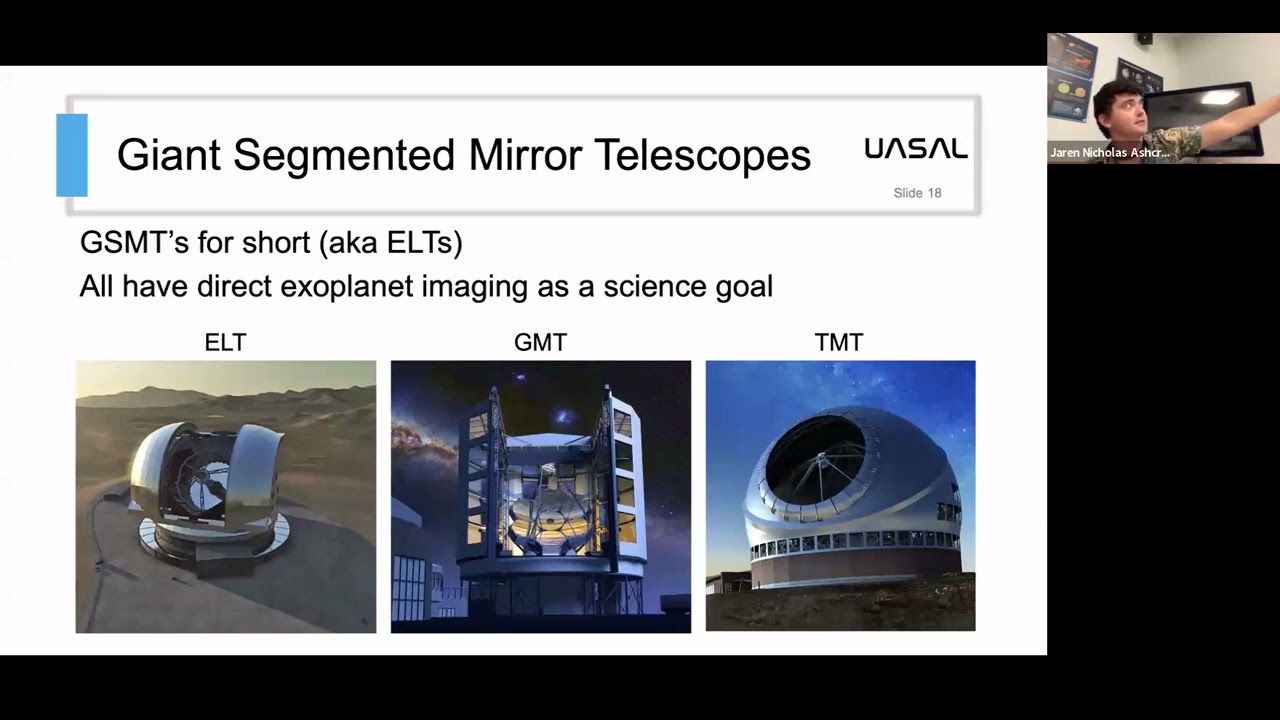
Kuiper 309: I was wondering, how much overlap, do you expect to be between the Tier 1 targets you identify, and targets that are accessible to the ground-based telescopes, like ERT and GMT? I think almost… I mean.
Kuiper 309: I think that all of the Tier 1 targets should be accessible to, like, the ground-based. I mean, there might be some hemispheric situations when you're talking about ground-based, like… like, I think a lot of the good targets are in the Southern Hemisphere and stuff, but we have good facilities in the southern hemisphere, but… Kuiper 309: I mean, these are really, really bright stars that have been studied in the past, and actually, a lot of these stars are too bright for Gaia, so we actually have a little bit of a lapse of survey data on them, just because they've been too bright, so surveys tend to avoid them. But for ground-based telescopes, assuming that you can actually image very bright objects, they're… Kuiper 309: pretty good targets, and actually we're trying to get, precursor campaigns funded in order to, like, get further information about them, like, see whether or not they host giant planets.
Kuiper 309: Or, like, characterized cellular activity, or… or various other, Kuiper 309: Like, precisely constrain their masses and ages.
Kuiper 309: So… so it's an area that we hope to do in the future, is these precursor observations of these very, very bright natural HVO targets that would require the least amount of exposure time.
Kuiper 309: I'm wondering what fraction of them may be… Kuiper 309: Suitable for ground-based detection of the Earth-sized planets, so how much of the discovery space of Kuiper 309: HWO is actually potentially covered by the ground-based assets.
Kuiper 309: I think Kuiper 309: the reason why we're doing it through space is just because of the, contrast levels which we're able to… we have to get down to are very hard to achieve through the atmosphere. Actually, we're not even sure if we could be able to achieve them through the atmosphere, because you have to… so essentially, the… Kuiper 309: It provides a lot on the internal stability and thermal stability of… Kuiper 309: Of the chronograph that you're using. And even for a space-based image, you have to have a very, very carefully designed chronograph in order to get 1.10 billion contrast.
Kuiper 309: So… so this means that we're actually doing what's essentially adaptive optic… adaptive optics in space. We have a deformable mirror on a chronograph to… to correct for tiny, tiny aberrations in, like, the wavefront area that's coming into the chronograph. So from the ground, it makes it exponentially harder because it's going through the atmosphere. So we can actually do giant plan of direct imaging Kuiper 309: through the atmosphere from the ground, but I think that Kuiper 309: fully sun-like stars is gonna be more difficult. I think the real advantage for ground-based telescopes is the larger aperture size, so it'll make direct imaging for planets around M dwarfs much more achievable.
Kuiper 309: So… so one could conceivably get the contrast necessary to get Earths around M dwarfs using the ground-based ELTs, and we have a larger aperture than we could realistically expect to get in space.
Kuiper 309: Yeah. Yeah, I noticed, like, way earlier that you said that you were looking at just F, G, and K stars. I was curious that as you looked through, like, the Tier 1 and Tier 2 list, were you looking at, like, were you finding stars that had more, of a stellar-type advantage, when you were looking through the tiers?
Kuiper 309: Yes.
Kuiper 309: So… So, if you see this plot, 2-1 is essentially corresponding to luminosities that are between, Kuiper 309: like, FGK types, and there's actually a few M stars in there, and Eric Mamagek, my collaborator, likes to say that if an M star is on our target list, it means that it was found by a French astronomer in the 1800s.
Kuiper 309: So if French astronomers could find it in the 1800s, then it can be observed by a ship and grow. So there's not that many MWs like that, but there's a few of them. So I think Proximity is in there.
Kuiper 309: So it has to be very, very nearby to get the angular scale necessary to see the apple zone.
Kuiper 309: But as we go out to, these other direct imaging targets, you could potentially get more M dwarfs, and even some, like, potentially, Kuiper 309: like, early rap stars.
Kuiper 309: Well, yeah. And then you can get out to further distances also.
Kuiper 309: So the spectrum advantage, I'd say FGK stars happens to be what we're interested in, but it's also what we're biased towards, so that's kind of a bonus.
Kuiper 309: Are you planning on doing any kind of, like, version 2, etc, of your HPIC after some of the, HWO design?
Kuiper 309: parameters get nailed down? Yeah, I mean, we're planning to update it in the future as, like, new data releases are released, and as we get a better understanding about what HWO's design is going to be. I think for these new HWO… I guess for these new HWO designs.
Kuiper 309: it doesn't really matter, the input catalog. The input catalog's more sensitive to what the state of our knowledge about these new bi-stars chains, so potentially for these new HWO designs, we want to be able to run yield calculations for them using the HVAC. We want to make sure that the HVAC is updated to our current state of knowledge about these new bi-stars.
Kuiper 309: But for the tiers of the HWO target list, we're going to be updating it based off of our design concepts, so this… so potentially the overlapping parameters based in Tier 2 might get narrower as we better understand which stars the HWO design that the final site is going to look at.
Kuiper 309: Okay, well, thanks, again very much, we'll do…
Up Next
17:26
HR Diagram: Star Classification by Brightness & Temperature
@PhysicsHigh
121.4K views•2016-09-10
61:17
First Billion Years of the Universe with the Square Kilometre Array
@iaaudc
121 views•2022-05-26

6:25
Kepler's Laws of Planetary Motion Explained (Educational Astronomy Video)
@Peekaboo_Kidz
404.9K views•2023-02-17
6:10
Gamma-Ray Bursts: Cosmic Snipers Explained | Astronomy
@kurzgesagt
15M views•2016-07-31
Related Study Plans & Knowledge Roadmaps
Structured learning paths in Astronomy
astronomy
Reionization: Pop III Stars, IGM & 21cm Line
01Foundations of Cosmology & the Early Universe
02Population III Stars & Cosmic Dawn
03Physical Mechanisms of Reionization
+ 2 more learning modules
17h5 modules
Explore Roadmap
astronomy
Planetary Rings: Dynamics, Roche & Resonances
01Foundations of Gravity and Orbital Mechanics
02Tidal Forces and the Roche Limit
03Structure, Composition, and Collisions
+ 2 more learning modules
10h5 modules
Explore Roadmap
astronomy
Asteroseismology: Stellar Waves, Ages & Cores
01Foundations of Stellar Astrophysics & Wave Mechanics
02Stellar Oscillation Modes: P-modes and G-modes
03Mathematical Framework of Asteroseismology
+ 2 more learning modules
35h5 modules
Explore Roadmap
astronomy
Adaptive Optics: Physics, Engineering & Control
01Foundations of Wave Optics and Wavefronts
02Atmospheric Turbulence & Optical Distortion
03Wavefront Sensing Technologies
+ 3 more learning modules
35h6 modules
Explore Roadmap