






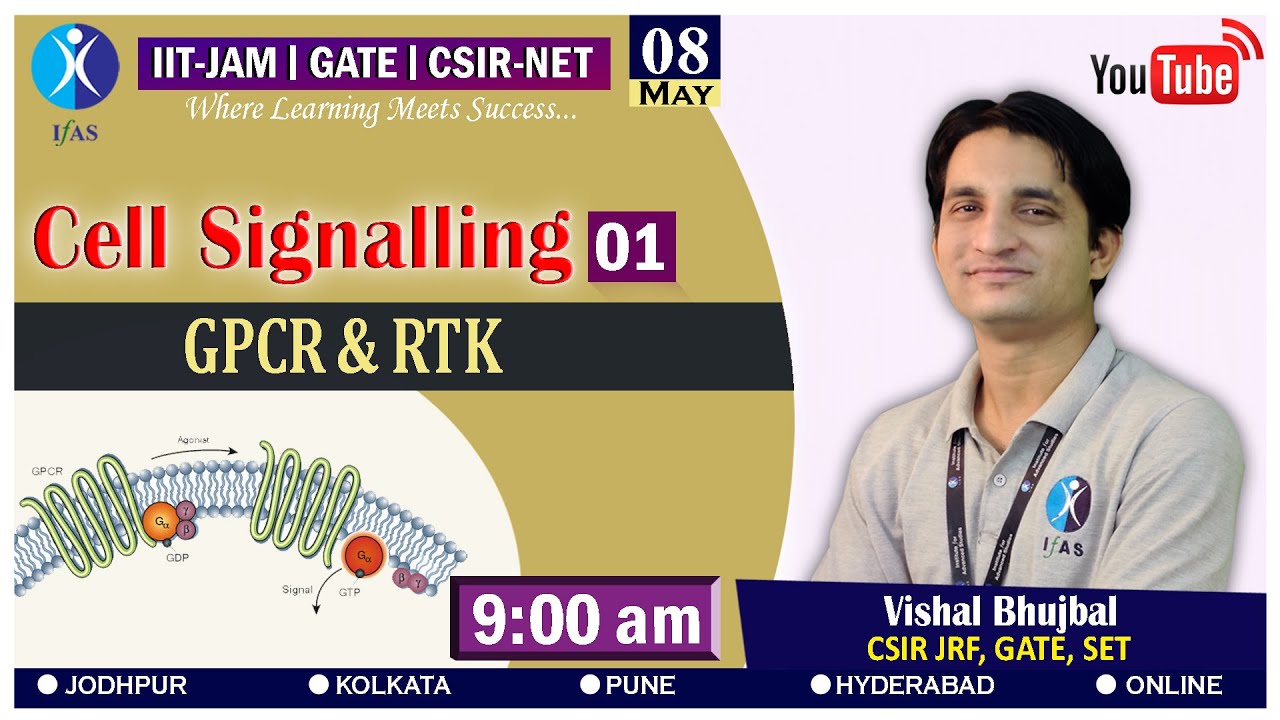

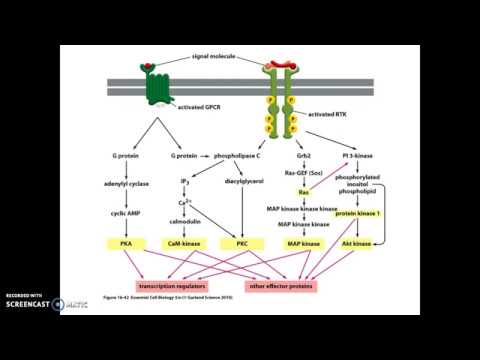


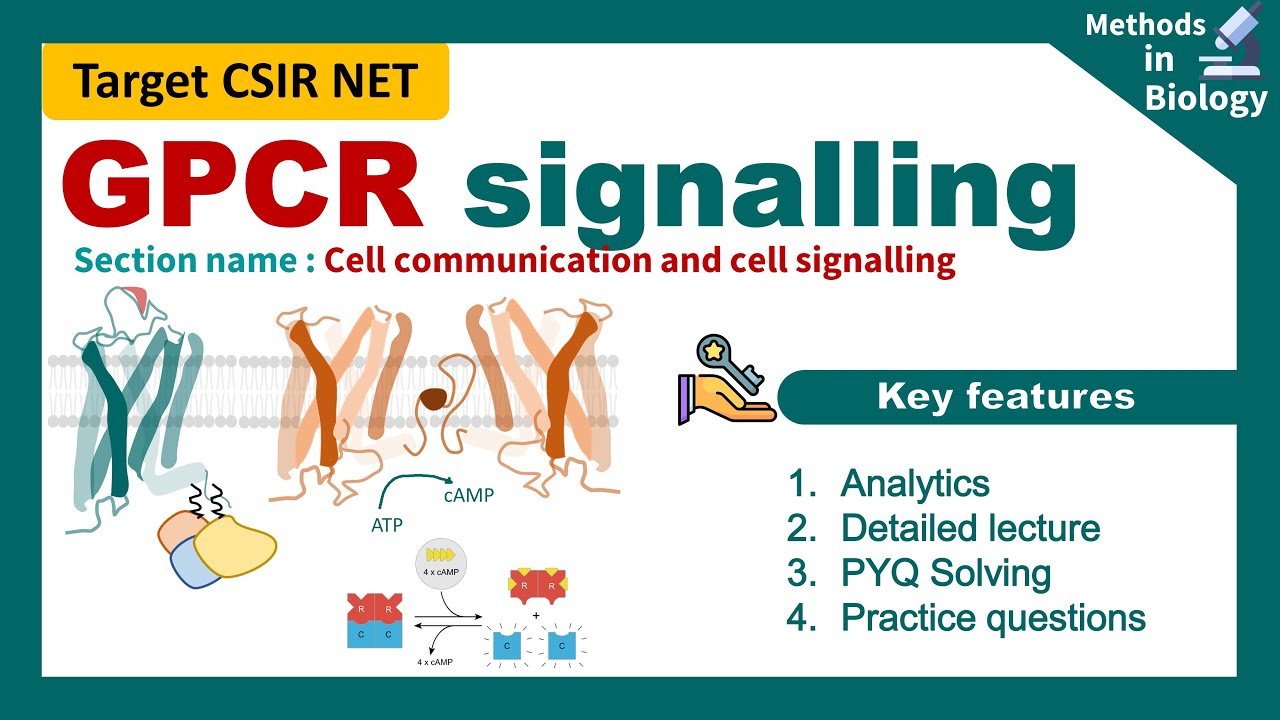


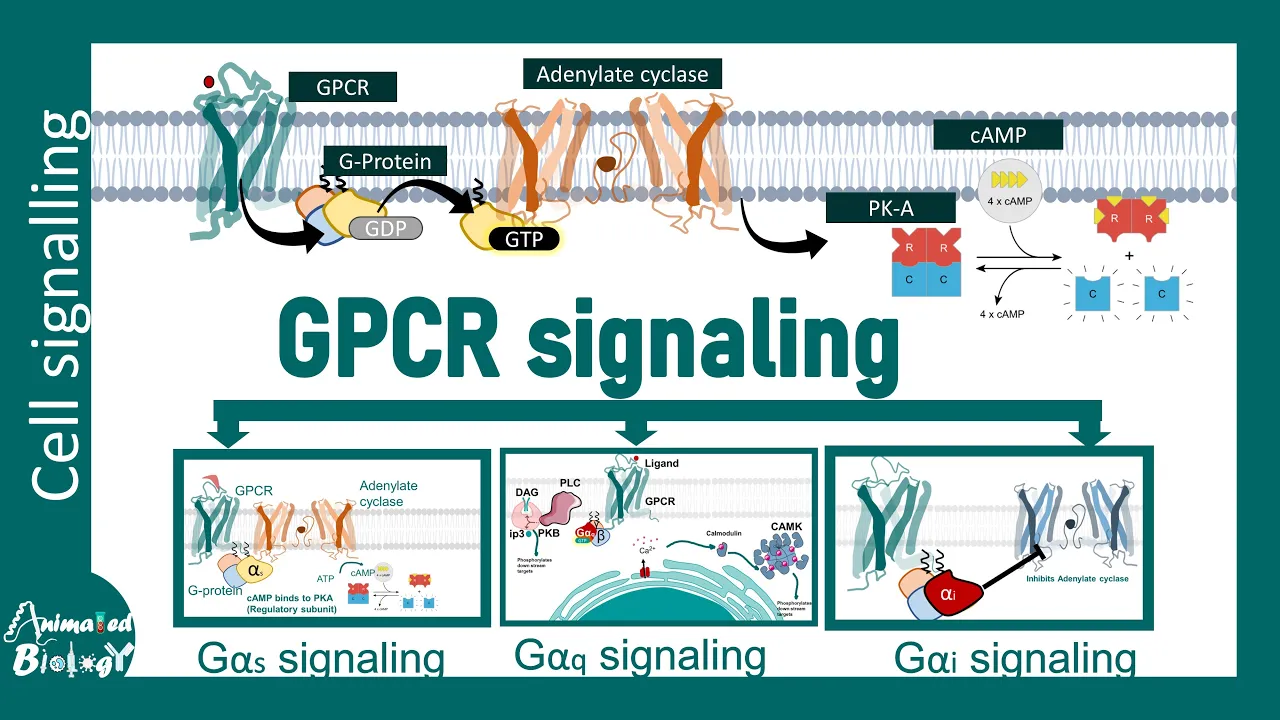
G protein-coupled receptors (GPCRs) are seven-transmembrane domain receptors that transmit extracellular signals to intracellular effectors through trimeric G proteins; upon ligand binding, the G protein undergoes GDP-GTP exchange, activating either adenylyl cyclase to produce cAMP (which activates PKA and CREB-mediated gene transcription) or phospholipase C to generate IP3 and DAG (which mobilizes calcium and activates protein kinase C), with cholera toxin exemplifying how GPCR dysfunction causes disease by constitutively activating these pathways.
G Protein-Coupled Receptor Signaling: GPCR Mechanism Explained
Added:Structure of the lipid bilayer and the nature of integral transmembrane proteins.
The general concept of cell signaling, including ligand-receptor affinity and conformational changes.
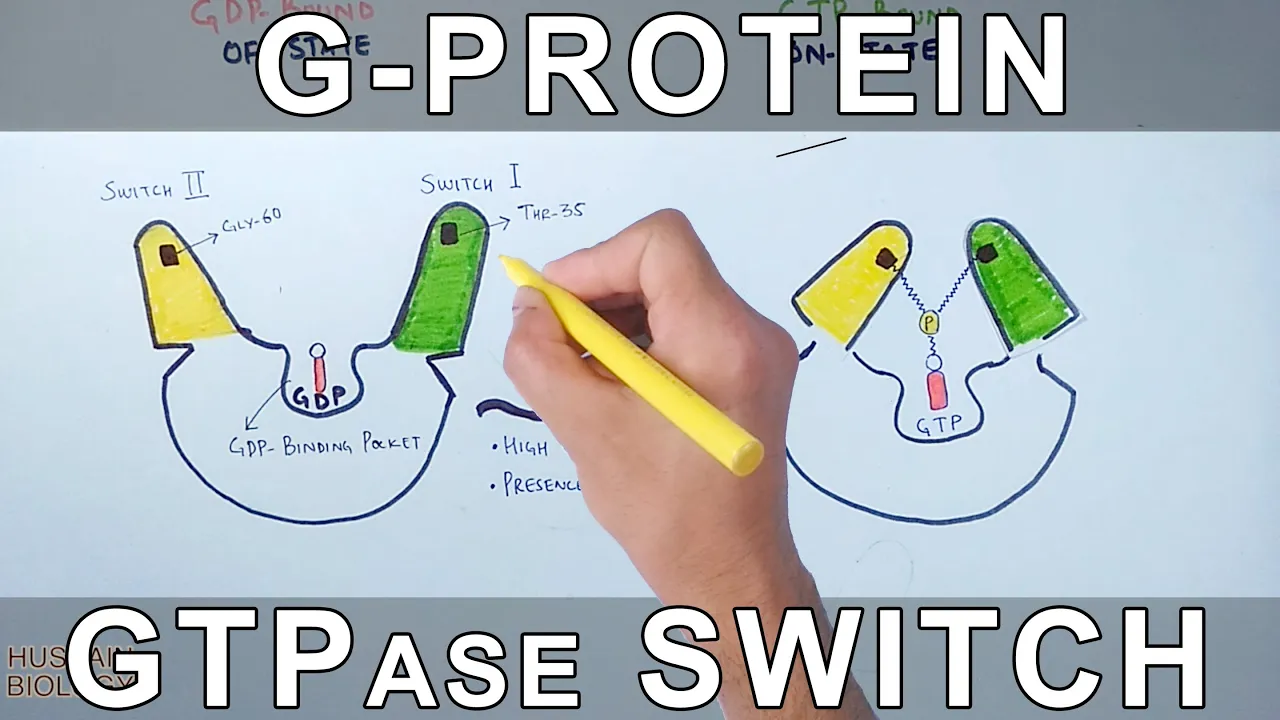
The function of nucleotides, specifically the role of GDP/GTP exchange in molecular switches (GTPases).
Basic protein biochemistry, particularly the mechanism of phosphorylation mediated by protein kinases.
Mechanisms of receptor regulation, including GPCR desensitization, phosphorylation by GRKs, and internalization via arrestins.
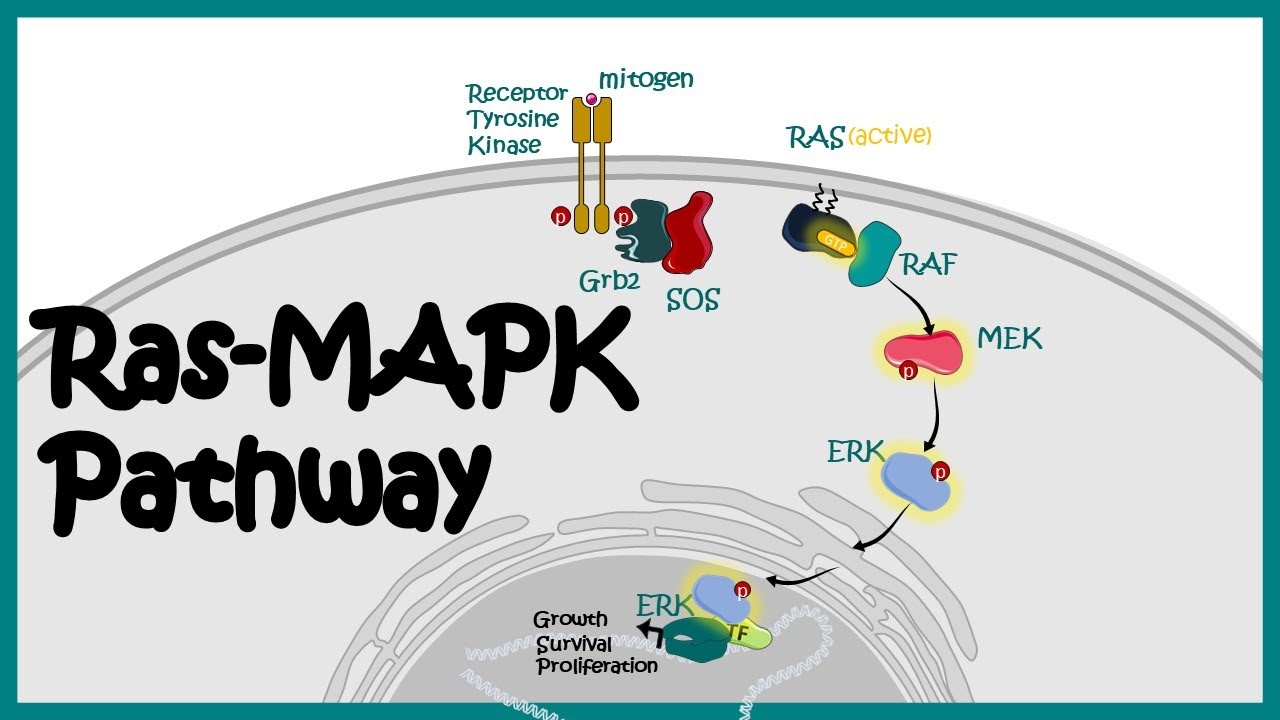
Cross-talk between GPCR pathways and other major cascades, such as Receptor Tyrosine Kinases (RTKs) and the MAPK/ERK pathway.
Pharmacological applications of GPCRs, exploring how agonists, antagonists, and allosteric modulators are designed for drug therapy.
Specific physiological physiological systems regulated by GPCRs, such as sensory perception (vision, olfaction) and endocrine regulation of metabolism.
97K views1.7Klikes7:40Original Release: 2016-03-24
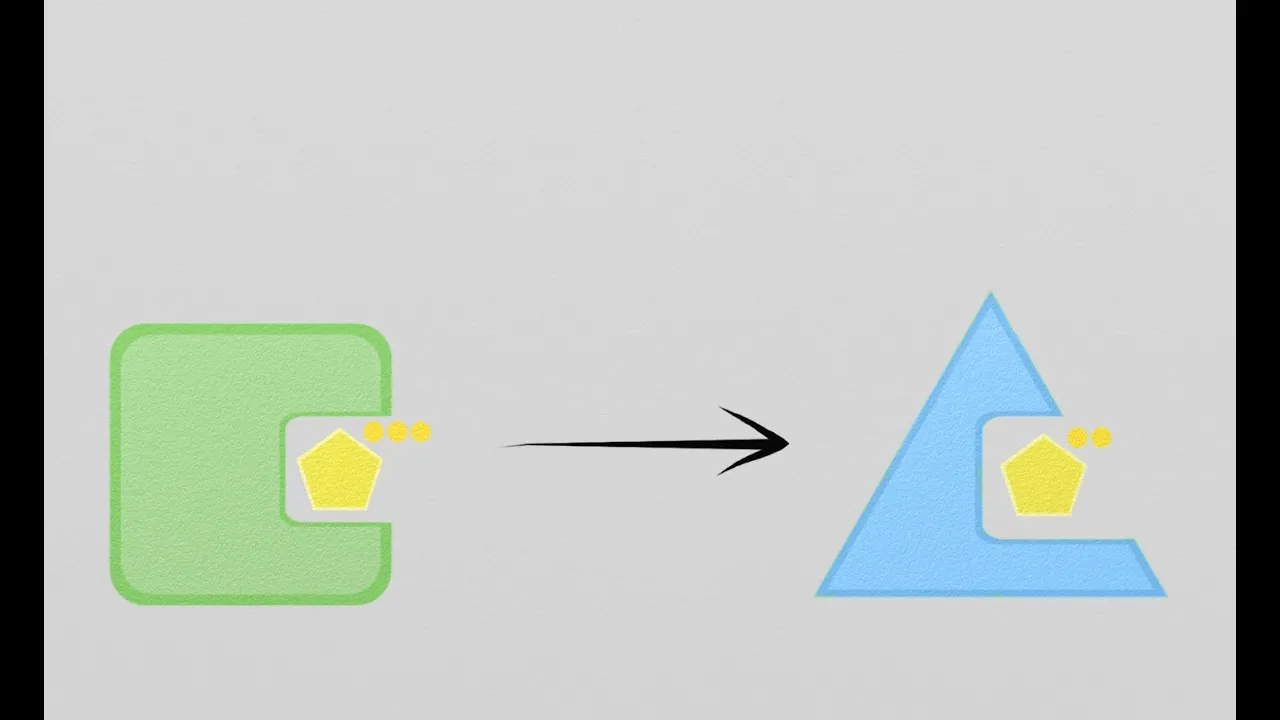
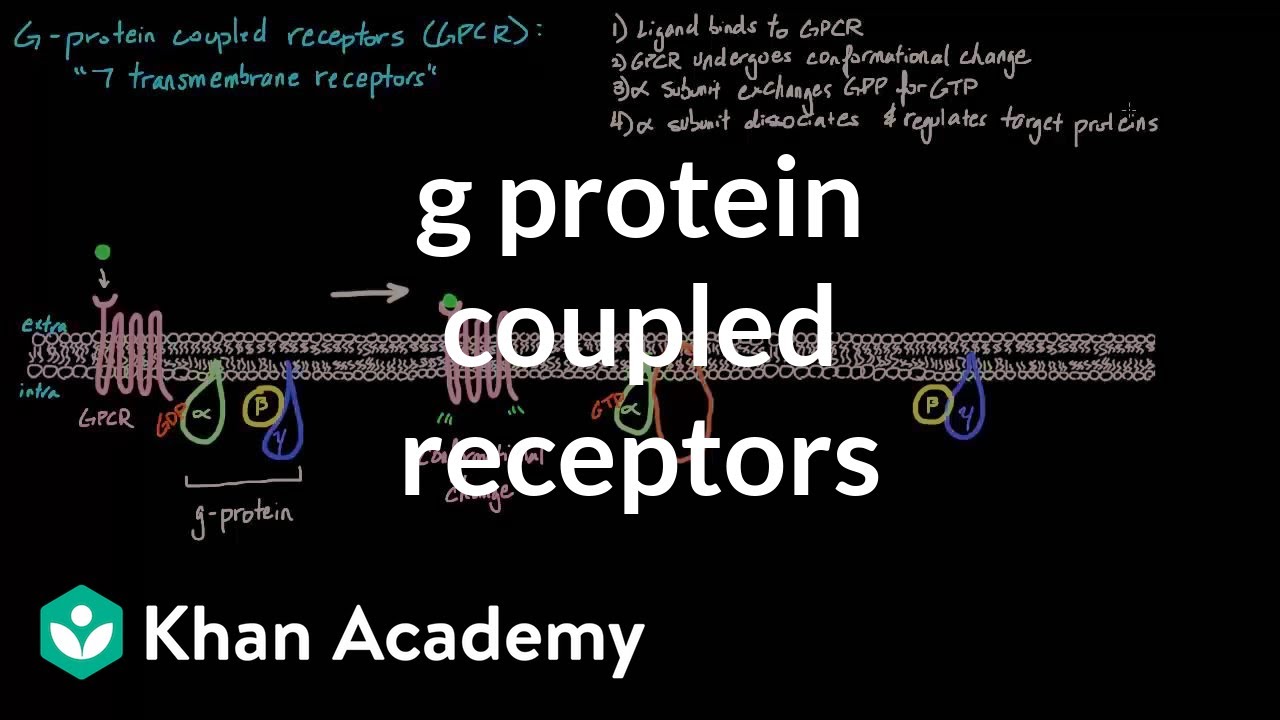
in this video I'm going to talk about G protein couple receptor or gpcrs so here you can see on the surface of the cell membrane you can see a seven transmembrane domain receptor transmembrane is a portion which is incorporated inside the cell membrane so it has seven transmembrane domain each transmembrane domain containing Alpha helicis and this receptor is also known as Serpentine receptor and this receptor is associated with a trimeric G protein and this trimeric G protein has three subunits alpha beta and gamma this Alpha subunit usually binds to GTP when it is in a inactive State and now what happens upon Lian binding to the G protein couple receptor these trimeric G protein underg goes a confirmational change and this trimeric G protein now exchange is its GTB with GTP this trimeric G protein Alpha subunit exchange GDP with GTP once bound with GTP this Alpha subunit is activated now this Alpha subunit as you can see is dissociated from this betag gamma partner and this Alpha subunit can go uh and activate adilet Cycles so so here you can see the adate Cycles enzyme and this adate cyclas enzyme it can perform uh the conversion of ATP to cyclic now cyclic is a very important second messenger note that ATP cannot be a second messenger because there are plenty of ATP in the cell so cell need a distinct type of structural molecule to be a second messenger and that is why C chooses cyclic in in stead of ATP or only amp however cyclic amp represented as this dotted structure will go and bind to protein kyes a or also termed as PKA so four cyclic amp molecules bind to this regulatory domain of protein kyes a as you can see protein kyes a has two basic type of domain it has four domains two regulatory domain two catalytic domain so Cy MP binds to the regulatory domain and releases the catalytic domain the catalytic domain migrates to the nucleus here you can see the catalytic domain migrates to the nucleus and its phosphorate the crib protein the crib protein is cyclic amp response element binding protein so this crepe once get phosphorilated it will bind to the cyclic amp response element and it will help to transcribe many important genes so one good example of this G protein coupled receptor mediated signal transduction we can find it in uh chemokine signaling all the chemokine receptors are actually G protein couple receptors however if we want to see the crabes structure the cyclic amp response element binding protein structure we will see that it has a DNA binding domain as it will bind to the DNA so it must have a DNA binding domain it has a c terminal DNA binding domain it also has a site where this phosphorilation occur now another type of signaling Downstream signal can be carried out by this same receptor and liant interaction and that is via phospholes C gam beta and that is why phospholes beta this upon a different Lian binding this trimeric gtin will be activated and this Alpha subunit will dissociate alpha subunit will go to phospholes C beta and activate it and phospholes beta it will CLE pip to phosphole inositol bis phosphate and it will cleave pip2 into ip3 and dag so ip3 is inoco triphosphate it's another important second messenger and D which is DIY glycerol so it's another second messenger it is also important for Activation of proteiny C and A proteiny C function so as you can see if we highlight this pip2 molecule it will look like something this it has a anoco group here it has a phosphate phospher type of linkage now it has a chain where two fatty acid is linked so PLC Gamma or PLC beta any phospholes c will cleave in this area so phospho lipus beta or phospholes C gamma anything will cleave in this Bond however when ip3 is generated it's a second messenger so it will carry the signal and it will go to the ER the endoplasmic reticulum on the endoplasmic reticulum it will bind to specific channels and it will open the calcium ion channels so the uh stored calcium ion in the ER will get out into the cytool here you can see stored calcium ion will get out in the cyto cytool and this calcium ion can also activate protein kyese C or this calcium ion can uh bind to caminas and it can import its function so this G protein coupled receptor signaling is essential for chemokine function and if we think about the clinical point of view it's very important because Coler toxin ATP ADP ribos iates the G protein actually cerado toxin put a ADP ribosy group into the G uh in the in the G protein so it will modify this G protein by putting a ADP ribosy group once it put the ADP ribosy group here it uh actually activates the GTP the alpha subunit B bound with GTP and uh upon activation it will be activated forever I mean it would be activated constitutively so once it is constitutively active all the downstream signaling pathway will be there so what happens in the chera the cyclic amp level goes up and the protein activity is also increased so what happens this proten kyes a as it is a kisee it phosphorate the exchanger of sodium and hydrogen in the intestinal epithelia and it also phosphorate CFT so however the ultimate result is the influx of sodium chlorine ion and also the water into the gut and that results in severe diarrhea so this is how the uh in POA G protein comes into play and this is how G protein is important okay thank you like subscribe and please comment
Up Next
33:52
Bacterial Metabolism: Glycolysis, TCA & ETC
@learnbiologywell3235
353 views•2025-01-23
50:12
Bacterial Communication: Quorum Sensing and Biofilm Formation Explained
@JHUAAP
12.6K views•2011-06-28
17:50
Neurulation and Neurogenesis: Neural Tube Formation Explained
@animatedbiologywitharpan
52.4K views•2023-10-18
7:08
Bacteriophages: Earth's Deadliest Killers and Future Antibiotics
@kurzgesagt
34.6M views•2018-05-13
Related Study Plans & Knowledge Roadmaps
Structured learning paths in Biology
biology
RNAi: Biogenesis, RISC & Gene Silencing
01Molecular Biology Foundations: DNA to Protein
02Introduction to RNA Interference (RNAi)
03Molecular Biogenesis of miRNA and siRNA
+ 2 more learning modules
10h5 modules
Explore Roadmap
biology
Mycorrhizae: Signaling, Biophysics & Ecology
01Foundations of Mycorrhizal Symbiosis
02Molecular Signaling and Root Colonization
03Biophysics and Bioenergetics of Nutrient Exchange
+ 1 more learning modules
11h4 modules
Explore Roadmap
biology
Circadian Clocks: TTFL, SCN & Periphery
01Foundations of Molecular Biology & Gene Expression
02Introduction to Chronobiology and Actograms
03The Core TTFL: Molecular Architecture of the Clock
+ 3 more learning modules
14h6 modules
Explore Roadmap
biology
Population Genetics: Math, Drift & Selection
01Genetic & Probability Foundations
02The Hardy-Weinberg Principle and Baseline Models
03Mathematical Modeling of Natural Selection
+ 3 more learning modules
18h6 modules
Explore Roadmap