

















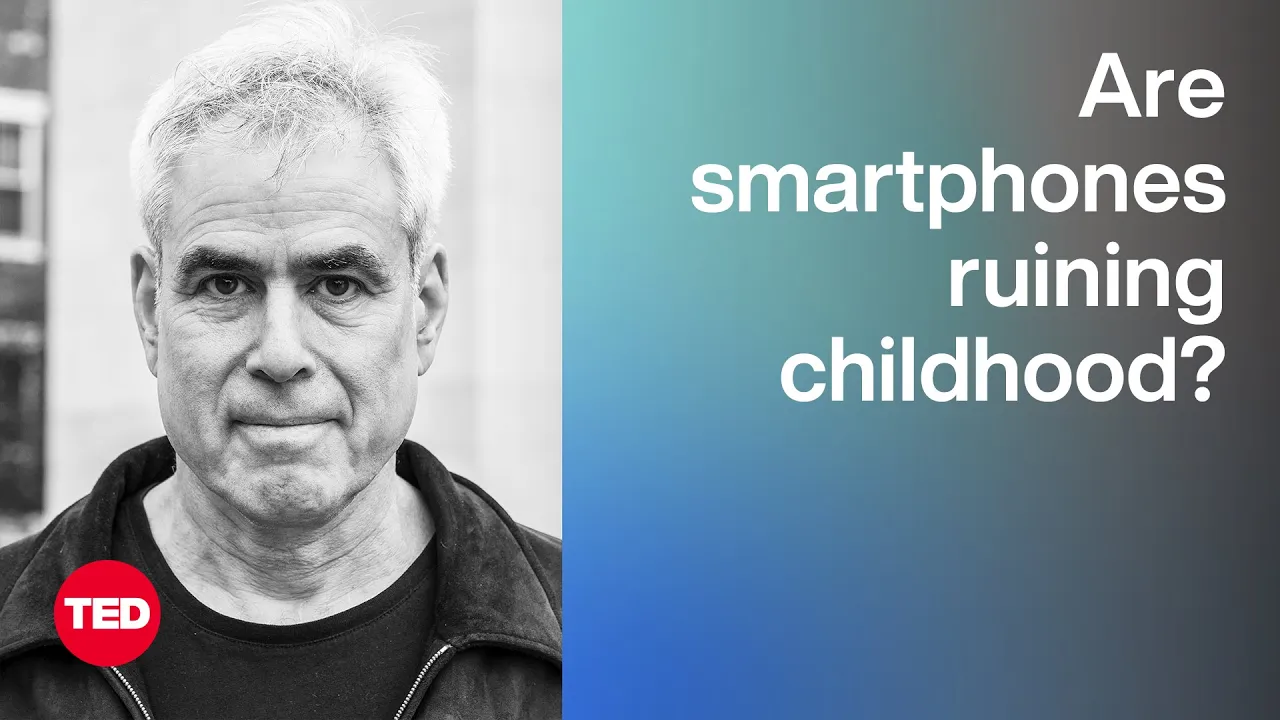
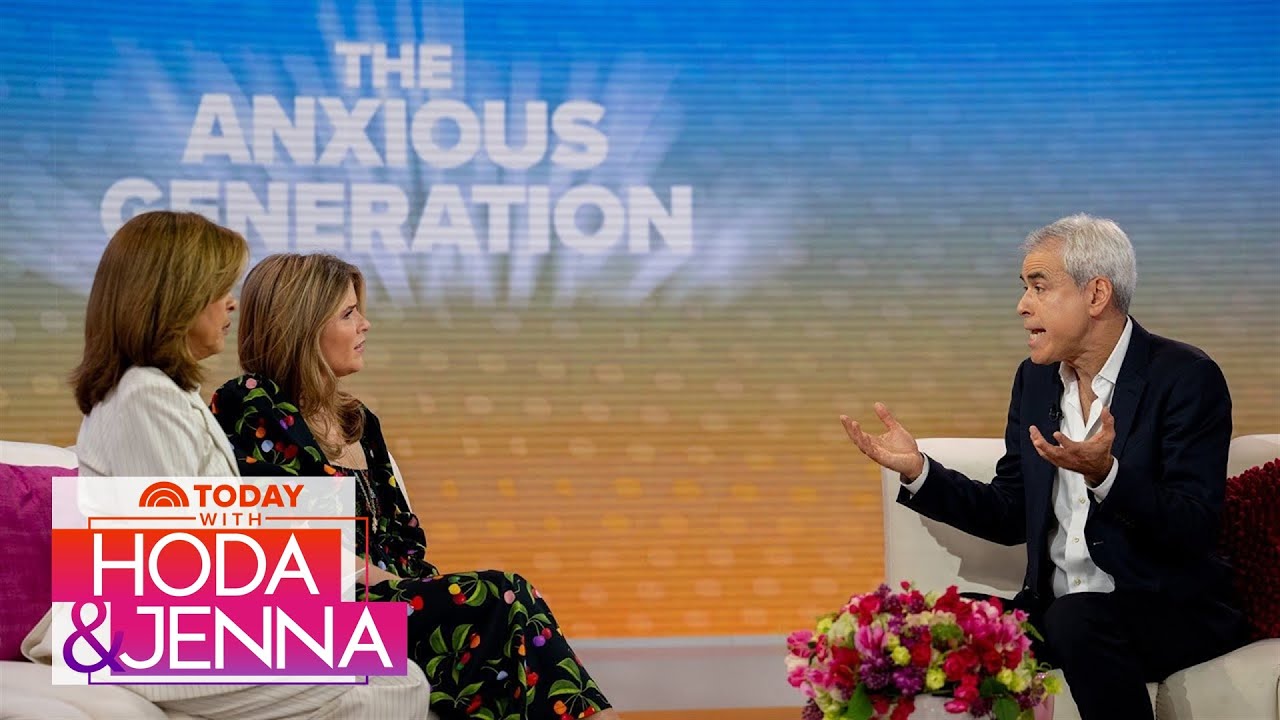


Childhood is evolution's answer for developing a big-brained cultural creature, with the human brain reaching 90% of adult size by age 5; however, modern parenting has shifted from trusting neighbors and allowing unstructured outdoor play to excessive screen time, contributing to rising mental health issues among adolescents. Research indicates that children need age-diverse peer interaction, moral frameworks, and real-world challenges to develop properly, rather than constant smartphone and social media exposure. A global movement is emerging to implement policies like phone-free schools and age restrictions on social media, recognizing that technology companies have created addictive environments that undermine healthy childhood development.
Childhood Flourishing in the Digital Age: A Conversation
Added:in March of last year the social psychologist Jonathan height published this book called The anxious generation which caused let's call it a ster Jonathan I see people walking all over Brooklyn holding this book The subtitle says it all how the great rewiring of childhood is causing an epidemic of mental illness I don't think anybody can dispute that oh my God enough with the Panic about kids using smartphones facing enormous push back from other researchers you cannot dist tangle cause effect he ignores a lot of the positives telling a scary story that many parents are primed to believe I always found the conversation over this book a little um annoying because it it it got to me at one of the difficulties we're having parenting one of the difficulties we're having in society which is this tendency to instrumentalize everything into social science right unless I can show you on a chart the way something is bad we have almost no language for saying it's bad and so I stayed a bit out of that debate because on the one hand I couldn't settle it and on the other hand I didn't think I should come in and say it wasn't important we're a year later though two things have happened Heights bug has never left the bestseller list week after week after week that is rare it is circac cord the other is that policy is moving in Heights direction the governor of Utah has signed a sweeping Bill to limit children's access to social media Florida Governor Ronda santz has signed one of the most restrictive social media laws in the country this [ __ ] Ronda santis might have done something I agree with the no cell phones in schools movement is going National Florida classrooms all schools in the Buckeye State Michigan South Carolina this morning Virginia we're talking Statewide at all Arizona schools and now nine other states are considering the bands as well how are your phone oh I feel a lot more confident as a parent we're going to figure this out by the time my kids are old enough for it to matter and then of course the truck of AI is about to t-bone whatever consensus we socially come to which scares to be quite honest the hell out of me so I want to have John height on the show to talk about all of it he is a professor at New York University Stern School of Business he's also the author of The Righteous Mind which I think is one of the best books on political psychology as well as other books and he is also the author of The after Babel substack which is free where he and some co-authors are continuing to prosecute the case and think through the research around social media as always my email ascin show NY times.com John height welcome to the show Ezra it's great to be back with you so I want to just begin with a big question what is childhood for um childhood is Evolution's answer to how do you have um a a big brained cultural creature you have to practice all sorts of things all sorts of Maneuvers all sorts of social skills uh in order to tell your brain how to wire up to have the adult form so if you focus on brain development and especially for a big brained cultural species like ours there's a plastic period a period where stuff comes in and it shapes who you are and then once you've got that now you're ready to convert to the adult form be reproductive have a baby uh but if you don't have play in the childhood you're not going to reach the adult form properly you had one statistic in the book that that I think I've actually read before but every time I read it it shocks me a new and maybe now because I have a 5-year-old who just turned six but that at 5 years old the human brain is 90% of its adult size and it has more neurons than it will when you're an adult that's right because we're used to thinking of bodily growth as just time equals bigger but the brain is this amazing thing that has all these neurons that have the potential to connect in all kinds of ways and as neuroscientists say neurons that fire together wire together so if you repeatedly you know if you repeatedly climb trees or do archery systems will form in your brain they make you really good at that whereas if you repeatedly swipe tap swipe tap and and just respond to emotional stimuli your brain's going to wire to do that so ask you what childhood is for and now I want to ask you a related but slightly different question which is what is a good childhood uh so a good childhood there's two ways to answer it one is effective in making you a successful adult right that's instrumental what is for and the other is what's a fun childhood and they I can't say that they line up exactly in every cult they certainly don't line up in every culture but we're going to thrive if they have a lot of overlap so almost everybody over 35 or so I guess you're an older Millennial you how did you grow up when you I'm among the eldest of Millennials the elders the millennial Elders tell me when at what age you could go out on your bicycle with your friends and go around the neighborhood I don't remember exactly but I I I do remember I spent a lot of time I I lived on a culdesac in a suburb and I do remember I spent a lot of time as part of a just a roaming pack of kids who lived on my street and we'd be playing kickball on somebody's garage door and the other thing I remember about it that that I feel like I see less of now is that it was highly age diverse exactly that's right so this is what human childhood has has always been there are periods the Industrial Revolution where maybe kids didn't have a childhood but um Peter gray a developmental psychologist who co-founded let grow with me um he has some writing on hunter gatherers and hunter gatherers rais their kids in that way there's no thought that the mother has to be supervising the four five six seven nyear olds they're all off playing with the other kids and because it's not a bunch of four-year-olds getting eaten by a snake it's a bunch of kids and there are nine and 10 year olds there and so they learn to look out for each other the older kids learn to care for the younger kids the younger kids remember they're trying to wire up their brain to like what is a functional member of this society and the best role models for them are not kids their age it's kids a few years older and so in in America in the west we've got this you know Factory kind of schools where we put all the eight-year-olds are together and then all the nine-year olds are together but the healthiest is what you just said and so my point is everyone before the Millennials had this childhood um the Millennials are the transitional generation so you were on the Elder side you got it uh but in the 9s is when we really freaked out about child abduction even though the rates are microscopic in this country and even though crime was plummeting in this country in the 90s that's the decade when and you can see it in the charts that's the decade when we really pulled our kids in we thought it's you know they'll get abducted we can't let them go in a different aisle of a supermarket or a man with a white van I mean all this crazy stuff comes in in the 90s something you mentioned about the 90s in the book is I am familiar with this statistic that parents today despite working two jobs much more often than they did in the past despite fathers being more involved they both spend much more time with their kids than they did before I hadn't realized that that was not a a sort of steady increase over the decades that it's sharply an increase in the 90s that's right that's right there's this weird graph that I have in the book which shows the number of hours both men and women spend in parenting you know act what you would consider time with your kid doing something and the astonishing thing is that in the 50s 60s 7s even into the ' 80s there were big families women generally didn't work um and yet women were not spending 5 hours a day parenting because the kids were raised the way that you just said it's not the parents job to socialize the child all along it's the parents job to provide the right environment to provide certain kinds of moral Frameworks but the real work of brain development doesn't happen with with when you're with your parents your parents are homebased they're your attachment figure when you feel securely attached then you go off and explore and that's the mammal way that's what other mammals do you you you go off progressively further from your home base and that's where the learning happens it's it's playing kickball trying to decide what do we do today oh he broke the rules no he didn't I want to get it a tension in there with at least the culture of modern parenting I think a lot a lot of parents believe that the simplest way to ask were you a good parent this week is how much time you spend with your quity time quality time I feel that yeah and you're saying here that's not true it's not true it's definitely not true you want to give your kids a quality childhood you want to be a quality parent but that doesn't mean that you have to spend a lot of quality time with your kid you need a warm trusting loving relationship you need to provide structure and Order and discipline but this is what changed in the '90s is and it's imp part because we stopped trusting our neighbors it turns out why did we stop letting our kids out to play um if you think of all the Robert putam stuff about bowling alone and the loss of Social Capital we used to at least trust that if our kids were out playing without us other adults would look out for them if something really went wrong they could knock on a door like someone would help but we begin losing that trust and this is really bad for the kids because the kids don't grow as much if their attachment figure is there and it's really bad for the adults uh especially the especially the women the mothers pick up a lot of this um even though they're working outside the home so yes modern parenting is not good for the kids and certainly not good for the adults so if you're tracking Dynamics here you have the '90s were getting more afraid of danger you're having this deterioration in Social trust this deterioration in is the whole Community parenting your kid right and it's right about now that you begin having an explosion in screen possibilities that's so I remember when when I was younger I remember Nickelodeon emerging okay right before then there wasn't a TV channel that was programming for children at all times right right before then it's like there were cartoons sometimes there was kids shows but not all the time and obviously from there you get an explosion of cable channels eventually the internet eventually you know iPads and iPhones and video game consoles and all the rest of it talk about the the sort of handoff yeah yeah it's the conversion over to this Smartphone based tablet-based childhood that's when all the indicators of mental illness start Rising around 2013 Plus or 2012 2013 now I focused on the 2010 to 2015 period but I think your question points out something I hadn't really thought much about which is cable TV um and you're right that the digital environment just gets super interesting when you're a kid I was born in 1963 so I grew up on in the late 60s early in the 70s on you know I Dream of Genie and um um you know Gilligan's Island you know and I watched those I showed those shows to my kids and I said this is so stupid like they were really simple plots but that's all we had whereas you had cable which was more engaging and console video games Okay I I got a Nintendo the NES not the Super Nintendo the first mass available console and mass mass adopted there were you know you could argue about the guitari or whatever but the Nintendo Entertainment System what year was that uh I don't remember now but I was young you're talking that you're LS okay um to me that's a big dividing point because the things that Nickelodeon and the NES do is they make it possible to put something on the television at any second of the day they will entertain a child intensely yeah that's right that's a good point um I've been more focused on the Ral of the internet but the the Nintendo didn't require the internet right no right okay so you were not a gamer John well I was cuz when I was a kid the game was pong like there you know they were they were this is8 bit Mario man this is you know this is the the the early stuff okay so so the early stuff was great fun but it was not multiplayer you had a you had your friend had to sit next to you to play right right so so this I hope this will be a theme that I'm I'm I'm thinking a lot more about this like don't just think about screen time think about what is it that makes it good or bad and so you know because I remember like just as video games was coming in and You' hook it up to your TV so like my friends and I would get together we say what do you want to do you play play video games like okay we'll do that for a little bit and then we go off and do something else nothing harmful about that what happens in the 2000s once you begin to get the multiplayer games because this requires not just the internet it requires high-speed internet in order to have these amazing Graphics shared in multiple screens at the same time without a lag so that's only you know like 2008 2009 it begins to get popular but then it's in this great rewiring period 2010 to 2015 this is when everyone's trading in their flip phones for smartphones this is when highspeed internet is increasing greatly so by 2015 now youve boys are all on these multiplayer games my son played fortnite I didn't let him on till he was 13 but um you they they laugh their heads off the boys at least had that synchronous laughter they're not in the same room so it's not as good but they at least had that whereas the girls they're each alone on their own Instagram account they might laugh laugh at a me at something but they're not having shared laughter one of the reasons I felt myself like a little put off by the debate that emerged around your book with a sort of like endless back and forth on the identification strategy of you know was this really the cause of anxiety or correlative anxiety and what's going on in South Korea is it got it this feeling I keep having which is that we have lost any kind of independent and I would positively say paternalistic idea of what we want human beings to be and we have allowed it all to be dominated by by metrix so on the one hand there is are you getting good grades if you're getting good grades and you're fine it's not really true we definitely see it's not true now because we're watching kids I mean partially through grade inflation get plenty of good grades not get pregnant as teenagers not do a bunch of drugs and they're doing terribly the other side of it though is that then there's this I would call it the logic of capitalism the logic of the consumer economy which is that if you enjoy doing it if you want to do it then we need to have a very high Bar for a reason to stop you right our our view is that kids should not free base crack all the time we've decided like that's not something we should let them do but if they're playing multiplayer online mive multiplayer online games all the time and they enjoy it and their grades are fine like what are you really going to say and and somewhere in this some texture is lost like I think that that I associate more with classical education or something but with we are trying to develop certain facilities that are part of being a human being yeah I always think about attention as one of them right what kind of attention we hear all this uh concern now that kids are graduated in high school even kids going to good colleges can't read a full book read a book can't watch a movie but there's more than that I think we care about if our children are are nice or kind we sort of have that but there's a lot about uh all kinds of Virtues that we've just lost the way to to talk about and that we're not comfortable saying I mean I see it with parents all the time you need some great reason to say the kid shouldn't be on the iPad and maybe it's that you think their grades will be bad or their anxiety will be high but you can't just say like nobody feels that comfortable saying it's just bad I just don't want you looking at the screen all the time I think it's bad I think it's not the way to be a human being that's right what you're describing is the loss of any moral framework and if you try to raise kids without a moral framework it's not going to go well so that's what I'd like you to talk a about you have one chapter on this in the book it's a little shorter it's about spirituality but your first book Is All About moral framework MH connect these for me because I do we lost paternalism like I I do think parenting lost an idea yeah that it is confident about yeah about what we are trying to raise people towards and this yeah and well I want to stay away from politics and our talk in general what you're bringing up is one of the divisions that I talked about in The Righteous Mind between left and right and that is that uh you know in general the the right you know conservatism conserve what we have there's a wisdom to our ancestors this is Edmond Burke um and so the right tends to see they have what's called a constrained view of human nature uh if kids don't have structure and Order and punishment for bad Deeds um they'll come out badly uh whereas the left tends to habitually you know question existing arrangements and and pull things down if they seem unjust and the left is much more afraid to make value judgments and to impose a moral order on kids that's why it's always the right that's concerned about the garbage being placed on TV because the right is very concerned about the moral diet coming in uh now I I think in the modern era I think parents should be more like the conservatives in that respect and here's why we already talked about the way the neurons are growing they're wiring up and you learn to run climb trees do all sorts of things but a big thing you're doing um especially in later childhood is you're learning the moral order and humans evolved within a moral order and I'm a you know I'm a you know secular Jewish I was always on the left uh now I'm nothing I'm not on any team but um when I was writing that book I was really sort exploring ancient wisdom and discovering wow I like every other Society they had this Rich moral framework they have a conception of the Gods there are reasons why you have to do things um and when you raise kids within a moral order they have a sense of their place in the world and a sense of meaning um and when you take all that out and you say you know all that matters is what feels good or all that matters is is rights or all that matters is some measure of material success there's no there's no basically what you have is what Emil Durham called anomy or normlessness and uh there's a question on the monitoring the future study where for since the 70s we've asked um High School seniors um my life feels useless do you agree or disagree with that on a fivepoint scale and until 2010 um it's like around 9% say yes and then all of a sudden 2012 it shoots up it doubles within 5 or 10 years and so I think part of this is if you're if you're immersed in stories that have a moral order to them which is what I was immersed in when I was a kid all the stories had some sort of you know moral and you know even I Dream of Genie I mean you know if you there was a moral framework was put in by the adults who made the show but uh what you see on Tik Tok and Instagram they're not really stories they're really amoral or immoral a lot of them are just horrible things the boys are seeing lots of videos of people getting an accident or violence um and so so a long way to answer your question kids need moral formation they need a structure a shared moral framework morality only works like language you can't have your own language and you can't have your own morality it only works as a shared system an order and once kids move on to social media it's just a million little fragments of nonsense there's no moral order but that means parents need it and I do think there's a question of where where parents get it or don't but but Instagram Tik Tok get it this in an interesting way to me okay I think it was you I was listening to a conversation with you some years ago and you said something like it is just bad for teenage girls to be endlessly posting pictures of themselves on the internet for other people to rate right through I stand by that bold assertion and I I remember thinking that's so unbelievably [ __ ] obvious and so much not how we actually just talk about it right because what you were making there was fundamentally moral judgment I know behind it there is evidence and but I I do find that within the conversation about social media and the way we're we're constructing childhood there is this demand to bring the studies right and and i' I I've said this before I think if you could prove to me that it doesn't matter at all for anxiety at 16 or earnings at 23 whether or not kids spend 2.5 hours or three hours a day on Tik Tok I think it would change my view of whether they should do that 0 per. okay because I just think it's a bad way to live MH and it's a bad way to live for other reasons right I think it'll create by Nature it creates self-obsession MH right by Nature creates this management of the personal brand by Nature a thing where you are posting a lot of videos and photos of yourself online is going to make you think a lot about yourself it is self- obsessing and even if I couldn't find corelates there of bad outcomes I have a view on what it means to be a like a flourishing human being that should not include too much of that right that that wants to keep that boxed up a little bit in the human psyche and and this is where things feel like they they ran a ground to me in a lot of the the the debates I feel like parenting and the culture parents come from now unless you are in some form of church basically is incredibly insecure about making these judgments that's right that's right I don't fully understand why I don't think it is just a loss of trust thing yeah I think it is some set of forces that I don't really understand but I don't feel like it was like that that as much when I was young and it definitely wasn't like that as much in the past that's right and sort of separate almost from everything else I think this is a a huge failure in parenting culture this just inability to say we have views on what is good or bad that's right and they don't require 16 years of randomized controlled trials they're just actually our views on virtue yeah and there I see this generational change you can see that you can see the sort of the tight moral order of the 1950s and when you look at old at old movies like from the 30s and 40s there was a really tight moral order and like it would be dramatic whether whether a woman could like go into a man's apartment that was like a you know so there was a really intense moral order including around gender around all sorts of things and that of course begins to loosen up in the 60s and there are many good things that happen because of that um but the the one of the concerns about about sort of modern secular society has been you gradually lose this this this moral framework within which to raise children and I'm really aware now of of how we each we're all influenced by our parents and just maybe a little bit by our grandparents um culture has always sort of come down vertically through generations but that link is getting weakened so I think there is a progressive weakening of a sense of a moral order which affects how you parent and then we end up with a kind of an amoral you know um you know focused on grades and I guess be nice and a few other things but it's a very thin moral gr I'd say and you can I think see this spreading throughout Society the idea that this is just about the kids is wrong I know you don't want to be political and I know that the John Hy agenda is being adopted in red and blue States alike and we will talk about that but you were saying earlier look liberals and conservatives have these different moral foundations and conservatives care a lot more about the moral inputs M and maybe that was true MH I look around I don't see it I'm not asking you to say whether Donald Trump is a moral immoral person but what I will say is that the Republican Party under him has become unconcerned with what was traditionally understood as Vice in a very different way so that some of that is politeness and etiquette but some of it is what should the policies be about sports gambling right there is a massive deregulation of sports gambling which is consuming young men yes right destroy crypto is an adjacency of that right there's perfectly fine things about crypto but what we are specifically permitting is crypto as a casino I was somebody who very supportive of marijana legalization and I think it's gone terribly I agre and it's gone terribly be I mean among other things because we have just allowed capitalism to get its hooks into it and create more and more and more potent products that are advertised everywhere it we have I don't know if either side is particularly concerned with Vice right now but it the the right is embraced a lot of this too and I think part of that is just a collapse right there is no one left who has political power in the society who feels confident making I would say judgments to go against the market right there was a market for sports gambling so we're going to allow it there's a market for crypto I I think about a lot of things in modernity as capitalism is itself a kind of moral logic and it is a moral logic buil on individual expression of wants in the moment and it was counterbalanced by much more potent religious Logics and these two sort of forces held each other at a rough equilibrium for much of 20th century America and at some point the religious counter Force weakened so much that the system fell out of equilibrium and now the the religious forces are just not very powerful at all I'm not myself highly religious but I I do think that these were countervailing players and and we just don't have them anymore and like the evidence of that being a problem is actually all around us yeah no I think that's I think that's exactly right I'll Just sh just bring a couple points to Bear one is there's an incredible book um called the age of addiction by David cordr and he Chronicles how you know people have always like wanted you know sugar and they forged for fruit but then you learn to refine sugar and now you get sugar based products and then you get candy and then so so once we get a market-based economy in the industrial revolution we find more and more ways to make these products that are that our brains evolved to Crave um but now they're Limitless you can have Limitless quantities effortlessly uh and the same is true for you know opiates you get you know opium to heroin to fentanyl so a free market Society the best definition of it I heard is one in which you can only get rich by making other people better off and for the most part in our economy that is still true but now let's look at the products we're talking about um if you're a sports betting company if you're a crypto company if you're a video game company if you're a social media company are you making your money by making people better off or are you playing on addiction manipulating social forces are you spreading enormous negative externalities around Society um and I would argue that's what's happening and partly it is due I think to the deregulatory impulse to the fact that we have lost the ability um to to regulate things in a Smart Way um and so one principle I really want to make clear in all of this is we have to distinguish between children and adults so we are generally libertarian country compared to Europe where they're happy to ban anything when we're talking about adults I think we're generally right generally we should let adults do what they want unless there's compelling evidence some reason but when we're talking about kids it's entirely different and when you have entire trillion dollar Industries where do they make their money from I didn't pay them a penny you didn't pay them a penny our kids didn't pay them a penny that entire value is created by breaking up the day into tiny little bits and sucking out the attention and selling it to advertisers and selling the data so so my point is in general free market good in general free societies good but they have this problem that um certain industries have found out ways to monetize our weaknesses and they get better and better at that every decade and that's what's happening to us I think I I want to think about this and I guess I'm going to make this next point a little bit to be provocative I'm not sure how much I believe it I understand argumentatively and politically why you want to just say look it's fine for adults to do basically anything they want but kids kids are the children are a future MH we got do something very different there fine I think in practice it doesn't work why is that because if you are going to allow something to be both highly morally and legally permissible the moment somebody is 18 or frankly in a lot of your framework 16 MH I'm not saying it is literally impossible that you will Implement such a hardcore age verification system that it will be impossible to do beneath that it's probably going to be pretty hard now I think there are places where it works but typically you want friction that is both moral and structural it's a little bit more of a gradation throughout Society what we have lost in a lot of places is friction and there are things that you want to have some access to but there'd be friction right we had access to things like sports gambling but yet had to drive to Vegas you know at least in the on the west coast where I grew up taking away all the friction making it available virtually everywhere and online has just then made it very very very dangerous to people because you know some percentage of people are going to develop a gambling problem and and we know that pretty well I have this sort of view that the correct moment of marijuana decriminalization was when it was medically legalized under a kind of wink wink nod structure in California so you could get it you putting people in jail for it but you couldn't have a store on every block selling hyper potent formulas to everybody who walked in the door what we have done and I mean this is the genius of capitalism what it does is it it seeks out how to make the thing more interesting more potent more seductive more alluring and that's really great until a certain point yeah that's right at which point the friction between you and the thing becomes too low and then it's it's very very very hard for the limited software of the human mind to regulate the wants at least in some people yes and so there's something about the loss of friction and and I suspect that and again this is partially moral Frameworks if we're going to be completely fine with it at 19 it's going to be very hard to not be at for it to not be too uh present at 17 okay all right hold on a second here in general I agree with you that the technology makes everything easy and for adults that actually is often good not always but often good but for kids it's disastrous because kids need to learn to do hard things and the technology makes it easy for them to not do hard things but if I could just add on you started this off by saying oh you don't think that you know we're not going to get an actual age verification system um the one real obstacle that I have faced and once I put the book out you know parents love it they're embracing it teachers are embracing it um the main objection I get is resignation it's just people saying H what are you going to do you know the technolog is here to stay you know I the kids they're going to have to use it when they're adults might as well learn their kids you know how you can't put the genie back in the bottle um but actually we can um and and we're doing it and so um so I just really want to make the point that we don't have easy age verification now but if we incentivize it we'll have it within a year so my colleague at myu Scott Galloway gives the example of how the social media companies this industry they have figured out they put a lot of research and money into advertising and so they figured out a way that when you click a link anywhere on the internet and then the page loads in between that time there has been an auction among thousands of companies for the right to show you you this particular ad this is a miracle of technical Innovation and they did that because there was money in it and now the question is do you think maybe they could figure out if somebody is under 16 or over 16 also that auction knows how old it thinks you are yeah that's right exactly they know everything about us and they're saying oh you know what are you gonna the kids are going to lie like what are we supposed to do so we're going to get age verification Australia is pushing it it's going to work it doesn't have to be perfect at first but within a few years it will be very good so I will stop just trying to be provocative because I do believe you can do age verification one reason I wanted to have you on right now is it feels like the world is tipping in this yeah so so run me through you you let's stay not in Australia but but in the US I feel like every day I turn on uh the news and I see some other Governor or mayor announcing no phones in schools y tell me the the the scope of this at the moment like where where are we that we weren't two years ago in terms of the laws being passed and the kind of announcements being made so the way to understand why it's changing so quickly is to go back before Co and jeene twangy comes out with her famous article in 2017 have smartphones destroyed a generation now at the time the empirical evidence was not clear at all and she was savagely attacked by other researchers said oh this is just a correlation now you have no evidence it's not causal so that's 2017 so 2019 we're beginning to see actually wait there is some evidence and everybody's now seeing something's creepy about this and and we're seeing our kids drift away and then covid comes in what happens what kids desperately need in 2019 Gan and I were saying was more time outside playing less time on screens what happens we freak out we put in way too strict restrictions we say no you can't you in New York they closed the playgrounds they close down the ball fields so no playing outside you might catch covid so things get far far worse um over the next couple years but you know the kids have to be on screens so it's only as began to clear away people are sort of coming back to their senses about this and that's why everybody's sort of ready to act and that's why when my book came out uh year a year ago came out in uh late March of 2024 I didn't have to persuade anyone almost everybody saw wait something is going terribly wrong here and so what's happening around the world is that legislators are mostly parents and they've seen it and they're uncomfortable with it it doesn't matter if they're democrat or republican heads of state mostly are parents um the way the Australia bill got started was uh in South Australia one of the states the wife of the Premier was reading the anxious generation in bed and she turns to him and says Peter you've got to read this book and then you've got to effing do something about it it's the way that he described it at least in um so it is often I think mothers have felt it more keenly than fathers mothers just they're more emotionally connected in ways where they could feel the kids being pulled away so um that's why it's happening everywhere because it's obvious it's Common Sense most people see it what is happening everywhere so I would say it's a parents Revolution saying we're sick and tired we're not going to take this anymore all over the world family life has turned into a fight over screen time we're all fed up we want to do something about it okay what do we actually do I wrote the book as an American assuming that we'll never get help from Congress now I hope I'm wrong there are some bills that that could get through but I was just sort of assuming we have a dysfunctional Congress let's try to do this the way Tok bille said that we do it like let's get together let's figure out how to do this and so that means action at the um at at uh among families and at schools um and at States um I am finding states are incredibly responsive um states in the United States are either mostly red or blue but this is a bipartisan issue so the number one step that they're all taking is so easy and so obvious and it doesn't cost anything which is phone free schools check your phone in the morning what are some of the states that are doing it well Florida was one of the first but they did it just during instructional time which is worthless because then everyone rushes for their phone they're on their phone in between classes they don't talk to each other so I'm not sure where they are now um Arkansas Utah but and Utah is interesting here because that of every state has still the strongest religious culture because of the Church of of L Day Saints and they have by far the strongest regulations on social media around children that's right I mean you sort of see the way those two things that sort of moral framework and that willing to regulate what feels like a vice is happening there that's right they also have a really excellent governor governor Cox has been just superb um he wants to make Utah the most family-friendly State and many states want to and you know if we feel that we can't let our kids out and our kids are rotting away on screens and there's screens all day in the school that's not a family-friendly place so uh so yeah Utah has been great on this oh here we are in New York Governor hokel has been great on this we're going to get phone-free bell-to-bell legislation here in New York um New Jersey is moving that way Connecticut so we're seeing it all over the country that's the phone free schools the uh so in the book I say there are four Norms with four Norms we can roll back the phone based childhood the first is no smartphone before high school do not give your kid a touchcreen this includes an iPad don't give them their own touchscreen before high school or age 14 uh and that's not a law that's a a norm that we're trying to promote the second is no social media till 16 and that could be sort of a norm I mean if enough of us do it it gets easier but we really need law that's where we really need law and that's why I'm so excited about Australia Indonesia is I I believe planning on it a whole bunch of Nations if if it works in Australia it's going to go Global very quickly I'm just the clarification and I actually don't know Australia is no smartphone or no social media before 16 the key is the age of Internet adulthood at what age are you old enough to sign a contract with a giant Corporation to give away your data and your rights and let them stuff stuff into you chosen by their algorithm at what age and current American law says as long as you're old enough to lie you're old enough to do this if you're 10 just say you're 13 and you can the company's can whatever they want for you oh and we can't sue them they're freed from that by section 230 so that's the current law is that there is no age of internet anywhere in the world like you just lie uh but what Australia is saying is you're going to the companies are going to have to figure out how to do this that you have to do some sort of age Assurance so that you if you're 16 you can sign this away without parental consent your parents don't have to know and right now 10year olds are getting on Instagram and Tik Tok even 8-year-olds so this has to stop and Australia they finally put their foot down and said this is going to stop here okay so that was the second yeah and you said there third is the third is phone free schools um and that I think we're gonna I don't know how many but I think it's going to be the majority of kids the majority of American kids are going to be in phone free schools within two years um so many states have done it already and I think a lot of the rest are going to implement it NE by next next September so that one is moved that's the main Norm where there's been spectacular change around the world then the fourth is far more Independence free play and responsibility in the real world because what I urge people to do is don't just focus on taking away the screens focus on restoring a fun childhood as we were talking about before a human childhood a childhood spent not under your parents gaze doing homework or or or on a you know on a screen but a a childhood where you're having fun with your friends in mixed age groups so one of the things that I think is interesting and important about this and it's very present in your book is how hard it is for parents to do it individually yes and you know I remember one of the solutions in your book is these little packs that you know would only activate when 10 parents signed it to not give the kids phones before 9th grade or 12th 12th grade whatever it might be and the idea was that until at least 10 other parents did it you couldn't do it because then your kid would be the only one without it and it feels like it's why it's such an interesting and important place for for legislation because it really is hard MH to be a parent saying your kid can't have what all the other kids have and you know be on these messaging systems that they're all using to plan things and right like you actually do at a certain point isolate your child at this moment that you're trying to figure out a way to give them deeper social bonds so legislation here I mean I find it very very encouraging it be free that's right what you're describing is a collective action trap and so the reason why we have to give our kids phones and Instagram is not because we like it but because they say Mom everyone else has it I'm excluded I'm being left out so the way you get out of a collective action trap is with Collective action and so that's what I'm really urging in the book it can be as simple as just talk to the parents of your kids friends agree that you're all going to have these norms and then they're not the only one and especially if you get the kids together a lot then they have a fun childhood two horrendous statistics that I can't get out of my mind the first is 50% which is the percentage of American teens that say that they're online almost constantly almost constantly you know they not not necessarily looking at the phone 16 hours a day but if they're talking to you they're actually thinking about the drama going on that they can't wait to check so half of our kids are basically their their Consciousness their lives are owned by a few big social media companies here's the other step that I just learned last week 40% that's the percentage of twoy olds two year olds in America who have their own iPad because we've all discovered just give the kid an iPad or give them your old phone that you traded up from and she'll be quiet and you can do your email and you can cook dinner and you can do what you want and so it's become normal to give kids um this little babysitter which is really like I think giving them you know morphine or something like that I remember when I gave our kids an iPad to use MH and I remember what age it was you know called three or four probably one of them was sick and I realized pretty quickly that YouTube was terrifying MH yeah and I don't just mean because he would end up in weird computer generated garbage that sometimes turn very creepy although that happened too but that it was the endlessness of it yeah the ability that they would never even watch a full thing because they always like hitting the next thing there always something more interesting and this was sort of when I began thinking more about friction yeah because the difference between me putting a movie on for them right a Pixar movie or something and then having access to the algorithm yeah that's right you could really tell the the difference in it what the difference in what it asked of them right I think there's a place I want to bring in something that obsesses Me Maybe Just strangely which is attention when I think about what it is I want to try to parent and my children you I want them to be kind I want them to be you know interested and curious about the world but want them to have healthy attentional faculties right I want them to have like healthy bodies and healthy attention and I don't really know how to do it um I have some theories but this is one of these things that just terrifies me right when I read these things about you know these kids graduating who can't read a book it's not because they're stupid it's because we have raised them on technologies that have deranged their it's not normal I mean you talked about hund gather ear I don't know what kind of attention Hunter gather had but you have to culate the attention to redail cities that is uh you are developing an intentional faculty that changes the literal shape of your brain right that hijacks other centers used for other things and I think that was good I think that the written word and and creating the liter of brain was was good and we are unrea it now so two things the first is in the anxious generation I think I grossly underestimated the harm that's happening because I focused on so Mental Illness but the bigger the bigger damage I think is the destruction of human attention in millions possibly tens or hundreds of millions of kids around the world when you talk to uh pre teachers they saying the kids are coming with language delays social problems because they were raised on iPads so let me give a suggestion to parents like you with your young kids I wish I'd understood this when my kids were young let's distinguish between a pretty good use of screens and a really really bad use of screens so a pretty good use of screen is to put on a long movie like 90 minutes more you know a long movie they're going to pay attention to a long movie about characters in a moral universe so there's issues of good and bad and norms and betrayal and it's part of their moral training their moral formation and they're watching it with another person now that can be you ideally but it's okay if it's a sibling or a friend because it's social here's what's really really bad iPad time by yourself because that's exactly the opposite it it's solitary um it's um uh it's not stories and if they are stories they're 15-second stories that are amoral or really immoral really disgusting degrading things and terrible thing people doing terrible things to each other so um and then the other thing that I really want parents to understand uh is that this is not like TV TV is a good way of of entertainment TV puts out a story but a touchcreen is is a behavioral Behavior training device a touchcreen you get a stimulus you make a response and then you get a reward which gives you a little bit of dopamine which makes you want to do it again and again and again so a touchscreen can train your child the way a circus trainer can train an animal TV isn't like that so iPad time iPhone time for your three four fivey old is just not a good thing well it it trains us all I mean to to go back to something I was saying earlier one reason I am skeptical of this very sharp cut between kids and adults is I think adults attentional faculties are being deranged including by the way mine but there is this problem where I mean I am I professionally need to keep my attention healthy and it is a daytoday [ __ ] struggle that's right and so for adults too and also kids become adults right all these kids are talking about from this generation you're talking about I mean 24 year- olds were 16-year-old not very long ago right they were growing up in this and this is one of the things I worry about it for democracy but I I just worry about it I think there are more and less healthy forms of attention MH and I think that we have tipped at some point into a society less healthy a society less healthy form of attention and we don't really know what to do about that and we don't want to scold people about it we barely even have the language for it yeah but I think we're de we're developing it because everyone feels most people feel what you just said I feel it we all feel it I've focused on kids because in terms of policy the the ability of our country or states to put limits on kids for their own protection is very very high as soon as you turn 18 it's an entirely different game so I don't think we're going to ask for a lot of legislation to protect us adults now Johan Harry has this wonderful book stolen focus and I believe he's right when he says if we adults clear it out if you take well take a Shabbat although you know Sabbath is one day that's not enough you need a couple of weeks actually to get the dopamine circuits to readapt to normal levels but if we adults clear it out then we can regain our attention I think he's right in saying that whereas if you go through puberty doing this if we have 10-year-olds on Tik Tok and they stay on it till they're 18 there's a possibility we don't know but there's a possibility that it will cause permanent changes and that they will be permanently um less able to pay attention to read a book this is a way in which I think we have trouble talking about it take the fight we've been having about Tik Tok we are willing to have this debate about whether something as attentionally important as Tik Tok right Tik Tok is I would call it critical attentional infrastructure should be owned by a Chinese company yeah that's right it's it's the greatest Demolisher of attention in human history well you know whether you even want to go that far which I would too but it is something that is capturing an almost unfathomable of the attention of of Americans every single day so we we can have this conversation about do we think it should be owned by a Chinese company we are not willing to really have a conversation about is it good that so many people are training themselves to have such fast attentional change for I mean for many of them hours a day right the the stickiness of Tik Tok use is extraordinary if you look at it if you look at survey data on its user base and I mean it's built to be that way it is a it it is successful because it is sticky that's right and we've Unleashed this or allowed this to be Unleashed on the entire country I teach a course at at NYU Stern called flourishing uh these are all business students they're mostly sophomores 19 years old um and I say do you want to be successful they all say yes say well um if you give away all of your attention I can almost promise you you're not going to be successful you're not going to do anything so step one in this course is you must regain control of your attention and the students who are heavy social media users who cut down from 4 hours a day to less than one they get transformative results um they have so much time they can do their homework they're not as distracted they have more they're more open to other people but something you just said it it it goes back to this question that that sits for me about what are we connecting our judgments to because you you said well look these are business school students I you're telling them you can't be successful not have control of your attention I would say you absolutely can be successful and not have control of your attention give me lay out a Elon Musk is highly successful and is a man who is clearly attentionally you don't think wait a yes okay but you don't think that when he was building these businesses you don't think that he sometimes went hours at a time focusing on a problem I I think probably when he was building but but this is a bit of what I mean that everybody who is in these worlds can see people now who are by any measure successful in part by dominating the attentional sphere yeah uh and and posting constantly and I don't think Donald Trump has a great attentional faculties I I do think you can be successful in the modern world we are reshaping the modern world there's a whole category of influencer right I think part of being an influencer is almost by Nature having truly adapted yourself to this intentional environment in part because of these systems these platforms are building themselves to reward it right they are they are encouraging this you will you know you have to post enough or you're not going to get into the algorithm and and get what you want out of it I'm not sure it's healthy I'm sure it's not healthy I'm sure it's not healthy but part of how Elon Musk became the richest man in the world was harnessing all this attention much of it negative part of how Donald Trump became the president of the United States twice is harnessing all this attention really embodying the the uh attentional ethic of these sites and even in a smaller way it's there are fewer newspapers now there are fewer stable jobs in institutional media in many ways it's probably more likely that you can become an independent Creator certainly than it was like 20 years ago is there a danger that the the sort of way you want us to raise children is actually suffused in Nostalgia for an economy for a politics that no longer exists the it's not being deformed it's being adapted right right in the yes there is a danger of that and history would suggest examples of it every generation is wary of the technology that comes in that the kids are using but if it turned out that our kids were flourishing then I would just be an old man shaking his head head at the clouds but our kids are the least flourishing generation we we know of ever um certainly in modern times um if it was the case that our kids loved this stuff and they said no we love Tik Tock no let us keep Tik Tock um then maybe you know maybe I just don't understand it but we did a survey uh with the Harris poll 50% of gen Z said they would prefer that Tik Tok was never invented never invented they feel trapped by it so if you've got the kid they don't want to give it up which is the Paradox no but they don't want but they don't want to be the only one if we could all give it up then they actually most of them would do the idea they'd be banned was not greeted with flowers and chocolates no but guess what there wasn't much objection there were Creator there were people making money from it but I was surprised there was not a youth Rebellion saying no let us keep you're not on Tik Tok well and you're not a legislator getting letters about this well right because Tik Tok paid I mean Tik Tok motivated a lot of them to write to their legislators but the point is that when you survey them they are they feel trapped and they're looking for an escape they're just terrified of being the only one so um so in theory I maybe you know I could be wrong and we we will adapt to this but I think the way you described it well no they're just you know they're they've adapted to it I would say they've been deformed by it so there's a sense in which they fit but they fit not as agents they fit not as full human beings who are making a future with themselves they fit as human fod that has been sucked into the machine and molded to what the machine wants out of them which is their attention and if if these trillion dollar companies are sucking out all of their attention and making trillions of dollars with it and leaving what behind a person who spent their entire childhood consuming content this is one of the tricky things about success right now because visible success MH is almost definitionally constantly present on social media so what people see like what whole a whole generation sees as the kind of success that you can look at it constantly and see it advertising itself to you as success is Success that is highly intentionally present which is very different than the kind of success of you know a tremendous physics researcher whose work you can't read right because it's very complicated and they're posting a lot of memes about it yeah so what you're describing is a path that opened up to prestige now we're really focused at all ages we care a lot about what other people think about us and boy do you see that with teenagers they're the most sensitive of all so teenagers are desperate for Prestige and what the social media companies did and we know this from things that insiders have said is they hacked that they said you know normally throughout history to become prestigious you had to become a good Archer or a good leader or a good basket Weaver you had to do something in the world and then people would respect you and you would gain in Social Status that's the way it always used to be and what social media is able to do is say you don't have to do anything just do whatever it takes to get people to follow you and bingo you've got Prestige and where does it end I'll tell you where it ends and one of the most disgusting apps I've ever seen well there are lots of competition but there's a thing called Fifi Fifi and the um uh the idea is lots of young people are lonely they're not able to get followers they're putting stuff out there nobody's watching well that's really crushing imagine your 9-year-old not getting any followers but if you give her Fifi Fifi will generate as many followers as you million you want Millions you got it millions of followers and you can see them you video you know they're they're praising you they're giving you Hearts so Fifi is a way to take what you just said that oh well yes well they actually they can be you know they are searching for a way to be successful without any attention no need just just give them fify and and this is AI followers AI followers that's right oh this is the most blackmar [ __ ] I've ever heard exactly exactly this is where we're heading and you know and as AI comes in and this is why I am so passionate about how we have to move quickly this year 2025 this is really our last year before AI really has a big impact on life I we see what you know now that we're moving not just from you know you can know everything to now we have agents you can do everything I mean the internet in a sense gave us omniscience but now ai with agents is going to give us omnipotence and that would be horrible for children let's talk about AI I have this not just fear but certainty I I if you ask me do I think that by the time my three and six-year-old or in middle school we will figured out the smartphones and social media and schools question I think we will we will I feel really bad for parents three years ago even right now but you know give it a couple years I think we're I think with partially due to your good efforts we're we're getting there but AI right and it goes from me back to friction what AI is is functionally the collapse of all friction between you and any desire that can be fulfilled by on a computer that's right so relationships are the one I actually think about the most I I've said this many many times before I'm a Believer in transformational artificial intelligence I think it's coming very very fast if you ask me if I think we will see economic super growth anytime soon I would say no I think it is going to be more evident in its upheaval of relationships before it transforms our economy because our economy has all kinds of friction in it it's very hard to rebuild firms around AI but what about when you can have any kind of digital friend you want or for that matter digital l y and that friend that lover her there's a really good daily on this recently um about AI sex spots yeah I listened to that that was great the the the sound in that though was frightening to me because you got why the AI was a good partner more responsive than any man probably more responsive than any man and it is so much worse at doing that right now than it will be in two years that's yes that's right like it is going to be so good and and it's going to endlessly adapt to what you want from and I think the friction of relationships between human beings is really really important right it's it's good for me as a person that my wife just does not adapt herself into whatever I want her to say right it is part of being a healthy human being that other people exist with friction to you and I'm not saying that I think kids who get character. AI are going to stop wanting human friends I don't believe that you'll have less desire I was a very lonely kid I did not have many friends what if ID had a lot of AI friends and that began to pattern my expectations of other human beings and then when they did not fulfill them yeah then that was a frustration to me and it made my AI Community MH that much more aluring MH that's this scares the hell out of me I'm not saying that on a 20e time frame we won't adapt but on a five or 10 we don't even know how to think about the way we adapt is by preventing kids from having these these friendships so I think you're a little too focused on friction you're right it's important but you keep coming back to that but there's always 5 to 10 major psychological things going on when kids adults to are interacting with this this this kind of powerful technology so here I'll draw on a really insightful analysis from a a Christian writer Andy Crouch I did a session with him at NYU we had a conversation mostly on chapter eight of the anxious generation on the spirituality chapter and he said something so powerful I I I I always bring it up it's so helpful he said you know what is magic magic is instant effort less effect on the world you know snap your finger something appears it's always been the human dream and technology is essentially magic technology allows us to do things you know you want a car to come pick you up press a button hey here's this car um so the technology is Magic and he says now let's look at how children are formed how do you get an adult again he's coming from a Christian perspective so they care a lot about the moral formation the religious formation um of their children and he says the three areas of formation for children are home school and church uh or any religious organization so he says those are the three areas and he says all three of those areas are now colonized by Tech all three of them in all three of them kids have magic available to them all the time um even in church many I'm hearing from pastors you know say pull out your Bible they pull out their phone they look at the passage but then they go on and do something else so I think we have to stop it's not this is not even about the content we have to stop saying oh we just need better content moderation no we don't we need to realize kids have to go through a childhood in the real world with other kids within a moral Universe where they experience the consequences of their own action and they have to learn how to deal with real people who are frustrating and if we give them AI companions that they can order around that will always flatter them we are creating people that no one will want to employ or marry so we've got to stop as I alluded to as was a pretty friendless kid I had a lot of trouble socially I would often have like one or two friends but for a lot of my childhood I uh alienated people um and I remember at one point my mom saying she wanted to this is kind of a sad story but wanted to to pay this nice older kid on the street to sort of watch me but function to be my friend I sort of had the embarrassment or the presence of mind to say no to that okay I try to imagine though M like as I was like moving school to school to get away from bullying mhm and was having that much trouble my parents had no answers for me because they they did not um trying to keep that kid as that kid's parent from disappearing into the computer yeah right disappearing into this world where well somebody will be something will be his friend something will be His companion and and of course what's going to be the thin edge of the wedge is AI tutors right which are going to be very effective powerful that's right and and are going to be positive too it's not that this technology will have no good um [Music] adaptations even now I I sometimes use chat GP with my kids and we sit together and we make up stories and it illustrates them which is like a really fun thing to do it's great um it's all easy to sit here and say well I don't want my 13-year-old having a sex spot or an array of sex spots in their pocket but it's not going to come in like that much in the way that the internet came in more benignly before it got jacked up to 11: it'll come in you know for kids who are having a lot more trouble socially but now there's somebody for them to talk to right for kids whose parents work multiple jobs they have a single parent neuro diersing kids and a lot of it will be good it will be good for some kids and the more adoption there is and the more these companies are already in the door and competing with each other then for your kids attention the more the sort of darker side of it will begin to flower that's right and and that's what worries me here it's all so new it's all so new but it's all so adaptable I was talking with somebody who works at one of the big AI companies about this and and he was saying to me oh but you the good thing about AI is that it's really flexible you can tell it you can give it whatever value prompt you want to give it right if you want to tell it to to you know not um just do whatever your kid want right you could that and yeah it's sort of always true that you could but when I look at the way the markets actually work here that eventually what's going to happen is we're going to give people what they want not what we think they should want and and that's the part right I can imagine negotiating structures on this over a long period of time as we have with social media maybe but we're not going to understand it for a long period of time right we'll never catch up with it and it's going to be evolving very rapidly during this period of time and it it really it really frightens me as a parent yeah as it should so a couple of Concepts here one is the concept of entanglement so Tristan Harris of the center of Humane technology uh points out that social media has gotten so entangled in our world that it's really hard to roll it back many schools communicate on Instagram they require the kids to have smartphones so it's really hard to rip it out once it's already taken route both of my kids schools communicate with me by app yeah that's right it's like hard not to have a phone they don't it's like it's by app it's not even by the computer it has to your phone that's right so social media is so entangled it's very hard to rip it out it's going to be very hard to get it out of our kids childhoods but that's what we're working on AI is not yet entangled AI is just coming in and in two or three years it will be entangled so uh and as you say there are many good applications you know KH Academy uses AI very well um and if we could have a device that just did KH Academy and nothing else that I can see would have a positive impact on education maybe we don't have to throw out all the iPads from the schools maybe we could use them if we can reduce them to function the one thing I worry about with using the AI to draw everything my kid wants to draw is it does it reduce the interest in actually drawing oh yes yeah that's right it does I mean you know kids are losing the ability to draw to write um so what I'm saying is these Technologies so far Silicon Valley has a horrible track record at living up to its promises especially for kids so social media is going to connect everyone no it actually disconnected everyone um so when the purveyors of AI say oh all these amazing uses and and AI there clearly will and there already are I mean I'm finding that you know Claude and and Chad GPT are just really helpful adjuncts to research so you know I love AI as an adult but we have to understand children are not adults and given the track record so far we have to assume we have to assume that these AI companions will be very bad for our children that's what the Silicon Valley people themselves say in the sense that they they have already voted to keep their kids away from social media and Technology they send their kids the Waldorf School so we have to approach all of this with a really skeptical eye especially for our children start by assuming it's harming your kids and then you can bring in some uses where it's not let me ask you about another dimension of this which I've found myself obsessing over recently so you're a professor at business school and you're a professor at an leite school and we were talking about instrumental education earlier I think that it was a pretty reasonable expectation right I think parent par would raise their kids and push them to study with the sort of expectation that you know what if they could get to the NYU Stern School of Business they're probably going to be okay out there in the economy right and you could sort of Orient your you know they could be the the classic immigrant thing if you could be a lawyer or a doctor right you're going to be fine right and then you mentioned how good AI is getting at being an adjunct to your research and I already see that uh you know I've been playing around with deep research and and and I can already see how good that is getting at research and how quick it is and it would change what I needed in terms of research it feels like an event horizon to me it does of what should my children be educated towards right in many ways I would say it'll be much safer to be educated towards being an electrician than to be educated towards being you know a contract lawyer mhm and I doubt that has been a moment as a parent when what Society the economy will want or value or reward in people in 15 or 20 years has been as liquid yeah that's right how would you think about this so the way I think about it is that I often hear the argument well you know this is the world the kids are in and for them to be successful they need to master the technology and it's going to be in the workplace and my answer is very simple I'm teaching these kids if you want to send me someone who's going to do well at NYU Stern don't send me someone who has mastered Instagram send me someone who was homeschooled never had any of this garbage they're able to pay attention they're able to read a book um they're you know in a sense our brains are llms in a sense and so you know if don't send me kids whose llms were filled in by Tik Tok send me a kid whose llm was figured in within a stable moral community and that kid is going to be adapted for the future because he didn't have the current technology when he was growing up the current technology is a a giant obstacle to human development and so if you want to prepare your kid for the future uh think very carefully about the technology you immers him in I I I do feel like this is a connecting thread in a lot of your work which is that human beings need to develop as human beings around other human beings in little human societies yep that's what we have and that the more we particularly in childhood pull them away from that the worse they will turn out in terms of mental health but probably a lot of other things uh sometimes I would never say that as a blanket rule we don't have to raise our kids the way Hunter gathers did there are many aspects of modern life that that are Improvement so I would not endorse a blind sort of you know well this is the way it used to be so this is what we should do but when we begin to see evidence and it's just kind of obvious what do you think do you think kids should be raised around other kids or around screens like you know like it's just kind of obvious so uh so yes I I you I I've always studied morality but I've always done it from multiple perspectives I've always been a developmental psychologist a social psychologist an evolutionary psychologist I you know cultural I read anthropology so so you put all these together and you get this view of this amazing amazing species that developed culture no other species has culture I mean chimps have a tiny bit but um and and and the Miracle of our ability to develop these skills and the ability to communicate and then we come in and we radically change childhood and we think maybe it'll be okay well it's not okay we didn't radically change childhood we didn't think about radically changing it few companies did a few companies have radically changed child and we've accepted it and we and we feel we can't stop them and they're able to stop bills in Congress and they're able to they have giant PR budgets and they're able to manipulate the narrative behind the scenes so yeah it's a hell of a struggle but what we're seeing is a parents revolution around the world and I think if most parents rise up and say no more I think we're going to win it's interesting that you've had to sit down and ask what is a syllabus on flourishing yeah what is a syllabus on flourishing oh I can tell you in just a few words um the course is organized around making you stronger emotionally so stronger smarter and more sociable because if we can do that together if we can you have to cultivate new habits make changes to your routine if you can become stronger smarter and more sociable then you are likely to be more successful in love broadly construed so relationships in love and in work and that's the that's the modern formula for happiness success in love and work as Freud you know as Freud originally said um and if you are more successful in loving and work then you will be happier that's almost guaranteed so that's what the course is about what that you assign connects the most oh this uh well I know you're going to ask me about the three books uh you know what why don't we just do let's just do the three books right now because this is the three books okay so what do I assign the three books for the especially and this is what I would recommend to any member of jenz any young person in their 20s uh anybody who feels their attention has been fried and they want to get it back here are the three books the first is the stoic challenge by William Irvine it really makes stoicism just so accessible you learn to like when you get setbacks the students learn to say like oh I just missed the subway now I'm going to be late like stoic challenge you just say stoic challenge it's as though they're stoic gods and they're testing me to make me strong and yeah I missed my train but am I going to also hurt myself by stewing for 20 minutes nope I'm going to be calm about it and so you develop that habit of more stoic reactions and they get stronger they're not so anxious they don't they don't get angry or irritated at other people so much so stoic challenge uh the second book is by Cal Newport it's called Deep work and this is why I'm so passionate about attention without your attention you can't do anything and as Newport says a deep life where you do a lot of deep work a deep life is a good life it is a rich life and so uh Cal Newport we work on that to regain their attention I tell we work on turning off almost all notifications on moving social media off your phone onto your computer and then for some deleting it from the computer um so that's a wonderful book and then the third book is Dale Carnegie How to Win Friends and Influence People it is timeless he he's writing in the 30s and he is such a great social psychologist uh so I urge everybody if listeners if you have not read uh Dale Carnegie How to Win Friends and Influence People people I urge you to read it ideally in the 1936 Edition it's so Charming uh don't get the modern one for the digital age it's completely Rewritten it's not the writing's not not nearly as good um but those are the three books and so the first one makes you stronger if you if you do the stoic challenge over a couple months you get stronger you're not as reactive to negative things if you read deep work and take it seriously you're going to spend a lot less time on social media you're going to take control of your time so you have time for deep work and if you read uh Dale Carnegie you're going to be just much more effective in conversation and maintaining relationships that's it those three books John of the night thank you very much thank you Ezra [Music]
Up Next

Learn Go Programming by Building a TodoList App | Full Golang Crash Course
@TechWorldwithNana
202.2K views•2024-10-14

Triumph of Orthodoxy Icon: Byzantine Art & History Explained
@BenCallan
2.1K views•2024-08-06

Jon Stewart vs. Media Polarization: A 25-Year Political Analysis
@EzraKleinShow
786.7K views•2024-11-04

Game of Thrones Opening Credits: A Cinematic Analysis
@gameofthrones
46.3M views•2011-04-18
Related Study Plans & Knowledge Roadmaps
Structured learning paths in General & Interdisciplinary Studies