



























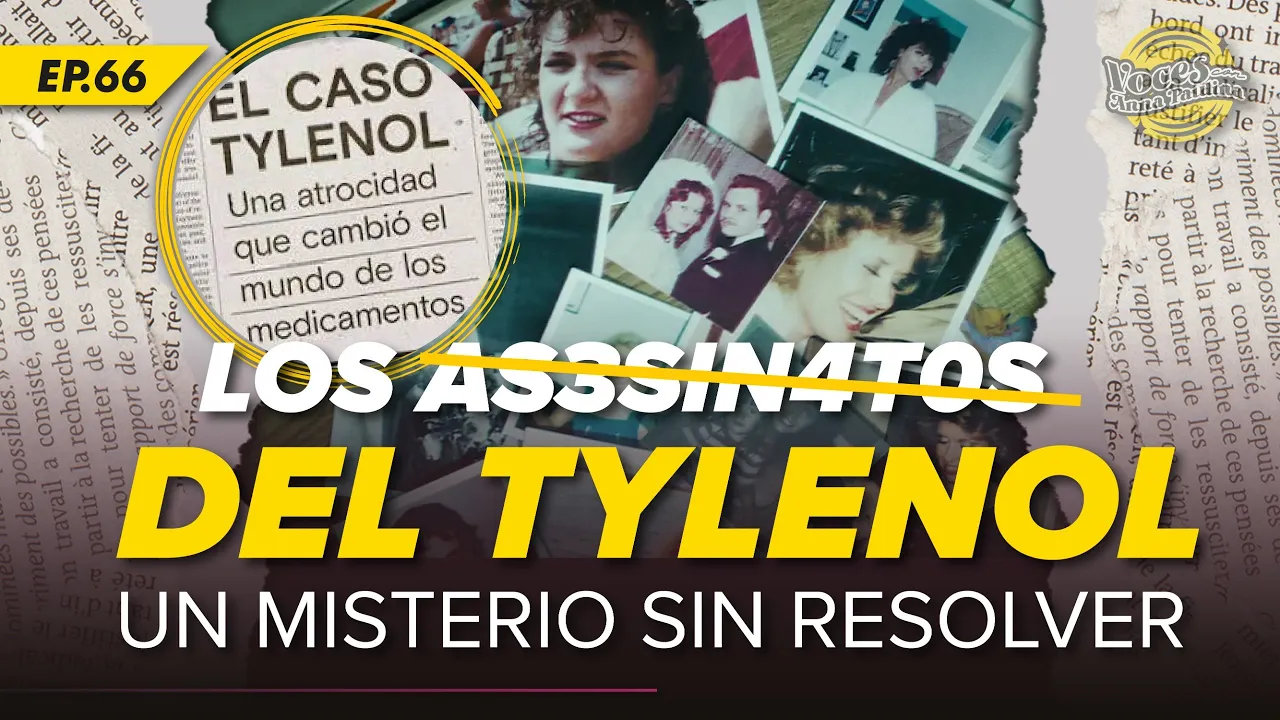


In 1982, seven people died in Chicago after consuming Tylenol capsules laced with cyanide, prompting Johnson & Johnson to recall 31 million bottles worth over $100 million and implement tamper-proof packaging, which became an industry standard and led to FDA regulations for over-the-counter drug safety.
The 1982 Tylenol Cyanide Poisonings: A Crisis Case Study
Added:Fundamentals of Corporate Communication and Public Relations (PR), including how organizations manage information flow during high-stakes emergencies.
The historical standards of the early 1980s pharmaceutical industry, particularly the lack of tamper-evident packaging for over-the-counter (OTC) medications.
Basic concepts of Business Ethics and Corporate Social Responsibility (CSR), specifically the balance between corporate profit and public safety.
An introductory understanding of toxicology, focusing on the highly lethal nature of chemical compounds like potassium cyanide and their immediate physiological impact.
The evolution of federal safety standards and the passage of the Federal Anti-Tampering Act of 1983, which mandated tamper-evident packaging.
Advanced Crisis Management frameworks, such as Situational Crisis Communication Theory (SCCT), which help companies assess reputational threats and choose response strategies.
The operational logistics and economic impact of executing modern, nationwide product recalls within global supply chains.
Comparative analysis of subsequent corporate crises (e.g., the Exxon Valdez oil spill, the Perrier benzene scare) to contrast successful versus failed public relations responses.
The forensic and investigative history of the case, detailing how the FBI profile of the unknown suspect and subsequent copycat crimes influenced federal criminal investigative techniques.
1.4M views37.8Klikes14:22Original Release: 2021-05-09
Wednesday September 29, 1982 12 year old Mary Kellerman woke up not feeling well; she had a runny nose and sore throat.
Her parents allowed her to stay home from school, they suggested that she take Tylenol and go back to bed.
A while later, Mary went into the bathroom and collapsed.
From another room, Mary’s Dad heard a loud thump, as if something heavy had fallen.
He knocked on the bathroom door asking if Mary needed help, but she didn’t answer.
He forced the door open and found Mary sprawled unconscious on the floor.
Worried, her parents called for an ambulance.
The EMTs were unable to revive her, neither were the doctors in the ER when she arrived at Alexian Brothers Medical Center in Elk Grove Village, a suburb of Chicago.
By 9:30 am Mary had been pronounced dead.
The doctors thought it was a stroke, but were going to run some tests since this was an unusual death for a healthy preteen girl.
In Arlington Heights, Illinois, 27 year old postal worker Adam Janus was feeling awful, so he decided to take the day off work.
He took some Tylenol and lay down for a nap.
Later his wife came to check on him and found him unresponsive.
Adama was dead by the time the ambulance delivered him to the ER at Northwest Community Hospital.
Initially Adam was thought to have had a massive heart attack.
But the diagnosis didn’t sit well with Dr. Kim, as Adam was young, healthy and had no history of heart trouble.
Dr. Kim talked to several members of the Janus family who had rushed to the hospital.
That evening Adam’s devastated family gathered at his home to make arrangements.
Adam’s younger brother 25 year old Stanley and his wife 19 year old Theresa had headaches from the events of the day.
Both took Tylenol.
On his way outside to have a cigarette, Stanley collapsed.
They called for an ambulance.
While the paramedics were loading her husband on a stretcher, Theresa fell unconscious too.
Suspecting that the family had been exposed to poison, possibly carbon monoxide, the rest of the Janus family was taken to hospital for observation.
They were given their last rites, just in case.
At the hospital Dr. Kim was shocked to learn that two members of the Janus family that had been perfectly fine hours before, were now in comas.
Sadly, Stanley would die later on that night and two days later, Thereesa would be removed from life support.
Meanwhile a team consisting of police, a nurse from the public health office and an inspector visited Adam’s house to find the contaminant.
They didn’t find anything unusual, but Nurse Jensen, realizing that all three members of the family had taken the same medication, collected the Tylenol bottle.
Back at the hospital Dr. Kim was trying to find a link between the illnesses of all three family members.
When Nurse Jensen suggested Tylenol, several officials were skeptical.
Meanwhile two firefighters, Richard Keyworth and Phillip Cappitelli chatted about the strange calls their departments had received that day.
They realized the similarities between Mary Kellerman’s death and the Janus deaths.
Richard said to his friend “This is a wild stab, but maybe it's the Tylenol."
They ended up contacting Dr. Kim and the police tracked down the Kellerman’s bottle of Tylenol.
Both Tylenol bottles had the same control number: MC2880.
Upon first inspection, they seemed normal, but when capsules were opened the distinctive cyanide scent of bitter almonds filled the air.
Cyanide is a poison that kills rapidly by inhibiting the body’s ability to use oxygen.
Upon testing, each of the Tylenol capsules proved to be laced with enough potassium cyanide to kill thousands.
Sadly within 2 days, three more victims passed away: 27 year old Mary Reiner, who had recently given birth to her fourth child and was experiencing aches and pains, and 30 year old Mary McFarland who felt a headache coming on during a busy shift at the Illinois Bell Phone Center.
After taking Tylenol in the break room, Mary staggered out into the office and collapsed to the horror of her coworkers.
The final victim was Paula Prince, a 35-year-old Chicago flight attendant.
Exhausted after arriving late from a Las Vegas run, she bought Tylenol around 9 PM at a Walgreens near her apartment.
Paula went home, got ready for bed, took some capsules, and collapsed.
Her body was discovered two days later, when her sister came to check on her after not being able to reach her by phone.
On September 30th, the day after Mary Kellerman’s death, Dr. Kim confirmed cyanide in the toxicology results and immediately notified the federal government.
Johnson & Johnson was also alerted.
The public health department held a press conference warning residents of Greater Chicago that Tylenol bottles had been tampered with and cyanide had been found.
At this point in time, closed items at stores just came with a top, and maybe cotton packing if it was medicine.
There were no elaborate seals to prevent anyone from tampering with the product.
By 3pm that afternoon Johnson & Johnson had issued a recall for all Tylenol from lot MC2880.
When news of the poisonings broke, there was panic across greater Chicago.
Deaths and warnings about Tylenol dominated the press.
Police drove up and down streets and issued warnings against using Tylenol through loudspeakers.
They handed out flyers in several different languages.
The medication was pulled from store shelves.
People turned up at local hospitals, convinced they were suffering from cyanide poisoning, when it was an unrelated illness.
Over the next few days Johnson & Johnson halts production of Tylenol capsules.
The FDA [Food and Drug Administration] tests over 1 million capsules and finds no poisonings outside of Chicago.
After Mary Reiner’s and Paula's deaths the authorities realized their Tylenol had a different control number.
Mayor Jane Bryne bans sales of Tylenol in Chicago.
The FDA issues warning to consumers nationwide not to take any Tylenol in capsules.
Several states began to take action on their own and banned sales of Tylenol.
Then on October 5th, about a week after the first death Johnson & Johnson recalls all Tylenol products nationwide.
This is around 31 million bottles valued at more than $100 million.
Consumers are urged to return the medication for a full refund.
The company establishes a 1-800 phone number to directly handle calls from a panicked public, and a media line for communication with reporters.
They offer $100,000 as a reward to anyone who can identify a suspect.
Meanwhile, a taskforce drawn from 15 federal, state and local agencies consisting of 140 people to track down the killer has been convened.
They trace the path of Tylenol sold in Chicago through manufacturing, distribution and retail, talking to hundreds of workers along the way.
Authorities even question store cashiers about any "strange persons" who might have lingered in stores or bought multiple boxes of Tylenol.
The victims’ bottles contain both safe and poisoned capsules, which suggested tampering with the individual bottle.
This and checks at the manufacturing plants quickly ruled out the possibility of a manufacturing defect in the Tylenol.
The most prominent theory was of a lone wolf murderer.
The killer visited each store and paid for the Tylenol, not wanting to risk a shoplifting arrest.
They then emptied a handful of capsules, replaced the acetaminophen with potassium cyanide, reassembled the capsules, sprinkled a few on top of each bottle to insure quick ingestion, and returned the box to its shelf sometime around September 28th.
In 1982, store surveillance cameras and scanner databases just were beginning to come into widespread use.
So it would be entirely possible for an individual to slip boxes back on the shelves and not be detected.
When their search with retailers didn’t turn up anything unusual, investigators widened their probe.
They checked for a possible manipulation of Johnson & Johnson stock prices by an imagined white-collar crime syndicate.
They examined the Puerto Rican terrorist group FALN.
The victim’s families were intensively interviewed.
Previously arrested shoplifters in Chicago got a second look and on and on.
On October 6th, Johnson & Johnson received an extortion letter demanding $1 million to "stop the killings."
The unsigned letter provided a bank account to deposit the money into.
Upon investigation, the authorities determined that the bank account belonged to Frederick Miller McCahey and the letter had been stamped by the postage meter machine at Frederick’s now defunct travel agency.
Chicago authorities grilled Frederick and were able to rule him out.
Then they asked if he had any enemies who would make trouble for him.
Frederick came up with the names Robert and Nancy Richardson.
When his business Lakeside Travel went belly-up, the final wage checks bounced.
Several employees had sued Frederick for wages, but the judge dismissed their claim.
Robert Richardson, the husband of his former employee Nancy had been especially bitter over how things had played out.
A subsequent investigation identified Richard and Nancy as James and LeAnn Lewis.
The couple had previously been involved in several questionable check writing and tax fraud scams but always managed to skip town and stay ahead of the law.
Also James had been charged with the 1978 Kansas City murder of one of his former clients.
However the charges were dropped after a judge ruled that the police search of Lewis' home was illegal.
Unfortunately, the Lewis’ current whereabouts were unknown.
A national manhunt ensued and James’ face was plastered all over the news.
He wrote several letters to various newspapers proclaiming his innocence, but they finally caught him in New York.
Shortly after her was taken into custody LeAnn surrendered.
James was questioned intensively, but the authorities were never able to link him to the Tylenol tamperings.
It seems he had written the extortion letter as revenge in the hopes that Frederick Miller McCahey would be investigated.
James Lewis was convicted of attempting to extort $1 million from Johnson & Johnson after the fact and sentenced to 20 years.
Another prominent suspect was a 48 year-old dockhand named Roger Arnold.
At the Lincoln Park taverns one evening, Roger explained how he would go about committing the Tylenol murders.
Another patron reported him.
Officers arrested him on a four-month-old assault complaint and used the opportunity to interrogate him about the poisonings.
As it turns out, a series of coincidences further implicated Roger.
He worked at a Jewel supermarket warehouse with the father of victim Mary Reiner.
A search of his home revealed several unlicensed guns, how-to crime manuals, a bag of chemical powder, and beakers and funnels.
But the powder turned out to be potassium carbonate, not cyanide.
Other than saying it was for nothing illegal, Roger refused to explain why he had the powder.
Roger was charged with assault and weapons violations, and released on $6,000 bond.
Resentful of the situation, he came to believe tavern owner Marty Sinclair was the one who ratted him out.
On June 18, 1983, Roger shot 46 year old computer consultant John Stanisha, but it was a case of mistaken identity for Marty.
He was convicted in 1984 for second-degree murder and sentenced to 30 years.
Despite all the interviews and tips from the public, the investigation went nowhere.
Only 100 days into investigation, the 140-person team was whittled down to 20 detectives.
Over the next year, the team would slowly grow smaller until the unit was disbanded.
Investigators collected 15,000 pages of documents and interviewed 400 persons of interest out of a pool of 20,000.
Today, more than 35 years later, the case remains unsolved.
Ultimately, Johnson & Johnson ended up testing 1.5 million bottles of Tylenol and finding three unopened bottles contaminated with cyanide for a total of 10 bottles that had been tampered.
The company took a major hit.
In 1981 Tylenol was the No. 1 non prescription painkiller in the US and accounted for 17% of the Johnson & Johnson net income.
After the recall, Johnson & Johnson share’s of the $1.2 billion painkiller industry plunged from 37% to 7%.
Many in the financial industry thought that Johnson & Johnson would never recover.
Two months later, Johnson & Johnson relaunched Tylenol in tamper proof packaging amid an extensive media campaign.
The company also introduced price reductions and a new version of their pills: the “caplet” — a tablet coated with slick, easy-to-swallow gelatin that would be hard to tamper with.
Within a few years, the company had completely bounced back and gained a good reputation as the company had chosen customer welfare over business.
Johnson & Johnson’s tamper proof packaging soon became an industry standard.
The same year, the FDA issued its first regulations for tamper-resistant packaging of over-the-counter drugs.
Also in 1983, Congress passed a bill that made it a federal crime to tamper with medications and other consumer goods, previously it had only been a misdemeanor.
The families of the victims sued Johnson & Johnson asserting that the pharmaceutical company should have been prepared for product tampering.
In 1991, the families of all 7 victims agreed to a settlement for an undisclosed sum.
One of the provisions of the settlement was that annuities be created to pay the college costs of the victims' eight children.
James Lewis was paroled in October 1995 after serving a bit more than half of his 20-year sentence.
Over the years he has had several provocative interviews with authorities, explaining that during his years in prison, he had a lot of time to think about the crime and has some insights as to how it may have been committed.
In 2009, the FBI reopened the Tylenol case.
They searched James Lewis’s home in Cambridge, Massachusetts and seized several items including an old Macintosh computer.
In 2010, James was ordered to provide fingerprint and DNA samples to authorities.
In 2011, federal investigators requested a DNA sample from the Unabomber, Ted Kaczynski, who lived in the Chicagoland area at the time of the murders.
Some critics think investigating James Lewis and Ted Kaczynski are just distractions to keep the public focused on the lone wolf theory and protect Johnson & Johnson from liability.
As long as the FBI has the case open, access to evidence and documents is limited.
Some people have come to believe that the tampering occurred in the distribution channel of the Tylenol manufacturer.
At the time, little was reported on a strange incident the occurred the day before the first murder.
Around 2:30 am on September 28, 1982 two Kane County Sheriff Deputies, Al Swanson and Joseph Chavez stopped at Howard & Johnson’s hotel and diner in a suburb of greater Chicago to grab a bite to eat.
On a grassy strip near the parking lot they noticed two boxes marked with the words “EXTRA-STRENGTH TYLENOL CAPSULES”.
Hundreds of capsules were scattered on the ground, as well as a pile of white powder.
The deputies scraped up some of the powder and rubbed it between their fingers.
They assumed a drug dealer cutting illegal drugs had dumped the suspicious items.
Not aware of any particular crime, they simply left the boxes.
No long after eating, both men became sick.
Al had extreme nausea, dizziness and vomiting, and Joseph noticed pain and swelling in his arm.
They rushed away without making a connection with the symptoms and the packages.
Al couldn’t finish his shift.
Joseph finished his shift with the arm pain continuing.
The next morning both were hospitalized.
It wasn’t until a few days later, they realized the implications.Authorities returned to the parking lot, but by that time most of the evidence was gone.
Michelle Rosen, daughter of victim Mary "Lynn" Reiner, also believes the killer was someone involved with Johnson & Johnson.
In 2015, she created a Kickstarter campaign to raise money for a film to be made that would request the FBI close the case and unseal documents.
A short documentary pointed out some of the inconsistencies in the investigation.
Unfortunately, the campaign didn’t raise the necessary funds.
There are many who think that the case can never be truly solved.
The FBI turned over all the recalled bottles for testing to the liable corporation: Johnson & Johnson.
The company tested less than 1% of the bottles and destroyed the rest.
Testing all of the bottles might have revealed that a significant amount of them contained cyanide filled capsules and could have proven that the tampering took place before the bottles reached stores.
Now watch one of these great vids.
Radiation poisoning is one of the worst ways humans can die.
Death by Polonium-210 or How Russia killed one of its spies.
Up Next

6:20
Elon Musk Brand Crisis: Tesla's Market Risks | Wedbush Ives
@CNBCtelevision
197.7K views•2025-03-20

12:54
Triumph of Orthodoxy Icon: Byzantine Art & History Explained
@BenCallan
2.1K views•2024-08-06

9:49
FastAPI vs Flask vs Django: Choosing the Right Python Web Framework
@TechWithTim
302.5K views•2024-05-26

1:42
Game of Thrones Opening Credits: A Cinematic Analysis
@gameofthrones
46.3M views•2011-04-18
Related Study Plans & Knowledge Roadmaps
Structured learning paths in General & Interdisciplinary Studies
general-studies
Elevator Engineering: History, Physics & Cities
01From Hoists to Safety Brakes: The Dawn of Vertical Lift
02Hydraulic vs. Traction: The Engineering Physics of Elevators
03Modern Speed, Safety, and Algorithms
+ 2 more learning modules
12h5 modules
Explore Roadmap
general-studies
Rubber: Material Science, History & Geopolitics
01Origins of Natural Rubber & Mesoamerican History
02The Chemistry of Natural Rubber & Vulcanization
03The Geopolitics of the Rubber Boom & Colonization
+ 2 more learning modules
12h5 modules
Explore Roadmap
general-studies
Containerization: Evolution, Logistics & Trade
01Ancient Trade & Bulk Cargo: Amphorae to Barrels
02The Industrial Revolution & Cardboard Packaging
03The Containerization Revolution: Malcom McLean
+ 2 more learning modules
12h5 modules
Explore Roadmap
general-studies
Textile Tech: Evolution, Labor & Global Impact
01Pre-Industrial Textiles: Handloom & Cottage Industry
02Mechanization: The Spinning Jenny to the Power Loom
03The Factory System & Global Labor Transformation
+ 2 more learning modules
10h5 modules
Explore Roadmap