


























Economic systems answer three fundamental questions—what to produce, how to produce it, and for whom to produce it—by organizing resources through different mechanisms; goods are classified into four categories based on two characteristics: rivalrousness (whether one person's consumption prevents others from consuming it) and excludability (whether people can be prevented from accessing it), resulting in private goods (excludable and rivalrous), public goods (non-excludable and non-rivalrous), common goods (non-excludable but rivalrous), and club goods (excludable but non-rivalrous); the four main economic systems are traditional economy (guided by custom and tradition), market economy (consumer-driven with private ownership), command economy (government-controlled), and mixed economy (combination of market and government elements).
Economic Systems & Types of Goods: Macroeconomics Explained
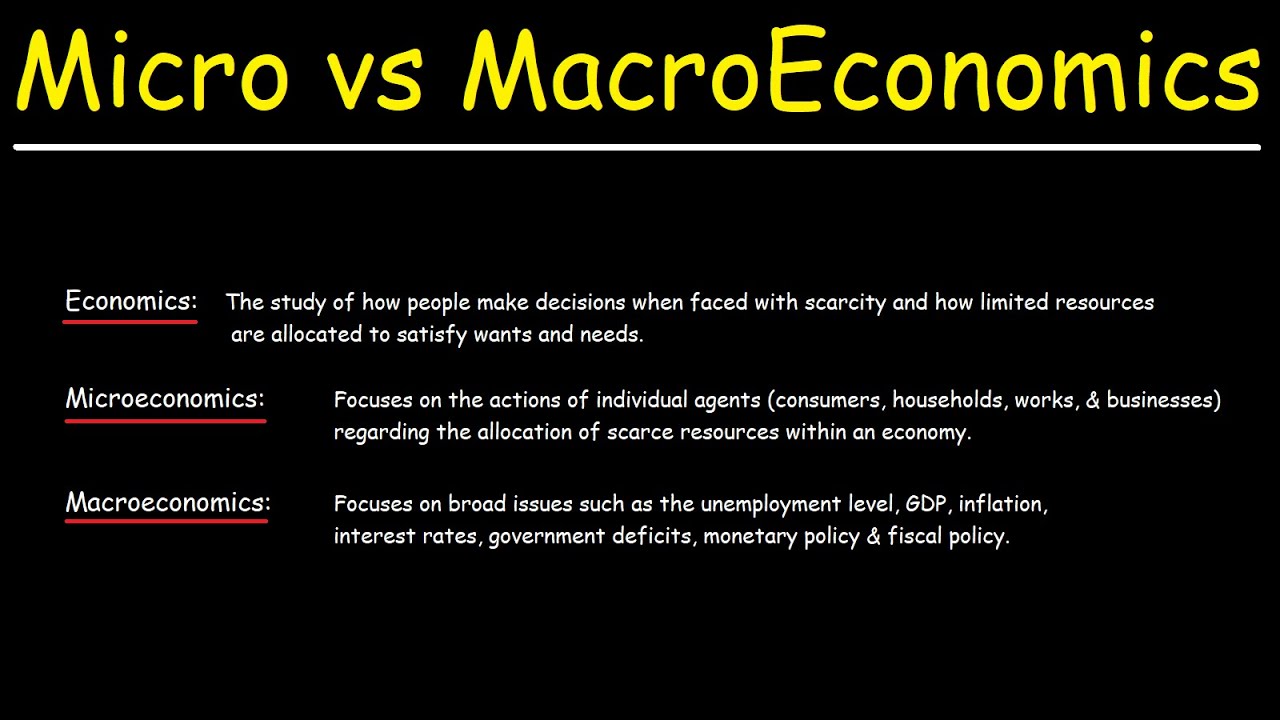
Added:So far we have been focusing on microeconomics, or the part of economics concerned with individuals and their decisions.
For the next significant portion of the series, we will be looking at macroeconomics, or the study of the economy as a whole.
We will find that it’s still about choices and economic behavior, but instead of looking at how economics affects individual decisions, we will be looking at how economies affect entire countries.
Any study of macroeconomics often begins by looking at economic systems.
An economic system is a way that resources get around in a society.
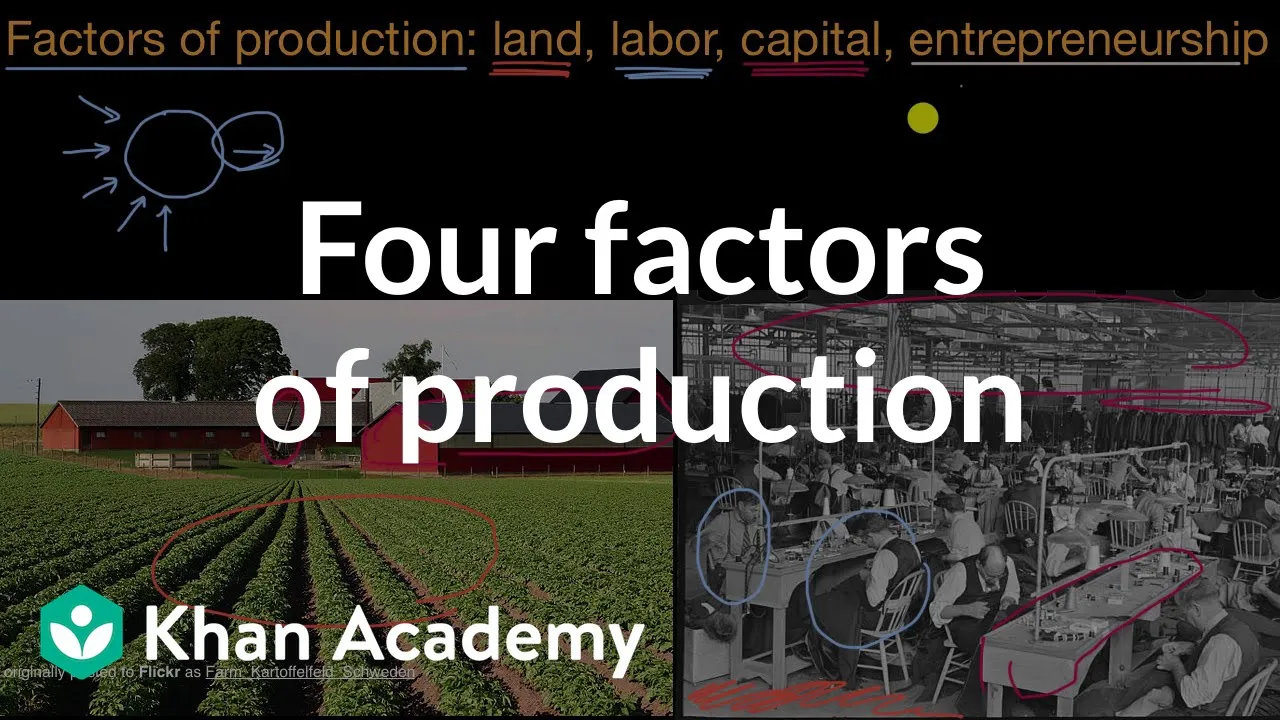
Economic systems regulate the factors of production that we’ve been discussing, or land, labor, physical capital, and human capital.
There are three questions that can serve as a guide for which economic system to choose when a society decides to produce things.
These are generally as follows.
First, what should we produce?
Second, how should we produce it?
And third, for whom should we produce it?
To answer the first question, we know that all people need food and shelter, so that has to be produced.
However, things get more complicated when we attempt to figure out how many resources we should devote to national defense, education, or health care.
To answer question two, there are so many ways to produce goods and services, and all require land, labor, and capital, so this requires many trade-offs.
For question three, we know that all people get food and shelter, but how much income should people get for supplying the factors of production, and who owns the factors of production?
The answers a society lands on for these questions regarding what should get produced, how it should get produced, and for whom it should be produced tell us a great deal about that society’s values.
In order to figure out what these values are, and help societies determine the best economic system for them, it helps to know the four different types of goods and services.
Generally they are presented in a table like this.
Let’s define some terms.
Rival goods are those for which one individual’s consumption of the good prevents simultaneous consumption of the exact same good by other consumers.
Food is an obvious example.
If you buy some food and eat it, nobody else can eat that food.
Non-rival goods are just the opposite.
Consumption does not limit the ability of others to consume it.
Think of Netflix.
When you get a Netflix subscription, it in no way interferes with the ability of others to get a Netflix subscription, and watching movies on Netflix does not deplete the amount of movies available on Netflix to watch.
Non-excludable goods are those which can’t exclude any individuals or groups from using them.
Think of public roads, absolutely anyone can drive on them.
Excludable goods, on the other hand, are those that some are restricted from using, often due to affordability, like an expensive theme park.
Now let’s combine these concepts.
Private goods are those that are both excludable and rival.
They have to be bought before they can be consumed.
Therefore, anyone who can’t afford them is excluded from consuming them.
And once purchased, the ability of others to acquire the good becomes more limited.
Examples include food, clothing, cars, and personal electronics.
Public goods are those that are non-excludable and non-rival.
That means no one can be prevented from consuming them, and anyone who consumes them can do so without reducing their availability to others.
Examples include air, national defense, and knowledge.
Common goods are products or resources that are non-excludable but rival.
This means pretty much anyone can use them, but if one consumes them, their availability to others is reduced.
Examples include fish, timber, and coal.
And finally, club goods are those that are excludable but non-rival.
We can be prevented from using them, but their consumption does not reduce their availability to others.
Club goods are sometimes referred to as artificially scarce resources, and examples include country club memberships, satellite TV, toll roads, or even a YouTube Premium subscription.
Now, politicians and government officials often like to use words like capitalism, socialism, and communism when discussing economic systems and how to best help the economy, but those three words have different definitions to different people.
In particular, communism is also a social and political theory, so it makes the word even more confusing when definitions are mixed up.
In addition, because the words “capitalism”, “socialism”, and “communism” are often weaponized and used to attack and marginalize others, even economists can be guilty of misusing them.
For example, people often seamlessly interchange communism and totalitarianism, or capitalism and fascism, as if they mean the exact same thing.
For this reason, in this series, we will not be using the terms capitalism, socialism, or communism to characterize economic systems.
These will instead be discussed in the upcoming series on political science.
Instead for our purposes, when looking at factors of production, there are four distinct economic systems.
And remember, all of them have to answer the three economic questions that we mentioned earlier.
The oldest economic system in history is a traditional economy.
It relies on habit, custom, or ritual to guide the factors of production.
It’s informal, revolves around the family unit or tribe, and there’s usually no currency.
There is little room for innovation or change.
Traditional economies are usually found in communities that tend to stay relatively small, close, and isolated from the rest of the world.
The second oldest economic system in history is a market economy.
In a market economy, consumers guide the factors of production.
It’s bottom-up.
In a market economy, individuals and privately owned businesses make their own decisions about what to buy and sell.
Market economies are also often called capitalist economies because the capital that entrepreneurs invest in businesses is an important part of the system.
Command economies, also known as centrally planned economies, are top-down.
A central authority, usually the government, guides the factors of production, and there is usually little input from the people.
Command economies operate in direct contrast to market economies, by going against private property, free market pricing, competition, and consumer choice.
Finally, a mixed economy is a combination of the other three economies.
Sometimes the government steps in to try to guide the factors of production.
Sometimes it’s individuals and businesses.
Sometimes it’s even based on traditional values.
Generally, however, it’s any economic system that has some market-based elements and some level of government involvement.
It’s also the most common type of economy around the world.
And this makes sense, since no economic system is perfect, which we will learn as we move through the series.
In conclusion, every society has different values, and those values ultimately determine how much influence governments should have in an economy, which is a major factor in determining social dynamics.
Up Next

Common Pool Resources: Causes and Solutions to Tragedy of the Commons
@ibeconguru
9.2K views•2023-02-20

Impact of Yuan in Indo-Russian Trade Amid Sanctions
@WION
261.9K views•2022-07-01
Behavioral Economics Explained: Rationality, Nudges, and Risk
@crashcourse
1.1M views•2016-03-12

The Age of Easy Money: Fed & Inflation | Full Documentary
@frontline
21.2M views•2023-03-15
Related Study Plans & Knowledge Roadmaps
Structured learning paths in Economics