







![Aula 12.1 - Relatividade - Precedentes [HD]](https://i.ytimg.com/vi/bDXRhTwJmHs/maxresdefault.jpg)
















Apparent superluminal motion in quasars occurs when blobs of plasma move at velocities close to the speed of light (beta approaching 1) at small angles to the line of sight, causing the observed sideways motion to appear faster than light due to the compression of time intervals as the light from later positions almost catches up with light from earlier positions; this effect is described by the formula v_apparent = (beta sin theta) / (1 - beta cos theta) × c, where theta is the angle to the line of sight and beta is the velocity as a fraction of light speed.
Why Quasar Jets Appear to Move Faster Than Light | Superluminal Motion Explained
Added:Einstein's Special Theory of Relativity, specifically the postulate that the speed of light (c) is the absolute cosmic speed limit.
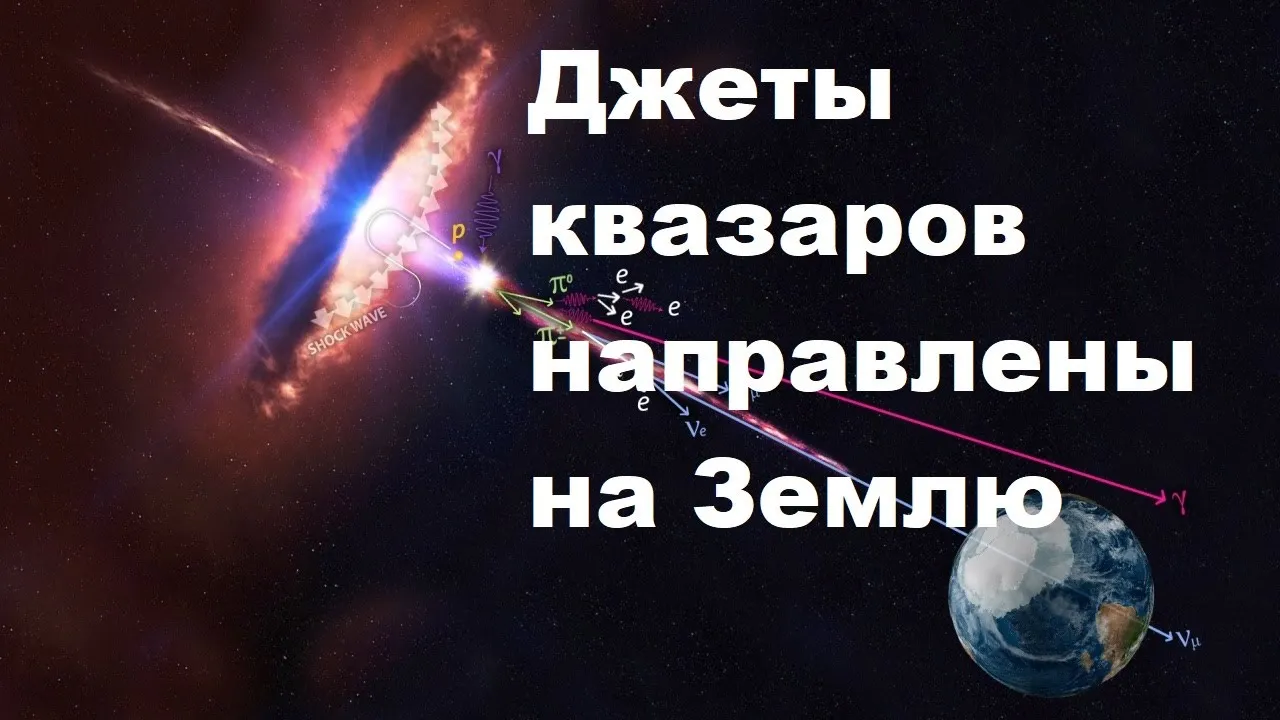
The basic anatomy of Active Galactic Nuclei (AGN) and how supermassive black holes produce relativistic plasma jets.
The concept of finite light travel time and how observational delays occur when objects move at fractions of the speed of light.
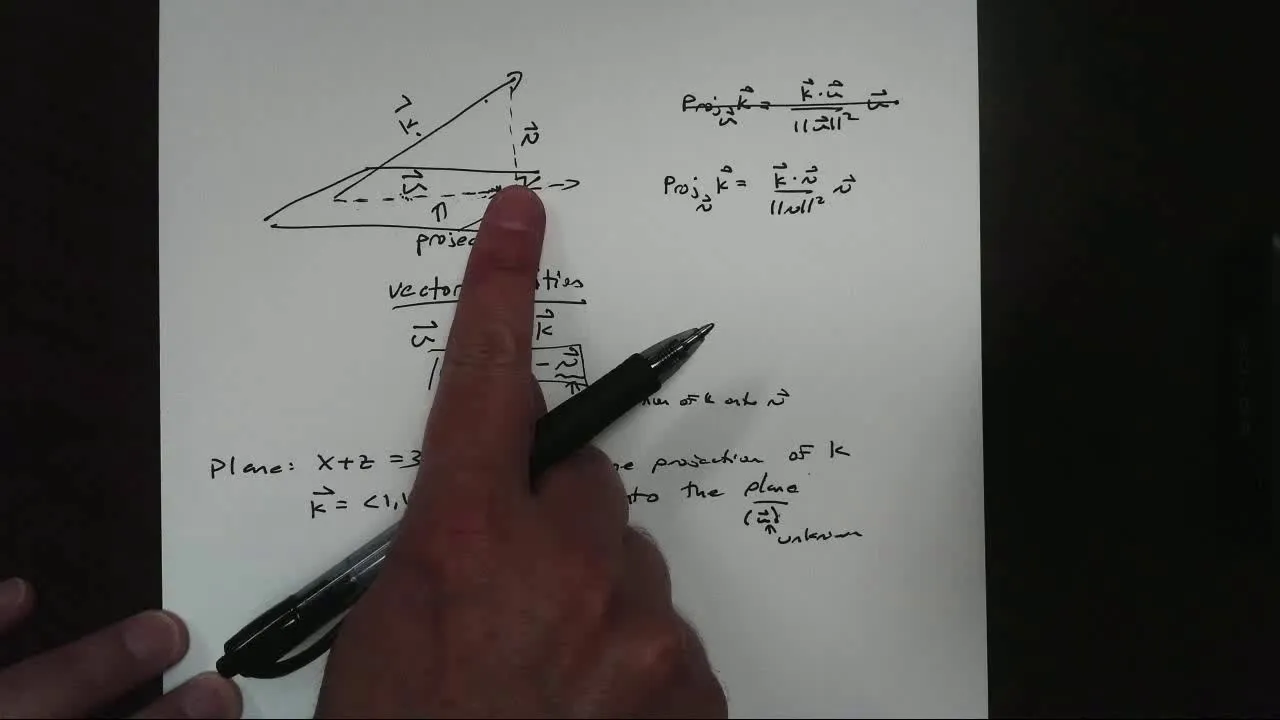
Basic vector projection and trigonometry, particularly how a 3D velocity vector projects onto a 2D plane of observation.
Relativistic beaming and Doppler boosting, exploring how the apparent brightness and frequency of jet emissions are altered by high-speed motion.
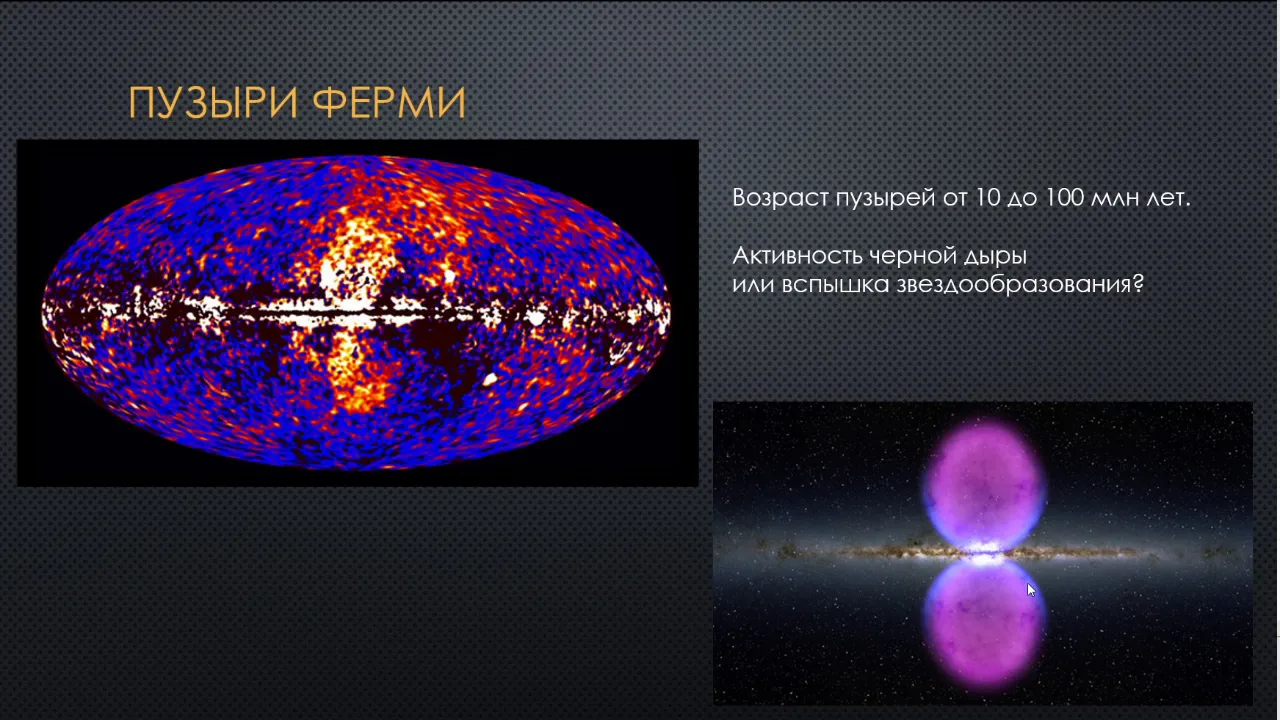
The Unified Model of Active Galactic Nuclei (AGN), which explains how the observer's viewing angle classifies objects as blazars, quasars, or radio galaxies.
Very Long Baseline Interferometry (VLBI) and high-resolution radio astronomy techniques used to measure milliarcsecond structural changes in jets.
The physical mechanisms of particle acceleration and emission processes (such as synchrotron radiation) within relativistic shocks.
992 views1likes8:37Original Release: 2020-01-22
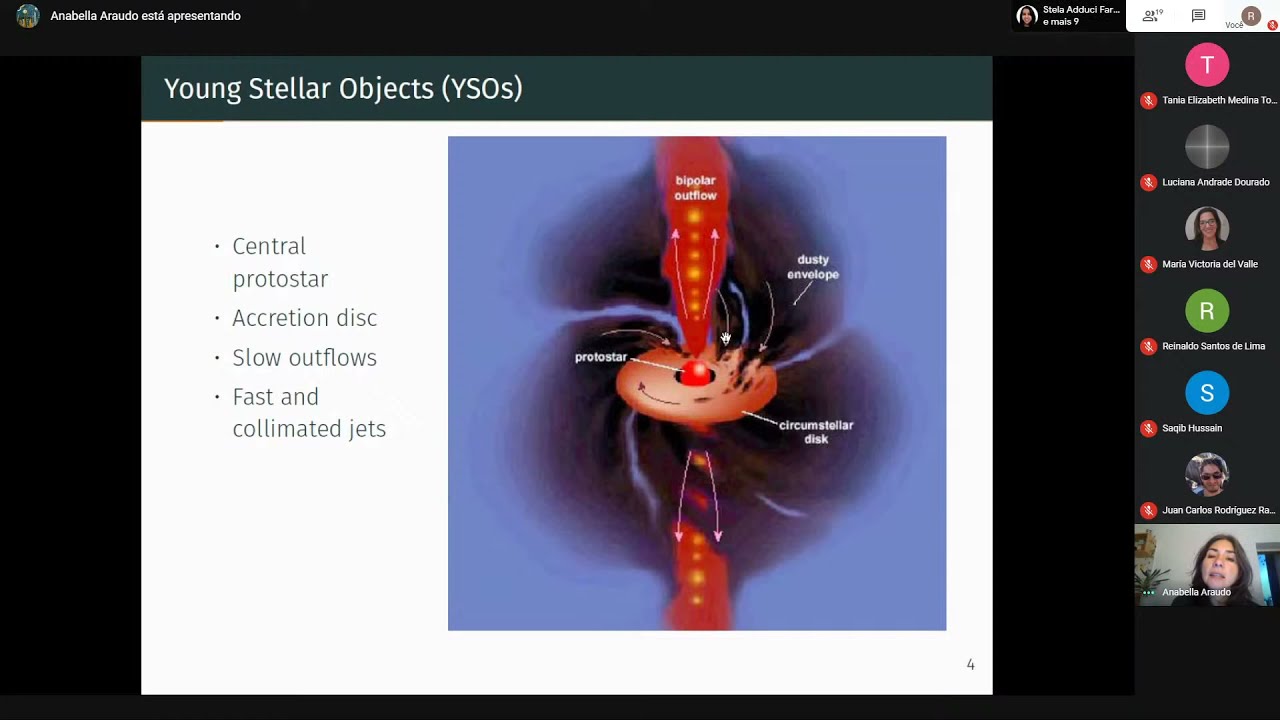
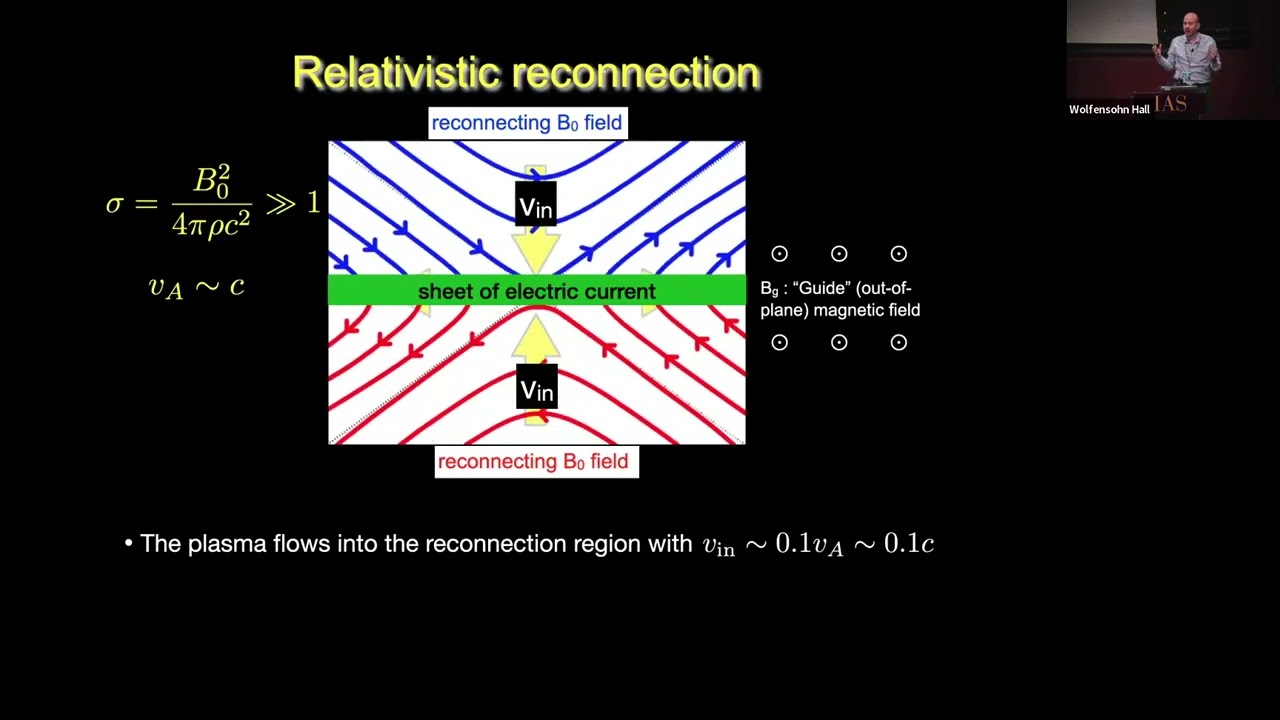
so how can we explain this apparent faster-than-light motion that's impossible well to get our heads around this we have to think about what precisely we are measuring but we'll do is we'll have a telescope a radio telescope freehoff to be precise a network of radio telescopes very long baseline interferometry and we will see the nucleus of our quasar and a blob and at one time it's here at a later time it's moved to there now what we can measure is the change in position Delta R and we know the change in time delta T that's the time between our observations okay and we therefore infer that the velocity equals Delta R divided by delta T seems pretty straightforward but there are two complications here one involving the R and one involving the T let's start off with a complication involving the R we are measuring the apparent sideways motion but in addition to moving sideways away from the quasar these blobs maybe move you towards us or away from us so let's imagine we're looking from over here and we have a crazed R and it's squirting blobs out at this angle here or we actually see is this component of the motion we don't see that component of the motion at all so that distance is R and this angle here the angle to the line of sight is Theta what we observe as Delta R is actually dot R observed is actually the real R times sine theta if something's moving straight towards us for example we won't see it move at all the blob will just sit on top here if it's at right angles then the our observed is the same as the are actually moved and if it's somewhere in between it's going to be some fraction even by a sine theta so does that solve our problem well no that's gonna make dot are observed smaller so that's going to mean that velocity will appear less and the true velocity it's not going to make it appear more than the true velocity so that means it must going even faster than light to produce what we observe if it's up some angle so that's important but it doesn't really help us what else can we look at here well let's see what's wrong with the delta T by delta T remember we're taking two observations at two different times separated by delta T and we see the radiation was coming from there is now coming from there but there's a complication here once again let's imagine that a quasar is firing a blob of plasma at close to the line of sight and once again we have an angle theta in here now you might think that the time that elapses for the quasar between there and there is the same at the time elapses on earth between the observations but you'd be wrong because let's imagine some light sets out from here it's going to travel this distance to reach the earth but light coming from here only has to travel a smaller distance to reach the earth who's got a smaller distance to go in that light it will appear relatively earlier so what is the Delta T observed well imagine we have a pulse that sets out from here and there's some time there T and then another pulse gets from there and the pulse that set out from here you have traveled a distance CT meanwhile this blob has travel distance along the line of sight what is that length there which is R cos theta so the light coming from here has a head start on the light coming from there it's not starting from the same place so the time interval that we observe on earth will not be the time interval that takes like to get from there to there but only the time in front takes light to get from there to there that distance there is going to be CT minus R cos theta okay so let's combine these things apparent velocity the fee observed it's going to be apparent distance which is going to be R sine theta over the apparent time apparent time is going to be C t minus R and R is just V times T V T cos theta or divided by C that's the distance light has to go divided by the speed of light and also up here we know that R is actually just equal to V T again so that comes out let's make the substitution beta equals the fraction of the speed of light that comes out as beta sine theta all over 1 minus beta cos theta times the speed of light so that's how fast things are going to appear to travel now the stop the sine theta is going to make things appear slower but the bottom the 1 minus beta cos theta if beach was quite close to the speed of light and theta is small and therefore cos theta is close to 1 you hidding 1 minus a number that's almost 1 so that could make the bottom very small and make the apparent velocity very large isn't enough to cancel out the sine theta effect well let's do a calculation of that I've produced plots of the apparent velocity as a function of angle to the line of sight for different values of beta here's a plot for b2 equals North Point 7 so something traveling at 70 percent of the speed of light and what you can see here is that an angles of around 40 to 50 degrees the apparent motion is actually faster than the true motion and small angles or large angles it's much less a speed of 0.7 see wasn't enough to give us a parent superluminal motion but here's the plot for 0.9 see and you can see now all those angles are between 20 and 30 degrees field line of sight the apparent velocity can be up to twice the speed of light so we are getting superluminal motion if we take the velocity even further steel all the way up to 0.99 percent of the speed of light you can see that you can get extremely fast speed seven times the apparent speed of light for angles that are only about ten degrees off the line of sight so that's our explanation for this apparent superluminal motion the quasar is firing something very close to the line of sight to the earth because it's so close to the line of sight of the earth it's apparent sideways speed is reduced but on the other hand the light from this thing almost catches up with the light from earlier epochs which means that the time is enormous decompressed if we take two observations a year apart it could well be in light that was actually emitted a hundred years apart but because it's going to 99% of the speed of light it's almost caught up on the light from the earlier bits and so it turns out that four angles not quite on the line of sight but only a small way off and speeds very close to the speed of light this effect of catching up with its own light and therefore compressing the time more than compensates for the small angle and gives us motions which can be extremely fast it also explains the one-sided nature of the Jets probably these quizzes are also firing a jet out that direction but if you remember from relativity when something's moving close to the speed of light most of its radiation is beamed out in narrow angle forwards so what's happening is light from blobs going this way mostly comes out in these directions and the light from blob in this direction mostly comes out in these directions so we just can't see the blobs over here they're beaming the light in a different direction we only see the ones on this side which explains why the Jets are so one-sided the compression of time because it's almost catching up with its own light also explains how these things can vary so very very fast they're actually not varying that fast it's just that they're varying and moving towards us so the apparent time of variation is compressed because of the motion so it all seems to fit together
Up Next
4:41
Double Slit Experiment Explained: Quantum Physics Animation
@ExtraOrdinaryWAVE
85.1K views•2008-01-25

12:53
21cm Hyperfine Transition in Neutral Hydrogen: Radio Astronomy Basics
@AaronRobertParsons
12.4K views•2011-10-13

32:32
NMR Spin Physics I: Zeeman Effect, Resonance Condition & Larmor Frequency
@nptel-indianinstituteofsci8064
2.3K views•2024-01-17

27:14
Entropy and the Second Law of Thermodynamics Explained
@veritasium
27.5M views•2023-07-01
Related Study Plans & Knowledge Roadmaps
Structured learning paths in Physics
physics
Nuclear Physics (Decay, Fission & Reactors)
01Atomic Structure and the Binding Force
02Radioactive Decay and Half-Life
03Nuclear Fission Mechanics and Chain Reactions
+ 2 more learning modules
12h5 modules
Explore Roadmap
physics
Soft Matter (Polymers, Colloids & Rheology)
01Foundations of Soft Matter & Thermal Forces
02Polymer Physics and Macromolecules
03Colloids, Surfactants, and Self-Assembly
+ 2 more learning modules
38h5 modules
Explore Roadmap
physics
Analytical Mechanics: Lagrangian & Hamiltonian
01Mathematical Foundations: Calculus of Variations
02From Newtonian Mechanics to Constraint Dynamics
03The Principle of Least Action & Lagrangian Mechanics
+ 3 more learning modules
28h6 modules
Explore Roadmap
physics
General Relativity (Spacetime & Cosmology)
01Foundations of Relativity: Special Relativity
02The Geometry of Spacetime: Equivalence Principle & Curvature
03Einstein's Field Equations: The Mathematics of Gravity
+ 2 more learning modules
55h5 modules
Explore Roadmap