












Glycolysis is the first stage of cellular respiration occurring in the cytoplasm, where one glucose molecule is anaerobically converted into two pyruvate molecules through a 10-step process involving 10 enzymes; this pathway yields a net gain of 2 ATP molecules and represents the most evolutionarily ancient metabolic process, serving as the foundation for energy production in all living cells.
Glycolysis Explained: Cellular Respiration Part 1 (Steps & Enzymes)
Added:Understanding the basic structure of a cell, particularly the cytosol where glycolysis takes place.
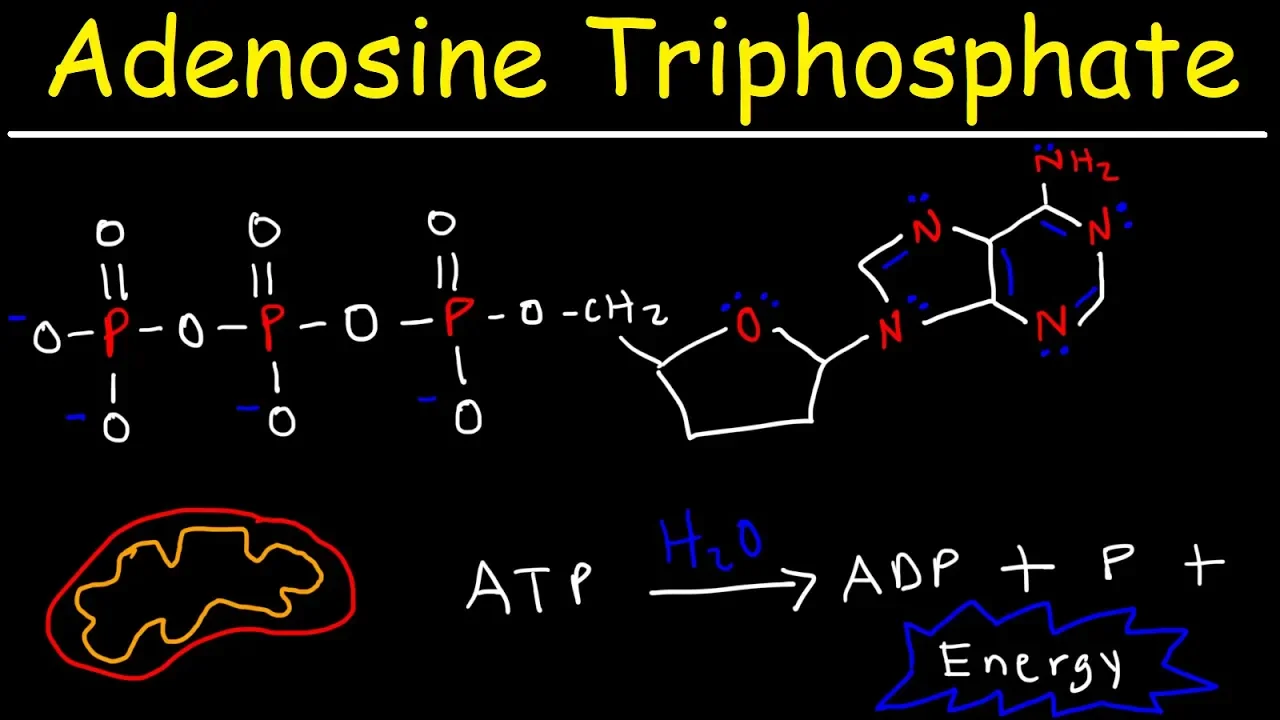
The concept of ATP (Adenosine Triphosphate) as the cell's energy currency, including how energy is stored and released.
Basic knowledge of organic chemistry and biomolecules, specifically the structure of the six-carbon sugar, glucose.
The fundamentals of enzymes and how they catalyze biochemical reactions, including the concept of substrates and products.
The Link Reaction (Pyruvate Oxidation) and the Citric Acid (Krebs) Cycle, which represent the next phases of aerobic cellular respiration.
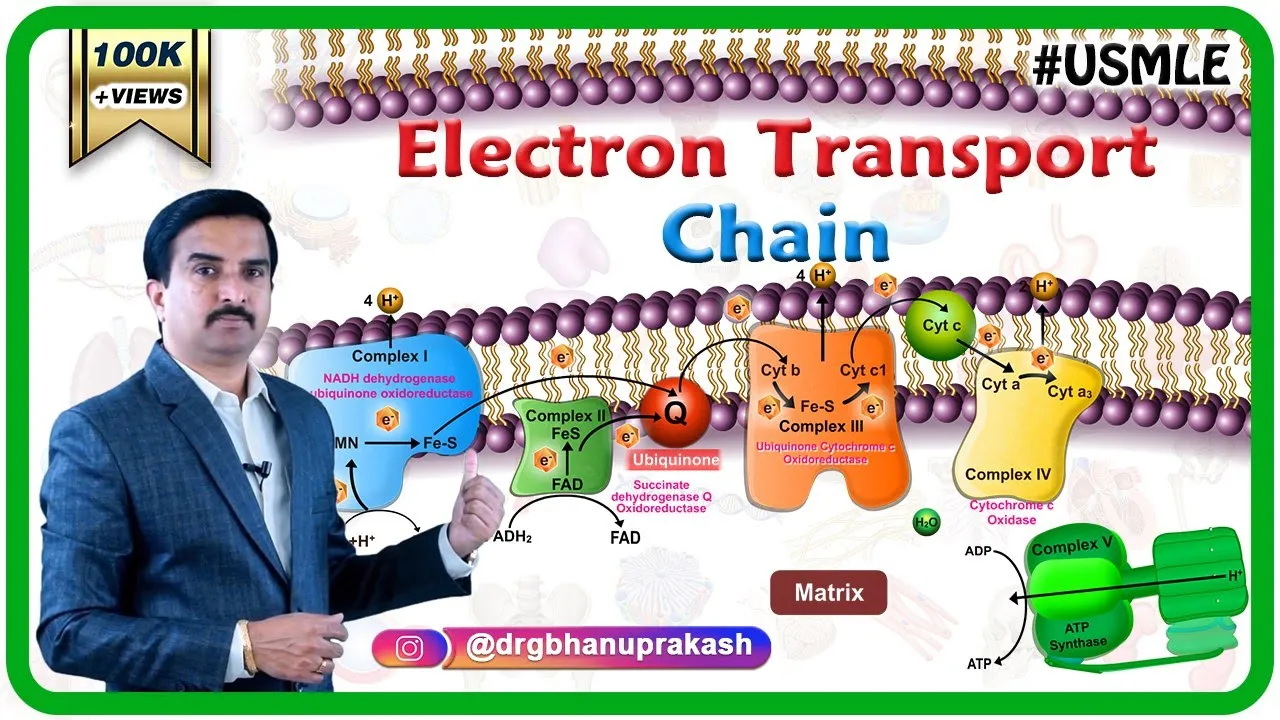
The Electron Transport Chain and oxidative phosphorylation, to understand how NADH generated in glycolysis helps produce massive amounts of ATP.
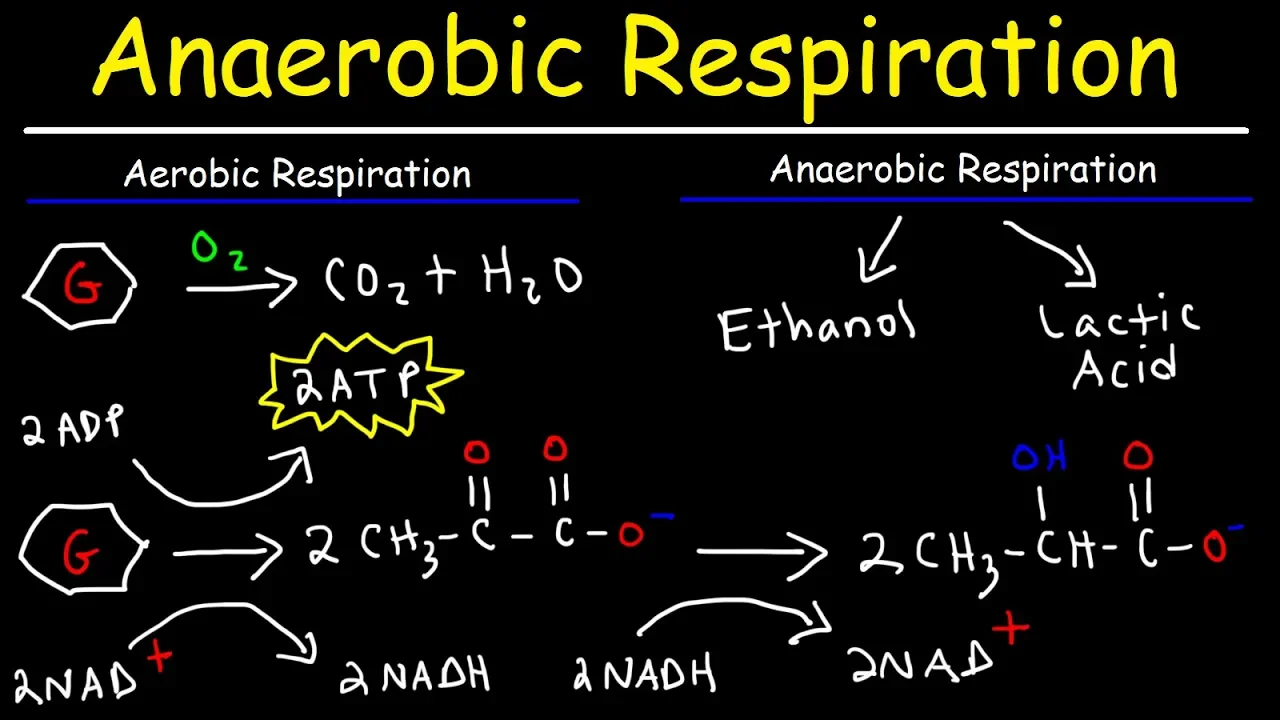
Anaerobic respiration and fermentation pathways (lactic acid and ethanol fermentation) that occur when oxygen is limited.
The regulation of glycolysis, including feedback inhibition and the pivotal regulatory role of the enzyme phosphofructokinase (PFK-1).
950.9K views18.4Klikes8:11Original Release: 2016-09-14
Hey it's professor Dave, let's talk about glycolysis.
We need energy to do literally anything, from running a race, to simply breathing. And every cell in your body is furiously producing all this energy all the time.
Where does this energy come from? Well technically it arrives from the sun.
The sun is releasing enormous amounts of energy as a byproduct of nuclear fusion reactions, and that energy makes its way to earth, where it can be absorbed by plants through photosynthesis, which we will discuss later.
Plants use sunlight as well as carbon dioxide and water to make glucose, and it is all of this glucose, among other biomolecules, that becomes the starting material for metabolic processes in our bodies. This degradation of biomolecules to generate energy that cells can use is called cellular respiration, or sometimes more specifically, aerobic respiration. Let's see how this works, looking at glucose as the substrate. Aerobic respiration requires oxygen so any organism that breathes in oxygen from the atmosphere is doing so in order to facilitate aerobic respiration. Glucose, which we can either consume as starch or break off from glycogen stored in the cell, can be converted through metabolic pathways in the presence of oxygen into carbon dioxide, which we breathe out, water, which is most of what we are, and energy, the energy we need to think and move.
This is not unlike the combustion reactions that happen in an engine, so it's a reasonable analogy to view biological organisms as machines.
The electron exchanges that occur throughout these metabolic pathways utilize the electron carrier NAD+ and its other form, NADH. This is a dinucleotide with an interesting base, nicotinamide, that can exist either as NAD+, with a positively charged nitrogen atom, or if reduced it can become NADH. This transfer, facilitated by an enzyme called dehydrogenase, helps catalyze the breakdown of glucose. Cellular respiration happens over three major pathways. There's glycolysis, the citric acid cycle, and oxidative phosphorylation.
Let's focus on these one at a time.
Glycolysis comes first, and it happens in the cytoplasm of the cell. This is the process by which glucose molecules are split into two pieces called pyruvate.
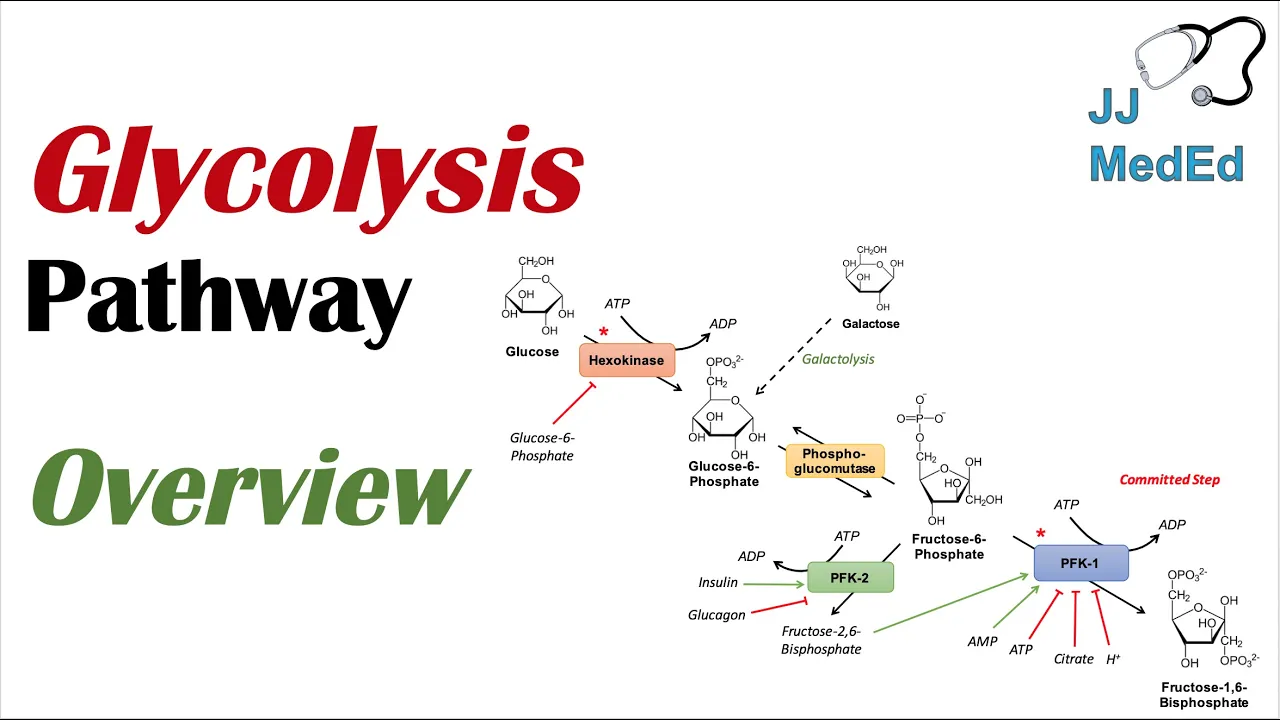
This first pathway is actually anaerobic, meaning it does not require oxygen, so it is the most evolutionarily ancient metabolic pathway, occurring in even the simplest cells. In this pathway, one glucose molecule can yield a net of two ATPs. It requires 10 enzymes to happen which catalyze each of the 10 steps, as well as an investment of two ATP molecules in the preparatory phase to get four ATPs back over several steps in the payoff phase. The names and details of each individual reaction may not be of interest to every viewer, but in case they do interest you, here is a brief overview of each step. First the hexokinase reaction. The enzyme hexokinase phosphorylates the oxygen on carbon 6 to make glucose 6-phosphate.
The polar phosphate group traps the molecule inside the cell and also reduces the concentration of regular glucose inside the cell, which encourages more glucose to enter by diffusion. This step costs 1 ATP, which provides the necessary phosphate group for the reaction. Next, glucose-6-phosphate isomerizes to become fructose-6-phosphate, a process which is catalyzed by phosphoglucoisomerase.
After that is another phosphorylation, this time on the carbon 1 hydroxyl which gives us fructose-1,6-bisphosphate. This step is catalyzed by phosphofructokinase 1 and it will cost another ATP. Now this molecule is ready to be cleaved into two smaller ones. Fructose bisphosphate aldolase is a lyase enzyme that will split fructose-1,6-bisphosphate into a molecule of glyceraldehyde-3-phosphate, or GADP, and a molecule of dihydroxyacetone phosphate or DHAP. The DHAP will be converted into another molecule of GADP by the enzyme triosephosphate isomerase, which leaves us with two molecules of GADP.
That's the end of the five-step preparatory phase, with two ATPs spent to achieve the two phosphorylations. Now it's time for the payoff phase.
Let's just look at one of our two GADP molecules from the preparatory phase, and we see that the first thing that will happen is an oxidation to become 1,3-bisphosphoglycerate. This requires NAD+ and a free phosphate, or inorganic phosphate to occur, and the enzyme involved is called glyceraldehyde phosphate dehydrogenase. Next, a phosphoglycerate kinase will catalyze transfer of a phosphate group to ADP to become 3-phosphoglycerate producing one ATP in the process. Since each of the two GADP molecules will make one ATP, that's a total of two ATPs, for half the total payoff of glycolysis.
Then, phosphoglycerate mutase transfers the remaining phosphate from this hydroxyl to the next one over to make 2-phosphoglycerate.
Then, enolase catalyzes a dehydration, resulting in the loss of this hydroxyl group which will produce phosphoenolpyruvate. And lastly, the remaining phosphate group is transferred to an ADP by pyruvate kinase, generating another ATP and the pyruvate we discussed before. So altogether it's a 10-step process. The first five steps comprise the preparatory phase, which take one molecule of glucose and produce two molecules of GADP. This will cost two ATP. Then the other five steps make up the payoff phase, in which each molecule of GADP will be converted into pyruvate, producing two ATP each in the process, for a total of four, meaning the net energy production from one molecule of glucose is two ATP. If you are required to memorize basic facts about glycolysis this should probably suffice, but if you wish to memorize this process in more detail, here is a table that lists the necessary enzymes for each step as well as any relevant input or output besides the actual substrate. Certainly the main thing to remember is that in glycolysis, glucose in the cytoplasm of the cell is converted into pyruvate, which will then move on to the next stage of cellular respiration.
Thanks for watching, guys. Subscribe to my channel for more tutorials. and as always, feel free to email me:
Up Next
6:10
Citric Acid Cycle Explained: The Krebs Cycle in Mitochondria
@WEHImovies
140.8K views•2020-11-20
50:12
Bacterial Communication: Quorum Sensing and Biofilm Formation Explained
@JHUAAP
12.6K views•2011-06-28

10:50
Protein Structure Explained: Primary to Quaternary | Biochemistry
@ProfessorDaveExplains
1.4M views•2016-08-27
7:08
Bacteriophages: Earth's Deadliest Killers and Future Antibiotics
@kurzgesagt
34.6M views•2018-05-13
Related Study Plans & Knowledge Roadmaps
Structured learning paths in Biology
biology
RNAi: Biogenesis, RISC & Gene Silencing
01Molecular Biology Foundations: DNA to Protein
02Introduction to RNA Interference (RNAi)
03Molecular Biogenesis of miRNA and siRNA
+ 2 more learning modules
10h5 modules
Explore Roadmap
biology
Mycorrhizae: Signaling, Biophysics & Ecology
01Foundations of Mycorrhizal Symbiosis
02Molecular Signaling and Root Colonization
03Biophysics and Bioenergetics of Nutrient Exchange
+ 1 more learning modules
11h4 modules
Explore Roadmap
biology
Circadian Clocks: TTFL, SCN & Periphery
01Foundations of Molecular Biology & Gene Expression
02Introduction to Chronobiology and Actograms
03The Core TTFL: Molecular Architecture of the Clock
+ 3 more learning modules
14h6 modules
Explore Roadmap
biology
Population Genetics: Math, Drift & Selection
01Genetic & Probability Foundations
02The Hardy-Weinberg Principle and Baseline Models
03Mathematical Modeling of Natural Selection
+ 3 more learning modules
18h6 modules
Explore Roadmap