










![REPLAY BIO[K+] SOX B2 | Cadena respiratoria, estrés oxidativo y vía de las pentosas](https://i.ytimg.com/vi/-B1zjQ6Q5rY/hqdefault.jpg)

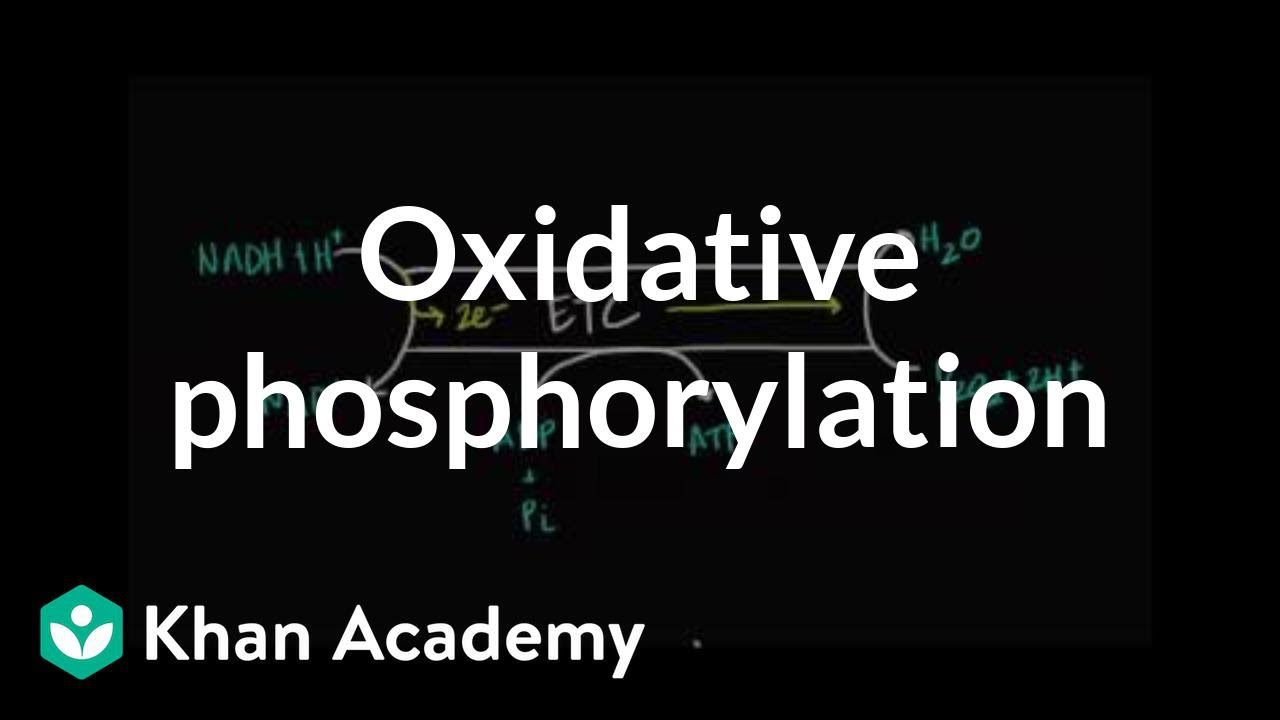

The electron transport chain (ETC) is a series of five enzyme complexes located in the inner mitochondrial membrane that transfers electrons from NADH and FADH2 to molecular oxygen, creating a proton gradient across the membrane; this gradient drives ATP synthase (Complex V) to produce ATP through oxidative phosphorylation, with NADH yielding approximately 2.5 ATP and FADH2 yielding approximately 1.5 ATP due to differences in proton pumping efficiency between the two entry points.
Electron Transport Chain & Oxidative Phosphorylation | Biochemistry Animation
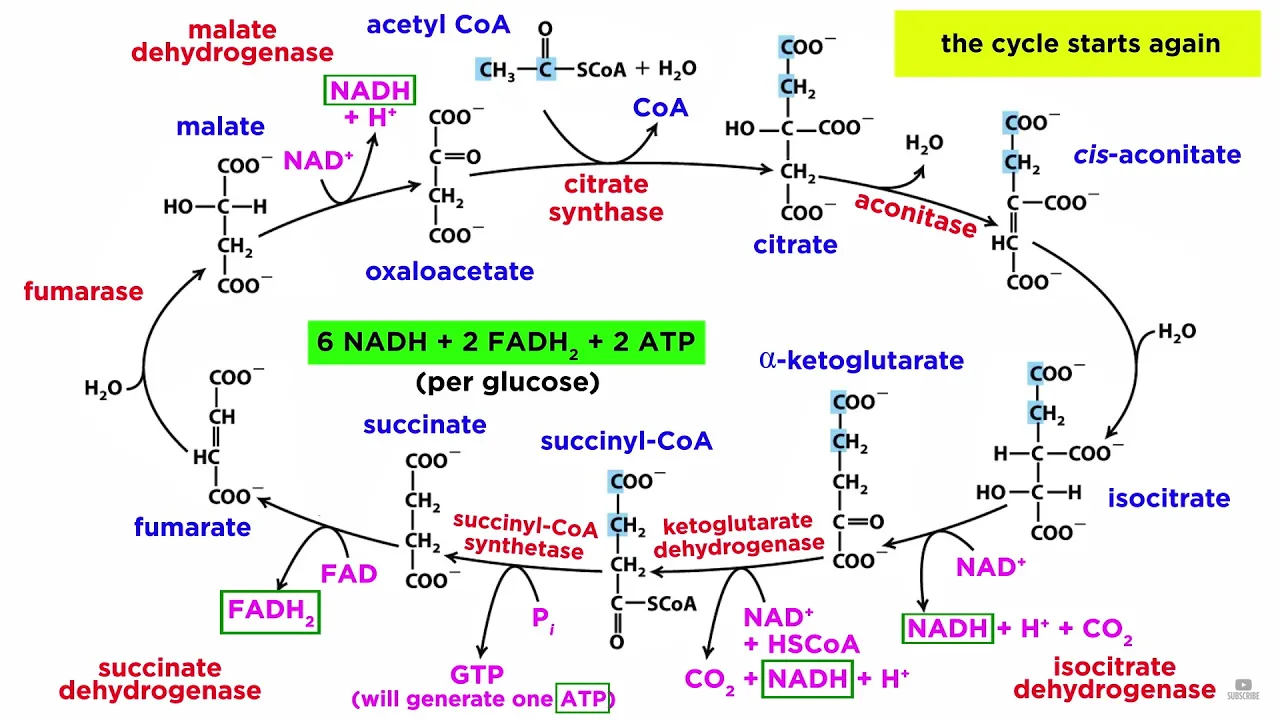
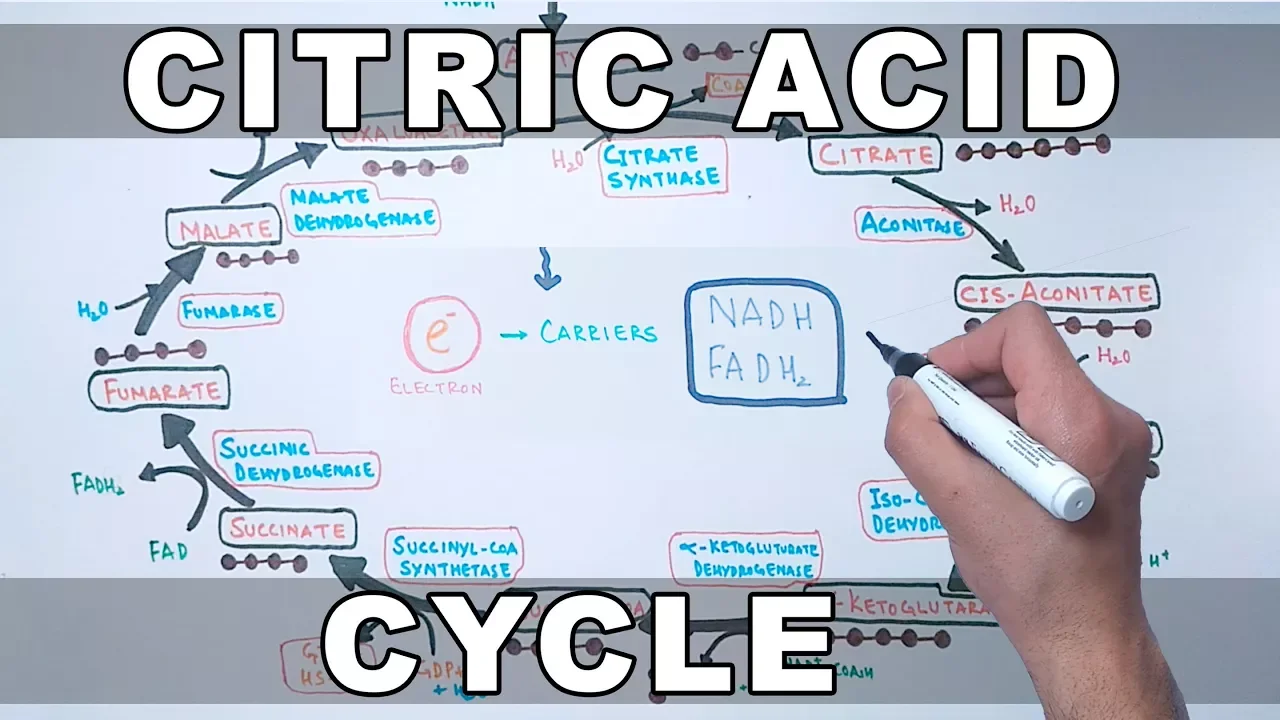
Added:An understanding of cellular respiration stages, specifically how Glycolysis and the Citric Acid Cycle generate the electron carriers NADH and FADH2.
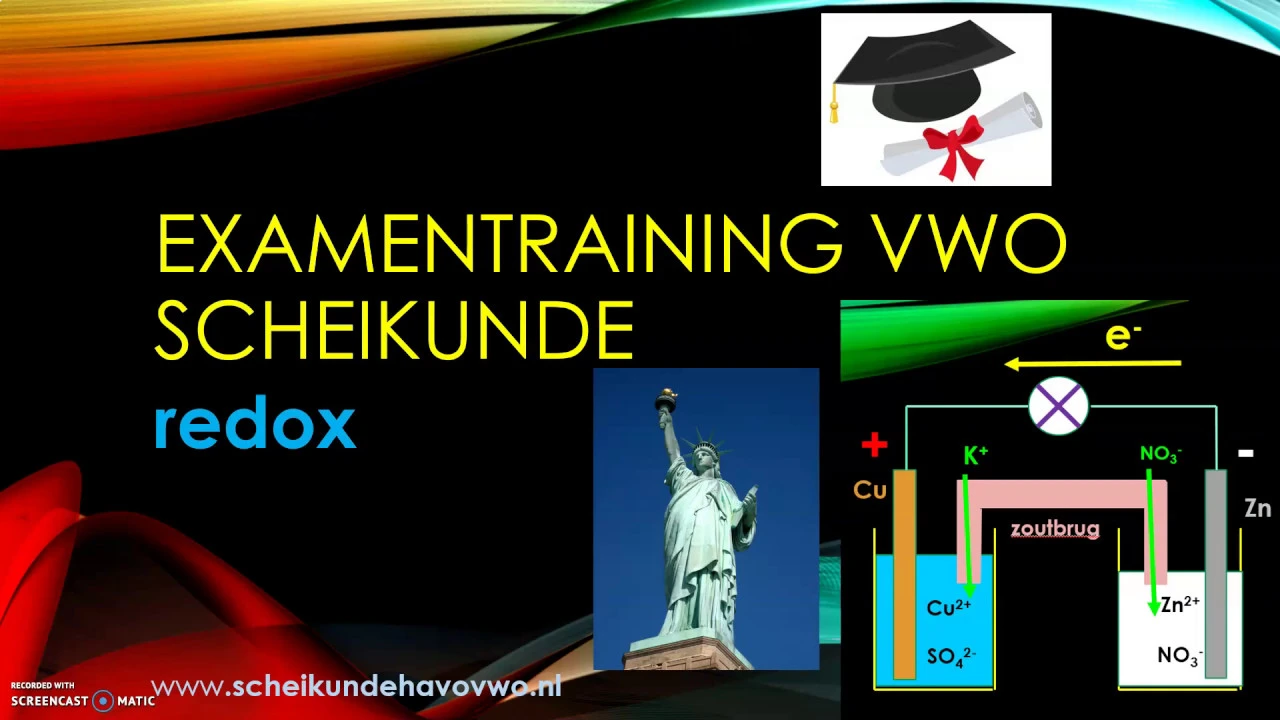
Fundamental concepts of redox (reduction-oxidation) chemistry, including electron transfer, electron donors/acceptors, and standard reduction potential.
The structural anatomy of the mitochondrion, particularly the differences between the outer membrane, inner membrane, intermembrane space, and matrix.
Basic thermodynamic principles of electrochemical gradients, passive diffusion, and active transport.
The mechanism of action of ETC inhibitors (such as cyanide, carbon monoxide, and oligomycin) and uncoupling agents (like DNP and thermogenin in brown fat).
How mitochondrial dysfunction and mutations in mitochondrial DNA lead to clinical pathologies, such as Leigh syndrome and Leber's hereditary optic neuropathy.
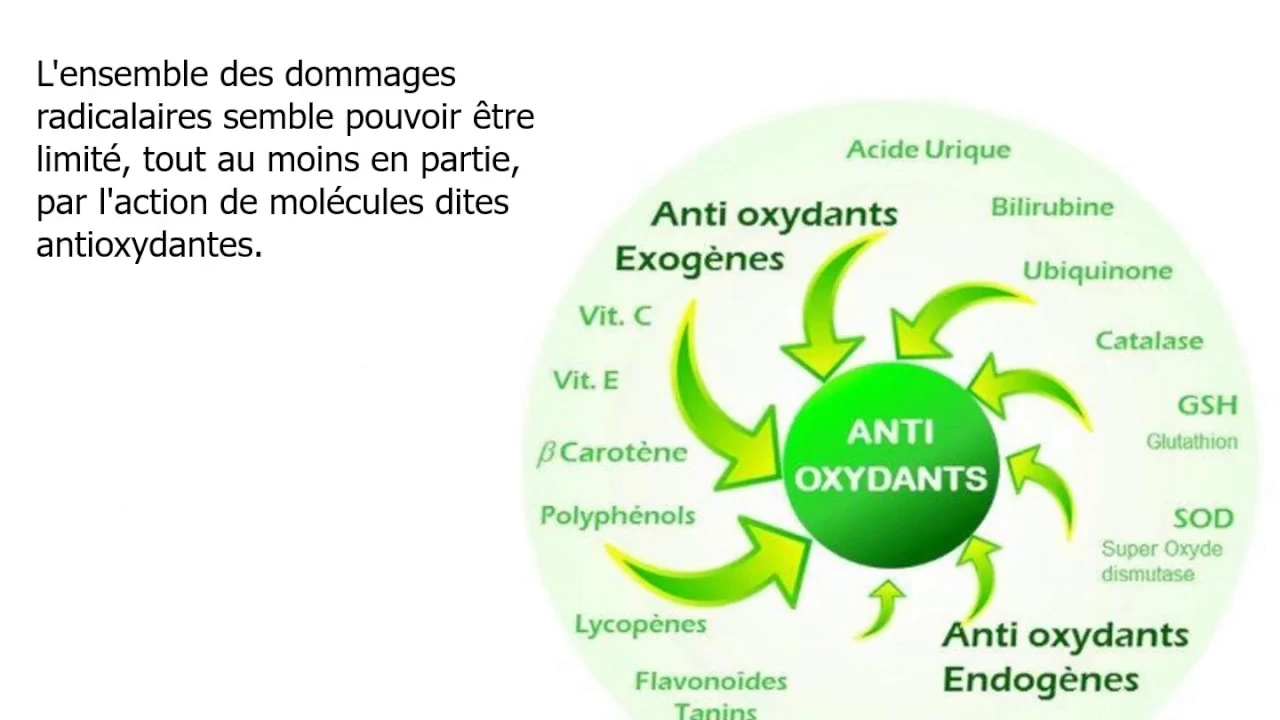
The generation of Reactive Oxygen Species (ROS) due to electron leakage from the ETC and their role in oxidative stress, aging, and cell signaling.
The feedback regulation of oxidative phosphorylation, specifically how the ATP/ADP ratio and oxygen availability control the rate of respiration.
186.8K views4.8Klikes22:48Original Release: 2018-11-13
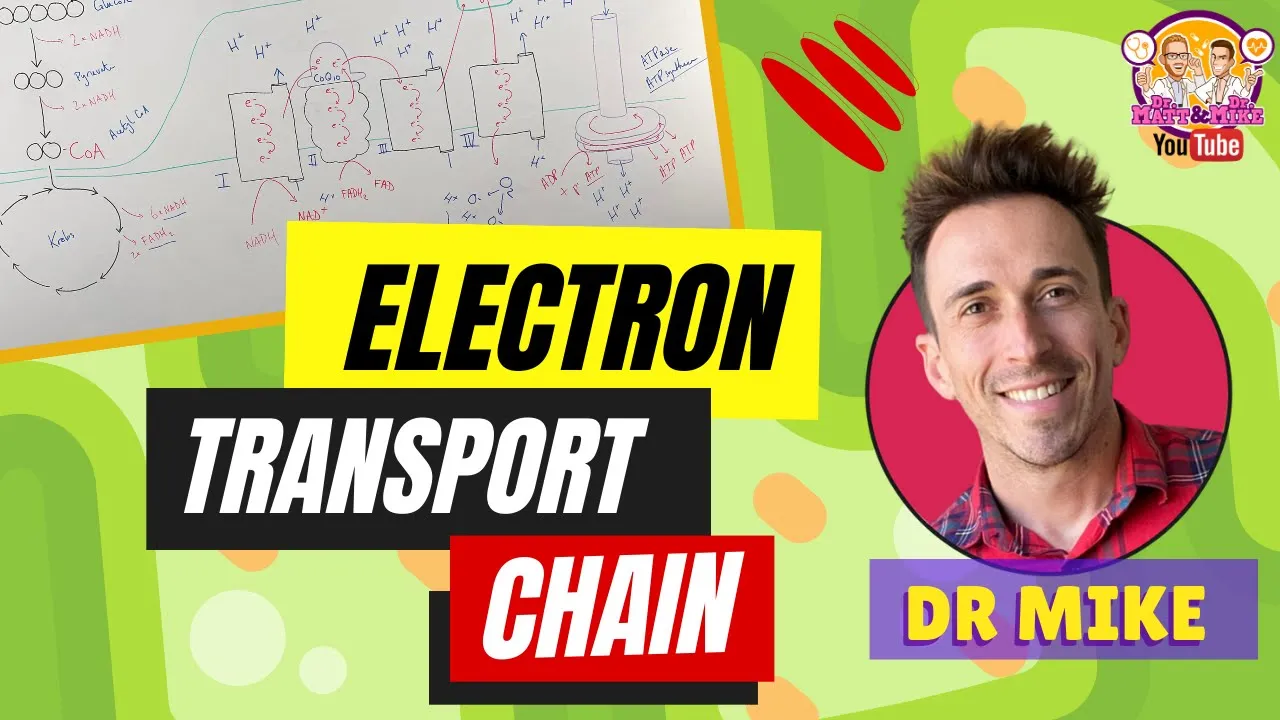
[Music] electron transport chain it is also called as the respiratory chain the reason it is said as a respiratory chain because approximately 70 percent of the oxygen which is consumed by the cell he is utilized by this electron transport chain for the production of adenosine triphosphate called as ATP and it is a complex process and the mechanism of this process is located at the inner mitochondrial membrane and for the entire series of electron transport as well as synthesis of ATP we have totally five enzyme complexes so out of the five enzyme complexes for enzyme complexes belong to electron transport chain and complex 5 belongs to oxidative phosphorylation so these enzyme complexes are the part of the inner mitochondrial membrane which means these are embedded in the inner mitochondrial membrane and their peptides of these complexes originate from 13 proteins which are encoded by the mitochondrial DNA as well as from the nuclear encoded proteins which are imported into the mitochondria so not only the synthesis of ATP is a primary role of the mitochondria other than oxidative phosphorylation and transportation of electrons along the inner mitochondrial membrane mitochondria also participate in diverse cellular processing the main role is a baptists mediated by cytochrome C and the production of reactive oxygen species calcium homeostasis as well as it also take part in the process of immunity so now let us concentrate on what are the components of the electron transport chain which is also called as the respiratory chain we have complexes as well as mobile electron carriers these electron carriers may be the part of inner mitochondrial membrane which means complexes or may not be the part of the complexes but overall if we talk about these electron carriers they are the flavin mononucleotide as you can see in this table the first one is a flavin mononucleotide and next to the ubiquinone or coenzyme q and iron sulfur protein which is associated with FMN asla cytochrome B and the last family is the cytochromes these are heme proteins cytochrome B cytochrome C 1 cytochrome C a as well as a3 all these are called as electron carriers in the electron transport chain so these cytochromes are heme proteins what's the meaning of this which means they contain heme iron so the cytochrome a a3 in combination is called as cytochrome oxidase and besides heme iron they also contains copper that's why these are called as copper-containing heme proteins along the cytochromes which are mentioned in the stable only cytochrome C is water soluble which means it is easily diffuse' beliefs and important role in the program to sell dead corners apoptosis but whereas other cytochromes like cytochrome bc1 a as well as a3 or lipid soluble that is the reason they are fixed to the components of the membrane and there is a reason they are the part of these electron complexes what is the structural organization of the components of etc' so these components of respiratory chain actually do not function as a discrete carriers of reducing equivalent so reducing equivalents means electrons but are organized into four different complexes what we are seeing here so they are organized into four complexes each of which act as a specific oxido reductase along with this we can see coenzyme q as well as cytochrome c are they part of the inner mitochondrial membrane or they are lying outside the inner mitochondrial membrane they are not a part of the inner mitochondrial membrane so the coenzyme q as well as cytochrome c are not part of any complexes there is a reason they are not at all fixed in the inner mitochondrial membrane so remember that coenzyme q as well as cytochrome c are not part of any complexes and not part of the inner mitochondrial membrane they just act like an electron acceptor or electron carrier but other than the coenzyme q as well a cytochrome c all other components of the e.t.c are the part of inner mitochondrial membrane so these complexes are arranged in an order of increasing redox potential what is the meaning of increasing red ox potential electrons always travel from reactants with negative redox potential to positive redox potential which means you can clearly say that complex one has a negative redox potential and compared to the complex one complex four has more positive redox potential that is a reason electrons are traveling along complex 1 complex 3 complex 4 like this so always you need to remember that redox potential is the main important factor which is responsible for the transportation of these electrons because a reactant which has an negative redox potential is a bester donor rather than acceptor of the electron and in the same way a reactant with a positive redox potential is the best acceptor when compared to that of the donor that's the reason complex 3 is accepting electrons from coenzyme q and coenzyme q is accepting electrons from complex 1 everything is according to the redox potential there's a reason one important point you need to remember here that these electrons always flow from negative redox potential to the positive redox potential so that's why these reducing equivalents called as electrons flow in only one direction that is from complex 1 too complex for because of the redox couple with the low redox potential is considered to be the better electron donor where with the one with high rate of special is electron acceptor this is the theory beyond the electron donor as well as electron acceptor that's why these reducing equivalents called as electrons flow through the chain from the components of more negatively redox potential to the components of more positively redox potential this is the basic understanding about the transportation of electrons along the complexes of the inner mitochondrial membrane let us talk about complexes in detail the first one is called as complex one the complex one is called as an ADH dehydrogenase oxide or reductase or we can also call it as NADH dehydrogenase ubiquinone oxido reductase so the complex one is accepting its electrons from NADH and this NADH which is present in the mitochondrial matrix may be produced from pyruvate dehydrogenase complex may be a product of TCA cycle or beta oxidation or may be a product of settle mechanisms like malate aspartate shit'll whatever may be the metabolic pathway which produces na eh it has to enter into electron transport chain from complex one so the nad it's so produced in the mitochondrial matrix by means of various metabolic reactions enters into electron transport chain at the complex one and here this complex one receives electrons from NADH and in the complex one we have f MN as well as FES which means the electrons are first taken up by F mm later the electrons are transferred to FES which is called as iron sulfur complex or iron sulfur protein and from there the electrons are carried to coenzyme q there's a reason we are calling it as NADH coenzyme q reductase so the electrons are transferred first from NADH to f MN from f MN - FES that is iron sulfur protein from fes2 coenzyme q right so once electrons are transferred to the coenzyme q at this particular step four protons are pumped into the intermembrane space right we can see very clearly here that four protons are pumped into the intermembrane space so by this you should know that after the complex one is completed where are the electrons now electrons are with coenzyme q what happened to the protons four protons are pumped into the intermembrane space so after the complex one once the electrons are with the coenzyme q how many protons are present in the intermembrane space for right now let us talk about complex three why are we skipping complex 2 here because whenever electron transport chain begins with an ad h and h PLAs the order is complex one complex as well as complex for complex to is not a part of electron transport chain if electron transport chain begins with NADH as well as H plus because complex 2 belongs to fadh2 is the another product which is produced in various metabolic reactions in the mitochondrial matrix so before discussing complex 3 let us talk about complex 2 then we move on to complex 3 now so what is complex to here the complex 2 is called as succinate dehydrogenase ubiquinone oxido reductase and the succinate dehydrogenase enzyme is a enzyme of the TCA cycle and it is the only enzyme of the TCA cycle which is located in the inner mitochondrial membrane all other enzymes of the TCA cycle are located in the mitochondrial matrix because the only enzyme of the TCA cycle which is succinate dehydrogenase is taking part in the electron transport chain by means of complex 2 right so here both succinate as well as NADH are the products of the kreb cycle that is TCA cycle so their electrons are transferred horizontally from complex one as well as complex 2 to complex 3 by means of coenzyme q right let us see here so fadh2 which is a partner of the complex 2 or the complex 2 is a section-8 dehydrogenase enzyme where fadh2 is produced from there the electrons are carried to the coenzyme q from there the electrons are transferred to the complex 3 but when this process is happening no hydrogen's are pumped into the intermembrane space but in the complex one for hydrogen's ions are pumped that is 4 protons are pumped into the intermembrane space but this is not happening with the complex 2 right now electrons are transferred from complex-2 to coenzyme q from coenzyme q to complex three here remember this at the complex two no protons are pumped into the intermembrane space now whether it is from fadh2 three whether it is from NADH pathway now the electrons are located at the complex tree right so what is the complex tree here complex tree is known as ubiquinone cytochrome C oxide or ductus so this complex tree contains cytochrome B and cytochrome C one in between B and C one we have another mobile carrier called as FAS protein or FES complex so from coenzyme q the electrons are accepted first by cytochrome B then electrons are transferred to the FES then electrons are transferred to the cytochrome C one this is the actual pathway of the electron transportation according to the redox potential so how these electrons are transferred from coenzyme q from coenzyme q these electrons are transferred to decide a crombie iron-sulfur protein called as FES complex and to the cytochrome c 1 from cytochrome c 1 the electrons are transported to cytochrome c right so during this process once the electrons are transferred from complex 3 to cytochrome c again 4 hydrogens are formed that is 4 protons are pumped into the intermembrane space now let's review here how many protons are pumped into inter membrane space if electron transport chain begins from NADH from complex 1 4 and from complex 3 4 how many protons are there 8 protons are there in the inter membrane space when the electrons are accepted by cytochrome C electron transport chain begins with NADH + H+ but it is not true if electron transport chain begins with fadh2 because protons are not pumped into the intermembrane space by means of complex to so by the end of complex 3 when the electrons are presented are located with the cytochrome C only 4 protons are pumped into the intermembrane space right only 4 protons are pumped into the intermembrane space by the end of complex 3 if it is by means of fadh2 8 protons are pumped into the intermembrane space when the electrons are present with cytochrome c if electron transport chain begins with in AD a charge will have h + know so after the complex 3 let us talk about complex 4 here so complex 4 is the final complex of the electron transport chain but it is the 4th complex of 5 complexes because complex 5 is called as oxidative phosphorylation so this complex 4 what we are seeing here is called as cytochrome C oxidase why are we calling it as oxidase because it is utilizing the molecular oxygen to accept electrons which are donated by the cytochrome C cytochrome C is donating electrons to accept the electrons which are coming from cytochrome C oxygen is readily available to catch those electrons by means of the complex 4 which is called as cytochrome C oxidase and the cytochrome C oxidase which is known as complex 4 contains cytochrome a as well as a3 now recently we will call it as heme a a 3 and copper a and copper B Center because they are him proteins they also contain copper other than iron so that is the reason we are calling it as him a a 3 as well as copper a and copper B center right at the complex 4 oxygen is the one which is acts electrons and it is the final electron acceptor of the electron transport chain so remember that who is the final electron acceptor of the electron transport chain is the oxygen at the complex 430 cytochrome C oxidase so the electrons are transferred initially from cytochrome C to cytochrome a from day to cytochrome a three from cytochrome a three then it is transported to they transfer to the offseason to form water molecule over here during this reaction complex for two protons are pumped into the intermembrane space so if the electron transport chain is by means of NADH pathway totally 8 plus 2 is 10 10 protons are pumped into the intermembrane space if the same electron transport chain runs with fadh2 that is complex 2 3 as well as 4 we have only 4 plus 2 which is 6 protons are present in the intermembrane space right so because of 6 protons are present in the intermembrane space by means of fadh2 pathway and 10 protons are pumped into the intermembrane space by means of NADH pathway we have a difference in the production of ATP because of the amount of hydrogen ions which are protons which are pumped into the mitochondrial matrix because due to its concentration gradient by complex file is the one which generates 2.5 ATP molecule per in ADH as well as 1.5 molecule for fadh2 molecule so what is the complex why here complex file is the ATP synthase which is the complex of oxidative phosphorylation it is not a part of electron transport chain technically and this is considered to be the smallest molecular motor which is present in the body and using the energy released by the electron transfers by complex world complex 3 and complex for because complex two is not pumping any protons into the intermembrane space which creates an electrochemical gradient right this electrochemical proton gradient across the inner membrane so because of this electrochemical proton gradient which is created because of this entire process of electron transfer the ATP is generated by the complex Phi when hydrogen protons which are present in the intermembrane space flows back down their electrochemical gradient into the mitochondrial matrix responsible for the generation of ATP from ADP plus inorganic phosphate at the beta subunit of the f1 component of the ATP synthase which means how many protons we have if it is an NADH pathway I will write it as four four and two for every protons which are flown during this ATP synthase process into the mitochondrial matrix for every four hydrogen ions for every four protons one ATP molecule is produced so when four protons are traveling down the concentration gradient one ATP another for one ATP another to half ay T P so if ten protons flows down through the concentration gradient right how many ATP's are produced if the pathway is from NADH 1+1 2 and off that is the reason 2.5 ATP's are produced if it is because of NADH in the same way if you subtract the complex one because complex one belongs to NADH dehydrogenase complex 2 is not pumping any protons into the intermembrane space so if the electron transport chain is from fadh2 then how many protons are there in the intermembrane space 6 for every 4 protons which are pumped into the mitochondrial matrix down its concentration gradient again 1 ATP molecule and of ATP molecule so only four plus two is equal to 1.5 ATP that is a reason 1.5 ATP molecules is produced by means of one fadh2 into the electron transport chain this is how the electrons are traveling along the inner mitochondrial membrane according to its reducing equivalence according to the redox potential finally to reach the complex 5 for the synthesis of ATP and this is the electron transport chain
Up Next
17:23
Mastering Chest X-Ray Interpretation: The ABCDE Approach
@AnatomywithDrNikki
3.8K views•2021-09-12

48:47
Graphic Medicine: Comics for Collaborative Healthcare Communication
@nationalpatientadvocate
189 views•2023-12-04

11:53
Vagus Nerve Anatomy Animation: Origin, Course, Nuclei & Branches
@doctorbhanuprakash
117.8K views•2021-11-25
3:05
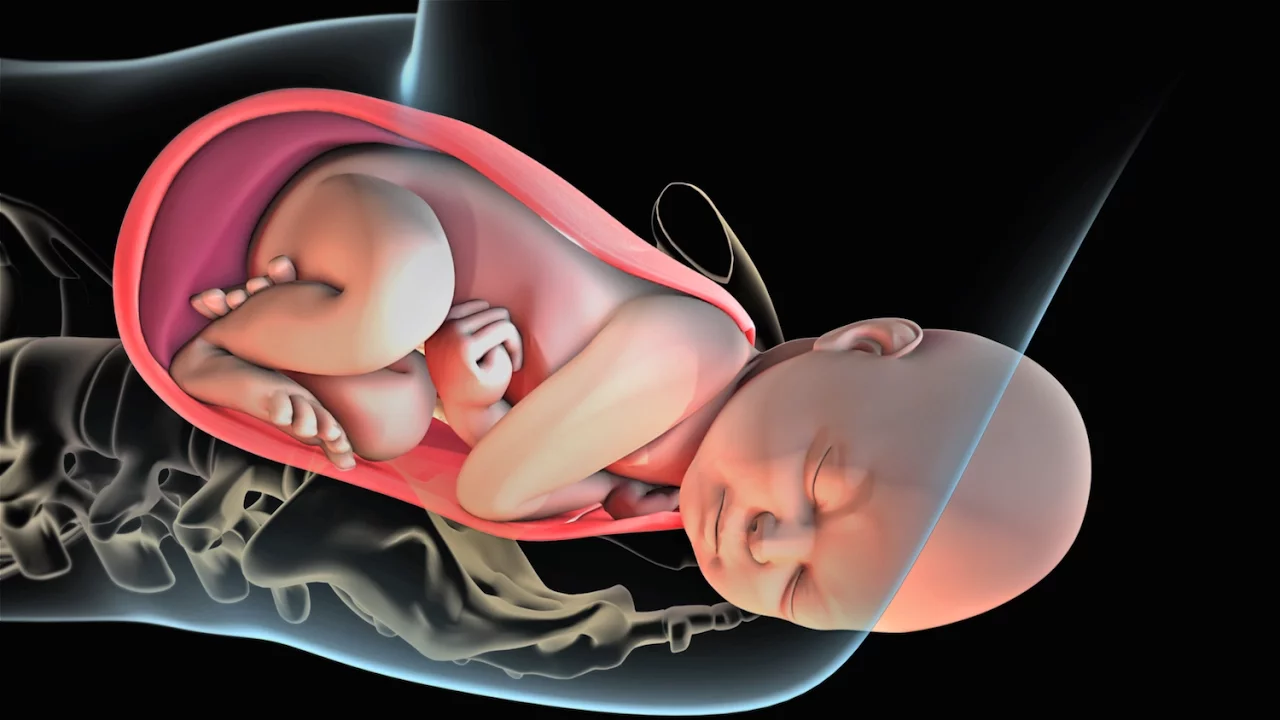
Stages of Labor and Vaginal Birth | Childbirth Animation
@nucleusmedicalmedia
52.1M views•2017-08-18
Related Study Plans & Knowledge Roadmaps
Structured learning paths in Medicine
medicine
Abnormal LFTs: Diagnostic Workup & Pathology
01Liver Anatomy and Basic Physiology
02Introduction to Liver Function Tests (LFTs)
03Hepatocellular vs. Cholestatic Patterns
+ 3 more learning modules
12h6 modules
Explore Roadmap
medicine
Analyzing Blood Smears: RBC, WBC & Platelets
01Introduction to Blood Components & Smear Preparation
02Normal Morphology of Blood Cells
03Erythrocyte Pathologies & Morphological Variants
+ 2 more learning modules
12h5 modules
Explore Roadmap
medicine
Mechanical Ventilation: Waveforms & Alarms
01Anatomy and Physiology of Breathing
02Introduction to Mechanical Ventilation & Core Modes
03Ventilator Settings and Waveform Interpretation
+ 2 more learning modules
12h5 modules
Explore Roadmap
medicine
Neuro Exam: Localization & Stroke Syndromes
01Foundations of Neuroanatomy and Vascular Supply
02The Neurological Examination: Step-by-Step
03Principles of Neurological Localization
+ 3 more learning modules
18h6 modules
Explore Roadmap