











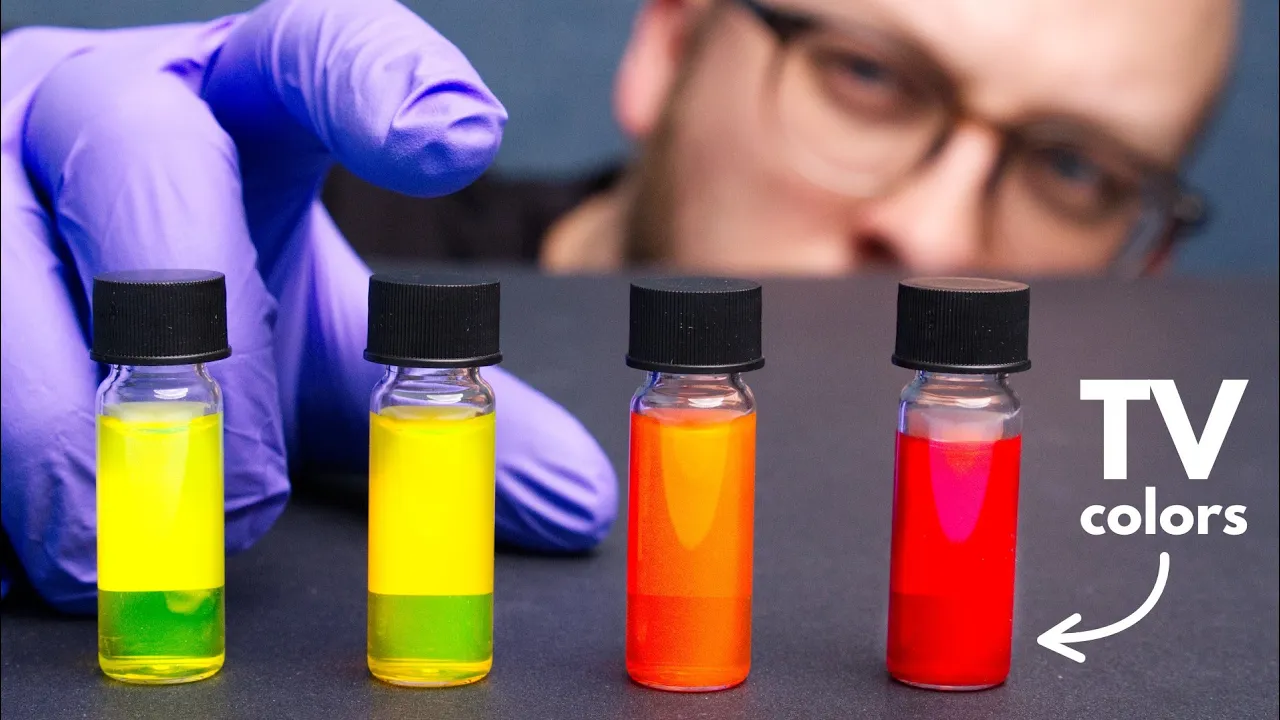










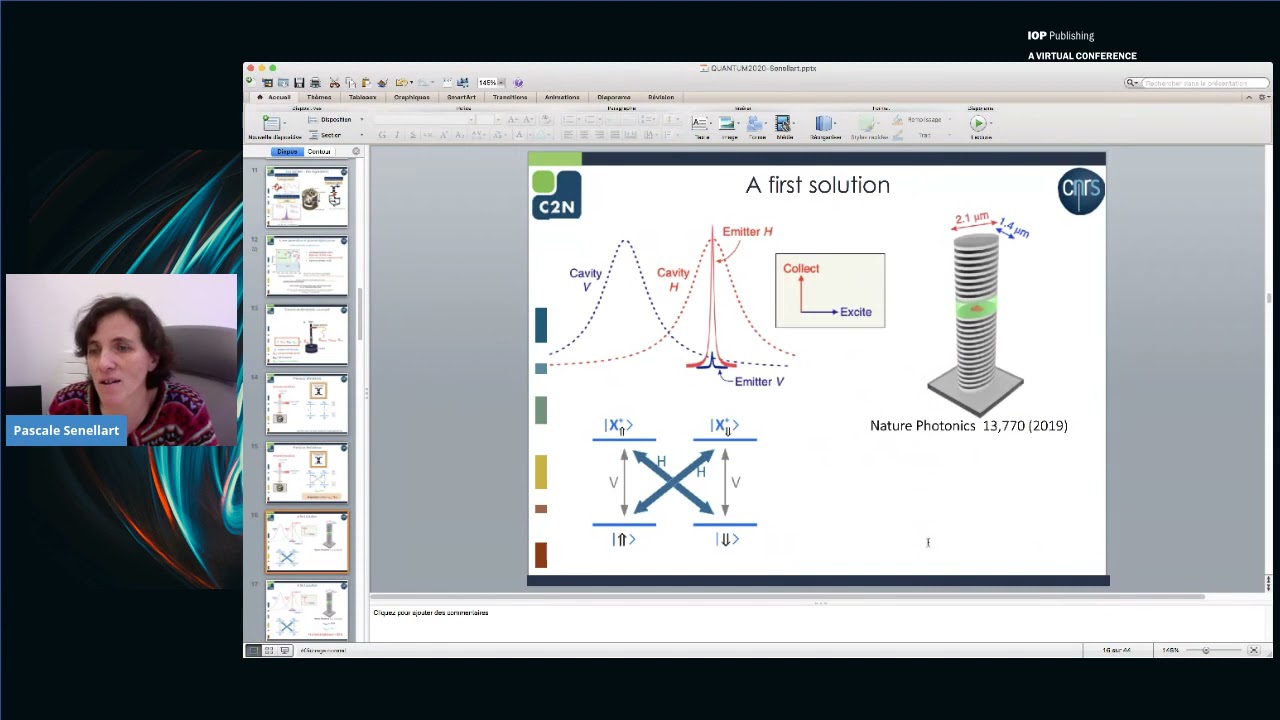

Quantum dots are semiconductor nanoparticles whose optical properties are governed by quantum confinement, where smaller particles emit shorter wavelength (bluer) light and larger particles emit longer wavelength (redder) light. The hot injection method, developed by Professor Moungi Bawendi at MIT, enables scalable production of high-quality quantum dots with narrow size distributions, consistent crystal structures, and tunable emission colors, making them valuable for applications in displays, biomedical imaging, and quantum technologies.
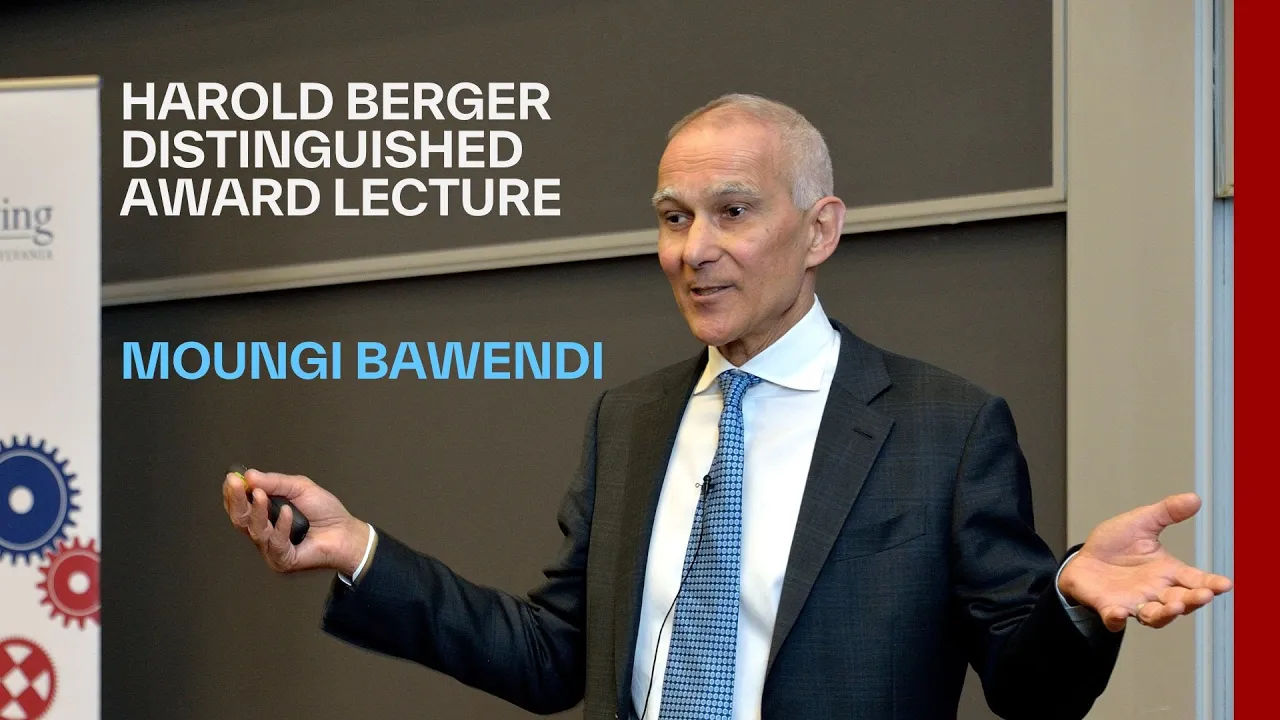
Quantum Dots Nobel Lecture 2023 | Moungi Bawendi, Chemistry
Added:Basic Quantum Mechanics and the 'Particle in a Box' model to understand quantum confinement.
Semiconductor physics, including concepts of bandgaps, conduction bands, valence bands, and excitons (electron-hole pairs).
Fundamental principles of colloidal chemistry, focusing on nucleation, crystal growth, and solution-phase synthesis.
Basic photophysics, specifically how materials absorb light and emit energy through fluorescence.
The engineering and commercial application of quantum dots in display technologies, such as QLED televisions.
Advanced biological and medical imaging techniques that utilize quantum dots as highly stable, tunable fluorescent biomarkers.
Next-generation optoelectronics, including quantum dot-sensitized solar cells (photovoltaics) and photodetectors.
The development of heterostructured nanocrystals (like core-shell quantum dots) to enhance quantum yield and photostability.
Applications in quantum information science, such as single-photon sources for quantum cryptography.
16.5K views380likes32:05Original Release: 2024-01-19
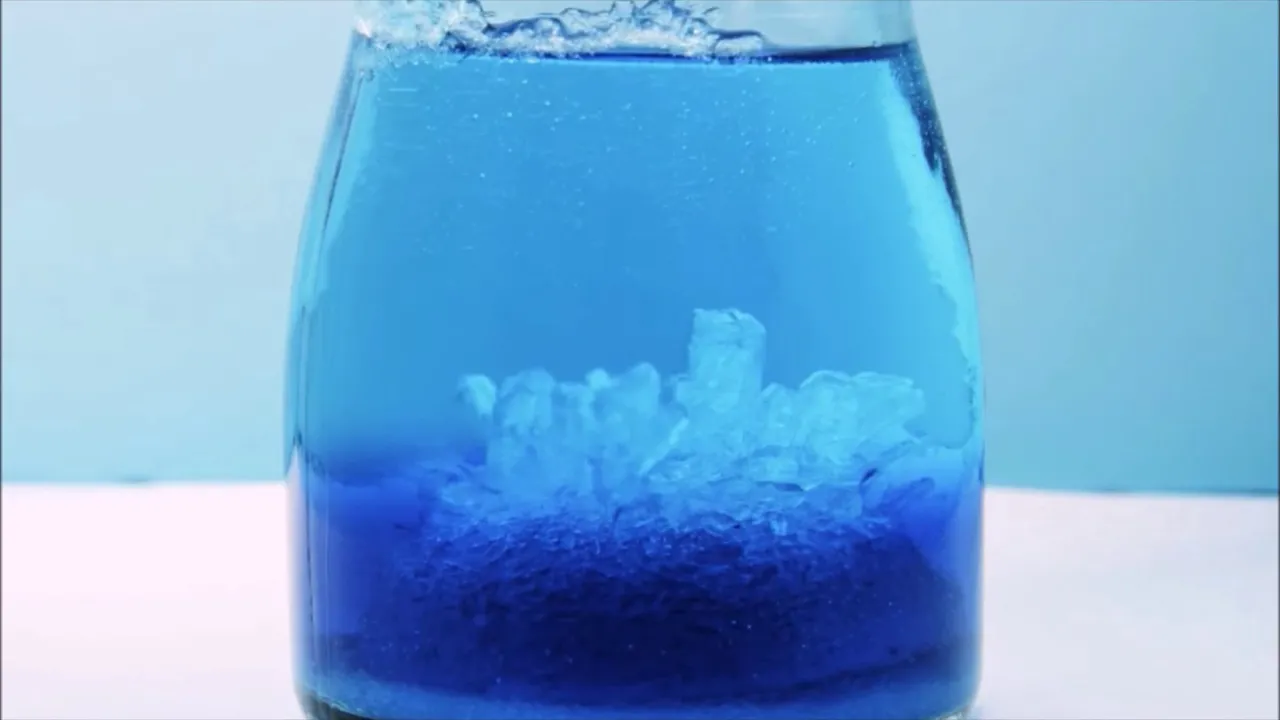
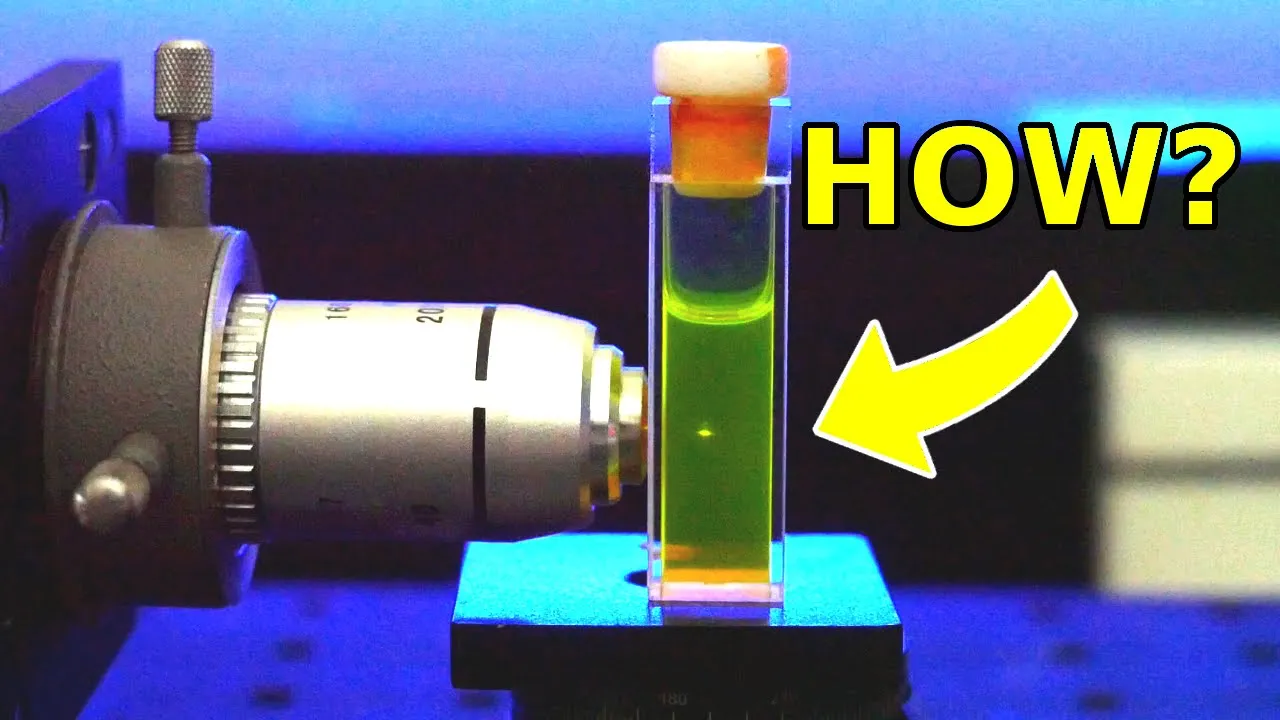
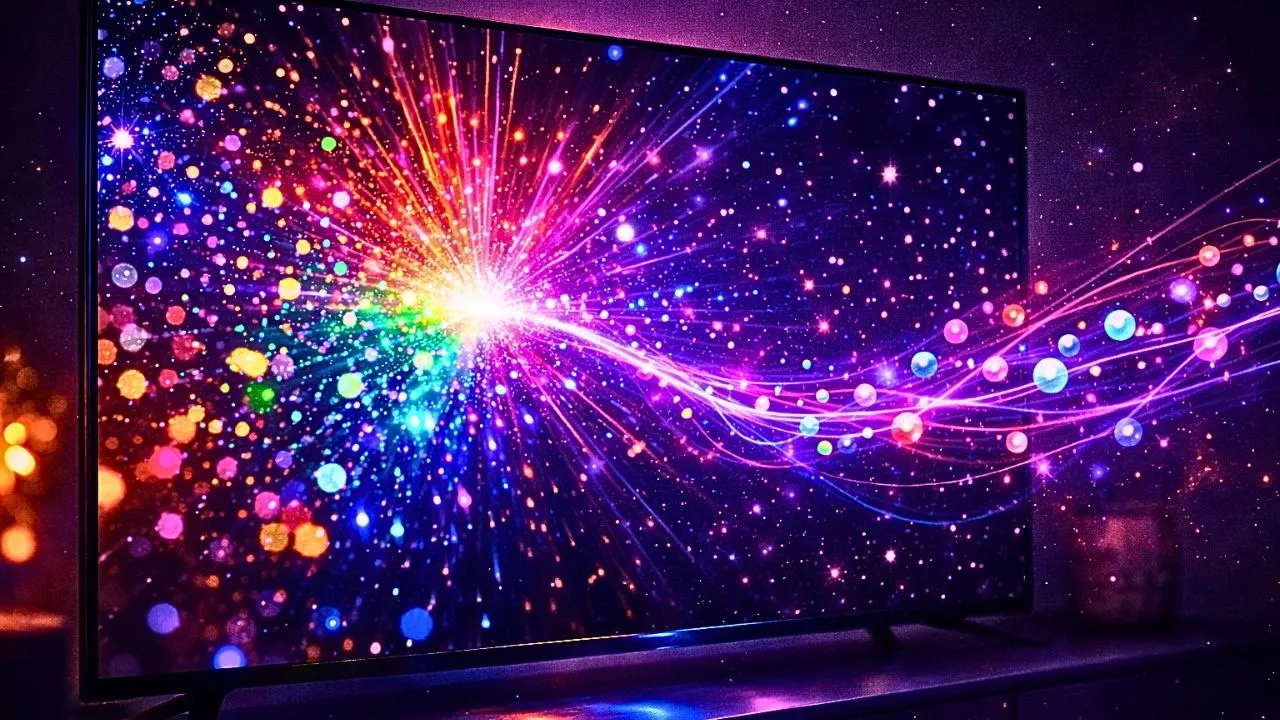
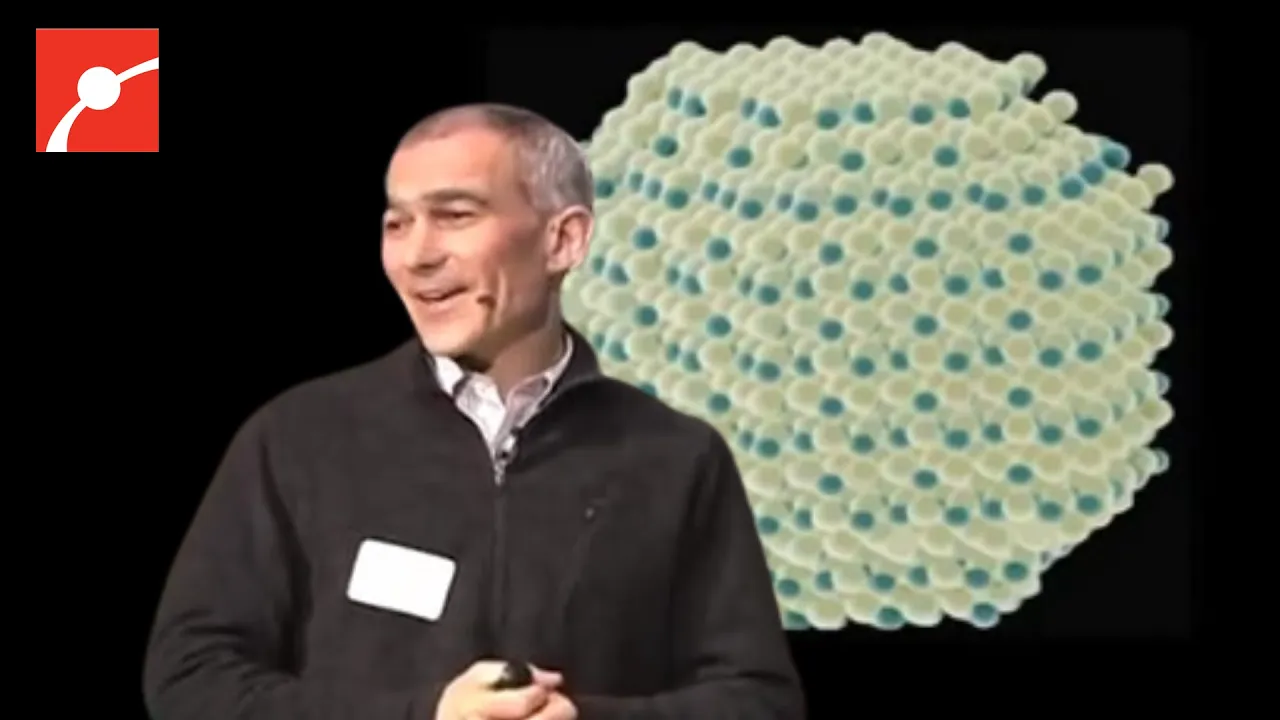
to bring Quantum dots to technical applications and everyday applications like we see them today a method was required that would enable the production or the manufacturing of quantum dots with very high quality and in a scale in in a way that allowed it upscaling into industrial scale such a method was invented by by Professor munji bendi who is a native of France uh received his PhD in 198 88 from the University of Chicago and is today a professor at MIT please welcome Professor mji bendi for his Nobel Prize [Applause] lecture I want to uh start by thanking the uh Royal Swedish Academy of Sciences and the Nobel committee for uh chemistry and the foundation for this incredible honor of being here in front of you um as was explained in the last two talks Quantum confinement is key to understanding the properties of of of these semiconductor nanoparticles these Quantum dots and what you see here on the screen is a series of vials of different Siz dots that are emitting a Different Light uh frequencies and at a basic level you can think of quantum mechanics being the important property that the electrons acquire at the small size scale when you think of an electron in a circuit you think of a small particle moving around with a velocity Etc when you try to stuff an electron in a small box like a small nanop particle that electron can no longer be described as a as a as a little piece as a little particle moving in the circuit it can only be described through the laws of quantum mechanics it becomes a wave and as you know when you have a wave in a u for instance in a Organ Pipe or in a flute that the size of the wave depends on the boundary so a small Organ Pipe have a has a smaller wave in it a sound wave than a big Organ Pipe and it's that effective idea that happens here with the electron in the quantum dot and that change in the wavelength of the electron eventually gets translated in a change in the wavelength of the light that is emitted by the particles so the red particles have a long wavelength and the small particles have a shorter wavelength I want to U start off with my timeline from my time at Bell labs to uh my time at uh MIT where we ended up creating this synthesis that is recognized by the Nobel Prize Committee in 1993 I want to thank especially the uh students that were with me at the time Chris Murray David noris Mino M it took a adventurous group to join an young assistant professor on on his Journey at the time so let me start with uh the Bell Labs prep that Lewis talked about what I will call the fal fi prep at the end of 1989 I was a post do and I stumbled into that um the fal fiend prep and I have my slides also from 1990 Etc on transparencies uh the myel prep it should be called the inverse myel prep star goald alisados and Bruce developed that before I came as a as a postto basically creating this in little droplets of water and making the reaction at room temperature in these droplets of water to uh eventually create a small powder of particles and what they had found that by analing the particles at for instance in a Le space like for ethline at 160° uh you could make better particles the water amount regulated the particle size so uh what they had found that by uh boiling in purine um these particles sometimes they found this very interesting uh transition this very sharp peak in the optical Spectrum around 410 nanometers and my job was to try to figure out what was that and I really didn't know any chemistry and really Mike starwalt who is here today uh taught me everything I know about organic metal Organo metallic chemistry I was a theorist first and then I became a spectroscopist and then through an accident of time and space I ended up at Bell Labs working with Lewis who really taught me how to be a scientist so um I didn't know what a leis Bas was so I asked Mike you know what is a leis Bas and uh Mike showed me a bunch of Louis spaces in his lab so I took a bunch of these things and I started cooking the particles and whatever I could find and for most of them nothing much happened but it there happened to be a bottle of tributal phosphine where some magic happened and you can see the word magic on this slide you don't see that very often in uh in in a scientific talk most because we really didn't understand much much what was going on but what we found was that uh these particles grew uh and change color and at the end of the process uh we obtained uh this amazing sample much better than we had seen before um and I wrote a paper on this called the X-ray structural characterization of larger catelin particles and this is the experimental section and you see under lined in red the words occasionally you know U that was part of the magic um so occasionally a red Collard appeared um what we had created was a material that had a much better crystallin structure than before the optical properties was much better so as you go down the side here you see this very broad looking thing uh on top and as you go and anneal at higher temperatures eventually coming to this Fon prep you start seeing the the appearance of structure in the spectrum that showed that the particles were getting better we took did x-ray uh x-ray analysis and the the width of the Peaks that you see on top are are an indication of the coherent size of the crystal that's in it so broad Peaks means that the material is mostly amorphous and uh sharper Peaks means that it's more crystalline and so as you see that as you lean out higher temperature the crystallinity also increased the going to low temperature is also something that we do quite a bit this is at 15 Kelvin uh because uh at room temperature your um analysis of what's going on is is hampered by thermal noise things get broadened out by thermal noise which you can uh eliminate by going to low temperature and what we found was this sharpening of the of the spectrum indicating that we could now see really the uh the size distribution was getting much narrower and we could really see this this wave the electron wave this exaton being very well defined in the particles and most importantly in the lower um left hand side here you see by doing um by combining this really beautiful sample with um an optical method which selects the biggest particles in the sample we could see the very sharp structure of vibrations of the of the of the of the atoms inside the particle that showed us that we had finally found something that was really quite crystalline of the quality that we were after but the problem is that I could only make one size and if you're trying to understand the size evolution of material from molecules to the bulk and you've only got one size you you don't really have what you need and so that's when I come to MIT we try to reproduce this with Chris Murray and David Norris um taking little seeds of uh of these water-based uh materials and growing them in in in the phosphine and quickly realized that you know this ero producibility was a huge problem the lack of size was a huge problem and within a few months uh Chris Murray uh and and I you know thinking about the the nucleation and growth of the um of of making crystals back in the uh back in the 1950s uh which is what really what I had been using when taking little seeds that were water-based and dissolving them and growing them further um so we got rid of all the waterbased part and we switched completely entirely to organic airfree based Organo metallic chemistry and instead of making little seeds in water we developed a process called the hot injection method which is what people call it now um where we introduced uh the um the and this is a picture of Chris and David from that time here we introduced the the the um the precursors uh rapidly through uh a syringe here into a hot uh solvent that contains the the surface molecules that that that that uh um slow down the growth and and provide a a uniform surface of the particles okay once we did that you know that was all good but uh still the quality wasn't good enough you could tell from the optical spectrum that this peak that we were looking for were not getting sharp enough the distributions were still within maybe a bigger than 10% U distribution and my goal what nearly defect free particles a size series a consistent surface chemistry and especially a narrow size distribution because we really wanted to study the physics the physics of this Evolution and without a sample we didn't have anything and it was kind of scary at the beginning you know I start off I want to do all this all these experiments and I need a sample right we need are samples and so that was really the the the issue the the the um uh the necessity of the samples which drove us towards working very hard Chris towards towards Chris and David and I to work very hard to to figure how to do this and um Chris was working in the lab and David was you know getting his his physics experiment ready so as was man Nal the third student of of my of my of my initial group um and uh also so these uh initial molecules we were using were very expensive they were little bottles and they were costing hundreds of dollars a piece we were running through that really quickly um and we realized then um that you know the temperature needed to be higher perhaps and we needed something cheaper and so we found this uh octal based tributal phosphine octo which is a longer chain which has a higher boiling point which happens to be used in the uh mining of uranium so it's based it's made in the in the train main load it's super cheap and so that was great and so it had the advantage of of having a higher temperature at much higher uh 300 degrees or higher and as a result when we switched we were able to get a bigger sizes get our size series um and then finally um adding to that as because we're chemists we think that at the end of the process we have to purify our material and uh uh ended up having uh what we call scy electri pu purification this is a slide from from that period also um now I have a laser printer so it's not all handwritten um crystallinity high temperature uniform surface all the same molecule the idea of lame mer from the 1950s of separating the nucleation and growth as Alexi was talking about you nucleate little seeds and you grow on top of them to get uniform size distribution and you end up with um with a uniform particles which you can extract with uh solvents I have a video here of what the process actually looks like um so there's the uh the syringe here uh there's the flask which is at around 300° C or so and uh the injection followed by the nucleation immediate change in color and now we're going to we're going to have a gap in the time here because we don't want to spend 3 hours here waiting for the particles to grow uh he's uh uh the student here is taking samples out and you can see the the the the the color changing as he takes the samples out so we've we've had a gap in the time now the color is much deeper red they're much bigger particles and um let me uh you can see now the the change in color as the particles grow from Orange to red and let me speed it up to the end here and then when you shine light UV light on them you can see that they're emitting at different colors so we have our size series we have our size series and we wrote this paper this 93 paper that is cited by the Nobel committee it was a simple route it was scalable and that was important for the future for manufacturability uh it gave us high quality it had a consistent crystal structure uh it was a single a s a single step process and if you thinking about manufacturing the cost of manufacturing is basically scales by the number of steps that you need to make so this this was quite important and then the last part with the purification this size selector precipitation which um by taking a a bad solvent or poor solvent into the solution um the P the biggest particles uh uh have the strongest attraction they will come out of the solution first and you can get rid of those and you so you cut off the tail here you're left with a A solution that has a uh that that where the bigger particles are taken out you can do it again and take out the small particles and are left with a very very narrow size distribution and you can see the result of that in TM here uh electron microscope um uh transmission electron microscope image you can see that they're really all the same time this is from that paper here you do the X-ray uh analysis the the solid line is the theoretical expectation for a particle of that size with pure as a pure Crystal and we see that we match Theory quite well and now we have this beautiful absorption Spectrum so this this peak here that was that first this is basically the electron wave filling up uh you know the particle and then the other Peaks you can think of a harmonics you know like in in music you have the you can hear the harmonics of that a different scale so these are basically harmonics of that waves here so that was the first indication that we could see the excited harmonics of the particle and the emission was now extremely narrow much narrower than before right at the edge here and and quite and much brighter than before around 20% or 30% what we call the quantum Yi which is the ratio of the photons that come out to the ratio to the photons that we put into the material 100% is the best that you can do and the Exquisite tunability that Chris Murray was able to uh to do with this synthesis here is shown here so this is a size series and you can see the change in the color this is 400 nanometers is blue 700 is quite red and you see the changing color so the difference between any of these two is basically a handful of atoms a handful of atoms that give you this huge change and then um as you ex if you look at a blow up of a few of the ones on the on on my left here you can see these harmonics being shown very nicely okay so this is where David comes in now with his physics experiment because now we're ready to really understand this Evolution and the first thing that you do is you go to low temperature again and then you you incorporate Optical experiments where you can select even further the sies of the particles to study them and um and whereas at room temperature here you can see the harmonics sort of spreading out as you get to a higher and higher pitch when you actually do the experiments you see that it's more comp more complicated than that and the reason it's more complicated is because these are not empty boxes these are boxes that have atoms in them and these that electron wave interacts with those atoms and so you see interesting things like you see that the harmonics here wants to go get higher pitched but then it gets repelled by another harmonic here in spectroscopy we call that an avoided Crossing and when spectroscopists or physicist see avoided crossing their hearts Swoon because this is this is what we live for sometimes right and so this means that we are really studying the physics of the material not the physics of an amorphous material or the physics of defects because when you start in this field you're always worried am I really studying the real thing or just defects and nobody really wants to study defects at this stage Mano pictured here was ready to do magnetic experiments and the theorist Sasha EOS who's here as well who guided us through this period uh with his intuition and uh um the theories predicted that the emission from uh the light that would come out um would be what's called forbidden that meaning that it would take a very long time for that electron to go back to the ground state to find its to find its home uh and so the light would take a long time to come out of the particles but in the presence of a magnetic field it would shorten the magnetic field would shorten that time and that's exactly what we found here this is time on this axis this is the amount of time that the light comes out with the field off it's longer than with the field on that was another um another indication that what we were really studying was the was the real physics PHS and that our samples had gotten as good as we could make them and certainly well enough to to study the physics okay now you've got these beautiful particles and they behave a little bit like artificial atoms you know you create these electrons and their waves the waves if you can change the size and uh what we had found initially in these in these initial pictures was that they tended to want to um to uh to assemble in a well-defined manner and it turns out that if you're very careful you can essentially create super crystals out of them you can create super crystals of artificial atoms and this is an image from a paper by Sher Kagan Chris Murray and myself uh showing the beginning of the assembly process or the of this is now a field that has taken off he creating interesting crystals out of these super crystals out of artificial atoms like this and in the in uh SCM surface electron microscope microscope you can you can see the individual Dots here assembling into these bigger and bigger crystals eventually making macro macroscopic Crystal and this is the picture of Sherry from the early 90s working on this is and so when you do that then suddenly you think about okay maybe we can give really new and interesting properties to these crystals of artificial atoms you know the normal crystals made out of normal atoms look nothing like the atoms they're made up with you you can make trans you can make semiconductors you can make Metals you can look at transport properties and so this is what uh what we were thinking about you know how could how can we now use these particles as a new periodic table and make new materials and uh there's a huge field uh working on that now and Sher and Chris are still working on this area now with beautiful beautiful results okay I want now to spend um okay this is a picture from 1998 that shows the characters of the St story there's Sherry there's Chris there's David Norris as myself Sasha afro a theorist Tim Harris who was at Bas at the time who who'll come in my story very briefly uh in a minute and man Nal on the side here okay a big Improvement uh a step towards the the the commercialization of the material was this realizing that uh that you could keep adding new materials on the surface of this of these growing particles um and there was a series of papers in the 19 mid 1990s Margaret Hines and gu phelip guoc showed us that um that you know you could get Quantum yields as high as 50% so there was an improvement of what we did better stability and a bunch of bunch of us uh worked in that areas at the same time giving us these beautiful colored vials emissive and when you have uh tunable colors that are bright that can all be created using a simple blue light you start to think how can I use this thing for this is kind of an amazing new material what can I do what can I do with it and this is where the application started um the first use for them was not a real commercial application it was the the realization that these things were now very stable and good enough that we can actually see them one at a time and when you see them one at a time you discovered a wonderful new world for instance you discovered that that uh these things are like stars they link on and off and we have to try to understand that you discover that um you can actually go and look at the Spectrum look at uh of these materials and you see that as you cool down that they're all they're all different they all have different Spectra but they're very very narrow you can see that here on this on the scale here and that has um then uh you look at the Dynamics you see all sorts of new dynamics that you didn't expect this is the this is the you know the exploration of science you you you find a new material and you do experiments you find things you didn't expect so we saw this is energy on the scale as a function of time you see it jumps so basically these these little particles become sensors of their environment they're not isolated they live in a matrix where there are electrons that are moving around the electric fields that are moving around and so all these jumps that we see are due to charging or um uh of the particle itself charging of the surface or local charge Dynamics eventually we figured out how to make the particles so that they were less uh sensor in VR mind more stable and recently that has allowed us to apply these materials or begin to apply them in in Quantum Optics and what you see here is the a recent result uh showing what is called two Photon coalesence so if you can get a photons coming from these particles that are indistinguishable that look alike in every possible way and you put them on on a beam splitter here one coming from the bottom one coming from the right from the left here instead of coming out in stochastic way they will always come out together and this coalesence is a is a Hallmark of what we need what what what is important to to words making um Quantum communication and quantum computers optically I talked about uh particles as building blocks I want to show you one example of U super nanop particles um this is combining Quantum Dots here semiconductors with Magnetic particles to create these super particles now that are even bigger so this is the building block idea um these super particles are made up of luminescent quantum dots and magnetic little particles and so they react to a magnetic field by being attracted to it so they're both emissive and magnetic uh you can they end up being these little core shells where the the emissive particles on the on the surface and the Magnetic particles on the inside and so you see this beautiful order happening when you have particles that are really all the same size really like atoms when you put them together they be they can order in really interesting ways and you can see the the the the chemical analysis on the bottom the first application happened in um in uh the uh uh late uh 19 uh 9s in medical in Medical Imaging cell labeling and there was a company that was created to commercialize that and they did anaz really Pioneer work work on that and you can see here a cell labeled with Quantum dots in the nucleus and dies on the outside and the uh the the the Dy bleaching out and disappearing as the quantum dots survived because they B little pie pieces of rock we did a bunch of invivo experiments and showed that by choosing the surface lians correctly then we were able to make these things biocompatible so in green here you have uh the the vessels of in in this image here and then we inject Quantum dots and you can see them sort of getting out of vessels into the tissue without aggregating and so this then has led to uh to a whole bunch of of uh studies of using the quantum dots to understand the the tumor micro environment for instance um this is an image of uh using Quantum do to to double label cells in Vivo these are H hematopoetic precursor cells using intravital two Photon microscopy and you take two colors red and green and only those cells have receptors on their surface that can Bine to these two colors and the final color is is blue which labels the the nucleuses of normal cells uh but not the those are those basically stem cells and so now when you go uh with the microscope and you look for yellow which is the combination of red and green you see this one cell here which is the the this the the the cell that you're trying to study and you want to study its eni micro environment to see how it survives in in in in the bone marrow in this case here color downshifting this is basically what color downshifting is in in in the previous slide it's taking the blue color and creating new colors out of it and this was this is the big application uh there were two companies that were p ERS in this nanosys and QD Vision the first commercial product was uh using LED light and which at the time was too blue and incorporating a little bit more red in it uh using a Quantum do film on top uh uh that came out in 2010 um it's a little too complicated for light bulb which doesn't cost too much money so that turns out not to be a great uh Commercial Success uh but people are still working in that area to make the color LEDs more acceptable but the application that turned out to have legs is in displays U because the Gallum n blue diodes were invented and were being used to create the light in in displays the first television was a Sony television based on selenide then um Samsung um introduced Indian phosphite Quantum dots and now a lot of these displays which they call qled are based on using gallium nitri blue uh emissive diodes and then uh green and red LEDs uh uh Quantum Doss to create the the panel it gives you displays that are less energy intensive with with better colors um I'm going to uh skip this last slide this last uh application and go directly to the um to to my concluding remarks here so at the beginning we were interested in in Quantum dots of semiconductor the process that we invented U that Chris Murray invented along with David Norris in my lab um can be applied to many other materials can be applied to Metals semi Metals magnetic materials ferel electrics oxides Etc the process of assembling these particles into these artificial solids you can combine now all these materials together and you can think then of what the future could be if you combin a magnetic material with a a semiconductor and a metal material in an organized way and combine those properties together and create new things and that's what the excitement is you know we're creating new things we're not quite sure where where it's going to go but we know that something interesting is going to come out over the course of the last 30 years people by adding different kinds of liggans have figured out how to make spheres and cubes and rods and platelets make them hel helical like DNA pyal handedness with handedness these assemblies can also incorporate organic materials so we have now a new world this new Nano world of material which we can try kind of like a really like a periodic table which we can begin to assemble and see what new properties come out the applications I showed you light emission applications in displays in the biomedical area solar energy is another big one that people are working on catalysis and photocatalysis this is where it started with L bruad Babs there's still a a huge uh amount of work going on there and a lot of progress and I think the future in bright is bright in that area Electronics Optics computer Quantum system you name it the the field has has grown exponentially and the more people you have working there really bright people the more likely we are to come with applications that are going to change the way that we that we uh look uh the world around us that we live as a displays have now funding is in really important part of the work that we do and we wouldn't be able to do that without funding from both government sources foundations and private companies it's not enough to have Government funding you need to have a mixture of both of all three in this world and finally I want to thank especially the students that did this work the students are the heroes here they're the ones that actually are in the lab doing the work every day and accomplishing uh these Miracles and I thank you [Applause]
Up Next
6:51
MIT Roll-to-Roll Graphene CVD: Scalable Production Explained
@SubjectZeroX
295.4K views•2018-06-24

34:36
Frances H. Arnold Nobel Lecture: Directed Evolution in Chemistry
@NobelPrize
109.5K views•2018-12-08

35:22
Nobel Lecture: Molecular Machines & the Mechanical Bond
@NobelPrize
19.1K views•2016-12-11

17:31
Edible Water Bottles: A DIY Guide to Sodium Alginate Spherification
@ryan
10.5M views•2019-06-21
Related Study Plans & Knowledge Roadmaps
Structured learning paths in Chemistry
chemistry
Nanochemistry: Synthesis, Properties & Analysis
01Foundations of the Nanoscale
02Size-Dependent Physical & Optical Properties
03Synthesis Methods: Top-Down vs. Bottom-Up
+ 2 more learning modules
15h5 modules
Explore Roadmap
chemistry
Nuclear Chemistry: Decay, Meds & Fuel Cycle
01Introduction to Nuclear Structure and Radioactivity
02Decay Dynamics and Kinetics
03Radiation Interaction and Detection
+ 2 more learning modules
24h5 modules
Explore Roadmap
chemistry
Supramolecular Chemistry: Forces & Machines
01Foundations of Chemical Bonding and Intermolecular Forces
02Introduction to Host-Guest Chemistry
03Thermodynamics and Dynamics of Self-Assembly
+ 2 more learning modules
16h5 modules
Explore Roadmap
chemistry
Photochemistry: Excited States & Reactions
01Foundations of Light-Matter Interactions
02Molecular Orbitals and Electronic States
03Photophysical Processes and Jablonski Diagrams
+ 2 more learning modules
18h5 modules
Explore Roadmap