

























Negative externalities occur when economic activities generate costs that are ignored by buyers and sellers, leading to market failure through overproduction. Private costs and benefits are paid/enjoyed by market participants, while external costs and benefits affect third parties outside the transaction. Social costs equal private costs plus external costs, and social benefits equal private benefits plus external benefits. When negative externalities exist, the market produces beyond the socially optimal level because participants only consider their private costs and benefits, ignoring the external costs imposed on society. This creates a welfare loss representing the gap between market-generated output and the socially efficient output level.
Negative Externalities in AS Economics: Costs & Diagram
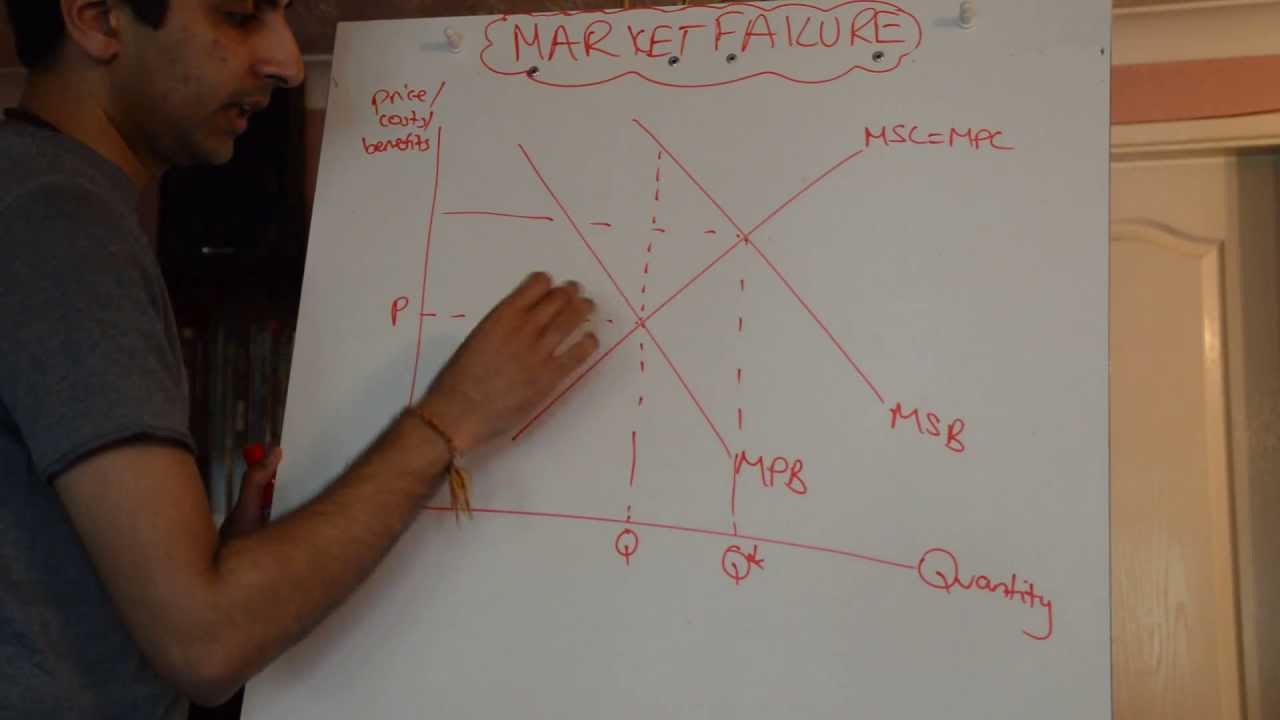
Added:hello welcome to Video 17 which is all about negative externalities uh negative externalities uh are costs which um are generated in a market when economic activity takes place but uh these negative externalities create problems because it distorts the market and uh these costs are ignored by the buyers and sellers in the market and consequently the market does not deliver the optimal level of output and hence that's market failure so um this video aims to identify for you what negative externalities are the kinds of industries that they occur in and the important diagram uh that you must learn regarding negative externalities so um let's let's get on with it so we must first of all identify the different kinds of costs that result from economic activity private costs private costs are paid by the buyers and sellers when economic activity takes place they are within the economic transaction so these are the costs literally paid by the buyers and sellers and they are the costs that they're considering as they decide whether to go ahead and buy or indeed produce uh the good in question external costs these are paid by Third Pary is to to the uh economic activity and are outside the economic transaction these costs are ignored by the by the price mechanism so they these are costs which occur which are ignored by the buyers and sellers in the industry even though they are costs generated they are in the economic activity in the market the buyers and the sellers ignore them because they don't have to pay them these costs are paid by Third parties not the buyers not the sellers but third party sometimes that's the rest of society social costs are the entire costs resulting from economic activity all of the costs the private costs and the external costs together make the ex the social costs and um hence we can say that private costs plus external costs equals social costs okay now likewise we can identify benefits resulting from economic activity so private benefits are enjoyed by the buyers and sellers when economic activity takes place they are within the economic transaction and that's the reason buyers and sellers go ahead and do economic uh activity because they see benefits but what they are seeing is the private benefits the benefits that they will enjoy external benefits ACR to third parties this word ACR this verb ACR simply means go to uh the third parties of to an economic activity and are outside the economic transaction these benefits are ignored by the price mechanism so these are benefits which are not considered by the buyers and sellers because they're not going to enjoy these benefits um but maybe beyond the benefits the private benefits that the buyer and the sellers get are other benefits which are enjoyed by Third parties but that would be no motivation for the buyers or the sellers to go ahead and and do economic activity because they're not going to get those benefits and finally of course social benefits is the combination of private and external benefits they are the entire benefits resulting from economic activity so again we can say that private benefits plus external benefits equal social benefits so this terminology that we use when we deal with externalities has to be learned and that's why i' I've gone ahead and done that now the private and external costs and of course the entire social costs and the private and the inter external benefits and the social benefits to be able to see that there are benefits and costs which some of which are enjoyed by the buyers and sellers which is the motivation to doing economic activity and some are beyond the buyers and sellers and that dichotomy that difference in these types of costs and benefits creates the market failure because buyers and sellers only think as they consider whether they should or shouldn't do economic activity they only think about their private costs and benefits and it is upon the private costs and benefits they weigh up whether economic activity is worth pursuing they ignore the external costs and benefits but if we want the best thing for society which is what we hoped that the market mechanism would achieve then we need to get the best socially efficient or socially optimal level of output which is the best level for all of society which must consider all of the costs and benefits so let's let's uh go through that now why is there market failure in markets with externalities because the market mechanism produces the market generated level of output and not the socially optimal level of output the best level of output for society that's there's the problem when we have a market that generates too any negative externalities we get we get over production the market mechanism leads to over production in the market the market generated level of output is beyond the socially efficient level of output when there are negative externalities in place let's take an example industry the tobacco industry which is on so many examinations private costs of course paid by the buyers and the sellers include things like the raw material costs labor costs energy costs marketing costs Transportation uh tobacco plantations um or you know buying the land and then and then clearing the land and growing to it's all the fertilizers used everything all of these are private costs which are calculated in to see whether it's worth doing this economic activity of tobacco but in addition to these private costs there are external costs very significant external costs when it comes to this product and these are costs not paid by the buyers and the sellers health care costs when people are sick from tobacco use uh and are hospitalized um it's likely that they're using State uh health care and that's paid for by the general taxpayers of the country health care costs lost productivity as smokers are off sick uh passive smoking issues where people are exposed to tobacco smoke and get sick themselves even though they're a third party that buy or sell the cigarettes fire damage of course litter and emotional costs uh which are suffered paid by those around smokers who see smokers get ill okay these are so just to show you with this with this example industry the difference between the types of private costs and external costs but together they make the social costs of of the uh industry so let's take a look now at a diagram a basic negative EX externality diagram well we identify that there are marginal private benefits and these are decreasing what that means is that the the extra benefit marginal this tricky word the extra benefit earned or enjoyed from having yet another one of these items will be lower than the benefit achieved from the previous item a good example is if very very thirsty and you you want to drink water the first glass of water you drink gives you a lot of benefit the second glass of water you drink gives you some more benefit but not as much benefit as the first glass did the third glass of water gives you again a little bit of benefit but not as much as the second one and certainly not as much as the first class so the extra benefit is less than the benefit of the the unit previously consumed okay that's the concept of falling marginal private benefits and there are ring marginal private costs now I'm not going to explain why that is in this video but the extra cost of producing you get another unit to do with the law of diminishing returns you can look that up if you wish but let's stick with the externalities so for consumers of tobacco and suppliers of tobacco this here is the market generated level of output you see until this point it is worth producing producing and consuming because all of the units up to this point deliver more benefit than they do cost this unit for instance delivers this much extra benefit but only this much extra cost it was worth producing and consuming but beyond this point there is nothing to be gained from further production and consumption because a unit up here would would deliver much more extra cost than benefit so why produce it so this is where the market would produce don't think this is demand and Supply it's not this is shows us the market level of output but they're only considering their private benefits and private costs if I now add to this other costs external costs negative externality costs I have to add to these private costs and I'll do it like this so now i' I've said there's the marginal private cost but now I've added the social costs as well and I'll assume that there are no exter benefits to this good so although this is the marginal private benefit it is also the marginal social benefit as well so now I can see that although the market would leave us with this much the best level of output for society which is where the social costs and the marginal social benefits meet is here let's call that the socially optimal level of output the market has failed because the market delivers a level of output Beyond what's good for society Society only wants this much the market has delivered this much the market has failed there has been over production and all of these units that get produced extra beyond the socially optimal level if we leave it to the market are all delivering more cost than benefit in fact they're all delivering more cost than benefit and that area there which is the the excess cost over benefit for all of those units is known as the welfare loss if you like it's the size of the market failure it's the size of the problem if we leave things to the market now how now let me give you a clean version of that diagram um there so there's that's much neater isn't it so uh you'll notice that I've not drawn these parallel the additional costs the external costs you can draw it parallel but it probably wouldn't be parallel because the more the consumption the bigger would be the external costs so the gap widens between private costs and social costs the gap between these two costs is of course the externalities the external costs so um so there is the over production um how the the the the government would correct this problem intervene and correct this market failure I deal with inid 20 um but there we are that that's a key diagram for you to learn with negative exter analysis when I first started putting up um videos on YouTube and and and uh today it's I'm in July 2013 it's about uh 6 and a half years ago that I first my very first video was this diagram negative externalities because it's such a key diagram and yet such a misunderstood diagram okay so it's a very important diagram for you to learn negative ex analysis I hope that helped and um see you in the next video
Up Next

Externalities: Market Failures & Policy | MIT 14.01 Economics Lecture
@mitocw
5.7K views•2025-04-02

Impact of Yuan in Indo-Russian Trade Amid Sanctions
@WION
261.9K views•2022-07-01

AS-Level Economics: Labour Market Equilibrium & Wage Elasticity
@pajholden
32.1K views•2013-11-11

The Age of Easy Money: Fed & Inflation | Full Documentary
@frontline
21.2M views•2023-03-15
Related Study Plans & Knowledge Roadmaps
Structured learning paths in Economics