


























Labor markets operate like any other micro market with supply and demand curves, where firms demand labor and individuals supply it; the equilibrium wage rate occurs where labor demand equals supply, and shifts in these curves (caused by factors like technology changes, population size, migration, or tax policies) affect both wage rates and employment levels, with wage elasticities measuring how responsive labor demand and supply are to wage changes.
AS-Level Economics: Labour Market Equilibrium & Wage Elasticity
Added:The basic principles of market demand and supply, including how equilibrium price and quantity are established.
The concept of price elasticity (specifically Price Elasticity of Demand and Supply) and how responsiveness to price changes is measured.
The fundamentals of the labour market, particularly the concept of 'derived demand' and the factors that shift the demand and supply of labour.
The theory of government intervention through price controls, specifically how price floors (minimum prices) create surpluses in standard markets.
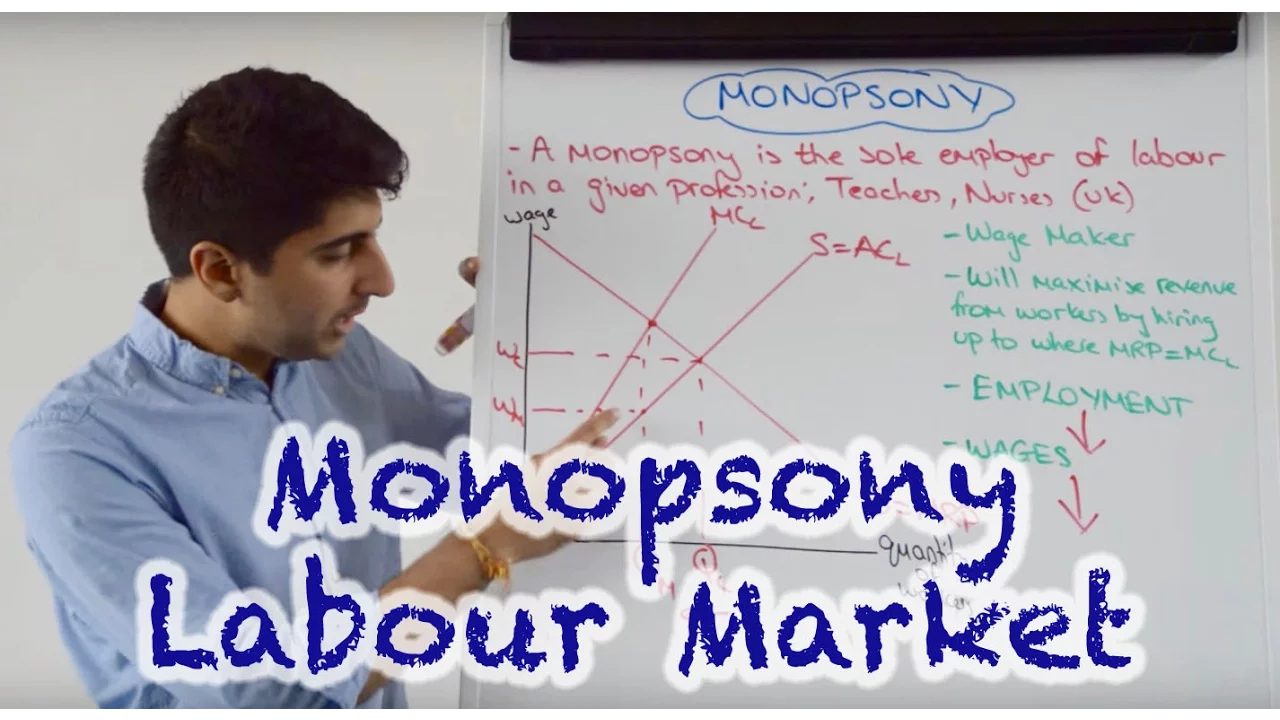
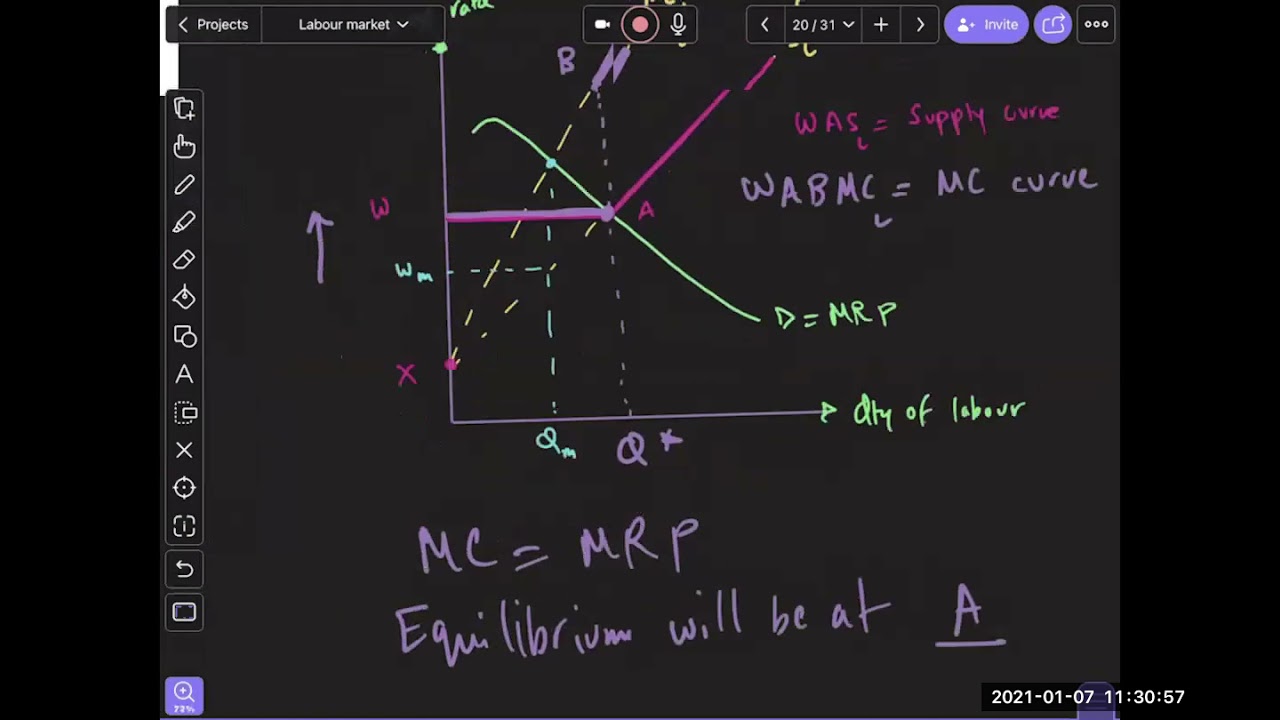
The study of imperfectly competitive labour markets, such as Monopsony, where a single employer has market power to set wages.
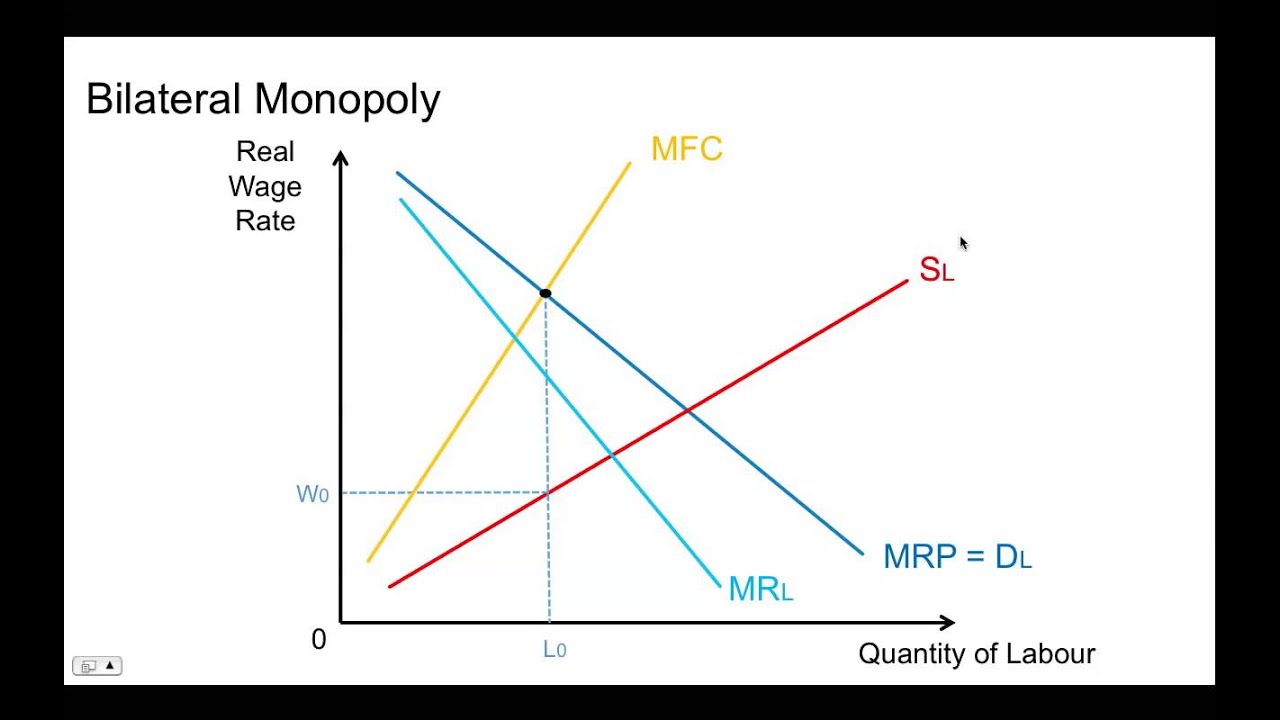
The economic role of Trade Unions and bilateral monopolies in collective bargaining and wage determination.
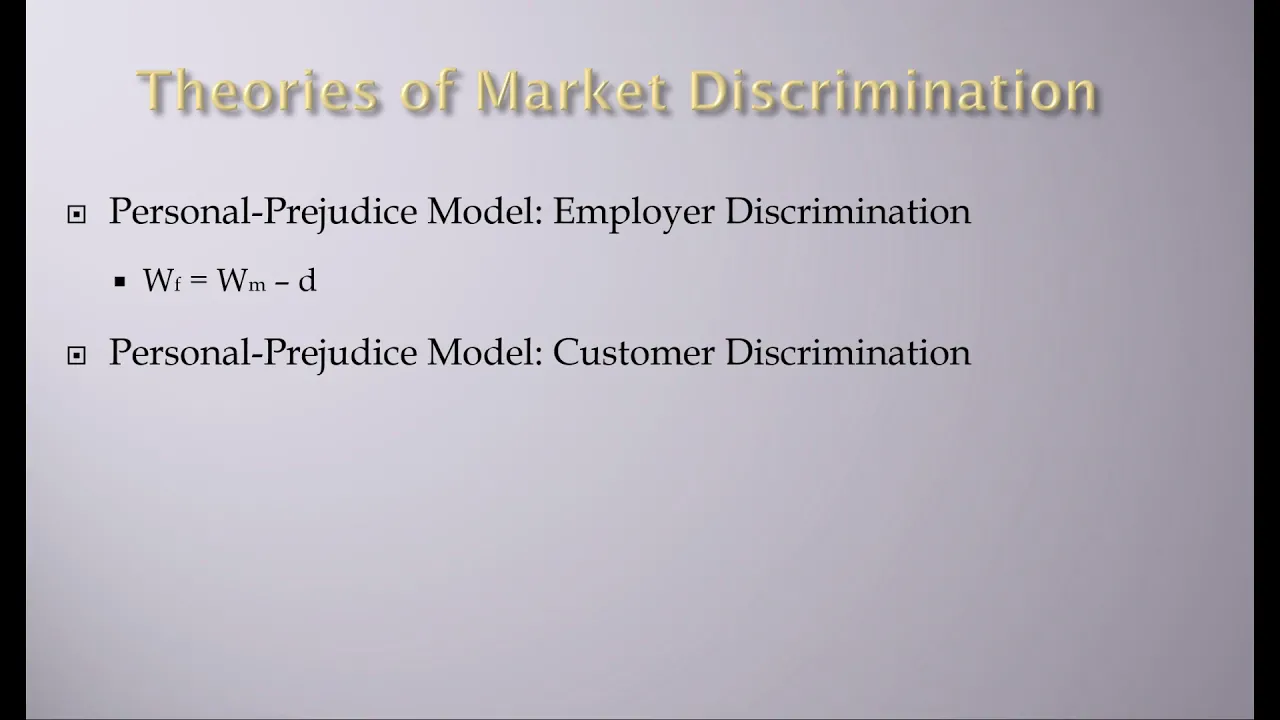
The causes and consequences of Wage Discrimination across different demographics and sectors.
Analysis of alternative government interventions in the labour market, such as maximum wage caps, universal basic income (UBI), and retraining programs.
32.1K views211likes16:15Original Release: 2013-11-11
Hello, welcome to video 15, labor markets.
Um, labor markets can be can be thought of precisely uh in the same way as any other micro market um in terms of demand, supply, equilibrium.
Uh, there are there are slight differences though. The main difference is this.
Um, what's different about labor markets? Not much except you've got to remember that in labor markets, unlike the markets for goods and services, firms do the demanding, people do the supplying. It is firms demanding labor and people, individuals, supplying their labor for the firms.
Okay, but once you get your head around that, it it these markets operate precisely like any other markets. So, let's take a look at a labor market. So, here we have the supply of labor and the demand for labor, an equilibrium price and quantity. Okay, the price of labor is the wage rate. So, we've got wage rate up here. You might see W, WR, you might see P.
Um, I put wage rate W1, wage rate one, it's the equilibrium wage rate. It's the wage rate at which demand equals supply.
Um, that's the only wage rate where the amount of individuals, units of labor that wish to work at that wage rate are all employed because there is demand for precisely that many workers as well.
Um, this is the supply of labor is upward sloping indicating that at higher wage rates people are willing to to give uh give up more of their time and supply themselves as labor. And the demand curve is downward sloping because firms uh the higher the wage rate, the less labor they wish to employ. Um perhaps there are other factors of production they can use, or perhaps they simply don't need as much labor because costs are so high they don't sell as many products, whatever it is that that they are making with their labor.
So, and at lower wage rates they're willing to uh employ more uh people.
They demand more workers.
And here we have quantity of employment.
That's the quantity on this you know, it's price and quantity just like every every other micro market.
Okay.
Um and just like any other micro market, these curves can shift. So, let's now take a look at what can make a curve shift, demand curve for labor or supply curve of labor, and uh and look what what that does to the equilibrium wage rate and quantity of employment.
So, first of all, we'll look at demand.
Factors that can shift the demand for labor.
You know, the position of that demand curve, where it is, depends upon factors such as these. And if one of these factors changes, uh it's going to um cause the demand curve to shift. So, price and substitutability of other factors of production. So, there are cases where firms can either use labor or capital, and they can substitute uh one or the other. Now, if capital um becomes cheaper, or if capital becomes uh more possible to use, more substitutable uh against labor, then we might see a fall in the demand for labor. Well, if the price of capital goes up, and capital becomes less possible to use, then we might see the demand for labor rise, and the demand for labor would shift outwards. If there are improvements in technology, it's likely that that uh it's going to be possible to to produce goods without as as many um units of labor employed. So, improvements in technology might cause demand for labor to fall. On the other hand, it might create new opportunities for labor. New industries could develop.
Improvements in technology in one country might make that country the most competitive country in the world in the global economy, and it might create jobs.
So, you know, if that could work either way. Demand for the good labor is making because labor is always in derived demand. Of course, when the demand for a good changes, so the demand for labor to make that good changes. So, as for example, there's been a a decline over the last 20 years, I don't in video cassettes and video recorders. I don't think anyone uses video cassettes anymore hardly.
So, there's been a demand a fall in the demand for labor to make video cassettes and video recorder technology.
Meanwhile, other industries have grown and other industries and the goods have grown in demand, and that's created demand for labor. So, in environmentally friendly green industries, there's been a great growth in that in that area of the economy, and of course, that's led to an increase in the demand for labor in that in those industries.
So, changing demand for a good will lead to changing demand for labor in that industry. And we can explore what that means. So, here we have an industry there's demand supply curve is currently equilibrium wage rate one. If for instance, capital becomes less available and more expensive, and so there's more demand for labor, or if perhaps the demand for the good that is being made by this labor rises, we're likely to see an increase in the demand for labor, and that's going to mean more people are employed, and and the the rate increases to W2. So, um you know, that that that would have been caused by as I said uh uh an an increase in the demand for labor because of a less attractive capital as a substitute.
Perhaps the capital got more expensive.
Perhaps the capital was for some reason less available. Or there was an increase in the demand for the good which this labor was was was making.
Um let's move on. Let's Let's look at now uh factors that can shift the supply curve of labor.
Uh again, the position the initial position of the supply curve is is affected by all of these issues.
And if any of these change, then we'll shift the supply curve. So, changes in the size of the population. If there is more people then there is going to be more supply at every wage rate. We would see an outward shift of the supply curve showing more supply at every wage rate.
Likewise, a fall in the size of the population would have the reverse effect. Supply curve would shift inwards.
Changes in migration flows because there are constantly people entering and leaving a country. And according to the net overall migration flow, if there's a net outflow of workers, that would reduce the supply. A net inflow would increase the supply of labor. Changes in the school leaving and retirement ages.
If retirement ages are pushed back, it means there's more supply of labor at every wage rate. Many Western countries are currently pushing back their retirement age because they're facing pension payment problems. The state is. And also because people are living longer. And there's an aging population. And also because people in their mid-60s are much healthier and have much more to offer in terms of work work-related way than they used to. And so, most countries are are pushing back the retirement age 67, 70.
And this is going to increase the supply of labor.
Uh same as school leaving ages, if the longer children have to stay in education, uh the the less supply of labor there is.
Changes in income tax and availability of benefit payments. The lower the income tax is and the less available benefits are, the more supply there will be of labor. People will make the decision to make themselves available uh as a unit of labor and supply themselves if they are attracted by a low enough tax or by the non-availability of benefits.
If benefits are made more available and if income tax rises, then fewer people will be willing to make themselves available to work.
So, let's show how that any of these things could affect uh equilibrium wage rate. Let's say that the government passes a law that lowers income tax and also reduces the amount uh of benefits available to people not working. That is likely to raise the supply curve of of uh of labor uh as more and more people at every wage rate say, "I'm willing to work. I make myself available to work because I don't get taxed so much or because the benefits are so poor I can't live on the benefits."
And that's going to have the effect of lowering the wage rate and increasing the quantity of people working. This effect could also have been had if more people entered the country than left the country or if um the size of the population grew or retirement age was pushed back. Um and the opposite would be of course an inward shift of the supply curve uh for the reverse of all of those issues.
Okay.
So, okay, let's have a quick look at wage elasticities. You know, wage elasticity of demand, wage elasticity of supply is just a further application of elasticities, price elasticity in fact, that you've already learned and understood. So, we can apply this to labor markets, and this may or may not be on your syllabus.
Ask your teacher or or your lecturer, uh but uh you should be able to understand this pretty straightforwardly. Wage elasticity of demand, then, it's a measurement of the responsiveness of demand for labor when wages change. In other words, when wages rise, when wages fall, yes, that will affect the quantity demanded by firms of labor, but will it make a big change in how much labor they demand?
And, you know, I've got two diagrams, two demand curves here, very elastic, very inelastic demand. Um let's have a look at this. And look, this is very elastic, and that means that when when wage rates um just change a little bit, from W1 to W2, there's a very pronounced change in the quantity of labor being demanded. A small change in wage leads to a big change in firms' uh willingness to to change how much labor they demand.
And, you know, that that's the case when when labor is very uh a very easily substituted for capital.
Um so, uh a firm which has an easy choice about using machinery or workers may, you know, if the wage rises just a little bit, they may say, "Right, let's get rid of lots of workers. It's It's much easier. We can bring in capital and use that now." Because it's so easy to substitute one for the other. That would be an example of of when there would be very elastic demand. But, the reverse is true here, where even, let's say, let's take wage rate there, starting there, W1, Q1. Look what happens when I increase and double the wage rate, it barely changes the quantity demanded.
This would be the case where it's the firm simply has no choice. They almost have to employ these workers. Even when their wages double, they barely reduce the the quantity nearly. There's no substitutability with capital.
Um and perhaps also, you know, um it could be a very capital intensive industry where, even though the wages doubled, wages as a whole represent a tiny amount of the total cost of the firm. So, it may not actually affect the cost of the firm very much.
An example might be oil rigs where oil rig workers represent less than 1% of the total cost of running an oil rig.
So, if the oil rig workers doubled, then it wouldn't be true. They don't want it to happen, but the firm would would have to carry on employing virtually the same number of people, and it wouldn't represent that much of a change in their in their total costs because the wages only are a small part of the total cost. It's mostly capital intensive.
Okay, moving on. Um Moving on.
Wage elasticity of supply.
A measurement of the responsiveness of supply of labor when wages change.
Elastic and inelastic. This is measuring in particular industries how much there is a change in how many people wish to work in an industry when wages change.
In an elastic supply industry, when the wage changes, it makes a big reaction.
So, when the wages go from W1 to W2, there is a very large reaction in the amount of people willing to work in this industry. This would be typical in a low-skilled industry where it's very easy for people to enter the industry, make themselves available.
They don't need a lot of training. They don't need particular qualifications, and they can switch. So, it might be um I you know, it might be a a cleaning job uh or um uh or a basic office job or or or you know, working at harvest time in agricultural in the agricultural industries, it's quite easy to to to make yourself available. But, imagine this situation where even if wages went up a lot and I'll show a game wages doubling and yet it barely has any change in the quantity being made or if I make it brain surgeons or something like that where, you know, the the pay goes up enormously and yet not many people can make themselves available because it takes so much time to train and most people would be able to do it anyway. And so it's it doesn't really affect the number of people making themselves available as brain surgeons. It might bring a few ex-brain surgeons out of early retirement or something like that or there might be a very very few people who are qualified brain surgeons, but at the same time were also concert pianists or professional footballers or economics teachers and they they switch out of that other job back into brain surgery attracted by the higher wage, but it really won't be many people at all because it's it's very inelastic supply.
Okay, let's let's move on again.
Minimum wages. Now, I've got a separate video on minimum wages coming up later, but let just to show you that if the government imposes a minimum wage, that can disrupt the market's ability to establish an equilibrium wage. Here, if the wage rate is set above the minimum wage rate is set above the equilibrium wage rate, it the the equilibrium cannot be reached and it creates excess supply.
You know, the lowest the wage can go is this minimum wage and that means that the quantity demanded is here, the quantity supplied is here. Market forces want to take the wage rate to W1, the equilibrium, but the law says no, and that creates excess supply. More people wishing to work than there is demand for the workers. That's unemployment. Excess supply is unemployment in a labor in a labor market, and we look at that later when we look at market failure in labor markets.
Okay? So, so there we are. That's an introduction to labor markets. Very, very similar in its its operations and its mechanics to regular markets for goods. It's just that you have to think of it in terms of the firms doing the demanding and individuals, people, doing the supplying.
That's it. Okay? Thanks a lot. Bye-bye.
Up Next
5:06
Marginal Productivity Theory of Wages Explained | Economics
@KanwalSidhu13
9K views•2022-07-03

5:07
Impact of Yuan in Indo-Russian Trade Amid Sanctions
@WION
261.9K views•2022-07-01

12:35
Negative Externalities in AS Economics: Costs & Diagram
@pajholden
56.8K views•2013-11-18

113:18
The Age of Easy Money: Fed & Inflation | Full Documentary
@frontline
21.2M views•2023-03-15
Related Study Plans & Knowledge Roadmaps
Structured learning paths in Economics
economics
Sovereign Debt: Defaults, IMF & Restructuring
01Introduction to Sovereign Debt & Government Bonds
02Debt Sustainability & Credit Ratings
03Anatomy and History of Debt Crises
+ 2 more learning modules
12h5 modules
Explore Roadmap
economics
Market Design: Matching Theory & Gale-Shapley
01Introduction to Market Design and Price-Free Markets
02Two-Sided Matching & The Gale-Shapley Algorithm
03School Choice Systems and Mechanism Design
+ 2 more learning modules
10h5 modules
Explore Roadmap
economics
Impossible Trinity: Forex, Capital & Policy
01Introduction to Monetary Policy and Central Banking
02Exchange Rates and International Capital Flows
03The Mundell-Fleming Model
+ 2 more learning modules
8h5 modules
Explore Roadmap
economics
Healthcare Economics: Market Failures & Systems
01Introduction to Healthcare Markets and Market Failure
02Asymmetric Information and Adverse Selection
03Moral Hazard and Insurance Design
+ 2 more learning modules
12h5 modules
Explore Roadmap