






![[VẬT LÍ 12 - BỔ TRỢ ] OT4.2: 40 CÂU TLN HẠT NHÂN TỪ ĐỀ THI TRƯỜNG SỞ (P2) || IPclass](https://i.ytimg.com/vi/sAWdWUrjYXM/maxresdefault.jpg)







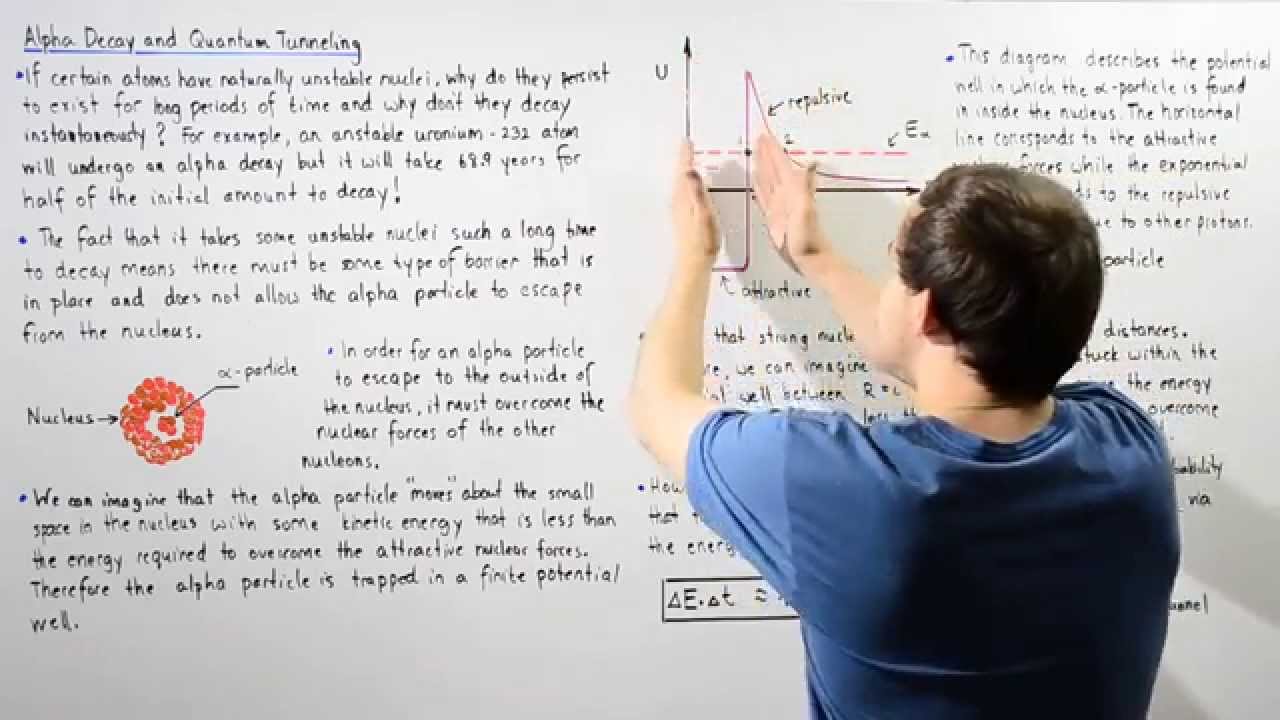

The nucleus is held together by the strong nuclear force, which overcomes the electrical repulsion between protons, and radioactive decay involves nuclei transitioning to lower energy states by emitting particles (alpha, beta, gamma) or photons, with the decay rate following exponential decay described by the half-life equation.
Nuclear Physics Fundamentals: Protons, Neutrons, and the Strong Force
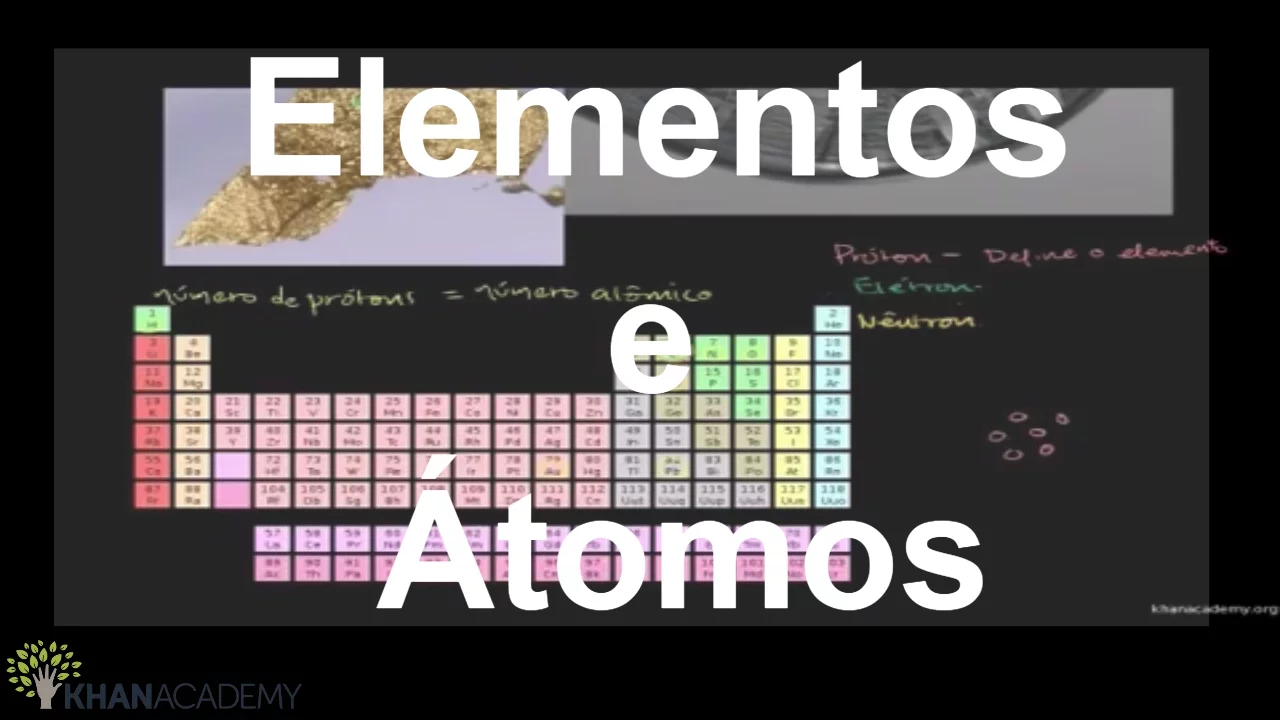
Added:Basic atomic structure, including the definitions of protons, neutrons, electrons, and the concept of isotopes.
Coulomb's Law and electrostatics, specifically the concept that like-charged protons repel each other.
Einstein's mass-energy equivalence principle (E=mc²) to prepare for the concept of mass defect and nuclear binding energy.
The thermodynamics and mechanics of nuclear fission and fusion reactions, including applications in energy generation.
Stellar nucleosynthesis, examining how nuclear reactions fuel stars and create heavier elements in the universe.
An introduction to the Standard Model of particle physics, detailing quarks, gluons, and the fundamental strong interaction.
Quantum tunneling as a physical mechanism to explain alpha decay and overcoming the Coulomb barrier.
176 views0likes46:59Original Release: 2020-03-29
okay welcome back the way I'm recording these something odd might happen when you watch the ones near the end because I'm actually doing them quote doing them quite a bit early it's the 28th of March today while I'm recording this in which will happen closer to the middle of April so then maybe thinks happening in the world that I'm completely look like I'm completely oblivious to that's not because I'm stupid it's because I'm early I'm actually recording this one for the second time the first time I did it I was sleepy I was yawning I think I did that once before and I was just terrible so I'm gonna do this again and try to make it more interesting alright here we go questions from last time number one what does the notation 1s2 2s2 2p3 mean it's one of these four so I'll give you a minute though we should have some light here okay and the answer is it's nitrogen has seven electrons two of them down in the bottom state one s two two electrons over there on the left side of the periodic table lithium and beryllium and then in the 2p States there are three electrons and that's what nitrogen looks like the correct letter order for l equals zero comma 1 comma 2 comma 3 is which one of these and that's right it's spdf and you just have to memorize that maybe half from chemistry the reason that there are 10 3d elements is that all four of these calculations are carefully designed to give you the number ten but only one of them is the reason that there are ten 3d elements and the answer is C in the N equal three for n equal three which is can have Al's of zero one and two for the L equal two case the M values can go from minus 2 minus 1 0 1 & 2 that's 5 quantum states and you can put two electrons in each quantum state because the in each one you're gonna have spin up and spin down and so that makes 2 times 5 which is 10 before the reason that the 10 3d elements are not in the n equal 3 row of the periodic table is that it's B the electrons and the 3 orbitals are crowded together it raises their energy and pushes them up into the next row number 5 the far right column in the periodic table consists of atoms whose L shells what and you probably read about this or remember from chemistry those are elements whose L shells are completely filled with electrons spin up spin down they're happy they like it and they're called right over there they're called the noble gases having every electron orbital full means that they don't want electrons they don't need electrons and so they almost don't react chemically at all all right nuclear physics gonna talk about quantum mechanics and relativity right down to the center of the atom and equals MC squared and it's cousin M equals E over C square figured prominently in the physics of the nucleus let's take a little review what matter looks like here's a steel beam if we look at that steel beam a little closer and brush it a little bit it looks like this if you get up closer it starts to look like this you start to see the imperfections on the surface but you can't see the atoms yet but you can see the stuff that we just can't polish away or don't care to then if you get real close no that's just a little joke okay so get that one and if you go even closer you start to see the molecular structure this is a way of imaging surfaces without using light so this isn't a light image this is what using something called atomic force microscopy and you start to see the individual atoms and how they're arranged and you can see kind of crystal patterns down there although it doesn't make one big pretty crystal like a diamond that makes a whole bunch of little jumbled up crystals if we go down to the atomic level then we see individual iron atoms and we can't image those in this picture these are the sum D orbitals for the iron atom that's what it's a valence electron look like they're in these kind of states I just made a little tiny yellow dot show up did you see it I'm gonna point to it for you that little tiny yellow dot there I'm trying to show you the nucleus but even that dot that you can hardly see it's 500 times bigger than it should be to be the nucleus so the ANU clays is just incredibly small at the hundred thousand times smaller than the size of these orbitals that you can see here in this picture if you get down really close to the nucleus it would look something like this it looks like a bunch of jelly beans I'll held together by some kind of stickiness protons and neutrons to mix together this is about what an iron nucleus would look like if you look at each individual proton and neutron they're not actually point particles they have stuff in them they're called up and down quarks we'll talk about these right at the end of the semester and so they even have stuff in them as well this is crazy we just went from a distant scale of 2 meters for the steel beam down to the iron nucleus at 2 times that of the minus 15 meters 15 orders of magnitude to get from that beam down to the nuclei which give the atoms in the beam their mass here's the question for you why don't the protons in the nucleus repel each other and blow the nucleus up making it impossible to have a nucleus in the first place and the answer is there is a stronger force than electricity that work here not very originally physicists have named it the strong force which seems kind of silly but that's what it's called it's called the strong force and it's much stronger than the electrical force over very tiny distances it's quite different from the electrical force which falls off like 1 over R squared the strong force only works if the two objects are practically touching each other you move them further apart than that and and electricity will win and so that's why nuclei have to look like all the protons and neutrons are touching each other that's the only way the strong force can work how do new Tron's help keep the nucleus from blowing up she read I'm not sure you thought about this but it's an interesting question so one answer is that the strong nuclear force is sticky and the more stickiness there is holding protons together the better and so the neutrons help with the stickiness you have not just protons sticking to each other but the neutrons help stick the program protons together - ok that's true I think maybe an even better reason is that the neutrons space the protons out so that they can't repel each other quite so strongly the other two answers not so good ok electrons in atoms inhabit fuzzy standing wave patterns of probability the same thing is true of protons and neutrons in the nucleus - or false that is true protons and neutrons do exactly the same thing quantum mechanically in the nucleus that electrons do in the atoms the force is different and so they respond to that force in a little different way but the fuzziness and probability and all that stuff is still there it also applies in the nucleus we'll see some examples of that later okay we have protons we have neutrons when you have electrons proton has a positive charge of one electron unit of charge one point six times ten to the minus nineteen coulombs the proton is a spin 1/2 particle which means it's an anti-social fermion and it has a mass in atomic mass units of one point zero zero seven three the atomic mass unit is built so that it roughly counts protons and neutrons except for those extra decimal places out there which don't have to be very important but the leading figures just tell you what you have so you have one proton that's like a 1 a neutron is also close to a 11.00 18 in mass it has no charge it's also spin 1/2 so it's antisocial the electron has a much smaller mass and it's charge minus 1 electron unit it's spin 1/2 and we're gonna use this today an atomic mass unit is one point six six zero five three nine times ten to the minus twenty eight seven kilograms so in a nucleus what happens is the protons repel each other but the strong nuclear force overcomes this repulsion unless the nucleus gets too big and what happens if it gets too big is that this short-range stickiness that only works between one little nuclear particle on another that stickiness is just not strong enough to overcome the big electrical repulsion of all of those protons then a large nucleus and so the nuclei just cease to exist out beyond uranium we can make them and they last for a while but they're not stable they don't stick around okay question an atom with one electron or an excited state can drop to the ground state by doing what you probably really know this by now they emit a photon as they go down and this is an example of a Fermi on changing its energy state by interacting with a boson which is that the photon is to facilitate that change in energy we'll see other examples of that today a neutron is quite similar to a proton but it has a little more mass I don't know if you notice that on that slide where the masses were but the neutron is a little heavier than the proton well if energy is MC squared that means that the neutron is in a height state of higher energy than the proton and you read about this the neutron can actually change into a proton by doing what by analogy with what electrons in high-energy states do the answer is it emits a weak force boson as it goes down in mass slash energy to become a proton and that actually happens if you take a neutron out of the nucleus and just put it out in the air let it hang there in about in about ten minutes it's not certain but in about 10 minutes it will turn into a proton hopefully this is the atom picture you have in your head that there are these fluffy electron balls probability balls forming standing waves waves around the tiny hard center of the nucleus and it's the electrons behaving in these fluffy standing wave type ways that makes all of chemistry possible the nucleus picture you should have in your head is that it's a solid mass of little proton and neutron balls which are also fuzzy they're fuzzy balls of probability and they're stuck together by the strong force that's the uranium nucleus there all right there is a nuclear periodic periodic table just like there is an atomic periodic table the naming scheme that we use for nuclei is similar to what we use for chemical elements there's a number that's up in front of a letter symbol that's called a and a is the number of neutrons plus protons the number that's down the Z that's the charge number is the number of protons which of course then is also the number of electrons in the atom that this is the nucleus of and then in that X spot you put the chemical name of the element so for example carbon-14 which has carbon has six electrons carbon-14 has 8 Pro 8 neutrons and so it has 14 neutrons plus protons and we put the C there to remind ourselves we're talking about carbon it's redundant the six also tells us we're talking about carbon but it's become traditional to give these elements names and so that's how we do it protons and neutrons feel energy levels caused by the strong nuclear force it's very similar to the electron energy levels in the atom and actually quite a bit like particles in a spherical box because the the strong force either holds particles together or it doesn't and it kind of puts the the particles in the nucleus down in a well that feels kind of like a flat bottom and so it's a lot like particles in a box the protons and neutrons are spin 1/2 fermions so in a given quantum state you can put 2 protons and no more but the neutrons are different and so you can put two of them in there too so for instance in the equivalent on the nuclear level 2 the 1s quantum state where in an atom you can only have two electrons in the nucleus in that bottom state you could have two protons and two neutrons so for particles in one quantum state experiments show that the radius of the nucleus is approximately given by this formula its order of magnitude is 1.2 times 10 to the minus 15 meters and then that's multiplied by the number of protons and neutrons inside the a number raised to the 1/3 power if you work out what kind of a density this makes this is a density of about two times 10 to the 17 kilograms per cubic meter it's an enormous density completely off the charts compared to any densities that we have from substances on this planet and that means that atoms are mostly made of nothing if you call somebody an airhead that's a compliment it's mostly a vacuum if there's nothing there and it said you might wonder why the radius of the nucleus is proportional to the number of protons and neutrons a raised to the 1/3 power so consider a little hard spheres of volume Delta V what would be the radius of the sphere that they make when you stack them together well there's some empty space when you pack spheres together but still the total volume of the combined sphere ought to be proportional to a and then I apologize and formulas down below I have a capital in that capital n should be an a and when I post these slides I'll fix that so the volume which is 4/3 PI R cubed ought to be something like the number of protons and neutrons times the little Delta V that each one has and then if you solve that for R then you get a bunch of constants and a number of particles and/or a raised to the 1/3 power okay just like electrons and atoms are bound and sit down in a in energy well for instance the the electron in the hydrogen atom is down in an electron well it's thirteen point six electron volts deep the strong nuclear force also causes the nucleons in the nucleus to be down in a really deep well that they can't get out of and this strong force holding the particles together is the thing that stabilizes the neutron which would like to be K into a proton after about ten minutes the strong force stabilizes that neutron so that it doesn't BK it because stays stays a neutron if you want to know how deep this energy well is you can use equals MC squared and then look at the masses of the things that make the nucleus up the difference in the masses will tell you how deep the energy is that sounds kind of nebulous so let's actually do the example so here's the mass of a proton in kilograms the top here's the mass of the neutron in kilograms and there's the mass of an alpha particle nucleus the the helium nucleus is called an alpha particle and I've taken the two electrons off the helium mass to get the mass of the helium nucleus all by itself so there's the mass of the helium nucleus right there six point six four four six five seven two times ten to the minus 27 kilograms so let's take the mass of the things that make it up two protons plus two neutrons use those Neutron and proton masses up there you get six point six nine five times ten to the minus 27 kilograms compare that to the mass of the nucleus and they're not that close the things that make it up are heavier then itself that's kind of odd well the reason is that there's negative energy involved in the binding and so the mass of the nucleus is less than the masses of the things that make it up if you do the subtraction there that change the Delta M is minus five point zero four five times ten to the minus 27 kilograms where did this mask oh well it's it's energy it's the binding energy and it convert that Delta M into energy by multiplying by C squared and then dividing by the conversion factor for electron volts those nucleons are bound in there by about twenty eight point three mega electron volts that's a million times stronger than the potential well for an electron in the hydrogen atom so the energies involved in the nucleus are just enormous compared to those in the atom and then remember it's the energy differences in atoms that makes all of chemistry possible so dynamite and forest fires that's all electron volt type energies this is a million times more than that and so you'd expect this to be even more spectacular and it is this is these are the energies involved in things like atomic bombs and hydrogen bombs and in stars they all do nuclear burning instead of chemical burning whenever you need to do energy calculations in the nucleus you should use the table of masses at this website right here this is a really great website you can look up the masses of almost everything in the universe in this table if you then supplement it with Wikipedia like if you wanted to know what the different isotopes of Krypton are like just use Google Krypton isotopes Wikipedia and it'll give you a whole list this NIST table only has the ones that stick around for a while in the Wikipedia articles for each element you can find all of the even unstable isotopes they don't live very long and when you work with these make sure you keep lots of significant figures or your mass subtractions will be way off the masses in in this table are given in terms of you an atomic mass unit which again is 1.6 605 4 times 10 to the minus 27 kilograms then this table I should warn you is 4 atoms that means the electron masses are in there too if you want to know the mass of a nucleus you have to take the the mass and in this table and subtract the masses of all the electrons that it has to get down to the mass of the nucleus ok so here's an example of how you would do this let's look at carbon-14 carbon-14 as used in carbon dating works for ages like thousands of years it's a it's a kind of carbon that has eight neutrons in it six electrons and if you wait about six thousand years it will spontaneously change into nitrogen-14 by kicking out an electron what's happened is that one of the protons in that carbon-14 new click nucleus has decided to change into a neutron and by ejecting an electron no I said that wrong one of the neutrons in the carbon-14 nucleus has decided to become a proton and so that neutral neutron becomes a positive proton that doesn't conserve so it's got to throw some negative charge away and it does that by ejecting an electron something called an anti-electron neutrino also comes out we're gonna skip that for a while but in a couple of days we'll talk about neutrinos and then you'll know what that now if you're wise in the ways of chemistry you can see that there's a problem here there is no net charge on the left and there's a net minus charge on the right and that makes no sense charge is not conserved and that's because the way this reaction is written it's a shorthand for the real thing that involves positive nuclei and the real thing looks like this it's a carbon-14 nucleus with six positive charges in it that turns into a nitrogen nucleus with seven positive charges in it plus an electron and now if you check the charges you have plus six on both sides and so charge is balanced and that's good okay let's find out how much energy is released in this decay and we could if we knew the masses of the nuclei so we go to the NIST table we find that carbon-14 has a mass an atomic mass units of 14 point zero zero three two four one you and nitrogen 14 is 14 point zero zero three zero seven for you and the electron in atomic mass units is point zero zero zero a five four eight five eight oh that's so small the electron mass is just ridiculously small compared to those atomic masses who cares well you care because we're going to do subtractions and if you compare the masses of carbon-14 and nitrogen 14 they're very close they're the same to the third decimal place so yeah we care about this tiny electron mass so what we're gonna do now is we're going to get the nuclear masses by subtracting six electrons from the carbon 14 mass and by subtracting seven electrons from the nitrogen 14 mass to get these things thirteen point nine nine nine nine five and thirteen point nine nine nine 23 it looks like things have actually gotten worse in terms of their being close together but nevertheless we will plow ahead keeping lots of to give magnifica figures and so now we're going to check that before mass that's the carbon-14 and compare it to the afterword mask which is the mass of the nitrogen-14 plus an electron now I should be putting the mass of the neutrino in there but we the neutrino was thought for a long time to not have mass and now we think it does have mass but its mass is thousands of times smaller than the electron mass so we're just going to skip it so if you check those masses you and then subtract them you find that the carbon-14 is a little heavier than the products by about by a mass of 1.71 times 10 to the minus 4 atomic mass units we're going to convert this to energy now by using Delta MC squared it's two point five six times 10 to the minus 14 joules convert that to electron volts by dividing by one point six times ten to the minus nineteen and you get 160 kilo electron volts and if you look up this DK on Wikipedia it gives 160 kV so we did this right now this is tedious but this is what you have to do and you have at least one homework problem where you have to do this so keep lots of significant figures and be careful take the initial the mass of the initial stuff and subtract the mass of the final stuff from it you'll get a difference in mass which you can then convert it into energy this way to get the right answer for the energy that comes out of the reaction okay now you're thinking why didn't we do in the atom you start with an excited state which should be heavier because it has more energy and then it drops down to the lower mass lower energy ground state shouldn't we have done this for atoms well yeah we we probably really should have but the problem is that with those low energies in the low energies in the atom compared to nucleus the mass differences are out in the eighth decimal place I think that's not even true I think it's more like the let's see four more like the twelfth decimal place or something and we can't make mash measurements that accurately so we don't do it this way for atoms only for nuclei okay we need to talk about isotopes an element is named for how many electrons and protons it has the electrons determine the chemistry of the element and that's why it has the name that it has is because of chemistry but if you keep the proton number the same and change the number of neutrons all you've done is changed something down in that tiny nucleus a hundred thousand times smaller than the atom the chemistry will be unchanged the chemistry pretty much doesn't care what you have down there these extra Neutron or maybe fewer Neutron cousins of an element or called isotopes and so now we should cue the baseball team on the Simpsons and if you want you can take a break go look up the Simpsons isotopes on YouTube the mascot homer clip is a really good one and then come back and we'll talk about isotope some more neutrons help keep the nucleus stable keeping it from decaying into another kind of nucleus but you can have too little or too much of a good thing if the nucleus number if the neutron number is too small so that you have too many protons then electrical reports only it's going to blow the nucleus up or more likely allow the nucleus to go to a lower energy state by changing a proton into a neutron that's called beta plus decay or you might have too many neutrons and then what happens is that the neutrons decay into protons that's called beta minus decay to go to a lower nuclear energy energy state and that changes the chemical name again so for Goldilocks nuclei the ones that are just right they have nearly equal numbers of protons and neutrons at the and of the periodic table and when you get up to the heavy elements it you need more neutrons to stabilize the nucleus and so I guess if you have more like 1.6 times more neutrons than protons and they heavy elements and here's an example this is mercury down here these all have a tea at the bottom they're all mercury if you did experiments on these things to see what chemical they are they're all mercury they do exactly what mercury does but their masses are different these masses different from 196 nucleons up to 204 the most stable one is probably right in the middle around 200 you'll notice that some numbers are missing a lot of the odd numbers are missing how come they're missing they're missing because they're radioactive they decay away and you can't find these in nature but all of these isotopes can be found in nature because they hang around for a really long time all right I mentioned radioactive decay we'd better talk about radioactive decay so radioactive decay is dangerous and here's how it works radioactive decay is always involves nuclei dropping to lower energy which means lower mass states by emitting radioactive particles and there's several kinds of decay of radioactive decay in beta minus decay a neutron in the nucleus turns itself into a proton kicks out an electron to conserve charge and an anti-electron neutrino this makes the proton number go up by one so Z goes up by one and a stays the same because it just counts protons and neutrons so that's what happens when there's too many neutrons an example of this is tritium this is a form of heavy hydrogen it has a proton that's the one and two neutrons plus one makes three for the the a up in the top we give it a T cuz we call it tritium but you could just you can put an H there as well because it's an isotope of hydrogen that will spontaneously get decay to helium-3 plus an electron and kick out an anti-electron neutrino then we have beta plus DK this happens when you don't have enough neutrons the abon can go to a lower energy state by building neutrons out of protons and so what it does is it takes a proton and turns it into a neutron which sounds crazy because the neutron used to have positive charge and now there's no positive charge in there well what it does is it kicks out a positron the positron is that little a plus thing down there and it kicks out an electron neutrino the Z goes down by one because you've lost a proton positron well okay what's a positron a positron is the anti particle of the electron and we'll talk about anti particles when we get to day 40 the positron has the same mass as an electron in fact and it's been a half and it behaves just like an electron except that it's positive instead of negative nuclei another way nuclei can drop to lower energy states by meeting radioactive particles that they can kick out an alpha particle an alpha particle is a fully intact helium four nucleus the helium four nucleus two protons two neutrons is just magically stable it's a combination of nucleons that just really like to be together and when you kick out a helium four nucleus it causes the Z number the proton count to go down by two and the a drops by four because to two neutrons went out there - and this is what happens from there too many nucleons in the nucleus when you get up in the high end of the periodic table the nuclear energy well that holds all these particles together is starting to get almost full almost as full as it can possibly get and if you put very many more in there you get up in the range of nuclei that just don't hang together at all and they just they just a radioactive or but you just can't make them they won't form an example of this is americium-241 it kicks out an alpha particle to become neptunium 2:37 you'll notice that the Z went down by 2 from 95 to 93 the a went down from 241 to 237 down by 4 and the helium nucleus comes out you have this radioactive isotope almost certainly in your smoke detector in your apartment or in your house then we can have gamma decay now this is something familiar gamma decay is just like an atom emitting a photon nuclei can be in excited States too you can have neutrons and protons or combinations of neutrons and protons up in higher energy levels above their ground state and they want to come down to the ground state and when they do they emit a photon because of the energy and energies involved these are not evie sized photons these are million electron volt photons called gamma rays you don't want to encounter these very often because they do damage to your cells but they work great in smoke detectors and in fact in that decay I showed you where the americium emits an alpha and drops down to Neptunian 2:37 the thing it drops down to is actually an excited state of Neptunian neptunium 2:37 and that's what the star means and that has 20 the ground state it emits a gamma ray so that thing up in your smoke detector is a little dangerous it's been shielded enough but don't take it apart and horse around with it and don't swallow the parts please these radioactivity types alpha beta and gamma they were given those names way back at the beginning when they were first discovered and nobody knew what they were they just knew that these were effects ABC is what it is in English alpha beta gamma is what it is in Greek the first three letters of the Greek alphabet it's a quantum-mechanical that is to say random process but if you've got lots of nuclei like 10 to the 25 nuclei or something a mole of nuclei then they kind of average out and you can actually write down mathematical equations that tell you what's happening and this is the mathematical equation it says if you have a radioactive particle and you got a bunch of them then if n is the number of radioactive nuclei that you have the time rate of change DN DT of this number is equal to minus a number lambda called the decay constant as units of 1 over seconds times the number of particles in that you have so the rate at which okay sorry kids what are you gonna do okay so the rate of change of the number of particles you have in this sample is equal to minus lambda times the number they're already there now I'd like you to go to YouTube now and look up a Geiger counter sound it's only a little 23 second click clip and if you listen to it you'll notice that the decays are not regular it'll go click prepare quick quick quick there's a lot of randomness and how often you get a click and in order to do mathematics with you have to average over pretty long times each of those clicks that you're hearing in there as a radioactive decay that was detected and we're gonna do math to describe but it's approximate math it's average math it's not telling you exactly what happens at every second in time to see why the number that decay per second is proportional to how many are already there you can do this fun experiment now you could do this yourself you get a cop and you fill it full of pennies and then you shake the pennies out on a table and you remove all the heads and count how many have left you started at 100 and maybe you only have 50 left then you put those 58 back in the cup shake it up pour them out on the table and remove all the heads and you'll get an exponential decay curve roughly it'll be bouncy because 100 isn't big enough to make it really work right according to the mathematics but it'll be close and the formula that solves that equation for how the number that you have goes down is this the number you start with n of zero times e to the minus lambda T that differential equation on the previous page is the very first differential equation you will solve when you start when you take a differential equations class because we know how it behaves in time now we could ask the question well how long does it take for half of it to go away the time for half of it to go away it's called the half-life and it's related to lambda and you can easily find it from that equation there in the middle with either the minus lambda T and you just said e to the minus lambda T equal to 1/2 solve for the time and you get that the half-life is log 2 divided by lambda and that works the other way around too lambda is equal to log 2 over T to the one-half and you'll use both of these when you do the homework so there's an example of this let's do radiocarbon dating carbon-14 dating the way this works is that cosmic rays are constantly coming in hitting nitrogen nuclei in the upper atmosphere and that makes carbon-14 this carbon-14 then percolates down through the atmosphere gets mixed up by all the weather that we have on the planet and gets incorporated with normal chemical carbon because chemically it's exactly the same as normal carbon and so animals eat it plants incorporated into their bodies and living things take it in and they put it out and they take it in and they put it out and so there's a steady-state ratio of carbon-14 to carbon-12 which is the ordinary form of carbon but when something dies they don't eat anymore they don't take anything in or put anything out they're just stuck with the way they when they died and what happens is the carbon-14 in their dead cells starts to decay and the half-life is 5730 years so here's what you can do if you knew what the ratio of carbon 14 to carbon 12 was back when that thing died and if you now know say you pick up an old bone or something and you measure the carbon 14 to carbon-12 ratio in this old bone then that's what it is now and what it was in the beginning is that F 14 over F 12 zero thing in this equation times e to the minus lambda T if you know the two ratios then you can solve for T now you have to be careful because this starting ratio has varied some over the past many thousands of years but scientists have done tests where they used other methods like tree rings and things to figure out how old something is and you can figure out if you know how something is you can go backwards and figure out what the ratio was in the past and so there are tables of this that have been worked on and so you can you can find out well something is so here's an example suppose that the carbon-14 to carbon-12 ratio in ancient Egypt was 1.5 times 10 to the minus 12 and we have some take a piece of wood from King Tut's coffin and we measure this ratio and it's one point zero zero nine zero nine times seven minus 12 then we ask how old is the wood well the half-life is 5730 years so we find lambda by using log 2 over T than 1/2 it gives a land of 1.2 1 times 10 to the minus 4 per year and then we take the rate use that equation find that the ratio of what it is now to what it used to be is either the minus lambda T which is the one point zero zero zero nine divided by one point five that's where the point 667 comes from down below you take the log of both sides so you take the log of the point six six seven divided by minus lambda and you find the time and if you do that you find the time as three thousand three hundred and forty years now you need a good measurement to make this work so at one point zero zero zero nine it's 3344 years and if it's one point zero zero one which is awfully close it's still 33 44 years but if you know if it were one point on one like if you messed that second decimal place up now you get thirty to seventy and if you messed the first decimal place up you get twenty five sixty so you have to measure these things at the ten to the minus twelve level now fortunately that's relatively easy because in this decay a nucleus pops right up and says hey I'm here watch me I'm shooting out a radioactive electron I'm shooting out an electron because I'm radioactive so you can see very tiny things but if you go too far in the past there isn't enough left to measure and it just isn't very accurate anymore okay so here are some examples of things are radioactive plutonium-238 is an alpha emitter it has a half-life of 88 years it turns into uranium 234 and this is the thing that's used in the RTG and the Martian the thing that's really hot and that he's not supposed to mess with that's got some of this plutonium in it and the alpha particles come out with enough energy to get it really hot and things that are really hot can make electricity there's carbon-14 that's a beta - emitter with the five thousand three hundred and five thousand seven hundred thirty year half-life radiocarbon dating uses that there's carbon 11 which is a beta plus emitter it has a 20-minute half-life and this is used for medical scanning they use the gamma rays that are emitted when positrons annihilated an tile when an anti-electron sort of positron annihilation you can detect those gamma rays that come out and this is called a PET scan notice the 20-minute half-life this is a little tricky every hospital in the world isn't going to have a bunch of carbon 11 because very many 20 minute periods it's all gone decayed away these are only medical centers that are very close to nuclear reactors where they can make carbon 12 Hostel it over to the hospital and do the tests all right here are some questions for next time and I will see you then you
Up Next

12:35
Alpha Decay, Beta Decay, Positron Emission & Gamma Radiation
@AKLECTURES
44.1K views•2012-12-27

12:53
21cm Hyperfine Transition in Neutral Hydrogen: Radio Astronomy Basics
@AaronRobertParsons
12.4K views•2011-10-13

32:32
NMR Spin Physics I: Zeeman Effect, Resonance Condition & Larmor Frequency
@nptel-indianinstituteofsci8064
2.3K views•2024-01-17

27:14
Entropy and the Second Law of Thermodynamics Explained
@veritasium
27.5M views•2023-07-01
Related Study Plans & Knowledge Roadmaps
Structured learning paths in Physics
physics
Nuclear Physics (Decay, Fission & Reactors)
01Atomic Structure and the Binding Force
02Radioactive Decay and Half-Life
03Nuclear Fission Mechanics and Chain Reactions
+ 2 more learning modules
12h5 modules
Explore Roadmap
physics
Soft Matter (Polymers, Colloids & Rheology)
01Foundations of Soft Matter & Thermal Forces
02Polymer Physics and Macromolecules
03Colloids, Surfactants, and Self-Assembly
+ 2 more learning modules
38h5 modules
Explore Roadmap
physics
Analytical Mechanics: Lagrangian & Hamiltonian
01Mathematical Foundations: Calculus of Variations
02From Newtonian Mechanics to Constraint Dynamics
03The Principle of Least Action & Lagrangian Mechanics
+ 3 more learning modules
28h6 modules
Explore Roadmap
physics
General Relativity (Spacetime & Cosmology)
01Foundations of Relativity: Special Relativity
02The Geometry of Spacetime: Equivalence Principle & Curvature
03Einstein's Field Equations: The Mathematics of Gravity
+ 2 more learning modules
55h5 modules
Explore Roadmap