




![HANS KELSEN, A TEORIA PURA DO DIREITO E O POSITIVISMO JURÍDICO [RESUMO PARA INICIANTES]](https://i.ytimg.com/vi_webp/xc-Tk1NzVqk/maxresdefault.webp)









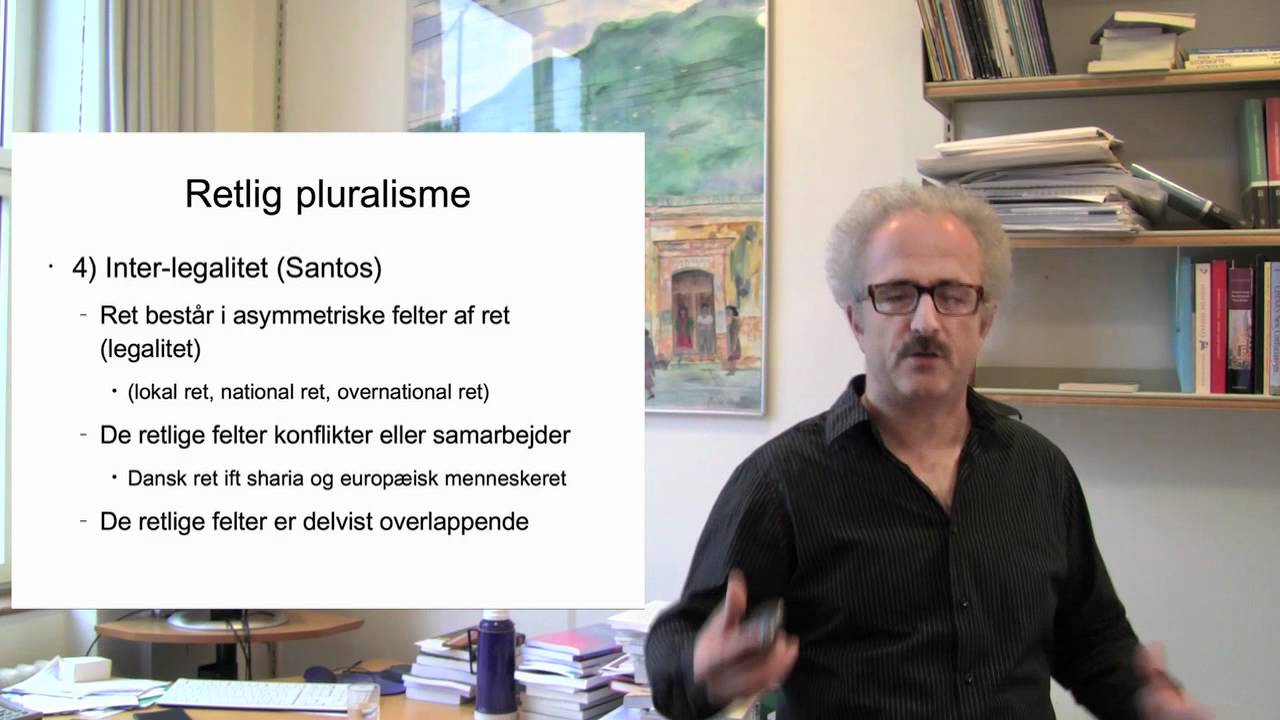






Legal pluralism—the coexistence of multiple legal orders in the same social field—is best understood as a specific manifestation of normative pluralism, which describes the everyday reality of living under multiple overlapping rule systems. Rather than treating legal pluralism as a marginal academic concern, we should recognize it as a universal social fact that everyone navigates routinely. This perspective dissolves many theoretical puzzles about legal pluralism by connecting it to broader normative theory, while acknowledging that globalization has expanded the scope of legal pluralism beyond traditional anthropological focus on small face-to-face communities to include supranational and global levels. However, extending mainstream legal pluralism concepts to these new domains requires careful attention to issues of scale, subject matter, and the nature of normative orders, as well as recognition that not all forms of diversity warrant the label 'pluralism.'
Normative & Legal Pluralism: A Global Perspective | William Twining Lecture
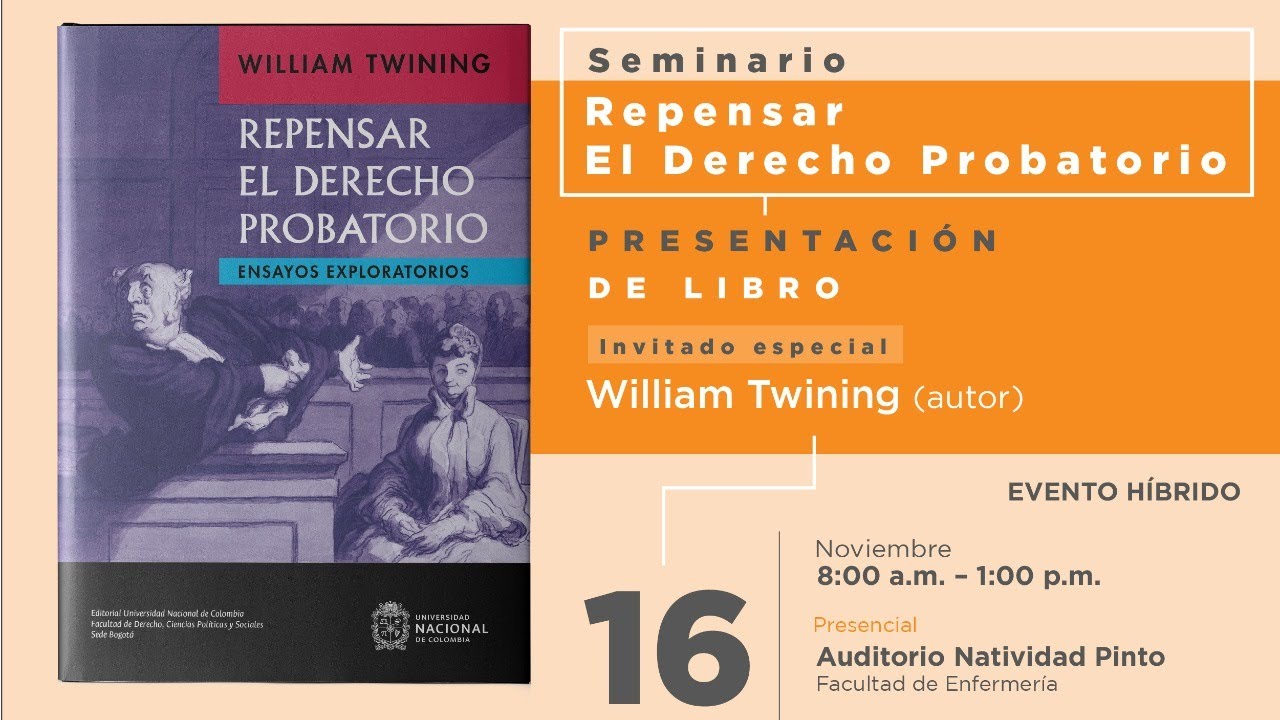
Added:just good afternoon good afternoon everybody Welcome to the 7th annual Herbert l berstein Memorial lecture this lecture celebrates the life's work of Professor Bernstein who was a wonderful teacher colleague and Scholar at Duke Law School for 17 years before he passed away in 2001 Professor Bernstein was born in Hamburg Germany in 1930 he had quite a harrowing Boyhood during World War II as one can imagine he eventually came to the United States in 1962 to study at the University of Michigan law school and he then taught at the universities of Hamburg Berkeley and Southampton before coming to Duke in 1984 his fields of scholarship included comparative and private international law professor Bernstein was a much beloved person at Duke Law School I I did not have the joy of knowing him but those who did speak of his warmth kindness commitment to Justice and humor it is clear that he had a profound effect on all who were fortunate enough to come to know him and we are delighted to have Professor Bernstein's wife here today I think she is here well yes thank you for being with us VTR Bernstein last summer in Munich we had a gathering of our European alumni to celebrate the establishment by our German alumni of a foundation to benefit Duke Law School in tribute to Professor Bernstein's profound effect upon them the foundation decided to support the barstein lecture as its first donation to the law school we are grateful to all of those whose gifts and hard work make this event possible we are honored today to welcome Professor William Twining the quain professor of jurist prudence of Meritus University College London and currently a visiting professor at the University of Miami law school to deliver the barstein lecture I first met Professor Twining many years ago in Chicago uh when I was a a lad and he was beginning to work on his wonderful biography of Carl lellan Duke law professor Ralph Michaels will introduce Professor Twining Professor Michaels directs our Center for international and comparative law and teaches conflicts of law comparative law and various seminars on globalization he studied law in Germany as well as England Professor Michaels thank you um David this is a pleasure I hope to do this in three minutes but it will be hard William Twining whom we're very fortunate to have today is the Burnstein lecturer is the Emeritus quain professor of jurus prudence at University College London this makes him a successor among too among others John Austin and Ronald dorin but there's more interesting things to say I'll let him speak himself for a moment this is not a biographical um Snapshot from his new book I was born in Uganda in 1934 I sometimes say that I had a colonial childhood and anti-colonial Adolescence a neocolonial start to my career in a postcolonial middle age and Beyond I'm based in Oxford and Florida but I have traveled widely and I've worked in several countries mainly in Eastern Africa the United States the Commonwealth and laterally the Netherlands my background experience and Outlook are quite Cosmopolitan but my biases and culture are British my trainings in the common law and my main language is English I was taught by Herbert Hart and Oxford and carwen in Chicago at University College London I have been in regular conversation with Jeremy benam and his editors that's the moment where I struggle but it must be true my African experience stimulated an interest in legal anthropology and law and development and a concern for radical poverty so you can see a rather interesting scholar with a very wide ranging um wide range of interests and expertise and indeed that is the case William Twining is perhaps the leading expert on Carl lellan and Jeremy benam and more broadly an expert on Juris prudence and especially legal realism he has written important articles on comparative law and has coined the phrase that I like of comparative law the way we do it as a country and western tradition that focuses only on the law of countries and only on Western laws he has emphasized the need to view law in context and to combine empirical studies and law and the fact that few people have followed him in this is only Testament to how hard that is to do and how few can do it as well as he does further he's perhaps the leading writer I believe on legal Theory and globalization as evidenced most recently in a book that he wrote uh called General J Prudence understanding law from a Global Perspective unless you think William Twain is interested only in the abstract things may be pleased to learn that he's also perhaps the world's or at least the common law world's leading expert on evidence law so last year the evidence section of the American Association of law schools awarded him his inaugural John Henry Wigmore Lifetime Achievement Award in evidence and called him the maong of evidence I will I will not elaborate today's lecture will I expect Focus Less on evidence and rather combine his interests in jurist Prudence globalization and empirics on a theme of immense interest for comparative law and for law more generally legal and normative pluralism under conditions of globalization legal pluralism has been defined as a coexistence of more than one legal order in the same social field traditionally this meant the coexistence of customary law and Western law was confined to non-western systems typically Colonial and postcolonial situations in the West we used to think of all law as state law relatively neatly organized today under the impact of globalization we know that legal pluralism is everywhere it describes the cultural defense in US courts the Confluence of human rights law and Municipal regulations in Hawaii the conflict of Islam in Western Law etc etc and yet we're very unsure what to make of this situation so let us hear what the expert recommends please help me welcome William 20 [Applause] thank you I pondered whether I dared say that the last time I saw your Dean he was so high but he gave me the opening and it's wonderful to be here and a great honor and pleasure to celebrate a well-loved and respected comparative lawyer I'm very impressed by the effect of a free lunch on the sides of the audience and I think we should adopted elsewhere I feel a bit of a fraud for I'm not a comparatist by specialization but by situation as all academic lawyers are today I've chosen my topic for two reasons first legal pluralism in the last 10 years or so has become a central Topic in the study of law generally including comparative law and international law this is largely but not entirely in response to so-called mization yet this expansion of Interest threatens to sew the seeds of confusion secondly I'm the founder of a new school of jurisprudence self-critical legal studies movement the central methodological tenant is to critically examine the underlying assumptions of examples of One's Own prior work and then to recant modify or rocla one's former views so far I'm the only signed up member I've written a certain amount by legal pluralism in the past but I've always been un dissatisfied with it and uh stimulated by the new interest in the subject and not least the writings of Ralph Michaels have returned to it in the spirit of self-criticism whether this is work in progress or regress is for you to judge I propose to start by reexamining The View that legal pluralism can be fruitfully viewed as a form of normative pluralism I shall try to construct an idea ideal type of mainstream social soleal studies of legal pluralism up to the early 1990s by examining some case studies from that literature I shall then consider how far perceived challenges of globalization to some underlying assumptions of Western traditions of academic law are also challenges to that ideal type this will lead me in two directions first to consider the relationship between the ideal type of socio legal studies of legal pluralism and the general theory of norms and second to address the question is the extension to supranational and Global levels appropriate given that ideas about legal pluralism develop largely in relation to small face-to-face groups and communities are we asking old ideas about legal pluralism to do too much work my answer will be a qualified yes let's start with normative pluralism think of all the rules and Norms you have encountered in the last few hours many of you having followed various morning routines will have obeyed or flouted North Carolina traffic laws observed local driving etiquette grumbled about the University's parking Arrangements respected the law school's ban on smoking but brought coffee into the library despite the notices you will have followed intricate sets of commands in checking your voicemail and starting your computer in drafting a memo or email message you will have accepted or surrendered to as I often do to American usages of grammar and spelling and you may have even have consulted the Harvard blue book or a dictionary you may have violated some Norms of which you were unaware and have noticed but disregarded some that you didn't feel apply to you such as fashions in tattoos or the spelling of text messages glancing through the newspaper you may have encountered the American Constitution the World Trade Organization the IMF Florida state law European Union directives Israeli law Islamic banking practices the rules of football funerals in Baghdad or Afghanistan the torture convention numerous examples of Customs conventions treaties folkways M mories and soft law and we just witnessed a version of the complex code of rituals that are conventional at the start of a public lecture when I set my students to compile a list of all the rule systems that they have encountered in a 24-hour period only the lazy ones come up with less than 100 items we all encounter normative pluralism every day of our lives and it's Loosely assumed to be the coexistence of multiple systems of norms or rules a concept that needs further Examination for the most part we cope with normative pluralism without thinking we treat it as a social fact in fact it's I think almost impossible to deny that you're all living in a context of normative pluralism occasionally it throws up dilemas or obstacles but on the whole we skillfully navigate our way way through and round dozens of rules as a routine form of multitasking only if someone asks how do you manage are you in danger of paralysis like the centipede who was asked how she coordinated her legs or rather like Italo calino Mr Palomar who wanting to master the universe and reduce it to a single principle set out by trying to describe a single wave and gave up in depression we can live with normative pluralism so long as we don't ask too many questions about it so we all encounter normative pluralism every day yet when lawyers hear about legal pluralism conventionally defined as the coexistence of two legal orders in the same time time space context many are puzzled even resistant to the idea they even talk of legal pluralists as a deviant sect treating legal pluralism as a perspective rather than as a social fact like normative pluralism among Scholars who study the subject there have been continuing sometimes Fierce debates about the nature and scope of the phenomenon of legal pluralism in this argue in this lecture I shall argue that if one conceives of legal pluralism as a species of normative pluralism some of these pz puzzles are easily dissolved and others can be shown to be related to General issues with nor within normative and legal Theory rather than puzzles about pluralism as such since about 1990 legal pluralism has become fashioned in several disciplines although not always under that label International lawyers concerned about the fragmentation of international law now speak in these terms law and economics in Alex's phrase have discovered social norms relatively recently The elusive idea of soft law is increasingly banded about for examples in studies of European Community Law human rights international law corporate self-regulation and international trade pluralism is a central Concept in studying of diffusion or transplantation of law this recent expansion is sometimes Loosely referred to as Global legal pluralism crucial question is whether this represents an extension of the mainstream sociol legal tradition or whether it represents a qualitatively new departure even a new paradigm as a preliminary to that it's necessary to ask whether one can plausibly postulate an ideal type of the core of that mainstream socio legal tradition given the diversity of its intellectual roots in order to do this and to concretize the inquiry let's look briefly at some classic examples from that literature one day in the late 1950s a trade plowed into a herd of cattle resting across a a rail track in a remote plane in the Western Sudan killing some cattle and injuring others the victims belong to to the bagara tribe a semi Noma nomadic pastorless people for whom C cattle have a symbolic and spiritual value far beyond their utility as wealth or as a source of milk and meat the driver knew immediately that he was in trouble and ran and hid under a seat in one of the compartments after a delay the herdsman came searching for him and hacked him to death they were charged with murder under the Sudan Penal Code which was based on the Indian Penal Code which in turn was based on English criminal law the defense of provation was rejected at first instance but on appeal the Chief Justice Muhammad Abu ranat reduced the finding of murder to manslaughter he dismissed the suggestion that damage to property can never ground a defense of of provocation in homicide a test was the English test of the reasonable man in this instance the question was whether the accused had behaved reasonably according to bagara values so the test was English but the values of reasonabl this were bugara given the significance of cattle in bugara culture he held that they had he explicitly distinguished the case of a middleclass urbanite in Kum perhaps a minister reacting angrily to damage to his beloved mercedesbenz chief justice did not invoke bagara law or custom rather he referred to bagara values in in applying the imported English concept of the reasonable man to interpreting a sudan statute according to Orthodox views this was not an example of legal pluralism it looks like a fairly straightforward example of statutary interpretation perhaps an example of cultural defense in Municipal law another more famous case illustrates this phenomenon of state legal pluralism that is the recognition by a state legal system of religious or customary or other law for limited purposes in 1986 87 people of Kenya were enthralled agitated and divided by the long running AO burial Saga the case a dispute of a barrier of Rights between the kikuyu W Widow of a leading Nairobi lawyer and members of his luo clan the Widow claimed the right to bury her husband in their matrimonial property near Nairobi the clown claimed that he should be buried in his true home the Clan's burial ground in yonga first sight this looked like a routine internal conflict case involving a choice between imported English law and luo customary law and raising the question under what circumstan is an urbanized lure can opt out of customary law if the deceased had made a will it would have clearly been governed by a Kenya succession act but he failed to do so and the court of appeal found for the clan the case involved clashes of interest and values not only between imported colonial law and customary law but between rural and urban values gender equality and patriarchy individualism and Comm communitarianism tradition and modernization and perhaps most most significant in Kenya between kikuyu and luo old enemies in the aftermath Not only was quite a large literature generated but intertribal engagements were broken off many more Wills were written and the place of customary law in the National legal system generally became matter of strong political contention the AO case richly illustrates the dilemmas of a newly independent African country in developing institutions that are suited to local circumstances and condu to orderly social change and National Unity however it is also not an example of legal pluralism in the anthropological or socio legal sense the national legal system is pluralistic in the sense that it recognizes some religious and customary law mainly as personal law for quite restricted purposes but the case is a reminder that state legal pluralism is not unimportant or uninteresting some sociolegal Scholars have suggested B Santos whose name I have reserved in my next life as a jurist um uses the term pasag law to refer to the institutions and processes concerning housing and other matters dealt with by the residents Association in an urban settlement of flla in Rio in the 1970s the residence Association was a CommunityWide Democratic Social Action Agency founded in 1966 under a quite formal Constitution it's a nice example of squat law contrasted with but sometimes echoing and imitating the ashal law the law where the the roads are paved or macadamized as opposed to the unpaved roads where pasag law ran ironically although its members were officially trespassers the main work of the Ra was concerned with property relations involving housing such as leases inheritance and transfer of property so it can be interpreted as an illegal legal order it is relatively clear clear example of an institutionalized normative order oriented towards ordering internal relations within a community that fell largely outside the reach of the state legal system and That's a classic example of what's meant by soleal people as legal pluralism the common law movement as described by Susan conyac and a few others is the legal arm of the militias in the United States it fits the category of an institutionalized normative order oriented to ordering relations both Within These Outlaw communities and with the outside world Common Law Courts have been set up in many states freemen do not who take a leon out on themselves do not recognize federal and state law for most purposes including tax Social Security and driving licenses and their activities including harassment of officials have from time to time been a matter of concern for state judges and law enforcement agencies common law movement has a developed ideology and body of Doctrine much of which is expressed in legalistic form of discourse derived from traditional common law Concepts more than the pasag residence Association it defines itself in opposition to Municipal law it challenges the legitimacy of nearly all American federal and state law with a few exceptions including bizarrely the Uniform Commercial Code it's an interesting example of a not insignificant phenomenon that is largely ignored indeed it's almost invisible except to state judges and enforcement officials over several years I've not encountered an American law student who had even heard of it letland studied it prior to my course it warrants the label if it warrants the label law it's in the view of some a rare example of a crazy legal order and it too can be considered I think a classic example of legal pluralism in the sociol legal sense con lawyers are familiar with the notion of normative ambiguity the coexistence of two apparently competing set of norms within a single system Carl Lan's account of the rules of statutary interpretation in terms of two parallel Columns of thrust and Parry is perhaps the best known in legal Theory but the common law and equity and various other examples are sometimes used a well-known anthropological anecdote in East Africa concerned the naive reaction of a researcher observing the dispute processes of a coastal group who regularly invoked two well established sets of norms typically in group decision making processes respecting such matters as marriage formalities um marriage formation inheritance and family disputes one party and his supporters invoked traditional Norms the other invoked Islamic Norms the outcomes bore some connection with the Norms but there was no obvious pattern of lexical priority or choice of Norm rules when asked why the group did not simplify their social life by deciding which body of norms had priority by integrating the two sits two sets into a coherent how code the response was amazement how could we possibly proceed if we only had one body of rules as one of my students remarked the observer's question was perceived to be rather like asking why did they decide which is the best football team team before the season begins these case studies give the flavor of the mainstream socio legal literature and illustrate a number of basic concepts and distinctions most commentators probably agree that the bagara case is not an example of legal pluralism but rather of competing interpretations of a single criminal statute similarly the aeno burial case as suggested above is an example of state legal pluralism pasag law the common law movement and institutionalized social and religious practices and Customs within ethnic and religious minorities in Europe are conventionally treated as examples of legal pluralism in so far as they exemplify discreet instit constitutionalized normative orders that are relatively separate from the law of the state and there is now the beginning of a quite extensive literature on angrai sharat anglicized Islamic law operating outside the state legal system within established Muslim communities in Britain several of these examples underline the point that legal pluralism so conceived is not solely a colonial or postcolonial phenomenon it exists in all multiculture societies including our own however legal pluralism studies also tend to interpret its scope quite narrowly for example they treat different schools of interpretation of laws choice of law rules in conflicts of laws both International and domestic polycentricity and foreign shopping within a single leg legal order as not being examples of legal pluralism stricto sensu later I shall question these exclusions this narrow interpretation of the subject mainstream sociol legal and anthropological studies of legal pluralism have tackled a wide range of phenomena from a variety of perspectives with one major exception there seems to be a broad consensus about a number of points the exception has been a long running and tedious controversy about how to conceptualize the legal in legal pluralism these concerns are shared by some of the leading theorists in the field for example in 1993 Brown tamaha wrote the Folly of a social scientific concept of legal pluralism Simon Roberts a respected legal Anthropologist in London has written repeatedly against legal pluralism I've argued at at lank elsewhere that the problem of the definition will stop where to draw the line between legal and non-legal phenomena if we accept some idea of non-state law is quite susceptible to workable and sensible Solutions in particular contexts at least for purposes of empirical study nothing much turns on where or even whether one sets boundaries to the legal provided that one accepts that phenomena designated as unofficial law or non-state law or law-like normative orders deserve our attention as jurists as an important essential part of understanding law apart from this long running in my view largely unnecessary controversy I suggest that we can construct an ideal type of sociol legal studies of legal pluralism up to about 1990 based on the following points first that if one adopts a broad conception of law legal pluralism is as much a social fact as normative pluralism accordingly it's quite misleading to talk of legal pluralists as a marginal school or sect or particular theoretical perspective secondly it's important to distinguish between state legal pluralism sometimes called weak legal pluralism and legal pluralism as defined by soleal Scholars third that from a Global's perspective if one adopts a broad conception of law legal pluralism is pervasive in all Multicultural societies which in today's world means almost all societies fourthly that legal pluralism is not new a whole lot of history about pluralism in the Middle Ages pluralism in the Ottoman Empire and so on fifthly that acknowledging legal pluralism in this broad sense as a social fact involves no commitment to any of the following the state law is unimportant that the state is withering away the acceptance of legal pluralism as a fact involves a denial or weakening of such ideals as liberal democracy human rights and the rule of law indeed as Santos warns us we should not romanticize legal pluralism and non-state law a lot of it is very unattractive sixthly it's a distortion of to think of interlegality relations between coexisting legal orders as being typically one of conflict and competition how such orders interact and interrelate is an empirical question covering a range of possibilities including biosis subsumption imitation convergence adaptation partial integration and avoidance as well as subordination repression or destruction interlegality is best viewed as a dynamic process rather than in terms of static structures what are the implications of globalization for the study of legal pluralism by globalization in this context I mean not only economic globalization driven by an ideology Loosely linked to free markets in the Washington consensus what the anti-globalization movement is against but all the complex processes that have increased interaction and interdependence across National and cultural boundaries in respect of communications trade migration language spread epid epidemics ecology security and so on in the present context one Central Point is crucial interdependence is a relative matter and most so-called processes of globalization operate at subglobal levels there are of course genuinely worldwide phenomena and issues but so far as law is concerned the most significant patterns relate to sub Global phenomenon Empires diasporas alliances regions legal Traditions important networks all of which have special legal significance much globalization talk is hype World War I common law world the Arab world the English speaking world are all overstatements if you think world means the whole world standard joke is it's pedantic to say that the World Cup at football is not Global it's pushing it a bit to say that the World Cup of cricket with 16 Nations is global the world series of baseball until this new event the classic World Series which involves two Nations was a bit of hype now to be fair the World Series unknown to most Americans was named after the New York world and newspaper and wasn't claiming to be Global but um people forgot that if one adopts a broad conception of law from a Global Perspective normative and legal pluralism are almost Universal throughout the world from this perspective and if you'd like to look at your handout if you have received hand out um understanding law needs to take into account all major levels of social relations and levels of ordering these relations and these levels are not stacked in a neat vertical hierarchy from the local to outer space for they include sub global patterns such as Empires legal traditions and diasporas that cut across hierarchical neat lless nor are all the levels of relations tied to geographical territory religions beliefs systems of morality personal laws the internet cannot be simply mapped geographically in general jurist Prudence my book I listed a number of widespread but not Universal assumptions in Western academic law that are challenged by adopting a genuinely Global Perspective that's the other side of your handout if you look at that handout which lists these assumptions I suggest that the mainstream sociolegal pluralism did not subscribe to most of the them a blunt summary of the charges against Western academic legal culture is that it's tended to be State oriented secular positivist top down northo Centric unmiracle and Universal list in respect of morals and let me hasten to remind you this is all self-critical Eagles studies I have shared most of those assumptions in most of my writings for most of my career and so this is not just trashing uh rece traditions of academic law on the other hand mainstream legal pluralism Studies have emphasized non-state law especially religious law have to some extent taken into account subon or bottomup perspectives have been particularly but not exclusively concerned with the global South have been based on considerable extent on Empirical research and have generally been skeptical of strong universalism in respect of values one of the enclaves of some kind of cultural relativism is to be found in this kind of work work thus at First Sight mainstream studies of legal pluralism have been ahead of their time in loosening the general assumptions of Western academic law that are being challenged by globalization how it be dangerous to assume that this means that mainstream legal pluralism perspectives are immediately transferable to the new fields of inquiry that are being opened up by adopting a Global Perspective let me mention four points at which there is a need for caution first a great many legal pluralism Studies have focused on relatively small face-to-face groups second the main emphasis has been what in our legal tradition has been classified as private law marriage family inheritance land and to a less extent wrongs or obligations much less attention has been paid to Commercial and economic law migration governance structures criminal law and human rights again there are some not notable exceptions third and perhaps most significant nearly all mainstream Studies have focused on substate subnational phenomena within a single country again some exceptions like studies of Romani law transnationally fourth much is made of the diversification of significant actors in international relations and to a lesser extent international law in addition to States international organizations non-governmental organizations multinational corporations people such as the mai crime cartels and other groups now struck the global stage the mainstream studies of soleal pluralism have been mainly concerned with individuals families or Clans or relatively small communities or groups thus adopting a Global Perspective may require adjustment in respect of scale levels of ordering orientation to the state and the nature of the subject matters that are said to be examples of legal pluralism so far I've introduced an ideal type for one strand of legal pluralism studies mainly sociolegal pluralism up to 1990 and I've suggested some implications of globalization for this kind of approach it's important to bear in mind that there were other strands before 1990 that the sociol legal tradition continues to this day but that the idea of legal pluralism has been extended to A diversity of fields the question remains can this diversification be interpreted as an extension of the soleal tradition or is it so different that old studies and concepts are of limited relevance in the spirit of self-criticism I want to approach this by revisiting two claims that I made at the start that legal pluralism can usefully be viewed as a species of normative pluralism and that normative pluralism is a social fact switching attention to normative pluralism is helpful in two important ways it decenters the state and shifts attention from obsession with the legal to the notion of pluralism and it provides links with the general theory of norms and thus helps to disentangle General issues of normative legal Theory from specific puzzles about legal pluralism as such to deal briefly with the first point I suggest that legal pluralism in any significant sense presupposes a reasonably broad conception of law that includes non-state law similarly from a Global Perspective a conception of law confined to state law just leaves out too much for most purposes have a look at that um chart of of levels make your own decisions of which you would include in a historical atlas of law in the world and it would be very strange if you wanted to exclude the major religious Traditions major examples of of institutionalized customary orders and so on but where you draw the line people might VAR on switching to normative pluralism also suggests that state legal syst systems are just one species among many of institutionalized normative orders and it helps to locate that species in a broader context in other words stop talking about legal pluralism just let's look at official law and and state law as an example of normative pluralism and see what happens recently bran tamaha has freed himself from the obsession with the definitional stop by making this move He suggests a rough taxonomy of forms of normative ordering commonly discussed in studies of legal pluralism to include six categories one official or positive legal systems and then customary normative systems religious cultural normative systems economic capitalist normative systems and so on Tamar still has to distinguish between official legal systems and the rest but he emphasizes as I have done for years that not much need turn on the distinction where how you categorize official law in this context doesn't matter very much distinction between official law and other kinds of institutionalized normative order looks different in this context whether the shift is merely psychological is a question that I shall not pursue here suffice to say that removing questions about conceptualizing law from the agenda of theorizing about pluralism opens the way to considering other issues including the switching of focus of attention to concepts of norms and of pluralism moving our Focus from legal to normative pluralism provides a direct link to general theory of norms our heritage of this kind of theorizing includes important contributions from moral philosophy logic speak Jack Theory sociology Game Theory economics decision Theory and jurist Prudence among others Des despite Brave efforts by for instance David Lewis Joseph ryas Frederick Shaw and many others we're a long way from having a settled framework of basic concepts let alone a fully integrated overarching general theory of norms there's no agreed vocabulary no settled taxonomy of types of rules or norms and an uneven body of theorizing about a bewildering range of issues a cented trying to make sense of the wide range of rules norms and practices that one Encounters in daily life what I crudely designated as normative pluralism will find herself stumbling into a philosophical morass I hope to skirt this morass in making the point that some puzzles about legal pluralism not about pluralis ISM as such but are General issues in normative and legal theory in the longer version of my text what I'm delivering is about half of the text that I have so far written I address at greater length issues concerning the concepts of norms and rules problems of classifying norms and rules state state centralism liberal ideology concept of discreet institutionalized normative orders the concept of interality and whether Global legal pluralism is in some sense po postmodern my answer to the last is no today I only have time to touch briefly on the ideas of pluralism and individuation of rules and normative orders the main point in the present context is that in so far as there are conceptual and taxonomic problems about rules and Norms these puzzles are not specifically about pluralism but belong to normative Theory generally pluralism has acquired number of specific associations in different contexts such as ethics epistemology and political science sometimes pluralism is used Loosely just to mean diversity multiplicity or complexity I propose a robust approach to the concept of pluralism in this context as a sociological concept I suggest that pluralism in the present context simply means plural more than one and it's not necessary to concern ourselves with metaphysical epistemological ethical or other specialized associations of the term the interesting question is plurality of what in the soleal literature pluralism applied to law is generally used to refer to two or more coexisting normative or legal orders quite large phenomena but in the morass of recent literature legal pluralism has sometimes been extended to Encompass other reference in globalization discourse much is made of the diversification of significant actors in international relations International lawyers concerned about the fragmentation of their subject also Point inter Alia to the s to the proliferation of supranational Courts and tribunals over 130 at the last count I believe and Norm creating agencies such as the ILO WTO non-state Regulatory Agencies governing bodies of sports and so on related to this Scholars sometimes refer to pluralism of putative emergent or fantastic supernational branches of law Global administrative law internet law Lex maror lexiva globalis Lex construes Yus humanit Artis Lex pafia um and inspired by the new governance talk there is talk of constitutional pluralism and plurinational democracy and so on if legal pluralism merely means more than one legal phenomenon without limit to the kinds of phenomena referred to I do not think it's a very useful concept if plural means more than one itest relatively discrete countable units but what counts as one normative order or one norm and how discrete does it have to be this brings us to the problem of individuation problems of individuation are also among the most profound questions in philosophy Juris Prudence questions about individuation of laws puzzled Jeremy benam who asked what constitutes one law what constitutes a complete law so these are not puzzles confined to legal pluralism it's quite widely recognized by jurists that it can be misleading to talk of single Norms or rules or laws as discrete units that can be counted compared classified or thought of in terms of interaction or influence or other forms of interlegality one familiar move is to postulate that all Norms laws and legal rules belong to some larger unit such as a system or order or code to ask how many rules are there in the Uniform Commercial Code seems like a silly question it's rather like asking how many strands are there in spider's web or this elaborately woven blanket Concepts such as order system code are useful perhaps indispensable constructs there are also familiar dangers in treating the reference of such nouns as firm stable bounded discret entities it's almost a cliche they're often more like clouds or waves than rocks or billiard balls nevertheless in some contexts we can talk with some confidence about the common law movement or pasag guarda law or the settled practices of ethnic religious minorities in the UK or the us as discret institutionalized normative orders but there is a problem here the concept of culture provides a relevant analogy one level it is a common place that culture is a vague and Elusive term we know that cultures are not static monolithic clearly bounded cultures change and intermix there are dozens of definition different definitions of culture yet we confidently talk about multiculturalism and Multicultural societies cross-cultural dialogue or communication cultural blindness cultural mixing and so on it's a useful concept provided that we do not reify it Recent research on Muslim communities in Europe has identified the tendency in both academic and policy debates about pluralism to fall into the Trap of treating communities and cultures as monolithic for example Samir Bano a British Muslim scholar writes there is an assumption that spaces occupied by diasporic diasporic communities are based upon and can be identified by fixed and discret Notions of culture and religion which defines the communities as a whole my point is that cultural diversity and identity must be understood as historically fragmented unstable and contradictory and in Britain the situation is well illustrated by the heterogenity of Muslim communities and the multiple meanings of Islam and Islamic jurist prudence and practice to give a concrete example in honow a suburb of London or burrow of London I think there are at least eight ethnic groups from which Muslims in hlo come from different parts of the world and there are probably at least four different schools of Islam that are operative in this one place so to just talk about the Muslim Community in hlow is just much too simp simplistic at this point I should anticipate an objection the objector says I agree that I encounter many different types of rules and Norms in my daily life and that what you call normative pluralism can be viewed as a social fact it doesn't follow from that that I need to buy into a concept of legal pluralism nor accept that it is a species of normative pluralism what if I believe that state law is the only true form of Law and that all other kinds of phenomena usually lumped together by legal pluralists are distinguishable as social norms or Customs or religious prescriptions or at best laws by analogy and extension what I I do not accept a social fact conception of state law such as that of Hart or Raz or even Kelson but lean to towards a non-positivist conception such as that of Fuller or Dorking law is the most contested Concept in legal Theory and what is at stake is not matter of simple sem semantics resolved by stipulative arbitrary definition what is at stake is conceptual coherence issues of legitimation and legality and much else besides and what if my concern is with practical normative issues how should the state respond to the coexistence of other normative orders when should it through policy legislation administrative discretion or judicial development recognize reject incorporate integrate subordinate assimilate or just ignore non-state legal orders for example we have a major controversy in England last year as to what extent if at all should English state law recognize some aspects of Islamic law we have large Islamic communities Islamic councils port to give divorce to to deal with all sorts of marital disputes they have no recognition whatsoever in in English law and Samano who I just quoted is one of the people who's opposed to extending recognition Beyond because Islamic Islamic councils are dominated by elderly males who usually belong to one school which may not be the school that somebody appearing before them belongs to it here I must conf confess and avoid soleal pluralism Studies have tended to be conceived quite narrowly and to make few claims to immediate practical relevance I agree that the objection raises real concerns with practical as well well as theoretical implications and also needs to be careful about projecting this kind of conception of pluralism onto the world stage a social fact conception of normative pluralism is like a social fact positivist conception of law it separates off empirical description and explanation from questions of justification legitimation and evaluation and if it Sidelines such questions some will say that the inquiry is impoverished if you treat pasag guarda law or the common law movement or J armor or chugger disputing processes as discursive practices as examples of institutionalized normative orders that exist as a social fact it's not necessary to inquire about their validity legitimacy Justice or author it especially not their external validity Etc an empirical account of such phenomena can draw attention to their existence describe interpret explain and compare their characteristics and give an account of their inter relationships and interactions but interlegality in this context is an empirical not a normative concept and soleal accounts of legal pluralism are not very practical such empirical accounts may serve some purpose as a preliminary to considering normative issues but beyond that they're not very helpful and I'm prepared to concede most of that to sum up as interpreted here soleal studies of legal pluralism up to about 1990 are quite narrow in several respects first they grew out of a tradition that largely focused on small face-to-face local communities at substate level the range of subject matters and actors was a far cry from questions about International terrorism regulation of transational finance and commerce Regional integration and traffic of trafficking of drugs or humans second what I call the soleal tradition of legal PL pluralism was mainly concerned with plurality of coexisting institutionalized normative orders so-called Global legal pluralism gives a much more varied answer to the questions plurality of what term pluralism has been applied indiscriminately to almost every kind of complexity or diversity postmodern enthusiasm for fragmentation diversification and indeterminacy threatened to reduce the value of PL pluralism as an analytic concept we're threatened with a not very Illuminating pluralism of pluralisms third as we saw socio legal pluralism tends to exclude state legal pluralism and other matters that are internal to a state legal system such as competing schools of interpretation and even conflicts of laws if the borders of states and state legal systems are becoming more porous when we adopt a Global Perspective is such a sharp distinction between internal and external aspects of state legal systems still table for example Ralph Michaels has pointed out that globalization raises important issues for choice of laws both domestic and international not least in respect of relations with nonstate state law an important form of interlegality fourthly globalization is challenging some of the settled assumptions of our traditions of academic law I've tried to show that the soleal and especially the anthropological tradition of legal pluralism studies is important respects less wedded to most of the assumptions that are under challenge however the Practical implications of increased interdependency in today's world are immense and one should not expect too much detailed practical guidance from that tradition fifthly mainstream legal pluralism Studies have bequeathed us a rich Heritage of particular studies and a rather less impressive body of theorizing mve the central Legacy of insights onto the world stage involves significant changes in scale subject matters and Central concerns the idea of pluralism applied to actors courts schools of thought centers of power sources of norms levels of relations and ordering cultures or even the proliferation of Human Rights means little more than diversity diversification puer or complexification I don't think that the heritage of mainstream sociol legal literature on legal pluralism up to 1990 is very helpful in interpreting these very varied topics however that literature by emphasizing the fact of the coexistence of significant institutionalized bodies of social norms and practice is helpful first in drawing attention to the existence of orders that are generally ignored overlooked Arcane or even invisible second in the context of diffusion Transportation provides a reminder that Norms based on foreign models are rarely introduced into a vacuum the blank slate fallacy the diffusionist call it but will inevitably have to interact with pre-existing local Arrangements which will often include significant institutionalized normative orders whether you categorize them as legal or not doesn't matter they're there third it focuses attention on interlegality the many different and complex ways in which multiple legal and normative orders can relate to each other and interact and fourth it focuses attention on issues of State policy concerning relations between the state and different communities and belief systems in a Multicultural Society but in so far as one adopts a social fact view of normative pluralism this will on its own provide little direct guidance on normative questions about legitimacy justification Toleration and recognition of non-state orders let me end by returning to normative pluralism the Fable of the centipede and the story of Mr palar suggest that we cope with this complex phenomenon provided we don't think too much about it a tougher meter is Max V's AR cage of bureaucratic rationalism which we all live with in universities in the modern era but there's a more benign image of normative pluralism in Robert Frost's poem The Silk and tent let me read that to you she is as in a field a silken tent at midday when a sunny Summer Breeze has dried the Dew and all its ropes Rel so that in guise it gently sways at ease and its supporting Central Ceda pole that is its Pinnacle to heavenwood and signifies the shess of the Soul seems to owe not to any single cord but strictly held by none is Loosely Bound by countless silken ties of love and thought to everything on Earth the compass round and only by one's going slightly taught in the capricious capriciousness of Summer a is a the slightest bondage made aware thank [Applause] [Music] [Applause] [Music] you so that was wonderful and um wide reaching until we reached the Seamless Web of frost think we have time for um a number of questions a small number of questions that is but not this small Don as you were speaking I was um writing down what might be a research agenda in this field and I won't burden you with all of it but I I'll mention one or two I was I was struck by your assertion that um we don't need to disentangle the legal and legal pluralism that we don't need a definition of that I'm not sure that I concur with that I think maybe research task number one might be exactly that um there are just too many normative orders there are too many social norms right down to each nuclear family and law can't study everything and it won't do very well if it tries to study everything um and to limit the subject to to Legal uh orders would also be useful for law because um you can sharpen the distinction that is one can one can ask U as one goes about this process what is it that's distinctive about about a legal order as opposed to an order that's a consists of complex social norms but isn't the legal order so there might be good feedback results from such an inquiry uh I'll say quickly just two other two other things um what are the units of analysis how do we know the boundaries of a of a particular legal order I think that's a eminently important res Surgical question um probably most of these orders are are more permeable than we might have thought that's probably find if we do that and if we find that that's a that's an important uh uh result in itself and then how do they change over time uh what generates change everybody knows there's lots of borrowing across systems but uh very few people can specify exactly what determines when a particular r or a particular uh element of an institution or element of an order is going to be borrowed right and another will be rejected that strikes me as also a good piece of the research agenda as I said I could go on and on but but I'd love to hear your reactions to those parts oh it's dauntingly large and diverse and complex field and partic for particular examples of research one clearly needs to operationalize some Concepts that make sense in that context let me go back to the example of diffusion one of the lessons that I think has been learned rather slowly but has now been leared um by people who've been involved in structural adjustment in law reform in countries and transition and so on is you can't assume that there was nothing there before you've got got to ask what was there before doesn't matter too much for that purpose whether that was official state law or something if it was an important kind of normative thing in a specific context in a particular country you may want to have as it were some local definitions of what you would count as a normative order or how you would characterize what was there before um some really quite interesting um literature in economics about informal economies and the relationship between informal economies and and formal economies officially recognized economies I think there's quite a lot to be learned there but but because there's been quite a lot of research there and so I absolutely agree that for some particular research project one would need to go much further than I was able to in this lecture in in in setting up a conceptual framework but part of what I was saying is the huge range of different contexts in which these issues arise in which words like pluralism being banded about um another example which is rather different is the one I mentioned of the literature which is developing I think more in Europe than in the United States but I may be wrong about that about the social practices of religious minorities um and particularly Muslim religious minorities and there some very specific things coming out of this particularly from a feminist perspective so if you think about the situation of a British Muslim woman woman contemplating marriage not a forced marriage a consensual marriage what's coming out of the literature is she would be well advised to insist on a civil ceremony before the party before the religious ceremony because there's been quite a lot of experience that the man has said yes we'll do it afterwards and then doesn't do it afterwards in which case she has no legal position under English law she'd also be well advised to have a prenuptial contract but the prenuptial contract should be in Conformity both with English law and with Islamic norms and she would be well advised to do certain other things and but this kind of literature is developing well it's only very recently that the legal literature has recognized that there are institutionalized social practices among Muslims in Britain which are quite separate either quite separate from state law and state law has so far been not responsive very much to to these um although there's some some exceptions that um and that what is going on therefore for people subject to this so your your your Muslim has to navigate man or woman what has to navigate through a number of sets of norms some of them may be more institutionalized than others they're all sorts of of of problems there um and what I think this kind of research has has revealed is that you've got to take these phenomena seriously that these actually are part of what if you are concerned mainly with state law are nevertheless very relevant and in fact there is now a Judicial studies board in England has now produced a Ben bench handbook which has a very large section on essentially sensitizing judges to cultural norms now most of the time this is not going to affect the application of state law to situations that arise before the courts sometimes in sentencing and various other discretionary areas these things become relevant but there's a sort of sensitization so what I'm I'm pleading for is not to have too many sort of loose Concepts floating around and to get down if we're talking about research to really quite specific things where we're going to need to have be rather careful about our concept for a particular research project so in F you we would have three more days or years or Decades of answer that we probably won't have time for um four quick announcements the first um 600 pages of answers are in the book and I'm told we have a flyer for Discount out that c University press sent me so um for those interested in the book should find that second another thing that is outside is a dessert reception I hope so I hope you will come to that and also use that as an occasion to um speak with William and ask further questions that you might have um third thing I'd like to say is um thank you various people who have put this together but mostly from my position to thank U my staff in the center of international comparative law that's Steven borick and I guess for this event in particular lean Kell who's already outside reception I suppose um and fourthly of course we should thank William Twining for enlightening us in tremendously wide ranging fashion in a short time and um heartily applaud for that thank you very [Applause] much thank you I think you and I have e
Up Next

Legal Pluralism: Sally Engle Merry's Intellectual Odyssey
@allegralab4715
504 views•2021-02-12

US Secondary Sanctions Impact on EU Businesses and Blocking Legislation
@Bureauvandijk
1.6K views•2019-03-20

Forensic Phonetics: Speaker Identification in Legal Cases
@nptel-nociitm9240
539 views•2025-03-19

Police Interrogation Tactics: False Confessions & Legal Reform
@LastWeekTonight
7M views•2022-04-18
Related Study Plans & Knowledge Roadmaps
Structured learning paths in Law