










![[화려한 날들] 성희가 은오를 속였다! 처음부터 간이식 불가능했는데 왜 강요했을까? 숨겨진 진실 대공개!](https://i.ytimg.com/vi/I_1nYzxX0Bs/maxresdefault.jpg)
![National Resident Matching Program (NRMP) Algorithm [Gale-Shapley Algorithm]](https://i.ytimg.com/vi/UKq7w8GyxE8/hqdefault.jpg?sqp=-oaymwEmCOADEOgC8quKqQMa8AEB-AH-CYAC0AWKAgwIABABGCsgXyhyMA8=&rs=AOn4CLD103Yf-CSRyyZnVOS5kIRWZbDvQQ)




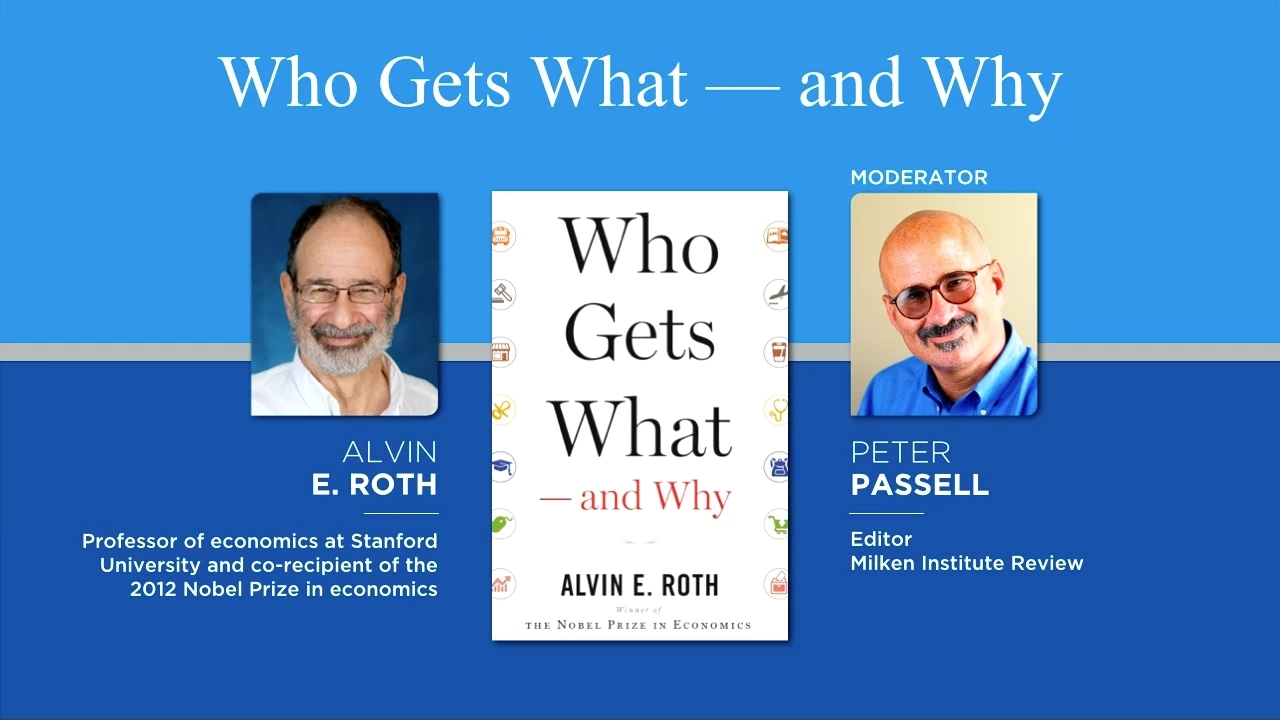


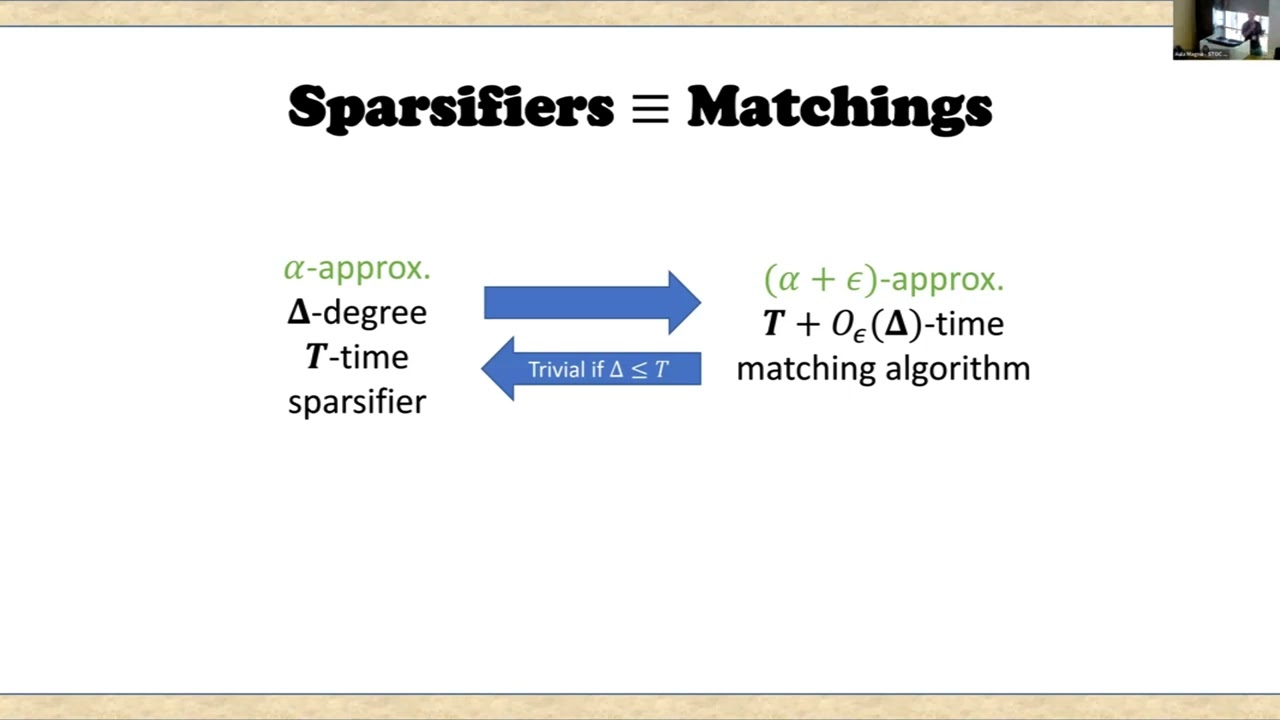





Economist Dr. Alvin Roth developed innovative algorithms that enable kidney exchanges through chains of compatible donor-recipient pairs, solving the problem of incompatible donor-recipient pairs by creating systematic matching processes that dramatically reduce transplant waiting times from years to weeks.
How an Economist Solved the Kidney Exchange Market Design Problem
Added:The concept of 'matching markets' where prices do not decide allocation, differing from traditional commodity markets.
The 'double coincidence of wants' problem in economics, which explains why direct barter fails without a medium of exchange.
Basic graph theory concepts, specifically nodes, directed edges, and how they represent pathways or relationships.
The biological constraints of organ transplantation, such as blood type and HLA tissue compatibility.
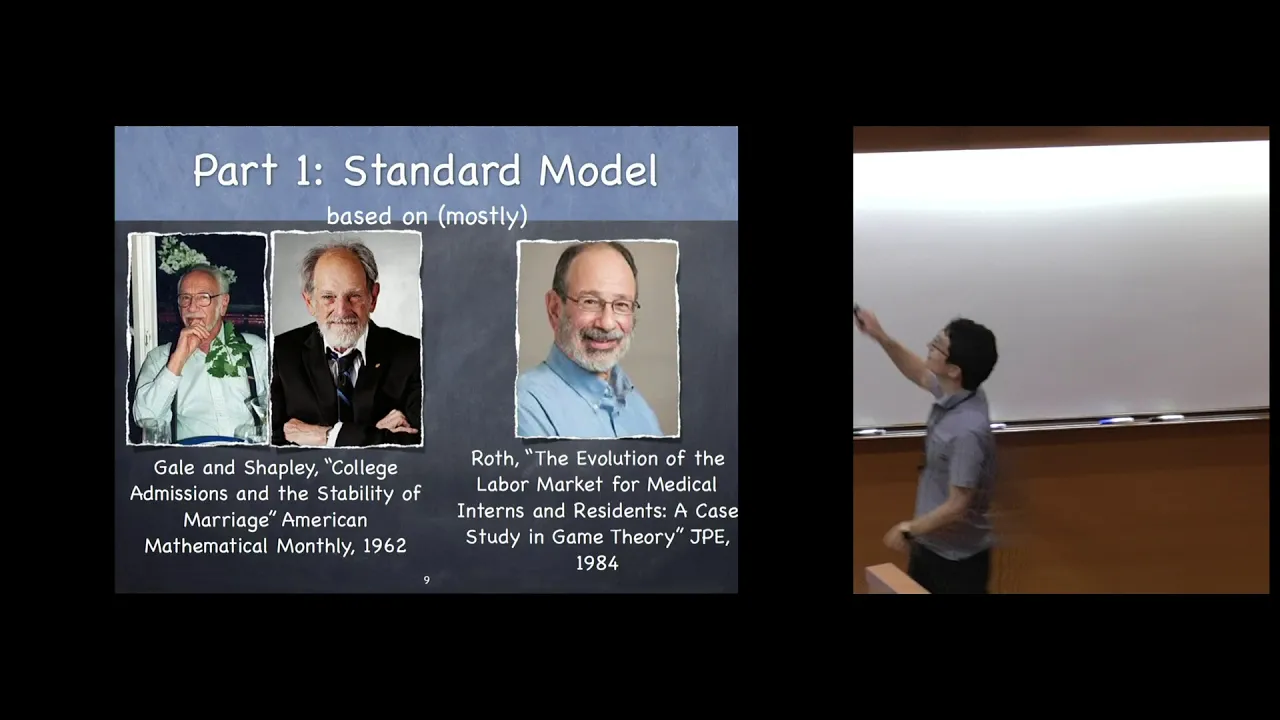
The Gale-Shapley Stable Matching Algorithm and its application to the National Resident Matching Program (NRMP).
The economics of 'repugnant transactions'—the ethical and legal boundaries of markets where monetary exchange is banned.
Advanced computational complexity and integer programming techniques used to optimize large-scale, dynamic matching algorithms.
School choice mechanism design, applying similar matching principles to public school allocation systems.
4.8K views58likes5:51Original Release: 2016-11-30
our first date was the day before his 17th birthday I told him on the second date I was going to marry him that's the way I felt first time I saw him was that he was meant just for me and she really didn't know what she was getting into true it happened in 2002 the headache came and I mean it was just a matter of of an hour you know I knew that things weren't right M the doctor saw blood and his urine and he said when the kidneys were starting to fail he says you can do dialysis for some time but he said you need to look at transplant I had every kind of test you want to have and I had it I was in excellent Health to be a donor but we were not compatible at all so when he told us that it could be a 5 to 7e waight that was scary you start worrying about I could be a single parent I could be the sole person responsible for these three children and I don't know if I can get through that [Music] when I first was asked how to redesign the kidney Marketplace I knew a lot about the market and I knew that the problems were hard in the United States there are about 100,000 people waiting for kidney transplants and thousands of people die each year while waiting the initial problem in the kidney Market was that there were lots of people who would like to give someone a kidney and couldn't give them a kidney they were healthy enough to give a kidney but uh but they couldn't give it to the person they loved and mostly they were sent home they' been told sorry it's really wonderful that you want to give someone a kidney but you can't as an economist that's not the way an orderly Market works so one of the constraints on the kidney Market is you can't offer people money for kidneys it's against the law just about everywhere so you can't just choose what you want there's matching going on and I realized that you know I I know something about this and so I got together with some colleagues and said let's think how we would trade kidneys as we started to deal with these particular problems we realized we needed solutions that were beyond the current theory of the day so we did a lot of numerical studies on the data a lot of empirical work and we discovered some new things so turns out that in the United States we have people who want to give someone a kidney and don't have a particular person in mind and that's actually important we've learned how to use them to start chains of transplants where they give to a patient donor pair and the donor in that pair gives to someone else who gives to someone else who gives to someone else long chains of transplants and that's enormously effective [Music] my kidney disease it just started going downhill then that's when Amy just started looking for options it's funny I had seen a television show about they called it a daisy chain um for kidney transplants so I Googled it and it took me to the medical center of Toledo Ohio and Susan Ree and and I just picked up the phone and called her I just was like is there any hope for us she said absolutely a month later she contacted me and said I have a match for you and I'm working on a match for fielding then a couple of weeks later I was matched up with Carolyn in California to be her donor and it was like 3 weeks later he was matched up with shalisa in Alabama is it being dramatic to say that this chain saved your life no I mean absolutely it did you know who knows where we would have been in 5 to seven years we were very blessed and this algorithm that was created by this economist is I cannot explain enough how it gives you back your life you know celebrating grandbabies being born celebrating children getting married celebrating how lucky how blessed you are that life is just normal [Music] [Music] [Applause] [Music] [Applause] [Music]
Up Next
5:55
Google Search for Developers: Growth and Engagement via SEO
@GoogleDevelopers
23.2K views•2015-06-21
87:26
Introduction to Secure Multiparty Computation with Yehuda Lindell
@fhe_org
7.7K views•2021-02-04
4:55
HTTP Requests Explained: GET, POST, PUT, DELETE
@codecademy
103.1K views•2021-10-07
19:25
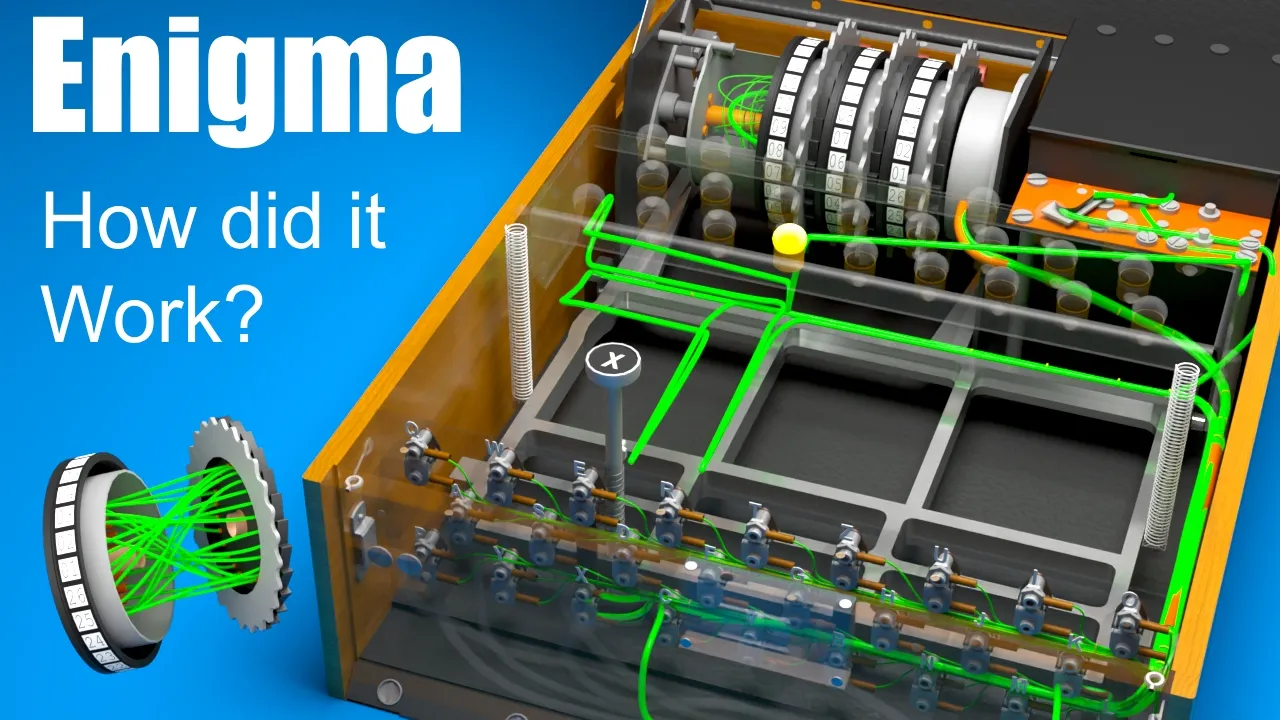
Enigma Machine Mechanics: WWII Encryption Explained
@JaredOwen
13.2M views•2021-12-11
Related Study Plans & Knowledge Roadmaps
Structured learning paths in Computer Science
computer-science
Container Runtimes: Namespaces, Cgroups & Go
01Linux Systems & Go Programming Foundations
02The Core of Isolation: Chroot and Filesystems
03Linux Namespaces: Process Isolation
+ 3 more learning modules
32h6 modules
Explore Roadmap
computer-science
Building a CHIP-8 Emulator: Rust & CPU Basics
01Computer Architecture Foundations (Bits & Bytes)
02Rust Programming for Systems Development
03CHIP-8 Virtual Hardware Specifications
+ 2 more learning modules
32h5 modules
Explore Roadmap
computer-science
Building BitTorrent: Go, P2P & Concurrency
01Go Fundamentals & Concurrency
02Networking Foundations & P2P Architecture
03Bencode Parsing & Torrent Metadata
+ 3 more learning modules
26h6 modules
Explore Roadmap
computer-science
Actor Models (C++ Concurrency & Lock-Free)
01C++ Multi-Threading Foundations
02Thread Pools and Task Scheduling
03Atomics and Lock-Free Queue Design
+ 3 more learning modules
45h6 modules
Explore Roadmap