























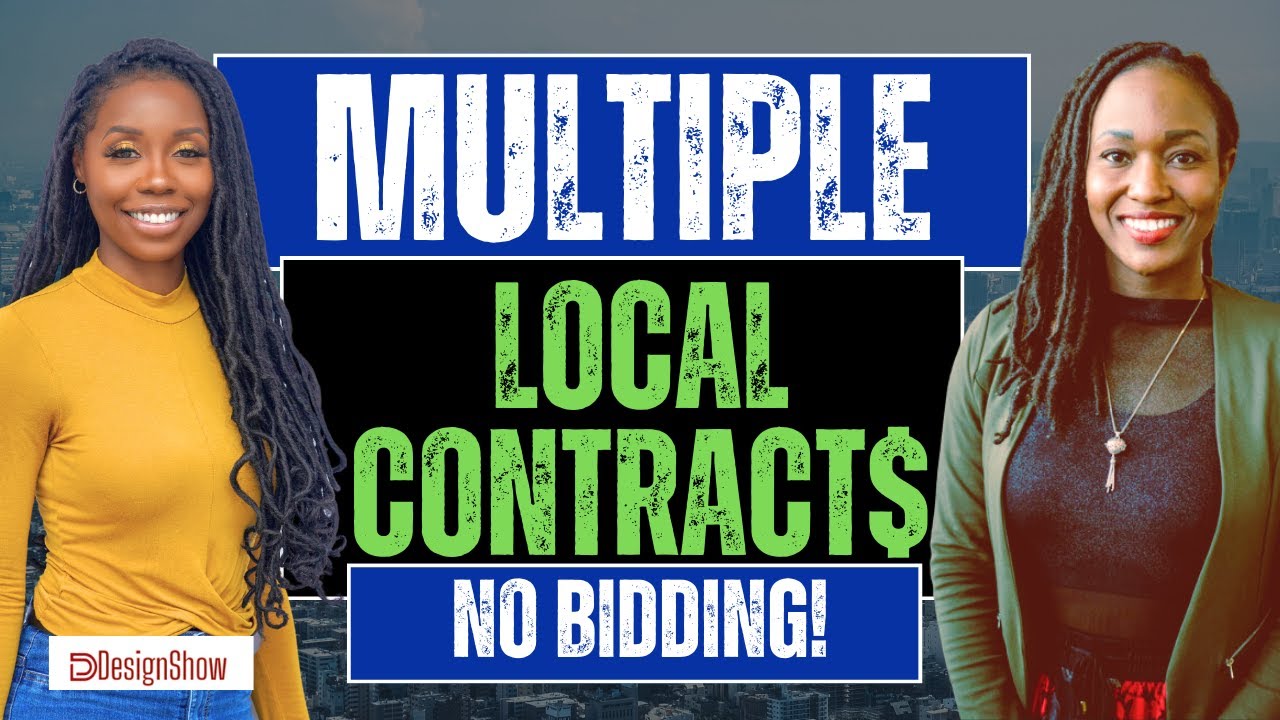
Local contracting offers a lower barrier to entry compared to federal government contracting through SAM.gov, which can be complex and time-consuming; individuals can start by researching how to do business with their local city, state, or county government, and utilize free resources like Instant Markets or GovDirections to find opportunities, making it a practical starting point for building a government contracting business.
Local Contracting vs SAM.gov: Government Contracting Guide
Added:Basic understanding of public sector procurement and how government entities solicit and acquire goods and services.
Familiarity with SAM.gov (System for Award Management) as the primary portal for U.S. Federal Government contracting.
Awareness of the jurisdictional differences, funding sources, and regulation levels between federal, state, and municipal governments.
Fundamental concepts of business scalability, including cash flow management, capacity constraints, and operational overhead.
How to identify, navigate, and register on localized municipal, county, and state procurement portals.
Strategies for obtaining local business certifications (such as MBE, WBE, or LBE) to leverage set-aside contract opportunities.
Best practices for interpreting local RFPs (Requests for Proposals) and drafting winning, compliant bid proposals.
Formulating a hybrid business development plan that uses local contracting to build past performance for future federal bids.
18.5K views1Klikes12:59Original Release: 2024-06-20
what's going on everyone it's Sheena AKA Sheena panure your favorite veteran so you might be a little shocked by this title but I want to do just like a quick Fast and Furious overview of what I mean by byebye sam.gov for me local Contracting is definitely a um better route for so many people and I wanted to give a few reasons why people get stuck with sam.gov so I want to say byebye bye-bye bye-bye to sam.gov because you're going to get into Government Contracting using local and that's what it is like we about to do this 2024 I know it's half over but we are going to Pivot because sam.gov is getting y'all like jammed up for real and I don't want you to continuously get have that struggle and feel like you're not you know doing what you can because it's really it is challenging it's a lot to understand it's a lot to learn and then you have um you know a lot of people who are teaching only about that but there's just so much to learn on the Federal side that you're not even taking the time to build your business where I feel like local Contracting is really helping you build your business and then getting you ready for what you may want to do on the federal side some people are winning Federal contracts the first goal you know kudos to you there's nothing wrong with that if you feel like Federal is your is then go for it if you feel like you want to do both go for it if you feel like you want to even add corporate contrac and go for all of it cuz that's what I'm doing I'm going for all of it but for those who are stuck at Sam am.gov I want you to say bye swipe right swipe left for sam.gov because we're going to say bye to it today and here's how we're going to do it so number one if you have registered in sam.gov and you have not received your cage code you either didn't apply for your cage code because that's like the very very last step before you're fully registered in Sam so you may get through the Sam process and then you got to apply for the cage code and you either didn't do that part or you stopped at that part so it's like uh do you want to go back through that or maybe some things have changed forget all that and then if you registered for your cage code and it's been months and you have not heard anything it's probably because you missed an email now with the cage code when you go to apply for it I still don't even really know what cage code is for and somebody if you know what a cage code is actually for please leave it in the comments I need to know cuz I don't feel like looking it up so I need one of y'all experts cuz y'all be swear you experts right no not everybody but let me know what a cage code is actually for because I don't see the purpose of it that's just me but like if you apply for um the cage code and you're like man it's been 6 months something wrong sis something wrong bro like you didn't respond to an email because they had some questions and that's why you didn't receive it okay but let's just say you know what she and I did everything it only took a week for me to get my S registration complete but now what do I do those y'all the ones that I want you to say bye-bye to sam.gov because really you must not know what you want to do in Government Contracting I've had a couple of people say what if I just started my business for Government Contracting with no Niche there's no such thing you had to enter in a NES code when you registered with Sam so there's no such thing as I just registered a government contracting business the the government contracting business has to provide something it may be more than one something and that's cool but it can't just be a government contracting business like what what is that really that doesn't mean anything that's not a thing so you have to pick something and if you want to start off with you know some people have multiple skills and I'm with it um as long as it makes sense to you don't go into something that you know nothing about because you're going to end up under bidding you're going to end up probably losing in the end especially if you're a brand new business owner like you never had a business in your entire life you may not know some of the pitfalls that comes with just running a business in general and if everyone was good at being a business owner everybody would be doing it so bye-bye to that we don't want you to be stuck on sam.gov for forever and then you're never ever getting into Government Contracting because local Contracting is Government Contracting as well I don't know why I don't know why people don't really understand that but it's a little lower barrier to entry and you want that because you want it it's it's getting your feet wet but it's also you can do big business on the local side there's people that make multi millions millions millions doing local contrac and there's no there's really no true difference the federal government obviously is going to get a lot more um than the than the state government or the city government or County government is going to get but just think about it right just because the federal government is getting that that doesn't mean you're getting it just because they just awarded um the space force a billion a trillion dollars in effort for um IT services you may not get a single red scent out of that like you may like you might we want to look at the news and we want to know you know where follow the money but doesn't mean that you going to get the money that you following that's just what it is and so if you're stuck at sam.gov then you need to slide over to local Contracting at your city at your state at your school system and you need to find out how to do business with them and that's a simple go to Google and how to do business with the city of Atlanta whatever it is whatever city or state that you want to actually um perform services for then you start there and then you could just continue that path and it doesn't cost you anything but time if anything costs you something then you probably on the wrong site or you're probably going about it the wrong way now what you can do if you are like okay Sheena look I have tried every which way I watched all your videos and I still is still asking me to pay for this service try your best not to pay cuz I guar I'm almost guaranteed I'm almost guaranteed that you don't have to pay for any of the local States there's I think in Texas there may have been one time where I saw but usually if there's a solicitation that that that state or that City or that county has an opportunity like listed in a portal that is usually paid like it's a dot website then that usually means that you can still go around a different way if there's a solicitation on that website I know that's probably a little confusing but basically what you can do if you just like I'm to I'm totally confused is when you Google doing business with the city of Austin for example I'm just throwing that out there I have no idea um what website the City of Austin uses but I'm just throwing out a random City but if if you were to Google doing business with the city of Austin and you see that it's a website that is typically a paid website bidet direct bonfire or something like that and you're like oh my gosh she I I ain't got the money to pay for this or I don't want to pay for it like I said don't pay for anything then EMA there's going to be an email address somewhere on that website of someone to talk to in procurement and just ask is this website free to use for the City of Austin that's a good way for you to find out for sure they are there to help you and you're not asking about a direct solicit so there shouldn't be any issues with them answering you and then they're going to say no here's the way to register as a vendor now there are some some agencies that you have to do paper registration oh child that's crazy but there are some small towns that don't have the capacity to um to have a portal they're not connected to any other city and then you need to do whatever it is that they're asking you to do and it's again it's only going to cost you time in that case it's going to cost you a stamp but but just um when you Google doing business with whatever City whatever state whatever County then you're just going to register as a vendor it doesn't cost you anything it doesn't cost you and you could just do your whole surrounding area start there and just say bye to Sam because Sam is holding you guys back Sam is stopping y'all from being Millionaires and I want I want the madness to stop I want you all to be millionaires if that's what you desire or even six figure earners okay you like Shea I ain't trying to have no extra stress I got a full or I have a full-time job and I can't can't quit it or I got kids I want nice you know one or two contracts that's cool start off small some of my Veterans of course are like out of the country I don't want to do too much cool I'm with it I get it so then start off at the local level and look at something that is potentially smaller for you to do or something that you consider to be easy I have a student who speaks multiple languages she's like this is a breeze for me I can do this with my eyes closed in my sleep boom she may not have started off saying that that's the type of contract she wanted to do but she recognized a skill within herself and she's like I'm going to do that go after that go after that but you might not find that same opportunity at sam.gov so let's just say bye-bye to sam.gov for the remainder of 2024 I want y'all to go local so y'all can become millionaires because it's really holding a lot of you all back you're registering and it's taking you months and years and you don't even know where to start sam.gov is a very very not userfriendly website and so also some websites that um that do bid deliveries Services where you do have to pay for it they have free versions they have paid versions but if you're like you know what I just want something easy my favorite my two favorite websites cuz I only I usually mention one but I got another one that I just keep forgetting to mention so the first one of course is always going to be gov directions.com what they do you do have to pay for it and they send you Federal and local opportunities I really like them the website is super easy to use super easy to navigate and then you have instant Market instant Market instant markets is a little more uh it seems like they have more opportunities I don't know or maybe they they just have more information I think they do a data pull I'm not sure but they show awarded as well and upcoming upcoming things for that will be up for bid in the next whatever uh 6 months uh 3 months stuff like that which is very helpful so you can get prepared for that start building a relationship with a Contracting officer and then also they both of those Services delivery to your email so then you don't have to look on Sam who wants to look on Sam all day and then also with um instant markets with this in instant markets is free so there's I think there a paid service I don't use that but it shows awarded contracts as well and it's pretty up to date because I actually was bidding on something and was trying to go to instant markets to get the previous award and then it showed that an addendum for the one I was bidding on just had popped up like the day before so it was pretty spoton um and I hadn't even seen addendum I'm like what or Amendment addendum same thing but um I hadn't even seen it but instant markets had it so it must be a data pull that they pull from the websites that they um have housed in there so it's free free is always good so go with instant markets or go with gub directions it's just instant markets is a little more just a tad bit more to na uh navigate you have to really read and take your time but go directions is Super Simple and Clean and you know it's almost like Bing versus Google you know it's like you know Google is clean straight to it probably the more powerful but then B it's like okay B got these other uh other tweaks and other things I can use the same thing with instant markets um so those are my two favorite sites it's instant markets.com and gobd directions.com so it still shows you Federal opportunities but it shows a heck of a lot of local because let's just say it is something that you can do on the local side in another state but it's virtual then you may not have thought of it but you put in that subject line um translator Services that's online or they need it done uh they need someone to create a um some kind of educational program that you don't ever need to go to that state but that state is who needs it then you're you're out you're working outside of your state now and now you you know got a little feather in your head or whatever and you're you have multi-state contracts on the local side doesn't that feel good so we're saying bye to sam.gov for um this video You're Going local we going local y'all and local doesn't just mean in your local area I want you to start in your local area and you you can Branch out depending on what you do just make it make sense for you don't go to Alaska if you can't go to Alaska don't go to Hawaii if you can't go to Hawaii just make it you know go through the whole process yourself and say okay can I really do this realistically H yes or no and that'll let you know like for sure if it makes sense like really going through you can't ask me cuz Sheena don't know what you what your capacity is but I would ask you to think about doesn't make sense to you so of course make sure you join our govcon moneymakers community is 100% free to join the link is in the description and my course govcon now teaches you about Federal local and corporate Contracting I have a whole section for my veterans at the recording of this video we are doing a sale for our 2.0 update so please please please check that out link is also in the description and I'll leave the code in the description um so until next time it is your favorite veteran
Up Next

49:40
SBA 8(a) Certification: A Guide to Federal Contracting Eligibility
@jenniferschaus
11.9K views•2013-04-30
46:36
Retention Habits of Top DTC Ecommerce Brands Revealed
@SendItPodcast
44K views•2026-03-03
136:01
Local Government Contracting Strategies for Small Business Success
@sheenapreneur
13.9K views•2023-12-31

17:30
The Planned Obsolescence of Light Bulbs and Tech
@veritasium
25.3M views•2021-03-26
Related Study Plans & Knowledge Roadmaps
Structured learning paths in Business
business
Pop-Up Retail: Strategy, Design & Execution
01Introduction to Pop-Up Retail & Strategic Goal Setting
02Budgeting, Site Selection, and Legal Essentials
03Experiential Retail Design & Visual Merchandising
+ 2 more learning modules
15h5 modules
Explore Roadmap
business
Reg CF: Startup Funding, Marketing & Launch
01Introduction to Equity Crowdfunding & Reg CF
02Platform Selection & Legal Preparation
03Crafting High-Converting Campaign Assets
+ 2 more learning modules
14h5 modules
Explore Roadmap
business
Productized Services: Scaling Solo Freelance
01Foundations of Productized Services
02Packaging and Scope Definition
03Pricing and Subscription Models
+ 2 more learning modules
15h5 modules
Explore Roadmap
business
Gov Procurement: Find, Bid & Win Contracts
01Introduction to Government Procurement & Business Setup
02Small Business Certifications & Set-Asides
03Finding and Analyzing Contract Opportunities
+ 2 more learning modules
14h5 modules
Explore Roadmap