









![[1] Time Speed and Distance concepts in hindi | Devotion Institute | Mahendra Khandelwal](https://i.ytimg.com/vi/vgASiXrQYvQ/maxresdefault.jpg)



![Doppler Effect, Shock waves & Interference of Sound Waves (Derivations and Examples) [+0971736280]](https://i.ytimg.com/vi/B5ZDb2IY6tw/maxresdefault.jpg)





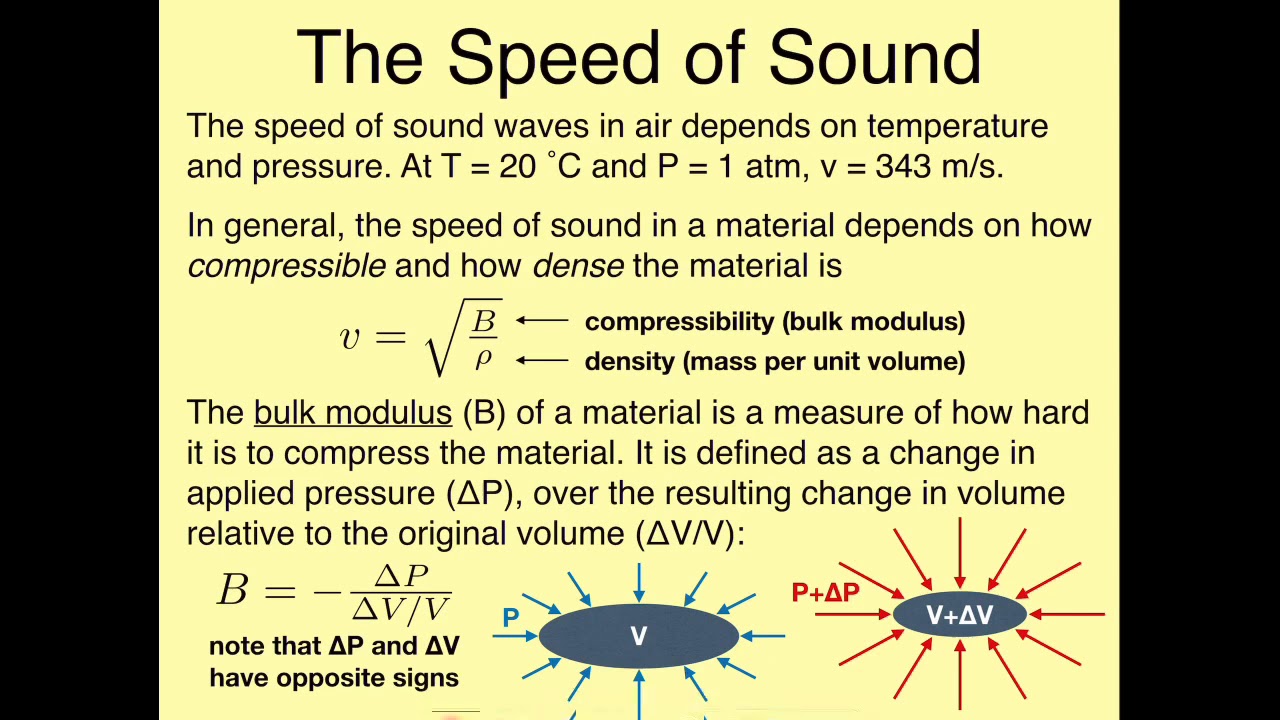





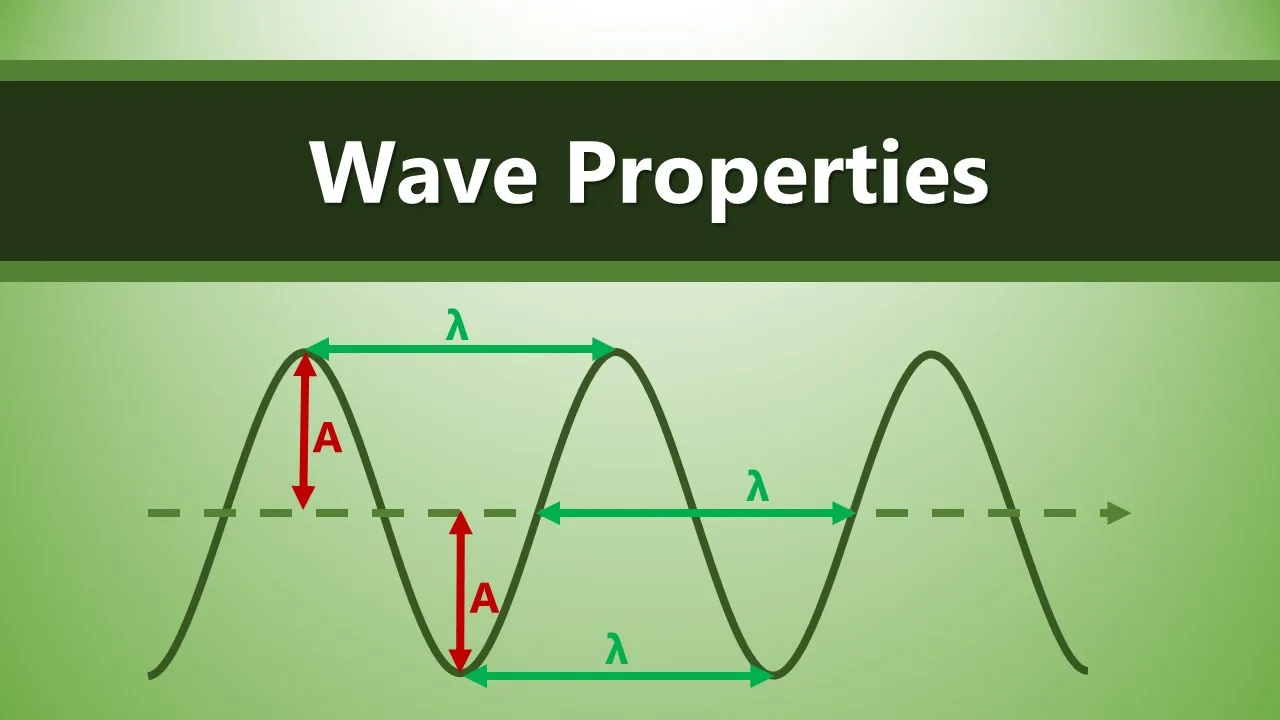
Sound is created when loudspeakers vibrate rapidly, forcing air molecules to collide and transfer energy in pulses; this generates longitudinal waves that travel at approximately 340 meters per second through air. Sound can be represented diagrammatically as transverse waves, where frequency (measured in Hertz) determines pitch—higher frequencies produce higher-pitched sounds—while wavelength (the distance between wave peaks) inversely relates to frequency. Amplitude, represented by wave height, determines sound loudness, with greater amplitude producing louder sounds. Human hearing is limited to frequencies between 20 Hz and 20,000 Hz, with sounds below 20 Hz being subsonic and those above 20,000 Hz being ultrasonic.
Sound Waves: Frequency, Wavelength, Amplitude Explained | Physics
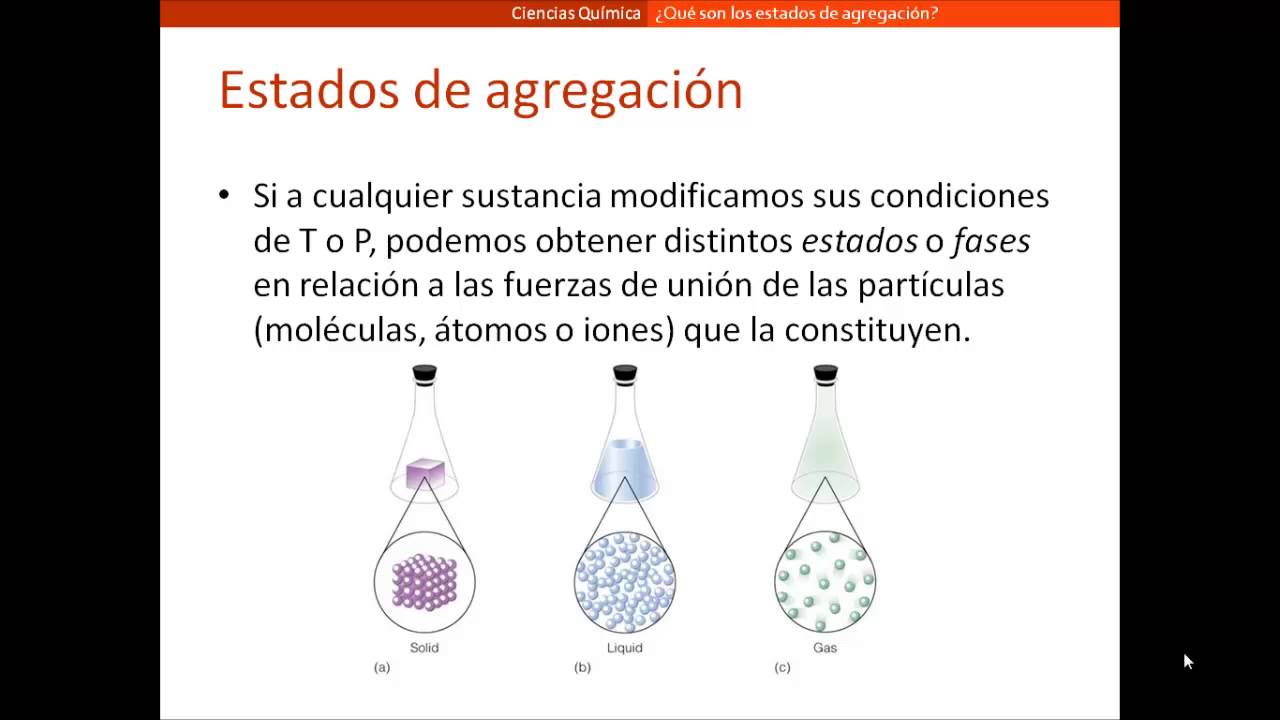
Added:Basic understanding of physical states of matter (solids, liquids, gases) and how particles interact.
The definition of a wave as a disturbance that transfers energy through a medium without transferring matter.
The distinction between longitudinal waves (like sound) and transverse waves (like light), specifically the concepts of compression and rarefaction.
Elementary algebraic concepts, including basic units of measurement for time, distance, and speed.
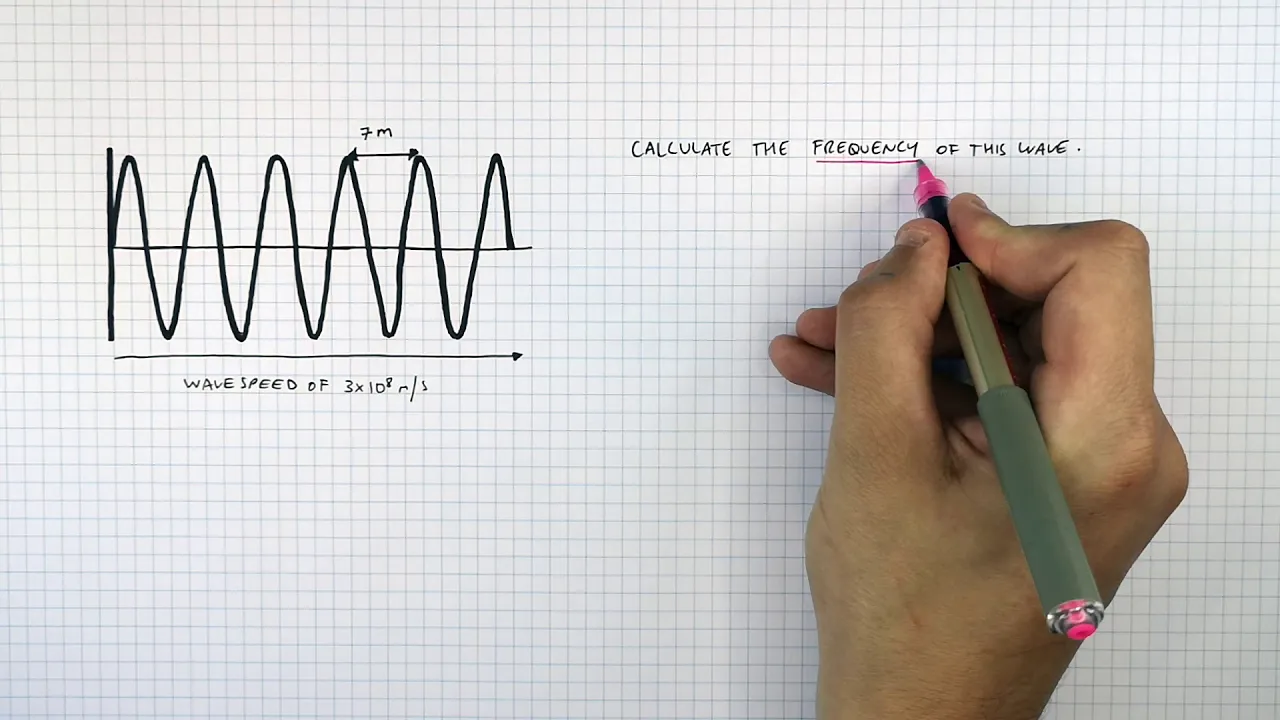
The wave speed equation (v = f * lambda) to mathematically calculate frequency, wavelength, and speed in different mediums.
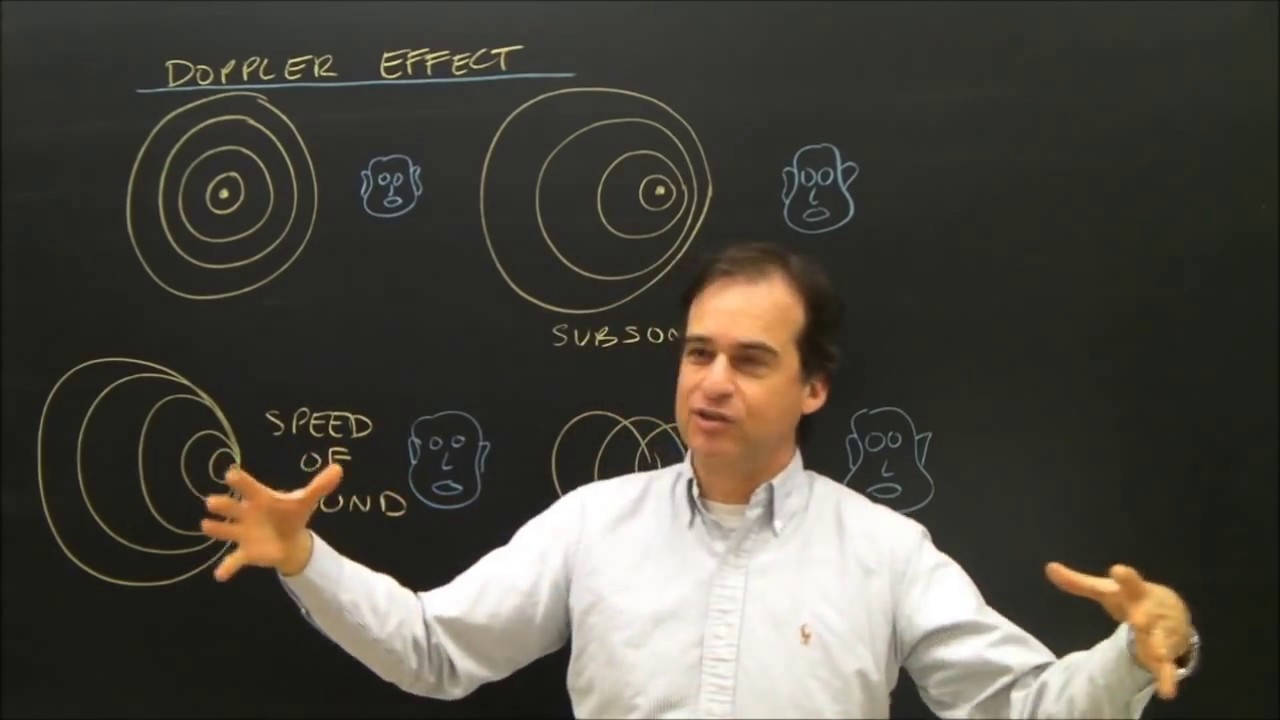
The Doppler Effect, exploring how the motion of a sound source or observer changes the perceived pitch.
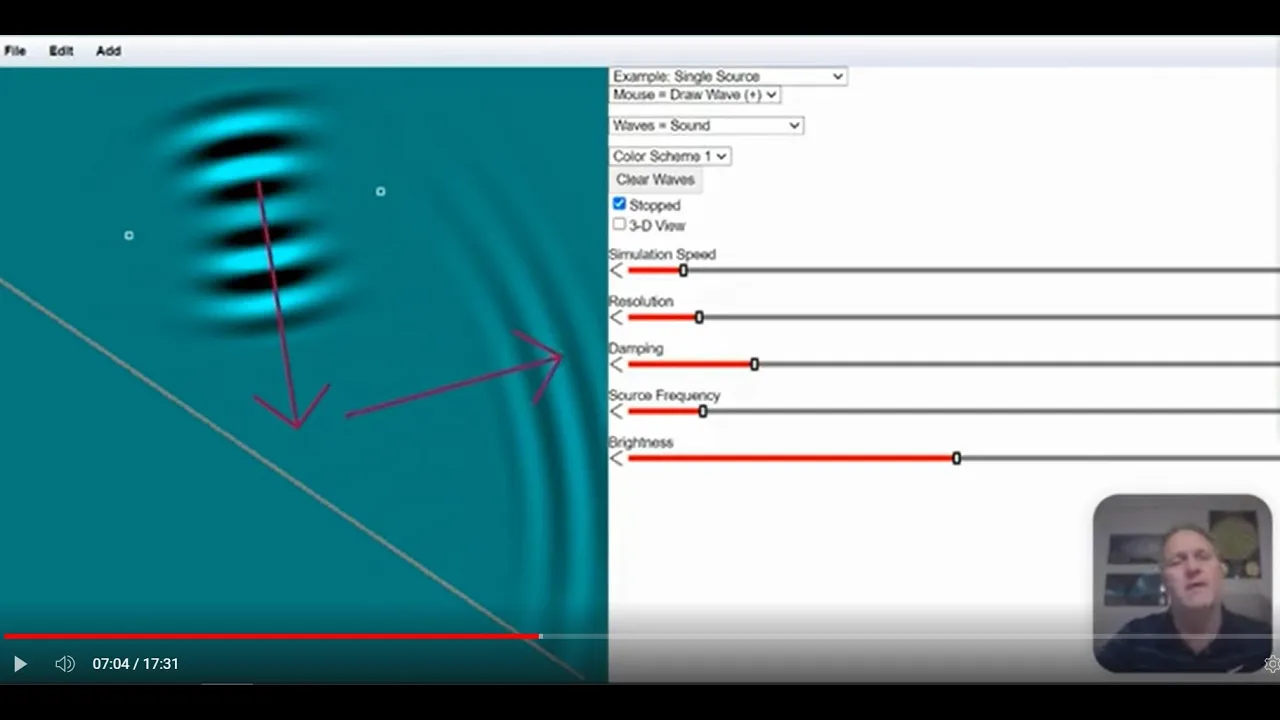
Wave behaviors and phenomena such as reflection (echoes), refraction, diffraction, and constructive/destructive interference.
The logarithmic decibel scale for measuring sound intensity, and the anatomy of human hearing perception.
Practical applications of acoustics, such as medical ultrasound, sonar navigation, and active noise cancellation.
602.1K views8.3Klikes5:48Original Release: 2018-05-02
[Music] sound is basically vibrations and we can represent sound using special diagrams that are kind of shaped like a mountain and a valley and because these diagrams are shaped a little bit like mountains and valleys we describe them as waves weaves [Music] I don't get it we've all got a basic understanding of what sound is because we hear things every day and we've probably got some idea of how we might describe some of those sounds for example we know that there are sounds that are high-pitched and by contrast there are sounds that are low-pitched [Music] but what exactly is sound and what is it about it that allows for this high and low pitch well to understand sound a good place to start is how loudspeakers work basically when a loud speaker is going to generate sound what it has to do is move up slightly and then back down and it's gonna do this really really fast in a little pulse now as the loud speaker does this the air molecules that are immediately in front of the loudspeaker will be forced outwards and those air molecules are going to collide with the next set of air molecules that are right in front of them and then those air molecules are going to collide with the next ones in front of them eventually transferring this little pulse away from the speaker now this alone is not enough to create sound in order for sound to be generated this pulse has to happen repeatedly it has to happen many times each second the vibration of air molecules allows sound to travel at a speed of 340 meters per second now that sounds quite fast but if we compare it to water which is much more dense meaning the molecules are much more close together it is capable of transferring sound at a faster speed of around about 1500 meters per second now let's look at this diagram of air molecules vibrating as a consequence of this pulsing of a speaker what we presented here is something called a longitudinal wave but it's a little bit more convenient to present sound diagrammatically using something called a transverse wave on this diagram we can see from the transverse waves that there are three waves within a time frame of one second this means that the speaker is vibrating at a rate of three pulses per second and this is telling us the frequency frequency has the unit Hertz and so we can say that this speaker is generating a sound of three Hertz now let's have a listen to what three Hertz sounds like you and here it no and there's a reason for that human hearing is only capable of responding to frequencies in the range of 20 Hertz up to 20,000 Hertz anything lower than 20 Hertz is described as sub sonic and our ears can't hear it anything higher than 20,000 Hertz is described as supersonic and we can't hear it let's look at a speaker in action playing a frequency of 30 Hertz now on this speaker I've put a few little bits of polystyrene which are there to demonstrate the open downward movements of the speaker's a little bit more closely as we turn it on we can see the little bits of polystyrene bouncing around all over the place and if we play this back in slow motion we can see quite clearly the upwards and downwards movement of the speaker now if we want to demonstrate this graphically a device which takes a sound and represents it as a wave is known as an oscilloscope if we look at this frequency being played through the oscilloscope we can see our transverse wave now let's see what happens if we increase the frequency to 50 Hertz we can see that the bits of polystyrene are bouncing around faster and the shape of the wave has changed now let's look at it at 100 Hertz notice that as we increase the frequency we are increasing the pitch as you can see the transverse wave shape is changing but what exactly do these shape changes mean well the first thing to notice about a transverse wave is how wide it is and this is referred to as the wave length if we have a longer wave length this means that we have fewer pulses in any unit of time which means we have a lower frequency and therefore it lower pitch by contrast of course if we've got a shorter wavelength it means that we've got more pulses in any unit of time therefore a higher frequency and a higher pitched sound another important thing to notice about transverse weaves is their height the height of the wave is telling us the amplitude and when we're talking about sound waves a greater amplitude basically means a louder sound so by contrast if we've got a less tall wave then we have a softer sound [Music]
Up Next

18:15
Physics 20: Sound Reflection, Refraction & Diffraction | 11.7-11.9
@MrMathWell
109 views•2022-03-07

12:53
21cm Hyperfine Transition in Neutral Hydrogen: Radio Astronomy Basics
@AaronRobertParsons
12.4K views•2011-10-13

32:32
NMR Spin Physics I: Zeeman Effect, Resonance Condition & Larmor Frequency
@nptel-indianinstituteofsci8064
2.3K views•2024-01-17

27:14
Entropy and the Second Law of Thermodynamics Explained
@veritasium
27.5M views•2023-07-01
Related Study Plans & Knowledge Roadmaps
Structured learning paths in Physics
physics
Nuclear Physics (Decay, Fission & Reactors)
01Atomic Structure and the Binding Force
02Radioactive Decay and Half-Life
03Nuclear Fission Mechanics and Chain Reactions
+ 2 more learning modules
12h5 modules
Explore Roadmap
physics
Soft Matter (Polymers, Colloids & Rheology)
01Foundations of Soft Matter & Thermal Forces
02Polymer Physics and Macromolecules
03Colloids, Surfactants, and Self-Assembly
+ 2 more learning modules
38h5 modules
Explore Roadmap
physics
Analytical Mechanics: Lagrangian & Hamiltonian
01Mathematical Foundations: Calculus of Variations
02From Newtonian Mechanics to Constraint Dynamics
03The Principle of Least Action & Lagrangian Mechanics
+ 3 more learning modules
28h6 modules
Explore Roadmap
physics
General Relativity (Spacetime & Cosmology)
01Foundations of Relativity: Special Relativity
02The Geometry of Spacetime: Equivalence Principle & Curvature
03Einstein's Field Equations: The Mathematics of Gravity
+ 2 more learning modules
55h5 modules
Explore Roadmap