










![राज्यपाल Governor राज्य की राजव्यवस्था [Part-1] State Polity By Subhash Charan Sir](https://i.ytimg.com/vi/GhDj0-o6UlQ/maxresdefault.jpg)


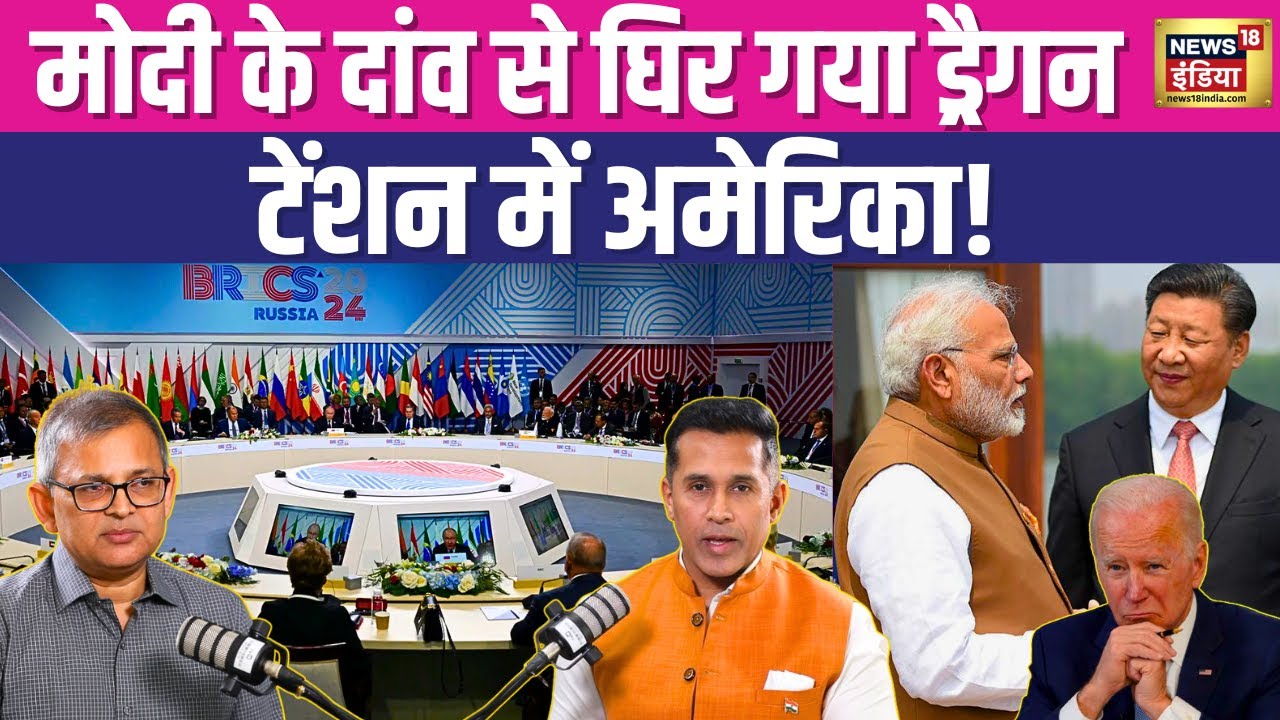






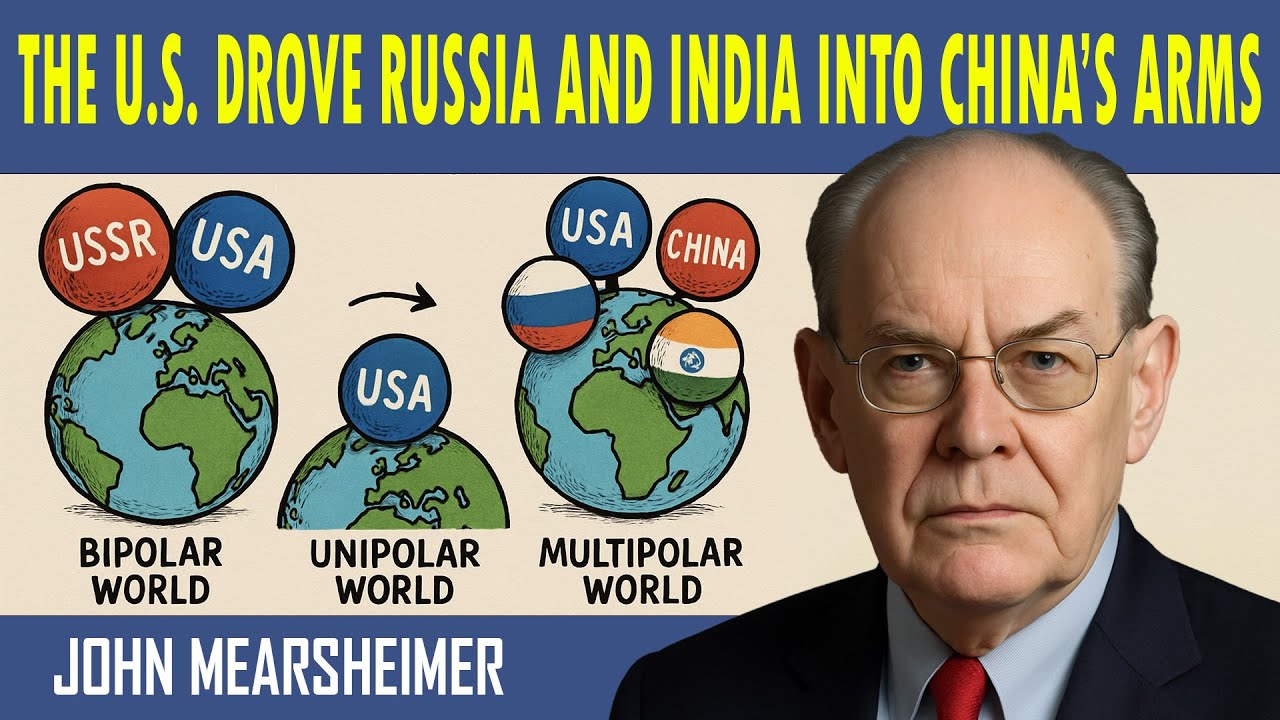
World order is a system of distribution of power and authority among nations that shapes international interactions, conflict management, and cooperation on global issues. The evolution of world order has progressed through distinct phases: the pre-WWI era with European balance of power shaped by the Congress of Vienna (1815), the post-WWI League of Nations (1918) which failed to prevent WWII, the post-WWII UN system with Bretton Woods institutions, the Cold War era (1947-1991) characterized by bipolar US-USSR confrontation with NATO, Warsaw Pact, proxy wars, and nuclear arms race, the unipolar US dominance (1991-2001) with neoliberal globalization, and the current multipolar world featuring multiple power centers including US, China, EU, India, and Japan. Cold War 2.0 represents the renewed geopolitical rivalry between the US and China, characterized by deep economic interdependence (US as largest investor in China, China as largest buyer of US Treasury bonds), military parity (China's Navy already surpasses US, Air Force projected to surpass by 2027), and less emphasis on ideology compared to the original Cold War. This rivalry is primarily played in the Indo-Pacific region, creating challenges including fragmentation of global institutions, economic disruptions from trade wars, and risks of military conflict through regional flashpoints. India faces specific challenges including border disputes with China since 2020 Galwan Valley clashes, strategic balancing between QUAD participation and traditional Russia alliance, economic dependence on Chinese imports complicating decoupling, and technological gaps in 5G, AI, and quantum computing.
Daily Current Affairs Analysis for UPSC: October 21, 2024
Added:[Music] hello and warm greetings welcome to the analyst by vaji where we would try to comprehensively cover seven articles in two different sections in the analysis part we'll first have a discussion with respect to the evolving concept of the world order and the implications of the Cold War 2.0 then in the second article we'll talk about the importance the challenges and the way forward with respect to the office of governor in India then in the simplified section we'll have a look at five different sections specifically focused on upsc prelims 2025 along with the value addition so stay tuned so coming to the very first topic of the day this is with respect to the world order and Cold War 2.0 so we have a very beautiful article which has been featured in the Hindu today and this has been written by none other than Mr Shashi taru now the whole Crux of the article is that since 2000 we have witnessed an aggressive rise of China and this has posed challenges to many countries especially India which shares a direct land border with China right now this power contest which is primarily between the US on one hand and China on the other what the author says is that in this conflict India should not allow itself to be reduced to upon in this renewed bipolar contest so we'll see what this scenario of world order is all about and what is this cold war 2.0 and what are the ramifications of the Cold War 2.0 now this is with respect to GS paper 2 effect of policies and politics of developed and developing countries on India's interest now let's first talk about the world order what is a world order see World Order is a system of distribution of power and authority among different nations that is what amount of power and authority is vested with different countries and how that power and authority is being actually exercised right now this world order the system of power and authority this primarily shapes the interaction among different nations then it shapes the management of conflicts how the conflicts are to be managed and then cooperation on different Global issues be climate change be Global Health right now this particular system of world order this encompasses various structures norms and principles and these are the ones which determine the behavior of Nations and the international institutions right so the Crux is that world order is nothing but the distribution of power and authority among different nations which actually shapes the interaction among them right now if you go into the historical chronological order basically that how this world order came into being what you would see is that in the pre-World War era this concept of world order came into being and it was primarily in the 19th century when you had different European powers and you had the concept of balance of powers among different European countries right now if you were to look at any event which shaped this concept of world order it is the Congress of Vienna of 1815 which actually tried to shape the power balance among different nations in Europe next is if you look at the postor war world order what would have been the world order then it was primarily in 1918 when you saw that we had the League of Nations now League of Nations was primarily formed to prevent conflicts But ultimately it failed it failed to curb the World War I right then what we see is the World War 2 now it was after the World War 2 that we witness the formation of the United Nations to promote peace and stability among nations right to promote International Co cooperation and then we also had the Britain Woods conference which led to the establishment of the World Bank the international monetary fund right now if you look at the Cold War era that is from 1947 to 1991 onwards what you would see that this was a period of a bipolar World Order bipolar as the name says Two Poles two opposing poles on one hand you had the US and the other on the other hand you had the earthwell USSR both with opposing ideologies right and this primarily witnessed this particular era witnessed military alliances in the form of NATO in the form of waro P right then it also witnessed proxy wars right so for example you had the Vietnam War for example you had the Korean War right so we had proxy wars where both the US and the ell USSR they were actually cooperating with the opposing parties right next is it also witnessed the nuclear race that is what you saw was an exponential proliferation of nuclear arms right then it was in the year 1991 that what we witnessed was the disintegration of the earthw USSR and thus from 1991 till 2001 what you witness was a unipolar world which was led by the single dominance of the US right and it was during this period that what you witness was neoliberal globalization that is the objective the US emphasized that there has to be reduced role of the state that is that tariff should be reduced and free market economics should be promoted right then it was the global financial crisis now there was a specific event in the year 2001 now you need to tell me which was the event which primarily gave spot which gave a black spot to the US hemony right now then it was the global financial crisis of 20078 right now this was a era where you saw the rise of China right the rise of China along with India and then what we see term it as a multi-polar world where it's not just about a single power that is the USA which is dominating the world politics but on the other hand what you have is a situation where there are multiple poles of power be the Eur European Union be it India be it Japan be it China be the other middle Powers right now what this phase which is what we're witnessing as of now also it basically signifies geopolitical rivalries as the topic of the day is that the rivalries are primarily between the US and China in the domain of military in the domain of technology in the domain of trade right then what you see is that this phase is also witnessing rapid strides in the technological advancements be it 5G be it The Internet of Things be it the artificial intelligence be it the quantum Computing you have us and China who are primarily dominating in these technological advancements then what you witness is globalization along with protectionism that is on one hand you are witnessing cooperation among different countries there is more instances of globalization but on the other what you're also witnessing is increased protectionism increased nationalistic Pol policies in different countries be it the America First of us or be it the rising nationalism in China right so these contradictory principles are what we are witnessing at the same time now let's talk about what is Cold War 2.2 now if you just talk about this construct of Cold War 2.2 what you can see is that initially we had a cold war between the US and the earthw USSR again what we are seeing is the repetition of the same conflict but the characteristics have changed now the parties have also changed so initially the Cold War was between the US and the Earth 12s USSR but now what we are seeing is that this cold war 2.0 it is primarily between the US and China right now this basically signifies the renewed geopolitical rivalry between us and China but you should keep in mind that Russia is not someone who is absent here Russia is also present in this conflict right we'll see how next what are the characteristics of this particular conflict see the Cold War initially the 1.0 the the first form of the Cold War that was primarily based on the opposition was primarily ideological that was primarily the liberalism versus the communism right but now what we are witnessing is that the conflicts are more driven by the economic angle more driven by the technological aspects more driven by the military competition and ideologies outrightly they are not actually dominating this scenario right next what according to the editorial is Cold War 2.0 different from its criticism right see first is economic interdependence now if you look at the economic the kind of economic interdependence which US and Russia had initially by Russia I mean to say the Earth Val USSR right in the in that cold war period and the kind of economic inter interdependence which presently us has with that of China there are quite shocking comparisons right first is that the economic situation of us and China it is deeply intertwined right very complexly intricately linked right next is that if you look at who is the largest investor in the China you would see that us is the largest investor in China next aspect is that China is the one who is actually the largest buyer of US Treasury bonds just imagine that on one hand you have us who is the largest investor in China and on the other hand you have China who has basically who is the largest buyer of US Treasury bonds next is if you look at the tourism you would be surprised to know that it is the US Travelers us tourists who visit China more than any other Asian countries right also if you look at the education Us in terms of the total number of international students it has there is the dominance of China majority of the international students who are actually living in the US they are of Chinese origin right next manufacturing and Technology there is the dominance of China when we talk about the manufacturing it has already surpassed the US capacity of manufacturing and when we talk about the other technological domain be the 5G it is almost rivaling the us next is approaching military parity now what do we mean by that see we have got the people liberations army navy right the Navy of China now according to the data it has the number of Battle Force It it has it is more than that of the US so in the Navy domain in the water domain already China has surpassed that of the US right now if we talk about the Air Force it has been projected that the Chinese Air Force would surpass that of the capacity of the US by the year 2027 next is less emphasis on Ideology Now this conflict which is there between the US and China it is more strategic in nature that is the Sino American rivalry is not based entirely on the ideological opposition as we witnessed in the last Cold War right and the focus the Chinese focus is on securing the global haimon right and it is not really concerned about expanding or or disseminating the Communist views around different countries right next is that the strategy of the US to say that it is not a war between us and China it is primarily between the democracy versus the autocracy that has failed so us has has its Summits for democracy now this is this has primarily failed to convince the world that China is actually the perpetrator of atrocities and China is somewhat very autocratic in nature right next is what is Russia's role in this bipolarity see many analysts argue that it is not just between us and China where this conflict is taking place that is cold war 2.0 is not just between us and China Al what they call is that this particular conflict is primarily between us and Russia or you must say what ideally the analyst say the China Russia aess right so they term this axis as China Russia axis see Russia is also a significant player primarily because that both are in some way or the other that is China and Russia they are getting dependent on each other right more with the case of Russia Russia is getting more and more dependent on China right so what we see is that beat the Ukraine crisis or be the other crisis China has outspokenly supported Russia right next is emergence of the Indo Pacific now this is very important see the whole game of Cold War 2.2 it is being played primarily in the Indo Pacific see what we witnessed was that that initially we had the Atlantic which was the domain of power exchanges but slowly the shift has taken place from Atlantic to the Indo Pacific and this gives Prime importance to countries like China and India right so the domain of the Warfare the domain of the conflict is primarily in the Indo Pacific and this is this particular region it is Central to the US China competition and that is the reason what you see is that there have been the instances of growing alliances and groupings for example we have the quad now this comprises of India us Japan and Australia right and they are aiming to have a secure to secure a free and open Indo Pacific on the other hand you have the military alliance between that of the US UK and Australia which is is primally focused upon nuclear powered submarines right so this is the kind of the difference which the Cold War 2.0 has with that of its earlier predecessor that is Cold War which was primarily between the US and the earthw USSR now what are the challenges posed by Cold War 2.0 first is if you talk about the global challenges it has led to the fragmentation of global institutions so what we are witnessing is that the international institutions be it the United Nations be it the World Health Organization be it the World Trade Organization it is leading to the weakening of these organizations and thus less cooperation among different nations next is economic disruptions see because of these sanctions trade Wars primarily between the US and China it is leading to the disruption in the overall trade it is leading to the volatility in the global economy and this is obviously not good for other countries right again what we are seeing is that it is leading to more fragmented Supply chains and that is the reason what we are focusing is in to diversify these Supply chains so that the countries are less dependent on the Chinese production supplies next is risk of military conflict see again what we are seeing is that direct conflict is unlikely primarily because of the concept of nuclear deterrence right majority of these Powers they are having nuclear arms and because of this what we are seeing is that the direct concentration is likely it's not possible but what we witnessing is that there are Regional tensions and this creates flash winds be it the Taiwanese conflict or be it the Ukrainian conflict or be the Korean conflict so these are the flash points and again it takes very less time to transition from this these flash points to a full out blown War right next is there are issues with respect to the global governance that is see there are different modes of global governance right be it the Chinese mode of governance or be it the American mode of governance so there are competing claims that our mode is better than yours right so this is having an impact on the international arms for example cyber security or climate change or human rights because on these Global issues we are unable to find a common solution because of these diverging claims on the model models of the governance next is nuclear deterrence and arms race see in the Cold War the first Cold War what we witnessed was there was the huge proliferation of nuclear arms primarily by the US and the Russia sorry the Earth while USSR but now what we are also witnessing is that there is the presence of this proliferation countries are more and more having more sophisticated weapons if not nuclear arms what they're focusing upon is other aspects for example Hypersonic missiles or artificial intelligence in Warfare or cyber warfare what we generally describe as hybrid Warfare or non-kinetic Warfare right so these are the areas where what you are witnessing is the technology is infusing into the Warfare and more and more number of countries they are actually going for these technological Warfare next what are the challenges for India first and foremost is border disputes see please understand the relations of India and China have been sore and primarily it is since the 2020 Galvan Valle clashes so we had clashes in the Galvan Valley and because of that since then the relations have not been good now one of the Prime reasons that see we have this quad grouping right now in this quad grouping what you see is that no other country shares a direct land border with that of China so what we are trying to say is that India faces a lot of threats from Chinese excursions next is strategic balancing see India on one hand is having the quad taking Parts in the quad and then on the other India is also interacting with its traditional Ally Russia right so see managing alongside it is also managing the complex relations with China so this is something which is a diplomatic heavy task for India right next is economic impact see India is more or less whether you accept or not India is more or less dependent on Chinese Imports bead chemicals beat Electronics beat other active pharmaceutical ingredients or anything India is heavily dependent on Chinese Imports and that is what complicates the economic decoupling see what is economic decoupling that we are aiming to diversify the supply chains that is we are not solely dependent on Chinese manufacturing capacity that we are not solely dependent on the Chinese Imports right so we need to diversify ify these lines and that is what we call the decoupling we need to have decoupling next is technological Gap see if you talk about 5G if you talk about artificial intelligence if you talk about Quantum Computing you have us and China who are already dominating these fields but again India is still in the process of strengthening its domestic technological capabilities and see we have we have put a lot of efforts be it creating the test beds for the 5G and different Indian Institute of Technologies right or be it carrying out the establishment of fabrication units of semiconductors in Gujarat so we are working upon that but still if you compare the technological aspect we are way behind that of China and the us next is geopolitical pressures see India has this notion of strategic autonomy right we have always believed in strategic autonomy so India has been more or less non-aligned or multi- aligned foreign policy now this faces stress primly because in this situation of Cold War 2.0 people are expecting us on the on on one hand is expecting India to take a specific stand and that is really not possible with India because India has to balance India has to secure its national interests and over there the concept of strategic autonomy becomes really important now what should be the way forward the first and foremost is for the world see for the world what there is a need is that we need to focus upon the multilateralism aspect that is the concept of multilateralism needs reinforcement there has to be the strengthening of global institutions be it the UN or the World Trade organiz iation or the World Health Organization these institutions need reinforcement strengthening right primarily in terms of the funds primarily in terms of carrying out different countries carrying out their mandate right so again what we focus what we need to actually focus upon is that we have some of the very grave common challenges be it the climate change or the health or global trade now this needs strong institutions right next is regulation of emerging Technologies very important just before few days Prime Minister Modi said that we need to have a global framework for the artificial Ence again if we do not have a global framework there would be different you know countries who would have their discretion and then it can lead to these Technologies being used in the wrong areas be it the Warfare right as we just discussed using AI in the Warfare right so there have to be Global Frameworks which are focused on artificial intelligence Quantum Computing and cyber security and this would prevent Tech Wars right and this if you'll prevent Tech Wars it would lead to the prevention of escalation of the wars right next is conflict prevention and diplomacy so we need greater and more and more investments in the diplomacy and the confidence building measures so as to stop these flash points flash points among different countries for example let's say the Taiwanese conflict or the Ukrainian conflict turning into a full-fledged War right so to avoid the risk of large scale conflicts next is economic integration see again we need to focus upon strengthening the global Supply chains and they should be Diversified for example we have got the supply chain res resilience initiative right which had countries like India Japan Australia right so such measures need to be promoted next is climate cooperation see again what we are focusing is that there is a need for Global cooperation collaboration on different areas as we just said that these challenges for example climate change mitigation or the human rights or other things they are the challenges which entire the whole Global Community faces and over there what we need is more strengthened cooperations among different nations right and these are the common exist essential threat which the world as a whole faces next what should be the way forward for India first is strengthening the National Security very important India is strengthening its military domain be it the economic aspect so the effort should be made on a continuous basis so as to strengthen the military strengthening the Border infrastructure as we have been doing so and then deepening its defense stes and India has been doing so when we talk about the quad or when we talk about having different exercises for example Malabar or having different bilateral or multilateral exercises right next India should continue to focus upon its strategic autonomy so we may have countries like us who always criticize this concept of strategic autonomy right but we need to focus upon having this continuation of this strategic autonomy right because as I said that no other countries faces as many threats as India faces when we talk about the China versus India scenario right so we have to balance the relationship with us through quad for example or Russia through bricks for example and China through let's say direct interactions and this we should avoid over Reliance on any particular single block right next is we have to focus upon technological advancement very important so we need to accelerate the developments surrounding the artificial intelligence 5G and other semiconductor Technologies right so as to we can become more self-reliant and we are not dependent on these super PS next is economic diplomacy India can act as a bridge in multilateral forums be the bricks or the quad or G20 see we already witnessed that India was the one who aligned the African countries with that of the G20 in its Summit right also what we saw that many countries are calling as India as the mediator between Russia and Ukraine right so this signifies the importance of India so as to force the dialogue between Global pass next is indopacific leadership very important India is of prime importance when we talk about the Indian Ocean region right so India has to play a proactive role in the Indian Ocean region and it is crucial in shaping a free open and inclusive region right India has a very strategic position in the indan region and this gives it a leverage and we need to utilize this leverage so as to secure its own interest so what we see is see again this the aggressive rise of China has led to a lot of many challenges but again the world need to focus upon enhancing the multilateralism it needs to focus upon having many Frameworks Global Frameworks and making sure that different countries abide by those Frameworks and for India in particular what we need to focus upon is strengthening the military domain strengthening its economic power having more Integrations with different countries through different dialogues right again what we see is that India is very strategically placed in the Indian Ocean region it should continuously invest in its power in its military power and other domains so as to make sure that it basically emerges as a regional leader right so we also have Saga Doctrine right security and growth for all in the region so India has been following the ideology of vasev kumam so what we need to focus upon is having good relations among different nations and also at the same time focusing upon strengthening its defense capabilities right so that is what you need to know with respect to this particular article now before we go to the next topic we have a very important main question the question says the shifting dynamics of the global World Order often referred to as the Cold War 2.0 presents challenges for the emerging poers like India in the light of these developments critically examine the evolution of the world order and their implications for global stability discuss India's strategic options and the way forward in navigating these geopolitical shifts do write a particular answer on this question now before we go to the next topic I have three important question for you the first question is to assess your preparation that who was the first Indian to qualify the Civil Service examination in the year 1863 who was the first Indian to qualify the Civil Service examination in the year 1863 second which is the largest braish water lake in India the largest brackish water lake in India and the third question is that which body publishes the composite Water Management index and the school education Quality Index there's a body which actually publishes these two reports do write in the comment section let me see who answers first in the comment section that is it for it so coming to the next article this is with respect to the very important constitutional post of Governor which we often say as the Guardians of the federalism see in the last few years we have witnessed that there has been a growing tug-of war between the governor on one hand and the elected state government for example in this particular case what we are seeing is that the political hostilities between the Tamil Nadu governor and the chief minister they are on the rise again and this time it is basically it has been triggered by a distorted rendition of the State Anthem at the prasar bharti event be it Kerala or be it Tamil Nadu or be it even West Bengal right the office of the governor has been in the news and most of the time not for good reasons now this is with respect to GS2 constitutional posts Powers functions and responsibilities now talking about the office of the governor what we see is that he is the Constitutional head of each state in India right and the Constitution advises him as the linkage between the state government and that of the Union government so ideally his work is to facilitate the interaction between the union and the states right now this office is significant because this office is expected to promote the federal structure in the country to promote the interest of the states next and to ensure that the state Machinery functions within the overall framework of the Constitution so what you see is that it is the office of the governor who first facilitates and maintains the federal structure making sure the states exercise their definite framework of power in a smooth way and then on the other hand it also secures he also secures that the duties and functions of different states they are being carried out in the overall framework of the constitutional principles now if you go into the origin of this particular office what you would see is that the office of the governor is neither elected directly nor indirectly what you have is that he acts as a central nominee who is appointed by the president now the origin of the office goes back to the government of India Act of 1935 right and we had the seventh Constitutional Amendment act in the year 1956 which basically said that one person can also be made a governor of one or more States right now one of the very important aspects of the office of Governor is which was stated in the hargovind pun case of 1979 where the Supreme Court very categorically said that this office is a not employment under the union government that is this office is of independent constitutional office right that is it is not dependent on that of the Union government and it is not subordinate to that of the Union government so this is what you need to need to know now what are the different constitutional Provisions so we have article 153 which talks about the office of the governor then we have got article 154 which talks about the executive power of the governor then we have got article 155 which talks about the appointment of the governor by the president of India then we have got article 156 which talks about the term of the office of the governor and the important sentence here is the pleasure of the president so he can be removed at any time under the pleasure of the president then we have got article 161 which talks about the power of the governor to Grant pardons reprieves or commute sentence against those offenes which are with respect to the state laws then we have got article 163 which talks about that the governor to Aid on to act on the aid and advise of the Council of ministers that is the important constitutional Provisions now if you look at some of the executive powers of the governor what you have is that he appoints the chief ministers and other ministers and it is on the basis of who secures the majority in the Legislative Assembly next is that he also appoints The Advocate General and then the members of the state Public Service Commission in a particular State then he also has the power to recommend to the president of India to impose the president rule under article 356 next what are the legislative passs that is he summons and pro prorogues the state legislature and can dissolve the State Legislative Assembly then what we see is that he addresses the state legislature at the commencement of the first session of each year then he can withhold his asent to a bill send it for the president's consideration or return it in case of non- money bills for the reconsideration what are the judicial powers he can grant pardons reprieves respite remission of punishment against those offenses which are related to the state laws right where the executive power of the state extends next what are the discretionary Powers so he acts at discretion in cases for example reserving the bills for the president's Ascent or appointing the chief minister in a hung assembly where no party secures absolute majority right and the recommendation of president's rule under article 356 these are General Provisions now what are the challenges with respect to the office of the governor the first and foremost is the process of appointment of Governor see what we are saying is that the governor is actually appointed by the president on the advice of the central government but again what we have seen is that many of the times the appointments are not based on rationality rather they are based on political favors right so what we have seen is that this raises question about the political neutrality and impartiality of the governor again as I said that there have been instances where the ruling party at the center they have actually appointed a party person as the governor in a particular State now again what we also see is that once you have the change of the ruling party at the center you see that many of these governers are actually arbitrarily removed or they're transferred from one state to the other now this undermines the Dignity of the office so please understand that we have this constitutional post which is the highest in that of a particular State again if you are arbitrarily removing the governor at your whims and fenes obviously this undermines the Dignity of the office next the role and powers of the governor see what we see is that various roles and powers under the Constitution for example giving ENT to the bills appointment of Chief ministers and other ministers or let's say sending reports to the president over the Affairs of the government of the state how the state is being governed or what say exercising special responsibilities be be it with respect to the fifth schedule or the sixth schedule areas right or be it with respect to other states again what we see is that these in majority of the cases they subject to discretion and this has in many of the times led to conflicts conflicts between the governor and the state government for example there have been instances where Governors have delayed or withheld asent to the bills recently there was an instance of the same state of Tamil Nadu right and there were also instances in the state of Kerala where there has been what the the commentators have said that there have been arbitrarily hold on the passage of the bills right now this is obviously against the spirit of the very con Constitution or these Governors have dismissed or dissolved the state governments right so this is obviously not in accordance to the Democratic principles now these actions have been criticized as arbitrary partisan or unconstitutional primarily by the parties who are actually running at the state level right or the state governments next aspect is the accountability and Immunity of the governor see what initially we had the expectation was that that the governor would act as a president's analog at the state state level but what the reality has become is that now they're not acting as independent constitutional posts what they're acting as the Agents of the Union government and they are keeping a check on the elected state governments and in most of these cases where the bill for example a bill has been passed by majority of the legislature through a democratic passage again that has been there has been arbitr hold on that particular bill now this amounts to the infringement of the will of the people right next that the governor can be removed from the office at the pleasure of the Union government now this is something which is a very arbitrary Clause even if the governor wants to exercise rationality even if when the governor wants to exercise the powers and principle in accordance to the spirit of the Constitution he or she cannot because again if the governor would not do as asked by the central government he or she would be removed next that the governor is not even answerable to the courts while in office so the governor has legal immunity which is featured in article 361 so these are some of the issues which are faced by the office of the governor now what reform measures can be taken the first is judicial intervention see time and again many times the Supreme Court has basically intervened and has provided the relief so the first and foremost response is the relief is that Supreme Court should continue to monitor the conduct of these Governors and issue specific directives next is that if the court would be active in pursuing these directives in making sure that the governors are acting in a spirit which is mentioned in the Constitution then this can basically help to prevent the arbitrary or partisan actions by the governors and this would again uphold the federal principles see please understand states are not dependencies on the center they're not dependent on the center they have their own existence right and it is primly if you consider the overall social economic policies which are being carried out in the country primarily they are being carried out by the states again so you need to provide them adequate space adequate space within the Constitutional boundaries and over there the governor has a very important role and if the governor is acting arbitrarily it is the Supreme Court that who has to intervene next is we have to reform the current appointment and removal process see what there can be is that there can be the Constitution Amendment so as to make sure that we change the process of appointment and REM removal right so we need to have a more transparent and consultative mechanism where basically at the appointment time you should consult the chief minister there have been cases that many times the chief minister has not been consulted right so there has to be a more consultative mechanism then the removal of the governor can also be made more difficult for example requiring a resolution of the state legislature that is the governor cannot be removed should not be removed arbitrarily by the center if the center wants a particular person to be removed as a governor then the state legislature must first pass a resolution to that effect right next is that there has to be the grant of a president like status that is make the governor accountable to the state legislature see we have the president who is duly elected we have got the indirect election process right and again we have a particular process for his removal we have called the impeach impeachment process right so similarly what you can have is a process where the governor is accountable to at large the people of the people of that particular state right so we need that such mechanisms should be incorporated the state level too so as to enhance the accountability and legitimacy of this particular office and reduce the scope for interference interference specifically by the union government next is the election of the governor can be done by the state legislature or by the people of the state again you can have a situation be the indirect elections so people of a particular State can indirectly elect their governor through the mlas right so such Provisions can be incorporated next is we should make the office impeachable what do we mean by that again what we are trying to say is that the governor can be made impeachable by the state legislature on the grounds of violation of the Constitution or misconduct see we have a proper impeachment process for the president same process should be there for the governor you have a particular passage you have a bill which has been already passed by both the houses of a state legislature again if the there is arbitrary holding upon the passage of the bills or if there is any action which is being taken by the governor which is arbitrary in nature which is not justified then there should be a condition there should be a provision where the state legislature can also impeach the particular Governor so it can also be implemented this will provide a check and balance on the power and authority of the governor next is the impeachment process can be similar to that of the president now what have been the Constitutional reforms suggested by various committees see we had the very famous Saria Commission of 1988 now this primarily said that whenever you are appointing a particular person as a governor you need to have a proper consultation with with the chief minister of that particular state but many times as I just said what we have observed is that this consultation process is not taking place without even Consulting the chief minister of a state the governors are being appointed next is a person of Amin that is whomever you are appointing as a governor that person should be a person of amance not a political figure not a postretirement sort of solution which is given to many political leaders in the country and they are then given the governor post that should not be there the person should be a person of Amin in some field of public Life Next is that he should not be removed before the completion of his term except in some circumstances the removal should not be there right and he or she should act as a bridge between the center and the state again the objective is to facilitate the interaction so as to make the governance more smooth and for that what we we need is that the governor should act as a bridge between between the center and the state next exercise his discretionary pow sparingly and judici we know that Governor has discretionary power the Ambit of the discretionary power which Governor has that is more than that of the president of India so if you are giving more discretionary powers to the governor obviously there has to be an expectation that those Powers should be exercised sparingly that is judicially and in those cases where there is arbitary infringement of powers by the state legislature or the state government only then the Govern governor should intervene next is we had the WKA telia commission so we also call it the national commission to review the working of the Constitution now in 2002 this particular commission recommended that the appointment of the governor should be entrusted to a committee and this committee should comprise of the Prime Minister the speaker of the Lok SAA the Union home minister and the chief minister of that particular state right so you need to have a committee which actually recommends the appointment of the governor then the governor should be allowed to complete their five-year term unless they resign or are removed by the president that is if there is a proved misbehavior if there is a violation of the Constitution only then they should be removed otherwise they should be allowed to continue their full 5-year term central government should consult the chief minister again for the appointment process should not interfere in the day-to-day Administration now this is what we are witnessing even for the smallest of the cases what we are witnessing is that the governor is interfering in the working of the state governments and that is primarily on the directives of the center again the governor should act as a friend philosopher and guide to the state government he should facilitate the governance process not to basically be a barrier to that particular process then we had the puny Commission of 2010 now this basically said that we need to delete this phrase that is during the pleasure of the president what it means is that you are just removing or transferring the governor at your own whims and fancies that should not be there it is a dignified office and there should be a proper mechanism in place right so what we see is the governor should be removed only by a resolution of the state legislature then we had a very important case of BP single versus Union of India of 2010 here the Supreme Court held that the president can remove a governor at any time without assigning any reason so basically it substantiated that what we see the word pleasure of the president that he can be removed the governor can be removed at any time but again the removal cannot be based on arbitrary capricious or unreasonable grounds that is there has to be some sort of security of tenure right there has to be some sort of stability given to that particular office because it is a dignified office it is a very high constitutional post so therefore the removal or the transfer should not be arbitrary or capricious again what we are saying is that this position is really very important from the angle of the Constitution and from the angle of the governance that is between the interaction of the center and the states so what we need is that there has to be a proper mechanism right and the governors should not act as agent of the centers right if they are actually given a particular position they should emphasize they should know that they are given that particular position so that they can act as the guardian of democracy in a particular State and that is what is really important that is what you need need to know with respect to this particular article now before we go to the next topic we have the main question the question says discuss the role of the governor in India in the context of federalism how does the office balance its constitutional mandate with political influence critically analyze the recent instances where the governor's action have led to debates over the scope of their powers 15 marks 250 words do write a particular answer on this question now coming to the simplified section we have got the first article which is about on climate Finance to developing Nation see the whole Crux of the article is that we are set to have the conference of parties 29 to the United Nations framework convention on climate change from November 11 to 22 now this is said to be held as a finance Conference of parties see again what we see is that different countries primarily the developed countries they have had a lot of greenhouse gas emissions and because of that they are the ones who are primarily responsible for the current state of climate crisis but again what they have been saying or alleging is that the developing countries should also contribute their lot in basically mitigating and adapting to this crisis of climate change but what we need to understand is that it is primarily these developed countries who who are actually responsible for this current state of climate right so they also have the moral responsibility to contribute in the terms of the finances so that the developing and the least developing countries they have the adequate Resources with them so they have the resources in order to mitigate and adapt to the climate changes right that is what the gist of the article is and that's the reason that the authors of this article have said that the conference of parties 29 which is said to be held in Baku is primarily a finance scop that is the objective of this conference of parties they are primarily focused upon getting the finances more for the developing and the least developed countries from the developed world now as I said this is the starting now the article says that the developing countries they are more vulnerable to the effects of the climate change why because they have different factors for example geographical factors and because their economies they primarily rely on those sectors which are climate sensitive for example let's say agriculture right so primarily the major chunk of the population in developing countries or the least developed countries they are dependent on those economic sectors which are climate sensitive that is agriculture now despite being the most vulnerable what we see is that the developing countries have contributed relatively little to the cumulative emissions and we also have the data for it so according to the sixth assessment report of the International Panel on climate change ipcc the developed countries they basically account for 57% of the cumulative Global emissions since 1850 and despite the fact that they hold very small population right developing countries also face competing developmental needs right now this basically makes their ability to take the climate action by themselves in 2009 we had the Copenhagen Copenhagen Accord now this basically emphasized that the developed countries would commit 100 billion dollar a year in climate Finance to the developing countries by 2020 right but that has not been also fully Frac defied next a new mobilization Target for the Post 2025 agenda is basically which is there on this particular Conference of parties now what do we mean by climate Finance see if you define the climate Finance so we have got the United Nations framework convention on climate change now this defines climate Finance as the local National or transnational financing mechanism which is drawn from different sources be it the public private or alternative sources which seeks to support the mitigation and adaptation actions and address the climate change now this primarily emphasizes two aspect first is the source that is either it can be public private or flowing or it can be flowing domestically and the end uses that that is either it can be for the mitigation aspect or it can be for the adaptation aspect now we have got the organization for the economic cooperation and development oecd now this publishes reports on the climate Finance flows from the developed to the developing countries and basically it covers four sources that is international Public Finance private Finance right and then what we see is that the international public climate Finance it primarily comprises of commercial and Commercial loans grants equity and other instruments now loans they have been the largest share again see if even if the developed countries are giving funds to that of the developing and the least developing least developed countries it is primarily in the form of loans right it is not in the form of Grants it is almost 70% then we have got the grants 28% now many of these developing countries and observers have noted that there are serious issues shortcomings with respect to oecd's report what these countries developing countries and these organizations are saying is that these disbursals they should be basically you should actually take into account the exact disbursals you are making and not the commitments you are making right don't add your commitments to this next is that the flow should be new and additional and not simply a reclassification of only grants or Grant equalent or concessional fines again what they are doing is the developed countries are doing is that they're manipulating the finances right they are committing but they're not giving the money again these developing countries and these organizations like Oxfam they have been saying that please add the real disbursals you are making not the commitments and again if you are having these amounts they should be primarily in the form of Grants not as loans next aspect is who needs the climate Finance see we have got the developing countries and again what we are focusing is that they are the ones who require the external Finance right because they don't have adequate capacity with them so we have got the International Energy agency this says the report says that almost 675 million people in the developing World they didn't have access to electric power in 2021 so how can you even expect these countries giving or diverting resources for the climate change adaptation and mitigation programs right developing countries need to universalize access and increase the electricity consumption then what we say is that developing countries also have smaller domestic Financial systems and they face higher cost of capital that is in comparison to the developed countries they face higher cost of capital for instance the example is that the cost of capital for solar photovoltic and storage is twice as high in the developing economies than compared compared with the developed economies then if developing countries are to balance the development and climate change external Finance is obviously which is a prerequisite which is needed right so we need to have adequate Resources with that with us again what is the case scenario with India so India has both short-term and long-term climate targets see we have set targets primarily in the form of Punam goals so we say what we are targeting is that by 2030 we are aiming to install 500 gaw of generation capacity from nonfossil fuel sources again the next Target is 5 million metric tons perom of of green hydrogen production then differentiated levels of penetration for the electric vehicles now the estimation the research have given the numbers it's saying that if you were to achieve 450 gaw of renewable capacity by 2030 it would require a total investment of almost 16.8 lakh crores next is national green hydrogen Mission India's green hydrogen Target it would also need 8 lakh crores consumers would need to spend all almost 16 lakh crores to purchase the electric vehicles the next data is very surprising it says the long-term perspective reveals a greater requirement that is almost 850 lakh CR in Investments between 2020 and 2070 because if we want to transition to a net zero emission scenario we need to have this much amount of money with us almost 850 lakh cres now what should be the ncq quantum again this is a kind of new annual climate Finance mobilization Target we are having and we have termed this as new Collective Quantified goal this the kind of new framework which which we are set to have this should incorporate few things again the ncq nqg should have the flows which are actual disbursals not the commitments next new and additional it should not count the old commitments or the old amount which has been given to the countries it should have new and additional commitments public capital in the form of direct grants private Capital should be also there organically flowing private Finance should not be counted right then what the article says is that we have the independent expert group at the presidencies of cop 26 and cop 27 they have actually determined that the developing countries need almost $1 trillion of Finance by the year 2030 again the whole objective is that there has to be equity in climate negotiations what as India says cbdr we have always focused upon common but differentiated responsibilities right so we are not saying that we won't contribute to the mitigation and adaptation of climate change we would definitely but it has to be in proportion because it is the developed countries who are primarily responsible for the current state of climate crisis so they need to give adequate transfers of the funds and technology that is what the whole Crux of the article is the article mentions some of the very important bodies so it is a good time to have a revision of them so we have got the United Nations framework convention on climate change now this was established in the year 1992 following the Rio Earth Summit now the objective of the unfccc is to stabilize the greenhouse gas concentration in the atmosphere at a level that would prevent dangerous human interferences with the climate systems what have been the key agreements the first is Kyoto Protocol remember that it was legally binding and it basically binded the developed countries to emission reduction targets next we had the Paris agreement of 2015 this aims to limit the global temperature rise to below 2° C preferably 1.5° compared to the pre-industrial lels next what are the parties we have got 198 as of 2023 what are the important Publications the first is nationally determined contributions which are made by every country different countries right so these are the plans which are submitted by countries which are under the Paris agreement then we have got Bal transparency report reports by countries on the climate actions they have taken this is a gist of what the unfccc is all about next is we have got the ipcc intergovernmental panel on climate change now this was established in the year 1988 by the United Nations and World meterological organization do remember now what is the work of ipcc the work is to assess scientific information which is related to the climate change its impact and potential future risks as well as possible response options which are available with different countries or Global community at large what are the key reports so we have got the very important assessment reports which are released by The ipcc so we are these are the comprehensive assessments of the climate change released approximately 5 to 7 years right assessment report six was released in in the year 2021 22 now then we have got the special reports now these are thematic reports which are focused upon special themes focus on studies like the 1.5 degre Special Report then we have got the other report like climate change and land which was given in 2019 what have been the notable achievements the ipcc has given us the data backing right so it provides the adequate and a credible source of data with respect to the climate change what are the happenings with respect to the climate change and then it also gives us the possible recommendations so notable achievements the ipcc shared the Nobel Peace Prize in 2007 with Al Gore right so this is with respect to ipcc next is the organization for the economic cooperation and development what we call is the oecd now this was established in the Year 1961 as a successor to the organization for European economic cooperation right what we call as oec now the objective is to promote policies that improve the economic and social well-being of people globally it is primarily an organization which is made up of developed countries right 38 member countries primarly High economic High income economies now what are the key reports this can be important for your prelims the the the reports are oecd economic Outlook provides analysis and projections of the world economy then oecd environmental Outlook focus on environmental policies and their economic implications then we have got better life Index right measures the well-being across the countries based on various indicators next is International Energy agency iea very important so this was primarily established in the year 1974 as a response to the 1973 oil crisis so we had countries of the Arabian Peninsula so we had different countries who impos embargo on the oil supplies primarily against those countries who were supporting the Israel right so we had this oil crisis now the objective of iea is to ensure reliable affordable and clean energy for its all member countries and beyond me membership 31 member countries mainly oecd member India is an associate member do remember India is trying to be a full-fledged member but as of now it is associated member what are the key reports the first is world energy Outlook it gives a comprehensive report on global energy Trends and forecast next is global energy review it is basically an annual review of energy production consumption and Emissions then we have got Net Zero by 250 so this is a road map report for transitioning to a net zero carbon emission Energy System right so these are the reports which are can be these organizations and reports which can be important for the prelims now next is the Punam targets right so what are the Punam targets which basically India highlighted Prime Minister Modi highlighted in the Glasgow cop right Conference of parties 26 so the first is to reach non-fossil energy capacity of 500 gaw by 2030 next is fulfill the 50% of the energy requirement via the renewable energy by 2030 next is reduce 1 billion carbon emissions by 20 30 reduce carbon intensity to less than 45% by 2030 then achieve the target of Net Zero by 2070 so these can be important if you're writing a Mains answer or in fact it can also be asked in the prelims that is what you need to know with respect to this particular article so coming to the next article it is with respect to the recent statement made by the Russian foreign minister and he has said that India deserves to be having a permanent seat in the United Nations security Council so we have got the Russia stop Diplomat said that his country believes that is Russia believes that India Brazil and African countries should be represented in the United Nations security Council on a permanent basis now this is important to ensure the representativeness of the global majority then this is this has been said by the Russian foreign minister Sergi lavro now India has been for years calling for the reform of the United Nations security Council has been at the Forefront of years long effort calling for reform of the security Council expansion in its both permanent and non permanent categories saying that the 15 Nation Council founded in 1945 is not fit for the purpose in the 21th century and does not reflect the Contemporary geopolitical realities what it says Delhi says is that it deserves a permanent seat at the global high table that is in the United Nations security Council so we also have the British prime minister and the US president and the French President Emanuel macron who said that who basically supported India bid for a permanent seat in the UN United Nations security Council last time India set as a non-permanent member in this particular un high table in the period 2021-22 and what we are seeing is that there has been a growing demand to increase the number of permanent members to reflect the Contemporary Global realities again see what we are seeing is that this construct the cruxes that this construct of the United Nations security Council this is primarily it dates back to the world war times right again again it does not reflect the current realities as we talked in the bit beginning that over there since you know after the end of the second world war there it was primarily a bipolar World which was dominated by the US and the Earth USSR but again as of now the realities are different we have a multipolar world right so we cannot have a situation on a table where only selected group of countries they they take the decision for the whole world there needs to be a more participatory approach a more inclusive approach that what's the gist of the article is now if you just talk about the United Nations security Council the UNC was established in the year 1945 as one of the six main organs of the United Nations which is primarily responsible for maintaining International Peace and security it has 15 members that is five permanent members and 10 non-permanent members the P5 that is the permanent five they are China France Russia UK and United States they basically hold the veto power this is one of the most important Powers these permanent five members have then we have got the non-permanent members so elected for a 2-year term so India was elected in the year 2021 till 22 by the United Nations general assembly on a regional basis do remember this currently 10 members without V2 power now what are the functions of United Nations security Council first is to maintain peace and security so the UNC investigates any situation which threatens the International Peace and recommends the procedure for the peaceful resolution of such disput and also in many cases takes actions including imposing sanctions or authorizing the use of force next is that it has a power to impose sanctions so it can impose economic sanctions and other punitive measures to compel the states to comply with its directives next peacekeeping operations it authorizes the deployment of peacekeeping forces to conflict zones maintaining and monitoring the ceasefire protecting the civilians and assisting in disarmament next is use of force the United Nations security Council can authorize the military action to maintain or restore the International Peace as it was seen in the Gulf War 1991 appointment of United Nations security Secretary General so it recommends the UN secretary General's appointment to the general assembly then as I said that we have got the five permanent member who have the veto power so each of the five permanent members can block any substantive resolution even if it has the majority support so that is the kind of power which these permanent members have now what are the challenges with respect to UNC see the first is vpar what we are saying is that there have been criticism with respect to the usage of these vtar see many of the times what we have seen is that the usage has not been with respect to the inter the interest of the global world the usage of these VTO power has been primarily with respect to having selfish geopolitical motives right so what we saying is that it gives disproportionate influence to P5 countries and especially with the use of VTO power now this can basically prevent actions even in the crisis like situation in Syria or Palestine see if you have any of these countries let's say we have got the ongoing Israel Palestine conflict or we have got the other situation so because of these vtar what we seeing is that the whole un system is paralyzed because it is unable to take appropriate actions because of the veto power exercised by certain countries next is representation so there have been calls due to under representation of Africa Latin America and other regions that the P5 reflects the post World War 2 power structure and it needs a proper restructuring next G4 demands so we have got the G4 group of countries so we have what India Germany Japan and Brazil they have always advocated for expanding the number of permanent and non-permanent members to make the UNC more representative in nature next India's bids for permanent membership India has been supported by many countries and it seeks a permanent seat citing its Democratic cred now these are the reasons which India has cited many of the Times world's largest population growing Global influence and contributions to the UN peacekeeping next is increase non-permanent seats again what we are focusing upon is proposals there have been proposals which suggest expanding the number of non-permanent seats to reflect the geopolitical shifts right if you just have the India and the UNC what have been the the the kind of relationships current role India has been elected to the UNC as a non-permanent member eight times and recent recently it was in 2021-22 contribution to the peacekeeping India has one of the largest contributors to the peacekeeping forces next Global recognition India has received recognition in terms of growing economic power Democratic credentials and its role in global governance making it a very suitable Contender for the permanent seat next is support for multilateralism so we have India which advocates for the reforms to make UNC more democratic inclusive and representative in accordance to the current geopolitic IC realities now what should be the way forward first is there have to be expansion of the permanent seats then what we see is that the expansion has to be made with respect to the population that is with respect to the current realities it should not be restricted to just five of these countries right and we need to have the participation of countries like India Germany Japan and Brazil to address Regional imbalances next we need to limit The veto power this is very important so as to make sure that we have got the proper action which is taken by the UNC during the times of genocide war crimes or crimes against humanity that is it should not be a paralyzed institution whenever the times need action it should take proper action strengthening Regional representation so we need to have increased representation from underrepresented regions like Africa Latin America and Asia now these are the regions which have the majority of the population of the world and if these regions are not represented obviously there is no inclusion in these particular bodies inclusive Global governance so the the UNC must evolve to reflect the current geopolitical realities and ensure a more representative and effective system of global governance now here also we have a mention of very important bodies that is G4 so it comprises of four countries that is India Germany Japan and Brazil now they basically advocate for a reformed United Nations security Council and they also seek for a permanent membership now again why why they doing so because of the changed geopolitical realities right and so that they can also contribute more to the International Peace and security these countries argue that the current structure of UNC is outdated and does not reflect the current realities on the other hand we have got another organization which is coffee Club also known as uniting for consensus group now this is led by countries such as Italy Pakistan South Korea Argentina now this particular group of countries it opposes the expansion of the permanent seats fearing a concentration of power and Regional imbalances instead what this say is that there has to be increase in the number of non-permanent seats to make the UNC more inclusive without adding new permanent members so do remember that we have got the G4 who are advocating for the enhancement in the number of permanent seats and on the other hand we have got the coffee club which is actually advocating for enhancing the number of non-permanent seats these two groups represent conflicting visions of UNC reforms that is what you need to know with respect to this article now coming to the next article this is with respect to the state of agriculture in India and it is a primarily a very data intensive article not very important for the sake of explanation part but the data can be really important in for your Mains exam right so what the article says is that the all India rural Financial inclusion survey for the year 2020 2122 it says that 57% of the rural households including households in semi-urban settings per agricultural significantly higher than the 48% which was reported in the previous survey of 1617 now this was commissioned by the navad National Bank for agriculture and rural development now this defines agriculture households as one which reported a total value of produce from farming exceeding 6,500 and the second condition is had at least one member who was self-employed in such activities now see the Crux of the article is that the Artic the author says that we have been witnessing high growth rates in the overall economy but at the same time we are witnessing more number of participation in the employment in the agriculture sector now this is a paradox situation right so the share of the rural households in the agriculture has gone up for nearly all states between 2016 17 and 21 22 so we have got this chart you can refer this now the all India average monthly income for agriculture household stood at 13661 in 2122 which was more than that of the 11,438 which was in the year for the period 201617 within agriculture households the contribution of cultivation and animal husbandry to income was over over 45% in 2122 from 43.1% in 1617 what the article says is that the proportion of households in rural India riant on agriculture as a livelihood Source has registered a sharp increase between 1617 and 2122 income from farming has gone up as a share of the overall income this correspondingly a smaller share coming from the non-farm sources for example we have got the private government private jobs or the self-employment wage labor rent other things now what it says is that not only there is a higher share of Agriculture households they are also occurring more income from farms right they're also incurring more income from farms that is it's not just that that the income from the Farms have increased but also what the author is trying to say that the incomes of farms it has been more in compared in comparison to the non-farm activities now next is can it be because of the impact of the covid so the reference period of this particular study has been 2122 which actually followed the covid induced lockdowns the impact of the restrictions on economic activity there were restrictions imposed on the economic activity primarily in the pandemic's first and second waves now this can also have basically Reflections on the survey numbers but again what we are seeing is that that the agriculture related activities were specifically Exempted from the lockdowns and therefore the farm sector didn't suffer disruptions now India also had four consecutive good monsoons from the year 2019 and this might have overestimated the agriculture culture share in the rural livelihoods and incomes next aspect is that if you even correlate the other data sources so for example additional data sources that points to Indians increasingly returning to forms so we have got the national sample survey office periodic labor force survey now this also says this also highlights that almost 64.6% were engaged in the year 1993 94 and this share fell to 58.5% in the year 20045 again 48.9% in 201112 but again what we saw that there was a reversal which has taken place and the farm sector share of the total employed labor it has been rising to 45.6% and 46.5% for the year 201920 and 2021 so if you just look at this graph you can see that in the year 1993 94 you had 64.6% and then what you saw was that that it has been rising from 45.5% in 2021 to 46.1% in 202 three right so these numbers are also they also corroborate this they also justify the fact that there has been increase in the number of people in the farm activities now the Paradox which the author talks about is that the economy has come out of the pandemic right so we have we have been witnessing the annual GDP growth rate of 8.3% but still what we see is that almost 46.1% for the 23 and 24 period is way above the prepandemic number of 42.5% so again so we had the 42.5% % of the pre- pandemic times the contribution of the employment to the agriculture sector but again it has been it has increased to 46.1% so the above Trend reversal is equally visible in rural areas agriculture employed 57.8% of the Indian Workforce in 1819 60.8% in 2021 dropped to 59% in 2122 only to soar again in 59.8% the increased dependence on agriculture is born out from both these datas that is navad and plfs data now this is a paradox which requires a study that on one hand you are witnessing increase in the economic growth rates and on the other what you're witnessing is increase in the employment in the farm activities in the agriculture now this what we primarily attribute to as jobless growth right partly have to do with the lack of jobs in the manufacturing which employed only 11.4% of India's Workforce in 2023 24 12.6% in 1112 and 12.1% in 1819 manufacturing shares share of employment in 23 24 was even below that of the trade hotels and restaurant at 12.2% the movement of surplus labor in agriculture is occurring and to the sectors that tend to have quite similar employment characteristics as agriculture having low marginal productivity so what we seeing is that even though what we are witnessing the the movement of the Surplus labor from the agriculture but it is going to the less productive sectors as for the plfs data for 2023 24 states with the highest share of their labor force employed in agriculture what what what are these states chhattisghar 63.8% mad Pradesh and utar Pradesh then the states which have the lowest numbers are first is the Goa 8.1% Kerala 27% and Punjab 27.2% then the reasons for the economy whose size has grown from $ 1.82 trillion in 2011 to that of 3.55 trillion dollar in 2023 that is it has almost doubl in a span of 12 Years right in the span of 12 Years having to depend more on agriculture is something which is worrisome which is a debate of top which is a topic which is to be debated and we have to find suitable Solutions in order to make sure that we have got productive employment opportunities so that we can have transition of this Surplus label in labor and agriculture to the more productive sectors this is what you need to know again there are two important bodies mentioned first is the periodic labor for survey so the plfs aims to measure the employment and unemployment patterns in the country so the this was initiated in April 17 as a major source for labor market information the survey covers both rural and urban areas providing comprehensive view of the labor Dynamics then the frequency it is conducted annually with quarterly surveys and urban areas key indicators are worker population ratio employment rate and other social economic parameters again what you need to emphasize is that we have got the national statistic office now this was in the year 19 to 2019 that what we had the national sample survey organization and the central Statistics office combined to form the national Statistics office next is a mansion of navad that is National Bank for agriculture and rural development it was established in the year 1982 to finance and support the rural development activities aims to provide credit and develop financial institutions in rural areas to Foster rural development what are the functions first is provide financial assistance to the state governments and the NOS who are engaged in the rural development then regulates and supervises the regional rural Banks rrbs and Cooperative Banks so always remember that it also supervises the RBS and Cooperative Banks then it supports the self-help groups and micro Finance initiatives you must have heard about self-help group linkage Bank linkage program SG Bank linkage program do read about it key schemes implements various schemes like rural infrastructure development fund radf and the self-employment and skill development program what is the significance it plays a very crucial role in ensuring the rural prosperity and food Security in India that is what you need to know with respect to this article so coming to the next article it is with respect to the unveiling of the new Lady Justice statue by the Chief Justice of India so earlier we had a European model now we have a more indianized form right so we will see what this is all about so last week the Chief Justice of India unveiled the new Lady Justice statue in the Supreme Court complex which replaced the original Lady Justice now the new Statue it is primarily the the whole setup is an Indian attire and basically it it has shed the black blindfold and hold scales on one hand and Indian constitution on the other so we had the scales are present in both but in place of the sword what we have is the Constitution and it is not a blindfold right what is the background see the origin of the modern day Lady Justice that is justia it basically it is referred to as the goddess of Justice in the Roman mythology so the lady Justice is depicted with a blindfold scales and a sword the blindfold was added During the ressa period that is 14th century and basically as a satire as a satire on the corrupt state of legal systems then what happened was that that it was reinterpreted during the Enlightenment period from 17th and 18th century as representing the impartiality and as it also signifies Justice should be administered without bias regardless of wealth power and social status now again the scales represent the balance that is the courts must weigh both the sides of an argument equitably right finally the sword symbolizes the power and authority of the law that is the law can both protect and punish now why this change see initially we had this British which established their control and over India and introduced their legal systems so so the hierarchy of the courts it was from the lower courts to that of Supreme Court was a relic of the British system now the British rule have this lady Justice now this is a prominent symbol in India the new Statue is an attempt at decoloniality right so we are basically see we are in the process of having this decolonization right so we are uh shedding this colonial Relic in the form of having a new indianized version aimed to shed Colonial symbols the S replacing the Western attire brings the statue closer to the Indian tradition the removal of blindfold and having eyes open conveys that the law is not blind and sees everyone equally more importantly our social diversity and the the Discrimination which is faced by different communities in India especially by the underprivileged sections constitutional provisions and laws made for their upliftment require a nuanced approach of viewing every case appropriately and delivering Justice and then we have also the sword being replaced by the Constitution symbolizes the supremacy of the Constitution its value in jurisprudence that is the philosophy of of law that is a study of law preserving of the skills goes to show that the courts will continue to weigh evidence hearing both the sides right next what are the Urgent actions which are needed in the Judiciary so see the Supreme Court last week it dismissed a public interest litigation which actually sought a time frame of three years for disposing over five CR cases which are pending in the Indian Judiciary while the demand was desirable it is practic what the Supreme Court said that the demand is desirable but it is practically impossible considering the flood of litigations faced by the Justice delivery system in India but what we see is that Justice delayed is Justice denied so there has have to be fast tracking of these cases therefore urgent actions are needed first there has to be the revised memorandum of procedure we have got a memorandum proc with respect to the appointment of Judges by the collegium now this has not been finalized over the past 8 years to bring transparency and accountability we need to have this particular memorandum of procedure in place secondly the representation of backf classes scheduled class and scheduled tribes analysis minorities is less than 25% in the Indian Judiciary women constitute less than 15% therefore the appointments to the higher Judiciary should reflect the social diversity of the country and the high courts basically they at present their oper with just 60 to 70% of their strength so the vacancies need to be filled huge pendency of over 60 lakh cases at present in the high courts the government needs appoint needs to appoint collegium recommendations for the high courts vacancies in the lower courts where the 4.4 CR cases are pending cases dealing with the Constitutional validity of the amendment laws individual liberty they should be heard on a priority basis and the new symbol should not be just symbolic but should reflect the actions taken right so this is a gist of this article now I have a set of data which can be important for your Mains right so this data can be really important once you're writing Mains exam so we have got almost 4.47 CR cases the total number of pending cases in the Indian courts subordinate cases around 3.8 crores then we have got the high court 60 more than 60 lakh cases and we have got supreme court more than 80,000 cases now this is a very serious situation so alabad and Bombay are the top high courts number of pending cases so we have got the laar high court and then we have got the Bombay high court right now if you just look at the representation from various communities so for the appointments which were made from 2018 and 22 only 1.3% were from the St category 2.8% from the SC category 2.6% from the minorities 11% from the other back classes and almost 80% were from the general category right now if you talk about the number of women judges in the Supreme Court what we would see is that as a percentage share of the women judges we have 99.4% in 2023 for the Supreme Court the same number was 13.4% for the high court and 36.3% for the subordinate Court we have got Punjab and harana and Delhi High courts they top the high courts with the most number of women judges then Rajasthan odisha and jarand have the least number of women judges again these data can be important for your Mains writing so coming to the last article of the day this is with respect to the naval war games which are taking place so we have the quad group of countries the India Australia Japan and us they have actually held back-to-back Naval exercises deepening interoperability and honing their anti-submarine Warfare skills so we had got the exercise Malabar now this was conducted by four countries concluded off the coast of vishakapatnam so we have got the harbor phase of the exercise Malabar this was held in vishakapatnam and the C phase was held in Bay of Bengal do remember the harbor phase was in vishakapatnam and the C phase was in Bay of Bengal also there's a mention of exercise kakadu now this was hosted by the Royal Australian Navy the Indian Navy termed the exercise Malabar as the most comprehensive the harbor phase was held in vishakapatnam and the C phase was held in Bay of Bengal Malabar 2024 cphase serves as a testament to the commitment of participating participating Nations to enhancing the understanding collaboration and engagement in the maritime domain exercise Malabar it began in 1992 as a bilateral Naval drill between the India and the US so do remember that it actually began as a bilateral drill between the India and the us and it evolved into a key multilateral event aimed at enhancing interoperability fering muture understanding addressing shared Maritime challenges in the Indian Ocean and indopacific region anti-submarine Warfare and under sea domain awareness have been the major focus of this year's exercise concerns have been there over the rapid expansion of the Chinese Navy and its increasing fores into the Indian Ocean region so we had different units which participated in the complex and advanced exercises in the in the different domains for example we had the subsurface subsurface and air Warfare then major exercises included surface weapon firings anti-air shoots air defense exercises sub submarine warfare exercises extensive operations of the ship born helicopters next we have got the exercise kakadu now this was hosted by the Australian Navy so it saw the participation of 3,000 personel from 30 Nations ships from 10 countries and aircraft from five nations now basically it showcased the commitment of Australia to Regional Maritime security and and international Partnerships now this is a good opportunity to discuss different bilateral exercises which India has and different multilateral exercises so we have got exercise yudas between India and USA now this is basically joint training in peacekeeping and humanitarian assistance exercise Malabar so we have got India USA Japan and Australia Naval exercises to enhance interoperability then we have got excise AA Warrior this is between India and U UK so we have got the focus upon the counterterrorism and Joint tactical operations we have got exercise garur shaki between India and Indonesia focuses on counterterrorism and Military cooperation then we have got excise nomadic elephant between India and Mongolia focuses on counterterrorism and Joint training then we have got Indra exercise Indra between India and Russia so focus upon counterterrorism and joint military operations then we have got exercise hand in hand now this can be really important this is between India and China right focus upon disaster relief is there excise dag Guardian it is between India and Japan counterterrorism and joint military training then we have got different multilateral exercises for example we have got the SEO joint exercises focus upon the counterterrorism and security cooperation then exercise rim of the Pacific so Maritime security and Naval operations India as an observer then we have got excise kavkas right Russia L multilateral focus on collective security and anti-terrorism operations then we've got excise V stock by Russia multinational joint excises involving various countries including India then we've got excise Cobra gold now this is between USA and Asian countries India as Observer humanitarian assistance and disaster relief that is HR exercise tiger Trump between India and USA focus upon is the humanitarian assistance and disaster relief BC military exercises collective security and disaster relief among different membership countries right so these are the information this is the information which can be really important for your prelims right so that is it for today I hope you really enjoyed the session let us know through your likes and comments thank you so much all the best [Music] [Music] [Music] [Music]
Up Next
Solar Geoengineering as a Climate Solution | Gernot Wagner | TEDx Talk
@TEDx
4.7K views•2019-07-15

Triumph of Orthodoxy Icon: Byzantine Art & History Explained
@BenCallan
2.1K views•2024-08-06

FastAPI vs Flask vs Django: Choosing the Right Python Web Framework
@TechWithTim
302.5K views•2024-05-26

Game of Thrones Opening Credits: A Cinematic Analysis
@gameofthrones
46.3M views•2011-04-18
Related Study Plans & Knowledge Roadmaps
Structured learning paths in General & Interdisciplinary Studies