




![[ FISICA FREE ] - ESTATICA I - Leyes de Newton - Aplicación](https://i.ytimg.com/vi_webp/aVjc3cZqhFo/maxresdefault.webp)


















The Reynolds number, calculated from a swimmer's size, speed, fluid density, and viscosity, determines whether organisms inhabit a high-Reynolds-number world (where inertia dominates, like sperm whales) or a low-Reynolds-number world (where viscosity dominates, like human sperm), fundamentally shaping how microscopic organisms must adapt their swimming strategies to move through fluids.
Physics of Swimming: Sperm vs. Sperm Whale — Reynolds Number Explained
Added:Basic concepts of fluid mechanics, specifically fluid density, velocity, and dynamic viscosity.
Newton's Laws of Motion, particularly the concepts of inertia, acceleration, and resistive drag forces.
The concept of dimensionless parameters and dimensional analysis in physics and engineering.
Fundamental biological scaling laws and how physical constraints scale with an organism's size.
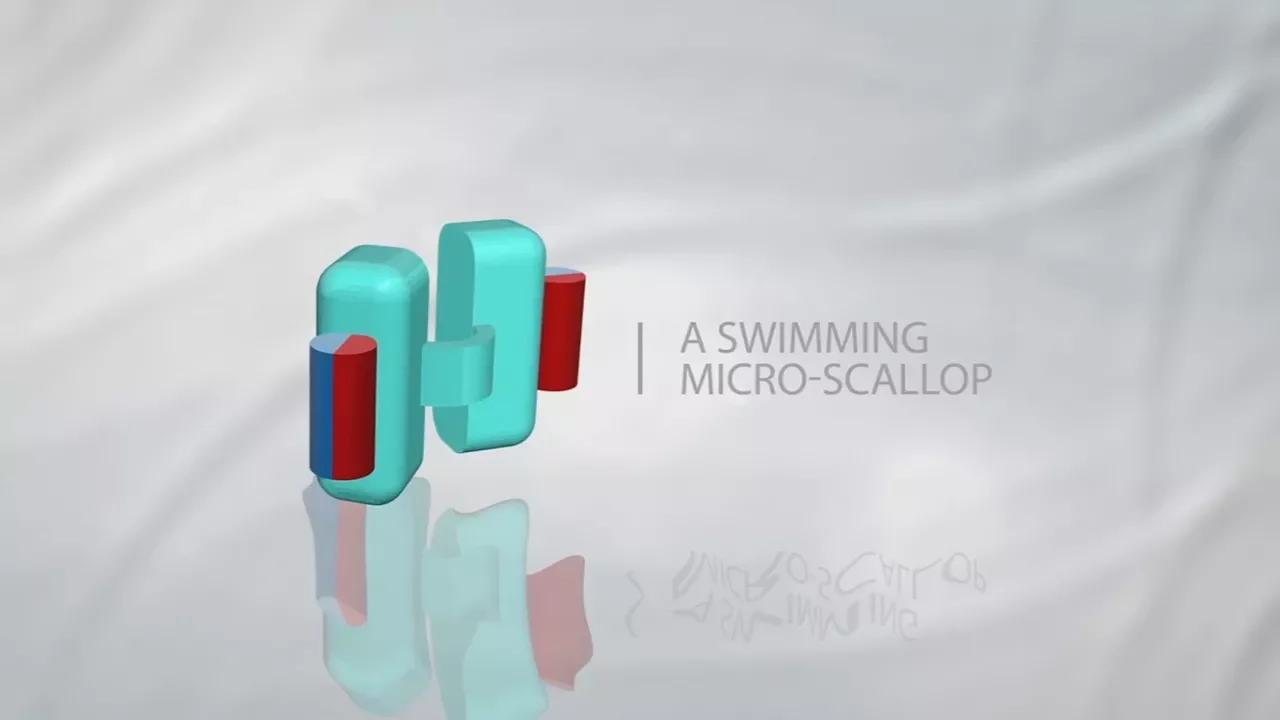
Purcell's Scallop Theorem and the mathematical physics of non-reciprocal motion at low Reynolds numbers.
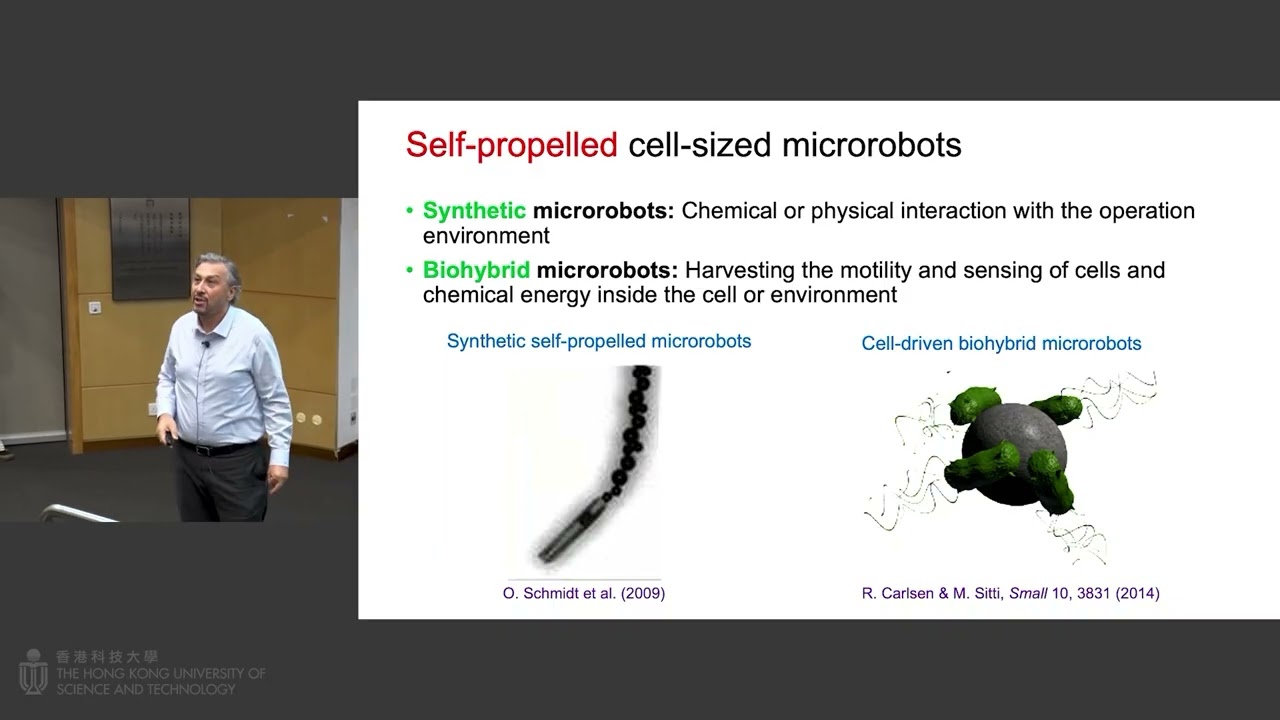
Applications in microfluidics and the engineering design of biomimetic micro-robots for targeted drug delivery.
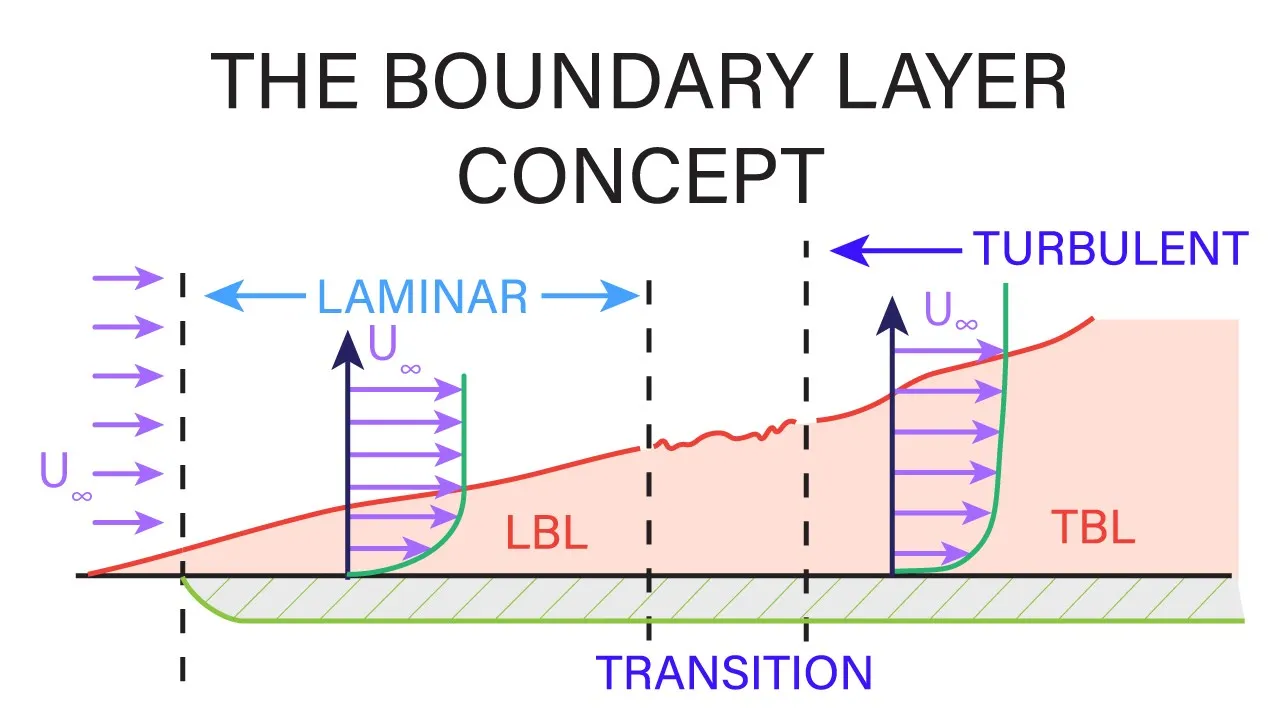
Boundary layer theory and the transition from laminar to turbulent flow regimes at high Reynolds numbers.
Hydrodynamic design principles for naval architecture, submarines, and large-scale marine biomimetics.
4.4M views57.6Klikes4:17Original Release: 2013-09-23
In 1977, the physicist Edward Purcell calculated that if you push a bacteria and then let go, it will stop in about a millionth of a second.
In that time, it will have traveled less than the width of a single atom.
The same holds true for a sperm and many other microbes.
It all has to do with being really small.
Microscopic creatures inhabit a world alien to us, where making it through an inch of water is an incredible endeavor.
But why does size matter so much for a swimmer?
What makes the world of a sperm so fundamentally different from that of a sperm whale?
To find out, we need to dive into the physics of fluids.
Here's a way to think about it.
Imagine you are swimming in a pool.
It's you and a whole bunch of water molecules.
Water molecules outnumber you a thousand trillion trillion to one.
So, pushing past them with your gigantic body is easy, but if you were really small, say you were about the size of a water molecule, all of a sudden, it's like you're swimming in a pool of people.
Rather than simply swishing by all the teeny, tiny molecules, now every single water molecule is like another person you have to push past to get anywhere.
In 1883, the physicist Osborne Reynolds figured out that there is one simple number that can predict how a fluid will behave.
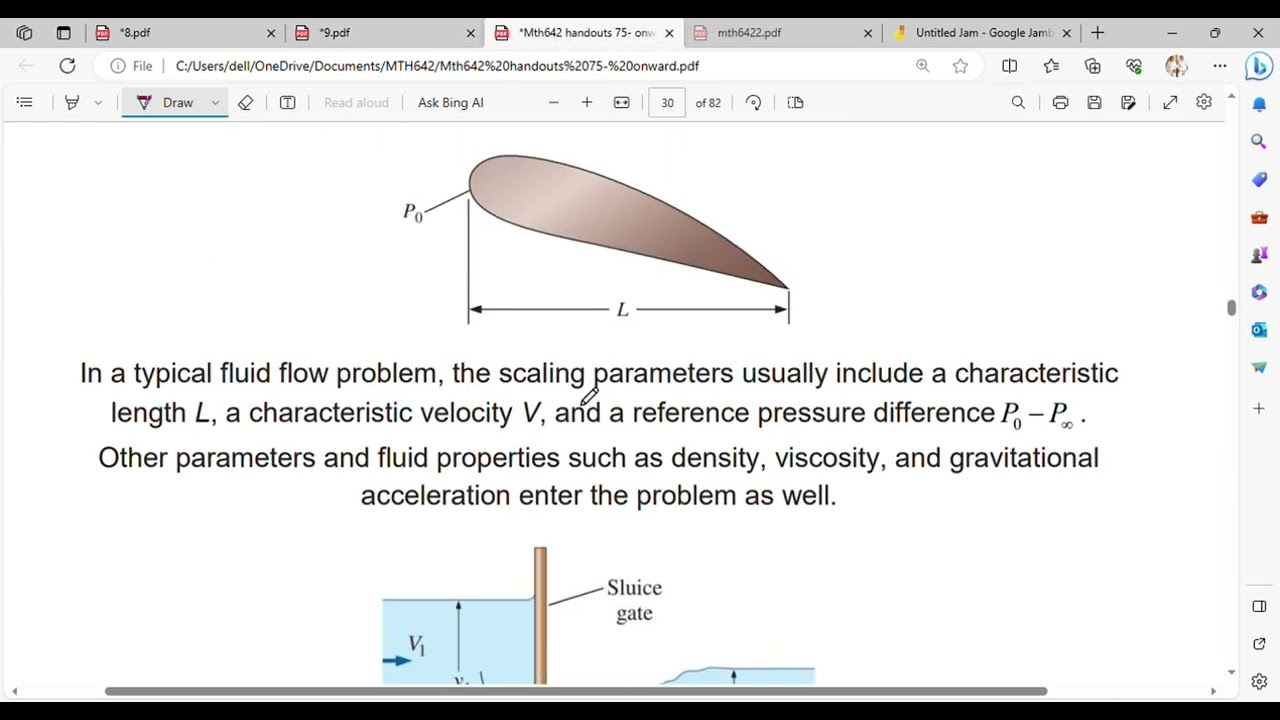
It's called the Reynolds number, and it depends on simple properties like the size of the swimmer, its speed, the density of the fluid, and the stickiness, or the viscosity, of the fluid.
What this means is that creatures of very different sizes inhabit vastly different worlds.
For example, because of its huge size, a sperm whale inhabits the large Reynolds number world.
If it flaps its tail once, it can coast ahead for an incredible distance.
Meanwhile, sperm live in a low Reynolds number world.
If a sperm were to stop flapping its tail, it wouldn't even coast past a single atom.
To imagine what it would feel like to be a sperm, you need to bring yourself down to its Reynolds number.
Picture yourself in a tub of molasses with your arms moving about as slow as the minute hand of a clock, and you'd have a pretty good idea of what a sperm is up against.
So, how do microbes manage to get anywhere?
Well, many don't bother swimming at all.
They just let the food drift to them.
This is somewhat like a lazy cow that waits for the grass under its mouth to grow back.
But many microbes do swim, and this is where those incredible adaptations come in.
One trick they can use is to deform the shape of their paddle.
By cleverly flexing their paddle to create more drag on the power stroke than on the recovery stroke, single-celled organisms like paramecia manage to inch their way through the crowd of water molecules.
But there's an even more ingenious solution arrived at by bacteria and sperm.
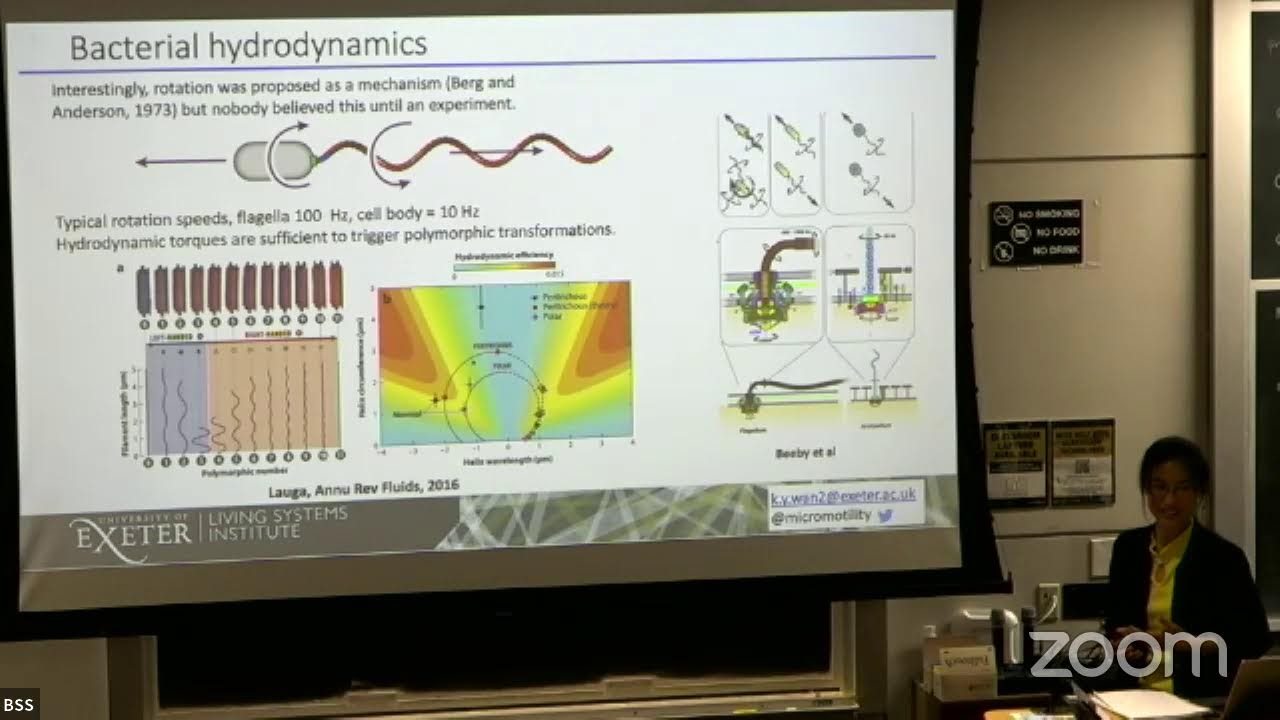
Instead of wagging their paddles back and forth, they wind them like a cork screw.
Just as a cork screw on a wine bottle converts winding motion into forward motion, these tiny creatures spin their helical tails to push themselves forward in a world where water feels as thick as cork.
Other strategies are even stranger.
Some bacteria take Batman's approach.
They use grappling hooks to pull themselves along.
They can even use this grappling hook like a sling shot and fling themselves forward.
Others use chemical engineering.
H. pylori lives only in the slimy, acidic mucus inside our stomachs.
It releases a chemical that thins out the surrounding mucus, allowing it to glide through slime.
Maybe it's no surprise that these guys are also responsible for stomach ulcers.
So, when you look really closely at our bodies and the world around us, you can see all sorts of tiny creatures finding clever ways to get around in a sticky situation.
Without these adaptations, bacteria would never find their hosts, and sperms would never make it to their eggs, which means you would never get stomach ulcers, but you would also never be born in the first place.
(Pop)
Up Next

66:33
Hydrodynamic Thermoelectric Transport in Graphene Near Charge Neutrality
@quantummatterseminarsnu1919
130 views•2022-04-21

12:53
21cm Hyperfine Transition in Neutral Hydrogen: Radio Astronomy Basics
@AaronRobertParsons
12.4K views•2011-10-13

4:59
How Do Solar Panels Work? | Solar Energy Explained
@TEDEd
26.5M views•2016-01-05

27:14
Entropy and the Second Law of Thermodynamics Explained
@veritasium
27.5M views•2023-07-01
Related Study Plans & Knowledge Roadmaps
Structured learning paths in Physics
physics
Nuclear Physics (Decay, Fission & Reactors)
01Atomic Structure and the Binding Force
02Radioactive Decay and Half-Life
03Nuclear Fission Mechanics and Chain Reactions
+ 2 more learning modules
12h5 modules
Explore Roadmap
physics
Soft Matter (Polymers, Colloids & Rheology)
01Foundations of Soft Matter & Thermal Forces
02Polymer Physics and Macromolecules
03Colloids, Surfactants, and Self-Assembly
+ 2 more learning modules
38h5 modules
Explore Roadmap
physics
Analytical Mechanics: Lagrangian & Hamiltonian
01Mathematical Foundations: Calculus of Variations
02From Newtonian Mechanics to Constraint Dynamics
03The Principle of Least Action & Lagrangian Mechanics
+ 3 more learning modules
28h6 modules
Explore Roadmap
physics
General Relativity (Spacetime & Cosmology)
01Foundations of Relativity: Special Relativity
02The Geometry of Spacetime: Equivalence Principle & Curvature
03Einstein's Field Equations: The Mathematics of Gravity
+ 2 more learning modules
55h5 modules
Explore Roadmap