









![Почему телескоп Джеймса Уэбба превзойдёт Хаббл? [Инфракрасные наблюдения]](https://i.ytimg.com/vi/BpeRs-hJ2f8/maxresdefault.jpg)



![Journey to the Edge of the Universe [4K]](https://i.ytimg.com/vi_webp/QhM5zAVvOI4/maxresdefault.webp)



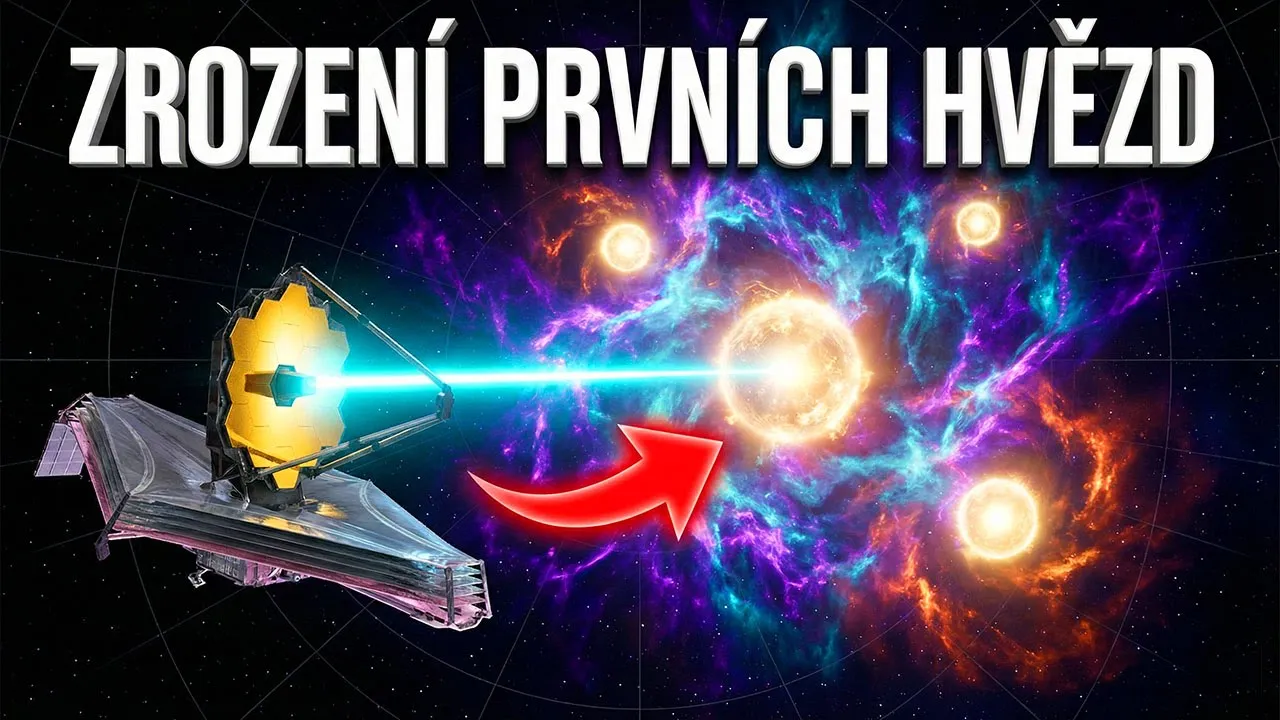



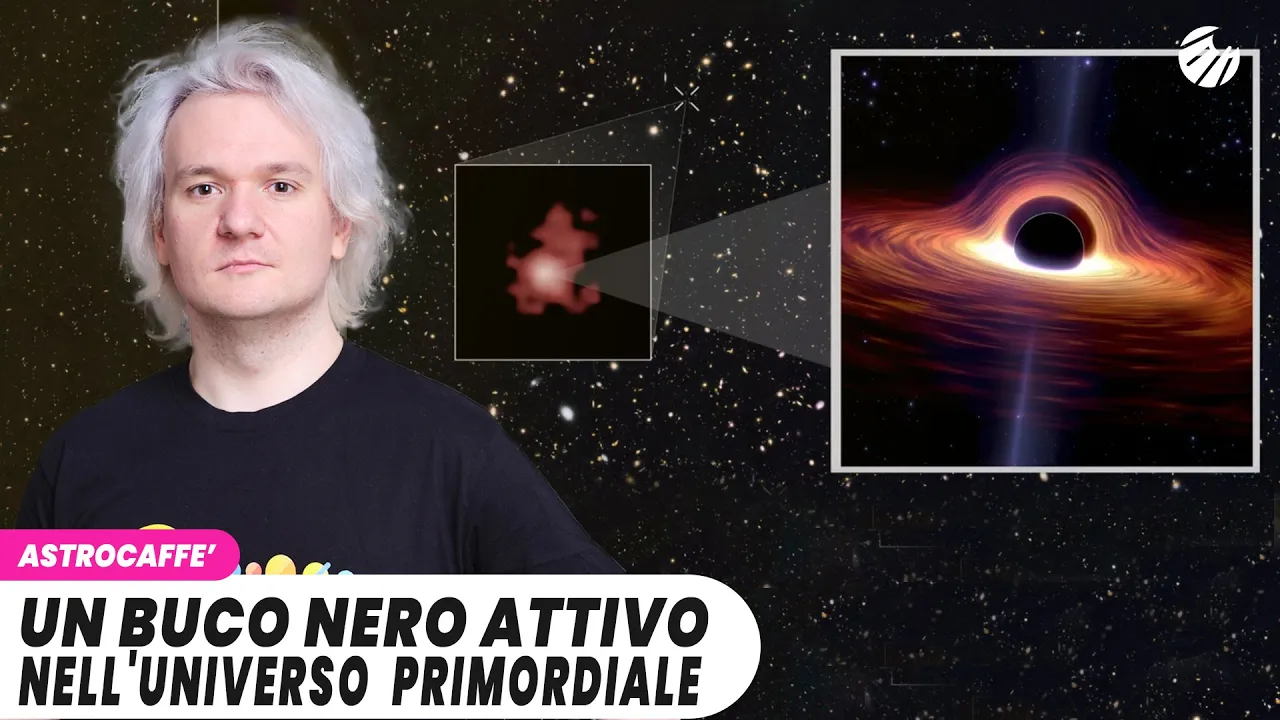
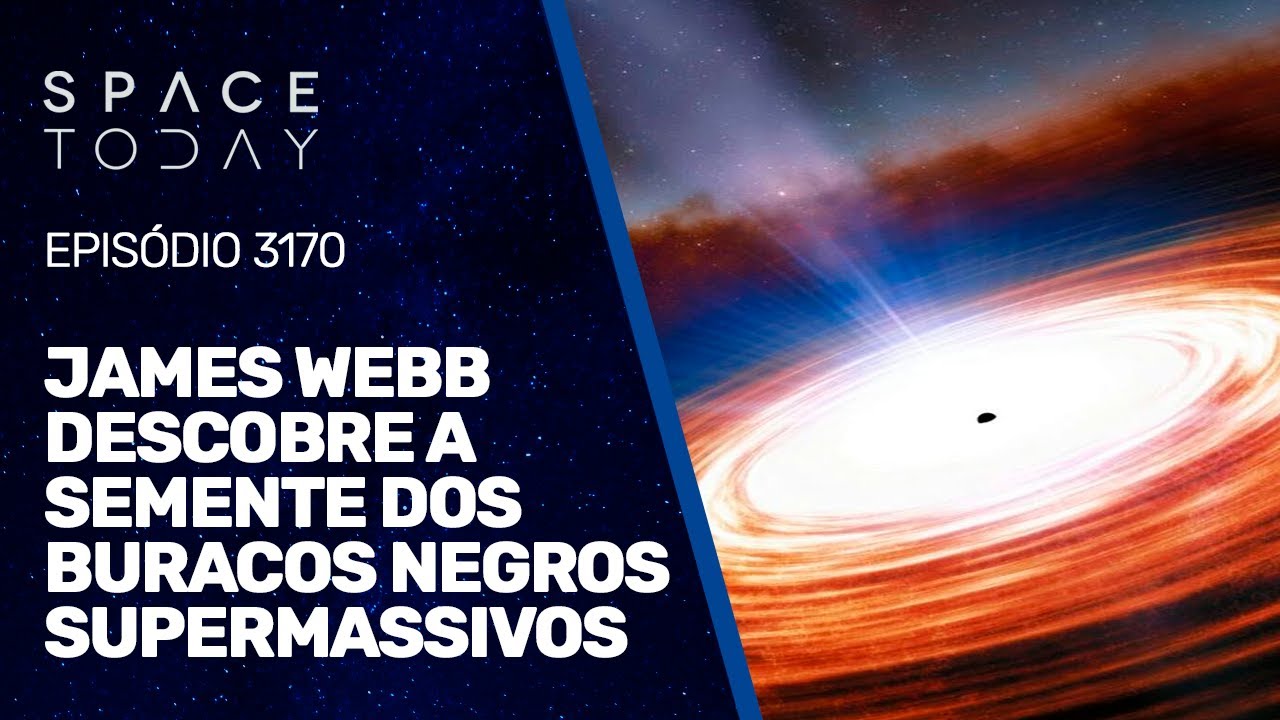


Dr. Becky Smethurst explains that JWST researchers Maiolino et al. have found compelling evidence for Population III stars (the first stars to form in the universe) in the distant galaxy GN-z11, by detecting a helium gas clump glowing at a specific wavelength that indicates extreme ionization without corresponding metal emissions; this suggests pristine hydrogen-helium gas being ionized by massive Population III stars rather than a supermassive black hole, though more observations are needed to confirm this groundbreaking discovery.
JWST Finds Evidence for First Stars in Universe
Added:The classification of stellar populations (Population I, II, and III) based on their chemical composition and metallicity.
The basics of Big Bang Nucleosynthesis, explaining why the primordial universe contained only hydrogen, helium, and trace amounts of lithium.
The concept of cosmological redshift and how the expansion of the universe shifts light from ancient galaxies into the infrared spectrum.
The fundamental role and infrared observation capabilities of the James Webb Space Telescope (JWST) compared to optical telescopes like Hubble.
The Epoch of Reionization, focusing on how the radiation from the first stars and galaxies ionized the neutral hydrogen filling the early universe.
The exotic lifecycles and deaths of massive Population III stars, specifically 'pair-instability supernovae' and their role in early chemical enrichment.
The direct collapse model and early growth pathways of supermassive black holes, utilizing data from primordial galaxies like GN-z11.
The methodology of infrared spectroscopy, particularly how astronomers analyze emission lines (such as Helium II) to verify the metal-free nature of distant gas clouds.
243.6K views13.7Klikes16:40Original Release: 2024-04-04
one of the James up space telescopes main goals has always been to find evidence for the first stars to have formed in the universe the first Stars first population of stars first Stars the first Stars first generation of stars first stars in the universe and this month there's been a paper published by myolo and collaborators claiming to have found just that in a galaxy known as gnz11 before the launch of jwst gnz 11 was the most distant Galaxy known in the universe with the light taking 13.3 billion years to travel from it to us meaning that we're seeing this galaxy as it was when the universe was just 430 million years old now since J started observing we found many more galaxies that have absolutely smashed that distance record but a lot of science was already planned with GN Z1 since it was the most distant galaxy known at the time which means we've now got a lot of data on this galaxy there's a lot of results coming out a lot of which I've talked about on this channel before just earlier this year for example I covered how there's a bit of a debate going on about whether gnz 11 has a growing super massive black hole or not you know cuz the data we're getting from J T is like nothing we've seen before that was the point right but it means that we're still learning how to analyze and interpret it which means there's a lot of room for interpretation which is why when I saw this research first appear online last June in 2023 three I waited to cover it on my channel until it had gone through the peer review process and officially published in a scientific journal because claims of evidence of the very first Stars forming in the universe AKA these population three stars are not to be made lightly so in this video we're going to chat first what are these population three stars two why are they so important in the history of the universe three the evidence that milino and collaborators claimed have for these population three stars in the galaxy gnz11 and four what's next to confirm this result so let's start with these first Stars dubbed population 3 stars so we think that in the early Universe only the simplest atoms and elements existed so we're talking like 75% of all atoms were thought to be hydrogen and 25% were helium there were then traced amounts of lithium but we're talking like a tiny fraction of a percent everything else that we can see around us everything made from carbon oxygen nitrogen all the metals like iron you know everything below helium on the periodic table that makes up this entire planet and all the life on it all of those heavier elements were made in stars in some way or another so Stars fuel themselves by taking those lighter atoms and fusing them together to make heavier Elements which is what fuels them you know in that process you give out light and heat which is what makes them shine and when the next generation of stars forms from that same gas it's sort of like polluted gas with these heavier elements what we call Metals to an astronomer anything heavier than helium is a metal and the fun thing is those Metals leave an imprint on the spectrum of light that we get from a star so when we split the light into all its wavelengths or colors and we see a star's rainbow we find that there are colors missing because the atoms of those metals are stealing away that color of light each element does that a unique wavelength and color so we can tell what a star is made from by looking at the pattern the more gaps there are the more Metals there are in that stars atmosphere and so if there are more Metals there it must have formed later in the universe's history when enough generation of stars had already lived and died and polluted that gas with these heavier elements now astronomers in the early 20th century such as Yan art and VTA noticed all of these missing colors and pointed out how you could split Stars into two types population one and population 2 population one Stars had the most metals and they were fairly young Stars found nearby in the Milky Way the Sun for example is a population one star population 2 Stars had less of these missing gaps they were metal pore so when they form they form from a much sort of like purer hydrogen and helium gas and we can see yes they are much older stars they must have formed earlier in the universe's history we tend to find these Stars towards the center of the Milky Way now a lot of people like to complain that the names don't make sense which I agree they don't really like if you're thinking about it in terms of like chronologically when the stars formed population two stars formed earlier in the universe's history so technically they should be population one Stars instead but you've got to remember these were named before we really understood what was going on here it was just based on how many gaps they had in their Spectrum so it's a hangover of just astronomy history that's just stuck in the Lexicon what it means is that when people started considering the first generation of stars to have formed in the universe from even Pur hydrogen and helium gas they just sort of carried on the naming convention and dubbed them population three stars I agree it is confusing using and we should all just collectively decide on a new name for them but you know it's just something we've inherited from history and it's a name that we're stuck with I'm sure you've got examples like that from your old life as well whether that's like work life or a hobby but why are these population 3 stars so important well since they were the first Stars they also produced the first Metals in the universe things like carbon nitrogen and oxygen ingredients that we know are key for forming planets and for life to exist they really were the start of the chain reaction that has led to all of us being here today but that aside they're also responsible for reionization reionized the universe in the early days of the universe it was so hot that particles like protons and electrons weren't bound together in neutral atoms they were just free to roam as charged particles they were ionized in a plasma and so they were opaque But as time went on the universe cooled enough so those particles could get bound together into atoms the universe became transparent for the first time and so light could freest stream wherever it wanted to and the first stars and galaxies started forming from the hydrogen gas that had now formed but then energy from those first stars that had formed would hit into all of the surrounding gas splitting the atoms apart and ionizing them again really ionization so population three stars play a really important role in our theories for how we think the universe has evolved despite the fact that they were probably really shortlived so without any of like the heavier elements like weighing them down we think that population three stars could have got a lot bigger than Stars today and the larger and heavier the star you have the faster it has to fuse its hydrogen as fuel to counteract the gravity pulling it in which means they would have been incredibly bright but wouldn't have lived for very long like maximum a 100,000 years and yet in that short time had such a massive impact on the universe at least that's the idea anyway in our theories but population three stars are still completely hypothetical cuz if we're going to find evidence for them we have to look at the most distant objects that we're seeing as they were billions of years ago in the hope of catching them in that very short time frame that they existed in that is where jwst comes in though it's been designed to do just that with a big mirror to collect enough light from very faint distant objects to be able to find evidence for them but also detects infrared wavelengths of light because the light has been traveling for so long that it's has been stretched from visible wavelengths into the infrared by the expansion of the universe so what evidence do milino and collaborators have for these elusive population three star well they found a clump of helium gas that's glowing at a very specific wavelength of light this kind of glow from Helium is only ever seen when helium is incredibly hot and it's being ionized by something very energetic it's close to the Galaxy gnz11 but not actually in the Galaxy itself the gas is sort of surrounding the Galaxy in what we call a Halo and these Halo clumps of gas aren't that rare we see them in lots of other places but usually when you see this sort of helium Clump it comes along with a bright glow at different wavelengths of light from metal elements like carbon for example but you can see here in the figures of this data the red star is the location of gnz11 here and you can see lots of carbon there but not in the same region the helium is glowing in this Clump over here there's may be some hydrogen which is what's shown in the middle panel there the lime and Alpha emission is a well-known hydrogen emission so this Clump appears to be a mix of hydrogen and helium gas with not a lot of metals that has been strongly ionized by something but what's the something well you really only got two options when it comes to having enough energy to make helium glow at that wavelength and it's either population three stars or a growing super massive black hole you know so it could could be that the energy emitted from the region surrounding a growing super massive black hole could do this and as we heard before there is currently an argument over whether gnz11 even has a growing super massive black hole but if you model for how much energy you can actually get from the region surrounding a growing super massive black hole with distance away from it at the center of gnz11 then the amount of light that you could get from a random clump of helium gas would drop off that's what's shown in the purple that whereas the yellow marker point is the brightness of this helium Clump we've observed at that distance from gnz11 so it doesn't look like it's a super massive black hole that's ionizing this clump of helium gas the only other option you're left with is that it's population three stars that are forming in this Halo of gas around gnz11 that are ionizing this clump of hydrogen and helium gas so that we can see it it's the first evidence that we have had for population 3 stars there wouldn't be that many though hence why we can't really see them in the infrared light images from jwst but milino and collaborators estimate the total mass of population three stars that are formed in the Halo is about 600,000 times the mass of the Sun so if population three stars are around about 500 to 600 times the mass the sun it would mean that there are around about a thousand population three stars forming in that Halo around gnz 11 that are responsible for ionizing that helium so it's a really interesting result but if you take a minute to think about it there could also be another explanation for what they're seeing and that is that there's something in the foreground that's photobombing the image that's producing that glow of light it could be a completely different element entirely emitting light at a completely different wavelength but because of the expansion rate of the universe it stretched it to to a different wavelength that makes it masquerade as emission from Helium at a much greater distance away from us so I don't think what they've got is enough to prove the existence of population three stars necessarily just yet but it is very compelling evidence so it's clear that more observations are going to have to be taken of gnz 11 to confirm this result perhaps my only known collaborators might apply for more time on jwst to get resolved Spectre of this region but across a larger wavelength range with jbst and that would allow them to look for emission from other metals in this area you know that are emitting it you know like longer wav lens of light for example to try and confirm if it is like this pristine hydrogen and helium mix of gas or not but of course also finding more examples of this would probably help their cause even more showing that maybe it's a common thing this isn't a freak detection that population three stars are ubiquitous and to do that requires resolved spectral follow up around a lot of the distant jdb galaxies that have been found which is actually good news because that data is already being taken by jdb because it's useful for a whole host of other scientific reasons but interestingly enough there was already a claim for evidence of population three stars that came out before this research and it used the exact same method just in a galaxy slightly closer to us and it was published by Wang and collaborators first appearing online back in 2020 2 but as far as I can tell hasn't been officially published by a journal yet which again is why I hadn't yet covered it on my channel but this is a huge research area with so many articles published on this already you know working through the math and the theory of what we should expect to see with jwst you know assuming some properties of the early universe and population three stars so no doubt this will not be the last that we hear of either gnz11 or CLS of evidence using jst of population 3 stars the first stars to have ever formed in the universe before we get to the bloopers a huge thank you to brilliant for sponsoring this video brilliant is where you learn by doing with thousands of interactive lessons in science and math and data analysis programming and AI brilliant is a learning platform that's designed to be uniquely effective their first principles approach to each new topic helps you build understanding from the ground up a method that's been shown to be six times more effective than passively watching lecture videos now a lot of what underpins astrophysics research these days is data analysis and Brilliant has recently launched a ton of new data analysis lessons all of which use real world data to train you to see Trends and make better informed decisions if you're a complete beginner or you're continuing to learn more about data analysis it doesn't matter they have a whole Suite of new content from basis theorem to multiple linear regression so to try everything that brilliant has to offer for free for 30 days head to brilliant.org Dr Becky or you can click on that link in the video description below and with it you'll also get 20% off an annual premium subscription so thanks again to brilliant for sponsoring this video and now roll those bloopers testing testing one two three how does this sound testing my new microphone sure there'll be many comments from people who were like oh the audio sounds better thank you such as Yan art and VTA b b b what have to jck Mar B I was right nice VTA oh I should probably check Jan ort while I'm here as well Jan van that definitely wasn't right I've been hit by a wave of sneezes because that was so wrong how to pronounce.com first came out but this is a sorry I heard like the weirdest buzz and it was like I was like convinced like a bee had landed on me that was really weird like did like I felt like I flinched but like this like weird like went up my spine at the same time I'm imagining things you like my blue wall I hope you've enjoyed my little updates on my office series very proud of my BL wall so no doubt this will not be the the last [Music] speak
Up Next

58:12
The Universe Becomes Visible: Cosmic Dawn and Reionization Explained
@crashcourse
81.5K views•2024-06-05
61:17
First Billion Years of the Universe with the Square Kilometre Array
@iaaudc
121 views•2022-05-26

14:22
Laniakea Supercluster Worsens the Hubble Tension Crisis
@DrBecky
978.7K views•2023-11-30
6:10
Gamma-Ray Bursts: Cosmic Snipers Explained | Astronomy
@kurzgesagt
15M views•2016-07-31
Related Study Plans & Knowledge Roadmaps
Structured learning paths in Astronomy
astronomy
Reionization: Pop III Stars, IGM & 21cm Line
01Foundations of Cosmology & the Early Universe
02Population III Stars & Cosmic Dawn
03Physical Mechanisms of Reionization
+ 2 more learning modules
17h5 modules
Explore Roadmap
astronomy
Planetary Rings: Dynamics, Roche & Resonances
01Foundations of Gravity and Orbital Mechanics
02Tidal Forces and the Roche Limit
03Structure, Composition, and Collisions
+ 2 more learning modules
10h5 modules
Explore Roadmap
astronomy
Asteroseismology: Stellar Waves, Ages & Cores
01Foundations of Stellar Astrophysics & Wave Mechanics
02Stellar Oscillation Modes: P-modes and G-modes
03Mathematical Framework of Asteroseismology
+ 2 more learning modules
35h5 modules
Explore Roadmap
astronomy
Adaptive Optics: Physics, Engineering & Control
01Foundations of Wave Optics and Wavefronts
02Atmospheric Turbulence & Optical Distortion
03Wavefront Sensing Technologies
+ 3 more learning modules
35h6 modules
Explore Roadmap