











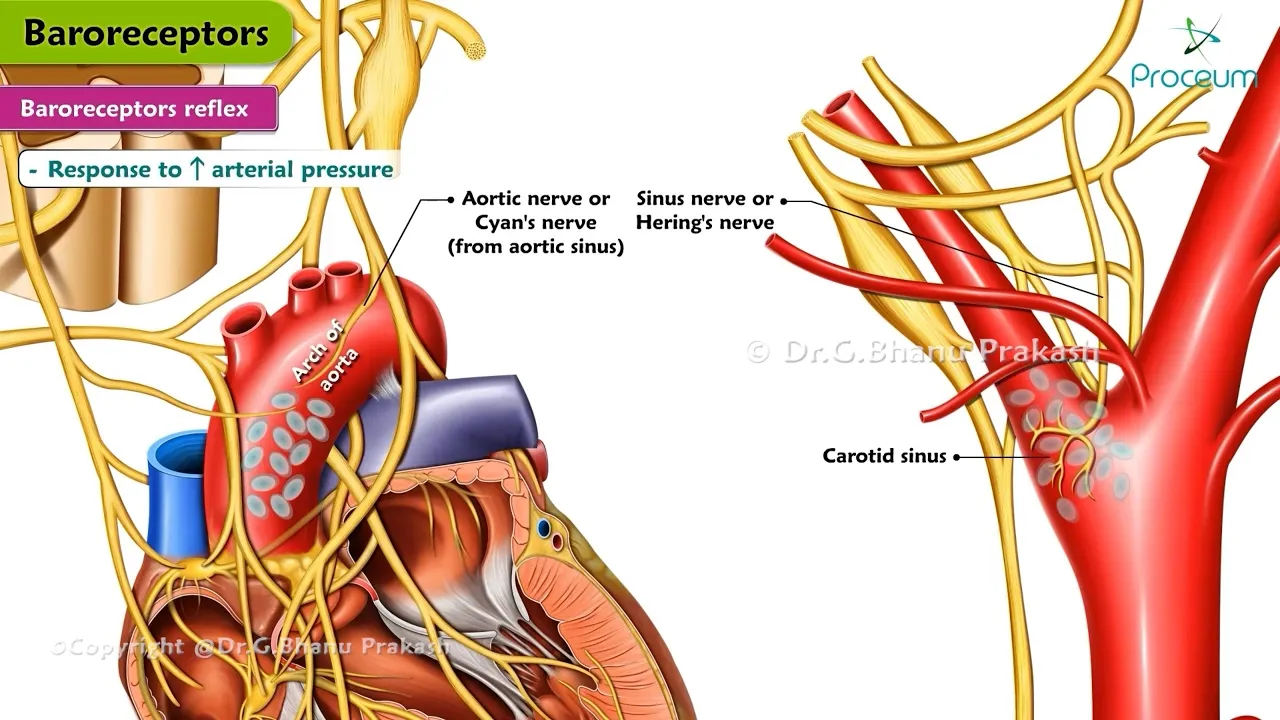







The baroreceptor reflex is a negative feedback mechanism that maintains blood pressure homeostasis through a five-component reflex arc: baroreceptors (stretch receptors in the carotid sinus and aortic arch) sense pressure changes and send signals via cranial nerves 9 (glossopharyngeal) and 10 (vagus) to the medullary center (nucleus tractus solitarius), which then activates the caudal ventrolateral medulla to inhibit the rostral ventrolateral medulla (sympathetic center) and activate the nucleus ambiguus (parasympathetic center), resulting in decreased blood pressure and heart rate when pressure increases; conversely, decreased pressure inhibits baroreceptors, activating the sympathetic system and inhibiting parasympathetic activity, causing blood pressure and heart rate to rise, which explains why blood pressure and heart rate are inversely related according to Mary's law.
Baroreceptor Reflex: Short-Term Blood Pressure Regulation
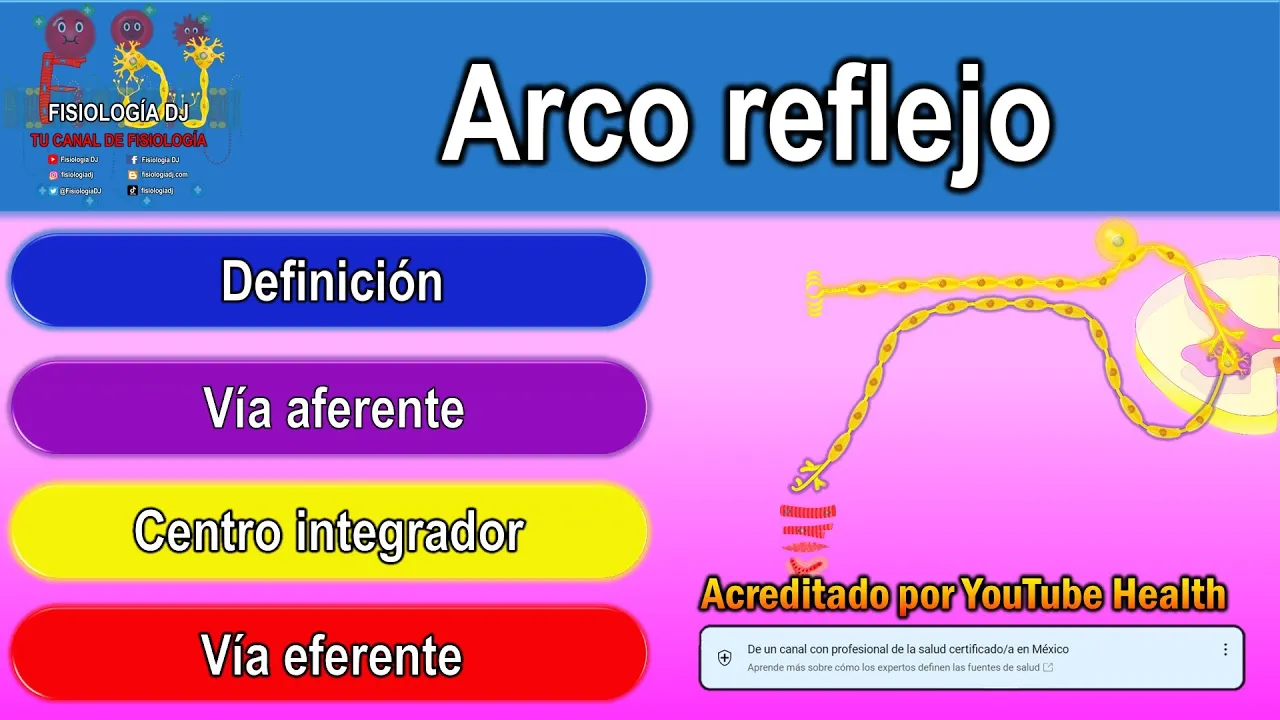
Added:[Music] in this discussion we are exclusively going to focus on the short term regulation which is the most high yield one the first one a very important reflex i told you i will not write the reflex name first understood the concept whenever there is increase in blood pressure in all of us there will be quickly reflex decrease in blood pressure increase in bp is followed by a quick decrease in blood pressure that is why it is a classical example for a negative feedback system regulation of blood pressure by this reflexes a negative feedback system increase in bp followed by quick decrease it is a reflex the name of this reflex is barrow reflex whenever we talk about any reflex what dr krishna kumar taught you in neurophysiology exclusively in motor physiology i thought you you have to give importance to something called as reflex org which is going to have five important components the first one is the sensor or receptor the second one you need to give the input using sensory reference where the input is given to the center in response to that the center will give its output because of the output we will see the desired response that's all all reflex arcs start with an r and end with an r we are going to apply this principle in our barrel reflex first and foremost look very carefully you need receptor for this reflex which is going to sense increase in blood pressure in response to increase in blood pressure this receptor gets stretched that is why it is an example for a stretch receptor this stretch receptor is going to sense pressure because the stimulus is increase in bp it is the pressure that is stretching this receptor anything concerned with the pressure we use the word barrow receptor that is why it is baroreceptor this type of baroreceptor is exclusively abundant in the neck region they are usually two in number we call them as remember corroded sinus and iotic orange very important never forget for your life so the first box is opened for baro reflex you need a receptor they are the stretch receptors that sense increase in pressure they are bioreceptor what are their names the first one is carotid sinus the second one is iot arch once the receptor box is opened we now need the sensory supply for them the input look very carefully most important point is coming here we have our corroded sinus i am writing this side iotic arch now we are going to understand the sensory efference in this section first and foremost this carotid sinus is usually innervated by cranial nerve 9 which is our glossopharyngeal neuro this iotic arch is usually innervated by cranial nerve 10 which is our vagus now listen very carefully guys the special branch of glossopharyngeal nerve that goes to corroded sinus is a named nerve that is called as herrings narrow the special branch of vegas that is going to innervate our iotic arch is also a named nerve that is called as sean's nerve so herring snare branch of glossopharyngeal that innervates her out its sinus cyan snare branch of vegas that innervates our iotic arch together these two important cranial nerves which are 9 and 10 are innervating our sinuses that is why they are also called as sinus nerves they buffer changes in blood pressure that is why they are also called as buffer nerves simple what are all these two important sinus nerves 9 and 10.
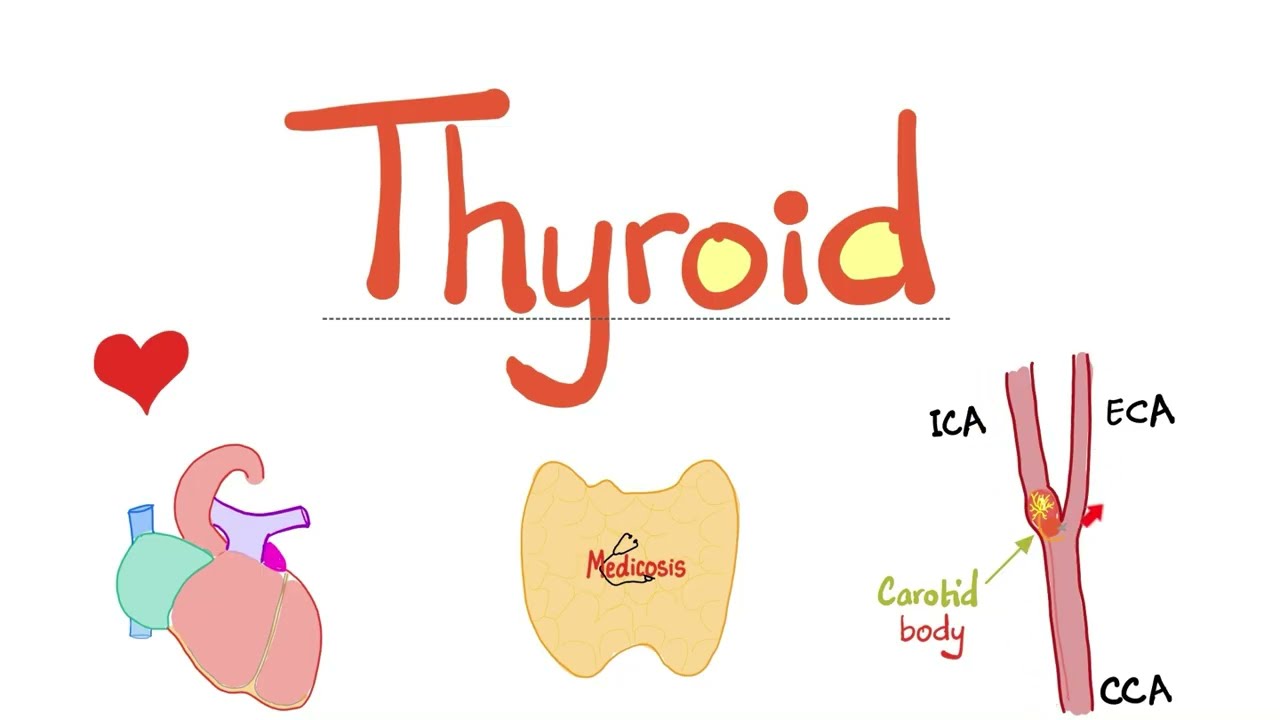
they are also called as buffer nerves important they are going to convey the sensory input what is that sensory input sir it is increase in blood pressure always remember guys our barrow receptors are always activated only by increasing blood pressure baroreceptors are always activated by increase in blood pressure this sensory input of increase in blood pressure they will convey to the center through glossopharyngeal and vagus nerve now two boxes opened receptor over sensory input power now this increase in blood pressure this is our input is coming to the third component that is our center what is the center for the sparrow reflex the center lies in medulla so the input is increasing blood pressure we are giving to the center that is medulla in response to that the middle law have two important outputs so the fourth component is output what are these two important outputs sir we have sympathetic output we have parasympathetic output because of this outputs we are going to have a final response tell me increase in blood pressure because of this reflex the response is going to be decrease in blood pressure the response is going to be decrease in blood pressure now you help me guys if you activate which nervous system bp will fall if you inhibit which nervous system bp will fall to get this response of decrease in blood pressure our sympathetic nervous system will be inhibited in this reflex our parasympathetic nervous system will be activated in this reflex what is this reflexor barrow reflex this is the most important take home message in response to increase in blood pressure sympathetic inhibition will happen parasympathetic activation will happen because of that the response is decrease in blood pressure not only that there is parasympathetic activation what is one more thing that is going to decrease automatically as a part of this reflex heart rate will also decrease because there is parasympathetic activation bp will fall heart rate will fall this is the response of this reflex what reflex we have discussed so far barrow reflex in response to increase in blood pressure there will be decrease in blood pressure and decrease in heart rate now i just mentioned you the names sympathetic and parasympathetic now we are going to see the exact locations look carefully guys i told you the center is medulla if you understand carefully we are building from simple to complex concepts in medulla where is the center we have something called as nts what is this ntsr nucleus tractus solitarius very important it was a recent ironic ctmcq what is the center for baroreflex nucleus tractor solitarius this nucleus tractor solitarius first activates caudal ventro lateral medulla what is this listen very carefully caudal ventro lateral medulla it is activating cvla with the help of a very important neurotransmitter that is glutamate this center nucleus tractor solid areas with the help of glutamate activating cvlm now this cvlm is going to inhibit rostral ventro lateral medulla what is this rostral ventro lateral medulla important point guys this rvlm is considered to be the sympathetic center so as a part of this reflex sympathetic inhibition happens it means rostral ventrolateral medullo is inhibited what is inhibiting this caudal ventrolateral medulla is inhibiting rostral ventroletal medulla with the help of this neurotransmitter gaba this neurotransmitter names are important nucleus tractor solid areas with the help of glutamate activate cvln cvlm with the help of gaba inhibit our sympathetic center that is rblm it is also the same nucleus tractor solid areas which is going to activate parasympathetic nervous system in this reflex where the neurons are located in something called as nucleus ambiguous parasympathetic neurons are located in nucleus ambigus very important concept as a part of this reflex sympathetic inhibition is happening means or vlm is inhibited as a part of this reflex parasympathetic is activated means activation of nucleus ambiguous very simple eventually a small summary this is the take home message for you guys whenever there is increase in blood pressure it will always lead to sympathetic nervous system inhibition it will always lead to parasympathetic nervous system activation eventually we are going to get decrease in blood pressure and decrease in heart rate what does this reflex barrow reflex now look carefully guys i'm not going to confuse you at all it is very simple whenever there is increase in blood pressure always there will be reflux decrease in heart rate we are seeing when there is increase in blood pressure there is reflex decrease in heart rate underlying there is a reflex decrease in heart rate it is for this reason we always say blood pressure and heart rate or inversely related right inside a big box blood pressure and heart rate are always inversely related because increase in bp leading to reflex decrease in heart rate we call this as mary's law in cardiovascular physiology what is meris losser blood pressure and heart rate are inversely related so far we have discussed about barrow reflex which means increase in bp will be followed by a decrease in bp and decrease in heart rate why is this happening because of sympathetic inhibition and parasympathetic activation all right guys we are discussing about barrow reflects under the baroreceptors now there are certain experiments that are performed on this baroreceptors so there is a possibility they will give you this experiment in a scenario and they will ask you what is going to be the effect to understand this broad considerations i will tell you a few first and foremost it is usually done in corroded sinus which by receptor carotid sinus what is this carotid sinus it is a dilation that is seen in internal corroded or tree very important point this corroded sinus is a small dilation that is seen in internal carotid artery second consideration whenever there is increase in blood pressure we all know our baroreceptors will be activated in response to this there will be sympathetic inhibition and parasympathetic activation now most importantly the opposite whenever there is decrease in blood pressure look very carefully our baroreceptors will be inhibited increase in bp activates them decrease in bp inhibits them whenever there is inhibition of baroreceptors sympathetic nervous system will be activated now and the parasympathetic nervous system will be inhibited this is opposite what happens during increase in bp what happens during decrease in bp you need to remember you have this in mind now first experimental manual what they give you is occlusion of common corroded artery what will be the effect to understand this look very carefully we have our common corroded artery that will give rise to external carotid artery and internal carotid artery what i told you this corroded sinus is a small dilation that is found in the internal carotid artery now what is the manner here we are occluding this common karate dot tree that will flow like this if you occlude this common carotid artery definitely in this corroded sinus there is decreased pressure in corroded sinus that means there is going to be baroreceptor inhibition when there is baroreceptor inhibition i told you there will be sympathetic activation so what is going to be the effect of this experiment there will be increase in blood pressure there will be increase in heart rate because of sympathetic activation what i told you occlusion of common carotid artery definitely there will be decrease in pressure in carotid sinus baroreceptors are inhibited leading to sympathetic activation the effect is increase in bp and increase in heart rate now second manual you will clearly understand they will do something called as clamping a small clamp is introduced here above corroded sinus now the same diagram this is our common carotid artery we have external carotid artery and internal carotid artery this is our carotid sinus if you place a clamp above this carotid sinus automatically there is going to be pressure build up in corroded sinus so automatically the baroreceptor is going to be activated here when baroreceptors are activated there will be sympathetic inhibition that is why the effect here is simple to understand decrease in blood pressure decrease in heart rate so a clamping that is done above corroded sinus now the pressure is built up in the carotid sinus baroreceptors are activated there will be sympathetic inhibition the effect is decrease in bp and decrease in heart rate simple we are left with one final manner that is clamping below corroted sinus now it is obviously very easy please help me guys i won't talk much we have the common carotid artery internal carotid artery external carotid artery this is our carotid sinus if you place a clamp below carotid sinus what will happen automatically pressure is going to decrease in carotid sinus because the clamp is placed below the carotid sinus pressure decreases in carotid sinus so automatically what will happen to our baroreceptors inhibited now what will happen there will be sympathetic activation because of sympathetic activation the effect is going to be increase in blood pressure and increase in heart rate so three manners we have discussed occlusion of common corroded arteries we have seen increase in bp increase in heart rate clamping above corroded sinus we have seen decrease in bp decrease in heart rate now finally clamping below corroded sinus the effect is increase in blood pressure and increase in heart rate the basis is very simple to understand increase in pressure activates baroreceptors decrease in pressure inhibits baroreceptors [Music] you
Up Next

Baroreceptor Reflex: Regulation of Blood Pressure
@MedicosisPerfectionalis
29.6K views•2024-06-18

Graphic Medicine: Comics for Collaborative Healthcare Communication
@nationalpatientadvocate
189 views•2023-12-04

Forensic Medicine MCQs: Sexual Assault & Medical Negligence Cases
@marrowmed
26.3K views•2023-05-31
Stages of Labor and Vaginal Birth | Childbirth Animation
@nucleusmedicalmedia
52.1M views•2017-08-18
Related Study Plans & Knowledge Roadmaps
Structured learning paths in Medicine