



![[검스타트] 고졸 검정고시 도덕 기본이론강의 샘플 영상](https://i.ytimg.com/vi_webp/c0LjD1aU4TI/maxresdefault.webp)

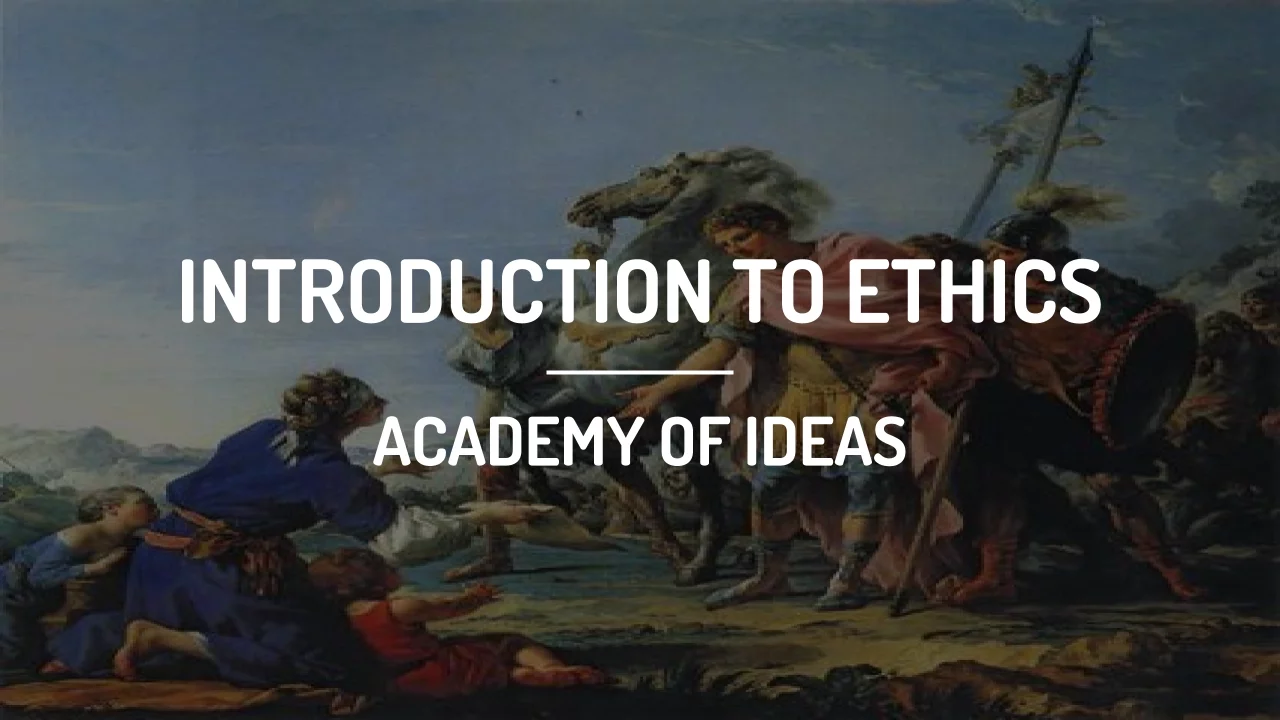











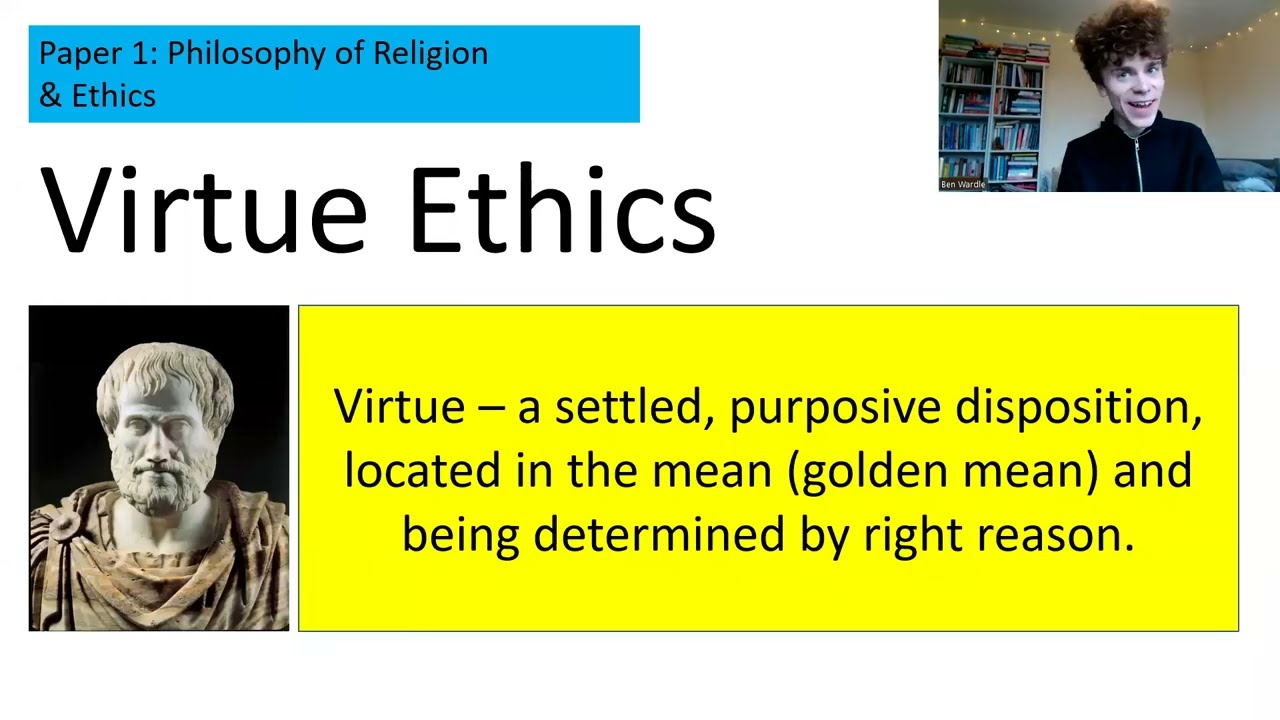



Since the decline of logical positivism's emotivist theory of ethics, which claimed moral judgments are merely emotive expressions without cognitive meaning, philosophers have developed multiple competing approaches to understanding moral language and obligation: (1) Prescriptivism (R.M. Hare) analyzes moral language as imperative rather than descriptive, arguing moral assertions function as commands rather than factual descriptions; (2) Descriptivism (John Searle) shows how moral obligations can emerge from empirical facts through careful description of speech acts like promising; (3) Divine command theory (Robert Adams, Elizabeth Anscombe) argues moral terms gain meaning by referencing God's commands, providing a basis for moral law that avoids the positivist critique; (4) Contractarianism (John Rawls) proposes morality rests on social agreement behind a veil of ignorance, establishing principles of equitable distribution favoring the least advantaged; (5) Virtue ethics (Alasdair MacIntyre) traces ethics back to ancient traditions emphasizing character cultivation over rule-governed decision-making, arguing different ethical traditions are incommensurable and require participation in specific moral communities.
Ethics Since Logical Positivism | History of Philosophy 79
Added:I think I have my voice back this week so less painful for me and I hope for you too last week we were looking at the way in which ordinary language analysis broadened and loosened up the rigid scientific empiricism of the logical positivists and we were seeing that in particular with reference to the religious language dispute of the nineteen fifties early sixties which was groping for some kind of empirical reference to talk about God I want this morning this morning a little bit late for that this afternoon to take a look at ethical Theory the sense logical positivism and what we'll see initially is the same sort of influence of ordinary language analysis in breaking that stranglehold of logical positivism with its emotivist theory of ethics they are articulates it very effectively in that chapter of his on ethics and theology when he argues that there are really no moral judgments that can be made only emotive expression not even statements about subjective states of affairs not even those judgments they are simply descriptions of psychological states not moral judgments and so to say anything like stealing is wrong or war is shameful is simply emoting and not bringing any predicates to bear on we're talking about now the the influence of the ordinary language analysis comes out in a debate that went on within what we call meta ethics really a term that was coined in conjunction with GE Moore's quest for what is the good you remember Moore maintained that we have some intuitive knowledge of good and intuitive recognition rather of the good though we cannot reduce it to any natural property happiness pleasure utility natural law or anything at all empirically or metaphysically definable his naturalistic fallacy well they are responded of course to Moore's intuition ISM by maintaining that if we cannot define or describe the good the term is meaningless and so the mode of its Theory simply spun out of that sort of consideration but methyl ethyl ester do with the meaning of ethical language and you can see obviously how meta ethical concerns were the prime concern as a result of logical positivism claim that moral terminology is meaningless cognitively meaningless it refers to nothing but intuition ism didn't die as a result of that WD Ross continued a kind of intuition ISM where what is intuitive is the right not the good but the rut and you might keep those two terms distinct with a parallel distinction between mill and Kant mill and any consequentialist or teleological ethic is concerned with good good outcome the good end that were pursuing whereas the right has to do with the quality of an act or a motive itself not in terms of consequences in Kant the right is always acting out of duty so WD Ross maintained that we have an intuitive recognition of right the meaning of that term becomes clear even though we cannot reduce it to any other property still avoiding the naturalist fallacy you see but it's recognizable for instance in the case of having entered into contract or made a promise we then recognize that we have trailing obligations and it is right that we fulfill our obligations and so the meaning of the term then has to do in that context two commonly recognized obligations arising from certain relationships and contracts you might notice that what is beginning there has become much more frequent since a kind of contract Arian a kind of contract Aryan theme having entered into contract we have obligations later on we'll find that that gets universalized as a basis of all moral obligation some kind of contract Aryan relationship but it's simply a point of reference for us in giving examples of our intuitive recognition of the right but the ordinary language analysis comes into play more effectively when you get to the other developments that I've listed a moral point of view approach developed somewhat by William Francona taught at University of Michigan wrote a widely used introduction called simply ethics that for a book of about a hundred hundred and twenty pages has probably been used more than any other one still find it referred to Frank and Noah's Christian Reformed background Kelvin college graduate and while his theism does not come out explicitly in his book it certainly they are under the surface and became evident in an article that he wrote I think I may have mentioned this to you before that he wrote in the late thirties as I recall it was in response to GE Moore's naturalistic fallacy where he argued with a while you cannot a deduce an ort from an ears if you have some additional premise for instance of a theological sort then you can to talk deduce an ort from anis that is to say where where as a you does not logically imply big a plus B do logically implied V so with the addition of some premise which can introduce a source of moral obligation basis for values you can deduce some moral obligation from from certain factual premises so that if you say premise B God personal moral being exists then immediately you've got some value judgment into the initial premise but in any case that initial paper of his which actually established his reputation in philosophy that initial paper of his I think prepared the way for his later emphasis on taking a moral point of view because the meaning of ethical terms depends on your taking a moral point of view that is to say to take a moral point of view represents a itself a non-cognitive ingredient not a motive simply a burden on cognitive kind of attitude as you commit yourself to assessing things morally so with the addition of that non cognitive point of view then you begin to see that moral terms refer to such attitudes as are involved in a moral point of view they have that psychological point of reference you might say that this leads to a sort of ethical subjectivism where the moral terminology is defined in relationship to such subjective States as taking a moral point of view all right but you still have cognitive moral judgments as a result which is what you did not have with Ag air curt by r is second representative of this Australian philosopher more widely referred to is the prescriptivism of RM hair or I'm hair who taught at Oxford you remember I mentioned him in connection with the religious language debate he was the man with the example of the Oxford Don who had a an irrational Blick hear a call about someone trying at that time in his book the language of morals tried to analyze the ordinary usage remember that phrase try to analyze the ordinary usage of fun moral language in common parlance and came to the conclusion that what pervades moral language is an imperative rather than an indicative form of Grandma so that the means that the root significance is not that you are making some factual statement a is B of something of that sort stealing is wrong but the imperative mood don't do it moral language is pre striving not describing and as such it evades the positivist verification of purportedly factual descriptions moral assertions are not factual descriptions now prescriptions and so you have something differ notice in quit in that the claim that the logical positivist view of language was so crudely narrowed down when all it allowed was tautologies and descriptive statements everything else is emotive expression well what about commands and so forth notice that puzzle even in a Vidkun stein passage that I read to you last night last week rather where Vidkun stein says somebody says thou shalt not and what you want to say in response is what if I do what Briton Stein is sort of toying with is the oddity of a dhow shalt not if you're working with a reductionist view that all you can do is factual statements or express things about him you see what is this thou shalt not and hair in effect is picking up on this and seeing it as the salient feature of moral language not only moral judgments with all other kinds of moral language as well prospective ism that kind of prescriptivism of course is quite non-committal about the grounds on which it is based this may be a social prescription it may be a parental prescription it may be some other command or order it could even be a divine command and that divine command note you notice comes out a little bit later well a prescriptivism was shortly followed by the appearance of descriptivism descriptivism Philippa furt who's at UCLA and John Searle here the the essence is that if simply of empirical facts but of value-laden empirical facts and in order to make his point John so in an article called how to derive and aught from an is he showed the way in which that can be done so that here on the board let me turn this off at the moment so that you can see it a little better Jones said I hereby promise to pay Smith five dollars now that's a factual statement empirically verifiable okay so it follows that Jones promised to pay Smith five dollars simple translation therefore it follows a game that Jones placed himself run under an obligation to pay Smith five dollars simply a matter of definition of terms if follows then simple translation Jones is under an obligation to pay Smith five dollars and as a result again simple translation Jones ought to pay Smith five dollars and you've got a moral obligation coming out of an empirically verifiable statement that is to say there are some factual situations such as promising which is a social action something describe them all in empirical terms there are some describable situations which do involve a moral aunt so you describing is from a nought by carefully describing and translating description accordingly and so what Seoul was doing you see was pointing out what he calls a speech act of the sort that number one Jones said I hereby promise to pay Smith five dollars that's sort of a speech act is a morally committing oneself the kind of speech act language is far more diverse than the oversimplifications of aja so you get then a descriptivism now in many ways one of the most interesting developments is that of divine command theory now the the literature on divine command theory and to those of you has been in ethical theory this is old hat but the the literature on divine command theory often takes it way back into the Middle Ages back indeed to Plato's dialogue the fro where Socrates Socrates discusses the matter of respect for parent and the respect of the define and so forth raises the question of is the command right because God wills it or does God well it because it's right that sort of thing Plato raises well the point is there is a long tradition of tracing our moral obligations of course to the will of God the law of God commands of God however promulgated they might be and that was picked up in this regard of the meaning of ethical terms now I come at it that way intentionally in order to point out that divine command theory can be used in at least two or perhaps three different works it can be used and I think this is it's perhaps it's most helpful significance it can be used in talking about the basis of moral obligation why be good well God's will define command theory the basis of moral obligation it could it has also been used in terms of the source of our moral knowledge how do we know what's right because God has said and incidentally Carl Henry in his writings on ethics lays emphasis on it in that regard actually he doesn't distinguish these different regards but it's mainly his concern to stress the source of moral knowledge I think you can still use it to stress the source of moral knowledge if you recognize that there is general as well as special revelation in moral matters and of course in Romans 1 Paul is talking plainly about moral knowledge by means of general revelation insofar as there is witness to moral law in the way in which human nature is constructed function availing that sense having God as creator means this divine command back there but the third way in which divine command theory is used and the one which is significant in this post positivist context is in terms of the meaning of moral terms what does it mean to say that something is right or wrong what does it mean to say it's good or bad the reference is to God's commands reference to the will of God so that this renewal of divine command theory has come to address the issues posed by a now that comes out most plainly in the writings of Robert Adams at UCLA incidentally you've heard perhaps you've met Marilyn Adams when she was here for the conference was it last year or Robin Adams is her husband there are husband wife team at UCLA most remarkable couple he has written a number of articles of divine command theory Philip Quinn has done a book on the subject he was at Brown University he like many other good people is now at Notre Dame the whole world seems to gather there at Notre Dame and Phil Quinn is he's now incidentally editor of faith and philosophy the Journal of the Society of Christian philosophers but those two currently are the main voices but the emphasis on divine command theory also goes back to Elizabeth Anscombe who's a name you you ought to be acquainted with a British Catholic woman philosopher who from way back in the forties onwards has been doing a great job in largely matters of moral philosophy and philosophical psychology well I think it was a 1955 I think it was she published an article in the British Journal mind called modern moral philosophy modern moral philosophy in which she complained that it seemed as if for half a century there had been some sort of a conspiracy to eliminate the conception of law from modern ethics she's talking particularly about the influence of utilitarianism but of course the story of the first half of this century includes not only the spread of utilitarian ethics but also the rise of logical positivism which obviously eliminated the conception of law from moral philosophy her assertion was that it's not altogether surprising that without some sort of a moral lawgiver it's very hard to sustain a conception of moral law and she referred accordingly to the roots of the conception of moral law in the Western tradition being in the judeo-christian tradition and in Roman stoicism that combination and she as a Catholic of Thomas was arguing of course for a renewal of the emphasis on moral law which would give us some basis for not only obligation but for the meaningfulness of the conception of moral law the meaningfulness of the conception of moral law the term can have meaning if there is a moral lawgiver and what she would want is a natural law theory a combination of divine command natural law divine command in giving meaning to the moral terms as well as a basis for authority and natural law in terms of how we know what are our moral obligations so that story then really restores the whole enterprise of ethical theory - I think effectively to where it was before the positivists appeared on the scene in fact in some ways further ahead than there because of the serious challenges to a purely utilitarian ethic that appear particularly in divine command theory but also in moral point of view and prescriptive aesthetics any any comment question yeah Karl yes yeah but let's sharpen that up a little Carl unless there is a moral lawgiver the concept of moral law has no meaning there's no empirical referent point no factual reference point for moral law now there could be laws enacted by humans but in that case you would have a legislature or a ruler who's performing the function of moral law but that would not have the authority of divine law so she wants the divine lawgiver right the divine lawgiver in order to give meaning to universal and unchanging moral law which concept would be empirically meaningless factually meaningless without well to begin with Kant would not be concerned about empirical meaning and empirical verifiability and all of that misses you'll see your questions some interesting because Kant does it the other way around Kant will say that in as much as we have this intuitive recognition of a sense of duty okay we have this intuitive recognition we must explain that in some way to wit ultimately a moral lawgiver you think so my my guess is that Kant would applaud and scum for that point while rejecting her natural law theory with its metaphysical basis yes a but the connection between moral law and moral lawgiver can't recognizes just as plainly as as I'm Scott yeah Kant would say you have to postulate the lawgiver and I suspect that ants come at least in the 1950s as a tow mist would have said we can use Thomas's five arguments for the moral lawgiver yeah he would say we have a sense of moral obligation that intuition well yeah we have an intuitive recognition of the common base of morality that we should always act out of a sense of duty yeah in that sense it's intuitive the contradiction comes in in trying to act rationally and do something that is wrong that's where the contradiction shows up in the particular moral judgment right but I think the difference between them but you may be getting at is this I use the term intuitive for Kant yaar not in the sense of more or Russ it's not intuitive but in the sense of a common core of morality but because of the coming of the positivist verifiability criterion and scum would want to avoid that sort of approach because the positivist would ask can't what is the status what is the meaning of this sense of duty is this an empirically accessible sense of duty and the positivist would say no it's not so Kant's ethics would be ruled out by a as emotivist theory do you follow now in sidestepping that Anscombe is trying to get back to a meaning for the conception of duty or moral law okay therefore making it depend on a moral lawgiver Karl yes yes yes so that if a person is a thoroughgoing naturalist and has no moral lawgiver they're not likely to find any meaning tomorrow law no factual meaning at all don't you see ask yourself you can see this quite plainly ask yourself what sort of meaning in terms of ears verifiability theory what sort of meaning attaches to a statement like we are all of us morally bound by universal law you think well to be morally bound what does that mean to have subjective feelings of having to do there's subjective feelings of guilt all right ao would say that's something for the psychologists to describe has nothing to do with moral obligation you see so if you revert simply to psychological descriptions that doesn't help at all remember arrows four kinds of moral language remember there are psychological descriptions there are psychological and other subjective descriptions there are exhortation okay which is simply emoting there are out riding motive utterances there are purported moral judgments there are metal statements I should say as well all right let's move on to the next the the outcome of that debate over moral language and its meaning reintroduced normative ethics and we've had last 20 years of thoroughly vigorous activity in normative ethics I've listed five of the most influential writers names that you should get familiar with and they already are if you've been taking ethical Theory John Rawls at Harvard his book on the theory of justice introducing a contract theory approach you recall John Locke's notion of a state of nature which led because of common needs and rights led to a civil society that depended on some sort of social contract what Rawls is doing is not just talking about a contract Tyrian basis for government but a contract arian basis for all morality so he needs to have his equivalent of Rawls state of nature and what he describes is what would go on behind what he calls a veil of ignorance a veil of ignorance that is to say if let's get some space here let us to say if a group of people were to adopt a stance that they know nothing about future outcomes which might affect them for better or for worse okay a veil of ignorance what sort of principles would you then set up over the ordering of our lives behind that veil of ignorance and he suggests that what would emerge what he proposes basis on two principles a one that the the benefits and costs of of the society should be equitably distributed and second that this should be when there is in equity with advantage to the least advantage people with benefit favoring the least advantaged well and on that he tried to propose the way in which a political economy could be ordered in that sort of fashion it's not quite a utilitarian approach although when he talks of equalizing benefits and costs is obviously a consequentialist note but it's not a utilitarian approach he's not simply saying outright maximize the benefit for the maximum number of people no there's a Kantian note in it the emphasis on equality ignoring other considerations there's a Kantian note in it but it's not a county and ethic acting out of a basic sense of duty it's a contract arianna arrangement so that morality does not rest on some divine command it does not rest on some a priori moral principle it does not rest on empirical assessment of consequences okay so in that way you eliminate divine command you eliminate natural law you eliminate Kantian ethics you eliminate utilitarian ethics it rests rather on social agreement rests rather on social agreement and his approach has had an immense amount of discussion not only among ethicists but in political science in economics so forth in general his leanings are towards a more liberal than conservative political economic philosophy on the basis of these principles also at Harvard Robert Nozick anarchie the state and utopia is about as conservative in economic and political thought as one could be no Sixpoint is that there is just one basic principle but each in every individual has the right to acquire whatever he can as long as he doesn't take it illegally from somebody else acquisition rights it's a form of ethical egoism the one basic moral principle is respect for acquisition rights oh he does advocate a safety net for the least advantaged but essentially it's a thoroughgoing individualism it seems to me that he's the philosophical expression of the kind of reaganomics that talked of individual initiative and essentially of acquisition rights with minimums of legal regulation and safety net curiously those two people in the same department at the same time in Harlan a few years ago there was one of our graduates in law school there at Harvard and they were having a discussion about these two points of view in one law class when a voice from the back of the room which turned out to be Rawls interrupted and corrected somebody and another voice turned out to be Nozick from the other side of the room interrupted likewise and so they had the two of them in that law class debating me in the decision lots of debates I suspect Alan got worse University of Chicago just retired a couple of years ago the reason and morality essentially accountant and in many ways he's representative of a rebirth of Kantian approaches to ethics frequently called respect for persons respect for persons as the basic principle you remember that Kant second formulation of the categorical imperative was that we should always treat people as ins and not just as means respect for persons well Alan Guth tries to spell that out in terms of the fact that I and each one of us want to have the maximum freedom possible to pursue our own life project now the fact that I want that freedom if I'm going to be logically consistent rather than logically self contradictory means that I should respect other people's freedom to the same end so we have what he calls a principle of generic consistency a principle of generic consistency which is really can't see universalizability principle you don't want to assert your own ends your own goals your own rights in violation of the same rights in others that would be violating the principle of generic consistency and so he has tried to rebuild a Kantian ethic thus alan Donegan who was also at chicago for many years and then moved to Caltech died just a year and a half two years ago alan Donegan's book the theory of morality also Kantian what he tried to do is to pick up on the principle of respect for persons and see what could be inferred from that in terms of the implementation of a more specifically developed kind of ethic what he did was to argue that the essential principles of Judea judeo-christian ethic a truth you'll be interested that he told me this once when he was out here that while it took him many years to work this through and argue it after the book had gone to the printer he came to the conclusion that if the judeo-christian ethic was true that the underlying theology probably was too and he ought to become a Christian and being an ethical person he did and try to a remarkable individual at the same time Allan donek a very worthwhile book Alastair MacIntyre name you've heard in number of connections I'm sure three works in this field that are very influential and represent a turn from rule governed approaches to moral decisions and actions turning from that of wool governed approach to moral decisions an ethic of decision making a turning from that rather to what we call virtue ethics an emphasis on moral character the moral qualities of the person rather than the moral quality of individual actions now it has deferred to you he really traced s' the whole history of ethics from pre-socratic times in fact from Homeric times before the pre-socratics from Homeric times way up into post content times making the point that the early Greeks and on into Plato and Aristotle and the Stoics and on into the middie evils were all interested primarily in the cultivation of virtue concern for the growth the development of the soul you find in Plano you find in Augusta so the development of character and it's not until the 18th century really that you find in the Enlightenment the development of a rule-based ethic of decision and actions taking precedence now you have to be careful you don't over generalize because certainly in people like Agustin and Thomas Aquinas with their natural law approaches to ethics there is quest there is concern about moral rules namely natural moral law as well as biblical law to guide moral decisions and produce right actions that's there but the larger concern is that of the virtues in fact it it's interesting to notice and it may seem initially paradoxical to hear it but when Thomas Aquinas is talking about the rules for Just War theory he's doing so under the large rubric of the virtue will of the virtue was love because love requires that justice be tempered with love and so just war has to be understood in that sort of way now what MacIntyre does however is not only trace then the development of these two traditions in ethics look at what came after virtue in a rule governed ethic look at the development of utilitarianism and its complete indifference two matters avert you it's simply interested in maximum utility of actions and policies it's after non-moral aims rather than the moral end of character development he does that but he also makes the point that these rest on different traditions different philosophical traditions that are incommensurable now to talk of incommensurability is to say that you cannot evaluate one by the norms of the other you cannot translate one into terms of the other they're not reducible the wonder the other and he pursues this further in the second of these volumes whose justice which rationality where the question Hughes whose justice makes plain the incommensurability of the traditions as far as the meaning and demands of justice are concerned but which rationality lays emphasis on the incommensurability of the reasons that are given for the moral points of view that are offered there are different standards of rational judgment that are involved and that theme comes out once again in his third volume that appeared just a couple of years ago three rival versions of moral inquiry three rival versions of moral inquiry now if you have time to read only one of these three read the third it's much more succinct than the others each of the others could have been written I think and the argument pressed effectively in half the length but McIntyre's the sort of big scotch-irish person who is very effusive with his language and with his interests so that what he writes is fascinating with all sorts of historical lore especially where it's anything about the Scottish I mean it's got an education about Scottish history and the whole thing but others as well he just has fascinating interests in social history not just intellectual history but social history that come through in this very effectively now the three rival traditions of the third volume a ones which obviously are different in their view of reason as well as their view of the basis of ethics number one is the Aristotelian tradition the Aristotelian tradition which of course is developed so much more fully by Thomas Aquinas the second version is the 18th century 19th century enlightenment version he cites a certain 19th century edition of Encyclopedia Britannica which had an article on ethics which treated ethics like another science which was gradually accumulating more and more moral knowledge that was universally becoming recognized until we would have a universal science of ethics thoroughly grounded in positivistic reasoning well that sort of rationalistic approach which he sees as the outcome of the rule governed approach of some of the 18th century writers then the third version the third tradition is Nietzsche and this of course is the Edition that he makes to the others and I think it's fair to say that he adds the Nietzschean ethic of the strong and the weak willed in a power struggle you know the Nietzsche stuff because while he's been working on this other stuff we've had such a resurgence of post-modernism you see with its emphasis now that we call political correctness but which in essence was subject subjectivism talking about my truth and my moral standards and so on and so forth out of assertion of not rationally grounded but voluntary Stickley grounded desires and so he he poses these three alternatives and tries to oppose what the decision between them really comes to but remember that they have different conception of what constitutes rationality in the case of the first tradition there is a concept of wisdom which comes out of Aristotle wisdom and prudence comes out of Aristotle and again in the Middle Ages in the second it's deductive reasoning in a quasi scientific fashion so it's the scientistic ideal and in the third of course reason is simply rationalizing it is the servant of the emotions and you can sense it this where he's coming from interestingly this sort of thing tie is very much into his own autobiography because he started as a young man in the fifties writing on the religious language problem you remember his contribution to the religious language discussion was in talking of the idiosyncratic platitude of the idiosyncratic nature of religious language as distinct from other language uses so that you could not support religious belief by virtue of any other kinds of language uses the point being that back then he had a thoroughly barity and theology that God is known quite independently of rational processes by some sort of existential encounter well over the years he drifted away from Christianity completely was interested in Marxism and these three books represents the gradual movement that he's been having back towards some kind of theism so when he published after virtue he was an Aristotelian but had not returned to Christianity and the process has been going on so that the third volume he is not just an Aristotelian but a Thomas and a confessing Catholic yes he so he's come back to the Christian faith and as I said before like many other good people he's now at Notre Dame so this is the the way in which ethics has been going so I think it's it's fair to say that over the last 20 years these are the five most influential people in ethics my sense is that Rawls influence is continuing and will continue more so than Nozick worth and Donegan and that at this juncture it's perhaps roles in rule governed principle governed ethical decisions and MacIntyre in virtue ethics or the two most discussed individual writers the people you want to get acquainted with well let me hold it there and leave it to you to question feedback comment ad the outcome is that normative ethics like philosophy of religion is again alive and well they are not withstanding mm-hmm with justice yes you hear a lot of talk of justice Rawls is defining justice in terms of distributing equitably the benefits and costs of a society okay Nosek in terms of upholding individual rights basically acquisition right the worth in terms of respecting the other person and his life project okay Donegan again in terms of individual rights so I think it's fair to say that the emphasis on justice is in terms of the theory of Rights yes and I think it's also interesting that not one of those four are utilitarians doesn't mean to say that they ignore consequential considerations they don't but they're not utilitarians in the sense of working on everything with the utility principle so respect for persons the Kantian note theories of human rights seemed to be pretty central okay both Donegan well Donegan for the moment would certainly say that a biblical ethic goes significantly further than the Kantian approach to an ethic though I'm not sure he ever worked that through to his satisfaction I remember when he gave the keynote lectures at our philosophy conference a few years after the theory of morality came out in the discussion time I remember rich Mao from Calvin College standing over in that corner if we were in the East Wing of Edmund questioning Donegan over there at the podium and trying to lead him on step by step in order to articulate the way in which a Christian ethic would affect his ethical thinking and he was gradually coming along and coming along and beginning to see it but he was having to think in ways in which he just had never thought before before he could became a theist he was raised in a Methodist home in Australia but I think had not done much thinking from theistic perspective since he was in graduate school okay mcintyre is having a lot of influence among christian ethicists he's had a great influence on the theologian stanley how her wife h au ER w a s who's been developing virtue ethics from a more theological position and tying it in with narrative approaches to ethics the narrative of the tradition you can see that sort of thing implicitly in the emphasis on different traditions there so participating in the life of a tradition the life of a community and making its story your own is one of the ways in which you interiorize the values of that tradition and begin to take on the virtues of that tradition and so the whole theory of moral development is being profoundly affected by this sort of approach yeah that's the that's the weak point you try to maintain a consistency you try to look at the effect on others and the end product but he doesn't seem to have developed any clear-cut critical points of reference so it becomes a matter of of weighing the the I was going to say the morale the social value of the thing you find in ask to virtue one of the first things that he does is to get a contrast going between the aristocratic ethic of the of the Homeric tradition and what becomes later the Socratic ethic you'll see where the one is interested in Beauty strength and honor that's the eros to cry together and if you're familiar with homers writings you can see it in his heroes yes now Socrates is very different his concern is with justice with friendship in a respect reverence yes now he wrong inferior yes he doesn't seem to say wrong seems to say inferior in terms of the kind of society that it built one built Sparta the other built Athens take your choice yes yeah precisely you couldn't be more on target yeah human flourishing in fact is the term that is often used for the end the goal human flourishing what does it mean to flourish well in the Aristotelian tradition it means to to actualize to the full the full flowering flourishing the full flowering of human potential that involves an Aristotelian teleology well we've
Up Next

31 Essential Philosophy Books Explained in 48 Minutes
@unsolicitedadvice9198
249.5K views•2025-03-08

John of Damascus on Holy Images: A Theological Defense
@BannedBooks
139 views•2026-04-25

John Dewey's Pragmatism: Philosophy & Education Explained
@wheatoncollege
64.1K views•2015-06-16
The Myth of Sisyphus: A Greek Legend of Eternal Punishment
@TEDEd
8.6M views•2018-11-13
Related Study Plans & Knowledge Roadmaps
Structured learning paths in Philosophy