














![prof. P. Kulhánek: Obecná teorie relativity (Velmi nestandardní přednáška) – 11, [2.5.2024, LS23/24]](https://i.ytimg.com/vi/e9xnLc6UOfQ/maxresdefault.jpg)







Gravitational waves are ripples in spacetime curvature generated by accelerating masses, as predicted by Einstein's general relativity in 1916. Unlike electromagnetic waves, they are quadrupolar in nature and travel at the speed of light, allowing us to probe cosmic phenomena that don't emit light, such as black hole mergers. The first direct detection of gravitational waves (GW150914) on September 14, 2015, confirmed Einstein's century-old prediction and marked the dawn of gravitational wave astronomy. These waves are detected using interferometers like LIGO, which measure the tiny fractional changes in distance (strain) between mirrors caused by passing waves. The detection of binary black hole mergers and binary neutron star mergers has provided unprecedented insights into compact object populations, stellar evolution, and cosmology, opening a new era of multi-messenger astronomy.
Gravitational Wave Astronomy: A Decade of Discovery
Added:of the first direct detection of gravitational waves, the remarkable event of GW15914 observed on 14th September 2015. This detection confirmed a century old prediction of Einstein's general relativity and marked the dawn of gravitational wave astronomy.
In the decades since, GW observations have evolved into a precision science providing insights into compact binary population, neutron star physics, stellar evolution, cosmology, and test of gravity in strong field regimes. The first detection not only validated decades of theoretical and experimental efforts but also set the stage for an era in which gravitational waves are central to multi- messenger astrophysics. Our event today reflects both this history and the exciting prospects ahead. We will have three talks by our distinguished speakers followed by a panel discussions where our panelists will share their perspective on the progress so far and the challenges and opportunities that lie ahead in gravitational wave science.
We begin with our first talk today. It's my privilege to introduce our first speaker professor KG Arun. He's a faculty at Chennai Mathematical Institute since 2010. He completed his PhD at Raman Research Institute in Bangalore under the guidance of professor Ballaya followed by post-docctoral research at Institute of Astrophysics in Paris and Washington University St. Louis. His research spanned several key areas uh of gravitational wave physics from modeling compact binaries to developing waveforms templates that are widely used in GW data analysis from testing Einstein's theory of general nativity to exploring the connection between uh short gamma ray bursts and compact binary mergers and so much more. for his pioneering work. He has received the prestigious Swanjenti fellowship for young scientists and and he was also awarded the special uh breakthrough prize along with other LIGO scientific collaboration members for the discovery of gravitational waves. He now serves as a co-principal investigator of LIGO India scientific collaboration helping lead helping lead one of India's most ambitious scientific ventures. Please join me in welcoming Professor Karu I hope this is okay it's for mostly for YouTube audience I think okay I hope you can hear me okay and uh thank you so much for having me and Chandra and others for organizing this wonderful event um which of course as Niti mentioned is about the 10th anniversary of the first detection uh which really changed the way we look at astronomy. Uh so in this talk I'm going to kind of talk to you about uh the broader landscape of gravitational astronomy uh and where we were uh historically and where we are currently and uh where we are headed uh in the years to come and this will be I mean I will give you an overview of the entire field which will be followed by detailed things by Ajit Ma Sriam and you know even the even evening panel discussion by Mangji Baki and others. So let me get started uh with u uh things. So my talk is going to talk about you know what is so special about gravitational waves, why are we so excited that we are celebrating its 10th anniversary um and uh so how do we direct gravitational waves and um you know where do we stand and what are the what are the future prospects?
Please feel free to stop me in between because then I'll get a idea about how closely you are following. Um okay so this is a picture of the universe in uh some sense starting from the centuries of the solar system as you go out we have you know uh we have stars we have galaxies we have clusters of galaxies and so on and so forth in all these all these subjects uh host really interesting astrophysical events which we need to probe or we need to understand and which we have been doing uh doing so far right so how do we probe how do we probe the universe there are various cosmic messengers. U one thing can be particles such as cosmic ray particles, neutrinos and so on which are uh which we can see only up to very nearby distances. But the most dominant thing that we uh you know that we u have used to probe um prop the universe is really light. light in various bands of the electromagnetic spectrum. We have been using to follow events which happens in various locations in the universe which have been very successful and most of our understanding of the universe until uh until 10 years back uh came from using lights in various form.
The last one which is what is going to be the topic of this talk is gravitational waves and why it changed or why it complements the existing ways of probing the universe um you know uh using astronomical techniques.
Okay. Okay. So as I mentioned about light as you know that you know you are familiar with lights in various bands of the electromagnetic spectrum starting from radio to the to the gamma ray and these are showing you some of the electromagnetic telescopes some of them on the ground and some of them in the space which we have been using uh to follow transients and maybe something longlasting phenomena and so on and we gather you know as I mentioned that various uh entities like galaxies galaxy clusters and all these things host various phenomenon which we track or which we detect um up to whatever distance as we can with this electromagnetic telescopes and that is why how we have learned u most of things that we know about the universe right uh so know what I'm going to talk about is that what about phenomena which doesn't emit light for example if there are phenomenon which are gravitationally active but doesn't emit light such as black holes for instance uh how do we understand uh that dark side of the universe which doesn't anything in light this is where exactly the gravitational waves come into into where we can use you know even in the absence of electromagnetic waves we can use gravitational waves as a way of probing this dark phenomenon dark in the sense which doesn't emit light and you know it's a new new kind of cosmic messenger in the sense that just like neutronos and lights and so on we can use it to prop the universe right yeah on this for for the camera okay um uh So what are gravitational waves in the nutshell? Um you know this is a Einstein's prediction of general theory of relativity um which was made in 1916.
Uh so Einstein argued that uh if you I mean Einstein's picture is about space time. So this is showing you uh the okay one second.
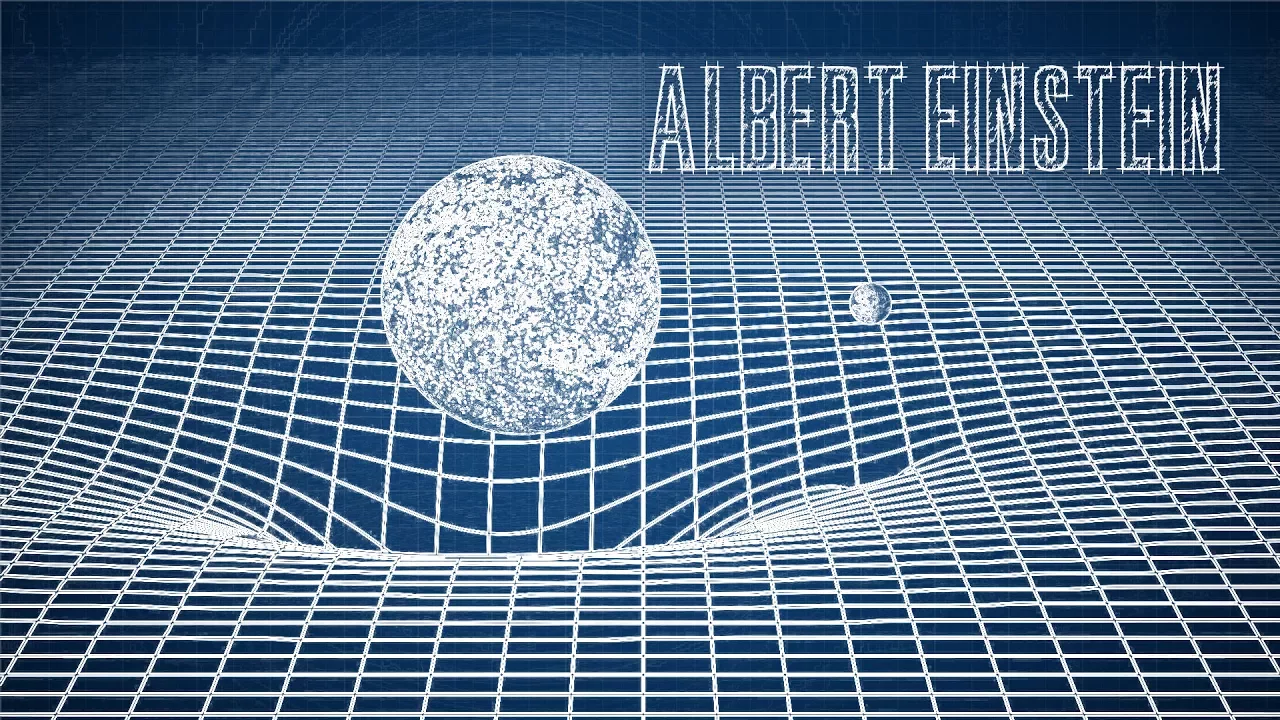
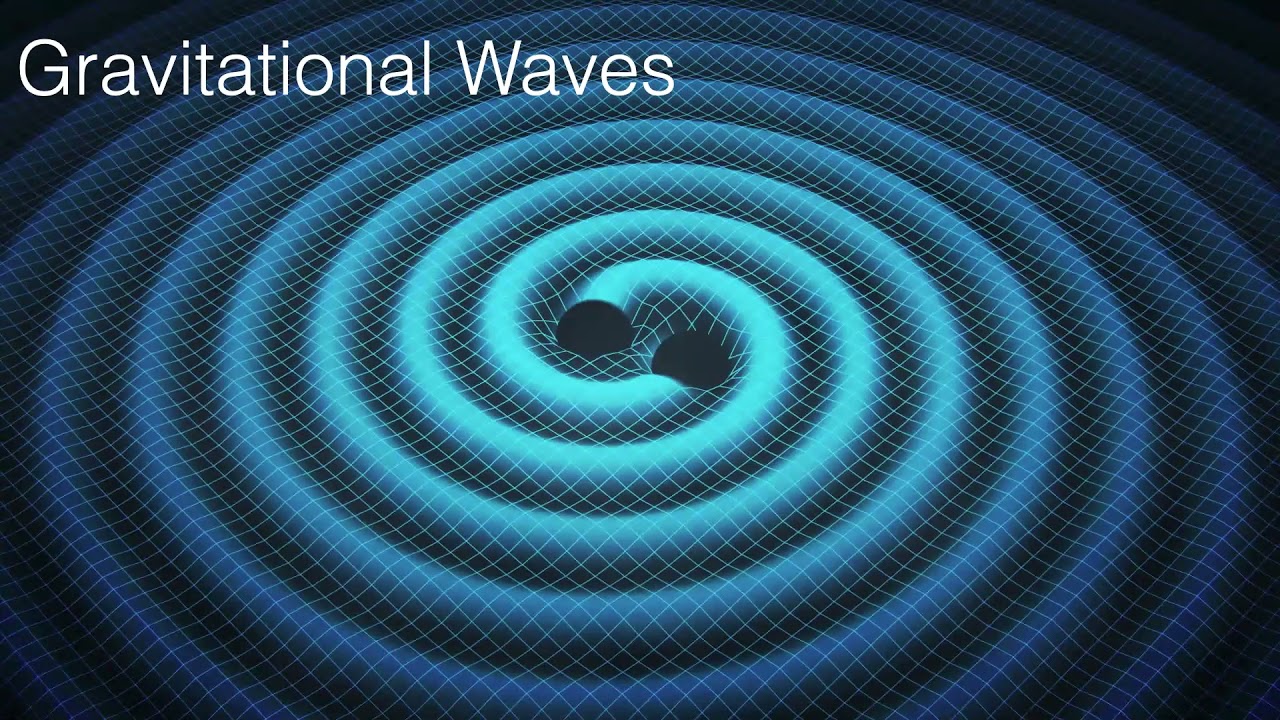
Uh so this is showing you uh that if you have dynamical masses that means masses which are accelerating in the spaceime you know because gravity is spacetime and any dynamical changes to spacetime will cause ripples in the curvature of space time that is intuitively what gravitational waves are. I'm showing you two objects going around each other and that emits emits gravitational waves which are sending out as ripples in the curvature of space time. So they're generated just like electromagnetic waves. They are generated by accelating masses as opposed to accelerating charges that produce that produce electromagnetic waves. And in the space-time picture, you can think of them to be producing ripples in the curvature of space time which kind of propagate out from the source. According to Einstein's theory, they are transverse, which means that the waves make changes only along transverse direction of propagation and travels at the speed of light. So this is strictly uh to Einstein's theory. You may have another theory of gravity where these are not followed but we uh we are for now closely following Einstein and another important thing is there are at the leading order they are quadripolar in nature. So if you remember electromatic waves are dipolar in at the trading order whereas uh the and theory gravitational waves are quadripolar and have two states of polarizations similar to ex and ey that we think of electromatically there are two states of polarization. So there are many features that electromatic waves and gravitational waves share such as uh you know two polarization uh speed of light propagation etc. But there are many distinguish distinguishing features especially the fact that you know uh one is produced by accelerating or dynamical masses uh other one is from uh due to charges and so on. So we'll see them and of course underlying theory of them are quite different. and one is describe Maxwell's equation and these are describes theory is highly nonlinear as opposed to the Maxwell's theory. Okay.
So this is summary of what gravity are in the nutshell. Uh now let's look into the two states of polarization that I mentioned right. So this is we refer to this as two uh as as cross and plus as as you can see that uh so what I'm now talking about is suppose you have a ring of particle originally in the form of a circle. So a small kind of test particle and you have a wave passing orthogonal to the plane of uh the screen. Uh according to Einstein's theory, this passing wave is going to set this ring of particle into motion. Uh that would mean that it will be I mean you can see that there are two modes. One is stretching and squeezing in one direction one along like a plus kind of sign and this one is like a cross one.
So these are two state of polarization regardless of what they do. So the important thing to keep in mind is that if you have a ring of particle the you know they're going to be differential motion between them in the sense on the one sense it be compressed at the same time on the other direction it is going to be expanding or kind of elongated.
So this is an important feature that we will make use of when we try to detect gravitational waves. But it's just to give you an idea about how the two states of polarization look like. Um okay so stop me uh at any point if you have any questions okay uh so now let's look into a gravitational wave that is going by so I'm talk so I'm showing you a waveform like a sinosoidal wave but you should keep in mind the wave is is traveling transverse to the plane and so you start off with a ring of particle uh in a circular thing as it as you go it becomes ellipse then it becomes circle again then it becomes ellipse in the other direction then again it goes back to circle right so this is the kind of as the wave goes by. This is how the the ring of particle is going to be deformed. Now, how do you measure the strength of the wave? You would intuitively imagine that the separation.
So, what this is doing is to uh change the or make change the distance between two particles to change. Suppose uh if we take these two particles and a wave is going by and I the original length was L suppose and now a passing wave is going to change distance because it has it has become uh kind of smaller. I can define a dimensionless uh dimensionless parameter delta L by L which is the fractional change in the in the change uh in the separation compared to the original separation and this is what we normally call as gravitational wave strain. Okay. So if so you can imagine there a stronger wave is going by you would expect that delta uh l is going to change for the same ring of particle and h gives you a direct measure of how strong the passing gravitational wave is okay so this is a useful so you you can imagine that for a kind of um okay I think I'll come back to that later uh so now this is about the strength of the wave now if you want to uh think of a source that is uh generating a wave uh if uh if you write down the gravitational wave wave form in Einstein's theory you would see that there are two dependencies one is of course it depends upon mass which is basically understandable I mean the you expect gravity to be higher when the mass is high and it goes inversely with distance which is simply telling you that when it's far away it is weaker and when it's nearby is kind of stronger. Uh that's the first kind of dependence. Second dependence is more important. It is telling you that a gravity ratio wave is stronger when you have the m by ratio.
So r is like a size of the object and mass m is a mass. So when the it's called compactness because it is telling you that how compactly or how you are packing the existing mass. If it is extremely compactly packed that means m by r is very high for a given m your r is very small size is very small. So you when the compactness I would say is high you expect the sources with high compactness to generate waves which are very high um kind of high strain. Okay.
So this is important to keep in mind that uh apart from the mass being high which is intuitive you also want the uh the mass to be packed compactly and you have to really yeah >> it is related to the density of >> in some sense if you want to think of density I'm thinking only so density m by rq uh so it related to density the way it appears in the waveform is only as m by r that's why I'm compactness but this d I mean kind of very dense objects will be more compact as you can imagine intuitively Okay, so this is uh how the gravitational wave form would look like and you know this good to know. Um so we have seen how the passing gravitational waves affect a ring of particle and we have seen how the source should be if you want to have very high um strong uh strong gravitational wave signal.
So that means that you know when you uh you you can't if you want with with kind of uh with the kind of technology we have if you want very strong gravitational waves you have to look up to the sky and look into uh very compact stars that are in the sky. Um two of them are uh one of them is in neutron star which is roughly speaking one solar mass is packed into 10 kilometers approximately and it's a star rich in neutrons dominantly it's going to be going to be neutrons. Uh so they are believed to be n products of uh stars and when stars undergo uh when n set of stars you can be supernova explosion which can give you a neutron star.
Similarly, if the mass of the star that underos supernoval explosion is even more, you can get a black hole where the entire mass of the star collapses to a single point which we call a singularity and you have some horizon eta. So there is no no matter inside it's so the entire matter has fallen to a kind of single point and it's so such a strong gravitational field that from inside the black hole nothing can escape. Okay. So these are like extremely compact objects that we can think of uh in uh in the astrophysical context and any binary systems that means two objects going around each other um uh consisting of uh two black holes one neutron star and a black hole or two neutron stars are likely very strong source of gravitational field I mean this is as strong a gravitational w from the astrophysical context. So we have to see that what kind of technology we need to develop uh to detect these things. These are as strong a waves you can get uh in the I mean in the astrophysical context. Okay. So we are now going to look into or kind of restrict to binary black holes binary neutron stars and neutron star black hole binaries as as possible sources of gravitational waves. Yeah.
>> It can create suppose you have a neutron star black hole that is accreting for example. So what you need is that the space time around the black hole should be dynamical right. So suppose suppose you take neutron star and it's accreting meaning from somewhere else it is matrix falling in of course it will be you know it is going to create ripples but you can imagine that compared to two black holes kind of coming closer to each other the strength of the signal will be weak right so accurating neutron stars are very good source and but we can we can detect them only in our nearby universe compared to two black holes merging which are very strong two of the black holes are there which we can go up to large distances. So accating neutron stars and black holes are something which we know in our galactic system may be existing but our sensitivity currently is not high enough to reach kind of thing but eventually you know one day in the next few years as we improve sensitivity we hope to see this class of sources also.
Yeah I mean I think I'm uh I'm just focusing on what we detected so far.
There are many sources which we are yet to detect. I'm you know I'm not going to uh talk about them. That's why restricted bies.
Okay. Um okay. Uh so now just coming back to the strain argument again. Suppose you think of you know something which we can generate on um in a lab. For example, suppose you have one two one tons dumbbell uh with 2 m separation going around each other you know with one,000 htz um uh kind of frequency. That's extremely rapid as rapid as we can do in the lab. you if you compute your h um that is going to be 10 to minus 39 right that's extremely tiny that means that if you separate two test particles with one kilometer away the delta L that you know the L into this is going to be 10 to - 36 m so the kind of delta L that it will impart on two particles separated by one kilometer is 10 - 36 m which is extremely tiny if you go to astrophysical context X uh you know two binary black holes at 100 mega pasc which uh which should be reasonably abundant uh you get your delta L the equivalent thing here to be 10 to - 18 m now 10 to - 18 m of course is 1 by 1,000 of the size of atomic nucleus but even then it is much better it's 18 19 orders of magnitude better than what we can uh we can do on earth right so this is much uh you know though this is indeed a challenge but this is a challenge which one can try to attempt compared to this one which may take 100 years. So this is what you would require to really use it as a kind of communication or whatever which will take some more time. But right now we are here where we our technology has grown to detect uh subnuclear displacements uh due to astrophysical gravitational waves.
Okay. Um so now let's look into different ingredients that go uh into the thing. I'm going to show you how the binary black hole. What is a binary black hole and how does it give you gravitational waves? So as I mentioned these are two black holes which are orbiting around each other and because according to Einstein's theory they emit emit gravitational waves the the emitted energy has to be taken away from something that is from the orbital energy because of the emission they come closer once they come closer uh you know you know that gravity is stronger so this emits even stronger and so this is like a runaway process which will bring them uh kind of close to each other eventually these two black holes will come and merge due to the emission of gravitational waves and that is what we hope to I'm going to show you what is called numerical relativity simulation which is like solving Einstein's equation on a on a supercomput uh kind of in in its full generality and uh this is showing you the so these are two black holes and what is shown here is a waveform so you can see that initially they are all sinosidal type of wave very slowly in spiraling uh but as this process goes on as I mentioned it's a runaway process as it pro as it goes on you'll see that the waveform uh both the frequency and the amplitude of the waveform increases as you will see. So these are so the red one on the you know what is shown here is can talk of the strength of the gravitational field as they come as they come closer.
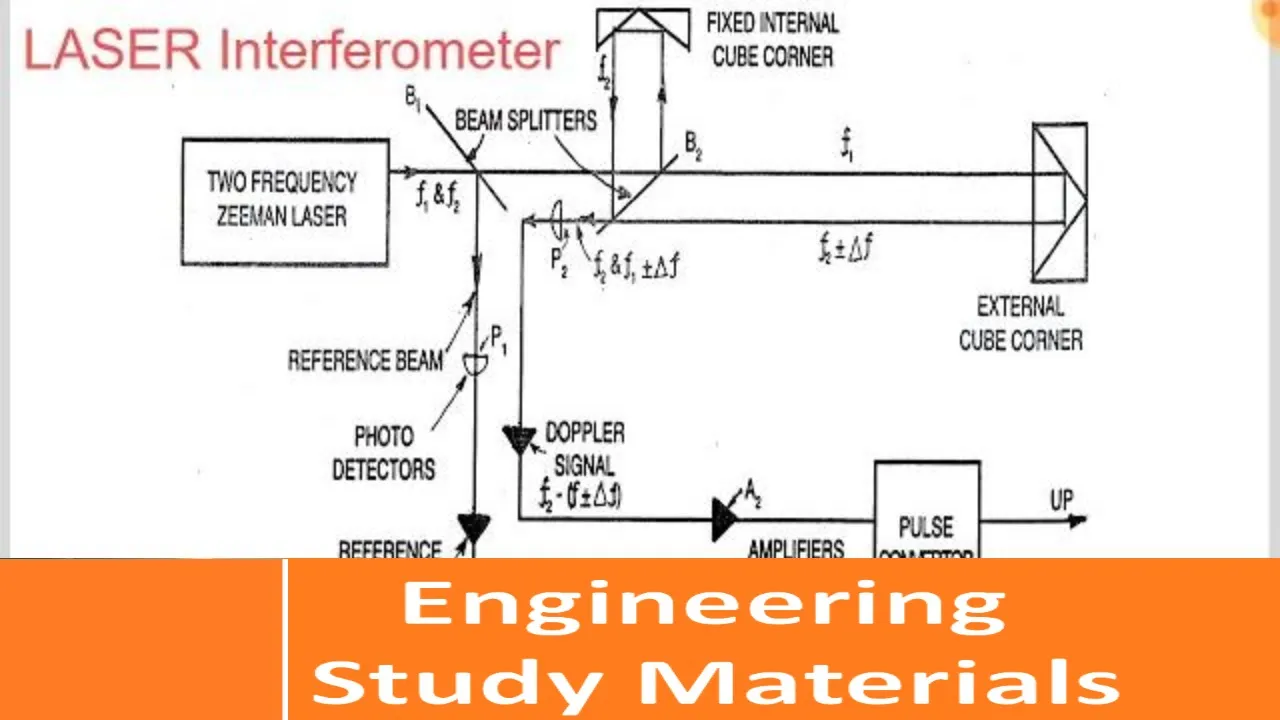
It's a bit more a complicated construction that there don't worry about so much but this is you know as you can see they when they come closer they go kind of faster which means it's high frequency and emission is stronger because they're closer um and this will go so I think you can see that this is now going extremely uh high they merge and then you know then the last thing is called a ring down which is yeah that's all so then a new black hole is formed by the merger of two new two uh two black holes in this case and they give you uh they give you gravitational wave which is like a long in spiral followed by a merger that is a peak and a ring down rapid ring down where you saw this to be exponentially damping uh so this class of sources so now I mean it is it's also clear that using Einstein's theory we can compute gravitational waveforms for different kind of sources so we know how the waveform model is and we can construct copies of waveform for various parameters, masses and so on which is actually advantageous to us which uh I'll tell you how we make use of it. Uh now in terms of detectors I I mean I I mentioned about delta L being sub uh kind of subnuclear displacement. Uh we have different types of detectors on earth. So these are two LIGO detectors in the US. This is a virgo detector uh in Europe. GIO is a small prototype. So these are 4 km. This is 3 kilometer and Kaga is also 4 km in Japan. Right. These are the uh four four interferometers that are operational and we are hoping to build LIGO India in the next 5 years or so. So this is what you know there's a worldwide network of gravitational detectors which are capable of which will be uh or some are and some will be capable of detecting gravitational waves uh of the type uh of the type I mentioned. So you can see this one of the LIGO detector. has got two end stations with 4 km away and a central uh thing and this is you know so this is like the I told you ring of particle and you're looking into the x and uh x and y axis of uh uh of the of the ring of particle so I'll just show you what exactly uh it works so this is the two mirror these are two particles as a wave is going by you expect that one mirror will come closer one will be extended so if you it's a interrometer right so you are looking into the uh the interference pattern at The output you can originally set it to be dark fringe because you can cancel the thing exactly by adjusting arm length. But the moment the gravitational wave goes by it is going to change the length and because of the change in the arm length you you your output will not be dark fridge anymore.
You'll get some light at the output which is really our kind of strain data in some sense and I'll show you how exactly uh it works and that's uh that's roughly how it works. I'm going to show you the animation. So this again these are the two end mirrors and the beam splitter uh laser is coming from here.
So this is a glacier light which gets split it comes back it is detected the you know this photo diode output. So when there's oscillation of the end mirrors due to a passing gravitational wave you expect uh some light. So this is again wave picture wave get split into two and they get bounced back and interfere at the at the central station.
Um so originally we lock the detector in the sense we lock it such that it's dark fringe. So there is you know there is nothing at the photo diode. So we we keep a photo diode at the output to kind of track. But once there is a change in the arm length as you can see that the interference will not be completely destructive. You get some light because of the interference and that in some sense is the you know signature of a gravitational wave. Okay. Now of course this is all good story but the real challenge is that you can imagine that we are yeah >> correct >> yeah the same type of experiment I think it's the same yeah >> no no so so the Michaelson's uh see Micha is a general setup right you look into inference pattern that's all. So speed of light measurement was like you send light and you you know that's a different scale altogether. Here this is a laboratory scale. Laboratory meaning large kind of large laboratory scale and you are spec this is specifically devised to detecting gravitational waves. Okay. So in the in the following sense so this is exactly what we do. Now the question you are asking can be that how do you how you do detect the signal in the middle of noise. There can be various noises which can be there. It can be the randomness of the laser light itself. It can be seismic vibrations due to either you know kind of cars going by or even a going by even thermal noise when you suspend thing. There are many noises in the detector. So to answer your question both are Michaelelsson class of instruments or interferometer but this one is dedicated to detecting gravitational waves and the question to ask here would be that how do you isolate the signal that I mentioned about the photo diode and how do you separate them out from possible sources of noise right because see Michaelels information we do for various thing we can do in the lab also we are tabletop experiments so very general class of experiments and whatever we set it to use I mean there is some objective for each one of them this one is set to detect gravitational waves because you know exactly monitoring the differential changes to the n mirrors which are here the two test particles okay so as I mentioned you know the signals are you know extremely weak and you're looking at how do we detect uh the signals in presence of noise right so this is indeed a challenge I mean if you have a strong signal that's fine but you don't know how frequently you will get a strong signal so you have to deal with thermal noise photon short noise cysmic noise and various other so because a very complex instrument in general So this is indeed a challenge but here is when we make use of our understanding of the signals. So as I mentioned that we can model the signals extremely well in Einstein's theory. So I'm showing you this is the template that I'm talking about. So what you do that you take the data you you overlap various copies of the signal on uh through that and whenever the you know the signal in the noise matches with the waveform that you are kind of overlapping the correlating you you get you know this is like a signal to noise ratio that means how loud the signal is you would expect that you get uh you know you get excess uh in the signal to noise ratio I'm just kind of sliding and you can see these are all background so there is nothing in particular there but the moment the signal there matches with exactly with the template that I'm doing the cross correlation you get a peak uh in the signal to noise ratio so this peak when it's above a certain threshold set by uh statistical understanding of the detector uh then we claim it to be detection candidate right we need to make sure that it's not due to something else so we do various tests to make sure that this excess is not due to some instrumental artifacts and so on so that is the challenge that how do you make sure that some excess in SNR is not from some instrumental origin uh but really from the astrophysical gravitational wave so this is uh something the challenge but what I want to stress is that theoretical understanding and our ability to model uh these waveforms very well uh in Einstein's theory really helps in looking for these weak signals that are buried uh in the data. So this technique is called match filtering where you kind of where you crossorrelate the signal and know the data with a bank of what is called gravitational waveform copies and you ask know which kind of waveform gave you the best uh or the highest SNR u that you got.
Okay. Uh so that is about all part. So I told about the LIGO experiment. I told you about the waveform development. I told you about the data analysis techniques at least in a nutshell. So this is really the context where 15094 uh happened. Uh uh so as as you know so I'll show you the history at the end but LIGO detectors have had a first generation LIGO detectors. Initial LIGO they operated till 2010. They were upgraded to advanced LIGO for and initial LIGO of course did not detect anything which was expected given the right of events and so on but they were upgraded to advanced LIGO in 2015 uh September uh September 14 when they were able you know they were upgrading and they were about to start officially the scientific quality run is when this event happened. So as the name is named after the date of the event and what we so what is shown here is the the signal that I am superimposing it on the reconstructed uh numerical activities uh thing. So this is a NR signal uh and I am showing you the you know the reconstructed template which which will have error bar as as you can see. So what we saw was really the inspiral merger and ring down of two black holes which are orbiting around each other and kind of falling in giving you the signal and what is shown here is the time frequency map. So it is showing you how the frequency increases as a function of time as you would expect and it's showing the energy is what uh this yellow one is showing the energy. So the this called chirp signal because it just goes on like a chirping bird if you want to say um so this is the first detection. So after uh all these upgrades of LIGO and so on and with all the developments in the waveform in terms of constructing waveforms the first detection happened in 15 uh 2015 September 14th and this is the event I think you know we are going to see more about it in Ajit Ma's talk about the properties and what we have learned after that but one important thing to keep in mind at least the frequency of gravity liet is in the hertz to kilohz regime which is more like a audio signal I mean more like audible band actually it's not audio the signals in the audible band in some sense and it is in kind of interestingly you know in that sense complimentary to light. one light is like seeing something and you know this is like listening to the universe uh in the sense if you plug it with some basic filtering to a uh to a speaker you can hear this you know this sound which I will not play you may have seen it enough I have I'm bored of playing that uh sound over the last 10 years okay so this is just to uh tell you this is the first signal we detected and which is like a know um which is basically this uh two black holes with 35 solomass and 30 solomass merging to give you a 62 solass black hole and three solas the difference between them is radiated away in the form of gravitational waves and this happened at around 440 450 mega per sec away from us and this indeed uh you know the fact that three of these gentlemen got Nobel prize RER who is no no longer with us uh who passed away last uh month uh and Barry Barish and Kipon uh got Nobel Prize for you know uh uh for contributions to Rainer Weiss was the person who devised LIGO and who really constructed LIGO in some sense. Barry Barish was the man who is in control of the LIGO scientific collaboration and kept on contributed to various theoretical development which again played a very important role in the detection of the gravitational waves.
Right? So with this you know this uh kind of inaugurates a new branch of astronomy where we can at least in principle can detect gravitational waves from binary black holes and use it to probe the universe. So it's like a you know new branch of the the new era in astronomy.
Okay. Um Okay. Uh so I still have half an hour to go.
Okay.
Um Okay. You can stop me more frequently if you want. Uh so now I'm just I want to compare there's like another event which happened no uh uh in this early this year 25114 which means it's 2025 14th January. um as if it's a decade tribute. So the signal is very similar to the know the binary black hole signal is very similar to what we saw on 2015.
But you can see that because of the upgrades of the last over the last 9 10 years. So this is a signal that I'm showing you and uh the noise is what is shown here the you know the kind of data that is there and you can see that you know the this is much smaller the noise um things are you know we controlled it much better improving the sensitivity and while this had an SNR of 27 or something the first one this had an SNR of around 80 this is signal to noise ratio which means that how much how louder is the signal compared to the background noise and this had SNR of 80 and there are you know it kind kind of gave you opportunity to do various things and this most recent you know this was released last week. Uh you should take a look into this event and there are many um outreach articles also about why this event is important and so on. But you can see I mean what I want to stress is a very similar event happened like a decade later and we have improved our sensitivity significantly as you can see from the noises on which I have superimposed the signal.
Okay. Uh okay. So next question you will ask is okay binary black holes is at least we have detected one and we detected many since then. Uh how about binary neutron stars. So uh can uh can we see or have we seen binary neutron stars and binary neutron stars have got a very interesting history because they played a very important role in people realizing that gravitational waves are indeed physical because binary neutron stars are can emit light. They emit typically in radio. Uh and this is showing you the two you know if there are two binary pulsars you know two neutron stars of which one could be a pulsar or both could be a pulsar. When they orbit around each other, you can track the light uh the radio light from the source and uh at least these two gentlemen um Hulse and Taylor uh have observed this system in 1974 and they tracked uh so you know if if the system indeed emits gravitational waves uh you expect that their period will decay, right? So what they tracked is how the period of the system will decay over time. I'm showing you data till 2005 and uh they compared with the decay with the general generalistic prediction. These are the red dots on kind of on top of it. So you you can see that you know the decay of the orbital period of the binary pulsar follows exactly the predictions of GR. So the until the data until 1993 kind of established confidently uh that uh you know this is indeed we are seeing the emission of we are seeing indirect evidence for the emission of gravitational waves via decay of uh the orbit of this binary of this binary pulsar and these two gentlemen were were awarded the Nobel prize in 1993 and of course this did give a lot of boost to LIGO because you know those who are skeptical about existence of gravitational waves and various things.
Uh they also got convinced that you know this should be real and one should be uh seeing them. But what we saw is of course a very early stage of this one.
We are not seeing them merging. You can ask a question that you know uh these are like early stages. When they come closer at least some some of them will come closer and they will merge what will happen. So this is exactly what we would like to see that when two instead of saying inspiral long inspirals of early inspirals of two neutron stars we want to see the merger of two neutron stars and what happens in those kind of stuff. I'm going to uh I'm I'm now going to show you uh kind of animation SL simulation of what so you expect that compared to black holes neutrons has got matter in it. You expect that matter can also give you light right. So this this phenomenon are known to be gam burst.
They were hypothesized to be uh at least subclass of them were supposed to be coming from by the neutron star mergers but there were no way of establishing it because we see only light and there was no way of saying whether light is coming from uh what uh is it really coming by the neutron star. I'm going to show you a numerical animation of what happens when two neutron stars uh merge. These are two neutron stars and they come closer and closer then they merge.
Okay, they merge there is a lot of matter still around it, right? It gives you a jet like thing uh along the so typically they form a black hole. Black hole can accrete matter uh from this eector that is disrupted. it can give you a jet and this gives you light uh you know this jetted form of light is called a gammaray burst and uh and it can give you various other forms of light as well which I'm which I'm not going into but you expect that you would also expect to see if there's a bing neutron star merger uh you would also uh see um uh light associated with that that's one of the uh thing you would see you may not see light always uh for different reason because you light is uh will happen only like it's a jetted thing right so if you only if you happen to be on the angle of the jet you will see light but gradation waves you should see uh in any case so we are asking whether we are seeing such events uh or we can see such events or we did we see such events with LIGO okay uh indeed we saw this is 1707 this is 2017 August 17 uh we saw uh a binary neutron merger I'm showing you the time frequency map of LIGO This is how the merger this is where the merger would end. And I'm showing you the data from Fermy which is a space-based gam satellite. And like 2 seconds roughly after uh the end of the merger uh this uh you know the fermy recorded a weak weak gamay burst and this is called a GRB uh 170 or 17a.
uh and this you know this was a very interesting event because we were for the first time seeing two messengers both light and gravitational waves and uh it so turned out that this was a very close by event 40 mega pars and this confirmed for the first time that the hypothesize uh the hypothesis that indeed uh two neutron star merger can give you a gamma ray burst and this is you know so when you use two messengers it's called multi- messenger astronomy where you can use both gravitational wave and the electromagnetic wave uh information to kind of understand uh the entire thing uh kind of lot better and we did learn a lot about gravitational waves. We learned a lot about the gamma burst and its jet from gravitational waves but I'm not going to any of those details. So all what I want to say is that unlike binary black hole merges which are relatively boring uh in in quotes uh in terms of electromagnetic observations, binary neutron star mergers or neutron star black hole mergers can give you light as well which makes the thing a lot more exciting and uh you know this emitted light in various bands of the electromatic spectrum uh starting from radio all the way up to the gamma which are all detected and it lead to very rich science and astrophysics related to that right. So but what we are not still seen is a neutron star black hole merger giving you light. We have seen neutron star black hole merger but we are not seen uh light associated with that because of various uh things. Okay. So this is another important milestone in LIGO thing where we were seeing multi- messenger astronomy using both light and gravitational waves from the same source and try to reconstruct u the phenomenon uh in a more coherent way from there.
Okay. uh so I I think you know uh basically Ajit Ma's talk will talk about uh what we have seen since then I'm going to give a quick summary of what has happened uh since the first detection where do we stand with respect to them so I'm showing you the these are the number of events we have detected uh as a function of observing runs so we have O1 that is when we detect the first one O2 is when we detected the second binary neutron star and O34 and O4 B I think O4 C plot I wanted to replace O4 C plot I think that plot is there in one of the uh screens or the poster outside.
uh so you can see that as the sensitivity so I'm showing you the sensitivity it is telling you and the the down it goes the uh the improved sensitivity because really the noise you want to suppress so you want to bring it down you can see 01 is here and O4 is here that is where we are taking data now we are still taking data uh so you can see that in various frequency bands there is considerable improvement in the sensitivity which has come down which is why you know you can see that the this uh this event which I compared 25 2025 and 2015 they were much improved because of the improved sensitivity. So we as we improve sensitivity we you know we we keep taking data and we are at 04C this third part of uh O4 and what we have seen as you can see is that this is 198 candidates but it's 220 now because we are mean candidates meaning you know they are what is uh what is detected in real time analysis. uh so we you know since 10 or two in the first observing run to 200 220 we are seeing several of uh these binaries in various u you know kind of diverse type of binary black holes mostly binary black holes and what we learn from that is something which Ajit Mata's talk will be summarizing so this showing you the differences in so this is uh showing you a you know stellar graveyard port which means that it's a you know these are dead stars at some level uh and uh so you can um see that uh you know around 218 band is is what I wrote this showing you the merges. So this is saying this and this merge to give you this etc and uh the highest the highest massive black hole is around um kind of 200 odd that that we have seen and I think there are exceptional events which are there in the outside posters are there they'll be telling you more in detail about what what are the kind of classes of sources we have seen and why they are interesting etc. there are graduate students around whom you can ask uh during the breaks. Uh so this just to tell you that there are mean different types. So you can one thing is to compare about the gravitational wave mergers which are like here compared to electromagnetic black holes. So these are black holes which are accreting and because of the accretion of gas or particles they emit light and you can estimate mass from that. You can see that those kind of black holes have very small mass but we are seeing masses up to 10 to 100 to 200 and so on. So there are significantly different uh kind of uh kind of black holes that we detecting uh in uh using gravitational waves and the you know uh and what kind of features and so on. I think you should take a look into the poster outside and maybe Ajit's talk will summarize some of them for you in the afternoon talk.
Okay. uh so and just a quick summary uh is about we have now taken a census of compact uh compact binaries in the in the universe and we have seen black holes with various masses and various properties we have studied and also what I did not talk about is about you know it's a very good way to study uh ask the question whether Einstein is correct or not because the signal that we detect are indeed Einstein's uh are consequence of Einstein's theory we can ask whether detected signals are indeed Einstein's theory signatures or there is some beyond Einstein effect and so far there is no evidence for anything that is beyond Einstein which could be due to our sensitivity uh and uh you know maybe I just talk also will mention about how we can use gravity waves to measure the cosmic expansion rate uh and how we can use it to understand the structure of neutron stars and uh how we can search for new classes of sources like continuous you were talking about uh the uh about how if you neutron accreting what kind of signal will that give and whether we can detect and so on. There is you know there's lot to be done um which uh in the uh in the years to come and some of them we have done which will be done with more accuracy in the uh in the forthcoming years.
uh then of course uh India wants to join the party. There is uh uh there's a LIGO India detector or LIIGO AN detector which is going to come up in Hali in Maharashtra and uh this is you know uh we are going to start construction soon and the hope is uh to complete by uh April 30, 2030 and um you know this is going to be a LIGO like detector um like the two LIGO detectors and is going to be you know uh kind of important because of the fact that this is going will give you a large baseline compared to LIGO detector. So which means that your sky coverage of the sources will improve.
Sky localization will improve and you know more duty cycle in the sense of the detector performance. When you have multiple detectors you can do new kind of GR test and uh in terms of you know uh of course when sky localization is better you can have much better synergy with other electromatic telescopes and so on. is going to be a very important development in addition to the worldwide network which I showed you earlier which contains LIGO, Virgo, Kagra and now LIGO India once it is operation.
Okay. Uh what about the future right? Um so uh in the future there are plans for uh s you know upgrades to LIGO in some sense but a new detector uh as such which will be 10 times more sensitive than uh what uh what can be done. When I say 10 times more sensitive, I mean to say that you know this plot this will be factor of 10 better. So from here kind of going down in 10 which would mean that because this amplitude detectors you can scan 1,00 times more the volume because r cube is the volume and uh so that is what this will be. So this is called Einstein telescope. It's in Europe. It's a 10 kilometer armlength triangular kind of detector underground. uh they are yet to finalize the thing and this is a US based detector proposed um it's called cosmic explorer it's going to be 40 kilometer long arm length uh 4040 um this going to be you know it's still uh under active consideration there is uh not not funded yet officially uh so with that you know as we can see we can see 1,00 times we can go out uh we can pro volume that's 1,000 yeah >> yeah I think they do so they do take so they'll be drilling through the kind of surface and kind of placing it and ET ancope will be underground anyway so I think they make sure that that's not affected um okay so typical time frame for them will be 2030 plus 2035 and plus is plus so hopefully it's not too much plus um but this is the kind of groundbased detector upgrade plan uh apart from that you are going to have a millhz detector in space uh which would be by 2034. It's a ISA is a European space agency funded project called it LISA laser inflometric space antenna which would be a triangular shaped antenna which will be going around the sun uh trailing behind earth's orbit. There are three satellites with 2.5 million kilometer arm length and uh they will be you know given the arm length we'll be detecting them in the millhertz regime and again time frame is typically 2034 that is a well planned me well planned space mission funded and you know they are kind of building various uh various parts of it uh so this uh should be out by 2034 which will of course uh you know we are it's not like glyolike detectors herz to kilohz millhertz we'll be seeing merges of super massive black holes so these are super massive black holes with millions solar masses they do the same thing. they come uh come come closer by gravitational radiation reaction and merge and it's going to give you a totally different picture or different class of sources and you can probe galactic mergers and various things with this uh again in the next decade and uh this uh there'll be talk by Sri Ram and Mangiri uh in the panel discussion about nanohertz gravitational waves these are even more massive black holes typically billions of solar masses or some of the early universe phenomena which are tracked by you know when they pass through the earth's uh kind of earth's atmosphere the we use the existing stable uh clocks which are pulsar signals uh to track them uh and we I'm not going to the details of them they take take some time but this is using timing uh um of the pulsars is what we use to detect them because of the high mass again uh this will be nanohertz so we have seen hertz to kilohz with ligo and millhz with LISA and nanohertz with uh this you know pulsar timing arrays and they did detect so I think you know I'm again this is too complicated a plot but they did claim uh a strong evidence for gravitational waves uh by a bunch of using a bunch of collaboration uh using this pulsar timing kind of array data and they are still taking data and you I mean in the in the in in the years to come they will improve their significance and it's going to be a extremely important and completely complimentary probe of of gravitational waves from super massive black holes with billions of uh solar mass. Um so the important difference right now from LIGO and you know LIGO is detecting mostly individual sources. Yeah most not mostly individual sources. uh there's like drops if you want to think of uh you know um water drops whereas what the pulsar timing array is seeing are like a background there are multiple sources which are superimposed which is what the pulsar timing arrays are detecting and you can see this like a you know rough um kind of rough water produced by multiple sources is what pulsar timing array is currently detecting but at some stage pulsar timing arrays will reach sensitivity where they can zoom in on some of the sources but you know that again may only with next decade with the square kilometer array and so on. So these are kind of other ways of uh looking at it.
And the last one which again I think Sriam's talk will talk about is about early universe you know kind of inflationary uh imprints of of gravitational waves. You can look into the polarization of CMBB and especially B modes which are due to this E mode and B mode which are there which are considered to be unique signatures of primordial primordial gravitational waves especially from inflation um which uh will be an important thing. will be in 10 to -6 Hz or something like that very extremely low frequency but this is a very very sensitive measurement and uh you know you need to do the cosmic micro map you know into very sensitive region which will uh is going to take kind of few more years so this is showing you again uh you know all in one so you you got LIGO type thing here and Lisa pulsar timing array and CMBB here which goes in the frequency and one thing is that in between the ground detctor detector and space wave detector you can prop this desertz detector which will be between you know uh typically 0.1 Hz to say 100 htz and um I mean there is some interest to build one uh uh in India there is you know at least communities trying to convince ISRO uh to explore the possibility of building something in between the ground detector and the Lisa detector and that would mean that you know LIGO will be here and Lisa will be and you are like going to prop the this void in between these two uh two regions. So this again is among the future kind of ideas but you know something which India may be able to contribute depending upon um I mean how things uh how things come up um okay uh I have five minutes I can uh you know it's important to recall some history about how we arrived at gravitational waves.
uh in 1916 Einstein detected not detected proposed uh the existence of gravitational waves and he being him he was confused himself about they are really physical or some ma some mathematical artifacts of his own theory which he some point says they're not physical but people did not believe him fortunately and at least in 1957 Herman Bondi and his collaborators had a very clear mathematically consistent picture which could prove that these waves are not some artifact acts of some coordinate choice but are indeed physical. That is a very important development into in terms of all of these. Then people are starting to wondering how do we detect these waves and uh how can go about and some of the Russian people talked about using interferometers as a way but it was RER ways uh who really came up with the back of the envelope estimate about what is it required and how to go about it and so on. in between uh you know uh Joseph Weber uh in 1916 claimed a detection of gravitational waves using cylindrical bar detectors. So these are like cylindrical bar which can detect uh gravitational waves in the frequency in the resonant frequency of these bars. Uh unfortunately his claims uh were not proven right. So and you know uh but still it was you know I think it shows um I mean he's he was probably overenthusiastic physicist but it was a very important step in the experiment.
Uh but then it went on and Ray Wise and Kipon started talking to each other about what is it required how to go about detecting or building a detector um like LIGO and as I mentioned in 1978 this was all efforts were significantly helped by the Hul Taylor uh Hal Bandary pulsar which kind of proved beyond existence um the you know the gravitational waves do exist. Then as things went by in kind of in 1984 uh you know was kind of founded u again by Kipon Ray and kind of others. Dre is another figure who who played a very important role and then in '90s this considerable you know upgrade uh not upgrade building of uh of uh of uh Lego went on and 2001 uh is when Lego started operating this initial LIGO. uh this when I started my PhD um of course they didn't detect anything um and in 2007 the this European detector Virgo uh started uh operation in some sense with some sensitivity uh but this you know this '90s to 2000 is really where all the effort to build this detector has kind of gone in and 2010 again as I told you initial was shut down and 2010 to 15 is when uh the LIGO and VGO were upgraded and as I mentioned 2015 before officially LIGO began its scientific run, we were kind of blessed with this uh the signal which is extremely loud signal as as I have explained and since then you know this uh kind of shows you the developments of what we have seen and where we are headed I think I have mentioned to you.
So it's important to keep in mind that starting from Einstein's own doubts about the the waves being physical we have come a long way thanks to Rainer Weiss's uh you know um approach and experimental uh techniques and his own vision and so on to towards building LIIGO and detecting gravitational waves and doing astronomy uh using gravitational waves and these are all things which takes kind of centuries but we are here and we are at the at the you know um end of uh uh at a time when we can make make use of the data and um to learn new things in astronomy and uh uh yeah I think that's that's where we are.
So I think to to kind of conclude my talk I think I have mentioned to you why gravitational waves give a new way of looking at the universe and you know in terms of understanding various uh issues in uh in the universe and the existing generation of tech detections are improving in sensitivity.
We are taking some data I summarized to you what kind of detections we have seen and in the future uh ground page detectors will be upgraded uh with Einsteinoscope and cosmic explorer. LISA will be operational um with millhertz sensitivity. Pasa timing arrays are maturing to detect and characterize nanohz gravitational waves and probably an Indian space mission in the tiger will come through. I mean who knows and of course uh the early universe gravitational waves by using CMP polarization and in any case I think you know the next decade I think the gravitational waves observations in these various bands are going to kind of uh significantly enhance our understanding of the universe and I think these are very exciting times. On that note I think I'll stop and I'll take uh take questions. I think I was bank on time. Thank you so much.
[Applause] Thank you sir for your wonderful speech.
Uh the floor is open for questions now.
>> Yeah.
Uh what do you mean by symmetric? So all what I'm saying is >> meaning sir if a wave passes through how will we know that in both of the axis it is stretched symmetrically or strained symmetrically?
>> Yeah. Sorry know the ring of ring of particle analogy I'm just so I think the plot I showed you is after taking away so I'm talking about the two dimensional if I have something on two dimensional thing how the ring of particle will get deformed so you are asking the following question I understand and let me come back to that question so you're asking >> it's like a slice of the wave only which interacts in the 2D surface >> yeah that is fine so I'm so the the waveform is really talking about that slice so the Einstein's theorist uh uh is talking about a wave orthogonal wave is going by and I have a ring of particle arranged in a 2D plane and the the waveform the strain I'm talking about from theory is about uh on this ring of particle in the in the two dimensional thing you can ask another question which is about the symmetry thing that can there be a mode of gravitational waves which could be like breathing right if it uh if it expands equally and strings in the same way suppose this is called a breathing mode which is not which is not allowed by Einstein's theory but there are theories which goes beyond Einstein's theory which admits this breathing mode and which will be a diff which you're expecting that your um your meter is going to also breathe out and breathe in which will not it will not see any kind of change in frame but that is only when it's exactly orthogonal right when some some angle it can have an component which will uh which can do so breathing mode can exist in nonGR theories but uh which can be still be detected suboptimally using like detectors.
>> Sir, one more question. Uh we are essentially detecting the amplitude of the wave like you said like so which objects in the universe interact with the wave which can decay the amplitude because if the wave passes through some distance it's going to decay. So how is the decay compensated? How do we know it is?
>> No, it's not compensated. So I think you know you usually the difficulty with gravitational waves are that these are very weak because gravity is the weakest of the fundamental forces. So the difficulties also comes from the fact that they're very weak to interact even with a detector. Right? Now you're asking about astrophysically when they propagated from far out how would it interact with galaxies and intervening matter and so on. So this is exact I don't know whether Ajit will be talking about cleansing there can be some kind of uh kind of distortion to the gravitational waveform due to the intervening matter though I mean that's a very high order effect but you can use those distortions if you you know we not seen anything yet but once we detect those uh those distortions we can use it to probe the intervening matter and matter distribution so it's a we convert that to an advantage if you have a model of intervening matter we would know what kind of distortion to the waveform to expect and that way you can you know it's a probe of the gravitational wave lensing is a probe of what is what lies between the source and us >> so it will eventually help us to understand more about the medium and the in between >> yeah when I say I'm talking about some black holes or galaxy galactic clusters and so on which can interact with it and you know make small distortions to the waveform Yeah, >> good morning.
>> Uh good morning sir. We get the graphs of the gravitational waves sir. Uh how will we know what sort of event has happened in the universe with the graph which we get?
>> Yeah. So you're you're asking if I were to give you the waveform uh you know uh the waveform such as this right I mean you're asking how did I arrive at the conclusion that this is indeed from 30 you know this this mass and so on right so what I mean what you do is that so I told you that what we make use of is that various you know we know how the gravitational waves would look like for different masses and spins according to Einstein's theory which we make use of into a parameter inference.
So we cast the problem in the basian language where we try to ask the question there's a data in the signal and what kind of uh you know which kind of signals that we can synthesize would match with that. So it's using a basian parameter estimation that we construct a posterior distribution on the masses which is how it gives you. So we make use of the fact that we have we we have at disposal waveforms with various masses and spins which we make use of and to infer what is the mass and spin from the thing it's I mean I did not tell about how to do that but you be by so basically it means that if you have a I mean suppose you binding neutron star signal that's going to be longer signal in the data and some will be shorter signal some will be wiggly signal and so on. So depending upon the mass and spin the waveform is going to be different and that is what we make use of to understand the you know inverse problem we try to infer what are the masses and spins of this thing using uh you know kind of casting it in a more general statistical language that's Does the interference make a standing wave? If it does make a standing wave, uh what is the time dilation effect? Uh we can expect.
>> Yeah. So I think let me So I think I told you plus and cross but ideally depending upon the signal it will be a combination of both plus and cross like right elliptic.
It can be you know the EX and EY are two polarization of electromatic waves. So you can get all kind of polarization either linear circular elliptical and so on in a very similar way you can get linear circular elliptical gravitational waves as well. So that's one question and so I'm saying typical waves we see will have both polarization with some in some kind of fractional contribution. Second thing is when they interfere of course they'll interfere as a wave but that is too weak to be detected. But what is more interesting to ask is if there are two signals from two I mean uh two sources give you signals which are overlapping in the data that does you know that does make our issues difficult to analyze the signal because now you have noise on the background and your two independent signals which are overlapping with some thing. This is overlapping signals problem which will be more of a thing to which is something to be deal kind of dealt with. This is more important for longer signals like Lisa would see for example signals lasting for years. Okay. So there will be definitely all signals in Lisa be overlapping. So we need to find uh ways of addressing uh how to infer multiple source signals at the same time and that is a challenge that's called a global fit problem in the case of Lisa and so on. for us to come up with that. But in terms of kind of interference of two waves, I think that's too weak to be seen any any of these things because it's like a square of the thing already. Signal is weak.
Yeah.
Sir in a broader way uh which techniques have you have you or the LIO team has used to increase the SN ratio because higher the SN ratio we know the detection is good. So you said we will have thermal noises and al like seismic activities will also affect it. So which in a broader sense which methods do you use to nullify those effects?
>> So there are two things one is the improvement from the detector side right. So you need to suppress the detector noises to improve sensitivity.
Second one is to increase improve our uh algorithms and waveforms and so on. It's a two way because it's a signal and noise combination right you need to improve your signal model and improve your noise model. Uh that is what will give you. So in terms of I mean I'm not an explanist per se but in terms of improving the noises you need to screen I mean I think if you want to kind of make the thermal noise uh to be small you need to you know uh uh it's a KT noise. For example, kaga detector is going to use cryogenic technologies to um kind of do suppression. There are various soop plays with the suspension material and so there are various uh material science thing which goes into that. Second thing is about suspensions the seismic noise is due to suspension.
So there are various ways of sophisticated suspension techniques of these mirrors which will improve the thing and short noise is another one and you use high power laser short you know lasers to suppress that and so on. So on this various fronts we make use of various uh you know advanced techniques to suppress them. I'm not highly qualified on the detector uh sorry on the waveform side we need to because you know if the signal is there uh our the more accurate our waveforms are the higher will be SNR because we are putting in more information. So there are still ongoing efforts to improve our waveform models account for maximum physics uh that we are not accounting for now and so on. So that is another way of improving the signal to noise ratio that means including the detection efficiency and so on. Uh so basically including various types of physics into the waveform and improving various technologies to suppress different noise components in the detector and >> so so we still have like some scope to improve the detector themselves.
>> Yeah. Yeah. So I think you know there still ongoing uh thing I showed you the um Yeah. So I think this is where we are. I mean this is where we were and this is where we are and O5 is the next observing run in the next 3 years or something. We hope to go from here to here which means there are well planned things about how we go about material coating suspension and so on that you know it takes time to do that and typically you know this as you go in steps and steps after an observing done we take a break and there are like one year two years of upgrade thing then we again operate because we don't want to uh detect it to not operate for five years right so it's a combination of uh astrophysical excitement versus instrument science excitement we have to find some some kind of balance between Are there any other questions? We have about 5 10 minutes.
>> Okay. If not, I don't I had a question.
>> Question. So you said that we could do some test of GR with LIGO India. What's >> Yeah, sorry.
>> New test of GR.
>> Yeah. So the this is basically polarization test because in uh GR we have only two polarization but I think in response to the question I was talking about the breathing mode and other modes there can be up to six modes and uh so when you have multiple detectors independent uh thing you can put uh you can probe those multiple uh you know the nonGR polarizations to much more test you can you can posit in terms of null test this null streams and so on But those are the test I had in mind about you know nonGR up to six months of power system we can probe when we have multiple detectors operating including LIGO India and that's could be >> and this includes the breathing mode so >> yeah correct >> we we will have some you know evidence for its existence or not so >> yeah I think I mean I think even with the other virgo tool I go virgo and kagra itself will improve the thing because you need independent data streams I think India will add to this this ability That's >> could there be better detectors to specifically detect these breathing modes?
>> Uh there could be but I don't think anybody will fund it.
I'm saying suppose you optimize the thing for a breathing thing unless you have some evidence for skeletons theory then I think >> what I was thinking that this you mentioned bar detectors right and >> um there are spherical bars >> could could they be sort of in >> I think yeah I think I mean I I I don't know but I think the challenge with bar detectors they're very narrow band so you they can look into some particular range of frequency which may reach 100 Hz or something. So that is I know because then you may get signals somewhere else. So I'm well I I I not thought about uh polarization measurements with bar detectors. I bar detectors are all dis operating anymore I think. So unless there is some renewed thing to uh bring them back I think that may not be a option. But I I not thought about the But I think it's a if I mean it is suboptimal but in principle you can because if >> yeah no I think you know the strongest evidence if you if you have evidence for dipolar radiation uh that to me uh will convince me that one should look more seriously breathing more. So you come up with a poster on dipole thing which is peing away from zero at 90% credibility we we should talk to funding agencies >> and probably you should settle it later with Ajit.
>> No no no I think we are not on the same page. I think Ajit is saying it's a difficult thing to do do the measurement. I'm saying in principle it can be measured. Anyway I we had we have many things to settle anyway.
>> Sure. U so if there are no further questions uh probably we can move to >> Yeah. So we have a tea break until 11:15. So please come 5 minutes before that. Uh it's it's opposite uh this hall actually. It's called annex dining hall.
People will be going that in that direction. So you can you can find your way. So we'll we'll we'll come back uh 5 minutes before 11:15. We'll we'll go for tea now. Thank you. Thank you.
We are about to begin our next talk.
It's my pleasure to introduce to you our next speaker, Professor Shiram Kumar.
He's a faculty at the physics department at IIT Madras. He completed his PhD at interun university center of astronomy and astrophysics aayuka pune under the supervision of professor tanupad manaban. He then pursued post-doal research at the H Hebrew University Jerusalem and then University of Alberta Edmonton before joining Harish Chandra research institute priagraj in 2001 first as a post-doal fellow and later as a faculty member in 2011 he moved to IIT Madras where he continues to teach and conduct research his research spans a broad range of topics in theoretical physics he primarily focuses on early universe cosmology that includes inflammation cosmology and the cosmic microwave background, the generation of primordial perturbations, the signature of secondary gravitational waves. His contribution extend to black hole physics, bouncing cosmological models and so much more. Through this wide ranging work, he has made contributions to our understanding in the interface between gravity, cosmology and quantum theory. Please join me in welcoming professor Shiram Kumar.
Thank you Nidi for the introduction.
I should begin by thanking uh Chandra and Arun for organizing this event and inviting me to speak at this event. As a student growing up in Chennai, there were limited opportunities for me to hear about astrophysics, gravitation, and cosmology. So, I do not miss an opportunity to speak on these topics.
Over the last half a century or so, increasingly precise observations of the anisotropies in the cosmic microwave background have transformed our understanding of the early universe.
As Arun would have described, the detection of gravitational waves by merging from merging binary black holes has opened up a completely new window to our cosmos.
In addition, I shall as I shall describe during the later stages of the talk, observations by the pulsar timing arrays which suggest a stochastic gravitational wave background have the potential to help us determine the evolution the history of the early universe.
In this talk which is primarily aimed at students, I will describe how the synergy between decades of uh CMB studies and emerging gravitational wave observations can help us decode the physics operating during the early stages of the universe.
Here is an outline of my talk.
I'm going to talk about largely during the later stages about primordial gravitational waves which originated in the early universe. In order to understand that we need to appreciate what is the standard model of cosmology and that is what my first part of the talk will focus on. whatever reason it's very slow and in particular I will talk about something known as inflation which corresponds to a brief period of accelerated expansion during the early universe and it is during this epoch that the initial gravitational waves what I will refer to as primary gravitational waves were generated and I will talk about how constraints on the inflationary epoch arise from the data of the anotropies in the cosmic microwave background that I referred to and I will re-emphasize the points that Arun would have emphasized namely how gravitational waves the detection of gravitational waves provide a completely new window to our universe and I will focus on two types of generation of gravitational waves. I will talk about the what is known as the primary gravitational waves which are generated from the quantum vacuum during the early stages and then I will talk about secondary gravitational waves. There are many many types of secondary gravitational waves. I can talk about them in detail in person but I will focus on one type of secondary gravitational waves namely what are known as scalar induced gravitational waves. All these points will become clear as we go along. And in particular, this is what seems to be, you know, suggested, you know, to be the stoastic gravitational wave background by the PTAs, the pulsar timing arrays. And then I'll close with a quick outlook.
So what is the standard model of cosmology? In order to understand cosmology, that is the physics of the universe as a whole, we need to understand what the universe contains.
What does it contain? We are not interested in the physics of astrophysics of galaxies or clusters of stars etc. We are interested as I mentioned the physics of the universe as a whole. And when you look at the universe as a whole there are many many galaxies in the universe. On the left is what is known as the Hubble deep field image which is about 30 years old. And every extended object that you see here is a galaxy and evidently there are many many galaxies in the universe. On the right is a much more recent this is 30 year old 30 years old as I mentioned the right one is you know less than a couple of years old and it is called the again the Hubble deep fe I'm sorry the deep field due to the James web space telescope and James web has been able to observe these galaxies with much more precision than the Hubble space telescope could the bottom line as far as our story goes is that there are many many galaxies in the universe and in fact the galaxies are distributed in a fairly it's not moving sorry it went too far in a fairly uniform fashion what you have here are galaxies plotted as a function of distance okay and you will see that as you go further and further there are roughly the same number of galaxies and though it seems matter seems clumpy as we look around us there is some galaxy here, there is no galaxies there etc. If you you know draw a fairly large circle which you know covers a good fraction of the sky, what you find is that there are reasonably the same number of galaxies in these different circles. And if you draw a sphere in the three-dimensional universe with a size of about 80 or 100 mega par mega parc is about 10^ 6 per sec is about 3.26 lightyear. you find roughly the same number of galaxies in different parts of the sky and this is best understood from this um movie I'm just going to play for you and this movie was put together by the slow and digital skies away and it goes away from our galaxy and as you go you know as it goes further and further away you will see two spheres hello spheres one at a distance of about a million lighty years and another at a distance of a billion light years and the first sphere is beginning to appear and there are very few galaxies within a million lighty years and one of the biggest galaxies like you know the Andromeda galaxy loc is located a distance of about 2 million lighty years which will start emerging from the left and as you go farther and farther away there are more you know many many more galaxies and these galaxies are fairly uniformly distributed in the sky and eventually you will see a pattern in the sky which is known as the anisotropies in the cosmic microwave background. That is the Andromeda galaxy. And you will see further galaxies, you know, more and more galaxies as we as this movie goes further and further in terms of distance.
And the bottom line is that the galaxies are smoothly distributed in the universe on suitably large scales. And therefore in order to understand the structure in the universe, the distribution of galaxies in the universe, we would like to divide it into a homogeneous part or a smooth part and a you know a part which involves perturbations which are small deviations from homogeneity and there are good reasons to believe that this description is valid as I will explain as we proceed further with the talk. So there are many many galaxies in the sky and in fact it'll take a swing around in different directions to illustrate the fact that it is not just you know in one particular direction in whichever direction you observe there is a remarkably uniformly distributed number of you know the galaxies are distributed remarkably uniformly in virtually all directions of the sky and I talked about the cosmic microwave background which will appear in a in a couple of seconds.
And that will form a crucial part of the first part uh crucial part of the of my story during the first half of the lecture.
I'll just let the movie play out.
So those all correspond to galaxies.
Each dot represents a galaxy in the sky.
And what I was saying is that if you draw a sphere which is reasonably large of the order of 80 to 100 mega pars and you count the number of galaxies in the sky, they are roughly the same in different directions. And these blue, yellow and red and green spots that you see correspond to what are known as the anisot tropies in the cosmic microwave background. They are located at a certain distance in the sky and they will form an integral part of this talk.
The first part of the talk at the least.
>> These are made from cosmology simulations.
>> No, this is actual observations >> comparing observations and differences.
>> Yes, absolutely. Absolutely. This is a movies based on this set of observations. This is just a projection that has been shown.
So there is matter in the universe. What else is present? There is radiation present in the universe. There is light from the stars. And you would nly imagine that the light from the stars from different stars that constitute the galaxies would dominate the amount of energy in the radiation, energy density in the radiation. Not quite. So if you plot the intensity of radiation as a function of different frequencies here, okay, what you find is that they peak at a particular location. This is not working so well at a particular location in the spectrum. And it is in the actually that peak occurs in the microwave region of the electromagnetic spectrum. And this happens to be something known as the cosmic microwave background. What do we have? We have this radiation coming to us from virtually all directions of the sky. We are bathed in it. Even as we stand here, there are microwave background, you know, photons from the microwave background which are, you know, scattering of us as we speak. And that dominates that contribution to the energy density from the microwave do background dominates every other energy density that you have in the electromagnetic radiation in this universe. And in fact if you zoom in into this part of the electromagnetic you know um spectrum what you find is that this you know the radiation from the cosmic microwave background is remarkably plank you know perfectly planken in fact it has a temperature of about 2.725 Kelvin and these arabars that you see have been increased about 200 times so they they are visible in this plot so it's a remarkably perfect black body spectrum. corresponding to that temperature and as I've said you know the error bars have been increased so many times so that you know few hundred times so that they are visible in this plot so what do we have we have matter in the universe we have radiation in the universe and you know and the radiation the dominant part of this radiation is in the form of a thermal black body radiation that is present everywhere in the universe and this is known as the microwave background radiation and it is cosmic and therefore it is referred to as a cosmic microwave background radiation or CMP or CMPR.
And what do you need? What else do you want to know about the universe? Well, what else do you know about the universe? Well, the galaxies seem to be running away from us. What you can do is that measure the spectrum of these galaxies. And this is the spectrum from a typical star or a collection of stars in our own galaxy. And you look at galaxies at far you know which are farther and farther away and what you find is that the spectrum is shifted towards the red end. What it means is that if you compare this spectrum and the spectrum you find that the spectrum as a whole is shifted. Of course, if you have a single line, you will not be able to observe this shift. But galaxies have very typical spectra as you can see. And you can compare different spectral lines corresponding to different elements. And the pattern of these spectral lines across galaxies which are very similar in other properties. And what you find is that the farther the galaxy is, the faster it seems to be moving away from us. The wavelength, the spectra of these galaxies are shifted towards the red end of the spectrum. And you want to interpret that in a in a you know in terms of the Doppler effect what you essentially will interpret it as as though they are moving away from us. And importantly what you find is that the farther they are away you know they seem to be shifting to you know the spectra seem to be shifting you know towards the red end of the spectrum by a larger amount. Well what essentially happens is as follows. On these larger scales, your Newtonian theory of gravitation is not valid. You need to use a new relativistic theory of gravitation which was originally proposed by Einstein and it is known as the general theory of relativity. And when you applies this theory to this uh to this scenario of this universe and you examine what happens to a photon, what essentially happens is that if the universe is moving up expanding then what you can immediately show all the photons in the universe will exhibit red shift or in other words that energy will decrease with time depending on the manner in which the universe expands. And in other words, the red shift that I was talking about in the previous slide is not due to the Doppler effect as I originally tried to explain. It is due to something known as cosmological red shift. It arises, you know, it's known as cosmological red shift and it arises due to the expansion of the universe. How do you visualize this expansion of the universe? Well, the we know between the the dispace that space time between two of us are not ch not changing with time.
You are bound together you know to the earth and the earth itself is bound to the solar system and the solar system is in turn is bound to the galaxy. So the galaxy in itself is not expanding but the distances between the different galaxies are changing with time and in fact it is increasing with time and it is one can show using general relativity. What you can show is the following. What it says what general relativity essentially says is that the spaceime you know is becomes curved because of matter present in the universe. Think of a rubber sheet. I'm not able to use this pointer. Well, okay. Think of a rubber sheet and you keep a place a ball on top of it. What essentially happens is that the rubber sheet was in the absence was a of the ball was flat. But the moment you place a heavy ball on this rubber sheet, it sort of becomes curved. And now if you you know drop a smaller ball in this rubber sheet such as a marble, then what happens is that it begins to move in the manner in which the spacetime or the you know rubber sheet has been curved by the presence of the large ball. And in the same fashion a photon moving in the universe sees the effect of the matter and every type of matter matter radiation present in the universe. And this matter that is present in the universe is causing the universe to expand. And because of the expansion the photons lose energy which is what as I mentioned we observe as cosmological red shift. And what we are also trying to understand is that what is you know how does the matter affect the evolution of the universe. You know in other words by determining the history of the universe the matter in which what happened to the universe at different epochs we are in some sense trying to understand what is the matter content of the universe and this is described by what are known as the Einstein's equations. The Einstein's equations relate the content of matter to the manner in which the cur space spacetime itself behaves or is curved.
So using the Einstein's equations you can determine how the energy density of different components of matter in the universe changes with time. We talked about the presence of matter. The you know galaxies consist largely you know well not quite you know um they don't they they consist of something known as cold dark matter as well but they for our purposes behave in the same manner as matter that you and me are made of which the cosmologists refer to as berons. So there is matter present in the universe and there's radiation present in the universe. There are other things also present in the universe particularly something you would have here heard about something known as the cosmological constant that will not play a large part in our story but we will talk about accelerated expansion very soon. So now you have matter present in the universe and radiation present in the universe and you can turn to general relativity to ask how they behave with the expansion and you can you know that the energy density of matter goes as one over the volume. Okay, in other words, 1 / cube of the size of the universe in some fashion. In if you want to say it in some fashion, you can show using general relativity that the energy density of radiation changes as 1 / not the you know volume power 4x3 instead of volume itself. It goes faster. In other words, the dilution of the energy density of radiation in the universe is faster than the dilution of matter in the universe. Today there is matter and radiation present. I mentioned how the radiation is largely in the form of the cosmic microwave background. But if you run this and the universe is expanding and if you run this movie you know if this picture backwards what you essentially find is that at very early times there was more energy in the radiation than that of matter. And you say that the universe started in a hot dense state. And in fact if you push this arguments back you know if you push this uh energy densities you know back and you find you hit a singularity the energy densities diverge and this singularity is often referred to as the big bang and this is a singularity which cannot be explained by you know you general relativity predicts it but general relativity is not adequate to deal with the singularity. You need a some other theory to help us understand what exactly happens at the big bang.
Nevertheless, what you have essentially is a model which suggests that there was a big bang where the energy densities of matter and radiation were infinite. The energy densities of density of radiation dominated that of matter and therefore the energy started in a the universe started in a hot dense state. This is in fact the title song of this um um sitcom called you know serial called the you know uh the big bang theory and this is the first line that appears um as a part of the song our universe was in a hot dense state. It cooled down as it expanded and that come an epoch that comes an epoch when the energy density in the matter dominates begins to dominate you know that of radiation.
Sometime around this epoch, what essentially happens is that the photons stop interacting with electrons. Think of a early situation where there was, you know, sufficiently high energy density of radiation that is described as this yellow fluid in this picture.
There are also green and blue balls. The large I'm sorry, the green and red balls. The large red balls are protons.
The small green balls are electrons. And the large green balls are are are neutrons. And essentially at a high enough temperature what happens is that you know these photons knock off the electrons which are trying to combine with the protons. And you know this I hope you recognize is essentially a proton or in other words a a hydrogen nucleus. This consists of two protons and two neutrons and therefore is a helium nucleus. At sufficiently high energies, these photons do not allow the electrons to recombine with the with the with the uh with the protons. But as the universe cools, there comes a temperature not at the time where the transition from radiation to uh matter domination takes place but slightly later due to some other the details arise due to the distribution of the photons thermal distribution of the photons. What happens is that at a temperature of about 3,000 Kelvin, remember the universe is at a temperature of about 3 Kelvin today.
Remember that's the temperature of the CMD. And what I did not explain is that the you know uh the relation between the temperature and the size of the universe. But I had indicated as to how the energy density of the radiation goes you know higher and higher as you go back in time. And remember if they have a thermal distribution of um photons you know that the energy density of radiation is determined by the Stefan Boltzman's law which indicates that the energy density goes as one over I'm sorry is proportional to T^ 4 and if the energy density is of the radiation is goes up as you go back in time evidently the temperature will go up as well and you can show that the temperature is proportional in some sense to the you know inversely proportional to the size of the universe at a given time or the distance between any two galaxies at a given time and what you essentially you know they I did not I was not precise in those statements if there are questions I'll clarify as I when I you know at a later stage so the temperature when the temperature was about thousand times larger than the temperature today what essentially happened is that this transition occurred where the electrons start combining with the photons protons and they form as you can see this is a hydrogen atom this is a helium atom and What do what do the photons do? The photons do not have enough energy to knock off those electrons. They start streaming freely towards us which is what we observe as the cosmic microwave background. In other words, the cosmic microwave background is nothing but the vestigages of the radiation that was present in the early universe. It it was always present in the universe and it is coming to us you know from this time which is called as the last scattering surface as I try to explain in the next slide. Think of a situation here. What do you have? You have these electrons which are you know sorry here you have the electrons are strongly interacting with the um uh with the photons but there comes a time when the electrons stop interacting with the photons. So in other words, the electrons have a very short mean-free uh the photons have a very short mean-free path during this epoch because they are constantly being scattered by the electrons and that that comes a time when the photons are hardly affected by these electrons and they start streaming freely to become the CMB that we observe. And what happens here? So think of a photon in the cloud of you know above us you know in the sky. What essentially happens is that the photon is constantly scattered by the water molecules. But when the you know thickness of the cloud is sufficiently small, what essentially happens is the photon starts streaming freely towards us and you observe essentially the edge of this cloud as the cloud. And similarly, so what you have is the photons coming to us, you know, from all directions of the sky, virtually all directions of the sky. And as you keep looking at the universe in different directions, as you probe deeper and deeper, since light takes a finite amount of time to travel, you know, as you look deeper and deeper, you are essentially observing, you know, the uh universe as it was older and older and as you will go in some direction, you will in fact hit the big bang singularity. But the CMBB photons comes to us from this time when the matter starts stops interacting with the photons and the photons starts freely streaming towards us. And by observing the temperature distribution on this surface which is of called the last scattering surface, you can in principle determine the physics that happen behind this and much the same thing will occur in the context of gravitational waves as we will come to during the later part of the story. And remember if you have different temperatures on the surface of the earth you can project the temperature on this projection which is often referred to as an ITAP projection in much the same manner. The temperature on this last scattering surface you know the surface is present in all directions of the sky all four pi you know solid angle of the sky and you can project it on as you know the temperature of this last scattering surface in a similar manner much like you project the temperature on the surface of the earth and what you observe as I mentioned is that the temperature is more or less the same in all directions of the sky but if you start looking at the fifth decimal place or so you start observing differences in the temperature in different directions of the sky. In other words, the temperature of the CMBB is largely anisotropic to one part in 10^ 5. But if you start measuring the temperature at the fifth or the sixth decimal place, you start measuring the anisotropies in the CMB. In other words, at the fifth decimal place or beyond the fifth decimal place, you start seeing the differences in the temperature in different regions of the CMBB sky. And this has been measured to greater and greater precision over the last 20 30 years or so. And what you essentially have is an observations from the early '90s. And this has been measured to better and better precision originally by W and later by plank. And which tells us and you know helps us understand the physics behind this curtain of CM.
This is where the inflationary scenario comes in. There are two questions to answer. Why is the CMP so isotropic? Why is more or less the you know the temperatures in different directions are the same? And how did these anisotropies arise? This is the challenge for us to explain. Now you can ask whether this a particular region in the CMBB sky say one degree in the sky is costly connected by the time of the CMP. What one finds is that any two regions in the sky within the hot big bang model, we have already understood there was a period of radiation dominated universe and the universe cooled down to transit to something known as a matter dominated universe where the radiation stopped be you know being the dominating form of energy density in the universe you know and this using this history we can ask what is the domain of cosally connected region in the sky and you find that that cosally connected region. If it had been the entire sky, you can explain within the hot bag big bang model, you know, you can provide a mechanism to say how did these, you know, anisotropies arise.
But what you find is that only regions which are about one degree in the sky are causally connected. I will explain this better using a different picture in the next slide. And what you find is that in fact regions which are separated by more than one degree in the sky which are widely separated could not have causally are not causally connected within this hot big bang model. Then there arises the question how is the temperature in this direction of the sky the same as this direction of the sky.
And there is another way of understanding what you draw are light cones. Okay, in a curved space time the light cones are not at 45° but you can choose your coordinates such that the light cones are at 45° in a in the expanding universe and this is today.
This is the epoch of big bang and this is the time of last scattering when the CMBB starts streaming freely towards us.
And you can draw a forward light cone from the time of the big bang invert this blue light cone and you can you know draw a backward light cone from today up to the epoch of the last scattering surface and what you essentially find is that this forward light cone is much much smaller than the backward light cone. And it is this forward light cone which subends an angle of one degree in the sky. In other words, widely separated regions on the last scattering surface could not have costly, you know, interacted before from the time of big bang until the time of decoupling when the CMBB starts streaming freely. And therefore, there is no mechanism within the hot big bang model to explain this sense of isotropy, the extent of isotropy of the CMB. But what happens is that if you have an epoch of inflation, if you have an epoch of accelerated expansion, this is somewhat technical, but you can show that this time of the big bang can be bush pushed behind and you can have a situation where the light cone the forward light cone can be as big as the you know backward light cone and therefore you can explain the extent of isotropy of the CMBB. What you essentially require during the early stages of the radiation dominated era an epoch of accelerated expansion which can ensure that the forward light cone is as big as the backward light cone. And this epoch is known as inflation. What it essentially uh what essentially occurs is as follows. This has been you know this is time plotted from the big bang.
That's the big bang and this is today.
And this is the scale of the universe, the size of the universe or in fact separation between any two points in your universe. And this is the radiation dominated era. And this is the you know matter dominated era. At very early stages roughly about 10^ minus 35 seconds after the big bang you need an epoch where the scale factor notice remember that this is the represents the change in the size of the universe or the distances between any two galaxies of the universe and that has to increase by a tremendous factor over a short period of time. In fact it has to increase by a factor about 10^ 30 within an extremely short fraction of time and that is often referred to as inflation.
But the problem is that the matter and radiation in the universe cannot help you achieve that epoch of inflation. You need to turn to some other objects called scalar fields in the universe.
And there are many scalar fields that are present in uh in high energy physics. You can turn to one of these fields to achieve this rapid expansion that I talked about accelerated expansion that I illustrated in the previous slide. What you can think of when you talk about a scalar field evolving in the universe, you can think of a particle in classical mechanics that is you know rolling down a given potential and you can you know what has been plotted is the evolution of such a scalar field. What the expansion of the universe does is essentially induces friction in the scalar field. In some sense it is like a mechanical particle that is moving along a potential but added friction. And essentially if you plot the phase space trajectory of the scalar field what you arrive at is like and you know you have an attractor. So and if you had plotted the phase space trajectory of a damped harmonic oscillator, what will happen is that instead of an ellipse that you will have in phase space in the in the context of an undamped oscillator, instead of that you will have a you know an a spiraling a path which is spiraling in to the origin here. And that is how the scalar field evolves in an expanding universe.
And if you have these scalar fields, what you can do is that you know you can achieve inflation. You can ensure that there is a rapid expansion of the universe through a very short period of time you know and that will ensure that this entire region of the CMBB sky that you are observing is causally connected by the time of decoupling. And what happens is that these quantum I'm sorry these scalar fields naturally contain scalar I'm sorry quantum fluctuations they are intrinsically quantum and therefore they will always have these quantum fluctuations and these quantum fluctuations in the scalar fields are primarily respond you know responsible for the anisotropies in the CMBB and as far as technical details are concerned you can relate the perturbations you know in the matter and the fields and the space-time coordinates. Okay, I'm sorry in the in the space-time geometry rather through the Einstein's equations and there are different types of perturbations. The perturbations that you are familiar with are perturbations in the energy density and pressure of matter and they lead to the largest anisotropies in the CMB that I talked about. But you know tensor pertabations or gravitational waves which is what we wish to talk about are also produced during inflation and they are in fact produced even in the absence of sources and these tensor perturbations are what we will refer to as primary gravitational waves generated from the quantum vacuum during inflation. What essentially happens is as follows. This is a simple way of imagining how these perturbations are generated. Initially the universe is smooth. There are no perturbations that is the energy densities are constant everywhere in the universe. Energy densities, pressure etc. But there are small tiny fluctuations that arise due to quantum fluctuations. And what essentially happens is that it is these quantum fluctuations that are responsible for the small anisotropies in the CMB. And the fact that the CMB anotropies are small to one part in 10^ 5 is what allows us to divide our universe.
Remember I told for convenience mathematically we divide the universe into homogeneous part we understand the evolution of this background which consists of a you know big bang radiation domination and later matter domination and that's the smooth background part on top of which we need to understand how the inhomogeneities or perturbations arose in the first place and how did they leave imprints as anotropies in the CMBB and how did they become the large scale structure that we observed around us today that we saw in the slow and digital sky survey as galaxies and clusters of galaxies. We will not go that far. Our primary goal is to understand the CMB. I hope you understand you appreciate it is these quantum fluctuations that induced some you know inhomogenities in the early universe and they evolved to cause the anisotropies in the cosmic microwave background.
So just a slight detail what you have is as follows. I'm significantly behind. I will catch up. I will skip some slides and catch up eventually. This picture is somewhat important for us to understand because the later part of the talk will become a little technical for me to convey what are primary and secondary gravitational waves. I've already talked about primary gravitational waves. These are the gravitational waves that are generated during inflation. Much like the case of electromagnetism, gravitational waves can also be generated in the absence of sources. And these gravitational waves are generated from the quantum vacuum during inflation. What has been plotted here is the wavelength of the perturbations. You have a homogeneous background and you are interested in studying the evolution of these perturbations. Perturbations are quantities which are dependent on space. And you know that if you even if you study you know um waves in a flat space time for instance how do you study them? You go into a 4year space and study the evolution of each mode in this 4year space. And what you essentially have here are the wavelengths of these modes in the universe of gravitational waves or scalar perturbations or any quantity which is dependent on space and time in the universe. And what has been plotted in green is what is known as a causally connected region at any given point of time. What you have is that at very early times if you this corresponds to an epoch of inflation. If you don't have an epoch of inflation, you will not have a causally connected region in the early stages of the universe. I didn't have time to emphasize this point adequately. But if you have an epoch of inflation, they can be inside this causally connected region. That is why you needed to introduce an epoch of inflation in the hot big bang model. If you have an epoch of inflation, they can emerge from inside the Hubble radius and they can leave the Hubble radius. And what will happen is that this is when they will have their impact on the CMB and they will have impact on the large scale structure and they will create the patterns in the CMBB and the distribution of the large scale structure. And this evolution corresponds to both scalar pertabbations that is density or pressure perturbations as well as gravitational waves that could have been generated in the early universe. So what you have as I will describe later are gravitational waves that will be observed today that you know the what has been generated during inflation will leave their imprints on the CMBB but those gravitational waves after leaving their imprints of the CMBB they will also on smaller scales evolve today and we can in principle observe them and you know ask what is the strength what is the energy density in these gravitational waves and whether they can be detected by one or more of the grav gravitational wave observatories that you know t I'm Arun would have talked about and I will talk about as we proceed. So some essential properties Arun would have mentioned of gravitational waves they are transfers in nature they are essentially small disturbances or ripples in spaceime which travel at the speed of light and they satisfy the wave equation in a given background space time. So all you need to do is that solve the evolution of the in order to understand how the gravitational waves generated during inflation how will they be today all you need to do is solve this wave equations at different epochs and match those conditions at the different epochs as you go from one epoch to another and as I mentioned gravitational waves are transverse in nature and they're characterized by two degrees of polarization and presume you know I don't would have talked about what is the impact of a gravitational wave on a you know a collection of you know particles and these correspond to the two polarizations of the gravitational plus and cross. I can play this gif but you know I presume you know what they are.
Now we talked about what we would like to understand is that how can we constrain the strength of gravitational waves generated during inflation. But what happens is that the largest impact on the CMBB is not actually due to gravitational waves but due to the matter perturbations or density perturbations or pressure perturbations.
So there are what are known as scalar perturbations which are the density and matter perturbations. I can explain in you know later in person as to why they're referred to as scalar perturbations. And the gravitational waves are tensor perturbations because they arise in what is known as the space-time part of the metric.
So you can characterize the scalar perturbations. You can characterize the tensor perturbations. We haven't as I will describe we haven't yet seen the imprints of the tensor perturbations.
And therefore we are not interested in these details. We are interested in essentially the amplitude of the tensor perturbations. We know the amplitude of the scalar perturbations very well from the amplitude of the anisotropies in the CMBB. So what we are essentially interested in determining something called NS which is the you know something which describes the spectrum of the scalar perturbations and something known as the amplitude of the tensor pertabations or the tensor to scalar ratio. So what do you have you can try to arrive at constraints on these parameters from the CMBB data the cosmic microwave background data that is the measurements of the anisotropies in the cosmic microwave background. So what you have is essentially a theoretical curve plotted in blue and the error and the observations plotted in red with error bars and this has imprints of both the scalar and tensor pertabations and you can arrive at constraints. I'm sorry I went there a little far and what you essentially find is as follows. We know this you know scalar perturbations fairly well. Remember this NS describes the scalar perturbations or density perturbations and what we are interested in understanding how much of gravitational waves that were you know generated during the early universe. We don't have direct observations of these gravitational waves generated during inflation the primary gravitational waves but we have an upper bound on how much you know they contribute to the anisotropies in the CMBB and in fact the holy grail of cosmology is attempting to measure the precise amplitude of the gravitational waves generated during inflation because if I can determine the strength of these gravitational waves I can know exactly at what energy scale at what time scale did inflation occur? But we haven't yet measured these. We have upper bounds as I will describe the um uh describe in the next two slides.
Earlier I talked about the anisotropies in the temperature of the CMBB that is whether when I measure the temperature in different regions of the CMBB sky they'll have differences and I can convert into a FIA transform on a spherical space which is what the angular power spectrum that I plotted a couple of slides back was all about. In addition the electromagnetic waves are polarized and on the sky it is better to it is convenient rather to decompose in terms of what are known as E modes and B modes. There are two types of polarization. The E modes are much like divergences. They are like electric fields. The B modes are generated largely due to gravitational waves, primordial gravitational waves. And they have a curl like structure much like the magnetic field and therefore they are termed as E and B modes. So in principle I can measure the strength of these B mode polarization and if I can measure the contribution on the largest scales or the smallest or the largest angular scales then I know the extent of primary gravitational waves generated during inflation and this has been going on for the last 30 years or so and there are better and better constraint we are yet to see their direct imprints. Okay. So what you have is something known as the B mode polarization of the cosmic microwave background. What you are essentially trying to do is determine the strength not in the temperature but in a particular polarization of the electromagnetic of the um of the photons that come to us from the CMBB and what these are are upper bounds and this particular thing is what is possibly going to be measured by lightbird if the primordial amplitude of the tensor perturbations were about 100th of the scalar perturbations. I've already met told you how this amplitude of the scalar perturbations are well measured. But if the contribution uh to the strength of the perturbations the tensor pertibbations contribute by about 1% of the scalar perturbations then it can in principle be seen by a forthcoming mission such as lightbird and the this what you have here is what is known as the primary CLBB that is the angular power spectrum generated due to the tensor pertation s you know um induced from the vacuum you know during inflation at larger you know multiple moments there is another effect due to scalar perturbations that I will not have time to talk about so if you are able to measure this then in principle you would have seen the primary gravitational waves and what has been plotted here is this is the instrument noise of this light bird mission that I talked about and this you know is corresponds to a tensor to scalar ratio of 4 * 10^ minus 3. So you're talking about something like 0.4% of the scalar perturbations. You know if they have that amplitude if the tensor pertibbations that have that amplitude then it can be detected by a future mission such as lightbird. And if you see this, you know, you will essentially know the energy scale of inflation. If you have heard the story from something called bicep about a decade back, they declared they have seen these effects only to take that u uh uh take that uh declaration back and we are yet to see the direct you know imprints of the B I'm sorry of the tensor perturbations on the CMBB polarization.
So we have a timeline for our universe.
There was a big bang.
This corresponds to the manner in which the universe is expanding.
It was expanding rapidly fast during inflation.
It is during this epoch you had these quantum fluctuations that generated the perturbations in the energy densities and also gravitational waves.
And much sometime later the age of the universe as you may know is about 13.7 billion years when the universe was rather young about 400,000 years or 380,000 years to be precise that is when the decoupling occurred and that's where you observe the CMB from observing the CMB you are trying to construct what happened to the universe behind the screen of the CMB and there was matter domination when the galaxies form and there There's a late time acceleration where you know a story will be you will hear about it in another talk. This is a more dramatic timeline of our universe.
There was a big bang. You know we don't quite know what happened prior to about 10^ -43 seconds or so because you need a quantum theory of gravity. Sometime later around 10^ minus 35 seconds you had inflation and inflation transited through a process known as reheating to an epoch of radiation domination and the radiation domination you know lasted until about 300,000 or 380,000 years. Many things happened during this epoch and we will see you know the next I have very short time but I will try to explain how you know we can try to construct this epoch of the universe through observations of gravitational waves and later you had a matter domination etc and we will come back to the previous slide a little later that's what the CMB tells us to tells us about the early universe as Arun would explained to you gravitational provide a completely new window. He would have talked about LIGO. I'll skip these slides for one of time. He would have talked about how it's not going how merging gravitational waves were observed by LIGO and we are celebrating 10 years of this detection. And this is the on top you have the actual measurements at the bottom you have the waveforms as constructed using numerical methods and this corresponds to you know a particular detection at certain frequencies of about a few tens of hertz up to a kilohertz or so that's the LIGO band of frequencies but there are many other sources as Arun would have explained you know in the universe which will emit gravitational waves at different frequencies. You can have situations where you know uh you are talking about uh um uh you're talking about rotating neutron stars or supernova which can emit gravitational waves over a certain range of frequencies. You can have merging super massive black holes which can emit in what are known as the nano herz range of frequencies somewhere here.
And where is the frequency uh here 10^ -9 or few times 10^ -8 etc. And I will talk about that in due course of time as observed by the pulsar timing arrays. I have been talking about extremely small frequencies which you know the CMB can constrain and what I want you to appreciate is that you know while these astrophysical sources that Arun would have talked about emit typically at higher frequencies and over a narrow band of frequencies.
The quantum fluctuations in the early universe or you know in general gravitational waves generated in the early universe through not localized mechanisms but mechanisms which occur over the inter universe generate gravitational waves over a wide range of frequencies. There are many many possibilities. I'll be talking about only two of them. I've already talked about about one of the two namely generation of gravitational waves from the quantum vacuum during inflation which is what we refer to as primary gravitational waves. Here is yet another picture another image more modern image.
Okay. And again the point to emphasize is that the early universe generates gravitational waves not over a localized range of frequencies over a wide range of frequencies. And one of the things you would like to ask is what happens to the gravitational waves during inflation. How will their spectrum look today? I already mentioned as to how the you know evolution of the gravitational waves depends on the nature of the background. If you are studying them in a radiation dominated universe they will behave differently. If you are studying the gravitational waves, I'm talking about the gravitational waves generated in the early universe, not what Arun was talking about. The gravitational wave generated from the vacuum during inflation, quantum vacuum during inflation will evolve during FNAF different epochs depending on the manner in which the background is changing with time. And what you can do is as follows much in the same manner as the CMB tells us you know has a last scattering surface. It is the last scattering surface because of the fact that you know that is when the photons stopped interacting with their electrons and started freely streaming towards us.
Gravitational waves are small disturbances in the spaceime and they always interact weakly with matter and therefore whenever they are generated they could have been generated during inflation. This corresponds to the epoch of inflation. These could be primary gravitational waves generated during inflation and they will hardly be affected by the matter present in the universe and they can have some small effects when they have something known as anizotropic stress but they are largely unaffected and therefore they travel to us virtually freely and as a result instead of 380,000 years when the CMB arose in some sense you know started streaming freely towards us by measuring the CMBB we essentially determining the distribution of the density energy density of radiation at that time or the temperature at that time and from that we are trying to reconstruct what happened to the universe before that epoch. The observations of gravitational waves will tell us how the universe evolved from the time of generation of these gravitational waves. depends on what type of gravitational waves you're talking about from the type of the from the time of the generation and they in principle carry information about the evolution history of the universe. So by observing the gravitational waves I can in principle construct the history of the universe much prior to the epoch of the last scattering surface of the CMBB.
In fact I can probe the universe as early as about 10^ - 35 seconds or so.
And that's the power of gravitational waves. And so as I said, I will talk about two mechanisms for generation of gravitational waves in the early universe. First I have already talked about these are the primary gravitational waves that are generated during during inflation. I talked about how inflation corresponds to essentially a scalar field or a ball rolling down a potential with friction thrown in. And what happens? What is you know during this epoch this part you know when the universe when the ball is rolling about some part of the potential away from the minima it leads to inflation. It leads to an accelerated expansion of the universe. But what one finds is that when the ball has rolled towards the minima inflation is naturally terminated. Inflation I'm stops occurring or the universe stops you know acceleration and transits to an epoch of you know decelerating universe.
transits to an epoch of deceleration and during this period what essentially happens is that the radiation in the universe is tremendously cooled. There is radiation present even during this expansion and one can show using the behavior of photons in an expanding universe that the temperature this I already indicated temperature of the universe falls with the expansion.
Therefore, the radiation present during inflation has cooled down tremendously by the end of inflation.
And what you need to do is that you need to reheat the universe. You need to you know the hot you want to restore the hot big bang model which otherwise has worked well for you. And therefore you need to reheat the universe and this occurs as the field is oscillating indicated in these red blue I'm sorry red balls at the bottom of the potential. As it oscillates there is a you can set up a mechanism to transfer this amount of energy that is present in inflation to radiation and this is an epoch known as reheating and during this epoch what you can show is that you can have multiple epochs of reheating. One happens immediately after inflation and an epoch of reheating can in principle occur much later due to the presence of additional fields. I can describe you know the details in person if you're interested and you can as I mentioned you can the gravitational waves generated during inflation you can evolve them during the through the different epochs and ask what is the energy density of these gravitational wave today this quantity you will repeatedly see is what is known as the spectral energy density of gravitational waves it's a dimensionless quantity it roughly reflects in some sense like the intensity of radiation that you may know in the context of electromagnetism. It is just divided by the total energy density of the universe to make it dimensionless. To be precise, it is the energy density per logarithmic interval in frequency divided by the total energy density of the universe. if you want me to be precise about it and what has been plotted is this quantity that you know that arises today a for different histories of a universe. So what essentially happens is that there is a particular type of reheating which leads to a spectrum of this type. If you have you know a different type of reheating mechanism it can lead to a rise in the spectrum of these gravitational waves in the spectral energy density of these gravitational waves. And what I have also included in the plot is the sensitivity of the different gravitational wave observatories. And you know Arun would have talked about the sensitivity of LIIGO which is indicated here. It's very high. But in principle you can see by observations of LIGO in fact there are constraints on such a background of gravitational waves from the LGO Virgo collaboration which suggests that you know certain things which passes through LIGO is ruled out.
Okay. So the primary gravitational waves generated during inflation you know um can constrain in this manner. In fact it is only determined by the history of the evolution of the universe. Okay. And that evolution determines the strength of these gravitational waves and therefore by arriving at stronger and stronger constraints on such a background what is often referred to as stoastic background of gravitational waves. I'll make a few further remarks as we go along. you can constrain the history of evolution of the universe.
Chandra, I'll take a five more minutes, five, seven minutes. Okay, I'll try to wrap up as much of the next part of the story as possible. So, I talked about one type of gravitational waves, the gravitational waves generated from the quantum vacuum during inflation.
Next, I will turn to what are known as gravitational waves induced by scalar perturvations. I will try to explain it as well as possible. The story sort of goes as follows. This is a picture that I'm sure Aruna have shown again. What do these correspond to? These correspond to mergers of binary black holes in the universe. And for a astrophysicist, you know, who who was trained in astrophysics prior to the detection of gravitational waves, these range of masses were rather unexpected to say the least. And the question was asked whether these black holes could have formed not due to astrophysical processes at late times in the universe. Could they have formed in the very early universe due to extremely high energy densities created say due to inflation?
The point is as follows. We talked about the evolution of these wavelengths of the pertibations at an you know in an earlier slide. I don't have time to go back to that slide. Remember I talked about the evolution of a costly connected region which is indicated by this. Okay. So to be precise, it's called the co-moving Hubble radius. And I talked about the wavelength of these perturbations, right? When you're studying waves or anything that is propagating in a smooth background, you will decompose FIA decompose and evolve the study the evolution of these individual FIA modes. And that's what these different wave numbers correspond to. So what do you have? I talked about how if you have an epoch of inflation, these wave numbers can be inside a causally connected region and you can impose well motivated initial conditions on these perturbations.
This is during inflation. I talked about how at the end of inflation you will have an epoch called reheating where the energy density from inflation is transferred to radiation and then you have an epoch of radiation domination universe. Okay.
And the CMBB is observed over large scales very large scale scales of about you know um uh something like 1 megap sec to about 10^ 4 mega per sec which is this costly connected region today in the universe.
Those correspond to here they leave the Hubble radius at early times and re-enter at later times.
But if you have a situation where on very small scales you know scales which are of the order of about um something like 10^ - 7 mega per second inverse I will let you do the math about what a mega per second inverse is and what this scale corresponds to. And if they have enough power on these scales what happens is that when they re-enter they can collapse to form primordial black holes. So what you essentially need you know this is I have been repeatedly pointing out as to how the CMBB constrains the strength of the density perturbations and pressure perturbations. We know their amplitude very well but I know their amplitude only on large scales. I talked about these numbers of about 1 mega per sec.
This is an inverse mega parc units 1 mega par sec to about 10^ 4 mega parc which we know the strength of the primordial perturbations fairly well but on much smaller scales there are no such constraints now you can ask could these black holes have been generated in the early universe I can do so provided the power the strength of the primordial perturbations in fyear space goes from this strength to a strength like that then I can form enough number of prim primordial black holes in the universe and what you need is complicated dynamics during inflation. If you recall I had drawn the phase space trajectory of uh scalar field during inflation earlier. I talked about how it resembles the phase space trajectory of a simple oscillator but damped. But now if you introduce earlier it had come like this and essentially fallen into the origin.
But if you introduce non-trivial dynamics during inflation okay which can be generated by much not by a smoother potentials that I talked about but by much more complicated potentials you know you can have non-trivial dynamics during inflation and they can in turn lead to spectra which are fairly non-trivial. I talked about earlier how you know you have on large scales over scales something like this you know this is where the CMBB scales are you know um uh CMB constrains the primordial physics over these scales the CMB is not sensitive to these scales over smaller scales. So I can enhance power without affecting anything on the CMBB scales.
And if I enhance the power on of the primordial perturbations that is I need excessive you know perturbations in density and pressure on much smaller scales then what can happen is that they can end up forming these primordial black holes.
Okay I will skip this for one of time.
Okay, you can have situations you know where there is on large scales the power is consistent with the CMBB on small scales there is excessive power and they can end up forming these black holes and I will try to explain this graph in a minute okay you know or by taking time for a minute what has been plotted is the number of primordial black holes that contribute to what is known as the cold dark matter today it's the fraction of cold dark matter today in In other words, if this FPBH is one somewhere here, you know, over these scales, then what you essentially have is that all the cold dark matter in the universe is in the form of primordial black holes.
What are primordial black holes?
Primordial black holes are formed during the early universe in particular during the radiation dominated epoch rather than the black holes that Arun would have talked about which would have formed much later during the matter dominated epoch and they are essentially formed through astrophysical processes while this is a cosmological process.
It's not localized effect. It would have primordial black holes would have formed all across the universe not only at localized regions in space. So you can have these are constraints on the you know this quantity on the number of primordial black holes that would have formed in the early universe and you can have a situation where you can construct inflationary models some of them may be fine-tuned some of them less fine-tuned that can you know create as much as you know the total number of cold dark matter that is present in the universe but what has this got to do with gravitational waves that we are trying to talk about today well I'll skip these slides slides and go to this. Earlier I talked about the primary gravitational waves generated during inflation. These are generated due to quantum fluctuations and I made a very brief remark as to how if you have anotropic stress they can also generate gravitational waves. It's a little technical but I'm not able to escape introducing these technicalities to explain this part of the talk. So what essentially happens is that at higher orders in perturbation theory, scalar perturbations, dense perturbations in density and pressure can induce, you know, essentially um uh u gravitational waves. These are known as secondary gravitational waves. In a similar manner, if you have magnetic fields present in the early universe, that is something else I could have talked about. I don't have time to fit that into, they can also generate gravitational waves. So there are many sources of gravitational waves in the early universe. There is one source of what is referred to as primary gravitational waves which you know I have talked at a great extent and if you detect these primary gravitational waves you know much about the epoch of inflation but there are other sources of primary gra sorry primordial gravitational waves that is gravitational wave generated in the early universe and what this is secondary gravitational waves. This arises because of the simple fact that you had this power excess power on small what did I do excess power on large scales on small scales rather and essentially because there are high scalar perturbations they can in turn generate gravitational waves. Okay. And this is the spectrum or the spectral energy density that I mentioned of these gravitational waves, secondary gravitational waves. Okay? And they will have shapes like this. And by choosing certain models of inflation, I can ensure they occur during the you know over a certain range of frequencies for instance which the pulsar timing arrays are sensitive to. So I'll just take a couple of more minutes and wind up uh uh Chandra. Okay. And this is the last part of the talk.
You know about pulsar. These are rapidly spinning neutron stars with extremely precise time periods.
And over the last uh uh 15 years or so there have been uh efforts to correlates the arrival times of these pulses from different pulsars.
If there are gravitational waves generated due to various mechanisms you know then what happens is that they will affect the presence of these gravitational waves will affect the propagation of light from these pulsars and therefore there'll be deviations from the arrival times of these pulsars which are otherwise remarkably periodic and the question is by measuring the arrival times are the deviations from the arrival times and correlating these arrival times across many pairs of pulsars in the sky. Can I say anything about the background of gravitational waves that are influencing the propagation of light from these pulsars?
The first point is as follows. When you try to determine this arrival time of these pulsars, it's called the timing residuals of these pulsars.
And if you know um you can when you correlate these timing residuals across different pulsars and average over multiple pulsars what you can show is that assuming they are affected by gravitational waves. You can show the following. These timing residuals correlated across different pulsars will have a specific pattern in the sky.
If the sources of gravitational waves are isotropic, if you have isotropic distribution of gravitational waves, then these timing residuals will depend on the separation angle between these pulsars in a particular fashion and this is known as the heling down curve. So the timing residual can be divided into two parts. one depends on this helings down curve and another which depends on the amplitude and the spectral index of these gravitational waves. Now what could be different sources of stochastic primordial gra I'm sorry stoastic gravitational waves. Well, any primordial source will be naturally isotropic and stochastic.
But if you have you know a remarkably uniform distribution of merging binary black holes. But if you are talking about black holes which have to emit in these frequencies nanograph frequencies that the pulsar timing arrays are sensitive to they have to be extremely super massive black holes that I had mentioned in an earlier slide. So you can h ask whether they could be due to a uniform uh distribution of super massive black holes across the sky and or whether this could be due to other primordial source. Okay. And what one finds is that you know the super massive black holes will point to a gamma or a index which lies somewhere here. Now you can ask whether some other primordial sources can fit better. I talked about how if you have excess scalar power on small scales, they will lead to secondary gravitational waves with a certain peak in the power spectrum. What one finds is that there are many many sources of gravitational waves but that were analyzed by the nanographs collaboration. one particular type of what is known as scalar induced gravitational waves okay fit the data remarkably well with a much better basian evidence than many of the other sources including super massive black hole binaries we have carried out this analysis for instance if you have gravitational waves the secondary gravitational wave generated during epoque of reheating this is the spectrum we we obtain in a particular model and these are the nanograph data with the error bars and one of these blue curves you know blue curves which is in either solid uh or dashed fits the data remarkably well and they are you know they will have primordial spectra which have this form and they are consistent with the constraints on they will also produce primordial black holes as I said they're consistent with the constraints on primordial black holes and importantly such primordial real gravitational waves. Secondary gravitational waves generated due to excess scalar powers on small scales fit all the observations and fit the nanograph data with a significant substantially significant basian evidence than the merging super massive black hole binaries. In some sense, the PTA data possibly point to primordial gravitational waves generated through such mechanisms. Of course, the last word has not been said. There are many uncertainties both in the data, you know, in an analysis as well as modeling. So, you may hear more about it as we proceed. So, I'm coming towards the very end of my talk. I'll close with a broad outlook.
The increasingly precise observations of the CMBB okay can be expected to help us improve you know uh the current constraints on primordial correlations and in particular hopefully they will help us determine what is the tensor to scalar ratio and therefore the scale of inflation as Arun would have emphasized the observations by LIGO are a culmination of almost 50 years of effort to detect gravitational waves and they have indeed opened up a completely new window to the universe The observations by PTAs which point to a stochastic gravitational wave background offer a wonderful opportunity to constrain you know the physics operating in the early universe particularly the evolution of the universe if it has a primordial origin and of course over the coming decades various observatories gravitational observatories such as LISA Einstein telescope and cosmic explorer are expected to provide us with an unhindered view of the primordial universe. I talked about how gravitational wave carry information from very early stages of the universe.
I should just mention that this talk the latter technical part of the talk was based on these publications and um these are work done with a variety of collaborators and students. Uh I really don't have time to emphasize uh uh their contributions. I'll just thank you for your attention.
I'm sorry Chandra for having taken much longer than I had hoped. Yeah.
Thank you sir for your wonderful talk.
The floor is open for questions now.
If anyone has any questions uh since you mentioned that primordial black holes can range from the extreme lower mass to higher mass range. So let's say if we detect any black hole in the range of low mass gap let's say 3 m.
So how can you uh how can we rule out the primordial black hole from the let's say the stellar black hole.
>> Okay I should be uh I should be more careful in what I'm trying to say.
Um what I said was that this distribution of masses came as a surprise to astrophysicists. They were expecting few you know maybe at 10 or 20 solar mass black holes a range from 20 to about 200 comes as a surprise and and I'm sure Arun would have explained as to how you know they are trying to find pathways to construct these black holes and in turn help us understand the astrophysical nature of these black holes.
It's a little more complicated if the black holes arise in this window whether they are primordial in origin. Uh they could be astrophysical, they could be primordial. But if you have something lying in this window like these guys, okay, where you know it is well known that you need at least minimum of two solar masses or beyond in order to form an astrophysical black hole.
So if you have something of the order of one solar mass or less I think you can be fairly certain it is a primordial origin. If it's higher um you know not all astrophysical processes have been understood to draw an exact line here about the threshold where it becomes a black hole. Am I correct Arut?
But if it is less than one or so you are you can be fairly convinced that it is primordial in nature. Otherwise it's a non-trivial task in confirming that it has a primordial origin. In fact there is one candidate uh which has been in the news. I forget exactly which one which has been in the news recently about it as uh that it is a primordial black hole. It could be a primordial black hole but uh I haven't read those papers carefully enough to comment about it but broadly anywhere here and above you know it you need much more information to understand to you know to confirm that it is a primordial black hole while here you can you know there are no other astrophysical no astrophysical mechanisms to indicate that objects with less than one solar masses um could turn to a black hole. Uh where the line exactly lies is still uncertain. Am I correct or I think even these guys are still not sure whether they are neutron stars or black holes.
question about the massapulate max.
>> So now it comes down you know whether you like my model etc. I can construct models where there is a finite probability for it to be a black hole.
So but I will be able to get only an FPBH which is 10^ minus 4 or 10^ minus 10. Are you happy with that? Okay. So I mean the FPBH I talked about is what fraction of cold dark matter in the universe is in the form of black holes.
It doesn't talk about individual black holes. you know I can in you know get an FPVH of 10^ minus3 at those masses say or 10^ minus 10 which means there is a finite probability finite non-trivial probability for something to be you know for a primordial black hole to have that mass I can construct scenarios inflationary scenarios that will do that for you okay uh but the the fact that it is if if it is less than this you can be certain Okay, that it's primordial here.
Yes, it could be primordial but you know you have to say that there are no astrophysical formation mechanisms for that to happen. Uh I am not able to confidently say what are signals pure signals of primordial black holes other than the mass window itself.
There have been efforts in this direction but I am not on top of it.
I can ask question.
>> So on uh the gravitational lensing will induce B mode. Okay. So lensing of scalar perturbations can induce Exactly.
Okay. So that's what this is.
>> Okay. That's what this is. This is the primordial bode. This is lensing. And that was also in here right? No, this is instrumentation. This was lensing.
>> Okay. So that is why I said you have to you know before lensing becomes dominating okay you need to be able to detect. So if it is 04 there is you know few multiple window for you to be able to detect. Okay. Uh but what happens is that if R becomes smaller and smaller as you can imagine this will fall below the lensing contribution. we know the lensing contribution fairly well because we know the uh scalar amplitude fairly well. So if that is the case you know if the threshold falls below this then you are left with having to what is known as dlens the effects okay to understand what is the primordial b mode on these scales you need to remove the contribution to gravitational lensing >> you need to have both measured >> exactly >> a model of >> exactly >> exactly and then you subtract okay >> is is supposed to be primordial Yeah, but it is significantly more challenging than being able to see direct imprints.
If the expansion is not in a way that in a way that uh it's not homogeneous then there might be some regions where the like we said you said that the there are some uh unisotropies in the CMBB model uh like it gives us idea about the temperature differences there. So how do we conclude that the spaceime itself uh expanded homogeneously like do we have any idea about that?
So what is said is that you know okay because the anis okay anotropies in the CMBB are small which means that the energy densities what so you are observing the anotropies in different parts of the CMBB sky. So let me maybe go to this particular slide to be able to explain this.
So you are observing the anisotropies from different regions of the sky today.
These anisotropies are essentially inhomogeneities on this constant time surface. That is deviations from homogeneity.
They are one part and 10^ 5 at this time and they are even smaller earlier.
Therefore there is no reason for us to imagine that the universe is uh you know contain large inhomogeneities very early and the fact that CMB itself is remarkably isotropic it just implies the large an there were no large anisotropies in the early universe.
Okay, anizotropies in the universe means different rates of expansion at different point in different directions using general nativity. You can also show that unless you have source to drive these anisotropies, these anisotropies will come down.
Anisotropies and the expansion will quickly decay very early in the universe. number one and there were inhomogenities present in the universe but they were remarkably small very early in the universe.
Does that explain does it answer your questions? So as the as we see the time evolution the inhomogenity decrease like it >> the inhomogenities grow with time grow >> they were small in the early universe.
Today the universe is significantly more clumped than it was earlier and the clumping arose because of the growth of the inhomogenities.
But during the early universe the inhomogeneities were fairly small.
I hope you understand. I can have also inhomogenities in an anisotropic universe which is which means anizotropic universe means the expansion of the universe is different in different directions.
Using general relativity you can show that the anisotropies in the background expansion will quickly decay away unless you have an anisotropic source.
Okay. So, and the CMBB and other measurements tell you that the universe was remarkably isotropic. In fact, people are trying to see whether there is deviations from statistical isotropy which will point out to say whether there is a special direction in the sky and those also have been strongly constrained. Okay, there are some issues that need to be settled and there are indications of deviation from statistical isotropy at two or three sigma but they are not significant. So there are no reasons to at this stage to believe that the background universe was not isotropic.
Are there any further questions?
>> Sure.
>> So uh in the suppose in the future when we have a bode measurement uh about gravitational waves, you said that it put direct constraints on the energy density of inflation because what happens is that um the strength of the gravitational waves since I know as fairly well. If I know R, I know what I refer to as a >> the strength of the gravitational waves is dependent only on the Hubble scale during inflation.
But the strength of the scalar perturbations depends both on this Hubble scale and the inflationary model.
>> Okay. So it's going to be extremely constraining in terms of >> Exactly. So that is why you know if I that's why it's referred to as the holy grail. If I know the B mode that's why also I spent a lot of time on that part.
Uh if I know the B mode I know the scale of inflation and therefore the energy scale at which all perturbations originated in the early universe.
>> Okay. I have some question about CMBB bhat but I can come for the panel discussion.
>> Okay. Sure. Sure.
>> Yes. Okay. Yeah.
>> Sir is primary and primordial gravitational waves different or the same like it's from is it >> I was trying to primordial means anything that happened in the early universe. Remember that window uh that picture I had shown. Let me see whether I can go there.
uh this is the picture I wanted. Okay.
So anything that happened until in this time okay up to the time of uh CMBB decoupling there are various mechanisms many of which I didn't talk about phase transitions in the early universe merging of what are known as you know um topological defects um magnetic fields they all can generate or turbulence in the medium all these can generate gravitational waves any gravitational waves generated in the early universe.
In contrast to specific astrophysical sources that Arun talked about, I would refer to as primordial gravitational waves.
Primary gravitational waves are generated during inflation. They are generated from the vacuum during inflation. And as I was explaining to Arun, if I know their strength either through the CMB or something I wanted to emphasize with Arun as well, I hope I going in the right direction here. If I observe something here like this, okay, then I and if it is, you know, if it can um, you know, if there are no other primordial sources, then I know the strength of the primary gravitational waves.
Also sir you were saying that the secondary uh gravitational waves can be it's because of um it's because of uh magnetic fields. I mean how do magnetic fields even uh give rise to gravitational waves?
>> So there are certain types of sources that can generate gravitational waves.
Okay. So what mathematically you require or you know um so every matter field or including gravitational wave can be described by something known as the stress energy tensor it they correspond to the components of its energy density momentum pressure stress you know and so on. So if you have something known as anisotropic stress that is if I push in this direction it'll yield in a direction perpendicular to the direction of pushing it's referred to as anotropic stress and if you have any sources which have anizotropic stress neutrinos are supposed to have them freely propagating neutrinos possess anotropic stress they can generate gravitational waves.
Magnetic fields are well known to posess anotropic stress and therefore they can generate magnetic I'm sorry gravitational waves much like certain currents and uh charges can produce um electromagnetis electromagnetic um uh you know certain motion of charges can produce uh um electromagnetic waves.
Okay. uh certain types of sources can produce gravitational waves. The only thing in this context is that you're not talking about isolated sources. You're talking about sources that are present in the entire universe. That's the primary difference between astrophysical sources and sources of primordial gravitational waves.
>> Thank you, sir.
at the same changes in the gravitational waves.
>> So big bang is not a point in space.
It's a point in sp time. It happened at all points in space at the same point in time.
So I don't know what you refer to as multiple big bangs.
>> I was referring sir if uh we are considering uh the point of singularity from where the universe started. So if the point of singularity was not only only one point if it was >> one point in space or time >> I just mentioned that it is a point in time not a point in space. So firstly you know uh that's a difficult question to answer about what the big bang does to gravitational waves. Gravitational waves the manner in which I described they are generated sometime after the big bang. They were generated about 10^ minus 35 seconds or after the big bang.
Okay I hope uh there it is. Okay, they were generated much later around this time 10^ -43 seconds or earlier you know we refer to as a big bang by extending Einstein theory to that epoch but we know Einstein theory will fail you know around this time around what is known as a plank time which is what that 10^ -43 second is concerned so if you want there is no theory you know the the if to extend naively extend Einstein's general relativity it points to a singularity but physics aborts singularity singularities should not arise which means the general theory of relativity has to be modified in order to describe the universe at these early times. So whether there was a big bang it is clear there shouldn't have been a big bang.
What replaces it is something we are not sure of. There are possibilities. you need a quantum theory of gravity which people are working on in order to be able to explain what replaces the big bang. So uh talking about multiple big bangs and so on, you will be able to say something about them provided you are replacing this. Well, there are simple models without going into a quantum theory of gravity that replaces this part. There are something known as bouncing universes where there was not a big bang at all. there was a contracting phase and at some point of time for some reason the universe went into an expanding phase. In such situation there is no singularity there is no big bang but there are other issues with such models which I can explain to you in person later.
>> Okay. Thanks.
>> Okay. Um uh if you have any questions uh we also have a panel discussion towards the end of the day. You can ask those questions then and uh we'll break for lunch now. U but I would like you to request just a step outside this building for a quick photograph. Sure.
>> Uh and then we can join for lunch in the same hall. If you haven't collected lunch coupon, you can just collect them right outside the uh hall where there's a registration desk. Thank you.
If you would lock it on, it's okay.
>> No, I think somebody will be here.
So I added question.
So, So this is something What is it?
Up Next
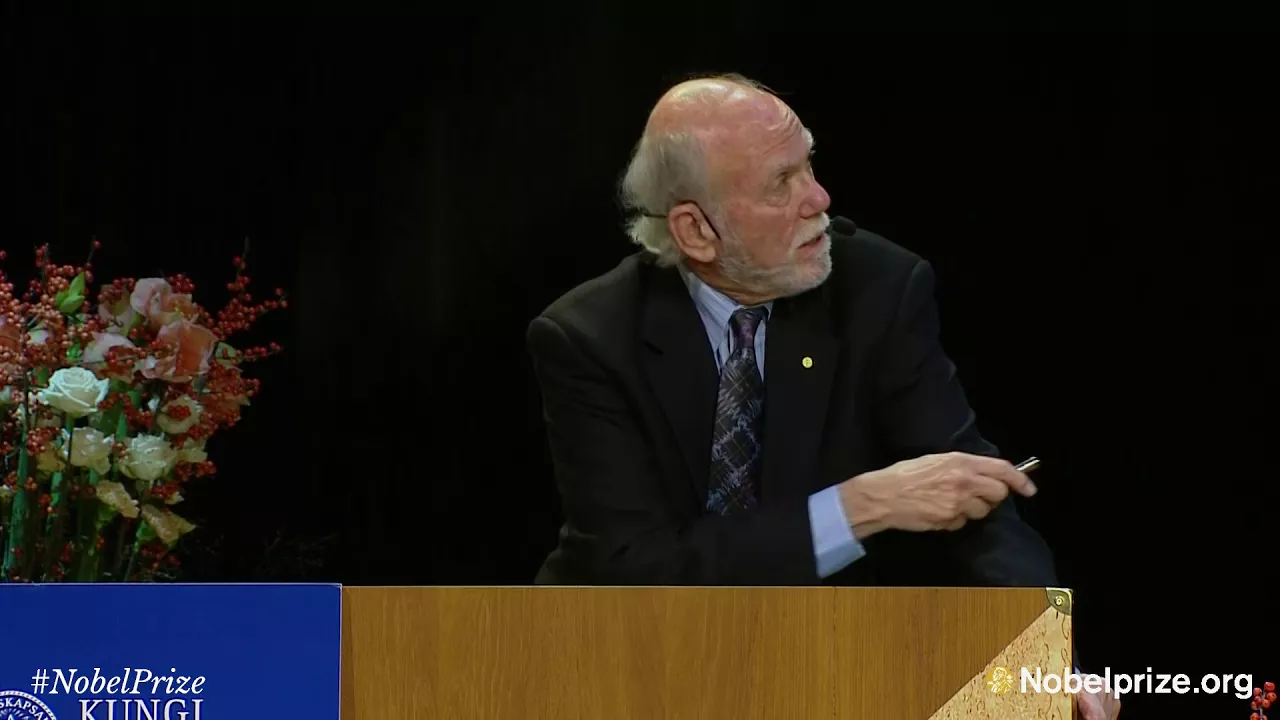
Barry Barish Nobel Lecture: Detecting Gravitational Waves with LIGO (2017)
@NobelPrize
16.8K views•2017-12-08

21cm Hyperfine Transition in Neutral Hydrogen: Radio Astronomy Basics
@AaronRobertParsons
12.4K views•2011-10-13

NMR Spin Physics I: Zeeman Effect, Resonance Condition & Larmor Frequency
@nptel-indianinstituteofsci8064
2.3K views•2024-01-17

Entropy and the Second Law of Thermodynamics Explained
@veritasium
27.5M views•2023-07-01
Related Study Plans & Knowledge Roadmaps
Structured learning paths in Physics