


![SACANI RESPONDE [TEMAS VARIADOS #01] - Ciência Sem Fim #311](https://i.ytimg.com/vi/JntgF5qy9wA/maxresdefault.jpg)




![prof. P. Kulhánek: Obecná teorie relativity (Velmi nestandardní přednáška) – 11, [2.5.2024, LS23/24]](https://i.ytimg.com/vi/e9xnLc6UOfQ/maxresdefault.jpg)
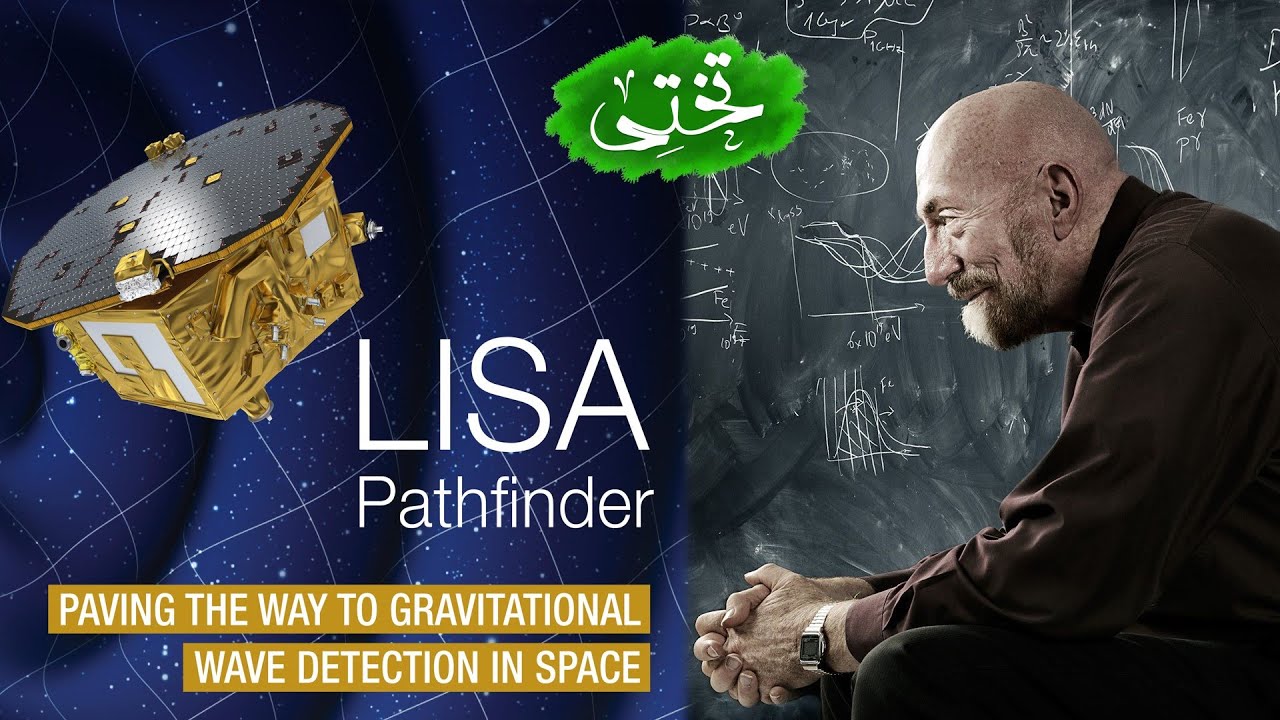



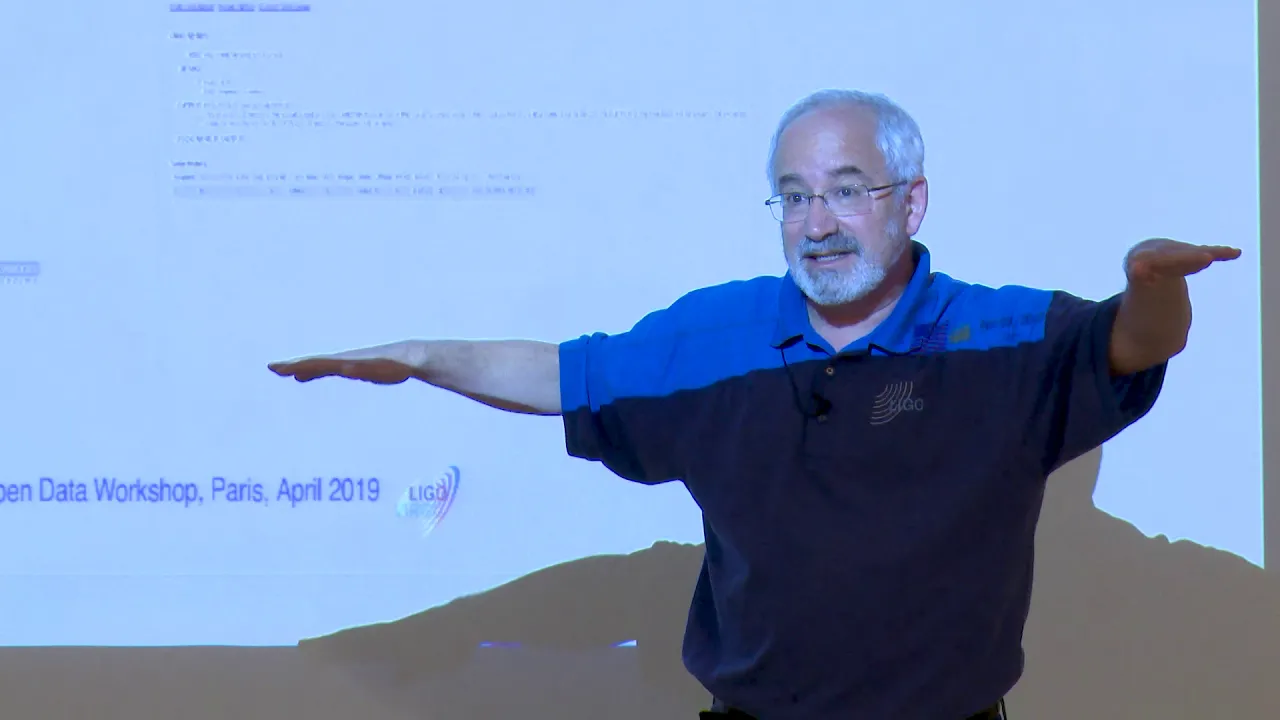


The LIGO collaboration, spanning 21 years and involving over 1,000 scientists from 18 countries, successfully detected gravitational waves for the first time on September 14, 2015, after decades of development and international cooperation. This achievement was made possible through advanced detector technology, including sophisticated seismic isolation systems and improved laser interferometry, which allowed scientists to observe ripples in spacetime caused by colliding black holes. The detection confirmed a key prediction of Einstein's general relativity and opened a new era of multi-messenger astronomy, enabling observations of cosmic events through both gravitational waves and electromagnetic radiation.
Barry Barish Nobel Lecture: Detecting Gravitational Waves with LIGO (2017)
Added:Einstein's General Theory of Relativity, specifically the concept of spacetime curvature and the theoretical prediction of gravitational waves.
The principles of wave optics and interferometry, particularly the design and function of a Michelson Interferometer.
Basic astrophysics regarding compact stellar remnants, such as the characteristics of black holes and neutron stars.
The concept of experimental noise (seismic, thermal, and quantum) and the challenges of high-precision physical measurements.
Multi-messenger astronomy, exploring how gravitational wave detections are combined with electromagnetic observations (such as gamma-ray bursts).
Future gravitational wave observatories, including space-based detectors like LISA (Laser Interferometer Space Antenna) and next-generation ground-based detectors.
Advanced signal processing and data analysis techniques used to extract weak gravitational wave signals from instrumental noise.
Testing General Relativity in the strong-field regime and utilizing gravitational wave data to probe cosmological parameters and the early universe.
16.8K views236likes41:55Original Release: 2017-12-08
so I guess everybody knew before they were here today that this is a very long story and we're now to the beginning of the next part of the long story I'm gonna try hard to stay on time there's 21 years more to go after after the story that you just heard which took a long time so I'm gonna pick up the story in 1994 and in 1994 was when we received for the first time project funding to actually build something which is the LIGO detector with all the responsibility of getting tens of millions of dollars a year for 20 years and defending it during a period where we saw nothing during that whole time so the first thing that people should realize is that the National Science Foundation not only took the risk that ray mentioned in taking on this project doing the R&D and so forth but after it was taken on they had to defend a project with all the risks that it had for 20 years with essentially no results we basically set various limits because we didn't see anything but for no results and so we're probably indebted more to the NSF and one can imagine and taking on such a project we organized it by a collaboration between Caltech and MIT and that shouldn't be lost in the story because we now have a thousand scientists around the world but we have at the center of all this what we call the light LIGO laboratory and the LIGO laboratory is the group that actually has built and made the detector work the responsibility for the detector is Caltech and MIT and we've organized that as a project we have about a hundred and fifty technicians scientists and so forth the scientists in this group do their science in what we call the LIGO science collaboration but the instrument has been built by us the president director is Dave Wright see whose picture is up there and the deputy director is Albert Lazzarini and they're running today while we're doing all this fantastic science and earlier after I was director was Jay marks who led it during the crucial period when we took on advanced LIGO next in about 1997 we realized that the Caltech and MIT collaboration didn't bring all the elements we were going to need to succeed at this project and certainly not all the scientific ones so we created what people have heard about today and that is the LIGO scientific collaboration bringing in talents varying from experts and lasers to experts on and now artificial intelligence in order to take the whole breadth of talents they can be brought to this incredibly difficult problem and pull it together that's grown from what started as tens of people in the collaboration run by Ray who I appointed at that point at the time to run the collaboration to a collaboration now that's very democratic with elected officers and is read run presently by david shoemaker by gabriela gonzalez during the period where we made the first detection before that by Dave Wright see who now is running the laboratory and Peter sawsan who you heard about was after after ray this is a magnificent success of international collaboration of the ability to bring in the talents that we need whether its technical whether its data analysis whether it's theoretical together working together side by side we have 18 countries involved in LIGO more than a hundred institutions and about 1,200 collaborators of which a thousand were with us long enough that they were credited with authorship on our discovery paper the interferometers themselves are organized with some critical people that have run it from the beginning we've had somebody who's at these sites that are distant and not close to a city and run by two people originally fred rob and mark coles who later went to the National Science Foundation and presently by Mike Landry who newly took over Hanford the Hanford Observatory and Joe Giambi in Livingston so if you visit either of those laboratories that's who you see and their remote one in distant Louisiana far from any city and the other on a do a reservation in Eastern Washington just to see just to show you what things look like in the real hardware this is a picture of LIGO if you walked into the big hall where this is the vertex that Ray showed where the light then goes out in two directions this big thing here are called gate valves they allow us to preserve the fantastic vacuum that Ray talked about that we need to while we work and evolve the instrument these instruments that you look at here aren't quite as simple as what ray showed and part of that is building in enough flexibility all these ports and all the ways of getting in so that from the beginning we understood that if we're ever gonna detect gravitational waves what we built at the beginning wasn't going to probably make it so we had to be able to evolve the instrument and in ways that we weren't sure how to do it so we as much as possible we asked the NSF for more funding at the beginning and made as flexible an instrument as we possibly could we build it by the end of maybe 1999 we had it built and then we started making it work and this picture kind of illustrates how we approach the next 15 years we basically this is the same curve that was shown by Ray where it's limited on the left side by the shaking of the earth on this side by the amount of light and in between by the noise on these test masses that we talked about and better sensitivity is the bottom of the plot it's the same scale that Ray showed and this is the frequency band that's available to us to look for gravitational waves it's a the audio ban where the earth is the quietest each each curve here is basically subsequently a different time so our strategy basically was to turn this on it was that whatever sensitivity it was this isn't very sensitive look our wounds look at what we did wrong what was limiting it take time off run it again and it evolved to a better curve a better curve a better curve this is about the first five years of the detector we kept doing this for ten years at each at each time we would search for gravitational waves each time we wouldn't find gravitational waves each time we would have a better limit because this was better on how well we knew they didn't appear and so we wrote a series of papers but they basically were null papers during that period along the way we got to the point where we were as good as we had proposed except maybe a little bit at the low frequencies and this that's this curve here so this is the initial detector that we were funded for by the National Science Foundation on the same kind of graph as good as we could we knew very early as Ray had indicated that we wanted to do this in two stages that we can incrementally improve things but only so far without making some major changes so we had done the detailed Rd necessary to develop the techniques and the apparatus itself the detailed designs that would go into a second generation detector and that was what we called advanced LIGO interestingly we called it like o2 but the NSF in their wisdom decided that we were sneaky ly talking about LIGO one two three four so they asked us to change the name and it became advanced LIGO with advanced LIGO we then build it between nineteen twenty ten and twenty thirteen or so and started turning it on we could we basically had learned a lot so we turned it on a lot faster than we had the initial I go getting nearer designed sensitivity by 2015 it started to work well enough so that it was better than what we had built for initial LIGO and that is shown here the key people by the way for advanced LIGO some of the key people I show over here Dennis Coyne who was shown earlier has stayed with us as our chief engineer and was the engineer responsible for the fantastic engineering that goes into advanced LIGO David shoemaker who's running the collaboration now was basically the the main scientist responsible for advanced LIGO and Peter official for the incredible optics that we use and the way the interferometer works itself and two people one in each laboratory who have been the most responsible for the making this thing actually work in the field and so we started to make it work and the two detectors are in the two different colors here and what they indicate is that despite the fact that they're physically in very different locations so basically in design and as long as we do the same thing at the same time they were essentially identically to each other at this point this had improved about a factor of three beyond where we were in in initial LIGO our goal was to improve things a factor of 10 this is improving the sensitivity a factor of 3 and what to realize is that the sensitivity tells you how far out you look in the universe so if we increase the sensitivity a factor of 3 we actually improve how much of the universe we're looking at by the cube of that because that's the volume that's scanned so an improvement of a factor of 3 basically gave us the ability to do what we had done in initial LIGO or more in one year what we could have done in 27 years with initial I go so we decided not to go all the way to here but have a similar strategy to what we had an initial LIGO and use this as the first search because we had improved the concept for how we treat low frequencies which was described by Ray the improvement as say 40 Hertz was actually a factor of a hundred shown here a factor of a hundred is cubed in terms of the sensitivity we get so we were really a million times better than we were an initial I go and that answers a question that's often asked to us how could we turn this thing on and after a few days which is what happened make a discovery when we had run it for ten years before that are almost ten years and it's really this factor of a million so we turned on advanced LIGO and made that improvement again this is just a picture to emphasize that the big improvement that made this detection may be the take-home message if you want to tell anybody why and how we made the detection was the improvement in this nice quadruple and fancy suspension system developed at Glasgow and the suspected the isolation from the earth by seismic isolation from the earth by a set of essentially shock absorbers and these active seismic feedback systems that Ray mentioned that by the way have two reason their how so hard it has to be done directionally differently than the earphones and the airplane we have to know where the earth is shakiness what direction and correct for it and that makes the system quite a bit more difficult we turned on and a few days later this is what we found so this was September 14 2015 21 years after we received project funding in 1994 not what my fantasies were most of us for what we first see I would have expected if I thought about what we would see that we start to see hints of gravitational waves where our detector wasn't quite sensitive enough yet to make it definitively and then we keep working in the future and making it more sensitive we were lucky instead we of course made big improvements but we immediately saw a signal that stood out and looked very much like you draw to show somebody what we were doing this is two different traces one of them at the laboratory in eastern Washington Hanford Laboratory and one in Louisiana and they should look essentially alike you'll notice the left-hand side is strain the word that ray used and the scale is the scale he also showed 10 to the minus 21 so the scale that we were detecting and got to the sensitivity to detect and also the scale that had more or less been predicted by the range of sources that we talked about was ten to the minus twenty-one and that turned out to be after all these years right and these are the two traces if I take the two traces and plot them on top of each other and slide one slightly from the other one by seven 6.9 milliseconds then they sat essentially right on top of each other as you can see here and the difference between the time between the two I'll point out in a minute gives us information that's crucial especially for the future so those are the two detection by the way we made a decision in 1994 finally we had to make the decision in 1994 how to orient these two detectors relative to each other they can't be exactly the same because the earth curves by 16 degrees between Livingston Louisiana and Hanford Washington but there was a rather large debate whether we take the two l-shaped detectors and make them parallel to each other or rotate them by 45 degrees the reason you would rotate them by 45 degrees is it gives you the ability to extract more physics that is there's a polarization in these electromagnetic in these gravitational waves just like for electromagnetic waves so the argument to rotate them is exactly that the argument to put them in parallel is what I showed you here that we could put one on top of the other we did it one on top of the other in conservatism and of course it's what made one event so convincing that we could put one on top of the other but we couldn't tell the polarization information that has come and I'll talk in a minute by adding a third detector that is oriented separately from us that's the Virgo detector and that start has started to give us information on the polarization we detected this event in September of 2015 did we immediately know it was gravitational waves not really most of us are some of us at least had deep worries how we might be mistaken how we might be fooling ourselves or how we might be being fooled those two questions basically in translation were that we turned on a new apparatus and in turning on a new effort attaced maybe it could generate some sort of shaky signals but they weren't real and in order to test that you have to run it for some period of time we calculated how long that had to be and it was basically a month in a month's time we could look at all the bins of time in the to correlate them together and see what the probability is that you could get any sort of signal like this in the detector and that's calculated to be a magic number in physics when you believe something which we call five Sigma or the probabilities less than one in some hundreds of thousands of years so basically that was the first thing the second problem was maybe somehow we were being fooled by some mischievous people our person who has superposed this on the data and we just looked at the data and it really wasn't there that again had be studied in great detail by his following the idea was the following the data comes together at Caltech and from that time on goes around the world in fact this first event was seen first in Germany it was the middle of the night in the States and the data comes together once it's together you could imagine somebody superposing an event on top of the data to resolve that we have to take it back to the laboratories where we had traced the signals and what they recorded along the way and that required another study which took about a month so by a middle of October I think we had really confidence that we had made this discovery we spent maybe another month seeing how well it fits general relativity I spent in another month writing it up in great detail writing it up in a way that we thought could be read by the world and not just by experts in the field arguing about whether it should be called an observation or a discovery and things like that with a thousand people weighing in and you can imagine can somehow making that converge was a problem we finally were ready to submit this to Physical Review Letters our choice of where to publish this by early December of 2015 we were about a week late because we were arguing too long on which adjectives to use in the paper and at that point Physical Review Letters who had agreed that they would allow us to make the article longer than the standard article and that they would review it especially both very secretly and quickly informed us that we were now too close to Christmas and they couldn't do it so we held the article until January and interestingly our second event which I show now came on December 26th so when we announced this event on February of 20 2016 we knew but we didn't yet bring that to the public that we also had a second event so as convincing as the first of that was we all have a second event it looks very different you can see this has many many oscillations it's smaller but we detect it as well because there's so many oscillations that's a reflection of the fact that they are lighter the two black holes that are colliding it's also black hole collisions this graph here just illustrates it's the so-called chirp graph this is basically time going this way frequency going this way it gets louder as the frequency goes up and just get this so-called chirp that we describe as a signal the second one which is weaker but in there longer so we are able to pull out the signal is down here but if we look at basically the low frequencies that weren't available to us until we made the big improvement in the suspension and the isolation system both of these signals were enabled by making those improvements at low frequencies of course we've kept running we finished that first data run with these two events in January of 2016 and at that point we changed things fixed things in the same spirit that I presented our activities through the period of initial like oh and we started a second day to run which may be for most of us we expect it couldn't possibly be as exciting as what we saw in the first day to run that turned out to be wrong as I'll show you in the second data run I show here that we haven't analyzed all the data yet we haven't made all our reports yet but this is where we are today we basically have reported five observations of probably black holes one of them we don't call a black hole just because it's further away and doesn't give us quite the five Sigma's significance as a single event but otherwise it appears to be like the others so we have a set of events which start to let us look at distributions of the alignments of spin the masses of them and the difference in how long they are is the difference in how much their masses are and so forth so the fifth one here actually has a different significance that's this one here the dates are the 17th the 8th month the 14th day in 2017 so just this last August so this last August we detect an event that at the same time was detected for the first time also in the Virgo detector in Italy the Virgo detector is very much like LIGO I don't have time to show some interesting differences in how they approach the problem but it basically has similar sensitivity once it's a fully operational will have similar sensitivity this was begun by two scientists in parallel with the efforts that were described by Ray Elaine brulee and Alberto Giotto and in the present day run a little bit like us having a laboratory where the director is farini Frederico Farini and the spokesman who I hope I think is here today is yo van der brand from Holland and it's very near Pisa in Italy it's not just this confidence which of course matters that somebody independent sees the same thing that's great and at this point we don't really need that we're pretty convinced that we're seeing gravitational waves but and we were in competition for twenty years I think to see who could see gravitational waves first but it gives us new information and that's shown here with just the first detectors we were able to locate even on the first event that it came from the southern hemisphere and we knew to some number six or seven hundred square degrees where it came from and the various events are shown here in how well we could tell where they came from before we turned on the Virgo detector the veer goatish texture once it's on because it gives us triangulation and we're with the signal they see compared to ours where we take the time difference in the arrival time at the different detectors and the difference in the signal because the antenna patterns are somewhat different gave us this signal down here and you can see that we now can locate with the addition of ear go the location on the sky where a gravitational event came very accurately this is something we've always wanted to do and luckily for us this happened just in time and I'll show you that in a minute first let me reflect on what we found so far seeing five events we've seen where this is mass and this is just the time passing the number of events these are each skim bollocky ly two black holes coming together making a heavier black hole they're all up here on the plot where this is mass what was expected was black holes that would be down here so we immediately something we've always thought using gravitational waves would see different phenomenon that are seen in electromagnetic radiation and what we saw was large black holes they're not expected just qualitatively the reason is the progenitor or the heavier object that makes these black holes is supposed to be a heavy star that decays and makes a black that dies and collapses and makes a heavy makes a black hole there aren't we believe very heavy heavy enough stars to make these very easily there has to be either a special place in the universe where it's low enough metallicity or doesn't have heavy elements around him so it can live longer or dense clusters or primary primordial production that made these black holes and that's our next problem like all these problems in physics is where do these black holes come from there are handles on it we hope to get more information on the spins on the orientations on the distributions and to be able to resolve that the second thing that has come out of the very first events is test of general relativity this is a graph where we just put in a form that would be qualitatively are different from general relativity just to test it not a particularly one limit of that is to look at the physical place where you would have connected to the transmission of gravitational waves what we call a graviton very much like for electromagnetic waves we have a photon or for particle physics there's all the particles we a graviton if it existed does not exist in Einstein's theory could have a mass and what we're able to do is if it had a mass it changes the detailed shape of that trace that we looked at and we're able to say already just a based on these very first observations that if there is such a mass it's less than 7 10 to the minus 23 electron volts over C squared so those are tests the next was a rather fortunate coincidence we got there go into our into our system working together two weeks before this happened in later in August by the way we were scheduled to turn off at the end of August so this happened fortunately just before we turned off well for the first time we saw a second kind of event the merger of a binary neutron star system instead of a binary neutron star system instead of a blackhole system what is a neutron star again ray mentioned neutron stars it comes from the collapse of a star also we believe but it's a dense it's dense nuclear matter instead of a black hole if it's dense nuclear matter if we have two objects going around each other it has all kinds of nuclear effects in addition to just the general relativistic merger and this is nuclear physics and extreme conditions and we can then see all kinds of effects including the fact that the nuclear effects can give and emit light in various ways we basically could tell from what we saw that these were much lighter like neutron stars are supposed to be than the black hole events they were a distance much closer than that 50 mega parsecs instead of 20 times that that we saw for the black holes and fortunately for us the signal was also seen two seconds later in an astronomical instrument that was the Fermi satellite that monitors gamma-ray bursts this is a picture of our signal and put on their trace and where they saw a signal over here is the same pictures of the location on the sky our location on the sky is these long pictures here if it was just like oh but when we add Virgo it's this little ellipse here and this is the position as determined by the Fermi satellite one thing that makes me feel great is that we're the ones that actually have the better location even though we're beginners at this game so and that's very important for the future so this picture is what we think is the indication of what the future is going to pretend this particular event then having the confidence that it was seeing both in an electromagnetic instrument the Fermi telescope and us could be studied for hours days and weeks after that and has been looking at gravitational waves of course looking for it with neutrinos looking with a visible and infrared light radio waves gamma rays and x-rays and so forth using this a whole set of collaborations and conclusions have been made from this one observation already which by the way we announced only a little over a month ago out two weeks after the Nobel announcement we announced the merger of two neutron stars so even after whatever we got this price for we're still producing very interesting new things I'll just give you a glimpse I'm out of time and a few of the different kinds of phenomenon that are cut and interpretation that came out of this single first coincidence event with electromagnetic instruments kind of to whet your tongue and what's going to happen in the future the first is an independent pretty independent measurement of what's called the Hubble constant this is basically the rate at which the universe is expanding it's done by in this case optically identifying what galaxy it was in and then otherwise from the information we have in the gravitational wave signal and the answer this so-called Hubble constant is independent of and consistent with the answers that came in electromagnetic interactions the second which I won't go through an inny detail is that there's been a lot of phenomenology of what happens when objects like these neutron stars come together we all know what a supernova is the collapse of a star when it gets old and dies the this is tabbed a Killa Nova the consequence of this coming together and that's been studied now in all these different instruments and put together and compared with some of the phenomenology that's been developed for a killer nova and at least the general idea confirmed one consequence which is interesting is the possibility that we have actually figured out our scene what makes heavy elements in the sky in the heavy elements of puzzle has always been how on earth do we have very heavy elements where did they come from you can go on a mine and find gold ore Platinum or other heavy elements where do they come from we know most of the universe is made out of hydrogen and helium we know how to make everything up to iron very easily it's made in the same fusion process that makes the Sun the Sun burns but making heavier elements in nature we don't really know we do know how to make them in the lab we make them all the time and the periodic table has gone up quite high we basically take a heavy element and bombard it with neutrons it sounds familiar in neutron stars so the neutrons are the way we do it in the laboratory so the idea is very tempting that may be in nature it's collisions like we just observed that is neutron star collisions that made heavy elements this graph here is one phenomenological interpretation of that and the yellow parts which you'll notice are mostly yellow for gold and platinum which you might have on your hand are come from merger of neutron stars at least in this analysis and so maybe all the gold and platinum that we sell on the earth we finally discovered comes from collisions like we've just announced a rather interesting conclusion lastly I just want to end with the future for a minute or two we have now three detectors working well soon have two more we have one we're building in India a LIGO with the collaboration of the Indian physicists and Indian government that'll be ready in the 2025 era there's one in Japan that has some advanced techniques which I'll mention which which should be working within the next few years giving us better localization this is an incremental plot of how well we think we'll be able to locate the position on the sky as we move into the 2020s and you can see that with the addition of the other detectors independent of where something comes from we should be able to tell very well where it is and combine then with electromagnetic information we have ideas and also plans for the future and I want to end on that first as I showed you we're still about a factor of away from the design of advanced LIGO that we will do over the next few years again in a matter of steps and that gives us almost a factor of 10 2 cubed in the rate or the significance of individual events we have concepts for getting beyond that we we know that we should at least think and do the Rd and possibly ask to be funded for a concept that would exploit our sites where we have LIGO to there exfoli 610 and so we've basically done conceptual designs of that we can improve by making a much heavier test mass by using a different material in the mirrors we're presently looking at silicon by lowering the temperature modestly by improving a limitation we have that is the coatings the optical coatings on the mirrors that Ray showed and by making yet a more powerful laser if we do that we can get down to the black curve that's shown in this plot here and that will enable us to have more cosmological reach which which will be talked about by Kip some of the ideas of what we might be able to do improve signal the noise which will what we've learned is that we need to have events where we have such good signal-to-noise that we can determine things like the orientation of the spins of the black holes and so forth and an event rate that's maybe 10 times advanced LIGO if we in it put in all these this will require Rd and we haven't yet the funding and haven't firmly proposed to do it the next steps are to you to do other reactions that we can do on the Earth's surface but also and this is some of those as possible and Kip will talk about those but it's already basically in this community ideas that are fairly well developed for how you would move to the next generation detector it's completely possible we don't see any great technical hurdles in extrapolating this up to a detector that's a factor of 10 are so better than present detectors what's the right detector is what we have to work on and to do that we have to set our priorities in science we can't do everything there's two main concepts right now on the table one is to go underground make the detector cryogenic so it's cooler this very much helps the lower frequencies we're going underground there's a shaking of the earth cooling the detectors you have less thermal noise this is a concept that's been developed in Europe and it's called the Einstein telescope and they've been working on it for about five to five or so years and it's pretty firmly design maybe not costed but at least the concept is really designed in the US we've been looking at another approach which is to make basically a LIGO like detector but much bigger that is to make a detector this forty kilometers instead of 4 kilometers you'll remember from Ray's talk that lengths basically you gain linearly so if we can make it 40 detectors and do everything else as well we're ten times better basically and this would be then on the Earth's surface which is cheaper but we have to worry about the fact that there's Earth's curvature in that length it's has arms that are 40 kilometers and basically would have to have the instrumentation that we use in initial like oh the Viscardi is just starting it's being led by Matt Evans who's probably somewhere up here I can't see him in developing a group that actually will develop this concept over the next few years we hope to develop both the science priority so that we know what has to be done what we want to do and to begin to do the serious R&D that would go into such detectors overall and this is just a precursor of race of Kip's talk the science as we move to the future is going to be very much like what has happened in astronomy there's astronomy started by Galileo looking through a telescope at visible light we know now we do astronomy by looking at visible light x-rays infrared so forth and so on the same thing is true here that we can look at light we can look at gravitational waves in a particular frequency band on the Earth's surface it's what's available to us where it's quietest and that's the audio band if we want to look at other frequencies we have to use different methods the most close to being done because it's approved and funded is to do an experiment and fit in space it's called Lisa it'll move into the frequency band of 10 to the minus 1 to 10 to the minus 4 Hertz instead of 10 to a thousand 10,000 Hertz like ourselves and that covers a different frequency band and what's shown above and I'll leave that to Kip to talk about is both some of the same phenomenon looked at him at an earlier time in their evolution and other phenomenon that never reached the frequencies that we get on the earth you can look at yet lower frequencies one concept that's being developed now that I don't have time to talk about is to use a timing from radio pulsars and that's being looked at looking for signals at very lower frequencies by monitoring the time coming and we're looking for changes from a set of radio pulsars and lastly there are ways to get the effect of gravitational waves from the early universe which is the most interesting of all in most of our minds when and if it can be done and I'll leave it arrayed to talk about those thank you [Applause] [Music]
Up Next

126:09
2017 Nobel Lectures in Physics: Gravitational Waves | LIGO Discoveries
@NobelPrize
22.3K views•2017-12-08

12:53
21cm Hyperfine Transition in Neutral Hydrogen: Radio Astronomy Basics
@AaronRobertParsons
12.4K views•2011-10-13

32:32
NMR Spin Physics I: Zeeman Effect, Resonance Condition & Larmor Frequency
@nptel-indianinstituteofsci8064
2.3K views•2024-01-17

27:14
Entropy and the Second Law of Thermodynamics Explained
@veritasium
27.5M views•2023-07-01
Related Study Plans & Knowledge Roadmaps
Structured learning paths in Physics
physics
Nuclear Physics (Decay, Fission & Reactors)
01Atomic Structure and the Binding Force
02Radioactive Decay and Half-Life
03Nuclear Fission Mechanics and Chain Reactions
+ 2 more learning modules
12h5 modules
Explore Roadmap
physics
Soft Matter (Polymers, Colloids & Rheology)
01Foundations of Soft Matter & Thermal Forces
02Polymer Physics and Macromolecules
03Colloids, Surfactants, and Self-Assembly
+ 2 more learning modules
38h5 modules
Explore Roadmap
physics
Analytical Mechanics: Lagrangian & Hamiltonian
01Mathematical Foundations: Calculus of Variations
02From Newtonian Mechanics to Constraint Dynamics
03The Principle of Least Action & Lagrangian Mechanics
+ 3 more learning modules
28h6 modules
Explore Roadmap
physics
General Relativity (Spacetime & Cosmology)
01Foundations of Relativity: Special Relativity
02The Geometry of Spacetime: Equivalence Principle & Curvature
03Einstein's Field Equations: The Mathematics of Gravity
+ 2 more learning modules
55h5 modules
Explore Roadmap