







![prof. P. Kulhánek: Obecná teorie relativity (Velmi nestandardní přednáška) – 11, [2.5.2024, LS23/24]](https://i.ytimg.com/vi/e9xnLc6UOfQ/maxresdefault.jpg)
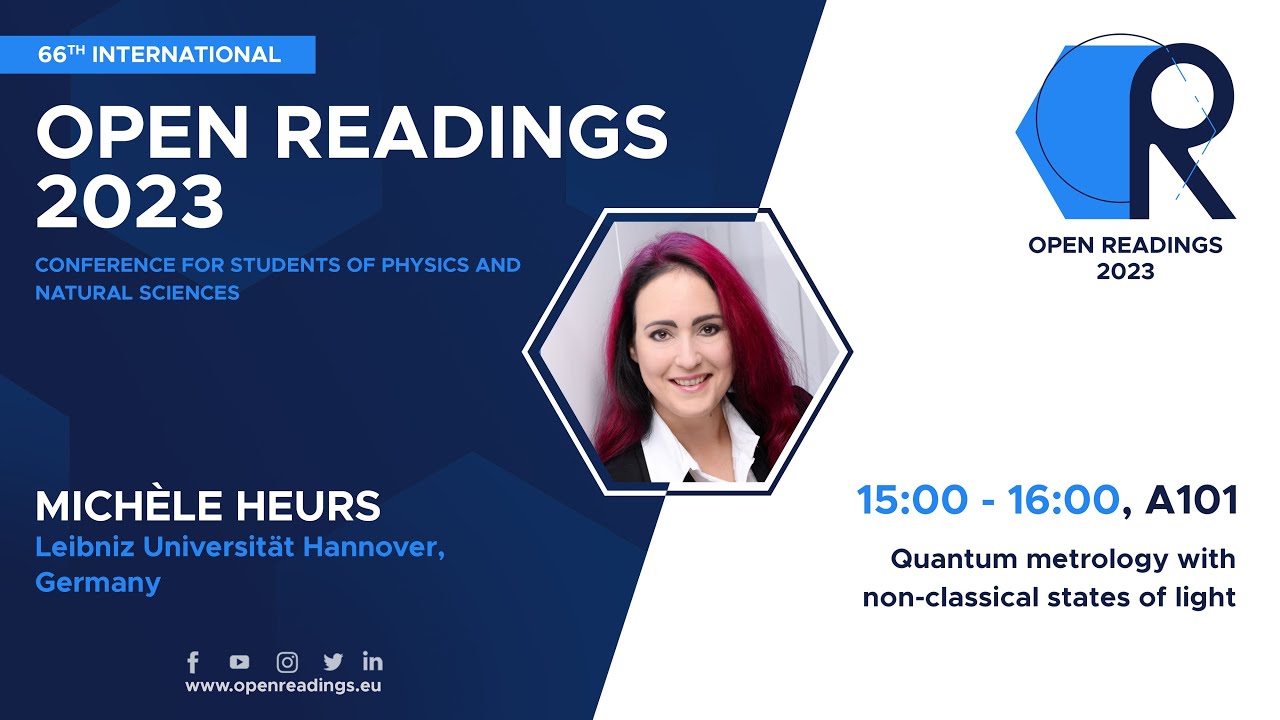


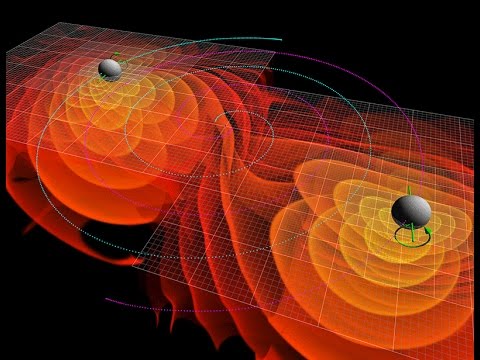


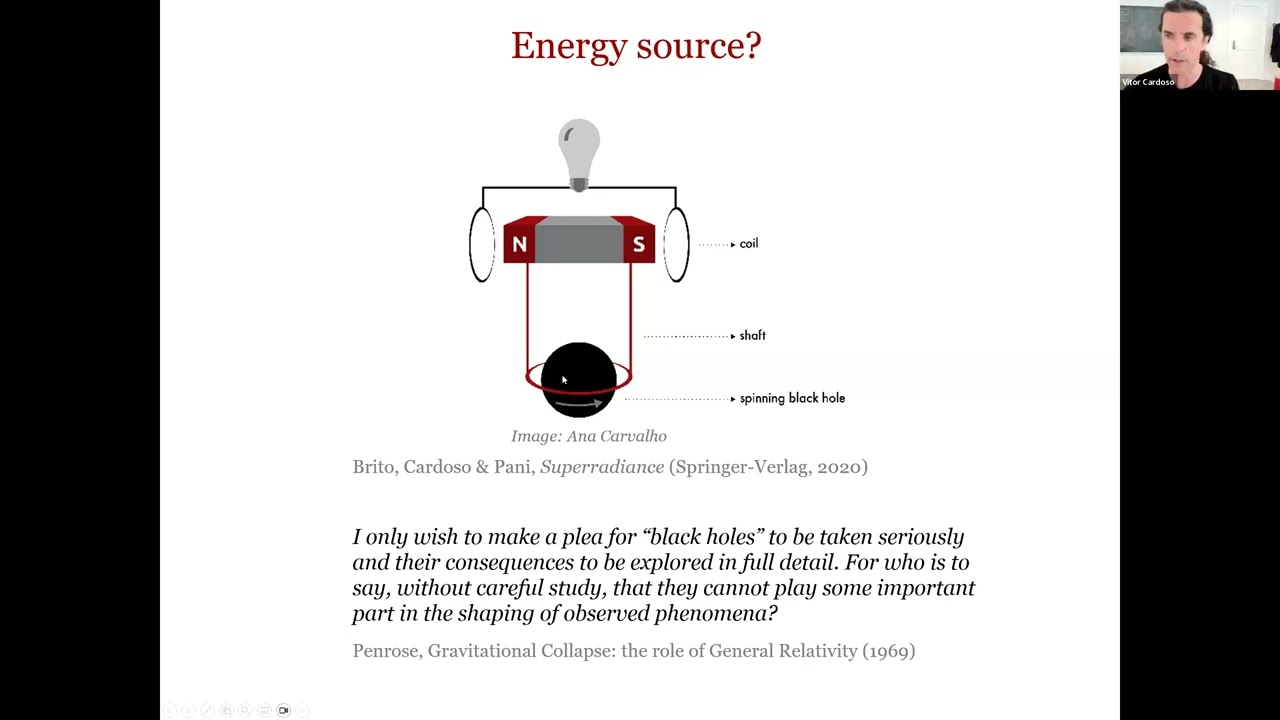



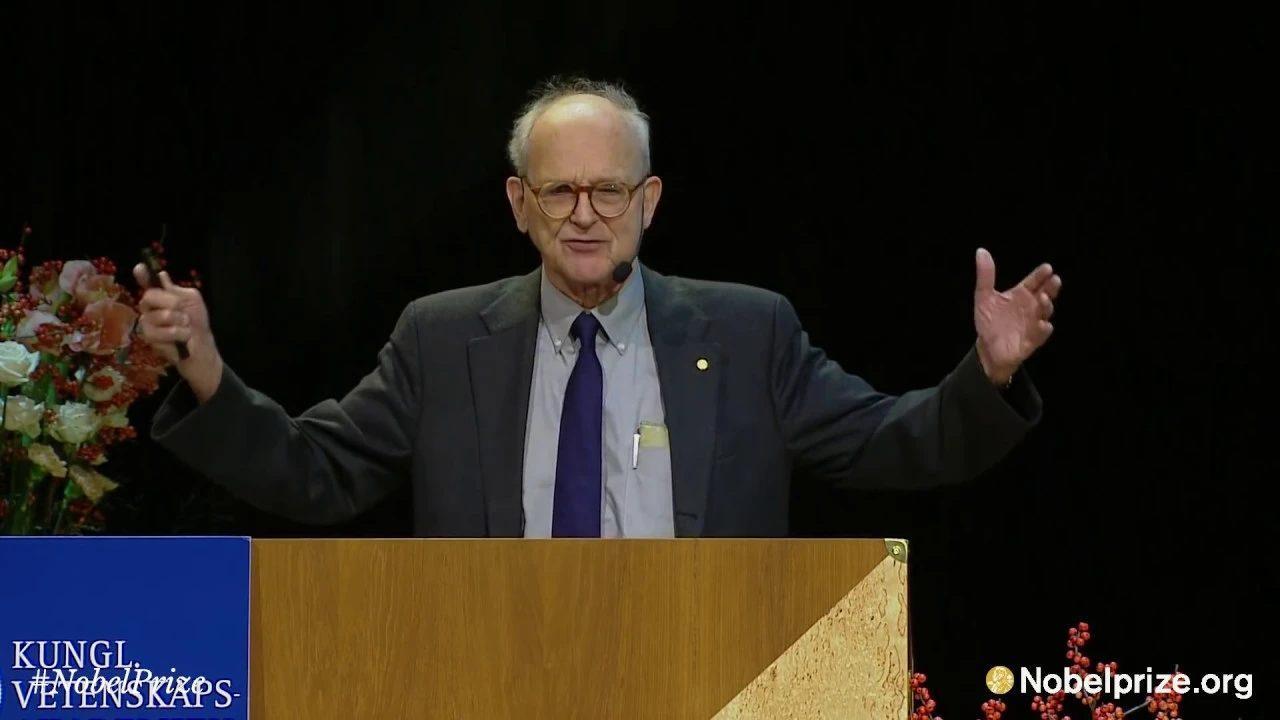
The 2017 Nobel Prize in Physics was awarded to Rainer Weiss, Barry C. Barish, and Kip S. Thorne for developing the LIGO detector, which successfully detected gravitational waves for the first time on September 14, 2015, confirming Einstein's century-old prediction that massive accelerating objects produce ripples in spacetime; this achievement required overcoming enormous technical challenges including detecting strains as small as 10^-21, developing sophisticated interferometric techniques with power recycling and advanced suspension systems, and coordinating an international collaboration spanning decades to achieve the sensitivity needed to observe cosmic events like black hole mergers.
2017 Nobel Lectures in Physics: Gravitational Waves | LIGO Discoveries
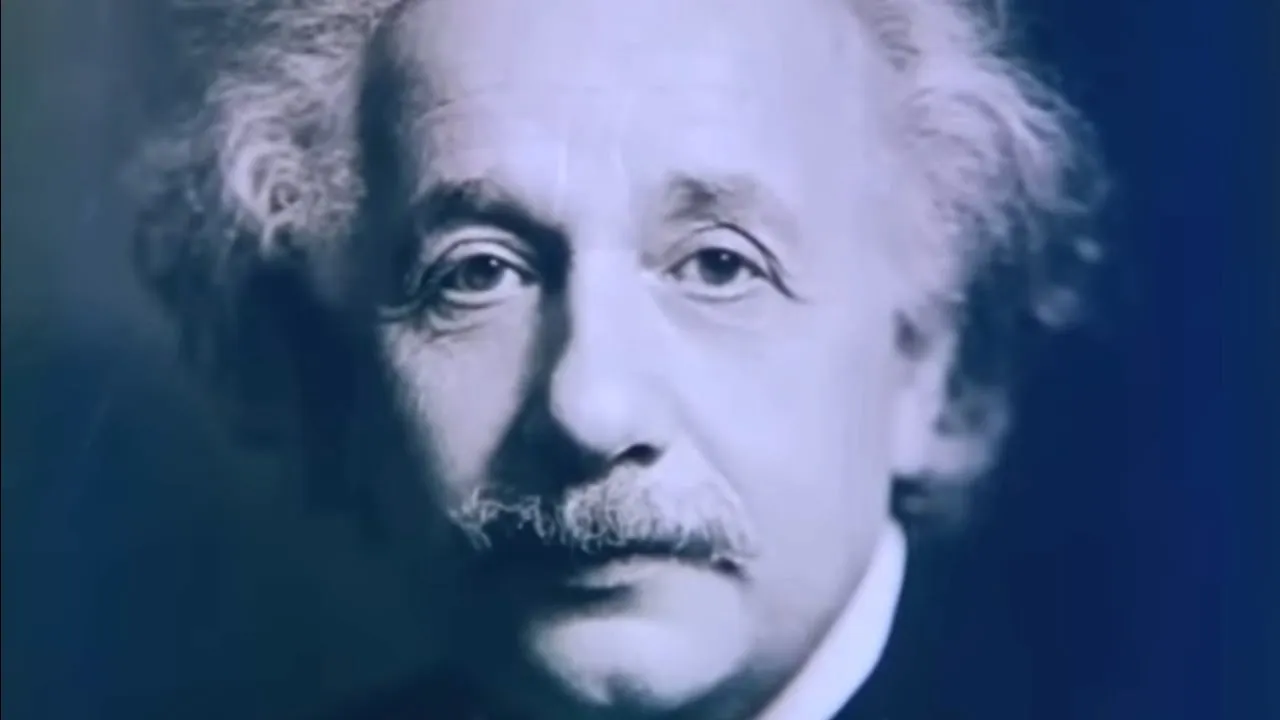
Added:Albert Einstein's Theory of General Relativity, specifically how mass curves spacetime and how accelerating masses generate ripples known as gravitational waves.
The fundamental principles of Michelson Interferometry, including wave interference, phase shifts, and how lasers are used to measure infinitesimal changes in distance.
The astrophysics of compact objects, particularly the formation, characteristics, and dynamics of binary black holes and neutron star systems.
An understanding of experimental noise sources in precision physics, such as seismic activity, thermal noise, and quantum fluctuations that detectors must filter out.
Multi-messenger astronomy, exploring how combining gravitational wave data with traditional electromagnetic observations (optical, X-ray, radio) provides a complete picture of cosmic events.
The design and objectives of next-generation detectors, such as the space-based LISA (Laser Interferometer Space Antenna) and advanced ground-based projects like the Einstein Telescope.
Testing General Relativity in the strong-field regime, using observed gravitational wave signatures to search for potential deviations from Einstein's equations.
The study of primordial gravitational waves and the stochastic gravitational wave background to probe the inflationary epoch of the very early universe.
22.3K views322likes2:06:09Original Release: 2017-12-08
Nobel laureates in physics chemistry laureate in economics sciences your excellencies members of the Academy ladies and gentlemen so nice to see so many of you here today everyone is born curious this is what makes you most interesting the more we understand the more we want to understand but some of us keep a desire to see and understand which goes beyond most of us and use the a curiosity in an ingenious way to explore and discover all the magic things that our world is full of Albert Einstein said I have no special talents I'm only passionately curious I don't believe that to achieve what he did but this year's laureates dead curiosity is certainly needed but not sufficient talent is also needed curiosity means asking questions and try be prepared to receive any answer not just the one that was expected what characterizes the creative mind is the ability to identify the questions that lead to new discoveries and to come up with ways to find the answers this is how we expand our knowledge about ourselves and about the world we live in how we improve the conditions for our lives man has made and used tools versus premier tostone fire from the gods and showed us how to use it in order to manage everyday life as well as to enable new discoveries the way humans make and use tools his perhaps four sets or species apart more than anything else renewable questions by asked available tools may not be sufficient to find the accurate answers but do tools or ever increasing complexity may be needed this requires not only scientific excellence but also technological skills new tools and new methodologies have taught us about the secrets of life allowed us to look into the world of the tiny constituents of this cell responsible for life the highly symmetrical and beautiful audience with ability to attack all forms of life they have told us about the history of the universe from the universe closer and closer to the origin of everything as expressed in printed form by Harley white LIGO Santander have finally disclosed those gravitational waves iced and proposed that travel along with the swiftness of life it can't be obstructed in their spatial flight miles of steel tubing in L shape position or vacant chambers used in the mission foregoing expansions and fluctuations with an outcome exceeding expectations these are certainly great achievements which have largely contributed to our understanding of how life works and how the world came about but to understand the behavior of human beings is at least as complicated there are no natural laws to lean against since humans are equipped with limited rationality social preferences and thank was self-control we pray and lead us not into temptation but deliver us from the evil but are trapped by the seven deadly sins by greed and gluttony and by desire to acquire and possess more than one needs to constantly make questionable decisions and not change the behavior Alfred Nobel he recognized the importance of science and those who uncovered what has been hidden who explained our mere existence who improve the quality of our lives who open doors for future finding this week is the big celebration of science and today you are all welcome to listen to the laureates who have Biden or understanding of the world we live in and of ourselves I will now ask professor Neves more to share on the Nobel Committee of physics to present the Nobel Prize in Physics [Applause] okay most welcome my name is needs Mortensen from Uppsala University and I'm the chairman of the Nobel Committee for physics and it's my great pleasure and it's a great honor to introduce this year's Nobel laureates in physics so more than a billion years ago two black holes merged far far away and they created gravitational waves ripples in space-time which travel at the speed of light through universe on the 14th of September 2015 these waves post earth and they were then captured by the like or detected detectors producing the signal you can see here and in a fraction of a second it was all over this is an incredibly weak signal and I'm still amazed that it was possible to detect this at all and gravitational waves were predicted by Einstein hundred years ago but it is only now they have been detected and with this remarkable achievement we now witness the dawn of a new field gravitational wave astronomy this clowns efforts by a large and international team of scientists and engineers within the LIGO and Virgo collaborations and which has been going on for several decades at the same time you can identify individuals without whom this would not have happened and today's normal laureates also represent in an excellent way the diverse competence is needed for the success of LIGO so today's laureates are Reiner wise the like burger collaboration and the Massachusetts Institute of Technology Barry C bearish like very good collaboration and California Institute of Technology in Pasadena California and Kip has so on like a Virgo collaboration telephone Institute of Technology Pasadena and they get this board with a citation for decisive contributions to the LIGO detector and that will detect in the observation of gravitational waves and with that I call the first speaker to give us a Nobel lecture and that is Professor Rainer Weiss [Applause] [Music] well this is a pleasure to be here but before I start I want to acknowledge that the three of us wouldn't be here at all if it weren't for people who were in the LIGO laboratory in the LIGO scientific collaboration and in the Virgo collaboration and the Virgo experiment and since some of you are here I'm going to insist that you stand up would you please do that [Applause] they are really the reason we're here and now we're the three of us are gonna give a talk which on the surface looks the same you saw the titles like oh and sign and gravitational waves and I'll give you a little preview it's and we won't really be able to hold in this preview exactly I'll talk about the old times I'm the oldest and and very will talk about the present and Kip will talk about the future now it's not gonna go quite that way and we will intermingle the times so don't forgive us but that's the basic structure so let me start by those of you and who don't really know much about gravitational waves and gravity this is mostly a little bit of a pedagogical thing in the beginning as most of you were trained in in high school and possibly in college is you learnt about Newton's theory of gravity which is a theory in which there are forces that between masses and that force gets smaller the bigger the distance between the masses and it is a wonderful theory it does almost all you need in fact it got the space program working there's nothing terribly wrong with that theory but it isn't right okay and Einstein saw this pretty quickly after he developed the special theory of relativity it doesn't have a way in it of dealing with very large masses moving at high velocities that's not in in in an Newton's theory at all and nor does it have a way of communicating information in the gravitational field from one place to the other for example if the Sun disappeared and we know it takes about nine minutes for us to see that it also should take something like nine minutes for us to find out navigational e that it has something has happened to it and that's something that again was not in in the Newton theory and so this picture which is hardly complete but in some way to imagine this new theory that Einstein developed is if you imagine a jungle-gym a big assembly that you played in as kids in New York where I was there were lots of those and you take a cut through it and you have laid out all those bars and you've done one more thing which isn't something you did when you were a kid you laid clocks out on every intersection point all along here you put clocks everywhere and what the Einstein theory says is what this picture is trying to show if you take a cut through it there will be when you're far away from the Sun that's the Sun and when you're far away from the earth when you're far away from those let's say out here space itself looks our Euclidean it looks the same way as a jungle gym did but and the clocks that are running on all those intersection points they all read the same time but as you walk toward the Sun in this plane you'll notice that the distortion in space you don't see the distortion in time because I didn't put your clocks there but the clocks in here are running a little more slowly than the clocks out there and a little bit of that also happens that the earth is a little dimple that the earth does and the way John Wheeler explained Einstein's theory he says matter distorts space and time and then matter moves because of the distortion in space and time and that's the best I can do for you keep will do better okay and in that theory there is also gravitational waves and I want to show you first a gravitational wave the and the gravitational waves move at the speed of light you've heard that already and but there they are as you'll see in a minute and what's this picture will show is there a transfers wave there a wave that the store space perpendicular to the direction in which the wave moves and so let me turn on this little animation but before I do that before you because you'll get sick looking at it there you are right there that's you in that little red square and now I'll turn on the sound and animation so you can see the wave coming by you and you'll see some patterns in this which are important for understanding how we detected these things first of all you'll notice that in let's say the horizontal direction let's say it's expanding but in the in the vertical direction is contracting now any one moment these things will flip but when they there will be opposite motions vertically and horizontally that's one thing so that's a pattern that you you exploit by the way you'll see where how exploit that the other thing about it is that that these are the objects that you threw out into the space as the gravitational wave comes through I should have told you that so you look here with not near you these let's say these little masses they don't move very much but the masses that are far away from you they move a lot and that's a picture of a constant strain along at any one moment the change in distance between objects is proportional to their separation and that change in distance divided by the separation is called the strain and we will talk about that a lot that's the quantity we measure but while we actually measure the distance separations but the quantity you describe as the field corner he in the theory is the strain and so let me tell you a little bit of history now we talked already about the theory being developed about a hundred years ago in 1915 Einstein gave the world the general theory of relativity is which was described somewhat by that first picture but then in 1916 he wrote a paper I'm gonna have to drink something just to bear with me stop forever in that theory yeah later on he had a paper in 1916 where he describes a lot of things that showed that it had a Newtonian limit and he also shows that there are gravitational waves in that 1916 paper and the only reason why I bring this up here is because of a very interesting statement he made at the very end of the paper he's described these things and I'll talk to them about them in a minute but he describes an equation which is up here I want to tell you what that is it says this is the strength of gravity of gravitational waves and this is the source of gravitational waves oscillations and accelerations of matter and he says something extremely interesting I haven't here in German but I'll read it to you in English in any case one can think of a that quantity will have a practically vanishing value this is to the end of that paper since you'll never be able to measure this it's of no consequence to science that's effectively what he was saying and so he makes a mistake in this paper but that has nothing to do with it in 1918 he corrects that but I want to be I'll be presumptive a little bit and we have I've asked the people who will have the Einstein papers to try to find what I'm about to show you and they haven't found this on the back of an envelope or in his notebooks but I'm sure it's there somewhere so let's I'm trying to give you a little feel for why he made that statement and you have to put yourself in the context of 1915 1916 what did people know about and what do they have and the first thing you might have thought about is two trains colliding how much gravitational waves come out of that and so let me give you a I won't use this is not oh it's the only formula but I'll explain it to you okay so here's the strain that's H and this is the quantity that when you want to estimate how much strain you get from some kind of motion is the a very simple estimation formula it has the Newtonian constants in it the mass of the objects and the distance you are away from them and the velocity of light squared that quantity G M divided by RC squared is a very important dimensionless quantity that we all know and love what it is on the earth right here it's about 10 to the minus 10 it's very small you live in an extremely small gravitational field even though you may have to have any operations okay but on the other hand what you'll hear about from Barry and get is the places where this number is closer to 1 it's huge and those are places with no round black holes and other places the beginning of the universe and so forth and the other quantity is V squared over C squared this sort of a measure of how much motion there is and that's velocity to by the velocity of the object divided by the velocity of light squared so that quantity allows you to estimate H so here for example for the two trains coming together and by the way trains in the United States don't go much faster than this nowadays that that does not be much advanced in that maybe in Europe but not here not not in the United States so let's pick 10 to the 5 kilograms but for the mass the velocity about 100 killer kilometers per hour a collision time of a third of a second or so yeah and you have to be far enough away so you're not looking at Newtonian just a new induced you have to go far away enough so that you're looking at the radiation field the field that carries these waves so you have to go out a wavelength about that's 300 kilometres and the H value you get is 10 to the minus 42 and that is truly impossible we can't even do that now and that's why I stopped probably made that statement so he might have went very well looked at something else I mean he knew about stars and he knew about binary stars and these people may not may did not know about the galaxy the galaxy was something I was being discovered at the time and so but suppose he put numbers into that and he takes stars that are going around each other once once a day near the two stars and suppose there are a distance of about 10,000 light-years away they might have guessed at that it might have been 30 I he probably didn't know exact number for the size of the galaxy because he didn't know about it and you get an H value which isn't pretty small it's 10 to minus 23 with a period of half a day every half and every half a day Pappa Perry takes less every half day you go through a thing that looks the same so you get you look for gravitational waves with a period of half a day with a strength of 10 to minus 23 that's what we would do now but in his day he would have said well how much energy is being taken away by gravitational waves I'm not going to describe that formula but if you look at it that's what that gives and you would get something like the following I'll just say what the end result is here you would have gotten that it would take 10 to the 13 years there 10 to the 13 years for those stars in a telescope to look like they were changing their business their separation it's clearly hopeless and so in both ways as an astronomical thing and it's a technical thing I can completely understand behind Stein now it turns out in our epoch finally there was a situation where that experiment that I just described to you or the measurement I just described you was actually done but was done fairly quickly and this is sort of a hundred years later the technology has changed and what we know about astronomy has changed and this all becomes possible and the thing is these are these are Nobel Prize winners these two this is a Russell Hulse who was a graduate student at the time and Joe Taylor and these were they they both were the University of Massachusetts at the time there but they went to Princeton when because this was a major discovery in egg got scooped up by all these wonderful places and what they discovered was a system of they didn't know it but they discovered a pulsar they were looking with a radio telescope they looked and they used the Arecibo telescope in fact the one that got in the trouble in the big hurricane and and they they listened and they heard a thing going like that and it was going in about 17 times a second that's the pulsar and these are neutron stars stars made completely of neutrons and they are but they have the mass of the Sun and they're about the size of Stockholm it's really unbelievably dense thing and what they heard is the pulse is coming from that but they weren't going at a regular rate sometimes I'm going a little faster sometimes they're going a little slower and it turns out when they mapped this they kept looking at it they found that for about four hours and this is a model of it it turns out it turns out to be a pair of neutron stars and they're going around each other and when this pulsar which is sending its pulses to the radio telescope is moving toward the earth which is over here it goes a little faster from the Doppler effect and when it's moving away from the earth it goes a little slower and that's what they saw and they map that and they watched it through many many years this is time over here and they saw in 1973 and they kept watching it and what they noticed is all sorts of all the wonderful tests and general relativity were done by that system but the one that was most telling and most interesting for us today is this one it's the one where they plot the length of time it takes for the orbit to complete every time you go around once it's a period of the orbit and it's being plotted here this is in time epoch of the blocking the system and this is the period of the orbit getting shorter and shorter and shorter these are minus signs over here and dot the dots that are in here are their measurements and the line that goes through them is the prediction from the 1918 paper with a factor of two correction that Einstein made of how that system should lose energy due to gravitational wave so that was the very first indirect measurement but the first measurement of gravitational waves really profound thing and it wasn't over okay so then the next thing that happened and this is again it happened because of technology changes and what happened people began to have the fact that you could think of these very small strains and you now had equipment as the technology change when you could think of making a measurement and the first person who actually thought of that was Joe Weber he's right here he was a professor at the University of Maryland that's him and there he is with his invention the invention was by the way also invention made together with John Wheeler who was Kip's thesis supervisor okay and what it is is a great big bar it's like a monster so that you could see how big it is some things a man maybe bigger and what Joe was hoping will happen is that a gravitational wave will go through this thing stretch it momentarily and leave it and leave it singing much like you hit it with a hammer and there he is attaching little strain gauges to the device so he can hear that it was a electronic equipment that was becoming available and what happened is to his misfortune he saw something and in fact he saw something he made he made several of these and put them in different places in the United States he invented the idea of using coincidence methods to do this and he saw he had a system like this in Chicago in the middle of the United States one in Maryland and none of them eight miles away from his office you know in a golf course in Maryland also and they saw he saw coincident pulses and in 1969 he published the paper which said he had discovered gravitation waves and it turns out that many many other people became interested in doing that in science that's what always happens a stunning result like this can be tested by everybody else and to his misfortune nobody else saw these waves nobody else saw these pulses and now we know why people didn't see the pulses the strength will fall and this is something useful to remember the strength that nuni and he was able to measure with these things a strain of about 10 to the minus 15 six orders of magnitude bigger than what ultimately you needed okay I'm sorry okay I didn't realize that was happening so what happened is people began to think of other methods of doing this and one method of doing it I'll describe here is not with a bar but rather with a thing which you really in the end was more successful in making the real measurements and that is to look at free masses but like that picture of the gravitational wave a mass over here and you put another mass over there a goodly distance away and you take and measure the time it takes you want to measure their separation as changing as the gravitational wave comes by that's the same picture of all those knots that I showed you and so the idea is really simple you take and have a light send that and put a clock on those month put clocks on the masses or we actually let's start that way clock here clock there on those masses send light measured the moment when the light left this mass and find out with another clock over here the time when it hits that mass that's the way of measuring the distance between those two masses and then let the thing unfold and as a gravitational wave comes along it'll change that time because it's changing that distance it's as simple as that now if you here's the idea and this is as a way which a key almost works and you don't you here you have a laser and the beam splitter which is a device that splits the light and that's as in the picture I showed you that would be the red square that I showed you here is a distant mass and that's a mirror and there's another distant mass and remember the gravitational wave is coming down and what it'll do is is a stretch one of these and compress this and it'll flip then this one will stretch and that one will compress and here is the way you make that measurement which is effectively timing light so with us but I'll describe as it goes along where it's red is light and we're thinking of red lasers when they made its picture but what you see is the way these are the actual waves inside the power of the light and where it's red is where there's light if you do it right and make the time here equal to the time of light there you get no light going to the photo detector that's the idea and so if you will show that's for the photo tech now when you move these masses one out the other one in you'll see that there is light when the motion makes it so the path links are no longer equal and that is in fact the basis for the entire experiment because it's no more complicated than that the big problem comes you have to do it extremely well and here is how well kick comes on the scene I met kit in 1975 when he and I met in Washington DC he was thinking at that time he was giving testimony to a committee and he and I spent the night talking about what kind of experiments are interesting to do and he was at that time had already the most successful group I think in the country doing theoretical gravitation and he was hoping to start a group hab Caltech start a group in in in experimental work and what we came on is that Kipp at that meeting he and I talked about that ultimately there's this technique that we were just talking about here would be a good thing for Caltech to work on and but he told us something then already that you couldn't just do it in this haphazard way that was it had to be done and he was one of the first to tell us that if you want to get in the business you had to measure h's or these strains tell two changes in length divided by the length of 10 to the minus 21 I think this is Kip about that time he'll tell us if I'm wrong yeah he's agreeing okay and the big thing is that if you make something and now we're getting on mixing times but that's too bad suppose if you go to something as long as 4 kilometers you then and you do the a little bit of arithmetic that's associated with that you find out that you have to measure distances at the ends that motion of 10 to the minus 18 meters that's something like a thousandth the size of a nucleus of an atom that's very hard and here is the challenge that this threw at us if you want to use light to make that measurement light has a wavelength of about ten to the minus six meters you have to go a million times times a million million times a million more sensitive to the wavelength of light to get into business that's what he was telling us if you want to use light to do this but then you had another problem which an nhien turned out to be much harder than that problem and that is even though you might have made a wonderful measure method of measuring things their position with light the things that you're looking at I'm not going to be standing still well they're gonna be kicked around by everything in the world especially the world and because you and I are sitting right here where we're being jiggled around by the ground by about one micron at least a few microns so ten minus six so he got another factor of a million times a million and that one was a really hard one and so here is the things that went on and now the rest of this is really about people because people are critical to getting that factor of a billion and a billion building us a pile European billion ten is six times in this second so a guy who really helped a lot in this thing was a guy named who was not so heralded as a man named Pirani who was a theorist who told us yes it was possible to measure gravitational waves with things freely floating around that was a big big challenge there was a lot of worry about whether you could ever extract any kind of measurable signal from gravitational waves and he showed us that there was an in the invariant way didn't depend on the coordinates that you use of showing that a gravitational wave was mu was moving the masses changing the space and that's of course exploited in this and several ideas and these are all people who were critical to it some of the gimmicks some of the tricks that you need and some of the tricks were first exploited in a small prototype at MIT but it was not a very good prototype but the ideas I won't describe that picture anymore to say the following thing we knew already that God used lasers you couldn't use just one a very weak light source the other thing you needed to is you're somehow had to make the light to go more than once back and forth you have to bounce the light back and forth and you had to do tricks to get around the noise and that would tricks you have to modulate the light you have to use all the cunning tricks yeah and the other thing you had to do is you couldn't put the masses right on the ground you had to somehow float them so the ground and motion would not make a signal so large that you couldn't see the gravitational waves and all those tricks were tried in this prototype but the people who really did it right and who actually demonstrated to all of us that this was possible was the group that's up on top here and you'll notice that this is the group that was in joshing and Max Planck group and here is Heights Billings he was a guy who worked on bars with Weber was severely disappointed the whole group after they did it they showed they were one of the first and most accurate to show that Weber's experiments were not right and so they were fishing around what would be the next thing to do and instead of quitting they decided they were gonna go into this interfering metric method of doing this and here they are and each one of them the one who's in the room here is Albert reader he's somewhere in this room I haven't seen him but unfortunately there most of them are dead if a bath of Engler is still alive and Klaus nope and we have celebrated her her name is now ingrained in the apparatuses we have for a particular trick of making it so you can see the fringes better my Vega was deeply involved in that hanging all the masses not just the mirrors hanging everything we didn't think of that just hang everything you have to hell with it learn how to do interferometry with things that aren't suspensions forget about it how difficult it is and the same thing with a really good he was also advocating that and his role on shilling who invented all sorts of ideas of how to get the vent how to get toward that factor of 10 to the 12 in in insensitivity he also invented along with Ron River will talk about in a minute the idea of power recycling so then there was another group so they were but what did they do we will talk about a little more but they built a three meter prototype much faster than the people in MIT did and they showed that a lot of the ideas were right they also showed that a lot of the things thinking I've been done ahead of that had mistakes in it that we hadn't thought it through properly which was very important especially the scattering light scattering and something they discovered well here's the other group that was very important in this development is the group at Glasgow and here's Ron driver Ron driver was then later came to Caltech and work there and we'll talk a little about that in a minute but Jim Huff was his student and here's Brian Mears invented a very a critical idea that has now become important in these interferometers that I'll get to that in a minute but to add another mirror in a very unlikely place and Harry Ward developed the ideas of how one might align systems like this and that group was all at the beginning they invented a whole bunch of new ideas also and that group was critical in this business of going to the 10 to the 12 in the position sensitivity and the things that actually then followed this were instruments they made more prototypes were built Caltech when Ron griever went to Caltech and Stan Whitcomb was hired what happened they built this instrument I wish I had more pictures of it and more of the pictures of people but they built this 40 meter instrument and that's still operating that 40 meter instrument was a testbed for the things that went into the LIGO into the actual legal and here is a other experiment I was done by the German group and the German group with David shoemaker who was an import from the United States at the time and they did they built the 30 after they got done with their three metre prototype they built the 30 meter Trump 30 meter prototype and showed that the scaling laws worked I was absolutely critical and they then in fact make a lovely statement in here at the end you can't read this but I'll tell you they got to the past the sensitivity of the bars the best bars they did better with this instrument then you could do with rubber bars and that was extremely important statement because that made everybody say aha this is the wave of the future and if you're now gonna build something big you're gonna have to do it with this car something that's going to detect this kind of thing here's the group at MIT it's a little later reason why I'd like this is because it has some of the people who are now leaders of this thing and there there were young people there nergis mavala love of allah and then there's there's a this peter's official right there and in the back is brian brian lance and this is mike zuker who was a child tech working on a 40 meter he came to MIT this was after a while it turned out those two groups became sort of completely interchangeable and that was a lot of things were done there i won't go into all of them all preparatory to what i'm about to show you so this is out of time syrians it should really belong in Barrie's talk but I have to show it because he wants to show other things too this is actually the interferometer that a cue made the detection and let me I'm not gonna walk you through except to show you where some of the things you already know exist here's a laser again there's the beam splitter here's that distant mirror and there's that distant mirror here's the gravitational wave coming down the things that have been added to it are these two masses this one and that one that makes it so that this becomes something called a fabry-perot cavity it's a way effectively of bouncing the light back and forth about 300 times and in here about 300 times and then here is the photo detector and again you operate it in such a manner that there no light goes to the photo detector when there's no gravitational wave and then here's the idea that both Ron Brielle and chilling had you put another mirror which you haven't seen before between the laser and the beam splitter and what that mirror does I will just describe what it does and I'll show you is it takes the light that isn't going to the photo detector that comes out of laser goes into your arm is not going to the voter detector it would normally go back to the laser but you make it so you've bounced it back into the end of the interferometer and build up the light inside the interferometer for that reason and that makes it as though you had a very much more powerful laser a very clever idea then here's Brian Mears idea and that is that you put another mirror which is not this is not immediately something that everybody can capture because you need to know a lot more than I told you why this works so well but what does it do by putting a mirror between the detector and the beam splitter it makes it so you can Taylor the response of the interferometer you can make it have different shapes make it have so that it's more sensitive at certain frequencies and stuff like that and that's called this is called a power recycling mirror and that's called a signal recycling mirror and that's an important part of advanced LIGO so this is the advanced LIGO detector okay now that is the technology of the how do you make the light get that factor of 10 to the 12 we're not quite done with the technology of how you make them ground motion small enough but first let's talk about how you build build up begin to build up the idea that you don't want to do just prototypes you would like to actually build a detector and that happened in about 1988 II know that we began to think hard about how might how expensive how might you build a systems and actually could detect something we were driven to that for many many reasons it was hard for students to at least with MIT to keep working on something which didn't have a physics result had had only an engineering result and I don't know at Caltech it was different they had a different attitude about this but the thing is that what we began to think about is really we asked the NSF if we could do and we were also encouraged by the NSF and we'll get to that at the very end to make an industrial study with industry to find out where could you place a thing that was big enough and we thought of five kilometer arms maybe even ten kilometer arms and could you get the lasers and how would you make the vacuum system and all the stuff that goes on that if you want to convert a thing on a tabletop into something very big and there was a study done and that two people here were quite central to this Peter Slauson who helped in that he was a postdoc would come from Princeton and Stan Whitcomb who had been brought on by Caltech and he want to be part of this same study and this is called the Blue Book study and it did it it did that a little bit later and with very significant differences because during that time between 1983 and 1989 we did a bad thing we had Rhonda River and Ray Weiss trying to run a big project with the help of Kip Thorne it was hopeless and it was noticed by a committee that met in 1986 that had been asked to look at this whole field and that committee had been started by Richard Garwin a very significant personage in American science who said look if you're gonna persist with this you better have a summer study and that summer study said look it's a wonderful experiment don't all back build two of them make them on the long length they said everything right and they said you can't do it with that crazy bunch we're running it okay and said get yourself a director so we got a director and that director was Ravi vote and Ravi vote guided us through writing a proposal which was really a textbook it's a beautiful proposal it cost us a lot of time it's a first real document that showed a lot of the techniques and how it might build this and costed it properly and what happened is that that proposal became a joint proposal of Caltech and MIT and there's one very elegant thing that Rabi vote did among others he did something which was he coupled in the process of thinking about this project he coupled an engineer if we had an engineer and we didn't have enough of them and Barry later when he took this over realized that but we had some engineers but we had a lot of scientists and the idea was couple and engineer who knew how to count money but also knew how what was practical with a mad scientist who want to make sure you didn't compromise the experiment and couple them together so that they design something and estimated something which was going to be both realistic as well as you're able to do the experiment and that was a very good experience I can show you only some of the people here who were in the who did this and they well you recognize something there's Ron there's Kip and then there's a chief engineer at the time bill Althouse here is an engineer who stayed with the project and then I couldn't get a picture of the vacuum engineer at the time who was doing this now that is valid more and here's Larry Jones and Larry Jones was tagged with me and we helped design that being big the big beam tubes and so forth and so this was a very important moment in the history of like oh let me go quickly more back to the science a little bit or the technology and that is this is the kind of thing that evolved when in that proposal we want to show people what limited the performance of a gravitational wave detector this is in fact a plot of the things that limited the verse first detector very will show you the evolution of that detector but I just want to walk you through some of the things in here which are still important what this is is frequency in other words this one Hertz 100 Hertz that's an important region 10 kilohertz over here here is a strain of about 10 to the minus 23 per bandwidth I'm sorry this is a dig you using here you're using spectra so if you want to go back to what I was telling you you have to multiply this number by the square root of the frequency that's a detail for those of you who want to follow but that's not important what I want to show you is what was limiting this detector at high frequencies is this line and that's the amount of light power you had at low frequencies it was limited by something else but I want to continue this because this is important for kips talk this is part of what's called the quantum limit the amount of light you use to tell the position of the mass is if you use more light here having more photons you can bring that down but you pay a price for that over here is another piece of that same noise which is called the radiation pressure and that is if you use more light you push on the masses and there's noise in that light that pushes the masses around and many of you have led quantum mechanics know that this something called the Heisenberg microscope this is just the Heisenberg microscope macroscopic okay when you try to measure better the position of something you impart more noise momentum to it and that's what these this curve says and this is something we're now battling and you'll hear more about that from Kipp and from Barry the other noise is in this thing for example how well can you get rid of the ground noise and at the time when we were designing this this limit is the noise that shakes the ground there's seismic noise and that makes a limited low frequencies then there's here this limit is the fact that everything is a room temperature and when everything is at room temperature every surface is shaking new to phonons through the sound waves in the sound waves that are generated by the just the fact that there's there's an energy in the in the tenor in the heat so that's thermal noise and here are some things that still plague us all right here is the thing that made it cost so much money if you had a vacuum and was only as good as a certain value and say this is a value that you could get moderately easily that would be a limit for a detector that would be better than this and I have failed to tell you something that proposal in 1989 proposed a two-stage procedure it's proposed we build one that we know how to build now or almost know how to build now and another one we hope to build in the future and that would need much better vacuum than this and back down here and that getting that whole assembly together making the vacuum good enough was an expensive proposition but we have we succeeded with that in a very unique and interesting way and so what remains as the nor is is this one right here this is a very important noise and that's the last thing I'll show you in this picture you'll notice it gets worse and worse and worse the lower the frequency and that is a noise which we have to contend with and it's the noise that we will can have to continue to contend with with as they're two noises in this we have to continue to Kenneth this is one of them and the other one is the one I already told you about which is the quantum noise but this one is something which is not easily thought about always by people you have the ground shaking and that's fine but when the ground shakes there's another piece associated with that there a wave traveling in the ground causes the density of the ground to change and let's say this bunch of flowers is the mirror and here are these waves coming by and as it as it moves here's this compression going on in the ground like that and as the compression goes by this it's a little higher density over here that pulls the flowers over to this earth to the ground that's a force on the mirror that's plain Newtonian gravity and that's the noise waves are their acceleration there but the density changes in the ground make a change in the force on the mirror and we have to contend with that and also the ven see changes in the atmosphere and there's the Hungarian two groups that has joined LIGO as think of thought about methods of measuring the barometric pressure of carefully enough so that you can measure that so those are noises that are still with us and we have to learn how to get around them and that's one of the reasons why people propose the Lisa experiment which Kip will talk well I think yeah Kip will talk about so all right that's sort of a little bad quick guide through all the things that contaminate the gravitational wave signal the last thing I want to quickly say and this is really an Berry's part of this presentation that says it's what we did to make the final steps in getting rid of the ground noise not the gravity gradient noise but just the acceleration and this was a contribution to LIGO for the advanced LIGO done by the group in Scotland and this is a well this is a very elegant suspension here's a spring that's attached to the ground and there's a mass and this is a suspension and if you wiggle a suspension quickly that you hang it the thing you hang it from them doesn't move so you do that once then you do it once again you do it once again you do it four times and here's that very precious mirror that's gonna be reflecting the light and that four stage suspension is a critical part of LIGO and especially a critical part that we made a detection but even more important as far as I'm concerned is this thing which is much too complicated to tell you about but I'll tell you what it does it's an active system that gets rid of the ground noise and you have a lot of experience with that in in your hearing I don't know how many of you use these noise-canceling headphones I'm sure that people here yeah okay it's the same principle what you do is you put a very sensitive seismometer on a platform and measure the motion of the platform and then what you do is you push on that platform to get rid of the signal in the seismometer that's the same thing you do with the headphones that the headphones listen to the sounds like are coming in they generate a sound that's the opposite sign in the headphones and you don't hear the outside world you only hear the music and that's on the other part of the headphone that's how that works it's the same idea it's an active system and that is absolutely could to us and that's was that was developed both people I go and Stanford University okay now people again I want to give this special credit to Richard Isaacs who is in the audience and I know he's gonna be shirking and when his name is mentioned but I want to tell you what he did for us first of all he was a first-class scientist in this business to begin with and he wrote a paper quite early in in the sixties where he showed a thing that was very controversial at the time that gravitational waves actually carried energy away from a source that was heavily debated a lot of people thought it was just a coordinate problem but he showed there was actually energy leaving a gravitational wave source and here is and what he did he became the discipline chief for gravity at the NSF and he convinced his boss Martha Marcel Barton at this crazy idea that we all had really had merit and he did it at a time when it was not so easy to do that we didn't have the technology in hand and we didn't know what sources were gonna see and he had to sell this idea to his boss and he did a magnificent job of it then he sold the whole agency on this okay and that's something which is spectacular without him this would not have worked and these are some of the people who were influenced by that and I want to say something special about these are directors of the NSF which were critical to our development rich Isaacson was actually deeply mixed up with Eric block with his boss and Eric Bloch was an engineer and and I the same thing happened in MIT the engineers were the first to recognize and then at MIT that this might have some value the electrical engineers around me it wasn't so much the physicist and so he had the idea that this was exactly the right thing for the NSF to get into something very risky but had a tremendous payoff and so Eric block pushed it and then when things really began to happen and there were people who didn't like the idea that LIGO was beginning to use money from the NSF there were people in the Astronomy community that actually resisted it you can read the newspapers as well as I and Walter Massey who was had at that time a little later actually told these people who were very influential no no we're gonna do this because it's the right thing for the country and it's the right thing for the NSF and it was quite a struggle and he was a magnificent person for doing that and then to make it all happen the head of the NSF at that time and this is in Barry's epic was Neil Lane and Neil Lane helped NSF figure out how to go to Congress and say look the NSF needs a line item for big projects that hadn't done big projects before but that's what we need to do and so there was something new invented and that's how you get money you don't go to Congress complaining you never go to Congress and complaining stop this and give it to us that's the wrong way to do it what you do is here is a good idea why don't you try to fund this and the idea was the NSF has all the science we sometimes need to build big projects and we and and we need big chunks of money periodically and that's still in the NSF budget line and Neil Lane was actually critical in doing that and now last slide is this is when the project as far as I'm concerned actually got started because then there enough people were brought in you had finally we had somebody who understood that it took more than a fence as a skunkworks to make things happen Barry came we were lucky that Barry came partly because an unlock of the high energy physicist the superconducting supercollider got killed by I think was quite clear it was Clinton I killed it and he brought Jerry Sanders who's in the audience who as a project manager was a superb project manager he then hired more people thank God he hired ala Albert Lazzarini who's also in the audience and Denis coin as a chief engineer and he has been with the project for a long long time he's now doing something very interesting difference in this and what was happened is that Stan with him was brought back from industry though it was already under Robbie but he really was made and became sort of the chief scientist of LIGO and I am done thank you very much [Applause] [Music] [Applause] [Music] okay thank you very much you got every chance to cut my plate there also [Music] [Applause] [Music] okay so professor buys postman who really laid the foundations for much of the design of this gravitational wave detector and the next speaker then professor bearish he was a scientific leader who managed to scale up the LIGO project in a stepwise fashion reaching the advanced LIGO which was really the facility that managed to detect the gravitational waves so please for the merit so I guess everybody knew before they were here today that this is a very long story and we're now to the beginning of the next part of the long story I'm gonna try hard to stay on time there's 21 years more to go after after the story that you just heard which took a long time so I'm gonna pick up the story in 1994 and in 1994 was when we received for the first time project funding to actually build something which is the LIGO detector with all the responsibility of getting tens of millions of dollars a year for 20 years and defending it during a period where we saw nothing during that whole time so the first thing that people should realize is that the National Science Foundation not only took the risk that Ray mentioned in taking on this project doing the R&D and so forth but after it was taken on they had to defend a project with all the risks that it had for 20 years with essentially no results we basically set various limits because we didn't see anything but for no results and so we're probably indebted more to the NSF and one can imagine in taking on such a project we organized it by a collaboration between Caltech and MIT and that shouldn't be lost in the story because we now have a thousand scientists around the world but we have at the center of all this what we call the like like a laboratory and the LIGO laboratory is the group that actually has built and made the detector work the responsibility for the detector is Caltech and MIT and we've organized that as a project we have about a hundred and fifty technicians scientists and so forth the scientists in this group do their science in what we call the LIGO science collaboration but the instrument has been built by us the president director is Dave right see whose pictures up there and the deputy directors Albert Lazzarini and they're running it today while we're doing all this fantastic science and earlier after I was director was Jay marks who led it during the crucial period when we took on advanced LIGO next in about 1997 we realized that the Caltech and MIT collaboration didn't bring all the elements we were going to need to succeed with this project and certainly not all the scientific ones so we created what people have heard about today and that is the LIGO scientific collaboration bringing in talents varying from experts and lasers to experts on at now artificial intelligence in order to take the whole breadth of talents they can be brought to this incredibly difficult problem and pull it together that's grown from what started as tens of people in the collaboration run by Ray who I appointed at that point at the time to run the collaboration to a collaboration now that's very democratic with elected officers and is read run presently by david shoemaker by gabriela gonzalez during the period where we made the first detection before that by Dave Wright see who now is running the laboratory and Peter sawsan who you heard about was after after ray this is a magnificent success of international collaboration of the ability to bring in the talents that we need whether its technical whether its data analysis whether it's theoretical together working together side by side we have 18 countries involved in LIGO more than a hundred institutions and about 1,200 collaborators of which a thousand were with us long enough that they were credited with authorship on our discovery paper the interferometers themselves are organized with some critical people that have run it from the beginning we've had somebody who's at these sites that distant and not close to a city and run by two people originally fred rob and mark coles who later went to the National Science Foundation and presently by Mike Landry who newly took over Hanford at the Hanford Observatory and Joe Giambi in Livingston so if you visit either those laboratories that's who you see and they're remote one in distant Louisiana far from any city and the other on do a reservation in eastern Washington just to see just to show you what things look like and the real hardware this is a picture of LIGO if you walked into the big hall where this is the vertex that Ray showed where the light then goes out in two directions this big thing here are called gate valves they allow us to preserve the fantastic vacuum that Ray talked about that we need to while we work and evolve the instrument these instruments that you look at here aren't quite as simple as what ray showed and part of that is building in enough flexibility all these ports and all the ways of getting in so that from the beginning we understood that if we're ever gonna detect gravitational waves what we built at the beginning wasn't going to probably make it so we had to be able to evolve the instrument and in ways that we weren't sure how to do it so we as much as possible we asked the NSF for more funding at the beginning and made as flexible an instrument as we possibly could we build it by the end of maybe 1999 we had it built and then we started making it work and this picture kind of illustrates how we approach the next 15 years we basically this is the same curve that was shown by Ray where it's limited on the left side by the shaking of the earth on this side by the amount of light and in between by the noise on these test masses that we talked about and better sensitivity is the bottom of the plot it's the same scale that Ray's showed this is the frequency band that's available to us to look for gravitational waves it says it's the audio band where the earth is the quietest each each curve here is basically subsequently a different time so our strategy basically was to turn this on it was that whatever sensitivity it was this isn't very sensitive look our wounds look at what we did wrong what was limiting it take time off run it again and it evolved to a better curve a better curve a better curve this is about the first five years of the detector we kept doing this for ten years at each at each time we would search for gravitational waves each time we wouldn't find gravitational waves each time we would have a better limit because this was better on how well we knew they didn't appear and so we wrote a series of papers but they basically were null papers during that period along the way we got to the point where we were as good as we had proposed except maybe a little bit at the low frequencies and this that's this curve here so this is the initial detector that we were funded for by the National Science Foundation on the same kind of graph as good as we could we knew very early as Ray had indicated that we wanted to do this in two stages that we could incrementally improve things but only so far without making some major changes so we had done the detailed Rd necessary to develop the techniques and the apparatus itself the detailed designs that would go into a second generation detector and that was what we called advanced LIGO interestingly we called it like o2 but the NSF in their wisdom decided that we were sneaky ly talking about like a 1 2 3 4 so they asked us to change the name and it became advanced LIGO with advanced LIGO we then build it between 19 2010 and 2013 or so and started turning it we could we basically had learned a lot so we turned it on a lot faster than we had the initial LIGO getting nearer design sensitivity by 2015 it started to work well enough so that it was better than what we had built for initial LIGO and that is shown here the key people by the way for advanced LIGO some of the key people I show over here Dennis Coyne who was shown earlier has stayed with us as our chief engineer and was the engineer responsible for the fantastic engineering that goes into advanced LIGO David shoemaker who's running the collaboration now was basically the the main scientist responsible for advanced LIGO and Peter official for the incredible optics that we use and the way the interferometer works itself and two people one in each laboratory who have been the most responsible for the making this thing actually work in the field and so we started to make it work and the two detectors are in the two different colors here and what they indicate is that despite the fact that they're physically in very different locations so basically in design and as long as we do the same thing at the same time they were essentially identically to each other at this point this had improved about a factor of three beyond where we were in in initial LIGO our goal was to improve things a factor of 10 this is improving the sensitivity a factor of 3 and what you realize is that the sensitivity tells you how far out you look in the universe so if we increase the sensitivity a factor of 3 we actually improve how much of the universe we're looking at by the cube of that because that's the volume that scanned so an improvement of a factor of 3 basically gave us the ability to do what we had done an initial LIGO or more in one year what we could have done in 27 years with initial aegyo so we decided not to go all the way to here but have a similar strategy to what we had an initial LIGO and use this as a first search because we had improved the concept for how we treat low frequencies which was described by Ray the improvement as say 40 Hertz was actually a factor of a hundred shown here a factor of a hundred is cubed in terms of the sensitivity we get so we were really a million times better than we were an initial aegyo and that answers a question that's often asked to us how could we turn this thing on and after a few days which is what happened make a discovery when we had run it for ten years before that are almost ten years and it's really this factor of a million so we turned on advanced LIGO and made that improvement again this is just a picture to emphasize that the big improvement that made this detection may be the take-home message if you want to tell anybody why and how we made the detection was the improvement in this nice quadruple and fancy suspension system developed at Glasgow and the suspected the isolation from the earth by seismic isolation from the earth by a set of essentially shock absorbers and these active seismic feedback systems that Ray mentioned that by the way have two reason they're how so hard it has to be done directionally differently than the earphones and the airplane we have to know where the earth is shakiness what direction and correct for it and that makes the system quite a bit more difficult we turned on and a few days later this is what we found so this was September 14 2015 21 years after we received project funding in 1994 not what my fantasies most of us for what we first see I would have expected if I thought about what we would see that we start to see hints of gravitational waves where our detector wasn't quite sensitive enough yet to make it definitively and then we keep working in the future and making it more sensitive we were lucky instead we of course made big improvements but we immediately saw a signal that stood out and looked very much like you draw to show somebody what we were doing this is two different traces one of them at the laboratory in eastern Washington Hanford Laboratory and one in Louisiana and they should look essentially alike you'll notice the left-hand side is strain the word that ray used and the scale is the scale he also showed 10 to the minus 21 so the scale that we were detecting and got to the sensitivity to detect and also the scale that had more or less been predicted by the range of sources that we talked about was 10 to the minus 21 and that turned out to be after all these years right and these are the two traces if I take the two traces and plot them on top of each other and slide one slightly from the other one by seven 6.9 milliseconds then they sat essentially right on top of each other as you can see here and the difference between the time between the two I'll point out in a minute gives us information that's crucial especially for the future so those are the two detection by the way we made a decision in 1994 finally we had to make the decision in 1994 how to orient these two detectors relative to each other they can't be exactly the same because the earth curves by 16 degrees between Livingston Louisiana and Hanford Washington but there was a rather large debate whether we take the two l-shaped detectors and make them parallel to each other or rotate them by 45 degrees the reason you would rotate by 45 degrees is it gives you the ability to extract more physics that is there's a polarization in these electromagnetic in these gravitational waves just like for electromagnetic waves so the argument to rotate them is exactly that the argument to put them in parallel is what I showed you here that we could put one on top of the other we did it one on top of the other in conservatism and of course is what made one event so convincing that we could put one on top of the other but we couldn't tell the polarization information that has come and I'll talk in a minute by adding a third detector that is oriented separately from us that's the Virgo detector and that start has started to give us information on the polarization we detected this event in September of 2015 did we immediately know it was gravitational waves not really most of us are some of us at least had deep worries how we might be mistaken how we might be fooling ourselves or how we might be being fooled those two questions basically in translation were that we turned on a new apparatus and in turning on a new apparatus maybe it could generate some sort of shaky signals but they weren't real and in order to test that you have to run it for some period of time we calculated how long that had to be and it was basically a month in a month's time we could look at all the bins of time in the to correlate them together and see what the probability is that you could get any sort of signal like this in the detector and that's calculated to be a magic number in physics when you believe something which we call five sigma all are the probabilities less than one in some hundreds of thousands of years so basically that was the first thing the second problem was maybe somehow we were being fooled by somewhat mischievous people our person who has superposed this on the data and we just looked at the data and it really wasn't there that again had to be studied in great detail by his following the idea was the following the data comes together at Caltech and from that time on goes around the world in fact this first event was seen first in Germany it was the middle of the night in the States and the data comes together once it's together you could imagine somebody superposing an event on top of the data to resolve that we have to take it back to the laboratories where we had traced the signals and what they recorded along the way and that required another study which took about a month so by a middle of October I think we had really confidence that we had made this discovery we spent maybe another month seeing how well it fits general relativity spent in another month writing it up in great detail writing it up in a way that we thought could be read by the world and not just by experts in the field arguing about whether it should be called an observation or a discovery and things like that with a thousand people weighing in and you can imagine somehow making that converge was a problem we finally were ready to submit this to Physical Review Letters our choice of where to publish this by early December of 2015 we were about a week late because we were arguing too long on which adjectives to use in the paper and at that point Physical Review Letters who had agreed that they would allow us to make the article longer than the standard article and that they would review it especially both very secretly and quickly informed us that we were now too close to Christmas and they couldn't do it so we held the article until January and interestingly our second event which I show now came on December 26th so when we announced this event on February of 20 2016 we knew but we didn't yet bring that public that we also had a second event so it's convincing as the first of that was we all had a second event it looks very different you can see this has many many oscillations it's smaller but we detect it as well because there's so many oscillations that's a reflection of the fact that they're lighter the two black holes that are colliding it's also black hole collisions this graph here just illustrates it's the so-called chirp graph this is basically time going this way frequency going this way it gets louder as the frequency goes up and this is getting this so-called chirp that we described as a signal the second one which is weaker but in there longer so we are able to pull out the signal is down here but if we look at basically the low frequencies that weren't available to us until we made the big improvement in the suspension and the isolation system both of these signals were enabled by making those improvements at low frequencies of course we've kept running we finished that first data run with these two events in January of 2016 and at that point we changed things fix things in the same spirit that I presented our activities through the period of initial LIGO and we started a second day to run which may be for most of us we expect it couldn't possibly be as exciting as what we saw in the first day to run that turned out to be wrong as I'll show you in the second date of run I show here that we haven't analyzed all the data yet we haven't made all our reports yet but this is where we are today we basically have reported five observations of probably black holes one of them we don't call a black hole just because it's further away and doesn't give us quite the five Sigma's significance as a single event but otherwise it appears to be like the others so we have a set of events we start to let us look at distributions of the alignments of spins the masses of them and the difference in how long they are is the difference in how much their masses are and so forth so the fifth one here actually has a different significance that's this one here the dates are the 17th the 8th month the 14th day in 2017 so just this last August so this last August we detect an event that at the same time was detected for the first time also in the Virgo detector in Italy the Virgo detector is very much like like oh I don't have time to show some interesting differences in how they approach the problem but it basically has similar sensitivity once it's not fully operational will have similar sensitivity this was begun by two scientists in parallel with the efforts that were described by Ray Elaine brulee and Alberto Giotto and in the present day run a little bit like us having a laboratory where the director is Farini Frederico Farini and the spokesman who I hope I think is here today is yo van der brand from Holland and it's very near Pisa in Italy it's not just this confidence which of course matters that somebody independent sees the same thing that's great and at this point we don't really need that we're pretty convinced that we're seeing gravitational waves but and we were in competition for twenty years I think to see who could see gravitational waves first but it gives us new information and that's shown here with just the first detectors we were able to locate even on the first event that it came from the southern hemisphere and we knew to some number six or seven hundred square degrees where it came from and the various events are shown here and how well we could tell where they came from before we turned on the Virgo detector the veer go to texture once it's on because it gives us triangulation and we're with the signal they see compared to ours where we take the time difference in the arrival time with the different detectors and the difference in the signal because the antenna patterns are somewhat different gave us this signal down here and you can see that we now can locate with the addition of Virgo the location on the sky where a gravitational event came very accurately this is something we've always wanted to do and luckily for us this happened just in time and I'll show you that in a minute first let me reflect on what we found so far seeing five events we've seen where this is mass and this is just the time passing the number of events these are each skim bollocky ly two black holes coming together making a heavier black hole they're all up here on the plot where this is mass what was expected was black holes that would be down here so we immediately something we've always thought using gravitational waves would see different phenomenon that are seen in electromagnetic radiation and what we saw was large black holes they're not expected just qualitatively the reason is the progenitor or the heavier object that makes these black holes is supposed to be a heavy star that decays and makes a black that dies and collapses and makes a heavy makes a black hole there aren't we believe very heavy heavy enough stars to make these very easily there has to be either a special place in the universe where it's low enough metallicity or doesn't have heavy elements around them so it can live longer or dense clusters or primary primordial production that made these black holes and that's our next problem like all these problems in physics is where do these black holes come from there are handles on it we to get more information on the spins on the orientations on the distributions and to be able to resolve that the second thing that has come out of the very first events is test of general relativity this is a graph where we just put in a form that would be qualitatively are different from general relativity just to test it not a particularly one limit of that is to look at the physical place where you would have connected to the transmission of gravitational waves what we call a graviton very much like for electromagnetic waves we have a photon or for particle physics there's all the particles we a graviton if it existed does not exist in Einstein's theory could have a mass and what we're able to do is if it had a mass it changes the detailed shape of that trace that we looked at and we're able to say already just a based on these very first observations that if there is such a mass it's less than 7 10 to the minus 23 electron volts over C squared so those are tests the next was a rather fortunate coincidence we got there go into our into our system working together two weeks before this happened in later in August by the way we were scheduled to turn off at the end of August so this happened fortunately just before we turned off well for the first time we saw a second kind of event the merger of a binary neutron star system instead of a binary neutron star system instead of a blackhole system what is a neutron star again ray mention neutron stars it comes from the collapse of a star also we believe but it's a dense it's dense nuclear matter instead of a black hole if it's dense nuclear matter if we have two objects going around each other it has all kinds of nuclear if in addition to just the general relativistic merger and this is nuclear physics and extreme conditions and we can then see all kinds of effects including the fact that the nuclear effects can give and emit light in various ways we basically could tell from what we saw that these were much lighter like neutron stars are supposed to be than the black hole events they were a distance much closer than that 50 mega parsecs instead of 20 times that that we saw for the black holes and fortunately for us the signal was also seen two seconds later in an astronomical instrument that was the Fermi satellite that monitors gamma-ray bursts this is a picture of our signal and put on there trace and where they saw a signal over here is the same pictures of the location on the sky our location on the sky is these long pictures here if it was just like oh but when we add Virgo it's this little ellipse here and this is the position as determined by the Fermi satellite one thing that makes me feel great is that we're the ones that actually have the better location even though we're a beginners at this game so and that's very important for the future so this picture is what we think is the indication of what the future is going to pretend this particular event then having the confidence that it was seeing both in an electromagnetic instrument the Fermi telescope and us could be studied for hours days and weeks after that and has been looking at gravitational waves of course looking for it with neutrinos looking with a visible and infrared light radio waves gamma rays and x-rays and so forth using this a whole set of collaborations in Kaku agents have been made from this one observation already which by the way we announced only a little over a month ago two weeks after the Nobel announcement we announced the merger of two neutron stars so even after whatever we got this price for we're still producing very interesting new things I'll just give you a glimpse I'm out of time and a few of the different kinds of phenomenon that are cut and interpretation that came out of this single first coincidence event with electromagnetic instruments kind of to whet your tongue at what's going to happen in the future the first is an independent pretty independent measurement of what's called the Hubble constant this is basically the rate at which the universe is expanding it's done by in this case optically identifying what galaxy it was in and then otherwise from the information we have in the gravitational wave signal and the answer is so-called Hubble constant is independent of and consistent with the answers that came in electromagnetic interactions the second which I won't go through in any detail is that there's been a lot of phenomenology of what happens when objects like these neutron stars come together we all know what a supernova is the collapse of a star when it gets old and dies the this is tabbed a Killa Nova the consequence of this coming together and that's been studied now in all these different instruments and put together and compared with some of the phenomenology that's been developed for a killer nova and at least the general idea confirmed one consequence which is interesting is the possibility that we have actually figured out our scene what makes heavy elements in the sky in the heavy elements of puzzle has always been how on earth do we have very heavy elements where did they come from you can go on a mine and if I'm gold or platinum or other heavy elements where do they come from we know most of the universe is made of the hydrogen and helium we know how to make everything up to iron very easily it's made in the same fusion process that makes the Sun the Sun burns but making heavier elements in nature we don't really know we do know how to make them in the lab we make them all the time in the periodic table has gone up quite high we basically take a heavy element and bombard it with neutrons it sounds familiar neutron stars so the neutrons are the way we do it in the laboratory so the idea is very tempting that maybe in nature its collisions like we just observed that is neutron star collisions that made heavy elements this graph here is one phenomenological interpretation of that and the yellow parts which you'll notice are mostly yellow for gold and platinum which you might have on your hand are come from merger of neutron stars at least in this analysis and so maybe all the gold and platinum that we sell on the earth we finally discovered comes from collisions like we've just announced a rather interesting conclusion lastly I just want to end with the future for a minute or two we have now three detectors working well soon have two more we have one we're building in India a LIGO with the collaboration of the Indian physicists and Indian government that'll be ready in the 2025 era there's one in Japan that has some advanced techniques which I'll mention which which should be working within the next few years giving us better localization this is an incremental plot of how well we think we'll be able to locate the position on the sky as we move into the 2020s and you can see that with the addition of the other detectors independent of where something comes from we should be able to tell very well where it is and combine then with electromagnetic information we have ideas and also plans for the future I want to end on that first as I showed you we're still about a factor of two away from the design of advanced LIGO that we will do over the next few years again in a matter of steps and that gives us almost a factor of 10 2 cubed in the rate or the significance of individual events we have concepts for getting beyond that we we know that we should at least think and do the Rd and possibly ask to be funded for a concept that would exploit our sites where we have ly go to their axilla 610 and so we've basically done conceptual designs of that we can improve by making a much heavier test mass by using a different material in the mirrors we're presently looking at silicon by lowering the temperature modestly by improving a limitation we have that is the coatings the optical coatings on the mirrors that Ray showed and by making yet a more powerful laser if we do that we can get down to the black curve that's shown in this plot here and that will enable us to have more cosmological reach which which will be talked about by Kip some of the ideas of what we might be able to do improve signal the noise which what we've learned is that we need to have events where we have such good signal-to-noise that we can determine things like the orientation of the spins of the black holes and so forth and an event rate that's maybe 10 times advanced LIGO if we in it put in all these this will require Rd and we haven't yet the funding and haven't firmly proposed to do it the next steps are to goo to do other reactions that we can do on the Earth's surface but also and this is some of those as possible and Kip will talk about those but it's already basically in this community ideas that fairly well-developed for how you would move to the next generation detector it's completely possible we don't see any great technical hurdles in extrapolating this up to a detector that's a factor of 10 are so better than present detectors what's the right detector is what we have to work on and to do that we have to set our priorities in science we can't do everything there's two main concepts right now on the table one is to go underground make the detector cryogenic so it's cooler this very much helps the lower frequencies we're going underground there's a shaking of the earth cooling the detectors you have less thermal noise this is a concept that's been developed in Europe and it's called the Einstein telescope and they've been working on it for about five to five or so years and it's pretty firmly designed maybe not costed but at least the concept is fully designed in the US we've been looking at another approach which is to make basically a LIGO liked detector but much bigger that is to make a detector that's 40 kilometers instead of 4 kilometers you'll remember from Ray's talk that length basically you gain linearly so if we can make it 40 detectors and do everything else as well we're ten times better basically and this would be then on the Earth's surface which is cheaper but we have to worry about the fact that there's Earth's curvature in that length it's has arms that are 40 kilometers and basically would have to have the instrumentation that we use in initial like oh this R&D is just starting it's being led by Matt Evans who's probably somewhere up here I can't see him in developing a group that actually will develop this concept over the next few years we hope to develop both the science priority so that we know what has to be done what we want to do and to begin to do the serious R&D that would go into such detectors overall and this is just a precursor of race of Kip's talk the science as we move to the future is going to be very much like what has happened in astronomy as astronomy started by Galileo looking through a telescope at visible light we know now we do astronomy by looking at visible light x-rays infrared so forth and so on the same thing is true here that we can look at light we can look at gravitational waves in a particular frequency band on the Earth's surface it's what's available to us where it's quietest and that's the audio band if we want to look at other frequencies we have to use different methods the most close to being done because it's approved and funded is to do an experiment in fit in space it's called Lisa it'll move into the frequency band of 10 to the minus 1 to 10 to the minus 4 Hertz instead of 10 to a thousand ten thousand Hertz like ourselves and that covers a different frequency band and what's shown above and I'll leave that to Kip to talk about is both some of the same phenomenon looked at him at an earlier time in their evolution and other phenomenon that never reached the frequencies that we get on the earth you can look at yet lower frequencies one concept that's being developed now that I don't have time to talk about is to use a timing from radio pulsars and that's being looked at looking for signals at very lower frequencies by monitoring the time coming and we're looking for changes from a set of radio pulsars and lastly there are ways to get the effect of gravitational waves from the early universe which is the most interesting of all in most of our minds when and if it can be done and all the other aid to talk about those thank you [Music] thank you very much and the third presentation will be given by Professor thorne who is a theoretician in the field of general relativity and he has made predictions about the waves created by different Astrophysical events and what signals they would be anticipated from these and as we have heard he is also one of the pioneers and cofounders of mango so please [Music] thank you can you hear me I'm so pleased to see so many of my like over goal colleagues here I just want to thank you for making me look so good I really think of myself as more of an icon for this collaboration and this Nobel Prize is really something that I accept as a representative of you who have made this great success in the end I would like to highlight the fact that the where we are and where we are going in gravitational wave astronomy and physics has relied on three different efforts each of which was roughly a half a century long in order to get where we are and where we're going the first was discussed in considerable detail by Ray Weiss and Barry barish the experimental effort and a little bit along with that the data analysis effort I want to talk about the theoretical effort on understanding sources of gravitational waves the waveforms that are produced the shapes of the waves produced by the these sources and the information that is carried by those waveforms then I want to talk briefly very briefly about a third effort it says lasted for about a half a century I combine theoretical and experimental effort on what is called quantum non demolition that's a buzzword but I'll explain what that buzzword means then I will move into the future focusing on what we where we might be in the 2030s the four different frequency bands that Barry barish introduced you to and then beyond the twenty thirty so this is where I'm going in this talk let me just look at ya okay just looking at the time here okay so so I want to begin however with some personal remarks I was a graduate student at Princeton in the period 1962 to 1965 my thesis adviser was John Archibald wheeler a fabulous man who had what seemed at the time wild ideas most of which have come to be out too turned out to be true he was focusing and he taught me about neutron stars and black holes but I also was a hanger-on on the fringes of Bob Dickies experimental gravity research group of which Ray Weiss at the time was a member a doesn't remember me in graduate school but I remember him because he was a real intellectual giant in Bob Dickies group and I was sort of sitting back there as a mouthy theorist trying to understand the experimental side of this subject but I'm so glad I did because I learned enough to in the end be able to collaborate with ray Weiss Ron dreamer very bearish right I was also much influenced by Joseph Weber whom ray talked about Joe I met and spent a lot of time within the French Alps at a summer school lasers in a zoo near Xiamen e we went hiking in the Alps and he told me all about his plans and the experimental work that he was already getting going on gravitational wave detection and so it was quite natural when I went to Caltech in 1966 as a professor a young professor that I would build a theory group that worked in black holes neutron stars and the theory of gravitational waves by 1972 together with colleagues and students I'd begun to develop some amount of vision for the science that might be done with gravitational waves the information that might be extracted from gravitational waves and the key idea is this in a general form that there are only two kinds of waves that can propagate across the universe bringing us information about what's very far away electromagnetic waves and gravitational waves and that's it according to the laws of physics and there's an enormous difference between the two types of waves electromagnetic waves or oscillations of the electromagnetic field that propagate through space as time passes by contrast gravitational waves are actually oscillations of the fabric or shape of space and I'm extremely different kinds of phenomena electromagnetic waves are generally in astrophysics incoherent superpositions of emission from individual particles and atoms and molecules whereas your gravitational waves are produced by their coherent bulk motion of large amounts of mass or energy electromagnetic waves are all too easily absorbed and scattered as they travel through the universe so we only see a small portion of the universe because there's so much obscuration by gas and dust whereas gravitational waves are never significantly absorbed or scattered even if they're emitted near the Big Bang with those differences it became very quite clear and I think it was clear to my theorist colleagues and students by 1972 many sources of gravitational waves will never be seen electromagnetically and the colliding black holes that we have seen thus far there's been no electromagnetic signal that surprises then are likely and there's a potential to revolutionize our understanding of the universe using this radically different kind of waves so that was what we had in mind already by the early 1970s and that was the same time 1972 Israeli Weiss having gone from Princeton back to MIT has a young professor he wrote a classic paper in which he described the design for a in her interferometer gravitational wave detector and he identified all the major noise sources these kinds of detectors might have to deal with and how you would deal with each of them and what kinds of sensitivity you could get as a result and he concluded that there was a real chance to be able to build detectors that could reach the sensitivities that were required by the sources that my colleagues and I were thinking about now I looked at Ray's ideas and I stated in a textbook a classic textbook that I wrote was John wheeler my thesis advisor and Charles misser but these are not very promising he was telling us that you should build a detector that measures the motions of masses with ten to the minus twelve one trillionth of the amplitude of motion compared to the wavelength of the light you're using you measure a detector that moves by an amount that is one one thousandth the diameter of the nucleus of an atom and an atom nucleus is a hundred thousand times smaller than an atom I mean it just was crazy and then I studied his paper which he didn't publish in the regular literature he put in an internal report at MIT because his attitude was you don't publish something like this until you've detected gravitational waves but I he disseminated it's quite widely among his colleagues I read it and I began to think well maybe this will work I had this long night long all night discussion with him in Washington do you see that he referred to I had discussions with Vladimir Baginski in Moscow and later with Ronald Reaver whom we brought to Caltech to start the Caltech effort I became convinced and it seemed to me that because the potential of this for human future understanding the universe is so great that I should do everything that I could as a theorist to help my experimental colleagues succeed and so here I am I and my students in the end draw to probably 70% of our effort research effort from then on July go let me now talk about sources of gravitational waves 1978 we had a workshop on sources of gravitational waves gathered together essentially all of the theorists and experimentalists not here because he hasn't joined into this fee yeah although he did play a crucial role and get helping us get Caltech into the field behind the scenes on a committee that recommended that we move forward in the field and at that workshop at the end there was a discussion of strengths of sources and this comes from the paper describing the workshop supernova where an upper limit was here that's ten to the minus twenty-one this is frequency this is the strain that we've been talking about compact binary mergers that's black hole binary to black holes two neutron stars a black hole neutron star estimated to be in this region and so it seemed clear to us that the talk goal had to be to reach a sensitivity of a strain sensitivity of ten to the minus twenty one and so we even had t-shirts made up that said ten to the minus twenty one or bust there is the signal it came in the first thing that was seen one times ten to the minus twenty one that's obviously largely luck that we were right on the money but that was our goal beginning in nineteen seventy eight and that's where the first thing that came in 1983 when we were planning legal it seemed pretty clear to me the likely first detection was binary black holes and this is basically what I argued from then on though I think most of the community was expecting it to be two neutron stars but it seemed to me already then that the following would outweigh the neutron stars were first for the black holes in favor of new truck black holes instead of neutron stars the distance to which you could see a signal for two objects going around each other the approximately proportional of the masses of the objects we were thinking of the time that the black holes we would be dealing with were maybe ten times heavier than neutron stars so you would see a volume of the universe there would be a thousand times greater than four neutron stars and that seemed to me that would outweigh the lower absolute numbers of black holes there are in the universe compared to neutron stars and that's how it did turn out to be but we were very uncertain as to how strong these waves were but we knew it was somewhere in the vicinity of that 10 to the minus 21 numerical simulations were going to be needed it seemed very clear to me in that era in order to be able to extract the information from the colliding black holes that they carry because we could not with pencil and paper and analytical techniques we could not solve Einstein's equations to compute the shapes of the gravitational waves coming from colliding black holes so we had to do it by numerical relativity so let me go back a brief history of numerical simulations this begins in the 1950s motivated by Johnny wheeler my thesis adviser who told us already in the 1950s that we should try to study the veritable storms in the fabric of space and time that occur when space and time the geometry of space and time are highly excited in a nonlinear fashion and rapidly changing and we had and he said you go out and study this thing that I called geometric dynamics we tried we fell flat on our faces we didn't have the tools to do it but he recognized and the his students around him recognized that in order to really sort do this you had to do it numerically so you'd be had to begin to build the tools of solving Einstein's equations and numerically on a computer or computer simulations so the foundations were laid in the ferret period from 58 to 64 by Charles Messner Richard link whist who were associated with Johnny wheeler Susan Hahn who was a computer scientist at IBM who came DUP with Richard Lindquist to start this out this is the best photograph I can find a link West in that era it was not however until 1978 the first successful collision a simulation was done of head-on collisions of two black holes by Larry Smarr and Kenneth F Lee building on foundations laid by Bryce to it and earlier foundations of Misner Han and Lindquist there are a number of other contributors in this period I'm highlighting the people who were really the giant in this early era so here 58 to 78 this is 20 years already the struggling to get this started next was the problem of doing two black holes that circle around each other then spiral together collide and merge and the community began to work on that and it became a very concerted effort by 1983 when we were ready I started when we were co-founding LIGO and we were telling our colleagues doing these simulations we really need these simulations in order to extract information from the waste that we will see by the 1990s there was a something called the binary black hole Grand Challenge Alliance led by Richard Matzner at the University of Texas all of the world's experts in this getting together and working in a concerted sort of away and I became a little concerned that was going more slowly than it should be so I made a bet I like to make bets and I made a bet that I hereby wager that lie you will discover convincing gravitational waves from black hole coalescence or merger before the numerical relativity community has a cold capable of computing waveforms I wanted to lose this bet in the worst possible way I wanted to lose this bet by the early 2000 site pain came alarmed the progress really was slower than the experimental progress why was it slow it's been really hard you're trying to simulate not two things that collide in space and time you're simulating things they're made out of warp space in time that are colliding so you don't have an arena in which this is going on you're simulating the arena itself a warped arena which says this is going on and so by the early two-thousands I became alarmed and so I started in collaboration with Salter Kolski at Cornell what we call the sxs collaboration to work in this field Saul had been working on this already for a few years and 2004 the first successful simulations are done by Franz Pretorius a postdoc in our group Jones central emanuelle accompany Lee and their research groups by 2014 the simulations were mature enough for the first Lyle observations and I conceded the bet with great happiness and when the server signal came in in September 14 2015 the numerical relativity gravitational wave form is the red here the observed wave form is the gray and that matched beautifully and by comparing those waves the theoretical and the observational with each other we inferred the properties of the black holes and the distance to the sources this is a you can then go back knowing from the observations of the comparison of the theoretical waveforms of the observational waveforms you can go back and look at the simulations and see what was happening during those simulations and this is a simulation of the colliding black holes as seen from outside our universe looking in on the warped shape of space and time around the black hole the red is the slowing of time the arrows are the dragging of space into motion is a gigantic splash in the shape of space and the slowing of time and then an oscillation the gravitational waves go propagating out you can also compute what it would have looked like to your eyes if you had seen the two black holes go around each other collide and merge creating what's called gravitational lensing distorting the star field that's behind the two black holes and the this is a movie that was played extensively at the time of the first discovery that came again from this XSS collaboration it was essential that we not only had numerical relativity simulations but for the earlier parts of the waveforms they were computed by a different technique called post-newtonian expansion which I won't go into detail but that was another 40-year effort led primarily by loop one shanty-boat amor and then the matching the two together by a different technique led by keyboard Oh Maura and Alessandra born on Oh so that was the way we had the wave farms that we needed quantum not emulation I just want to mention very briefly because I'm also running out of time the challenge is to monitor the motions of 40 kilogram mirrors to a precision that is 10 to the minus 17 centimeters which turns out to be approximately the half width of the quantum mechanical wave function of the center of mass degrees of freedom of these mirrors so the challenge in advanced LIGO is to deal with quantum flexural quantum fluctuations of the motions of the mirrors themselves to circumvent the Heisenberg uncertainty principle and this means that for the first time in advanced LIGO humans see human sized objects behave quantum mechanically and that has required developing a field of technology called quantum Don demolition technology to deal with this this is a branch of modern quantum information science it was Vladimir Bergen see in 1968 that told us we need to do to do this no matter what kind of gravity wave detectors rebuilt I didn't understand what he was saying for 10 years and then I finally understood and then I had my research group work as closely as possible with his research group to work out the techniques for this I'm running out of time I'm going to skip over my discussion of the techniques for this except to say that the key idea which comes primarily from Carlton caves and from Bill unruhe is that you take the vacuum of quantum electrodynamics the vacuum fluctuations of light and you modify that vacuum by what is called squeezing and you inject the squeezed vacuum into the back end of the interferometer it's it sounds just crazy but this turns out to be absolutely crucial for the future of this field when we go beyond advanced LIGO I want to wind up like briefly talking about gravitational-wave astronomy in the 2030s there are four different frequency bands that Barry bearish talked about the low frequency band minutes to hours to be studied by Lisa these four three spacecraft attract each other with laser beams it's a ISA mission we hope that it launches by about 2030 and lisa is capable of monitoring the gravitational waves from giant black holes millions of Suns that spiral around each other collide and merge with Sigma noise ratios of 10,000 or more and thereby capable of studying geometry dynamics with unbelievably high precision pulsar timing arrays a gravitational wave sweeps across the earth and it speeds up or slows down all the clocks on the earth and so naturally if you time the radio time pulsars at different locations on this guy they will all slow down and speed up our pair to slow down to speed up in synchrony because it's the clocks on the earth that are being screwed up and that technique will look at great super giant black holes billions of Suns in mass so we cover the whole range some solar mass scale of black holes and millions of solar masses to billions of solar masses and a small black hole going orbiting around a large black hole generates gravitational waves that carry a full map of the large black hole that is being explored by the small black hole as the small black hole goes around it in orbits and here's the small black hole going around the large black hole the orbit is wildly crazy because of the dragging of space into motion by the big black hole as well as other relativistic effects and it's samples essentially the entire space around the big black hole and it gives us then the information to do exquisitely accurate mapping of the geometry space and time around big black holes what are the central bodies not a black hole for example the naked singularity the orbits will be wryly different and the maps will be wildly different so we have the capabilities search for out expect the kinds of massive central bodies I want to wind up by saying that we have a potential to study the earliest moments of the universe by the 2030s when the universe was at an age of 10 to the minus 12 seconds there is predicted to have been a electroweak phase transmission where the electromagnetic force and the weak force come apart and gain their own individual identities the birth of the laws of electromagnetism and this may have occurred in what's called a first order phase transition inside bubbles the bubbles of the new phase where electromagnetic force does exist in the bulk of the old face where it doesn't exist collide produce gravitational waves which today have been redshift into Lisa's frequency band and like.oh could see similar phase transitions that would have occurred when the universe was ten to the minus twenty two seconds so we have no idea what was going on in the universe at age twenty ten to minus twenty two seconds primordial gravitational waves coming off of the Big Bang itself are predicted to have been amplified whatever came off the Big Bang amplified by inflation in the first ten to the minus thirty three seconds of the universe theoretical prediction that is pretty even strongly believed by the theoretical physicists and what is speculated to come off the Big Bang is vacuum fluctuations the minimum amount of fluctuations the gravitational field that are possible they would get amplified to make a rather rich spectrum of real gravitational waves that would propagate out interact with a hot plasma in the universe is 383 380,000 years old and put out polarization on the Cosmic Microwave Background produced by the hot electrons at that age which would be seen today and so they challenged the people who work with the Cosmic Microwave Background is to measure definitively that polarization thereby infer the gravitational waves that came off the Big Bang can volved with the effects of inflation so the spectrum the would be seen is a convolution a combination of the effects of inflation and what came off the Big Bang we also have the potential by 2050 to fly a successor to the Lisa mission which be capable of seeing these gravitational waves from the earliest moments of the universe independently at periods of a few seconds so imagine you have the gravitational wave with periods of a few seconds you have their prime motive gravitational waves with periods of hundred million years seen by polarization on this guy polarization pattern on the sky both of them are produced by whatever came off the Big Bang convolved with the effects of inflation and I envisioned that by the 2050s those will not agree there will not be an agreement between what's coming off at periods of one of a few seconds at periods of 100 million years and there will be a huge mystery what really came off the Big Bang why was it not vacuum fluctuation so that's my dream of the future and that at that point those observations may really feed into understanding the laws of quantum gravity that govern the birth of the universe so let me just conclude by saying it was 400 years ago that Galileo created modern electromagnetic astronomy by turning a small optical telescope on the sky and discovering the moons of Jupiter it was two years ago that this wonderful lionel virgo collaboration turned on the advanced detectors the advanced LIGO detectors and saw the gravitational waves from collisions of two black holes in those four hundred years since Galileo we have learned so much about the universe with optical Astronomy our understanding of the universe is so different today than it was 400 years ago thanks to off tickle astronomy what might be the future 400 years from now when we have 400 years in our pockets of gravitational astronomy together with electromagnetic astronomy I think the future is really very very thank you [Applause] [Music] [Applause] so I I would not cost professor Mike and mr. Barry [Applause] so if you go over to the bar in the front of the stage so you you can advance the liquid [Music] [Applause] [Music] [Applause] okay [Applause]
Up Next

18:14
Kilonova Insights: How Neutron Star Mergers Shape the Universe
@PaulMSutter
159.8K views•2021-08-18

12:53
21cm Hyperfine Transition in Neutral Hydrogen: Radio Astronomy Basics
@AaronRobertParsons
12.4K views•2011-10-13
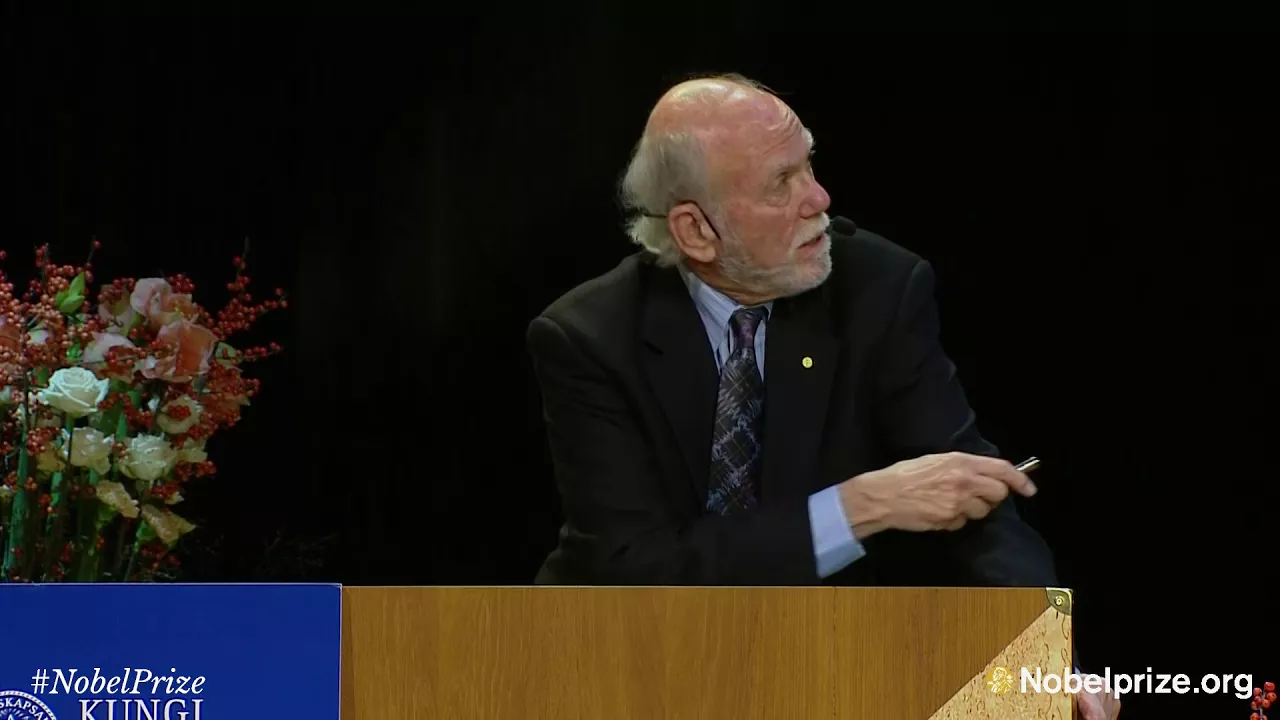
41:55
Barry Barish Nobel Lecture: Detecting Gravitational Waves with LIGO (2017)
@NobelPrize
16.8K views•2017-12-08

27:14
Entropy and the Second Law of Thermodynamics Explained
@veritasium
27.5M views•2023-07-01
Related Study Plans & Knowledge Roadmaps
Structured learning paths in Physics
physics
Nuclear Physics (Decay, Fission & Reactors)
01Atomic Structure and the Binding Force
02Radioactive Decay and Half-Life
03Nuclear Fission Mechanics and Chain Reactions
+ 2 more learning modules
12h5 modules
Explore Roadmap
physics
Soft Matter (Polymers, Colloids & Rheology)
01Foundations of Soft Matter & Thermal Forces
02Polymer Physics and Macromolecules
03Colloids, Surfactants, and Self-Assembly
+ 2 more learning modules
38h5 modules
Explore Roadmap
physics
Analytical Mechanics: Lagrangian & Hamiltonian
01Mathematical Foundations: Calculus of Variations
02From Newtonian Mechanics to Constraint Dynamics
03The Principle of Least Action & Lagrangian Mechanics
+ 3 more learning modules
28h6 modules
Explore Roadmap
physics
General Relativity (Spacetime & Cosmology)
01Foundations of Relativity: Special Relativity
02The Geometry of Spacetime: Equivalence Principle & Curvature
03Einstein's Field Equations: The Mathematics of Gravity
+ 2 more learning modules
55h5 modules
Explore Roadmap