




















The scientific method is not a single fixed process but evolved through the contributions of key historical figures: Galileo emphasized systematic experimentation and independent verification of hypotheses, Bacon advocated for practical, state-supported science based on empirical observation rather than ancient authorities, and Descartes introduced rational doubt and mathematical reasoning as foundations for certain knowledge, collectively establishing the core principles of modern scientific inquiry.
The Scientific Method: Galileo, Bacon & Descartes | History of Science #14
Added:The Aristotelian-scholastic worldview of natural philosophy that dominated medieval European thought.
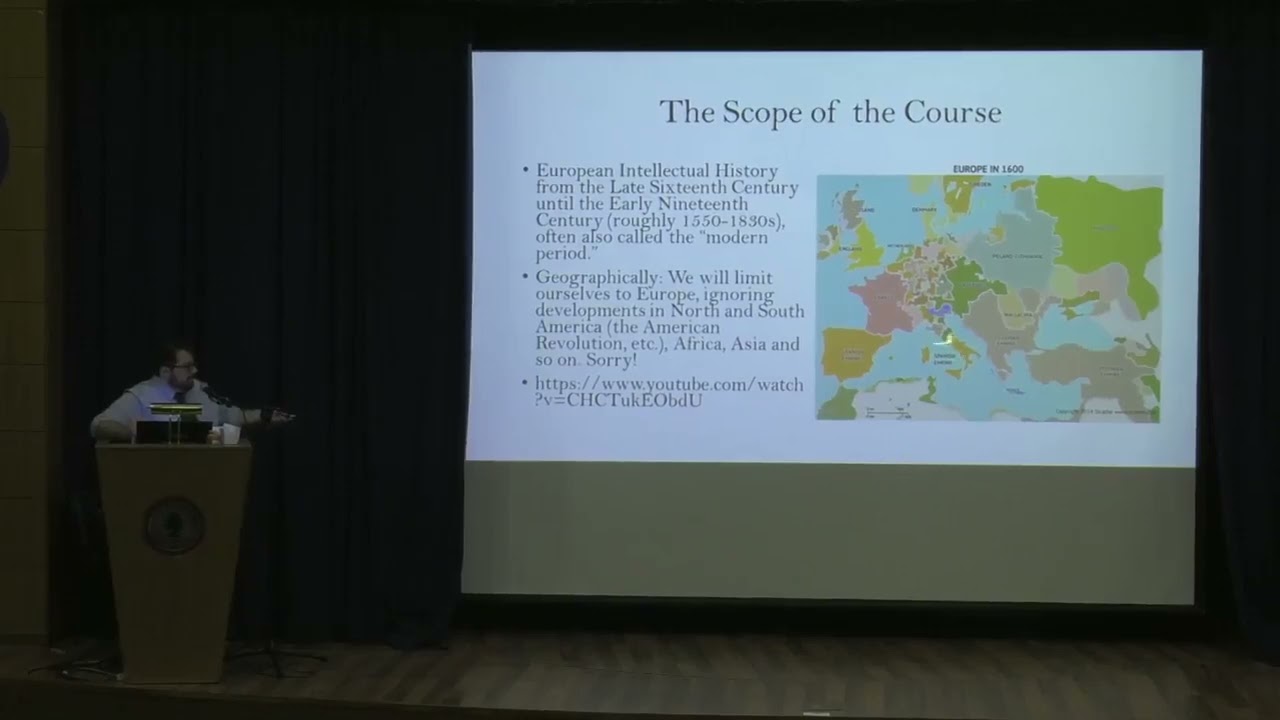
The historical context of the Scientific Revolution, particularly the shift from geocentrism to Copernican heliocentrism.
Basic epistemological concepts, specifically the distinction between reasoning from authority versus reasoning from observation.
The general socio-political and religious climate of 17th-century Europe, including the role of the Catholic Church in scientific inquiry.
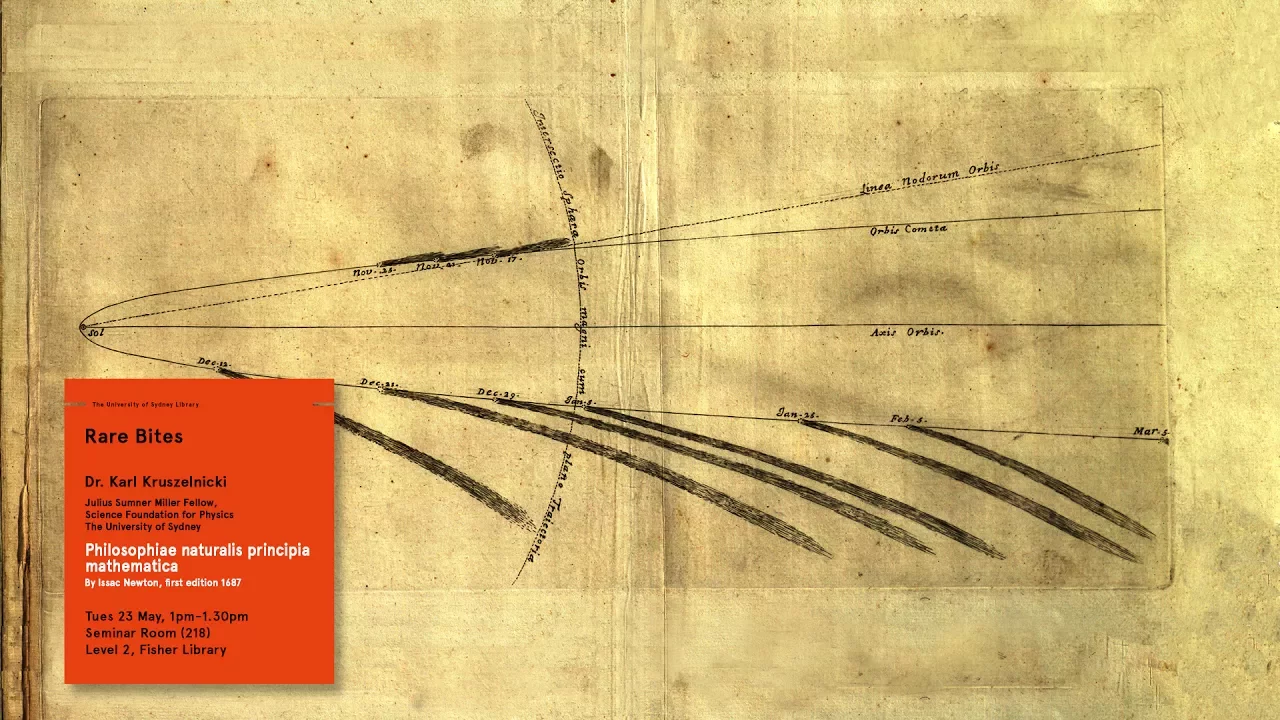
Isaac Newton's synthesis of empiricism and mathematics, which fully realized the scientific method in 'Principia Mathematica'.
The development of modern epistemology, exploring the ongoing philosophical debate between British Empiricism (Locke, Hume) and Continental Rationalism (Spinoza, Leibniz).
The institutionalization of science, such as the founding of the Royal Society and the French Academy of Sciences to facilitate collaborative research.
20th-century philosophies of science, including Karl Popper's concept of falsifiability and Thomas Kuhn's theory of scientific revolutions and paradigm shifts.
Practical application of the scientific method in modern research design, including double-blind studies, statistical significance, and peer review.
849.1K views11.4Klikes13:03Original Release: 2018-07-16
I started this course by saying that people have made knowledge about the natural world, pretty much forever.
They’ve done this by carefully observing the world and then devising tests to find out if their ideas are true.
Today, we refer to a specific series of steps—coming up with a hypothesis, testing it, and drawing conclusions—as the scientific method.
But, historically speaking, there is no one scientific method.
There’s more than one way to make knowledge.
Still, if you look at some of the great minds who helped shape today’s concept of the scientific method, a set of basic principles starts to emerge.
Like rationality.
Experimentation.
And ruthless self-examination.
For these ideas and a lot of other stuff, we have to thank three of the natural philosophers who pioneered this abstract “scientific method”: Galileo, Bacon, and Descartes.
[INTRO MUSIC PLAYS} Galileo, Bacon, and Descartes are each so fascinating that they could each have their own episode.
But one reason to talk about them together is that they lived at roughly the same time.
A lot changed in European natural philosophy between the mid-1500s and the mid-1600s, when Newton started dropping his hits.
We’ll get there later!
But first, Dr. Galileo Galilei was born in Pisa in 1564.
He considered becoming a priest, studied art, attended school for medicine, but then attended a lecture on geometry, and went on to study math in secret, because his dad wanted him to focus on medicine.
Much to his father’s chagrin, I’m sure, Galileo became a professor of a bunch of math-related stuff at University of Pisa, a lowly, poorly paid position.
In 1593, Galileo took a job as a ballistics consultant at the Arsenal of Venice, which is a heck of a title to have on your C.V.
Then, starting in 1609, he built and refined telescopes, which eventually made him famous.
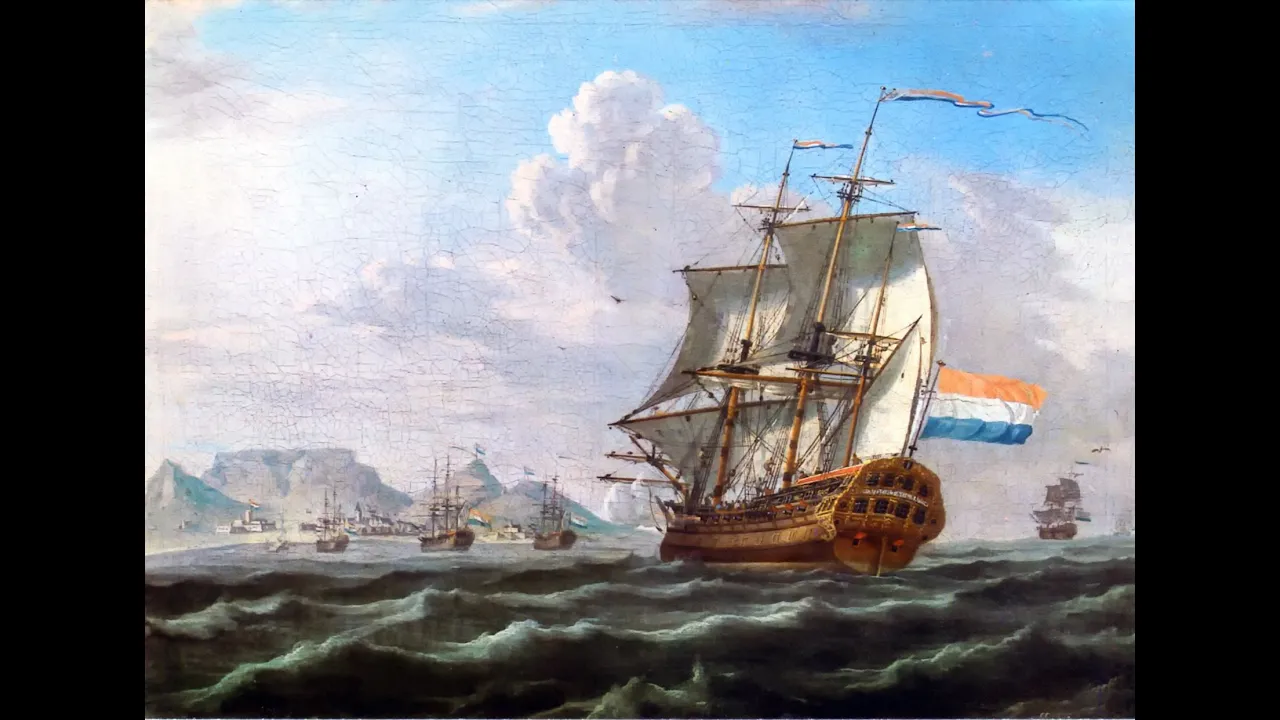
The very first telescope was invented by Dutch spectacle-maker Hans Lippershey in Holland in 1608.
But Galileo’s versions were much better.
And telescopes are a good example of how scientific instruments change the nature of scientific practice.
We often design experiments around how we can use our instruments—in the case of astronomy, around what we can see through a telescope.
With his new telescopic success, Galileo quit his job at Pisa for a much better one at Padua, and he also took on the role of Chief Mathematician and Philosopher of Florence.
I love this guy's resume!!!
As he continued to research the night sky, Galileo became convinced that Copernicus was right: the earth is not the center of the universe.
He also looked into Kepler’s ideas but wasn’t convinced by them.
By 1611, Galileo’s name had been brought up by the Inquisition.
And, of course, nobody expects that.
But it seems that his vocal support of Copernicanism was creating some friction in the Florentine court.
Among many others, the Grand Duchess Christina, who was basically one of his patrons, said she took issue with the idea of heliocentrism.
So in 1615, he wrote to a letter to explaining that the Bible and nature did not disagree: One was God’s word to the masses—a story about how to behave and why.
The other was God’s work—the physical reality that He created.
So science, he said, was simply the uncovering of God’s work.
Galileo was a man of faith!
Unfortunately for him, Church officials didn’t like this explanation.
In 1616, the Church added Copernicus’ text, De rev, to its official list of banned books.
The Inquisitors deemed heliocentrism “foolish and absurd in philosophy.” This was bad news for Galileo: he was told not to uphold or defend Copernicanism.
(But he may have been able to teach a heliocentric astronomy as a thought experiment.
Historians aren’t sure.)
But Galileo wasn’t having any of it.
In 1623, Galileo published a pamphlet called the Assayer that basically said scientists should be free to do their work.
Pope Urban VIII, Galileo’s personal friend, was a fan.
He said that God could move the heavens in numberless ways, so the ultimate source of truth would always be faith.
So sure, Galileo, you want to spend your nights staring at tiny dots of light?
Knock yourself out.
Urban even renamed Galileo’s next book, Dialogue on the the Two Chief World Systems of 1632.
All Urban asked was for his friend to treat different astronomical systems fairly.
But… Galileo picked a fight.
The Dialogue made a clear argument for Copernicanism, comparing it point by point with the Aristotelian–Ptolemaic system.
He brought new data to the battle: he described the phases of Venus, which appears to grow larger and smaller like earth’s moon.
This phasing did not fit with a geocentric model.
An even stronger argument came from the tides, whose movements seemed to prove that the earth moves.
And the pope was not happy.
Urban felt that Galileo had not heard his warning.
All copies of the Dialogue were recalled.
And in 1632, Galileo was called to Rome to speak to the Inquisition.
His trial got under way in 1633, and in time, he was placed under house arrest for the rest of his life.
Amazingly, Galileo didn’t give up.
Humiliated, under arrest, he kept sciencing.
Beyond his contributions to astronomy, physics, and the scientific method, Galileo is a rockstar thanks to his fearlessness.
Galileo’s last text was also perhaps his most relevant to the idea of methods in science: His Two New Sciences of 1638 was a mathematical treatise about how bodies fall through the air, and how wooden beams break.
It was also a record of the process by which he discovered these physical laws.
He called for specific tests that would let experimenters confirm his laws with their own senses.
This, in his words, was the mark of a “true scientist”: independent confirmation.
This is an awesome norm to try to live up to!
So, we shouldn’t be surprised that a lifelong nerd like Galileo would have played a critical role in developing better methods of doing science.
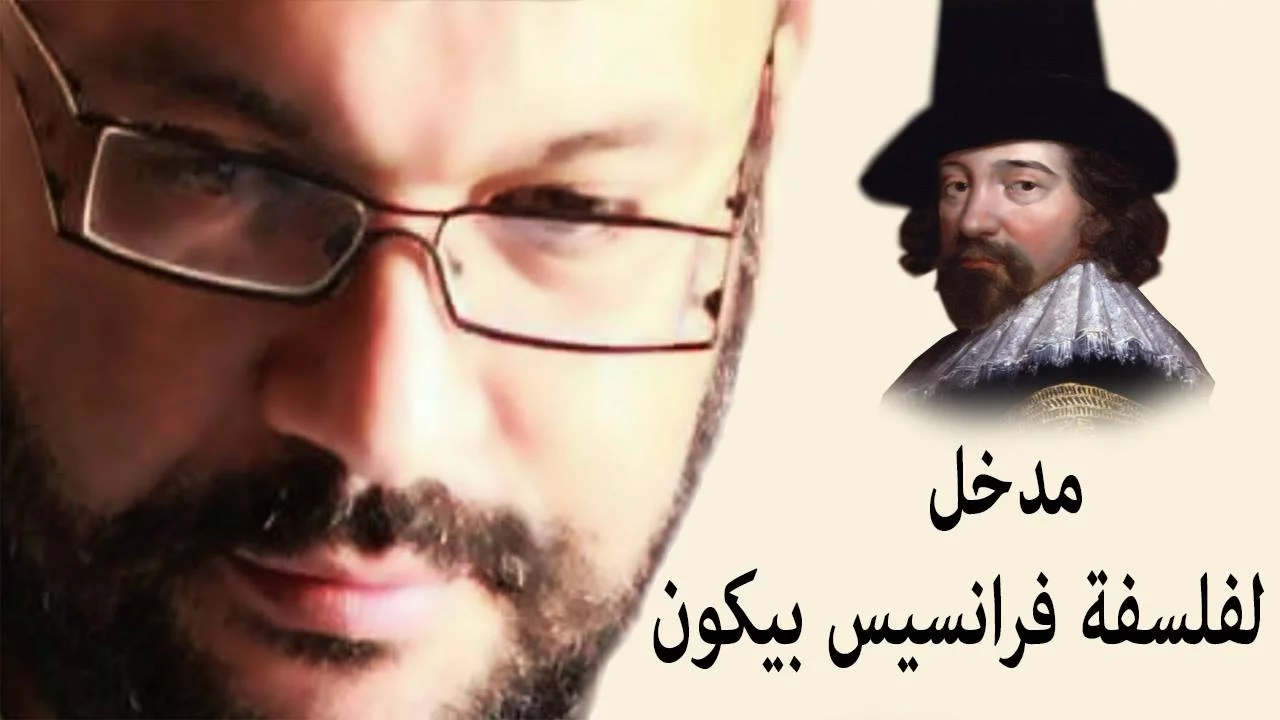
But Francis Bacon, born in London in 1561, is more of a historical surprise.
For one, he was cast out of public office for taking bribes.
Two, some people for some reason think he was Shakespeare.
And I mean, if you’ve ever read these two writers… there’s a clear difference.
And most of Bacon’s impact on science was posthumous.
We can basically boil it to down to a new approach to science, which was practical, instrumental, and supported by the state.
Bacon wanted to create a whole replacement system of natural philosophy—that meant philosophy, mathematics, physics, biology, all wrapped up together.
He rejected the Aristotelian way of doing science—arguing rationally using logic.
Instead, he believed that natural philosophers should help improve the wellbeing of humanity through technological advances.
Bacon expressed this within a Christian framework, casting Aristotle’s philosophy as a dereliction of the Christian duty of charity toward others.
Improving wellbeing meant understanding and controlling the chaos of the natural.
Bacon described nature as female and passive, and humanity as male and active.
So, science was supposed to be a masculine activity: it allowed humans to exploit nature.
Now, this metaphor has not aged well at all, and not just because it was sexist and horrible.
We also now have plenty of examples of all the ways that humans simply can’t control nature.
And yet this metaphor is, sadly, still very much alive.
So.
What did Bacon’s new system of natural philosophy look like up close?
Help us out, ThoughtBubble: For Bacon, control over nature meant deriving useful arts—or technē—like gunpowder, silk, and the printing press, from basic knowledge.
And how were Baconians supposed to make useful knowledge?
They needed first-hand experiences.
This meant testing answers to important questions, without relying on the words of long-dead Greek and Arabic philosophers.
For Bacon, science also required central planning and state support.
Natural philosophy should not be the domain of a few random nobles, he thought.
It should be a program, or system, that worked for the public good.
He outlined a vision of a utopian science bureaucracy in his book called New Atlantis, published in 1626.
Bacon proposed creating a hub for intellectual work, a kind of super-university called Salomon’s House.
Here, the personnel—all male, of course—would be strictly segregated into specific roles.
Some would travel the world to gather facts.
Others would conduct experiments to generate new facts.
Yet others would extract potential facts from books—but these proto-facts would have to be tested experimentally.
Further up the hierarchy, others would analyze all of the different natural facts and experimental outcomes and direct the next round of research.
And at the very top were the Interpreters of Nature—three men who would take all facts and use them to produce axioms.
Working along with them were “dowry men” who drew conclusions from these axioms to yield specific practical benefits.
That, in a nutshell, is the scientific world according to Bacon.
Thanks Thought Bubble, Now, another thinker who advocated for a practical science was René Descartes.
Born in central France in 1596, Descartes lived mostly in the Netherlands.
He’s known as a founding figure in mathematics and modern philosophy.
So, that's not bad.
In math, he’s known as the dude who bridged geometry and algebra.
We call the numbered X–Y axes the plane of “Cartesian” coordinates.
You can map a lot of math with this system.
Now, Descartes knew what had happened to Galileo, and his publishers in France didn’t want to wind up on trial, too.
So Descartes stopped publication of his own Copernican book, Le monde or The World, in 1633.
But he did come up with a whole new cosmology, based on Copernicus, that featured a chaotic, rapidly moving ætherial fluid in which the planets and stars were suspended—instead of perfect crystalline spheres.
His Discourse on Method, published in 1637, was his major contribution to the history of making knowledge.
But, more than Galileo—a practicing experimentalist—or Bacon—a statesman thinking about the practical uses of natural philosophy—Descartes was a pure philosopher.
He started at the very beginning with an abstract question: how we know what we know?
This is question at the heart of the philosophical discipline of epistemology, which Descartes redefined.
Philosophers today are still debating some of the questions Descartes raised about the origins of knowledge.
Descartes wanted to replace Aristotle as the king of philosophy.
And Descartes’s attack on Aristotle boiled down to two arguments: one, knowledge obtained through the senses lacks absolute certainty, because the senses often deceive us.
And two, human reason can also be deceived!
Logical conclusions from false premises will lead you to the wrong answers.
So Descartes was like, welp, time to formulate a whole new philosophy to address these points.
Ultimately, to be certain of the truth, Descartes could only count on one thing: his mind.
So he described the world reductionistically, meaning using math to represent physical phenomena.
Only math, which is either right or wrong, could found a total system of natural philosophy.
For Descartes, the universe is composed only of things that math can describe.
He thought that philosophers should be able to provide causal explanations for all observed phenomena, showing the or the mechanical principles behind the things that happen in the universe.
And the tactic Descartes used for checking the validity of your own knowledge is famous and still useful today: systematic doubting.
When in doubt, doubt yourself!
This pairs nicely with what Bacon argued: don’t trust old books; check!
When you add Galileo’s focus on independent, rational comparison of theories about natural phenomena to Bacon’s focus on experiment and social norms promoting scientific research, and then Descartes’s reminder to always ask yourself how sure you are that you know stuff, you get a kind of method or system.
Was it thought of as a single philosophy at the time?
Sort of.
Some of the most important members of the early Royal Society, where we’ll head in a couple of episodes, pointed explicitly to Bacon as an inspiration.
But this story isn’t all all about better descriptions of the Solar System.
It’s also about winning wars and conquering new territory.
Stay tuned.
Next time—we’ll look at how the “new science” affected the healing arts and beliefs about the human form… and, yes, there will be dissections.
A lot of dissections!
Crash Course History of Science is filmed in the Dr. Cheryl C. Kinney studio in Missoula, Montana and it’s made with the help of all this nice people and our animation team is Thought Cafe.
Crash Course is a Complexly production.
If you wanna keep imagining the world complexly with us, you can check out some of our other channels like Scishow, Nature League, and The Financial Diet.
And, if you’d like to keep Crash Course free for everybody, forever, you can support the series at Patreon; a crowdfunding platform that allows you to support the content you love.
Thank you to all of our patrons for making Crash Course possible with their continued support.
Up Next
69:48
Gravity as a Social Construct: A Philosophical Analysis
@dr.fatima
320.6K views•2023-10-01

12:54
Triumph of Orthodoxy Icon: Byzantine Art & History Explained
@BenCallan
2.1K views•2024-08-06

12:44
Healthcare Systems Explained: Models & Building Blocks
@crashcourse
130K views•2022-09-15

1:42
Game of Thrones Opening Credits: A Cinematic Analysis
@gameofthrones
46.3M views•2011-04-18
Related Study Plans & Knowledge Roadmaps
Structured learning paths in General & Interdisciplinary Studies
general-studies
Elevator Engineering: History, Physics & Cities
01From Hoists to Safety Brakes: The Dawn of Vertical Lift
02Hydraulic vs. Traction: The Engineering Physics of Elevators
03Modern Speed, Safety, and Algorithms
+ 2 more learning modules
12h5 modules
Explore Roadmap
general-studies
Rubber: Material Science, History & Geopolitics
01Origins of Natural Rubber & Mesoamerican History
02The Chemistry of Natural Rubber & Vulcanization
03The Geopolitics of the Rubber Boom & Colonization
+ 2 more learning modules
12h5 modules
Explore Roadmap
general-studies
Containerization: Evolution, Logistics & Trade
01Ancient Trade & Bulk Cargo: Amphorae to Barrels
02The Industrial Revolution & Cardboard Packaging
03The Containerization Revolution: Malcom McLean
+ 2 more learning modules
12h5 modules
Explore Roadmap
general-studies
Textile Tech: Evolution, Labor & Global Impact
01Pre-Industrial Textiles: Handloom & Cottage Industry
02Mechanization: The Spinning Jenny to the Power Loom
03The Factory System & Global Labor Transformation
+ 2 more learning modules
10h5 modules
Explore Roadmap