















![[Webinar] - Multiphysics modeling of micro-electro-mechanical systems using SOLIDWORKS](https://i.ytimg.com/vi/nihvyO7SRGM/hqdefault.jpg)


![Stokes Flow, Microfluidics; Thermofluids [Book Club #2-5] Ep27](https://i.ytimg.com/vi/Hg-HX0xTtYs/sddefault.jpg)










Scaling laws describe how physical parameters change proportionally when system dimensions are altered, with key relationships including: geometry (volume ∝ L³, surface ∝ L², surface-to-volume ∝ L⁻¹), rigid body dynamics (force ∝ L⁴, time ∝ L⁰.⁵, power ∝ L⁰.⁵), electrostatic forces (energy ∝ L³, forces ∝ L²), electricity (resistance ∝ L⁻¹, current ∝ L², voltage ∝ L), fluid mechanics (flow ∝ L⁴, pressure drop ∝ L⁻³), and heat transfer (conductivity ∝ L, time ∝ L²).
Scaling Laws in Microsystems | MEMS Module 4 Explained
Added:Basic understanding of Micro-Electro-Mechanical Systems (MEMS) and microscale concepts.
Fundamental principles of classical physics, including Newton's laws, Coulomb's law of electrostatics, and basic heat transfer.
Mathematical concepts of dimensional analysis and geometric scaling (surface-area-to-volume ratio).
Introductory fluid mechanics, particularly the concepts of viscosity, density, and flow regimes.
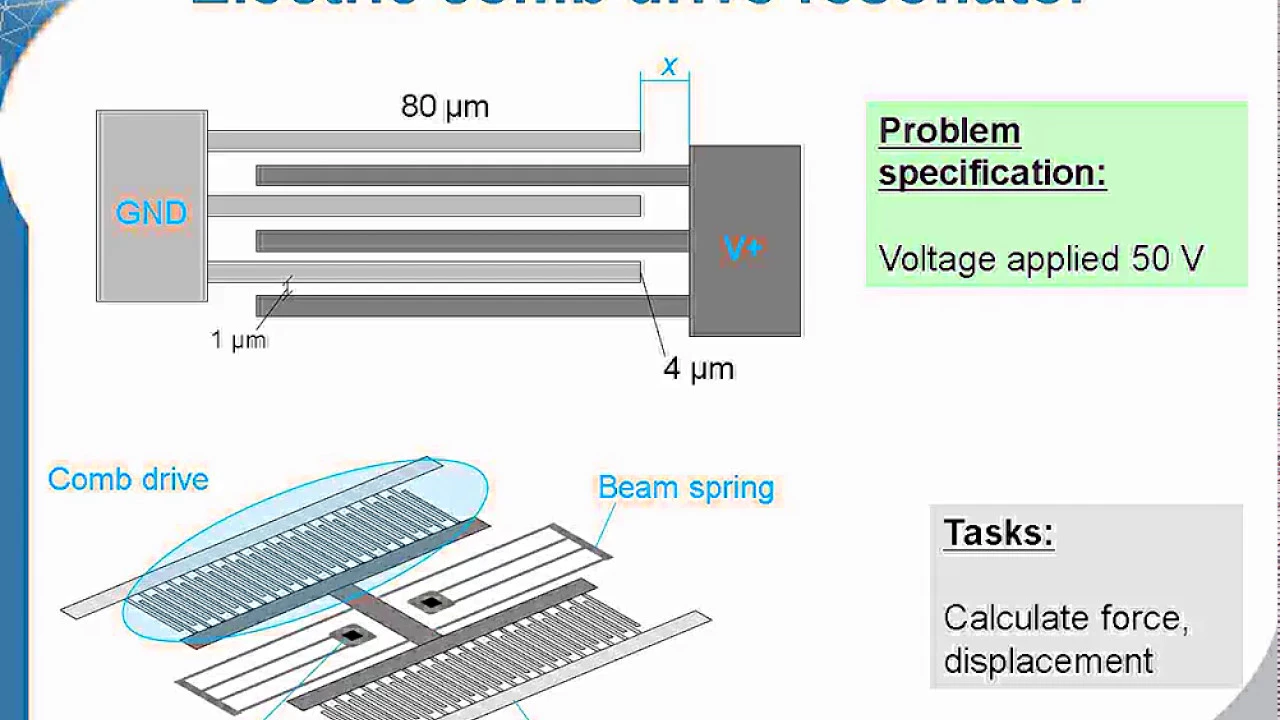
Design and analysis of micro-actuators (e.g., electrostatic comb drives) utilizing scaled physical forces.
Advanced microfluidics and Lab-on-a-Chip applications, exploring low Reynolds number flows and capillary forces.
Mitigation strategies for microscale challenges such as stiction, friction, and surface-charge accumulation.
Thermal management and micro-heat exchanger design for high-density electronic packaging.
2.6K views42likes44:08Original Release: 2020-08-06
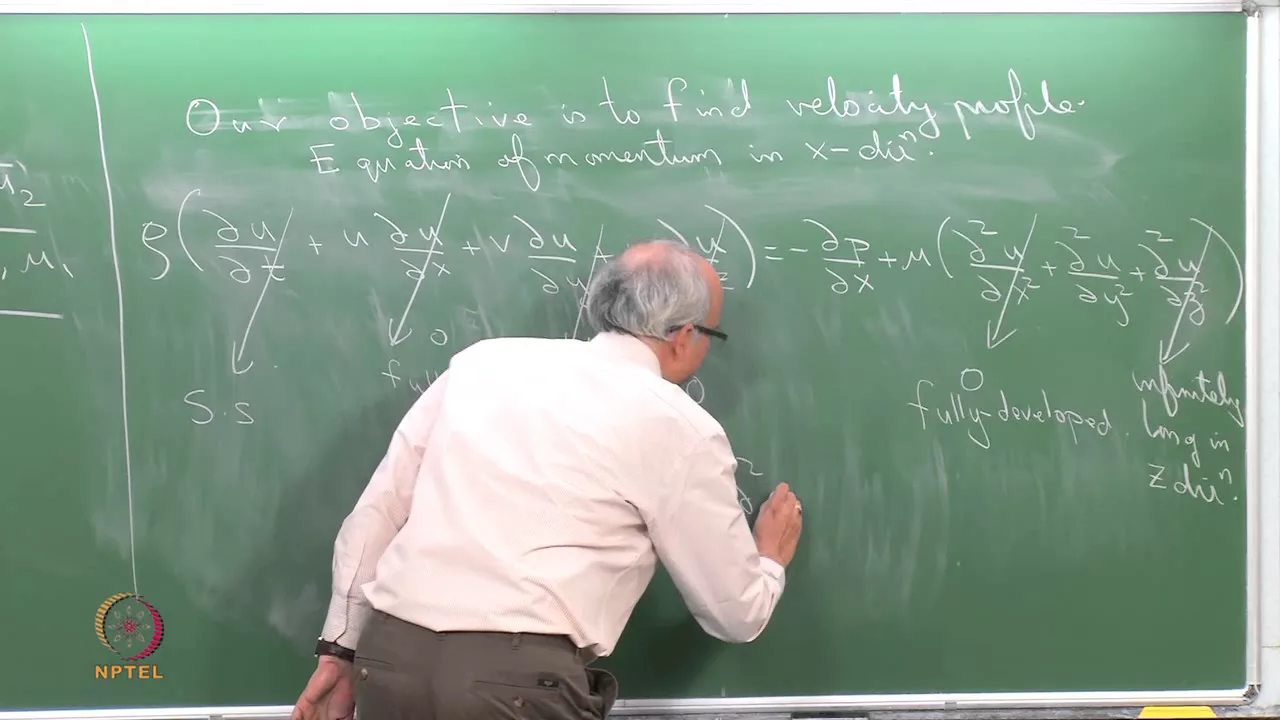
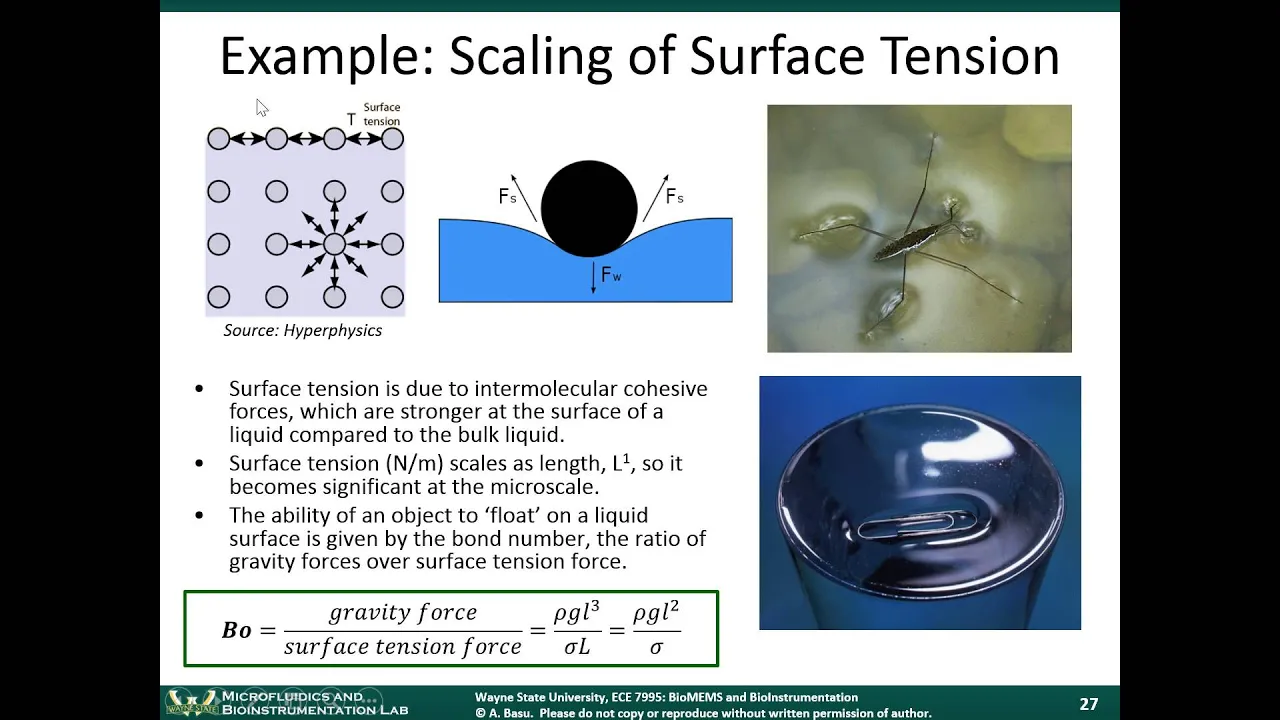
miniaturization in general that is using the size okay so these are the different aspects so these are the different aspects where scaling can be applied one is scaling in geometry okay the other one is scaling in rigid body dynamics scaling in electrostatic forces as i said before miniaturization need not be applied only to a physical object you can also include few parameters other parameters such as forces okay you can reduce electricity the level of electricity electrical uh electrical levels then fluid mechanics and also the heat transfer so these are the various fields in which the scalings can be applied and all these are very important in examination point of view okay so now we'll go look into why these scaling laws are okay so the present system whatever we design it should be intelligent robust multifunctional and low cost correct so these are the four important points of the system that exists today the system should be intelligent enough robust enough okay that means it has to withstand all the hard parameters applied on it it should perform some different functions at the same time simultaneous functions it should perform at the same time the cost of the system should be economical along with this there is one more necessity in today's scenario that is the system should be portable and in order to make the system portable it is necessary to miniaturize or reduce the size of the individual components that's why scaling loss is very important in it okay so these are the types of scaling laws as i said this can also be the type scaling in geometry rigid body dynamics electrostatic forces electromagnetic forces electricity fluid mechanics and heat transfer so we'll now concentrate on scaling in rigid body dynamics sorry scaling in geometry so in geometry there are two important parameters one is the volume represented by v and the surface represented by s and the mass represented by m okay so we know that if l be the linear dimension of a solid okay we know that volume is equal to l cube correct and the surface area s is equal to l square where l is what linear dimension so if i take the ratio of s by v then i'll have l square by l cube which is equal to l to the power minus 1 okay so this is important now how this rule will affect in miniaturization we'll see okay now there is a rule what is that rule volume is proportional to l cube and surface is proportional to l square okay say for example l i'll increase it by 10 times then volume is increasing by l cube that is 1000 times and the surface is increasing by only 100 times correct so i repeat if only l is increased by 10 times then volume is increasing by 1000 times and surface area is increasing by 100 times ratio s by b is increasing by l to the power minus 1 okay so if i take the surface to volume of an elephant i'll get 10 to the power minus 4 by mm that off by a dragonfly i'll get 10 to the power minus 1 by mn okay so in order to see how this will affect the scaling so this is a rule okay that is s by v equal to l power minus 1 how these effects in geometry will have a example here this example it was solved in class okay before lockdown i hope you would remember this okay so here there is a question what would happen to the required torque to turn a micro mirror so this is a random mirror okay what would happen to the required torque torque is represented by tau here with a 50 reduction in size so say for example so if i apply a force that force is nothing but a torque okay let c b and c and b and t be the dimension of this micro mirror if i apply the torque then definitely this torque is moving in anti-clockwise direction as indicated by this okay then the question is if i reduce the size of this object that is if i reduce c b and t by 50 will the magnitude of the top remain same so by our general understanding and common sense definitely it won't right because the same force would might not be required this time why because the size has been reduced but what is that magnitude of the force reduced that we have to calculate okay so this is how we calculate so first we'll establish a general relation that is the torque is proportional to y y where i yy is the mass moment of inertia of the mirror that is the moment of inertia of the mirror so how to relate this i y to a mass and the width of the mirror see the parameters given here are c b and t but inertia should be related to these parameters c b and t then only we can solve this problem right so this moment of inertia is given by 1 by 12 into mass into c square okay where m is the mass of the mirror and c is the width of the mirror okay now but we only have here the parameter c but what about b and t so m can be related to this parameter c b and t by this equation that is m equal to the mass density of the material into its area that is b into c into t okay substituting m equal to rho into b into c into t to this equation multiplied by c squared i will get i yy equal to 1 by 12 into in place of ml substitute rho into b into c into t and because of this c squared i'll have c cube here okay so one minute so i'll continue so i have now established i have represented the mass moment of inertia in terms of c b and t that is the dimension of the mirror okay now the question says that the dimension is now reduced by 50 that is b c and t individually they are reduced by 50 means what b by 2 c by 2 and t by 2 okay so remember here since there is a c cube here substitute like c by 2 whole cube it should be c by 2 whole cube while solving the problem if you write c cube by 2 then the answer you will get wrong okay so the size here is reduced by 50 percent see initially it was b now it is b by two the new dimension is b by two initially it was c now it is c by two since there was a whole cube it's all cube now it is t by two okay now the row being the mass density which is a constant we'll take it out and 1 by 12 it is also a constant so i'll get the relation as 1 by 32 into 1 by 12 into b into c cube into t so i will bring out to the initial equation that is iyy so in total i'll get 1 by 32 into iyy meaning if i reduce the size of this micromirror by 50 then the magnitude of the torque that is the new magnitude of the torque okay it is reduced by 32 times understood i hope you would have understood this problem is very important okay if the size of the micro mirror is reduced then definitely by our general understanding the micro mirror torque okay will also get reduced but what is that magnitude that magnitude is now given by this okay that is that new torque is reduced by 32 times so this is how these rules will help us finding out the parameters when the size of the object is scaled up okay so this is scaling in geometry so i repeat for those have joined new quickly i'll repeat we know that l equal to the linear dimension of a solid so if l is the linear dimension of a solid then v proportional to l cube we know that s that is the surface area is proportional to l square so if i take out the ratio surface to volume then i'll have l to the power minus 1 so this is the scaling loss in geometry how this will help so if i increase the dimension of the l by 10 times then the volume will increase by thousand times the surface area will increase by 100 times okay so we have the micro mirror here whose dimension is given by c b and t now if this individual dimension is reduced by 50 then the question is asked to find what is the torque of the micro mirror so first we need to establish the relation that is the torque is proportional to the mass moment of inertia now this mass moment of inertia should be expressed in terms of c p and t for that we have mass moment of inertia equal to 1 by 12 into mass into c square where mass is given by this equation substituting mass in this in this equation i'll get i y equal to 1 by 12 into b into b into c cube into d so if individual size is scaled on by 50 so i'll get 1 by 32 of highway that is if the size is reduced by 50 then the torque is reduced by 32 times i hope this is understood okay so now we'll discuss about the scaling in rigid body dynamics okay so the second parameter that is the scaling in rigid body dynamics so here the dynamics means it will involve velocity and acceleration and the initial forces for that are forced power and pressure these definitions you should have known by your physics knowledge okay what what is a force what is a power okay what is inertia what do you mean by mass and what is an acceleration and what is time okay so these definitions you should know followed now first we need to establish the rules like this okay so we know that f is equal to mass into acceleration okay then the acceleration f is equal to mass into acceleration and the speed can be given by the initial velocity into d plus half into acceleration into t squared okay so where v naught is the initial velocity if v naught is equal to 0 then i can express acceleration as 2 times of s by t square okay one minute okay we'll continue so i know that from newton's second law f is equal to mass into acceleration and from the equation dynamic kinematics equation i know that acceleration is equal to 2 into s by speed by t square okay substituting this new value of acceleration in this equation i'll get f is equal to 2 into s into m by t square okay so leave out this 2 now the speed is proportional to what l okay this is the parameter the displacement is a parameter okay the displacement is a linear scale and it is proportional to l mass is proportional to l cube and this t it is t to the power minus 2 so so remember this equation that is f is proportional to l l cube into t power minus one so william trimmer hello hello so this was the fourth scaling vector that was uh defined by william trimmer in 1989 and this is the table that gives you the relation with other parameters okay here we have the order for scale acceleration time and power density okay here in which order means the index remember this the order it means the index alpha in the scaling quantity is the linear dimension okay say for that is l to the power alpha for example c how to look into this table you could you should go through this weight is proportional to volume and volume is equal to l cube so the order of that is 3 okay so the proper pressure p is proportional to 1 by a that is acceleration 1 by a is l to the power minus 2 and its order is minus 2 the positive and negative indicates whether it is a reverse proportional or the normal proportional okay remember this trimmer force equation for scaling vector equation that is f it is proportional to l one l two l three and l four okay now using those equations we'll try to have trimmer for scaling vector so for example if power density is represented by p by v naught if i want to represent this part density p by v naught then it will be equal to force into displacement divided by t into initial velocity correct now p by remember this c carefully absorb power density p by v naught is equal to force into displacement by t into initial velocity that is v naught okay so therefore p by v naught is equal to what is force it is l to the power f and what is displacement it is l to the power one okay what is time so you're required to do the initial velocity one so for that we'll have to refer this equation l cube l l into t to the power minus 2 if you substitute there you will get the equation for time then initial velocity it is l cube so if you solve this you will finally end up with l f to the power 1.5 and l to the power minus four okay so if i represent that p by v naught it will be equal to l to the power to power minus 1 l to the power minus 1 l to the power 0 0.5 and l l square so that see here minus 2.5 minus 1.5 and 2 is represented here in this table minus 2.5 minus 1.5 and 2 so this is for power density similarly you should do it for time you should do it for acceleration you should do it for for scaling vector see l to the power f is what one two three and four so it is one two three and four power density is what power density is minus two point five minus one point five and two so therefore it is minus 2.5 minus 1.5 and 2 similarly you are required to solve for time and acceleration ok so here there is an example i hope you would have understood this you want me to repeat okay we'll continue so here there is an example estimate the associate changes in the acceleration that is a and the time t and the power supply b to actuate the mains component if its weight is reduced by a factor of 10 so if the weight is reduced by a factor of 10 you are asking us to find out what are the changes in its acceleration time t and power supply p okay so for that you will be required this table the required to memorize this table okay we'll see how to solve it first we should have a relation like this that is the weight w is proportional to volume that is and volume is equal to what l to the power 3 so it involves what order 3 scaling and now from there that is the order 3 scaling what is that so this is the order three scaling is there any effect on the acceleration it is zero so therefore see here there will be no reduction in the acceleration why because for the order three scaling acceleration component is equal to what zero so therefore there is no changes in the acceleration what is the other parameter they have asked us to find out time t so for the order three scaling the time is varied by 0.5 so it is directly proportional since there is a plus quantity the time is directly proportional so it will be l to the power 0.5 that is 10 to the power 0.5 means what why it is l is substituted 10 here because it is factor of 10 weight is reduced by a factor of 10 so now the linear dimension will be 10 here so 10 to the power 0.5 means what 3.16 so 3.16 times reduction in the time to complete the motion why there is a reduction even though the quantity is positive there why there is a reduction because we are talking about the miniaturization here remember even though the quantity is positive here it doesn't mean that it will increase it will decrease why because we are talking about the term called miniaturization okay then what are what is the other parameter there was that is the power supply p so what is that the power supply p power supply is 0.5 once again l to the power 0.5 is 3.16 times there is a reduction in the power density okay then at the last you should state like this if weight is reduced by a factor of 10 there is a no change in the acceleration the time is reduced by 3.16 times and the power supply is reduced by 3.16 times okay so this is about the scaling in rigid body dynamics followed i hope you would have understood this i'll repeat okay we'll have a quick look on that in the previous session we studied about the scaling in geometry now scaling in rigid body dynamics here you should know about the terms called forces power what is inertia what is mass what is acceleration okay and what is pressure now these are the basic understandings that we obtain from physics okay then we know that from newton's second law that f is equal to m into a and from the displacement equation we know that s is equal to v naught into d by 1 by 2 into half a t square correct now if initial velocity is equal to 0 then acceleration is equal to 2 into s by t square correct substituting this value of acceleration in f is equal to m into a i will get f is equal to 2 into s into m by t square leave out this 2 i know that the displacement is a linear dimension correct so therefore it is l mass it is l cube and for time it is t to the power minus 2 okay correct now so this is the fourth scaling vector that was defined by william trimmer in 1989 and this is the order okay order is nothing but this exponent okay so say for example if i'll get i'll write it here alpha 3 then its order is 3 okay so the four scaling vector is related to this order is one two three and four okay for acceleration and time you can find it out okay how see what is how to i'll tell you how to find it out what is t first bring this t to lhs t equals okay t equals or i'll write it like this t square is equal to 2 into s into m divided by f so therefore t is equal to square root of 2 into s into m divided by f correct now square root of 2 you take it outside since it's a constant it it will have no effect now i have square root of s okay and square root of m and square root of f f will come here correct so s is linear dimensional m is l cube okay and uh f is what l to the power f okay which will have 0 correct now substitute that you will get finalized expression like this that you can write it here okay so they have solved it for power density that is p by v naught p by v naught can be expressed as f into s by t into v naught okay so what is f l to the power f into l power one divided by this t into v naught can be expressed like this finally if you substitute you'll get this expression so you'll have l to the power minus two point five minus one point five and two so these are the orders okay now these are the exponents okay now these exponents you need to substitute here minus two point five minus one point five and three so for if this is a third order you are referring to all these parameters in the third order so they have given an example if i reduce the weight by 10 then what is its effect on acceleration time and power supply so weight is proportional to volume that is lq so its order should be 3 now go to this this order is three refer all the parameters which is coming in this order so there is no change in the acceleration time will reduce by 0.5 and power density will reduce by 0.5 that is you will have l to the power point five that is ten to the power point five three point one six percent reduction l to the power point five three point one six percent reduction in power density okay i hope this you would have understood similarly will go for scaling in electrostatic forces see all the questions here are important they can be separately asked for 10 marks each okay all these questions are very very important and this module is a direct question okay there is no twist and nothing can be asked um most of the most of the cases they'll ask only the solved problems so you should remember all these examples as well okay so the third one is scaling in electrostatic forces and you know that energy u is equal to half into c into v squared which can be substituted as minus epsilon naught into epsilon r into the width of the plate and length of the plate divided by the separation that is 2d into the v square that is the potential square now if you have this v okay this epsilon naught and epsilon are it is proportional to l square why because it's a constant then you have only linear dimensions as w and l and t it is proportional to l to the power one since these are the linear dimension it is proportional to l to the power one now we have this voltage now we need to first consider this voltage what it is proportional to so we'll have the linear scaling that is voltage also proportional to l to the power of one now if you substitute this equation that is epsilon naught at epsilon r you leave it out w so it is l plus 0 alpha 0 for w you will have l power 1 for l you have l power 1 and for v you have l square divided by 2 you leave it out for d you'll have alpha 1 then you'll find it out that u is proportional to l cube that is if i change the dimension of this plate by 10 times then potential energy will change by 1000 times that is it will reduce by 1000 times okay i hope you would have understood this so what is the in electrostatic forces so what will happen in this electrostatic forces i hope you would have known this the working principle of this parallel plate capacitor right so whenever the voltage v is applied then the distance d between these two parallel plates will change correct it depends upon the electrostatic force of attraction or the electrostatic force of repulsion now if there are definitely since there is a voltage applied and there is a distance d between the two charged plates you will have a potential energy between it and what is that potential energy it is given by u equal to half into c into v square where c is the capacitance how to derive this capacitance it is epsilon naught epsilon r into w into l by 2 into e okay now w l and d are the linear parameters so it is l to the power 1 and b we have considered the linear voltage so it is l to the power 1. finally we will find out that u is proportional to l cube so if i change the dimension of each by 10 times then 1000 times the potential energy will reduce okay so similarly you will have electrostatic forces you can establish the relation between different electrostatic forces so you will have f d f w and f l along f w along f t and along f l so there are three kinds of electrostatic forces that can be uh generated using this potential energy correct for all those three kinds of electrostatic forces you have this equation and you'll know you will find out that finally you will find out that all these forces are proportional to l square that is if the dimension is reduced by 10 times then these electrostatic forces will reduce by 100 times okay this is the equation for the electrostatic forces in that particular direction remember that if you solve substitute here alpha 1 alpha 1 alpha 2 l bar 2 and you will get l power 2 okay similarly for f w f d and f l you will get l power 2. so if dimension w d and l is reduced by 10 times substitute in place of l 10 so you will have 10 to the power 2 that is each of these forces will reduce by 100 times okay so this is what is the scaling in electromagnetic force so this was about the electrostatic force now this is about the electro magnetic force so for that you need to consider a conducting wire of length l you know that there will be a force of electric field and a magnetic field perpendicular to it and definitely that will generate a magnetic force so that magnetic force is proportional to l part 4 that is if you reduce the size of this conductor by say for example 10 times out by 2 times then its force will reduce by 16 times okay not much information is given about this okay so what is important is electrostatic force and for one for the potential energy and one for the electrostatic forces okay finally we'll have the scaling in electricity okay as i said need not be you need to change what the dimension of uh the physical object only like reducing the size of a box or something like that you can even change physical parameters dimension also and we can see what its effect will be on the different parameters okay so one such parameter here is electricity so one such parameter here is electricity i know that the resistivity r is equal to rho and sorry the resistance r is equal to rho into l by a okay that is the resistance is proportional to the length and inversely proportional to the cross sectional area where rho is the resistivity okay now l is the linear dimension correct so you'll have l to the power 1 and a is the cross sectional area so it is l square so and rho is the constant so it will not have any effect on the linear condition so it is constant take it outside i have r equal to l by a so if i substitute here i'll get l divided by l square so finally i'll get resistance is equal to l to the power minus 1 that means if i change or if i reduce the dimension of a thin by time times its resistance well what will happen it will reduce okay it will change by 10 times that you need to remember similarly for power loss you have b equal to v squared by r in last in previous slides we have observed that we have considered the linear scale voltage that is be proportional to 1 so here also we'll consider the linear voltage so therefore it is proportional to l square divided by r and it should be l there's some change here okay so the applied voltage it is v squared by r in electric field energy once again half into epsilon e square so it should be l to the power minus 2 okay now ratio of power to available power p by e b it is once again l by l cube which is equal to l to the power minus 2 so these parameters you need to remember so the current it is l to the power this is index alpha index okay it is l square voltage it is l to the power 1 resistance it is as we have observed here it is l to the power minus 1 so the index is minus 1 capacitance is l to the power 1 inductance is l to the power 1 power is l to the power 2 this table you are required to memorize okay say for example if we ask if we change the dimension of a thin wire by 10 times what is its effect on current then you are supposed to tell that 10 to the power 2 100 times the current will change okay similarly that you are supposed to remember so 100 times the current will reduce that conditions you are required to remember okay so this is about the scaling in electricity now we will move to the finalized final one that is even in fluids you can establish scaling okay so here we have scaling with respect to two parameters one is the volumetric flow and what is the pressure drop delta p the volumetric flow is represented by q you have a flow in and flow out the length of the pipe is l okay and delta p is the what is the pressure drop per unit okay and what is the volume that is flowing inside this thing okay if the size of this conductor is reduced will the volume of the liquid that is flowing inside this remains same or not that we are going to discuss here so that parameter can be related by this equation that is the volumetric flow is given by pi into a square a power 4 into delta p by 8 into mu l okay so if you observe that delta p mu it will not have much tolerance to this so it will leads to q proportional to a to the power 4 meaning what if size is reduced by 10 times if the size is reduced by 10 times then the volumetric flow is reduced by 10 000 times okay this this is an important point which you are required to remember similarly for pressure drop you have this equation finally it leads to the pressure drop per unit length okay this see don't get confused l and delta p is marked same here okay i repeat don't get confused l and delta p is marked same here see actually the length of this pipe is l delta p it it should be taken for per unit length okay delta p should be taken for unit length that's why it is delta p by l and if you observe it is proportional to a to the power 3 okay a to the power minus 3 means what minus limits as we have seen in case of resistance c here r okay the resistance increases if there is a decrease in the dimension correct that is what is the significance of this minus correct similarly here also similarly here also you have a to the power minus 3 means if the area is reduced by 10 times then the pressure drop is increased by 1000 times okay so this you're required to remember i repeat scaling in fluid dynamics there are only two important points one is volumetric flow and the other one is pressure drop volumetric flow is represented by q and it is proportional to e to the power four pressure drop is proportional to a to the power minus three so if there is a reduction of the pipe by ten times length of the pipe by 10 times then the volumetric drop is reduced by 10 volumetric flow is reduced by 10 000 times and the pressure drop per unit length will increase by thousand times okay so this is even in heat you can find out what is the uh significance of scaling okay so you have conductivity okay and how fast the heat can be conducted so that two parameters i'll leave it uh for you okay so you have the thermal conductivity k to be equal to this equation and it is proportional to l to the power one so if the scaling is done by ten times now that is if we reduce the size by ten times and the thermal conductivity is reduced by 10 times similarly uh the time required for transfer of heat that is f naught by alpha into l square it is proportional to l square so definitely if the size of the conductor is reduced then the time required to transfer the heat will increase uh is also reduced sorry it is also reduced by what amount that is 100 times the time required to transfer the heat from one end to another end of the conductor will also reduce okay so this is what we discussed in scaling class so this is the overview of the chapter all the questions are important scaling in geometry scaling in rigid body dynamics scaling in electrostatic forces electromagnetic forces electricity fluid mechanics and heat transfer so we'll have some of the important questions here you can observe your explain scaling in heat transfer wherein you want you are required to write this okay then estimate the variation of the total heat flow there is one solved problem okay you just have to estimate the total heat flow of the time required to transmit heat that is the time required to transmit heat is given by t equal to f naught by alpha into l square you know you should be knowing that t proportional to l squared if the factor is reduced by 10 so it is 10 to the power 2 so 100 times the time will get reduced in fluid mechanics you are required to write this okay two important parameters volumetric flow and the pressure dropper length using scaling glass estimate the variation of volumetric flow once again there is a direct formula here just estimate it and then find out and tell that it will reduce by ten thousand times remember if it is 10 if we change the value by 100 then it is 100 to the power 4 so remember while substituting and obtain the scaling loss for rigid body dynamics once again you are required to and tabulate it you are where you are required to derive this equation and then rigid body dynamics and then you are required to write this table okay associated changes in time we have solved this equation question okay so once again discuss scaling in geometry in detail which we have already solved finally this what this is what the electrostatic force what will happen if it is a individual forces if it is reduced by 10 so it is simple you have this equations here for electrostatic forces and you know that it is l squared l squared and l squared l squared l squared and l squared so if it is reduced by 10 then 100 times the each force will get reduced so even if you remember the formula you directly don't write here it is 100 times first right we are supposed to write this diagram equation and then you need to establish this relation then substitute and then state this answer else you'll lose marks you know vto right then discuss scaling in electrostatic forces in detail okay so for that electrostatic forces you are required to write this equation then write a short note on scaling in heat conduction and heat convention okay so this is what you are required to write okay so we have discussed the full module for in this okay and module 5 video is there in the youtube youtube channel of ec department okay we will also upload this module 4 okay i hope you would have understood we'll also upload this module 4 okay and please you can ping to us like in next session which module you would like to know then we will discuss that module in our next session okay thank you
Up Next

79:47
Richard Feynman - There's Plenty of Room at the Bottom (1959)
@MuonRay
528.3K views•2012-08-23

12:53
21cm Hyperfine Transition in Neutral Hydrogen: Radio Astronomy Basics
@AaronRobertParsons
12.4K views•2011-10-13

32:32
NMR Spin Physics I: Zeeman Effect, Resonance Condition & Larmor Frequency
@nptel-indianinstituteofsci8064
2.3K views•2024-01-17

27:14
Entropy and the Second Law of Thermodynamics Explained
@veritasium
27.5M views•2023-07-01
Related Study Plans & Knowledge Roadmaps
Structured learning paths in Physics
physics
Nuclear Physics (Decay, Fission & Reactors)
01Atomic Structure and the Binding Force
02Radioactive Decay and Half-Life
03Nuclear Fission Mechanics and Chain Reactions
+ 2 more learning modules
12h5 modules
Explore Roadmap
physics
Soft Matter (Polymers, Colloids & Rheology)
01Foundations of Soft Matter & Thermal Forces
02Polymer Physics and Macromolecules
03Colloids, Surfactants, and Self-Assembly
+ 2 more learning modules
38h5 modules
Explore Roadmap
physics
Analytical Mechanics: Lagrangian & Hamiltonian
01Mathematical Foundations: Calculus of Variations
02From Newtonian Mechanics to Constraint Dynamics
03The Principle of Least Action & Lagrangian Mechanics
+ 3 more learning modules
28h6 modules
Explore Roadmap
physics
General Relativity (Spacetime & Cosmology)
01Foundations of Relativity: Special Relativity
02The Geometry of Spacetime: Equivalence Principle & Curvature
03Einstein's Field Equations: The Mathematics of Gravity
+ 2 more learning modules
55h5 modules
Explore Roadmap