

![CHSE Odisha +2 First Year Math Chapter 2 Sets Exercise 2(a) All Concept Discussion [Lecture -1]](https://i.ytimg.com/vi_webp/nfYooMaC8Cc/maxresdefault.webp)







![[1 de 5] Tutorial: Cómo Resolver el Cubo Mágico de Rubik. en español / castellano](https://i.ytimg.com/vi/Rggk42-Xl5I/hqdefault.jpg?sqp=-oaymwEmCOADEOgC8quKqQMa8AEB-AG-AoAC8AGKAgwIABABGHIgWCgtMA8=&rs=AOn4CLBbKrbAaJ5aK-kgP6vJDQwmmawM9Q)



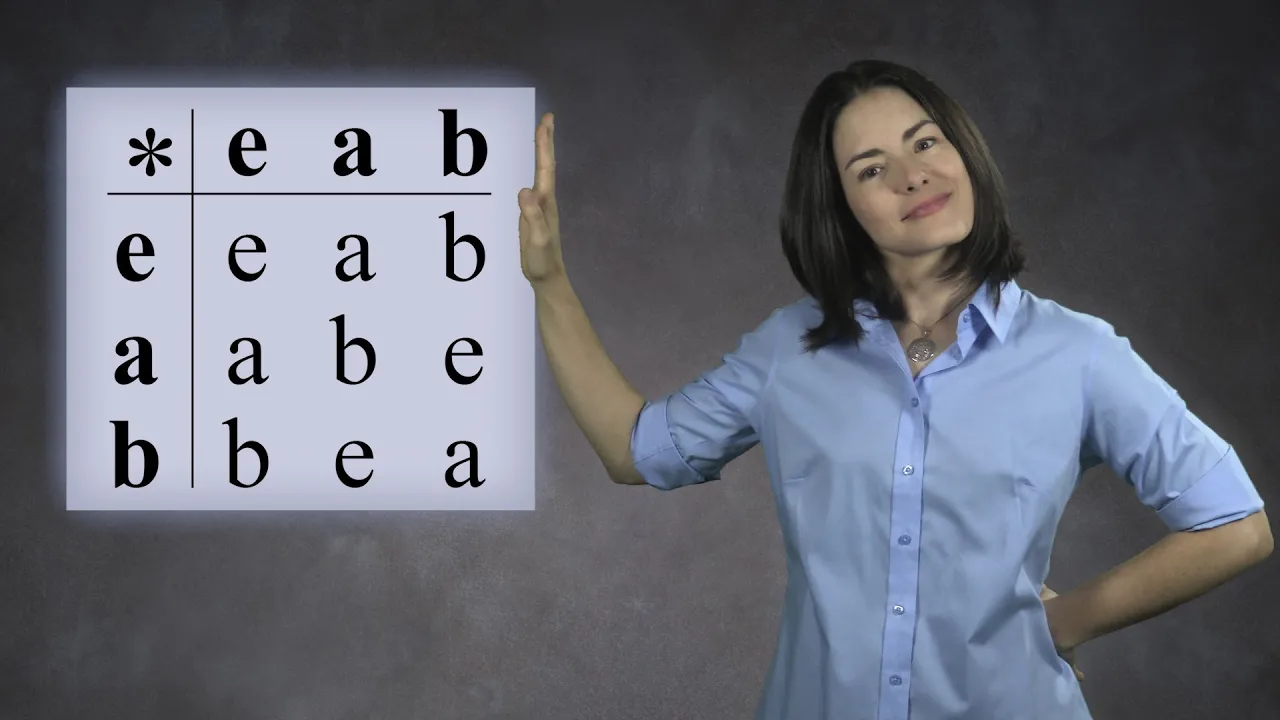
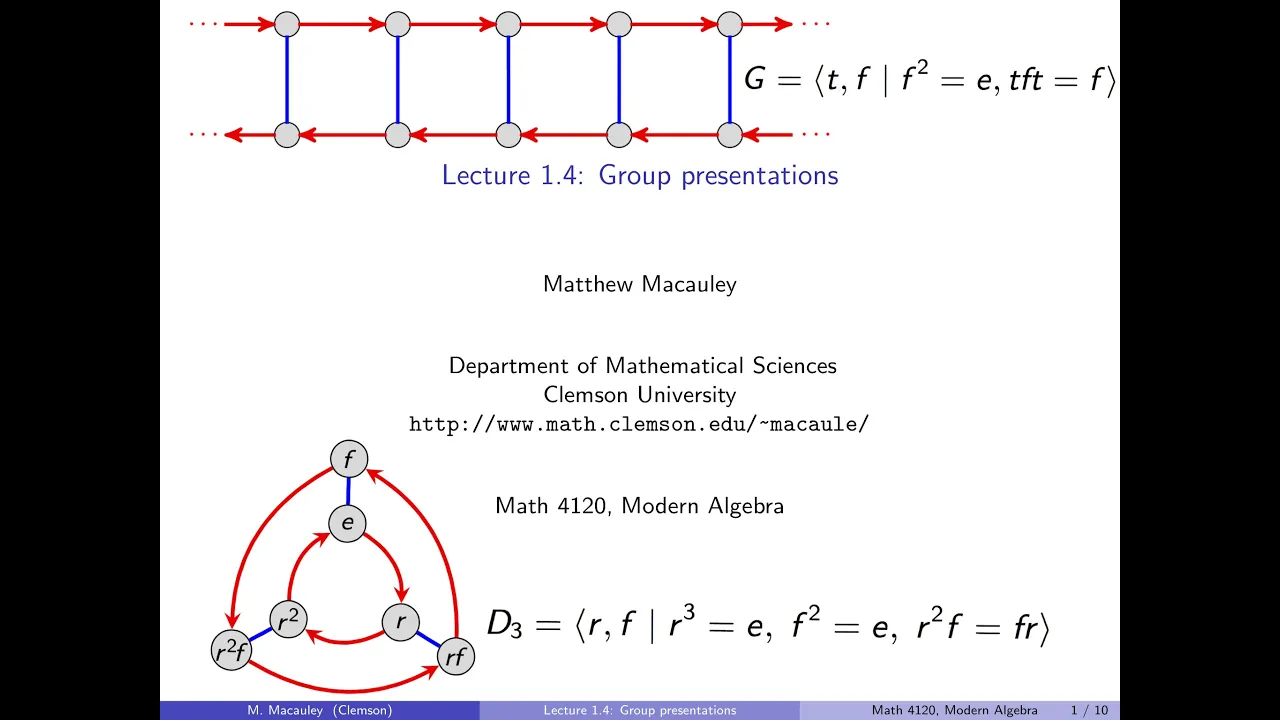








A group is a set of actions satisfying four key properties: (1) there is a predefined list of actions that never changes, (2) every action is reversible, (3) every action is deterministic, and (4) any sequence of consecutive actions is also an action; these properties can be illustrated using the Rubik's Cube, where the six face rotations serve as generators that can produce all possible cube configurations through their combinations.
Visual Group Theory Lecture 1.1: What Is a Group? Rubik's Cube Intro
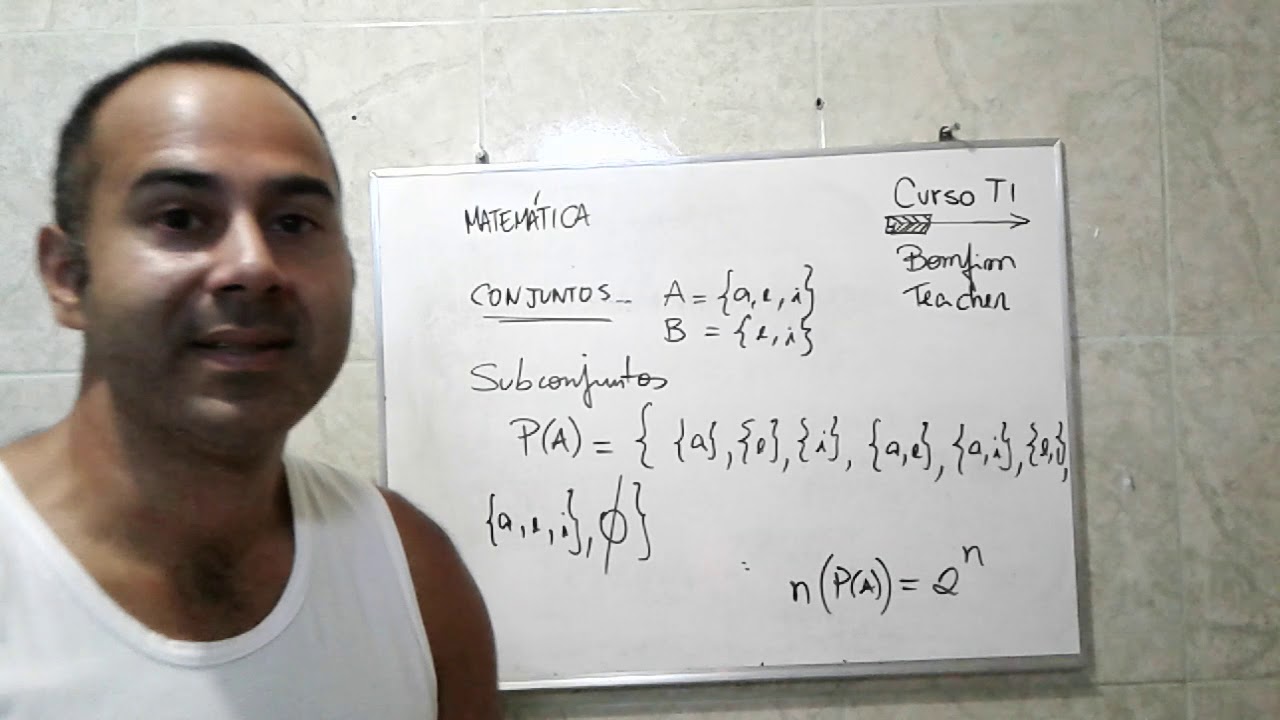
Added:Basic understanding of set theory, including the concepts of sets, elements, and subsets.
Familiarity with standard arithmetic operations (like addition and multiplication) and their properties, such as associativity and identity.
The concept of functions and mappings, specifically how an operation takes inputs and maps them to an output.
An intuitive grasp of the Rubik's Cube mechanics, such as how turns alter the positions and orientations of the individual pieces.
Studying the formal algebraic definition of a group, focusing on the four core group axioms: closure, associativity, identity, and invertibility.
Exploring visual representation tools for groups, such as Cayley tables and Cayley diagrams (graphs that represent group structures).
Learning about specific, fundamental types of groups, including Cyclic groups (Z_n), Dihedral groups (D_n), and Symmetric groups (S_n).
Investigating subgroups and the concept of generators, which explain how a small set of elements can construct an entire group.
Applying group theory to systematically solve the Rubik's Cube and calculating the size and characteristics of the Rubik's Cube group.
200.4K views2.4Klikes16:15Original Release: 2016-02-24
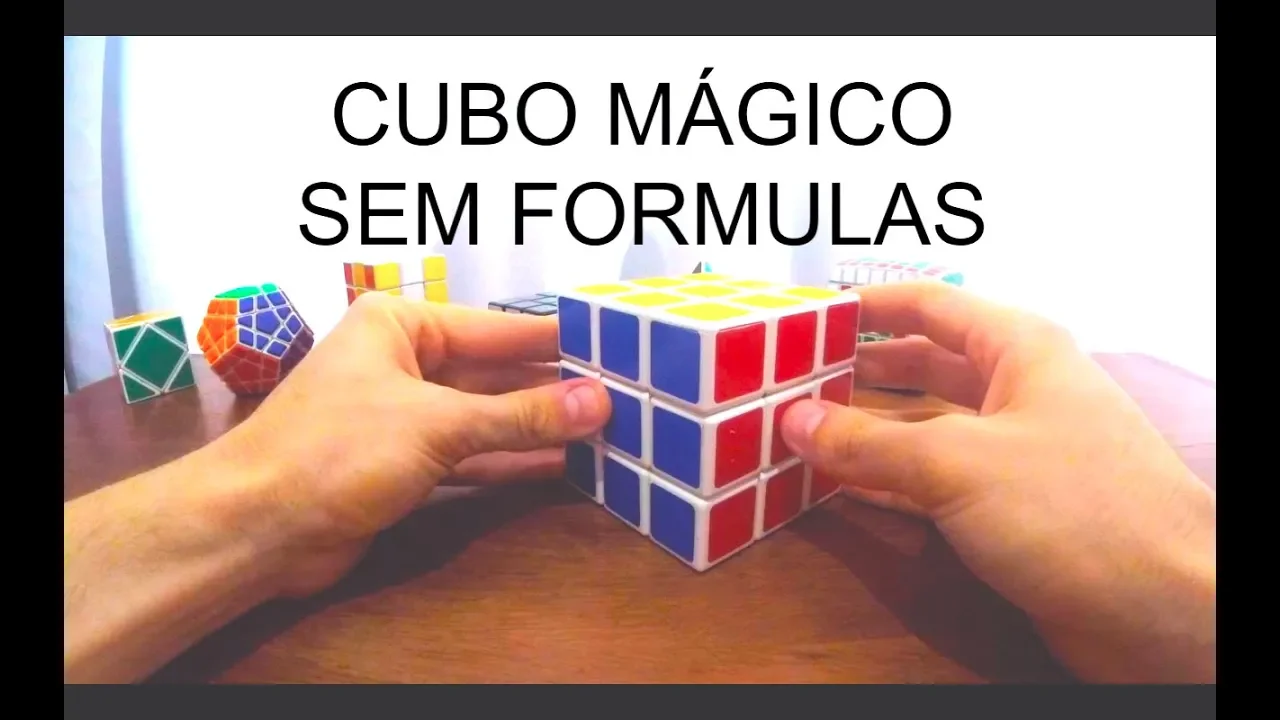
welcome to lecture 1.1 what is a group in the first series of lectures you going to learn intuitively what a group is so you can understand the concept before you see the formal definition which won't actually appear until lecture 1.6 our introduction to group Theory will begin with the famous Rubik's Cube toy pictured below this was invented in 1974 by Aro rubic of budapes hung though it didn't really become popular until the 80s uh Erna Rubik is a Hungarian inventor sculptor and professor of architecture now according to his Wikipedia entry he is known to be a very introverted and hardly accessible person almost impossible to contact or get for autographs not impossible just almost impossible as shown by this picture of yours truly and Professor rubic from 2010 in Budapest Hungary and I should note that his Wikipedia page has since been updated and that one passage has been removed this was actually taken at the opening of the Akin Kum Institute of Technology which is a wonderful study abroad program for North American undergraduates who are majoring in computer science or engineering and uh for for 25 years now there's actually been a classic mathematics program in Budapest called The Budapest semesters in mathematics that I highly Rec recommend you look into if you are interested and so this this was meant to complement that for for non-math stem Fields the cube comes out of the box in the solved position but of course we can scramble it by rotating one of its six faces and the result might look something like this now the goal of course is to return the cube to its original solved position and all you can do is rotate one of the six faces now since Rubik's Cube does not seem to require any skill with numbers to solve it you may be inclined to think that it's not a mathematical puzzle now the big idea from this lecture and actually from the course is group theory is not about numbers I mean I guess there there's plenty of numbers that do arise in group Theory you can apply it to numbers but the concept behind group Theory are about patterns and Symmetry and these are things that the Rubik's Cube possesses in abundance okay so let's explore the ru cube in a little more detail particular let's let's Identify some key features that will be recurring themes in our study of patterns and symmetry so here are some questions that I want you to ponder first of all how did we scramble up the cube in the first place and how do we go about unscrambling it so there are some sort of rules that you have to have and things that you know what counts as a move and what doesn't count as a move so that's the next question what actions or moves do we need in order to scramble and unscramble the cube now obviously you could peel the stickers off and put them back but do you want to actually allow that as a move when you're scrambling the cube you often rotate it in space and move it you know from your left hand to your right hand but those are moves but you those are things that you typically ignore they're not really important they're not things that you are going to see in a Solutions manual so again these are vague questions so there's many correct answers now how is Rubik's cube different from Checkers now Checkers is a game there's a there's a a winner but there's other differences too sometimes in checkers you can get stuck there's some pieces that you can't move some pieces that you can again open-ended questions um how is Rubik cube different from poker well there's obviously no element of chance in Rubik's well I mean you could in theory Get Lucky with solving it but in principle there there is no stochastic element in solving a Rubik's Cube observation one there is a predefined list of moves that never changes and here by moves I want to say any sequence of twists or of I should say of quarter twists of the face so I'm not allowing um taking off the stickers taking apart the cube or rotating in space I'm just looking at the actual sequence of quarter turns that you can make those are the moves observation two every move is reversible if you do a sequence of twists you can just undo those and get back to where you started every move is deterministic that's observation three so this is unlike poker or rolling a or a dice game where there's an element of chance and also I should say observation two every move is reversible that is unlike say Checkers you can't move backwards in checkers observation four moves can be combined in any sequence so if I do one sequence of twists and then another sequence of twists I can just do those back to back and I get a new sequence of twists and this is again something that does not arise in like poker or Checkers so again in this setting a move is a Twist of one of the Six Faces by 0 de 90 180 or 270 and of course you don't need to um if you want to only count uh twists of 90 degrees that's fine because a Twist of 180 is just two consecutive twists of 90 so we could add more to our list we could add more observations we could add more moves we we could add a move of a Twist of 540 degrees but let's not do that because we don't really need it so as we shall see these four observations are sufficient to describe the aspects of the mathematical objects that we wish to study okay so what does group Theory have to do with this group Theory studies the mathematical consequences of these four observations which in turn will help us answer interesting questions about symmetrical objects such as the Rubik's Cube group Theory arises everywhere in Puzzles Visual Arts music nature the physical and Life Sciences computer science cryptography and all throughout mathematics actually in the third lecture in this series um that entire lecture will be devoted two groups it's it's titled groups in science art and Mathematics basically lots of pretty examples group theory in my opinion anyways is one of the most beautiful subjects in all of mathematics some people like analysis when there's Epsilon Delta proofs or calculus but to me it's hard to get any more beautiful than studying the mathematics of symmetry and shapes and things like the Rubik's Cube It's it's hard to beat that I'm obviously a little bit biased okay so instead of considering our four observations as descriptions of the Rubik's Cube which is what we did what we will do soon in the next slide is we will actually rephrase those observations as rules which we call axioms and that will Define the boundaries of the objects of study in other words groups so advantages of this endeavor well first of all we make it clear what it is we want to explore and right now it's a little bit vague it helps us speak the same language so that we may know that we are discussing the same ideas and common themes though they may appear in vastly different settings so you know we may have uh so one case we may be looking at the symmetry of the rubis cube and in another case we may looking at the symmetry of some wallpaper design or of some I don't know some Crystal that comes up in chemistry and finally uh the rules provide the groundwork for making logical deductions so that we can discover new facts um many of which are surprising so we're going to start with four simple rules and we will prove a whole bunch of very non-trivial properties of these objects called groups from those basic rules and that's essentially what we do in mathematics we just Define a few basic definitions and then we prove deep theorems just from those definitions okay so rules of a group so our rules rule one there is a predefined list of actions that never change or never changes rule two every action is reversible rule three every action is deterministic and rule four any sequence of consecutive actions is also an action okay so let me ask you what changes were made in the rephrasing now a few comments about this um or answers I guess we swap the word move for action it's it's subtle but I like the word action better um the usually short list of actions required by rule one is our set of building blocks and we call them the generators so um to solve a Rubik's or not to solve a Rubik's Cube to play with a Rubik's Cube you really only need six actions there are six faces of a Rubik's Cube and you can generate any complicated sequence of twists by twisting one of the Six Faces by 90° so um so we call those the generators uh and those generate the uh usually much more numerous um set of actions and rule four tells us that any sequence of the generators is also an action so no matter how we put the generators together we get another action okay so here's our informal definition of a group a group is a set of actions satisfying rules 1 2 3 and four and I want to emphasize I'm saying a group is a set of actions that is things that you do so in the setting of The rubis Cube there is a difference between a configuration of the rub Cube and an actual action of twisting the faces so the group of the Rubik's Cube is the actual set of all possible twists of the faces not the set of all configurations that said I should clarify a little bit more um a lot of times two sequences of moves or actions are indistinguishable so for example if you rotate a face by 90 degrees clockwise that's the same thing as rotating that same face five times um because if you rotate it four times you get back to where you started so we will say that two such moves are the same so again rotating a face uh once or five times or nine times it's all the same thing here's a fun fact there are 43 I don't even know what that number is um okay 4.3 * 10 19th distinct configurations of the Rubik's Cube that's a lot so while there are infinitely many possible sequences of moves because you know you can rotate a face one time five times nine times or two billion times or as many times as you want start if you start from the solve position this is how many truly distinct moves there are so that's the number of configurations or the number of distinct moves so it's the size of the Rubik's Cube group so all of these 4.3 * 10 19 moves or actions are generated by just six moves again there are six faces of the ribus cube and if you are if you only allow yourself to rotate a face 90° clockwise then those six action can generate all all of these so let's call these generators A B C D E and F I don't care which one is which uh but the point is every word over the alphabet um on these six letters describes a unique configuration of the cube starting from a fixed solve position and it also describes a unique action in the group so if you wanted to write a solution manual for the rubas cube um and put it online um you could do it using just these six letters because they those moves those actions generate all possible moves and thus all possible configurations okay so now let's summarize the big ideas of this lecture Loosely speaking a group is a set of actions satisfying some mild properties deterministic reversibility and closure closure I mean if you do a sequence of moves that is still another move so a generating set for a group is a subcollection of actions that together can produce all actions in the group you think of it like a spanning set in a vector space usually a generating set is much smaller than the whole group we saw this with the rubis cube group it had 4.3 * 109 actions and could be generated by just six actions and we will shortly see groups that have infinitely many actions that can be generated by just a couple or even one generator so given a generating set not surprisingly the individual actions are called generators the set of all possible ways to scramble a Rubik's Cube is an example of a group it's not the simplest group we're going to see definitely not but it it's nice because it it's something that you're probably familiar with so two actions are the same if they have the same net effect for example twisting a face one time versus twisting a face five times an important thing to note is that the group is the actual set of actions one can perform on the cube not the set of configurations however there is a bige between these two sets if you take any scrambled configuration then and fix a solved State then there is one way to go from that solve state to that config uh to that configuration well there's actually many ways but you say that those are all the same action now later in this class we are going to actually return to looking at both the set of actions and the set of configurations but that's that's much later down the line and finally tying this back to the Rubik's Cube again the Rubik's Cube group has 4.3 * 10 the 19 actions but it can be generated using a set of size six
Up Next

10:09
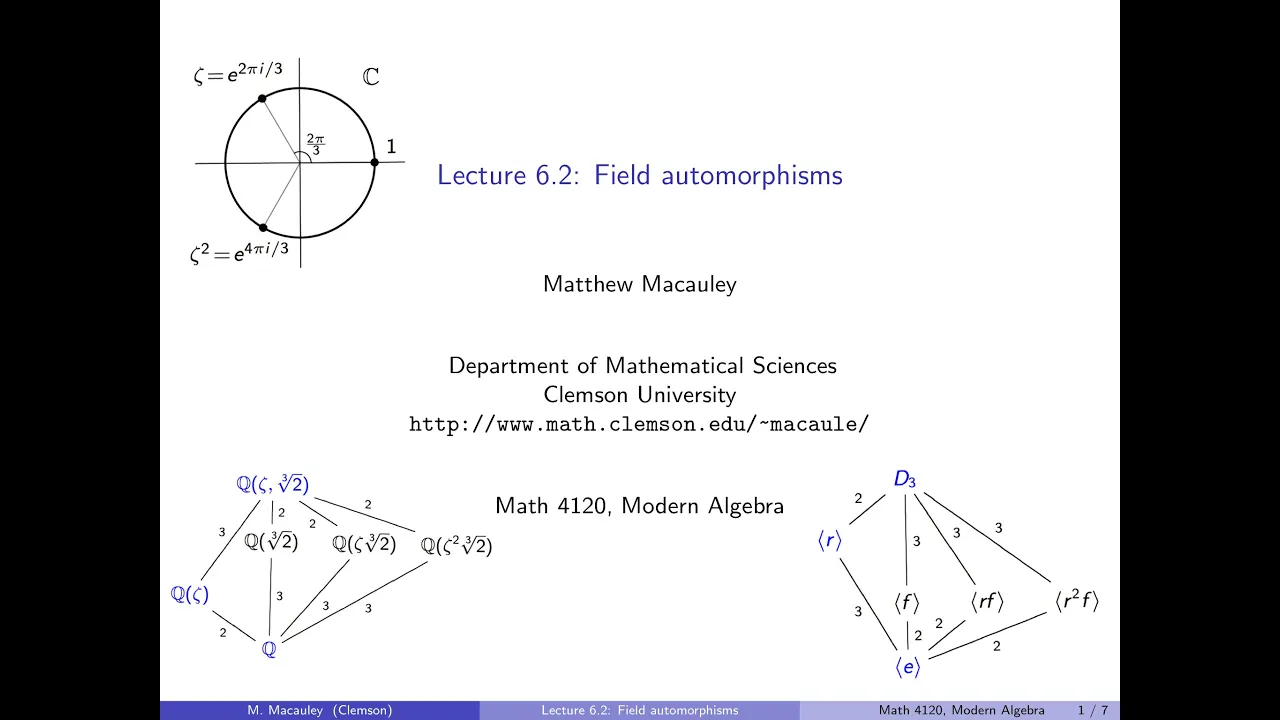
Splitting Fields in Field Extensions | Abstract Algebra
@HarpreetBedimath
5.9K views•2015-05-07
4:43
Elliptic Curve Cryptography Explained: ECC, ECDSA, ECDH
@PracticalNetworking
28.5K views•2024-10-21
35:40
Field Automorphisms and Galois Groups Explained
@ProfessorMacauley
53.6K views•2016-04-08

6:00
The Mathematical Impossibility of Accurate World Maps
@Vox
23.3M views•2016-12-02
Related Study Plans & Knowledge Roadmaps
Structured learning paths in Mathematics
mathematics
Tensor Calculus: Vectors to Riemann Curvature
01Mathematical Foundations: Linear Algebra & Calculus
02Covectors, Dual Spaces, and Tensor Basics
03The Metric Tensor and Index Gymnastics
+ 2 more learning modules
40h5 modules
Explore Roadmap
mathematics
Gödel's Incompleteness: Logic, Proofs & Limits
01Introduction to Formal Systems & Hilbert's Dream
02Set Theory, Cardinality, and Cantor's Diagonal Argument
03Arithmetization and Gödel Numbering
+ 2 more learning modules
14h5 modules
Explore Roadmap
mathematics
Galois Theory: Fields, Groups & Solvability
01Foundations of Abstract Algebra: Groups & Fields
02Polynomials & Field Extensions
03Splitting Fields & Symmetries
+ 2 more learning modules
24h5 modules
Explore Roadmap
mathematics
Non-Euclidean Geometry: Models & Geodesics
01Euclid's Fifth Postulate and the Birth of New Geometries
02Hyperbolic Space and the Poincaré Disk Model
03Geodesics: Defining Straight Lines in Curved Spaces
+ 2 more learning modules
15h5 modules
Explore Roadmap