
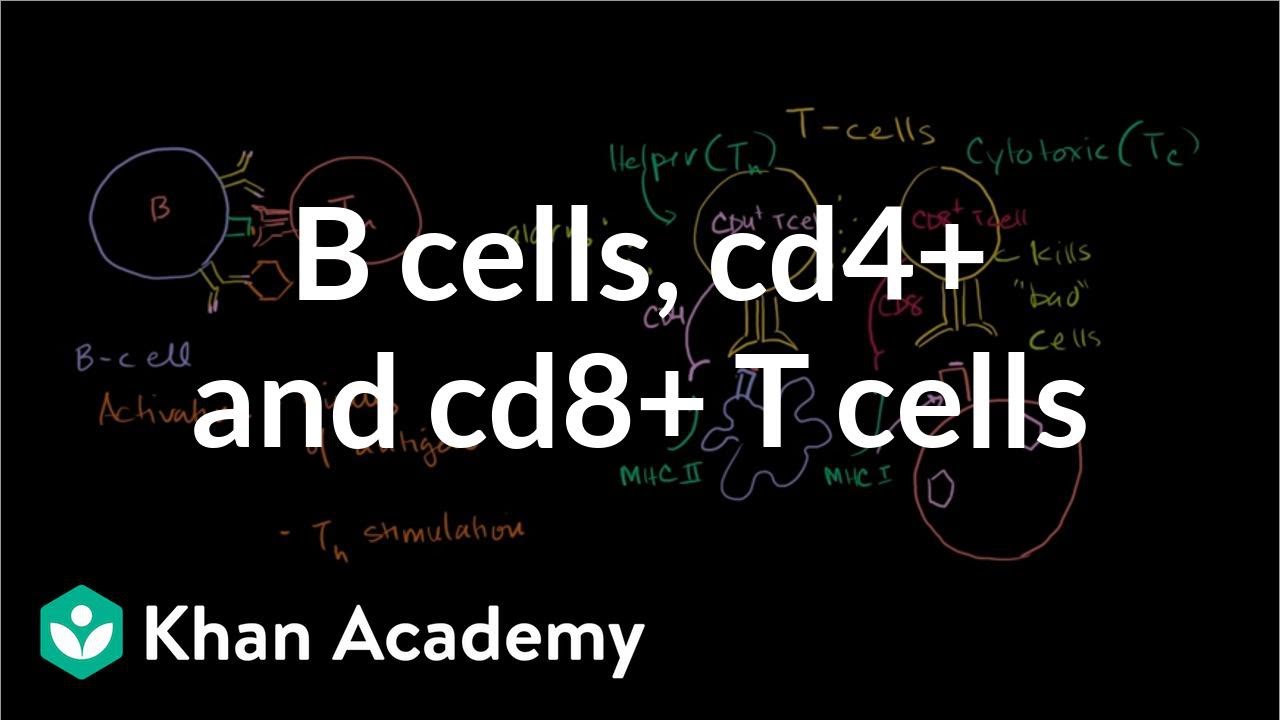






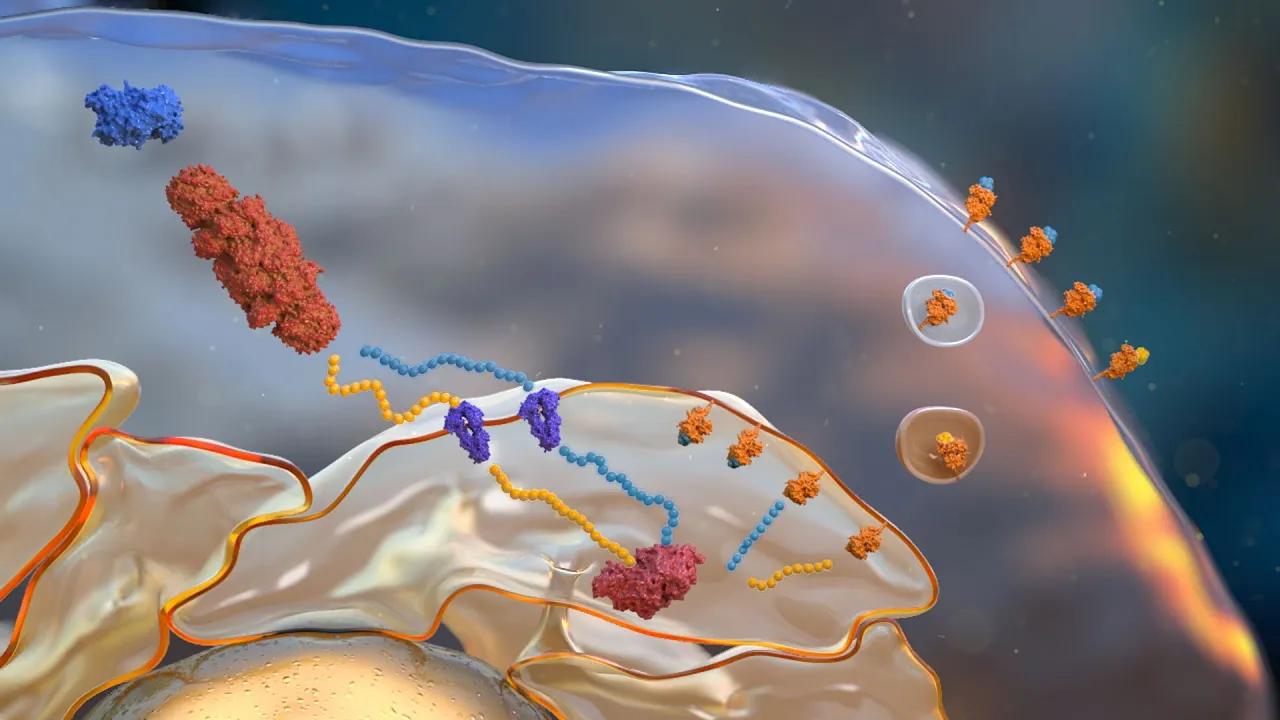




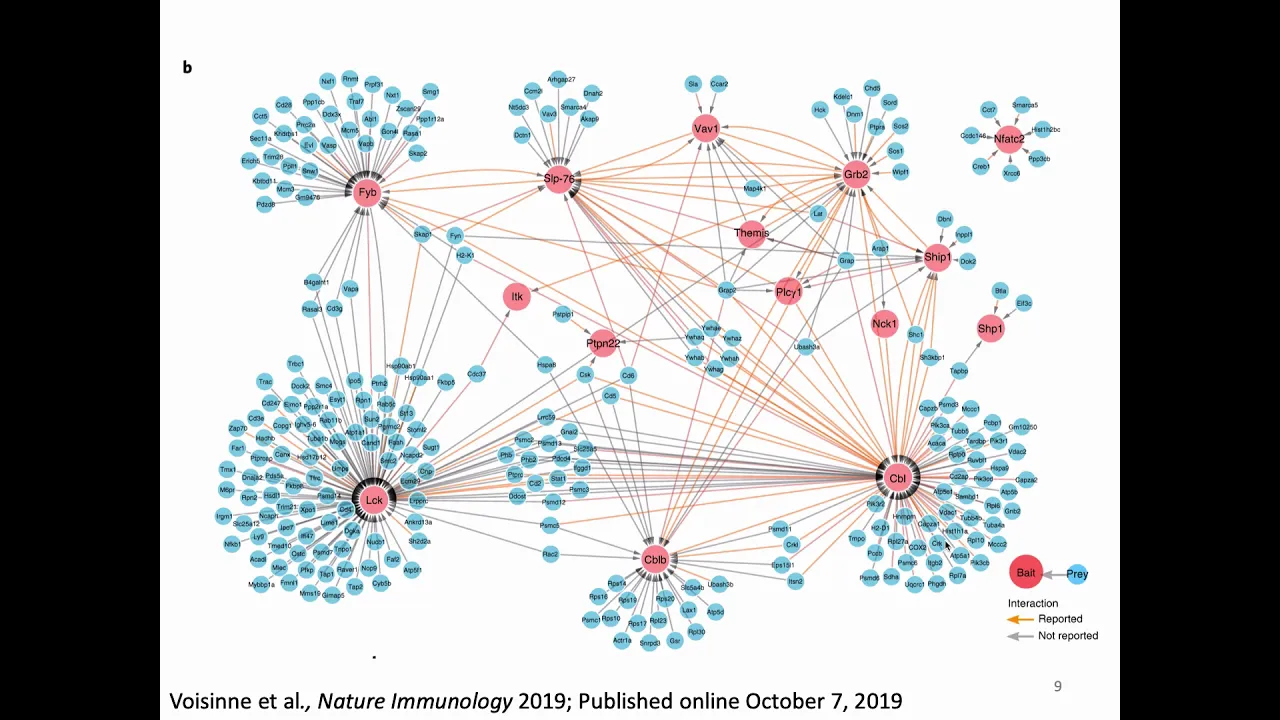
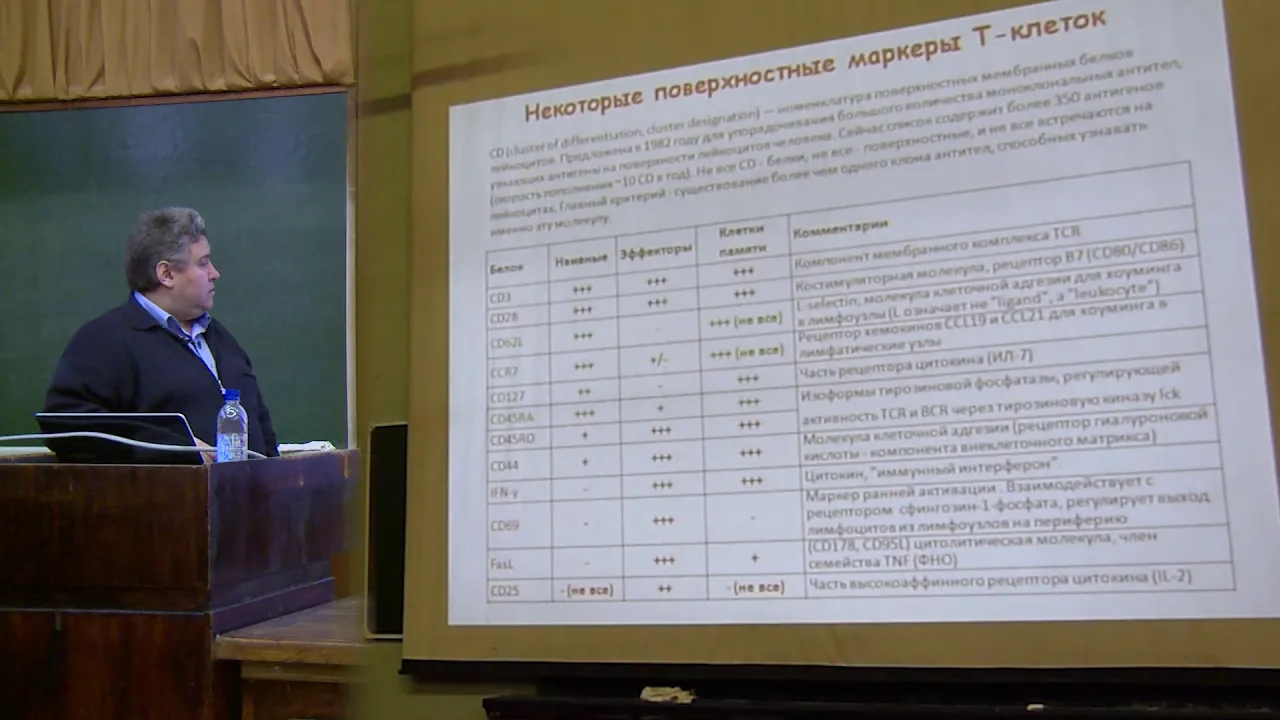

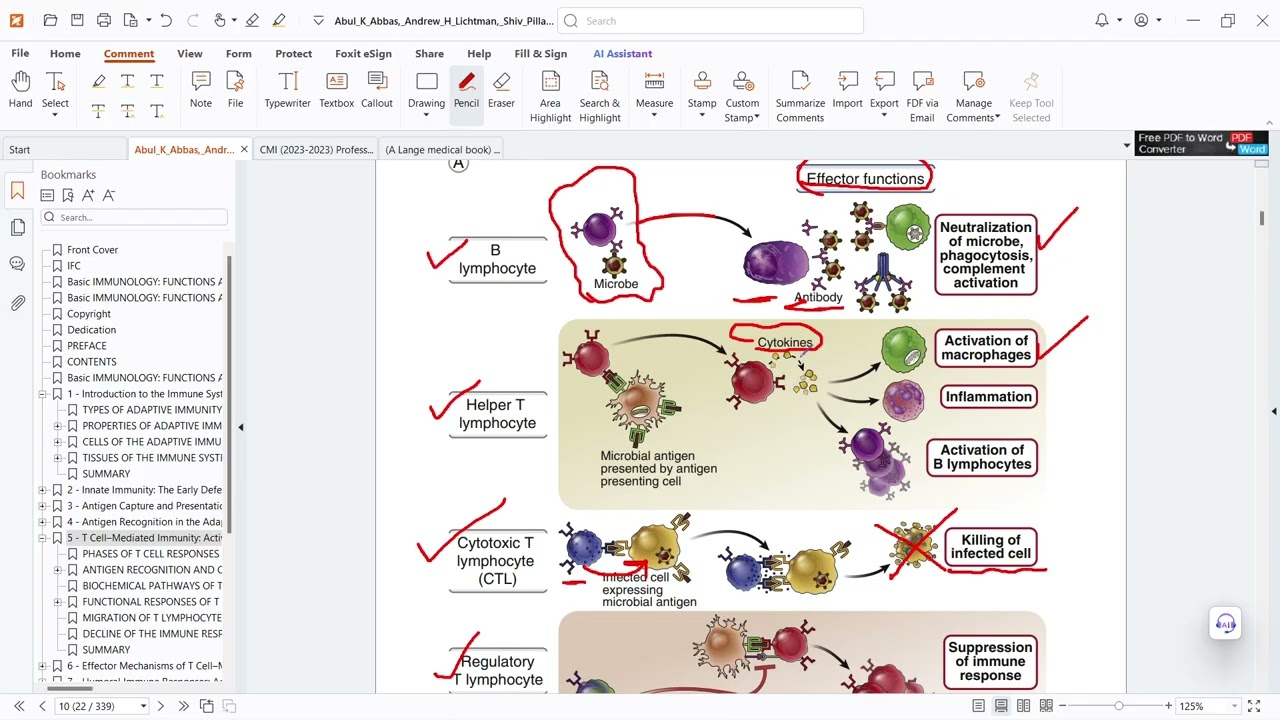
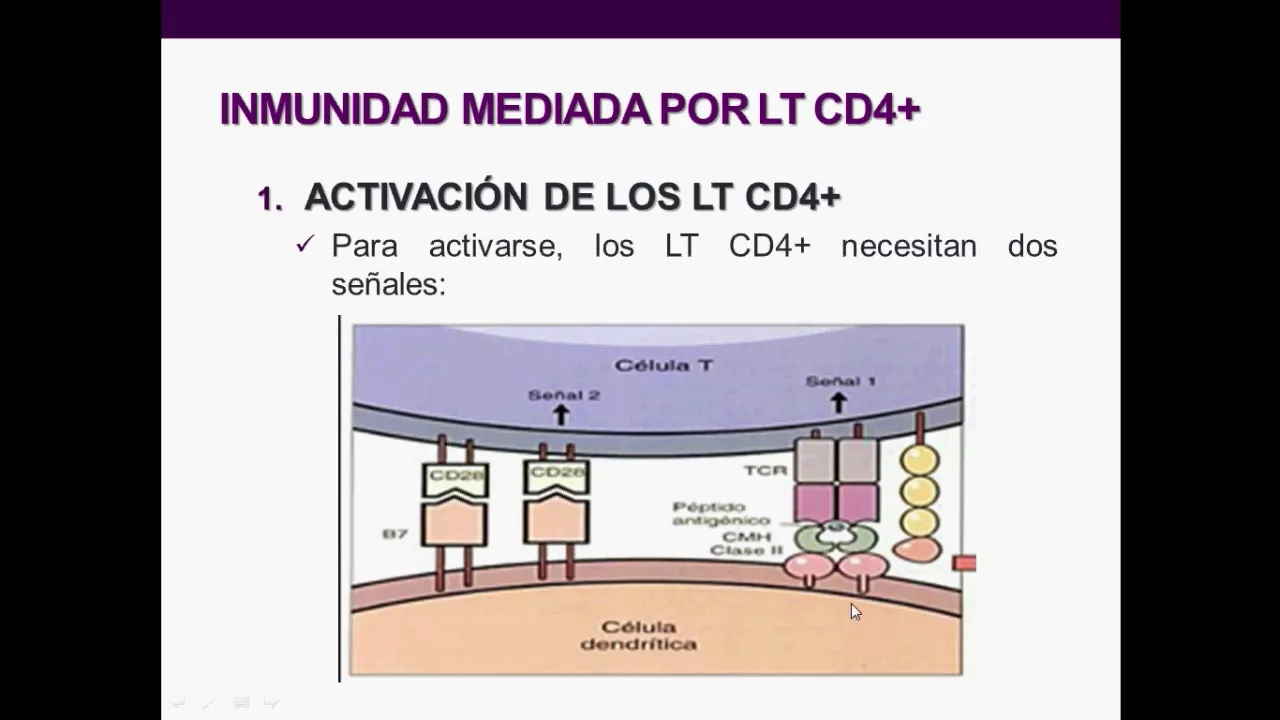







T cell activation requires coordinated signaling through the T cell receptor (TCR) and co-stimulatory molecules (signal 2), where TCR binding to peptide-MHC complexes activates ZAP-70 kinase, which initiates four signaling modules involving PLC gamma that generate second messengers (IP3 and DAG) to activate transcription factors NFAT, AP-1, and NF-kappaB, all converging on IL-2 production; co-stimulation through CD28 enhances these pathways by generating PIP3, which is essential for optimal T cell activation and effector function.
T Cell Signaling and Activation | Immunology Lecture (UCSD Extension)
Added:Basic T cell biology, including the roles and differentiation of CD4+ (helper) and CD8+ (cytotoxic) T cells.
The mechanism of antigen presentation, specifically how Antigen-Presenting Cells (APCs) process and present peptides via MHC Class I and Class II molecules.
The basic structure and components of the T Cell Receptor (TCR) and its associated CD3 complex.
Fundamental cellular signaling concepts, such as receptor-ligand interactions, phosphorylation cascades (kinases and phosphatases), and second messengers.
Downstream transcription factor activation (e.g., NFAT, NF-kB, and AP-1) and their role in driving cytokine gene expression like IL-2.
T cell clonal expansion, differentiation into distinct effector subsets (such as Th1, Th2, Th17, and Treg), and memory cell generation.
The structure and function of the immunological synapse formed between T cells and antigen-presenting cells.
Clinical applications, including the mechanism of immunosuppressive drugs (e.g., cyclosporine, tacrolimus) and modern immunotherapies like CAR-T and checkpoint inhibitors (PD-1/CTLA-4 blockade).
22.6K views363likes27:47Original Release: 2021-03-17
hi everyone welcome back to week 4 of applied immunology this is lecture 4c where we will discuss the signaling mechanisms relayed from the tcr that are required for the activation of t cells this talk will pick up from our last lecture on t cell development by defining the intracellular signaling pathways that occur following tcr activation and again this occurs in mature t cells that have successfully passed linex selection checkpoints we will start today with a brief refresher on commonly used components and modifications that are used to activate amplify and regulate signal transduction pathways before diving into the specific signaling pathways that are activated in t cells upon binding of the tcr to cognate peptide mhc complex we'll then end with the discussion of how co-stimulatory signaling or signal 2 of t cell activation is responsible for optimizing tcr activation we're going to get into a fair amount of immunology jargon today so i want to briefly revisit this conceptual schematic from week one as we learn about the t-cell signaling and activation pathways please try to focus on thinking about how these pathways contribute to the central goals of a successful immune response first given a universe's worth of potential pathogens we know that a given t cell needs to be able to recognize specific pathogen-derived peptides which in lecture 4a from earlier this week we learned is accomplished through the generation of t cell receptors with unique specificities the ability of t cells to conduct this first goal of the immune response occurs in an indirect fashion as it requires the presentation of peptide mhc by antigen presenting cells which we learned about in week 3.
apcs provide both the peptide mhc complex that binds to the t cell receptor which is signal 1 of t cell activation as well as co-stimulatory molecules such as cd80 which we learned represent signal 2 of t cell activation again the contact surface between apcs and t cells where tcr and co-stimulatory molecule interactions occur is also referred to as the immune synapse the second goal that a t cell needs to accomplish is to produce effector molecules in response to t cell receptor stimulation that indicates the presence of infection this can be accomplished through either the induction of transcription factors that can upregulate transcriptional programs and these then in turn produce effector molecules or through the direct activation of pre-existing proteins that are already expressed in the cell the biological changes conferred upon the t cell upon production of these effectors induce a cellular state that we generically refer to as activation and this reflects the quality of the t cell and its acquisition of properties that make it capable of responding to infection today we're going to get deep into the signaling weeds of these steps represented by the black arrows that connect tcr and co-stimulatory molecule binding to both transcriptional and effector molecule activation we'll start the first half of this talk with an introduction to the common players involved in signal transduction in general which will then lead us into the second half of today's talk where we will learn more about the specific details of signal transduction downstream of tcr activation on that note keep in mind that the activation state of a t cell and the effector molecules that it produces will determine which effector mechanisms it can use to destroy pathogens this is the third central goal that we've established for immune responses for t cells this is done through both direct cytotoxicity and this is typically done by c8 positive t cells and we also refer to this as cellular immunity as well as through indirect mechanisms including cytokine production that can communicate information about the infection to other immune cells and this is typically performed by helper cd4 positive t cells this last goal is really going to be the center of our lecture at the end of this week which is lecture 4d and that will cover t cell functions again this current lecture 4c will primarily focus on the intracellular signaling pathways triggered within t cells upon tcr binding and how these enable t cell activation we're going to cover a lot of denser signaling jargon in this lecture so i wanted to start off today by orienting ourselves as to where the signaling fits into the broader context of t cell-mediated immune responses let's first start with a primer on general principles of signal transduction this will be presented in a broader sense for this first summary slide with some references to tcr-associated proteins but keep each of these mechanisms in mind for the second half of today's lecture when we'll get more into the specifics of tcr signaling this signaling overview will add a few more minutes onto our lecture time today but i still think that it'll be helpful in terms of making sure that we're all on the same page with understanding some of the molecular mechanisms that are involved in tcr signaling first signaling pathways are often initiated by transmembrane protein receptors which function by binding to a ligand at their extracellular domains here shown in blue the binding of cognate ligand to a receptor often induces a conformational change such as a dimerization reaction and this brings intracellular domains of the receptor together here shown in yellow this recruitment often allows intracellular domains to interact with one another or other signaling partners and this leads to various forms of intracellular enzymatic activity which represent the generation of an activation signal and by doing this receptors essentially function by converting extracellular inputs such as ligands into intracellular biochemical signals such as enzyme activation and this the activation of protein kinases is a very common proximal event to receptor activation so kinases function by taking free phosphate groups here shown in red and attaching them covalently to target proteins which could be the intracellular domains of activated receptors cytoplasmic regions of membrane phospholipids or even other kinases a common intracellular domain on transmembrane receptors consists of tyrosine residues that are targeted by a certain class of kinases some of the kinases involved in tcr signaling that we'll learn about in this talk include lck zap 70 pi3 kinase and pkc theta kinase is typically phosphorylate proteins on only three target amino acid residues tyrosine serine or threonine and the residue specificity of a given kinase is typically included in its name so a tyrosine kinase attaches phosphate groups to tyrosine residues etc although most of the target proteins that we'll discuss today are activated by phosphorylation keep in mind that there are some other members such as the transcriptional factor n-fat where phosphorylation serves as an inactivating form of post-translational modification kinases can also phosphorylate scaffold proteins which don't necessarily have any of their own enzymatic activity once phosphorylated but they can still play important functions in facilitating the assembly of larger multi-protein signaling complexes it's worth noting that scaffold proteins are different from adapter proteins which are typically smaller and only contain a few domains that can be used to link smaller numbers of proteins together scaffold proteins that are involved in tcr activation include lat as well as something called karma1 phosphorylated residues on scaffold proteins can serve as recruitment sites for proteins containing domains that recognize these phosphorylated residues including the sarcomology 2 or sh2 domain which is found in several tcr signaling proteins proteins that might not otherwise interact with one another are capable of binding to these phosphor residues on the scaffold protein and this forms a signaling complex that allows for interactions between these proteins that can then relay an activation signal the next component of signal transduction that we'll cover are small g proteins which are also known as small gtp aces and these are monomeric gtp binding proteins that are often tethered to the plasma membrane gtpases can be switched on or off depending on whether they are bound to gtp or gdp this example looks at raz which is shown here in blue and this is a g protein involved in cellular proliferation and other signaling processes and it's an active state raz is bound to gdp until it interacts with something called a guanine nucleotide exchange factor or gef which induces a conformational change in raos that allows it to release and bind to gtp once bound to gtp ras is active until gtp hydrolyzes to gdp due to the gtpa's activity of raz and this returns it back to its inactive gdb gdp bound state this process can also be sped up by the presence of gtpa's activating proteins or gaps which add another layer of regulation to small g protein activation small g proteins are therefore fairly quick to turn on or off depending on the activity of jeffs and gaps and are molecular switches that are often used in signal transduction another important aspect of signal transduction is that the proteins involved are often concentrated at the plasma membrane and this facilitates interactions between the intracellular domains of receptors and their associated signaling components this is accomplished through a number of strategies including the phosphorylation of a receptor or a scaffolding protein that recruits signaling components to the intracellular domain of the receptor it can also be accomplished through binding to small g proteins such as raz which as mentioned before are tethered to the plasma membrane this can also occur through the modification of membrane lipids such as pip2 which can get phosphorylated and generate a molecule called pip3 that can then recruit ph domain containing proteins to the plasma membrane collectively all of these strategies help concentrate signaling components at the plasma membrane in order to facilitate their interactions with one another most signal transduction pathways have a series of important amplification steps that allow for the rapid spread of an initial signal throughout an entire cell the first type of amplification is through kinase cascades in which protein kinases sequentially phosphorylate and activate one another this example shows how the activating phosphorylation of the apical kinase raf phosphorylates and activates multiple mech proteins which in turn can phosphorylate and activate several irk proteins so since each individual kinase can go on to exert its enzymatic activity on multiple protein targets this means that with every step in a kinase cascade there is considerable amplification of the initiating signal and the pathway in this example is associated with a kinase cascade called the map kinase or map k pathway which is important in tcr signaling a second form of signal amplification occurs through the production of second messengers such as intracellular calcium ions which are released in high amounts following an activation stimulus and then can rapidly diffuse throughout a cell in order to activate a variety of target molecules this example looks at intracellular calcium ions that are released from the endoplasmic reticulum following ip3 activation which then opens calcium channels that are located at the er membrane and the increase in cytosolic calcium ions can then induce conformational changes in target molecules such as calmodulin which upon reconfiguration of its structure can bind to other effector proteins such as transcription factors and continue the signaling pathway because these are small diffusible molecules that can be rapidly released second messengers such as calcium ions are an efficient way to induce changes in proteins throughout an entire cell lastly the negative regulation of signaling pathways is an important component of the resolution of a cell's response to receptor activation there are two main regulators of signal transduction that we'll consider today the first are phosphatases which are a large class of enzymes that function by targeting themselves to phosphate groups on substrate proteins and again phosphorylation is typically associated with activation of a given target protein although there are some exceptions and some phosphatases that are involved in tcr signaling include something called calcineurin so the phosphatase removes the phosphate group from the target protein rendering it back to its often in active form again most of the pathways that we'll talk about today involve target proteins that are active when phosphorylated but inactive when dephosphory related but this is not always the case uh phosphatases therefore represent an important negative regulator that balances out the activity of protein kinases the activity of phosphatases brings up an important characteristic of phosphorylation as a post-translational modification which is that this is a reversible modification that can be easily added or removed and this allows for the rapid activation and deactivation of target proteins another mechanism of negative regulation is ubiquitination which is a post-translational modification that we first heard about during our week three lectures on antigen processing ubiquitin chains can be added to proteins by ubiquitin ligases in a form of ubiquinone or a form of ubiquitination linkages called lysine 63 or k63 will tag these proteins for degradation by the proteasome again the proteasome is a cytosolic complex that recognizes ubiquitin motifs and chews up attached proteins into small peptide fragments so unlike the activity of phosphatases ubiquitin modifications and subsequent degradation by the proteasome represent irreversible forms of regulation since they destroy the target protein now that we have familiarized ourselves with some basic principles of signal transduction let's apply these to the specific case of t cell receptor signaling our first lecture this week discussed the structure of tcrs with a primary focus on the variable regions of the extracellular alpha beta chains which are involved with the recognition of peptide mhc complexes however the tcr also has an invariant intracellular domain that's comprised of zeta chains these form also contain multiple regions called immunoreceptor tyrosine based activation motifs or itams these are represented by the yellow rectangles in the diagram itams are enriched with tyrosine residues which means that they are targets for specific types of tyrosine kinases these itams can only be phosphorylated by kinases when the tcr is complexed with the co-receptor cd3 which also contributes its own itams that neighbor the intracellular domains of the tcr upon tcr binding to cognate peptide mhc signal transduction is initiated this requires the binding of a co-receptor either cd4 or cd8 to the mhc complex as well and the example in this slide shows cd4 in orange which interacts with mhc class 2 shown in grey co-receptor binding to mhc is required for tcr activation because the intracellular domain of cd4 or cd8 is covalently linked to a sarc family kinase called lck or lick upon co-receptor binding lick then phosphorylates the target itams on the cytoplasmic tails of both the alpha and beta chains of the tcr as well as the items that are present on the intracellular domain of the cd3 core receptor once the itams of the tcr and cd3 are phosphorylated by lick a tyrosine kinase called zeta chain associated protein 70 abbreviated as zap 70 is then recruited to the complex zap 70 contains two sh2 domains which allow it to bind to two phosphorylated tyrosines that are present on itams in both the tcr zeta chain as well as on the cytoplasmic domain of cd3 once recruited zap 70 itself is also phosphorylated by liquid three domains and this leads to its activation because zap 70 is a kinase it's recruitment to the plasma membrane and activating phosphorylation by like allows zap 70 to then phosphorylate several targets all of which play important functions in t cell activation the first of these targets is a scaffold protein called linker for activated t cells or lat as well as an adapter molecule called slip 76 shown here in dark purple something that isn't shown in this diagram is the zap 70 mediated activation of pi3 kinase or pi3k which phosphorylates the plasma membrane lipid pip 2 to form pip 3 whose activities in combination with lat and slip 76 lead to four primary signaling modules that are initiated by the kinase activity of zap 70.
the first module involves pip 3 recruitment of the kinase akt to the plasma membrane which influences cellular metabolism and this is done in order to accommodate the increased energy requirements of an activated t cell that is doing a lot of energy costly activities like producing effector molecules and undergoing rapid proliferation the second module leads to the activation of this enzyme phospholipase c gamma or plc gamma which is responsible for driving transcriptional programs associated with t cell activation the third module involves the activation of a protein called vav or vav which coordinates the rearrangement of the actin cytoskeleton and activated t cells and the fourth and final module is the recruitment of an adapter protein called adap or adap which is involved in enhanced t cell trafficking capabilities through increased adhesion of integrand molecules that are expressed by t cells so basically i want you to appreciate how the activation of zap 70 at the tcr leads to multiple signaling modules that are engaged and that these make it possible for a t cell to assume several distinct cellular properties all of which reflect the activated status of that t cell all four of these modules are important for t cell activation but we don't really have time to delve into the mechanism of action for each of these at least not in this course so for today we will focus primarily on the three signal transduction mechanisms that are mediated through plc gamma which control transcription factor expression and activated t cells now plc gamma is a phospholipase that catalyzes the breakdown of phospholipids it regulates transcription factors by converting a membrane phospholipid called pip2 into the product's diacylglycerol or dag and the inositol triphosphate ip3 dag is retained in the plasma membrane where it can recruit important downstream proteins while ip3 is a soluble second messenger that can rapidly diffuse throughout the cell both of these products of plc gamma activity play important roles in initiating three distinct signaling mechanisms and the first is that ip3 triggers the release of free calcium ions from the endoplasmic reticulum or the er this floods the cytosol with calcium which subsequently leads to the opening of the plasma membrane channel orai1 which then imports extracellular calcium the collective result of this is that the cytosol is filled with second messenger calcium ions which influence the activation of certain transcription factors the other two effects of plc gamma activity involve the generation of the membrane lipid dag which functions by recruiting downstream proteins to the plasma membrane this includes a small g protein gef called raz grp which can activate raz as well as the protein kinase c theta or pkc theta and once recruited to the membrane these proteins undergo activation that influences transcription factor regulation so let's learn more about each of these three pathways the first the first is the influx of second messenger calcium ions into the t cell cytosol which again results from the opening of calcium ion channels in both the plasma membrane and the er that was initially triggered by the second messenger ip3 intracellular calcium binds to an adapter protein called calmodulin shown here in light green which undergoes a conformational change that allows it to bind to a phosphatase called calcineurin which is the dark blue protein in this diagram this binding then allows calcineurin to exert its phosphatase activity on the transcription factor n-fat which stands for nuclear factor of activated t cells removal of phosphates from n-fat activates the protein allowing it to traffic from the cytoplasm into the nucleus and once in the nucleus nfat activates gene transcription programs that are required for t cell activation importantly including the transcription of the cytokine il-2 the second con the second consequence of plc gamma activation is related to the generation of the membrane lipid dag so dag again functions in part by recruiting ras jrp which is an activating gef of the small g protein raz activated raz initiates a kinase cascade called the mitogen activated protein kinase or map kinase cascade this includes the sequential phosphorylation of cascade members raf mech irk and junk all of which amplify the initial ras signal irk acts indirectly through junk to form the heterodimer transcription factor ap1 which is made up of the subunit c phos and c c-gene ap-1 activation transcribes numerous t-cell activation genes including cell cycle proteins that support cellular proliferation as well as the cytokine il-2 that is also produced following n-fat activation similarly to ap1 activation the third consequence of plc gamma activity is also related to the generation of the membrane lipid dag dag can also recruit the kinase pkc theta to the plasma membrane where it phosphorylates a target called karma 1. once phosphorylated karma 1 forms a protein scaffold with some other target proteins and through a few different steps ultimately functions by phosphorylating and ubiquitinating icap b resulting in its degradation if you remember we first learned about i kappa b during our lectures on tlr signaling transduction but as a recap this protein serves as a negative regulator of the transcription factor nf kappa b upon this degradation of the inhibitor i-kappaby nf-kappab can then translocate into the nucleus where it upregulates the transcription of multiple gene targets including pro-survival programs as well as the il-2 gene locus as a side note pkc theta activation is also required for optimal activation of the transcription factor ap1 although the mechanisms that underlie this aren't very well understood by now you've probably picked up on the fact that all three transcription factors that are activated downstream of tcr signaling by plc gamma converge on the t-cell's survival cytokine il-2 and it's worth noting that all three of these transcription factors n-fat ap1 and nf-kappab are actually required for the successful transcription of il-2 so the activation of any single transcription factor in isolation is insufficient for t cells to produce this cytokine last lastly let's briefly touch on the mechanism of action of co-stimulatory markers from our week three lectures on antigen presentation we learned that co-stimulatory markers such as cd80 which are expressed by professional apcs can bind to cd28 that's expressed by t cells and that this interaction enhances tcr signaling pathways in naive t cells that have not encountered cognate antigen co-stimulation is absolutely required for t cell activation as a quick note on naming conventions the co-stimulatory markers cd80 and cd86 are also referred to as b7.1 and b 7.2 and both ligands expressed by apcs can bind to cd28 on the t now that we understand the signal transduction cascades that occur downstream of tcr activation we can appreciate how exactly co-stimulation enhances tcr signaling so this is due to the fact that the intracellular domain of cd28 is phosphorylated upon binding to cognate co-stimulatory ligand this recruits and activates pi3 kinase as we've learned in this lecture pi3 kinase generates the membrane lipid pip3 through phosphorylation of pip2 and we've also learned that pip3 plays an important role in several of the signaling mechanisms that we've covered today including the recruitment of akt to regulate t cell metabolism the phosphorylation and activation of plc gamma to induce transcription factor expression and the recruitment of vav which modulates actin cytoskeleton rearrangement since pip 3 is required for these three signaling modules of t cell activation that we first introduced during our discussion of zap 70.
co-stimulatory signaling by cd 28 activation optimizes multiple aspects of t cell activation now i know that we've seen a lot of signaling mechanisms today so i want to end on this relatively simplified summary of how multiple signaling programs engaged by the tcr and cd28 coordinate transcriptional outputs of activated t cells we've learned that both the tcr and cd28 signaling lead to optimal activation of plc gamma and that this leads to the induction of three key transcription factors required for t cell activation this includes n-fat induced by the second messengers ip3 and calcium ap1 which is induced by raz and map kinase signaling and lastly nf kappa b which is activated downstream of pkc theta all of these signaling modules and transcription factors converge on the promoter of the gene encoding il-2 which again is a critical cytokine for t-cell development and survival n-fat ap1 and nf-kappab are all required for successful il-2 transcription and therefore all signaling pathways must be engaged in order to get this single output of il2 expression notably the transcription factor oct1 is also required although this is constitutively expressed in brown to the promoter region of il2 and so it doesn't need to be induced by tcr and cd28 signaling again these three induced transcription factors can also regulate the expression of numerous other programs that are required for t cell activation so their activity is not limited to the production of this one single cytokine however since il-2 is an essential cytokine for t cell survival its production by activated t cells makes it a critically important product of t cell activation to summarize today we've learned a lot about the specific signaling mechanisms that connect the initial step of tcr recognition of cognate antigen to the induction of a cellular state that we refer to as t cell activation we can break down this complex signaling network into a few key points first tcr binding to peptide mhc activates the kinase zap 70 which initiates four signaling modules of t cell activation and these include alterations to the metabolism cytoskeletal structure adhesion capabilities and transcriptional programs that are engaged by activated t cells we drilled down specifically into the transcriptional activation of t cells which we learned are dependent on the enzyme phospholipase c gamma or plc gamma and this is responsible for inducing the transcription factors n fat ap1 and nf kappa b through a variety of signaling mechanisms these three key transcription factors of activated t cells upregulate a wide variety of transcriptional programs that are associated with cellular activation and importantly they converge on the promoter for the cytokine il-2 which is critical for t-cell survival second at the end of this talk we also established how co-stimulation through the receptor cd28 is important for naive t-cell activation since it produces the membrane lipid pip3 which is required for three of the four main modules of t cell activation and these are the ones that are related to t cell metabolism cytoskeletal rearrangement and transcriptional programming that's it for this lecture but please remember to watch the last lecture for week four where we will discuss how t cell activation translates into various effector functions of t cells and how these contribute to host immunity
Up Next
10:29
Flow Cytometry Explained | Principles of FACS Analysis
@biomedicalandbiologicalsci4989
169.6K views•2018-04-20
50:12
Bacterial Communication: Quorum Sensing and Biofilm Formation Explained
@JHUAAP
12.6K views•2011-06-28

5:35
Enteric Nervous System Explained: The Gut's Brain | Neurobiology Lecture
@alumniu6029
438 views•2018-09-12
7:08
Bacteriophages: Earth's Deadliest Killers and Future Antibiotics
@kurzgesagt
34.6M views•2018-05-13
Related Study Plans & Knowledge Roadmaps
Structured learning paths in Biology
biology
RNAi: Biogenesis, RISC & Gene Silencing
01Molecular Biology Foundations: DNA to Protein
02Introduction to RNA Interference (RNAi)
03Molecular Biogenesis of miRNA and siRNA
+ 2 more learning modules
10h5 modules
Explore Roadmap
biology
Mycorrhizae: Signaling, Biophysics & Ecology
01Foundations of Mycorrhizal Symbiosis
02Molecular Signaling and Root Colonization
03Biophysics and Bioenergetics of Nutrient Exchange
+ 1 more learning modules
11h4 modules
Explore Roadmap
biology
Circadian Clocks: TTFL, SCN & Periphery
01Foundations of Molecular Biology & Gene Expression
02Introduction to Chronobiology and Actograms
03The Core TTFL: Molecular Architecture of the Clock
+ 3 more learning modules
14h6 modules
Explore Roadmap
biology
Population Genetics: Math, Drift & Selection
01Genetic & Probability Foundations
02The Hardy-Weinberg Principle and Baseline Models
03Mathematical Modeling of Natural Selection
+ 3 more learning modules
18h6 modules
Explore Roadmap