







![Classical Conditioning [AP Psychology Review Unit 3 Topic 7]](https://i.ytimg.com/vi/18wC2Z9RDkw/maxresdefault.jpg)





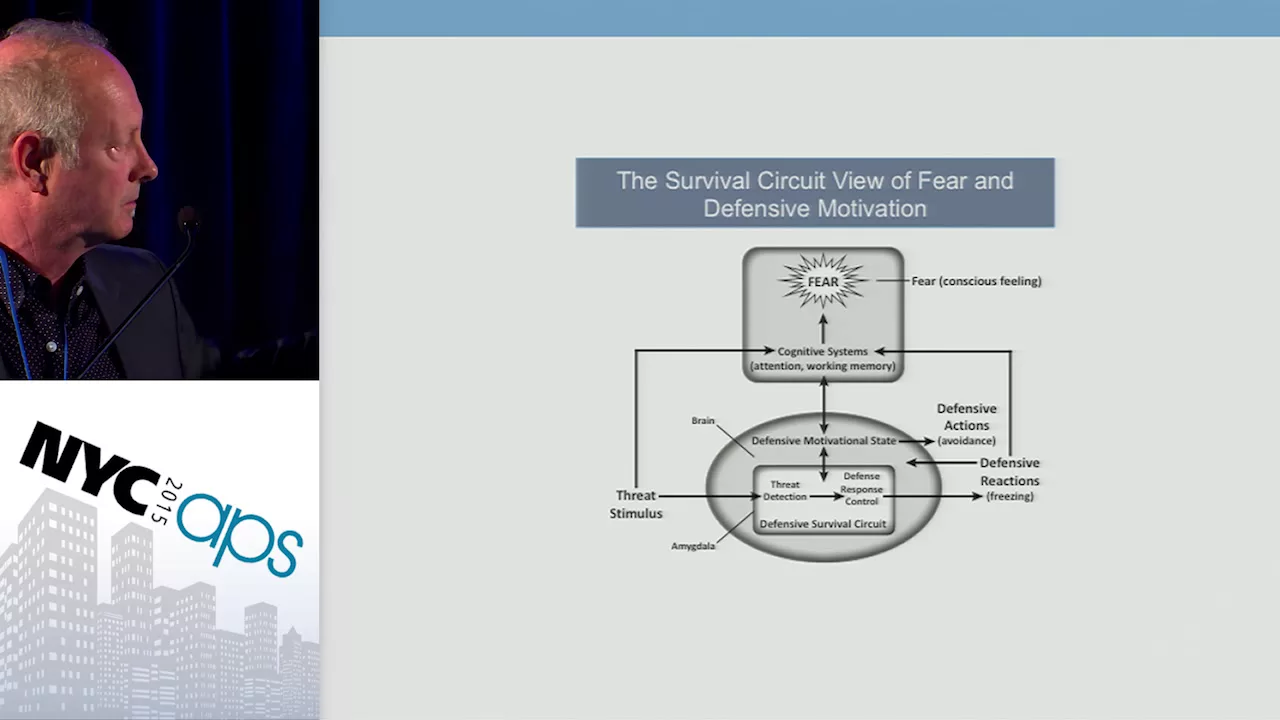

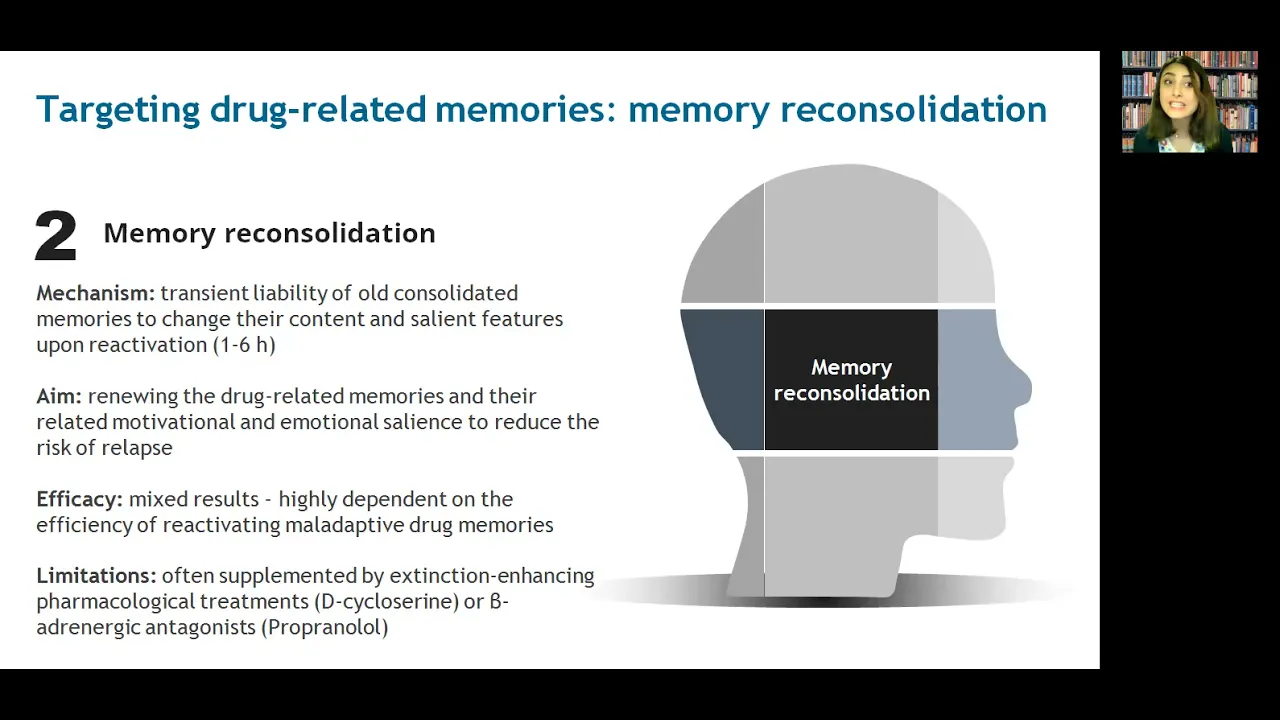




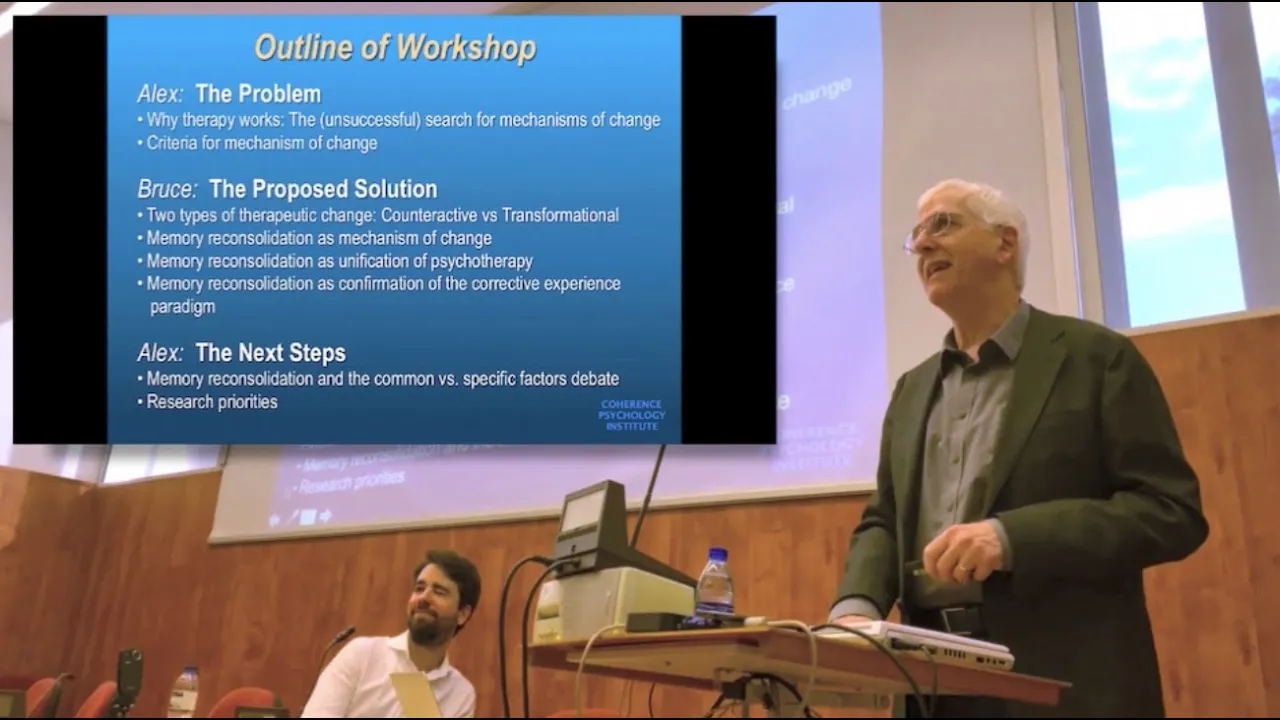


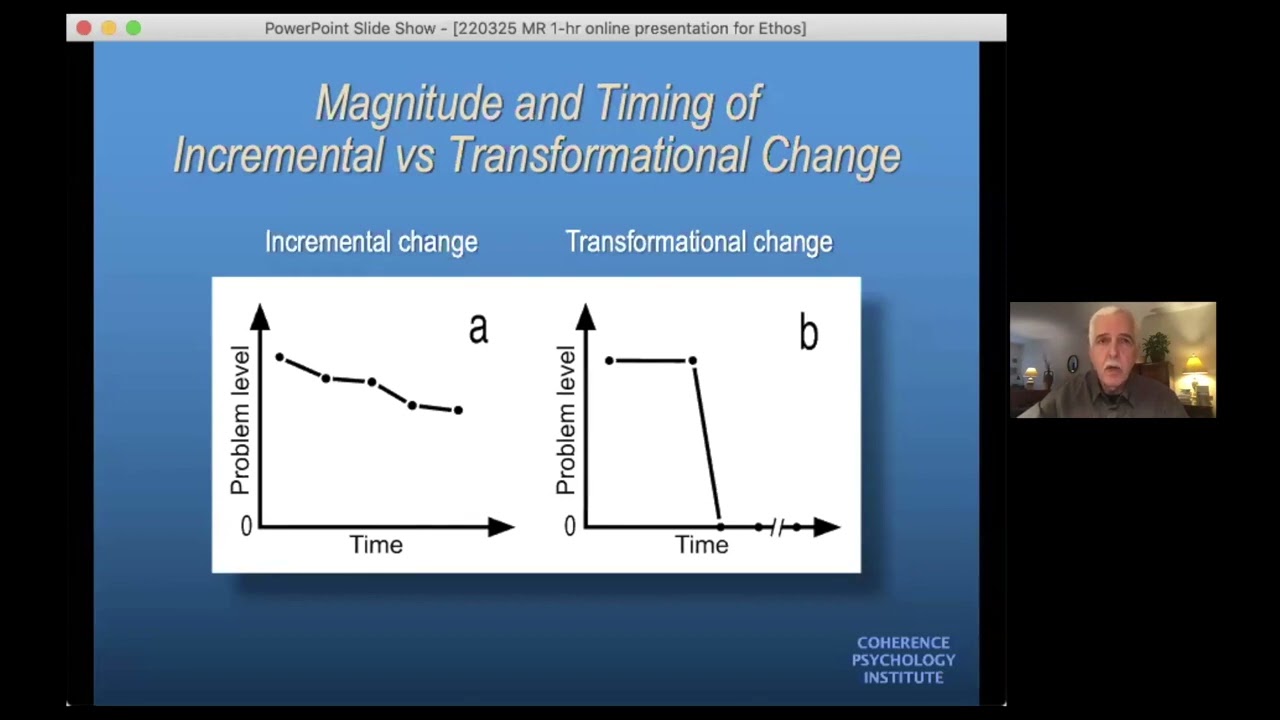


Memory is not a fixed recording but a dynamic process where emotional memories become temporarily labile (plastic) when retrieved, allowing them to be updated or weakened; this discovery challenges the traditional view that consolidated memories are immutable, and offers potential therapeutic applications for treating PTSD and addiction by disrupting memory reconsolidation through pharmacological interventions like beta receptor antagonists.
Memory Reconsolidation: Barry Everitt on How Memories Change
Added:The distinction between short-term and long-term memory, particularly the classic model of initial memory consolidation.
The neuroanatomy of emotion and memory, specifically the distinct roles of the amygdala in emotional processing and the hippocampus in contextual memory.
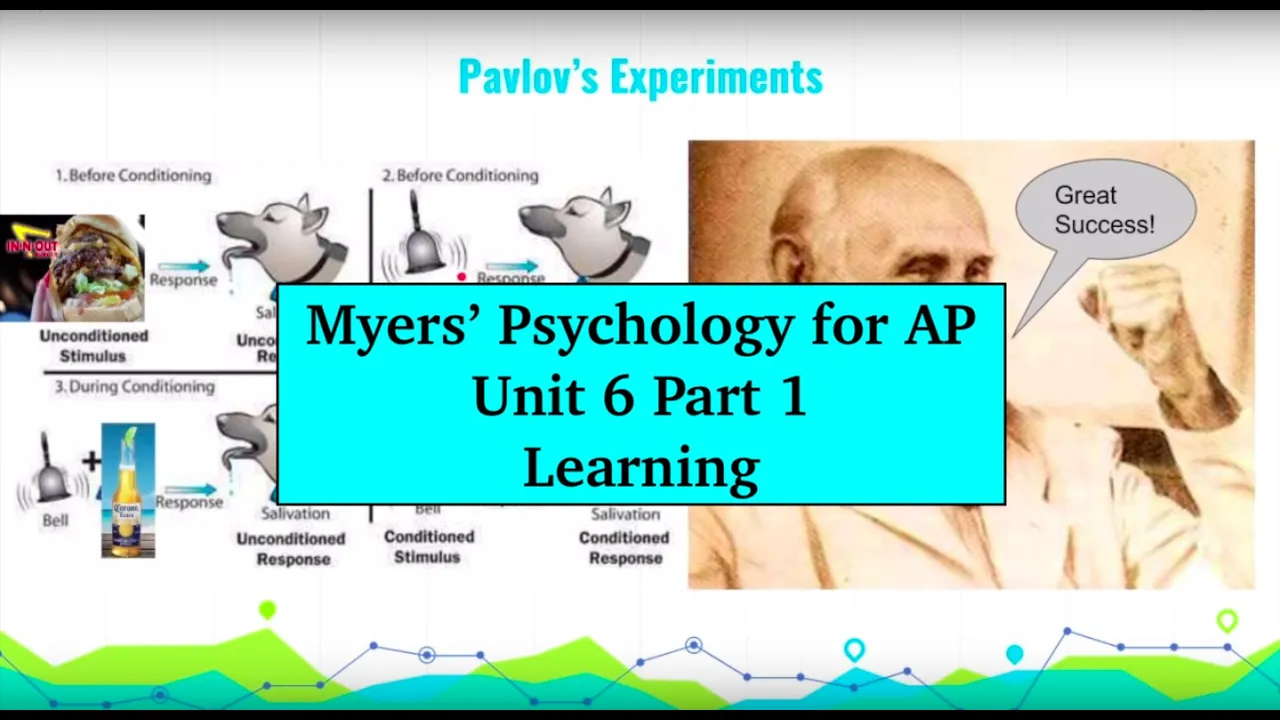
Basic concepts of classical (Pavlovian) conditioning, including how cue-response associations are formed and retrieved.
The cellular basis of memory formation, including synaptic plasticity and the requirement of protein synthesis to stabilize memory traces.
Clinical protocols for treating PTSD using reconsolidation blockers, such as administering the beta-blocker propranolol during trauma reactivation.
The application of reconsolidation disruption in addiction medicine, specifically targeting and weakening cue-induced drug cravings to prevent relapse.
The comparative mechanisms of memory extinction (learning a new, competing inhibitory association) versus memory reconsolidation disruption (permanently altering or weakening the original trace).
The neurobiological boundary conditions of reconsolidation, such as memory age, strength, and the prediction error required to destabilize a retrieved memory.
The ethical, legal, and philosophical implications of memory modification therapies on personal identity and the reliability of eyewitness testimony.
660 views5likes16:06Original Release: 2014-02-14
well first of all thank you for the invitation to come and and speak and can I add my thanks to your thanks to the vice Chancellor and Chancellor for being here today and taking time out of very busy schedules and I'm going to talk a little bit about some of our work uh here in Cambridge on memory and what's proven to be a completely radical uh reinterpretation of what we thought we knew about memory and paradigms with which to study it now emotional memories are memories that are very easily and often very strongly remembered and is's one of the iconic examples of of a of an emotional memory and three very Vivid accounts of what happened on 9/11 and I'm sure the chancellor and the vice Chancellor and I could do the same thing when talking about particularly in the context of last week the assassination of John Kennedy it's not just you remember the event you remember things around the event where you were what you were doing other sometimes inconsequential phenomena um the puzzle about these three statements is they were all made by the same person about four months apart very Vivid very straightforward very truthful Recollections of the event but two of them are were quite similar they involved watching a TV the third one on that previous slide this one was actually impossible that couldn't have been the case and yet these were presented as faithful Recollections of that Monumental event and this isn't there to make fun of George Bush this would happen to any one of us when Rec recollecting emotional events from the past so how do we account for that apparent instability of memory the memory is not a video recollection of those events as they happened and is there an advantage in having that and is there a vulnerability associated with it now this has been the theory that's dominated the memory field for the last uh 30 40 50 years and it's the notion that when we form a new memory it consolidates it goes through a Time window of change in the brain when it becomes permanently stored and once a memory is Consolidated it's fixed immutable can't be changed you might forget but with enough cues you can remember it's never changed in the brain and the Revelation that really happened I guess 13 years ago in neuroscientific terms is the discovery that when a fully Consolidated fixed memory is retrieved under specific conditions which we're still trying to understand we therefore call that reactivation rather than retrieval it becomes labile again it reenters a plastic State not dissimilar to the one here when it was first being laid down in the brain and when in that labile State a number of things can happen to it it could simply restabilize in the brain quite possibly in a strengthened state and there's recent evidence to support that or it can be updated by novel experience that's presumably what was going on with George Bush he was seeing this event played over and over again and Incorporated new information into the memory so that it became the stored memory so memory updating but those adaptive Pro cesses bring with them a risk which is that in the process of being restabilized it's vulnerable to disruption and classically a literature from 40 or 50 years ago that disruption might be seen for example by something like electroconvulsive shock therapy or a bang on the head experimentally it can be achieved for example by inhibiting protein synthesis in the brain so there are a number of different outcomes for a memory every time you retrieve an emotional memory that process quite likely is going on and it's resulted in the introduction of this term into the literature memory reconsolidation it's actually a misleading term but but it will do and that's the notion that this fixed previously known as fixed memory in the brain in its inactive State when retrieved probably by queuing it becomes destabilized in the brain and enters an active state from which another round of prot protein synthesis will stabilize it in the brain and this applies to aversive negative effective memories like the one I've shown you with the George Bush story 911 or 711 77 here or positive effective memories and I'm gather this is a real image of our prime minister and I don't just show pictures of right-wing Prime Ministers um although it's tempting to do so what this brings with it is the possibility that reconsolidation could be prevented and result in memory weakening or meem memory Erasure and there's been a lot of misleading commentary on this uh in the in in the Contemporary press this doesn't this is not a an Eternal Sunshine of the Spotless Mind kind of eraser where the episode is forgotten it's the effective consequences the emotion associated with memories that changes when you block reconsolidation to date no one has shown impairments in episodic memory the whatw when of memory just the effective content now in our Lab in Cambridge and I'm not going to give you data you can relax we're interested in where in the brain these memories undergo this transformation labelizer and one of the key structures is the amydala which sits down here in the temporal lobe and we've done a great deal of work to understand what the cellular and molecular processes are in the brain that mediate that process of restabilization of the memory having for example identified a specific Gene the protein product of which is absolutely critical for restabilizing a memory in the brain after retrieval but not for its initial consolidation so these events are dissociable but more interestingly I think in terms of applications of understanding these processes is that we are beginning to understand the chemical messenger mechanisms that mediate memory retrieval and memory destabilization and stabilization and these processes like glutamate or noradrenaline transmission in the brain through beta receptors for example give us a Target in which we might for against which we might develop treatments in which interfering with these processes might have a therapeutic utility and the kinds of psychiatric disorders that I'm thinking about here are post-traumatic stress disorder for example where incredibly traumatic experiences are strongly Consolidated in the brain and they retrieved and intrude on individuals lives and well beings seemingly for a long time in the future many people never recover from that strongly uh embedded anxiety disorders such as phobias May fall into a similar category and also the memories associated with taking drugs which is a particularly in particular interest of our lab and here is just one piece of data it's a preliminary study conducted some years ago the full details of which have never actually properly been published so I would say this is ongoing and difficult work this is a study in McGill in Montreal uh looking at heart rate and autonomic measures skin sweating conductance and and facial muscle changes of the kind that underly facial expressions that you saw just now in individuals very heterogeneous group of individuals with PTSD these are individuals who've experienced rape who've experienced War who've experienced traumatic accidents they've been brought into the clinic in a normal therapeutic way and relived their aversive memory and then at the end of that part of us a cognitive and behavioral therapy thy session they've been treated with a beta receptor antagonist this is a drug that's used to treat hypertension in the general population so it's an everyday drug but given specifically in association with the reactivation of this memory and then the subjects go away they come back a week later and do the same thing again relive their memory and you can see that these indices of affect of autonomic arousal have been mark ly decreased with a single treatment episode as if the they haven't forgotten what happened to them but the disabling affective consequences of that retrieval have been diminished and it turns out with two or three treatments people become bored with reliving their story as it were yet to be published in full Well published in the guardian the New York Times though and the same thing applies and I'm going to stop here to the problems that we have with relapse into drug addiction in people who are trying to remain abstinent the stimula that are associated with previous drug taking elicit powerful cravings for drug and precipitate relapse that's associated with activations in the brain that include structures like the amydala and experimentally we have shown that drug memories at retrieval can also be disrupted and single treatments can lead to very long-term reductions in the propensity to seek and take drugs in experimental animal models of those kinds of studies so this is something we're very interested in translating to the clinic in the future although that's not easy to do and there I'll stop thank you thank you so much for that fascinating talk does anybody have any questions for our Provost yes hi um I don't know anything about Neuroscience but I just had one question um was there a control group or something to reference so that you could see the difference in heart rate and sweating and facial muscles just from having this therapeutic retelling of their stories which could have um contributed to the decrease yeah that's a really good question so control groups are absolutely critical in clinical studies like this and I suspect effect that's one of the reasons that's made this work go slowly because it's quite difficult to undertake a clinical study where someone comes into a clinic for example and reactivates their aversive memory given what I said on the second or third slide which is that that might actually become restabilized even stronger in the brain but this treatment actually has been uh done in conjunction with a cognitive behavior therapy which is about there is to treat PTSD but what's really needed is a control condition in which a placebo is given at the time of retrieval and then to do that trying to get ethical approval to do that in a clinical study is actually quite as it is indeed many psychiatric studies now it's very difficult to get ethical approval for withholding treatment in vulnerable individuals who might be at risk in the future but those kinds of controls have been done in experiments including human experiments that aren't of psychiatric disorders but for example fearful conditioning fear conditioning or repetitive conditioning where you can model these processes and there's no doubt that there is a process that's engaged that's vulnerable for a very specific window of time about 4 hours after retrieval outside that window the memory is fixed again in the brain and those controlled studies are absolutely critical for really to accept this kind of approach certainly in terms of treatment any further question thank you for this talk I'm um that your application of this potential therapy to PTSD is a very interesting and important case and it seems clear how it could be really valuable to the patients to sort of get back to their normal selves um through this therapy but if any uh drugs like Viagra any indication it's often um drugs that really affect who we are and how we think about ourselves and our bodies are often not used exclusively to sort of get back to normal as it were they're often used to transform how we think about ourselves who we are and what we can do um with Viagra specifically it's used the the majority of people who use it aren't considered to have erectile dysfunction according to the traditional definition of of that condition um it's it's people who just like the way it makes them feel and so I'm I'm wondering if if you imagine this coming onto Market perhaps it would be provided by welfare states perhaps it would be something individuals could purchase for themselves is it the kind of thing that could be subject to abuse and if so um in what circumstances might that be an issue and and how can policy makers think about um what what is a good use case for this kind of drug and and what perhaps isn't well of course thousands thousands of people take propanolol every day to control their their blood pressure using it therapeutically in this context actually is I would think is almost impossible to do on your own it would have to be done in a therapeutic context because the conditions under which a memory is reactivated to take advantage of the effect of beta receptor blockade to prevent the restabilization stabilization in the brain isn't something that you could do and manipulate yourself Willy willy-nilly but with many therapeutic drugs there is the potential for abuse the best painkiller that we have is is a drug of abuse the the the the the issue there is not allowing drugs with profound therapeutic effect to be withdrawn or not used clinically because of the fear of abuse in a wider population but individuals themselves taking a beta receptor blocker to wipe their effective memories is actually something I can't even conceive of how they would do I wouldn't know how to do it myself knowing what I know about memory retrieval and restabilization in the brain it's something that has to be controlled and managed in a in an episode of retrieval for those effects to happen and the Very Act of preparing to do that oneself and not controlling the temporal characteristics of the retrieval would mean that the drug would have no effect so I think there's very little abuse liability in a treatment like this great but of course some of the other drugs that might be used may be themselves addictive so you always have this problem with introducing new therapeutic compounds that might have an abuse liability the question is does that mean we should then not approve them in which case many of these treatments will never appear okay well thank you
Up Next
61:28
Neuroscience of Learning: Teaching Psychology with Memory Science
@nationalinstituteontheteac4264
336 views•2023-01-06

59:49
Neuroscience and Genetics of PTSD: A Precision Medicine Approach
@UWPBSCI
221 views•2024-05-09

4:10
Vagus Nerve (CN X): Anatomy, Nuclei & Functions Explained
@Alilamedicalmedia
305.2K views•2022-10-31
13:03
How Exercise Benefits Your Brain: Science Explained
@TED
11.4M views•2018-03-21
Related Study Plans & Knowledge Roadmaps
Structured learning paths in Neuroscience
neuroscience
Appetite Regulation: Brain Circuits & Hormones
01Foundations of Endocrinology and Brain Anatomy
02Introduction to Energy Homeostasis
03Peripheral Signals: Leptin, Ghrelin, and Insulin
+ 2 more learning modules
14h5 modules
Explore Roadmap
neuroscience
Neuroeconomics: Value, Risk & Brain Mechanisms
01Foundations of Neuroscience and Brain Anatomy
02Introduction to Neuroeconomics and Subjective Value
03Dopaminergic Prediction Errors & Reinforcement Learning
+ 3 more learning modules
18h6 modules
Explore Roadmap
neuroscience
Spatial Navigation: Cells, Grids & Brain Maps
01Foundations of Brain Anatomy and Memory
02Place Cells and Head-Direction Cells
03Grid Cells: The Brain's Coordinate System
+ 2 more learning modules
12h5 modules
Explore Roadmap
neuroscience
BCIs: Neural Decoding & Prosthetic Control
01Neuroscience Foundations: How the Brain Signals Intent
02Signal Acquisition: Recording the Brain's Activity
03Neural Decoding: Translating Brain Waves into Data
+ 2 more learning modules
25h5 modules
Explore Roadmap