








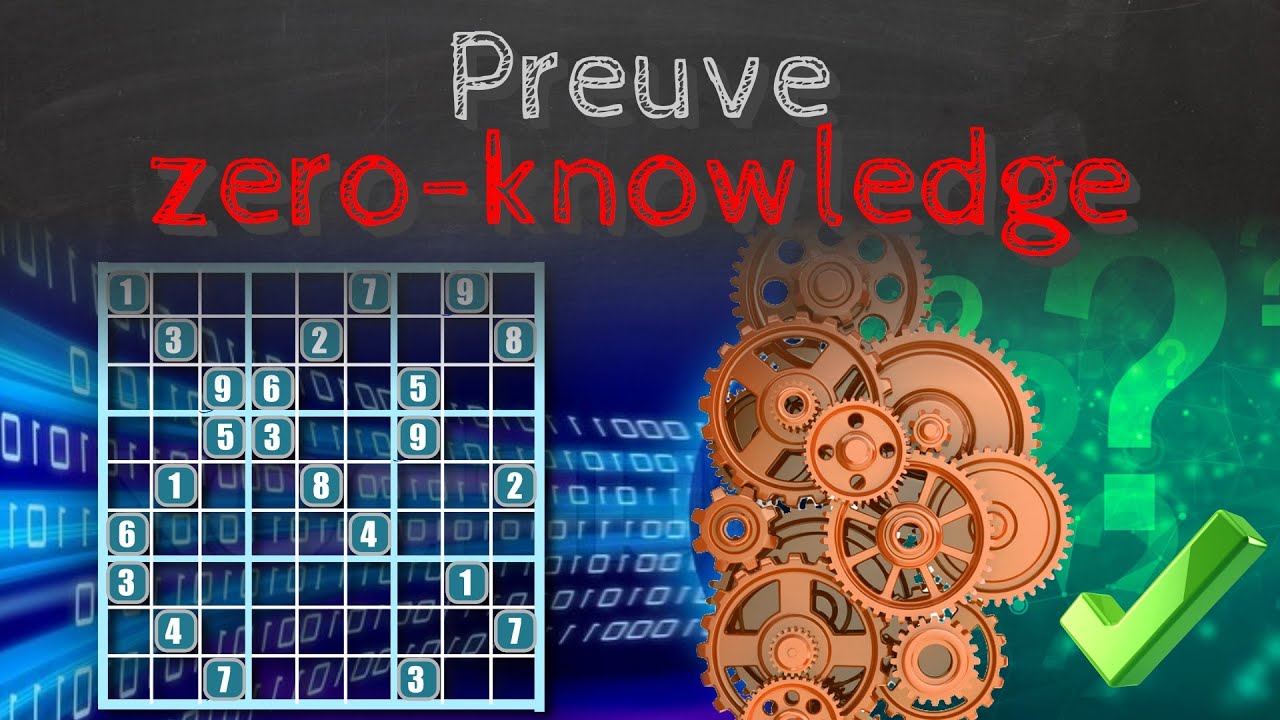




Zero knowledge proofs are interactive mathematical protocols where one party (the prover) can demonstrate knowledge of a secret to another party (the verifier) without revealing any information about the secret itself; this is achieved through repeated challenges where the probability of successfully deceiving the verifier decreases exponentially with each round, satisfying three key properties: completeness (the verifier accepts true claims), soundness (false claims cannot be accepted), and zero-knowledge (the verifier learns nothing beyond the truth of the claim); these proofs have practical applications in cryptocurrency for maintaining transaction privacy while verifying validity, and theoretically apply to any mathematical proposition that has a proof.
Zero Knowledge Proofs Explained: A Mathematical Introduction
Added:thank you to curiositystream for sponsoring this episode get access to my streaming video service nebula when you sign up for curiosity stream using the link in the description hello welcome to up and atom i'm jade what if i told you that there's a mathematical technique where you can prove that you're right without even telling anyone what it is that you're right about sounds impossible don't you think how can i possibly prove to you that a secret i know is true without telling you the secret like this we have a jar of candy clouds i reach in and choose two i swear that they're different colors but i don't want you to know what the colors are how can i prove that they're different colors without showing them to you or telling you what the colors are feel free to pause the video and think about this if you'd like alright i put the candy clouds under two cups when i close my eyes you either switch the places of the cups or leave them then i look at what's under the cups and tell you correctly whether you switch them after i guess correctly once you aren't going to be very convinced right my chances of guessing whether you switched them were 50 50 or 1 in 2.
so we do it again because the statement i'm proving really is true the candy clouds really are different colors i'm right again now the chances of this being a fluke are one in four we can keep going as long as you want if you want to have a less than one percent chance that i'm lying to you we'd only have to repeat this seven times if we repeated the swap or don't swap routine 100 times the chances of me answering correctly every time without knowing the candy clouds with different colors is less than 7.89 times 10 to the power of minus 31. practically impossible this number isn't actually zero so i haven't given a mathematical proof that i can't be lying but if you aren't satisfied we can keep going until the odds that i'm lying are smaller than any non-zero number you choose then we say that i have proven that i know a true secret and you have verified that i know a true secret we didn't just find this on a piece of paper somewhere we interacted to construct this proof our candy cloud game satisfies all the requirements of what's called a zero knowledge proof a special type of interactive proof in which one party demonstrates they know something without giving away any information in our example i was the prover and you were the verifier i proved that i had the secret by answering all the questions correctly and you verified it by knowing whether you had switched the cups and therefore knowing what the answer should have been swapped or not now let's think about how we did this to know that we'd be able to construct a zero knowledge proof we both had to be honest i was telling the truth i really did know the secret that the candy clouds were different colors we both followed the protocol you told the truth about whether you had switched the cups each time and i correctly told you whether or not you did it too this property of a zero knowledge proof is called completeness whenever the prover really has a secret and both parties follow the protocol the verifier will agree that the prover really does know the secret that covers the idea that we want to be able to prove things that are true soundness is what guarantees that we can't prove anything false in practice this means we can get the chance that i'm lying to be as small as we want i wouldn't have been able to correctly say whether you'd switch the cups each time unless my claim that the candy clouds were different colours was true and finally you have no more knowledge at the end than you had at the beginning you don't know the colours of the candy clouds or which one is which you only verified what i told you that they were different colors this is called zero knowledge not only can the verifier not cheat and learn more than what they're supposed to but an eavesdropper hearing swapped didn't didn't didn't swapped swapped didn't and so on wouldn't be able to tell whether we'd made the whole thing up or whether we'd really verified something because only you know whether you switched the cups therefore only we know that my answers were correct so to qualify a zero knowledge proof needs to satisfy all three of those conditions completeness soundness and zero knowledge if you find the existence of zero knowledge proofs hard to believe you're not alone the early reviewers of the groundbreaking paper must not have believed they were possible either because the paper was rejected multiple times when it finally was accepted its authors shafi goldwasser and silvio micali were awarded the am turing award by the association for computing machinery generally considered the highest award in computer science sometimes called the nobel prize of computer science okay so this is pretty cool but can we actually use it for anything just six or seven years ago there were no real world applications of zero knowledge proofs but that has changed with the rising popularity of cryptocurrency for the very first cryptocurrency bitcoin the inventor essentially had to make a choice between trust and privacy in order for people to believe they weren't being swindled there needed to be a permanent unalterable public record of every bitcoin transaction this was called the blockchain the issue is if that one person used bitcoin to pay for something like cancer treatment that transaction is public anyone can now see that user jane bit paid for cancer treatment that's a pretty big compromise of privacy enter zero knowledge proofs for some cryptocurrency people don't have to make such public transactions anymore zero knowledge proof algorithms have advanced to the point that they can be used to verify the blockchain without actually saying what's in it the contents of the record of every transaction the blockchain is a secret and zero knowledge proofs are being used to verify that the record is correct without revealing any information another cool thing about zero knowledge proofs is that every mathematical proposition that has a proof also has a zero knowledge proof okay so a proposition is just a mathematical statement that is either true or false for example the sum of angles in a triangle is 180 degrees is a true proposition in euclidean geometry the interior angles of a square at up to 300 degrees is a false proposition in euclidean geometry now let's consider what is perhaps the most famous open question in all of mathematics the riemann hypothesis the statement of the hypothesis is a proposition we just don't know if it's true it turns out that if you have a proof of the riemann hypothesis then you can prove to me that you really do have a proof without giving away any information about the proof in other words if there's a proof of the riemann hypothesis there's a zero knowledge proof of the riemann hypothesis and this applies to all mathematical propositions with a proof isn't that wild what's even crazier is that this result was proven by coloring in graphs let me know in the comments if you'd like me to make a follow-up video about how it was done zero knowledge proofs changed the idea of a proof from a static object that anyone could pick up and read to an interactive game between two players this is a fundamental advancement to computer science and cryptography i have a confession to make for someone who spends their days reading about computer science i know embarrassingly little about cryptocurrency studying for this video was the first time i learned what the blockchain actually was anyway i got pretty curious and wanted to get with the times so i found a really nice documentary on curiosity stream called the blockchain revolution i learned what the blockchain was how it could impact not only the future of money but autonomous vehicles renewable energy and digital identity it's a revolutionary idea much bigger than just money but i also learnt about its downsides like how it caused people to lose millions of dollars in a scam if you're interested in learning more about the blockchain and how it works you can watch this documentary for free by signing up to curiositystream with the link in the description curiosity stream is an award-winning documentary service with thousands of titles from space exploration to the birth of the internet to cyber wars and nanotechnology they're also supporting a bunch of us educational youtube creators with our own streaming platform nebula where curiosity stream is all about big budget documentaries we're building nebula because we want a place for educational creators to try out new content ideas that might not work on youtube i've made a documentary about whether math is invented or discovered which you can check out if you want curiosity stream loves independent creators and wants to help us grow our platform so they're offering up an atom viewers free access to nebula when you sign up at curiositystream.com up and atom they're also offering a 26 discount to up and atom viewers so that's two streaming services for just 14.79 for a year by signing up to curiosity stream you'll be helping not just me but the entire educational community thank you for watching and thank you to all my patreon supporters i'll see you in the next episode bye [Music] you
Up Next
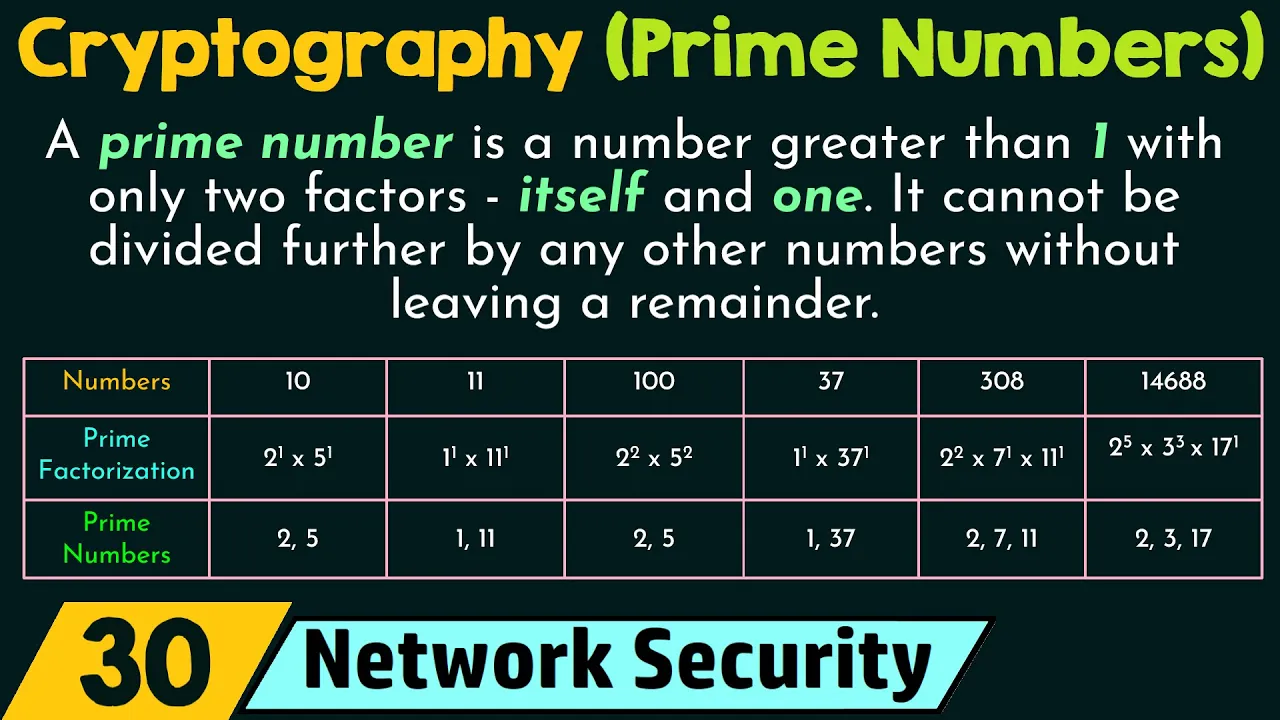
Prime Numbers in Cryptography | Network Security Concepts
@nesoacademy
147.6K views•2021-09-03
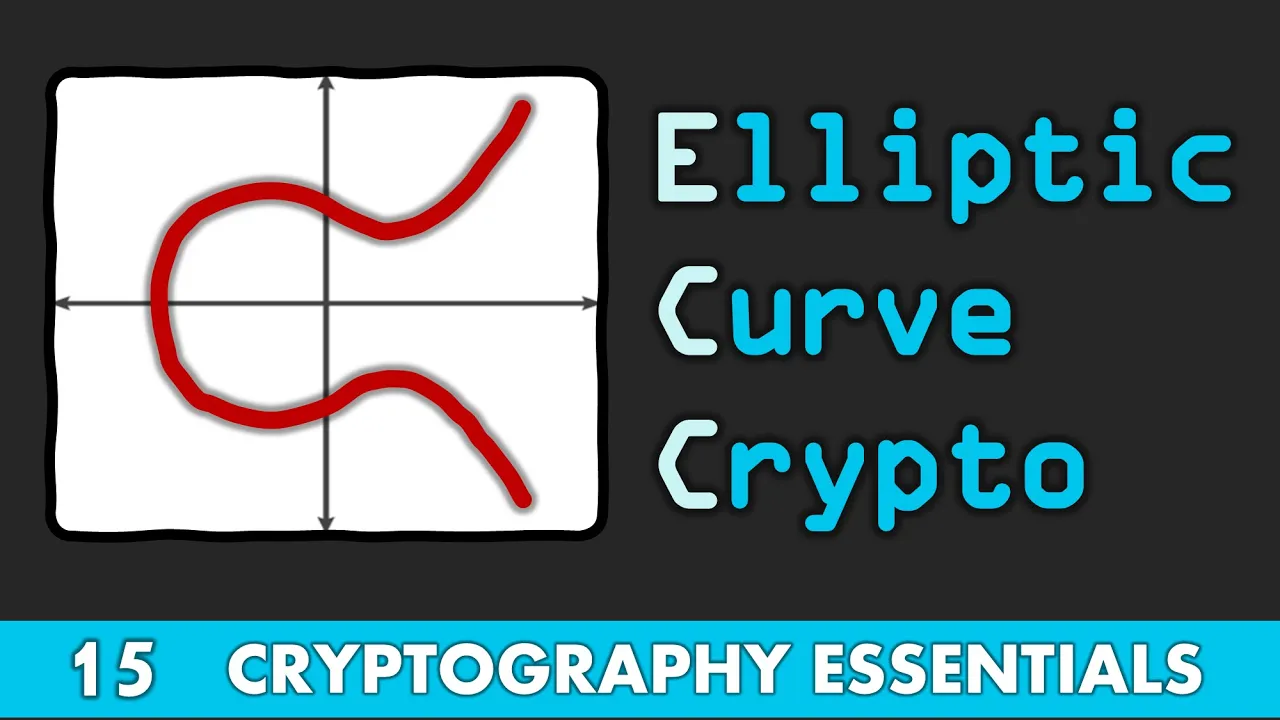
Elliptic Curve Cryptography Explained: ECC, ECDSA, ECDH
@PracticalNetworking
28.5K views•2024-10-21
Fourier Series Introduction: The Big Idea Explained
@DrTrefor
387K views•2021-05-03
The Mathematical Impossibility of Accurate World Maps
@Vox
23.3M views•2016-12-02
Related Study Plans & Knowledge Roadmaps
Structured learning paths in Mathematics