






![T01E26 | O Mundo de Beakman [Dublado]: Roda, Beakmania e Encontrando Respostas](https://i.ytimg.com/vi/3G2puO_lYmw/sddefault.jpg?sqp=-oaymwEmCIAFEOAD8quKqQMa8AEB-AH-BIAC4AOKAgwIABABGGUgYihPMA8=&rs=AOn4CLAUsm1r0xpxayVpUFKxFs_ZCYdX2g)


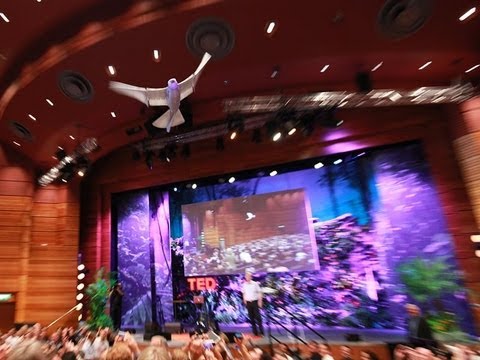




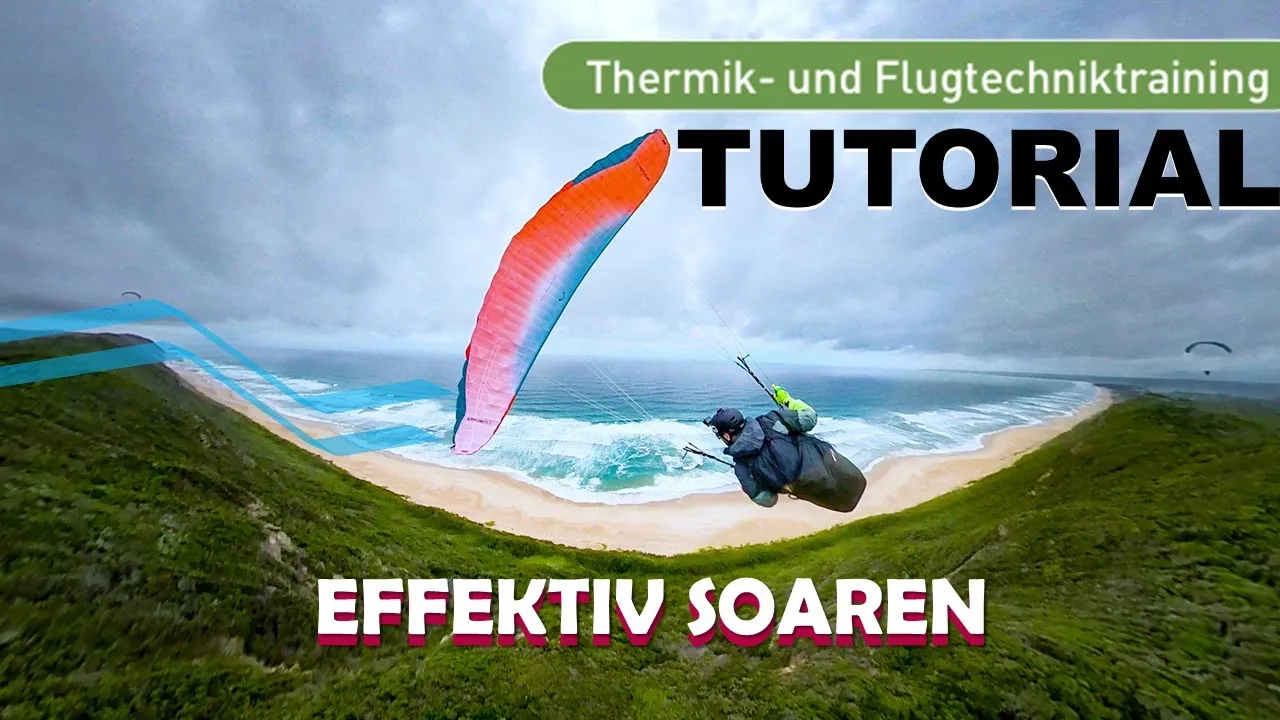




Birds use thermal soaring—a technique where they locate and ride hot, rising pockets of air—to conserve energy during long-distance migration; scientists at UC San Diego have developed mathematical algorithms that enable gliders to learn and replicate this energy-efficient flight strategy by sensing environmental cues like wind twisting forces and following spiraling patterns within turbulent air currents, allowing them to gain altitude efficiently even in unstable atmospheric conditions.
How Birds Soar to Extreme Heights Using Thermal Air Currents
Added:Basic concepts of aerodynamics, specifically the forces of lift, drag, gravity, and the mechanics of unpowered flight.
The meteorological phenomenon of atmospheric convection, explaining how solar heating generates rising columns of warm air (thermals).
Avian anatomy fundamentals, specifically wing morphology (such as aspect ratio and wing loading) and how different shapes affect gliding efficiency.
The physics of energy conservation in flight, particularly how gliders convert altitude (potential energy) into forward velocity (kinetic energy).
The principles of biomimicry in aerospace engineering, focusing on how avian flight mechanics inform the design of autonomous sailplanes.
Autonomous control systems and machine learning algorithms (e.g., reinforcement learning) that enable UAVs to locate and navigate thermals without human intervention.
Advanced atmospheric lift mechanisms, such as dynamic soaring (used by seabirds over ocean waves) and ridge lift.
The impact of thermal availability on avian ecology, specifically how microclimates and geography influence the migration routes of soaring raptors.
123.1K views1.1Klikes3:09Original Release: 2017-04-20
[Music] hitting turbulence on a flight at 30,000 ft can cause quite the bumpy ride but birds who soar high in the sky not only handle bumpy air they seek it out for a free energy-saving lift but how and why do they do that inside [Music] science ever watch a bird glide through the air effortlessly Rising higher and higher without ever flapping their wings they do it by using a technique called ther Al soaring birds can find hot Rising pockets of air and use the currents to stay a loft and fly higher for birds who migrate thousands of miles flapping their wings for long distances would require huge amounts of energy they don't have so they use thermal soaring to save energy and fly for many miles but the air currents are bumpy and turbulent and exactly how birds use these wobbly gusts of air to stay airborne hasn't always been known this is one of the interesting part uh with the birds is that although uh the environment is extremely turbulent so there are a lot of fluctuations in in the in the speed of the air they are able to navigate Within These taking cues from birds that learn to navigate these chaotic air environments scientists at UC San Diego used math algorithms to train gliders to travel through complex choppy air currents this this graph shows how an untrained glider that takes random turns will gradually fall while a trained glider learns to use spiraling patterns in areas of strong Rising currents like in the thermal soaring of birds and continues to gain altitude scientists can train gliders to sense environmental cues such as an increase in the twisting force of the wind that indicate Rising air a trained glider uses the cues to stay within the thermal air current and get better lift leading to better soaring even when there are strong unstable air changes as changing air levels rise the glider can gain height by using flight strategies it learned one way to do this is to go with the flow of the turbulent Rising air rather than turning out of it we have done some experiments where we have implemented it in a in a rear glider uh where we have put the the algorithm the policy the strategy in the in the glider we put it up and we have clearly seen that the glider was able to gain height we went from maybe 200 M to more than six quite easily in a few minutes learning how our Aven friends use air currents could help autonomous gliders and other flying vehicles be more efficient long-distance Travelers which means the art of riding thermals isn't just for the birds anymore inside science if you enjoyed this Edition follow us on the web and social media powered by the American Institute of physics and the Coalition of Underwriters
Up Next

10:18
How to Control Light with Water: Total Internal Reflection Experiment
@physicsgirl
232.1K views•2016-12-22

12:53
21cm Hyperfine Transition in Neutral Hydrogen: Radio Astronomy Basics
@AaronRobertParsons
12.4K views•2011-10-13

32:32
NMR Spin Physics I: Zeeman Effect, Resonance Condition & Larmor Frequency
@nptel-indianinstituteofsci8064
2.3K views•2024-01-17

27:14
Entropy and the Second Law of Thermodynamics Explained
@veritasium
27.5M views•2023-07-01
Related Study Plans & Knowledge Roadmaps
Structured learning paths in Physics
physics
Nuclear Physics (Decay, Fission & Reactors)
01Atomic Structure and the Binding Force
02Radioactive Decay and Half-Life
03Nuclear Fission Mechanics and Chain Reactions
+ 2 more learning modules
12h5 modules
Explore Roadmap
physics
Soft Matter (Polymers, Colloids & Rheology)
01Foundations of Soft Matter & Thermal Forces
02Polymer Physics and Macromolecules
03Colloids, Surfactants, and Self-Assembly
+ 2 more learning modules
38h5 modules
Explore Roadmap
physics
Analytical Mechanics: Lagrangian & Hamiltonian
01Mathematical Foundations: Calculus of Variations
02From Newtonian Mechanics to Constraint Dynamics
03The Principle of Least Action & Lagrangian Mechanics
+ 3 more learning modules
28h6 modules
Explore Roadmap
physics
General Relativity (Spacetime & Cosmology)
01Foundations of Relativity: Special Relativity
02The Geometry of Spacetime: Equivalence Principle & Curvature
03Einstein's Field Equations: The Mathematics of Gravity
+ 2 more learning modules
55h5 modules
Explore Roadmap