





















Field linguistics is the practice of going into remote communities to study previously undocumented languages, requiring researchers to be open to learning everything from native speakers, maintain physical fitness for demanding environments, carry comprehensive equipment including recording devices and medical supplies, work with multiple native consultants to avoid bias, and understand that language is fundamentally shaped by culture rather than existing as an isolated system; successful field researchers must embrace continuous revision of their findings and recognize that language documentation serves both scientific understanding and community preservation.
Field Linguistics: Theory and Practice in Language Study
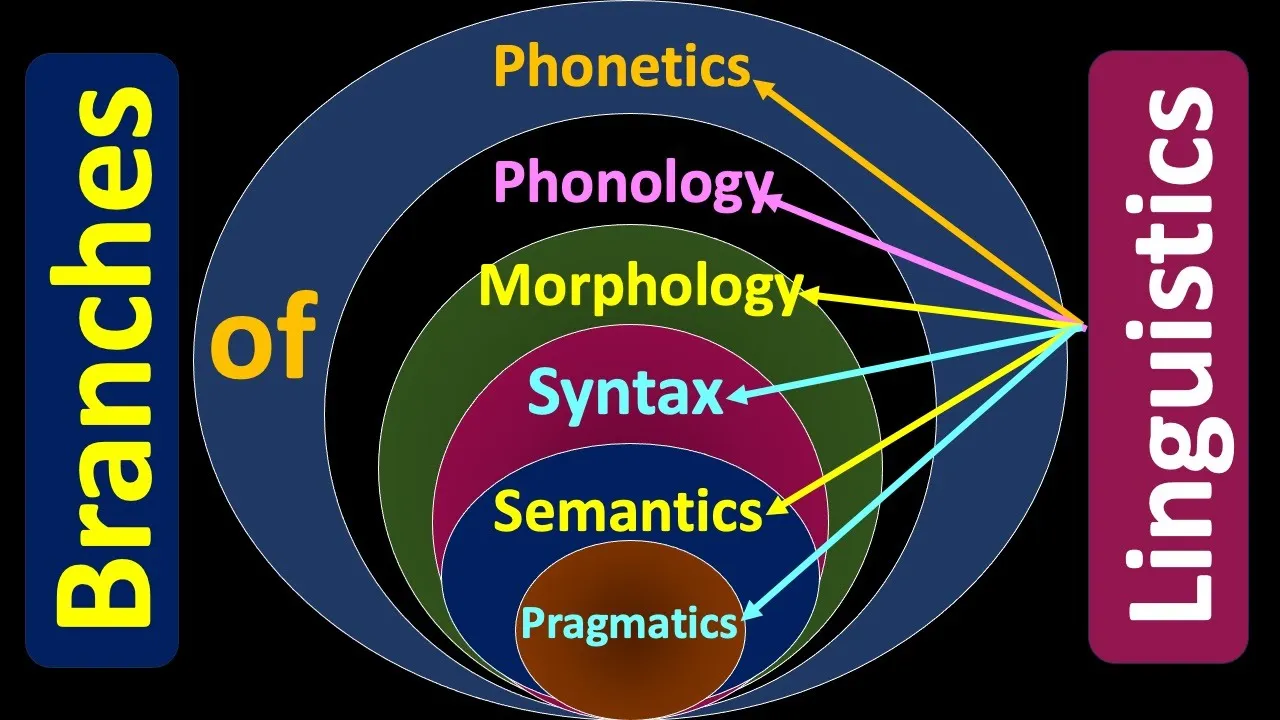
Added:Familiarity with the core branches of linguistics (phonetics, phonology, morphology, and syntax) to understand the specific language structures a fieldworker seeks to document.
Basic proficiency in the International Phonetic Alphabet (IPA) for transcribing unfamiliar spoken languages in real time.
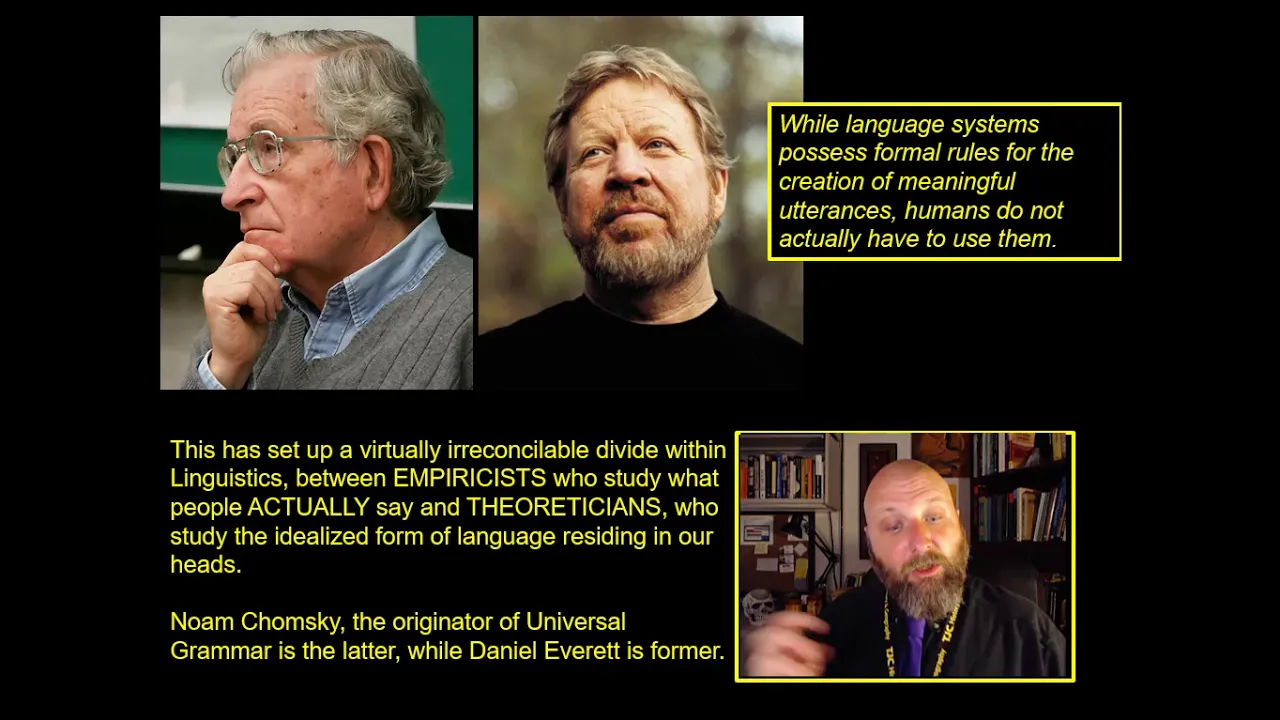
An understanding of the foundational debate between Universal Grammar (Chomskyan formalist linguistics) and functionalist/empiricist views of language.
Awareness of linguistic relativity (the Sapir-Whorf hypothesis) and how culture and cognition interact with language structure.
Practical training in specialized language documentation software, such as ELAN (for video/audio annotation) and FLEx (Fieldworks Language Explorer).
Advanced study of fieldwork ethics, including institutional review board (IRB) protocols, informed consent, and collaborative research models with indigenous communities.
Critical analysis of Dan Everett's specific empirical claims regarding the Pirahã language and the resulting academic debates in cognitive science.
Exploration of language revitalization methodologies and policy planning to assist communities in preserving endangered languages.
11.2K views439likes1:20:36Original Release: 2020-08-02
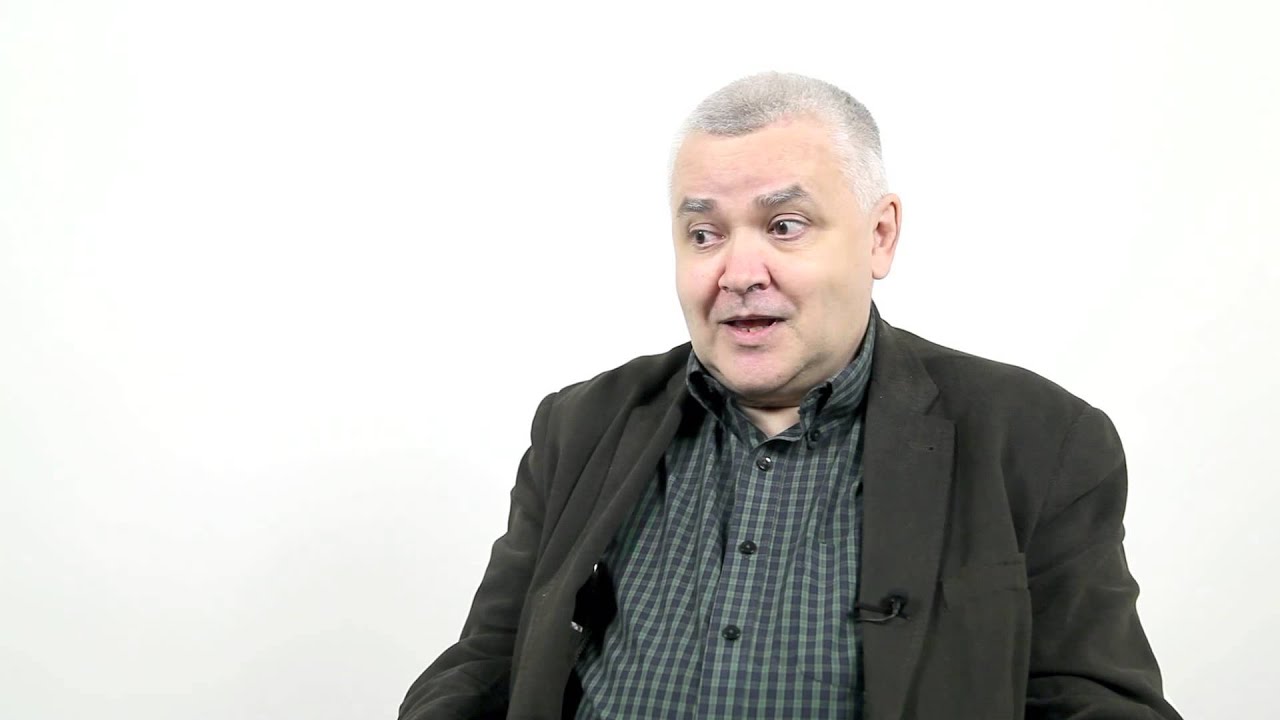
it is the greatest honor of anyone's life to go into another culture and language and learn from those people as their disciple and you cannot limit a priori what you're going to learn you have to be open to learning everything and even things you don't know today how to apply so I would say that to be a linguist is to be a field researcher I have a very narrow view of this and to me a linguist is somebody who can walk with paper and pin into a never before studied language and come out six months later with a grammar and if you can do that even though it's a bad grammar and it will be a bad grammar you're a linguist and if you can't do that you're something else that's my very narrow view but I would sell say if you have the chance to do field work take it as the honor that it is and I've had the experience of taking people to the field for the first time who are today good field workers who did see it that way and I've also taken a lot of people who found it too hard too time-consuming and not the way they wanted to spend their free time so and I would say for everyone that's been successful they've been you know eight to ten that haven't been it's not for everybody but I think that it's vital to science and vital to understanding ourselves as a species [Music] welcome to the story of language an original podcast series about language linguistics cognition and culture my name is Christian Saunders and I'm an English teacher and throughout this series I will be in discussion with Dan Everett linguist anthropologist philosopher and author in this episode we talk about the theory and the practice of field linguistics including how to survive in the field what to take and what to bring back if you would like to contact us you can find us on twitter at story of language or you can send us an email at story of language at gmail.com this is episode 5 of the story of language today we're going to talk about field linguistics and like what it is and how to do it properly and because I know that you you've spoken previously about how you know living in these kind of harsh environments you're you've developed a kind of toughness what not develop you you just describe yourself as a kind of hardy tough person and and it reminds me of this story I read about the film director Steven Spielberg and he said that before he makes any movie he spends like three months at the gym on the treadmill getting fit because he said that doing the work of making a movie is really hard and you know you need to be in shape I mean is that do you think it's the same for field linguistics yeah you know I mean when I was doing it regularly I I worked out all the time not just before but during and we had an airstrip and I would run on the airstrip or you know in the summer months long long beaches come out you can run on the beaches but yeah it's it's physically demanding and and when you go from just a university for example down to the middle of the Amazon and the temperature increases the humidity increases the physical demands I mean I remember going to the doctor one time I had carried I was used to carrying lots of heavy things up banks and I carried this 120 pound bag of grain and and some other stuff up this bank and I was out of breath for a while so I told the doctor and we did all these tests and he he said you know all I can tell you is that anybody's gonna have a be out of breath carrying 120 pounds because I did the treadmill test and he got my heart up to the maximum that he wanted it to go and it was back down to 55 in two minutes at the time but I'm not in the same shape now but I still in you know it is demanding and you have to be prepared for the demands of fieldwork and there's a lot of you can do fieldwork without a lot of physical strength but the physical strength and the endurance always are useful yes well I imagine they are especially if you're going to some of the more kind of hostile environments right like maybe you know hot humid or maybe even really cold places yeah yeah I mean where you have a you have to do a lot of things that require endurance like Holly and water for your family or you know what walking long periods through the snow you know the physical actual field research in isolated places is demanding of your entire being it's holistic it's from your personality to your mental abilities your ability to learn quickly to your physical conditioning and strength well before we actually talk about specifically about what it's like to go in the field and and you know what you should do when you're there I wanted to talk a little bit about the philosophy behind doing field research because I know that you've mentioned before that that now the you feel that the field of linguistics is too specialized and you know maybe maybe you know in the in the 50s and 60s there was much more of a crossover between things like anthropology and linguistics or psychology and linguistics so how do you how do you see field research as as fitting into the the study of language well I mean that's that's an excellent question when I say that the field is over specialized I mean something along the lines of a paper that I gave a few years ago at the British Academy on the so called cognitive revolution and I said that a lot of the a lot of what we think we've learned over the years is the result of reification of the field and and whittling it down smaller and smaller on the one hand that's necessary so the immediate response of somebody is of course we have to specialize you can't go deep if you just are looking at things from a general perspective all the time so I'm not saying that we shouldn't explore deeply I am saying that we should do it in a way that all of the knowledge is contextualized and we understand how it sort of fits together in the bigger picture so experiments that show that construction a or construction B are more likely to be found only makes sense to me if you if you after you've done your experiments you step back and you look at the language and the culture as a whole and ask how this all blends together you know I'm always says you know skeptical about claims for universals I do not deny that there are universals actually the well we could talk about that at some other point the difference between universals and generals and and isn't there also a difference between maybe linguistic universals and cognitive universals yes there are I mean there are some people like Bill Croft who does radical construction grammar who are who tries to argue that a lot of or maybe all so called linguistic universals just our cognitive universes and and there may not be any linguistic universals per se for for some who were you know say nominal lists when they use the term universal what they meant were general properties so like and one good example of that and it's and and this is something field workers have to know what others have to know is the difference between generics and universal quantification so if I say languages have ver that's a general statement if I say all languages have verbs that's a much stronger statement the form is about generals and generalities the second is about real Universal quantification all languages have this and so often people use the term universal in the former sense and they're criticized from the perspective of the latter sense you know so let's say that Chomsky says that languages have recursion and I come along and say here's a language that doesn't have recursion well one response is I'm just responding to the universal claim and Chomsky was just making the general claim so of course there could be languages that don't show it that isn't the case in this particular situation however but but it is the kind of thing that causes confusion so we always have to be we always have to be sure that we're we're understanding the term in a similar way if we're going to argue about it yes definitions are important many many a court battle has been lost on definitions yeah I mean I don't I mean I think that to argue about definitions is often pointless but you certainly do need to agree on what your definition is if you're gonna argue about this concept you know so in field research you can go there to study the phonetics of a language I just want to get a list of all the sounds they make I'm not even interested in how they put them together in their phonology I just let's say I that's all I want to do well what have you told us you haven't told us what any of those things mean in that language and so here's here's what I would say from a person perspective our general our initial reaction to something is what purse would have called first miss so we have this vague impression of something that's out there so they seem to talk fast right so that would be a first necessity would call a second 'no siz when you get something resistant to somebody else something else so let's say that I hear a sound I think oh that that sounds like a P and then I hear a sound that sounds like a T and I said okay so it's not T and it's more like P and I start to look at the contrast there that's just that's a higher level perspective on it that's what first would have called seconds third Ness is when we can embed it into generalizations and say what P means in the Pete aha grammar has two posed to what P means in the English in the grammar of English and this is something that a lot of people miss to languages can have ostensibly the same feature but it means different things in those languages if you take the example of color terms so it's been claimed that color terms certain color concepts are universal and and as color schemes become more complex they follow the same pattern no matter what language you're working in but a number of criticisms of that view which was proposed originally by Brent Berlin and Paul k both of whom I know and respect very much in 1969 they're simply collecting data from languages on the basis of what first would call firstness or second s not looking at the role of the same culture so we have brown and English and brown and language X is brown and language X used to describe all the same kinds of things that brown in English is used to describe does it relate to the other colors the way Brown relates to other colors in English does it figure in the same way and their stories and in their value system I mean is brown negative or is it positive you can't know these things by simple experiments so if you really want to know what the colors are in a language you have to go beyond simply a list and you have to figure out how colors operate contextually and you can only know that once you've looked at the entire language and and we've talked about that before you know and in in Spanish and Portuguese and many other languages there's a difference between ser and estar and and and basically you can learn all you want to about ser being permanent quality in a star being temporary quality but speakers have the right to use them any way they want and and you can't figure out how speakers are going to use these things often unless you understand the language as a whole so you know I I remember it may be I've mentioned this example before when I first got to Brazil and the team got an e of Campinas won the Brazilian soccer championship they were the football champions of Brazil the announcer said Guarani ml or T me E is star boom L you achieve me and I hadn't how could he use this two different verbs to describe the same team at the same time and of course now it makes perfect sense they are currently the best team and they are fundamentally the best team you know we can say that in English but the perspective you take on the use of these verbs cannot be governed strictly by this kind of isolated sampling in a dictionary you have to see them in context and you have to that's why you have to always be talking to Navy speakers you can't figure out a language unless you're always talking to native speakers yeah and I think for me another really interesting thing about about the way that language you know can be flexible like that is the way that you familiar and then they change over time and then they die like you know we used to say that people who were disabled were were crippled and then the word crippled became it had all these negative connotations attached to it and so we started calling them may be disabled and and I've heard well George Carlin talked about this famously he said that you know that some people who were really kind of politically correct wanted to call disabled people differently-abled and you know so there's all this and again this is this isn't just a question of culture it's also how maybe the kind of cultural zeitgeist changes over time yeah I mean cultures change values change a particular word at a particular time comes in pristine and clean and then it picks up a lot of along the way and it starts getting used and abused in different ways and people say oh that word doesn't work anymore the pita how do that when they change names they ask me you still are going by this name right I said yeah they said we have to give you a new name that names bråten it's it's deteriorated we've got to give you another name now you know so you accumulate a bunch of experiences in your life everybody deserves a fresh start so take a new name and words deserve a fresh start descriptions deserve a fresh start so so this is something that that that we find a word it doesn't do any good to argue that the word means somewhat slower in one way when now it means that you're denigrating a person so it just changed its meaning over time flush it down the toilet and that particular use and start again I mean I think that's just fine i I think there's sometimes a little hypersensitivity about these things but each new generation will whether we think it's right or not they simply will redefine their language in the terms and the terms they want to use so you know the pinna ha don't use euphemisms you know they don't they don't say I'm gonna go to the bathroom or I'm gonna have sex or anything like that they just use the verbs about what you're gonna do and and why would you they don't worry about it we do we have to have euphemisms and and heaven forbid that we actually say things the way we perceive them we have to coat them so as to give minimal offence whether we're talking about our own bodily functions or whether we're talking about our feelings towards someone else you know and and that's not unnatural I'm not mocking it because it simply illustrates the point that cultural values constrain the language and the language as the values shift the language shifts to mean it it is a cultural tool yeah it's like um you know these days the the company doesn't fire you they let you go yeah yeah and my day they fired your ass I mean yeah I remember getting fired as a teenager on multiple occasions nobody said I gotta have to let you go they just said you know you can't do this job with the [Laughter] some people cut out to be doctors and lawyers some people cut out to be plasterers I hope you're cut out to be a doctor and lawyer because you should have the blaster so I I'm hoping that that the people who were some of the people who are listening to this podcast are maybe people who are really interested in becoming a linguist or maybe even people who are studying linguistics right now and I'm wondering if you could sort of explain to them why it's important to get out of the lab and actually get out there and get in contact with languages there's a great great quote by Levy Strauss when he first went to do field research in the Amazon about how free from the confines of the of the stale air of the laboratory he was able to bring and breathe in the fresh air of the jungle in this context and to see it language is about human beings and the only way to understand human beings is in an actual environment lab work has its utility I'm not at all denying the validity in these significance of laboratory research but you can't and I let you so fieldwork is important not only because it helps us to contextualize but it's like studying all the parts of a car separately but never having seen a car run I mean you've got to see how this all fits together you've got to see this is the culture this is the language this is the locomotive that generates all this interesting cognitive stuff here but it it doesn't it's all a byproduct of a locomotive working together I think the same thing about the mental you know you can't study the mental without studying the physical because ultimately the brain is just part of the body and if you you know if you get a get the flu and you're ill your brain doesn't work as well you're not mentally as acute the body in the brain the brain just is an organ like the kidneys or or the stomach and and language is just an organ of a culture and you can't understand the language until you see it as part of the culture as a whole I don't want to know the mechanics of say wh movement in a language unless I know also when you're going to do that why you're going to do that and what the possible variations are that we might not have expected from English and linguists initially linguistic field research was we don't know anything about languages we got to just describe them and so I which I think is very important you know so so linguist who did field research were criticized as butterfly collectors they just went out there and they they collected all these pretty little butterflies and they nailed them on you know I've used little pins to put them in white on white boards and label them and that's not science supposedly that's just taxonomy it's not science so so that led some people away from field research for a long time this talk about field research only arose in the early 60s of course and I won't mention in which context that arose but but to me the most demanding aspect of science I can't think of anything that combines every skill we've developed in our education more than field research does so let's let's get kind of a little bit more specific now so so let's imagine that this this you know this graduate is is about to embark on their first ever field research mission from from a practical point of view what what do you recommend that they take with them to survive okay so there are a number of things intellectually they need to fill their head with every idea they can possibly get from the literature so they need to read their butts off read read read study look at all the ideas don't just look at one Theory look at several theories look at construction grammar look at minimalism look at all the ideas that people have and try to keep as much in the same of this in your head as you possibly can and and to the degree that you're able to these days you don't have to carry a bag of books like I did you know I used to carry bags of books on my back through the jungle so I would happen to refer to now you can put a whole library on your laptop and have it there to look at read everything you can about where you're gonna go work not just the people and not just what if somebody else has studied the language read all that of course but read about the country read about the mores know the geography read about the kinds of equipment that you're going to need what are the likely physical demands make relationships with local scholars I mean that's that's another thing you can't just show up like a virus in their country from your country and expect that because you have the pure motives of science they're gonna welcome you with open arms you've got to cultivate relationships I had a PhD student at Pittsburg and in archaeology many years ago and he did some fantastic work on archaeology in Brazil Michael heck and Berger and when he asked asked me what he should do before he started and I said if you can possibly spend six months before you go just getting to know all the other archaeologists that work in similar areas in Brazil so he did and they loved him and they and when he went they helped him in many ways so this is also important but you know if you're gonna do a lab work you don't care what somebody else thinks you don't have to I mean you do but you don't have to talk to other all the other lab workers and help ask for their input on your experiment but if you're doing field research you do need to get a lot of people's input on an experiment I would suggest that well I have a whole lot of suggestions on how people actually do build research but first of all you fill your mind with knowledge that includes also first aid and medical work you need to know what are the likely emergencies you you are going to encounter there you know what happens if you split your foot open by stepping on the wrong thing or you're swinging an axe to help the people and you really don't know anything about axes you're just trying to be a nice guy and so the axe bounces off this tree some of the trees in the Amazon are like rock hard and the axe bounces off the tree and comes back and hitch you know hits you in the lake or the blunt end of the axe comes back and knocks you cold you know I mean these things happen and I've seen them happen I've seen feet aha with with their legs split open from axes that did exactly that and they know how to use them so so what would you do in that situation do you know how to do any suturing can you do serious for a state it depends on how isolated you're going to be and and is there anything anything which is like really ridiculously practical like maybe you should invest in in like a great pair of shoes or or sunscreen art something like that huh oh yeah okay so let's let's say that you're you're going to the Amazon what's your checklist okay so you've got limited weight depending on whether you're going by boat you're hiking in I've no Amazonian groups that are a 45 day hike one way to get to and there's no other way to get there that's amazing oh my god you can't be carrying hundreds of pounds you're hiking in 45 days and I know many groups that were that are a two to three day hike from the closest airstrip or you know I mean if you tried to get a helicopter that would be about $1,200 an hour and most field researchers can't afford a $5,000 trip because you have to pay for it to take you out and come back so you're gonna be hiking so but if you're going by boats or you weights not such a big issue I mean you need to take three changes of clothes they're going to the Amazon you don't need a lot of clothes they can be really light you know I take in maybe a pair of Levi's and two pairs of Bermudas and a couple of t-shirts and some flip-flops and then mainly then maybe some hiking boots and and one you know one one short and shirt is dirty and the other one is drying and the other one is clean I mean is that that sort of thing then in medicine you're gonna need to take malaria prophylaxis you're going to want to take pain medicine from aspirins to things that are you know aspirins won't cut it if you happen to cut your toe off so you're going to need more pain medicine as a backup you you need to take antibiotics so you've got to have a medical kit a medical kit so I recommend the book for everybody that nobody should go out into the field without the book where there is no doctor and if you can afford to carry it where there is no dentist those are two books that I strongly recommend that everybody have with them when they when they go out there and and so so then you're going to need to know so get your clothes you've got your medicine you've got your equipment what kind of field research you're going to do you're going to need good recording equipment you're going to need a good computer these things are so much lighter today than back in my day you know there were no computers I couldn't take a computer I took an old cassette recorder most of the time I my recording was it went in my ear and came out my hand on a piece of paper I mean there was no way to record everything you know you walk around you gotta have a sort of waterproof notebook with with indelible ink that doesn't run when it gets wet or humid and you've got to carry this with you at all times if you know how would stop and say what do you call this plant in your language and you know I only have one word for all the whole everything in the Amazon tree and they would say we call it X oh wait you didn't bring your notebook right we're not gonna tell you because you won't even remember it so and they're right you know if I don't write it down I'm less likely to remember it so you have to be with your notebook at all times so you've got to have gonna have your paper supplies your computer supplies your books on your computer you gotta have a series of very good notebooks that that can withstand humidity and and an indelible ink pens you know I took a lot of notes in pencil and I notice now 3040 years later that a lot of my initial notebooks are really hard to read because the pencils fading and I should have done that in indelible ink which I was told to do in film methods class forty years ago but I just preferred to use pencil which was a bad decision so use indelible ink never erase always cross something out because a lot of the time your first impression was in fact right and you got it wrong the second time so you want to just say I can you want to cross it out so that you can still read it you say oh wait that was right you know so cross out the second one but I'll at least leave your previous versions so that you can read them because this is just hard stuff do you get your you've got your study equipment you've got your medicine you've got your clothes what food are you're gonna need to take you could live off what the people have sometimes I mean the pinna ha if I go there and expect them to feed me they're gonna see me as a freeloader why should they give me any food look foods hard to come by why do you think we want to you know after I saw one mission in fact he's still there off and on he doesn't take them anything he just expects to be fed and I said why do you expect them to feed you well I have all this medical stuff in case they need it and I said yeah most of the time they don't need it but you have food needs every day you know and you're gonna need to have your own food with you unless you're a great hunter and Fisher and I'm bad at both of them you know I can't if I had to depend I can't fish and I can't hunt fishing I don't have any patience so that's out I would start to death I'd rather starve to death and then hunting I make too much noise the PETA howl leave me in the jungle when we go hunting together they said okay you wait here we'll come back and get you because you make too much noise and I'll sit I'll just stand there in this isolated part of the jungle unarmed hoping there are no big animals around for hours so they come back and pick me up and if they hadn't picked me up I'd still be there my skillet so so I buy food and take it in and maybe I'm or there may be kind of related to this because you've mentioned that you don't feel like someone really knows the language unless they also love the food so maybe you know if you're going to somewhere like the Amazon or some other exotic place you need to you need to start getting used to those kind of maybe weird foods that you're not used to yeah there's no there's no way in the United States you get used to eating monkey you're not gonna you're not gonna eat that up here but it canned food because very often they like to trade for that so you do need to eat their food but you need to eat it in a way that they believe that they are you're sharing just like a member of the community would so if I want to fish I offer somebody a can of spam you know they spam is a huge trade item in the Amazon it's a great they love it and and so you know that spam is heavy too though but see how you're gonna get that in well I carry I carry a case or two of it in and I carry in beans they don't actually like beans so that's not a trade item but they do like spam so but you should try to eat whatever they're eating you know they they'll invite you over for a meal they're not rude they are most people that I've worked with are extremely good hosts and very generous so you eat whatever they offer you but then you you need to cook something for them so I carried in a lot of popcorn every evening I made big batches of popcorn for the pita ha and they love popcorn Wow just roasted over the fire yes if you have oil and a pan you can do it over the fire very easily you know so you have that is so if you want to do popcorn though you have to take an oil on a pan a lot of the stuff that I did I didn't do from the very first day I took me a while and I would store things in the village for future use and I would put things in like 55-gallon metal barrels and lock them not against the pita ha but against others not pita ha who might go in there and and then store them somewhere so that when I came back I didn't have to bring all this stuff every time I have I had stuff stored there you you don't need to have all that stuff you know you don't need a boat you can try to canoe in there's also people have different philosophies but if you're working for years at a time in one place you're going to help your field research if you recognize acknowledge that you need a few creature comforts and and you'll need them more the longer you're there it all all has to be done in the context of is this causing any barrier between me and the people and and so if somebody from the outside can look in and say oh you're eating canned meat and they're going hungry that's so rude of you well how do you know they're going hungry what is going hungry mean does it mean skipping a meal they often skip meals just to do it because they've got more important things to do and so when they do that you know they'll come to me and they'll say why don't you give us all your canned meat we're all hungry and I'll say yeah let's say I give you all my canned meat what am I supposed to do you know I can't hunt and I can't fish I'll just have to leave okay nevermind and they you know so they can they can get food when they need it they just don't always they have other priorities sometimes than food so so this I've got a couple of questions about what you've said so the first one is you've kind of recommended that that people who go in they learn as much as they can about the culture and also I assume that includes reading what's already been written about the actual language if there exists anything yeah and if there does is if there is nothing written about that culture and language which makes the field work even more exciting there's something written about other groups in the area you know so that mean used to always be the case many field researchers have gone in when there's just no literature on an entire area I find that the most exciting kind of work that I can imagine but let's say that there is you just need to avail yourself of what there is don't be willfully ignorant but but but is it is it possible that you know if you read some of the existing literature it might count if you might develop this kind of bias towards viewing the language in one particular way that maybe is not not correct might lead you down the runway that's a very common temptation so you have to read these things and sort of suspect I mean it takes a certain amount of arrogance to be a field researcher I I think when I go into work with a group I've gone into work with many groups in the Amazon that other peoples have worked there before me other linguists some well-known one was it never occurs to me that they will configure the language out better than I can I know that I'll figure it out that could be complete self delusion but that's my attitude so I read it and I take it with a grain of salt I if if I if if somebody were to read all my my work on the languages that I worked in over the years and then read what people wrote before me there's gonna be almost no agreement I mean I disagree with a lot of this stuff it doesn't mean that it's useless it just means that I don't think they saw the whole thing in context or that they were informed by the bad theory it's like you know Descartes said set aside everything you know and doubt everything that's artificial that's silly that's one reason that a lot of philosophers for thinking this exercise that they cards is just silly you can't doubt all the you can't doubt everything we all enter every situation with biases the the only thing we can do is to subject is to try to reflect on our biases in our opinions and and be willing to be surprised and put every opinion to the test to the degree that we we can think of it you know I'll go in and think that you know it's it's I haven't thought about it but that it's gonna be hot at night in the Amazon you know and then it turns out that it's cool at night and the Amazons is hot in the day that's a minor thing that I would have not thought to doubt I just take that bias in there with me and find out I'm wrong it's the same thing about the language and about the culture so read everything have a strong sense of purpose and a strong sense of self-confidence there are two kinds of field researchers those who are graduate students and those who are you know full professors tenured professors the graduate students pretty much do what their professors tell them to look for I mean they just you know when Margaret Mead went to the Samoan I went to Samoa under the direction of Franz boas her correspondence to him was I have no idea whether I'm doing the right thing or not but she was on a project he sent her to investigate she eventually came up with her own brilliant conclusions but her initial guidance was from like any PhD student from their thesis advisor but now as I go out there or I wish I were still going out there people you know I I want to I want to figure things out I have my own perspectives I know you know I am conversant with almost every major linguistic theory from minimalism to construction grammar to functionalism and all sorts of things I don't particularly find any of them overwhelmingly convincing in any of the areas there's and most ideas by the way have been around for hundreds of years they just take on little you know like mean which is one of the words I most hate on the planet which I just I mean Locke John Locke talked about this a couple hundred years ago he didn't use the word mean but he did use signs in the brain that and and so semiotic signs of which means are just signs this this is how cultures grow in part but it's not the only components of cultures and they're crucial but but meme is just another word for sign which has been around for hundreds of years and in fact has been worked out theoretically much better than meme I you know it's just you know it's like people invent so think they're inventing terms but they're just coming up with new syllables for old concepts that's not to say that all innovation is impossible in science but but most people don't read about things that are old they don't they don't look at the history of their ideas they don't arm their minds with all the knowledge they need before they start work you know I I tell people to read a hundred pages a day for the rest of your life and and have it programmed so that you know what you're reading and why you're reading it and I think that's kind of minimal but it depends on how fast you read I mean I can read a book in a day or I can take a day to do three or four pages just depends on how new it is to me and how hard it is I mean I can read fiction very quickly because I don't really care if I got the details right but but in things that are good are going to directly impact my field research I read very carefully and that's another thing when you're out in the field you need to have literature you've got to have good things to read that have nothing to do with the linguistics you're doing they are simply to cleanse out your mind and I one of the first bits of advice I got was back when I was at a junior college and I was 20 the professor said the things you read in the field will impact you more than the things you read in your home and I found that to be very true so I tried taking lots of different you know modern fiction and novels and detective stories and I just I just don't do it I so I only take you know Dostoevsky and Tolstoy and stuff like that when I go to the field I mean I've read all that stuff now so I'm taking other stuff but what I want to read serious stuff that that creates new realities for me and and really causes me to think but not to think about linguistics to think about the values and the meanings of life that's another thing you have to remember is however hard it is to do field research it's it should not be your whole life you have to keep your brain working in other areas you've got to take time to - I just think that if you're an intellectual you're concerned with literature art you're both a humanist and a scientist these are all forms of reasoning that that are vital to us and so the number one skill to develop going to the going to the field is scientific reasoning how do you interpret the world around you you first talked about abduction induction and deduction and one of those things mean and how do you employ them in your science and in what you're doing how often are you surprised you should be surprised many times a day every day you're in the field and if you're not you're not thinking what I mean that um I think to anybody who sort of hears that it sounds very much like you're on the border of philosophy rather than linguistics you know well I think that you cannot do any science without having in some familiarity with philosophy a lot of people would disagree with me you know there are a lot of scientists who who you know are concerned about mathematics and the experimental control and design and the questions that they have to ask and that's fine we need more of that what I'm saying is that that doesn't have to be mutually exclusive from understanding the philosophical basis of what you're trying to do and and taking seriously you know we need science to be done by scientists not philosophers although you know long ago in the past there was no science it was just philosophy so the same people that did both but at the same time the scientists needs to be well informed by philosophy and and I got to tell you that I know a lot of really good scientists and they are they do know the philosophy and they do I think it's more likely to find a physicist who can talk intelligently about classical music than it is to find a musician who can talk intelligently about physics so I just think that scientists real scientists are interested in lots of stuff and so they understand the importance of specialization but they also understand the value of generalization and and putting things in a context we have too many false dichotomies you know humanists scientists applied theoretical and and I think we're dis served by by these kinds of economies it makes life simpler you know I mean I know people who are able to do great work and publish in top journals in a few hours work a day and then they go out and they do other things that's fine I spend all day every day reading and writing or doing when I'm doing field research I'm up in the morning I get the water from my family I cook breakfast and then my wife would take over and then I'm off to do I'm off to do fieldwork I find language helpers I bring them over I have a list of things I want to do I'm working through a manual I'm working through my own question list I'm trying to answer the questions that arose for me the day before and at the same time I'm making little tapes to do that drill these things in and I'm giving them to my wife so that she can put them in her cassette she made a belt to wear around her waist with this cassette so she's listening to all this stuff all day too so by the end of the day we know the same stuff so we can talk about it even though we had a different division of labor so so so speaking specifically of that how can how can field researchers IRB's avoid the observer effect like basically how can they avoid changing the way that the people are behaving and changing the language they're using simply by being there that's a good question and there's no way to completely avoid it but there are ways to mitigate it which is to to talk to many different people don't get in the rut of just talking to the same person working with them through their language and not through a trade language is very important to avoiding this observer effect if I say to you in Portuguese how do I say John saw Mary and your language would say John Mary saw you might still say John saw Mary because you're just translating back what I told you in Portuguese so you need to use their language you need to use a variety of language helpers you need to move from village to village I record I usually have three small recorders one which I take somebody telling me a story for example then I play on that recorder to another speaker what they're saying and I record their Corrections or their comments on what this other person said and then I'll do maybe a third person on a third recorder so by the time I've done a text I've got two commentaries on that text and then I may go back to the original person and play the commentaries you know I mean you have to be careful because it can it can upset people to have you know this is an interesting cultural change because a second that we introduced even recording we spark editing so people start to edit one another and you know I by and large appreciate editors I hate them but I sort of appreciate their task but nobody likes to be corrected so so if you play to the original speaker to other people saying that they didn't say that right that could you have to be careful when you do this stuff but it's still extremely useful so you need multiple perspectives multiple people involved multiple circumstances looking at the same thing so it's it's very time-consuming there's no quick way to do it if you go in and speak Portuguese in an Amazonian group where they speak fluent Portuguese and they've already say worked with other linguists and they sort of know what you want you're likely to just get a bunch of self confirming BS because they think that you want a paradigm that looks like this I know people who can think of paradigms off the top of their head because they've done it so much they give you the paradigm but you don't want that you want to discover all this stuff from multiples perspectives and not simply have it regurgitate it because then you're just getting what somebody else trained somebody to do or you're getting somebody else's opinion and so much field research is based on this kind of stuff I deeply respect field workers one person can only do so much all of us have flaws but a lot of field work is simply very little more than taking out a base you know a sieve as though you're looking for gold and you've got the shapes the size of the holes are just right you've already pre-designed them so that a lot of the stuff you need stays out and only the fine stuff falls through but you just can't go to the field and think I'm gonna look for phenomenon X in this tribe I mean physically you can I mean people do it all the time but don't expect to find deep profundity in that type of research yeah I mean do you think that this this problem has been exacerbated by the kind of recent movement towards documenting and maybe protecting and revitalizing the all of the endangered languages on the planet yeah here I have another very controversial opinion I don't find documentation to be a good motive to do fieldwork we have tons of archives that nobody reads I mean I talk to people who run these archives oh oh we had so many hits a lot of people are looking at it I'll guarantee you right now if you write a 500 page documentation dictionary of a language pretty much nobody's going to look at it the average person's not going to look at the average linguist it's not going to look at it because the average linguist doesn't even read grammars they they simply use a grammar which should be read like a novel they read it like an encyclopedia and they just look for the little things they're looking for they don't care to read the whole thing and see how it fits together and most grammarian grammar writers don't write it like a novel they write it like like it's just a list of facts so I don't find salvage linguistics to be you know I've only worked on endangered languages but that's a purely a coincidence I work on them because I think that they're theoretically interesting or they hold they hold secrets there's evidence there's reason to believe there are secrets there we need to find out and that's what I think about most Amazonian languages so it wouldn't bother me if PETA ha was spoken by 50 million people it would still be theoretically just as interesting but the fact that the spoken spoken by small group of people means that culturally and linguistically it's extremely rare and interesting but I'm not doing my work on PETA ha and here's something that's changed in the ethics of fieldwork dramatically over the last 40 years when field researchers went to the field as late as the 70s you know they collected data that data was considered theirs I mean if I collect the data I'm the one who got my body out there with malaria and and life threats and everything that's my data I collected it somebody says well you're stealing the language from the people how am i stealing that they're still speaking it you know they still have it I didn't take it I just but but then there's this feeling that I have a responsibility to put everything up on the web I've put a lot of stuff up there that that people could use if they were so interested to check out some of the more controversial claims I've made but I certainly don't plan to take the next five years of my life which is what I estimate it would take to get everything I've collected over 40 years ready so that any Tom Dick or Harry can get up there and read it and write a paper on what I wrote you know I took the data if you want to get data go down and get your own that's an that's not an attitude that young linguist have today and their attitude is probably healthier than mine so I don't have any of opposition to making your data available and I can make my data available it's just most of its not translated because I know what it says so and I'm I did it for myself I didn't do it for others which there are many people would say that short-sighted so these are issues that are ongoing in in linguistics so there are a lot of a lot of ethical issues and field research - who are these people that you're working with are they simply books on a library shelf you take one down you consult it for data you put it back up and you go about your merry way what kind of responsibilities do I incur working with these people now with the peat AHA's I did medical work and all kinds of stuff with them for years which is one reason why I tell people make a list of the things you want to do plan out your day how many things you want to do a day what are your goals for the day think about that in half and maybe cut it in two thirds because that's all you're going to get them in the day so if you think it's going to take you six months it's awesome everything else being equal it'll take me six months this work well everything's not equal so figure 18 months it's gonna take you a lot longer cuz you're gonna get interruptions all day the people are gonna come by and say can I have a cup of coffee well yes you can I mean I'm your guest here can you come look at my daughter she just took a fall and and yeah I can't sure can you put me in your motorboat and take me across the river - no you can paddle yourself you know but you have to but you're on call you know people might come by at 4 in the morning to tell you hey Dan yeah are you sleeping yes I'm going fishing gee thanks for letting me know these are the things that happen all the time you're doing you're doing field research you might fall and hurt yourself and you have to leave so you're gone for six months you know you've got a six month window and you're sick too of those months there's just too many things that happen so fieldwork takes a long time you can't rush it for you what what is the objective of the field research like what what is it that that they should aim to actually produce because obviously they could you know they can look at the grammar of the language and the vocabulary and the phonetics but but you know what what is actually an objective that's kind of useful to science you should come back from your field research with at the very minimum a descriptor scription of everything you can find going on in that language from the phonetics to the semantics in addition to that you should have a description of the culture you should have and and there are various degrees of granularity you can have a very fine description but let's face it not everybody is going to have the time or the ability or the interest to write in to have encyclopedic knowledge that is written down of all these things so but you should help us understand how whatever it is that's most exciting to you how it fits in a context so if you're talking about a new sound that's never been described before I've just covered three sounds that have never been described described by any other language in the world one actually has been found in other languages but three rare sounds - of what you've never been found that any other languages in the world how do they fit into the sound system of the language how does the sound system fit into the grammatical system what are the constraints on these sounds from outside where the cultural constraints on these sounds or constructions the I guess my main point is that there's no way to know before you get there what are you entirely what your objective is it is something that is formed you negotiate this and with your career goals the people and the circumstances you find yourself in I may go there wanting to come out with a dissertation on the syntax of this language but I may find that I can't figure out the syntax and I tell people if you're not a good phone addition you shouldn't be going to the field because everything you do depends on the quality of your phonetics I mean it could be that Papa means dad and Papa means dad's uncle and if you can't hear the difference between P and B you'll just say it means dad so you got to have good phonetics slight differences in pronunciation can have huge ramifications semantically or syntactically it could be that a high tone so in in feet aha if I say he is and I say ah gah that means ser and if I say Agha that means is star so it's just the tones on the word that tell me whether it's a permanent quality or a temporary quality and it doesn't exactly mean that but that's pretty close to what it means and so if I can't hear the tones I don't even have any business mean do you remember do you remember if you had an objective when you first went to live with a beta huh yeah I mean it was a different kind of objective because I was a missionary my objective was to know everything about the people and to spend the rest of my life translating the Bible into their language so I went there to live and I spend the rest of my life there so I had no time constraints a field linguist or field anthropologist can't take that perspective that's you can't I mean it could but probably won't kind of I kind of have a very good job doing that and probably not going to be great for the career or for the family or anything like that so the missionary goes there with a very different perspective but how but I was glad that in a sense that I went there with that perspective because when I decided that I was not a missionary because I didn't believe this stuff but I wanted to be a scientist I realized that this holistic approach was a more useful approach even for the specialist kinds of things I wanted to know so I wrote my master's thesis on the phonology of Pina ha from the intonation as well as well as I understood it at the time to the tone to the segmental phonology and then I wrote my PhD dissertation on the syntax and the morphology and those were my best efforts at those things but I was interested in everything going on around me at the same time so if you if you read my dissertation on the language which in the and in the handbook of Amazonian languages vol 1 I have an English translation because my PhD and MA were written in Portuguese but there's a translation of my porch of the first part of my long Portuguese dissertation the description of the language is found in in the chapter on pita ha in the first volume of the handbook of Amazonian languages and it it all sort of has to fit together but I was biased when I wrote that for two things that didn't occur to me that I was biased on I was biased by what the previous missionary had said about the language because I read what he said and so some of his stuff I just assumed he knew what he was talking about even though he told me don't use my stuff I'm not sure about any of it while I was even less sure than he was so I tended to use a lot of this stuff and then I was I was informed by theory none of us can be uninformed I mean and do anything we're always informed by something and I was informed by a good theory so I was biased by that theory as we all will be in this in fact we all should be to some degree but but I made mistakes along the way as any new field worker will do so it's not that you're gonna go there and not make any mistakes field research is a constant long-term process of revision you're always changing what you believe you tell me so you show me somebody who wrote a grammar 40 years ago and after 40 years more work wouldn't and revise it and I'll show you an idiot I mean you definitely gonna have to revise it you're always learning stuff you're not always learning stuff you're not doing field work I never set foot among the pita home where I didn't learn that I was wrong about something and so people asked me could you be wrong about recursion yeah I could be wrong about everything you know I mean but you're not gonna find it out that soon as it's hard to figure this stuff out you know and I've told the best story I can there's a lot of data there that doesn't mean it's right I mean you know physicists used to believe in the ether and they found out that you know actually that doesn't do anything for us it's wrong so these were real smart people and they were wrong about being wrong is just being human I mean we didn't have toilet paper 500 years ago so at least I don't think we did you know so so we we're not a very impressive species I know we like to think we are but we're pretty much stupid and we're smarter than you know some animals maybe I mean depends on what we I'm not as smart as my dog if it comes to finding things in the in the forest but I'm smarter than her when it comes to signing my name so it just depends on what the task is but the idea that human beings could be beyond error is just silly we're all growing up yeah well I mean I think you know if definitely from from from you know my field from a language learning perspective and and this was something interesting that I wanna I learned when I spoke to Remy van trip from the sony computer laboratories in Paris because he models language evolution in inside computer systems and he told me that that when they model the machine learning to learn languages if if these if these kind of AI robot things if they if they don't make mistakes they never actually learn the language at all and it's this is not a new idea as you said a lot of these things are thousands of years old but you have to make mistakes to learn it's actually learning his mistakes yeah I mean and we're always doing it purse charles sanders first said that truth is what we no longer need to revise at the end of inquiry when a societies societies have been working on answering this question as long as it takes and so we're not there yet you know if I say X today and tomorrow I have to revise it then X today is not the truth however slightly I had to revise it and if I the only thing that could possibly be true is something that I know will never ever have to be revised in in history and I don't know too many things like that no and and that's that's another thing to admire the ancient Greeks for because I know that you have an admiration for for a lot of you know the ancient Greek philosophers especially Aristotle and you know they they had this this thing you know the dialectic and the whole kind of the whole basis of the dialectic was that arguments don't don't have a beginning in an end there's a continuous spiral of learning and and debating and and throwing away assumptions and I think that's a a beautiful way to think really yeah I think it's the I think it's the only way to think but we could have a dialogue about that too so anything that we say is subject to revision and it's subject to challenge and you know the Bible has has a verb in Proverbs I think it's proverbs 27 1 I'm not sure it's been a long time since I've looked there oh it says as iron sharpens iron so a man sharpens the countenance of a friend which means that you know when when iron comes together their sparks fly so it just means that we're continually coming together and refining our views and and we sharpen one another like iron sharpens iron and that's that's really what makes us I don't see dogs arguing about a lot one could make a case that they do argue a camp apparently over food but they're not arguing about concepts this is an unusually human thing and and it's a cool thing and people who don't argue about concepts are not experiencing full humanity arguing about politics is like arguing over a plate of dog food I mean that's one level of argument but it's not the same thing as as arguing one level up which is what is this responsibility society has to its members and if you take none then you're going to vote one way and if you take all you're gonna vote another way and it could take something in between you're gonna vote something else so these are the concepts that require constant dialogue and and nothing in nowhere is this truer than of field research give me a grammar today and I will revise my own grammar tomorrow though I've seen a lot of scientists who have a difficulty publishing because they're never satisfied now that's healthy and I'm glad they're not satisfied because we never do want to be satisfied and it's completely said but you got to reach a point worse where you say okay I'm done with this thing I'm gonna you know so somebody comes to me and says I found something in your book that you said X but I really don't think X is right and I'll say you're right about that I was wrong and I'm not insulted by that I mean I thought I was right at the time but you know I'm not so not everything in the book is bad because I made a couple mistakes my son just wrote me the other day about some statistical error he made in one of his books and he says well if they were ever gonna reprint that book I would correct the error but they're never going to so on to the next thing yeah I mean that I've mentioned this to you before I mean that's something which I admire so much about the the scientific you know the pure scientific mentality it's that you know there is no personal truth there's truth and you know if you present me with evidence that I'm wrong then I have to accept it yes the the point is where iron sharpens iron is that I may not believe you know I mean I may reject your facts that I'm wrong it's not that I roll out in principle that I could be wrong it's just that I'm not gonna roll over and give up at the first sign of resistance because that would also be doing a disservice to the truth we have to we have to Duke it out and then when one of us has one acknowledge that and move on it's a fact about science as it is a fact about most things however that dialogue doesn't change a lot of minds we change our minds because in my opinion emotional experiences that cause us to reflect on long-held truths and we change our minds then we may draw back think back on some of those dialogues we've had and and and but in the heat of battle very few people are gonna change all right hell you're right and I'm wrong this just doesn't this isn't how dialogue works although dialogue is no less important because of this mundane human fact of being defensive interesting so there's a couple of things like I wanted to ask you about just before we just before we finish because we're talking a little bit about how humans are not perfect and how humans make mistakes and I wondered if you could just tell the story that that you you told in your book don't sleep there are snakes about about the giant rain storm and your boat to sinking in in the river do you know the story I'm talking about yeah yeah so so you know I every night you know the amazon has a rainy season and a Rainier season so it always rains in the in the less rainy season you might go through four days the longest I've ever counted is five days without rain and then it will deluge will come in the rainy season it's gonna rain two to three inches a day period that's it for the rest for the six months the river is gonna rise seventy-five feet you know 20 meters at least well I tend to before I go to bed at night I look at my boat because my my motor is heavy and it's attached to the end with bolts and it's it's weighs over a hundred pounds so I can't just it's a forty horsepower Johnson so I can't just pick it up take it you know and take it up on shore every night I leave it on the book so I checked the boat every night make sure that it's dry and then if it starts pouring rain I get up at 3 in the morning I walk down to the boat you know looking for snakes and everything that can be looking for shelter out of the rain and my boat and I bail it out and one bailing out was usually enough although sometimes you have to bail it out twice well one one day but you do get lazy so one day I looked at the boat and it was fine it was dry and then it started pouring rain and I was in my hammock and I was really sleepy and I was comfortable and I thought it'll be all right and I rolled over and went back to sleep and then I woke up in the morning I was smelling some gasoline but I didn't think too much about it and I should have because if you don't normally smell gasoline anything different means something different is happened and some pita how women came and they said well we don't hit their bowl kalbi which means your boat just went under the it's way under the water so I go running out and where I'm supposed to see my boat I see the state that I had a tie to and this strong nylon rope and then I look way down into the river and I see my boat just perpendicular just hanging from that stake with that huge it's got like a hundred and ten liters of gasoline built-in into the seats because there are tanks in the seats and it's got this huge jinkx this very heavy motor on it and everything so all the pina Hawk came they wanted to know if they could help so we pulled and pulled and we finally got it where somebody could get under the back of it and and a woman got in it with a with a kouya which is a gourd and she just was bailing bailing bailing you know working it's working so hard you know it's very moving to see them help you when they have really nothing to gain from it you didn't ask him though and so they get it up and so we start rocking it back and forth thing and the water sloshing out and everything then I get in and bail all the water out of course it it's not gonna run right because the motor is full of water in the cylinders and everything and the gas has been contaminated by water and that's the only gas I had so I hate mechanics and I hate all this stuff but nobody else is gonna do it for me and I can't call somebody to come and do it for me so you know I get my my little pump that I had made for such an eventuality they have to be thinking about this stuff and I put it in the gas tank and I know that the gas that's been contaminated by water is going to look like milk and the gas that's uncontaminated will look like gas and so I I put the uncontaminated gas will be lighter than the contaminated yes I put them i put the tube down into the bottom of the tank and i pump out and sure enough a lot of milk looking stuff comes out then finally gaskets there so I stop pumping now I'm down dirt and I do it for both tanks then I get on the satellite phone and I call my mechanic son-in-law and ask him what to do and sure enough he tells me you're gonna have to take the motor apart and because I think ahead I'd have all the parts for the with me I always carry spare stuff so do I like taking motors apart I hate it more than it can ever be described but I take it apart I take it you know I take the top part of the motor up to my house I put down plastic and I take everything apart up there and I replace what can be what I have parts to replace then I squirt alcohol down into the cylinders and I put it all back together and I pull it and it started right up and you put too much alcohol it'll blow up you know everything hurts too easy so you can only put he told me to take a syringe and I forget how many cc's he said don't put any more than that in it and if you put less than that is probably not going to start that put exactly that in it started that first time you leave it running running running to try out and I'm using the gas and I figure I have just enough gas to get out of here well I'm not leaving today I'm leaving in a few weeks but I can't go anywhere while I'm here and still have gas to get out so that taught me of the value of being prepared it taught me doing things that I hate to do I am completely ungifted as a mechanic I hate it you know I hate a lot of things and it turns out that I'm not I'm no good at those things so I hate doing things I'm no good at and I'm no good at a lot of stuff so but I get it working and I'm really happy about it and it was the same thing with my power system I took in solar panels and batteries and voltmeters and I don't like to do this stuff but you got to do it if you want to have electric lights at night and so it compensates you and you know I don't take any pride in doing these things but I do know that I have to be able to do these things to be a field researcher and I have the confidence when I go out there that whatever piece of equipment I have except for the electronics and the computers I can repair and that if it's not and and that I need to be backing up everything else every day I've got to back up what I've done and I've got to have multiple backups so so field we work wretches you far beyond what you ever imagined yeah and well I think that any any aspiring field linguist will probably be quite comforted in the knowledge that you know the great dane Everett isn't you know out there like Indiana Jones knowing knows how to do everything and in fact it's just a normal human yeah my wife you know my second wife had the opinion since she knew I'd spent all this time out there that I would sort of be like Indiana Jones then she realized that any repairs that need to be done around the house she does them because I'm no good at him you know and I hate him and I just you know I had I had a linguish with me one time and I tied a knot and he said how long have you been tying knots I said about 40 years he said that's not a good knot I said yeah well so so um before we wrap up what what is the kind of one thing that you want any aspiring field researcher to know it is the greatest honor of anyone's life to go into another culture and language and learn from those people as their disciple and you cannot limit a priori what you're going to learn you have to be open to learning everything and even things you don't know today how to apply so I would say that to be a linguist is to be a field researcher I have a very narrow view of this and to me a linguist is somebody who can walk with paper and pin into a never before studied language and come out six months later with a grammar and if you can do that even though it's a bad grammar and it will be a bad grammar you're a linguist and if you can't do that you're something else that's my very narrow view but I would sell say if you have the chance to do field work take it as the honor that it is and I've had the experience of taking people to the field for the first time who are today good field workers who did see it that way and have also taken a lot of people who found it too hard too time-consuming and not the way they wanted to spend their free time so and I would say for everyone that's been successful they've been you know eight to ten that haven't been it's not for everybody but I think that it's vital to science and vital to understanding ourselves as a species you
Up Next

76:28
Monolingual Fieldwork: A Demonstration by Daniel Everett | LSA
@LinguisticSocietyofAmerica
78.8K views•2013-09-24
34:16
How Language Shapes Reality: Oppression and Liberation
@Kathrin_yt
13.6K views•2025-01-30

58:48
Sociolinguist Shana Poplack Debunks Language Myths
@Canguroenglish
25.8K views•2020-11-19

21:32
Accent Expert Explains U.S. Regional Dialects | Part 1
@WIRED
9.3M views•2021-01-21
Related Study Plans & Knowledge Roadmaps
Structured learning paths in Linguistics
linguistics
Pragmatics: Speech Acts, Grice & Politeness
01Introduction to Pragmatics: Meaning in Context
02Grice’s Cooperative Principle & Implicature
03Speech Act Theory
+ 2 more learning modules
14h5 modules
Explore Roadmap
linguistics
Code-Switching: Syntax, Poplack & MLF Model
01Foundations of Bilingualism and Language Contact
02Sociolinguistic Motivations of Code-Switching
03Poplack's Grammatical Constraints
+ 2 more learning modules
15h5 modules
Explore Roadmap
linguistics
Writing Systems: Abjads, Alphabets & Logographs
01Foundations of Writing Systems
02Meaning and Syllables: Logographies & Syllabaries
03Segmental Scripts: Alphabets & Abjads
+ 2 more learning modules
8h5 modules
Explore Roadmap
linguistics
Language Documentation: Ethics, IPA & Metadata
01Foundations of Language Endangerment & Documentation
02Fieldwork Ethics & Community Collaboration
03Audio and Video Recording Standards
+ 3 more learning modules
16h6 modules
Explore Roadmap