







![L'ADN poubelle ! [TenL 149]](https://i.ytimg.com/vi/ZS-clZkHd7A/hqdefault.jpg)




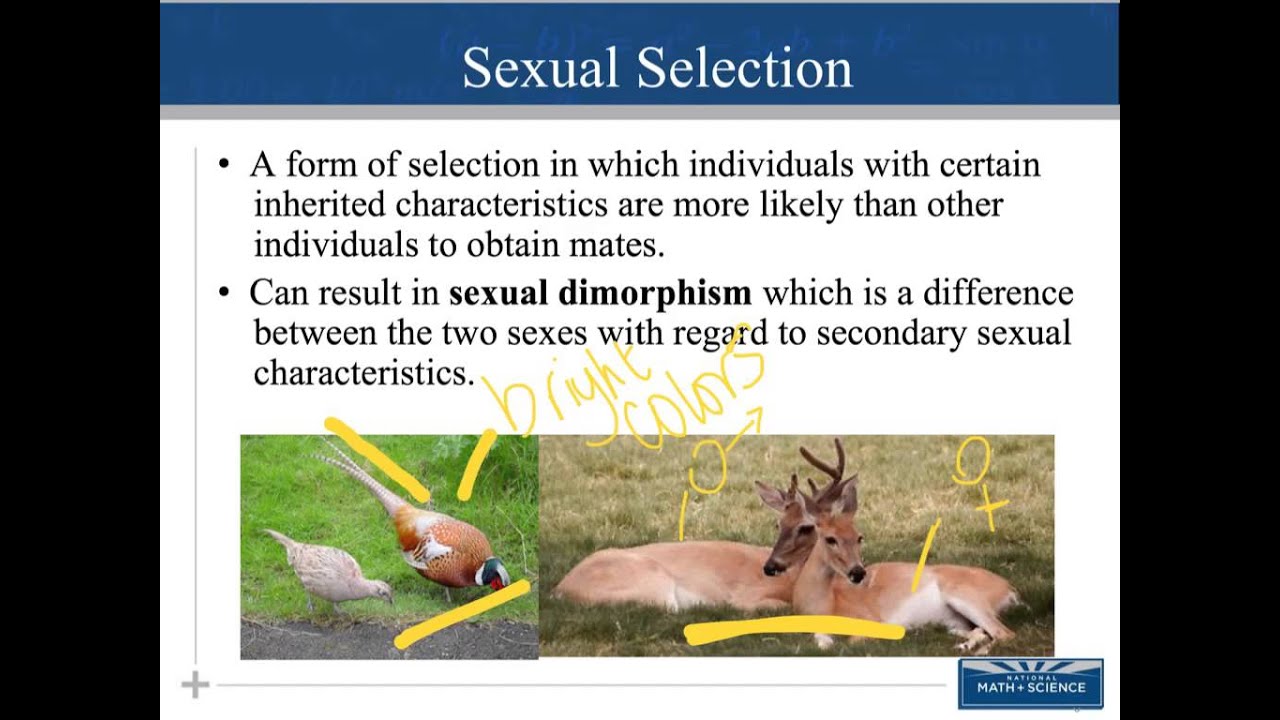

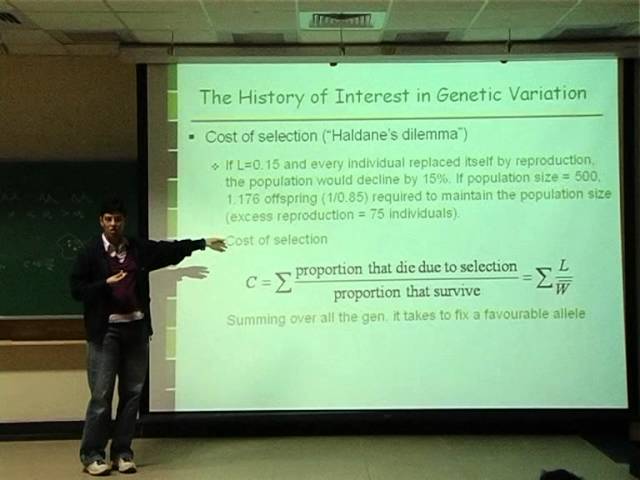
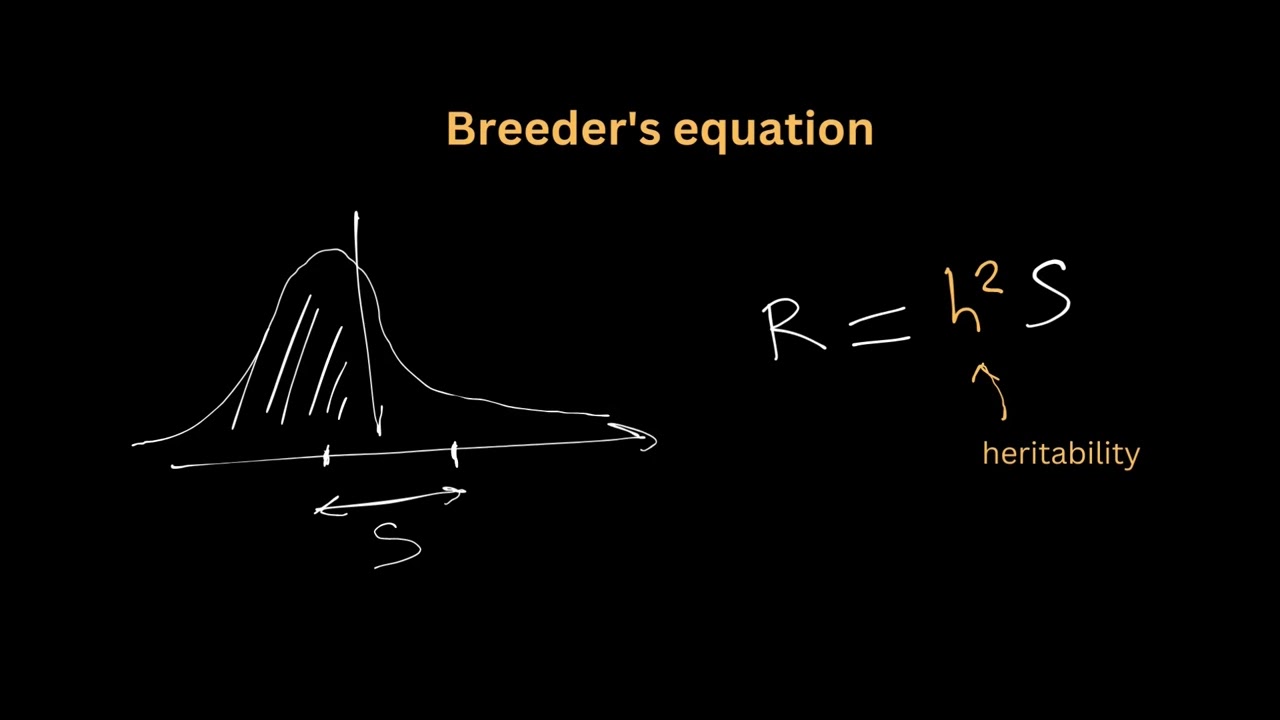



In population genetics, mutation and natural selection at a locus often balance each other, with the equilibrium recessive allele frequency determined by the mutation rate (μ) and selection coefficient (s); for completely recessive alleles, equilibrium frequency is q̂ = √(μ/s), while for partially recessive alleles with degree of dominance h, it is q̂ = μ/(hs), showing that even partial selection against heterozygotes can dramatically reduce mutant allele frequencies because most rare recessive alleles exist in heterozygotes.
Natural Selection and Mutation Balance in Population Genetics
Added:Mendelian genetics, specifically the definitions of alleles, homozygous/heterozygous genotypes, and dominant versus recessive traits.
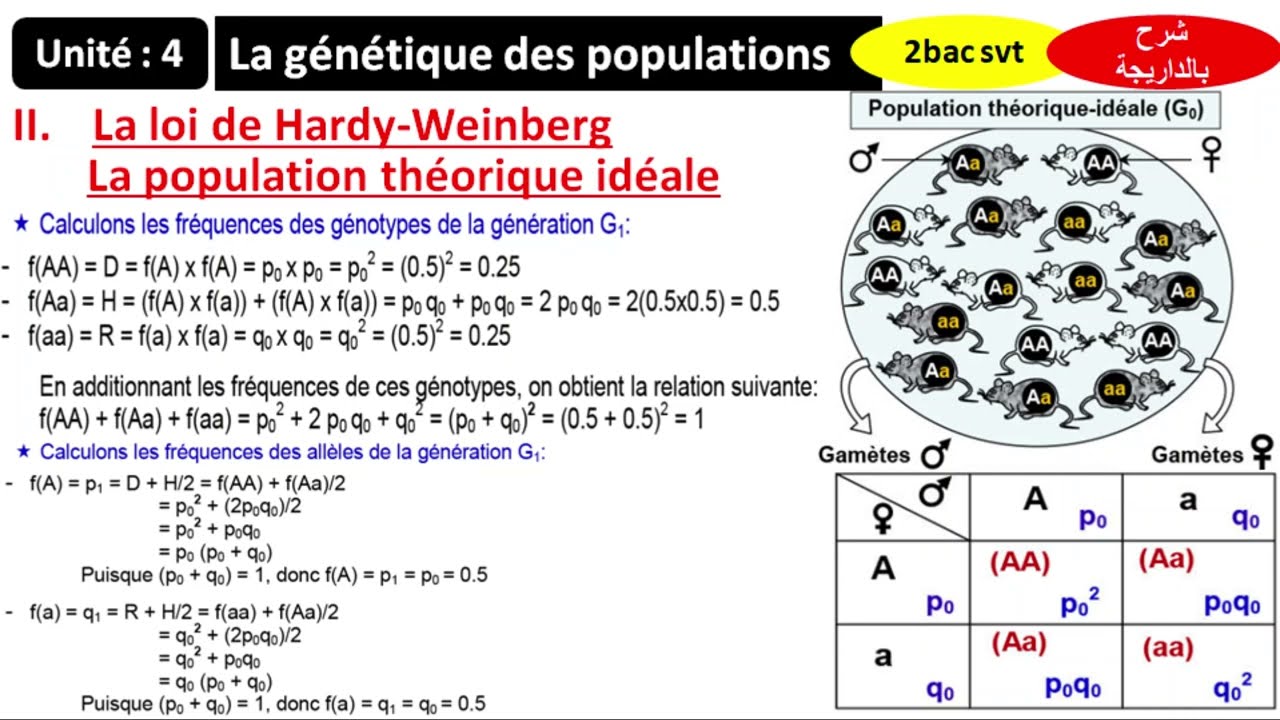
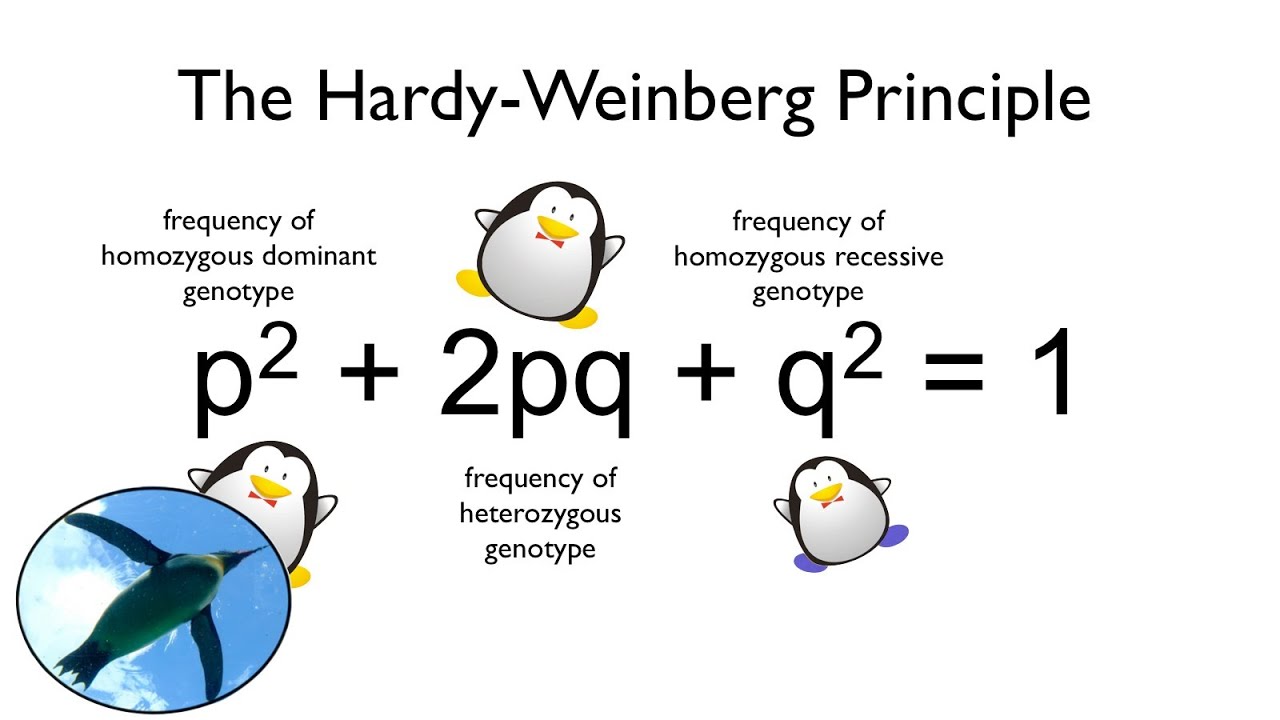
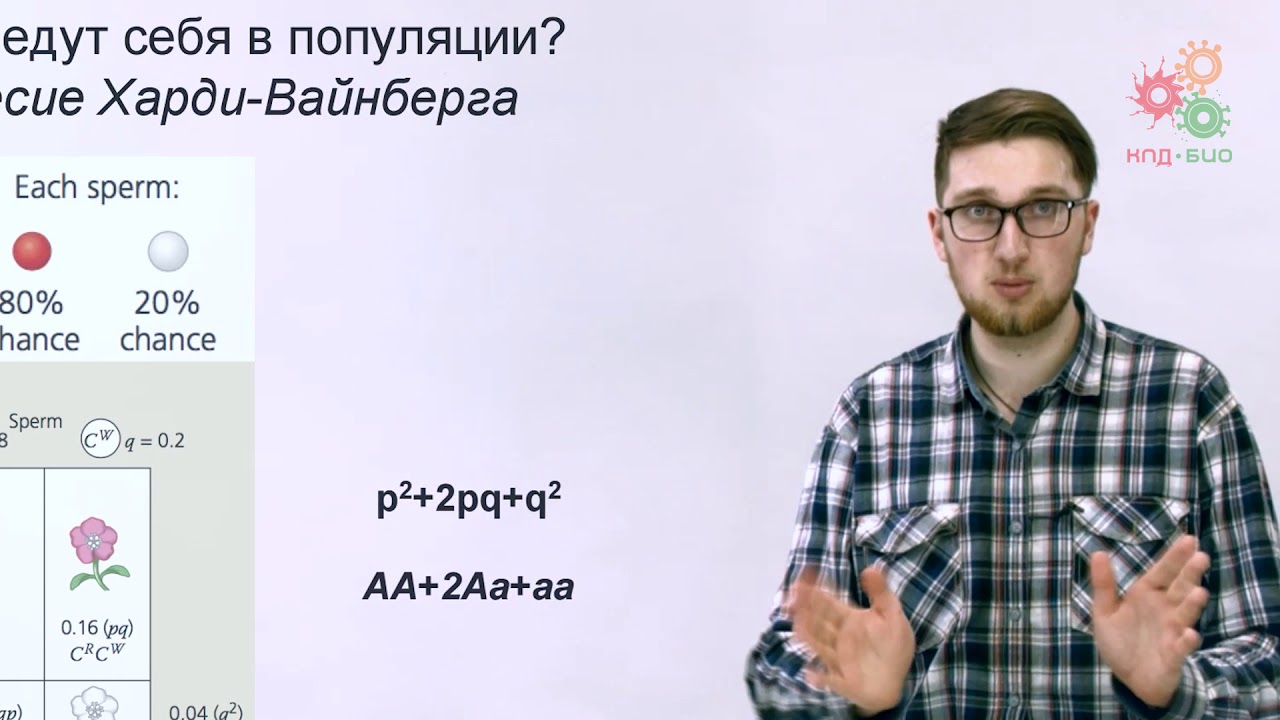
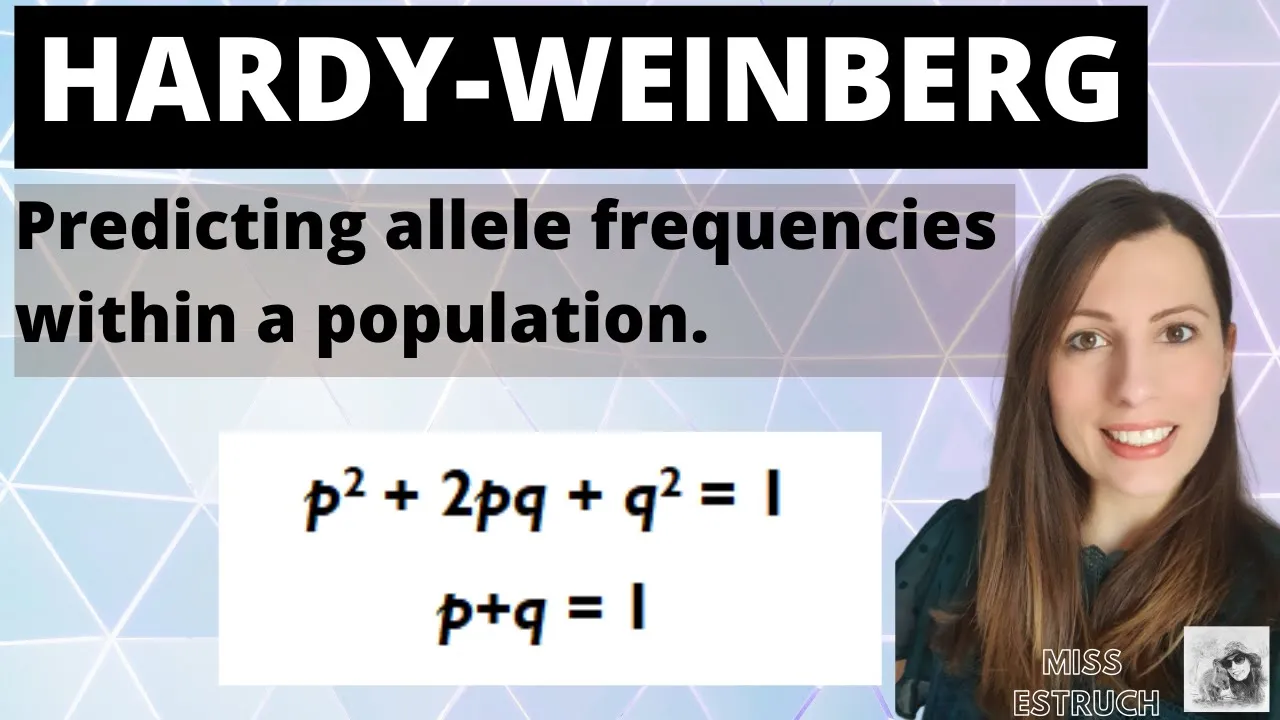
The Hardy-Weinberg principle, including how to calculate allele and genotype frequencies in an ideal population.
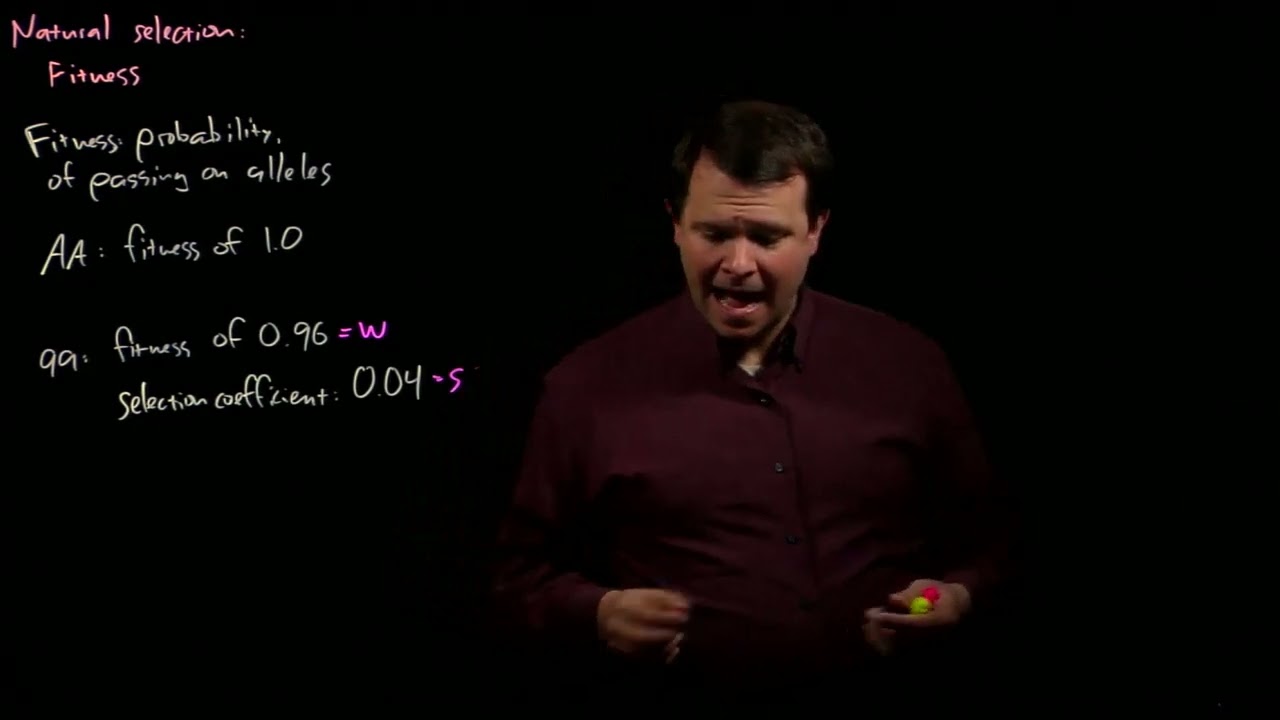
The fundamental concepts of natural selection, specifically evolutionary fitness and the selection coefficient.
Basic mathematical modeling in biology, including algebraic manipulation of population frequency equations.
The interaction between mutation, selection, and genetic drift in finite populations (such as the Neutral and Nearly Neutral Theories of Molecular Evolution).
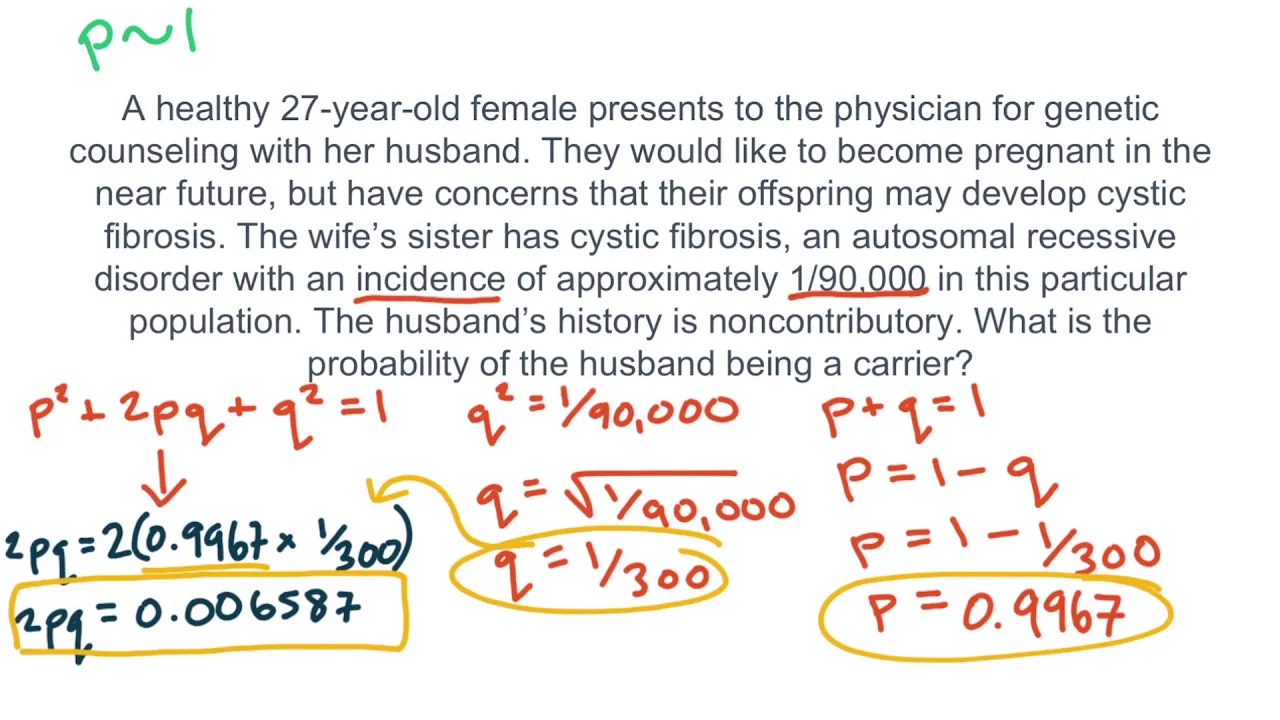
Real-world applications in medical genetics, such as understanding how genetic disorders like Cystic Fibrosis or Tay-Sachs disease persist in human populations.
Other forms of genetic equilibria, such as balancing selection, heterozygote advantage, and frequency-dependent selection.
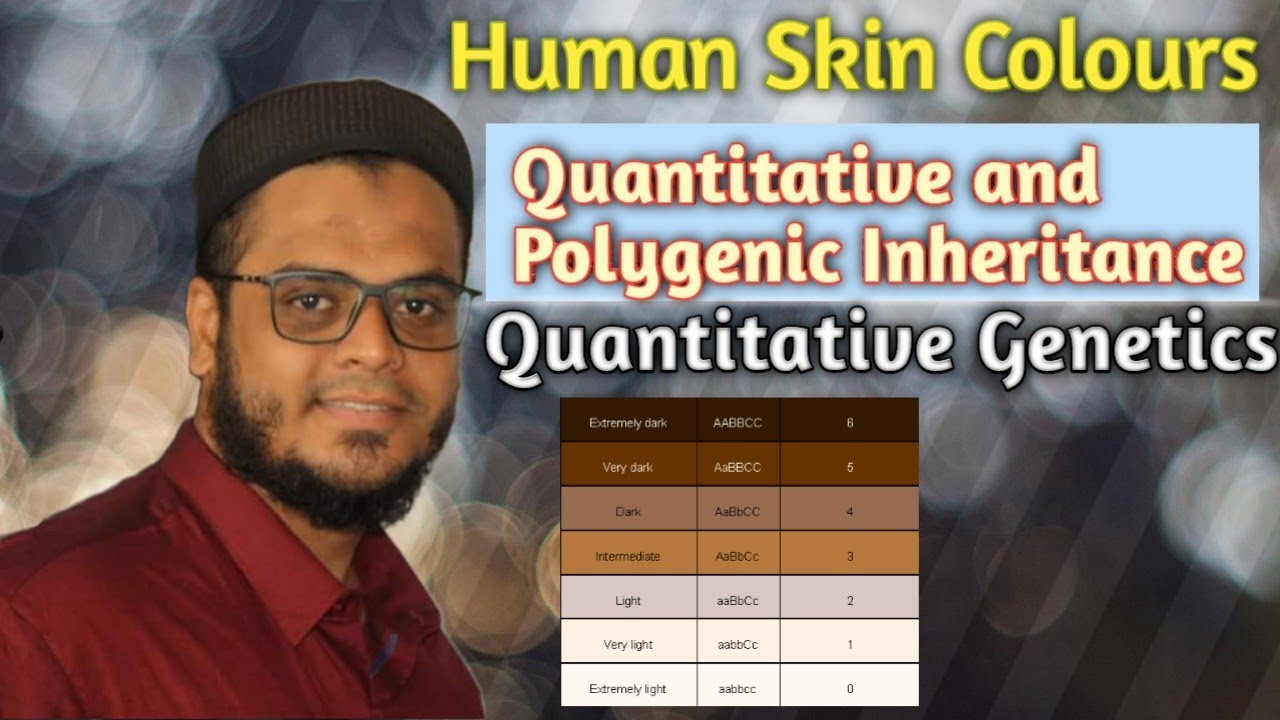
Quantitative genetics, which extends single-locus selection models to polygenic traits influenced by multiple genes and the environment.
1.1K views25likes9:29Original Release: 2022-04-07
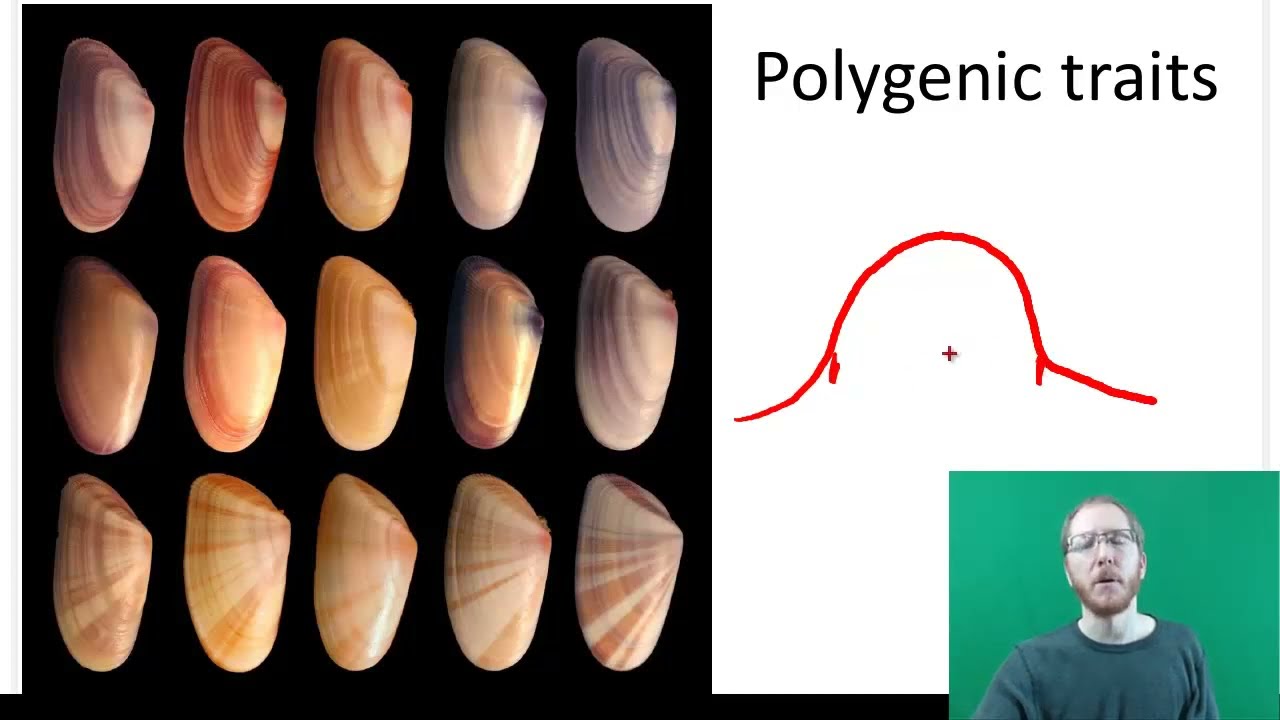
mutations are usually harmful that is to say that they generally cause a mutant to reproduce less selection on the other hand is adaptive selection at a particular locus leads to individuals that reproduce on average more eventually if selection on one hand and a mutation on the other are happening at the same locus these two forces should balance each other out let's have a look quantitatively and see how this works so our setup involves a wild type big a allele and a mutant harmful little a allele their population wide frequencies we will continue to write as p and q respectively and if little a is completely recessive then the fitnesses of these genotypes big a big a is one the fitness of the heterozygote is also one and the fitness of the homozygous mutant is one minus some selection coefficient s right remember um that when we're talking about fitness s is the degree to which this particular genotype is disfavored and so if little a um is like embryonic lethal then s will be one but generally speaking s is between zero and one and because of hardy weinberg the probability or the frequency that we will see this genotype is q squared and so each generation the proportion of alleles the rate of elimination let's do this over here the rate of elimination a little a little a alleles due to selection is s times q squared however remember at the same time big a alleles are mutating to little a alleles at a rate of mu and so at equal and so so uh little alleles are being eliminated at this rate but they're being created at this rate and at equilibrium these two rates must be equal and so we can do a little bit of rearranging and we find that q hat which is the equilibrium frequency of the mutant allele is the square root of mu over s and this is all well and good if this little a allele is completely recessive what happens if it's only partially recessive well in a partially recessive situation then the fitness of big a big a is still one the fitness of little a little a is still one minus s but the heterozygote will have some loss of fitness but not as much as the homozygous recessive and so we say that it's recessive i mean it's fitness the heterozygote fitness is 1 minus h s right and we call h the degree of dominance and so h is a measure of how dominant this harmful mutated allele is and so if h is zero in this situation right the mutation is completely recessive it doesn't show up at all in the heterozygote but if h is one then that harmful allele is completely dominant um and in the real world most of these alleles that show partial dominance h is much much less than 0.5 right and so these alleles are a little bit penetrant a little bit dominant but not a whole lot so now let's see how this plays out at a population level so remember from our discussion of mutations that if q is small then most of these recessive little a alleles are going to show up in heterozygotes so much so that we are completely going to ignore the homozygous genotype entirely and so the selection coefficient against the heterozygotes is h times s um right the selection coefficient against the heterozygotes is h times s and so that's how much at a disadvantage they are relative to the homozygotes in their ability to reproduce and so each generation the proportion of alleles that are lost to selection is 2 times p times q right recall from hardy-weinberg this is the population frequency of the heterozygote times hs right this is the selection the selective disadvantage that um that genotype is under times one-half why are we adding the one-half here remember that we are looking at lost alleles right and so when a heterozygote fails to reproduce we aren't losing two alleles right we're two of the um two of the mutant alleles we're only losing one of them and so this is the rate that mutant alleles are lost due to selection but they're still being created by mutation at a rate of mu at equilibrium these rates are the same however um right these these re at equilibrium these rates are the same and because this harmful allele is very rare we can actually estimate p as one right p is so close to one that we're just going to go ahead and call it one and so if you do a little bit of algebra then you end up with q hat right so the proportion of mutant alleles at equilibrium is equal to mu over h times s and so compare this situation where um uh where uh right compare this situation to this one right in this situation the heterozygote has some selection against them and in this situation it's only the homozygote mutant that is being selected against and see how there is no square root here because most of these recessive alleles are present in the heterozygote even a little bit of selection against that heterozygote can dramatically decrease the frequency of those mutant alleles so through our entire discussion around mutations and selections we've assumed that this homozygote while the homozygote wild type genotype is the most fit that mutations are always deleterious what if that's not the case occasionally it's actually the heterozygote that will end up being superior and that's our last topic
Up Next

96:44
Mutation and Gene Frequency: Forces of Evolution
@AnthropologyforUPSC
16.9K views•2021-06-05
50:12
Bacterial Communication: Quorum Sensing and Biofilm Formation Explained
@JHUAAP
12.6K views•2011-06-28

5:35
Enteric Nervous System Explained: The Gut's Brain | Neurobiology Lecture
@alumniu6029
438 views•2018-09-12

7:08
Bacteriophages: Earth's Deadliest Killers and Future Antibiotics
@kurzgesagt
34.6M views•2018-05-13
Related Study Plans & Knowledge Roadmaps
Structured learning paths in Biology
biology
RNAi: Biogenesis, RISC & Gene Silencing
01Molecular Biology Foundations: DNA to Protein
02Introduction to RNA Interference (RNAi)
03Molecular Biogenesis of miRNA and siRNA
+ 2 more learning modules
10h5 modules
Explore Roadmap
biology
Mycorrhizae: Signaling, Biophysics & Ecology
01Foundations of Mycorrhizal Symbiosis
02Molecular Signaling and Root Colonization
03Biophysics and Bioenergetics of Nutrient Exchange
+ 1 more learning modules
11h4 modules
Explore Roadmap
biology
Circadian Clocks: TTFL, SCN & Periphery
01Foundations of Molecular Biology & Gene Expression
02Introduction to Chronobiology and Actograms
03The Core TTFL: Molecular Architecture of the Clock
+ 3 more learning modules
14h6 modules
Explore Roadmap
biology
Population Genetics: Math, Drift & Selection
01Genetic & Probability Foundations
02The Hardy-Weinberg Principle and Baseline Models
03Mathematical Modeling of Natural Selection
+ 3 more learning modules
18h6 modules
Explore Roadmap