





















The Habitable Worlds Observatory (HWO) represents a transformative step forward in astronomy by combining unprecedented UV-optical capabilities with large aperture imaging to address fundamental questions across multiple scientific domains: detecting biosignatures like ozone and methane in exoplanet atmospheres, probing intermediate-mass black holes through reverberation mapping, investigating dark matter substructure via gravitational lensing, and studying early galaxy formation and cosmic reionization. Unlike previous missions focused on single science objectives, HWO enables simultaneous exploration of habitability, cosmic structure, and astrophysical phenomena through its unique combination of wavelength coverage, angular resolution, and sensitivity, addressing limitations of existing observatories like JWST while enabling entirely new science cases that were previously impossible to pursue.
Revealing Cosmic Origins: Habitable Worlds Observatory Science, Part 2
Added:I'm excited to welcome you to our next session which is starting with our bio signatures panel.
My name is Sarah Tuttle. I'm at the University of Washington in Seattle and I will not torture our running metaphor too much but just say uh the staff are here for your safety and not your comfort. Um let me introduce the moderator for this panel. Uh Vicky Meadows will be moderating. She is my colleague and a professor and an astrobiologist at the University of Washington. She's also PI of the virtual planetary laboratory team which had a birthday this year and turned 25. So it turns out I know it's very exciting. We have had we've been working on this collectively for a long time. All right. Thanks so much.
>> Hey, thank you. All right. Can people hear me?
>> Closer. Okay. All right. They have to be okay. Here we go. How's that? That's about That's better. All right. Cool.
Oh, okay. So, um hello everybody and welcome to our bio signatures panel. Um our panel today is four card carrying astrobiologists and a largely imperturbable technologist at the end.
So, we're going to have um a discussion um amongst that group. Um and so our scientists are going to be sharing their very favorite astrobiology science cases with you um and how these cases might actually drive the design um of HWO. Um and then after that we'll be asking our technologists to share emerging technologies with us that might support or enable our astrobiology. So that's sort of the format. Um if there's time at the end we will also throw to the audience. So if you have questions um hopefully you get a chance to ask them.
So the central theme that will run through the science cases you hear are basically that HWO needs to be so much more than just an oxygen detector. I don't know how many elderly people there are in this room who remember the Xnips and TOPS reports and how we were going to have match filter bands to look after O2 and ozone. We've evolved past that now. Um so we now know that when we detect a bio signature is really just the beginning of our quest um our potential bio signature. Uh because no bio signature is going to be unambiguous. we're really trying to detect life on a planet that's incredibly complicated and has lots of different components. Um the exception of course is if you detect a modulated radio signal that encodes pi then do let us know because that is really so probably the only unambiguous bio signature we will get and in that case we don't need planetary context. We don't even need a planet. Um but for the bio signatures themselves we need to do two things. One is we need to be able to verify that we've got a real signal and we're not being fooled by the speckles or you know some other kind of instrumental artifact um that we've identified it correctly. Um and ultimately we need to be able to interpret it in the context of the environment we find it in. So in the first case trying to to get a better detection I mean the obvious thing is maybe to go for more exposure time and get better signal to noise. But we could also look for multiple bands if we have sufficient wavelength range. And we can also look for things like photochemical byproducts of the molecule we think we have. If the photochemical byproducts are there it makes the probability that the parent molecule is there that much higher. For the environmental context we need to look at two things. One is there are there processes in the environment that are able to create the bios signature gas or surface feature or whatever abiotically without life. Um these are also called false positives.
They could come from say vcanism or photochemistry.
And then the other thing we have to look at is you know are we looking at a habitable planet? Does it make sense that life would produce this signature in this environment? So you know that oxygen you've detected on that raging lava world is maybe something you might want to question. Right. So um without further ado then I would like the panel to introduce themselves briefly and then after that I will start posing questions. So we'll start here with Amber.
>> Great. Hi everyone. My name is Amber Young. I am a re researcher at Gddard Spaceflight Center. I do uh exoplanet characterization and bio signature detection looking at bio signature uh decision tree strategies and approach for uh exoplanet characterization. And I'm also um an avid uh retrieval modeler.
Hi, my name is Eddie Swedterbin. I'm associate professor at UC Riverside. I study the chemistry, climate, and spectral signatures of primarily terrestrial planets uh with a particular but not exclusive focus on potential bio signatures and their false positives and negatives.
Yeah, I'm from NASA as where I'm a posttock and I study the chemistry and climate of planetary atmospheres and I try to use that understanding to interpret telescope observations of exoplanets with an emphasis on bio signatures and habit habitability.
>> Hi everyone, I'm Ty Robinson. I'm an associate professor at the University of Arizona in the lunar and planetary laboratory and with the Arizona Astrobiology Center. Uh my work is is mainly about understanding how we're going to recognize signs of habitability from the kinds of worlds that HWO is going to look at.
>> Uh hi everybody, my name is Kevin Fogerty. Um I am a civil servant at the NASA as research center. My work mainly revolves around developing emerging technologies for high contrast imaging.
I'm kind of a transplant to the technology realm. Um trai like I actually um spend a lot of my previous life doing work on cosmology and uh large scale structure of galaxies.
Okay, great. So, I'm now going to ask the panelists um each to share a favorite HWO science case. Please explain what it is, you know, how you're how you're getting your bio signature or whatever out of this. Um why you think it's scientifically significant for us to to do this thing. Um and maybe even say why it might be challenging. So, Amber, if you'd like to kick us off.
>> Yeah, for sure. So, um protozoic Earth and that science case is near and dear to my heart. Um, we heard it talked about throughout this meeting in terms of having HWO have the capability to be sensitive to not just Earth as we know it today and as it's lived today, but also as we knew it in the past. And protozoic earth presents a unique opportunity to be able to explore and characterize less oxygenated planets because um for protozoic earth at uh much lower um oxygen abundances in the visible uh spectral features for oxygen like the oxygen a band at 76 microns may not be as detectable for those lower abundances. However, in the UV, um, ozone still has a very strong spectral absorption and it's a photochemical byproduct of oxygen. So, being able to be sensitive to whether or not a planet is oxygen oxygenated or not, the UV might be the only window to do so um, for those earlier periods of Earth's history. And it's really important because protozoic Earth represents a large fraction of Earth's history, almost half. And so if we want an observatory that can robustly um observe and characterize Earth, we need to be thinking about Earth through time and incorporate, you know, every era of Earth's history that kind of presents that that inhabitants and those characterist characteristics that we're looking for. Um and so I've done a lot of work um on the uh oxygen uh and ozone detectability question for protozoic earth particularly in the UV looking at um the spectral coverage that we might need um band pass placement. Um, and these these are important questions to be asking now because they inform, you know, sort of UV cornography questions and the trade studies um in terms of narrowing in on what the actual observational requirements might might look like for ozone. I think another um important aspect to this as well is looking at potential spectral false positives for ozone as well because there are a lot of species that absorb um in the UV but in particular SO2 has an absorption feature that directly overlaps with ozone. So looking at um modulating different boundary conditions and surface fluxes for for SO2 and looking at sort of the spectral uh distinguishability between those uh two species um has also been um you know really important for being able to to characterize um ozone and its uh detectability throughout Earth's history. Um so that's why um protozoic earth is sort of um and that particular science case is is near and dear to my heart and sort of focuses on the strengths that we can take advantage of and leverage in in the UV in terms of its strong spectral features for ozone and the relatively modest signal to noise ratios that are necessary to be able to achieve those ozone discrete uh constraints, whatnot. Awesome. Thank you. All right, Eddie, what would you like to do with HWO? Yeah, I I want to kind of uh address some of the the talk this morning about how we might be fooled uh by potential false positives for bio signatures. And by that I mean planetary processes that are producing for example oxygen and ozone uh in an abiotic way through for example uh the escape of hydrogen and the accumulation of oxygen after the overwhelming of oxygen sinks. And so one way to we the problem is we don't know how common these mechanisms are. And uh the pro the possibility is we live in a world uh or a universe where they're rare and in which case we could be pretty lucky or they're common in which case we uh need to be more circumspect about our bios signature interpretations uh for habitable planets. And so one way to figure out which universe we live in is to look for oxygen and ozone outside the habitable zone. For example, in the Venus zone. Uh so for example we could look for uh abiotic ozone uh at uh separations closer than the inner edge of the hab zone. Uh the IWA is less ownerous say if you have a point4 micron cutff than if you have two micron cutff so you can see much closer to the star.
And so we might be able to figure out whether these um mechanisms are are common or rare. Uh another way to to look for these false positives is to look for uh oxygen partial pressures that are too large to be biologically produced. Uh so earth has maintained a maximum amount of oxygen uh that's a bit higher than exists now. You know in the age of giant dragonflies and uh spiders as big as your head. Um um maybe not the world you want to live in but um clearly an interesting planet.
But such a planet would be identified by having uh collisionally induced absorption features from oxygen that are at separate wavelengths uh than the O2.76 micron band uh throughout the visible uh and near infrared. And so we could look for those and uh see what kind of universe we live in.
>> Yeah. So uh my favorite science case was covered uh quite a bit earlier this week. Um but yeah, I I want habs to be able to detect archan earthlike biospheres. So right this is earth between two and a half and four billion years ago. There was no oxygen back then and the main bios signature was the coexistence of methane and CO2 and right methane bios signatures they they could be more common than oxygen bios signatures um on earth oxygenic photosynthesis it originated late um and is a very complicated metabolism whereas with methane it was maybe one of the very first metabolisms and is relatively simple. So they, you know, these could be more common bios signatures. Um, and yeah, to detect the archan bios signature, we need h worlds to observe into the in near infrared with pretty high signal to noise. Um, so maybe Josh showed or if you look at a reflected light spectrum of the archan earth, there's lots of methane features in the visible and the near infrared, but there's really just one CO2 feature out in the at about 1.5 microns. So we need access to that CO2 feature to pro provide context for any methane detection detection. Um but we also need access to the near infrared to exclude false positives for the archan bio signature. Um so people have imagined uh possible lifeless planets where you could have strange volcanoes that make carbon dioxide and methane mimicking an archan biosphere. Um but work has shown that these these volcanoes would also make a lot of carbon monoxide and on an actual archan with life we expect low carbon monoxide because life likes to eat carbon monoxide. So with have worlds if we have access to the near infrared we can put a constraint on carbon monoxide and rule out this false positive. Um but yeah, so in summary, I I just think the arcane earth is a really important bio signature for habs to detect and as Josh said, we need access to the near infrared out to maybe 1.7 1.8 microns to do that.
>> So given my introduction, you probably won't be shocked to hear that the science case that I'm most interested in, especially for for this panel, was the detecting oceans on exoplanets science case. Jake Luster Giger this morning did such a great job presenting on that and that was co-developed by Jake Luster Giger, Nick Cowan um and and collaborators. Um and so as as uh so I for me what makes it so motivating is that we're talking about bio signatures and we want to understand if we're going to be able to detect life on exoplanets but I think we also want to know given a habitable environment how frequently does life arise and to answer that question you need to be able to understand if that world has presented a habitable environment in which life could have could have arisen or in which life did arise. So I think habitability goes handinhand with the bio signatures question and in fact in in Josh Chrisen Tottton's presentation um some of the scenarios that you wanted to rule in or rule out for bio signatures involved uh wanting to know what was on the surface and needing to know the surface conditions and needing to know if if um it was a desiccated environment or or an environment that had oceans on the surface. Um and so as as uh Jake so nicely presented uh this strongly boils down to the inner working angle of your high contrast imaging system. Um so a lot of the detecting oceans on exoplanets science case relies on being able to access kinds of crescent phases at which uh the glint signature from oceans becomes strong uh and also uh at which the polarization signature from oceans becomes uh strong. Um, and so, uh, as was shown, uh, in in Jake's presentation, the work from Vaughan at all in 2023, uh, demonstrated that if you can get your inner working angle from about three lambda D to two lambda D, you're talking about a three times increase in the number of of worlds that you could access at crescent phases to potentially probe for for habitability.
Um, but I guess something that I wanted to add was kind of beyond all that I'm generally interested in the ability of of Habitable Worlds Observatory to just be a general characterization engine for for exoplanets. Um, and so I'm excited about its capability to to study the unknown. I want to be surprised by what Habitable Worlds Observatory finds. Um, and I think we maybe wouldn't have done our job if we don't spend most of our time confused by HWO observations.
>> Okay. So, thank you to the scientists there. So, um, and yes, I guess thank you to the astrobiologists. Um, so, so for Kevin, you know, building the first mission ever designed to search for signs of life on Earthlike planets around sunlike stars will require some of the most advanced technology ever flown in space. So um so Kevin are there any emerging technologies that might help to enable those ambitious science cases and how would they help?
>> Yes.
>> Um yeah there is a a whole plethora of of just fantastic emerging technologies that are coming to the four now. Um they are at different levels of maturity. Um and actually you know recently we just got the roses call back and it's very exciting to see how many of these were um selected as uh selectable. So going forward there is actually a path to get these things to TRLs three and then five. Um I like to think about the um at least from the perspective of chonography since I spend pretty much all of my time uh designing the coronagraph instrument. Um well not the a coronograph instrument um I tend to think of it being sort of like two lanes of emerging technology development. One is the more traditional approach where we take the things that we have a pretty decent idea how to build or develop. So appetizing masks, mirrors um and ask the question is there a more clever way we can arrange these these optics? Is there a more clever way we can design these optics? And there are a number of people today, a number of really good posters and really good talks which show that yes indeed there are many clever ways that will allow us to increase yields that will allow us to push uh push down on the inner working angle, improve throughput, uh improve bandwidth. Um but then on top of these more traditional approaches, there are these fantastic emerging technologies. And um the one that I'm most familiar with and work the most on is, you know, broadly speaking, we can talk about fatonic technology. Um and this has the potential to be a real gamecher. I mean, we're just all, you know, excited about the um possible future where we are basically able to do linear algebra directly on the light we observe. And so if you kind of think about the uh problem of coron its most abstract sense, uh I have an electric field. That electric field is a superposition of wavefronts from a star, from a planet, which I care about, from a bunch of other things. and I want to decompose that superp position. Well, if I have basically something that lets me do computation on the light itself, that is by far the most efficient way to do that. And we are, you know, making some pretty decent progress um in that realm.
Uh additionally, um uh AI powered um post-processing techniques, we saw an interesting talk about that the other day that has the potential to really improve things. uh wavefront control um both wavefront control and coronagraph design could very much aid in uh giving us broader bandwidth. So you know right now we are typically you know designing towards 20% but there's no fundamental physical reason why wafer control can't go wider or why coronagraphs can't go wider. Is it easy? No. But it's doable.
>> It's doable. Yeah. Yeah. And you were talking the other day too about you know ways we could increase or or you know optimize our IWA without actually increasing the size telescope. You want to mention some of that too?
>> Uh sure. Absolutely. So um and this is again where kind of like both the sort of like more traditional and more kind of like quantum inspired versions of technology development come into play.
In either case we are uh looking at new technologies that can then beat down on the inner working angle. So with the fetonic coronagraph uh potentially um we are talking about um inner working angles on the order of a lambda overd um and so you know uh for the near infrared where that becomes a a very important um parameter there's a there's a path forward there. Um, also with more traditional approaches, so like more cleverly designed apping masks, we might not be able to get down to one lambda overd and maintain contrast stability, but we can definitely, you know, start pushing that envelope closer and closer in that direction.
>> Great. Um, do any of the rest of the panelists want to ask Kevin a question?
>> Yeah, go.
>> Um, yeah. So um with JWC observations there have been problems with like offsets between detectors. So like with G395H um there's two detectors and you know you get a transmission spectrum of a planet and there are these systematic offets offsets that really are bad for interpretation and we can't figure out why there's an offset and um is that you know kind of thing avoidable? Can we anticipate that? You know, can we because I I don't think this kind of problem was anticipated ahead of time.
>> Um I mean, you know, that's somewhat of a difficult question to answer, right?
Because we are in the early days of of just designing notionally these instruments. Like you look at the the stop models um right now and they're basically like a lot of of what will be instrumentation is kind of like cut and paste right now. Um in principle we can design um instruments to be like passively robust to problems we anticipate having. Um not really sure how we deal with things we haven't yet anticipated.
>> The unknown unknowns.
>> Yeah.
>> Yeah. I was going to ask about inner working angle unsurprisingly. Uh so so Kevin for the photonic detectors you were saying yeah one lambda on D. For the non-fotanic detectors you said that you would be really concerned about lambda on D. I commonly see three lambda on D is as a quoted number that reasonable. Where between three lambda on D and one lambda on D for the non-phot photonic chronographs do you start to really beat up the sweat?
>> Um I have yet to see something push below like two lambda overd while also being tip tilt robust. um things that are kind of like around 2 and a half lambda overd but still like let you you know maintain 10 the 10 contrast with a star of of finite stellar diameter or reasonable tip tilt robust. There are things that are between TRL 1 and three um that are percolating through the literature that are in test benches right now.
>> Awesome. Okay. Are there any questions from the audience for our panel members?
Yes, there's a one up there down here too.
>> Thanks. Uh Chris Stark, NASA GDDARD. Uh so I have a follow-up comment and question about innerworking angles since we focused on that so much. Um so I just wanted to um state that you know this concept of an inner working angle is really a mathematical description of the chronograph and JWT has already demonstrated that we can work interior to whatever that number is. So it really depends upon the details of the chronograph's throughput as a function of working angle. So even you know if it says you know if we come up with a chronograph that's three lambda overd it's entirely possible you could observe it too just >> right. Yeah. and and you know like the the chronograph that's been studied for EAC's one and two the vortex does not have you know a nice sort of step function throughput curve so it has its inner working angle but there's also meaningful throughput that's within the inner working angle >> yeah exactly those those are really powerful types of chronographs um the question I have is if if we're pushing down to chronographs that are operating at like one lambda overd with these p technologies >> right >> at at some point we lose the spatial we're no longer are sort of doing pornography because we no longer are specially resolving the image and it's not clear to me how we subtract exo zodia or deal with other sources of contamination. Have you thought about um you know those sorts of complications and how we can still deal with those and try to pull bio signatures out at such a small working angle?
>> Uh yeah. So I'm going to answer that question from the perspective of a hypothetical fatonic coronagraph where when we're talking about you know detecting a signal at around one lambda overd effectively what you're doing is you are um looking at power in modes. Um and so you're right at that point I you know am not really clearly stating hey I've detected a planet it's at this position in its orbit. It's at you know this separation and angle from the star.
Um but what I can do is um say you know I have my my sorted um output of electric field modes. I can get rid of the stellar modes and then look at the rest and do some sort of post-processing analysis. I imagine that sort of ambiguity that you're describing between for example multiple planets or between planets and exoo you may need to you know rely on like spectroscopic uh demultiplexing um sort of thing.
All right, question right. It's my turn.
Um, there's a famous figure. It's figure 1.1 of the decal. I'm looking at it right now that Sean and and Jada made and it shows the concentrations of methane and carbon dioxide and oxygen changing over time on the earth as earth evolves from archa into protozoic to modern. And the period where uh carbon dioxide and methane change places for instance in their concentration lasts a few hundred million years. and oxygen goes up very rapidly by by geological standards over a couple hundred million years. So what I'm wondering is is with um the static spectra we'll get of of planets in directed in reflected light is it possible through some form of modeling to distinguish a case where the atmospheric conscious concentrations are essentially stable over a long period have been or will be compared to a case where they're essentially evolving rapidly on geological time scales. In other words, can you tell the static atmosphere from the rapidly changing one that we know occurred on the Earth?
>> I think Nick, you might have an idea.
>> Um well, I mean um you know, these are just such different time scales, right?
Like um right, Earth's atmosphere over, you know, thousands of years is is relatively stable. like maybe even like the lifetime of even oxygen in our atmosphere today is it's a long lifetime. There's actually a lot of oxygen in our atmosphere. So it you know even if you have um long-term geological change there is quite a bit of you know over thousands and thousands of years quite a bit of stability. Yes, a planet will change over billions of years, but these are like, you know, these are big long-term changes from slow hydrogen escape and slow oxidation of the surface. Um, I guess I will say is that it is possible. Um so with our oxygen today there's a big reservoir and it's very imperturbable but if you have smaller oxygen concentrations or where where you could you know detect it by its ozone proxy that smaller reservoir is going to be more sensitive to change and there you know there could be changes um over relatively shorter periods of time and I think it's you know up to various work people in this room to figure out whether those kinds of changes um or or even like a seasonal change in that scenario would be observable or whether that would be too hard with H have worlds.
>> Okay. So, I'm sorry in the interest of time we're going to finish so we can let the other speakers in the session get in here. Um but thank you to all of the panelists and thank you to the audience questions as well. So, and I as we're switching over, I just want to also make sure to thank Nikki and Giata for organizing this panel that went so beautifully. And thank you, Vicki.
[Applause] All right, with that, I'd like to welcome Vivian Yu who's joining us from Caltech IPAC talking about reverberation mapping.
>> I'll reset the time. Okay, thank you so much. Uh, you can all hear me. Okay. All right. Thanks. Um, first of all, I want to thank the organizers for putting together such a wonderful program. I'm learning a lot about exoplanets and habitability and I'm super excited about UVIFU. Um, and so, but for now, we're going to pivot a little bit to talk about black holes. And I hope that um in the next 10 minutes and not too much more uh I'll be telling you about why uh and how we would want to study uh intermediate mass black holes uh using this reverberation mapping technique with HWO.
And I know that there haven't been too many black hole talks uh in the program thus far. So I want to just spend a moment uh motivating why we care about black holes. I know that this uh particular picture has been put up uh several times in this conference so far and a lot of you look at it and ask the question are we alone and I'm so glad you're doing that. So I can ask a different question and I when I see this picture the question I ask is you know how did we get here right and the the big elephant in the room is it's really that galaxy that's um capture my my imagination my attention and so how you know if to figure out how we really got here we need to figure out and understand galaxy evolution how they formed and and evolved through cosmic times and as you may have heard from some of the talks by Uichi and and and other speakers yesterday that you know black holes the super massive black holes in the center of these massive galaxies play an important role in shaping the the life of those galaxies through feedback processes for instance and so it seems natural to me then is to ask you know how these super massive black holes actually seed and grow on their own and it seems that it's a question highlighted in the KO so hopefully it is a legit question to to ask but also Um I was uh talking having a conversation yesterday at the reception and I uh was asked why do we then care about intermediate mass black these these low mass little little guys and um you know for those who know me I actually typically work on super massive black holes myself. So I asked myself that question why do we care about the the little guys? Turns out if we want to know where they form and and came from uh it is important to find these intermediate mass black holes otherwise we can't really uh understand how these super massive black hole form. And so these uh it wasn't too difficult for me to put together this slide that motivates why is scientifically important to understand intermediate mass black holes. They are the missing link between what I define as stellar mass black holes, things that are uh less than 100 solar masses per se, and super massive black holes that are uh greater than a million solar masses. And because we have different theories for how super massive black holes may have formed, they uh they would uh either you know from seed back holes that they grow through uh accretion of material or mergers. Uh we need to find out what those seeds are. There are actually predictions uh that folks have made about you know how uh our observed um uh properties of inter intermediate mass black holes can can inform us about these scenarios and also um the mergers of these uh IMBHS will be the gravitational wave um uh uh emitters that will be detected hopefully by LISA.
So we really truly live in this multi- messenger uh era of astrophysics.
Now, um they've of course been a little bit difficult to study and so uh and and why is that? And so for in a super massive black hole case, they tend to be, you know, these gigantic uh monsters in the centers of of galaxies. And it's easy to locate except for the galaxy merges that I actually study, it's really hard to locate those sometimes, but they we know that roughly they sitting in the center of galaxies. And if we have high resolution, really nice high sensitivity I use, we can actually mo um uh uh trace the motion of gas or stars around the black hole within the sphere of influence to um deduce what the massive mass of that massive object is in the center of these sources. And we've done that with um you know high resolution uh IFU and interferometry data so far. And but that's really actually a technique that's limited to very nearby systems where we can resolve within the black hole sphere of influence. For things that are a little further away when we can't do that, a lot of folks then rely on, you know, single epoch um mass determination methods perhaps on uh trying to get a a width of the mission line. uh that tells you something about you know how fast the particle is going and that relies on a a radius luminosity relation that actually came from uh reverberation mapping that tells us how the luminosity of that AGN correlates to the size of the um let's just call it the the AGN uh structure the broadline region and so but these are actually relations that are anchored on local massive sources okay and you can you can imagine the the level of uncertainties that we might get when we extrapolate to uh to other populations. And so for for lower mass um uh uh uh counterparts of these black holes, you know, they often don't sit in nicely in like centers of galaxies, they're you know, in these low mass objects and where it's really hard to distinguish that central light. And I'm not going to go into the detail of uh you know the the sensitivity plots here but basically in the current um landscape we don't have the observational facilities to really resolve uh the sphere of influence in lower mass black holes uh at the at the limits and also if we want to look at for broad lines to to to quickly measure black hole masses sometimes these can also be mimicked by uh supernova uh remnants uh lines that you know could could really uh uh dilute your signal.
And so um vibration mapping is uh is a way of trying to resolve not spatially but temporally you know the the structure in a structure and I'm realizing that the time actually goes down really quickly. So I would just say that um in rever mapping technique allows us to look at the stoastic um stoasticity of the variability that's coming from the AGN that bounces between from coming coming from the X-ray corona bounces between to the other parts of the AGN. So by measuring the light curves of these different um uh uh coming from the different uh bands or or or emission lines that we can actually try to deduce the size of these different uh com subcomponents in a structure using either um spectroscopy or uh imaging and this is actually uh not that easy. We've only have a handful of bonafide cases for intermediate mass black holes so far in GC4395 being one of the more um famous cases and just want to quickly say that we uh in the paper that was just accepted last week um we actually found one of the first like uh reverberation mapping signal in the in the mid- infrared and uh you know the the this is a a case showing a mid- infrared radius luminosity. Oops. I guess you can't see this, but on the left hand panel you can see the um the mid infrared uh uh radius luminosity relationship and the lower mass end is really poorly constrained. It's a little bit less uh pessimistic in the optical and UVB band, but it's not that much better. And so overall, we really need to constrain this low mass end of uh of the relation.
And so now comes to you know HWO, right?
why why we really need this big observatory with large mirror and UV capability. So UV is crucial for a couple reasons. It probes the really the hot inner regions of those accretion discs in the picture um that I I drew earlier and also it it harbors these UV lines like uh carbon 4 and magnesium 2 that are crucial for the high res shift folks to understand and try to measure the black masses of um black holes found at high res shift because those are the only lines that they have access. So we really need good anchoring from the from the local um sources.
Um low lower mass agent also have very rapid variability. So in like this um study we did in the optical bands we were talking about like you know on the order of minutes right uh of lags relative to to Gband. And so we really really cannot have too long of we need high cadence and high fidelity images.
And also the reason that you need um a large mirror is that in these low mass sources, it's really going to be hard to distinguish, you know, the different um stellarike um mass to to light ratio in these sources. And so if you have low resolution images, then the variability is not going to be as easily distinguish. You're going to have large error bars. And so we need um high quality images to for that good uh host decomposition uh to get the the signal from the from the black hole.
Okay. So um I hope that this is why you know uh I'm advocating for why we need uh high precision spectral photo uh for spectral photometry with like the full uh UV optical spectral coverage but uh for emission line vibration mapping but also um high resolution multiband imaging to really isolate the AGN light um uh from the host and so if we have a large number of sources and you know at lower masses we can hopefully start to build statistics that and help us answer the question of, you know, which um uh uh formation scenarios the super massive black holes have.
So, I'm going to not reiterate some of the key points that I just mentioned, but instead use uh and uh just kind of prep you for, you know, we talked about synergies, right? There's a lot of synergistic science that we can do with a lot of these facilities that are available now or coming up um very soon.
And um in the negative one minute that I'm going to have, I just want to advertise my poster uh where um putting on my hat as the uh uh proposal lead for the Roman space telescope that um the we all know the launch is coming in 15 months. The cycle one call is just right around the corner. So if you want to know more about it, check out my posters upstairs or come talk to me. And um I'll just end with my cheesy quote um that HBO will explore not just habitable worlds where life may be begin but also the seeds of super massive black host that shape cosmic structure. So this is a story of origin and on behalf of my um HW SIG co-chairs I would uh invite you to join our mailing list and I'll stop there. Thank you.
>> All right. Do we have some questions about those shy black holes that we need to understand the universe?
Great. We have one here.
>> I'm curious um do you do you think that the um uh sort of high contrast imaging at a very small inner working angle like uh 100 milliac second could help in any way for the black hole AG and science case? Yeah, that's a interesting question. So I have talked to um exoplanet minded uh instrumental uh mentation in this before and we've talked about whether we can apply a science cases. Turns out this was somebody who was working on an instrument on kek and the uh the magnitude that they need in the star was much brighter than even my brightest local AGN. So I was I was giving them NGC 1068 and it was like you know that's not bright enough and I don't know what to do at that point. So that said, um I am encouraged because I think the similarity between, you know, what we want to see very close to the base of the AGN is similar to, you know, what what exoplanet folks want to appear to want to do, right? You want to image things that are really close with a bright um point source in the middle.
And so I personally am also very interested in the case of like resolving duels and binary AGN. So, if there's some way that we can have the technical capability that allows us to image sources that are a little less bright than the stars that you have, but also decently bright nuclei, I think we have some test cases that we can try that on.
>> Hi, Vivian. Um, so what you're proposing is that to do fast uh images of the your targets. It's like uh uh few seconds, 30 seconds uh and and repeated images of your targets. Is that what you're proposing?
>> The the short answer is yes. Um I think that's because the uh the idea is that we need very high cadence images in order to to map that variability. Um, and because right now if you don't have a large enough mirror with with low mass objects, it's really hard to distinguish that light. I'm going to say if I can have my wish list, I would like a simultaneous uh, you know, multiband imager like that we have on some of the LCO um, telescopes where we can have simultaneous like GRIZ or or you know some some bands. We can actually do that take that at the same time so we can improve the efficiency further.
>> Thank you.
someone almost dead center. You guys can race.
And just a reminder to introduce yourself before your question.
>> Hi. Yeah. Uh Kevin Fogerty here. Um, so, um, it sounds like in order to do this with relatively high red shift cases where you need to have this rapid cadence, um, your ability to do reverberation mapping is sort of like a function of mirror size. Do you have a notion of kind of like the limit in how far out you can get or what sort of limit in the cadence you can achieve as a function of the mirror diameter?
Let me clarify one point in the premise which is that um I I I'm sorry I didn't make that clear but um I'm proposing to do this in local sources actually. So that's going to be a question on our premise. That said, even for higher r shift sources, actually I I think the sensitivity is not going to be the limiting point because actually as we go to higher r, we're going to have brighter quazars and and and whatnot to and to do this with it's going to be coming down to like yeah, if we want to locate the low mass sources at higher res shift, then that's going to be the difficult part. But um the like I said you know the beauty of reverberation mapping is that we really need to just resolve this temporally um and that adds to you know um that that gives a lot of room to to to play with um than just the spatial um dimension.
>> All right let's thank our speaker and welcome Dr. Jess Doppel joining us from Durham University.
Okay. Um, can everyone hear me? Okay.
Brilliant. Okay. No, don't go. Go back.
All right. So, hi everyone. Um, I'm Dr. Jess Doppel. I'm a posttock at Durham University and also a co-lead of the sedd that is exploring the nature of dark matter through ultra faint satellites of galaxies within the local volume. Uh but because I'm the first dark matter talk today, I want to step back and sort of build a little bit more of the picture of why we care about dark matter and the sort of theoretical framework that we exist in.
So our current prevailing cosmological model is that of lambda and what that means is that in an expanding universe cold or slowmoving dark matter which is also collisionless or non-interacting collapses via gravity into objects called halos.
And over time these halos merge from very low mass objects to very high mass objects. And at the center of these halos reside the stuff that we can see galaxies, dust, planets, us. And us as the weirdness is the luminous matter is about 15% of the matter budget of the universe. So quite small. Now, lambda CD mallet is an elegant and very successful model does have its observational tensions and these tensions tend to emerge at small scales and I think that this simulation illustrates this quite well. So we see in each of these panels a milky way mass halo that is simulated with three different uh dark matter frameworks. So we see CDM over in the rightmost leftmost panel and we can see lots and lots of these little dots.
These are what we would call sub halos.
When we allow dark matter to interact in a self-interacting dark matter scenario, we also see quite a few of these sub halos existing. But when we go to a warm dark matter scenario in which we allow our uh dark matter particle to be a bit lighter and a bit faster moving, much of that small scale structure, those small scale sub halos entirely disappear.
So let's quantify this uh a bit better.
So when we turn to simulations of galaxy formation run under different dark matter assumptions we can kind of get an idea of the types of galaxies that should reside within these dark matter halos uh again in these different dark matter scenarios. So when we look in the regime of sort of higher mass normal dwarf galaxies, we can see that all of our different dark matter models which are shown here with different colors and line styles tend to predict roughly the same uh cumulative number of satellites as a function of stellar mass. So it's quite difficult to disentangle in these scales uh what our dark matter could be doing. Now, as we start probing into lower and lower mass scales, we start to see divergences particularly between warm dark matter scenarios like these uh yellow and green lines and cold dark matter and CDM scenarios. Now, this is the regime of what we would call ultra faint dwarfs named so because they are in fact ultra faint. So, this is an example, this little smudge right here of an ultra faint dwarf around the Milky Way. This is sculptor. So to quantify this a bit more, ultra faints are very low mass uh ranging from about 10^ the five solar masses and stars down to a tentative lower limit of about 16 solar masses depending on how you feel about that result. Uh these galaxies are extremely old and extremely metal poor and uh are really only wellstied with the exception of two such objects uh within the local group.
So what can we get right now with the state-of-the-art surveys that exist for Milky Way like uh systems? So there's a few of these that exist such as elves or the saga survey which we're showing a similar uh cumulative satellite mass function here. And we can see that in this sort of setup, we can really only probe to maybe 10 the 7 solar mass galaxy or satellite galaxies, maybe down to 10 the 6.5 if we're if we're feeling a bit lucky, which is really only beginning to push into that regime where we should expect to see differences in our dark matter models. So this is all to say that we do need complimentary surveys of lower mass satellites to start to understand the nature of dark matter through this particular type of method.
So using these current surveys, we can really only reach right now constraints on the warm dark matter particle mass of something like 2.6 KV, maybe 6 KV if we are working with extremely state-of-the-art systems. Um but what do we need to really make this breakthrough science progress? So this plot is showing uh what a sort of limited or a limiting stellar map of a hypothetical survey uh could give you on the constraint of warm dark matter particle uh with a number of hosts. So each of these lines here would show a three sigma constraint at a different uh warm dark matter particle mass. And we've defined 13 KUV as what we would need for breakthrough science.
So can we do this? Is this possible at all? Uh well it will be uh with the habitable worlds observatory of course.
Uh we will have the capacity to observe uh extragalactic ultra faints as well as their individually resolved red giant branch stars.
Now because ultra faints are so low mass and so old we do want to make sure that they have sufficient numbers of RGB stars to be detected in sort of a survey scenario. So using the cellar synthesis cellar population synthesis code artpop uh we have taken the mass metallicities and ages of observed ultra faints around the milky way and use those parameters to generate uh 5,000 in this plot simple stellar populations that we are considering UFD like. So, we can see that for the lowest mass ultra faints, uh, there's kind of a 50/50 chance of whether or not they're going to host one or a handful of RGB stars. But when we start getting out into the regime of maybe 10^ the 3.5 solar masses, we have something like a few tins of these stars. So, we are able to sort of use that as our limiting stellar mass.
Now, RGB stars are quite bright, especially in the visible. And if we sort of look at this plot over here with the brightest uh RGB stars in each stellar population uh Gband apparent magnitude as a function of distance we can sort of reasonably observe these things out to maybe 10 megaparex and we do have quite a few uh milky way like hosts within our 10 megapars volume where we can observe our RGB stars. So what does this mean for constraining warm dark matter?
So if we have our limiting stellar mass here of about 10^ the 3.5 solar masses, we maybe only need five to 10 Milky Way mass hosts to figure out dark matter.
Great. Wonderful. We've done it, right?
No. Uh this is a very idealized scenario, of course, assuming that you can observe every satellite around every Milky Way mass host. Uh so how realistic is this? How how are we actually going to be able to get these constraints? So of course it's very expensive to survey the entire viral volume around a galaxy where we could fully sample the satellite population.
So instead we propose sort of a a target instead. We fully survey an annulus around a galaxy. So for example maybe the edge of the stellar disc where about 20k and a a further radius. So in this case 40 kPC uh get the deepest observation we can there and then forward model the rest of the satellite population.
So we have a sort of model HWO that we have built. Uh and by that I mean we've assumed a sample setup where we have a six meter mirror uh that our observations are effectively defraction limited. um and built a detector built a detector that is uh an emerger area of about 43,200 arcsec squared with some other engineering specs down below. And in order to get this fully sampled annulus, we would need to have sort of a tiling strategy uh which would decrease in number of tiles per distance. Uh and when we get to the total exposure time per Milky Way mass target, uh we find oddly enough that for distances up to 10 megapix that these all sort of reside within about 10 days to do each annulus.
So 10 days per host per band to get down to 10 the 3.5 solar masses um in our RGB detection plan.
So um this is still a little bit expensive, but that's okay. um we can further optimize this survey and I will say that this is still a step that is in pro uh in progress. So what we can do is sort of build an MCMC framework that optimizes a fraction of dwarf galaxies that we wish to observe. So in this example we've said 20 with a threshold mass of 10 to the 3.5 solar masses and we can downweight these larger survey areas that are going to take more time to observe. And we have sort of an arbitrary factor here somewhere of 10^ the5.
Uh and the resulting area is actually not really that unlike what we found in the previous sort of arbitrary example.
So we are still sort of sitting in that regime of 10 days per host per band to get these observations. So as I said this is still in progress and this is a preliminary. Don't look at it. It's just there to be pretty. Um, but we do need to still consider a few things like the impact of integrated light on our ability to detect ultra faint dwarfs. We do still need a framework from going from RGB counts and integrated light to a reliable estimate of stellar mass.
further optimization of course of the survey area as I just mentioned and the secret fourth thing that I forgot to put on here which is building a very reliable forward modeling framework which of course uh still needs some research as ultra faint dwarfs are still a very new thing so um I think I am 30 minutes or 30 seconds over time so um I'm going to just leave my summary here and I'm happy to take any questions [Applause] Okay. Oh, we've got questions leaping out of the audience.
Jan is down here.
That was a great talk. The kinds of observations that you are proposing will enable a tremendous amount of science for other galaxy research areas out to 10 mega parex. And so one can imagine not only creating I mean this as the basis for bringing in other people who study star formation and stellar populations and really make this a key project for HWO. Have you had those discussions yet?
>> Um sort of we'll say qualitatively would like my boss. Um but no I would be happy to have some of those conversations because certainly um I come at this from a very theory perspective. Um I have had a lot of thoughts on like you know getting ideas about like the stellar populations and constraints that you can put on like formation time which also would further uh or information time of ultra faint which would further sort of constrain that warm dark matter particle mass or reionization like there there's so much you can do with that. So yeah absolutely I would I would love to have those conversations >> that might be a good topic for a panel that we're going to have tomorrow which will be on cosmic origins. So thank you.
Okay, other questions.
>> We have Oh, >> I may have missed it, but so what is unique about doing this with HWO versus like ELTs?
>> Uh, the resolved RGB stars. So if we had something like um a spectrograph in addition to the photometry which this case really does only focus on the photometry you could get some very very detailed stellar population information about those sorts of objects. Um I am a theorist so I can't entirely answer this question. I would be lying to myself if I could, but I would I would be happy to have sort of a a bigger discussion about that after >> spatial resolution that you were >> uh so we were working with so diffraction limited so 02 seconds Hi, it's Paul Macromana from the European Space Agency.
>> We actually have a study of a mission called Iraqis which is doing very much this science. How is this complimentary to something Iraqis or Uklid is also doing very similar?
>> Yeah. So I'm I'm only familiar with sort of the stellar stream projects going on with Arachus. I'm not entirely sure what the what the science case is with the ultravas looking for the ultra low surface brightness dwarfs around about roughly 100 nearby Milky Way galaxies.
>> Okay. Yeah. So I guess this could be complimentary in the sense of like getting better statistics with different instruments from different telescopes.
Uh building better, you know, phototric or spectroscopic uh information about those galaxies, the individual stars uh and combining those cataloges would be very cool. Um, I don't know if that answers your question.
>> And we have one time for one more question. I think I saw someone up here.
Is that true?
All right. Let's thank our speaker.
[Applause] All right, let's welcome Bryce Wedig from uh WashU, which is always confusing from me from the University of Washington. Welcome. I will flip over the time as soon as I sit down.
>> Excellent. Thank you.
As mentioned, I'm Bryce Wedig. I'm a grad student at Washington University uh working with professor Tanu Dylon and I will talk about dark matter substructure in galaxies but a different probe from what we just heard.
So we know that there's lots of dark matter in the universe. I can skim over this because the previous speaker did such a nice job setting this up. Um but unfortunately we don't see dark matter directly here. we can observe it indirectly through its gravitational effect which is the probe I will eventually be talking about. Um so through weak gravitational lensing and working backwards we're able to map out the distribution of dark matter at cluster scales. But what happens when we zoom into the galaxy scale? Well, we've just heard that your luminous galaxy here lives in the center of a dark matter halo.
But what I'm interested in and what we don't yet understand well is what happens at subgalactic scales. In particular, I'm interested in these sub halos, these smaller clumps of dark matter. How many are there in a typical galaxy and what are their properties?
Because these questions are tied directly to the microfysics of dark matter. Now hopefully this looks familiar. So there are lots of theories of dark matter out there. And when we look at cold dark matter, we see lots of little sub halos. Cold dark matter subhalo mass function which again tells you how many sub halos are in each mass bin follows this power law where you have a couple of large sub halos and many many small ones. However, warm dark matter in the middle predicts a suppression in uh the subhalo mass function at lower mass scales. And this mass scale has to do with the particle mass. Then we also have self-interacting dark matter which is often uh talked about in this science case. And while self-interacting dark matter can do some interesting things to the subhalo mass function, what we're often interested in is the density profile. So this self- interaction term leads to some interesting physics in the cores of these uh subhalos which leads to to flatter profiles.
Now uh here are some sub halo mass functions. First off to distinguish from the previous talk I should mention that the probe I'll be talking about we're thinking about dark matter substructure much much further away. We're talking red shifts out to two. So in this particular case, I've just grabbed some massive system uh out at red shift.3.
Now when we look towards the right in this 10 the 9 10 the 10 mass bin for this particular system at this particular red shift maybe there's zero or or one system and with current instruments with the probe I'm about to discuss this is sort of the the area that we are sensitive to but as we go to the left to the lower mass scale things start to get interesting we start to see deviations in the subhalo mass function where cold dark matter might be predicting hundreds or even thousands of these low mass subhalos, other theories of dark matter predicting something different.
And so this is a region with an instrument with a very large aperture and an ultra stable PSF we might be sensitive to. And that's why we're so excited about Hapworlds.
But of course, this begs the question, how are we actually going to detect these low mass subhalos at high red shifts?
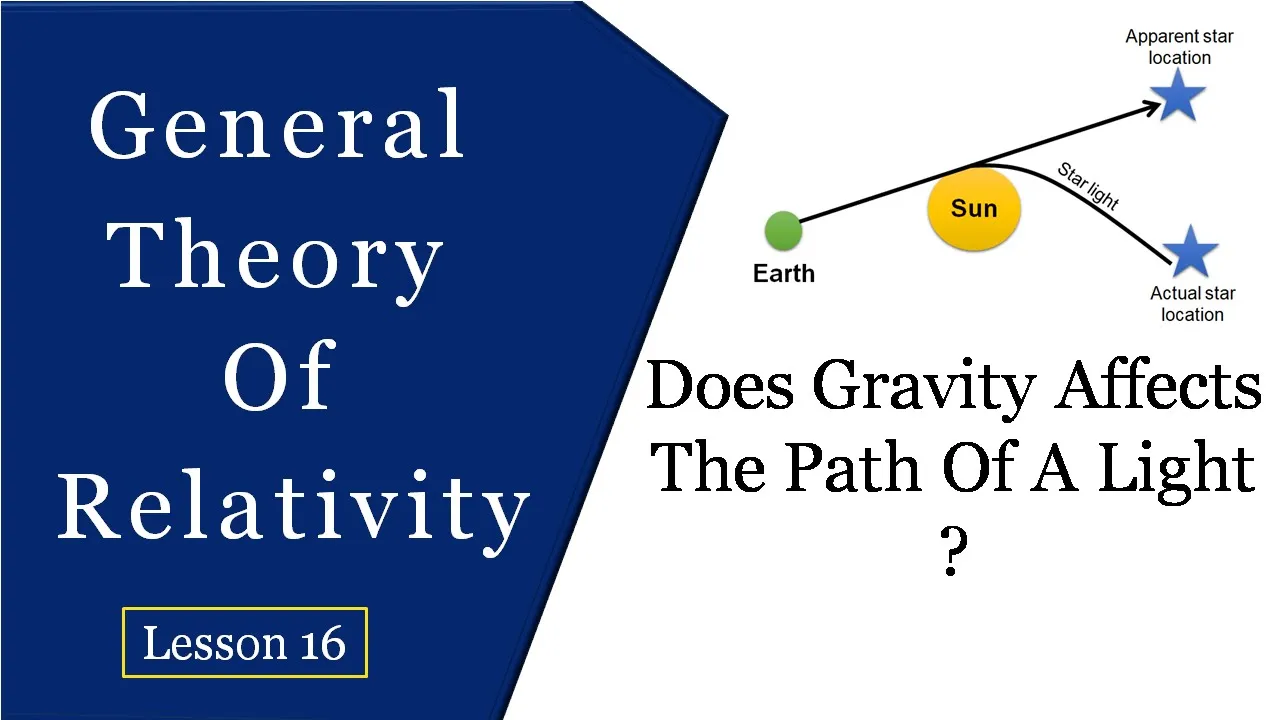
And we're going to do that with gravitational lensing, but a more dramatic kind. So, we imagine something bright in the distant universe. Here it's a quazar. And as that light comes towards us, directly along the line of sight, there happens to be something massive, a galaxy. A lot of its masses in dark matter. It has lots of subhalos and it's going to distort the spaceime around it so that as the light travels towards us that light is bent inwards.
It's also going to uh magnify and distort and create multiple images of that background object. Now if a sub halo is in the right spot it will leave an imprint a perturbation on those lensed images.
This is called strong gravitational lensing. Uh, and these objects are I'll be referring to them as strong lenses.
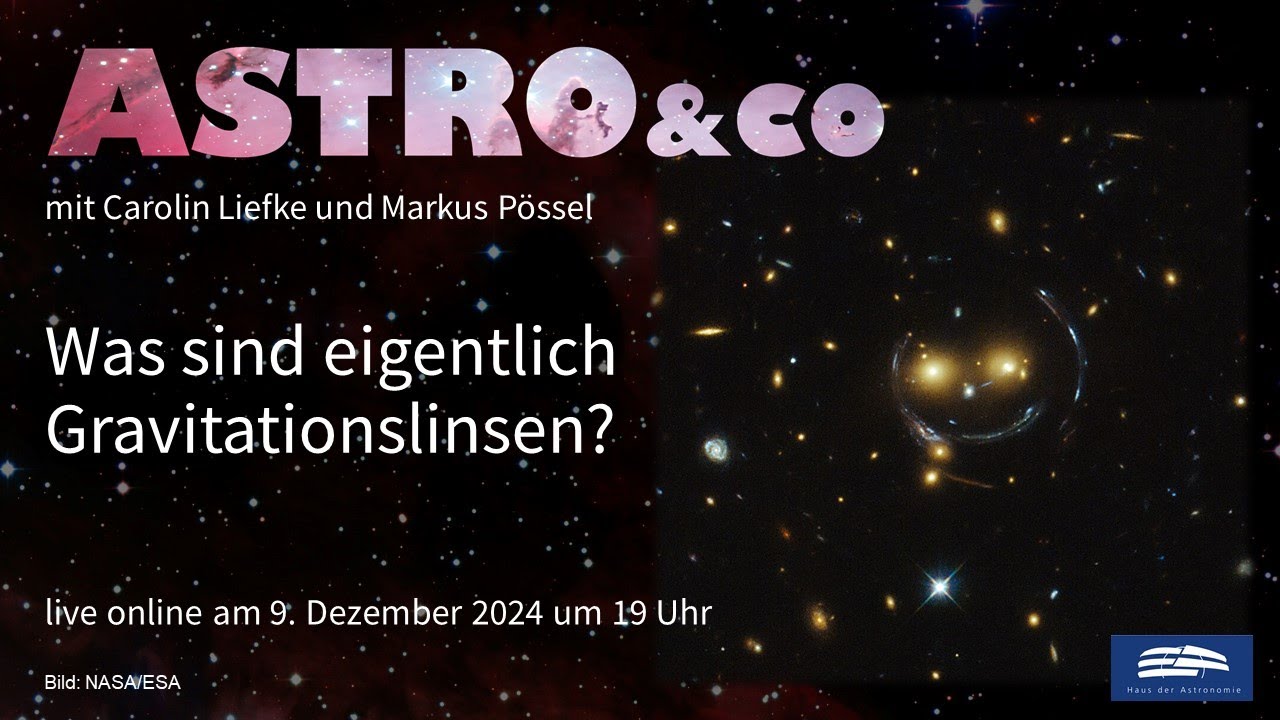
This is a strongly lensed quazar from HST. Often we're working with galaxy galaxy strong lenses. So here's a a beautiful example from HST forming a nearly complete Einstein ring. Now these objects are very rare. We require very close alignment of these objects to get this dramatic of an effect. And so today we know of about a thousand of these systems. The candidate list is in 10 20,000 range. Um although this is being uh contributed to by uh Uklid and very soon by Roman. And so in the next 5 to 10 years, we expect to go from maybe a couple hundred systems that we've imaged with HST to have that high angular resolution photometry all the way to order 10 the five from LSST, Uklid's wide survey and what Roman will be able to do.
So that means that by the 2040s what we would hope for is a large population to choose from of strong lenses where we can take the most promising candidates for substructure characterization. So highest SNR targets targets with complex source structure to follow up with with HAB worlds.
Now, the two most important things for probing lower mass subhalos with strong lenses in order of importance, first SNR obviously, but second is angular resolution, and that's because the deflection angles that you expect from sub halos are on the order of millarch seconds or tens of millarch seconds. So here I've simulated an LSST and HST image of the same strong lens system.
And this is the simulated HWorlds image.
So we can resolve all kinds of complex structure in the source galaxy and be sensitive to perturbations from low mass sub halos.
Now it looks like I'm picking on LSST here. I promise I'm not. LSST is going to do tremendous work for strong gravitational lensing, just not this particular science case.
And so to forecast what HWO is going to be able to do for substructure detection with strong lenses, we took a software pipeline that we originally developed for Roman and then extended it to HWO.
And the details of this pipeline are available in a paper that uh was published recently and was also covered in a a press release from space telescope in June.
We are also conducting a data challenge right now with some collaborators at Stonybrook using uh this pipeline. Um so if anyone is interested in hundreds of thousands of simulated Roman images of strong lensing uh I would love to chat about that.
What this pipeline allows us to do is to go from a realistic population of galaxies drawn across the sky and across cosmic time all the way to uh realistic simulated exposures.
And we can then take those and feed those into subhalo detection codes to evaluate things like survey and instrument design.
And so here's a a very preliminary look at subhalo detectability with HWO. So we start out by simulating a population of high SNR strong lenses which are relatively nearby um just to get a sense of of what we might have in in the early 2040s. And then we draw realistic subhalos for them uh accounting for things like red shift dependence and scatter in the mass concentration relation. That's what I'm showing on your left. And then uh we evaluate subhalo detectability while varying these uh EACs. So here again is a science case that is going to benefit greatly from a large aperture. And I suspect that as we improve the instrument model and as I incorporate things like a more realistic PSF and so on and also as we shrink the target list to really isolate just the most promising systems. Again, this requires fairly long exposures. Um that these lines will spread out even more. But what this means is that we expect HWO to be uh more sensitive to lower mass subhalos by at least an order of magnitude or more than we are today.
So looking forward a couple of the things that we'd like to do. First, I mentioned this more accurate uh instrument model. In particular, I'm very interested in uh a more realistic PSF with some of these EACs with the off-axis secondary mirror. um this is a science case that's very sensitive to that sort of thing. Um but then we'd also like to take the next step to think about what kinds of constraints could we put on different dark matter models given some number of systems and and some observation time. And I will leave you with my summary points and just mention finally that there is an SEDD on this particular science case if you would like to learn more. So thank you.
[Applause] All right, we have time for some questions. Yep, there's one here.
Hey, Bree, thank you. Great talk. Mark Postman here. Um, I know you know the answer to this, but I am asking you the question on behalf of Lee Fiber because the ELTs will have in the Jband or even Hband have a similar angular resolution as HAB worlds invisible.
So why can't you do this on the ELT?
>> Sure. So uh the the ultrastable PSF is a really important part of this. Yes. So we're we're doing very long exposures here to be sensitive to that millie arcsecond scale uh lensing. Uh we're we're really crossing our fingers for a large aperture space observatory.
>> Can you say how stable the PSF needs to be?
>> How stable?
>> Tenth of a percent.
>> I'm afraid I don't have that number off the top of my head. I I'll have to follow up about that.
>> Okay, any other questions?
Hi, Eric Burns, LSU. Um, when you talk about, you know, constraining dark matter models, do you mean phenomenological? Do you mean ones, you know, based rooted in particle physics in in particular, can you also do um your withhab worlds the capability to distinguish mixed models? So, fractions of cold and fractions of warm.
Sure. So things of course get get tricky with mixed dark matter. Uh typically the way that this is done in the literature is is you you vary say one parameter. So I showed that sub halo mass function earlier. We're going to vary the ultra light dark matter mass. We're going to vary the half mode mass uh or the thermal relic mass of warm dark matter.
Um see how many sub halos are predicted, what we actually observe and then go from there to to make those constraints.
Um again uh mixed dark matter isn't something that has been uh explored just yet. Our our detection sensitivity isn't to the point where we can uh really investigate that. Um but certainly in the next couple of decades we would hope so and that that's something that we'll be looking more into.
>> Okay. Thank you.
>> Any more questions for Bryce?
All right. Let's thank him again.
and see.
All right. And let's welcome our last speak speaker. Uh Steve Finkelstein is here from UT Austin.
>> Thank you, Sarah.
>> Great. All right. Uh thanks Sarah and thanks Janice and all the organizers for running this um wonderful meeting. So uh normally I would come here and talk to you about all the wonderful work that JBT has been doing in the early universe and I could spend three or four hours doing that. I'm not going to do that.
What I did try to think about are what are some of the questions that we're developing from JDBC observations at early times that we won't be able to answer with JWST and we need something like an HWO to answer. Uh the talks can be primarily qualitative not too quantitative. When I did need numbers, I assumed something like a seven meter aperture. But following a discussion we had at coffee, I just thought I would say uh for galaxy evolution, six meters is pretty exciting. 8 meters is is, you know, getting to be transformational and 10 meters is groundbreaking. So ignoring some of the memes on Slack about talking about 10 meter telescopes. I think that would be great, but I will leave that to you all. Uh so the key question that I tend to think about are when did the lights first turn on in the universe?
The Big Bang, as we know, was 13.8 billion years ago. You don't get stars and galaxies immediately. Soon after the Big Bang, the universe is quite hot.
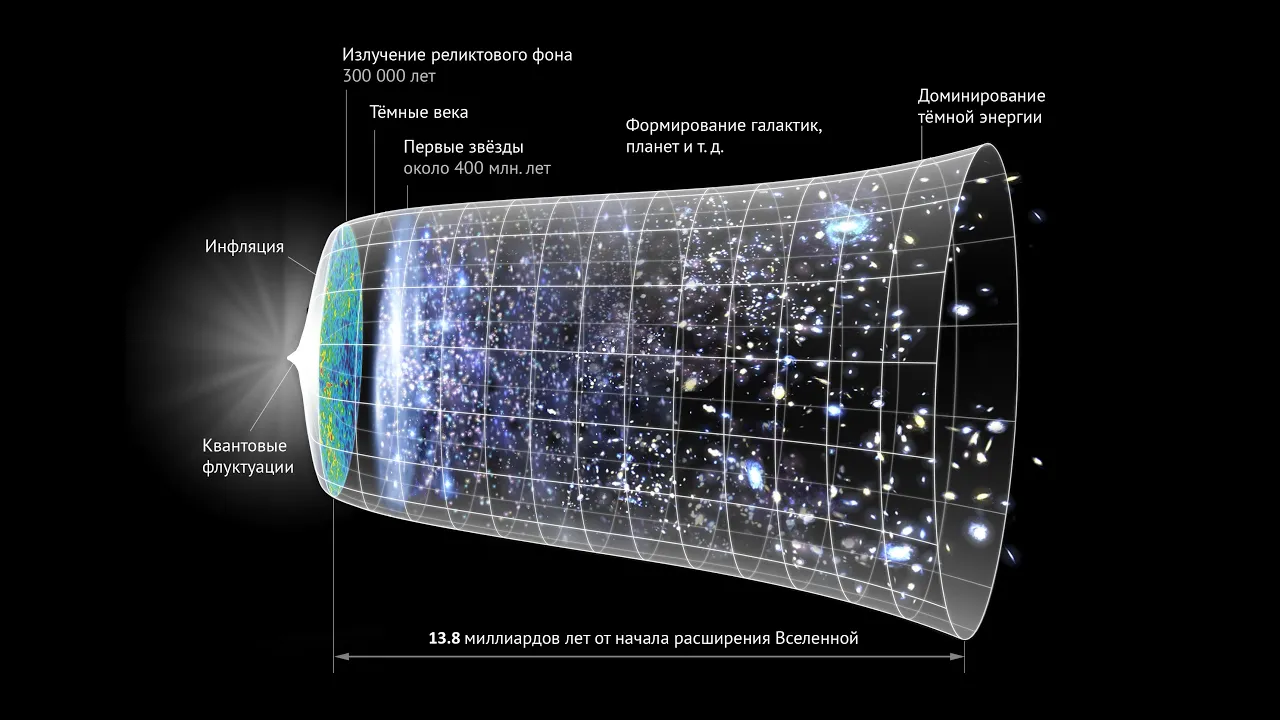
It's quite dense. We need to wait for the expansion to let the gas to cool down and condense and collapse and form stars in dark matter halos. And exactly how long that process took, we don't actually know. And so, uh, we'll go through briefly because Uichi did this yesterday as well, this timeline of the universe. Um, where you start way over on the left, uh, with the first picture we can take of the universe. This is the cosmic microwave background radiation.
This comes from a time about 400,000 years after the Big Bang. Again, well before the era of stars and galaxies, but we can get a good idea of what the initial conditions were. We go all the way over to today, way over here on the right. Uh I should say I have time on the top and red shift on the bottom. So you can pick which axis you're more comfortable with. We exist today over here at red shift of zero. And when we look at the universe around us, as as Vivian said, we have these big beautiful morphologically complex galaxies. We can classify them in the Hubble sequence. We would like to know how these galaxies formed and evolved thanks to uh a couple helpful features about the universe. The first one is light is that light travels at a certain speed. It doesn't move instantaneously from one place to another. That lets us like look back in time. When we look at objects that are far away, we are literally seeing them as they were in the past. Also, due to the expansion of the universe, galaxies that are moving away from us, which is pretty much all of them, have a red shift imparted on their spectra. And that lets us place them at a distance. And distance is fine. I tend to think about in terms of time. I want to place galaxies at different epochs. So let's move back in time to about a red shift of two. This is about 10 billion years ago. And broadly speaking, when you look at galaxies at a red shift of two, you can see the same type of spiral and elliptical galaxies that you see in the local universe. So if we want to see how those galaxies form and evolve, we need to push to yet earlier times or yet higher red shifts. Uh we could push the wonderful uh 35-year-old Hubble Space Telescope to its limit. That's at about a red shift of 10. Uh Hubble found galaxy one at red shift of 10. Probably wasn't the only one. We were probably just seeing the tip of the iceberg. But it did show us that at that time, 500 million years after the Big Bang, the universe had formed stars and galaxies and in fact had formed them on big enough scales that we could see them even with our uh smallest 2.4 meter space telescope. But what Hubble did not allow us to do is answer this question.
When did galaxies form out of the cosmic dark ages? And so we had this sort of time window motivated by theory somewhere between reg and 30 which is something like 100 to 400 million years after the big bang that was completely unexplored before the era of JWST.
Something that happens when these first galaxies form and evolve is that they start the process of reionization.
Randization is kind of a technical field, but you can think of it as the last major phase change of the universe when ultraviolet high energy photons from those first stars and galaxies ionized all of the gas in between those stars and galaxies. And this is just one theoretical prediction for what that might look like. We know that stars and galaxies are clustered. So we expect reanization to be inhomogeneous. It's going to start in the densest regions and propagate outwards. And it will take some period of time before you can ionize all of that gas. We have a pretty good idea of when reanization ended somewhere around five and a half or so.
We don't know when it began. We don't know how it proceeded both temporally with time as well as spatially. And so these are big questions that are still unanswered even now after several years of GDB data. And the reason why I get really excited about reanization is it was both started by the smallest systems and probably the energy budget was dominated by the smallest systems. And we never actually even with a beautiful even with a 10-meter half worlds we won't actually be able to resolve those systems but we can infer their presence by studying the evolution of reandization. So we'll come back to this in a little bit. Uh as you know JDBC was built to study this science case number one for JDBT was first light in the universe and it has absolutely delivered on that.
So we're going to talk a little bit about JBT but I do want to take a minute to say uh why should we care? I know we're here to talk about uh are we alone? Life here on other worlds, but really understanding the formation of our own Milky Way galaxy is the ultimate origin story. Everything, our bodies, the planet around us, the stage I'm standing on are made from elements that are formed in stars. The very first stars that we're trying to find in the early universe are the sites where the very first heavy elements, the very first lifepromoting elements were created uh in time, ultimately culminating in life. Exactly. How early, we don't know. So if we can identify when and where galaxy formation began, we'll be able to uh start the very first sentence of the first story of the chapter of the book that eventually led to human existence. So let's come back to JWST. So uh I'm showing here an image from our Sears survey, one of the 13 early release science programs. And within days of some of the first data, including data from Sears being released, astronomers learned two exciting surprises about the early universe. And the first one, you've probably heard of both of them. First one is that there are a whole lot of bright galaxies at early times. Okay, unexpectedly bright galaxies form very early in our universe. You may have heard that galaxies were too massive. We don't think that's the case. And we don't actually think these are too bright, but it is telling us that something interesting is happening. And just to give you a sense of of what I mean by surprising, this is a plot of the sort of star formation rate density, the total amount of star formation in the universe as a function of red shift here. The blue sort of line is kind of what we expected and the red symbols are what we observed. This is just from the SER survey, but this has been validated with larger data sets going on. So more star formation than expected at early times. And the second one, maybe even more exciting, is that the early universe contains abundant accreing super massive black holes. We've identified these objects from their broadline regions. This is one of the first ones also from the SER survey from a paper by Dale Kepski where we see Oh, I went ahead too fast. Come back to little red dots in a second. where we see this uh you can't see the laser but there's a broad emission line of that component and we infer that as being due to the broadline region around a super massive black hole and we can use scaling relations like the ones that Vivian talked about to infer the black hole mass we've also discovered that there is a new population of galaxies known as little red dots this is what they look like this is what we actually think they might look like this is an artist rendition that's going to come out in a press release next week on the highest red shift confirmed little red dot at a red shift of 9.3 and I won't have too much time to talk about little red dot just want an excuse to show um this beautiful picture but we will talk about what HWO can do for black holes.
So let's come back to surprise number one too many UV luminous galaxies. These were uh this is a suite of predictions for how many galaxies we should find per unit area as a function of red shifts.
This is from you could count the lines I don't know like a dozen different models and we're plotting it all basically all at retro greater than nine where we didn't have observations. So the theorists didn't agree, but that's not surprising. There was no data to bound these observations. But when we did get data and we place it on this chart, we can then begin to constrain these models. And the exciting thing is that the abundance of galaxies we found was basically at the high end or even higher than all of these predictions. The observations are this gray swath here.
Okay, so these predictions didn't have this data to motivate it. But of course, we now have these observations.
Theorists can come up with a lot of ways to try and tweak their models to match these observations. So there are lots of potential solutions. This is another version of that same plot. The red symbols are data. The colored lines are models. And now some of the models are going through the data. Okay. Uh there are a lot of potential solutions. Many of them focus around more efficient star formation. Maybe gas clouds in the early universe are more efficient at um making stars. And the reason why this might be is that at early times the dark matter halos are more dense. The gas clouds in the galaxies are going to be more dense.
And we think that if the gas clouds are more dense, a higher fraction of that gas turns into stars. And in particular, they come in the form of larger dense bound star clusters. And so this is uh a more recent prediction from a paper by Rachel Somerville where she implemented this uh she called it a density bounded uh uh density dependent star formation efficiency in their model. And now their model in red does a pretty good job of matching my data in gray. So this is just one possibility. But of course we want to say what predictions could we take from this model that we can test.
We can empirically test this model by trying to look at galaxies and see if we can see an increased fraction of star formation taking place in large densebound star clusters. So we just want to take images of galaxies and we can do this with JDBC but only for a precious few galaxies. We're really limited by spatial resolution. So this is an example from a paper by Si Fujimoto who discovered a galaxy that was highly lensed magnification about a factor of 30 at a red shift of six. And what I'm showing here on the bottom on the left you see an image of this galaxy with Hubble right six. So you can see it looks like a regular galaxy kind of unremarkable. Uh with JDST the image in the middle and then zoomed on on the right you can see it's actually broken up into 15 individual different large star clusters. Okay, so we can only do this with the resolution of JWST, but also combined with the magnification of lensing. Lensing is boosting the angular resolution by something like a factor of five, letting us see these star forming clumps with sizes of 10 to 20 millarch seconds. Okay. And again, this is in a galaxy that if you didn't have that either resolution boost and lensing boost with Hubble just looks like a regular old galaxy. So this I think is an exciting science case for HAB worlds which is uh observing star clusters around cosmic time. So if we could push to bluer wavelengths and higher resolutions we can study this process across a significant fraction of cosmic time and in particular see if there is evolution that would help us tell help us see that the star formation efficiency may be changing at high red.
So a typical high rediff galaxy has a spatial size of something like 02 to.3 arcseconds. Uh if we want to make a wish list I would say we'd like to break that up into 10 pieces. So maybe we want a spatial resolution of something like 20 or 30 millarch arcseconds. And so this is a a chart I made just for myself as I was making this slide assuming a 7 meter aperture just saying what is the diffraction limit as a function of wavelength. And so we can get down to these scales with HAB worlds in the rest frame UV at a red shift of less than five. At a higher red shift you could pair this with uh AO uh AO imaging with something like the giant Melan telescope and do this to higher red shifts as well. And so just to highlight what this might look like in this figure, this is that same galaxy on the last slide. I forgot to tell you the name. It's the cosmic grapes because the star clusters kind of look like a bunch of grapes. If you take out the lensing, this is what it would look like with JBT at JDBC resolution. And on the right, that is what you would get with uh HAB world's resolution or GMT resolution, but now without lensing. So you can do this for a much larger number of galaxies.
All right, let's come to reonization.
There's actually a couple cool things we could do with HAB worlds on reanization.
But first we need to understand what the process looks like. So uh understanding how realization evolves basically means we need to measure the number of ionizing photons coming from galaxies.
That's a key measure we can make. We can measure that as a function of position as a function of cosmic time and learn about the history of ionization. So to compute that ionizing photon output we need to measure three quantities. The first one is the nonionizing UV luminosity density. That's what we can actually observe. If you've ever heard a high red astronomer talk about the UV luminosity function, that's what we're talking about. I'm showing one here on the right. The luminosity function is just a fancy word for a histogram of galaxy UV luminosities. You measure that, you integrate it up. That tells you how much light is coming from galaxies. You need to uh understand a lot about the faint end though. You can see that this thing is quite steep as you go to fainter luminosities. And I'll talk more about that in a second. That tells you how many non-ionizing photonss you have. Then you need to convert that to the number of ionizing photons by learning about the stellar populations.
We do that using a term C ion which is the ionizing the lying continuum photon production efficiency. Okay. When you combine those numbers now you know how many ionizing photons are being produced. Ionizing photons don't play well with gas. They get absorbed. They ionize them. That's what they do.
Galaxies, it turns out, have a lot of gas. And so all of these photons don't escape the galaxy to be available to ionize the intergalactic medium. For that we need to know what the escape fraction of those ionizing photons are.
And then when you multiply all three of these numbers together, now we get the number we want, the ionizing emissivity from galaxies. Um, HWO is going to be able to make significant gains for number one and number three here. Talk about in the next two slides. Number two, we're learning a lot about with JBST spectroscopy. All right, so let's talk about number one, the UV luminosity density. Okay, as I mentioned the faint end of the UV luminosity function is quite steep and so small changes in the faint and slope make for big differences in the integral of this quantity the nonionizing UV luminosity density this is just one uh uh luminosity function at red of six shown. So if we integrate this to the limit of the Hubble ultra D field something like -7.5 at a red shift of 6 and you assume that this function goes all the way at its ste theta n slope to -12 you actually only get about a third of the ionizing photons. So we can integrate the luminosity function and say we're measuring this quantity but we're mostly extrapolating. We're only seeing a third of the light. Using the online HWO uh exposure time calculator uh I said I want to do a 100 hour exposure. It told me we're going to get something like 3 to four magnitudes deeper. Uh with HWO, we would then be able to see at least half of that missing light, if not more. So, we would turn an extrapolation into much more of a direct measurement. Uh you might say, well, sure, but the faint slope is probably steep. So, what are you really gaining? Well, we actually think that the luminosity function is turning over at some point. You're not going to form galaxies down to sort of infinitely small scales. Obviously, a single star is a basic unit. You're not going to go below. But we do think that star formation in low mass halos becomes less efficient for a variety of reasons. And so with HWO, you could actually start to probe for this turnover. Not just learn about the UV luminosity density, but also learn about star formation in f galaxies. And uh even if the aperture was the same size, this is still better than you're going to achieve with JWST as this critical epoch of rich of six when reanization is ending. You need deep optical imaging to be able to select high rich galaxies to see below their alignment alpha breaks and you cannot do that with JST.
I think the more transformative science case however is going to be uh the ionizing photon escape fraction and we heard about this in a few talks yesterday including from Cody. There's a few posters on this as well. If we want to measure the ionizing photon escape fraction we need to directly observe below the lyman continuum limit that's well into the UV. Uh and even at high regress it's still fairly blue. You also need to do this at ret less than four because at higher red shifts the IGM is optically thick. You'll never see any escaping ionizing photons. Um so we know this and many many people have been trying doing heroic efforts over the past uh decades now but we still don't have a good answer. So just to give you a few uh sort of handpicked pieces of evidence uh if you do a large imaging survey almost always you see nothing.
You don't see any escaping lime continuing photons. When you stack the positions of the galaxies you usually still see nothing. That's what's shown on the left here. This is a stack of many galaxies. They put an upper limit on the average escape fraction of a population of galaxies of rich of three of 2%. But every now and then you might get lucky and you might see a high escape fraction. This is an example of a spectroscopically detected spectroscopic galaxy with a lyman continuum escape fraction of about 10%.
And so if you take sort of the body of literature, say before 2015 or so, it would be consistent with the generic statement where most galaxies have very low escape fractions with the oddball galaxy with a high escape fraction. And if you combine that with our knowledge of the UV luminosity function, you would come to the conclusion there are not enough ionizing photons for ionization.
Okay, maybe we were just looking in the wrong place. So the low red shift lyman continuum survey led by ancot handpicked a number of galaxies that they thought might have high escape fractions. And lo and behold, they did find a higher fraction of galaxies with high ioniz ionizing photon escape fractions. Okay?
And John Chisum found that the escape fraction had a nice correlation with the UV spectral slope. Bluer galaxies had higher ionizing photon escape fractions.
That kind of makes sense. Bluer galaxies probably have less dust. Maybe they're more primitive. Maybe the ionizing properties of the stars are harder. So the uh amount of neutral gas is less. So fine, if you take that relation apply it to the UV luminosity function. Now, as pointed out by Julian Munoz, you have too many ionizing photons randization, which is a new problem to have. But I don't think we're done yet because JDBT has now come on the scene. And in a recent paper by Casey Pepeovich, he modeled the nebular spectra of Heisy galaxies and found that they were actually inconsistent with the Hubble LZLCS relation. And now we're back to not enough ionizing photons. So, we basically can't agree. And the reason why we can't agree is we don't have the sample size we need to do this work properly. And this is really where HWO can come in. Clearly we need more sensitive observations over a larger unbiased sample. And a few ways in which HWO provide a transformative leap in this field and hence our understanding of reanization is that ultra sensitive UV optical spectroscopy will allow spectroscopic characterization or you could use imaging if you like uh of the ionizing continuum over all of reg 0 to 4. A multiobject specttoraph will allow the construction of large samples and a large sample is critical because I use this word unbiased. LZLCS was great but it was not unbiased. We need large unbiased samples so we can marginalize over various properties of the galaxies, the environments of galaxies and viewing angle is a really important one. So this is an image from a simulation of the same galaxy viewed at six different angles. Okay, this is actually escaping lyman alpha emission but lyman continuum emission should look somewhat similar.
And you can see along some sight lines there's lots of escaping emission and along other sight lines there's almost none. And so we need to marginalize over this uh by doing large samples. Uh so a moss would be very useful. However, as is very popular to mention this conference, a UV IFU would also be incredibly powerful for reasons like ones highlighted in this figure. You could actually try to pick apart where in galaxies is the ionizing continuum coming out and what are the physical processes in these galaxies that are stimulating that escape.
Okay, in the last few minutes, uh we'll talk about super massive black holes.
They've come up a few times. Uh what I think I'll say what I think is exciting is I was a little nervous that myself and Uichi Harani were talking here because we both work on kind of the same stuff and I was worried we want to talk about the same things and we compared notes and it turns out we both almost came up with completely different ideas about why we were excited with HWO but we both agreed and with Vivian that small black holes are going to be really cool. So I already showed you this example of uh a broadline region that we inferred at a red shift of five uh telling us that there's a black hole in this galaxy. In fact, we've seen black holes all the way out to uh this is one example from Rebecca Larson's work at wretch at 8.7 and then Anthony Taylor has a new sample of 60 black holes discovered in JDBC data at wretch of 3 to nine and even more recently sorry re of 3 to 7 more recently he's found one at ret of nine as well. We're doing all of this from trying to from kinematics looking for broaden emission lines consistent with uh the broadline region around a super massive black hole. So why is this interesting? I have to tell myself this because I was not a black hole person. I still don't consider myself a black hole person, but it actually is interesting because we don't know how super massive black holes are formed. Okay, our basic idea, the most vanilla way of forming a super massive black hole. So, you take a big massive star, you let it explode as a supernova, you get a small stellar mass seed, maybe five, maybe 10 solar masses, maybe it's a pop three star that was really massive, maybe you have a hundred solar mass seed, and then you let it grow, you let it accrete gas. We think that they are limited in the rate that they can accrete u through what we call the Edington rate. It's a feedback limited accretion. And so this is a plot of black hole mass versus time. All the funny symbols are JWT black holes. The blue symbols are uh Sloan quazars. And the blue swath is sort of the vanilla scenario. You form with a small seed and you grow slowly. And that can create some of the Sloan quazars, but not the more massive ones and none of the JWST black holes. So we've invented some new ways of doing this. You can start with an exotic heavy seating scenario where the universe makes massive 10 the 3, 10, 10 the 5 solar mass black holes through a variety of mechanisms and or you can grow them at a super Edington rate and that's illustrated by the red swath and now you can match these observations.
But uh so from this we think that early black hole seeding and growth is likely pretty exotic but we're missing something which are the lower mass intermediate mass black holes. I know I'm out of time so I'll go through this quickly. JWT is limited by the spectral resolution and somewhat by its sensitivity. This red dash line here is a is a rough approximation of the black hole mass limit for JWT. Something like a few times 10 the 6. You could get around it with lensing a bit, but you can't add spectral resolution in that way. With HWO in particular with an R of 10,000 spectrograph, you would be sensitive to 10 the four solar mass black holes showing by that orange line here. uh probably at lower red shift based on wavelength depending on what you want to do. And as came up in Uichi's talk, you do need to worry about other things that cause broad emission lines. You need to worry about outflows, needed to worry about just the dynamics of the galaxy. But if you can observe a permitted line and a forbidden line together, such as H beta plus 03, I think you could get around that. So this is kind of showing uh this region here, the the region of parameter space that is totally unexplored that we would be able to do here. And this would be dramatically enabled by the reverberation mapping work at low at low red shift that Vivian talked about because right now the relations we would use to estimate the black holes are not very well constrained at these at these low back hole masses. So um I just want to put up my instrument wish list. High resolution imager. It's going to do the first science case we talked about clustered uh star formation a moderate resolution multi-object spectraph. You could do large samples of ionizing photon escape uh and with an optical IFU you could start to get into the physics of those objects. Um, and I just want to say two things before Sarah kiss me off.
Number one, these are all unique to HWO and cannot be solved with JWST. And number two, when I sit back and I think about JWST versus HWO, JWT was built to do my field. It was built to do first light in the universe, early galaxy science, right? But it's been doing amazing things for exoplanets, which weren't even envisioned when the telescope first started being designed.
Now, HWO, rightfully so, is being designed to find and characterize new Earths, and that's great. But for once, I think the galaxy people are ready uh are excited about the telescope and happy to go along for the ride and I think we'll be able to do amazing science as well. Thank you.
[Applause] >> All right, questions for Steve. See at least one.
Hi, I'm Dr. Bergman from Brazil, South Brazil.
I wonder you presented this model of the little red dot. Do I I see star formation, you know, in the UV.
>> Mhm.
>> Where are the forming stars in your drawing there?
>> Yeah. In our in our artist rendering is the little blue haze around it. So, uh little red dots do have very faint blue emission. Um it's it's it's u contentious isn't the right word. It's unsettled where it comes from. I tend to think it's probably from residual star formation. Okay.
>> Um, another science case for HWO would be ultra deep UV spectroscopy of the UV.
We're trying to do it with JWST. It's hard because we're trying to look for these very faint UV emission lines to tell if it's star formation or AGN dominated.
>> Okay, thank you.
>> Another question.
They're just the most important galaxies in the universe, you guys. Surely you have one question about them.
>> Hi there. Uh, Dan Dickin from the ATC in Scotland, Edinburgh. Uh just a naive question I guess kind of naive but you know that you know I worked on JWT the whole mantra was uh we wanted to go into the infrared to see to the edge of the universe and for AGN and stuff you see through the dust. So now we're going to the UV. So how do we you know how do we explain that to the world's population that we really wanted something with infrared and now we want something for UV. So is it really just the resolution uh and the sensitivity that we're we're going to get? Can't we have both? I mean, >> yeah. No, absolutely.
>> We all want all the wavelengths. I think I think that was the cha the challenge here is trying to think about JDBC is so amazing and so transformative, but what can it not do? And so, this was just a sampling of some science cases it cannot do. And that's really thinking about where do we need to go in in many of these cases below one micron where JWT is is not sensitive or cannot even reach.
>> Any other questions?
Not yet.
>> Um, I will al also just take the chair's prerogative and say I think as we think about multi-wavelength coverage, it's worth thinking about the great observatories concept and how valuable it is to have these multi-wavelength observatories that are overlapping that at least overlap some in time and give us the ability to do this all things for all people approach. Um, so there's several writeups about the Great Observatories that I think is is useful, especially when thinking about how we pitch things to the public when they're like, "Surely you don't need another telescope in space." And we're like, "Maybe two.
>> How about more?"
>> I say something that will get me yelled at probably. I love that. Which is that it is amazing what we've learned about the early universe with JWST. And it makes you want to build an even larger infrared to mid-infrared telescope.
That's not what this meeting is about, so I didn't talk about that. But I I do think uh we don't need to necessarily tell the public why we don't want to do that. We would want to do that if that were to be an option. But there's also amazing work that you could do with this UV optical telescope as well.
>> Vivian and then we'll wrap up.
>> Vivine you Keltech IPAC. Um thank you Steve. That was I I think that as an local person we can maybe start working together on these super vessel black holes. I really like the way you you framed it. Uh my question is uh the you know a little bit t piggybacking on on the last one you know you've been talking focusing on the UV side if we're going to talk about the infrared cut off for for HWO do you have thoughts on you know what if in your science cases might constrain that and is it merely you know even in the overlap with JWT is it merely just the larger mirror size or if there are any other you know things that you've thought about the the infrared part of >> yeah I think definitely at the overlapping wavelengths of JBT the bigger mirror can help but I think really the higher higher spectral resolution um is going to be the biggest game changer. Uh I was thinking mostly about rest frame optical emission lines.
Um but the more the higher ret you go the more interesting it is because the closer you are to the seating epoch you talked about carbon 4. I think that would be exciting. Uh going really sensitive in the UV you could pair carbon 4 with the forbidden oxygen 3 and then you could do the same type of analysis out to higher regions.
>> That'd be really cool. Thanks.
>> All right we have two things. So don't escape while you're clapping. First, let's give a round of applause to Steve, as well as the whole session, our panelists, our other speakers, and then just a quick announcement from Janice, and then we all get to have lunch.
>> Good afternoon from the flight deck.
We're about halfway through our flight, twothirds away from our flight, and we have smooth skies. Have about 18 hours before we land. So, I wanted to talk to you about our flight log, but I think we don't have the slides for that. So, I'll just say a few words now and then we'll talk about it tomorrow because I think the crowd has thinned out. So, what do I mean about the flight log? What do you think I mean?
The conference proceedings. Yes. So, I just wanted to thank um the people who have volunteered so far to be the editors of this monstrous conference proceedings. And I wanted to introduce um Jonathan Barnes. If he's in the audience, is he here?
Say hi to everybody.
Thank you for taking on this very heroic task. He has a table outside, so if you have any questions at all about um submitting the conference proceedings, please ask him. There is a latte um template on the HWO conference website.
So if you're looking for a latte template, it's there, but right now it is um not generic. It's for the science cases. And then maybe I'll talk about the other things when we have the slides. Um the other thing is that we're going to switch modes. Right now we have three parallel sessions, right? And if you take a look at your programs, it'll show you on the other tabs where those parallel sessions are. So, we're going to be running an exoplanet planet uh parallel session here, and there's going to be one on 8 and one on nine.
Okay?
And as always, 2 o'clock. So, enjoy your lunch.
[Applause]
Up Next

Relativistic Jets & Oscillations in Magnetized Accretion Flows
@astrophysicalandspaceplasm4954
158 views•2021-04-23
First Billion Years of the Universe with the Square Kilometre Array
@iaaudc
121 views•2022-05-26

Kepler's Laws of Planetary Motion Explained (Educational Astronomy Video)
@Peekaboo_Kidz
404.9K views•2023-02-17

Gamma-Ray Bursts: Cosmic Snipers Explained | Astronomy
@kurzgesagt
15M views•2016-07-31
Related Study Plans & Knowledge Roadmaps
Structured learning paths in Astronomy