





























This research demonstrates that astrophysical jets are launched through two primary mechanisms: the Blandford-Znajek mechanism, which drives relativistic jets from the black hole's ergosphere via magnetic field lines, and the Blandford-Payne mechanism, which drives disk winds through magneto-centrifugal acceleration. The study reveals that lower plasma beta values and lower inclination angles promote plasmoid formation through magnetic reconnection events, leading to truncation and oscillation in the inner accretion disk, which can explain radio flaring activities observed in black hole X-ray binaries.
Relativistic Jets & Oscillations in Magnetized Accretion Flows
Added:General Relativity and Kerr Metrics: A foundational understanding of spacetime curvature around rotating black holes, as frame-dragging is crucial for understanding jet launching.
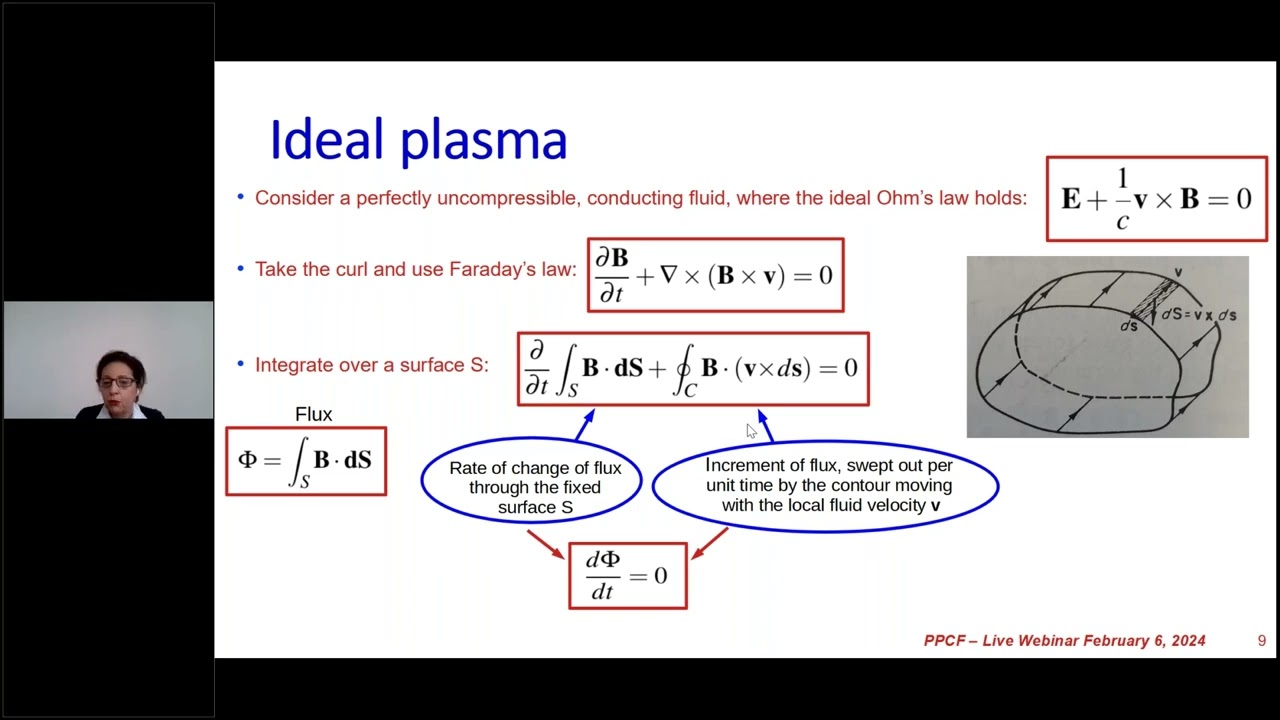
Basic Magnetohydrodynamics (MHD): The study of magnetic fields in electrically conducting fluids, including concepts like magnetic pressure, tension, and flux freezing.
Accretion Disk Theory: Familiarity with how matter orbits and falls into compact objects, specifically the classical Shakura-Sunyaev thin disk model.
The Blandford-Znajek Mechanism: The theoretical framework describing how rotational energy is extracted from a black hole via magnetic fields to power relativistic jets.
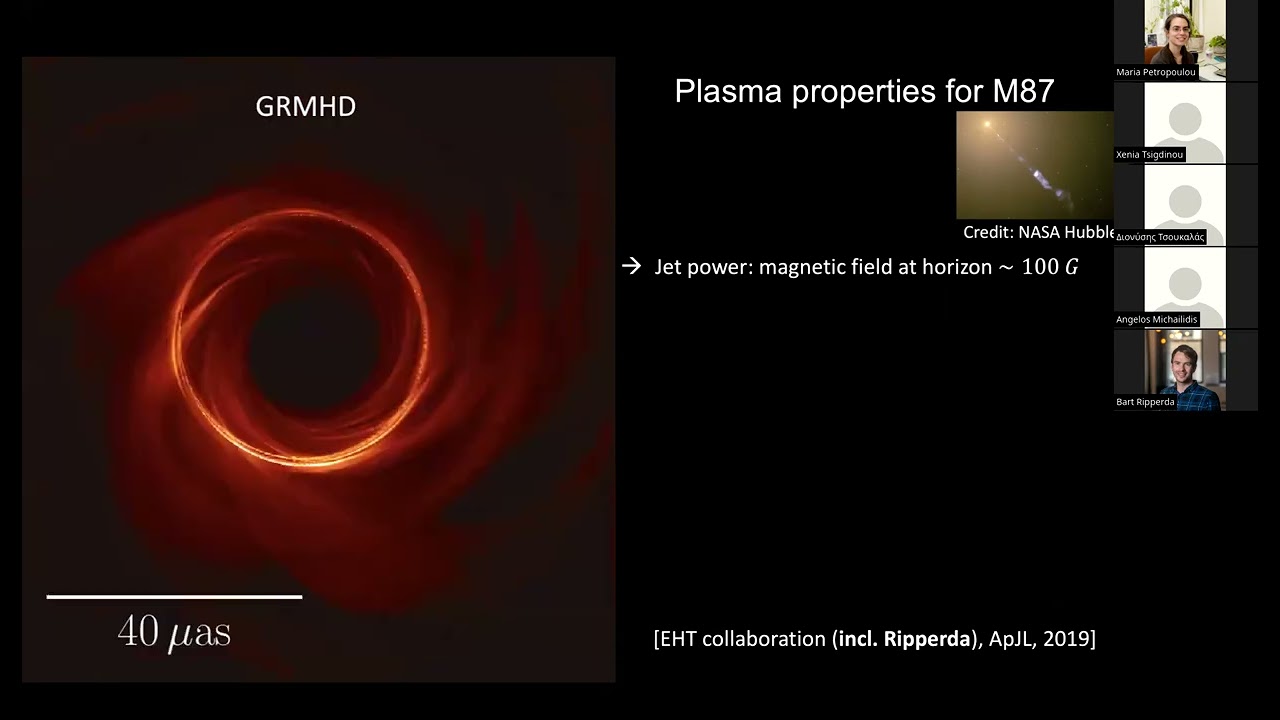
Observational VLBI and the Event Horizon Telescope (EHT): How GRMHD simulations are used to generate synthetic images to compare with actual radio observations of M87* and Sagittarius A*.
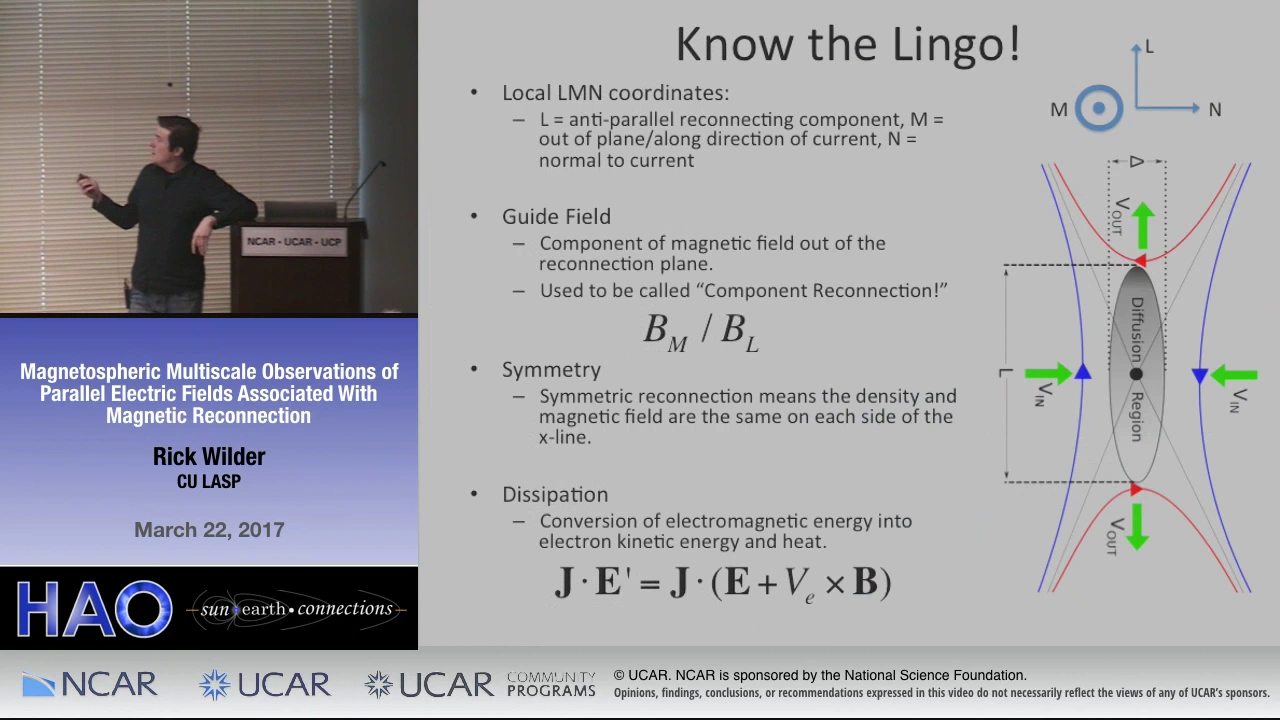
Microphysics of Magnetic Reconnection: Advanced study of how magnetic field lines break and reconnect, leading to particle acceleration, plasmoid generation, and non-thermal emission.
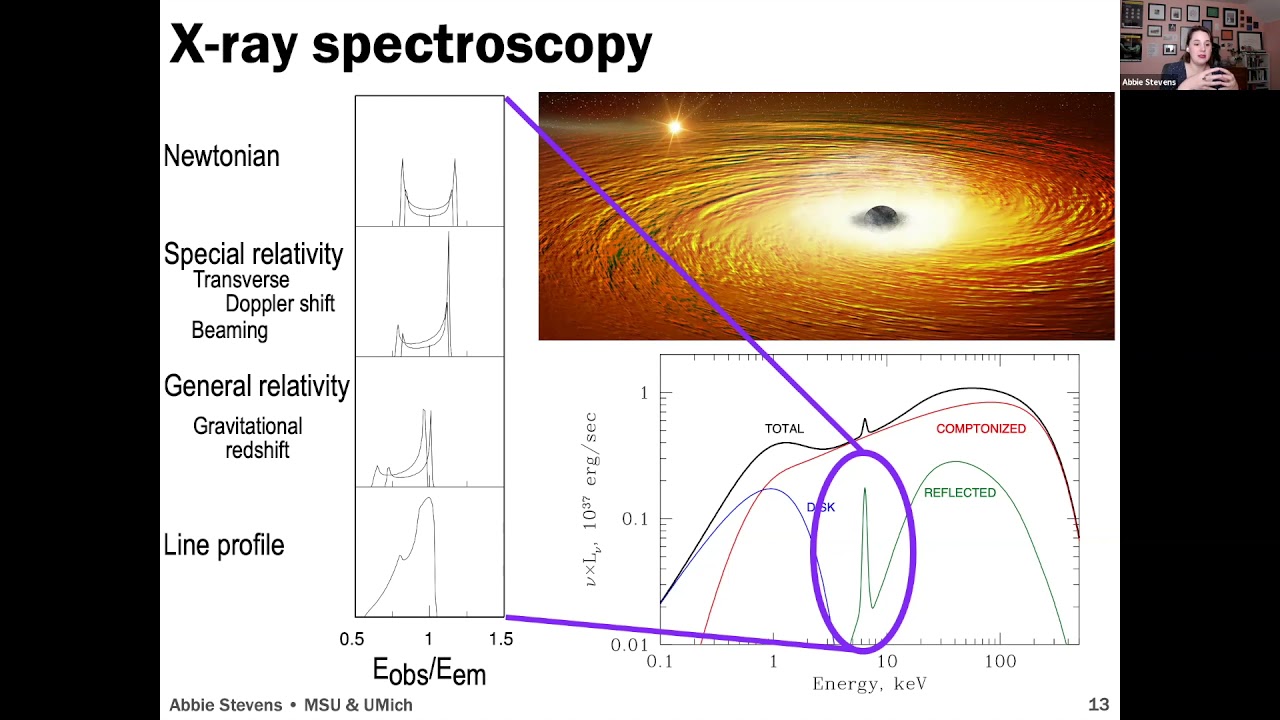
Quasi-Periodic Oscillations (QPOs): Analyzing how simulated disk oscillations and flaring correlate with the high-frequency timing variations observed in X-ray binaries.
Computational Astrophysics and Numerical Methods: Investigating how to design and run high-performance computing (HPC) simulations using specialized GRMHD codes like HARM, Athena++, or KORAL.
158 views6likes11:39Original Release: 2021-04-23
hi i am inducted a postdoctoral fellow at iit indore india it's nice to be here in cospire 2021 i will be talking about jets this queen and oscillations in general relativistic magnetically driven flows from thin acquisition dicks this is our ongoing work with the collaboration of doctor by dear and dr fent astrophysical jets are topic of interest for astrophysicist for many decades astrophysical jets are commonly observed in many astrophysical systems such as photo stellar stars extra binaries or agents the left figure shows an optical image of m87 z which is one of the most rigorously studied astrophysical source the right figure shows a plot of that radius versus distance from the central black hole obtained from many abs observations done on m87 z it gives many insight of m87 just like the that is parabolic and accelerate and become conical after the boundary radius the jet launching radius is estimated to be 5.5 square cell radius for m87 and it hints that the blindfold generic mechanism should be responsible for jet launching in m87 however a similar study on cygnus s suggests that the jet launching radius for cygnus a is 227 square cell radius and therefore the jet launching mechanism is possibly blindfold and pain there are still huge discrepancies between theoretical prediction and observational findings particularly the theoretical understanding of many aspects of astrophysical jets are still unknown illusive or not studied well we don't know yet how the jets or the wind launches from black hole or the accretion disks how they collimate and accelerate to a speed comparable with the speed of light but we know for sure that magnetic field plays a crucial role in that launching and driving this wind in this study we want to investigate the launching mechanism of that wind or outflow in detail in order to do that we solve crmsd equation using codepath earlier variolis atoll 2019 studied the launching of blendford snake set from thin lakes using glmsd code hum their initial setup is based on pakistan's cubita's potential and non-relativistic vertical equilibrium we supply a steady thin accretion disk profile as the initial condition based on novikov and torn model the initial density and gas pressure profile for the reference model is shown in subfigure a and b we supply the magnetic field structure by supplying the vector potential following johnny at all 2007 the explicit expression of vector potential f i is shown on the slide the inclination of field lines depend on the parameter m higher value of m signifies more vertical field lines and lower value and signifies more inclined field lines the strength of magnetic field is decided by the supplied plasma beta parameter we have done an extensive parametric study of our plasma beta and m parameter the polarity field lines and the strength of colloidal magnetic field for two different values of m parameter is shown in subfigure c and d where we see that the the lower value of m corresponds corresponds to highly inclined and stronger colloidal magnetic field in figure we saw the evolution of logarithmic normalized density profile rho by rho max in the colloidal plane at four different simulation time with the temporal evolution due to the generation of toronto magnetic field the angular momentum transport outwards and accretion process switched on with time the accretion flow evolved and released as there is the structure where we observe three major part low density funnel region near the rotation axis of the black hole this wind part occupying object to equatorial part of the disk which has a comparatively low comparatively lower density than that of the accretion disk part high density index occupying the region near to the equatorial plane we also observed that after sufficient simulation time the inner part of the acquisition is truncated from the event horizon and oscillate now let's have a look at our results carefully in the left figure we plot the density profile at simulation time t equal to thousand the red and green lines correspond to contour minus acut equal to one and magnetization equal to one we plot the colloidal alpha mach number on the polaroid l plane on the left right figure with mach number equal to one contour and b tower by bp equal to five contour that is the ratio of toroidal to the polar ideal component of the magnetic field equal to five contour in the final region the lorentz factor is as high as 10 and it has a magnetization greater than unity gravitationally unbound as minus acut is greater than one and the fin lines routed into the argosphere of the black hole the flow has a sub alveonic velocity in that region this confirms that that does that launching due to blindfold and then like mechanism on the other hand in the dig swing region we observe very near to the black hole the disks will lift the surface of the legs with uh the ratio of the tolerance to the polaroid and magnetic field very high which it is a signature of be told or tolerable magnetic field dominated dicks win where the driving mechanism of the dick's win is gradient of the magnetic pressure far from the black hole the flow leaves the index surface with subalvanic velocity following the magnetic field lines the ratio of the toroidal to the colloidal magnetic field is close to unity at the equatorial plane and increases as flow moves far from the these facts confirm the presence of active plant food and paint mechanism the driving mechanism for such next wind is magneto centrifugal acceleration we observed the wind velocity of the order of 0.1 to 0.2 c in the least win region in this slide we study the inner disk structure of accretion disk in the left figure we plot p by rho which is proportional to the temperature of the flow we observed that in this wind region the temperature of the flow is comparatively higher which which forms a hot disk when corona around the black hole the plasma at the apex point squeeze and leads to reconnection event of the colloidal fill lines due to this reconnection event current seats and plasmoids are formed and add back output with the tick swing in the middle figure we have shown plot of total current and the magnetic field lines where typical plasmoid can be seen such a hot corona along with the plasmoid can be vital tool to understand low heart state of black hole extra binaries this plasmid advector tolerant component of the magnetic field along with it thereby increase the magnetic tension force in the inner part of the accretion disk due to the tension force at some time the accretion process stops again due to the transport of the angular momentum flows start accreting towards the black hole therefore we observe truncation and oscillation of the inner accretion tricks such oscillation can be very in such oscillation can have very interesting application in astrophysics the consequences of oscillation in the inner part of the accretion disk can be clearly seen in the plot of mass flux rate in the figure we plot accretion rate mass flux to the final region and the win rate for different simulation models as a function of simulation time by varying plasma beta parameter and inclination parameter and the explicit expression for the mass flux rate is given in the equation which we integrate at the surface of the outer horizon or the event horizon to estimate the excretion rate in order to get the win rate we integrate the equation over the surface area at a radius r with magnetization less than unity or the pointing efficiency eta less than 2 and minus acute greater than unity finally in order to get the z rate we integrate the equation over the surface area at r equal to 50 with magnetization greater than unity or the pointing efficiency eta greater than 2 and minus acute greater than unity due to absence of the toroidal component of the magnetic field at t equal to zero there is no inflow at the beginning with the increase of simulation time the toroidal component of the magnetic field generated and the accretion rate also increases with it after a certain time the inflow that recess as that is that the studies that accretion rate obtained from models with lower plasma beta parameter is higher than that of the model with higher plasma beta parameter this confirms that the accretion process is magnetically driven and the rate of accretion is strongly correlated with the strength of the initial magnetic field we also observed that model with lower value of m shows higher value of studies than acquisition rate after a certain time the accretion rate start to oscillate for simulation uh for simulation models see the plot for beta infinity equal to 60 and m equal to 0.1 in the oscillating phase the value of equation that drop drops down in three order of magnitude tadix win and that red follow similar behavior the oscillating phase of our simulation can be correlated with the radio flaring activities of black black hole extra binaries in hard intermediate stem the radioactivity weakens in in the hard intermediates state and it gives occasional giant radio flare we find that the oscillating freezer of the inner part of the acquisition this is prominent with the lower value of plasma beta and lower value of inclination angle in summary our study finds relativistic that driven by blindfold and zenite mechanism and the disk swing driven by toronto magnetic field and blindfold paint mechanism by extensive parametric study we find that for simulation models with lower value of inclination parameter and lower value of plasma beta are prone to blend for pain driven wind we also find that due to polaroidal fill lines reconnection even plasmoids are formed the plasmoid plasmid advect tutorial component of the magnetic field leading truncation and oscillation in the inner part of the accretion disk this oscillation in the inner part of the accretion disk can be responsible for flaring activities in the jet finally we find that lower value of plasma beta and lower inclination angle parameter and are more prone to formation of plasmoids and innerdex oscillation
Up Next

44:24
Black Hole Accretion Disks: How Quasars Are Powered
@matthewmalkan137
215 views•2025-02-27
61:17
First Billion Years of the Universe with the Square Kilometre Array
@iaaudc
121 views•2022-05-26

6:25
Kepler's Laws of Planetary Motion Explained (Educational Astronomy Video)
@Peekaboo_Kidz
404.9K views•2023-02-17

6:10
Gamma-Ray Bursts: Cosmic Snipers Explained | Astronomy
@kurzgesagt
15M views•2016-07-31
Related Study Plans & Knowledge Roadmaps
Structured learning paths in Astronomy
astronomy
Reionization: Pop III Stars, IGM & 21cm Line
01Foundations of Cosmology & the Early Universe
02Population III Stars & Cosmic Dawn
03Physical Mechanisms of Reionization
+ 2 more learning modules
17h5 modules
Explore Roadmap
astronomy
Planetary Rings: Dynamics, Roche & Resonances
01Foundations of Gravity and Orbital Mechanics
02Tidal Forces and the Roche Limit
03Structure, Composition, and Collisions
+ 2 more learning modules
10h5 modules
Explore Roadmap
astronomy
Asteroseismology: Stellar Waves, Ages & Cores
01Foundations of Stellar Astrophysics & Wave Mechanics
02Stellar Oscillation Modes: P-modes and G-modes
03Mathematical Framework of Asteroseismology
+ 2 more learning modules
35h5 modules
Explore Roadmap
astronomy
Adaptive Optics: Physics, Engineering & Control
01Foundations of Wave Optics and Wavefronts
02Atmospheric Turbulence & Optical Distortion
03Wavefront Sensing Technologies
+ 3 more learning modules
35h6 modules
Explore Roadmap