Tertill is a solar-powered, chemical-free garden robot that automatically eliminates weeds by using two methods: a spinning nylon string to cut weeds shorter than one inch and wheel scrubbing to damage pre-emergent weeds; it distinguishes desired plants from weeds by height, uses Bluetooth connectivity for user monitoring, and requires no mapping or programming, making it an accessible solution for garden maintenance.
Gardening Robot Automates Weed Removal Science
Added:Deep Dive
Basic concepts of weed management and the ecological impact of chemical herbicides versus manual weeding.

निंदाई बनाम खरपतवार नाशक l Weeding vs Weedicide
1.3K
Manual weeding (nirai) is more beneficial than chemical weedicides because chemical herbicides kill beneficial soil organisms like earthworms, degrade soil structure, and weaken crop root systems, while manual weeding, though more labor-intensive, maintains soil health, promotes better root development, and leads to improved crop yields over time.
Click to watch →

de TIERRA MUERTA a TIERRA VIVA. Agricultura REGENERATIVA. todo el proceso
255.8K
Manual weed control is preferred over chemical herbicides. While manual weeding does damage some weeds and leaves some seeds behind, it is the most gentle method. The remaining seeds will germinate in subsequent years, but this approach avoids chemical contamination and maintains soil health.
Click to watch →

Herbicidas y control de malezas
8.4K
Weed management differs fundamentally from weed control because nature cannot be controlled—only managed. A weed is defined as a plant growing in an unsuitable place at a given time, competing with crops for space, water, light, and nutrients. Weeds also cause indirect damage by harboring pests and diseases that transmit to crops. Cultural management uses existing technologies without pesticides to reduce chemical load and carbon footprint. Key practices include avoiding soil inversion (which brings buried weed seeds to the surface), using non-inverting soil tools like chisel plows, and avoiding cutting tools under pressure which multiply weed populations.
Click to watch →

Principles of Weed Management
14.3K
Chemical weed control uses herbicides (chemicals to control weeds). Merits include suitability for adverse soil and climatic conditions, application even before weeds emerge to create weed-free environment, suitability for all crop types, targeted weed control, effectiveness against many perennial weed species, and cost-effectiveness compared to manual labor. Demerits include environmental pollution, soil damage affecting beneficial organisms, herbicide drift affecting neighboring fields, requirement for technical knowledge in mixing solutions and proper timing, crop injury symptoms or leaf roughness, high costs making some herbicides unaffordable, health disorders from chemical toxicity, and unsuitability for mixed and intercropping systems requiring different chemicals for different crops.
Click to watch →

Arboricoltura da Legno - Cure Colturali
932
Manual weeding (sarchiatura) is more time-consuming and labor-intensive but less environmentally impactful. Chemical weeding is easier and faster but more expensive and problematic from ecological and organizational perspectives, as it must be performed in the absence of wind and during cooler hours. The use of herbicides is subject to current regulations. If mulching (pacciamatura) is used, fewer interventions are needed, but they must be conducted very carefully to avoid damaging or lifting the mulch, which would compromise its functionality.
Click to watch →
Deep Dive
Fundamentals of robotics, including how sensors, microcontrollers, and actuators interact with the physical environment.

SSLC IT Chapter 6 | The World of Robots | Part 1 | LED & Buzzer Activity | 10th ICT | Mal and ENG
106.3K
Robots perform tasks humans find difficult with precision and without fatigue. They work by analyzing information from their surroundings and executing instructions. Robots have three main components: Input devices (sensors like light sensors, infrared sensors, cameras, and microphones) that gather data from the environment; a Microcontroller (the robot's brain) that processes information and makes decisions; and Output devices (LEDs, buzzers, displays, motors) that convert processed information into actions. Actuators like stepper motors and servo motors enable automatic mechanical movements. The Arduino Uno is a popular open-source platform that integrates these components, created by the Interaction Design Institute in Italy.
Click to watch →

Robotics Summer Camp for Students | Learn Robotics, AI, Drones & 3D Printing
423
Robotics systems are built upon three core components: sensors (such as ultrasonic, IR, fire, sound, laser, and touch sensors) that enable robots to perceive their environment; microcontrollers (like Arduino Uno, Arduino Nano, Raspberry Pi, and ESP32) that serve as the 'brain' to process information and control operations; and actuators (including motors, LEDs, displays, buzzers, and speakers) that convert electrical signals into physical actions, allowing robots to interact with and respond to their surroundings.
Click to watch →

Robotics 101 - Electronics & Mechanics Basics - Ep. 1
224
A robot is an electromechanical system that interacts with its environment through sensors (which measure environmental factors like temperature, light, and position and convert them into electrical signals) and actuators (which influence the environment, such as servo motors or wheel motors). The core principle of robotics is closed-loop control, where sensor measurements are processed by a microcontroller (the robot's brain) and used to control actuators, creating a continuous feedback loop. Essential components include power supplies, microcontrollers, sensors (like potentiometers and encoders), and actuators (like servo motors with gearboxes that reduce speed and increase torque). This system enables robots to perform tasks autonomously by continuously monitoring and adjusting their actions based on real-time feedback.
Click to watch →

Robotics and Al: Fundamentals to Robotics: Sensors, Actuators, and Controllers
3.5K
Robots are devices that make daily life easier by performing tasks through three essential components working together: sensors detect environmental changes (like human senses), controllers (microcontrollers) process this information and make decisions, and actuators execute physical actions based on the processed data. This input-processing-output model enables robots to perform various functions such as obstacle avoidance, line following, and light seeking, making them valuable tools for education and real-world applications.
Click to watch →
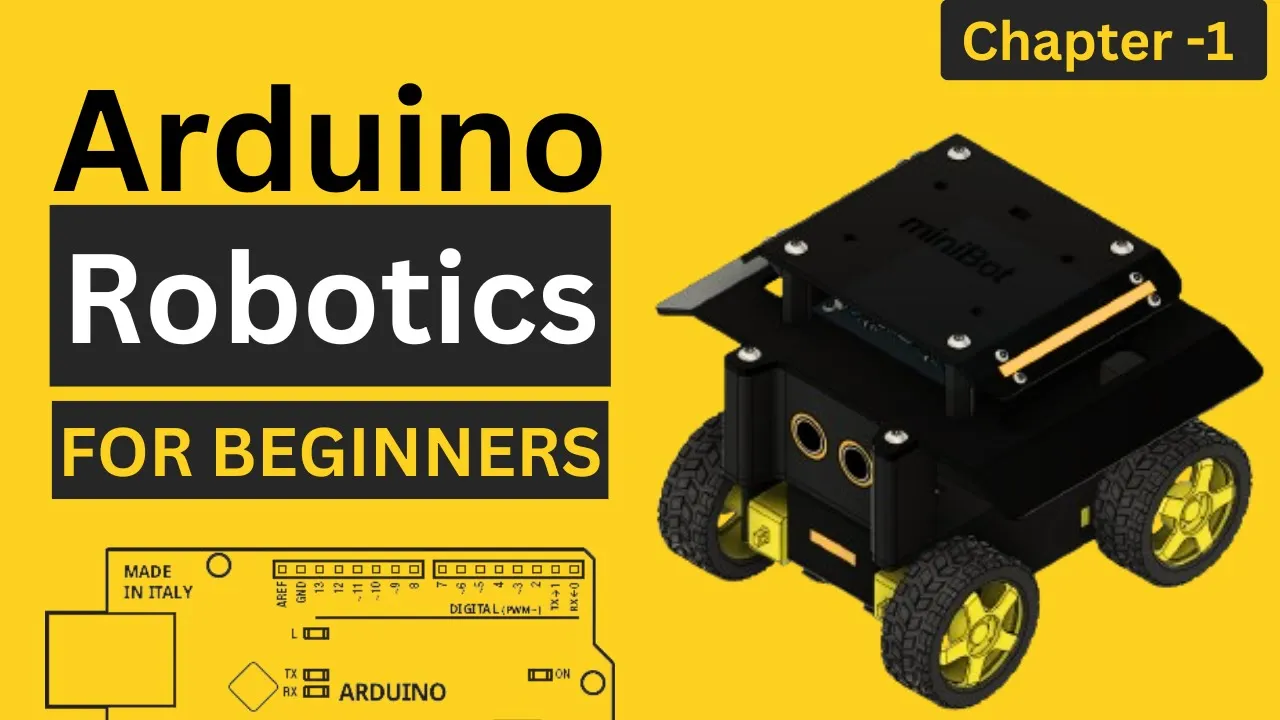
Arduino Robotics for Beginners Course Part -1 | How to make Arduino Robot | Arduino Tutorial Series
5.9K
Building autonomous robots requires three core components working together: sensors detect environmental conditions and convert them into electrical signals, actuators transform electrical signals into physical motion, and microcontrollers process sensor data and control actuators through programmed logic. In electronics, signals represent information as varying voltages, categorized into digital (binary on/off states) and analog (continuous range of values). This foundational understanding enables creation of intelligent robots capable of obstacle avoidance, line following, and other autonomous behaviors.
Click to watch →
Deep Dive
Introductory computer vision concepts, specifically how machine learning models classify and segment images.

컴퓨터비전프로그래밍및응용 12주차
593
This comprehensive section introduces the foundational concepts of computer vision and artificial intelligence. The instructor explains that classification is one of three main computer vision tasks (alongside detection and segmentation) and is the easiest to learn. CNN (Convolutional Neural Network) is introduced as a fundamental AI model in computer vision, with understanding filtering or convolution concepts being crucial for grasping CNN architecture. The section covers the distinction between AI, machine learning, and deep learning: AI encompasses any algorithm performing human-like tasks, machine learning involves iterative parameter adjustment to improve performance through experience, and deep learning automatically learns hierarchical features from raw data. The instructor explains that effective supervised learning requires large amounts of correctly labeled, representative data, and covers the three-step process of data selection, feature engineering, and model training.
Click to watch →

Lecture 11 (5 June 2022)
128
Computer vision is the field where computers process images and videos to recognize and understand visual content, similar to how humans identify objects by looking at them. The three core tasks of computer vision are: (1) Image Classification - assigning labels to entire images, (2) Object Detection - identifying and localizing multiple objects within an image by creating bounding boxes around them, and (3) Image Segmentation - partitioning images into distinct regions to separate foreground objects from backgrounds. These tasks are implemented using neural networks, particularly Convolutional Neural Networks (CNNs), which can be trained using transfer learning by leveraging pre-trained models and fine-tuning them for specific tasks. Data preparation involves organizing images into training and validation sets, with formats including simple image files, image datasets for distributed training, and grant files for standardized model training.
Click to watch →

What is Image Classification |Object Segmentation|Object Detection
2.8K
Computer vision is a branch of artificial intelligence that enables computers to interpret and understand visual data from images and videos, with three fundamental techniques: image classification (identifying what category of object exists in an image), object detection (locating and identifying objects within an image using bounding boxes), and object segmentation (describing which pixels belong to which objects with pixel-level precision); these techniques progress from simpler to more complex tasks, with classification being the easiest and segmentation the most challenging due to its requirement for precise boundary identification.
Click to watch →

Machine Learning Introduction | Machine Learning Tutorial | Simplilearn
17.2K
Computer vision is an extension of AI and cognitive neuroscience that builds computer algorithms to automatically understand the contents of images. The process involves collecting a training dataset of images and hand-labeling each image appropriately. Machine learning algorithms then work out which patterns of pixels are relevant to the recognition task and which are nuisance factors. This enables computers to identify objects, faces, and patterns within visual data.
Click to watch →

Day 1: Al Computer Vision - Part 2
680
Computer vision is a branch of artificial intelligence that enables computers to understand and interpret images and videos like humans do. The learning process mirrors how children learn: data is fed into the system, patterns are observed, and decisions are made based on past trends. More training data generally leads to better accuracy. Labels define prediction categories, and diverse training examples improve recognition capabilities. Practical demonstrations using platforms like Google's Machine Learning for Kids show how machines can be trained to recognize shapes, with successful identification of trained objects and failure to recognize untrained variations. This establishes the foundational principles of computer vision and machine learning.
Click to watch →
Deep Dive
The principles of sustainable agriculture and the definition of precision farming.

Lec. 4 General Agriculture #cuet #agta #canesupervisor #generalagriculture #agriculture #bscag
168
Sustainable agriculture is a farming practice that meets current food, fiber, and fuel needs without compromising future generations' ability to meet their needs, maintaining environmental health, economic viability, and social equity. Precision agriculture is a farming approach using advanced technologies like GPS, sensors, and data analytics to optimize field-level management of crops, soil, and resources. It is also called site-specific farming or smart farming. The concept was initiated in the United States in 1980 and is concerned with managing variability in both space and time within agricultural systems.
Click to watch →

What Is Precision Agriculture?
25.3K
Precision agriculture is defined as using exact science and methods to produce more food with fewer resources. It involves observing multiple environmental changes and their effects on all growing stages of produce. The core principle is that by measuring and analyzing environmental factors precisely, farmers can make better decisions that increase both quality and quantity of produce while reducing waste.
Click to watch →

"PERTANIAN KITA KEDEPAN" Prof.Dr.Ir. Suntoro Wongso Atmojo. MS.
1.1K
Precision agriculture operates on two fundamental principles: (1) Efficiency in production through optimized resource use and targeted input application; (2) Environmental friendliness through minimizing chemical inputs and reducing environmental impact. These principles work together to achieve sustainable agricultural productivity that meets current needs while preserving resources for future generations. The approach emphasizes data-driven decision-making and site-specific management practices.
Click to watch →

Precision Agriculture Explained #11 | Agriculture Simplified | Monika Yadav | Agriculture Optional
188
Precision Agriculture is a modern farming technology that applies inputs (fertilizers, pesticides, water) only where needed and in exact quantities, using technology. It is also called satellite farming or site-specific crop management. Key technologies include GIS, GPS, drones, sensors, AI, and data analytics. The core principles are temporal management (managing crop stages over time) and spatial management (managing different field areas differently based on conditions). Traditional farming wastes resources by applying inputs uniformly across entire fields, whereas precision agriculture targets specific problem areas, reducing waste and improving efficiency.
Click to watch →
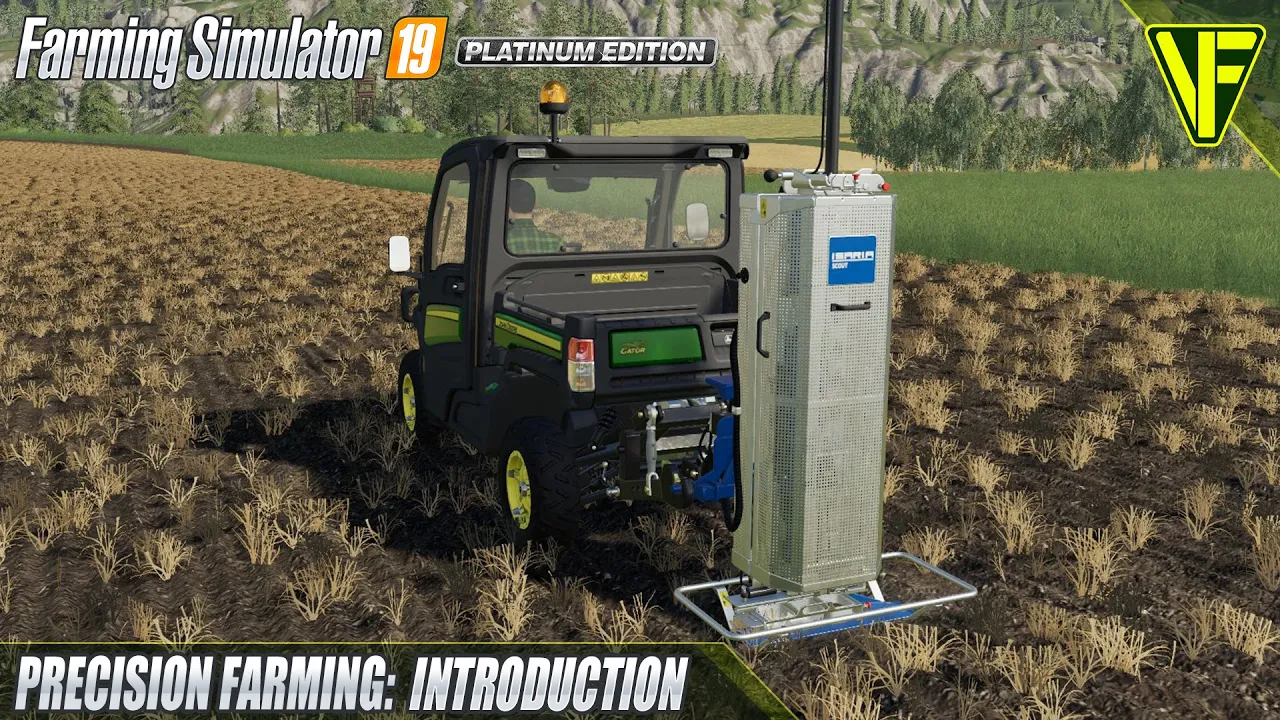
Farming Simulator 19 Precision Farming: Introduction
16.6K
Precision farming, also known as precision agriculture or smart farming, uses modern technology to improve agricultural efficiency by making farming more sustainable. It achieves this by producing more crops while using fewer resources, which lowers the environmental impact of farming while helping farmers operate more efficiently and benefiting consumers who buy the crops.
Click to watch →
Prerequisite Knowledge
- Concept 01Basic concepts of weed management and the ecological impact of chemical herbicides versus manual weeding.
- Concept 02Fundamentals of robotics, including how sensors, microcontrollers, and actuators interact with the physical environment.
- Concept 03Introductory computer vision concepts, specifically how machine learning models classify and segment images.
- Concept 04The principles of sustainable agriculture and the definition of precision farming.
Subsequent Learning
- Step 01Advanced computer vision techniques for real-time plant species identification under varied lighting and weather conditions.
- Step 02Alternative robotic weeding mechanisms, such as thermal (laser) weeding, micro-tillage, or ultra-precision micro-spraying.
- Step 03Autonomous navigation and path-planning algorithms (such as SLAM and GPS-guided systems) for traversing uneven agricultural terrain.
- Step 04Socio-economic analysis of scaling agricultural robotics, including cost-benefit comparisons with traditional labor.
Turtle Intro
Design & Launch
Turtle Intro
0:00Playing Section
- 1
Turtle is a solar-powered weed-cutting robot for gardens.
- 2
It uses sensors to identify and chop weeds under one inch.
- 3
Requires no programming; user just presses go in the garden.
The Agroecological Critique and Environmental Footprint of Agritech
While robotic weeders reduce chemical herbicide use, critics argue they promote a 'clean field' ideology that ignores the ecological benefits of spontaneous vegetation. In agroecology, many weeds serve vital roles, such as preventing soil erosion, retaining moisture, accumulating nutrients, and providing habitat for pollinators. Automating their total eradication risks reducing garden biodiversity. Furthermore, opponents point to the environmental footprint of producing and disposing of high-tech robotics. The carbon emissions from manufacturing lithium batteries, specialized sensors, and microchips, combined with the threat of electronic waste, can offset the environmental gains of chemical-free weeding, suggesting that true sustainability lies in ecological management rather than technological elimination.
Deep Dive
Advanced computer vision techniques for real-time plant species identification under varied lighting and weather conditions.

Using Computer Vision for Species Identification
291
This comprehensive section covers the Leaf Snap project, a collaboration between computer scientists at Columbia and Maryland and botanist John Crest at the Smithsonian. The project began by digitizing the Smithsonian's collection of nearly 100,000 type specimens (original specimens used to identify species). The Leaf Snap app was developed as a mobile tool where users place a leaf on a plain background, take a picture, and the app uses shape-based search to identify the species. The system validates user-uploaded images using a classifier trained on thousands of hand-labeled images, achieving 98-99% accuracy. Leaf segmentation separates the leaf from background using pixel-based approaches in HSV color space, where saturation (not hue) is most useful because reflected light in outdoor environments makes white paper appear slightly green. The Expectation-Maximization (EM) algorithm clusters pixels into foreground and background groups iteratively. For small leaves where most pixels are background, weighted EM is used where leaf pixels have half the weight of background pixels. The system identifies plant species by comparing leaf shapes using multiscale curvature histograms. Curvature is computed by placing a disc at each location on the leaf boundary and measuring the fraction of the disc that is leaf versus background. Large discs capture coarse-scale curvature (overall shape), while small discs capture fine-scale details (serration). The system achieves approximately 70% correct identification as top answer and over 90% among top five answers on 184 tree species.
Click to watch →

eScience - Identification of species of plants using computer vision
1.2K
This video presents a research project by TEC (Technology Education Center) that develops computer vision algorithms to identify plant species by analyzing leaf curvature measurements and other morphological features, with the goal of creating an accessible tool achieving 90% accuracy for use by academics, students, tourists, and the general public.
Click to watch →

Plant Recognition System with Image Processing (Görüntü İşleme ile Bitki Tanıma Sistemi)
1.3K
This video presents a plant recognition system developed by Ankara University Computer Engineering students using YOLOv3 and Darknet, which employs deep learning techniques to automatically identify plant species from images. The system was trained on a dataset of 304 images across 3 plant species (lavender, rose, and lily) using Google Colab with GPU support, completing 5364 iterations in approximately 9-10 minutes and achieving a 0.4 error rate. The system can identify plants in real-time without requiring manual searches or expert guidance, making plant identification accessible to everyday users.
Click to watch →

What the %#@! is this plant?
272
Modern plant ID apps use computer vision technology with classifier models that process images to identify species. These models are trained on enormous quantities of labeled photos and are purely autonomous with no human feedback. Apps provide statistical outputs (e.g., 90% confidence) and may filter by geography. Limitations include: poorly trained models produce bad IDs, multiple photos of the same plant may give different results, and training data quality is often unknown.
Click to watch →

Automated Plant Species Identification
692
This section explores three major computational paradigms for automated plant identification. Model-based methods extract quantitative morphological features from leaf photographs including margin type, apex shape, venation patterns, and length-to-width ratios, comparing these measurements against trained databases. Model-free approaches enable computers to learn plant identification patterns directly from pixel data without explicit programming, recognizing edges, textures, and color variations through exposure to training examples. The most advanced approach employs Convolutional Neural Networks (CNNs), deep learning algorithms modeled after neural networks in the human brain with multiple processing layers. CNNs can contain 100+ layers, enabling holistic pattern recognition where the system learns to identify species from extensive training datasets of photographs taken from various angles, mimicking human facial recognition capabilities for plant identification.
Click to watch →
Deep Dive
Alternative robotic weeding mechanisms, such as thermal (laser) weeding, micro-tillage, or ultra-precision micro-spraying.
Farming with robots - Professor Simon Blackmore
1.8K
Precision weed management employs multiple approaches at varying levels of sophistication. Physical weeding systems use autonomous tractors with RTK GPS positioning (centimeter accuracy) to navigate around crop plants while removing weeds mechanically. Microdot sprayers use camera systems and LED lighting to identify individual weeds and apply chemicals only to target areas, potentially reducing chemical usage by 99% compared to broadcast spraying. Laser weeding technology heats weed meristems to 95°C using minimal energy, rupturing cell walls to kill or induce dormancy. Each approach represents increasing levels of precision and intelligence, moving from mechanical intervention to targeted chemical application to thermal destruction. These technologies require sensor systems to identify targets and application systems capable of precise delivery, demonstrating the convergence of robotics, imaging, and control systems in modern agriculture.
Click to watch →

Rusia y China lanza su Primera Unidad Militar Robótica preparada para Competir con Estados Unidos
83.8K
When these robots identify weeds, they are not content with a simple lawn mower; they have precise methods like authentic field surgeons. First, mechanical weeding: imagine small robotic arms equipped with special tools such as hoses or rollers that gently push weeds out of the ground, being careful not to disturb the soil too much and risk our agricultural roots. Then comes thermal weeding: here is where focused beams of laser or hot water come into play, eliminating weeds directly instantly but leaving nearby plants unharmed.
Click to watch →
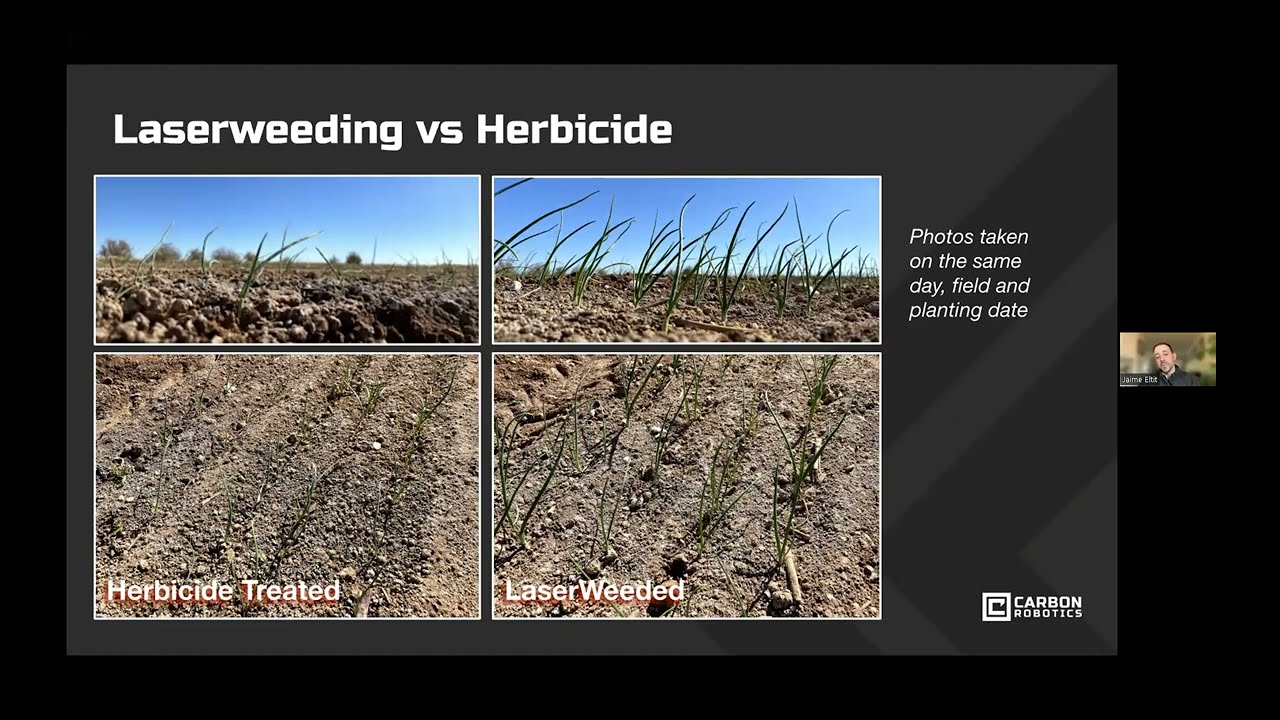
Automated Weeder Series: Sharp Shooters - Carbon Robotics and Verdant Robotics
1.1K
Laser weeding uses CO2 laser technology to target weeds with millimeter precision at the marriage stem, bursting cell walls to kill weeds within 24-72 hours. This technology offers significant advantages over traditional methods: hand labor is diminishing and costly with inconsistent results, herbicides are environmentally harmful and cause weed resistance, and mechanical weeding disturbs soil and fails in high-density crops. Laser weeding can replace 25-75 people with one machine, reducing herbicide usage while protecting crops. It is particularly valuable for high-density organic and conventional crops where mechanical tools cannot operate. The technology enables organic thinning by killing doubles without chemical herbicides, providing a sustainable alternative for modern agriculture.
Click to watch →
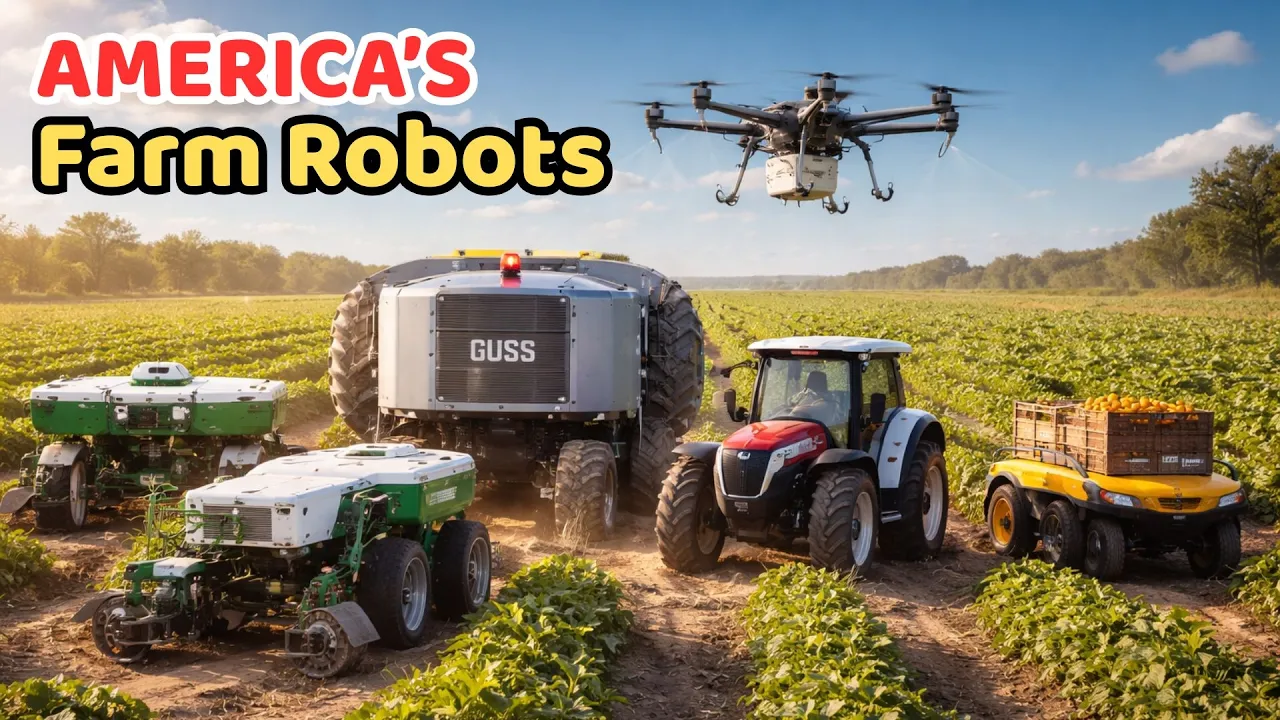
10 Amazing Agricultural Robots Changing Farming in America and Beyond
102
Agricultural robotics is advancing toward ultra-precision application technologies that dramatically reduce chemical inputs. Eco Robotics' ARA achieves 95% reduction in plant protection products by targeting areas as small as 6x6 cm. This targeted approach changes both the economics and environmental impact of crop protection. The convergence of robotics, AI, and optics culminates in Carbon Robotics' laser weeder, which eliminates over 5,000 weeds per minute with sub-millimeter accuracy and 99% effectiveness. This represents a fundamentally different approach to weed control—continuous detection and elimination rather than blanket treatment. The technology can outperform 75-person hand crews, demonstrating how precision agriculture is moving toward plant-by-plant, problem-by-problem intervention.
Click to watch →
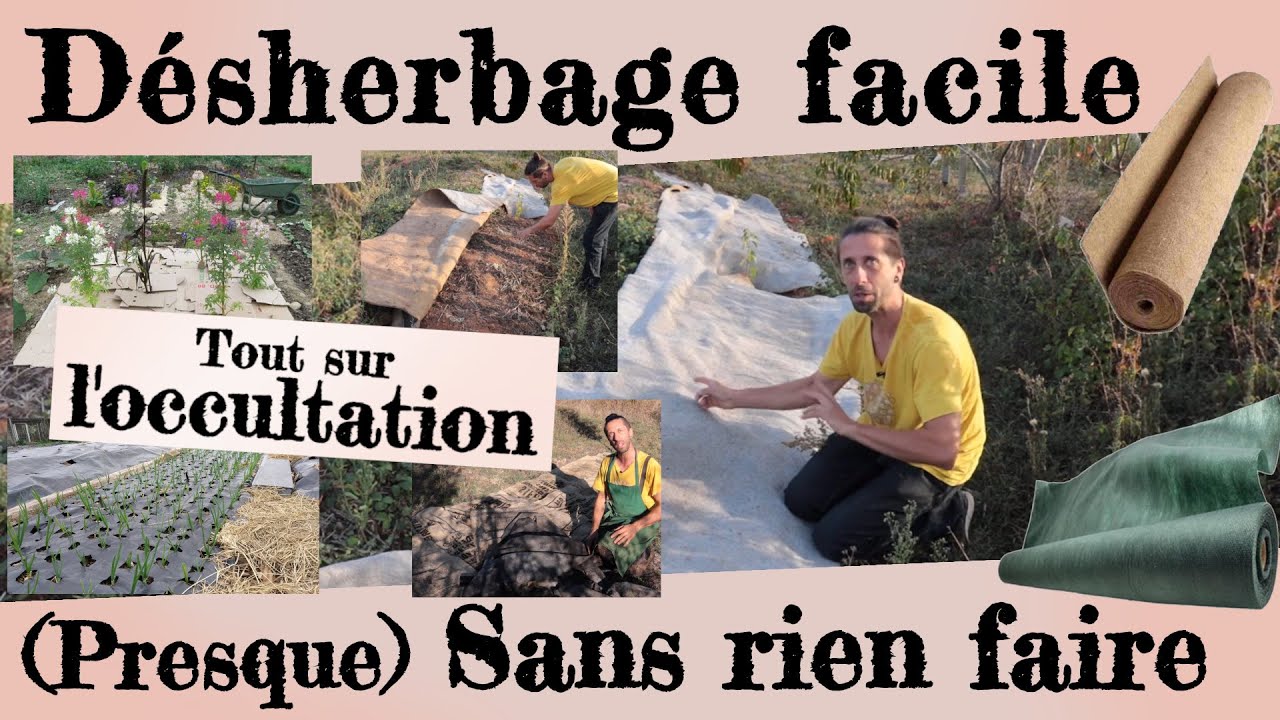
Un désherbage facile et (presque) sans rien faire... l’occultation !
127.7K
Thermal weeding uses heat to kill young weed seedlings. This method must be applied at very young growth stages. It is often combined with a technique called 'faux-semis' where the soil is prepared as if for seeding, then watered to encourage weed growth, which is subsequently destroyed by thermal weeding before actual crop planting.
Click to watch →
Deep Dive
Autonomous navigation and path-planning algorithms (such as SLAM and GPS-guided systems) for traversing uneven agricultural terrain.
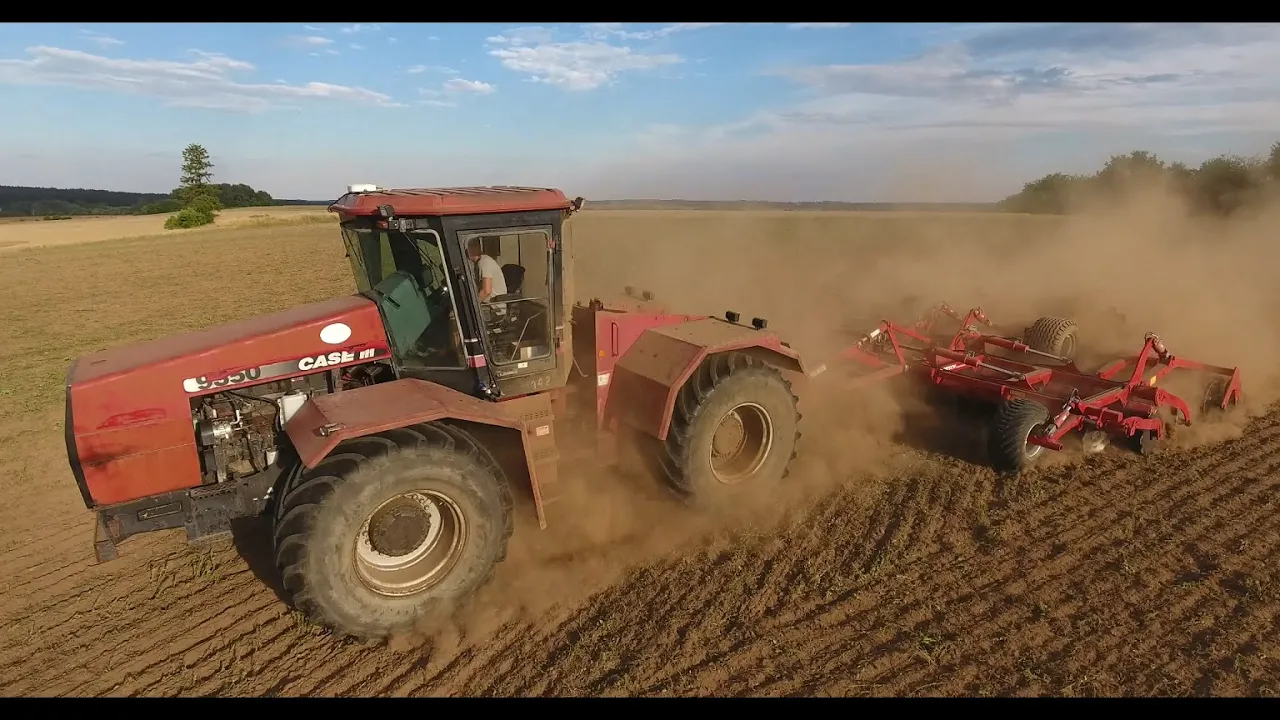
Pierwsza próba w polu ciągnika kupionego ze złomu. STEIGER 9350 prowadzony przez nawigację CHCNAV
168.4K
GPS navigation systems enable precise field guidance for agricultural tractors, allowing operators to maintain consistent path alignment, optimize turning angles, and achieve efficient field coverage even on challenging terrain with uneven surfaces and slopes.
Click to watch →

SONUNDA TRAKTÖRÜM AFYON’DAN GELDİ🔸ÇOK FARKLI BİR MODİFİYE OLMUŞ🔸Fs25 Gerçek Hayat
39.2K
Modern tractors equipped with GPS guidance systems can operate autonomously, allowing farmers to plow fields with minimal human intervention by following pre-programmed paths, which improves efficiency and precision in agricultural operations.
Click to watch →

V DRIVER VALTRA | As feras da pulverização encaram um teste real de campo
94.9K
This segment demonstrates GPS-guided autonomous agricultural operations, where machinery operates automatically following pre-programmed routes. The hosts show how operators can monitor operations remotely while the machine handles speed control, steering, and spray application. The segment highlights the stability of spray bars (36 meters with aluminum components) during challenging terrain operations, including pivot machine tracks. The hosts explain how automatic speed adjustment responds to terrain changes, and how the independent transmission system prevents wheel patination in wet conditions. The segment emphasizes how these technologies reduce operator workload and improve operational efficiency.
Click to watch →
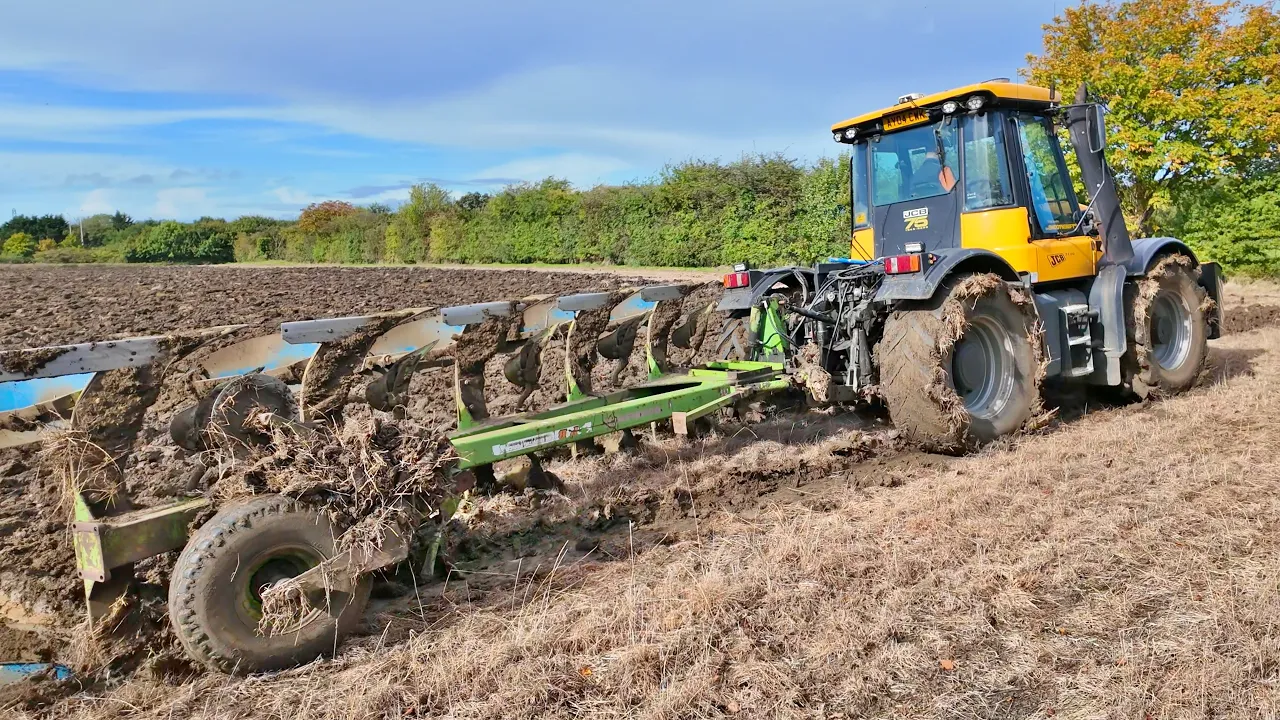
3 WHEEL DRIVE JCB FASTRAC PLOUGHING
38.1K
GPS navigation systems enable precise agricultural field operations by providing accurate positioning signals. RTK (Real-Time Kinematic) technology allows operators to maintain parallel lines when plowing headlands, eliminating the difficulty of manual steering. The system uses boundary lines or AB lines to guide machinery, ensuring consistent spacing from field edges. This technology is particularly valuable in challenging terrain with slight angled ins and outs, where manual operation would result in wonky lines. The system compensates for human limitations in maintaining straight lines through difficult sections.
Click to watch →

NOTRE AVENTURE AU SALON DE L'AGRICULTURE ! VLOG
137.7K
The autonomous agricultural machine uses GPS technology to navigate fields precisely. When the machine reaches the end of its designated work area, it automatically knows to make a U-turn and continue working. This GPS-guided navigation system ensures efficient field coverage and minimizes overlap or missed areas. The system represents a significant advancement in precision agriculture, allowing farmers to optimize their field operations and reduce labor requirements.
Click to watch →
Deep Dive
Socio-economic analysis of scaling agricultural robotics, including cost-benefit comparisons with traditional labor.

Unser Land - Die Sendung vom 18. Juni 2021
25.5K
Agricultural robots can save approximately 1,400-1,500 hours of labor annually, representing 1,400-1,500 euros in savings. With an investment of about 70,000 euros and approximately 40% subsidy, the return on investment becomes favorable for operations covering around 20 hectares.
Click to watch →

Being a Farmer in the age of robotics and AI | James Lowenberg-DeBoer | TEDxKeeleUniversity
2.1K
This section details economic research from Harper Adams University's Hands-Free Farm, one of the few global initiatives producing commercial crops entirely with autonomous equipment. Starting with 1 hectare in 2017 and expanding to 35 hectares, the research uses retrofitted conventional equipment to calculate realistic costs including purchase price, reliability, repairs, maintenance, and useful life. Cost curve analysis reveals robotic farming achieves substantially lower production costs than conventional methods, potentially competing with major exporters like Australia, Canada, Russia, and Ukraine. The robotic cost curve flattens at smaller farm sizes (around 159 hectares), enabling minimum costs at reduced scale. Capital investment comparisons show robotic systems require significantly lower equipment costs at larger scales—for instance, three small combines costing £30,000 each versus one expensive conventional combine costing £300,000.
Click to watch →

Agri-Tech Key to Sustainable Intensification of Smallholder Agriculture in Bangladesh
149
Emerging agritech innovations include on-the-go fertilizer sensing and machine vision for targeted pest control. Economic analysis reveals significant advantages: robotic wheat production in the UK reduced costs by 20-30 pounds per metric ton, with the cost curve flattening at much smaller farm sizes (around 180 hectares) compared to conventional farming. Equipment investment comparisons show robotic farming requires substantially less capital—for example, three small robotic combines costing approximately £30,000 each can replace a conventional combine costing around £300,000. Benefits include easing labor constraints, reducing equipment investment, potentially eliminating herbicide use through targeted spraying, facilitating farming of small irregularly shaped fields, and creating rural entrepreneurship opportunities. The global agricultural robot market reached nearly $5 billion in 2021, with approximately 250 companies worldwide developing these technologies.
Click to watch →

農水省の官僚が計算を教わる異例の事態。独自データと理詰めで現場の声を代弁した至高の質疑【参政党】【木下敏之】【衆議院予算委員会】
16.5K
Agricultural robots (robot tractors) are commercially available and can operate without drivers. For a 15-hectare farm, traditional tractors cost 14 million yen with 100 horsepower, while robot tractors cost 19 million yen with 190 horsepower. The annual repayment cost difference is 25,000 yen. Robot tractors reduce field operation time by 32%, saving approximately 2 hours per hectare. At 1,500 yen per hour, this represents 30,000 yen in savings per hectare. The net benefit per hectare is approximately 14,000 yen, translating to about 200,000 yen for a 15-hectare farm. Combined with land consolidation, total annual benefits reach approximately 1.1 million yen.
Click to watch →

AGROTAIFAS cu Ana-Maria Andrei | S.1 EP. 3 | RADU LUPU
167
Agricultural robotics offers significant cost advantages despite high initial investment. A vineyard robot costs approximately 200,000-300,000 euros and consumes only 6 kW per hour (about 10 RON), making it much more efficient than diesel-powered equipment. When calculated over 5-7 years, the total costs become comparable to or lower than maintaining older equipment that requires frequent repairs and downtime. This demonstrates that while robotics requires significant initial investment, the long-term operational savings can justify the expense.
Click to watch →
Turtle Intro
Design & Launch
Turtle Intro
0:00- 1
Turtle is a solar-powered weed-cutting robot for gardens.
- 2
It uses sensors to identify and chop weeds under one inch.
- 3
Requires no programming; user just presses go in the garden.
The Agroecological Critique and Environmental Footprint of Agritech
While robotic weeders reduce chemical herbicide use, critics argue they promote a 'clean field' ideology that ignores the ecological benefits of spontaneous vegetation. In agroecology, many weeds serve vital roles, such as preventing soil erosion, retaining moisture, accumulating nutrients, and providing habitat for pollinators. Automating their total eradication risks reducing garden biodiversity. Furthermore, opponents point to the environmental footprint of producing and disposing of high-tech robotics. The carbon emissions from manufacturing lithium batteries, specialized sensors, and microchips, combined with the threat of electronic waste, can offset the environmental gains of chemical-free weeding, suggesting that true sustainability lies in ecological management rather than technological elimination.
Basic concepts of weed management and the ecological impact of chemical herbicides versus manual weeding.
Fundamentals of robotics, including how sensors, microcontrollers, and actuators interact with the physical environment.
Introductory computer vision concepts, specifically how machine learning models classify and segment images.
The principles of sustainable agriculture and the definition of precision farming.
Advanced computer vision techniques for real-time plant species identification under varied lighting and weather conditions.
Alternative robotic weeding mechanisms, such as thermal (laser) weeding, micro-tillage, or ultra-precision micro-spraying.
Autonomous navigation and path-planning algorithms (such as SLAM and GPS-guided systems) for traversing uneven agricultural terrain.
Socio-economic analysis of scaling agricultural robotics, including cost-benefit comparisons with traditional labor.
395.6K views1.3Klikes2:34@Tertill_CorpOriginal Release: 2017-06-13
hi I'm Joe Jones inventor of turtle 15 years ago I created Roomba a small userfriendly robot that cleans home floors all by itself since room is amazing success I've been looking for opportunities for other practical robots I found a great one in the garden it's called turtle turtle is a robot that eliminates weeds it's solar powered chemical free and waterproof every day it charges itself in the Sun and when it has enough energy it goes patrolling for weeds my name is RoR mcken I'm the CEO of Franklin robotics Turtle uses the of the plant to decide if it's good or if it's bad if it's taller than an inch it leaves it alone if it's smaller than an inch it cuts it Turtle has two methods of removing weeds the first is a small nylon string on the bottom of the robot that spins rapidly to cut the weeds the second is the design of the wheels as the robot drives around the wheels scrub the surface of the soil damaging pre-emergent weeds Turtle doesn't need to pull weeds because it chops them every day even if a chopped weed Sprouts again Turtle will keep chopping it down until it runs out of store energy and dies there's no mapping or programming required for turtle you put the robot in the garden press go and the robot takes care of the rest Turtle uses Bluetooth to talk to the user's smartphone there's an app that accompanies Turtle through the app you can learn about conditions in your garden and what turtle has been doing because Turtle cuts the weeds every day the clippings are small so they fall back onto the ground and shrivel up returning the nutrients to the soil to inform turtle that you want to keep a small plant you put one of the provided plant collars around the seedling this let let Turtle know that it's a desired plant once the plant is larger you can remove the collar if you like turtle collects some energy even on cloudy days and it uses its energy very carefully thus it can keep operating through extended cloudy periods turtle is helped by the fact that weeds can't grow very fast when there's no sun Turtle can easily cover the typical Garden size in the US which is about 100 S ft given favorable soil conditions or sunny climates turtle is able to cover more area than that turtle is round it's short it has four-wheel drive and extreme camber Wheels those are all designed choices that improve turtle's mobility in the garden Turtle requires a barrier to keep it from wandering away from the garden this could be the edge of a raised bed a chicken wire fence or some other type of Border we've been developing Turtle over the past 2 years constantly testing prototyping and iterating to make the best product that we can we're launching on Kickstarter because we need your help to bring Turtle to production with your support today you can be one of the first to have turtle in your garden because weeding sucks you should make a robot do it
Up Next
23:58
Build a DIY Linear Servo Actuator with Position Feedback: A Step-by-Step Guide
@HowToMechatronics
254.4K views•2024-01-18

58:25
MathWorks Virtual RoboSub Simulation Environment | Webinar 2026
@RoboNationInc
209 views•2026-03-10

11:04
How to Build a Self-Balancing Robot: Arduino Nano & MPU6050
@easytechzones
16.8K views•2022-03-09

25:22
Micromouse: The Fastest Maze-Solving Robots on Earth
@veritasium
23.5M views•2023-05-24
Related Study Plans & Knowledge Roadmaps
Structured learning paths in Robotics
robotics
Building Delta Robots: Kinematics & Pico
01Foundations of Delta Robots & Mechanical Design
02Electronics and Microcontroller Setup with Pi Pico
03Delta Robot Kinematics and Coordinate Math
+ 3 more learning modules
65h6 modules
Explore Roadmap
robotics
Building Ballbots: Dynamics, Kalman & LQR
01Embedded Electronics & Omniwheel Actuation
02Ballbot Kinematics & Rigid Body Dynamics
03IMU Sensors & Kalman Filter State Estimation
+ 2 more learning modules
42h5 modules
Explore Roadmap
robotics
Micromouse: Hardware, PID Control & Flood-Fill
01Electronics & Teensy Microcontroller Basics
02Sensors and Actuators: Motors, Encoders & IR
03Precision Movement: Implementing PID Control
+ 2 more learning modules
35h5 modules
Explore Roadmap
robotics
CDPR: Kinematics, Arduino & Winch Control
01Foundations of Arduino & Basic Electronics
02Stepper Motors and Winch Mechanics
03Kinematics of 2D Cable-Driven Robots
+ 2 more learning modules
28h5 modules
Explore Roadmap