




















This webinar explores cutting-edge strategies for optimizing antimicrobial use in ICUs, emphasizing the need for multidisciplinary teamwork between intensivists, infectious disease specialists, microbiologists, and pharmacists. Key topics include: (1) Understanding ICU-specific challenges such as dynamic pharmacokinetics, high rates of multidrug-resistant pathogens, and the 70% antibiotic usage rate where much use is inappropriate; (2) Effective antibiotic de-escalation strategies that reduce resistance development while maintaining clinical outcomes, supported by evidence showing that shorter antibiotic durations are associated with fewer adverse events and resistant organism development; (3) The role of continuous versus intermittent beta-lactam infusion regimens, where pharmacodynamic principles suggest continuous infusions may provide better drug concentration maintenance above minimum inhibitory concentrations, though large randomized trials have not definitively proven survival benefits; (4) The importance of understanding intensivist prescribing behavior and building long-term collaborative relationships to effectively implement stewardship interventions in the ICU setting.
Antimicrobial Stewardship in ICU: Expert Strategies for Optimization
Added:Hello everyone and welcome to this webinar on antimicrobial stewardship in critical care units. My name is Sa Kenj.
I'm professor of medicine and infectious diseases at the American University of Beirut Medical Center and I'm the president of the International Society of Antimicrobial Chemotherapy. This webinar is hosted by ISAC as well as the alliance for prudent use of antibiotic known as APUA. So in this webinar we explore cuttingedge strategies to optimize antimicrobial use in the ICUs and we really hope that you gain insights on balancing effective treatment with resistance prevention in high-risk settings. I am very pleased to have with me three very esteemed speakers. Each will be addressing a different topic in this webinar.
Throughout the webinar, I would kindly ask you to send your questions in the Q&A chat uh box and we will try to address all these questions at the end of the webinar. Thank you again for joining. We're very excited to be uh beginning this webinar and it's now my distinct pleasure uh to introduce the first speaker, a very good friend of mine, Professor Yerun Shoutton. Uh, Professor Shoutton is an internist and intensivist. He's a senior researcher at Dreadbot University Medical Center in Naen in the Netherland. He's been involved in qualitative research with a focus on antimicrobial stewardship since he completed his PhD. He has performed numerous studies on end understanding and improving antimicrobial use in the hospital setting. He has been involved in many international initiatives to improve antibiotic prescribing and he heads the Radbot University Medical Center antimicrobial stewardship program and is the course director of a very important course and that is the Dutch master class for antimicrobial stewardship and expert consultancy an international program that really focuses on the stepwise implementation of antimicrobial stewardship. ship activity in healthcare institutions. Um, Professor Shouting Shoutton is currently the chair of the ESCMED study group on antimicrobial stewardship and he coordinate the ESCMED certificate uh for the European training program for antimicrobial stewardship and also very importantly he's a very active board member of the APOA board.
Uh, Professor Shouting is gonna talk to us on influencing beyond your authority antimicrobial stewardship in critical care patients. Yurun, the microphone is yours.
Thank you. Thank you so much, Sua. And it's really nice uh to be here today. I I just need to to to um to correct one thing. I'm a past uh uh chair of ASCAP.
In the meantime, this take this has been taken over. I'm sorry, my CV went a little belated, but but that doesn't mean I'm not uh fully engaged in in micro world stewardship still as you've seen. So, so I'm I I'm I'm very happy to do this talk today. And um I want to start with um uh with one disclosure and that's my major disclosure. Uh I am an intensivist. So, uh, if we're talking about influencing beyond your authority, then I may be the one that you would need to influence as an antimicrobial steward working in your hospital. Um, now, um, intensive care is a special place, right? And and you can see here, this is this is some image of of of a of a patient transferred in in in times of COVID. uh but you can see all the materials around make this special a special place to live in and and and it's special because first of all I as we know ICU patients are different than other patients they they often have life-threatening conditions uh they are very often immuno compromised when they are admitted to ICU or they become immunoperatic during ICU stay uh providing for a lot of uh indeed nocomial uh infections. They often have severe co-orbidities either when they are admitted or developed during uh their stay in the hospital in ICU. So they they are not simple straightforward patients normally and they have a limited physiological reserve which makes it so difficult to care for them.
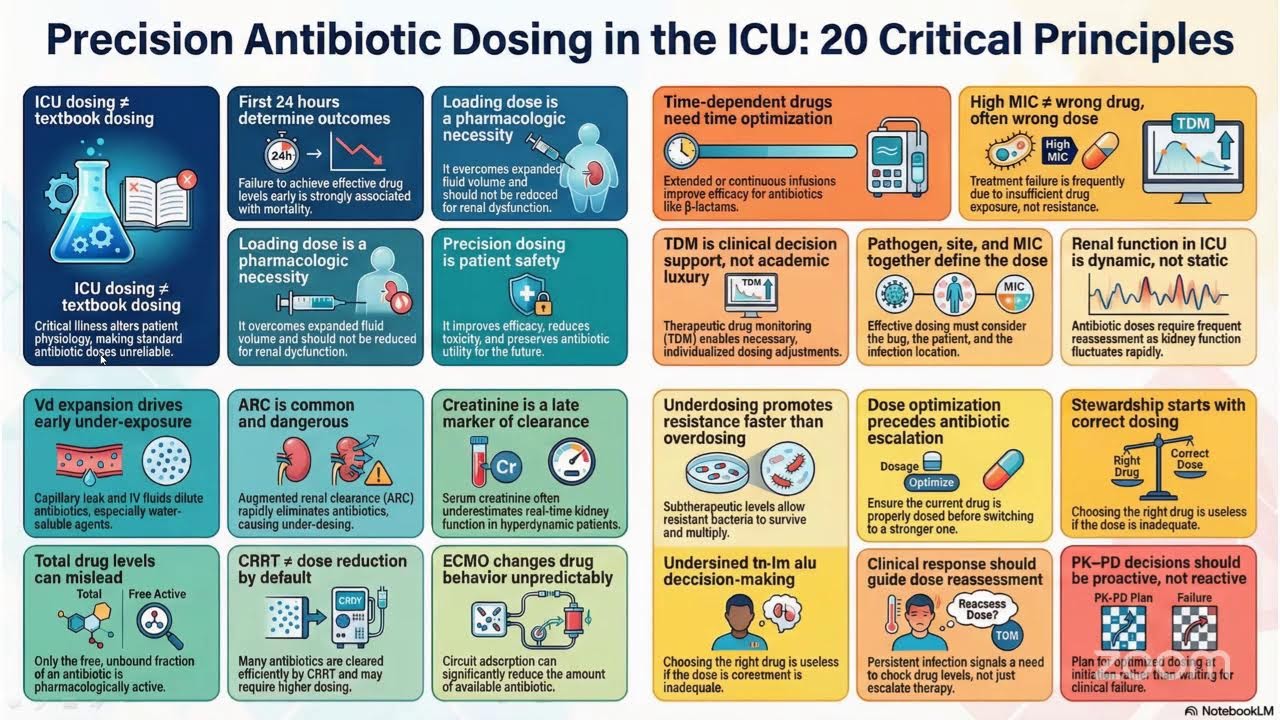
They often have multiple organ failure and in generally spoken they have indeed poor outcomes. And just to show you and and I'm sure that Roger will talk about this more extensively later on. Uh the effects of critical illness only on antibiotic prescribing related to pharmacocinetics, pharmacodnamics are so volatile, right?
It's very dynamic. If a patient is at is is admitted to the ICU with a severe septic shock, the first um the first clinical picture we see is a hyperdamic circulation with increased cardiac output with increased clearance often and so leading to decreased plasma concentrations of the antibiotics that we're all pairing about. Now that changes over time um uh in in an ICU setting as you know there's a huge increased volume of distribution in these kind of patients which also leads to decreased plasma concentrations but later on when a patient develops renal or sometimes sepatic dysfunction actually this this image may be turned around and we'll see increased plasma concentrations which then needs uh needs us to take a look at that and and alter that in our way of working and same is true for all the types of organ support that we're delivering whether it's about renal replacement therapy or it's about ECMO or both these have a very complex relationship with the levels of plasma concentrations of our beloved antibiotics if you would say so indeed it's it's a complex place and and and not only the patients themselves the mugs are different also the infections uh are different right they are um they are often um accompanied by a a really high de severity of disease score. So that you don't come to the ICU with a with a with a relatively mild infection.
The severity of disease is often very high and interestingly they're very often complicating the clinical course of another problem. So patients get admitted for uh for for neurot trauma and then and then develop an infection during the course program and they are an important source for attributable morbidity and mortality. So there's a long list of short and long-term squ of acquiring an infection in ICU. And yeah, that leads me to to another thing. Of course, I mean, the pathogens are different. Uh if you want the ICU, it's the iceberg uh the top of the iceberg of the or the top of the pyramid if you want of of the pathogens and of of resistant pathogens. And it's where these pathogens show up for the first time often, right? while they've been cooking uh uh below the the surface if you want but they come up when we start treating these patients in ICU and this is an example of a study that was done a couple of years ago the Eurobbacked two study a large study more than 2,000 patients 300 centers that looked at what kind of pathogens were actually um were actually found in hospitalacquired bloodstream infections in ICU patients right so it's a it's a cohort study uh and it showed uh that there's a large um large proportion of these these pathogens actually are resistance u in in a several um grades of of of severity if you want right as you can see here the the most commonly found ICU of pathogens um listed here with their relative resistance rate so so we see here an additional difficulty with pathogens So we've talked talked about that and and obviously MDR is an imminent risk in ICU and that has to do a lot with the fact that we have patients who stay long in ICU who are who are exposed to antimicrobials who have lots of coorbidities um uh as a risk factor for acquiring MDR who are often old and fragile and who have increasingly of course in ICU invasive device use creating a port of entry for antimic for microbes um and and so exposing um patients to to to MDR more than than in other units and and exposure to antimicrobials is especially very um challenging in ICU. So some studies and you all know these studies epic studies from the past but also more recently show that that that antibiotic use in critical care is high. On average 70% of patients in ICU receive daily antibiotics in our ICUs. Uh and that means that that that we have to look at what is appropriate there and what's not appropriate. And unfortunately, a lot of that use is inappropriate, in unnecessary or or suboptimal. You look at it with a critical eye, you'll see that many patients actually get antibiotics while they don't need it or they get it in a wrong fashion. They're they're just given the wrong antibiotic or given the wrong dose performed in a wrong way. So, it's disconcerting if you want to see that a lot of that use is inappropriate. And finally, let's not forget that our ICU prescribers are always also different than the prescribers that you'll meet as antimicrobial stewards in the normal units. So this is how some of the intensivists like to see themselves or they are seen by others super super people if you want but more often than not they are actually the most resistant organisms on earth. Yeah, it's sometimes difficult to to approach. We recognize that and been thinking about that quite a bit and and and I feel that what happened in the ICU society it's important to recognize for you that that intensifist is being an intensive is actually quite a a recent job right it's it's we haven't been around there for so long not like the classical specialist surgery internal medicine etc so so there's a lot of change in responsibilities of intensivist while we we we used to um to give all these jobs to other people. We we increasingly do all that work ourselves, right? We put in our central lines. We we intubate people. We we we perform diagnostics, echoc echic cardiography, for example.
We put them on dialysis even on ECLS, ECMO. We perform our own broncoscopies, gtocopies, etc. We even do our own paciotomies in the unit. And so that means that that we are sort of becoming multi- functional if you want. So we are at the same time a cardiologist, nefologist, nefologist, a radiologist, profusionist etc etc and at the same time we need to manage the ICU and also evaluate the quality and so it's not strange to think that ID physicians and microbiologist tasks are also gradually being taken over by intensivist or at least the intensivist may have the idea of doing that and I must say that this this whole idea of organizing ICU in a different way with the closed format ICUs as they're called where this 247 availability of a dedicated intensivist in your unit. This had a lot of good good out effects on outcomes of high-risisk patients that we have and it has created this community this this discontinuity that we really need for our most critically ill patients. On the other hand, it may also have led to the ICU as starting to be if you want maybe more of a nice ivory tower sometimes a place where you find it difficult to thread and sometimes even people may be feel left out a little bit, right? So, uh how do I enter into this ICU? How do I enter into a discussion?
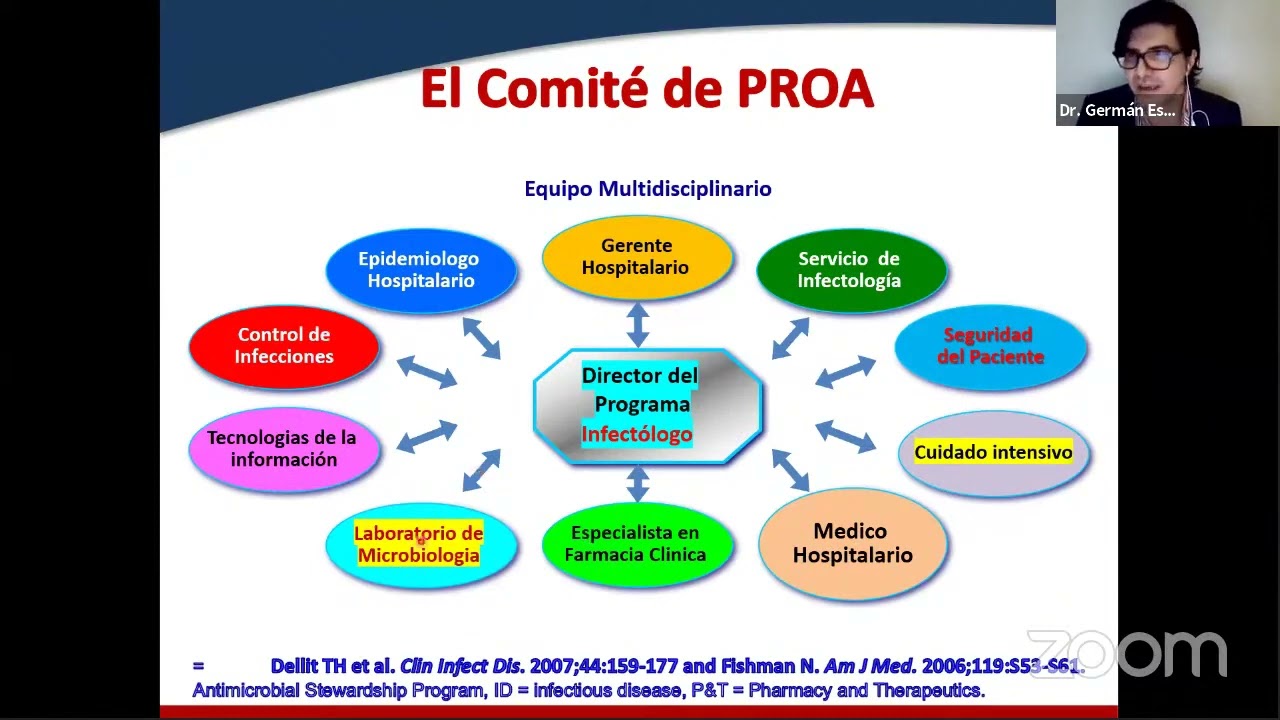
And we on the other hand we know all that stewardship also in IC should be a group process. I mean there's the intensivist of course but the interaction with the referring specialist um but also with the hospital pharmacist the referring uh so the ID physician the microbiologist they're all very very relevant uh to perform antimicrobial stewardship.
antimicrobies is as you know a multid-disiplinary action and we should keep it like that in the whole hospital.
also in the ICU. I think that we have to convince ourselves that that's the truth. But we have to then ask ourselves so how would you now as a stewardship team or as a steward going to the how would you influence that intensivist that is increasingly actually doing his own job and making sure that he's the one responsible and only responsible for the ICU patients. So we have to understand what are the drivers of ICU intensive prescribing behavior. We have to really understand how the ICU decision making process takes takes place. How how that works.
And we of course if we want to influence someone, we have to find common grounds.
We have to see where we can be of service and where uh the intensivist can also um uh feel uh comfortable with us being part of uh of of that.
of their team. So, so we have to ask ourel which are the drivers and these these drivers they can be obviously first instance they can be patient related right so the severity of illness um is some is somewhat of a driver that drives antibiotic use right the more severely ill a patient the more broadsp spectrum the more maybe inappropriate antibiotic use is is covered uh having devices in place very often prompts the use of antibiotics Being aware of an immune dysfunction in these patients may also prompt the overuse of antibiotics. But it's not only patient related u if you want drivers. It's it can also be external drivers like having a guideline in place that prompts the use of antibiotics or does not if you want. Oh I am sorry I think my image yeah there we go back. So and and of course if you look at external factors there's external pressure that can definitely play a role here of peers or uh colleagues, superiors etc. And finally there are of course also um important personal doctor related um drivers that that makes that that that happen for through which cause is overused and the most important the most important driver I think you will know is is the fear it's the fear of missing an infection uh in a fragile patient who's on life support. I think that's one of the most important reasons why there is so easy prescribing going on in ICU. Now we wanted to dig into that a little bit more because ICU prescribing is not is not something one of one generic thing. ICU prescribing is about starting antibiotic. It's about you know adapting doses. It's about changing antibiotics based on therapy on sorry on cultures etc. So there's a lot of processes of prescribing antibiotics um that we can study and and and we were particularly interested in in in looking at the recommended duration of antibiotic therapy. And why is that so important? Well, we know that that gradually we see that there's much more evidence coming that that antibiotic treatment can actually be shorter even in ICU. And these are just some examples from uh from the literature where we know now that we can treat patients for a shorter period of time than we may have done in the past. Right? So the holy two weeks or the holy seven days can be actually reduced. uh so it's an interesting topic to study in ICU because duration of starting antibiotic in ICU is a difficult thing to maybe approach but stopping antibiotics might be a very welcome approach and indeed we know that each act additional day of antibiotic therapy is associated with measurable antibiotic harm as you see these papers actually show the harm in terms of adverse events super infections the occurrence of claustrdium defic Brazil, but also the development of resistant over time. So, so we are very eager to to reduce the number of antibiotics over time or at least give it according to what guidelines recommend for that particular critical illness. But we know in the meantime that there's a gap between the evidence and clinicians practice. But this is just a paper showing that actually we know uh the evidence-based recommendation on gram negative bacteria 7 days. Many PC p many doctors actually prescribe the longer or even shorter that also happens right let's not uh only look at longer use we can also look at shorter than recommended use so important to look at that more in depth and um that's why we performed a um a qualitative study um in ICUs in the Netherlands we performed semi-structured interviews with intensivist microbiologist and ICU resident to really understand where the decision making takes place in these hospitals and it was just recently published if you're interested in BMJ quality and safety and for that um for for that evaluation we used a framework and this is the a framework called the flattop framework looking at 57 different drivers within seven domains and you recognize already the domains I just remembered you I I I told you before guideline factors may play a role but also individual health professional factors like fear, like knowledge gaps, but also patient factors, interactions, peer pressure, etc. So, doing this in a very um uh consolidated and and I think scientific way, you you can come up with these kind of tables of of all the drivers that um influence decision- making around recommended duration of antibiotic use. What was really striking what we found is that while there were a lot of factors out there, one of the most important factors that played a role here were professional interactions. So really how do professionals interact with each other in ICU concerning the duration of treatment of of their patients. So we really we decided to look more in depth into into those professional interactions and we found that actually even within the process of antibiotic therapy decision making in ICU there are different stages. There is indeed the introduction of the subject right who brings it up right during the meeting.
Then there's the formal discussion between the intensivist, maybe the um referring physician, maybe the microbiologist, the ID physician and then there is where the rubber hits the road, the determination of the decision, but it's not done yet then because the decision still has to be executed and also there we found in the process that there were quite a lot of barriers or determinants or drivers of abuse or or misuse there. So just as an example here in the in the first part introducing the subject well micologist sometimes said well I find it really hard to introduce this subject I feel a little hesitation a kind of modesty look I'm just looking at a really little piece here but you know the intensivist are working together with surgeons and whoever to really save the patients and hey here I am going to discuss can't we stop the antibiotics is such a small part of the process so that that was a driver not to discuss and so to keep continuing those inter time constraints are huge in ICU as you know some there's a high pressure often it means that it just you know that's not the talking point that you will talk about first you will talk about hemodynamics respiratory you know ventilator issues but you will forget about that very important part which is actually stopping an antibiotic that's not useful so that's sort of another driver but residents also say well actually the duration of antibiotics may have been discussed during the you know multi-disiplineary meeting or with with all the um all the stakeholders on board but it's it's not clearly how many dates we're exactly talking about. So the action planning and the determination is sometimes not precise enough. And finally in the execution of the decision um it's also sometimes that we find that there's delay or actually just non-execution of a decision that has been done. Right? So there's many different determinants and to look at a little bit further we also we also performed observations. So these were interviews as I just showed you. We obs we we did observations in ICU. So we looked at those same hospital ICUs and we actually sat in into mid day multiple multi-disiplinary meetings taking field notes and audio recording and really looking at what happened during that process. Looking at the start of the discussion, the arguments that were used and finally what was the final decision and who was instrumental in taking that decision. First of all, this is important to see here is that we found that at least in the setting we work in, mostly the intensifist and the microbiologists were the ones that took the decisions. They were part in the decision- making process. The resident far less right far less uh and uh in our setting the referring physician like the surgeon or the internist, the hematologist, they were hardly actually involved in the decision. Actually, they were also often absent in the whole decision-making process.
So what was then decided? So we looked at this 120 re relevant decision moments and one in four in one in four of those decision moments the antibotic was indeed stopped but in 37% the the the decision was um actually scheduled. 20% it was postponed to be discussed in the next day and in 9% it was literally snoozed. Right? We we snooze it. we don't discuss it but we don't um um um mention when we're going to discuss it again and in a smaller percentage even there was no decision made at all in this discussion the final decision as I told you was mostly by the intensivist and the microbiologist and far less by the others only 30% of cases it was a multi-disciplinary decisionmaking process it was really a shared decision-m process now interestingly the arguments that were used by the intensivist were different than the arguments used by the microbiologist ID or other AMS specialist. So the clinical status is on the top one three one of three of the arguments that were used not to stop an insecurity about an infection and source control came second and third while for the micro culture results were really the most important one right so okay we have this culture now so that means that we have to stop therapy or we have to continue for so many days guidelines were a good second and source control was also a third argument that was used right so you see all these kind of remarks as I've I've noted here um that that influence the decision making process as we said. So having looked at that as a whole and I'm I'm I'm I'm trying to finalize here we we tried to to develop some recommendations for intensivists and for for others present at the at these kind of decision makings moments and we felt that for microbiologists or other ID um pharma pharmacist involvement in stewardship engaging in clinical bedside activities with intensifist would really be uh an additional of additional value really making sure that you understand the concerns of the intensifist right giving arguments based on your own expertise are very relevant but but try to see if you can also provide arguments that are in align with the concerns of the doctors that are out there so that's one of the mo major points that came out from uh from these um from these studies and indeed I I think engaging in clinical ward rounds for challenging patient p cases is really helpful first of all in in making it more understandable for the noncl clinician if you want the lab persons or the p persons who don't come usually to the bad to understand what the val what what what what it looks like at the bed site but also to have a really good admission and my other advice would be to provide this non-urgent advice on a mainly at midday meetings so at multi-disiplinary meetings and not just somewhere in between uh a good discussion with a good um formalized decision-m process uh would be really helpful and we you know suggested this structured approach to discuss antibiotics right it's so first about starting antibiotics it's about during therapy it's about changing it's about TDM um and finally it's also about the duration of therapy but it's important to use this structured approach approach when you discuss the use of antibiotic in ICU practice so in conclusion the ICU is a special place antimicrobial stewardship in ICU needs teamwork let's not for forego on that we do need antimicrobial stewards in our ICU environment but ICU prescribers may be a bit special. We need to understand what drive their prescribing behavior and we need to invest in a long-term relationship with those intensivists. I think that's the only way in which we can continuously keep on um influencing them. So be present, be predictable but also sometimes be compassionate with these dogs. Thank you very much. Thank you very much. This was an outstanding presentation. Uh, as I announced at the beginning of the webinar, uh, if you have questions, please send them in the Q&A box and we're going to address all your questions at the end. And, and with the theme that, uh, Yuron really highlighted in several of his comments, uh, stewardship needs a multi-disciplinary approach. And with that in uh in mind uh obviously this webinar is also designed this way to illustrate that to do proper stewardship in the ICU we need an intensivist we need an ID and clinical microbiologist and we need a pharmacist and with that I'm very happy to introduce the second speaker uh for this webinar and that is uh professor Hakan Erdam uh professor Erdam uh is uh trained in clinical microbiology and infectious diseases uh in Turkey and he has held uh many positions throughout his career. uh his most uh recent uh position. He is now a full professor at the University of Health Sciences uh in um Gulhan School of Medicine in Ankara, Turkey. and and and among um uh a lot of the work that professor Erdam has done in infectious disease and clinical microbiology uh one of the really highlights of his career is that he has founded uh the infectious diseases international research initiative uh called IDIR which is a global clinical research platform uh on infectious diseases and related discipline in 2008 eight and this is a very active uh group engaged in uh multiple topics related to the uh field of infectious diseases and clinical microbiology. And so, Professor Hakan Erdam will talk to us now about antibiotic deescalation in the ICU. Is it worth it? Hakan, the uh microphone is yours.
Thank you very much for the nice introduction uh sua. I am very uh happy to be here with you to discuss one of the challenging aspects of antimicrobial stewardship uh antimicrobial treatment inside the ICUs.
So [Music] um you know the escalation in the intensive care unit is an you know multifaceted process and influenced by numerous factors inside the ICU. So this is a complex issue and I will do my best to discuss the topic as clearly as and as concisely as possible. First we will define the escalation and the reasons.
uh we will you know delve into financial is issues antimicrobial resistance deescalation in the imunocmpromised patients and we will come to the point that how we could we can deescalate on vent to and how to deescalate. So uh in this paper published in intensive care unit uh in intensive care medicine which is a position statement on antimicrobial stewardship and deescalation. The definition of deescalation is narrowing the spectrum and reducing the combination for both the bacteria isolated not isolated or to prevent double coverage. So this is the basic definition and in the surviving sepsis guideline timely uh start of you know empirical treatment and broadspect them antibiotics are the main state main state of sepsis treatment after the identification and antibiotic susceptibility data is available and when the patient clinically improves we should narrow treatment as soon as possible according to the guideline and in the if the infection is ruled out we will stop it stop on microal threaten This analysis you know is published in the clinical microbiology and infection uh a couple of years ago and they have compared uh patients uh with bacteria in severe sepsis in the context of the escalation and escalation and also pneummonia patients. And finally uh after you know including 19 state studies in these meta analysis they came to the point that the the escalation did not increase mortality. Another metaanalysis published in clinical infectious diseases by Alexis and Tubba. This is a very nice paper. And finally they came to the point that uh deescalation in the deescalation group mortality is not higher but the opposite. So the question comes are we deescalating in patients who are likely to survive? I think so. I think so. So there are other papers in the literature you know showing different aspects of the issue. First of all in the deescalation group sopa scores were lower, Apache scores were lower and delta score which is a surrogate marker for improvement in organ failures is higher which means that you know the question comes you know are we deescalating in patients with milder disease? I think so in our practices and the other issue this paper is published in intensive care medicine and the need of source control is significantly lower in the deescalation group group and on the other hand the effectiveness of source control is significantly higher in the deescalation group. So the query comes are we deescalation when the source is controlled efficiently? I think so. I think we are managing in that way and the microbiological diagnosis issue from the same paper the escal in the deescalation arm microbiological confirmation and the availability of anti antimicrobial susceptibility data is significantly higher. So are we deescalating when the antibiotic susceptibility data is available? I think it is but there are a couple of concerns in this particular point. The first one, what if the isolated bacterium is not the actual co cows? I think you know this is a great issue in the ICUs. We should decide if the isolated pathogen or microorganism is the actual cause of the disease. And the second issue, we have a patient inside the ICU, we have started empricical antibiotics, but the infecting strain is not identified. Then the patient responded should we deescalate because you know inside the ICUs we have such cases you know with infected with high lever but you know relatively less susceptible microorganisms like miningoxmia nerium miningitis or there may be patients infected with highly resistant but low virant micro microorganisms like you know as species coagulas negative stox you uh this paper is published in in the journal of critical care and they have included more than 100 uh pneumonia patients inside the ICU most of them are hospital acquired and in the context of mortality in hospital mortality length of ICU stay duration of mechanical ventilation etc there was not a significant difference between deescalation and non-deescalation groups but when we look at the numbers the presence of multi-drug resistant pathogen or carbopenm resistant acinoacttormonia or carbopenm resistant sodomus aryinosa was in in numerically higher but these numbers didn't gain statistical significance but when we look at the numbers you know the in the deescalation group there are 40 patients so uh the number is high but it they didn't they couldn't provide a statistical significance and the Other paper published in the critical care they have compared more than 100 patients in two arms in in deescalation and non deescalation groups. If the initial antibiotic treatment was okay, you know it is favoring deescalation which means you know that the antibiotic susceptibility data is available and they confirm that it is appropriate and deescalated. But on the other hand if it is inadequate by its nature they have you know it it favored escalation but when the presence of multid resistant microorganisms the clinicians are reluctant to deescalate. So uh the query are we mainly deescalating in patients infected with you know sensitive bacteria? I think so. So the other issue you know the ask Finally in their final point that if we are to use aminogic as part of combination regimen this facilitates deescalation and it's very easy to discard amoglyucite based on the culture data due to toxicity concerns etc. But if the patient is receiving a single antibiotic monotherapy this obstructed you know deescalation this is against the escalation. So the query are we commonly deescalated combined antibiotics rather than the main state of antimicrobial threaten? I think so it is very easy to do do this you know to discard wankcomy if none of the grandpositive microorganisms are isolated from the cultures or you know due to toxicity issues or amicos size as part of combination etc but there are some confusion in the in the in the you know definitions of the escalation and escalation suppose patient is receiving onecomy combined tpentum and we stop broncoyin and shifted to meopen. So is this deescalation or escalation? You know uh we have upgraded you know pipaso to meopenam. So this is escalation but we discarded one commis this is you know deescalation on the other hand there's time to time there are some confusions and I think this issue should be clarified on the patient based basis based on the identification of the microorganism and this is another paper published in the critical care. So they have analyzed healthcare associated intraabdominal infections and finally in their final model they came to the point that adequate empirical threatment with available antibiotic susceptible data identification etc facilitates deescalation and accordingly discarding wcomy with culture negativity escalates you know you know uh facilitates deescalation carbopin use with the available susceptibility data and you know with clinically improved can be done very easily. It can it can be deescalated or the empirical amigosides can be escalated. But on the other hand non-fermenttors like you know asbakar bowman infections which are excessively resistant in many countries in my country more than 95% of the isolates are carbopen resistant perhaps 98%.
or sodominous idosa infections the same issue or the presence of multidrug resistant pathogens also prevents the escalation and this paper this is a very nice paper I liked it very much published in pharmacothotherapy uh and they have analyzed more than uh 7,000 adult patients they have provided antisoidinal betalactams to uh to three to three arms and the resistant development to any of the anti antisoactams was the end point primary endpoint. If there is no outcome or that within 2 months this is the exclusion criteria or after the start of antibiotics within 3 days if any resistant pathogen to the given drug is detected then this is also exclusion criteria. Ultimately you know they came to the point that for each day of exposure to these antisominal drugs for each day cphipim and pipeso resulted in the detection of resistant in 8% for each day of exposure and for meopenam this is 2%. So this is an huge problem.
You know with this paper they brought up that the development of resistant with broadspectctrum antibiotics is a great concern for the patients treating managing critical infection patients inside the ICUs. This is another paper published in the clinical infectious diseases by tesum. This is also very nice papers. So they have included critical infection patients.
uh they have used an betalactam spectrum index. In this paper they have given you knowages to the antibiotic betalactum antibiotic groups seven points pipes eight points 9inm 10 11 points and then with these initial numerical points if during the course of modification if the pontage increased more than 10% % this is escalation. If it is reduced by more than 10% this is deescalation and the outcome of the study within three months is the primary resistant primary drug resistant to drug use third generation closperin resistant carbopenum resistant in the presence of multidrack resistant microorganism and ultimately they found that for 1,000 patient days in the deescalation group uh the development of near direct resistant gram negative pathogen is 1.42 which is significantly lower than the other groups with no change or the escalation groups but interestingly you know you see the no change group is the highest rate of development. So if we continue using the same drug it will make a major shift for the drug resistance and in the surviving safety guideline I think anecdotally at that time I'm not sure about it uh they have recommended that to prevent the development of resistant daily assessment of the patient by the clinician to understand if deescalation is feasible is recommended in the other issue to you know imuninompromised patients normally in the guidelines it's recommended that obtain blood cultures obtain cultures from imunocmpromised patient if they are negative or unreliable do not deescalate but if the antibiotic susceptibility data is available regardless of the severity you can deescalate this is the basic point of view and you know there are many papers related to neutropenic patients in the context of deescalation And I have brought three of them here you know in the ICU admission septic shock mortality recurrent fever fever and antimicrobial treatment escalation was not significantly different between the deescalation and escalation groups non deescalation group sorry but the length of rope spectrum of antibiotics by its nature because we are deescalating was significantly lower in the deescalation group.
Uh this is also a very nice paper published in clinical hematology international. You know uh hematopoetic stem cell transplant patients and cartis cell treatment recipients you know they significantly uh obviously imunocmpromised patient population. Time to time the you know immunity is zero and for these patients prophylactic antibiotics are recommended and in due course despite prophylactic regimens if a fibral episode fibral disease develops they have included patient into their study and categorized patient into three and they have to one arm provided ropes spectrum of antibiotics until the engraftment And for the other group they have provided broad spectrum of antibiotics and if the patient has received a broad spectrum spectrum of anticodominal drugs for a minimum of 3 days and combined to this if the patient is off for a minimum of 3 days and at the end if the patient doesn't have clinical laboratory radiological evidence of an infection they have stopped broadsp spectrum of antibiotics and shifted to prophylactic antibiotics. Okay. So uh until until engraftment you know they have stopped wide spectrum microbial coverage and shifted to prophylactic regimens and sorry and ultimately when they have analyzed data they have seen that the engraftment period was not different between these two groups. length of hospital stay, occur o occurrence of knee bactermia, recurrent fever, ICU admission within three days or 30-day crude mortality or as an antib antibiotic side effect. The detection of CD positive uh GI problems was not significantly different different between these two groups. What about biomarkers? You know this is a position paper on antib microbial deescalation published in intensive care. So the query is uh in critical infection patients should we use biomarkers uh to to decide the escalation? No they didn't they didn't make a recommendation. I think the probable reason is these patient has lots of coorbidities including kidney damage diialysis etc which directly birch inflammatory markers particularly the proposalin so they're not reliable uh as an example this paper is this is also a very nice paper I liked it very much published in arthritis and rheumatism you know in the course of autoimmune diseases there are three uh uh three stages in the context of uh inflammatory markers. The first one is the patient is stable. The second one there are autoimmune flares and the third one there's an overlapping infection which will directly result in escalation in in the markers and finally they came to the point that the sensitivity for procostin and CRP is the same for overlapping infections but specificity is significantly higher in the for for proconin. This is one thing positive likelihood ratio for procostin is very high but the critical issue is if both of them are negative infection is unlikely and the other issue this paper is published in critical care medicine to compare antimicrobial treatment modification or deescalation in by using for one arm by using procalon in the for the second arm by clinical decision taking for both groups length of stay in the ICU and mortality was not significantly different but procinian arm directly reduce the antimicrobial treatment duration direct and which means at the same time it is reducing the costs.
The other paper uh published in international journal journal of clinical pharmacy compared cardommonia patients and in the in the deescalation group compared to non-deescalation group length of hospital stay adverse effects etc was not significantly different but what different different was uh the costs you know in the deescalation arm the cost of antimicrobial therapy was $270 compared to $420 in in the deescalation group which was significantly different in in the you know uh uh you know mentioned our platform global clinical research platform I I have sent a questionnaire and 100 physicians most of them are senior consultants professors of infectious disease etc from different countries throughout the world has responded. The query was when do you es deescalate antibiotics? First the the major concern was identification and antibiotic susceptibility tating when it's when it's available most people are you know uh considering deescalation and clinically improved if the inflammatory markers are trending down fewer deferes etc. So we are deescalating when we feel confident when the patient is stable you know when we have parameters that we can deescalate etc. If we have started prompt antimicrobial threatment initially. Then if the patient clinically improves we consider it. If the source control is maintained when we have laboratory data either identification or antibiotic susceptible combined to inflammatory markers and if the microorganisms is susceptible and we if we think that the patient is stable and is likely to survive we do deescalate commonly. But the query the initial query uh if the escalation were said yes I think so for the optimization of threatment to prevent antimicrobial resistant to reduce cost but with close followup. So the decision should be and it you know based on the it should be individualized based on the patient conditions. So it is an art the escalation is an art. So all parameters should be balanced thoroughly and robustly by the managing clinician. Thank you very much for listening me. Thank you very much Hakan for your excellent presentation. Um we're going to now move to the third uh presentation for this webinar. And again please continue to send questions. We have over 21 questions so far. A lot of them deserve to be discussed. So we're going to leave this till the end. And it's now again my pleasure uh pleasure to introduce our next speaker uh Dr. Roger Bugamman. And um Dr. Bugamman is an associate professor in clinical pharmarmacology of anti-infectives. Uh he's in charge of the translational pharmarmacological research on antifungal drugs uh at Redbart University Medical Center. uh his work involves three different domains really ranging uh broadly from in vitro and animal research to clinical trials in human uh and uh has a strong national and international collaborations. Uh Roger's research involved the pharmacological research in special patient populations as well uh including the ICU patients uh as well as work on PKPD behavior of the uh novel antifungal agents and uh the factors that affect this. Uh he's a board member of the famous center of expertise in micology at Treadbot University Medical Center. uh really one of the leading centers in Europe uh and is a fellow of the uh European Confederation of Medical Miccology and a member of numeral international societies. Uh Roger has really helped drafting multiple uh guidelines on uh management of patients with fungal infections including position papers for the international society of antimicrobial chemotherapy.
And so Roger is gonna talk to us now about a topic uh a bit uh different. Uh so the the title is pose or continue treatment options for antibacterial agents. Roger the microphone is yours.
Thank you Sua for this really kind and uh extensive introduction. Um and indeed uh I'm going to talk beyond uh fungal infections uh but focusing on my role as a anti-infectious clinical pharmarmacologist and a debate that has been longstanding on whether intermittent infusions versus continuous infusions show any differences. And what I want to do is to bring you or show you an historic perspective on how this field emerged throughout the years uh ending up with the most recent YAMA papers. And uh to start off with um why do we need this? What would be uh the benefit? And from a pharmacological perspective uh relying on in vitro and invivo animal work we all know that for the betalactam antibiotics uh dosing uh continuously with a a concentration above the mic is favorable but does this hold in men and I'm going to use several terms um terminology so intermittent b infusion short-term infusion 5 minutes 15 minutes 3 minutes. Extended infusions typically uh couple of times a day, 3 to four hours per infusion. And the third uh uh way of describing our infusions is is continuous infusion administration which actually means that uh you give the drug over 24 hours continuously and apologies for the spelling error here. Um the way we dose depends obviously on the phicodnamic index. Um and that's why I'm going to focus my talk on the betalactams and the carbopams only because their pharmacodnamic index is driven by the time that the free drug concentration is above the mic and we when we started off back in 2016 uh what was observed is that in practice there was quite some variability the way we are dozing in our ICUs. Uh the dial looked at the antibiotic drug concentrations in the ICU, but it also had a second uh inventory um and you saw large discrepancies uh between intermittent bolus dozing in gray versus in black prolonged infusions and it was also country specific. So some countries were doing quite a lot of prolonged infusions whereas others uh were doing it far less. Uh so this has definitely even up to today not yet been harmonized and this is what I started off with from a theoretical perspective we know that uh when we give short infusions compared to continuous infusions the chance of attaining your target so this is depicted here on the yaxis the probability of target attainment and this is the mic of the cleella pneumonia here so you see increasing mic's And shorter infusions have a lower chance of attaining your target versus extended infusions. So 3 hours, 5 hours versus continuous infusion. So obviously this matches the pharmacodnamic index uh of the bad elects. Um so this comes from simulations based on animal experiments. So apologies.
um we had to translate this to the real world. um so that's the first thing that was done. Um and typically what we do then is we look at this from a pharmaccoinetic perspective. In my presentation throughout my presentation you will see a lot of work from uh the group in Australia from Jeffrey Lipman, Joel Buly and Jason Roberts. They are very famous for their work in this field and have actually published most of it. Um so we you will see repetitive publications from this group and this was the first one where they had a prospective double blind randomized controlled trial where they looked at three drugs uh that were given in five ICUs in Australia and Hong Kong and their primary endpoint was to determine whether the pharmaccoinetic uh concentration above the mic was achieved in the best possible way. Also they looked at clinical outcomes uh three clinical outcomes response at day 7 to 14 ICU free days at day 28 and hospital survival but only as a secondary endpoint and this was a mixed analysis and patients on dialysis were excluded from this uh from this study. This is not to go into too many details but just to show you the sample size because also here we will see increasing numbers in sample size and this was the first study that included 60 patients that were equally randomized on a one to one level basis either to continuous infusion versus intermittent infusion and their analysis was based on 30 individuals in each arm and this is then the end point for the three drugs that I've shown. So for continuous infusion uh there was a higher likelihood of achieving your pharmacocinetic target compared to intermittent bolus injection. Um not for all drugs uh the statistical endpoint of 0.05 was achieved. Uh but you see that the trend towards achieving this end point was uh nearly achieved for all drugs but specifically for the latter one the third one uh the end point was achieved where intermittent bolus uh had a lower likelihood of achieving your target. But then um what did it do on the secondary endpoint? So we knew that the PK endpoint was uh achieved but in ICU survival and hospital survival uh there was a trend towards better performance in the continuous infusion um but it didn't reach statistical significance. So what the author for start and I agree with them is that the next step is to boost the number of individuals in your trial because we have evidence from a PK endpoint but does this work in real life in real hard endpoints and that's why they set out to conduct the bliss trial and the bliss trial was a prospective two center openle label randomized control trial obviously on continuous versus intermittent bad elect infusions they had two centers this time um and they had boosted the number from 60 to 140 uh individuals and similar to the previous uh pres uh uh publication this was also without individuals on renal replacement therapy. The primary outcome shifted from a PK endpoint towards uh resolution uh of symptoms, complete disappearance of all signs and symptoms of infectious diseases and a mark marked or moderate reduction in disease severity. Um so clinical cure was scored as a yes or no.
And then they had some secondary endpoints which included the PK target attainment, the ICU free days and other uh endpoints that you see here depicted at the lower part of my slides for clinical cure.
Um we noticed that the endpoint was achieved in favor of the intervention arm. So continuous infusions achieved a better end point um than intermittent bolus infusions and that was specifically driven uh by the pipaso arm um and by the meopen arm but not by the sephipam arm although there were very very few individuals here so it's very hard to draw any conclusions on this and if we look at it graphically um this is for the intention to treat ARM at 14 days postrandomization and 30 days postrandomization. So um the survival sorry this is survival um the hazard ratio you see no statistical diff no statistical difference in survival uh in both the 14-day and the 30-day. So there was an efficacy on clinical cure but there was not a statistical significant difference with respect to survival in any of these two groups. So we have uh a beneficial effect on PK end points we have a beneficial effect on clinical cure but obviously uh the authors and the international community argued that this is not enough. We need impact on survival. So we need to do better and boost up the number of individuals in our trials. So that's the blink tube that followed as a consecutive trial.
And here you see 26 sites and 443 patients randomized. Um now they looked at as primary outcome at the ICU 3 days alive at day 28 after randomization and they had a bunch of secondary outcome measures such as the 90-day mortality and again clinical cure um etc. The breakdown of the group demonstrates that in the ICU it's quite a mixed population. So uh you see the three usual suspect with respect to drugs but then also and this makes it definitely challenging you see the wide variety of sites of infections ranging from the majority in the lung to intraabdominal and then to less common uh sites of infection such as the skin and the urinary tract. And also you see that the underlying diseases and the or the number of organ dysfunctions is quite uh broad.
Um looking at the outcome data for this very heterogenous group um there was no statistical difference between uh continuous versus intermittent on the probability of survival. So in itself with these 443 individuals the bling had the bling 2 had a negative outcome and that's also what the authors concluded.
They said that there was no difference in ICU free days alive at day 28 when comparing intermittent infusions with continuous infusions and uh that we would require a very large multis-ender randomized control trial uh to achieve these statistical differences and that is also in line and I've highlighted a few reviews here that actually came to the same conclusions that to justify the imperative need a very uh for a beneficial effect of continuous infusion we will really need a large multic-enter randomized control clinical trial on critically ill patients. So we needed something to look forward to um because it appears that all the signals were pointing towards a beneficial effect but that the number was still not sufficient enough to demonstrate this and that's why the group in Australia set up the blink 3 and this was a multinational uh trial in many hospitals and apparently this should be the holy grail numerous thousands of and I will show you the number in Israel, but numerous thousands of individuals were to be recruited to once and for all settle the discussion whether continuous infusion would be better than intermittent infusion. And very recently they published the outcomes of these uh of this large trial. On the left hand side you see the results of the blink 3 randomized clinical trial and together with this in the same Yama journal in end of 2024 they published a systemic review and meta analysis and I'm going to dig into the details of these of this trial and later on into the systematic review with respect to uh the trial they had 7,000 individuals here that they recruited and you see the breakdown.
4,600 men, 2,400 women, all critically ill above 18 years of age with a mean age of 59. They had a staggering 104 ICUs worldwide. They were evenly randomized the individuals one to one with about 3 and a half thousand individuals in each group for the drugs pipaso or meopinm.
So they restricted themselves to two and they looked at the all cause mortality within 90 days after randomization and this is the breakdown.
Uh you see that very few individuals were lost. So they really really did an enormous job in collecting all these data. Um they also looked at safety um whether there would be any beneficial effect on safety either for intermittent or continuous infusions. And here you see the outcome and I'm going to have to disappoint you but for all cause mortality although the signal was pointing towards a beneficial effect statistical significance was not reached. So that means that we still remain inconclusive whether uh continuous infusion is better than uh bolus injection or intermittent infusion. Um clinical cure on the other hand was achieved in a favorable way uh for the continuous infusion arm. So with respect to that uh here you can see that it is uh it makes common sense to follow uh continuous infusion for better times and you can tell me because this is they all started in the ICU and were either discharged they remained in hospital in the ICU or they deceased and you can tell me whether you can see a difference or not uh in the left hand panel continuous infusion for the right hand panel may argue that there's a little bit more numbers here, but I leave it up to you to decide on your own whether you see any difference in benefit in benefit uh for the uh continuous infusion versus intermittent infusion. I think this is a very typical nice graph showing uh how the course uh of treatment is within these individuals. But again, no statistical significant difference on mortality.
And when we looked at the subgroup analysis also here um because of the heterogenous background with 7,000 people you are capable of looking into uh subgroups and they predefined the subgroups that they were interested in but none of the subgroups uh achieved a statistical significance. So we could not identify uh individuals that would benefit from continuous infusion. uh also disease severity uh did not show any differences. The authors also collected all the data that they uh had uh that was available in the literature in this systematic review and meta analysis.
And this had 17 studies and uh they are listed here with 9,000 uh patients. So, they were able to boost the numbers with an additional 2,000, but obviously the majority of the individuals came from the trial I have just shown you. Um, and they really did some fancy fancy uh statistical analysis uh that go beyond my knowledge uh with vague prior and some informative prior. Um but with this analysis uh with these advanced statistical analysis um actually they show that there is a favor for prolonged infusion uh compared to intermittent infusions. So based on the collated data um there would be a benefit uh but now it becomes challenging because the clinical trial in itself was negative.
The analysis uh using all the data available shows a positive signal. when we dig into uh the groups, I want you to see here that now with these 9,000 uh individuals, we see a beneficial effect uh on mortality uh with this meta analysis favoring prolonged infusion. um one little bit lower um and please be aware that here uh they uh the the the columns are swapped and I do not know why but here on the right hand side is the prong infusion but also on clinical cure uh there was a statistical significant difference so we have in this meta analysis ICU mortality and clinical cure as a more as a significant positive outcome of prolonged infusions.
looking at uh all other uh aspects, adverse events, ICU length, uh not much to say, but when we calculated or the authors calculated how many numbers we needed to treat, uh they ended up with treating uh 26 individuals uh with prolonged infusions compared to intermittent infusions to have the favorable outcome on all course mortality.
Um so is this the way forward? Um my personal opinion is is that there's no drawback for continuous infusion and uh although we needed 7,000 even a trial of 7,000 individual did not reach the statistical significance. It looks like uh everything points towards a favorable signal for continuous infusion. But obviously practical issues will remain and not so much in the ICU uh because most of the patients will be managed with multiple lumen lines. But even then uh having a line occupied poses on occasions challenges. Um and we need to get definitely more knowledge on the relation between exposures and outcomes in the ICU through PKPD research because what is not done uh in these trials is optimizing even the continuous infusion.
So here uh in these trials uh the continuous infusions were given with standardized dosages and uh TDM has not been conducted and we know that in critically ill patients and yun has really shown this very nice graph um where we show all these factors that influence the pharmaccoinetics and ICU individuals are prone to having suboptimal uh exposures. So do we need a combination of TDM versus continuous infusions and even broader uh what about our pathogen susceptibility and information on uh our immunity? Uh what about the side of an infection? Somebody with a cerebral infection or uh a deep-seated uh tissue infection is probably more difficult to manage than an individual who has a not so very severe bactermia. Um so all these aspects have to taken into account and I really look forward to set the next steps. Uh but for now I just want to start the debate whether uh we're going to keep continuing on continuous infusions uh instead of intermittent infusions and this whether this will be really practice changing and I love to hear your thoughts on that in the discussion. Um so finalizing um this is a slide that I got from Yandala and I use it with permission. Uh we need to resolve whether phiccoinetics change in critical illness and we need to see whether pharmacodnamic endpoints change in critical illness uh and what the role of TDM is. So these are the next steps uh to set. And with that I've come to an end and want to thank you uh for listening uh to my webinar lecture.
Thanks very much.
Thank you very much Roger for really an outstanding presentation and again I thank all three speakers for their very informative talks and um we have a lot of questions uh and we have um some time left to address those questions and I just want to point out to what Fee has written in the chat uh regarding ISAC activities uh regarding uh obtaining a certificate for attending this webinar and regarding the fact that this webinar will be available in a few weeks on the Isak Academy for those who have not been able to listen to the entire uh webinar. Um so allow me now to start addressing some of the questions and some of them are really very interesting. Um well I I thank all the participants for their engagements. We received a lot of compliments and thank you very much for sending your feedback on these talks. So let me start with your own and there is this question about what do you think about the incorporation of uh the film array BCID and pneumonia panels uh in your ICU practice and what do you think the role of these uh are in the uh stewardship efforts in the ICU?
Yeah, thank you very much Sua and and uh I already answered to this question a little bit online or at least gave you a reference because I think it's an it's a very interesting field. It's also still a field that needs to be developed and and where we don't really know very well how we have to use those uh syndroic PCR um uh diagnostics very well. uh they they are being used quite a lot but but we may still lack uh good studies studies to show that how they reach uh end points rel relevant to to antimicrobial stewardship right but why why I think it's interesting and I would really point you towards a recent um study it's it's it's actually the the results from the inhale study which is a multic-enter openle label randomized control trial that assessed you know the use of these syndroic PCRs versus standard of care on uh stewardship and clinical outcomes in in pneumonia right which is one of the most important um uh you know if you want clinical uh entities that we have in ICU and this this um this study actually showed but please do read it carefully because it's it's quite a comp complicated um study but it actually showed that that there were some good effects on on if you want on antimicrobial use outcomes so there was less use there was more appropriate use.
There was more quick deescalation which is very welcome but unfortunately the study didn't show um a non-inferiority on pneumonia uh outcomes on relevant clinical pneumonia outcomes at 14 days.
So so uh this is sort of the you know the balance that we have to do right so we're going to deescalate earlier yes that would be very nice but we obviously have to show it's safe right and that's always the trade-off in ICU if you're going to deescalate yes please. If you're going to stop, yes, please. But, uh, it has to be safe and and and that's why it's so important that these kind of studies are happening so we know what the impacts are. I I I assume there will be really an impact of these kind of uh diagnostics, but let's just wait for some more confirmatory studies on this.
Yeah, thank you. And and one thing to keep in mind that sometimes with the stewardship efforts in the ICU uh we end up picking up a lot of colonizing organisms with these ultra sensitive uh uh diagnostic tests. So one ends up treating what is only a colonizing pathogen. So I think uh we look forward to seeing more studies on this. Uh the next uh uh question or it's actually a comment to Hakan. Patri is saying he prefers the term optimization rather than deescalation.
And I, you know, tend to agree with this comment. I think we we're so used to saying deescalation, but maybe it's optimization. What your thoughts on this, Hakan? Uh, you were muted, Hakan.
Okay, thank you. I agree with him. But you know to categorize we have a couple of you know different strategies under optimization. One of them is deescalation. The other is escal you know escalation etc. And the topic of my lecture is basically you know it's deescalation. I I agree with you know Patrick it is not the deescalation issue. We we we are to as medical doctors optimize our treatment strategies in the context of individual patients and and other question for you Hakan. So one comment is uh in neutropenic patients uh and in the paper where you showed that you cannot re you cannot rely on biomarkers.
uh the problem uh they're commenting is that in these patient their ability to mount an adequate fever is not always uh adequate and so like what do you what do you uh rely on to uh deescalating in these patients?
I think you know the issue uh uh the procining use was mentioned in you know in in critical infection patients not imunocmpromised patients. So it should be individualized. The basic problem related to use of procaliston is that it is directly it directly escalates when there's a kidney damage or endotial cell damage on the other hand. So caution is indicated. I remember seeing patients with kidney damage that the procin level is more than 1,300. So caution is indicated. There are other markers in some institutions you know it's not very common everywhere like perception. It's also very nice marker you know uh it should be all used in in in a single harmony I think. All right thank you Hakan. So Roger uh two questions for you. uh thank you very much for really covering the data available on extended eusion versus intermittent bolus. So one question from one of the participants is how do you uh give the loading dose uh before starting your infusion if you decide to give continuous infusion of betalactams and we can take one example I guess to illustrate. Yeah, this is this is a question that comes up quite often because uh it takes some time to reach steady state. So we obviously for these drugs with short half lives um we give a loading dose and we uh there's a debate whether you should wait two or four or 6 hours before you start your continuous infusions. But we clinical practice have actually decided to give the loading dose and after finalizing the loading dose we start immediately with the continuous infusion. um uh these drugs are quite safe the betalactam drugs so we don't see uh huge toxicities and actually with a large uh trial that Yun and myself we're 50 meters apart uh are going to conduct we're going to be even more aggressive so we're going to test high dose of bet times after an appropriate loading dose in clinical practice immediate followed by an augmented uh maintenance dose um because we're very uh sure that these drugs are limit show limited tox toxicity. So for my personal opinion to address your question there's no need to wait for several hours before you start your continuous infusion. You can start immediately after your loading dose.
Yeah, thank you Roger. Another question with uh you being an expert on fungal drugs uh so we've seen a lot of activity on uh uh dozing antibacterial. Are we expecting to see any studies addressing uh uh continuous infusion of antifungal drugs? Is this something that we should be looking for in the future or what applies to antibacterial does not apply to antifungal? So we have three phicodnamic indices. The time above the mic, uh the peak above the mic and uh the AOC over the mic. Um and what we learned from uh the group in UPSLA is that changing conditions may also prompt you to to go from one phicodnamic index to the other and back. So changing in in clearances may affect your pharmacodnamic index. Um the pharmacodnamic index for the triasals is the AU over the MIC and those are the most frequently used drugs for fungal infections in the ICU.
um and the same applies for theocandons. Um so these are not timed driven drugs. So I think it's hard to envision that we're going to explore continuous infusions for these drugs in the ICU. There's many other questions to address uh that we need to embark on first rather than doing the same as we've done for the betam antibiotics.
Betams are really a class example from where from animal experiments uh continuous infusions are beneficial but for a driven drugs it really wouldn't make a difference whether you're giving it more often or continuous or uh a higher dose at once if this is tolerated in an adequate way.
Yeah, thank you Roger. Uh so question to Yun. uh what is your position on the role of combination therapy uh in the ICU and how do you incorporate decisions on uh uh combination therapy in your stewardship efforts? Well, that's a very good good question and it really really goes down to the definitions also of what what is uh appropriate empirical therapy and uh of course it's very dependent on where you are and what the prevalence is of or the epidemiology of resistance in your in your setting. Uh so um if you start for and and and the likelihood of the what the pathogen is that you're you're you're you're um you're trying to treat right so if we treat pneumonia in in in severe severe pneumonia in my country we we start with combination therapy because we want to cover the most likely pathogens being of course strep pneumonia and hemophilus but also the atypical pathogens so that would really allow for shortterm antimicrobial broadspectctrum therapy for some countries MRSA is very important So we have to add in an anti-MRA agent and then of course that would you know and what I think is the most important message is yes if you have a terribly sick person um in in the deep septic shock you totally understand that you have to start with broadsp spectrum therapy which is often combined therapy um for the coverage right let's let's let me put that that way and then of course based on the cultures that you take and the diagnostics you take you have to you have to try to to to eradicate the ones that you don't need from the start and and what I find very interesting and important to mention is that keep thinking about this right a patient who comes from theos who comes from home uh and comes with typical pneumonia they don't have uh a multi- uh uh resistant Ecoli pneumonia normally right so the it's still pneumocus that's the most common pathogen so let's let's let's try to be rational when we start empirical prescribing and not think oh it's ICU so everything should go. I think that's the main thing that I want to mention here and and on on you know the relevance of combination therapy into um you know actually making the the the the power of other you know combined drugs more more powerful. I think that's something that's a whole different story. We're looking at coverage here and we have to be sensible about coverage in ICU patients. There are often very sick patients so we can't take many risks but also be rational about it. We don't need to treat everyone with Maro Vanka for a pneumonia that comes from home. Yeah. Thank you.
Thank you, Yon. And a question for Hakan address to you. So they're asking, do you feel comfortable deescalating in a patient that does not achieve source control? And the second question is how do you deal with your surgeons in the ICU like because they're having difficulty communicating about uh stewardship in ICU with the surgeons.
Yeah, this is a very good question. No, you know in retained practices we we we manage source control in one way or another but I think the most problematic patient group is cancer patients. you know they are coming to the end they have collections or sources to be controlled efficiently. Unfortunately uh the surgeon doesn't want to involve in this process that the patient is dying but on the other hand you are being consultant that the patient has a significant in infection that you should you know provide broadsp spectrum of antibiotics. the duration is unclear because you cannot eradicate five centimeter of obsess from a cancer patient. Yeah, this is a big challenge.
uh but I think in that context um considering the delays in majoring the decisions of the surgeons there are delays in this process time to time I think this is the basic issue in normal ICS I'm trying to provide antibiotics that has a better diffusion capacity the first one if possible with lower males to control the infection and to prevent this dissemination and do our best to convince surgeons etc etc. This is a big challenge I know but it's a you know big issue. Yeah. Thank you Hakan. And there are a couple of questions about the role of the nurses and and and I'm sure Roger has convinced you that the pharmacist also uh both nurses and pharmacists play a major role in stewardship efforts in the ICU and I'm sure all three speakers agree to that. So because we have just one more minute, I'm going to ask Roger uh a question with a short answer please. So how do you handle uh the use of sephipim in ICU for MC producing organisms? Uh they're asking particularly in patient with CNS problems and renal insufficiency.
Here I'm going to have to let you down because we don't use sephopine because we don't encounter all these resistant rates that others are. So to be honest, I have uh little to no experience with sephipine because we simply don't need it at this stage in the Netherlands.
Yeah, obviously the the epidemiology of the country is very important. And maybe a last question and a short answer from all three speakers. Uh you uh starting with Jarun um the impact of training in stewardship on patients outcome. What would be your words of wisdom? Well, thanks a lot. This is really master class. Yeah, this is heartfelt because I what I I I just want to say it's very important to know about all these relevant aspects of antibiotic use like when to give an antibodic, what do when to change etc. Those are really aspects of stewardship that are really relevant but don't forget you have to bring them into practice. So implementation of your stewardship program is also very important and that's something you should promise you should also be trained in. So changing behavior is not just knowing what to do. It's also making sure that others uh get to know what they should be doing. Yeah.
Yeah. This is a very critical point and you know Jeron summarized the issue. The only thing I would like to stress on is that the use of microbiology laboratory efficiently and to have the uh epidemiological data in detail in decision making. Thank you Hakan. Roger.
Could could you please very shortly repeat it because I'm I I had a failure so I missed the impact of training and stewardship. Uh oh yeah that that's that's huge because the training uh provides us with all the knowledge that we have to embark on these challenges and it's really a multi-disiplinary approach where we each get strengthened by the knowledge of everybody involved.
So from a pharmacologist perspective I I I know we can bring uh selective knowledge but I also uh vice versa learned a lot from Yun and my other fellow clinicians microbiologist and infectious disease doctors and the combined efforts uh and this training on the job or training of anybody else is is really crucial uh to to my opinion.
Thank you very much. And with that we come to the end of this uh really very interesting webinar. Uh I'd like to thank Hakan, Yuron, and Roger for their excellent presentation and excellent uh answers for the raised questions. We have more questions that we could not attend to. We'll happy uh we'll be happy to answer them by email if uh uh you can forward them to Fee and she can forward it to us. Uh we had more than 420 participants in this webinar. Uh we thank you very much for attending it and as I announced this will be on the ISAC academy in few weeks and with that I'd like to thank Fee Johnston for your her outstanding really efforts and support in making this uh webinar a successful one. Thank you very much and have a good rest of the day. Bye-bye. Bye-bye. Thank you very much.
Up Next

Antibiotics From Head to Toe: Pneumonia (HAP, CAP, VAP)
@freece
52K views•2014-06-10

Graphic Medicine: Comics for Collaborative Healthcare Communication
@nationalpatientadvocate
189 views•2023-12-04

Neuroanatomy: Central and Peripheral Nervous System Divisions Explained
@AKLECTURES
136.2K views•2014-09-20
Stages of Labor and Vaginal Birth | Childbirth Animation
@nucleusmedicalmedia
52.1M views•2017-08-18
Related Study Plans & Knowledge Roadmaps
Structured learning paths in Medicine