
















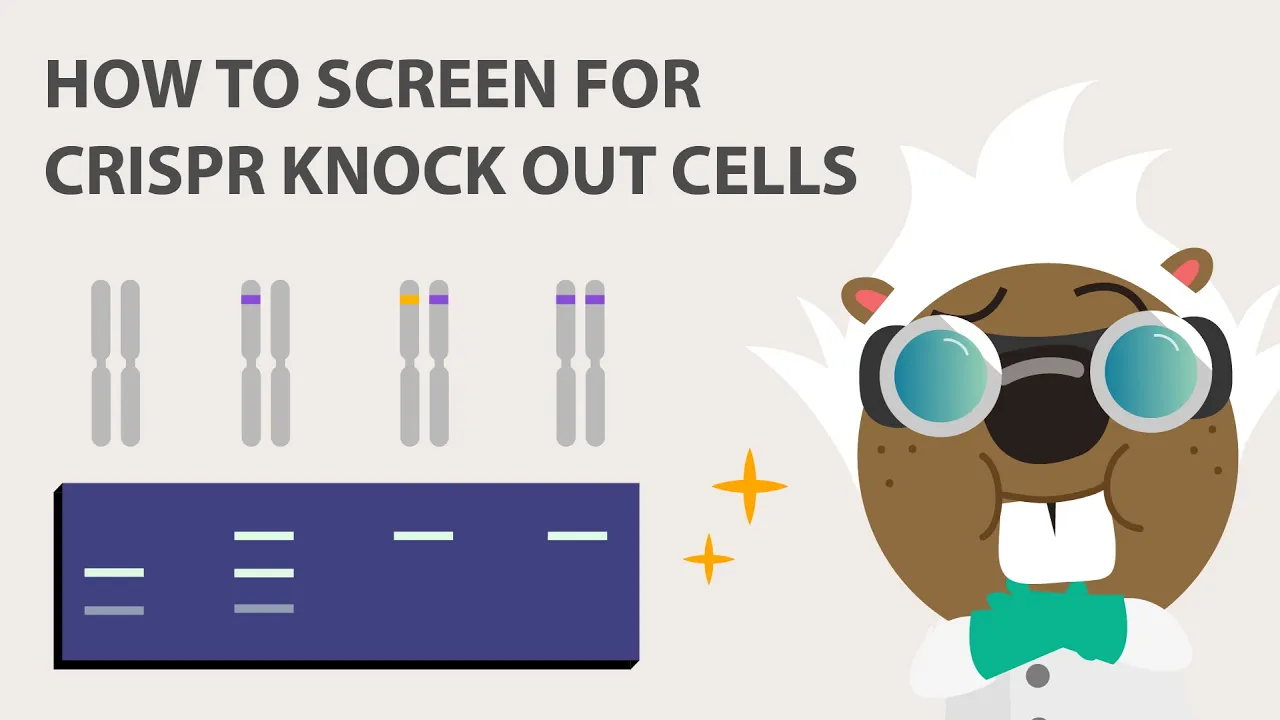
This video explains how to construct Cas9/gRNA expression plasmids using oligo annealing cloning for gene knockout experiments. The process involves digesting a pre-designed plasmid with BbsI restriction enzyme to create sticky ends, designing synthetic oligonucleotides with complementary sticky ends and the desired 20-base gRNA sequence (excluding the PAM), annealing the oligos to form a duplex, ligating the duplex into the digested plasmid backbone using T4 DNA ligase, and transforming the resulting plasmid into E. coli for amplification. The technique allows researchers to express Cas9 and guide RNAs simultaneously in cells, enabling targeted gene disruption through double-strand breaks that lead to insertion/deletion mutations and potential frameshifts that disrupt protein function.
Cas9 Plasmid Construction via Oligo Annealing Cloning – Step-by-Step Guide
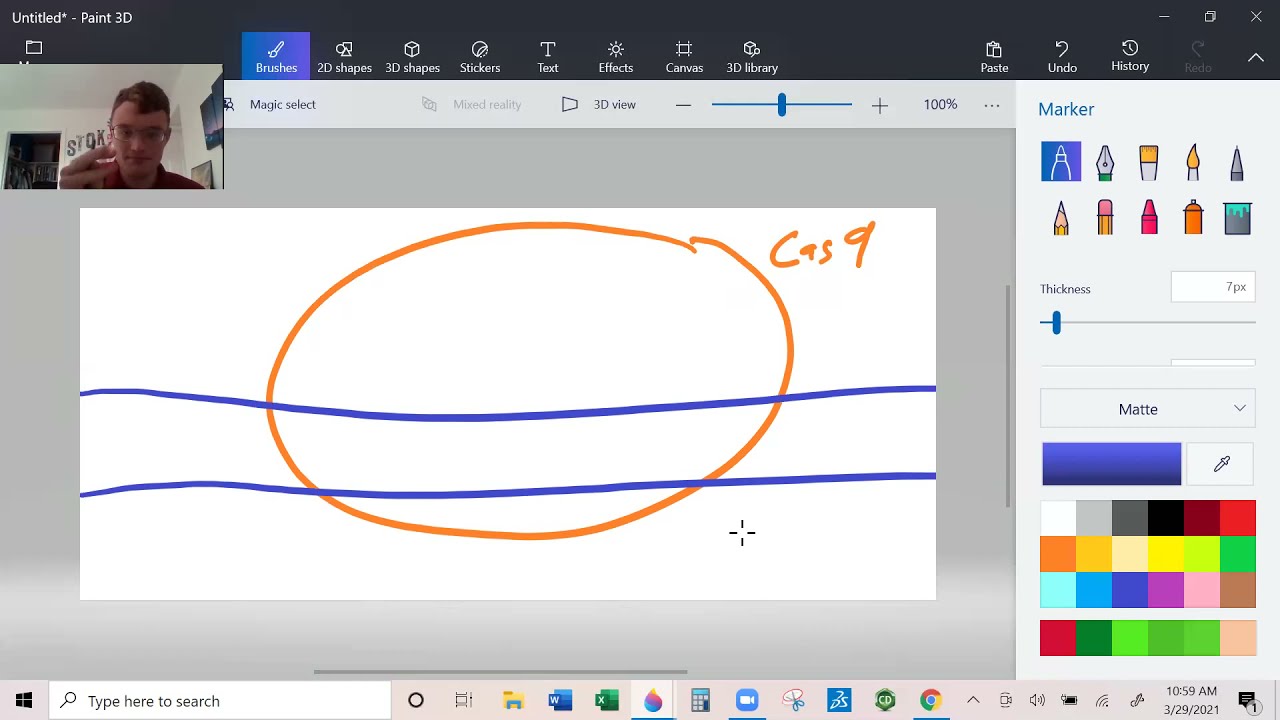
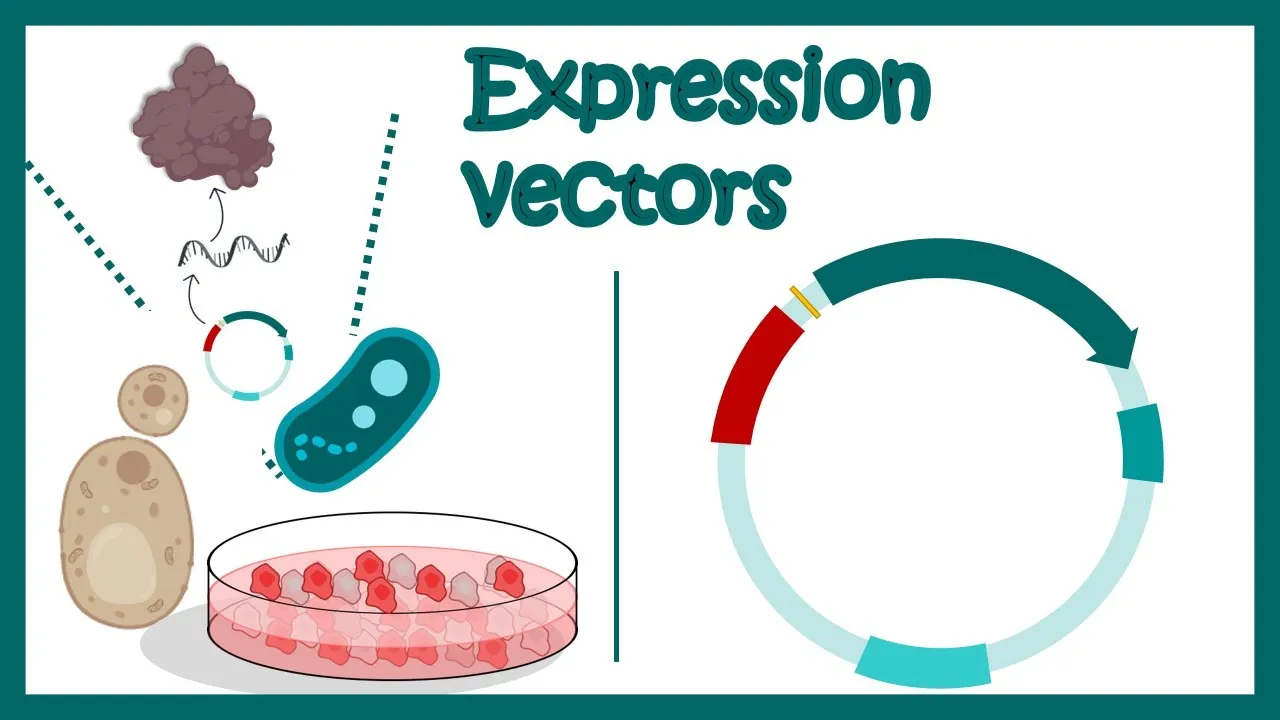
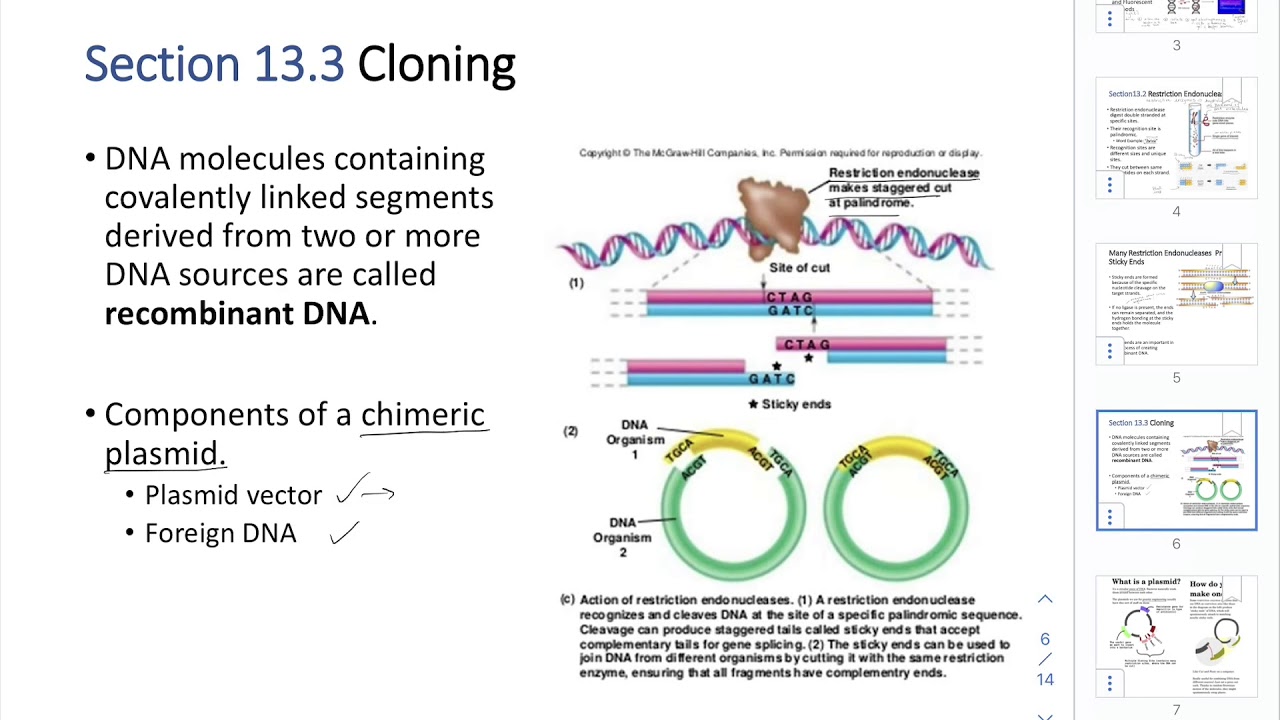
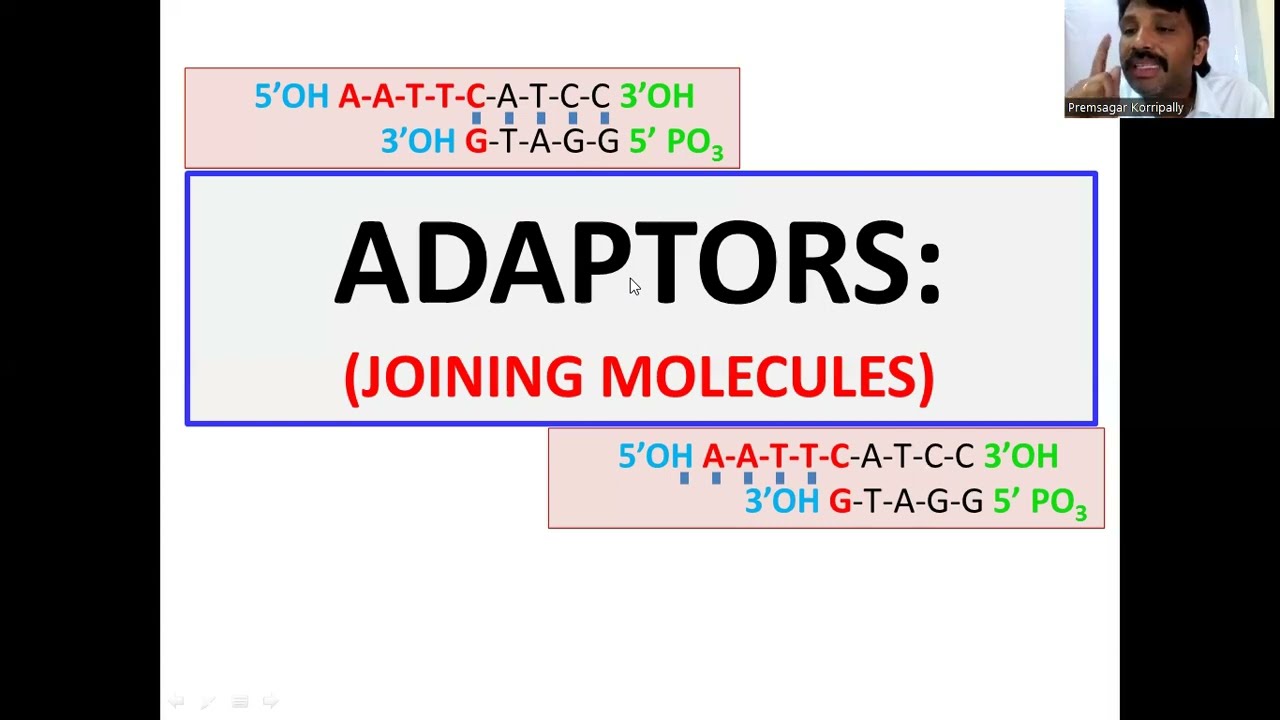
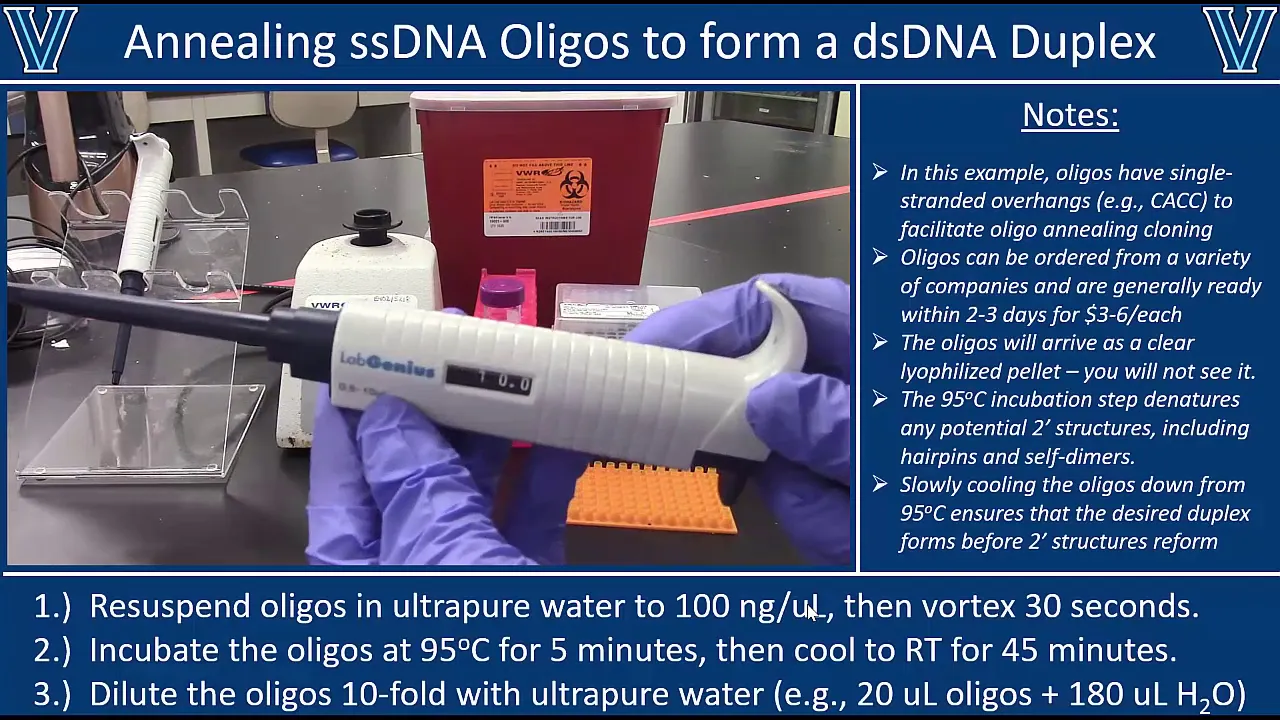
Added:hello everyone in this video I'm gonna show you how to knock out a gene with cast 9 not just any cast 9 in this approach we're going to express the cast 9 and its grna from a plasmid that we've made with a special approach called oligo annealing cloning so anyways let's start at the beginning and talk about what cast 9 is and what it can do well cast 9 as an enzyme comes from prokaryotic cells that can make double-stranded cuts in DNA now there's a lot of enzymes that can do that but what makes cast and I'm special is that it associates with a special type of RNA to direct that kind of cut so for example cast 9 binds to this RNA molecule over here that has two parts a guide RNA known as G RNA and a scaffold RNA known as SC RNA now a scaffold simply contains a few hair pins that specifically bind to cast 9 so cast 9 doesn't bind just any RNA it has to bind an RNA that has this scaffold in it VESA these hair pins over here shown in purple then cast 9 uses the attached to hide RNA to seek out similar or complimentary DNA sequences and anytime it finds a complementary DNA sequence it will cut it but there's a little bit more nuance to that so let's talk about how exactly you could use cast 9 to for example cut a gene a target gene and then mutate that gene to study its function so anyways what we would need for that kind of experiment would be the cast 9 protein and the grna scaffold RNA complex we would also need to know the sequence of our gene that's very important because cast 9 actually can't cut just anywhere in the genome it can only cut on the 5 prime end of Pam sequence now Pam stands for proto spacer adjacent motif that's a mouthful but all you need to know there is that the Pam sequence forecast 9 is ngg so what I need to do first when I'm trying to cut this gene down here is I need to look for in GG sequences so for example here's one right here I have an N GG in this case the n is T but it could be anything ATC or G so we have T GG that's my Pam and cast 9 can cut downstream are sorry upstream of that Pam there if I want cast 9 to cut in this location then I started the Pam and I copied 20 bases on the 5 prime end of that Pam and that will be the sequence of my guide RNA here you can see here the Pam TGG and then I've copied G C c/g G so on and so forth down to the 5 prime end of that G RNA so now I have a guide RNA that will direct cast 9 to cut that specific location so you can see there I've got my requirement and that there's a Pam right here on the 3 prime end of this G RNA and I've got a hundred percent complementarity and my guide RNA right there now if that's true then cast name will bind to that site and it will cut about three bases away from where that Pam was so the Pam was here it's going to cut 3 bases upstream 1 2 3 and between this G and C now witness happens the cell is going to scramble to repair that cut because damage like that and the genome can lead to a lot of different problems and usually the cell will repair that cut without any trouble without any mutations whatsoever but the thing is if the cell repairs that cut and it's the exact same sequence as before you can guess cast 9 is just going to come right back in and it's going to cut that sequence again so you have this and forth between cast nine and the repair enzymes in the cell where cast nine cuts repair enzyme seal the cut back forth back and forth back and forth but eventually the cell will make a mistake it will either delete one of the bases there at the cut site or it might even insert a new base there as well and so we call that type of mutation in ndele for insertion or deletion so let's just say in this case that the cell mistakenly puts in a G at that cut site and the corresponding base across from that would be a C now this minor minor change will have a dramatic impact on the expression of that gene because what we've done here so we've inserted an additional base into that gene sequence so all of the codons from this point forward will be shifted off by one and so we call that a frameshift mutation and what that means is that we no longer have the same amino acids here on the second half of this gene so we're most likely going to get a peptide still from this gene but it will be a peptide that will not fold properly or will lose its function and the earlier in the gene that you make this type of mutation the more pronounced effect it will have on the structure and function of that gene so there you go in a nutshell that's how we make mutations and genes with cast night all we have to do is look at the gene we're trying to mutate find a Pam and then down our upstream from that Pam we copy 20 bases of sequence and we put that into the guide RNA and as long as we give the cell the guide RNA scaffold RNA and cast night enzyme then cast 9 will cut the corresponding sequence in the genome that cut will eventually be mistakenly repaired we'll get an insertion or deletion that will mutate that gene and probably lead to its loss of function all right so that's how Castine works now what do we need to actually set up one of these experiments well there's actually two different ways you can go about this first of all you can get the Cassadine protein itself you can actually buy it online you can also get synthetic guide RNA scaffold RNA molecules as well and then you can just put those directly into the cell with some with a method something like electroporation so there you're gonna shock the cells and that brief shock will actually create pores through which you can put your protein and the RNA and that method is very very effective very efficient but it's also pretty expensive because what you're doing here is you're paying a company for example to make that protein for you then ship it you're also paying them to make the synthetic RNA which is relatively expensive so there you have a very efficient method but it's also pretty expensive overall so what is another way you can do this well you can also transfer a plasmid into the cell that expresses the Cassadine protein and the guide RNA so for example you see down here in the bottom left we have a caste 9g RNA expression plasmid it's got two expression cassettes now what I mean by that is that each cassette starts with a promoter so this is a place where RNA polymerase is going to bind and then it's going to start transcribing in this case the u6 promoter RNA polymerase binds here and then it transcribes the guide RNA in the scaffold RNA which is shown here in purple and then on the bottom half here we have a different promoter CAG that binds RNA polymerase 2 and then it drives expression of caste 9 so here's our protein that we need but at the same time it also expresses in the same transcript this T 2 a linker and then a fluorescent marker protein something like GFP or M cherry now the reason we put the two a linker in the GFP here for example is that the two a linker allows me to express to proteins simultaneously such that every time I expressed caste 9 I will also express this second protein over here so if I look at my cells and I see that they are fluorescing green from the green fluorescent protein the GFP then I know that those cells also are expressing caste 9 and it's reasonable to assume that they're also expressing the guide RNA as well so the to a linker and the fluorescent protein here give you a visual indication or confirmation that you do have successful transformation of a given cell that they are expressing this protein and this guide RNA so anyways there we go if we can make this plasmid we don't have to pay for the recombinant protein or the synthetic RNA instead all we have to do is make enough of this DNA which is fairly inexpensive process to put into a cell and once our plasmid here plasma just being a circular molecule DNA by the way once that plasmid is in the nucleus of the cell then it will be transcribed and translated so we'll get the caste 9 protein will get the guide RNA as well with the scaffold attached to it and once that's expressed inside the cell it will migrate back into the nucleus to where it will cut the gene that we're trying to mutate so there you go expressing caste 9 via plasma this is a very easy very inexpensive approach just takes a little bit of time you have to actually clone your guide RNA sequence into the plasma and that's what we're gonna talk about today now I should mention one more thing one very important distinction which is that when we put a plasmid into the cell to express caste 9 we're going to get caste 9 expression for multiple days probably 2 to 7 days we'll see caste 9 expressing you can very easily see this because GFP is expressing at the same time so the cells will be fluorescent for about seven days now during that time we would hope that caste 9 only cuts sequences for which it is perfectly complimentary but more time you give it inside the cell it does actually become prone to making off target cuts as well so for example after a few days maybe cast nine cuts another gene that has a similar sequence to the G RNA but it only matches 19 under the 20 bases that's something that definitely can't happen over the course of a few days so we're taking that risk by expressing the cast 9 G RNA complex for an extended period of time up here with electroporation if I put a protein and a synthetic RNA into the cell that's a dead end product it's going to go into the cell it's going to be active for depending on the cell a few minutes to maybe up to an hour or so and then it's going to get degraded and that'll be the end of it that window of time is enough time for the cast 9 to bed at the genome but it's also a short enough period of time to where we prevent it from having the opportunity to mutate other genes so just really quick distinction there the method we're going to be using which is to use an expression plasmid is very inexpensive and it's real it relatively easy but you might see mutations pop up in other sites in the genome and you'll have to check for those later another thing that we're going to do and our specific approach is we're not just going to deliver one plasmid that has one G RNA instead we're going to deliver two separate plasmids that deliver two different g rnas that target different portions of our target gene so for example I might design one guide RNA that tells cast 9 to cut in the first exon of the gene and then a second guide RNA that cuts in the third exon here now why would I do that it sounds like more work well it is more work but it also increases our chances of getting a mutation in this gene that actually disrupts its function so for example if I only use one guide RNA I might very well get cast 9 to cut that gene and that cut might lead to a mutation but I would like to point out that some codons if you just swap out a specific base so let's say this codon right here tsetse if I mutate that to TCT but with of those codons and code for sehri so there I have a mutation but the protein is still functional so given that that is something that could happen by by using two G RNAs I'm gonna introduce two mutations and it's more likely that one of those spots at least one of those spots will introduce a mutation that disrupts the protein itself okay so we're we're doubling down here by making two cuts we are twice as likely to introduce a mutation that disrupts our protein so just an example somehow comes from this could be maybe I only get a mutation site one maybe I only get a mutation in situ in a better case scenario maybe I get mutations at both sites or in the best case scenario maybe both of these guides direct cast 9 to cut at both of those sites simultaneously and I remove an entire chunk of sequence from the DNA from the gene now that would be very disruptive to the gene and so that is highly highly desirable and we're really hoping that will happen here so you can see we've got a lot of opportunities here for cast 9 to make some kind of deleterious mutation in the gene by using a pair of G RNAs so that's why we do it this way ok so I want to introduce cast 9 and two different G RNAs into the cell how am I going to do that well first of all I'm going to use 2 plasmids one of them one of these plasmids is going to Express cast 9 attached to GFP the other one is going to Express cast 9 attached to M cherry now M cherries arrest red fluorescent protein the other one being green fluorescent so if I get a cell that flushes both red and green I know that I've delivered both plasmids and I have both G RNAs okay so we're going to make two different plasmids each of them gets a different G RNA and a different fluorescent marker but we already have the plasmids that have the GFP nm cherry sequence in them all we need to do is swap out the sequence that's up here so right now there's actually no G RNA sequence in these plasmids instead there's visa BBS one sites we can use these BBS one sites to insert the G RNA because BBS one is a restriction enzyme if I add BBS one to a sample of this DNA what will happen is it will cut the DNA in such a way that it leaves these staggered ends we call these sticky ends actually because the BBS one is cut through one one backbone of the DNA and the other backbone at different locations so this molecule is mostly double-stranded but then the BBS one has left these single-stranded ends here and these bases that are orphaned here they would like to bind to something else they would like to form hydrogen bonds with let's say in this case the G AGG would love to bind to a CTC C so that gives us an opportunity to introduce our guide RNA at that location but anyways I'm getting ahead of myself what the BBS one is done here is it's cut the plasmid DNA okay and it's cut it at the location where we would like to introduce the guide RNA now I'm glossing over a few important steps here we do need to take that digest reaction and run it on a gel and what we would hope to see there's we would hope to confirm that we've cut the plasmid DNA usually uncut plasmid DNA appears as two bands on a gel and we're going to see one band if the BBS one has cut all of the DNA so we'd like to see that and then we take that band and extract it out of there that gives us a pure solution of just this digested plasmid backbone once we have that then we can start to design our grna now the way we get the guide RNA sequence into this plasmid is we order synthetic oligonucleotides now synthetic DNA oligonucleotides are much cheaper than synthetic RNA I can get a synthetic oligonucleotide for about five five dollars not very expensive at all anyways the way I'm going to design these illegals is on the five prime end I'm going to put a sticky in sequence so remember we have this G AGG that's generated from BBS one two pair with that I put C AC C on this Alico so you can see C ACC will bind to G AGG then after that see ACC I put my guide RNA sequence so this is the guide that I used as the example in the previous slide all 20 bases of it right there but notice one very important thing the pam that flanks that guide RNA sequence is not here you do not want to put the pam sequence into the guide RNA none of this will work if you do that so there we go I've got a sense illega nucleotide here but that's just one strand of DNA I also need the opposing strand of DNA as well so I need another oligo that one's gonna start with the other sticky end so here to bind GTT I put CAA and then I put the reverse complement of this G RNA sequence so you can see this one starts ATT G and this one starts taa C so those bases will bind to one another if I mix these two illegal nucleotides in solution they will form a duplex they'll bind one another will have hydrogen bonding there but notice what happens here is that I've designed easily goes to where the sticky ends are left as single strands they have nothing to bind to such that if I take this duplex that I've formed and I mix it with this digested plasmid backbone the CACC will find the G IgG the CAA will find the GTT they will hydrogen bond to form the plasmid but those hydrogen bonds aren't permanent so I also add this t4 DNA ligase enzyme with a little bit of ATP to give that reactor give that enzyme some energy and what that'll do is it will seal the phosphodiester backbone around the the oligo duplex and in the digestive plasmid DNA there so that will give me a covalent bond now that seals permanently my guide RNA sequence into the plasmid and that's all there is to it well there is one more step after we've done this ligation reaction we transform the plasmid into E coli and what that allows us to do is make a lot more of this new plasma pretty much and that's that's all there is to it all right so there you go that's what we need to do to prepare for our Cassadine knockout experiment we need to take this plasmid right here digest it or pretty much cut it with bbs one that will give us these sticky ends right here then we design guide RNA Ally goes to have sticky ends as well I kneel those into a duplex mix those with the plasmid add a little t4 DNA ligase incubate that in the refrigerator overnight and the two parts seal together then we put them into bacteria and the bacteria makes a lot of the plasmid for us so there you go that's everything from start to finish how cast nine works and how we can express it in a cell with its guard guide RNA using a plasmid that was made with the Lego kneeling cloning
Up Next

Crafting Effective LinkedIn Headlines for Lead Generation Success
@RyanCaswell
111 views•2022-02-28

Triumph of Orthodoxy Icon: Byzantine Art & History Explained
@BenCallan
2.1K views•2024-08-06

FastAPI vs Flask vs Django: Choosing the Right Python Web Framework
@TechWithTim
302.5K views•2024-05-26

Game of Thrones Opening Credits: A Cinematic Analysis
@gameofthrones
46.3M views•2011-04-18
Related Study Plans & Knowledge Roadmaps
Structured learning paths in General & Interdisciplinary Studies