










![[Full Webinar] Cas-CLOVER: The Clean Alternative to CRISPR-Cas9](https://i.ytimg.com/vi_webp/krdEFGwJSEY/maxresdefault.webp)




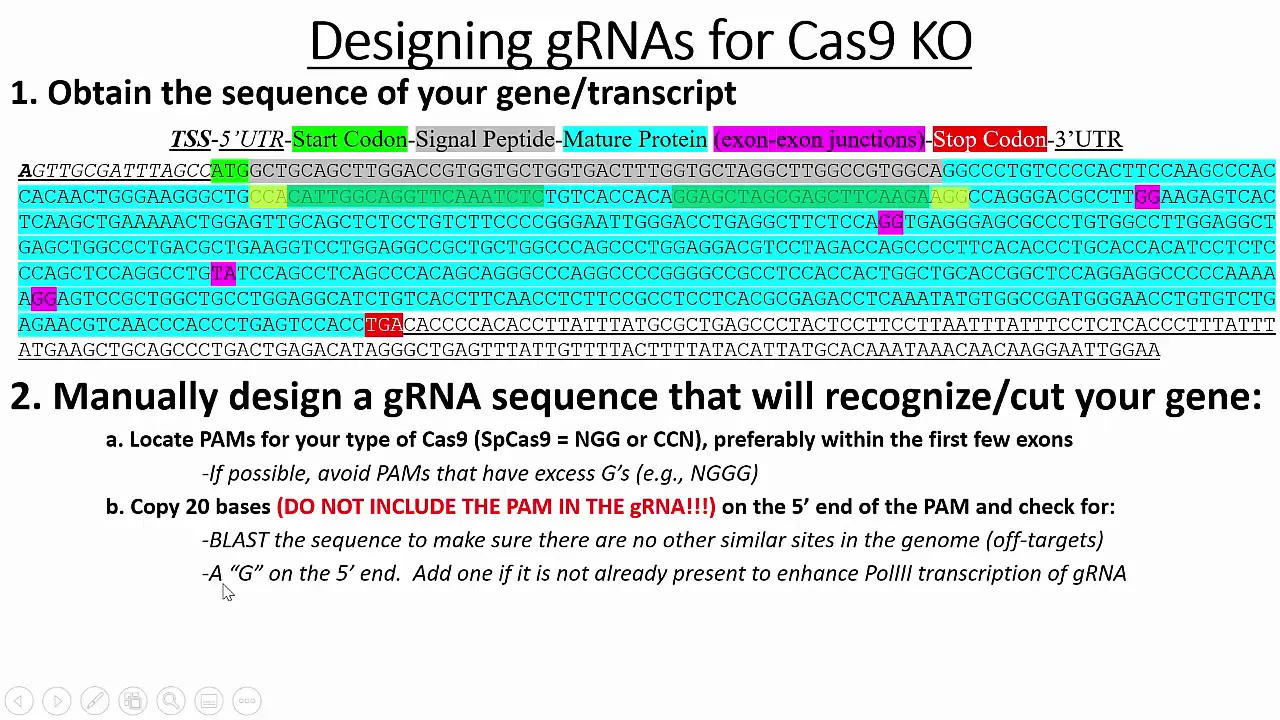



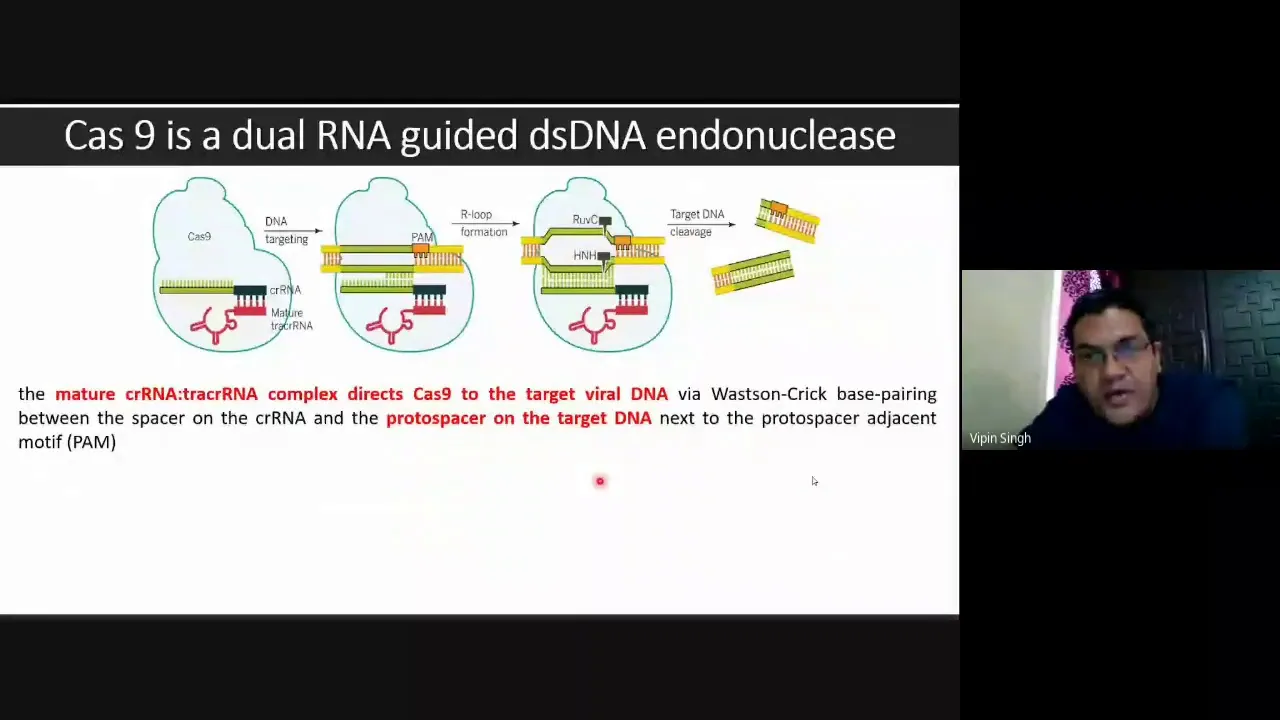


To design high-specificity CRISPR-Cas9 guide RNAs that minimize off-target effects, researchers should follow a systematic approach: first analyze the target gene sequence to identify accurate genomic regions, then identify canonical 20-nucleotide guide sequences with NGG PAM motifs; next perform off-target analysis by blasting the guide sequence against the whole genome and evaluating risk based on PAM presence, overall sequence similarity, and seed region similarity (the 12 nucleotides adjacent to the PAM); finally select guide RNA locations based on research goals such as targeting early exons for efficient knockout or specific domains for functional studies. Additional strategies to enhance specificity include using truncated 17-18 base pair guide RNAs instead of the standard 20-nucleotide length, employing modified Cas9 systems like Cas9 nickase (requiring two guides with appropriate offset distances) or dimeric CRISPR-fokI systems, and utilizing online design tools that provide off-target risk scores to help researchers select guides with the lowest potential for unintended genomic modifications.
Designing High-Specificity CRISPR/Cas9 gRNAs: Principles and Tools
Added:Thank you for joining us for this webinar on design high specificity quer cast guide is principles and tools. My name is Heidi Hang and I'm the service marketing manager for molecular biology services at Janscript. Prior to joining Janscript, I completed my PhD in molecular biology at Vanderbilt University working on DNA replication and the DNA a repel using Simeon virus 40 as a model system.
As a basic research scientist, I'm always very excited to see discoveries from basic research get transformed into innovative applications in biotechnology and medicine. Chris is such a wonderful example. Crisper cast systems are first discovered in bacteria as an adaptive immune defense mechanum that you uh utilizes short onlay to guide degradation of viral DNA. Recent development of quer cast 9 has empowered it as the most wonderful genome editing tool for diverse organisms.
In today's webinar I will first give you an introduction of cris 9. I will start with its function as part of the bacterial adaptive adaptive immune system and then review how scientists engineer the cast 9 system and exploited the host DNA repair pathways to achieve targeted genome editing. I will use malleian system as the example throughout this webinar. In the second part, I will walk you through steps involved in guide on design and provide detailed guidelines at each step to get high specificity guide on Llays that avoid offtarget effects. I will also introduce quiz services and resources offered at Jens to help you achieve your research goals. If you have any questions during this presentation, you can submit them by typing them in the question fields that should be showing on your screen right now. I will do my best to answer some questions at the end of the presentation.
This webinar, including the Q&A session, will be archived on our website at www.jenscape.com/webinars.html.
Also, you will receive a brief survey immediately after this webinar is over.
I ask that you please consider filling it out as your feedback is an invaluable resource for us to improve our services for you.
So, what is crisper? Crisper stands for clustered regularly interpaced short palenomic repeats and the part of the crisper system is cast 9. CAS is an acronym for crisper associated system which is an unguided doublestranded DNA binding protein with nucleus activity.
While type cast 9 is capable of generating a doublestranded cut that results in two blunt ends on the target DNA. As I mentioned in the beginning, crisper was first discovered as part of an adaptive immune system in bacteria.
The type two crisper system from strapto caucus pio genes is the one that gets transformed into genome editing applications in various organisms.
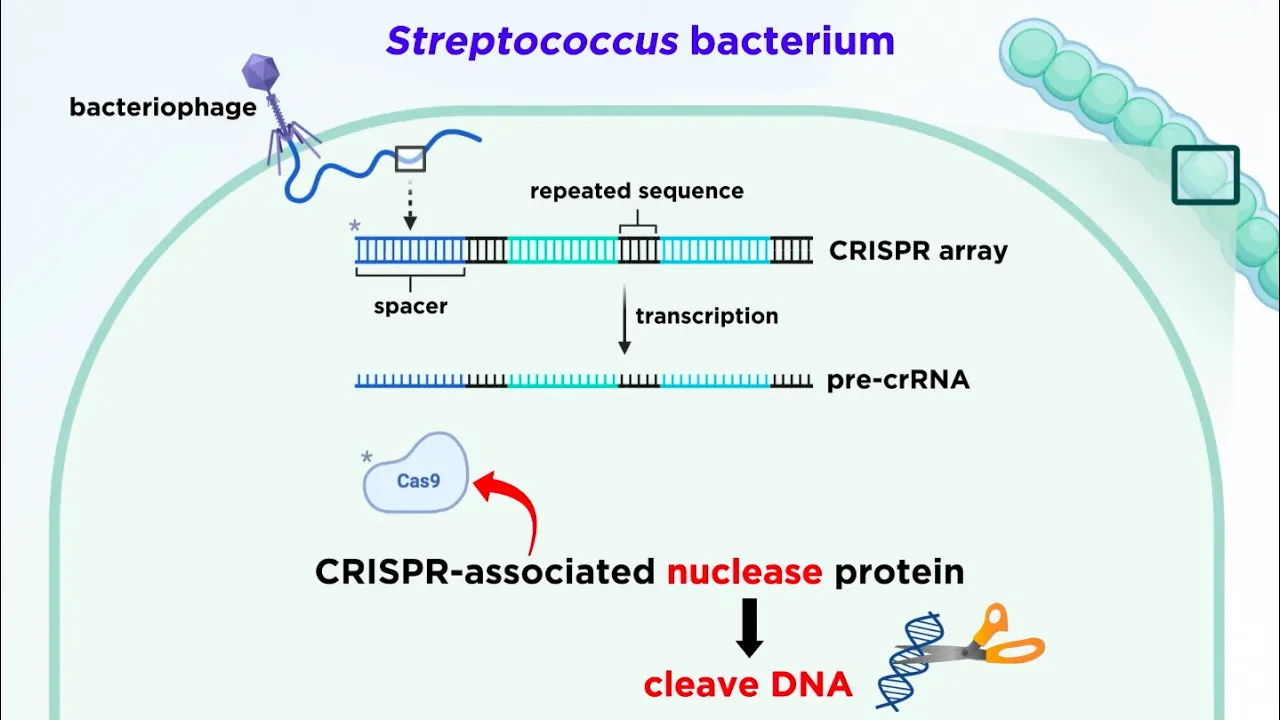
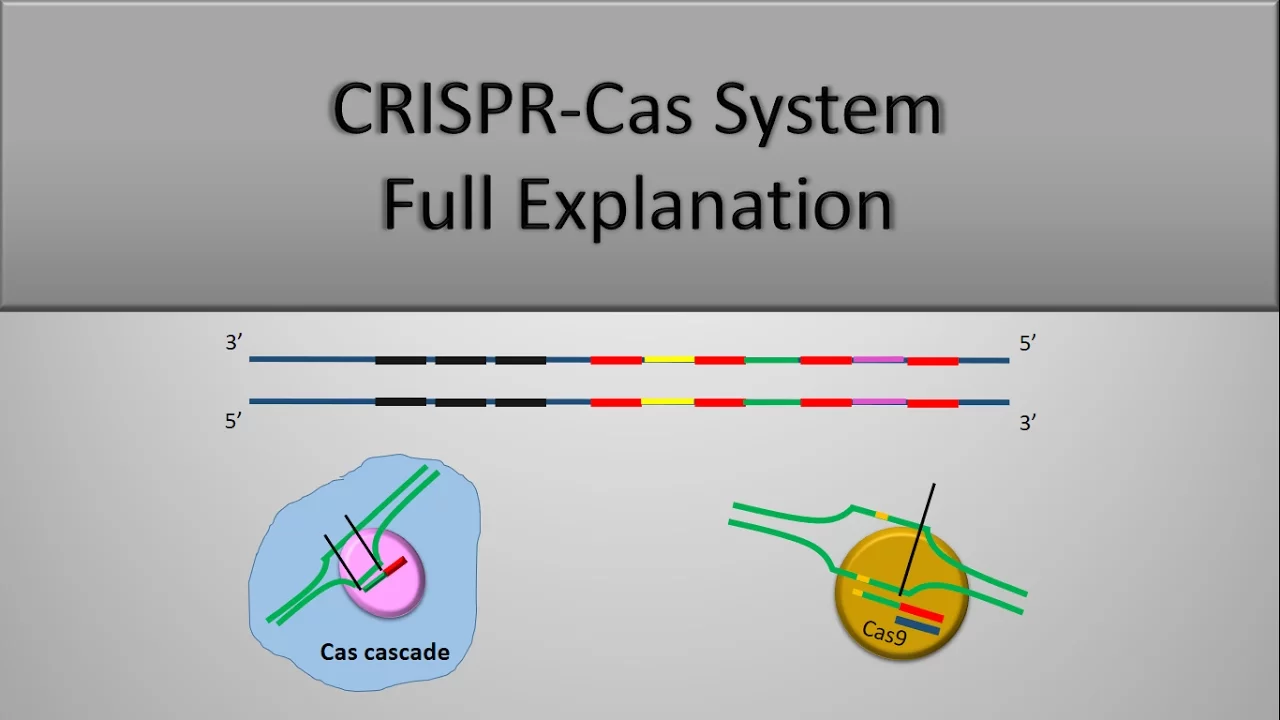
The type two crisper locus contains the coding region for the transact activating only the cast complex proteins and a region that contains spacers segregated by direct repeats.
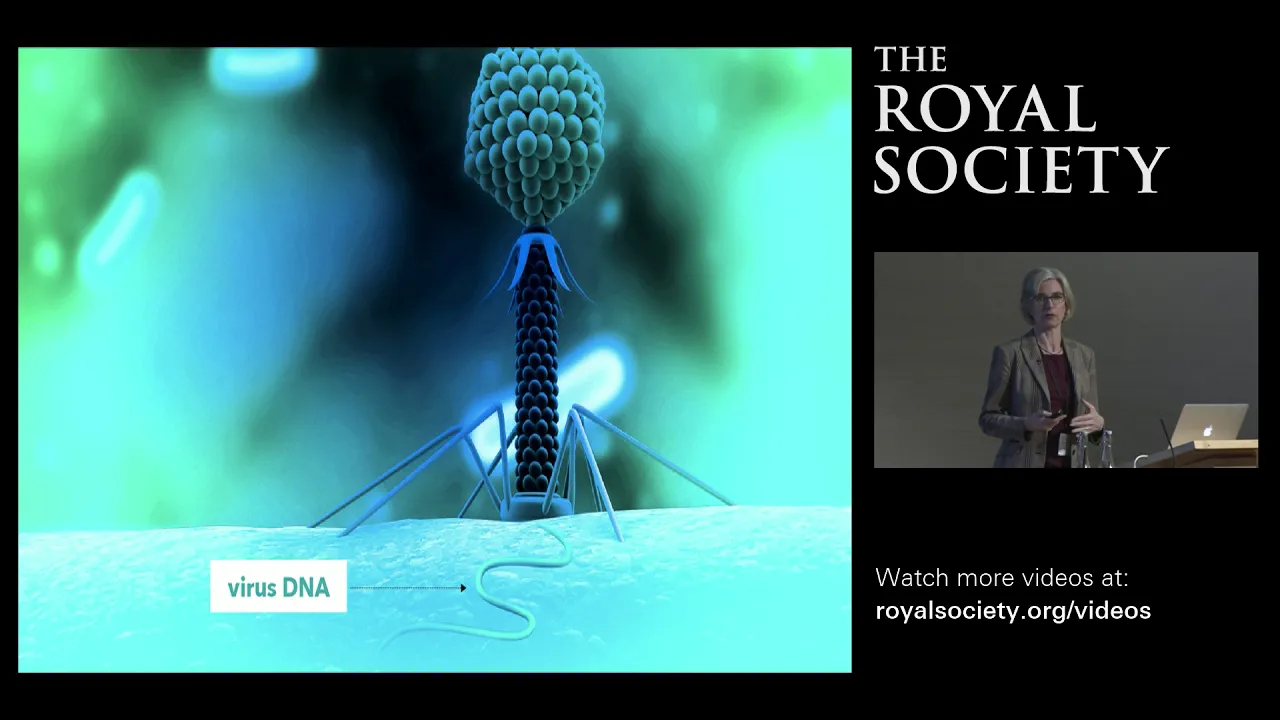
When viral DNA enters the bacteria, the cast complex recognize the viral DNA and cleaves it into small fragments which are then inserted into the crisper locus as spaces between repeat sequences.
Spacers in this sense are stored as molecular signature of viral DNA.
Once the virna has been inserted into the crisper locus as spacers, it now can be transcribed together with the repeats as the pre crisper RNA. Then transact activating crisper ANA hybridize to the repeat regions of the prequris forming an duplex that is then processed by indogenous an 3 to generate the mature crisper on transactivating crisper on and cast complex.
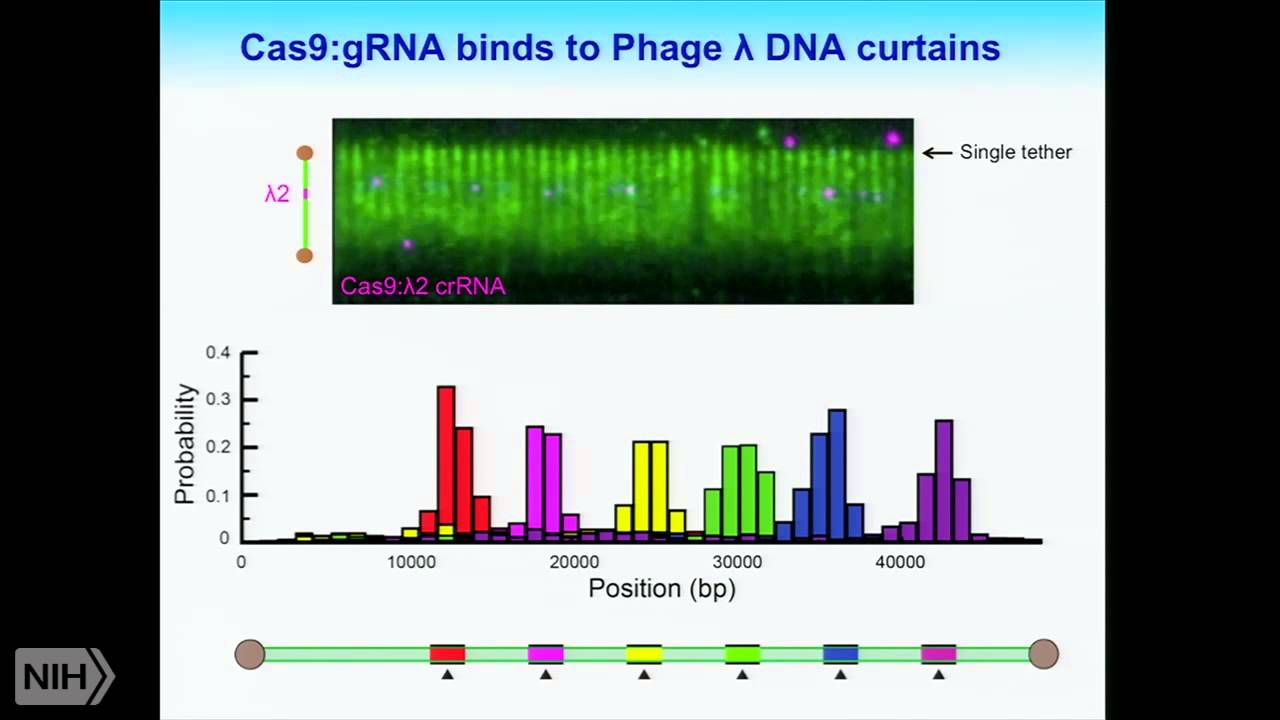
If the bacteria are exposed to the same virus again, the mature crisper cast complex will recognize the viral DNA based on RNA DNA sequence complimentarity and cleave the viral DNA by a double stranded cut by cast 9.
The observation that crisper cast 9 system is able to make double stranded break on target DNA sequence guided by simple RNA DNA sequence complimentarity inspired scientist to engineer this system to perform genome editing in ukarots. In 2013, two science papers published simultaneously from George Church and the fun lab demonstrate the ability of crisper cast 9 system to perform genome editing in ukarotic cells.
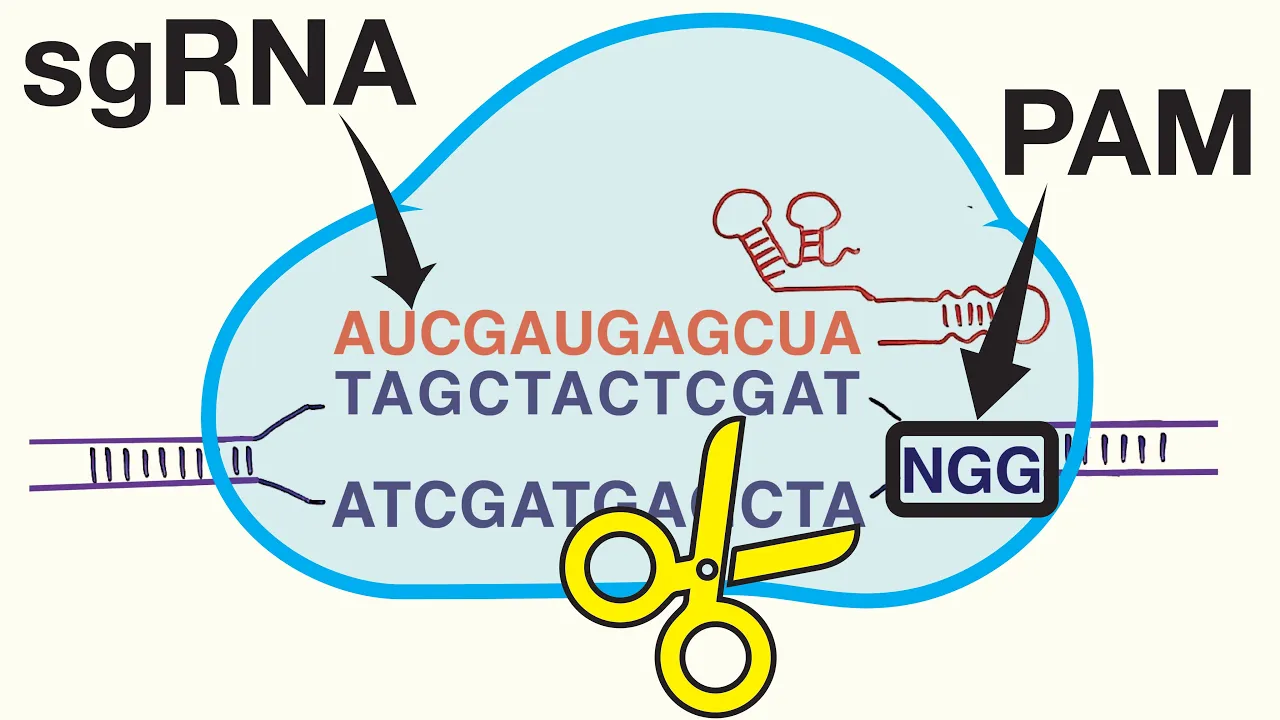
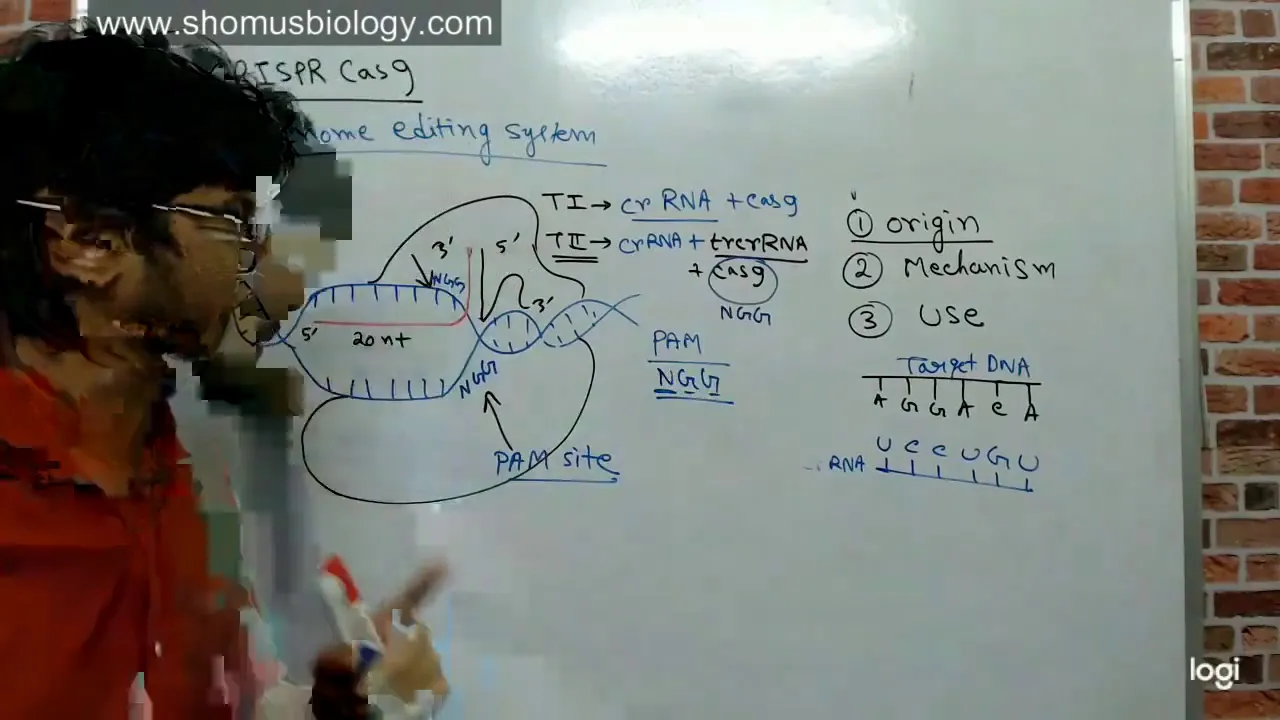
The essential components of the engineered crisper cast system include the castine nucleus and the guide. The guide consists of the guide scaffold which is of similar function as the transactivating crisper RNA and a 20 nucleotide sequence which mimics the function of the spacer.
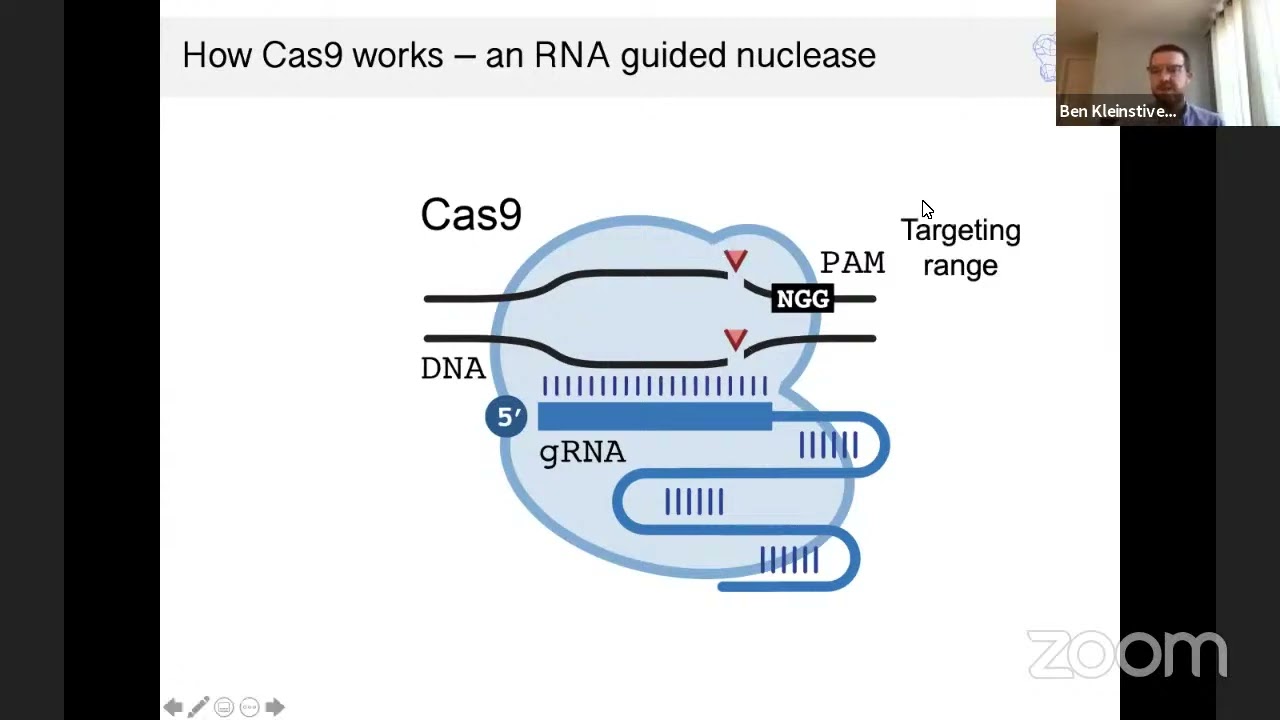
Crisper cast complex recognize the target site based on sequence complimentarity with the 20 nucleotide target sequence in the guide RNA. The cast 9 nucleus will make a double stranded cut only if a protospacer adjacent motif or pam sequence ng is present uh presented at three prime of the target site. The double stranded cut occurs three base pair upstream of the pam site on the target gene.
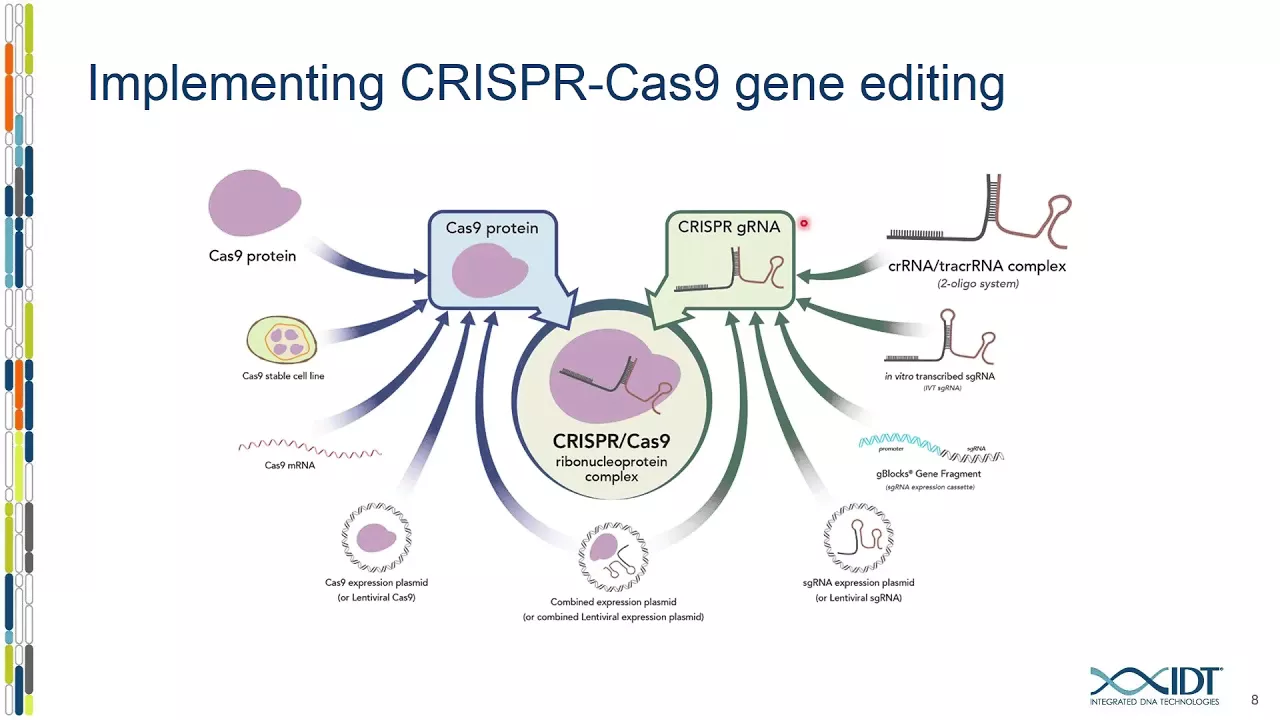
For adapting on crisper cast system in ukarotic cells we can use either an all-in-one plasmid or two plasmid platform. Here shows the two plasmid strategy for malian cells. In this platform we have one plasmate encoding the human codon optimized cast 9 with the with the SV14 nuclear localization signal driven by the CMV promoter.
We have another plasmate encoding the guide on which contains the target size and the guide on scaffold driven by the U6 promoter.
In the all-in-one plasmid platform, both the cast and guide are constructed in the same vector driven by different promoters.
Once cast nucleus has generated a targeted doublestranded break on the gene of interest, we can then rely on hosted DNA repair machinery to achieve targeted genome editing.
There are two pathways for DNA repair.
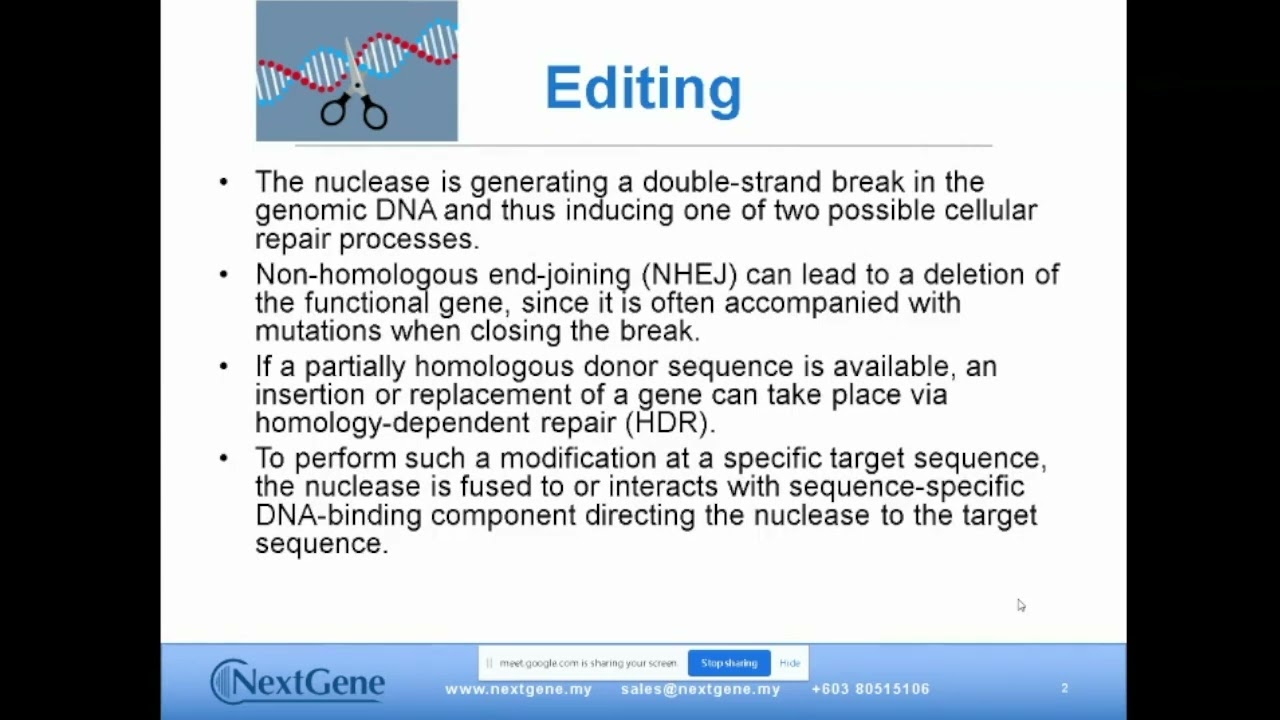
On the left is the pathway for non-homologous and joining or NHJ which is an error pathway. When DNA is repaired under this pathway, the two ends simply rejoin together. Random insertions or deletions also known as indels are introduced at the site of repel eventually leading to frame shift mutations and gene knockout.
On the right side is the pathway for homology directed repel or homologous recombination HR.
When DNA is repelled under this pathway, we can utilize an exogenous donor template to achieve knocking. The donor template can be either a single strand DNA or double strand DNA that has homologous arms to the regions around the double stranded brick.
Besides, the donor template should also contain desired elements we want to introduce into the target gene. uh like a single point mutation, a bunch of point mutations or even a piece of insert cells utilizes the information on the donor template to repel the double stranded break incorporating changes on the exogenous donor template into the indogenous copy of the target gene and leading to precise alteration correction and the gene knocking.
Crisper cast has many potential applications in research and therapeutics because of its uh simplicity. The hottest application is of course genome editing. Well, quer cast 9 has the advantage of being a very simple to implement system compared to other genome editing methods such as zincfing nucleus or talons.
For genome editing, we can use the viotype cast 9 to create double stranded cuts deletions between two cuts or we can use the cast 9 case which is a mutant version of cast 9 to create single nick or double nicks.
Targeted genome editing can then be achieved by exploiting DNA repair pathways as described in last slide.
There are also other interesting applications for crisper cast 9 by utilizing the nucleus now mutant of cast 9 which allows cast 9 to become a vehicle to brain proteins or nucleic acid to target DNA regions. These fusion modules can be used to regulate, reorganize and visualize gene making crisper cast 9 an even more versatile technology.
Though there is a lot of potential for crisper cast 9 being a powerful genome editing tool, there are limitations.
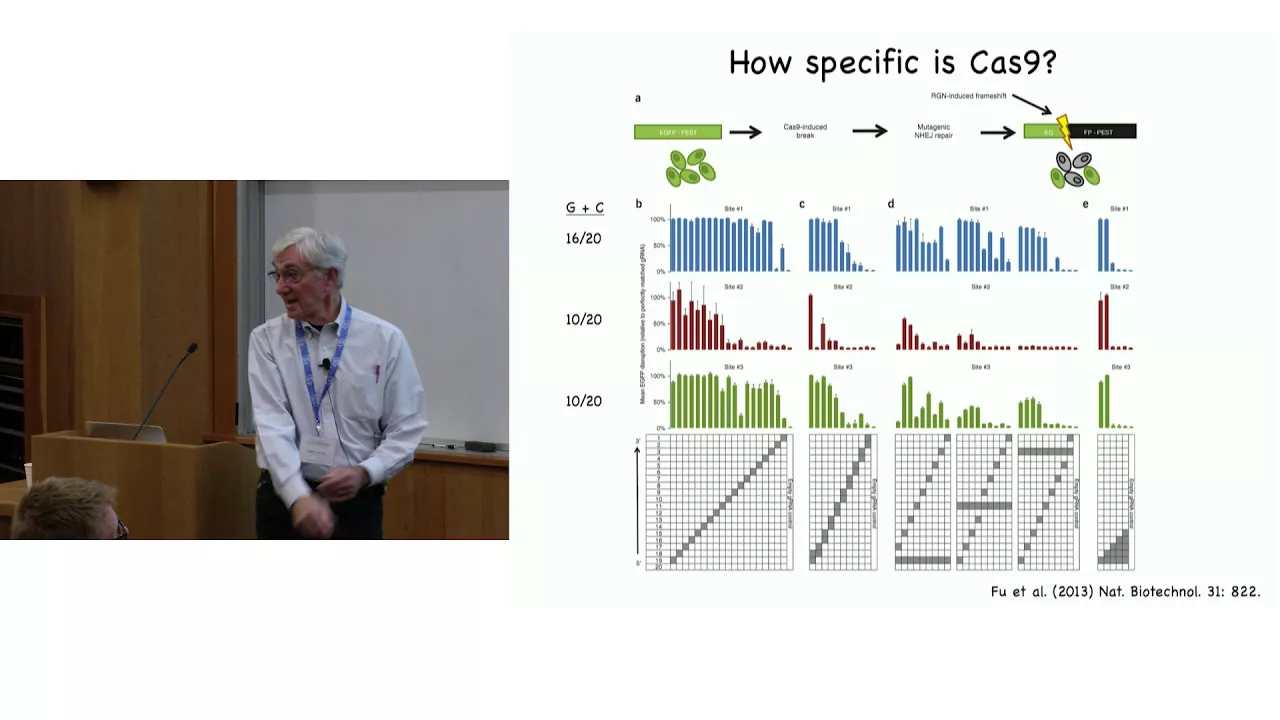
Offt target is a major concern. The canonical guide on a target sequence is 20 nucleotide long with a ng pam sequence adjacent at it three prime cast 9 can still have nucleus activity even with one to three mismatches between the guide and the target sides.
This can potentially lead to offtarget nucleus activity. And since cast 9 can induce doublestranded breaks any offtarget nucleus activity can cause mutations in those genes and may even cause ankcogenasis.
In the next session, I will walk you through the steps of guide on a design and recommend actions at each step to help you design high specificity guide based on what we've learned about the crisper cast system.
Our goal is to find those accurate guidon target sites with lowest of target potential and the optimum target location.
To give you an overall picture here, I'm showing an overview of all steps involved in gang design starting from target gene analysis all the way down to gang delivery. So next, let's walk through each step in great details.
Step one, target gene analysis.
The major purpose of this step is to make sure you get the accurate target gene sequence of your interest. There are multiple ways to get the target gene sequence. You can use the target gene sequence information in NCBI database or if you want to check the possibility of gene variance or if the sequence information is unknown for the species you work with. Genome sequencing of the target gene is always the best way and we always recommend our clients to sequence the target gene in the cells or strengths you work with before designing gon. This is particularly important for knocking experiments because you will need accurate sequence information to design homologous arms for your donor template.
Also gene structure needs to be analyzed to know locations of exxons or coding DNA sequence CDS and the inron. Such information is important for selecting optimum target location which I will cover in step four.
Step two, find guide canonical sequences based on the accurate target gene sequence identified in step one. We know that the canonical guide sequence is 20 nucleotide long with an NG PAM sequence adjacent to it three prime. In malian system we usually use the U6 promoter to drive the expression of gonlay and the G is the first nucleotide for U uh U6 promoter binding and recognition. So the consensus guide on sequ uh sequence becomes GN20 GG.
Uh one additional note uh on the PAM sequence. So the canonical PAM sequence is NG in crisis system. NAG is also considered to be a PAM but we always use NG for better targeting efficiency. NAG PAM sequence will be checked when evaluating offtarget effects.
After finding all canonical guide on a sequences in the target gene, the next step is to eliminate those guidonas with high offtarget potential and return the ones with low offtarget effects.
For each guidon, you will need to blast the GN 20 GG sequence against the whole genome to find the similar sequences. Of course, the higher similarity, the higher offtarget risk. But how can we carefully gdge the offtarget risk?
We know that 20 nucleotide plus ng pam sequence adjacent to three prime composed guide target site. In addition to that, according to a seed model, the 20 nucleotide guide target site can be divided into two parts. the tw uh the 12 nucleotides adjacent to the PAM sequence referred as the seed sequences which are most critical for binding and the cleavage by the cast 9 nucleus. So any sequences in the genome that shares high similarity with the seed sequences will have higher offtarget potential.
Uh based on all those findings we summarize three criteria for ging the offtarget risk. First existence uh for PAM sequences both N GG and N A at three prime. Second sequence similarity. The greater the number of matches the higher risk of offtarget bounding.
Third sequence similarity at three prime region increases offtarget risk.
So after this offtarget analysis we will probably have se uh several guidon left with low offt target risk.
The next step step four is then to choose the guide with the best locations to meet your research purpose. If your goal is to knock out a gym, we suggest the targeting early exones because knockout is achieved uh by exploiting the uh NHG repair pathway. If indels are introduced in early zones, you will have a higher chance to obtain reading frame shift mutants.
If you want to knock out the function of a specific protein domain guide on is targeting the specific domain will be selected for knocking purpose. Usually the target region is designated without many choices. Therefore we simply find guide on economical sequences within the targeting region. Most likely we don't have many guide on to compare. uh in this case we just choose the relative good ones based on offtarget analysis.
Both exxon and intron can be targeted.
Selection of axons for guide on targeting is mostly due to the design of donor template. If guide targets an axon we when we design the donor template the guide targeting sequence can be mutated silently without changing the encoded protein. However, if the intron is targeted, mutations may be introduced into targeted sequence to avoid mis cleavage of donor template by guidon.
So, usually we mutate the PAM sequence NG to NCG on donor template.
After this step, you will have a few good ANA candidates left. We recommend choosing at least two guides for each target team. Though the efficiency of crisper system is very high.
Now you have selected the best guidon that can potentially meet your research experiment uh research goals. The next step is to deliver the guidon into cells. Guidangas can be delivered to cells as a DNA plasmate as an or transgenically.
Delivery of an gang expression plasmate or an is very efficient and can be generated in very short time frame. The transgenic source of gang is of very high efficiency but it's very expensive and time consuming.
The most common way we use for malleian system is through guide on expression plasmate in which it contains a U6 promoter that drives the transcription of guide on the guide on targeting region. The guide onlay scaffold as well as a termination signal for guide on transcription termination. The guide on expression plasmid can be an independent one for guide on expression owning or can be an allin-one plasmade coex nucleus.
So far we have gone through all the steps involved in guidonate design. You understand that oftarget risk is a key issue to address when designing guides for crisis system. Several approaches have been discovered to enhance the targeting efficiency by modifying either the guidon or the cast 9 nucleus.
One study determined the effect of truncating the gon by targeting EGFP.
Researchers were quickly able to determine that gang a sequences between 17 and 20 uh base pals in length achieved the similar levels of ontarget gene editing.
At 16 basel there was very little uh indel activity.
Truncated gang ways that were 17 or 18 bales in length were used to target three different human genes. VEGFA, EMX1 and CLTA the 17 and 18 base pale guidon sequences improved specificity up to 10,000fold.
So the key takeaway for uh from this paper is that it is beneficial to keep the targeting sequence of the guidonate at 17 or 18 basis to reduce uh potential offtarget effects.
Another approach is to modify the cast 9 nucleus. Two modified cast nucleus systems have been developed to reduce offtarget effects. One system is referred as the cast 9 case system. In this system, the D10A cast 9 mutants allows for single strand nikim. Since cast 9 case only needs a single strand, two cast 9 guide on a complex would be needed to generate a double strateed break uh strand break. Therefore, two guide on a would needed to be designed and the guide on would require an offset which is the distance between the two guidon to generate a fivep prime overhand. Using this system, researchers were able to observe a 1,500fold increase in specificity compared to using a single guide on and wild type cast 9.
The other modified system is referred as the dimeic crisper guided folk one nucleus system. In this system, folk one nucleus which is used in the challenge genome editing system was fused to a catalytically inactive cast 9 mutant or that cast 9. Fuk one nucleus is introduced to increase specificity because it only has nucleus activity when is in the dmer form.
Similar as the cast 9 case system, two donas would be needed to allow two cast 9 focal one complex to bind the target DNA and drizze.
Using this system, researchers found out that it has up to 10,000fold less mutagenic activity compared to a single guide on and wild type cast 9.
To design guidonies for the cast 9 knee case or the folk one dead cast 9, you can adopt the uh similar principles we described for wild type cast 9 with attention to two special things. First, you need to design two guides to target each strand of the target gene respectively. And second, when design paired guidon, you need to consider the off uh offset which is the distance between the two guides.
Based on literature and our experience uh for the cast 9 case system, we suggest minus4 to 20 base pair offset. A wider range of minus8 to 100 base pair is also mentioned in it literature for fork one and deadcast 9 we suggest a 14 to 17 base pair of offset.
So to make the guide on design work easier, scientists at Janscript developed a leading guide on design tool and made it freely online available to the entire research community. This design tool can be accessed at jenscape.com/guidon-design-tool uh.html.
Uh several features about this tool.
Um first these two works for designing guide for the wild type cast 9 nucleus system as well as the cast 9 case system. Second it accommodates multiple target input options which means you can design guide uh guides by providing gene name gene sample or gene ID or gene sequences.
Third, you can use this tool to define guide RNA for most popular mamalian systems including human mouse and the chew cells.
Another unique feature about this tool is that we provide offtarget risk scores based on sequence similarity throughout the genome. Risk scores range from zero the best and uh to 58 the worst. We recommend selecting guide RNA with risk score less than 49 to avoid possibility of offtarget binding.
This unique feature will enable you to easily select the guide on ways with high targeting specificity.
Besides the free guide on a online design tool, we also offer two specialized the crisper services at Janscript to meet researchers needs.
The the guide on a construct service gives our customers the opportunity to take advantage of our best in-class gene synthesis and the molecular biology as well as our scientists expertise in designing guide onas. This service covers both design and construction.
It starts with the critical step of guide on design where our scientists were carefully designed the guide on targeting your gene of interest. Using our best molecular biology platform, we will synthesize the guide on a targeting sequence, clone it into the guide on a vector and deliver you the readyto use guide on a expression plasmade within 10 business days for just 199 per construct which is uh the lowest pricing available for full guide design and construct service.
For this service, we offer a standard uh guide on a cloning vector for free. This vector is uh suitable for use in any malian system. We can also subclone guide on into your own vector at uh no additional cost. If you choose to use our free um guide on vector, we will also supply the human codon optimized the cast expression plasmid for free.
We keep optimizing our crisper platform as set of in-house developed all-in-one vectors are available now. So, please check back often as we will be constantly adding additional offerings to the guideway construct service.
The gene crisper cell line service is a full crisper based genome editing service to produce genetically modified cell line using any mamalian cell line and targeting any gene. This is a comprehensive service that starts from guiding design to transfaction and a single clone generation of a wide range of cells including difficult to transact and the tumor cell lines.
We will deliver uh to you a target sequence validated single clone with the genome modification specified along with a detailed report on generation of the clone. So all the work will be done by a dedicated group of crisper experts at Janscript.
We can also perform validation essays for you. Our invitro pharmacology services offer many validated cell function assets including in cell western uh GPCR and iron channel assays uh growth and apoptosis essays and we can also provide offtarget analysis using slanger or next generation sequencing for deep sequencing analysis.
We provide both crisper knockout and knocking cell lines with pricing at $8,000 and $9,000 respectively. We are running a promotion for the uh sale line service in November. You are eligible to receive a 30% discount of the listing price in this month. So please catch this great uh great opportunity if you need knock in or knockout sale lines for your research.
To wrap up today's webinar, I'd like to summarize the key points and the simplicity of crisper cast 9 system makes it an efficient and easy to implement system for genome editing giving more researchers the opportunity to use genome editing technologies in their labs. However, a major concern in using quer cast 9 is the potential for off-target effects since the case uh the system can tolerate one to three mismatches.
careful cast uh uh guide on design starting from target gene analysis to find uh canonical guide on sequences oft target analysis location analysis and guide on delivery allows us to obtain guideways with lowest of target risk modified cast nucleuses including cast 9 case and the folk one dead cast 9 can improve improve specificity pled guide onlays are needed for modified cast 9 systems.
Jcripts offers a free guide on online design tool featuring on offtarget risk ranking. And finally, we hope you will consider our genres Chriser services for your research needs. We offer a complete genome editing solution including guide on uh design and the construct service as well as custom cell line development.
So I would like to thank everyone for taking the time to join this webinar. I hope this has been useful to you and that you can apply some of what I talked about today to your own Chris for genome editing projects. Uh now I will answer questions you have.
So the first uh question is uh can we get the slides for this presentation? Uh yes uh the recorded webinar along with the slides will be archived on our website at janscript.com/webinars.html.
You can download the slides approximately uh one week uh after the webinar and also you can directly email me for the slides.
The second question we have is do you have uh the Nikas cast 9 form? Uh yes uh so we have the Nikas um cast 9 uh expression plasmade ready at Jens and you can request for that.
The next question we have here is when design donor template how long should the homologous arm be?
So this depends whether your donor is a double stranded or single stranded donor. So for double stranded donor we recommend uh 500 to 1,000 base pale and some literature's show homologous arms around 1,000 base pale is required and uh single stranded donor can be shorter than lat and uh the next question is do you offer services for organisms other than malian cells? Yes. Uh the guidon construct service can be offered um to different organisms including mamalian bacteria plant joula etc. And our standard vectors are for malian cells owning. So you will need to supply the guidon and the cast expression vectors for other systems. And the sale line service is for mamealian system owning.
And um the next question is which system is better two plasmate or all in one plasmate based on our experience.
Uh both terms are of uh similar targeting efficiency. We have um platforms uh both platforms ready at Jens and uh the two plasmate platform.
Uh for this uh two plasmid platform we recommend a 1:1 transfaction ratio and uh the next question is can I use crisper on primary cells?
Um yes, primary cells can be done if the purpose is to obtain and knock out cell pool. Uh since most pri uh primary cells have limited lifespan so isogenic uh clones are difficult to obtain and um the next question is are you developing online tool generating 17 to 18 base pale guidon sequences? The answer is yes. uh that's uh in our um R&D developing pipeline. So we are working on that and uh please closely uh watch our updates. We probably will send out an email if this tool uh is available and um the next question is do you have any experience working on plants?
Uh yes we have uh helped many plant biologists to design guidonies. We also synthesize the codon optimized the cast genes for our clients. So you can find some related publication in our citation database. Uh but currently we do not offer standard guide on expression vector for plants. You may need to supply the vector if you choose to use the guide on uh construct service.
And uh the next question is can I generate conditional knockout cell line using crisper?
Um uh conditional knockout cell line can be generated by combining with other elements for example the quer lock p system. uh however uh integration of lock pits into hosted genome is a process of knocking and uh we have another question coming up uh so what should I provide if I want to uh use the guidon construct service from you uh that's very simple you just need to provide the accurate target sequ uh gene sequence and specify how many guidon you need uh we will design the guidelines according to your specific uh occasion. You can make online uh submission of your request which is very convenient or directly contact the tech support at Janscaped. We provide standard expression vector for free and if you want to clone the guidon into uh expression vector other than the standard vector you can just send us a small uh alos of that vector.
And uh the next question uh is where copy number of target gene affect the genome editing.
uh yes increasing number of gene copy reduces the chance to obtain homozygous modification of the target gene. So which means that the higher the copy number of your uh target gene the lower chance you will obtain homozygous modifications.
And the next question we have is are the cast optimized for debra fish? Um I believe we have done this for our clients and also you can uh send in codon optimization request uh for us and we can optimize the cast 9 for zebra fish for you.
Okay. So I will answer one last question for today. Uh let's is it possible to design guide on intra region of a gene or non-coding region?
Uh yeah you can find yes you can design gangon to target uh intra regions if you can find the canonical guidon sequence which means a palm sequence ng exists and the gang targeting sequence can be identified but for the knocking experiments you will need to uh introduce mutations to the gang uh target sequence to avoid the mis targeting of donor template by guides.
Okay. So that's about what uh what we have for today. For those unanswered questions, I will post the answers to our website uh together with today's um webinar presentation and the Q&A. And you can also email me directly at heidi.wangjanscript.com Huangjanscript.com with specific questions about this presentation.
So also please take a moment to complete a quick poll right after this webinar and tell us how you liked this presentation. Uh your feedback is uh very helpful for us to improve our services. So again thank you so much for joining us today and good luck with your future research.
Up Next
Advancing CRISPR Reagents: Tools for Efficient Gene Editing
@nminnce5738
132 views•2021-01-13
Quantitative Real-Time PCR (qPCR): Principle, Method & Data Analysis
@animatedbiologywitharpan
129.2K views•2023-09-06

Microbial Degradation of Plastics: Biodegradation Pathways & Sustainability
@majeedhammad
2.9K views•2021-04-11

CRISPR and Genetic Engineering: How Gene Editing Works and Why It Matters
@kurzgesagt
30.5M views•2016-08-10
Related Study Plans & Knowledge Roadmaps
Structured learning paths in Biotechnology