















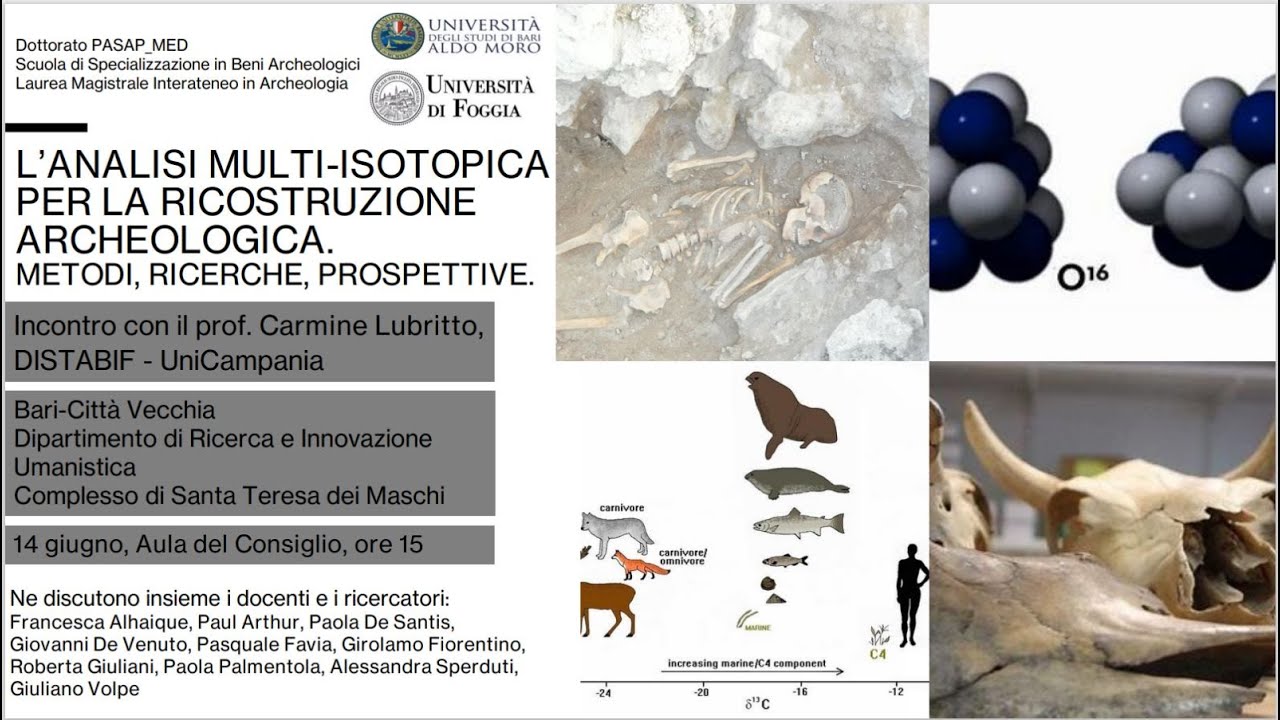












Stable isotope analysis of carbon and nitrogen in human and animal bones allows archaeologists to reconstruct ancient diets by examining the ratios of isotopes like carbon-13 to carbon-12 (revealing plant-based food sources through C3 and C4 photosynthetic pathways) and nitrogen-15 to nitrogen-14 (indicating trophic levels and protein sources), though this method has limitations including the fact that adult bones only reflect diet up to approximately 10-20 years before death.
Stable Isotope Analysis in Bioarchaeology: Diet Reconstruction Explained
Added:Basic atomic structure and the definition of isotopes, specifically distinguishing between stable and radioactive isotopes.
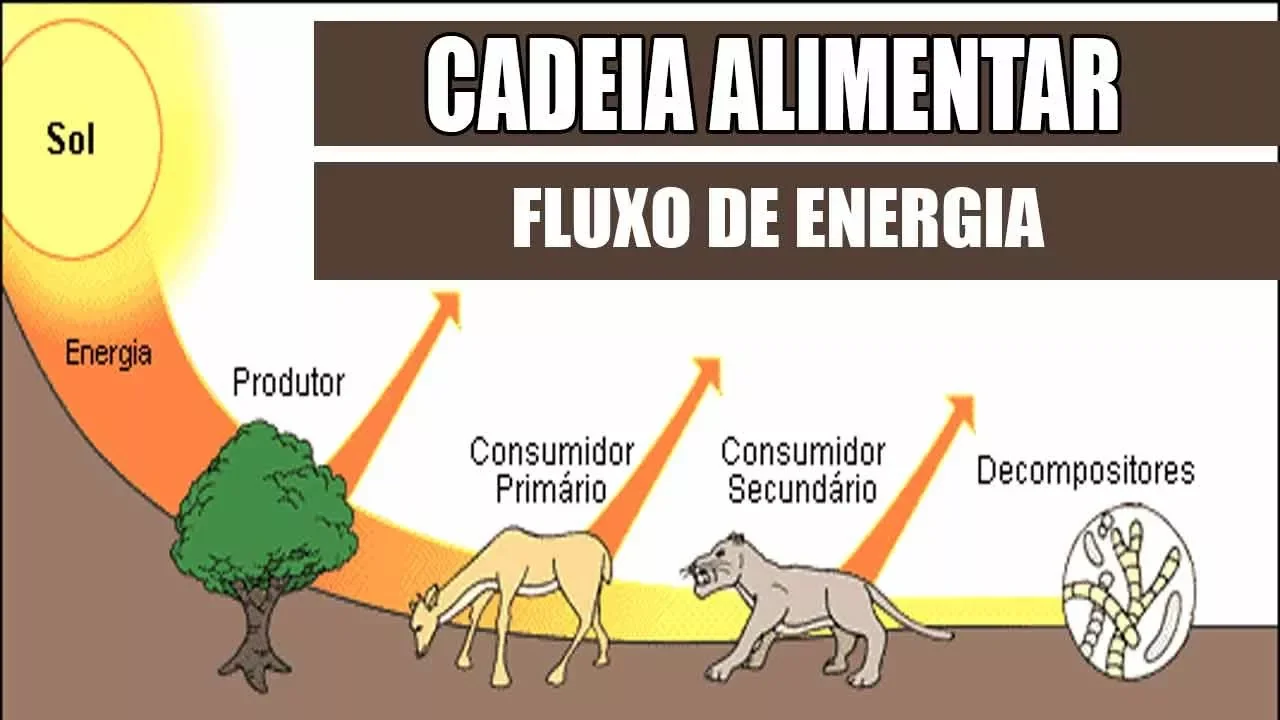
Fundamental concepts of ecology, including food webs, trophic levels, and the transfer of energy through ecosystems.
The biochemical differences between C3 and C4 photosynthetic pathways in plants and how they fractionate carbon.
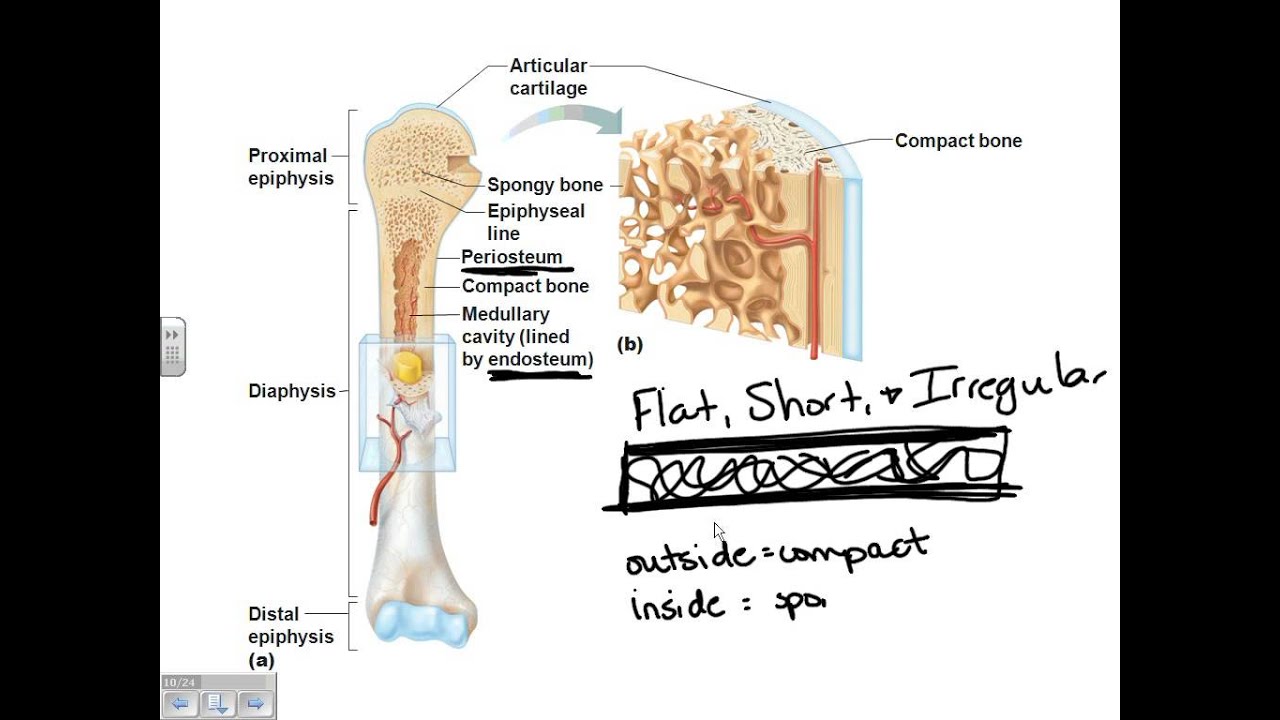
Basic human osteology and bone biology, particularly the composition and preservation of bone collagen and mineral apatite.
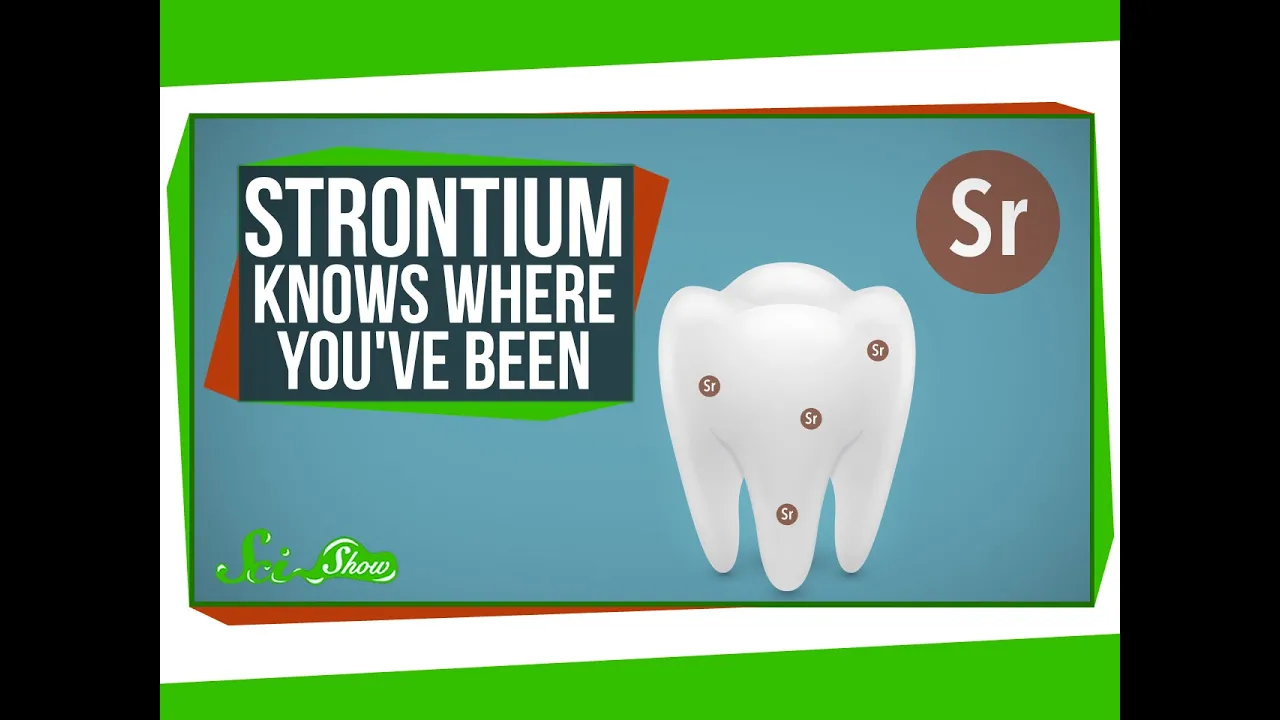
Using strontium and oxygen isotopes in dental enamel to reconstruct ancient human migration and mobility patterns.
Compound-specific stable isotope analysis (CSIA) of individual amino acids for high-resolution dietary resolution.
Integrating isotopic diet reconstruction with palaeopathology to study the relationship between nutrition, social status, and disease in ancient societies.
Reconstructing palaeoclimates and ancient local environments using stable isotope values from archaeological faunal remains.
1.6K views0likes13:35Original Release: 2021-04-26
[Music] in today's video i am going to be discussing dietary isotopes and hopefully by the end of the video you will have learned just why we really are what we eat the leg bones connected to the knee bone the needle's connected to the thigh bone the side bones connected to the hip bone now shake them skeleton bones i'm going to close the window almost all chemical elements have more than one possible atomic weight and it is these different atomic variations that we call isotopes these isotopes may be stable like the ones we're discussing today or unstable such as carbon 14 which is what archaeologists can use to date organic materials that contain carbon the two elements which we will be discussing in today's video are carbon and nitrogen and both of these elements can be used by archaeologists to help us look into the types of proteins and just generally the types of foods eaten first of all we are going to be talking about carbon and more specifically the isotopes carbon 12 and carbon 13. now when archaeologists are looking at the diets of animals and humans we look at the ratio of carbon 13 to carbon 12 which is why i've written them this way around i know it doesn't look logical but the ratio is carbon 13 to 12. so how much carbon 13 there is for every carbon-12 and we write that little ratio like this that is very much adequate no it really isn't that's awful i'm gonna write that again you know what that looks like dipsy off the teletubbies does it it does doesn't it now different types of plants metabolize these carbon isotopes differently during photosynthesis and it's because they have different photosynthetic pathways before going any further into the archaeological side of things i'm just going to explain what those pathways are because they are actually pretty important to the understanding of the isotope stuff these pathways are known as the c3 and c4 pathways and they're dependent on climate in short once an animal eats the plants it will then present a different carbon 13 to 12 ratio depending on whether it is a c3 or c4 plant so c3 plants make up approximately 95 of the earth's natural biomass and are suited to cooler wetter climates during photosynthesis metabolic fractionation occurs and the c13 is discriminated against this means that the carbon 13 is more likely to be excreted whereas the carbon-12 is more likely to be metabolized and remain within the organism in the burns i'm pretty sure that this is because the carbon-12 is lighter as an isotope and therefore uses less energy to be metabolized which essentially means broken down for fuel and for growth and to use within the tissues what this does mean then is that c3 plants are more likely to produce a more negative carbon 13 to 12 ratio and this is because there is less of it remaining in the body than the carbon 12. so when analyzing the carbon isotopes in bones of animals who have eaten the c3 plants we're looking at a ratio value of between minus 30 and minus 20 parts per mil now this little weird percentage-y looking thing means parts per ml essentially means parts per thousand but mill is the french word for thousands c4 plants on the other hand are suited to hot and dry climates and because they discriminate less against carbon 13 they have much higher carbon 13 to 12 ratio values usually c4 plants generate a carbon 13 to 12 ratio value of between minus 12 and minus 13 but a lot of the time it's a mixed diet so you'd get signatures of more around minus 15 minus 16 because there's only only five percent of the earth's natural biomass is c4 so chances are there is a bit of a mix in the diet especially because a lot of the meats that people will be eating the animals will not have just been eating c4 plants much of the basic crop in northern and central america is c4 plants and because of that you can actually tell quite often from a skeleton that it is probably from north america obviously we need to look at other aspects of the archaeological record as well using diet as a proxy if someone shows high levels of c4 plants they might come from america particularly because of the use of cornstarch compared to elsewhere europe doesn't really use cornstarch but again it's just a proxy and we need to use other things to help us with that as well there is also difference in the carbon 13 to 12 ratio values between ocean and land plants in the ocean the amount of c13 is higher so ocean plants have a more positive carbon 13-12 ratio value than in land and freshwater plants this can then help decipher between fresh water and marine fish that have been eaten essentially as animals eat the plants the different ratios from the different pathways are passed along the food chain and are eventually fixed into animal and then human bone tissue so in order to assess the carbon 13 to 12 ratios we have to either analyze collagen or bioappetite bone collagen is a fibrous structural protein constituting about 90 percent of the bones organic content and is the most common protein in the body collagen is stiffened in mature bones due to the dense infilling of the bone's second component bioapatite or hydroxyapatite these bits of the bone become a sort of sealed capsule because the isotope value that they give represents the time of formation adult bones remodel every 10 to 20 years so for example if i ate c3 plants my whole life up into the age of 35 so always ate lettuce cabbage carrots and then at 35 years old i started eating only corn and maize which are c4 plants then died at 40. we likely would not see those last five years of my life we would just think i'd always eat and see three plants which might confuse people say i moved to america for the last five years of my life and then started eating a lot of cornstarch they if archaeologists didn't know that i had lived there for five years they might think that i was literally on a holiday because all my diet showed was kind of a european diet and not an american diet if that makes sense so it does have its limitations and we have to use other aspects of archaeology to back up evidence so other evidence that i might have lived there for five years include having a home or being on census records we can also look at the isotopes of nitrogen to learn about the diet too so the two stable isotopes of nitrogen that we look at are nitrogen 14 and nitrogen 15. and in order to look at the different types of protein consumed we look at the ratio of nitrogen 15 to nitrogen 14 which is written like this now the lighter and more common isotope of the two is nitrogen 14 and you can tell if an isotope is lighter or heavier by looking at the number next to the atomic letter so nitrogen 14 is lower than nitrogen 15 meaning that nitrogen 15 is heavier so because nitrogen 15 is heavier it's discriminated against during metabolism what this means is that when proteins are digested it takes more energy to metabolize or digest the nitrogen 15 than it does to nitrogen 14.
because of this it remains in the body in the bones and the collagen because nitrogen 14 is lighter it's metabolized more easily and is excreted interestingly as you go up the food chain eg from rabbit to fox or from cow to human the amount of nitrogen 15 increases by about three to five parts per ml there's a famous quote in dietary isotope studies taken from deniro and epstein 1976.
you are what you eat plus a few per ml so what this would mean is that you would have the same nitrogen 15 to 14 ratio as the thing you consumed plus three to five parts per mil for that extra trophic level from that what we can already see is that any vegans or vegetarians out there are going to have a much lower nitrogen 15 to 14 ratio because there are much less trophic levels to go through before the food is being eaten as it is just gonna be the plants so another key point is that usually land animals have much shorter food chains before the top carnivore than aquatic food chains so for example you could have a food chain on land which might just simply be grass sheep human or grass rabbit fox whereas in the sea you could have a much longer food chain such as phytoplankton krill herring mackerel human and because of that you would have much more jumps up the three to five parts per mil so consequently humans or animals eating only land animals will have a much lower nitrogen 15-14 ratio than those eating only aquatic animals most modern human populations do however have quite a varied diet and therefore a great mix between land and sea and water animal food chains within their diet now i'm gonna put a graph on this green which has carbon on one side and nitrogen on the other carbon at the bottom nitrogen on the side and it does make it much more easy to visualize what i'm talking about so as you can see people who only eat plants so vegans vegetarians but vegans in particular will likely have the lowest carbon and nitrogen signatures so they'll be at the bottom of the graph unless they are only eating things like sweet corn and maize then they might be at the top but they'll still be on the low end of the nitrogen it increases with vegetarian because there'll be some animal projects projects produced and therefore a little bit of animal protein which may take it up because of the extratrophic level then as you get into omnivores it'll be in the middle then here we can actually see on this graph a split between people who only eat fish a group which hunts both and a group which is only land animals and this is from when it was like hunter-gatherer population but it does present it in quite an easy to visualize way i think anyway now there is an exception to the fish rule so that's shellfish and a diet consisting of only shellfish like prawns mussels crab may have a low nitrogen 15 ratio despite them being aquatic protein because they are both low in the food chain and also their nitrogen fixing organisms so things like oysters clams or the shellfish are efficient filter feeders and that helps to remove excess nitrogen from the waters because they incorporate it into their shells chances are that if at some point in your food chain there is fertilized vegetation then chances are it will mess up the sort of natural levels that we'd be looking for and that is because isotopic discrimination occurs so the nitrogen 14 that is in the manure will evaporate off whereas the nitrogen 15 because it's heavier will get absorbed into the grass and be used as their protein to grow so naturally then the grass will have a higher nitrogen 15 content and therefore even at the bottom of the food chain without the extra trophic jumps there'll be a higher nitrogen 15 to 14 ratio what this could do then is create inconclusive or even falsely marine sort of level results and there are of course other limitations to both isotopes particularly carbon one of those being the canopy effects and one of those being the routing issue and both of those things are complex so i would rather put those in a reference and if you would like to go away and do extra research into those then you can i'll put all the references that you'd need for those in the pinned comment along with the references for the rest of the research but especially for the limitations i'm just going to leave those because i don't want to make this video more complex or longer than it used to be and anyway i hope you've learned a lot i hope you enjoyed this video if it was explained okay and i will see you in my next video don't forget to subscribe to the studiotube project and if you enjoyed listening to me then subscribe to my channel it is rosie crawford or just the little roo either will work my instagram is just a little rue as is my tick tock and my twitter so if you enjoyed me go and check it out there's a lot more like studied hips and motivation tips and stuff like that yeah i'm done here i'm done here
Up Next
12:48
Dental Calculus on Carnivore Diet: Causes and Prevention
@KevinStock12
209.4K views•2022-10-20

12:54
Triumph of Orthodoxy Icon: Byzantine Art & History Explained
@BenCallan
2.1K views•2024-08-06

21:45
Forensic Archaeology Student Excavates a Mock Murder Burial
@RosieCrawford
13.9K views•2020-11-30

1:42
Game of Thrones Opening Credits: A Cinematic Analysis
@gameofthrones
46.3M views•2011-04-18
Related Study Plans & Knowledge Roadmaps
Structured learning paths in General & Interdisciplinary Studies
general-studies
Elevator Engineering: History, Physics & Cities
01From Hoists to Safety Brakes: The Dawn of Vertical Lift
02Hydraulic vs. Traction: The Engineering Physics of Elevators
03Modern Speed, Safety, and Algorithms
+ 2 more learning modules
12h5 modules
Explore Roadmap
general-studies
Rubber: Material Science, History & Geopolitics
01Origins of Natural Rubber & Mesoamerican History
02The Chemistry of Natural Rubber & Vulcanization
03The Geopolitics of the Rubber Boom & Colonization
+ 2 more learning modules
12h5 modules
Explore Roadmap
general-studies
Containerization: Evolution, Logistics & Trade
01Ancient Trade & Bulk Cargo: Amphorae to Barrels
02The Industrial Revolution & Cardboard Packaging
03The Containerization Revolution: Malcom McLean
+ 2 more learning modules
12h5 modules
Explore Roadmap
general-studies
Textile Tech: Evolution, Labor & Global Impact
01Pre-Industrial Textiles: Handloom & Cottage Industry
02Mechanization: The Spinning Jenny to the Power Loom
03The Factory System & Global Labor Transformation
+ 2 more learning modules
10h5 modules
Explore Roadmap