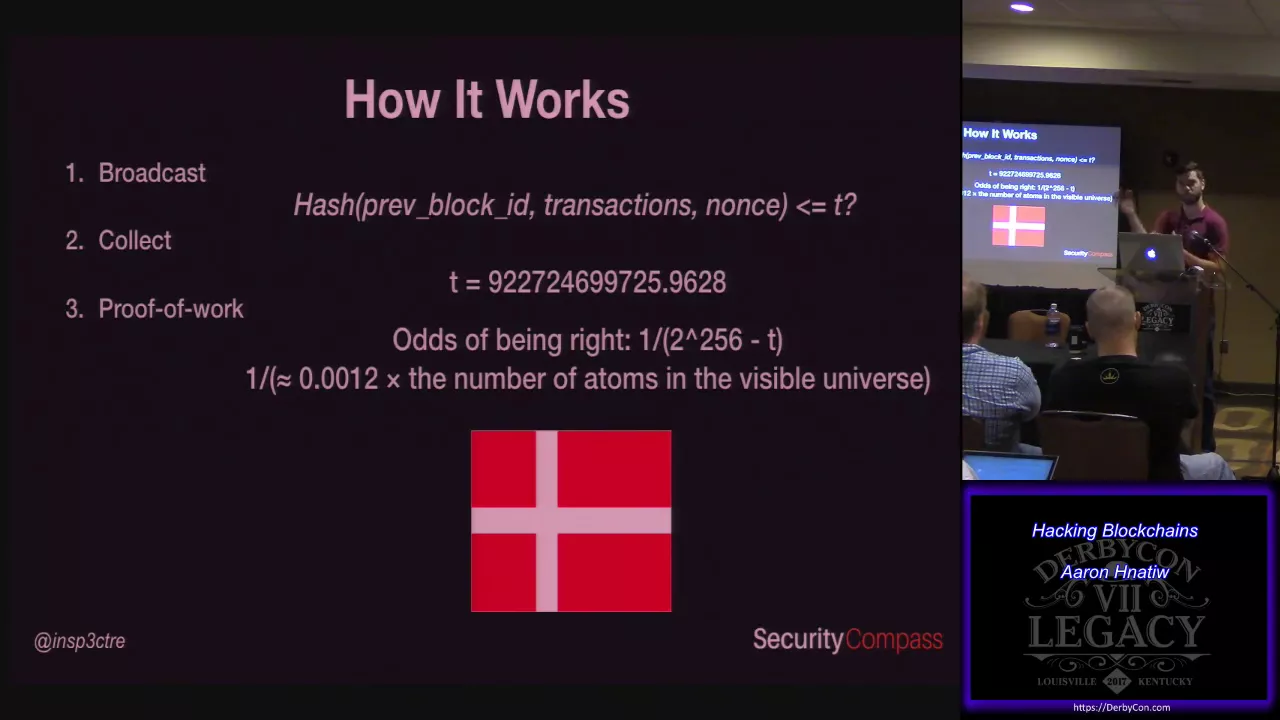
![Bitcoin erklärt (Teil 1) - So hast du Bitcoin noch nie gesehen! [2023]](https://i.ytimg.com/vi/HeHVuwu-umk/maxresdefault.jpg)









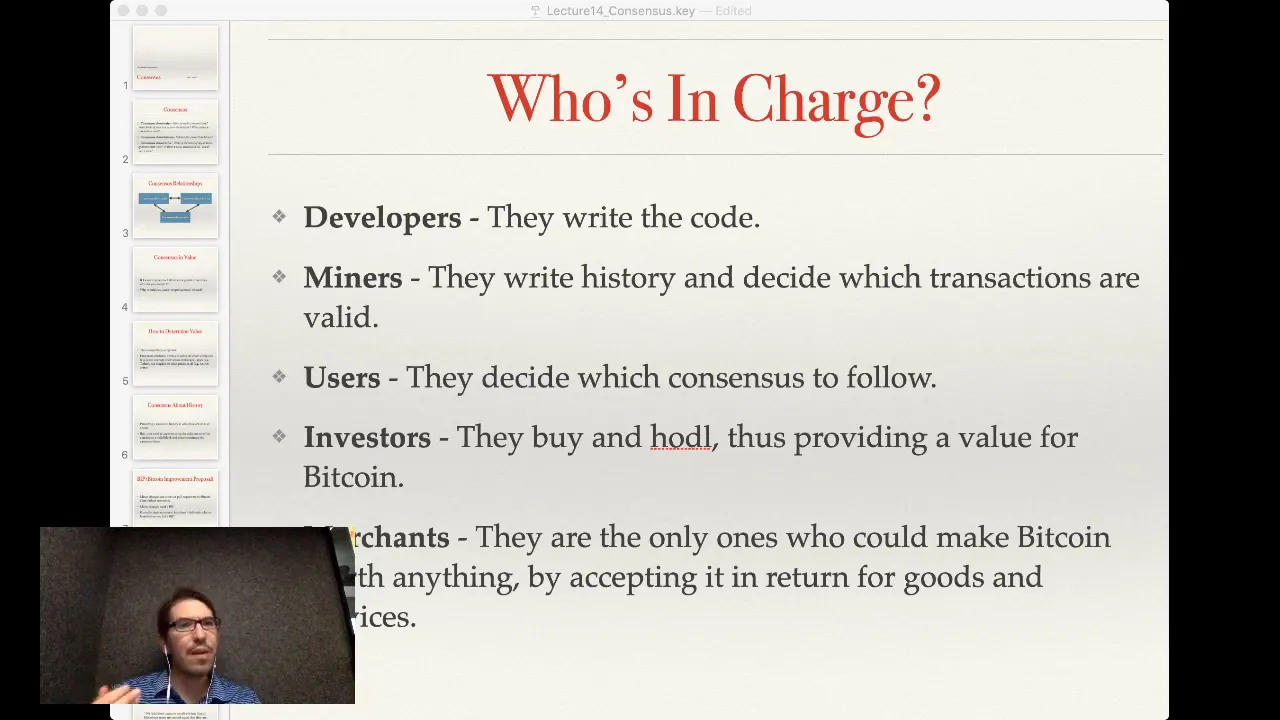

















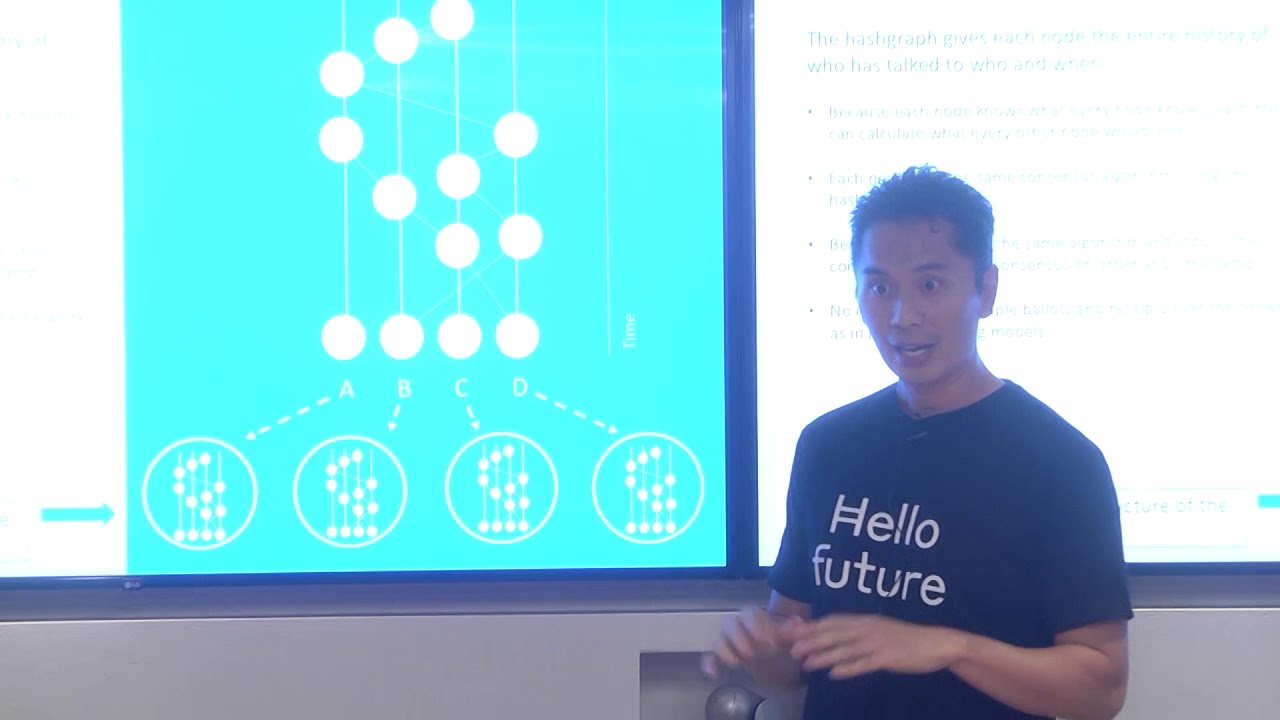




Craig Wright argues that Bitcoin is fundamentally an economic system rather than a cryptographic one, with 99% of its value derived from economic principles. He explains that Bitcoin's network topology is a near-complete graph (with an average of 1.3 hops between miners) rather than a mesh network, which is why non-mining nodes are not necessary for network security. Wright contends that the security of Bitcoin comes from the competitive nature of miners who must constantly improve their efficiency to remain profitable, and that the network's resilience against denial of service attacks comes from the distributed nature of mining operations rather than the presence of peripheral nodes. He emphasizes that the key to Bitcoin's success lies in understanding its economic model and how miners' competitive incentives drive network security.
Craig Wright on Bitcoin Scaling and the Future of Crypto
Added:I have a joke for the government in this town is excellent and uses your tech a large efficient [Music] become pecans which include [Music] cuz I keep make sure Brian is in alright you ready okay well let's do it all right and this is the crypto show we're coming to you not exactly live but we're coming to you from the most dangerous studio on the planet that is defense distributed where they make the the 3d printed bazooka to shoot that the government with and I'm coming to you from sunny Florida I'm sitting on the beach actually in South Beach right out I'm parked right here on the beach and I'm loving it for you poor people in Austin I hope you're freezing your ass off because I know I'm not and yeah let's just go ahead and get right into it same thing we do every night pinky try to take over the world all right guys what a great intro by Danny my co-host you all know me I'm Chris I'm the other host on this show and of course there's our peeking the brain intro that we have every episode because this is a special episode for two reasons one we have an absolutely incredible guest that I'm still shocked is on our show about to be interviewed I'm very excited we also have another guest who is sitting and co-hosting with me it's Brian Deary I think you guys know him he's the chief scientist over in fact him he is also known as dances with Bitcoin and we also have double the fun for you there's two pinkies and two brains here today let's try to guess who the brains are and who the pinkies are well I think you know who one of the brains is is Brian diri and since me and Danny are always debatable but yeah well maybe so but a small amount debate ability and since obviously Danny and I are the two pinkies that must mean by process of elimination our other guests were well our main guests really is a brain as well and quite a brain at that it's Craig right yes you heard me correctly Craig Wright is on the crypto show good Christ he's considered such among many people and for a good reason and we've had some excellent guests on our show over the four years we've been doing this but this is definitely a kind of blockbuster guest in episode so if you're listening live or if you're listening later get excited anyway as I said we have Craig Wright Craig Wright are you there thank you thank you for being on the crypto show and you just prefer Craig or mr. writer how about Cryer just Craig that that makes it easy well we're gonna be talking to Craig for probably about an hour and we definitely appreciate his time he's a very busy man so let's get to it let's see where can we start I guess let's kind of take a trip back to the conference from last year at which you spoke and you made some very well an area state controversial comments certainly very thought-provoking provoking comments what was the name of that conference by the way this was the future of between Congress that's right the future of Bitcoin conference it's it's the conference where we got death threats because that we agreed with Craig oh well we've gotten death threats before so I I confused the occasions well and you know I guess considering the responses that people had you know there was what what Craig said during that conference and elsewhere surrounding that conference was some pretty powerful stuff so I guess what I'm what I'm trying to get at is well I guess one of my first questions is you made a reference at one point that people would I carry over the exact quote but basically you had something in store for them did it have to do with carrots have to do with carrots and I guess what I'm asking is was this a reference to Bitcoin cash basically was Bitcoin cash already being worked on as far back as that conference were you involved in were you if not involved otherwise aware of it it's so so you weren't necessarily involved but when you were making comments at that conference I mean were you being aware of Bitcoin cash being on the horizon was this affecting what you were saying was this did this effecting the content of what you said at that conference I guess you can tell you that everything is thinking everything else it that we do I mean it's a very simple thing there I mean it's the old Hitchhiker's Guide to the galaxy it and also dead country I mean we have a connected universe it really affects everything else it's not what you want to hear but at the same time you're not going to get the answer you want to hear either fair enough and and Chris too to that point the the the idea of a splitting of Bitcoin was in the zeitgeist at the time David Johnston one of my co-founders in fact I was writing extensively about the the upcoming split that no one believed was coming at least that I didn't but he certainly did but well and so I guess then let me let me ask if if I can maybe get a more specific answer were you what is your opinion on Bitcoin cash do you think that was a necessary split to bring a blockchain that can handle the the transactions that Bitcoin currently can't because of the limited block size was this an improvement in your eyes or tell us I think the Bitcoin votes quite simply by splitting and allowing people to vote some of these things will be quick some will take time in this case we have something where we have a division that will take time to sort out now there's really two issues one is the integration of things like side chains through sacred which completely destroy the economic model of Bitcoin once you actually start splitting the mining rewards and you start dividing that between separate applications rather than mainly putting them on chain then it changes everything in Bitcoin so secret is not this great sake it doesn't scale and at the same time what people are missing is that the only change to sensuality is is through - so you attract more miners by profitability and why why would you say that side chains change the economic model because when you are running a side chain you will not only mining Bitcoin but your mining other things on the side each of these actually has hash rewards and it takes investment away even if you're running separate hash algorithms there's only a limited amount of money so if you have a pool of money in your organization you have to define it as a miner between chapter 56 and something else for a side chain then you're putting less on charity 56 which means in effect you will actually divining the security of network okay so it's compromising the you're reducing the security by reducing the the hashing power in the same way that Bitcoin cash steals it from the network well no I'd say the same way that cygwin steals it from the network okay and that between cash is still Bitcoin sacred was never part of it I mean it's not a chain of hashes but hidden that's a radical difference in the network I mean is it even peer-to-peer at all if with side chains and seg wit and lightning Network and all well no blinding of actually how is that even peer-to-peer it's not I mean what they keep forgetting and they say we'll solve the routing issue routing is what is known in the industry as a multi Depot Traveling Salesman problem it is np-hard it is not just np-hard it is up there with the hardest problems it's actually something easier to solve ECDSA but they have this idea that they're just going to solve it there is a solution you set the route the same way people like Google and Amazon do you optimize as you set them is recut basically what this means is you create banks you know each of those have multiple connections that they're able to use and they can then connect to other people and control what's happening like we have now just as PayPal declined payment of certain industries such as Wikipedia in the past each of these can stop payment and even if you say it's only for a time if you have your money locked up for six months that's significant there's a time go your money and there's also just the general cost in actually having your money tied up and so is there any advantage to lightning Network as the second layer to Bitcoin while it doesn't exist no the the real problem is a misunderstanding it's a mesh network I keep saying this bitcoin is not a mesh it was never designed as a mission it never has been a mesh between nodes remember every time they reboot the vision they have a list of the other nodes that they're connected to they start with a list of nodes now what this means is that over time you actually start building up a series of connected nodes that you can start directly sending to and the more powerful nodes are put higher what this means is in fact that you start building a new complete graph so rather than sending many hops as people seem to think what happens is you basically would have one nip one transaction block that goes everywhere nearly instantaneously Bitcoin is incredibly efficient it is not a mesh it has never been in a mesh people keep thinking of the internet works this way Bitcoin is nothing like the Internet it is the first near-complete network that has ever existed on this planet outside of biological systems so to talk to a more lighter note so you were trained in in martial arts and more recently in in boxing and the Telex dad is a pretty buff guy and I could probably hold his own in a fight would you be up for an exhibition match with with him all I know is her Vitalis dad say your mother wears army boots so if you say you're too old to fight him I don't know you look good I thought you I thought you were no older they say 37 so I do wear glasses though I might be late for my prescription I don't know but those fighting words in my book so you're never late for dinner that's for sure that was a good so you had researched and wrote about digital forensics law as they applied in Texas about a decade ago does the Texas ethos hold a soft spot your soft spot in your heart maybe more so than in Chicago or Chattanooga I'll probably get myself into trouble but yes actually quite interesting Texas was very light to join the u.s. and the Dixon mentality is well different to New York or California I can see also probably be the first to leave it yeah I won't say certain thing to get me in trouble my wife but I have collections of things that make loud noises someone needs a ghost gunner I was gonna say Texans tend to like those loud noise makers that you're referring to Oh Craig if you're aware of this but our studio is actually in defense distributed where they print the 3d guns and make the the machines for the AR lowers not so more fur for softer noises about ten years ago you embarked on a 20-year project to listen to 90,000 of the most influential pieces of music throughout history how is that project coming along I have a long way to go well considering medical science these days that's quite possible I think and I do wait through it unfortunately my wife and children don't necessarily like it it means you have an electic sort of mix of everything and unfortunately 90% of what I listen to now they hate I guess that makes sense I mean to listen to that much music you're right you got to get into all sorts of different genres and not every genre is everybody's taste and I can see how you might have an eclectic open mind to music but yeah perhaps your kids and wife tones you know because your playlist that has both men and off and Megadeth no gangster rap well no wonder they must hate to Rachmaninoff I think that's the Achilles heel here my wife said it was too depressing it's it's too damn it's too serious you should be happier I mean how many happy-go-lucky Russian guys do you know from that to that history i mean yeah i think the only happy-go-lucky russian i've ever known of his Yakov Smirnoff and he might not even count so you're right I mean for probably a thousand years or more the ruse Russian people have been the kind of morose and cold and I can't blame him considering what they've been through so but but then again I can't imagine Megadeth's any happier than Rachmaninoff well I want to switch gears and kind of get back and hopefully I can articulate myself a little better well so I guess where do you see the future of Bitcoin then is this Bitcoin have any viability long term because of scaling issues it seems like you're not a big fan of the Lightning Network which they haven't even implemented yet and not that's a bond not in Bitcoin anyway I think others work yeah transaction is not an implementation right it's just like saying they have a quantum computer that has like you know four cubits or something it's not really a quantum computer I mean it's a start well and so where do we go from here for the for the scalability of Bitcoin I mean is it simply increasing the block size ad infinitum over time is it making it a dynamical increase in and why do you think Bitcoin core has dragged his feet for so long on this anyway altitude let you answer I'll do two parts one we should remove the cap there's a simple answer it's economics 99% of Bitcoin is economic what we need to do is allow people to put the fees on miners will not bankrupt themselves to add more transactions than they can handle the argument is that we need to keep for decentralization all that is non mining notice that's bull non mining nodes do nothing they have never affected a block they have never affected a transaction they have done nothing ever to Bitcoin and they never will because quite simply if you can't put a transaction into a block you do nothing the thought is wrong because it's based on the idea that Bitcoin is a mesh many pops and your node is important because it needs to be the power of the heart that that's the problem bitcoins a near-complete graph that's why it's censorship resistant you send to one machine and then the next top nearly every machine on the network has it that's how Bitcoin works when you have that sort of network it no longer matters about all these peripheral little machines that act as symbols the reason you can't civil Bitcoin is because there's nothing to civil the only machines that vote for miners and they vote by half power it's just to clarify when you say bitcoins not a mesh are you saying that it's not like a partial network even kind of alluded to the fact that you know when it's when one thing is broadcast to the network one miner gets to the others get it pretty quickly after that I guess explain what you mean by Bitcoin is not a mesh for those who may not understand so if you think of the Internet and this is a common sort of analogy that people use how there are BGP routers that centralize everything and a few routers actors choke points for most of Internet traffic and they then distributed everything through multiple hops in some networks you can have 15 16 17 hot 7 many different hops so a network distance of over 10 the Internet is a match basically many machines connected in sort of this big conglomeration where you go hop - hop - hop - hop before you get to your distance where you want to go Bitcoin the network has a distance of 1.3 - what that means is on average the number of hops is 1.3 - you rarely get to 2 hops between minor and minor when you send a transaction most of the time it gets everywhere straightaway so are we talking about over the peer-to-peer network I mean is this ignoring the the the heavily connected minor nodes that are held together through like the fiber network and things like that they were held together without the fiber network the final bit network is just the backbone to have somewhat cheaper connectivity but I have better than fiber here at home I mean BT upgrading at the moment and I have a commercial fiber which converts to 10 gig when they finish installing and whatever else and that's better than Bitcoin needs for a long time yeah maybe it's a nomenclature thing but I was referring to the the the actual fiber network by blue math etc right I mean we're not saying fiber of the way now fiber is a basically focused network but there's no reason you couldn't set up another focused network it's not difficult now this idea that you need UDP because the packets are smaller and all this stuff is just BS I mean the reality is Netflix do not send over UDP Amazon Prime do not send over UDP you can send live packets over TCP if you design things well at the moment and I mean most of the network stuff and Bitcoin is still a dog I'll say that my coding you know my coding is basically code review security coding making sure it doesn't break and an academic lecturer so it sucks to put it system I'm not a good large-scale coder I don't do multi-threading will and I can tell you all these things and things that big coming needs if setup well and you set up an own will and other people can do that far better than I can myself but that's what sort of hiring contractors employees and building a company's at that then you get to the scenario where you can have large interconnected networks between miners etc and all you need to do is drop a transaction out to the network and it gets practically everywhere and you get more miners by simply making a more sort of valuable network more people connect more miners want to join the network so that's how you get to be centralization so basically even when you're a home know the largest nodes the ones that use tend quickest to a miners so the first thing that happens is you hit the miners and they hit the other miners instantly all the miners have the transaction and generally what you find is within two seconds ninety-nine point eight percent of mining nodes have your transaction in 22 to 30 seconds all those how the periphery nodes that date mine have your transaction so it sounds like the the nine mining nodes like your singer are essentially superfluous or add the very little facilitation to the network exactly they they certainly had something they add denial of service prevention so with denial of service attacks the number of nodes dramatically changes the and the available upload and download bandwidth that lots of nodes can provide around the world can keep the network running even under sustained attack so if there were only what a few dozen miners around the world and they were the only ones running these nodes a concentrated denial service attack on those few nodes would completely bring down the network now if you had thousands and thousands of other non mining non useful nodes what they're doing is they are providing the connectivity and the network glue that can survive and have the excess capacity in the face of a massive denial service attack you're running a mesh except you're long and - commercial entities I have a past working for organizations that basically went under attack some government some commercial areas Australian Stock Exchange for instance and a lot of time working with casinos poker gaming industry etc they were attacked they understand basically denial of service now what you're saying is from someone who has no clue I'm sorry about denial of service we had organizations that got bigger denial of service attacks then Google has bandwidth and survived so denial of service is a commercial thing it is part of running a commercial entity now miners will tell you like every other capitalist entity that they need help if you read anything right back to Adam Smith the first thing you'll find that business does is it bands together to tell the world how hard done by they are every business does this that's how to been capitalist and how to being a part of a capitalist system is we have to accept that our business is he going to do that and stop allowing them to go to government or their regulators or anything else to protect the results they are commercial entities and they have to invest so are you just to clarify are you suggesting that the idea that nodes non-money nodes are necessary for to prevent denial service attacks is propaganda put out by the miners who are commercial entities and are just putting them out there as some sort of move to get protection at some point or sorry I'm just trying to clarify oh it's a great story from people who want to see lots of little nodes around but the reality is it doesn't help the connectivity between the miners and - can set up many ways of connecting the network and they already do I mean a large modern that doesn't have a single IP address out there it doesn't have any single point of entry it actually has many and the reality of this is if you can cut off the - you cut off the network so if you can do a denial of service attack against miners you do that whether you have Hope nodes or not and in fact if you have home nodes you can actually start using those to propagate denial of service attacks they actually reduced the normal service attacks they make it easier in what sense as in low fee transactions no each of those is a connected machine home users don't do low fee transactions low fees are thinning many transactions into a block so that you don't have an artificial cap basically the idea of how you did an aisle service will you do multiple RPC requests you hold open a transaction and you don't close it Billy it's not bandwidth playing that you we have to worry about it is things like the number of sessions that a machine can have many especially smaller machines are capped at say 25,000 sessions I can open that up in under a tenth of a second to any machine I can scroll through every IP address on the range there are what's a denial of service attack sort of engines out there and these were starting to be common back in the early 2000s when I was doing work with sands and other people and doing this you can then start propagating half-open transactions start requesting stuff from other nodes and in doing that hold open enough transactions that you actually slow the network down now if you start propagating that right you can actually have each no food stamp opening other connections to other nodes now as a network of miners that's not really going to work but as a network of non liners who actually don't do anything other than sit there later on propagate it doesn't worry so are you essentially saying that the nodes are more vulnerable themselves to this kind of attack and then the nodes will then multiple like you said propagate and multiply the attack essentially magnifying it yes that's interesting about creating isn't big enough yet people don't really care about Bitcoin because it is not big enough yet market capitalisation is not a share of what you can actually extract from the market what you can extract from a single gaming player exceeds the entire Bitcoin network right now in fact it would exceed what crypto has right now so we impact the price quite a little bit and that's billions of dollars so but that's only because it's been traded I mean five six thousand Bitcoin it actually makes an impact market that is very small whereas at the same time you take organizations like PokerStars and now that they're putting through bitcoin so you're saying that bitcoin isn't even worth it at this point to to do a massive denial service attack not for the real players no it will be and actually be able to resist that is not by having lots of user nodes it's by having robust infrastructure it's by having miners who actually don't just have one connection in one part of the world you start treating their organizations as more than a piddly little joke now I'm not saying I mean part of the problem here is if we go back Bitcoin has grown phenomenally over the last year and we are still in the stage of the eighties of computing we've moved from the stage where we have these dinky little machines and I don't know if you remember sort of the four oh four four or whatever before IBM came up with their personal XT machine and things like this but it was a dinky era let's see any way to put it home uses amigas whatever else it was amateur hour I was part of it I loved it but it was still amateur hour that's where we are now and like it or not Bitcoin has got to grow up we need businesses who understand running a business who understand loss who understand running networks around the world not sitting it somewhere in the middle of Mongolia and having that is your only connectivity but how do you make sure that you impact your clients in a positive way I mean if you're going to spend a hundred million dollars of mining Hardware on electricity why the hell can't you spend a hundred thousand dollars getting a decent connection for a hundred I can get 12 different fiber lines going to different points of the world through different undeceive you're adding fibers etc so stop thinking like it is a business for a percentage of your money you protect your investment so you say you're talking about Bitcoin running like business what do you think of some of these other coins and I think Roger even mentioned that Bitcoin cash may be doing this but with their hybrid models where they have funding like - and you know I actually spoke with Roger about that and he said that Bitcoin cash may be doing something like that or it has its own funding model there are different things being funded around by different people there with - I don't really agree with it the idea is once again a fluid idea that it's a mission we need to try and create a mesh unfortunately too few people understand network graph very well enough to get past mesh networks into near-complete and works etc meshes of viola mesh networks go back to the 50s and 60s the idea is well far from you we have comparatively new mathematics and near-complete graphs Numan Strogatz and others in about in the late 90s and early 2000s which led to one of them getting a something anyway one of those prizes came up with a whole lot of things with small world networks etc and small networks are very different to measures wait so how when you say that - is stuck thinking of itself as a mesh can you elaborate on that a little bit more but the feeds now what they've done is they're trying to have the idea of master nodes etc and want to have people sit there and have different propagation modes except you don't need to do that there's no need for it it's a misunderstanding of what the network actually works I mean the key to understanding this is realizing that it's not any single hot network that's are a multihull network it's just a complete graph and you don't need this mesh to be there you don't need a robust mesh because it's not a mesh well in doubt that what you're saying is correct but do you see any merit to the system that coin like - music has nonetheless because as a Poisson as opposed to Bitcoin core where it's all sort of you know everyone no one is getting there's no economic incentive to Bitcoin core I mean maybe with the exception of block stream and what's going on with the Lightning Network but otherwise you have all these disparate interests a lot of people are volunteering there isn't a straightforward sort of economic commercial profit seeking model whereas with - or Dash's model anyway there kind of is because you know they're able to through their governance structure to use funding from the network itself from the creation of new coins to directly fund projects that improve the network add second layer applications and the like as far as that goes do you see that as something that is beneficial or I see some of it takes away in the new way I don't see that it's necessary ourselves at encrypt and chain are starting to give things away this year some of the people I know and are involved with they're doing things I don't know if you've seen that we've got a partnership with the a group and we're doing a whole lot of different investments that are coming up we're putting IP in from our side there's investments of money as well so Calvin put out an announcement the other day from either side one of the things they're doing which is research into scaling utx owes up to the billions of sort of transactions we're going to be releasing sort of a micro services architecture no this year so that rather than a monolithic node we have something that people can plug in their own database whether it's Hadoop or sequel or whatever they want at the same time being able to split and interchange you TXO operations separately something like the way Apache runs where you have lots of little projects that make something that hangs together so in doing that that then becomes a commercial thing I mean I said before that our theory is the underwear now well I don't think people like myself and others that I'm affiliated with well we have an interest in investing in this network and making it work so it should be for us to do this I mean if you look at I like Jim Rome I studied a lot of Rome especially where it fell and the problems before it was Imperial and the Republican Rome was actually quite interesting and politicians didn't get paid politicians got to where they were by either sponsoring other people like who could act for them or by doing things so if you wanted power we'd say now if you buy power but you would do things you would build an aqueduct and say look I'm a good guy because I'm going to build this road I'm going to do these civil services I know a lot of people who have wealth hate this because this means that they have to actually give back to the world they're parallel if they want to be part of it instead of expecting government to hand out for them the wealthy need to take charge and start handing money back to the world to be part of this world and that's what the wealthy admit coin I'm going to have to do the wealthy should build the systems that make them stayed wealthy they shouldn't expect handouts from the network people like me should be funding this stuff we should be giving back you shouldn't be asking how much money can I give you to make you do this I should be going up there and going this is what I'm going to give to make the community better do you see the difference I see a parallel and kind of what we do know of our side projects as part of the show you you basically just described them that's the whole point and if we give away and stop people being interested and get knowledge and have people around the world start using Bitcoin it becomes more valuable for everyone not just us everyone I mean I quick do you have hopes that Bitcoin will survive core and get back to what what you feel is the real Bitcoin or do you just feel like moving forward with Bitcoin cash I feel there are two splits a Bitcoin there's Bitcoin Tor and Bitcoin cash there's not Bitcoin Bitcoin forked so they're both the same chain and one of them has Segway and one of them is going to re-enable the old opcodes and go back to where it was meant to be with the block size which is nothing so that miners can economically choose so they're the two competing versions a bit clean so the difference I would say is I have not given up hope and Bitcoin I just see Bitcoin core is not being the correct Bitcoin well in so does that mean Bitcoin core has for the time being given a lack of any further developments that it has no real viability long term or a Bitcoin core specifically to put it quite simply yes if you're going to limit yourself to a few transactions if you believe in false economics this idea that charging more for fees and creating an artificial gold actually matters then you're deluded because quite frankly I can get better forms of artificial gold than Bitcoin I can get better stores of value than Bitcoin I can get cheap for transactions than Bitcoin core I don't need it if that's what the aim is as bad coin a settlement coin bit coin sucks I've got friends who are high up in a number of banks and quite frankly none of them are really interested in any of this stuff that the geeks come out and talk to them about they are interested in creating their own they are not interested in Ripple they are not interested in Bitcoin they are interested in taking the technology and creating their own and it's open source you don't need Ripple you don't need Bitcoin to make a swift version - it's cheaper for them to basically buy up a whole lot play with it and recreate it back when I was in Australia there was a core banking platform upgrade by the Commonwealth Bank it took a number of years and cost nearly six billion dollars the whole Swift replacement idea is small in comparison people really don't understand banks - well they think they can change all this by making their thing and they will have to use us guess what thanks don't they will just take the best technology and create their own they do not need anything else bitcoin Wilson what is a gold or a settlement system as attached to people not banks people people in Africa who are unbanked people in South America but unbanked people in Asia who are unbanked people in Europe who are underbanked people in Spain they can't take out more than two thousand dollars or so euros of their own money a day without making a criminal offence people in France who are limited to euros a day without a criminal offence that's what bitcoins about and I agree 100% actually with both things you said that is what bitcoin is about it's about the peer-to-peer digital cash to people not the banks and I agreed that the banks will just kind of copy what's out there and make their own but isn't the whole point of Bitcoin or other cryptocurrencies in general the idea that it's not just for the people but it that in being for the people it's gonna undermine the very existence of the banks it will change the nature of the banks there's really a sort of balance between market-based and bank based forces and everything banks to do is not bad and everything Bitcoin does doesn't replace banking so if you think about it some of the things like icos and other ways when they finally get their act together and are so skinny are a new way of raising equity but at the same time there's a cost and you have to associate the cost of doing something like raising equity and there are always going to be some organizations that consolidate and transfer wealth and that's what banks do now banks 2.0 and nothing like what we see right now they're going to be completely different organisations I can't even say what the hell that look like I don't know what a bank will be like in 20 30 years time it won't be anything that we record now but a bank will get money together and give it out to other people because people still want to pay for homes people want to buy tires like it or not people want to go on holidays they can't afford people want to spend money they don't have yet all of these things are important people want to take out money that they don't have yet and pay it back because there's things like Christmas and their children it really upset if you go sorryy near we're going to give you presents in January there's happen your stinger there's an interesting model in Mexico if you want to describe that Chrystia aura Libre where the people are pooling their money together and and collecting it in taking turns to come up with a larger amount of money yeah well I mean it's it's just an alternative banking system that they've used for a long time largely because they don't have access to what you're talking about which is large pools of capital that you can draw from for right financing vacations financing businesses and it would be really difficult to do that to such a degree when you have dispersed monies simply in the hands of individuals and so yeah I mean just to describe it real quick there's like two or three ways they do it but like it's kind of a trust system where network your family and friends will pool their money together they'll have essentially a treasurer kind of watch after it and they can borrow much larger sums from that pool than what they have originally so thank everyone the app what you're describing and this is these occur in lots of places on earth it used to be called either a savings and loan in the u.s. right a money market fund in some other countries or a building society this you know the emphasize to get their mortgages until the government came in and mucked up everything and said they needed to have different capital things and do this and do that and totally change the way people want to actually trade in a direct and they all got screwed and eaten up by the banks yeah they are sort of proto banking institutions well but speaking of which though like so I don't disagree with you that there's always going to be some need for a sort of banking institutions of like you said that could be completely different twenty years given what's going on in crypto and elsewhere but you know you have things like salt already where not only does it allow you to lend crypto without giving up your crypto because you basically you're pretty you're probably familiar with it but like it allows you to lend your crypto but you get your crypto you get your proceeds back in crypto so that you don't miss out on the games you know over which is really a neat idea but also and I think more importantly to the discussion it it's it consists of every day people who own crypto who are pooling their money together or lending it peer-to-peer or relatively peer-to-peer so my point is I mean you already see these proto banking institutions with new innovative twists appearing in the crypto space what why couldn't you why couldn't those pop up and eventually supplants the legacy banking system potentially and and make it to where again we undermined the very idea of the legacy system banking but they are the legacy system that's what you'll finally received before say the 1913 and then later glass-steagall and in whatever type Accords that started radically changing banking area last century then the whole nature of what you consider a bank the original VA in quue a monk came back from that idea people pulled their gold before we had crypto people pulled other assets and they were hard currencies it was when senior inch and demurrage and everything came in so that I mean at the start of the 20th century the British bank had one-third of the silver that they supposedly had right notes and by the time Nixon had the gold standard he had five percent of the gold that they promised so that's why they had to basically take the u.s. off they were stealing from the world who well thought that the u.s. actually had gold so what we have with crypto is now a system that we can actually stop governments obliterating that's the difference all through history governments have been able to grab all the gold because gold nice and easy to grab it's heavy it doesn't move it's a real bugger to actually try and get somewhere it's easy to detect in airports at the same time crypto it's easy to get through airports it's easy to send internationally it's easy to hide people don't need to know how much you have one of the critical parts of Bitcoin is people should never know how much you have it's one thing to be a rich bastard it's another to know what you have how much do you have well I kind of see what you're saying I mean that they definitely the government is gonna step in no matter what develops in the crypto space on in a relatively free market and the the big banks that exist that are regulated by and in only regulator you know the Federal Reserve they obviously have a huge advantage and so I mean I think I kind of see what you're saying as far as so let's go further into the future so so Craig one of your favorite books is a Neuromancer published around during your formative years describes a world called cyberspace and has an AI built by a major corporation which would manipulate and even kill people to achieve its ends this vision is so much a part of your identity that you even named one of your computers after the books AI winter view you have mentioned in the past that you saw Bitcoin as a wheel and you want it to build a car is this vision that you hold where Bitcoin being the first money that's truly honorable by AI will be the wheel that grinds on humanity no will the grinds down humanity the difference is I think we're a long way from actually having sort of complete general AI there's a big differential between AI that actually helps us and appears to be smart and something that has actually sent you now I know we've got this Oh hardware we'll keep doubling in therefore by 2030 we will suddenly have a singularity except we have software and I don't care what you say every time Microsoft updates my computer gets slower not faster and I don't even get a choice anymore I mean I've got a computer in the gym and I don't want it to update because it's about crappy old apps from stupid things like life Fitness who update their acts like every six years because they're a fitness company and Microsoft breaks them all the time so what we're getting to is not AI the way that you're seeing Watson isn't smart Watson is a long way from that we're a long way from understanding am i and that sense what we will have a machines that actually change the way that people work in my house I'm totally geeks in that I'm in the process of having everything connected to everything so mr. Braga will have lots of fun making my house cream and do stuff because all my rooms connect everywhere so there's Alexa's everywhere there's Google Holmes everywhere we have got a full speed bar system for all the lights so all sorts of fun silly stuff that I can connect up and cause problems with and that means I can actually do more I can have machines tell me what to do etc and it's not going to be a machine that grinds me it's another person it's not a machine that's going to jump in and change my my settings so that I'm in the wrong place or do the wrong thing because the calendar basically tells me in my life these days it's going to be a person and that's the thing we always need to remember it's not the machines that we need to worry about it's people I you know I agree with that and that kind of leads me to a sort of related follow-up question well first of all before I ask the main question do you believe that true sentient AI is achievable eventually well that is a fair point that's a good point so that leads up to my next question so um so you're you're a religious man even rising to a member of the trust Association for the Uniting Church and you you came to this even after previously being an atheist do you foresee these various crypto networks either supplanting or replacing existing religious organizations as a organizing force in society there was a split back in 2011 and that became the different whatever Church of Satoshi and then there was the etc etc and some of these actually became formal for a while some people started taking it as more than a joke and that is a joke now the whole idea of a deity with a beard sitting in a big chair and whatever else is just insane what we have is a connected universe where everything is connected to everything else if I move my finger one way it impacts everything how much it impacts it that's a different issue but we have a universe that in my opinion is life so sort of a pantheistic viewpoint probably more digesting Oh gotcha well speaking of weight since we're kind of on these secondary or side topics do what do you think of simulation theory it's wrong at least in its current iteration there were a number of mathematicians who last year's showed that some of the ideas about as being a projection can't be right it's a derivation of one of my favorite topics at the moment which is sort of lie algebra and yes li algebra depending how you want to pronounce it but it's actually very interesting in the form of manifolds that they propose wrong for this universe so basically the math doesn't work out at least as far too so if they wanted simulation they have to find a different one the current ideas are all wrong interesting so sort of similar to that topic um but completely different if you could turn water into an arbitrary alcoholic beverage what would that beverage be please say cold Coors Light no I would say probably good scotch maybe a 25 year old or a 50 year old McCallum's always good scotch I have yet to develop a taste for it I do respect those who appreciate fine scotch because I think it takes a sophisticated palate to appreciate scotch I'm not there yet I do like bourbon and whiskey but so I'm getting there so do we want to spend some time talking about technical stuff do we have enough time yeah well we are approaching an hour and if in about 5-10 minutes do you do you have maybe a little more time with us than that or do you not okay excellent I appreciate that well let's get to some more technical stuff yeah I do like you the levity you bring us other questions but uh yeah let's get to that go ahead Brian so last year at the at the future of Bitcoin conference you you compared a bi-directional payment channels to a bag of carrots that you would take down to the shop and ask for money compare this to one of the forefathers of in Bitcoin who said Bitcoin itself cannot scale to have every single financial transaction in the world we broadcast everyone and included in the blockchain there needs to be a secondary level of payment systems which is lighter weight and more efficient do you still stand by your carrot assertion that bi-directional payment channels don't work and remise that well think about the idea that you're going to send money out to other people that only works if you have a nice big central hub that manages all that money and comes in and out everywhere now for a bi-directional payment channel to work you actually end up with smaller numbers of hubs centralized in the network then you have central banks at the moment to actually work a lightning Network type entity you end up with something that is more centralized than global finance today Wow but according to your statement though it's it seems to suggest that the while admitting the the centralization you're talking about your quote seems to suggest that the only possibility for scaling Bitcoin to that degree is something like a lightning Network I mean is that is that the case no it's actually building something else it's building something that scales more it's stopping the idea that every single user needs to run that node that's why the ideas of spp and getting it to a simple robust form matter that's why things like thresholds matter now where bullets are good but they're bad because your keys are there if you don't have to hold your keys on a web wallet and you can be secure then something like coinbase is initially because you know that that's your money they can never pool it and take it they can never do anything with it they can never be amount GOx that's the importance of things like thresholds security well for threshold signatures oh it seems like what you're basically describing is is a fancy multi-sig now there is a large demand for multi-sig I mean as companies like bit go are capitalizing on this this isn't new it's been described the threshold signatures aspect is one of the benefits of Schnoor signatures but anyway one of the significant differences I see for most of the use cases between regular multi-sig and these threshold moly cigs is you get one signature instead of two I see two motivations for this one this is a acknowledging that black space is a scarce resource that should be conserved through technological advancement contrary to the expansionist ethos of bch or - you're trying to create sort of an ASIC boost like situation where patents that that you are owned are violated if someone wants to squeeze an extra of 20% out well 3 you've totally overlooked that they can be other scenarios that you haven't thought about so will your second scenario we're going to actually give away these patents for Bitcoin cash to use to expand Bitcoin cash so no we won't give it to alts I don't want to see I'll twin that simple I want to see one global currency because one currency works better than a million different currencies if everyone has their own currency money doesn't work so quite frankly we're gonna build Bitcoin cash now at the same time you're staying because you can have only one signature well bit go and others don't really give you a good multi-seat what they have is a predefined set of rules and that's all they follow they don't actually do more than that they don't hold anything in the same way if you have your own address then you can lose your own dress the difference with a threshold is no one knows how many parties I remember you know two or three you know if there are 15 members you don't know if there are 609 people voting on this you have no idea what the scenario is who opens the key or who is voting when you have a multi sync start with bit going or something out there you know as we go you can figure that one out fairly quickly you know each of the other escrow agents if something happens you know when it has been signed correctly by the governor or when it's been recovered all of these are important things that matter I want to get back to what you said just a moment ago about you don't want to give it to all alts which you know I understand and you say that it really should be only one money now I don't necessarily disagree with that but I guess let me kind of put it to you this way well it doesn't seem in the surface that a single money or currency is the most efficient system at the same time you know money itself is a commodity a good just like any other good it's essentially the most marketable good out there and you know through network effects of course becomes more and more marketable until it becomes a money and it's sort of universally accepted but at the same time you know there can be innovations in money much like there are different innovations and different cryptos and and there's also even different shades of money because you know there's there's base money like cash there's Treasury securities which are considered sort of a near money or it can be money substitutes there's well money substitutes just like dollars used to be for gold I guess what I'm saying is there no room for is it really true that there's no room in your mind for more than one money giving all that or we have an opportunity to make a single global money that covers most things and in fact we could have something that links many of the others now what people seem to forget that many of the so-called alts with differences we're really Bitcoin projects that got blocked by core a theorem was a bit rock band project they got blocked said cash was a Bitcoin project that was blocked all of these things can be done within Bitcoin and Bitcoin script there are all things that got blocked because people wanted side chains and wanted to own all the innovations that is a good point but let me let me attack on this one question to it well that is a good point that all these projects were sort of aborted or blocked Bitcoin projects and that in theory virtually anything can maybe be tacked on to Bitcoin isn't it sort of like you know in economics you have division of labor and comparative advantage it wouldn't it almost be better to have multiple currencies with maybe different technical attributes that even if they theoretically can be programmed into Bitcoin they're not because it's better safe for a Bitcoin core or Bitcoin the Bitcoin cash developers to focus on priorities 1 2 & 3 and let someone else do priorities 4 5 & 6 you know again like kind of keeping in mind the ideas of comparative advantage or division of labor but they might making sense and that works very well if you're talking about core where you have one group managing all of this but that's not how cash works there isn't a cash group we have an end chain group and we have an ADC group and we have a big new group and we meet and we talk as there's other groups too and there's more coming and there's at least eight different groups now within bitcoin cash and more will come and each of us will work on in our area and once we start actually putting this into a micro-services architecture then people can start pulling out and playing with different aspects but in a way that doesn't break the network not because I have to test it on sidechains but they can actually upgrade parts of the network that suit their when they can vote on parts of the network independently without changing everything because anytime you have to change everything you end up with a veto types they are mate there's a good point so I'm glad you started talking about adding things into into Bitcoin so the the real Satoshi way back in the day encouraged bit DNS which eventually became named coin to be launched on its own blockchain saying that bit quarters may get increasingly tyrannical about limiting the size of the chain how does this square with what you just described basically there will be non-monetary uses there'll be all sorts of things and we've already seen people getting tyrannical about increasing the size of watch-chain the early problem was really about funds once you get over about a hundred and twenty US dollars or so per Bitcoin you start getting to the scenario where a miner actually makes more money by increasing the block size even for small fees then they do for holding it down because the cost of adding those lots of extra little fees exceed the cost of network cam transmission and they exceed the cost of hard drives hard drives get cheaper every year they are not expensive I've got six petabytes down in my basement and that's old I could actually do that now a year and a bit later from what I built the thing first off in under with the third less area using a lot less power and I probably will now because the electricity bills will actually pay for it so we have a world where you start actually becoming profitable after you get to a certain point in 2010 seeing Bitcoin at $100 u.s. plus was a distant distant goal right now that's way back there somewhere it's been years since we passed $100 or so a u.s. good so you say that it's costs but it's it's cost for the miners but these are not the only costs of of the system so tell us about how you view tragedy of the Commons in in in the Bitcoin space with basically users needing to to validate transactions to make sure that the rules are being followed on the network users don't make transactions to make sure the rules on the network they never did they never will they never have they can't users can isolate themselves that's it users don't mind blocks only miners any people who actually create blocks vote on the rules of the network users are there 20 seconds plus after miners have received a transaction have received a blow they follow they don't do anything that's a false story made to actually propagate that we need user nodes running full things to add these centrality it's wrong I had a whole room full of miners in my living room and I don't remember ever voting on anything I think someone else voted for me well that was your choice by not voting you're actually voting so I mean it's still a choice and if you chose to upgrade software or not it's a choice if you choose to stay on an older version of software that's a choice well you know this this is sort of a tangential question but I think it's relevant enough what do you think about the at least rumored transition for aetherium to go to a proof of stake I mean is there any advantage to proof of stake over proof of work I mean there's a energy advantage for those who own a lot of material I've got a paper on this one proof a stake in the theory of the firm which actually goes into some of this now if you have a proof of work system the difference is you're constantly having to reinvest with proof of stake you own and what people don't seem to realize is that when you have more money you have more money to allocate so let's take two examples let's take a family who have a total income of 50,000 a year and let's compare that to a family you have an income of 500,000 a year the family with 50,000 a year even if they're going to script a little bit off have list the family of 500,000 a year might whine and [ __ ] and say oh my big 20 million dollar house is costing me X and I can hardly afford the mortgage payments but that's a choice with five hundred thousand a year you have a lot more disposable income now that's what people don't seem to understand and when you're in a proof of state system the guy with the small amount of money cannot put money aside to vote ever if you have one to ten ether you have to live you don't have money to leave it there for three months to vote if you're living head into the mouth you don't have money to believe it to vote the vote is only idle rich who vote to be richer proof estate is great for oligopolies there's a reason the Russians love proof estate or they love in Syria because we've got all these Russians over there at the moment making a stake that makes the guys at the top richer proof mistake is all about that think about it for a moment can you put even a percentage the same as someone who's rich assai I can happily put 99 percent of my income aside and live can you well that's a good point I guess maybe a couple responses would be I know that like for instance we had on a Marco Pierre room from deke red and they have they have a hybrid system and they have a voting you know system of course but their voting is basically to vote you you submit your stake but you submit it for a very brief period of time now your your point still stands admittedly even under a scenario where you submit it for a brief period of time but couldn't you still develop a proof of state system where you let go of your your stake for a very brief period of time so it doesn't affect the situation you're talking about as much and then also you know I mean there is it there is an argument to be made for the fact that you know the more stick you have the more voice in a sense I mean maybe that's still being an oligopolistic point of view but but also to I mean you even a proof of work isn't well maybe not for the person owning the currency per se but because of the capital intensive nature of mining I mean doesn't that tend to be uh tend to become oligopolistic over time it's not really opposite see miners have to constantly compete they have to make newer and better icings oh the current miners that everyone talks about won't be here it's like if you look at the fortune 500 from 1920 there's like three companies that have any sort of link to that most of the companies on the fortune 500 have basically been wiped out and reappeared several times over in the last hundred years business is rough even with all the government controls business is rough when you get into a global unfitted sort of competition there's it's a Red Queen game you have to run faster and faster just to stand still that is a good point well and what about the other primary question what if in a proof of stake he only had to like submit your stake part with your stake for a brief period of time I mean would that make it all any more equitable no because then you're still forgetting that you have to have free income now if you don't have a lot of money what do you do you take credit out to be able to do that you have money invested you wait someone's late on something compared to the ability to be able to have free money sitting around it's still what you have sitting about what you can easily just throw at the system for the sake of it not what you have tied up and other things or have in payment channels or have invested or have put into distribution banks for other people to use it's a failure to understand money well maybe not it's a failure for many people taking up on this to understand money I think some of the people behind it understand money very well because when you own 80 percent of the system that means you control all the votes fair enough well and I guess last follow-up question on this a slight nuance and I mean I think I know the answer but I still want to hear your opinion I mean in my heart of hearts you know I'm a pretty big libertarian III believe in the not political democracy but the democracy of the market I believe in decentralization I believe that when you let markets work unfettered it tends to lead to that ideal of decentralization and relative egalitarianism but I also have this inclination that in a system like say etherion with the the potential future proof of stake that the people with bigger stakes should get more say in the system but then is that am I simply confusing what it appears to be of like a non-coercive free-market voting system with a political system where the rich runners run the show I mean is do they essentially become the same thing or is there any I guess my question is is there any merit or benefit to a proof of stake for the little guys at all no and the big guys are going to tell you how they shouldn't have to keep reinvesting they should be rentals I should be able to sit there orders rank in the money I'm unusual in that I'll tell you that that's wrong I could sit here and just rake in the money I'm doing fine trust me and quite frankly what it means is reinvestment if I want to have my ideas out there I have to keep pushing them I have to invest I have to go out there and act of work terrible Protestant work ethic here I think you keep investing in it you keep studying you keep learning you keep putting back you build and you build and you earn your right you want to be a miner then you find a better way of mining you find a way that is more efficient that uses less electricity that uses a cheaper you find a way of distributing over the network faster you find a way of using less Hardware of lowering the memory usage of low everything there that's what proof-of-work is about is about consistent total improvement over and over brief estate is about sitting on your butt and raking in money because you've got it now interesting interesting answer and on the surface compelling answer to degree with you so we've got you talked about SPV and one of the things that was talked about in the in the white paper was it was alluded to was a fraud proofs one of the things that makes SPB safer is is the there are these fraud proofs these changes to the base structure of Bitcoin such that peers can be shown when there's a problem when the miners are violating rules where in SP Bay do you say that it is anything about progress in in the original Satoshi white paper I know what you're saying so section 8 page 9 which is SVP there's two paragraphs their longest proof of work chain just where does anything about Bruce I think he's looking at afraid I'm impressed that you know the section like that so I mean what you're confusing that with is the idea alerts from network nodes about invalid blocks and propagating that out to other people sure it's not what people are putting out as a fraud proof that's actually more of a Bayesian analysis so these are two separate things basically it's people not understanding probabilistic systems and thinking that the only way to actually make anything work is to have a mathematical set of crypto that does everything to the nth degree it's the typical techie problem of over-engineering okay so basically if if these alerts are going out with these blocks in order to actually validate that the rules are being followed the full block needs to be downloaded to to validate these rules am i how does your vision of this this alert system work miners need to do that so you don't need to have a full alert now miners will send out to all the people running espy phenotype nodes you don't need to do it yourself now as a miner think about it if you detect something that you can often you have a chance of making more money well I don't I might just do that all the time though they do miners send out alerts and basically reject orphans now all of the things where there been errors had been detected and alerted by miners the error in a Bitcoin unlimited block where it was slightly too large was validated by a miner and the orphan happened and they lost money and all of the other nodes were propagated to the SPV nodes by miners who they were connected to so that's happening now it's not as efficient as it should be because we've gone off on a boondoggle idea of seeking perfection and not understanding that zero comes when you need it is not does not need to be perfect it needs to be probabilistic it needs to beat the existing system it needs to be better it means to be one transaction errors and you get out of a store with twenty cents in a billion and even that is now unlikely but the reality is people are getting this totally wrong they're not understanding what you can do with a Bayesian network to actually alert everything they're not understanding that even crypto itself is not perfect math it is only a proper probabilistic system we just choose the numbers big enough so that the chance of me spitting up 256 zeros and ones in the correct order to get your key is practically impossible but it's not impossible it's just highly improbable well I am and that that's true even in the sense of having there been Bitcoin addresses that were duplicated and then someone well out that their coins were extracted because that's what no one let's talk about that okay implementations for instance if you choose the federal K value in ECDSA badly and you have a deterministic way of choosing those you can actually analyze any key that you've used in signing especially when the deterministic etc define the hierarchy of them and then reverse everything because there's actually a mathematical relationship between them hence why not reusing addresses and all the other fun stuff but okay so it wasn't a random thing that highly that was highly improbable that happened it's that it was a bad bad code some of these instead of the math right okay so so let's go back to the to the orphans so like July 4th a couple years ago there was a pretty deep fork to minors spine mining basically they were connecting to each other's mining pools and they were not validating the rules basically for the for the blocks and so they were off building on what were basically invalid blocks as is viewed by most of the the network now if your assertion that miners are the are the end-all be-all of the system why does the system work this way where the full nodes reject these things even though the miners are for those that rejected for nodes of - you mean the user node sure merchants well basically what will happen is that merchants will still look at the rules that they're running but if a majority and we're talking over 50 percent of the miners had been on that spy mining chain that would be Bitcoin like it or not luckily we have a competitive system now back then Bitcoin was actually very small contrary to what people try and tell us back then in 2014 after it sort of Mad Dogs crash everything like that a lot of miners pulled out it was back to $200 or so for a while and we had a scenario where mining was not terribly efficient for many people that had invested a lot and the cost of hardware and electricity was killing them so the network was way smaller than it should have been way to fuel miners out there all together and pool miners are basically the same if you join a pool and you're just validating a hash you're not validating the rules so you're trusting what the tool does now the numbers of groups actually doing this we're very small the way that you get more and more groups doing this and more competition so that that doesn't happen is you build a bigger Network as Bitcoin becomes more valuable you attract more miners not less because if you think about it everyone talks about Banx there are 50,000 banks globally 50,000 plus now if each of those banks had to run a miner then that's a lot of competition out there in the world even with a thousand different groups competing that's a lot of competition way more than we have now our answer is not looking at how we strangle miners but how we owe and grow the network so that it becomes robust and competitive so that's your answer so speaking of robust and competitive what are your thoughts on there's a recently announced a dragon mint miner with its supposedly more efficient than the ones that are currently on the market what are your thoughts on that it looks surprisingly like a different Chinese company with a different badge stock on it to tell you the truth but then how many cycled we've not sold them yet and no one's actually seen them yet products have been in Bitcoin well I remember I remember my butterfly labs sort of equipments that came nine months late and underperformed gee I wonder why oh that's right to see he'd already been mined out I'm still waiting on my ledger nano blue that's supposed to be the top of the line Hardware wallet and and that is yet to be seen anywhere far I think there's maybe a few that were manufactured and that was it but yeah good point on that you didn't get it on eBay welcome to the Wild West we're still in cowboy town it's now at the time where we need to grow up and we need to start acting a little bit professionally we need to move from cowboy days into realizing that well if we want to really make something of this we have to start focusing and concentrating on growing this globally and that's what we're planning on doing not just sort of arguments and whatever else they're fun every now and again but the reality is yes I've got we have patents and I'm going to focus them on Bitcoin cash because quite frankly we are going to grow it globally because our competition isn't going to be for the next ten years alts altcoins are not the competition Visa MasterCard banks government they're the competition they're the ones who will start understanding this and start getting scared they've had time now and they're going to start building their own they're going to start doing their own it will take them time and we have a little bit of advantage and we're not going to win by sitting there going let's grow like Luke jr. said over the next 30 years we went to five thirty years if we don't do this by 2030 we're dead and even then that's too late bitcoins block reward Hobbs it has every four years that means half of half a half in a few years time that means we need lots and lots of fees and we don't get fees by selling luxury goods we don't get fees by selling five or six fifty thousand dollar transactions we get fees by selling billions of one cent or less transactions coke isn't one of the biggest brands on earth because it sells 1 million dollar bloody bottles of wine they sell sugar water there's little little bits of profit and that's all it is it's sugar water you know Pepsi knows the coke formula everyone knows the coke formula it's not a secret anymore that's just a meme it's just sugar water the fact is they market the crud out of the sugar water so well that that little tiny bit of profit they make on every can makes them one of the biggest firms on earth no and you're absolutely right it's just like capitalism in general it's not just mass production that is the true driver of the market and what ends up being the most successful it's a typically low margin stuff ultimately it's because of competition I think that's why you don't have Hermes you don't have companies like Hermes like you don't have a hundred of those around where they sell $20,000 you know handbags you've got Coca Cola's like you said PepsiCo isn't alike and you're right it's gonna take tons of micro transactions for Bitcoin or crypto to be truly successful and this is get back at the same time those people in Africa who can't really send all that well you can't hold money because it gets taken from them those people in India those people in Pakistan and Bangladesh and Bangladesh where the hello stands whatever else out there who cares madam all of these actually have more people in need than us in the West we don't really need it in the West it's just the nicety in China they don't really need it they've got WeChat and a leech at and le pay and everything else it will not succeed because we make it succeed in Britain in the u.s. looks goofy it will succeed only because we get the majority of the world interacting and training and we open up when we change this world and in doing that that's how we're going to make this work so yes we're going to actually push into these markets people tell we're crazy about like we're looking at a lot in Africa this year we've got a lot in South America this year which will come out soon enough and these places matter they are ripe for adoption these are the people who aren't just doing it to go screw you or [ __ ] you to the government they're doing it because they're doing because they need to live they need to eat they need to pay for their children's education they need to do something where they can really store money that is what we need to do so I appoint you zone let's check by the way we have been running there's been a great interview but I don't want to keep Craig forever so let's do maybe two or three more questions and then we'll wrap up I've got one that's been really puzzling me how do you get a girlfriend [Music] Craig Christ would have some advice for you that's right but transaction Millia bility you had talked about this as beneficial specifically third party transaction malleability I I felt to see benefits to this can you can you walk me through a scenario where third party transaction value bility is is beneficial what happens if you have a script that can be paid with different input amounts not just from a key but altered values the script language in Bitcoin allows arithmetic much of that has been turned off at the moment but once you start actually being able to do things like X or Y or bitwise operations or anything like this then you end up with transaction capabilities that can start changing the transaction ID and still be valid but that that gets that changes the the random Oracle model of of hashes though so you can't predictably change the the transaction ID of a transaction to match some multitude of different templates for multiple subsequent transactions once it has been set and once it's actually sampled in the blockchain okay so Millia bilities not a problem once it's in the blockchain it's it's when you have these ephemeral unconfirmed transactions Satoshi called them second-class citizens it's it's these unconfirmed transactions which are key to many of the more advanced scripting capabilities in Bitcoin so like the tier Nolen atomic swap the Achilles heel is transaction availability where oh no once the beginning that's actually limiting your thought to actually one way of doing it no you don't need to do that for a start the way that they're talking about atomic swaps between chains I think it's bad anyway what you're talking about is equivalent to side chains so that's actually something that degrades the scarcity of the Bitcoin network soon as you start having a plethora of both wins all competing and you encourage that then you have created something that is no longer scarce so that's a problem if you have tokenized transactions that are built within script then you can have swaps in script it's looking at things in a different way the problem is you've gone down the thought pattern that has been propagated by Bitcoin call where you have to have side chains that are identified block string and all these other things that look right until you realize that they screw the economic model of Bitcoin totally yeah I guess I didn't follow I mean the whole changing the transaction ID is and and of the subsequent transaction being able to by third parties I mean this is basically leaving it up to the miners to decide whether or not your transaction is valid or not not your commercial partners oh that's a difference there there are a number of things that you can do to reduce malleability such as high-low IRS values and whatever else that are outside the scope of what we're talking about that there are easy fixes the sort of addition of other script objects and whatever else that still make things valid also can be fixed but where you're getting to is well we're talking we're not talking about the melody linear fixes that people address with sangwich by totally Kuching linear of a digital signature we're talking about simple Changez can you fix every one of those no do you need to know are there other models that are work on economic s-- yes once again the problem people think that bitcoin is a cryptographic system bitcoin is not a cryptographic system there is no cryptography in Bitcoin Bitcoin uses digital signatures which are not cryptographic that may sound strange to people then not ECDSA signatures are signatures using a cryptographic algorithm they are not cryptography they're not secret they are not encoded they are clear text and anyone can see them just no one can change them now that's an error we have to move away from the idea that bitcoin is crypto bitcoin is an economic system that uses tools such as cryptography that uses other tools as well 99% of Bitcoin is economics the idea of a blockchain dates back to 2003 it is not new the only addition is the addition of economics to the system there's a reason why private blockchains don't work why hash chains don't work the economics don't work yeah economics work competitively in competition so clearly what's that I got this all booked here I knew someone whereas something like that so we have a book with a chapter on hierarchies of signatures that one policing online games this was written by a game game designer who write some of the things that you saw in Warcraft and whatever else it has hash trees reducing the output it has hierarchies of signatures it has the term blockchain don't believe anyone who tells you that the first use of the word was I'm probably the only person who's read this book at ten years and this is the 2003 book yes very interesting yep so there are lots of little things like that that are obscure that I'm sure I'm one of the probably 10 people who ever bought Peters book but it was published and there are a number of other parts of the claim that were published the only thing that was not there is the economics that's what people keep forgetting all this is wrong right there so interesting so economics is the only thing that makes it unique or maybe the combination all these different parts is where when you jockey economics so what about the parts that don't work so you had talked about enabling these new up codes that have been disabled so the two examples um up cat and up to this basically led to a exponential memory increase that would quickly outstrip if you're gonna re in able these up codes what are your mitigations of these these types of attacks better coding practice so everyone sitting there going oh you can overflow the system whatever else welcome to every system on earth think of everything that you can actually input an unlimited amount of data into and you start very quickly finding out that there are many systems like that and well if you look at say F sharp or C sharp one of these type of languages then there are a lot of controls and tried locks and everything like that to make your life harder but also make sure that you don't do that to the screw up C++ allows you to totally screw the pooch and shoot yourself in the foot and overflow the buggery out of the system unfortunately no one caught that in time so lots of people reviewed the Bitcoin code and they said how wonderful it was and a lot of respected security experts said oh it's so perfect and beauty guys he missed it but this isn't a coding problem this is a protocol problem I mean this is gaining consensus on how much is too much and so bitcoin is a consensus system where all the nodes around the world need to come to the exact same answer and they'll either accept or reject No all the nodes don't need to come to consensus all the nodes that want to actually keep earning money have to come to consensus you need to ensure that if you want to keep mining you have to be part of it so if you can't afford a machine that can handle 16 Meg's then you end up losing out unless you're the majority of the network if the majority of network can't do something then you win so that's a difference now what this actually means is we need to start thinking about putting these sort of controls and nets if you're considering just the idea of object that is there at the moment I can do an octave I've adopted a dupe and still do that sort of overflow so that's not actually the example you gave is not actually a solved problem other than we reject it the issue is more the fact that there was actually ways of over writing code in bitcoins some of these things allowed not big script like you're suggesting there were actual errors in Bobcat that allowed the creation of was an 84 billion Bitcoin or something silly because someone over wrote the code they changed and use that to create more Bitcoin so that is a coward issue it's not just a protocol issue it's a code issue it's a making sure that we have controls say that this is the limit that's what it's about well looks like we should be wrapping up soon or really after another maybe final question let's give one final question just $4 new people that are new to Bitcoin and don't know the history of it can you describe the original team and how the new core team has taken over just so people will have into brief history and you know thought process for Bitcoin great question Oh which original team the original team was half people who never named themselves and another half who disappeared with people like Kevin bear who get trolled mercilessly you know in 2009 that left it was other people like hell Feeny who put in a lot of time despite sort of everything else that was going on in his life and it then became people and moved on to different people like Gavin and Mike and whatever else many who have been frustrated because of everything they've gone through and who put back and wanted to see not just themselves richer but a different world for resolves their families their kids that been changed through this sort of I'll say socialists mantra where everyone needs to be equally running things there's no such thing in this world is pure equality no one gets the right to be a basketball I don't decide that I want to play for the NBA and get there I don't get to say I I want to be an 8 foot 2 black guy and get to be an April 2 black guy I don't get to say I want to be a figure skater and unless I'm Tonya Harding in that I mean that's the world you don't you work with what you've got and you make the best one you've got if you're smarter then you concentrate on what you're good at and if you're better at math you become a mathematician and if you're better at English you become a writer or dot dot dot but the reality is there's no equality there are people working to make the best of their own lives and when we start getting away from this [ __ ] idea that we can ever have equality that it's even a good goal to again for the only way we get equality is equally poor equally depraved that's the only Equality we can ever achieve you know there's no leadership and equality yeah well said I mean you either make everyone equally impoverished or you have to enforce an inequality to achieve a so-called equality or yeah we're by you sandbag the people who achieve and who have greater talents well it's been a good interview thank you so much Craig Wright for your time great stuff excellent questions by Brian some some anecdotal and personal and funny and send some technical through throwing the technical to the mix because I could have gone that far it's been a pleasure final thoughts please when Adam Smith wrote about capitalism he also wrote about virtue everyone forgets that everyone talks about this I'm bulky right in fact he wrote more on virtue if we want a society that works if we want capitalism to work what we need to start remembering it's what we put back into the system not what we can beg grovel and try and take from government not what we can expect we have to build it ourselves and the thing that everyone loves to forget is the people who have made it the people who are wealthiest the people at the top o the most we're the ones who have everything in society we have the most to lose we're the ones who have to make sure that we do something not only because of some [ __ ] idea of altruism for our own interest for our own world if we want a world we can actually live in we need to remember we're in it with everyone else we need to make those other people want us to be where we are and that comes down to virtue we have to be better than everyone else that's what we owe the world we've been gifted with a lot we owe a lot well said I mean I agree the the most successful people not only have the most means to give back because of their talent and because of the accrued wealth thanks to their talents but if they want to maintain their position it's smart to give back only out of a sense of self preservation and and of course they just like the rest of us we're all in the same boat together so they need to give back because that's the only way to ensure a brighter future I mean I I think you're well said Craig right thank you so much it's it's been amazing I still can't believe that you're on the other end of this video and we really appreciate your time thanks for going over time with us we originally only scheduled an hour but we've almost had come pretty close to two hours and can't thank you enough thank you all right well we'll let you go Craig right maybe we'll have you back on in the future for future developments well you take it easy and this has been another edition that the crypto show guys I want to again thank Danny in Miami at the Miami Bitcoin conference and thank Brian Deary aka dances of Bitcoin for not only joining me to keep my nerves from getting off the rails but for providing excellent questions and being your impartial spectator yes and being the one spectator this video will get dogs kidding my must have brought french fries he did how did you know my dad transparent all right well thanks Danny I know we went over but I think it was worth it yeah yeah I'm running on it I have a like a car battery sitting here powering all this equipment but even that has its limits oh really interesting like that the whole time I've been here there I don't know there's probably been 100 people stop by and wanting to know which crypto morning so so it's working good advertising is working apparently well don't uh don't let your car battery stall out and it'll be all right I know I know it's got a lot of juice but that juice is chargeable [Music] no patronize me [Music]
Up Next
Quorum Sensing Inhibitors: Drug Development & Bacterial Infection Therapies
@AmyLane
1.1K views•2020-10-14

Triumph of Orthodoxy Icon: Byzantine Art & History Explained
@BenCallan
2.1K views•2024-08-06

FastAPI vs Flask vs Django: Choosing the Right Python Web Framework
@TechWithTim
302.5K views•2024-05-26

Game of Thrones Opening Credits: A Cinematic Analysis
@gameofthrones
46.3M views•2011-04-18
Related Study Plans & Knowledge Roadmaps
Structured learning paths in General & Interdisciplinary Studies